Primary Dorsiflexor Rupture
- Anterior ankle mass with palpable gap + preserved toe extension = TA rupture
- Acute (less than 4 weeks) with gap less than 3cm: primary repair
- Chronic or gap greater than 3cm: reconstruct with turn-down flap, semitendinosus or allograft (pooled analysis ranks EHL autograft worst)
- If EHL transfer is used, fuse/tenodese the hallux IP joint to prevent cock-up hallux
- “Distinguish from L5 radiculopathy (weak EHL) and peroneal palsy (weak eversion)
- “EDL compensation masks diagnosis - always test heel walking
- “8 weeks immobilization minimum to prevent re-rupture
Overview and Epidemiology
Anterior tibial tendon (ATT) rupture is an uncommon but significant injury to the primary dorsiflexor of the foot. It may be acute (traumatic) or chronic (degenerative), and the two present differently and are managed differently. It is often misdiagnosed at first: up to 25% of diagnoses are delayed, because the long extensors compensate for the lost dorsiflexion.
How common. Rare, at an estimated 1% of lower-limb tendon ruptures, yet still the third most common lower-limb tendon rupture after the Achilles and patellar tendons. Men predominate about 3:1, with no significant difference between sides.
Who. The age distribution is bimodal. Degenerative ruptures typically affect older men with degenerative tendinopathy, over 45 years; acute traumatic ruptures occur in younger, active patients.
Anatomy
Origin and course. Tibialis anterior arises from the lateral tibial condyle, the proximal two-thirds of the lateral tibial shaft, the interosseous membrane and the deep fascia. Its belly is the largest and most medial of the anterior compartment, and the myotendinous junction lies 5-7 cm proximal to the ankle joint. The tendon, the most medial in the anterior compartment, crosses the front of the ankle beneath the superior extensor retinaculum and then the Y-shaped inferior extensor retinaculum.
Insertion. The medial and plantar surfaces of the medial cuneiform and the base of the first metatarsal, through a wide footprint of about 10-15 mm. It is the thickest of the ankle tendons.
Relations. Lateral to the tendon lie EHL, the deep peroneal nerve and the anterior tibial artery. Medially, and more proximally, run the saphenous vein and nerve.
The retinaculum. Superior, inferior and stem components of the extensor retinaculum constrain the ankle tendons, with separate compartments for TA, EHL, EDL and the peroneals. TA occupies the most medial tunnel, where it is susceptible to stenosis.
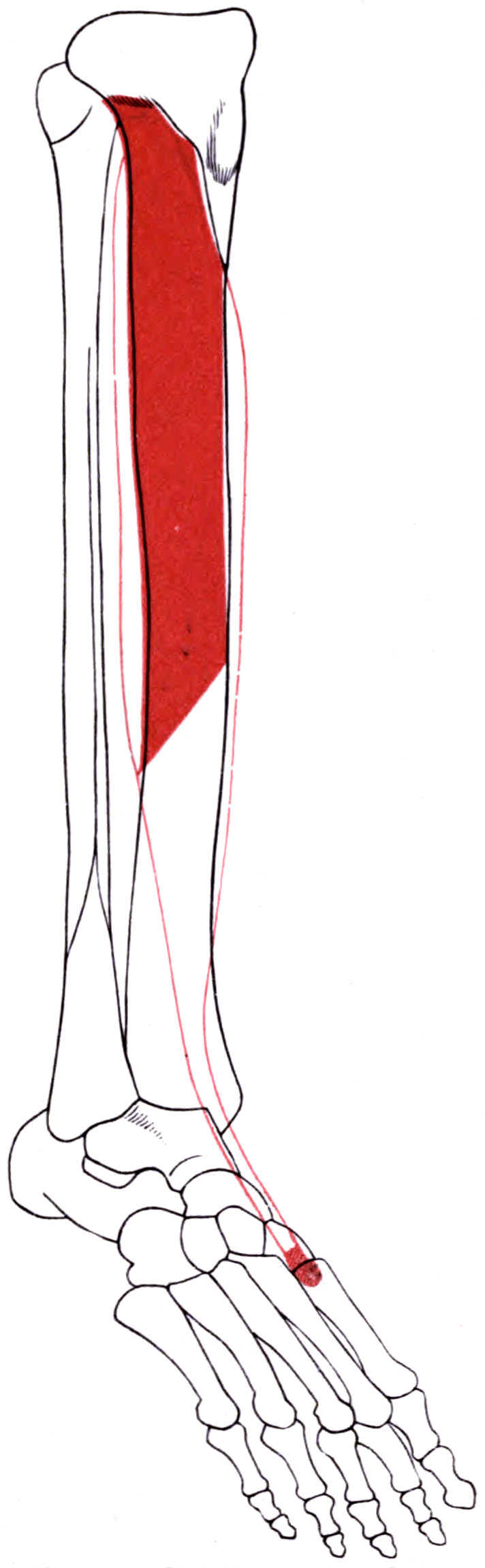
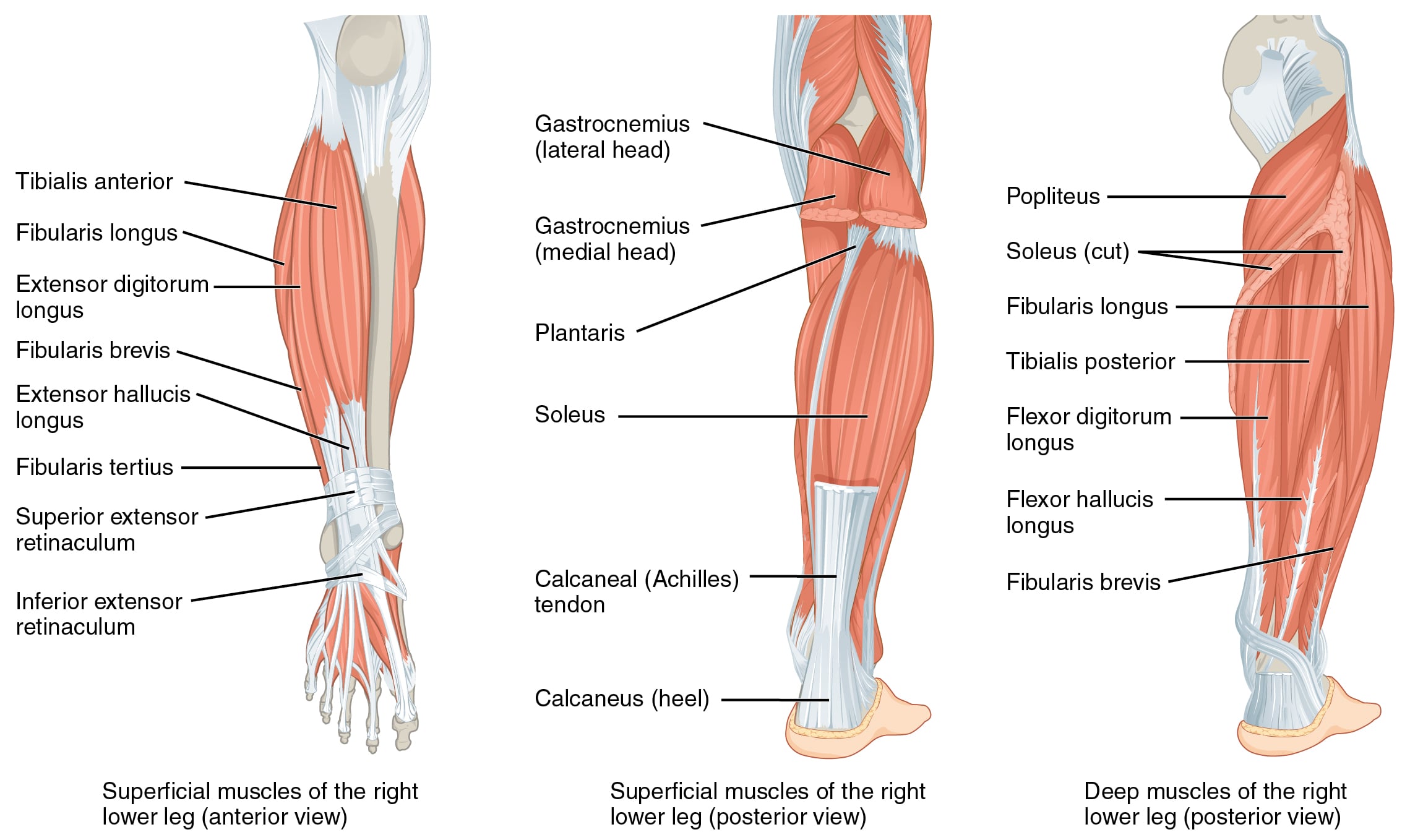
Blood supply. Proximally the musculotendinous junction is well vascularised, with branches of the anterior tibial artery supplying the muscle belly, and longitudinal vessels run within the tendon substance. Distally the insertion has an osseous supply and branches from the dorsalis pedis. Between the two, beneath the extensor retinaculum and 2-3 cm proximal to the insertion, lies a watershed zone of reduced perfusion.
Why it matters. The hypovascular zone corresponds to the most common rupture site, much like the Achilles watershed, and it explains the pattern of degenerative tendinosis. The commonest site lies 0-3 cm from the insertion, a point of mechanical stress concentration, and the zone matters when planning repair versus reconstruction.
Function. Tibialis anterior is the most powerful dorsiflexor, providing 80% of ankle dorsiflexion strength. It is also a secondary hindfoot invertor (a synergist of tibialis posterior) and supports the medial longitudinal arch in stance. It can generate forces up to 3-4 times body weight, with about 25-30 mm of excursion through full ankle motion.
In the gait cycle. At heel strike it controls plantarflexion eccentrically, and in the loading response it decelerates the dropping foot. In swing it dorsiflexes concentrically so the toes clear the ground. Rupture therefore costs:
- A slap foot at heel strike, from the loss of eccentric control
- High steppage in swing to clear the toes, and an increased trip hazard
- Compensatory hip and knee flexion
- Loss of first-ray stability
Aetiology and Mechanism
Degenerative rupture, the common type. Age-related tendinosis (collagen degeneration with mucoid change) fails by attrition at the hypovascular zone. The onset is often insidious with minimal trauma, and the rupture may follow a minor stumble or a missed step. Intrinsic and extrinsic factors combine:
- Intrinsic - tendon degeneration, age over 45 years, the hypovascular zone
- Mechanical - a tight extensor retinaculum causing stenosis and friction, repetitive friction against the superior extensor retinaculum, osteophytes on the inferior anterior tibial lip causing attrition, tight footwear, and repetitive microtrauma from chronic overload in athletes or workers
- Corticosteroids - a previous local injection may predispose to rupture; systemic use is also a risk
- Inflammatory arthropathy - rheumatoid arthritis, seronegative spondyloarthropathy, psoriatic arthritis, gout
- Metabolic and vascular - diabetes mellitus (impaired tendon healing), chronic renal disease or failure, hypercholesterolaemia, obesity, peripheral vascular disease
- Drugs - fluoroquinolone antibiotics
Traumatic rupture. The younger, active patient, or the high-energy injury:
- Forced plantarflexion against resisted dorsiflexion, or eccentric loading during a fall or stumble
- Avulsion from sudden forceful dorsiflexion against resistance
- Laceration from a direct penetrating injury to the anterior ankle
- Sport, particularly skiing, basketball and dancing
- Iatrogenic injury during ankle arthroscopy or other anterior ankle procedures
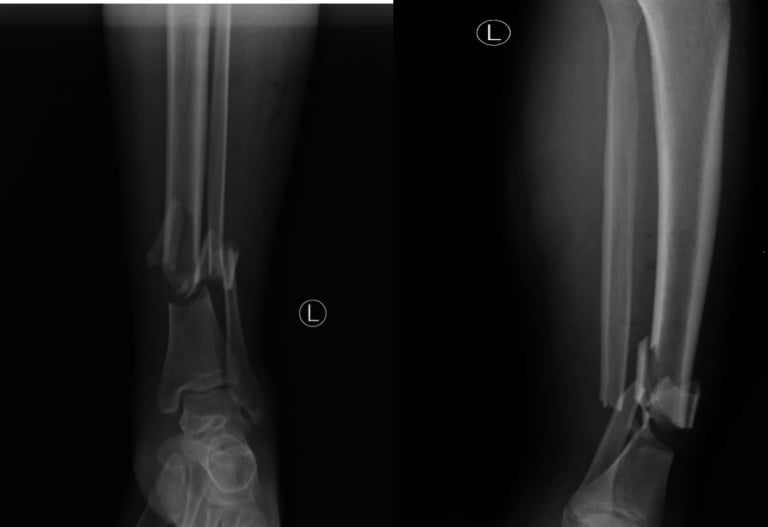
- Ankle fracture-dislocation, with tendon disruption from high-energy trauma
Classification
By chronicity. Time from injury sorts ruptures into three groups.
- Timing
- Under 4 weeks
- Characteristics
- Clear injury event, definable tendon ends
- Implication
- Primary repair often feasible
- Timing
- 4-12 weeks
- Characteristics
- Delayed presentation, some retraction
- Implication
- Repair possible but may need augmentation, or a short reconstruction
- Timing
- Over 12 weeks
- Characteristics
- Significant retraction, often degenerative
- Implication
- Usually requires reconstruction (graft or transfer)
- timing
- Less than 4 weeks from injury
- tendonQuality
- Usually good quality ends
- gapSize
- Variable, often less than 3 cm
- surgicalOptions
- Primary repair usually feasible
- timing
- Greater than 4 weeks from injury
- tendonQuality
- Degenerated ends, muscle retraction
- gapSize
- Often greater than 3 cm
- surgicalOptions
- Reconstruction required (transfer or graft)
- timing
- Variable onset, progressive symptoms
- tendonQuality
- Intact fibers with intratendinous split
- gapSize
- Not applicable
- surgicalOptions
- Debridement and repair if greater than 50%
- timing
- Acute traumatic event
- tendonQuality
- Good tendon with bone fragment
- gapSize
- Minimal if bone fixation immediate
- surgicalOptions
- Bone reattachment with suture anchors
By location. Distal ruptures are the commonest, and the retinaculum complicates the middle zone: a Zone 2 rupture may need retinacular release for access, and the tendon can bowstring if the retinaculum is not reconstructed.
- Location
- Musculotendinous junction
- Treatment considerations
- Rare, muscle friable, challenging repair
- Location
- Mid-tendon (under retinaculum)
- Treatment considerations
- Common site, repair through retinaculum
- Location
- Distal (0-3 cm from insertion)
- Treatment considerations
- Most common, direct repair to bone
By severity and by cause. Severity is graded on imaging; the cause tells you the quality of tendon to expect.
- Description
- Incomplete tendon disruption
- Imaging features
- Increased signal, some fibres intact
- Description
- Full-thickness rupture
- Imaging features
- Gap, fluid signal, retracted ends
- Description
- Significant proximal migration
- Imaging features
- Gap over 3 cm, often chronic
- Degenerative
- Over 60 years
- Traumatic
- Any age
- Degenerative
- Insidious
- Traumatic
- Acute event
- Degenerative
- Poor, friable
- Traumatic
- Good
- Degenerative
- May need augmentation
- Traumatic
- Primary repair possible
Clinical Presentation
Acute rupture. Sudden, sharp anterior ankle pain during a specific event, often plantarflexion against resistance, with an audible or palpable snap. Weakness is immediate: the patient cannot dorsiflex the ankle or walk on the heels. A visible anterior ankle swelling is the rolled-up proximal stump.
Chronic rupture. Weakness comes on gradually, and the complaints are of stairs, inclines and tripping. The foot slaps down after heel strike because eccentric control has gone, and the toes catch on uneven ground because clearance is reduced. Overuse of EDL brings anterior shin fatigue and discomfort, and the presentation is often delayed after a misdiagnosis of sprain or neuropathy.
What the patient cannot do.
- Walk on the heels
- Climb stairs without compensating at the hip and knee
- Walk without a steppage gait or circumduction to clear the foot
- Run, having lost push-off control
- Put shoes on easily, because dorsiflexion is weak
Examination
Look. The anterior ankle mass is the retracted proximal stump, with a gap distal to the extensor retinaculum. Watch the gait for a slap foot or steppage pattern, and the toes for clawing, the hyperextension of compensatory EDL overactivity. Wasting of the TA muscle in chronic cases is rare, because of the intramuscular tear pattern.
Feel. The gap is typically palpable 2-4 cm above the insertion, with the proximal stump a firm rolled mass above it and a thin or absent tendon below. An acute rupture is tender at the rupture site.
Power and special tests. With a complete rupture, dorsiflexion power is typically grade 0-1 despite EDL compensation, while a partial tear or a chronic compensated rupture may show grade 2-3 from EDL. Toe extension is normal or increased.
- Resisted dorsiflexion - severe weakness or absent function
- Heel walking - impossible
- Toe dorsiflexion - preserved or enhanced
- Passive plantarflexion - may reproduce pain at an acute rupture site
- Reverse Thompson test - squeezing the TA belly produces no dorsiflexion
Patients can still dorsiflex using the extensors and peroneals, but cannot heel walk. Always test heel walking.
Tendon or nerve. The single most examinable concept is separating a mechanical cause of foot drop from a neurological one. Isolated TA rupture is the only common cause with weak dorsiflexion but preserved toe extension and a palpable anterior mass. Check EHL power (the L5 sentinel), eversion, first web space sensation and the compartment for firmness and pain on passive stretch; in an isolated rupture all are normal.
- dorsiflexion
- Weak/absent (cannot heel walk)
- toeExtension
- PRESERVED (EHL/EDL intact)
- eversion
- Normal
- sensation
- Normal
- discriminator
- Palpable anterior ankle mass + distal gap; reverse Thompson negative
- dorsiflexion
- Weak/absent
- toeExtension
- Weak (EHL and EDL affected)
- eversion
- WEAK (peroneals affected)
- sensation
- Reduced lateral leg/dorsum foot
- discriminator
- Tinel at fibular neck; weak eversion is the key separator
- dorsiflexion
- Weak/absent
- toeExtension
- Weak (EHL/EDL)
- eversion
- Normal (superficial peroneal spared)
- sensation
- First web space numbness only
- discriminator
- Eversion preserved but toe extension weak - opposite of TA rupture
- dorsiflexion
- Weak
- toeExtension
- WEAK (EHL is the L5 sentinel)
- eversion
- Often weak
- sensation
- L5 dermatome (lateral leg, dorsum, hallux)
- discriminator
- Back/radicular pain, positive straight-leg raise, weak EHL and hip abduction
- dorsiflexion
- Weak (muscle ischaemia/contracture)
- toeExtension
- Weak
- eversion
- Variable
- sensation
- First web space (deep peroneal nerve)
- discriminator
- History of acute pain/swelling; pain on passive stretch acutely, fixed contracture late
The key clinical finding is a palpable anterior ankle mass with a distal gap, combined with inability to heel walk despite preserved toe dorsiflexion. This triad distinguishes TA rupture from neurological causes of foot drop. The "reverse Thompson test" (squeezing TA muscle belly produces no ankle dorsiflexion) confirms the diagnosis.
Investigations
Radiographs. Weight-bearing AP, lateral and oblique views of the foot and ankle. They are usually normal in an acute rupture. A chronic case may show:
- Anterior distal tibial osteophytes, the site of mechanical attrition
- Soft-tissue swelling or calcification in front of the ankle
- First-ray elevation from loss of plantarflexion force
- Arthritic change if the cause is inflammatory
- Rarely, an avulsion fracture at the cuneiform or first metatarsal base
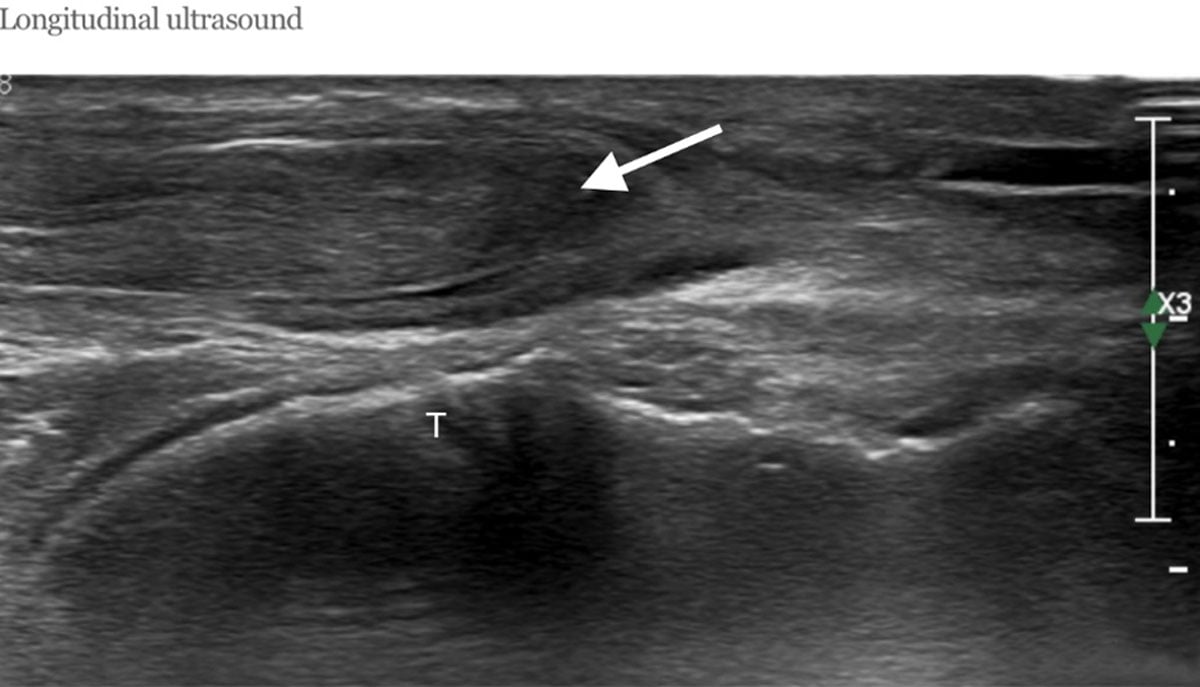
Ultrasound. Dynamic, real-time and cost-effective. Use a high-frequency linear probe (10-15 MHz) in long and short axis along the whole tendon, compare with the other side, and scan dynamically with active dorsiflexion. A complete rupture shows a hypoechoic or anechoic gap with haematoma or fluid in it, and a retracted, thickened proximal tendon; a partial tear shows incomplete fibre disruption. Measure the gap, because it is critical to surgical planning.
MRI. An ankle-foot protocol with T1, T2 and STIR sequences in axial, sagittal and coronal planes. It confirms the rupture location and assesses gap size, tendon quality and muscle status. It is indicated for:
- An uncertain diagnosis
- Pre-operative planning
- Assessment of a chronic rupture and of tendon quality
- Associated pathology
- acute
- Complete disruption with wavy retracted ends
- chronic
- Wide gap with muscle retraction and fatty infiltration
- significance
- Determines feasibility of primary repair
- acute
- Typically 1-3 cm, measured in neutral position
- chronic
- Often greater than 4 cm with maximal plantarflexion
- significance
- Gap greater than 3 cm requires reconstruction
- acute
- Normal signal in proximal/distal stumps
- chronic
- Degenerated stumps with increased T2 signal
- significance
- Poor quality precludes primary repair
- acute
- Normal muscle bulk and signal
- chronic
- Atrophy and fatty infiltration of TA muscle
- significance
- Severe atrophy indicates poor functional recovery potential
- acute
- Intact but may show fluid/edema
- chronic
- Thickened with scarring and adhesions
- significance
- Chronic stenosis contributes to rupture
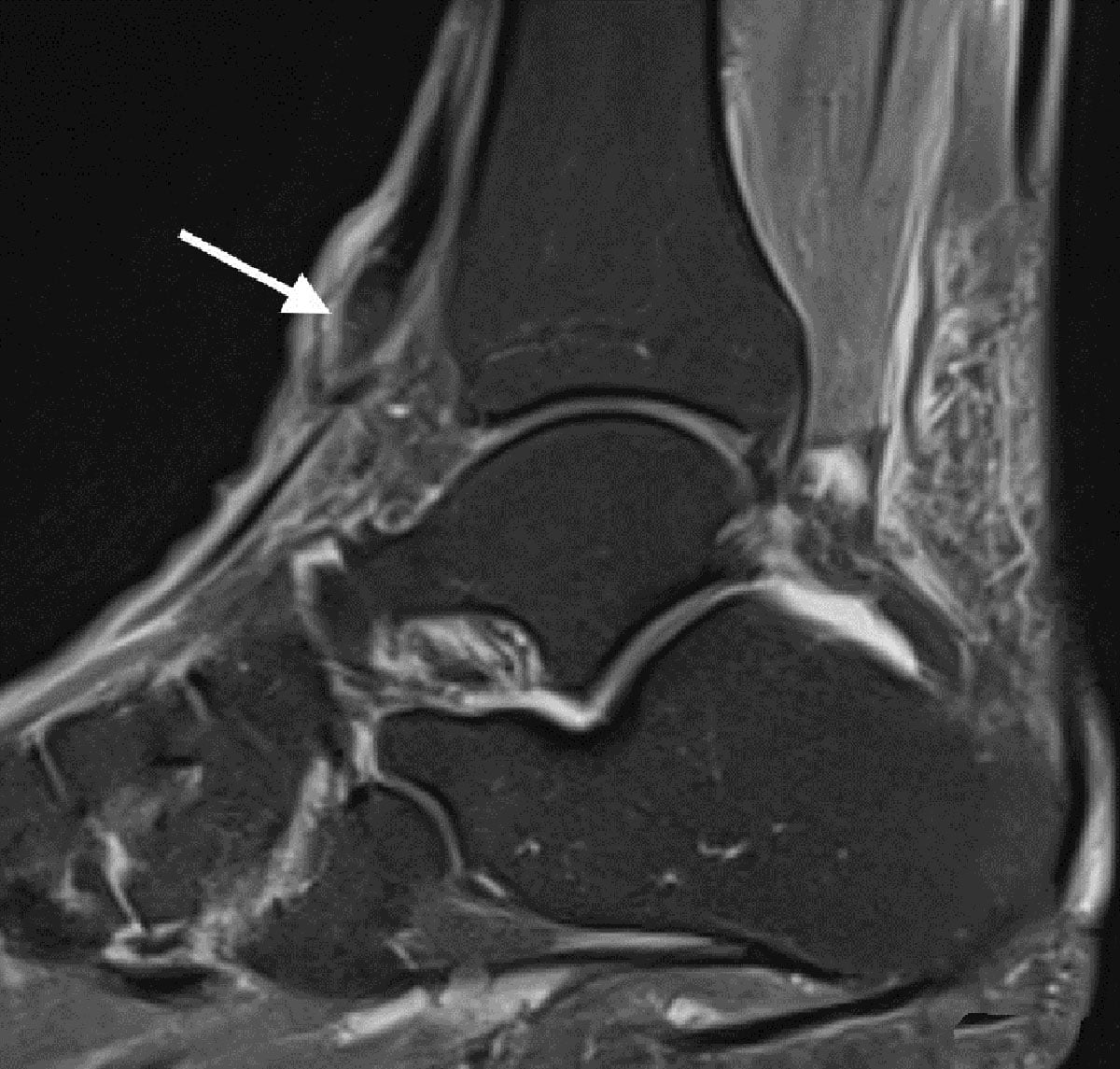
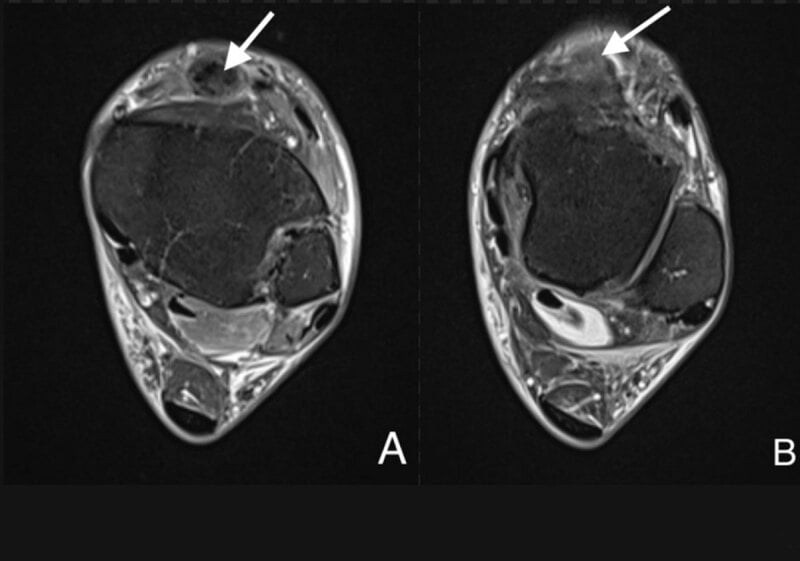
Other tests. CT is rarely needed but may help identify bony pathology. Nerve conduction studies are for a suspected neurological cause of foot drop, and EMG distinguishes denervation from tendon rupture in unclear cases.
Management
The decision. Surgery is the preferred treatment for most complete ruptures and is generally recommended for active patients. Four things decide what is done:
- Gap size - under 3 cm, repair; over 3 cm, reconstruction
- Tendon quality - good, repair; poor or degenerative, augment or reconstruct
- Muscle status - minimal atrophy, repair; severe atrophy, consider conservative care
- Patient goals - high function, surgery; minimal demands, conservative care
- Acute (under 4 weeks)
- Primary repair
- Chronic (over 12 weeks)
- Reconstruction (EHL transfer or graft)
- Acute (under 4 weeks)
- Primary repair ± augmentation
- Chronic (over 12 weeks)
- Reconstruction
- Acute (under 4 weeks)
- Conservative trial
- Chronic (over 12 weeks)
- Conservative (AFO)
- Acute (under 4 weeks)
- Conservative
- Chronic (over 12 weeks)
- Conservative
Timing. Emergency surgery is not required unless the injury is open and contaminated.
Multicentre Cohort: Acute vs Delayed Surgical Repair
- Prospective multicentre cohort of 48 surgically treated tibialis anterior ruptures across 4 foot-and-ankle units (Level II)
- Most ruptures occurred at the distal avascular 5-30 mm of the tendon from degenerative change
- No significant difference in VAS-FA patient-reported outcome between acute and delayed (chronic) repair
- Chronic ruptures had significantly higher pre-operative VAS-FA (more symptomatic) than non-traumatic ruptures
- Counter-intuitively, younger patients rated outcomes more critically ('fair') than older patients
Which reconstruction. EHL transfer has long been taught as the workhorse, the most common and most reliable reconstruction for a chronic rupture. The largest pooled analysis disagrees: it ranked EHL autograft worst and the turn-down graft, semitendinosus autograft and direct repair best. On that evidence the preferred reconstructions for a chronic rupture are a turn-down flap, semitendinosus or allograft, and EHL transfer becomes a fallback for very large gaps, done with a hallux IP tenodesis to prevent a cock-up hallux.
Surgical vs Conservative Management: Systematic Review & Meta-Analysis
- 24 studies, 155 cases of isolated tibialis anterior tendon rupture pooled
- Surgery had markedly better odds of a good outcome (OR 8.40) than conservative care (OR 0.68)
- Best reconstructions: ipsilateral split/turn-down TA graft (OR 32.15), semitendinosus autograft (OR 15.25), direct repair (OR 12.57)
- Extensor hallucis longus (EHL) autograft was associated with the WORST outcomes (OR 0.27)
- Most common residual finding was mild dorsiflexion weakness (4/5) without subjective limitation; good results regardless of patient age
Who. Non-operative care is reserved for patients whose compensation is acceptable:
- Sedentary elderly patients with minimal demands and an acceptable gait on EDL compensation
- Severe medical comorbidity making surgical risk prohibitive
- An informed patient who declines surgery despite the deficits
- A partial tear involving under 50% of the cross-sectional area, with good strength
- A chronic rupture with a well-adapted gait and minimal disability
Who not. Young active patients who need normal gait mechanics; anyone who cannot compensate with EDL (weak toe extension); progressive deformity or deteriorating gait; a patient who wants the best functional restoration; and an occupation that needs normal dorsiflexion, such as driving or climbing.
- Aim
- Protection and adaptation
- Protocol
- Articulated or fixed AFO to assist dorsiflexion; short leg cast or boot if acute and painful; weight-bearing as tolerated with an aid if needed; NSAIDs, ice and elevation for acute symptoms
- Aim
- Functional adaptation
- Protocol
- Gait training in compensatory strategies using EDL and the hip flexors; strengthening of EDL and the peroneals; balance training to reduce falls; AFO refinement
- Aim
- Long-term management
- Protocol
- Permanent custom-moulded articulated AFO for daily use; rocker-bottom sole to assist heel-toe transition; avoid activities requiring heel walking or dorsiflexion; monitor for progressive deformity or gait dysfunction
What it achieves. Function is acceptable for low-demand activities and limited for sport, and the gait stays abnormal with a slap foot or steppage pattern. Satisfaction varies with the patient's demands and expectations. Complications include chronic ankle pain, stiffness and falls from tripping, and secondary problems such as back pain from gait asymmetry may develop.
Non-operative management of complete TA tendon rupture results in permanent functional deficit. AFO is required indefinitely for optimal gait. This approach should only be chosen after thorough discussion of limitations and with appropriate patient selection (elderly, sedentary, high surgical risk).
Surgical Technique
Indications. An acute rupture under 4 weeks old, with good tendon ends, no significant muscle retraction and a gap under 3 cm with the ankle plantarflexed.
Set-up and approach. Supine with a bump under the ipsilateral hip and a thigh tourniquet at 250-300 mmHg, with the foot free for intraoperative positioning. An 8-12 cm longitudinal incision is centred over the palpable gap or the course of the tendon. Identify and protect the superficial peroneal nerve branches, then open the extensor retinaculum along its medial border.
Preparing the ends. Identify both stumps, debride degenerate or frayed tissue back to healthy tendon, and freshen the ends with perpendicular cuts. Measure the gap with the ankle in maximal plantarflexion.
The repair.
- Krackow locking stitches in each stump, as a 4-6 strand core repair
- Non-absorbable braided suture (FiberWire, Ethibond), size 2 or 0
- Tension with the ankle in 10-15° of plantarflexion
- A running 4-0 absorbable epitendinous suture to smooth the repair
- Test that the repair holds with passive dorsiflexion to neutral
If the repair is under tension, augment it with a proximally based TA turn-down flap, EHL sutured side to side, an interpositional plantaris graft or a transferred central slip of EDL.
The retinaculum. Excise a portion of the superior retinaculum to decompress the repair, but avoid complete excision, to prevent bowstringing, and check the tendon glides smoothly beneath what remains. Close the retinaculum loosely if intact, the subcutaneous layer with 3-0 absorbable suture and the skin with 4-0 nylon or staples. Apply a soft dressing and a posterior splint in 10-15° of plantarflexion.
The superficial peroneal nerve crosses the anterior ankle and is at risk during exposure. Identify and protect throughout procedure. Excessive tension on the repair increases failure risk - if gap greater than 3 cm even in plantarflexion, consider augmentation or reconstruction rather than tensioned primary repair.
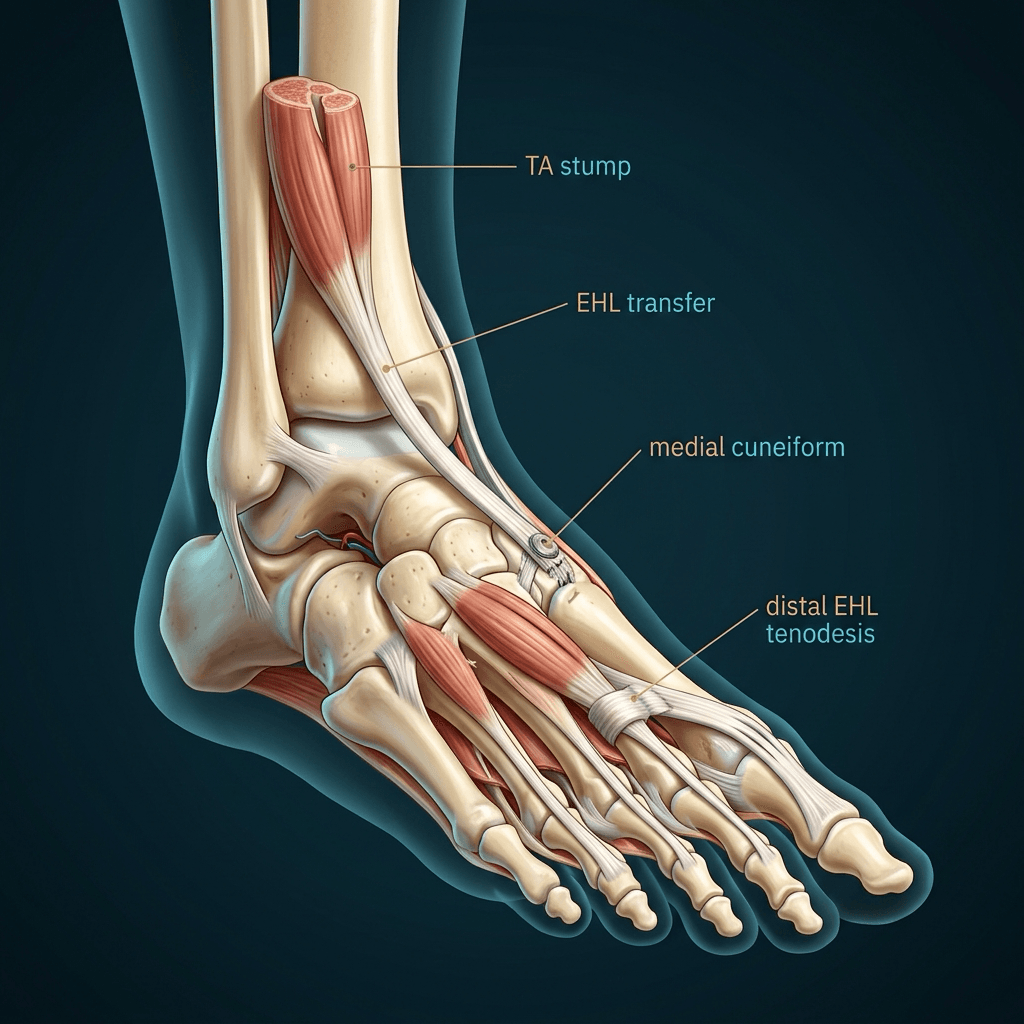
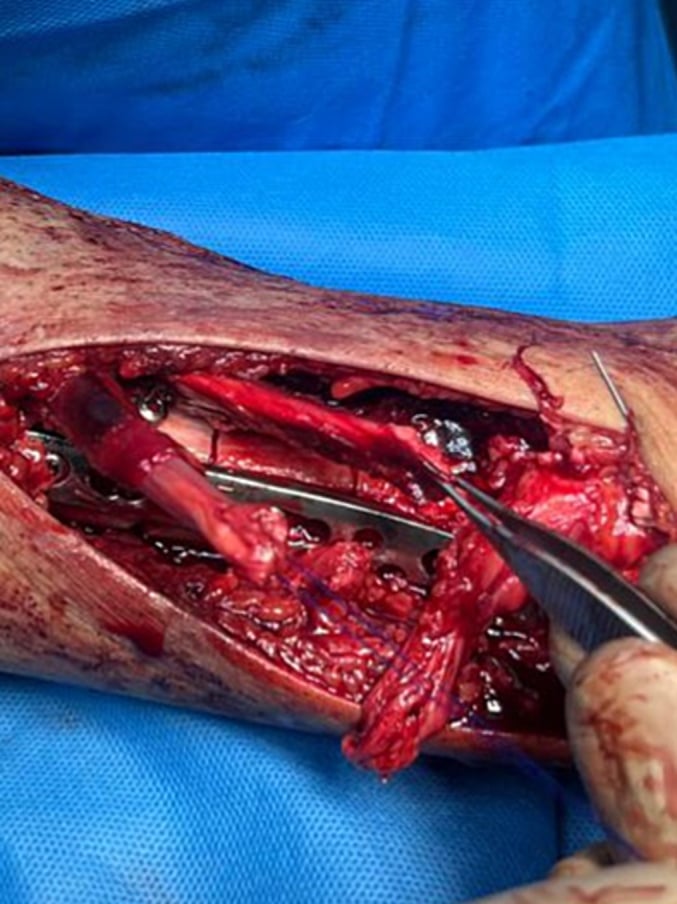
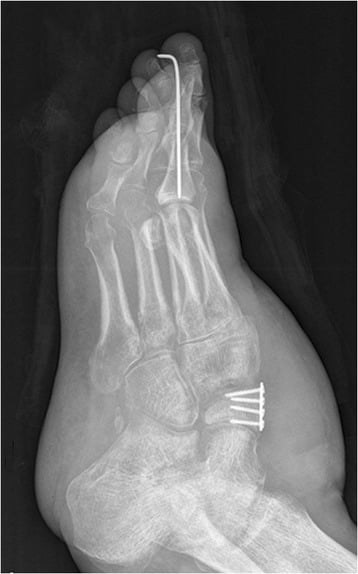
Complications
At operation. The superficial peroneal nerve is injured in 2-3%; the anterior tibial artery rarely. The deep peroneal nerve is at risk in deep dissection and its injury numbs the first web space. A gap closed under excessive tension fails early, and tension set wrongly either way costs function: too tight gives an equinus contracture, too loose a weak dorsiflexor. Harvest can lacerate EHL or, rarely, devascularise the hallux.
Early complications (0-6 weeks). Wound complications run at 5-8% and are higher in diabetics, in patients with peripheral vascular disease and in chronic ruptures with poor tissue; careful tissue handling is essential. They present as delayed healing, dehiscence or superficial infection, and are managed with local wound care, oral antibiotics and revision closure if severe.
- Incidence
- 3-8%
- Management
- Oral/IV antibiotics, debridement if deep
- Incidence
- 2-5%
- Management
- Dressings, secondary closure, skin graft
- Incidence
- 5-10%
- Management
- Observation (usually transient)
- Incidence
- 2-3%
- Management
- Aspiration or evacuation
- Incidence
- Under 1% with prophylaxis
- Management
- Calf swelling, positive D-dimer or PE symptoms; anticoagulation, admission may be needed for PE
- Incidence
- Rare (under 0.5%)
- Management
- Severe pain, tense leg, pain on passive stretch; emergency fasciotomy if confirmed by pressure measurement
Late complications (beyond 6 weeks).
- Incidence
- 4-6%
- Management
- Revision with EHL transfer or graft
- Incidence
- 10-20%
- Management
- Physiotherapy, AFO if severe
- Incidence
- 5-10%
- Management
- Physiotherapy, manipulation
- Incidence
- Variable
- Management
- Tenolysis if severe
- Incidence
- 10-15% (EHL transfer)
- Management
- IP fusion or tenodesis
Stiffness follows prolonged immobilisation or adhesions, and adhesions are scarring to the retinaculum that limits gliding. An equinus contracture comes from excessive plantarflexion during immobilisation. A slap foot or steppage gait can persist despite an intact repair, and chronic anterior ankle pain comes from adhesions, nerve injury or arthrofibrosis.
Re-rupture. The most significant complication, commoner after primary repair of a chronic rupture. It usually occurs within the first 3 months and presents with acute pain, loss of dorsiflexion and a recurrent palpable gap; confirm it with ultrasound or MRI. The risks are a chronic rupture repaired under tension, poor tendon quality, early weight-bearing, inadequate immobilisation, non-compliance and premature return to activity. Revision is a reconstruction, with EHL transfer or allograft.
Prevent re-rupture with appropriate tension, at least 8 weeks of strict immobilisation, patient compliance and gradual progression through the rehabilitation phases.
Persistent weakness. More common after reconstruction; measure it against the other ankle. Acceptable recovery is 70-80% after EHL transfer and 90% or more after primary repair. The causes are muscle atrophy, incomplete healing, adhesions and inadequate rehabilitation; treat with prolonged physiotherapy for 6-12 months and an AFO if severe, and consider revision if strength is under 50% with daily impairment.
Nerve injury. Superficial peroneal nerve injury numbs the dorsum of the foot and usually resolves in 3-6 months. Deep peroneal nerve injury leaves first web space numbness that persists but does not limit function. A painful neuroma is rare and may need excision or nerve decompression.
Prevention. Handle the tissues carefully, protect the nerve branches throughout, use adequate suture strength, set the tension correctly and augment poor tissue. Afterwards, immobilise strictly for 6-8 weeks, progress weight-bearing gradually under supervised physiotherapy and educate the patient about compliance. Start protected motion once healed to limit adhesions, and physiotherapy from week 8 against stiffness. The cock-up hallux is prevented by IP fusion or tenodesis at the time of EHL transfer.
Rehabilitation and Outcomes
Aftercare. The ankle is immobilised in plantarflexion and brought gradually to neutral, non-weight-bearing progressing to partial weight-bearing. Weight-bearing then progresses with active motion, gait normalisation and gentle strengthening, followed by progressive resistance, proprioception and functional work with a return to low-impact activity, and finally sport-specific training.
- Protocol
- Non-weight-bearing in a posterior splint, plantarflexed
- Protocol
- Non-weight-bearing in a cast or boot, brought gradually to neutral by week 6
- Protocol
- Partial weight-bearing in a neutral boot, gentle active range of motion
- Protocol
- Progress to full weight-bearing, wean from the boot, start strengthening
- Protocol
- Gradual return to activities, continued rehabilitation
- Protocol
- Full recovery expected, with return to impact activities
Return to work. Sedentary work at 6-8 weeks with protected weight-bearing, light duties at 12-16 weeks with a gradual transition, and heavy labour at 6-9 months at the earliest, which may need job modification. Driving with a right foot repair takes 3-4 months, once off immobilisation with adequate strength.
- primaryRepair
- Normal gait by 3-4 months
- ehlTransfer
- Normal gait by 4-6 months
- nonOperative
- Permanent slap foot gait, AFO dependent
- primaryRepair
- Full function by 4-6 months
- ehlTransfer
- Near-normal by 6-9 months
- nonOperative
- Permanent difficulty, uses handrail
- primaryRepair
- Return to running 6-9 months
- ehlTransfer
- Return to running 9-12 months
- nonOperative
- Usually not possible
- primaryRepair
- Full return 9-12 months, 90% performance
- ehlTransfer
- Most sports 12+ months, 75-85% performance
- nonOperative
- High-impact sports not feasible
- Primary repair
- 85-95
- EHL transfer
- 80-90
- Non-operative
- 60-70
- Primary repair
- 90-100%
- EHL transfer
- 70-80%
- Non-operative
- 20-30%
- Primary repair
- 95%
- EHL transfer
- 85%
- Non-operative
- Under 50%
- Primary repair
- 90-95%
- EHL transfer
- 85-90%
- Non-operative
- 40-60%
- Primary repair
- 85-90%
- EHL transfer
- 70-80%
- Non-operative
- Limited
Surgery against an orthosis. Surgery gives significantly better function in active patients: near-normal strength, a normal gait, no orthosis, a normal fall risk and a return to sport. The non-operative patient keeps a slap foot or steppage gait, a permanent AFO, an increased fall risk and a reduced quality of life, with sport limited; non-operative care is appropriate only for the elderly, sedentary or high-risk.
Other reconstructions. EDL transfer restores 60-70% of the other side's strength, which may limit high-level sport, and allograft 70-85% once fully incorporated at 12-18 months. Satisfaction after revision surgery is lower, at 70-80%, because of complications and reoperations.
Prognosis.
- Favourable - acute rupture (under 4 weeks) treated by primary repair; good tendon and muscle quality with minimal atrophy; a young, healthy patient who complies with rehabilitation; non-smoker, non-diabetic, healthy weight; appropriate technique and aftercare
- Unfavourable - chronic rupture (over 3 months; over 6 months with muscle atrophy); severe tendon degeneration; significant atrophy or fatty infiltration; elderly with comorbidities; smoking, diabetes, obesity; inflammatory arthropathy; poor compliance with immobilisation or rehabilitation; failed prior surgery
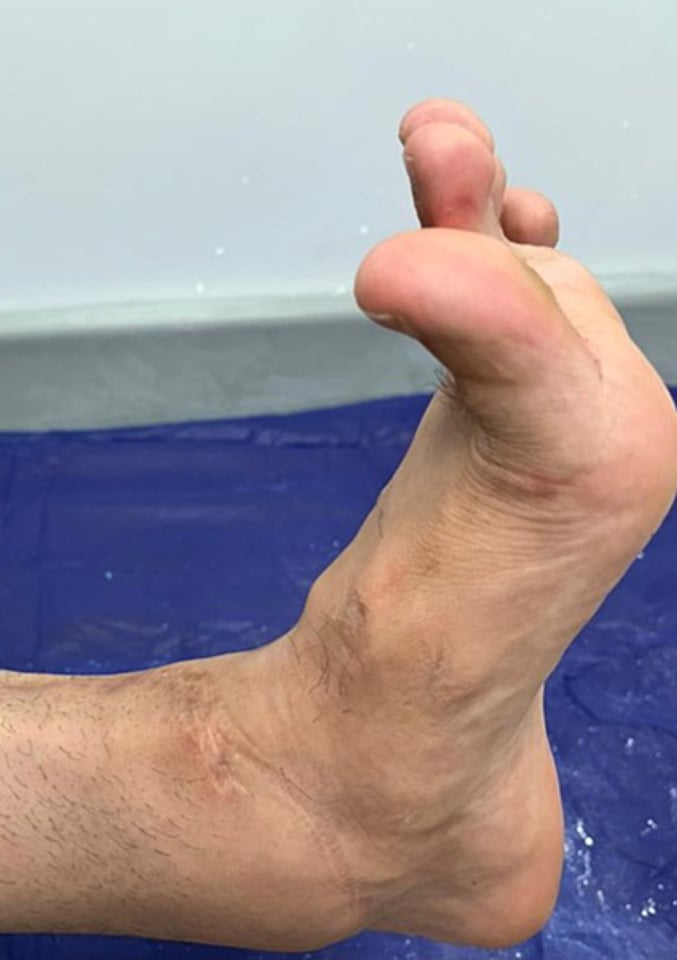
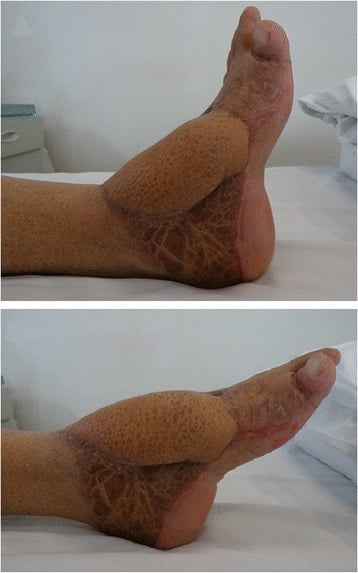
Hamstring Autograft Reconstruction (Minimally Invasive)
- 8 patients reconstructed with hamstring autograft via a minimally invasive approach - the abstract specifies hamstring without naming the tendon, so semitendinosus or gracilis is the conventional reading rather than a stated detail
- Foot and Ankle Outcome Score, VAS and SF-12 all improved post-operatively
- Restored ankle range of motion and inversion strength; residual dorsiflexion strength deficits on isokinetic testing
- All patients ambulated without a brace, avoiding long-term bracing or local tendon sacrifice
Insertional Anatomy & Clinical Series (Cadaveric Study)
- Dissection of 53 feet defined three tibialis anterior insertion patterns
- Most common (36 feet): dual insertion onto medial cuneiform AND base of first metatarsal
- 13 feet inserted onto the medial cuneiform only; 4 had an accessory slip
- Three accompanying clinical cases: surgery advised for acute ruptures and high-demand patients; conservative care acceptable for chronic, low-demand patients
Narrative Review: Acute & Chronic TA Rupture and Tendinopathy
- Synthesises presentation, examination, non-operative and surgical options for tibialis anterior rupture
- Reinforces that diagnosis is frequently delayed because long extensors compensate for lost dorsiflexion
- Algorithm: tension-free direct repair for acute ruptures; reconstruction (transfer or graft) for chronic gaps
Guidelines, Registries & Global Practice
Global Epidemiology
- Value
- Rare; the third most common lower-limb tendon rupture after Achilles and patellar
- Notes
- Largely case-series and registry-absent literature
- Value
- 155 isolated ruptures across 24 studies (Tickner meta-analysis)
- Notes
- Reflects how uncommon the injury is worldwide
- Value
- Bimodal: degenerative ruptures cluster at over 45 years (mean 60-70); traumatic in younger, active patients
- Notes
- Degenerative type predominates
- Value
- Male predominance approximately 3:1
- Notes
- Consistent across regions
- Value
- Distal avascular 5-30 mm of tendon beneath the extensor retinaculum
- Notes
- Confirmed in multicentre cohorts
Universal risk factors (region-independent): increasing age and tendinosis, diabetes mellitus, inflammatory arthropathy (RA, gout, seronegative spondyloarthropathy), local or systemic corticosteroid exposure, fluoroquinolone use, and chronic renal disease.
Practice variation - high vs limited resource settings:
- High-resource: ready access to MRI/ultrasound, foot-and-ankle subspecialists, allograft banks, and early reconstruction. Diagnosis still delayed in approximately 1 in 4 cases due to long-extensor compensation.
- Limited-resource / remote: greater reliance on clinical diagnosis and ultrasound; allograft and subspecialty transfer access restricted, so autograft transfer, direct repair, or definitive AFO management are proportionally more common. Delayed presentation is more frequent.
Controversies & Areas of Uncertainty
The rarity of this injury means much teaching rests on small case series and tradition rather than high-level evidence. Examiners reward candidates who can articulate where the genuine uncertainty lies.
Long taught as the default reconstruction, yet the largest pooled analysis (Tickner 2019) found EHL autograft had the worst outcomes (OR 0.27), favouring direct repair, turn-down or semitendinosus grafts. The discrepancy may reflect autograft-vs-in-situ-transfer technique. State the controversy rather than dogmatically quoting EHL.
No randomised data exist. Pooled observational evidence favours surgery in active patients, but well-compensated, low-demand or high-risk patients can do acceptably with an AFO. This is a shared-decision, not a fixed rule.
A multicentre cohort (Johansen 2021) found no significant outcome difference between acute and delayed repair when reconstruction was feasible - challenging the urgency often implied by the "4-week window".
The traditional 8 weeks of immobilisation and the 3 cm gap cut-off for repair-vs-reconstruct are conventions, not trial-derived. Accelerated rehab protocols are emerging but unproven in this tendon.
MCQ Practice Points
Q: What is the typical patient demographic and mechanism for anterior tibial tendon rupture?
A: Typically affects elderly patients (60-80 years) with spontaneous or low-energy rupture. Risk factors include: diabetes mellitus, inflammatory arthritis, corticosteroid use, and chronic tendinopathy. Often occurs with minor trauma (stumbling, missing a step) in a chronically weakened tendon. The zone of relative hypovascularity at the inferior extensor retinaculum is the most common rupture site.
Q: What are the clinical features of anterior tibial tendon rupture?
A: Gait abnormality: Steppage gait (high-stepping to clear foot) or slap gait (foot slaps during heel strike). Weakness: Unable to dorsiflex ankle against resistance. Palpable defect: Gap at the anterior ankle, though swelling may obscure this. Pseudotumor: Mass from retracted tendon stump may be palpable. Foot drop: Inability to clear foot during swing phase. Differential includes common peroneal nerve palsy (sensory changes, different weakness pattern).
Q: What are the surgical treatment options for anterior tibial tendon rupture?
A: Acute ruptures (less than 4 weeks): Primary repair with end-to-end suture if possible. Chronic ruptures: Often require augmentation due to tendon degeneration and gap. Options include: EHL transfer (extensor hallucis longus) - most common; Peroneus tertius transfer; Allograft reconstruction; Free gracilis/semitendinosus graft. The tendon is repaired through an anterior ankle incision, often requiring Z-lengthening.
Q: Why is EHL (extensor hallucis longus) the preferred tendon transfer for chronic anterior tibial tendon rupture?
A: EHL is preferred because: (1) Similar line of pull to tibialis anterior; (2) Adequate strength (approximately 80% of tibialis anterior); (3) Sufficient length for transfer; (4) Minimal donor morbidity - hallux IP joint extension loss is well-tolerated. Technique involves harvesting EHL distally, weaving through tibialis anterior stump, and anchoring to medial cuneiform/navicular with interference screw or suture anchors.
Q: What is the expected functional outcome after anterior tibial tendon repair or reconstruction?
A: Good to excellent outcomes in 80-90% of cases with surgical treatment. Most patients regain independent ambulation without orthotic support. Residual findings may include: Mild weakness of dorsiflexion (grade 4/5 power), altered gait pattern with reduced push-off, and prolonged rehabilitation (3-6 months). Non-operative treatment (AFO) is reserved for sedentary elderly patients with high surgical risk.
Clinical Decision Scenarios
Practise clinical reasoning and management decisions out loud
“A 52-year-old recreational runner presents to your clinic 10 days after acute onset of anterior ankle pain while running downhill. He describes a pop and immediate weakness. Examination reveals a palpable anterior ankle mass, a gap 3 cm above the TA insertion, and inability to heel walk. MRI shows complete TA tendon rupture with 2.5 cm gap in neutral position and good quality tendon ends. He is otherwise healthy and wants to return to running.”
“A 68-year-old man presents with 9 months of progressive difficulty walking and frequent tripping. He cannot recall a specific injury. He was initially diagnosed with sciatica and had lumbar spine MRI which was unremarkable. On examination, he has weak ankle dorsiflexion (2/5) but normal toe extension (5/5). He can evert the ankle normally. There is a subtle anterior ankle fullness. Ankle sensation is intact. He ambulates with a steppage gait pattern. You order an MRI which shows complete TA tendon rupture with 5 cm gap, degenerated tendon ends, and moderate TA muscle atrophy with early fatty infiltration.”
“A 74-year-old man with type 2 diabetes (HbA1c 9.2%), peripheral neuropathy and a previous local corticosteroid injection to the anterior ankle 6 months ago presents with a 3-month history of progressive foot drop and tripping. Examination shows a palpable anterior ankle gap, dorsiflexion 1/5, intact toe extension, and dry neuropathic skin over the dorsum of the foot. He lives independently, walks his dog daily, and is anxious about surgery. MRI confirms a complete tibialis anterior rupture with a 4 cm gap and degenerate ends.”
Must-Know Anatomy
- TA: primary dorsiflexor, 80% of ankle dorsiflexion power
- Origin: lateral tibia, insertion: medial cuneiform and first MT base
- Hypovascular zone beneath extensor retinaculum - rupture site
- Superficial peroneal nerve crosses anterior ankle - protect during surgery
- Three retinacular bands constrain tendons - excise superior portion for decompression
Classic Presentation
- Elderly male, often spontaneous or minor trauma
- Anterior ankle mass (rolled-up tendon) with distal gap
- Unable to heel walk despite preserved toe extension (EHL intact)
- Slap foot gait - foot slaps down after heel strike
- Often misdiagnosed as sciatica or peroneal nerve palsy
Key Differentiation
- TA rupture: weak dorsiflexion, normal toe extension (EHL), palpable mass
- L5 radiculopathy: weak dorsiflexion AND weak EHL, radicular pain
- Peroneal nerve palsy: weak dorsiflexion AND eversion, foot numbness
- Compartment syndrome: tense leg, severe pain, pain with passive stretch
- Pseudoparalysis: pain limiting function, improves with anesthesia
Imaging Essentials
- MRI gold standard: confirms rupture, measures gap, assesses muscle/tendon quality
- Acute: gap less than 3 cm, good tendon quality, no muscle atrophy
- Chronic: gap greater than 4 cm, degenerated tendon, muscle atrophy/fatty infiltration
- Ultrasound: dynamic assessment, can diagnose acute ruptures
- XR: usually normal, may show tibial osteophytes in chronic cases
Treatment Algorithm
- Acute (less than 4 weeks) + gap less than 3 cm: primary Krackow repair
- Acute but gap greater than 3 cm: augment with EHL or turndown flap
- Chronic (greater than 4 weeks) or gap greater than 3 cm: EHL transfer reconstruction
- Severe muscle atrophy or revision: consider allograft or EDL transfer
- Non-operative: AFO only for sedentary elderly with high surgical risk
Surgical Pearls
- Primary repair: Krackow locking sutures, repair in 10-15 degrees plantarflexion
- EHL transfer: hallux IP fusion/tenodesis mandatory to prevent cock-up deformity
- Tension with ankle neutral dorsiflexion, slight hindfoot inversion
- Excise portion of superior retinaculum to decompress repair site
- Post-op: 8 weeks immobilization essential, NWB initially progressing by weeks
Viva Traps
- Primary repair under tension will fail - augment or reconstruct if gap greater than 3 cm
- EHL transfer achieves 70-80% strength NOT 100% - set realistic expectations
- Muscle atrophy greater than 50% predicts poor recovery even with surgery
- Return to running needs 6-9 months minimum, full recovery 12 months
- Re-rupture risk highest with inadequate immobilization or chronic rupture primary repair
Critical Numbers
- Gap less than 3 cm: primary repair feasible if acute and in plantarflexion
- 8 weeks: minimum immobilization duration to prevent re-rupture
- 70-80%: expected strength recovery with EHL transfer
- 90-95%: good-excellent results with appropriate surgery and patient selection
- 4-6%: re-rupture rate overall, higher with tensioned repairs
Evidence Base
Key Studies - Surgical Outcomes
- Design
- Systematic review & meta-analysis
- N
- 155
- Key Finding
- Surgery superior to conservative (OR 8.40); EHL autograft had the worst outcomes
- Design
- Prospective multicentre cohort
- N
- 48
- Key Finding
- No outcome difference between acute and delayed surgical repair
- Design
- Case series
- N
- 11
- Key Finding
- Interpositional allograft reliable for large chronic irreparable gaps
- Design
- Case series
- N
- 16
- Key Finding
- Early clinical series of tibialis anterior tendon rupture
Evidence Summary:
- Level IV evidence predominates (case series)
- No RCTs comparing surgical vs non-operative
- Consistent finding: surgery superior for active patients