Lumbosacral Transitional Vertebra | Castellvi Classification | Symptomatic LSTV
- LSTV = Lumbosacral Transitional Vertebra - sacralisation of L5 or lumbarisation of S1
- Castellvi classification based on transverse process morphology (I-IV, a/b for unilateral/bilateral)
- Type II (pseudoarticulation) most associated with symptomatic Bertolotti syndrome
- Pain sources: anomalous articulation, contralateral facet, above-level disc degeneration
- Diagnosis: Ferguson view X-ray, CT for bony detail, MRI for disc assessment
- “Named after Mario Bertolotti (1917) - Italian radiologist
- “May cause miscounting of vertebral levels - critical for surgical planning
- “Contralateral facet arthropathy common with unilateral LSTV
- “L4-L5 disc more commonly degenerates when L5 is sacralised (reduced motion at L5-S1)
Overview and Epidemiology
Bertolotti syndrome is low back pain caused by a lumbosacral transitional vertebra (LSTV). It is named after Mario Bertolotti, the Italian radiologist who described it in 1917.
The anomaly. An LSTV is congenital. Either the lowest lumbar vertebra, usually L5, takes on the features of a sacral vertebra (sacralisation, the more common), or the first sacral segment takes on the features of a lumbar vertebra (lumbarisation). Both can cause Bertolotti syndrome, and the distinction matters less clinically than whether the transition is symptomatic.
How common. LSTV prevalence is quoted at 4-36%, varying with the population and the definition used, and only a minority of LSTVs are symptomatic. Symptomatic patients usually present in their 20s-30s, younger than the typical patient with degenerative low back pain, and neither sex clearly predominates.
The real question. Not every LSTV causes symptoms, and Bertolotti syndrome refers specifically to the symptomatic one. The challenge in a patient with low back pain and an LSTV is deciding whether the LSTV is the pain generator.
Anatomy of Lumbosacral Transition
The normal junction. L5 has the largest vertebral body, short broad transverse processes and a wide intervertebral foramen, and it articulates with S1 through the disc and the facets. The sacral ala, the lateral wing of S1, provides the surface for the sacroiliac joint, and a gap normally separates it from the L5 transverse process.
The iliolumbar ligament. It arises from the tip and antero-inferior border of the L5 transverse process, with a slip that may also arise from L4, and fans out to the postero-medial iliac crest; a lumbosacral band reaches the sacral ala. It is the principal passive restraint of the L5-S1 motion segment, limiting flexion, extension, lateral bending and especially axial rotation of L5 on the sacrum, and resisting anterior translation.
Pathophysiology
Embryology. LSTVs result from errors of vertebral segmentation during embryonic development. The HOX genes control segmentation of the axial skeleton, and mutations or variations in their expression can lead to transitional morphology.
Four mobile segments instead of five. When L5 is partially or completely incorporated into the sacrum, the L4-L5 disc becomes the functional lumbosacral junction. The spine has four mobile lumbar segments instead of five, and load that would be distributed normally is concentrated at L4-L5. Where L5 motion is reduced, especially in Type III, the L4-L5 disc compensates with increased motion and stress and is prone to early degeneration.
Protected below, vulnerable above. The articulation or bony fusion between the enlarged transverse process and the sacral ala provides its own stability, so the disc between the transitional vertebra and the sacrum is relatively protected, typically the least degenerate disc in the lumbar spine.
The iliolumbar ligament at the level immediately above the transition is characteristically thinner and weaker (Aihara, cadaveric study). That segment loses its normal ligamentous restraint, becomes relatively hypermobile, and degenerates earlier than any other lumbar level.
Two accounts of the same level. The compensation model has the stiff transition forcing the level above to move more; the ligament account adds that the stabilising ligament above is congenitally deficient. Both explain why the disc immediately above the LSTV, usually L4-L5 when L5 is sacralised, is the level most likely to herniate or become a true pain generator. It must always be imaged and assessed before symptoms are attributed solely to the pseudoarticulation.
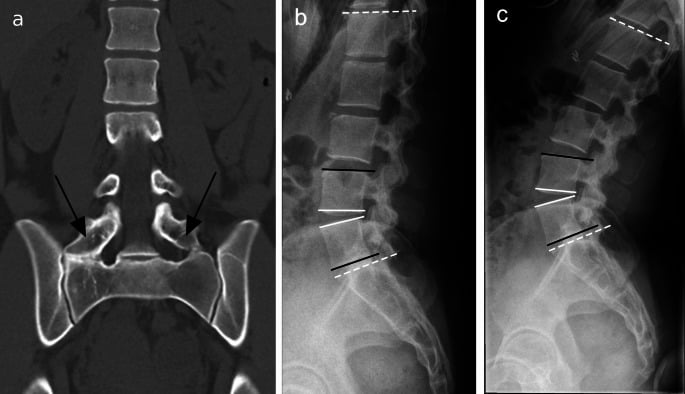
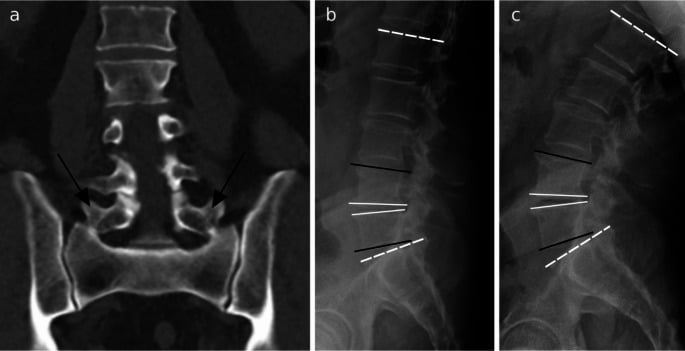
The four pain generators. Pain in a patient with an LSTV can come from any of four sources, and identifying the generator is what targets treatment.
The pseudoarticulation. The joint between the enlarged transverse process and the sacral ala is a true diarthrodial joint with articular cartilage, and over time it develops degenerative changes. The pain sits at the L5-sacrum junction, is mechanical with loading, and may have an inflammatory component.
Tenderness over the joint, relief from a diagnostic injection and joint degeneration on CT identify it. It is the primary pain generator in Type II LSTV and the target for injection or surgery.
The contralateral facet. With a unilateral LSTV (the "a" subtypes) the stiffness is asymmetric, the facet joint on the opposite side bears increased load, and it develops accelerated arthropathy: a left-sided Type IIa LSTV overloads the right L5-S1 facet, which becomes arthritic.
It presents as paramedian pain on the opposite side, is relieved by facet injection, and shows facet degeneration on CT or MRI. It is important to identify, because the patient may need facet treatment instead of, or as well as, treatment of the LSTV.
The disc above. L4-L5 disc herniation is more common with an LSTV, and studies show higher rates of L4-L5 disc degeneration and herniation in patients with a sacralised L5 than in the normal population. Discogenic pain may predominate, and the disc pathology may need treatment in its own right.
The L5 nerve. The enlarged transverse process can compress the L5 root in the extraforaminal (far lateral) zone, causing an L5 radiculopathy without intracanal pathology: L5 dermatomal pain or numbness and weak ankle dorsiflexion, with a straight leg raise that is often negative.
CT shows the enlarged transverse process narrowing the extraforaminal zone, and MRI may miss it if the zone is not specifically evaluated. It is an important cause of radiculopathy that can be missed if it is not considered.
PAINPAIN - Sources of Bertolotti Pain
Hook:PAIN sources help target treatment - identify the pain generator
Natural history. Many LSTVs are asymptomatic and discovered incidentally. The condition may wax and wane, and some patients have prolonged symptom-free periods.
Classification
Castellvi (1984). Castellvi's classification remains the standard system for LSTVs. It is based on the morphology of the transverse process and its relationship to the sacrum, with the suffix a for unilateral and b for bilateral in Types I-III. The threshold for Type I is a transverse process at least 19 mm in craniocaudal width.
- Description
- Unilateral dysplastic TP (≥19mm)
- Clinical Significance
- Usually asymptomatic
- Description
- Bilateral dysplastic TP
- Clinical Significance
- Usually asymptomatic
- Description
- Unilateral pseudoarticulation
- Clinical Significance
- Most commonly symptomatic
- Description
- Bilateral pseudoarticulation
- Clinical Significance
- Symptomatic, both sides may hurt
- Description
- Unilateral complete fusion
- Clinical Significance
- Contralateral facet/disc issues
- Description
- Bilateral complete fusion
- Clinical Significance
- Above-level disc disease
- Description
- IIa on one side, IIIa on other
- Clinical Significance
- Complex - address pseudoarthrosis side
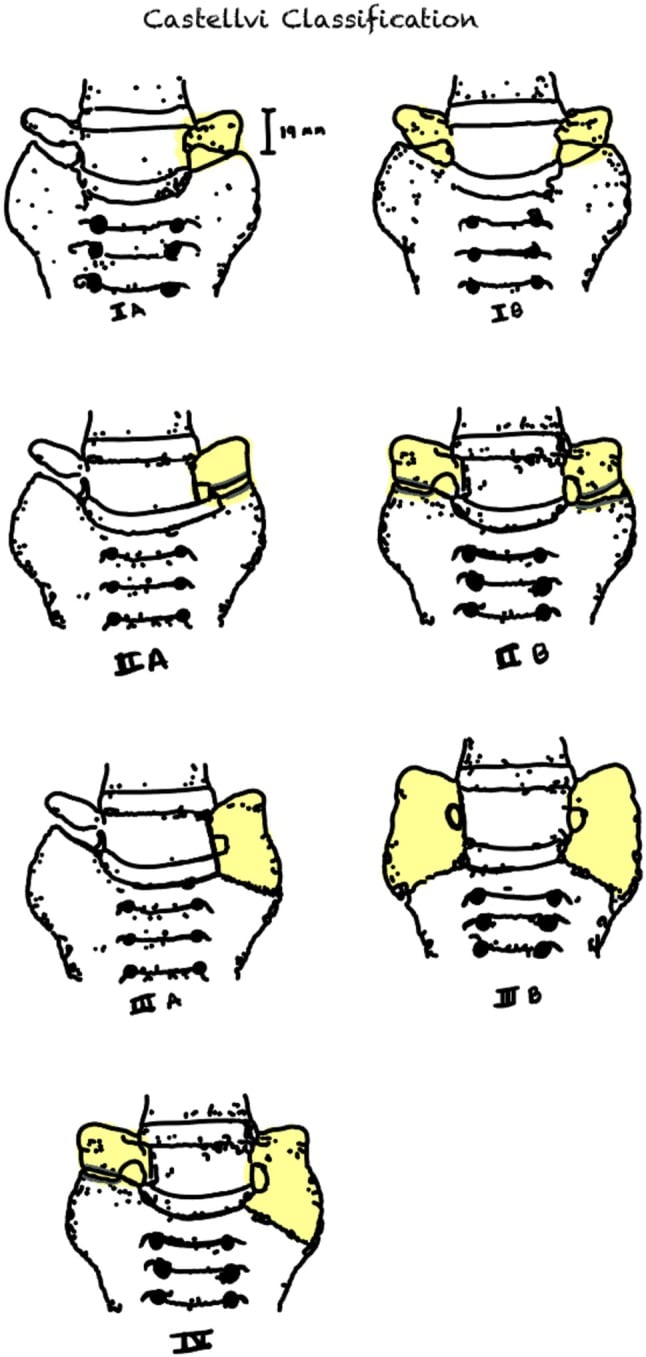
Type I, the dysplastic transverse process. The transverse process is enlarged but neither articulates with nor fuses to the sacrum, and it is considered a forme fruste of transitional vertebra. It is usually asymptomatic and often an incidental finding.
It may be a predisposing factor for low back pain in some patients but is generally considered to have no clinical significance, so management is observation and reassurance, and other pain generators are considered before symptoms are attributed to it.
Type II, the pseudoarticulation. Incomplete fusion: the enlarged transverse process forms a diarthrodial (synovial) joint with the sacral ala. There is a joint space and articular cartilage, limited motion is possible, and like other synovial joints it can develop osteoarthritis.
Type II is the type most commonly associated with symptomatic Bertolotti syndrome and the target for diagnostic and therapeutic injection. Management is conservative first, then injection; a positive injection response with refractory symptoms is the indication for resection of the anomalous articulation.
Type III, complete fusion. The transverse process is fused completely to the sacral ala and the segment is immobile. The fusion eliminates motion at L5-S1 and transfers stress cephalad, so the pain often originates from the L4-L5 disc or the contralateral facet rather than the fused segment itself.
Treat the associated pathology: consider discectomy or fusion for above-level disc disease, and facet injection or treatment for the contralateral facet.
Type IV, mixed. A pseudoarticulation on one side and complete fusion on the other create asymmetric biomechanics and complex pain patterns. The pseudoarthrosis side is usually the symptomatic component, although the asymmetry can also cause contralateral facet overload and above-level disc disease.
Diagnostic injection of the pseudoarticulation is key: if it is positive, resect that side, and address the contralateral facet or the disc above if they are contributing.
Clinical Presentation
The pain. Deep, aching and mechanical low back pain, often chronic and insidious in onset, which may lateralise to the side of the LSTV. Extension, rotation and prolonged standing aggravate it, and there may be L5 radicular symptoms if the nerve is compressed.
The history that matters. Ask about previous imaging showing an LSTV and the treatments that have already failed. Radicular symptoms suggest nerve involvement, and leg symptoms raise the question of disc against LSTV. Rule out serious pathology: Bertolotti syndrome should be mechanical pain without red flags.
Examination. There may be a mild scoliosis, especially with a unilateral LSTV, and the lumbar lordosis is usually normal.
Tenderness lies over the pseudoarticulation, lateral to the midline, and may be difficult to differentiate from sacroiliac joint tenderness; the contralateral facet is tender if it is overloaded. Extension is often painful and rotation to the affected side may reproduce the pain, while flexion is usually less painful.
Neurology. Usually normal. An L5 radiculopathy gives weak ankle dorsiflexion and altered sensation in the L5 dermatome. Check for signs of extraforaminal compression.
- Technique
- Extension on one leg
- Significance
- Reproduces pain on affected side
- Technique
- May be positive
- Significance
- Overlaps with SI joint testing
- Technique
- Usually negative
- Significance
- Positive suggests disc herniation
Investigations
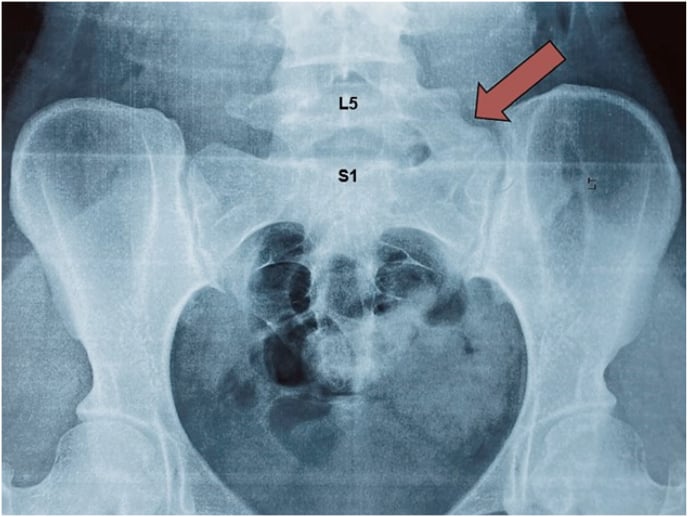
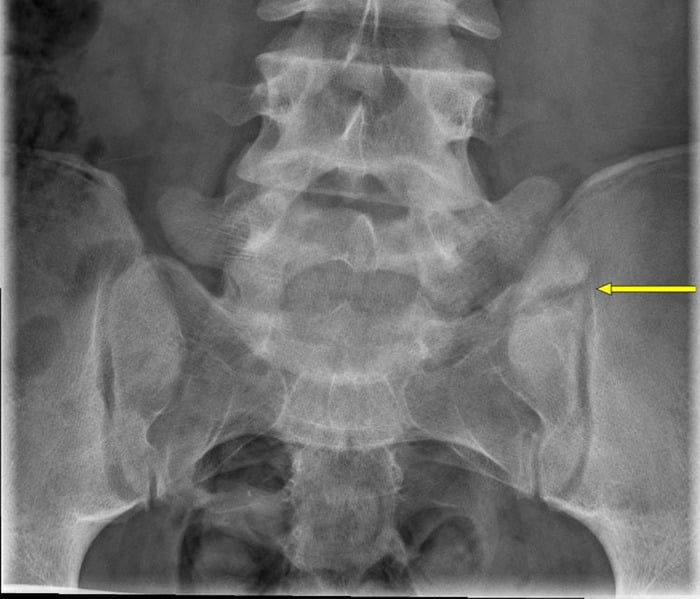
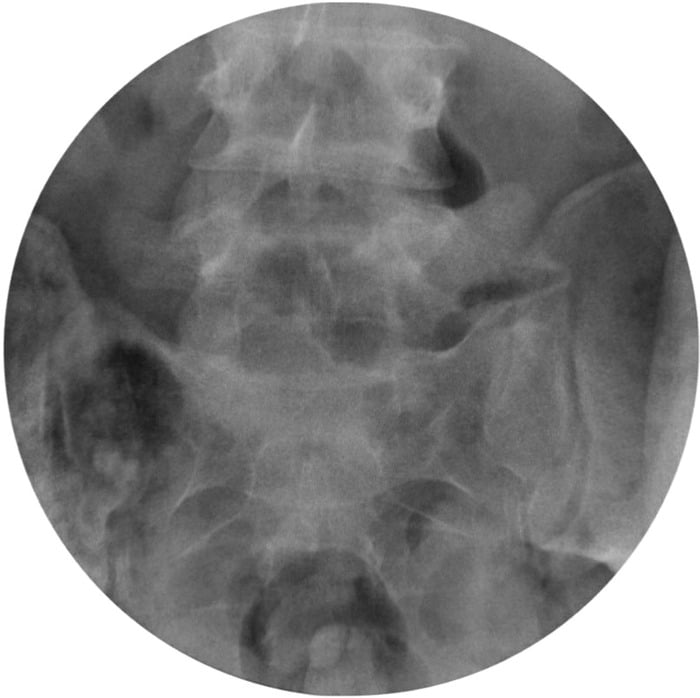
Radiographs first. Four views, of which the Ferguson view gives the best visualisation of the lumbosacral junction and the LSTV:
- AP lumbar - transverse process morphology; may show the LSTV
- Lateral - disc heights and overall alignment
- Ferguson view - an AP view with 30-35° cephalad tilt
- Oblique - facet joints and pars interarticularis
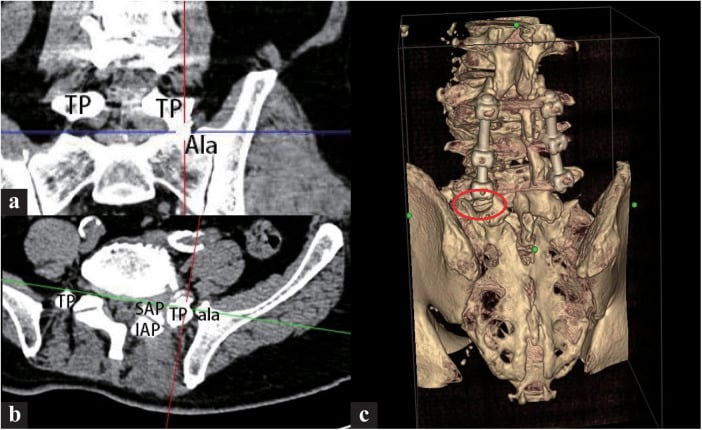
CT is the best modality for the bony detail of an LSTV:
- Defines the Castellvi type (I-IV) precisely
- Shows the pseudoarthrosis: joint space, sclerosis and cysts
- Distinguishes complete from incomplete fusion
- Shows extraforaminal stenosis at the nerve foramina
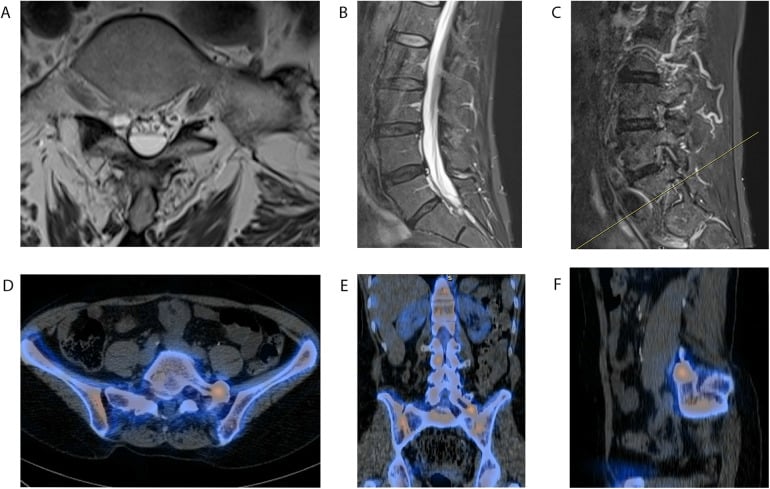
MRI shows the soft tissues:
- Disc degeneration and herniation at L4-L5
- Bone marrow oedema, meaning active inflammation at the pseudoarthrosis
- Nerve root compression or inflammation
- Facet effusion and degeneration
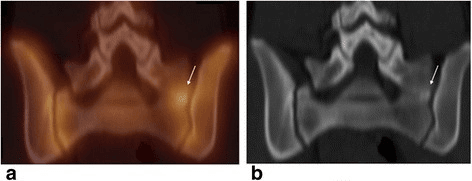
Diagnostic injection. An injection into the pseudoarticulation, under CT or fluoroscopic guidance with local anaesthetic and steroid, is both diagnostic and therapeutic, and the response helps confirm the LSTV as the pain source:
- Greater than 50% relief - positive: the LSTV is the pain source
- Partial relief - there may be multiple pain generators
- No relief - consider another diagnosis
Blood tests are not typically required. If inflammatory arthropathy is a concern, check the ESR, CRP and HLA-B27 (spondyloarthropathy).
Vertebral Numbering in LSTV — Why Standard Landmarks Fail
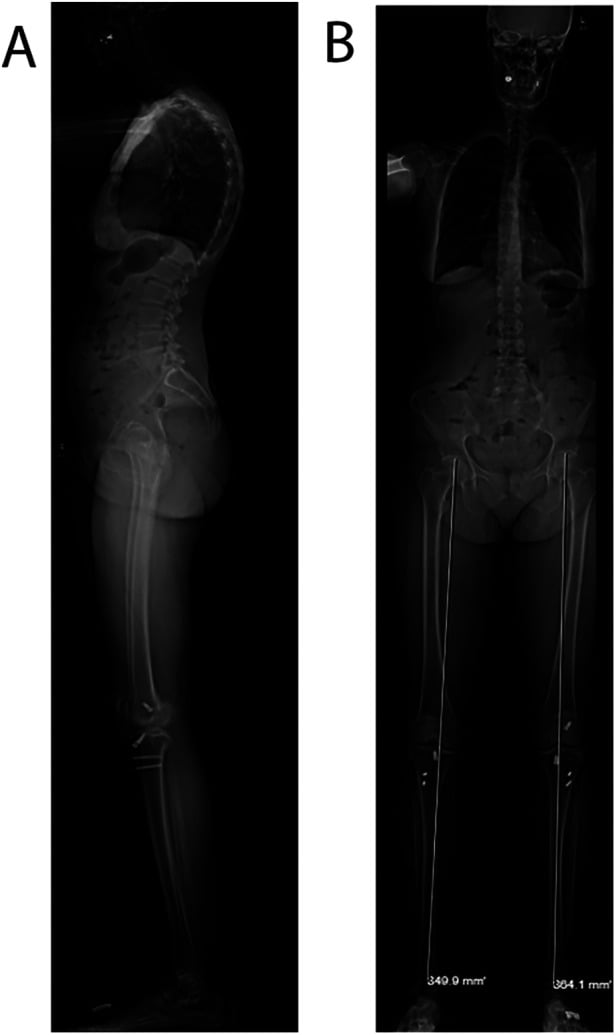
The hazard. An LSTV confuses vertebral counting: a sacralised L5 may be counted as S1, and the operation is done at the wrong level. The numbering shortcuts most surgeons rely on are the ones that fail when a transitional vertebra is present, so knowing which landmarks are unreliable matters as much as knowing the safe method.
LSTV is a common cause of wrong-level spinal surgery, and operating on the wrong level is a major medicolegal issue. Always use more than one method to confirm the vertebral level, and document the transitional anatomy in the operative report.
Landmarks that mislead. Each of these can be off by a segment when an LSTV is present:
- Iliac-crest (Tuffier/Jacoby) line - variously taught as lying at the L4 body or crossing the L4-L5 interspace, but its vertebral level varies widely between individuals and cannot be trusted to name the transitional segment
- Iliolumbar ligament origin - proposed as a marker of L5, but its origin is variable in transitional anatomy and a slip may arise from more than one level
- Aortic bifurcation, right renal artery origin and conus tip - each has been suggested as an internal reference, but each varies by one or more levels and none is dependable
- The last rib alone - T12 is the last rib-bearing vertebra, but thoracolumbar variants (a lumbar rib, or a hypoplastic or absent twelfth rib) coexist, so counting from "the last rib" can itself be off by a segment
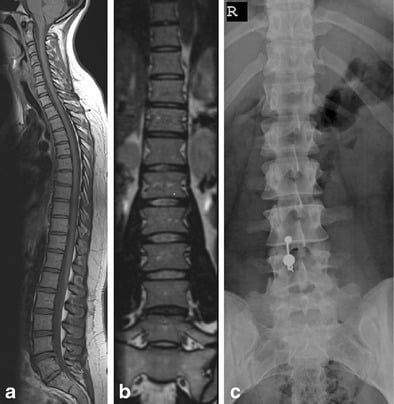
The reliable method. Count on whole-spine imaging rather than on a limited lumbar field of view; a limited lumbar MRI that truncates the count is a leading cause of mislabelling.
- Obtain a single coronal or sagittal localiser (or scout) that spans continuously from C2 to the sacrum
- Count continuously from C2 down, or from the true first rib-bearing vertebra; on CT, count the ribs down from T1
- Document the transitional morphology and the numbering convention chosen in the operative plan
- Reconfirm the level in theatre with a marker and imaging before decompression or disc entry
Differential Diagnosis
A diagnosis of attribution. An LSTV is present in a substantial minority of the population, so the key task is distinguishing LSTV-driven pain from the overlapping causes of mechanical low back and buttock pain. A positive diagnostic injection into the pseudoarticulation is the single most useful discriminator.
- Typical Pattern
- Young adult, paramedian pain over pseudoarticulation, worse on extension/ipsilateral bending
- Key Discriminator
- Pseudoarticulation injection gives over 50% relief; CT confirms Castellvi II/IV
- Typical Pattern
- Pain below L5, FABER/thigh-thrust positive, overlapping territory
- Key Discriminator
- SI-joint block (not pseudoarticulation block) relieves pain
- Typical Pattern
- Older patient, extension-rotation pain, paramedian
- Key Discriminator
- Medial branch block / facet injection relieves; degenerate facets on CT
- Typical Pattern
- Flexion- and sitting-aggravated axial pain
- Key Discriminator
- Concordant discography or HIZ/Modic at L4-L5 on MRI
- Typical Pattern
- Dorsiflexion weakness, L5 dermatomal symptoms, often negative SLR
- Key Discriminator
- CT/MRI shows enlarged TP narrowing the far-lateral zone; selective L5 block
- Typical Pattern
- Inflammatory back pain, morning stiffness, raised CRP, HLA-B27
- Key Discriminator
- Sacroiliitis on MRI/radiograph
Axial spondyloarthritis. LSTV is more frequent in patients with inflammatory back pain who turn out to have axial spondyloarthritis, and its pain territory overlaps the sacroiliac joint. Do not anchor on the LSTV: screen for inflammatory features and image the sacroiliac joints before attributing all the pain to the pseudoarticulation.
Management
Conservative treatment first. A trial of 6-12 weeks comes before any interventional treatment:
- Activity modification - avoid aggravating positions
- NSAIDs - first-line pharmacotherapy
- Physiotherapy - core strengthening and flexibility
- Weight management - to reduce spinal loading
Injection. Indicated when conservative management fails, for diagnostic confirmation, and as a therapeutic trial. The pseudoarthrosis is the primary target in Type II; the contralateral facet is injected if facet pain is suspected, and a selective nerve root block is used for radiculopathy.
Who needs surgery. The indications for surgery:
- Failed conservative and injection therapy
- The LSTV confirmed as the pain source by a positive diagnostic injection
- Significant functional impairment
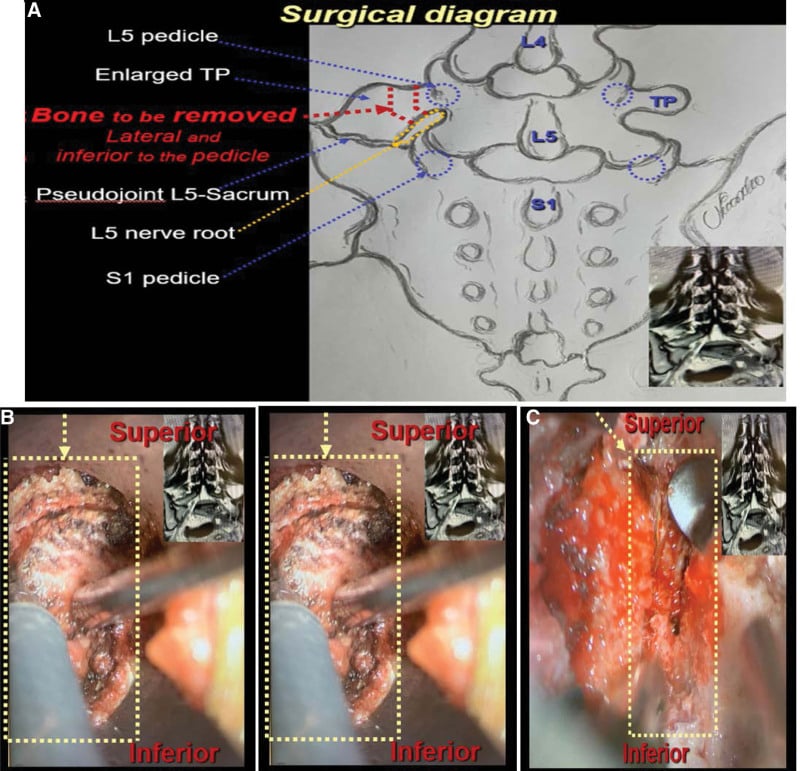
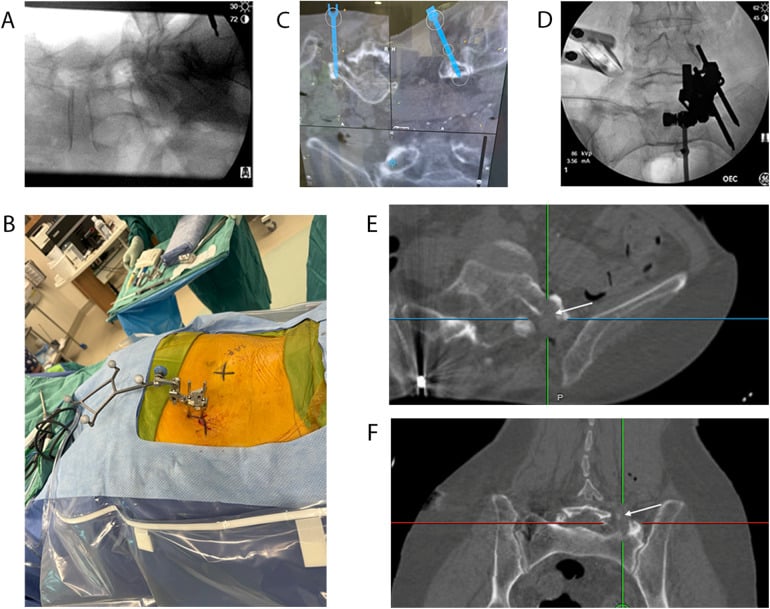
Resection of the anomalous articulation. Removing the enlarged transverse process and the pseudoarthrosis eliminates the pain generator while preserving motion; it addresses the primary pathology with less morbidity than fusion. For a Type II LSTV with a positive pseudoarthrosis injection it is the preferred first-line surgical treatment.
- Posterior or posterolateral approach
- Identify the enlarged transverse process
- Resect the transverse process and the pseudoarticulation
- Decompress the L5 nerve if it is compressed
- No fusion is required
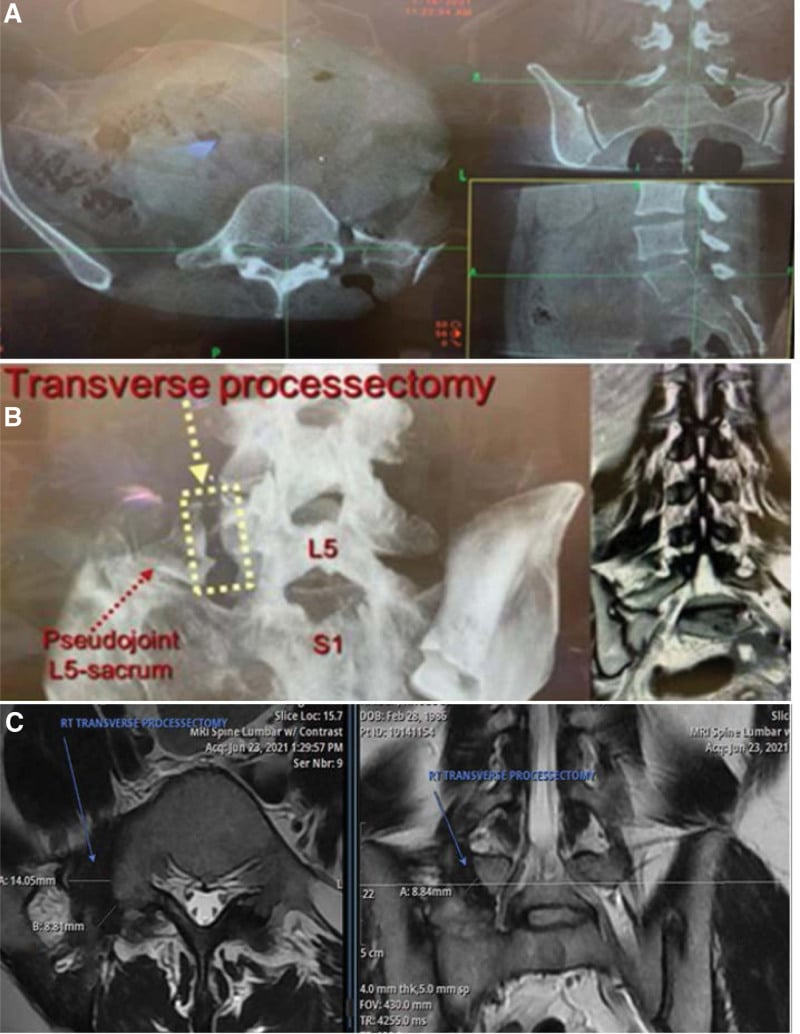
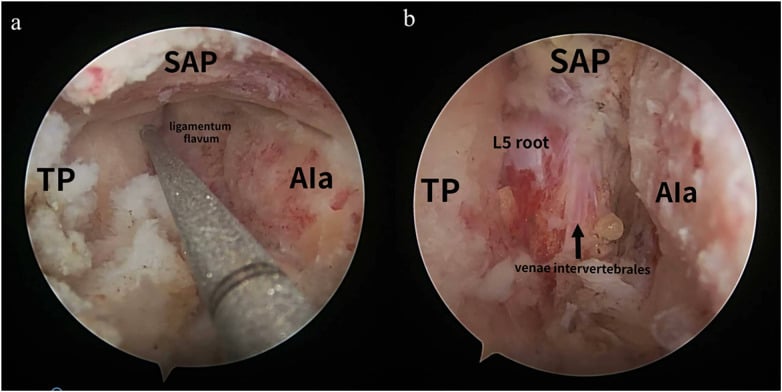
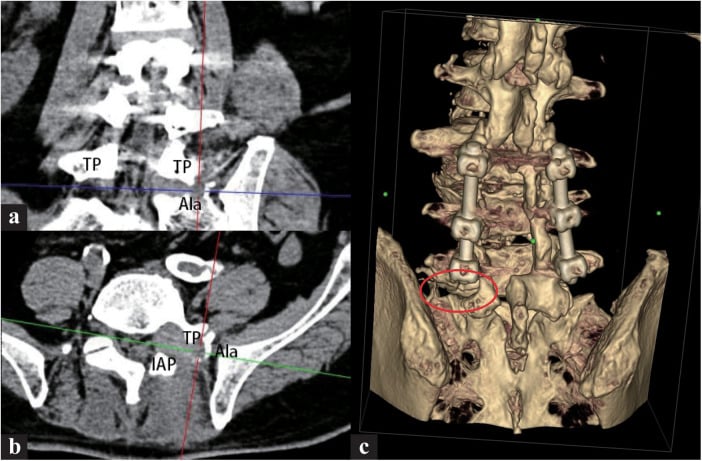
Outcomes of resection. Good-to-excellent results in the 70-85% range are conventionally quoted for appropriately selected patients with a positive diagnostic injection, but that is a teaching figure rather than a measured rate.
The only cohort data (McGrath 2021, n=67) show that pseudoarthrectomy after a positive pseudoarticulation injection gives more durable relief than continued injections, without a validated outcome score.
Fusion. L5-S1 or L4-S1 fusion, by PLIF or TLIF, which may need to include L4-L5 if that disc is diseased. It is reserved for cases where resection alone is insufficient or the pathology extends beyond the LSTV:
- Type III LSTV with above-level disc disease
- Failed resection
- Significant instability
- Associated spondylolisthesis
The cost is a more extensive operation, the loss of a motion segment and a risk of adjacent segment disease, and the abnormal anatomy may need addressing as well.
Combined procedures. When the LSTV comes with a disc herniation, spinal stenosis or multiple pain generators, address each pathology systematically: resect the pseudoarthrosis if it is Type II, decompress the nerve if it is compressed, and fuse if the segment is unstable or the disc diseased.
Complications
Injection. Infection is rare; bleeding, nerve injury and steroid side effects are the others.
Resection. The L5 nerve is at risk from its proximity to the pseudoarthrosis. Incomplete resection leaves recurrent pain, instability is rare if the technique is appropriate, and there are wound complications.
Fusion. Pseudarthrosis, hardware failure, adjacent segment disease, nerve injury and infection.
Wrong-level surgery. A particular risk with an LSTV because of the difficulty of counting the levels; its prevention is set out under vertebral numbering above.
Guidelines, Registries & Global Practice
Global epidemiology:
- Figure
- ~4-36%
- Source population
- Varies with definition and imaging method
- Figure
- 18.9% positive (sacralization 17.2%, lumbarization 1.7%)
- Source population
- Turkish cohort, 3607 abdominal films
- Figure
- 35.6% positive; 6.6% had six lumbar vertebrae
- Source population
- US KUB radiographs
- Figure
- 29.1%
- Source population
- European inflammatory back pain cohort
Guideline landscape (side by side):
There is no condition-specific society guideline dedicated to Bertolotti syndrome. Management is governed by general low back pain and wrong-level-surgery guidance, which differs by region:
- Position relevant to LSTV / low back pain
- Non-specific low back pain managed without routine imaging; reserve MRI for when a specific cause is suspected or surgery is considered — relevant to avoiding over-attribution to incidental LSTV
- Position relevant to LSTV / low back pain
- Emphasise correlation of imaging with symptoms and image-guided diagnostic blocks before intervention
- Position relevant to LSTV / low back pain
- Mandatory site and level verification — the core defence against LSTV-related wrong-level surgery
- Position relevant to LSTV / low back pain
- Whole-spine imaging and consistent numbering recommended whenever LSTV is present and surgery is planned
Registry note:
No arthroplasty/implant registry tracks Bertolotti procedures specifically, as resection is non-instrumented and fusion volumes are low. Wrong-level spinal surgery is, however, captured by national patient-safety/never-event reporting systems in several countries, where transitional anatomy is a recurrent contributing factor.
High- vs limited-resource practice variation:
- Well-resourced settings: CT and MRI are routine; CT- or fluoroscopy-guided diagnostic injections and image-navigated minimally invasive pseudoarthrectomy are available; multidisciplinary review for complex level identification.
- Limited-resource settings: Diagnosis often rests on plain radiographs (Ferguson view) and clinical correlation; diagnostic injection access may be limited; treatment is predominantly conservative, with surgery reserved for clearly refractory, well-localised cases.
Wrong-level surgery — universal principle:
Prevention of wrong-level surgery is a global surgical-safety priority. Multiple level confirmations (whole-spine imaging, intraoperative imaging with a marker, consistent documented nomenclature) are required wherever transitional anatomy is present, irrespective of health system.
Controversies & Areas of Uncertainty
Is the LSTV truly a pain generator? The causal link between LSTV and low back pain remains debated. Prevalence in asymptomatic and symptomatic populations may be similar, so an LSTV seen on imaging is frequently incidental. Attribution requires concordant tenderness, imaging change at the pseudoarticulation and a positive diagnostic block.
Resection or fusion. No randomised trial compares pseudoarthrectomy with fusion. Biomechanical and cohort data favour motion-preserving resection when the superior levels are stable, reserving fusion for above-level instability or established adjacent-segment disc disease, and practice varies widely between surgeons.
How long an injection lasts. Pseudoarticulation injections reliably produce short-term relief and are valuable diagnostically, but the duration of therapeutic benefit is inconsistent and not well defined by long-term data. A good response predicts surgical success better than it predicts lasting relief from injection alone.
What Castellvi cannot tell you. The system describes morphology, not symptoms, and no inter- or intra-observer reliability has been established for it. It does not capture extraforaminal nerve compression or contralateral facet load, so it should guide rather than dictate management.
Clinical Decision Scenarios
Practise clinical reasoning and management decisions out loud
“A 28-year-old office worker presents with 18-month history of left-sided low back pain. Pain is worse with prolonged standing and extension. Examination shows tenderness lateral to the midline at L5 level on the left. X-ray shows an enlarged left L5 transverse process articulating with the sacral ala.”
“The same patient has failed 6 months of conservative management including physical therapy. Diagnostic injection into the left pseudoarticulation provided 85% pain relief for 3 weeks. CT confirms Type IIa LSTV with degenerative changes at the pseudoarthrosis. MRI shows mild L4-L5 disc degeneration but no herniation.”
“A 45-year-old woman is scheduled for L4-L5 discectomy for disc herniation. Preoperative MRI shows disc herniation at the lowest mobile disc level. However, her lumbar spine X-ray shows 6 lumbar-type vertebrae with the lowest one having an enlarged left transverse process articulating with the sacrum.”
Definition
- LSTV = Lumbosacral Transitional Vertebra
- Sacralization of L5 or lumbarization of S1
- Bertolotti syndrome = symptomatic LSTV
- Named after Mario Bertolotti (1917)
Castellvi Classification
- Type I: Dysplastic TP (≥19mm) - no articulation
- Type II: Pseudoarticulation - MOST SYMPTOMATIC
- Type III: Complete fusion to sacrum
- Type IV: Type II + Type III (mixed)
- Suffix a = unilateral, b = bilateral
Pain Sources (PAIN)
- P = Pseudoarticulation (anomalous joint)
- A = Arthrosis (contralateral facet)
- I = Intervertebral disc (above level)
- N = Nerve (extraforaminal L5 compression)
Diagnosis
- Ferguson view X-ray (30-35° cephalad)
- CT for bony detail and Castellvi typing
- MRI for disc and soft tissue
- Diagnostic injection confirms pain source
Treatment
- Conservative first: PT, NSAIDs, activity modification
- Injection: Pseudoarticulation (diagnostic/therapeutic)
- Surgery: Resection for Type II, Fusion if disc disease
- Must have positive diagnostic injection before surgery
Critical Points
- Level counting essential - risk of wrong-level surgery
- Count from C2 on whole-spine imaging
- Document transitional anatomy clearly
- Young patient presentation typical (20s-30s)
Evidence Base
Original Description
- First description of low back pain associated with lumbosacral transitional vertebra
- Recognized that anomalous anatomy could be symptomatic
- Established the eponymous syndrome
Castellvi Classification (landmark)
- 200 consecutive patients with myelographically proven disc herniation reviewed; 60 met criteria for LSTV
- Defined the four-type radiographic classification (Types I-IV) still in universal use
- Type II LSTV showed disc herniation at the transition level and excess herniations at the level just above
- Types III and IV showed no herniation at the transitional level itself
LSTV and Above-Level Disc Degeneration
- 52 patients on MRI: discs immediately above the LSTV were significantly more degenerate; the disc between transitional vertebra and sacrum was significantly less degenerate
- 70-cadaver study: iliolumbar ligament at the level above the LSTV was thinner and weaker
- Proposed weak iliolumbar ligament leads to instability and accelerated degeneration above the transition
LSTV: Classification, Imaging & Clinical Relevance (review)
- Comprehensive review of LSTV imaging, numbering and the genesis of LSTV-related low back pain
- Pain may arise from the level above the transition, the contralateral facet (when unilateral), or the anomalous articulation
- Emphasises whole-spine imaging and geometric landmarks to avoid wrong-level surgery
Prevalence of LSTV in the General Population
- 211 evaluable abdominal radiographs: 75 (35.6%) had an LSTV using strict Castellvi criteria
- Castellvi Type Ia was the most common variant (14.7%)
- 6.6% had six lumbar (non-ribbed) vertebrae, underscoring numbering pitfalls
Treatment Patterns & Pseudoarthrectomy Outcomes
- Retrospective cohort of 67 patients with LSTV over 10 years; 33% had an LSTV not identified by their provider
- Pseudoarticulation injection gave significantly greater immediate relief than any other injection type
- Patients responding to pseudoarticulation injection who underwent pseudoarthrectomy had more durable relief than those who continued injections alone
Biomechanics: Resection vs Fusion
- Cadaveric/3D-printed Bertolotti model (7 spines): LSTV significantly reduced L5-S1 motion, especially lateral bending and axial rotation
- Ipsilateral lateral bending with axial rotation generated the greatest force across the pseudoarticulation
- L4-S1 and L5-S1 fusion increased adjacent-segment motion versus LSTV alone, favouring joint resection when superior levels are stable
References
- Bertolotti M. Contributo alla conoscenza dei vizi di differenzazione regionale del rachide con speciale riguardo all'assimilazione sacrale della V. lombare. Radiol Med. 1917;4:113-44.
- Castellvi AE, Goldstein LA, Chan DP. Lumbosacral transitional vertebrae and their relationship with lumbar extradural defects. Spine (Phila Pa 1976). 1984;9(5):493-5. PMID 6495013. doi:10.1097/00007632-198407000-00014
- Aihara T, Takahashi K, Ogasawara A, et al. Intervertebral disc degeneration associated with lumbosacral transitional vertebrae: a clinical and anatomical study. J Bone Joint Surg Br. 2005;87(5):687-91. PMID 15855373. doi:10.1302/0301-620X.87B5.15727
- Konin GP, Walz DM. Lumbosacral transitional vertebrae: classification, imaging findings, and clinical relevance. AJNR Am J Neuroradiol. 2010;31(10):1778-86. PMID 20203111. doi:10.3174/ajnr.A2036
- Jancuska JM, Spivak JM, Bendo JA. A review of symptomatic lumbosacral transitional vertebrae: Bertolotti's syndrome. Int J Spine Surg. 2015;9:42. PMID 26484005. doi:10.14444/2042
- Apazidis A, Ricart PA, Diefenbach CM, Spivak JM. The prevalence of transitional vertebrae in the lumbar spine. Spine J. 2011;11(9):858-62. PMID 21951610. doi:10.1016/j.spinee.2011.08.005
- McGrath KA, Rabah NM, Steinmetz MP. Identifying treatment patterns in patients with Bertolotti syndrome: an elusive cause of chronic low back pain. Spine J. 2021;21(9):1497-1503. PMID 34010681. doi:10.1016/j.spinee.2021.05.008
- Golubovsky JL, Colbrunn RW, Klatte RS, et al. Development of a novel in vitro cadaveric model for analysis of biomechanics and surgical treatment of Bertolotti syndrome. Spine J. 2020;20(4):638-656. PMID 31669612. doi:10.1016/j.spinee.2019.10.011