Congenital Flexion Contracture of the Finger
- Definition: Non-traumatic congenital/developmental flexion contracture of the PIP joint, most often the small finger
- Pathoanatomy is multifactorial (FLAVS) - no single cause, which is why surgical outcomes are unpredictable
- Conservative treatment is usually first-line: stretching, hand therapy and static or dynamic extension splinting are tailored to flexibility, age and goals
- Surgery is selective: consider function, progression, passive correction, joint remodelling and response to an adequate individualised conservative programme
- “Multiple-digit or bilateral severe involvement should trigger syndromic assessment rather than automatic Type 3 labelling
- “No agreed angle or fixed six-month trial alone determines surgery; function and flexibility matter
- “Operative extension gain can cost flexion, and recurrence/stiffness rates vary markedly across small heterogeneous series
Overview and Epidemiology
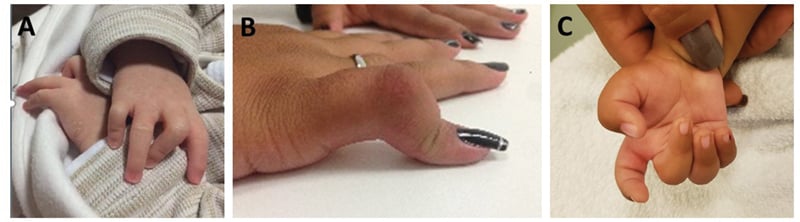
Camptodactyly is a congenital or developmental, non-traumatic flexion contracture of the proximal interphalangeal (PIP) joint. The name is Greek: kamptos, bent, and daktylos, finger. It most commonly affects the small finger and is frequently bilateral; it may be present at birth, develop in adolescence, or occur as part of a syndrome affecting several digits.
How common. About 1% of the general population is affected. The contracture is bilateral in 75% of cases, and the small finger is involved in over 90% of isolated cases. Familial cases show autosomal dominant inheritance with variable penetrance.
Sex depends on type. It should not be quoted as a single figure. The infantile form is equal (male to female 1:1), whereas the adolescent form has a clear female predominance. The difference is worth knowing because it is the discriminator examiners use, and because a contracture appearing for the first time in an adolescent girl is the presentation most often mistaken for something acquired.
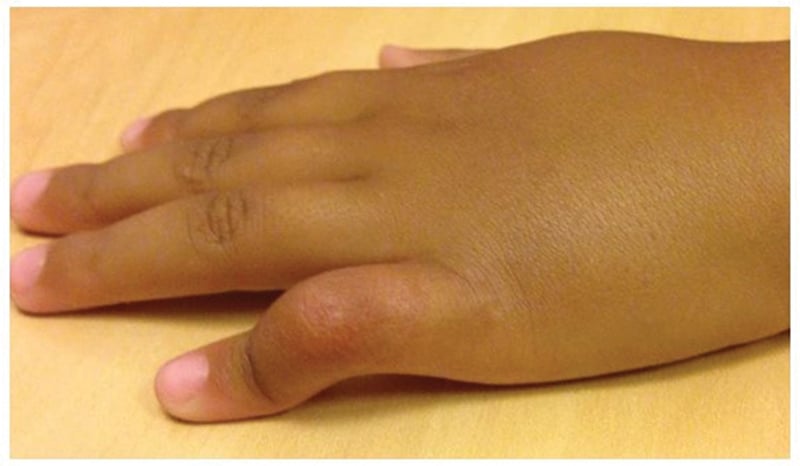
Pathoanatomy and Pathophysiology
Camptodactyly does NOT have a single anatomical cause. Multiple structures contribute to the deformity including FDS abnormalities, lumbrical anomalies, volar skin shortage, volar plate contracture, accessory muscles, and secondary joint changes. Surgical treatment must address ALL contributing factors, which explains the unpredictable outcomes and high recurrence rate.
The FDS. The most commonly cited abnormality is a short or congenitally tight flexor digitorum superficialis. The tendon may instead insert anomalously, on the lateral rather than the volar base of the middle phalanx, its muscle belly may extend distally into the finger, and in some cases it is hypoplastic or absent altogether.
The lumbrical. The lumbrical may take an anomalous origin from the FDP tendon, more proximal than normal, and an aberrant insertion onto the volar plate or into the digit. An extended muscle belly can cause mass effect and tethering, and accessory lumbrical slips add to the flexion force.
Intrinsic and accessory muscles. Accessory flexor muscles may arise from the palm, the interossei may insert anomalously, and accessory bands may cross the PIP joint on its volar side.
Volar soft tissues. The volar abnormalities implicated are volar plate thickening and contracture, primary or secondary, volar skin shortage with dermal tethering, contracture of the check-rein ligament (A3 pulley), and contracture and shortening of the collateral ligaments.
Secondary joint changes. The secondary changes implicated include PIP joint remodelling with condylar flattening in chronic cases, articular cartilage changes and early degeneration, joint incongruity with a tendency to subluxation, and capsular fibrosis and adhesions.
Compensatory deformities. These include DIP joint hyperextension (a swan-neck type posture), metacarpophalangeal joint hyperextension in severe cases, and metacarpal head remodelling in long-standing deformity.
A flexor-extensor imbalance. The deformity reflects an imbalance between flexor and extensor forces at the PIP joint. On the flexor side, the tight or anomalous FDS exerts a constant pull, an anomalous lumbrical acts as a PIP flexor rather than an MCP flexor, accessory flexors add to the flexion moment and short volar skin limits extension. On the extensor side, the central slip may be attenuated or stretched over time, chronic flexion displaces the lateral bands volarly, the intrinsics are ineffective at a mechanical disadvantage, and capsular contracture prevents passive extension.
The progressive cycle. The deformity stiffens in stages:
- An initial mild contracture leads to prolonged PIP flexion positioning
- The volar structures (skin, volar plate, collaterals) shorten adaptively
- Compensatory DIP hyperextension develops
- The joint remodels, with condylar flattening
- The extensor mechanism becomes progressively ineffective
- The deformity becomes increasingly fixed and resistant to treatment
FLAVSCamptodactyly Pathoanatomy
Hook:FLAVS: the Flexor And Volar Structures that can be abnormal in camptodactyly. No single cause, so every contributing structure must be addressed.
Classification Systems
Clinical types. The most widely used classification (Benson et al., Courtemanche) divides camptodactyly into three types by age of onset and number of digits affected. It is useful for prognosis, for genetic counselling and for guiding the work-up for syndromic associations.
- Age of Onset
- Birth to 2 years
- Characteristics
- Single digit (usually 5th finger), often bilateral, may improve spontaneously
- Associated Features
- Usually isolated, sporadic or familial (AD)
- Age of Onset
- 10-14 years
- Characteristics
- Small finger, bilateral 75%, progressive during growth spurt
- Associated Features
- Usually isolated, associated with growth spurts
- Age of Onset
- Variable
- Characteristics
- Multiple digits affected, often more severe
- Associated Features
- Part of syndrome: Marfan, Down, ODD, Fanconi
Type 1, infantile. Present at birth or developing in the first 2 years, most commonly at the small-finger PIP joint, and usually an isolated anomaly occurring sporadically or with autosomal dominant inheritance. It is bilateral in approximately 70%. Untreated, 30-40% improve spontaneously and most stabilise; progression is less common than in Type 2, and it generally carries the better prognosis with conservative management; early splinting often prevents worsening.
Type 2, adolescent. Onset is during the adolescent growth spurt, at 10-14 years. It almost exclusively affects the small finger, is bilateral in approximately 75% and is usually isolated. It is typically progressive during the rapid growth phase and stabilises after skeletal maturity in most cases. It is less likely than Type 1 to improve spontaneously and more likely to require prolonged conservative treatment.
Type 3, syndromic. The age at presentation varies with the syndrome. Multiple digits are involved, not just the small finger, the deformity is often more severe, and other congenital anomalies are often present; it may be part of a chromosomal abnormality or genetic syndrome, or of broader musculoskeletal involvement. It requires genetic evaluation and counselling and a multidisciplinary approach, and its natural history and prognosis depend on the underlying condition.
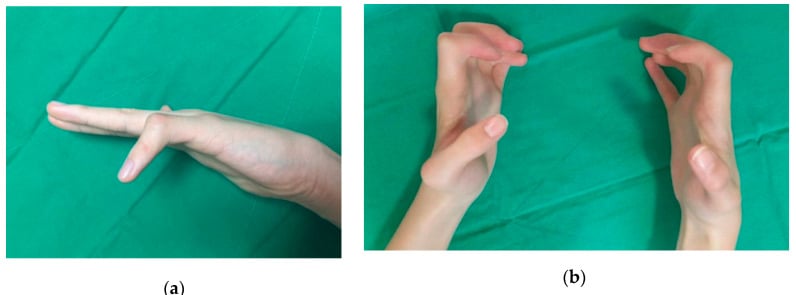
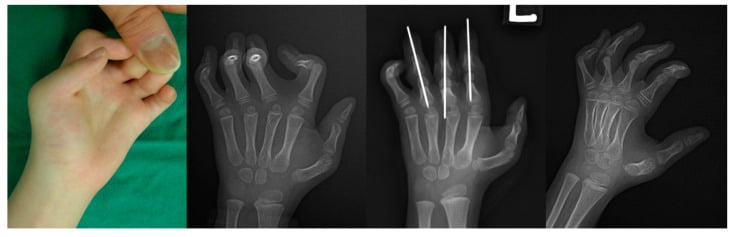
The syndromic hand. In the arthrogryposis-associated case in the next figure, clinical and radiographic views show second-to-fifth-finger flexion contractures, thumb-in-palm and restricted wrist motion. The whole hand and wrist, not one PIP angle, determine function.
Severity. Grading by the PIP flexion contracture guides treatment.
- PIP Contracture
- Less than 30°
- Passive Correction
- Good passive correction possible
- Joint Changes
- None evident
- Management
- Observation, stretching, or intermittent or night splinting according to trajectory and function
- Expected Outcome
- Often stable or improves; monitor growth
- PIP Contracture
- 30-60°
- Passive Correction
- Partial passive correction
- Joint Changes
- Minimal remodelling
- Management
- Hand therapy plus serial static-progressive or dynamic splinting
- Expected Outcome
- Response depends on flexibility and adherence
- PIP Contracture
- Over 60°
- Passive Correction
- Poor or no passive correction
- Joint Changes
- Condylar flattening, incongruity
- Management
- Trial of conservative correction when useful; consider surgery after a splinting trial for fixed, function-limiting deformity
- Expected Outcome
- Extension may improve at the cost of flexion; recurrence varies
Passive correction matters more than the angle. The degree of passive correction is more important prognostically than the active contracture angle, because it indicates the severity of the fixed soft-tissue and joint changes. It is graded:
- Excellent: full passive correction to 0° extension
- Good: passive correction to less than 20° of contracture
- Fair: passive correction to 20-40° of contracture
- Poor: residual contracture over 40° despite gentle passive force
Functional impact. Function is critical to the surgical decision, and it must be judged individually against the patient's age, activities and expectations.
- What the Patient Reports
- Cosmetic concern only; no limitation of daily activities; sports and musical instruments unaffected; satisfied with current function
- Management
- Conservative only; surgery not indicated
- What the Patient Reports
- Difficulty with some activities (writing, typing, sports); compensatory strategies effective; occasional frustration; mild to moderate impact on quality of life
- Management
- Aggressive conservative trial; surgery considered if the angle is severe
- What the Patient Reports
- Significant limitation of daily activities; cannot take part in desired sports or activities; employment or school performance affected; psychosocial distress from the deformity
- Management
- Surgery considered if contracture over 60° and conservative treatment has failed
Clinical Assessment
History. Establish the age of onset, infancy or adolescence, and the pattern since: stable, improving or worsening, and in an adolescent whether it relates to growth spurts. Record previous treatment and its response, including splinting (type, duration, compliance and response), therapy and any surgery.
Function. Ask about daily activities such as writing, buttoning and gripping, sports and musical instruments, occupational or school performance, and the psychosocial impact: self-consciousness and social avoidance.
Family and associated features. Ask whether other family members are affected (the autosomal dominant pattern), and about other congenital hand anomalies or syndromic conditions in the family. Involvement of other digits suggests Type 3; ask too about other congenital anomalies (cardiac, skeletal, ocular), developmental delay and medical conditions.
Inspection. Note which digits are affected, one hand or both, and their posture at rest. The DIP joint is commonly in compensatory hyperextension. Look at the skin for volar tightness, creases and scars from previous surgery, and for associated anomalies such as syndactyly or polydactyly.
Range of motion. Measure active PIP extension (the patient extends maximally) and flexion, DIP and MCP motion, and compare with the other hand. Then extend the PIP gently and passively to measure the maximum correction, which documents the fixed and the correctable components, and note any crepitus or instability.
Special tests. The FDS test isolates superficialis function by holding the other fingers in extension. Assess volar skin mobility and length, and palpate the volar side for a thickened volar plate, tight bands or accessory structures. The effect of wrist position on the contracture is the key manoeuvre and is described in the next section.
Documentation. Measure the PIP flexion contracture, active and passive, with a goniometer and record it precisely. Photograph from lateral and dorsal views, and compare with previous measurements where they exist.
Syndromic screening. When several digits are involved or both hands severely, examine for:
- Height, weight and body habitus (Marfan: tall, arachnodactyly)
- The facial characteristics of Down syndrome
- Dental abnormalities (oculodentodigital syndrome)
- Thumb hypoplasia (Fanconi anaemia)
- Other skeletal abnormalities
- A murmur on cardiac auscultation (Marfan)
- Lens dislocation on ophthalmological screening (Marfan)
The Wrist-Flexion (FDS) Test
The wrist-position (tenodesis) effect is the manoeuvre that decides which structure is driving the deformity. A tight extrinsic FDS is slack when the wrist and MCP joints are flexed and taut when they are extended.
How to do it. Assess the available PIP extension first with the wrist and MCP flexed, then with the wrist and MCP extended, and compare.
How to interpret it. If PIP extension is much better with the wrist and MCP flexed and worsens with them extended, a tight or anomalous FDS is the dominant deforming force, put on stretch across the extended proximal joints. If the contracture is unchanged by wrist and MCP position, the block is local to the PIP joint (volar plate, collateral ligament, skin or joint) rather than the extrinsic FDS.
Why it matters. This single manoeuvre triages the pathoanatomy at the bedside and directs surgery. A strongly FDS-dependent contracture argues for an FDS-directed procedure (lengthening, transfer or release), whereas a position-independent contracture warns that FDS surgery alone will fail and the volar plate, skin and joint must be addressed. It also gauges the fixed-versus-correctable component that determines prognosis.
Investigations
Radiographs. Posteroanterior and lateral views of the affected hand include all digits from wrist to fingertips, with consistent positioning so that serial films can be compared. Imaging assesses chronicity and joint status and aids surgical planning if conservative treatment fails. The findings track severity:
- Early or mild: normal bone morphology and joint congruity, no remodelling
- Moderate: slight condylar flattening of the proximal phalangeal head, maintained joint space, minimal change at the middle phalangeal base
- Severe or chronic: marked condylar flattening and remodelling, flattening or wedging of the middle phalangeal base, joint incongruity, possible subluxation, and secondary degenerative changes (rare)
What else the films show. Skeletal age matters in an adolescent when the timing of intervention is being considered. Look also for associated bony anomalies, such as shortened metacarpals or phalanges, and compare with the contralateral side.
Advanced imaging. It is generally not required for isolated camptodactyly but may be used in selected cases. MRI is rarely indicated: for pre-surgical planning of complex cases, a suspected soft-tissue mass or ganglion contributing, FDS tendon anatomy when a release is planned, or joint cartilage in severe cases. Ultrasound can assess tendon movement dynamically and identify anomalous muscles or tendons, but is generally not necessary in routine cases.
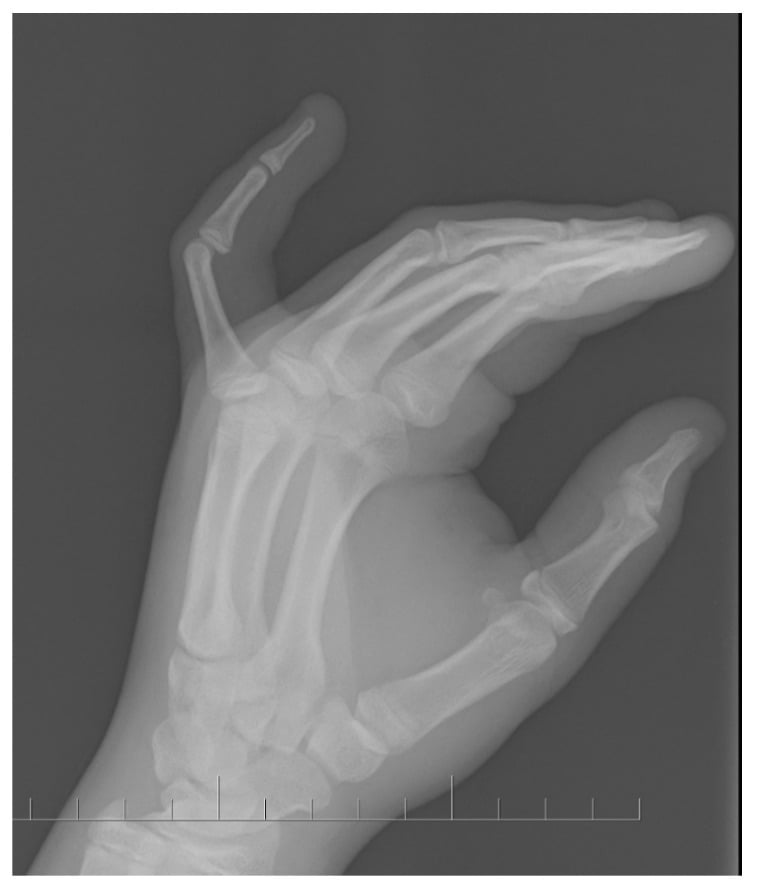
The lateral hand radiograph below documents a 60° PIP flexion contracture and joint alignment before surgery.
Syndromic work-up. It is indicated when:
- Multiple digits are affected
- Involvement is bilateral and severe
- Other congenital anomalies are present
- There is a family history of a syndrome
- There is developmental delay or there are dysmorphic features
- Clinical Features
- Tall stature, arachnodactyly, lens dislocation, aortic root dilation
- Investigations
- Echocardiogram, ophthalmology, FBN1 genetic testing
- Clinical Features
- Characteristic facies, developmental delay, cardiac defects
- Investigations
- Karyotype (trisomy 21), cardiac echo
- Clinical Features
- Dental hypoplasia, syndactyly, eye anomalies
- Investigations
- GJA1 genetic testing, dental, ophthalmology
- Clinical Features
- Thumb hypoplasia, short stature, pancytopenia, café-au-lait spots
- Investigations
- Chromosomal breakage test, full blood count, bone marrow
- Clinical Features
- Whistling face, club feet, camptodactyly
- Investigations
- MYH3 genetic testing, clinical diagnosis
- Clinical Features
- Multiple joint contractures at birth
- Investigations
- EMG, muscle biopsy, genetic panel
Genetics. A genetics consultation is appropriate for any patient with Type 3 (syndromic) camptodactyly or concerning features. Referral is indicated for a confirmed or suspected syndrome, multiple anomalies, a family history of congenital anomalies, consanguinity, or a request for genetic counselling about recurrence risk. The general work-up comprises a detailed dysmorphology examination, developmental assessment, cardiac evaluation (echocardiography if indicated), ophthalmological evaluation, audiology if features suggest it, chromosomal microarray or specific genetic testing, and multidisciplinary team involvement.
Differential Diagnosis
Camptodactyly is flexion at the PIP joint without triggering, without a palpable cord and without a traumatic history. The key exam skill is distinguishing it from the other causes of a flexed or non-extending finger, and multiple rigid joints suggest arthrogryposis and a syndromic work-up.
- Joint / Site
- PIP, usually small finger
- Distinguishing Features
- Non-traumatic fixed/correctable flexion; DIP compensatory hyperextension; no triggering or palpable cord
- Onset / Cause
- Congenital or developmental (infantile or adolescent)
- Joint / Site
- Coronal plane (radioulnar deviation)
- Distinguishing Features
- Angulation in the coronal plane, not flexion; often delta phalanx; commonly with camptodactyly in syndromes
- Onset / Cause
- Congenital, frequently familial
- Joint / Site
- Usually thumb (IP); finger trigger rarer
- Distinguishing Features
- Catching/locking, palpable nodule (Notta node), passively correctable with a snap
- Onset / Cause
- Tendon-pulley size mismatch
- Joint / Site
- MCP first, then PIP; ring/small fingers
- Distinguishing Features
- Palpable palmar cord and nodules; acquired in older adults; positive Hueston tabletop test
- Onset / Cause
- Acquired fibroproliferative (rare in children)
- Joint / Site
- PIP flexion with DIP hyperextension
- Distinguishing Features
- Follows central slip injury or inflammatory arthritis; usually a clear history
- Onset / Cause
- Traumatic or inflammatory (acquired)
- Joint / Site
- Multiple joints, often symmetric
- Distinguishing Features
- Multiple congenital contractures, rigid joints, associated limb deformities
- Onset / Cause
- Congenital, reduced fetal movement
- Joint / Site
- PIP (no joint)
- Distinguishing Features
- Bony fusion with absent PIP crease and no PIP motion at all (versus contracture with some motion)
- Onset / Cause
- Congenital failure of joint formation
Management
Conservative first. Conservative care is usually the starting point, especially while a deformity remains passively correctable, and it is indicated for all newly diagnosed cases regardless of severity. Choose stretching, static-progressive or dynamic splinting, serial casting and review intervals according to age, severity, skin tolerance, passive correction, function, progression, family goals and capacity, and response, rather than a universal protocol. No universal six-month minimum or success percentage is established.
Who does well. The prognosis is excellent for mild contractures (less than 30°) and good for moderate ones (30-60°); a severe contracture (over 60°) still has a trial before surgery. Type 1 (infantile) gives the best results. Success is favoured by:
- An early start, especially in Type 1, at a younger age
- A flexible contracture, mild to moderate and less than 45° at presentation
- Good passive correction at baseline
- A tolerable, well-fitted orthosis and sustained, excellent adherence
- Minimal or no radiographic remodelling
Stretching. Gentle passive PIP extension is performed several times a day, and the parent or patient is taught the technique:
- Hold each stretch for 10-15 seconds and repeat 10-15 times per session
- A minimum of 3-4 sessions per day
- With the wrist in flexion, which relaxes the FDS
- Never forceful, which risks skin breakdown, pain and noncompliance
Static splinting. A simple gutter splint of aluminium foam or custom-moulded thermoplastic holds the PIP in maximum comfortable extension. It is worn at night initially (8-12 hours) and the wearing time increased as tolerated; a serial static splint is remade every 2-4 weeks to increase extension as gains are made.
Serial casting. For moderate to severe contractures, or noncompliance with removable splints, an above- or below-elbow cast includes the affected digit with the PIP in maximum comfortable extension. It is changed every 1-2 weeks, increasing the extension progressively at each change.
Dynamic splinting. A spring-loaded or elastic extension force, as in a Capener-type splint or similar commercial device, provides constant low-load prolonged stress while allowing active flexion against resistance. It may be better tolerated than a static splint by some patients and can be worn during the day with activity modification.
Therapy and monitoring. A certified hand therapist evaluates and treats, educates on splint application, skin care and exercises, monitors and adjusts the splint, counsels on compliance and advises on activity modification. Record active and passive PIP extension, DIP and MCP posture, the wrist-flexion response, function and, when consented, photographs. Review often enough to detect skin injury, loss of flexion, progression or splint intolerance; continue while function or correction is improving, and reconsider the diagnosis and strategy when a well-fitted programme produces no meaningful benefit.
What to expect. Overall success of 50-70% is quoted, with 70-80% of mild and 50-60% of moderate contractures improving or stabilising and 30-40% of severe contractures improving, but published series report heterogeneous outcomes and cannot support fixed success percentages by angle band. Conservative treatment can improve extension and may stabilise growth-related progression, while avoiding the flexion loss and stiffness of surgery; in severe contractures it often prevents further progression. Most improvement is seen in the first 6 months, treatment continues for 12-24 months if it is still producing progress, and gains typically plateau by 12-18 months.
When conservative treatment goes wrong. Skin breakdown comes from excessive pressure or prolonged splint wear, and is prevented by proper padding, skin checks and avoiding excessive force; if it occurs, give a splint holiday and skin care and resume when healed. Noncompliance is the leading cause of conservative failure and is addressed with education, a simplified regimen and frequent follow-up. A contracture that worsens despite treatment indicates failure, and surgery is considered if the criteria below are met.
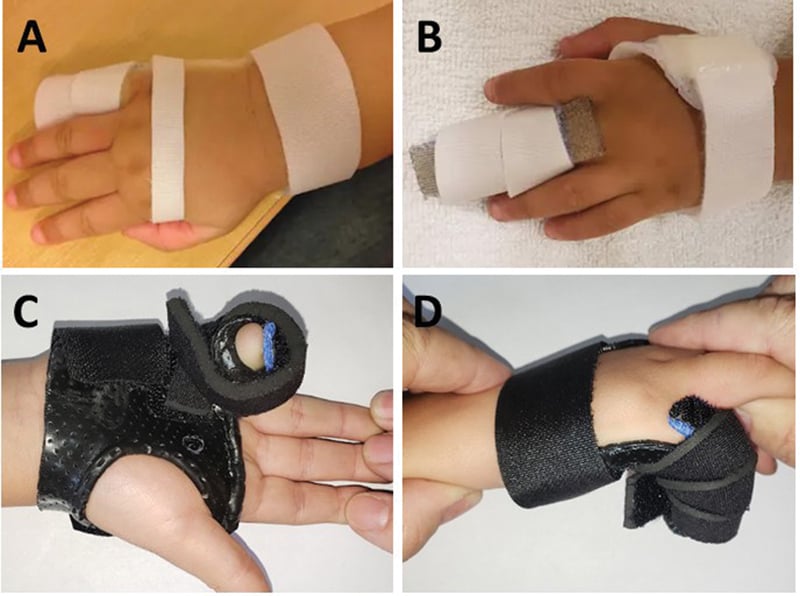
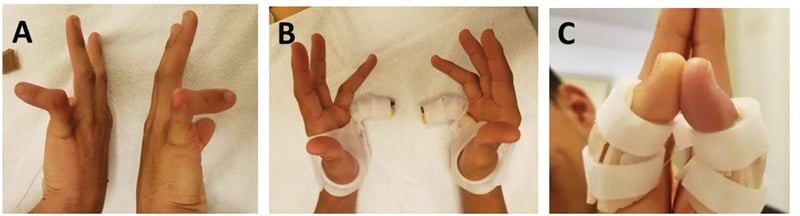
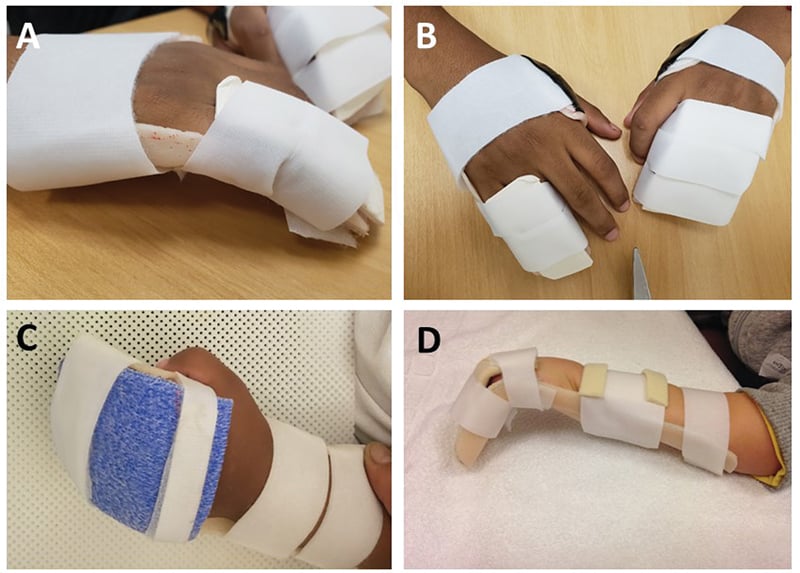
The progressive brace. The progressive extension brace in the next figure uses a controlled rotational correction mechanism rather than forceful manual stretching.
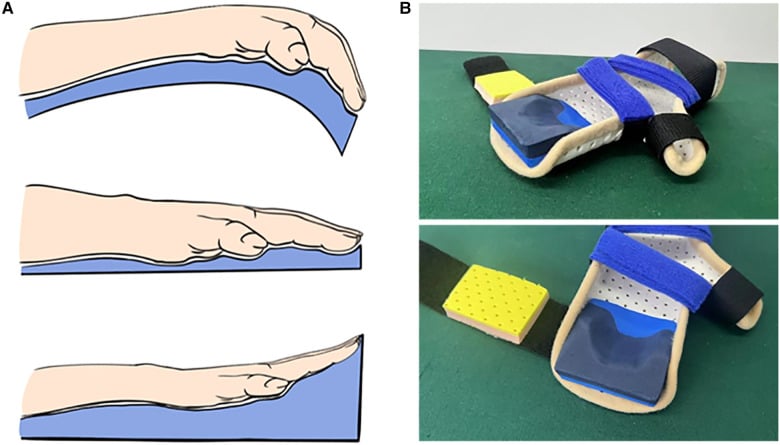
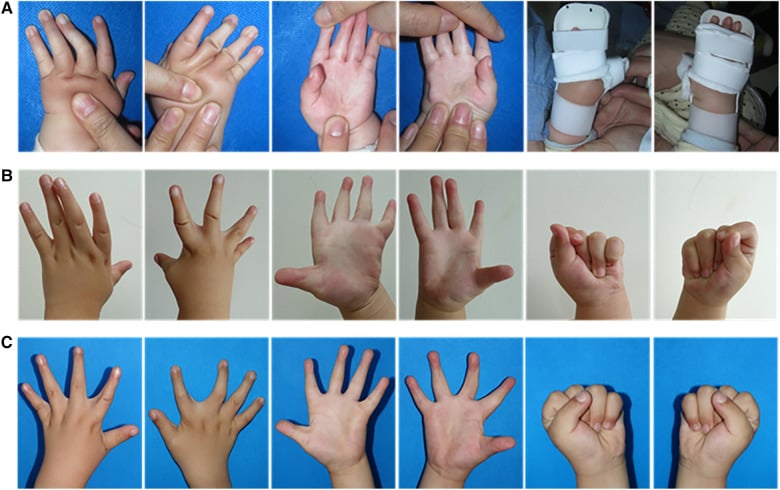
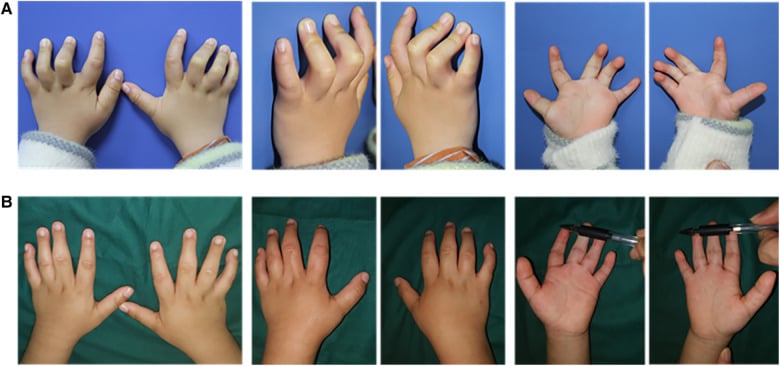
When to consider surgery. Surgery is individualised and selective. Consider it when:
- The deformity causes meaningful functional limitation or pain, or progresses despite a well-delivered conservative plan
- Passive correction and imaging define a surgically addressable soft-tissue or joint component
- The expected gain in extension outweighs the risk of losing flexion, stiffness, scar and recurrence
- The patient and family can complete postoperative therapy and splinting
No single trigger. Do not operate from the angle alone: no PIP angle, age or treatment duration is an absolute trigger. Published angle thresholds range widely and the evidence is low level; classic series often selected severe contractures over 60°, whereas reviews cite lower thresholds. Apply the evidence to the individual rather than converting it into a compulsory triad.
FUNCSurgical Decision Framework
Hook:FUNC: surgery is a functional, anatomical decision - not a single angle or duration.
Counselling. Before surgery the patient and family should understand that:
- Extension may improve while active or passive flexion worsens
- Recurrence, stiffness and scar problems are reported variably in small heterogeneous series
- Fixed condylar remodelling and poor passive correction limit achievable motion
- Postoperative therapy and orthosis use are procedure- and response-specific
- More than one procedure may be needed
The operations. Most cases require a combination of procedures addressing multiple structures; isolated FDS release alone has poor outcomes.
- FDS: Z-lengthening (preserves some FDS function), superficialis-to-profundus transfer (redirects the flexion force), complete excision for severe tightness (sacrifices FDS), or excision of an anomalous slip
- Volar plate and capsule: volar plate release or partial excision, accessory collateral ligament release, capsular release if needed, check-rein ligament (A3 pulley) release
- Lumbrical and accessory structures: excision of an anomalous lumbrical or accessory muscle, release of fibrous bands
- Skin: Z-plasty for mild volar shortage, V-Y advancement or local rotation flaps, full-thickness skin graft for significant shortage
- Bone, as salvage: PIP arthrodesis in a functional position for failed releases, corrective osteotomy (rarely indicated), condylectomy (historical, rarely used)
Operative Technique
Set-up. Review the radiographs for joint changes, mark the Bruner incision landmarks, and take informed consent that includes realistic expectations. Anaesthesia is general, or regional with sedation. The patient is supine with the arm on a hand table, an upper-arm tourniquet is inflated after exsanguination, and loupe magnification is recommended.
Approach. A Bruner zigzag incision over the volar aspect of the digit, or a midlateral incision (less extensile but with fewer skin-related complications), extends from the distal palmar crease to the DIP flexion crease. Elevate the skin flaps carefully, preserving subcutaneous tissue. Identify and protect the neurovascular bundles throughout, incise the flexor sheath between the A2 and A4 pulleys, identify FDS and FDP, and assess the FDS for tightness, anomalous insertion or extension.
Systematic release. Sequential intraoperative reassessment determines which contributing structures actually need release:
- FDS: test its excursion and length. If tight or short, Z-lengthen it to maintain some function; if the insertion is anomalous, release it and consider transfer or excision; if it contributes minimally, complete excision may be considered. Document the correction after the FDS procedure.
- Accessory structures: excise anomalous lumbrical slips and accessory muscle bellies, and resect fibrous bands crossing the PIP joint.
- Volar plate and capsule: if still tight, incise the volar plate longitudinally and release or excise it if thickened and contracted, releasing the accessory collateral ligaments if needed. Preserve the A2 and A4 pulleys, then extend gently and assess the correction.
- Collateral ligaments: if extension still cannot be achieved, release the accessory collaterals first and the proper collaterals only if absolutely necessary, because of the risk of instability.
- Check: full passive PIP extension should be achieved, the neurovascular bundles are checked throughout the range, FDP flexion should be retained, and there should be no bowstringing if a pulley was released.
Closure. With adequate skin length, close the Bruner incision without tension using interrupted 5-0 nylon. If the volar skin is short, Z-plasty flaps serve for mild shortage (lengthening by 50-75%) and a full-thickness skin graft from the volar wrist crease or medial arm for moderate to severe shortage, secured with 5-0 chromic or nylon under a bolster dressing. A non-adherent dressing and a soft bulky hand dressing go on with a dorsal extension splint holding the PIP in full extension, leaving the DIP and MCP free to move.
Pitfalls. Surgical success depends on complete release, adequate skin coverage and a prolonged postoperative splinting programme. The pitfalls to avoid:
- Inadequate release, which leads to recurrence: address every contributing structure, not just one
- Neurovascular injury: dissect carefully under loupe magnification
- Skin necrosis from tension: release or graft the volar skin adequately
- Over-release, which causes instability, hyperextension or swan-neck deformity
- Inadequate postoperative splinting, which leads to recurrence; splinting after surgery is as important as the surgery itself
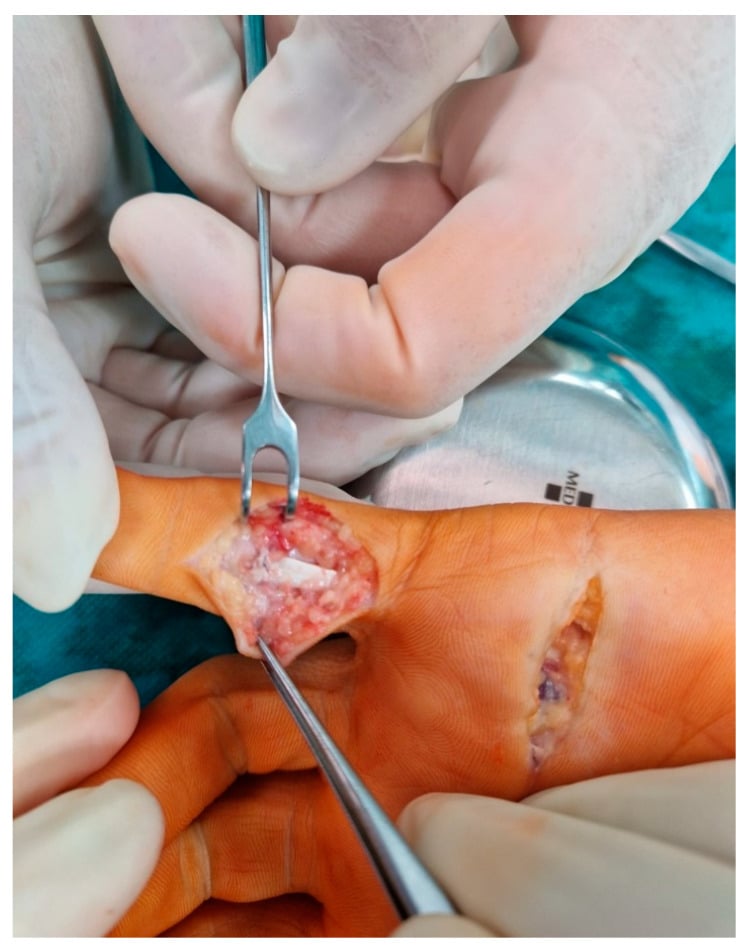
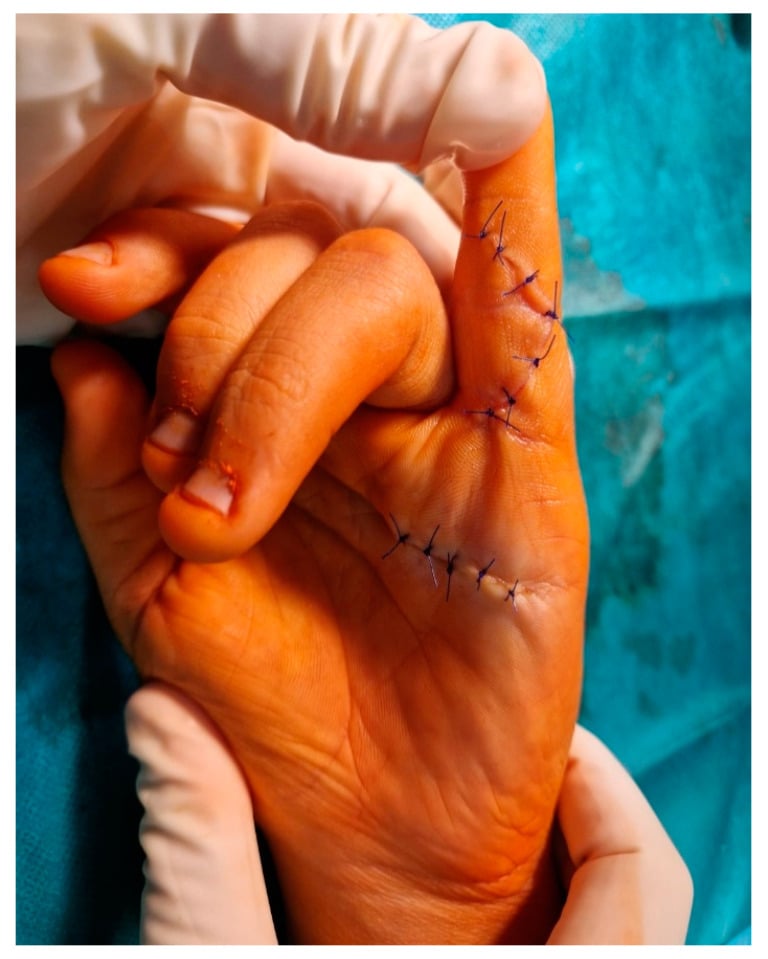
An illustrated case. In the selected severe case shown below, the FDS was identified through a distal-palmar-crease incision and released distally, and a second exposure over the PIP region released the lateral bands, the lumbrical insertion and the FDS at the chiasm. Isolated FDS treatment is not a universal solution to multifactorial camptodactyly. Intraoperative correction is only a mechanical endpoint; durable function depends on flexion preservation, healing, therapy and growth.
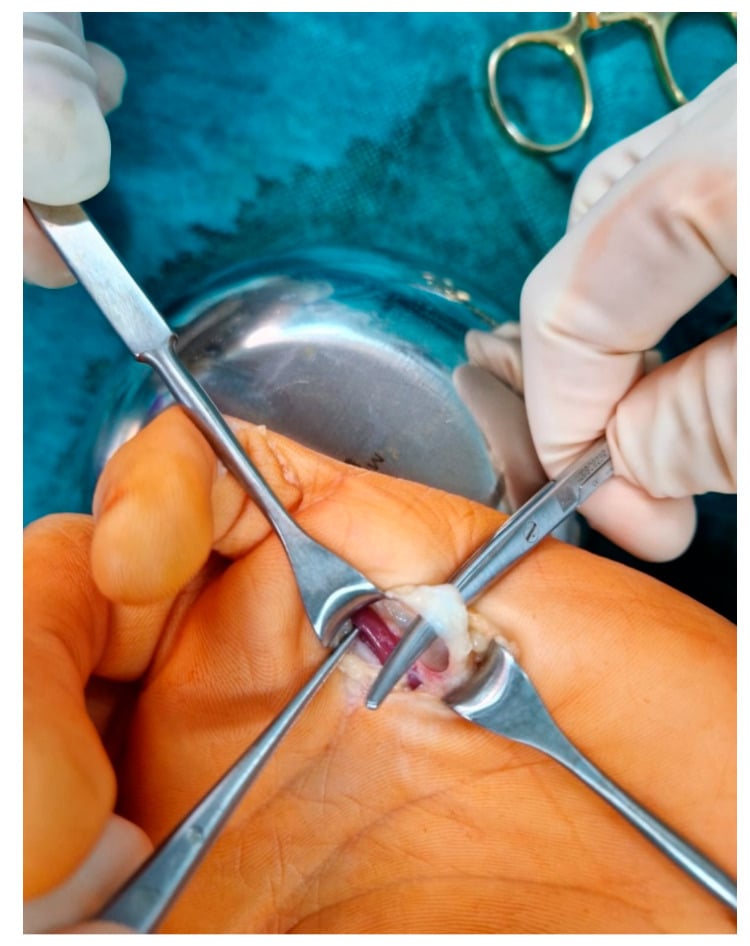
Complications
Careful surgical technique and adequate skin grafting prevent most early complications. Recurrence is the most common complication and is dealt with in the next section.
- Cause and Frequency
- Digital nerves at risk during dissection, most at risk during volar plate release; 1-3%
- Prevention
- Loupe magnification, careful identification of the neurovascular bundles, gentle dissection
- Management
- Primary repair if identified intraoperatively; neuroma excision if late and symptomatic
- Cause and Frequency
- Tension from inadequate skin lengthening or release; necrosis or dehiscence in 5-10%
- Prevention
- Liberal use of Z-plasty or skin graft; avoid tension
- Management
- Local wound care, secondary healing, delayed skin grafting if needed
- Cause and Frequency
- Loss of PIP flexion (most common) or inability to achieve full extension, worse than before surgery
- Prevention
- Early motion at 2 weeks, hand therapy, balancing release with stability
- Management
- Aggressive therapy, dynamic splinting; rarely surgery
- Cause and Frequency
- PIP hyperextension with DIP flexion from over-release of volar structures
- Prevention
- Do not over-release; preserve the volar plate if possible; assess intraoperatively
- Management
- Splinting, therapy; DIP fusion or flexor tenodesis if severe
Other complications. Early on, haematoma, infection (rare, less than 1%), and pain and swelling. Later, scar contracture and adhesions, persistent pain or cold intolerance, and an unsatisfactory cosmetic result.
Managing Recurrence and PIP Arthrodesis Salvage
How often and when. Recurrence is the most common complication of surgery, quoted at 30-50% of surgical cases, although rates vary markedly across small heterogeneous series. It typically occurs within the first year after surgery and is higher in adolescents during the growth spurt. It may be partial (improved but not corrected) or complete, and is often less severe than the original deformity. Prevention rests on optimal surgical technique, skeletal maturity before surgery and prolonged splinting, which with therapy reduces but does not eliminate the risk.
First, re-splint and reassess. A recurrence is managed initially like a primary contracture: restart the night-extension splinting and stretching programme, since much of the loss is soft-tissue and responds to renewed conservative treatment. Distinguish a correctable recurrence, which is re-splinted, from a fixed one, and identify why it recurred: inadequate release, poor splint compliance or skeletal immaturity.
Revision release is guarded. Revision is considered only if the recurrence is severe. A repeat soft-tissue release can be offered for a fixed, functionally limiting recurrence, but the patient must be counselled that revision carries an even higher re-recurrence rate and more stiffness than the primary operation; it is not a reliable cure.
PIP arthrodesis as salvage. For a painful, severely remodelled or repeatedly failed joint (marked condylar flattening, incongruity), PIP arthrodesis in a functional position, around 20-30° of flexion and slightly more for the small finger, is the definitive salvage. It trades all PIP motion for a stable, straight, pain-free digit, reliably corrects the appearance, and is chosen when preserving motion is no longer realistic. Accepting the deformity remains a legitimate option in the low-demand or asymptomatic patient.
Post-Operative Care and Rehabilitation
The splint is worn continuously for the first 2 weeks, and therapy begins after that. Night splinting is critical for preventing recurrence, especially in adolescents, and continues for a minimum of 6 months, often 12; it is weaned gradually only if full extension is maintained.
0-2 weeks. The hand is elevated above heart level for 48 hours, with intermittent ice packs for swelling. The first dressing change at 3-5 days assesses haematoma, excessive swelling, circulation and skin viability, especially where a graft was performed. Sutures are removed at 10-14 days, or at 5-7 days after a skin graft. Analgesia is oral (paracetamol, NSAIDs); pain is typically minimal after the first few days, and narcotics are avoided beyond the first 48 hours if possible.
2-6 weeks. At 2 weeks the dressing is removed and a removable dorsal extension splint is worn, off only for therapy and hygiene, with night splinting in full extension. Therapy begins gentle active PIP flexion and extension, passive extension to maintain the correction, active DIP and MCP motion, scar massage once the sutures are out, and oedema control by compression, elevation and retrograde massage. Light daily activities are allowed, but no forceful gripping or heavy lifting, and the hand is protected from trauma.
6 weeks to 3 months. Day splinting is weaned gradually; the splint continues at night and during activities that tend to produce a flexion posture, and is adjusted as needed. Therapy progresses to resisted exercises for flexion and extension, scar remodelling and desensitisation, and functional and daily-living training. Clinic visits are monthly, with measurements and photographs, and radiographs at 6 weeks assess the joint.
3-12 months. Therapy moves to functional strengthening, return to full activities and continued scar management.
Follow-up. Review at 3, 6 and 12 months and then annually, monitoring for recurrence, reinforcing the importance of splinting compliance and intervening early if recurrence is developing.
Return to activities.
- Light activities: 6 weeks
- Sports: 3 months
- Full, unrestricted: 3-6 months
Outcomes and Prognosis
After surgery. Satisfactory function and appearance are achieved in 60-70%. Another 20-30% are unchanged or minimally improved, and 5-10% are worse than before surgery, through stiffness or loss of flexion.
- Better Outcome
- Good passive correction pre-operatively
- Poorer Outcome
- Severe fixed contracture (over 75°)
- Better Outcome
- No severe remodelling on radiographs
- Poorer Outcome
- Marked condylar flattening and joint changes
- Better Outcome
- Single anatomical cause identified and addressed; adequate release of all contributing structures
- Poorer Outcome
- Multiple anatomical abnormalities
- Better Outcome
- Skeletal maturity (less recurrence risk)
- Poorer Outcome
- Active skeletal growth (adolescent)
- Better Outcome
- Excellent post-operative compliance with therapy and splinting
- Poorer Outcome
- Poor compliance with post-operative splinting
- Better Outcome
- -
- Poorer Outcome
- Type 3 (syndromic) camptodactyly
Satisfaction. Patient satisfaction correlates more with realistic pre-operative expectations than with the degree of correction. Cosmetic improvement is important to many patients, and functional improvement is variable.
Long term. Most mild cases do well with conservative treatment alone, moderate cases often require prolonged conservative treatment, and severe cases may need surgery, with unpredictable outcomes. Mild cases have minimal impact on function or quality of life. Long-term arthritis is uncommon even in severe untreated cases: the joint remodels, but typically without symptomatic degenerative change, and post-surgical stiffness is more common than arthritis.
Guidelines, Registries & Global Practice
Global Epidemiology
- Population prevalence reported at approximately 1%, though most cases are mild, never present to care, and are under-counted
- Small (fifth) finger involved in over 90% of isolated cases; bilateral in roughly 75%
- Roughly equal sex distribution; familial cases follow an autosomal dominant pattern with variable penetrance
- Type III (syndromic) accounts for a substantial share of digits referred to tertiary paediatric hand units (30 of 59 PIP joints in the Benson series)
Guidelines and Society Position
There is no dedicated formal guideline (no AAOS, BOA/BOAST, NICE, AO or EFORT statement) specific to camptodactyly. Practice is driven by Level III-IV literature and expert consensus. The points where authoritative sources align or differ:
- Broad Consensus
- Conservative (stretching plus splinting) for essentially all cases, started early
- Where Practice Varies
- Static night splinting versus dynamic (Capener-type) versus serial casting
- Broad Consensus
- Reserve surgery for failed conservative treatment
- Where Practice Varies
- Threshold cited as over 30 degrees (Wang systematic review) versus over 60 degrees (Siegert, Smith) plus functional impairment
- Broad Consensus
- Release ALL contributing structures, not FDS alone; preserve early motion
- Where Practice Varies
- Extent of skin reconstruction (Z-plasty versus full-thickness graft) and whether FDS is lengthened, transferred or excised
- Broad Consensus
- Outcomes unpredictable; recurrence and stiffness common; emphasise shared decision-making
- Where Practice Varies
- How aggressively surgery is offered in adolescents before skeletal maturity
Registry Evidence
Camptodactyly is a soft-tissue congenital deformity with no implant and no condition-specific registry (unlike arthroplasty, where NJR, AJRR, AOANJRR, SHAR and others apply). The best population-level synthesis remains the 2019 systematic review, which found uniformly low-quality evidence and no comparative trials.
High- versus Limited-Resource Practice
- Well-resourced settings: certified hand therapists fabricate custom thermoplastic splints, goniometric monitoring, multidisciplinary paediatric hand clinics, genetics input for syndromic cases, and telehealth follow-up for remote patients
- Limited-resource settings: emphasis shifts to caregiver-delivered passive stretching and simple low-cost static splints (which the Rhee data show are effective in young children), with surgery and genetic testing reserved for the most severe or clearly syndromic presentations
- Across all settings the evidence-based default is the same: conservative-first, surgery only for severe functionally limiting deformity that fails an adequate splinting trial
Controversies and Areas of Uncertainty
Camptodactyly is one of the more contested topics in paediatric hand surgery because the evidence base is entirely Level III-IV. Examiners reward candidates who can articulate the uncertainty rather than quote false precision.
No agreed contracture angle triggers surgery. The systematic review (Wang 2020) cites over 30 degrees or conservative failure, whereas classic series (Siegert, Smith) reserve surgery for over 60 degrees with functional impairment. Most surgeons combine angle, function and failure of an adequate splinting trial rather than relying on a single number.
Surgery reliably gains extension but frequently costs flexion and carries more complications than conservative care. Whether intervention improves patient-perceived function and appearance is genuinely unproven - only one study in the systematic review reported function and one reported patient-reported outcomes.
Studies disagree on what counts as camptodactyly (angle cut-offs, included joints, idiopathic versus syndromic) and on outcome reporting, which makes pooling data and comparing series unreliable. This heterogeneity is the central limitation flagged by the systematic review.
Static night splinting, serial casting and dynamic (Capener-type) splints all have proponents, and passive stretching alone produced large gains in young children. The best modality, dose and duration have never been compared head to head.
Viva Scenarios
Clinical Viva Practice
Practise clinical reasoning and management decisions out loud
“A 13-year-old presents with progressive flexion of the right small finger PIP joint over the past year. She is right-hand dominant and plays violin. The contracture is now affecting her musical performance. On examination, the PIP joint has 45-degree flexion contracture with passive correction to 20 degrees. DIP demonstrates mild hyperextension. The left small finger has a 20-degree contracture.”
“A 6-month-old infant is referred for bilateral small finger PIP flexion contractures noted since birth. The parents are concerned about future hand function. On examination, both small fingers have approximately 40-degree flexion contractures with good passive correction to nearly full extension. No other anomalies noted. Family history is negative.”
“A 15-year-old presents with 75-degree right small finger PIP flexion contracture that has failed 12 months of compliant splinting and therapy. She is unable to participate in sports (basketball) and has difficulty with keyboard typing for school. Passive correction achieves only 50 degrees of contracture. Radiographs show moderate condylar flattening of the proximal phalanx. She and her parents are requesting surgical correction.”
“A 3-year-old with Down syndrome is referred for bilateral hand deformities affecting multiple digits. Camptodactyly is present in the small and ring fingers bilaterally, along with clinodactyly of the small fingers. The child has global developmental delay and hypotonia. The parents want to know if surgery will improve hand function.”
MCQ Practice Points
Q: What is the most commonly affected digit in isolated camptodactyly?
Answer: Small (fifth) finger PIP joint.
Camptodactyly most commonly affects the small finger PIP joint in over 90% of isolated cases. It is bilateral in 75% of cases. Multiple digit involvement suggests Type 3 syndromic camptodactyly and warrants syndromic evaluation. The term comes from Greek kamptos (bent) and daktylos (finger).
Q: A 12-year-old presents with bilateral small finger PIP flexion contractures that developed over the past year. What type of camptodactyly is this?
Answer: Type 2 (Adolescent) camptodactyly.
The three types are: Type 1 (Infantile) - present at birth to 2 years, usually isolated; Type 2 (Adolescent) - onset 10-14 years during growth spurt, progressive; Type 3 (Syndromic) - multiple digits, associated with syndromes. Age 12 with recent onset during growth indicates Type 2.
Q: What anatomical structures contribute to camptodactyly?
Answer: Multiple structures - FDS, lumbrical, volar plate, skin (FLAVS).
There is NO single anatomical cause. Multiple abnormalities contribute: FDS (short/tight/anomalous), Lumbrical (anomalous insertion), Accessory muscles, Volar plate contracture, Skin shortage. Treatment must address ALL contributing factors. This multifactorial etiology explains unpredictable surgical outcomes.
Q: What is the first-line treatment for a 40-degree small finger PIP contracture with good passive correction?
Answer: Conservative treatment with stretching and splinting for minimum 6 months.
Conservative management is first-line for ALL severities. Includes passive stretching exercises multiple times daily and static night splinting in extension. Success rate 50-70% overall, higher for mild-moderate cases with good compliance. Minimum 6-month trial required before considering surgery. Best results in contractures under 45 degrees with early initiation.
Q: What are the THREE criteria required for surgical intervention in camptodactyly?
Answer: (1) Over 60 degrees contracture AND (2) Functional impairment AND (3) Failed conservative treatment.
ALL three criteria must be met. Surgery based on angle alone is incorrect. Functional impairment must affect daily activities (ADLs, sports, occupation). Conservative treatment minimum 6 months, ideally 12 months. Even with criteria met, outcomes unpredictable with 30-50% recurrence rate.
Q: What is the recurrence rate after surgical release for camptodactyly?
Answer: 30-50% recurrence despite optimal surgical technique.
Recurrence is the most common complication. Higher in adolescents pre-skeletal maturity. Prolonged post-operative splinting (6-12 months) reduces but does not eliminate risk. Some patients end up worse than pre-operatively due to stiffness. Critical to set realistic expectations pre-operatively.
Q: A patient has camptodactyly affecting multiple digits bilaterally. What evaluation is indicated?
Answer: Syndromic evaluation including genetics referral.
Multiple digit or bilateral severe involvement suggests Type 3 syndromic camptodactyly. Associated syndromes include Marfan (arachnodactyly, aortic), Down (characteristic facies), Oculodentodigital (dental, eye abnormalities), Fanconi anemia (thumb hypoplasia, pancytopenia). Requires full examination, genetics referral, and syndrome-specific workup.
Definition and Key Facts
- PIP flexion contracture, most commonly small (5th) finger
- Greek: kamptos (bent) + daktylos (finger)
- Incidence: 1% population, 75% bilateral
- Sex depends on type: infantile equal, adolescent female-predominant; familial pattern possible (AD)
Classification
- Type 1 (Infantile): birth-2 years, isolated, 30-40% spontaneous improvement
- Type 2 (Adolescent): 10-14 years, progressive with growth, bilateral 75%
- Type 3 (Syndromic): multiple digits, associated syndromes (Marfan, Down, ODD, Fanconi)
Pathoanatomy (FLAVS - No Single Cause)
- F - FDS abnormality (short, tight, anomalous insertion)
- L - Lumbrical anomaly (aberrant insertion/origin)
- A - Accessory muscles
- V - Volar plate contracture
- S - Skin shortage (volar deficiency)
Clinical Assessment Essentials
- Measure PIP contracture: active AND passive (passive more important)
- Assess DIP compensatory hyperextension
- Wrist position effect (FDS contribution)
- Multiple digits = screen for syndrome
- Radiographs: assess joint changes, condylar flattening
Conservative Management (First-Line ALL Cases)
- Stretching: passive PIP extension, multiple times daily
- Splinting: static night splints in extension, serial progressive, or dynamic
- Duration: MINIMUM 6 months, often 12-24 months
- Success: 50-70% overall, higher in mild (under 45°) with good compliance
- Best in: Type 1, early treatment, good passive correction, compliant patient
Surgical Criteria (ALL THREE Required)
- 1. Contracture over 60 degrees AND
- 2. Functional impairment (ADLs, sports, occupation) AND
- 3. Failed conservative treatment (6-12 months minimum)
- Do NOT operate on angle alone without functional impairment
Surgical Approach and Technique
- Bruner or midlateral incision, protect neurovascular bundles (use loupes)
- Release MULTIPLE structures: FDS (lengthen/transfer/excise), lumbrical, volar plate, skin
- Skin: Z-plasty or FTSG if shortage
- Post-op: splint in extension, therapy at 2 weeks, night splinting 6-12 months
Surgical Outcomes and Complications
- Satisfactory outcome: 60-70%
- Recurrence: 30-50% (MOST COMMON complication)
- Higher recurrence: adolescents, skeletal immaturity, severe joint changes
- Other: stiffness, neurovascular injury (1-3%), wound problems, swan-neck if over-release
- Some patients WORSE after surgery - realistic expectations critical
Syndromic Associations
- Marfan (arachnodactyly, lens, aortic): echo, genetics
- Oculodentodigital (dental, eye, syndactyly): GJA1 testing
- Down (facies, developmental delay): karyotype
- Fanconi anemia (thumb hypoplasia, pancytopenia): chromosomal breakage
Exam Viva Pearls
- Small finger PIP contracture = camptodactyly until proven otherwise
- Conservative FIRST for ALL cases (6+ months trial)
- Surgery criteria: 60 + FUNC + FAIL (all three)
- Multifactorial pathoanatomy (FLAVS) = unpredictable surgery outcomes
- Recurrence 30-50% even with perfect technique
- Multiple digits = Type 3, think syndrome, genetics referral
- Prolonged post-op splinting as important as surgery itself
Evidence Base
Most camptodactyly evidence is Level IV (retrospective case series), reflected in the single best-quality systematic review.
Passive stretching for simple camptodactyly in young children
- 61 digits in 22 children under 3 years treated with passive stretching alone (no splinting), mean follow-up 26 months
- Mean contracture improved from 20 to 1 degree (mild), 39 to 12 degrees (moderate) and 75 to 28 degrees (severe), all p less than 0.001
- Initial contracture severity was the only factor significantly correlated with outcome
- Demonstrates that simple non-operative measures substantially reduce deformity, especially when started early
Management of simple camptodactyly: conservative versus operative
- 57 patients reviewed; 14 conservatively treated patients (41 digits) had 66% good/excellent results versus only 18% in the 21 operatively treated patients (38 digits)
- 16 of 21 operative patients lost finger flexion after surgery despite gaining extension
- Recommended conservative treatment for digits with less than 60 degrees extension loss; surgery reserved for failed conservative management
- Early post-operative joint motion is essential; procedures immobilising the PIP joint should be avoided
Classification and results of nonoperative treatment of camptodactyly
- 59 PIP joints in 22 patients: 24 type I (infantile), 5 type II (adolescent), 30 type III (syndromic); mean follow-up 33 months
- Splinting plus an occupational therapy program was particularly effective for type I digits
- Same conservative approach recommended for types II and III, though fixed, well-established contractures are more common in these groups
- Operative intervention reserved for patients failing non-operative management
Camptodactyly: a unifying theory and approach to surgical treatment
- 16 patients (18 fingers) with surgical release addressing all involved structures (skin, fascia, sheath, FDS, lumbricals/lateral bands, joint, central slip)
- 15 of 16 patients achieved good or excellent results with a mean gain in motion of 57 degrees (range 0 to 90)
- Surgery is not indicated for minor deformity and should be reserved for pre-operative PIP contracture over 60 degrees
- Reinforces that every contributing structure must be released for a durable result
Surgery and conservative management of camptodactyly in children: a systematic review
- 16 studies (7 case series, 9 retrospective cohorts) - all rated weak/low-quality evidence
- Both operative and non-operative treatment reduced contracture (pretreatment averages 20-85 degrees to posttreatment 5-37 degrees)
- General agreement that surgery be reserved for contracture over 30 degrees or failure of conservative management
- Surgery generally produced more complications than conservative treatment; only one study reported function and one reported patient-reported outcomes
Long-standing dynamic splintage and release of an abnormal restraining structure
- 62 patients with little-finger camptodactyly; only 5 failed conservative treatment
- Failed cases had a restraining structure related to long-standing volar malposition of the extensor lateral bands
- Supports an imbalance between flexion and extension forces as the underlying mechanism
- Conservative treatment should be started as early as possible; surgery reserved for the few non-responders
The entire camptodactyly literature is Level III-IV. There are no randomised trials and no implant/condition registries. Across all series the consistent messages are: (1) non-operative treatment helps most digits, (2) outcomes are best when started early and in milder contractures, and (3) surgery is reserved for severe, functionally limiting, conservative-failure cases and carries a real risk of stiffness and recurrence.