Emergency Diagnosis | CES-I vs CES-R | Urgent Decompression
- CES-I (Incomplete) = altered bladder sensation but control preserved - URGENT surgery to prevent progression
- CES-R (Retention) = painless urinary retention with overflow - poorer prognosis regardless of timing
- MRI is mandatory emergency - do not wait until morning if red flags present
- Post-void residual over 500ml strongly predicts compression (Domen) - but it is a RULE-IN test only: CES-I patients still void by definition, so a normal PVR does NOT exclude CES
- Bilateral sciatica + saddle anaesthesia + bladder dysfunction = assume CES until proven otherwise
- “Know Gleave & Macfarlane classification: CES-I vs CES-R distinction is prognostically critical
- “Timing debate: state of patient (CES-I vs R) matters more than exact surgical timing
- “Medico-legal hot topic: 'Better to scan 100 negatives than miss 1 positive'
- “Digital rectal exam is mandatory: assess anal tone AND sensation
Cauda Equina Syndrome
Anatomy of the Cauda Equina
The horse's tail. The spinal cord ends as the conus medullaris at L1/L2 in the adult, and below it the lumbosacral nerve roots L2 to S5 run on within the thecal sac as the cauda equina. They carry the motor and sensory supply to the legs, the perineum and the sphincters, and the parasympathetic supply to the bladder travels with S2-S4 - "S2, 3, 4 keeps the wee off the floor".
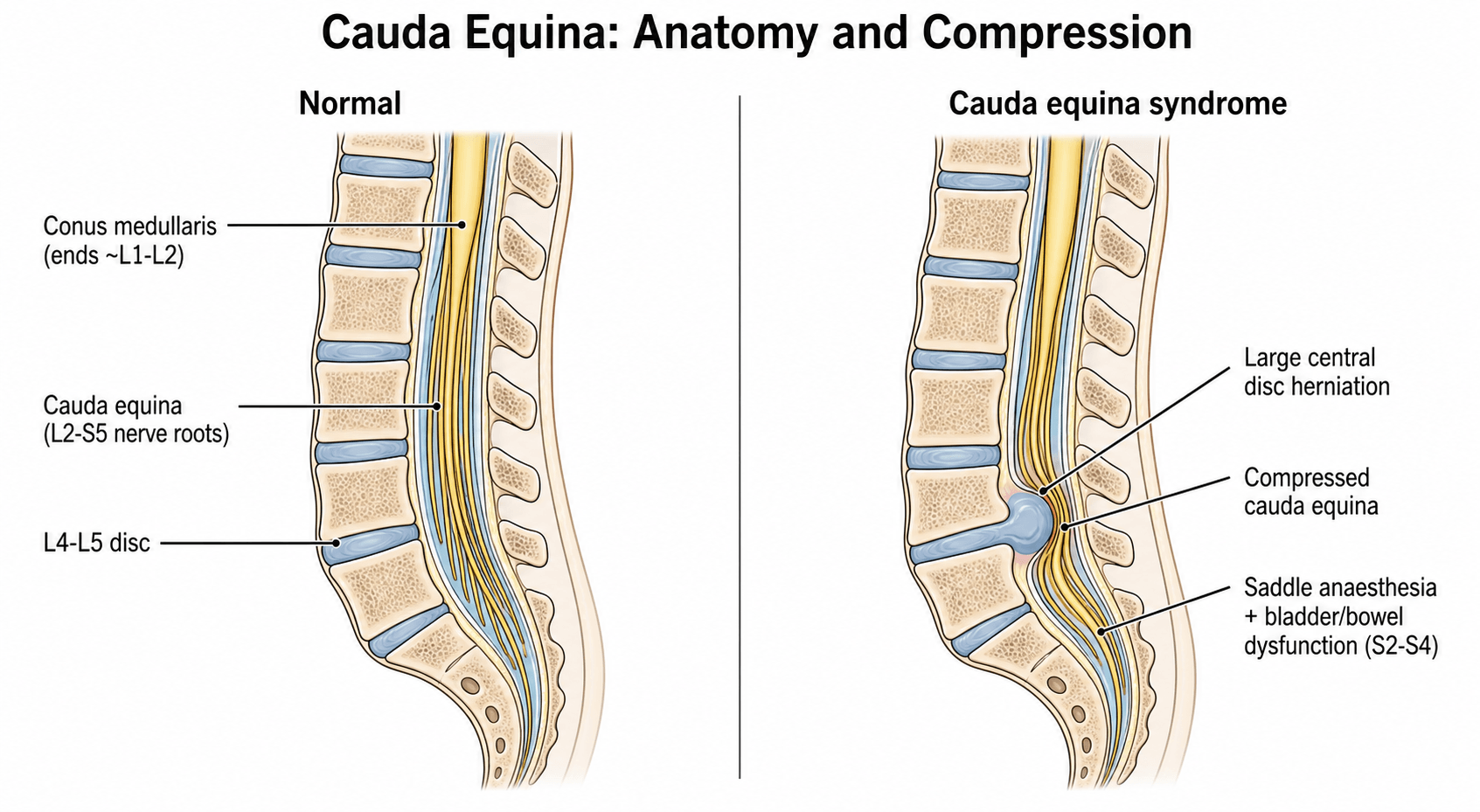
Why compression damages them. The roots are tethered within the spinal canal and have less protective connective tissue than peripheral nerves. Compression compromises intraneural blood flow, with venous congestion leading to arterial ischaemia.
What gives way first. The autonomic fibres to the bladder (S2-S4) are the most vulnerable, being of small diameter and lying peripherally within the bundle. In the early stages sensory fibres are affected before motor fibres.
The Micturition Reflex and Neural Control of the Bladder
"Describe the micturition reflex and the spinal levels controlling it" is a standard viva question, and the bladder picture of CES only makes sense from this circuit. Continence and voiding depend on three nerve supplies coordinated by the brainstem.
- Pathway
- Sympathetic T11-L2 via the hypogastric nerve
- Effect
- Detrusor relaxes (beta-3) and the internal urethral sphincter contracts (alpha-1); the somatic pudendal nerve (S2-4, Onuf nucleus) keeps the external sphincter closed - the guarding reflex
- Pathway
- Parasympathetic S2-4 via the pelvic splanchnic nerves, coordinated by the pontine micturition centre under frontal-cortical control
- Effect
- Detrusor contracts (M3 muscarinic) with reflex relaxation of both sphincters
- Pathway
- Bladder filling and stretch afferents travel with the S2-4 pelvic nerves
- Effect
- The conscious desire to void - lost early in CES
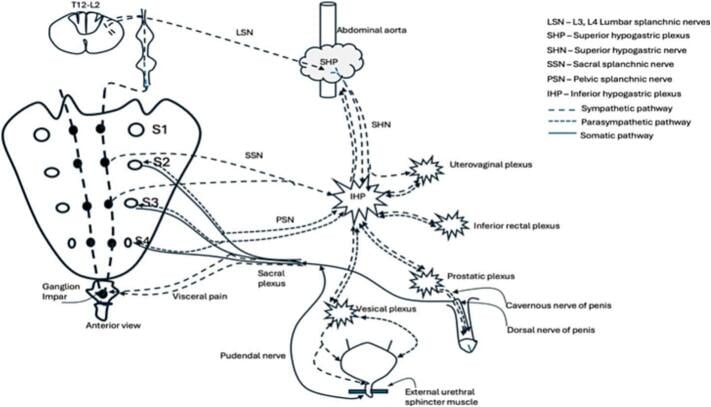
CES damages the S2-4 roots - the parasympathetic detrusor supply, the somatic external-sphincter supply and the afferents - producing a LOWER-motor-neuron, areflexic/acontractile (flaccid) bladder: painless retention with overflow and loss of filling sensation, plus reduced anal tone and saddle sensory loss. Contrast this with a SUPRASACRAL cord lesion, which spares the sacral reflex arc and produces an UPPER-motor-neuron, overactive (spastic) bladder, often with detrusor-sphincter dyssynergia. The reflex itself is switched on and off by the pontine micturition centre under cortical control.
Causes of CES and Cause-Specific Management
The first operative question. What is compressing the cauda equina? The answer changes the operation and the wider work-up, so the cause is settled before the operation is planned.
- Clues
- L4/5 then L5/S1; acute-on-chronic back pain
- Management
- Urgent decompression and discectomy
- Clues
- Insidious onset, night pain, weight loss, known primary; consider whole-spine MRI
- Management
- Dexamethasone, oncology and radiotherapy; surgery for instability or a single accessible level
- Clues
- Fever, raised CRP/ESR/WCC; diabetes, IV drug use, immunosuppression
- Management
- Urgent decompression and drainage, blood cultures, IV antibiotics
- Clues
- Rapid progression; recent surgery or anticoagulation
- Management
- Urgent evacuation; reverse anticoagulation
- Clues
- Fracture or retropulsed fragment; chronic stenosis with acute deterioration
- Management
- Decompression and stabilisation as indicated
- Clues
- Nerve-root clumping and adhesion on MRI; NOT a compressive lesion
- Management
- NOT decompression - pain management and neurology/urology input
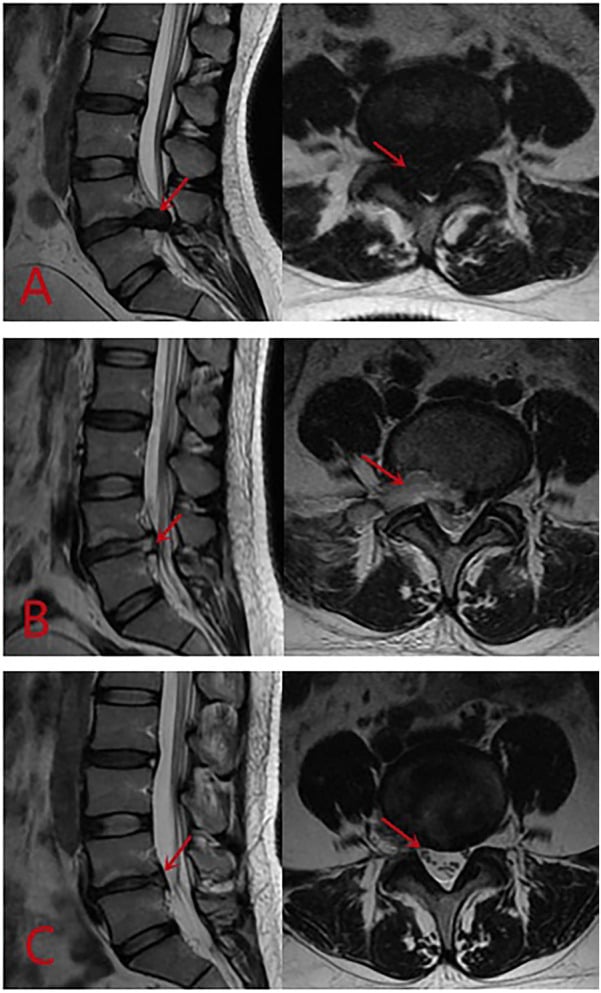
Reading the cause off the MRI. The images below are the patterns worth recognising: a posterior epidural collection after surgery, an intradural mass surrounded by CSF, and roots stuck to the wall of the thecal sac where there is no mass to remove at all.
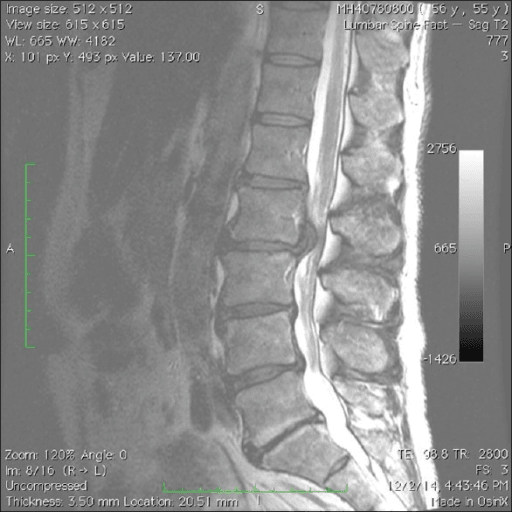
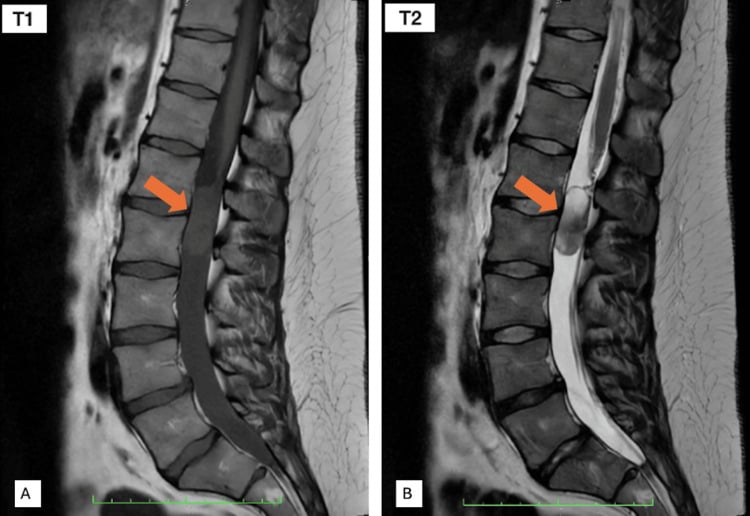
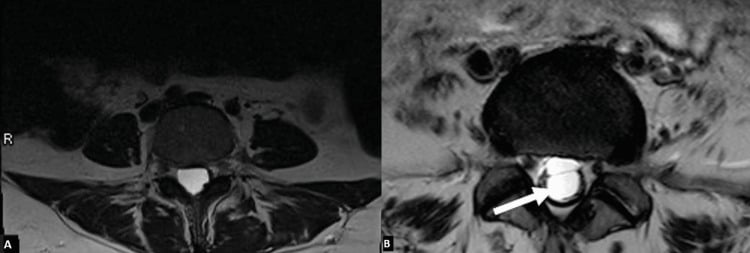
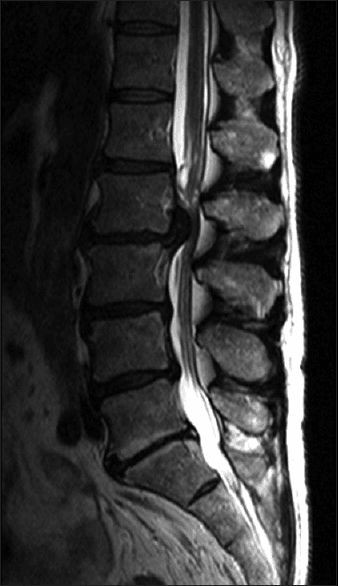
The commonest cause is a disc, and a disc is what the mind reaches for. Raised inflammatory markers or a known cancer should immediately broaden the work-up beyond a simple discectomy, and arachnoiditis is not a decompression at all.
CES Staging - Critical for Prognosis
Why the stage matters. The four stages describe how far the bladder has gone, and the prognosis follows them. The move from CES-I to CES-R is often irreversible, so the patient who still has volitional control is the one in whom function can be saved.
- Bladder Status
- Subjective bladder or bowel change only, no objective deficit
- Key Feature
- Bilateral radiculopathy with normal perianal sensation and normal anal tone
- Prognosis
- Excellent if it never progresses - but this is the group you must scan
- Action
- EMERGENCY MRI. This is the stage at which damage is still preventable
- Bladder Status
- Altered sensation, hesitancy, poor stream BUT volitional control preserved
- Key Feature
- Can still initiate and stop voiding; reduced (not absent) perianal sensation
- Prognosis
- Good if decompressed urgently
- Action
- URGENT SURGERY to prevent progression to CES-R
- Bladder Status
- Painless urinary retention with overflow incontinence
- Key Feature
- Executive bladder control LOST; paralysed distended bladder, often insensate to catheter
- Prognosis
- Guarded - permanent dysfunction common
- Action
- Still an emergency. Surgery required; outcomes less predictable
- Bladder Status
- No bladder, bowel or sexual function
- Key Feature
- Absent perianal sensation, patulous anus - established deficit
- Prognosis
- Poor; often irreversible
- Action
- Decompress to prevent further loss; counsel realistically
Gleave and Macfarlane originally argued that once retention with overflow is established, urgent decompression confers no additional benefit. That is not how modern practice, or medicolegal expectation, treats these patients - and it is not what the later data show: DeLong found that within the CES-R group later surgery still predicted a worse urinary outcome. Every stage from CES-S to CES-C is decompressed as soon as safely feasible. The stage changes the PROGNOSIS you counsel, not the urgency you act with.
Clinical Significance
What it is. Cauda equina syndrome is compression of the cauda equina nerve roots (L2-S5) below the conus medullaris, causing lower back pain, unilateral or bilateral sciatica, saddle anaesthesia, and motor and sphincter dysfunction. It is a surgical emergency requiring urgent decompression.
How often you meet it. CES accounts for about 0.04% of all lower back pain presentations. It occurs at any age with a peak between 40 and 60 years, and the sexes are affected equally.
Why the rarity is a trap. Despite that rarity a high index of suspicion is essential, because the consequences of a missed diagnosis are catastrophic. Established CES leaves permanent bladder, bowel and sexual dysfunction, chronic pain and severely impaired quality of life, and the economic and personal burden is substantial. Delayed diagnosis is the leading cause of spine-related litigation.
History
Establish the shape of the illness. Whether the onset was acute or a gradual deterioration, how severe the back pain is and where it radiates, and whether the leg symptoms are unilateral or bilateral and dermatomal. Sciatica may be bilateral or unilateral, and severe lower back pain is often present but not always.
Ask about the sphincters directly. Bladder, bowel and sexual function need specific questions, put in words the patient can answer.
- "Can you feel when your bladder is full?"
- "Can you start and stop urinating normally?"
- "Have you noticed you're not passing urine as often?"
- "Can you feel when you need to pass a motion?" - and has bowel control changed, with faecal incontinence or loss of the awareness that a motion is coming?
- Sexual function: changes in sensation, erectile dysfunction in men, loss of genital sensation in both sexes
WIPECES Clinical Questions
Hook:WIPE - the key questions to ask every patient with red flag back pain!
Examination
The legs. A full motor and sensory examination across the L2-S1 myotomes and dermatomes, with knee (L3/4) and ankle (S1) reflexes and Babinski. Motor weakness or sensory change in an L2-S1 distribution belongs in the red-flag picture alongside the sphincter symptoms.
The perineum. Light touch in the saddle area (S2-S5) and pin-prick sensation in the perineum, comparing the two sides for asymmetry. This part of the examination is mandatory.
Digital rectal examination is mandatory. Assess resting anal tone, then ask the patient to squeeze against the examining finger to test voluntary contraction, and test light touch around the anus. Document all of it: the record is a medico-legal essential.
The bladder scan. Palpate suprapubically for a distended bladder and measure a post-void residual, which is quick, non-invasive and can be done at the bedside. A residual over 200ml is suspicious and anything above about 100ml is abnormal - that lower figure is what defines incomplete bladder emptying in urological terms - while over 500ml is the figure specifically shown to predict MRI-confirmed cauda compression (Domen 2009, PMID 19490073) and substantially raises the probability of compression.
Read it in one direction only. A raised residual escalates; a normal one does not exclude CES, because a CES-I patient by definition still voids volitionally. The bladder scan is never grounds to stand a patient down.
Loss of bladder sensation - the desire to void - is often the earliest sign of autonomic dysfunction in CES-I, appearing before painless retention. Ask specifically about altered sensation, not just the ability to urinate: a subjective change in urinary function is a red flag and is not to be dismissed.
Emergency Imaging
MRI, day or night. Emergency MRI of the whole lumbar spine, with sagittal and axial T2-weighted sequences, is the gold standard investigation for suspected CES and is performed urgently whenever red flags are present. Read it for canal occlusion (usually over 50-75%), the level of the disc herniation, nerve root compression, and other pathology such as tumour or abscess.
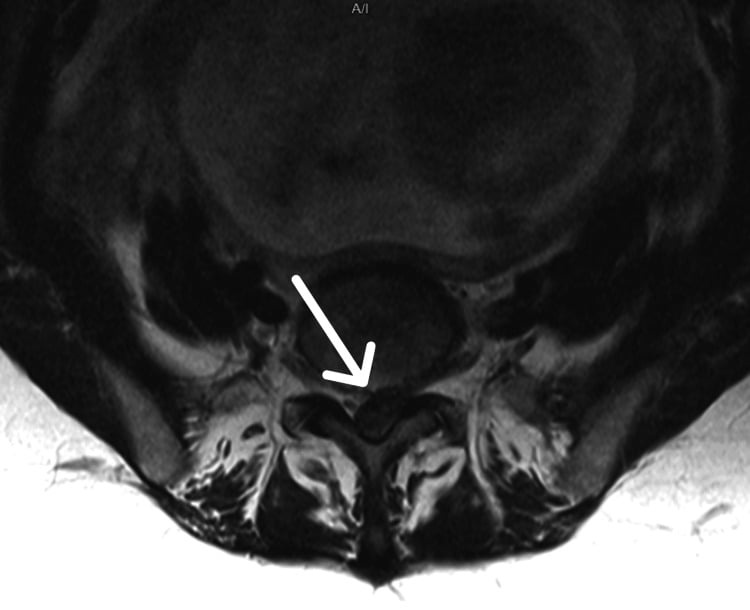
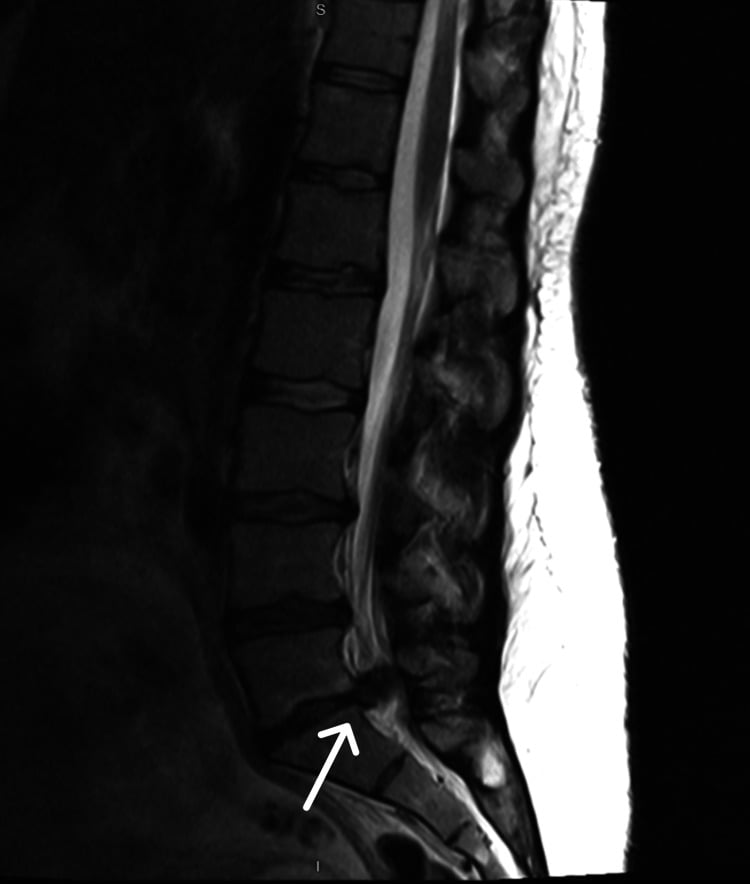
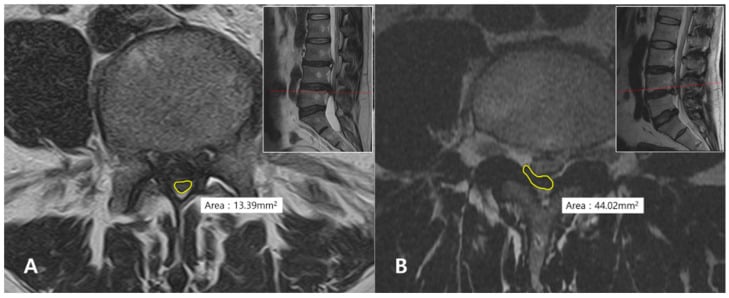
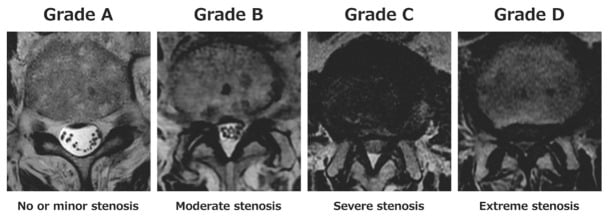
CT myelography is the second-line study for the patient who cannot have an MRI - a pacemaker, or severe claustrophobia. It requires a lumbar puncture and intrathecal contrast, and it remains diagnostic.
"Better to scan 100 negatives than miss 1 positive." Keep the threshold for emergency MRI low, and if red flags are present, do not wait for the morning.
Differential Diagnosis
Most emergency scans are negative. Many conditions mimic CES - so-called "scan-negative" or pseudo-CES, where up to 60-70% of emergency MRIs for suspected CES show no compressive lesion. Distinguishing true compressive CES from its mimics avoids both missed diagnoses and unnecessary night-time operating.
- Bladder
- Painless retention or true loss of sensation/control
- Discriminating Feature
- Saddle sensory loss plus reduced anal tone plus MRI canal-filling lesion
- Action
- Emergency decompression
- Bladder
- Early, severe, symmetrical retention
- Discriminating Feature
- Mixed UMN and LMN signs, lesion at T12-L2, more symmetrical, brisk reflexes possible
- Action
- Urgent MRI and decompression
- Bladder
- Variable, often urgency rather than painless retention
- Discriminating Feature
- Non-dermatomal sensory loss, give-way weakness, normal MRI; commoner in younger patients
- Action
- Reassure, treat pain, urology/neurology and physiotherapy referral - not surgery
- Bladder
- Gradual atonic bladder, large residuals
- Discriminating Feature
- Chronic course, stocking sensory loss, no acute back pain or saddle change
- Action
- Medical work-up, not emergency spinal surgery
- Bladder
- Retention with a sensory level
- Discriminating Feature
- Clear sensory level on the trunk, UMN signs, MRI cord signal change above conus
- Action
- Neurology, MRI whole spine, steroids per cause
The conus medullaris (T12-L2 vertebral level) produces an early, symmetrical, mixed UMN/LMN picture with prominent early bladder involvement and sometimes preserved reflexes. The cauda equina produces an asymmetrical, purely LMN, areflexic picture with radicular leg pain. Both are emergencies, but examiners frequently test the anatomical distinction.
Management Algorithm
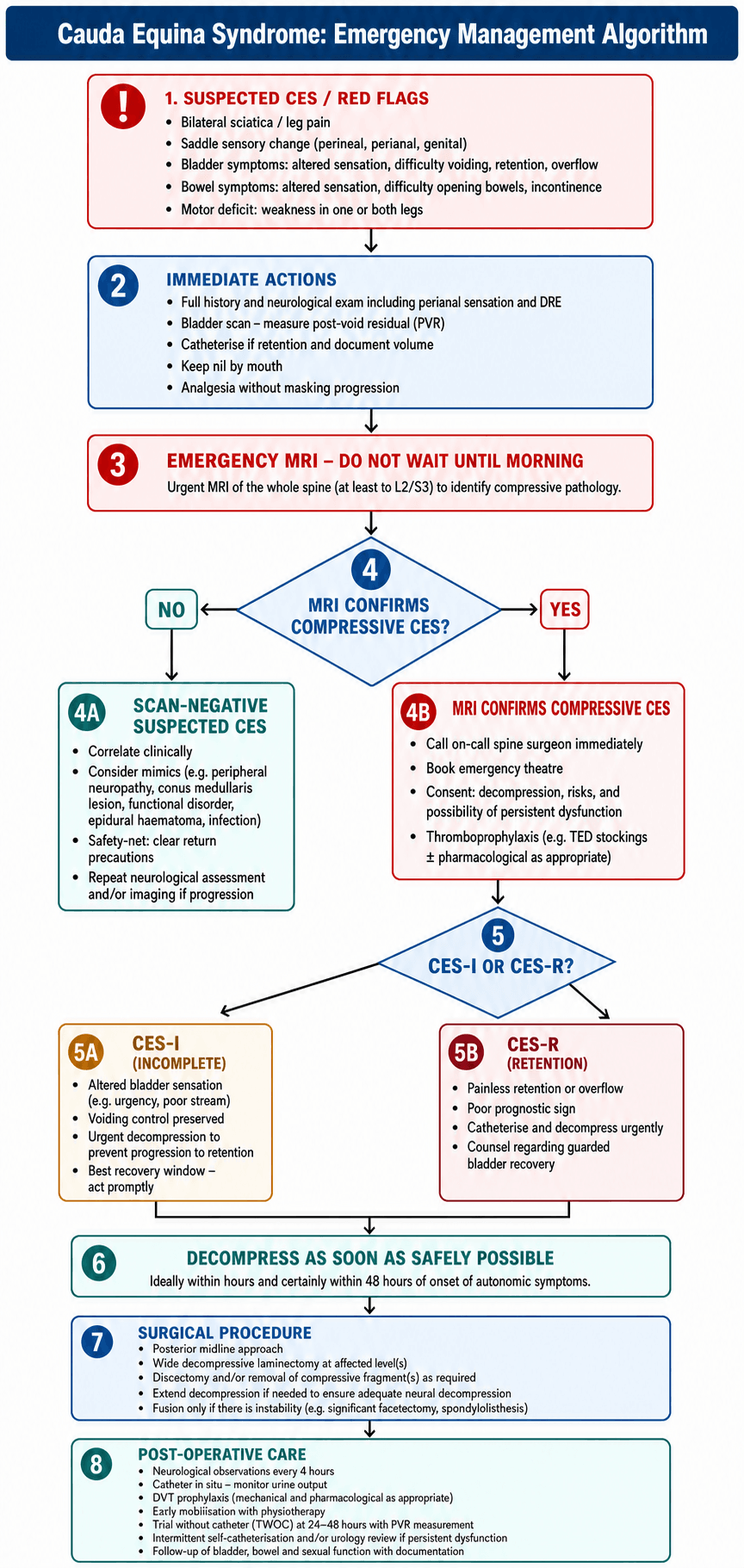
On presentation. Assess, prepare for theatre, and get the scan requested.
- Full history and examination, including DRE
- Bladder scan for post-void residual
- Catheterise if retention is confirmed, documenting the volume
- Nil by mouth in anticipation of surgery
- Analgesia, without masking neurological progression
- Request an emergency MRI - do not wait until morning
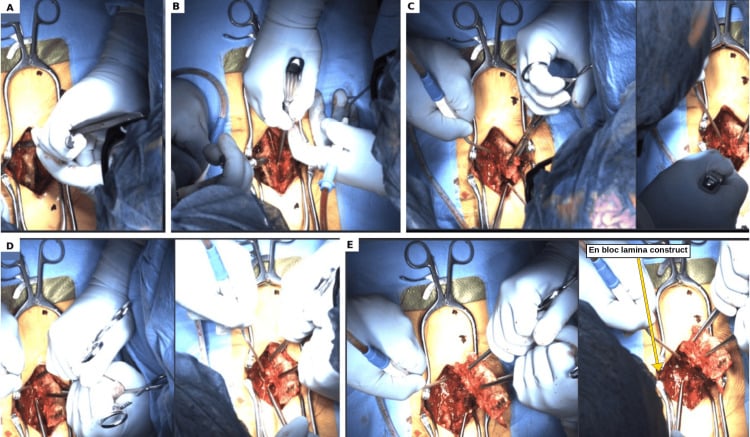
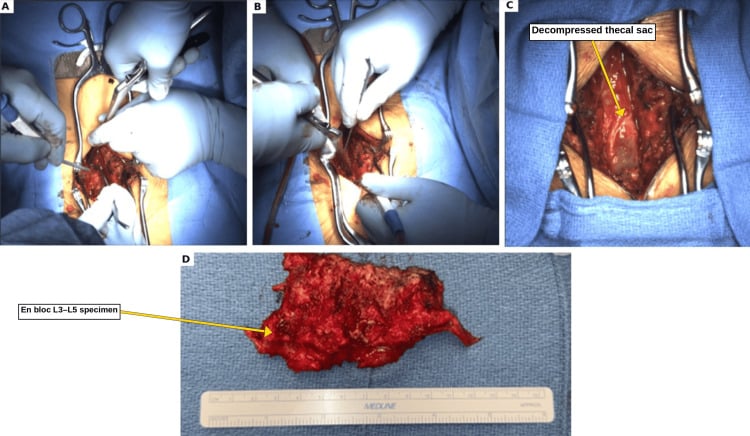
Once MRI confirms CES. Contact the on-call spine surgeon immediately and book emergency theatre. Consent covers the high risk of permanent dysfunction despite surgery, and thromboprophylaxis is started.
Long-term Outcomes and Complications
- CES-I (decompressed urgently)
- Often full or near-full recovery
- CES-R
- Permanent catheter or ISC often needed (50%)
- CES-I (decompressed urgently)
- Usually good recovery
- CES-R
- 30-40% have ongoing issues
- CES-I (decompressed urgently)
- Up to 50% even with decompression
- CES-R
- Numbness, erectile dysfunction, dyspareunia
- CES-I (decompressed urgently)
- Very common (60-70%)
- CES-R
- Neuropathic pain, residual back pain
- CES-I (decompressed urgently)
- Variable, depends on degree of compression
- CES-R
- Foot drop, hip flexor weakness
Surgical Complications:
- Wound infection (1-2%)
- CSF leak/dural tear (2-5%)
- Haematoma requiring return to theatre (rare)
- Recurrent disc herniation (5-10%)
- Wrong level surgery (rare but documented)
Guidelines, Registries & Global Practice
Global epidemiology
- Incidence approximately 1-3 per 100,000 population per year; roughly 0.04% of low back pain presentations and around 2-6% of lumbar disc operations.
- Most common cause is a large central lumbar disc herniation (L4/5 then L5/S1); other causes include tumour (primary or metastatic), epidural abscess, spontaneous or post-operative epidural haematoma, spinal stenosis decompensation and trauma.
- True compressive CES is confirmed on only about 30-40% of emergency MRIs performed for suspected CES, so a high false-positive clinical rate is expected and acceptable.
- Imaging
- Emergency MRI day or night at the presenting hospital
- Timing
- Decompress as soon as safely possible; no fixed hour rule
- Emphasis
- Networked transfer pathways and meticulous documentation
- Imaging
- Urgent MRI; national CES pathway to reduce diagnostic delay
- Timing
- Emergency referral on clinical suspicion, before signs are complete
- Emphasis
- Safety-netting advice and standardised pathways after litigation review
- Imaging
- MRI is the imaging of choice; CT myelogram if MRI contraindicated
- Timing
- Emergent decompression recommended; 48h commonly cited from Ahn data
- Emphasis
- Disc herniation guideline lists CES as an absolute surgical indication
- Imaging
- Whole lumbosacral MRI; consider whole-spine if neoplastic/infective cause
- Timing
- Emergency decompression; stratify counselling by CES-I vs CES-R
- Emphasis
- Treat the cause (discectomy, debridement for abscess, evacuation for haematoma)
Registry and audit notes
- CES is not an arthroplasty/implant condition, so there is no implant registry; instead, national audit data (e.g. the UK UCES prospective cohort) provide the best contemporary outcome benchmarks.
- Across these datasets, median time from symptom onset to surgery is measured in days rather than hours, and only about a third of patients reach theatre within 48 hours - a reminder that real-world pathways lag behind the textbook ideal.
High- vs limited-resource practice variation
- High-resource settings: 24/7 MRI access, dedicated spinal on-call rotas and rapid inter-hospital transfer allow same-day decompression.
- Limited-resource settings: MRI may be unavailable out of hours, so CT myelogram or even clinical judgement with urgent referral becomes necessary; transfer distances and theatre availability commonly delay surgery, increasing the proportion presenting as CES-R. Early urinary catheterisation and intermittent self-catheterisation teaching remain universally available and important interim measures.
Controversies and Areas of Uncertainty
Retrospective meta-analyses (Ahn 2000, DeLong 2008) suggest benefit from decompression within 48h and a graded relationship with timing. The largest modern prospective cohort (Woodfield/UCES 2022) found no association between time to surgery and 1-year disability or urinary outcome. The likely truth: timing matters most for patients still CES-I, whilst once CES-R is established the damage is largely fixed.
A majority of emergency MRIs for suspected CES show no compressive lesion. Operating on imaging without correlation, or conversely dismissing genuine early CES, are both errors. Imaging must match the clinical picture.
Todd (2017) argues many classic red flags (painless retention, established saddle anaesthesia) are signs of late, irreversible CES. Triaging on these alone guarantees late presentation; earlier, subtler symptoms should trigger MRI.
Decompression at night by a fatigued team without the full set of staff and equipment may add morbidity (a point Gleave and Macfarlane raised). "As soon as safely possible" balances urgency against operating under suboptimal conditions; many networks transfer to a 24/7 spinal centre rather than operate locally at 3am.
Exam Viva Scenarios
Practise clinical reasoning and management decisions out loud
“A 45-year-old man presents to ED at 2am with severe back pain and bilateral sciatica. He mentions he hasn't passed urine since the morning (16 hours ago) but 'doesn't feel the need to go'. DRE reveals reduced anal tone. What do you do?”
“A 38-year-old woman presents with 3 days of worsening back pain radiating to both legs. She mentions her bladder 'feels strange' - she has to strain to start urinating and doesn't feel like she empties fully. On examination, she has reduced perineal sensation but intact anal tone. What are your concerns?”
“A 29-year-old woman presents with 2 days of bilateral leg pain, a feeling of numbness 'down below' and urinary urgency. DRE shows normal anal tone and normal perianal sensation to pinprick. Emergency MRI of the whole lumbar spine shows a small L5/S1 disc bulge but no significant canal compromise and free-floating nerve roots. How do you proceed?”
Red Flags (BB-SADDLE)
- Bilateral sciatica (though can be unilateral)
- Bladder dysfunction - THE critical symptom
- Saddle anaesthesia (perineal numbness)
- Anal tone loss on DRE
- Deficit in legs (motor/sensory)
- Disturbance of bowels
- Lower back pain (severe)
- Erectile/Sexual dysfunction
Classification (Gleave & Macfarlane)
- CES-I (Incomplete): Altered bladder sensation, volitional control PRESERVED - URGENT
- CES-R (Retention): Painless retention, overflow incontinence - POORER PROGNOSIS
Investigation
- Gold Standard: Emergency MRI Lumbar Spine
- Bladder scan: PVR greater than 500ml highly predictive
- CT Myelogram if MRI contraindicated
Management
- Emergency surgical decompression
- Laminectomy +/- discectomy
- Timing: As soon as safely possible (within 24-48h)
- Goal: Operate while CES-I to prevent CES-R
Evidence Base
Decompression within 48 hours - Ahn meta-analysis
- Meta-analysis of 322 patients with CES secondary to lumbar disc herniation (42 studies)
- No significant difference between surgery under 24h versus 24-48h
- Significant advantage for decompression within 48h versus after 48h for sensory, motor, bladder and bowel recovery
- Pre-operative chronic back pain and rectal dysfunction predicted worse urinary outcome
CES-R vs CES-I should not be analysed together - DeLong meta-analysis
- Meta-analysis of 16-27 observational cohorts of CES with retention (CES-R)
- Later surgery predicted a worse (Fair/Poor) urinary outcome (relative risk 1.77 to 2.19 across breakpoints)
- CES-R carried a worse outcome than incomplete CES (relative risk 2.58)
- Concluded CES-R and CES-I must be reported separately, not pooled
CES classification and the timing controversy
- Articulated the incomplete (CES-I) versus retention/overflow (CES-R) distinction now in routine use
- CES-I: subjective bladder symptoms with volitional control preserved
- CES-R: painless retention with overflow incontinence and a paralysed bladder
- Authors argued that once retention with overflow is established, urgent decompression confers no additional benefit
UCES - UK prospective cohort (Woodfield)
- Prospective multicentre cohort of 621 surgically treated CES patients with 1-year follow-up
- Median time to surgery 3 days; only 32% operated within 48h
- No association between time to surgery (or radiological compression) and Oswestry Disability Index or urinary outcome at 1 year
- Functional improvement occurred even in those presenting in retention; 65% needed extra healthcare services during follow-up
Long-term micturition, defecation and sexual outcome (Korse)
- Cohort of 75 surgically decompressed CES patients; L5-S1 most common level
- At presentation: micturition dysfunction 92%, saddle sensory change 93%, defecation dysfunction 74%
- At follow-up: micturition dysfunction 48%, defecation dysfunction 42%, sexual dysfunction 53%
- Recovery is slow and incomplete in the majority despite decompression
Red flags versus 'white flags' - rethinking triage (Todd)
- Systematic review of 7 guideline sources, 37 recommendations
- Up to two-thirds of so-called 'red flags' actually describe late, often irreversible CES ('white flags' of defeat)
- Only ~32% of features were true early warning signs that allow avoidable damage to be prevented
- Calls for low-threshold MRI as part of triage at the district general hospital
BASS / SBNS national standards for suspected CES
- Emergency MRI mandatory for suspected CES, day or night, where the patient presents
- Confirmed CES should be transferred and decompressed on an emergency basis
- No arbitrary hour limit - operate as soon as safely feasible
- Meticulous documentation of bladder, bowel, perineal and DRE findings is mandatory
Where the 500ml post-void residual figure comes from (Domen)
- 58 consecutive emergency presentations with SUSPECTED cauda equina syndrome; only 8 had MRI-confirmed compression
- Where it was measured, the MRI-positive patients had over 500ml of urinary retention - this is the origin of the widely quoted 500ml threshold
- Two or more of bilateral sciatica, subjective urinary retention or rectal incontinence gave an odds ratio of 48.00 for MRI-confirmed compression (95% CI 3.30-697.21, p=0.04)
- No other individual symptom or sign discriminated between the compressed and uncompressed groups
References
- Gleave JRW, Macfarlane R. Cauda equina syndrome: what is the relationship between timing of surgery and outcome? Br J Neurosurg. 2002;16(4):325-328. PMID 12389883. doi:10.1080/0268869021000032887
- Ahn UM, Ahn NU, Buchowski JM, et al. Cauda equina syndrome secondary to lumbar disc herniation: a meta-analysis of surgical outcomes. Spine (Phila Pa 1976). 2000;25(12):1515-1522. PMID 10851100. doi:10.1097/00007632-200006150-00010
- DeLong WB, Polissar N, Neradilek B. Timing of surgery in cauda equina syndrome with urinary retention: meta-analysis of observational studies. J Neurosurg Spine. 2008;8(4):305-320. PMID 18377315. doi:10.3171/SPI/2008/8/4/305
- Korse NS, Pijpers JA, van Zwet E, et al. Cauda equina syndrome: presentation, outcome, and predictors with focus on micturition, defecation, and sexual dysfunction. Eur Spine J. 2017;26(3):894-904. PMID 28102451. doi:10.1007/s00586-017-4943-8
- Woodfield J, Hoeritzauer I, Jamjoom AAB, et al. Presentation, management, and outcomes of cauda equina syndrome up to one year after surgery: a multi-centre prospective cohort study. Lancet Reg Health Eur. 2022;24:100545. PMID 36426378. doi:10.1016/j.lanepe.2022.100545
- Todd NV. Guidelines for cauda equina syndrome. Red flags and white flags. Systematic review and implications for triage. Br J Neurosurg. 2017;31(3):336-339. PMID 28637110. doi:10.1080/02688697.2017.1297364
- Korse NS, Veldman AB, Peul WC, Vleggeert-Lankamp CLA. The long term outcome of micturition, defecation and sexual function after spinal surgery for cauda equina syndrome. PLoS One. 2017;12(4):e0175987. PMID 28423044. doi:10.1371/journal.pone.0175987
- British Association of Spine Surgeons and Society of British Neurological Surgeons. Standards of care for established and suspected cauda equina syndrome. 2018.