Axial Neck Pain | Diagnosis by Blockade | Radiofrequency Ablation Treatment
- Facet joints (Z-joints) are the most common source of chronic neck pain after whiplash.
- Pain is typically AXIAL and NON-RADICULAR (Referral zones exist but do not follow dermatomes).
- Degenerative changes on X-ray/CT do NOT correlate well with pain (False positives common).
- Diagnosis CANNOT be made by history/exam alone - requires Diagnostic Blocks (MBB).
- Treatment of choice for confirmed cases is Radiofrequency Neurotomy (RFA).
- “C2/3 Facet refers pain to the Occiput (Cervicogenic Headache).
- “C5/6 Facet refers pain to the shoulder/scapula.
- “Pain is worse with Extension and Rotation (Loading the facet).
- “Single uncontrolled block has a high false-positive rate (around 27%) - hence double blocking is the Gold Standard.
Overview and Epidemiology
Cervical facet arthropathy is pain arising from the cervical zygapophysial (facet) joints. It is typically axial and non-radicular, and the diagnosis is made by the response to controlled medial branch blocks, not by imaging.
Who and where. After whiplash, the facet joints are the most common identifiable source of chronic neck pain, around 60% of cases (Lord 1996). C2/3 and C5/6 are the levels most frequently involved. There is a female predominance, and onset is often delayed 24-48 hours after a motor-vehicle deceleration injury. Neck pain overall is a leading global cause of years lived with disability.
Why it matters. Degenerative facet change on imaging is near-universal with age and correlates poorly with pain. A structured, block-based pathway is therefore essential before committing a patient to ablation.
Pathophysiology and Mechanisms
The joint. The facet is a synovial joint, oriented at 45 degrees in the coronal plane, and it resists anterior translation and rotation.
Innervation. This is the anatomy radiofrequency ablation depends on. Each joint is supplied by the medial branch of the dorsal ramus, and each has dual innervation, from the same level and the level above: the C4/5 joint is supplied by the C4 and C5 medial branches. The exception is C2/3, supplied by the third occipital nerve (TON) and the C2 medial branch.
Referral patterns (Bogduk maps). The referral zones do not follow dermatomes. Each joint has its own:
- C2/3: occiput and mastoid (headache)
- C3/4: upper neck
- C5/6: lower neck, trapezius ridge and acromion
- C6/7: scapular border
Classification Systems
Classification relies on the response to diagnostic blocks, not on imaging. Radiographic grading describes the arthritis, which often correlates poorly with the pain.
IASP / Bogduk Diagnostic Criteria
- Possible facet pain: history and examination suggestive, and imaging shows OA.
- Probable facet pain: greater than 80% relief from a single medial branch block (MBB).
- Definite facet pain: greater than 80% relief from two comparative blocks (for example lignocaine then bupivacaine) on different occasions.
Whiplash-Associated Disorders (Quebec Classification)
The grading examiners expect for whiplash is the Quebec Task Force classification of Whiplash-Associated Disorders (Spitzer et al, 1995). It is worth stating explicitly because it drives triage and prognosis.
- Neck complaint
- None
- Findings
- No neck complaint and no physical signs
- Neck complaint
- Pain, stiffness or tenderness only
- Findings
- No physical (musculoskeletal or neurological) signs
- Neck complaint
- Neck complaint
- Findings
- Musculoskeletal signs: reduced range of motion and point tenderness
- Neck complaint
- Neck complaint
- Findings
- Neurological signs: reduced or absent reflexes, weakness, sensory deficit
- Neck complaint
- Neck complaint
- Findings
- Fracture or dislocation
Headache, dizziness, tinnitus, dysphagia, temporomandibular pain and memory disturbance may accompany any grade and are not themselves graded.
Where facet pain fits. The vast majority of presentations are Grade I to II. Grade IV (fracture or dislocation) mandates immobilisation and the cervical-fracture pathway, not a pain-block pathway.
A Grade III WAD (genuine neurological deficit) is not a facet-block candidate: neurological signs point to the nerve root or cord and should redirect you to radiculopathy or myelopathy work-up. Facet-mediated pain and the medial-branch-block pathway are relevant to persistent Grade I-II pain. Conflating the two is a classic trap.
Clinical Assessment
History. The pain is deep, aching and dull, and there is often a history of a motor-vehicle accident (whiplash). It is worse looking up, as when hanging washing, or turning the head, as when reverse parking, and morning stiffness is common.
Examination. Alignment is normal or there is a mild torticollis, and extension and rotation are restricted. There is paraspinal tenderness over the facet line, 2cm from the midline, where deep pressure reproduces "the pain". The provocative test is extension with rotation to the affected side, which loads the facet: "closing the door" on it.
Neurology must be normal. If arm pain exceeds neck pain, or there is a neurological deficit, the nerve root is the suspect, not the facet. The table sets facet pain against discogenic pain and radiculopathy.
- Facet Joint (Z-Joint)
- Neck (Axial)
- Discogenic Pain
- Neck (Axial)
- Radiculopathy
- Arm (Radicular)
- Facet Joint (Z-Joint)
- Extension / Rotation
- Discogenic Pain
- Flexion / Loading
- Radiculopathy
- Extension / Spurling's
- Facet Joint (Z-Joint)
- Somatic (Head/Scapula)
- Discogenic Pain
- Somatic (Interscapular)
- Radiculopathy
- Dermatomal (Hand)
- Facet Joint (Z-Joint)
- None
- Discogenic Pain
- None
- Radiculopathy
- Motor/Sensory Loss
Imaging and Investigations
Radiographs. AP, lateral and oblique views screen for joint space narrowing, sclerosis and osteophytes. The "shingle sign" visualises facet alignment on the lateral view.
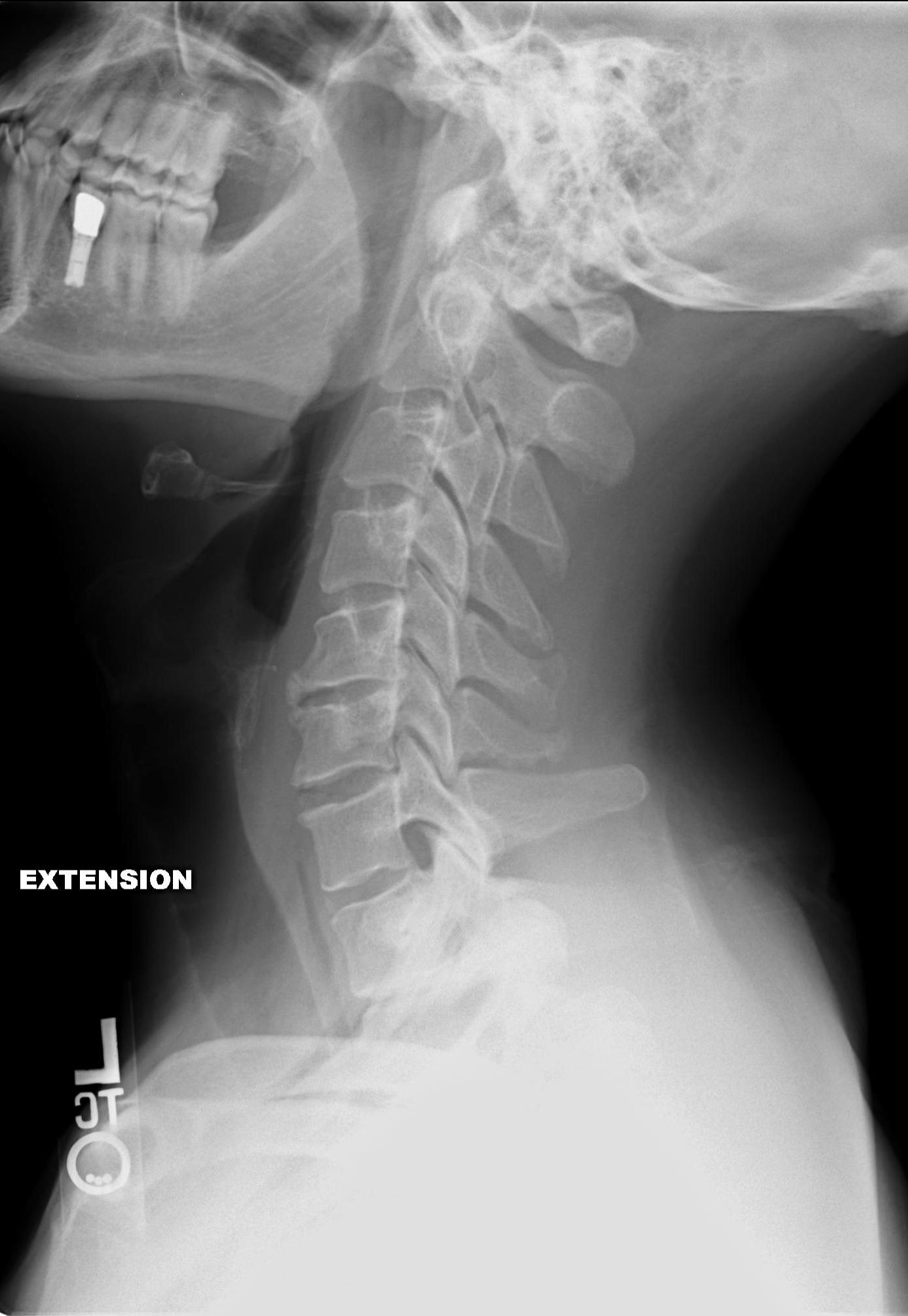
CT is more sensitive for osteoarthritis and rules out fracture or lysis.
Treat the patient, not the scan. The presence of OA does not confirm the pain source. Severe OA on a radiograph does not mean the joint is painful, and a normal joint can be painful, as after whiplash. Nor can the diagnosis be made by history and examination alone.
The medial branch block (MBB) is the gold standard. Local anaesthetic (lignocaine or bupivacaine) is injected onto the nerve supply of the joint, and the block is positive with greater than 80% pain relief for the duration of the anaesthetic.
The false-positive block. A single block is falsely positive in about 27% of cases, through placebo response and systemic spread, which is why double blocking is the gold standard. Sedation invalidates the result, and a pain diary is essential.
FACETFacet Features
Hook:Key clinical features.
Non-Operative Management
Physical therapy is multimodal: isometric strengthening, range of motion and scapular stabilisation. It is combined with ergonomic attention to the workstation (monitor height) and with CBT for chronic pain.
Medication. NSAIDs are used. Neuropathic agents such as gabapentin and pregabalin are of questionable efficacy for pure facet pain.
Intra-articular corticosteroid. This is the request that most often arrives from primary care, and the honest answer is that intra-articular steroid is not part of the evidence-based pathway for cervical facet pain, which is why it is absent from the management algorithm. Barnsley and colleagues randomised 41 patients with blocks-confirmed cervical zygapophysial joint pain after whiplash to intra-articular betamethasone 5.7 mg or bupivacaine 0.5% under double-blind conditions. The median time to return of half the pre-injection pain was 3 days with steroid against 3.5 days with local anaesthetic (p = 0.42). Fewer than half of all patients had relief beyond one week and fewer than one in five beyond a month, whichever they received (N Engl J Med 1994; PMID 8127332).
Distinguish the three needles, because they are constantly conflated.
- A medial branch block is diagnostic and anaesthetic only.
- Radiofrequency neurotomy is the therapeutic procedure, and treats the same nerves the block anaesthetised.
- Intra-articular steroid targets the joint itself, and has neither diagnostic value (the injectate spreads unpredictably) nor demonstrated durable benefit.
The practical consequence. A patient who responds to a properly controlled medial branch block should be offered neurotomy, not a course of joint injections. And a patient who has had unhelpful intra-articular injections has not been shown to lack facet-mediated pain.
Management Algorithm
The pathway runs from six weeks of conservative care to two diagnostic blocks to ablation. Neurological signs take the patient off it at the start, and a block that leaves the pain unchanged sends the search elsewhere.
- 1
Axial Neck Pain (No Neuro)
- 2
Pain Persists > 6w?
- 3
Block Response (> 80% Relief)
Surgical Technique
Radiofrequency Neurotomy (RFA)
Indication and goal. RFA is indicated after a positive response to two diagnostic blocks. Heat at 80-90°C creates a lesion that coagulates the medial branch and interrupts the pain signal.
Placement. The electrode is placed parallel to the nerve, along the waist of the articular pillar. The lesion forms around the sides of the active tip, not beyond its end, so a perpendicular ("gun-barrel") needle creates a smaller lesion and might miss the nerve.
Testing. Sensory and motor stimulation come before lesioning.
- Sensory stimulation at 50Hz: the patient feels buzzing in the neck.
- Motor stimulation at 2Hz: look for a multifidus twitch. The absence of an arm twitch is critical, to rule out root stimulation.
Lesioning. 90 seconds at 80°C, with multiple lesions per nerve.
Pulsed vs Conventional (Thermal) Radiofrequency
Conventional thermal RF and pulsed RF are two distinct modalities, and the distinction is examinable.
- Conventional / continuous thermal RF
- Continuous
- Pulsed RF (PRF)
- Brief pulses with silent phases that let heat wash out
- Conventional / continuous thermal RF
- About 80 to 90 degrees C
- Pulsed RF (PRF)
- Kept at or below 42 degrees C (below the neurodestructive threshold)
- Conventional / continuous thermal RF
- Thermal coagulation / ablation (neurodestructive)
- Pulsed RF (PRF)
- Neuromodulatory, non- or minimally destructive
- Conventional / continuous thermal RF
- Best supported (Lord NEJM RCT and outcome studies)
- Pulsed RF (PRF)
- Weaker and less durable evidence; not equivalent
Thermal RF destroys the medial branch by heat coagulation; it is the modality validated by the Lord NEJM trial and the basis of the durable relief quoted under outcomes. Pulsed RF exposes the nerve to a rapidly fluctuating electric field while keeping the tissue cool, so it does not coagulate the nerve. It is proposed where a destructive lesion is undesirable.
The third occipital nerve. TON neurotomy is technically harder, as the nerve over the C2/3 joint is larger and more variable. Thermal lesioning there predictably causes temporary cutaneous numbness and transient unsteadiness or ataxia in the treated territory. That side-effect profile is part of why pulsed RF is sometimes considered there, though thermal neurotomy remains the better-evidenced option.
Complications
- Risk
- Common (5%)
- Note
- Burning pain (Sunburn feeling). Self-limiting (2-4 weeks).
- Risk
- Rare
- Note
- Drift of needle anteriorly hitting the Nerve Root. Avoid by Motor Testing.
- Risk
- Very Rare
- Note
- Epidural abscess.
- Risk
- 20-30%
- Note
- Technical failure or Incorrect diagnosis (False pos block).
Postoperative Care
- Expect procedural soreness at the lesion sites; ice packs and simple analgesia suffice
- Resume normal activity immediately - no immobilisation, no wound restrictions
- Transient numbness in the treated medial-branch territory is common and was not troubling to patients in the Lord 1996 RCT
- Physiotherapy to capitalise on the pain-free window: restore cervical range, deep flexor endurance and posture before the nerve regenerates
- Graded return to work, driving and sport as symptoms allow
- Recurrence of the same familiar pain is an indication for repeat neurotomy, which restores relief for a similar duration (median 15 months per repeat)
- Review for adjacent-level or contralateral facet-mediated pain if the pattern changes
Outcomes and Prognosis
Natural history. The course is recurrent and relapsing.
After neurotomy. Between 60 and 80% of patients get relief. It is durable but not permanent, because the medial branch regenerates, and the quoted duration varies: 9-12 months; a median of 263 days against 8 days for sham in the Lord 1996 NEJM RCT; and 17-20 months in rigorous practice series.
Whiplash. The prognosis is poorer if litigation is ongoing, if baseline pain is high, or if the patient is catastrophising.
Guidelines, Registries & Global Practice
Global Epidemiology
- Neck pain is among the leading global causes of years lived with disability (Global Burden of Disease).
- After whiplash, cervical facet joints are the most common identifiable pain source (around 60% of chronic cases; C2/3 and C5/6 most frequent).
- Female predominance; recovery is strongly modulated by psychosocial factors and the local compensation environment.
- Diagnostic Blocks
- Not recommended as routine for non-specific neck pain
- RFA Position
- RFA not recommended outside research for axial neck pain
- Diagnostic Blocks
- Two controlled (comparative or placebo) blocks required
- RFA Position
- RFA endorsed in rigorously selected, block-positive patients
- Diagnostic Blocks
- Controlled blocks to confirm before ablation
- RFA Position
- RFA an option after positive controlled blocks
- Diagnostic Blocks
- Comparative blocks favoured; placebo control debated
- RFA Position
- RFA accepted for confirmed facet pain
Practice Variation (high- vs limited-resource)
- High-resource settings: fluoroscopy- or CT-guided diagnostic blocks and RFA are routine in pain/spine services.
- Limited-resource settings: image-guided blocks and RFA equipment may be unavailable; care relies on physiotherapy, analgesia and activity modification, with surgical fusion reserved for instability or deformity.
- The major payer/policy divergence is whether controlled blocks are mandated before RFA (SIS/ASRA, NASS) or whether the whole pathway is restricted (NICE).
Controversies & Areas of Uncertainty
- Placebo vs comparative blocks: Comparative blocks (two anaesthetics) still carry residual false positives; only placebo-controlled triple blocks fully exclude placebo, but these are impractical in routine care.
- NICE vs interventionalist societies: NICE restricts diagnostic blocks and RFA for non-specific neck pain, citing weak trial evidence, whereas SIS/ASRA/NASS support RFA when strict block-based selection is applied. The conflict largely reflects how patients are selected.
- Imaging-pain mismatch: Degenerative facet changes on CT/MRI correlate poorly with the pain source, so imaging cannot confirm or exclude the diagnosis.
- Durability and repetition: Relief is finite because the medial branch regenerates; the optimal re-treatment interval and long-term effect on adjacent-segment health remain undefined.
- Whiplash chronicity: Cross-jurisdiction differences in chronicity highlight the contribution of psychosocial and compensation factors rather than a purely structural cause.
MCQ Practice Points
Q: What is the false positive rate of a single uncontrolled medial branch block? A: About 27% (Barnsley 1993, 95% CI 15-38%). This is why dual blocks are required for definitive diagnosis.
Q: The C5/6 facet joint is innervated by which nerves? A: C5 and C6 medial branches. (Same level and level above).
Q: For maximum efficacy, how should the RFA electrode be placed relative to the nerve? A: Parallel. This maximizes the length of nerve captured in the thermal lesion.
Q: Which movement typically aggravates facet joint pain? A: Extension and Rotation. This mechanially loads the joint.
Q: What is the most common side effect of RFA? A: Post-neurotomy Neuritis (Sunburn sensation). Occurs in 5% of patients.
Exam Day Cheat Sheet
Key Concepts
- Axial Pain (No Radiculopathy)
- Extension Loading pattern
- MBB is gold standard diagnosis
- Double block required
Anatomy
- Dual Innervation (Same + Above)
- C2/3 = Headache (TON)
- C5/6 = Shoulder
- Facet angles 45 deg
Treatment
- Conservative first
- RFA (Parallel placement)
- Success = 9-12 months relief
- No Fusion
- Sensory + Motor Testing
Stats
- 60% of chronic post-whiplash neck pain
- 27% False-Positive Rate (Single Block)
- 54-55% in comparative-block series
- Female predominance
Image Manifest
- [1-preoperative-image-a-plain-radiograph-lateral-imag.png]: Lateral X-ray showing facet sclerosis
- [5-plain-radiographs-of-a-57-year-old-man-a-lateral-i.png]: Lateral spondylosis
Clinical Decision Scenarios
Practise clinical reasoning and management decisions out loud
“45F, MVA 6 months ago. Chronic neck pain, worse looking up. MRI shows some degeneration C5/6. Physio failed. What is your approach?”
“A patient complains of unilateral occipital headaches radiating from the neck. Worse with neck rotation. Which joint is culpable?”
“You are performing cervical medial branch radiofrequency neurotomy. How do you position the electrode, why, and how do you confirm safe placement before lesioning?”
Evidence Base
Prevalence of Cervical Facet Pain after Whiplash
- Placebo-controlled local anaesthetic blocks in 68 chronic post-whiplash neck-pain patients.
- Overall prevalence of cervical zygapophysial joint pain (C2/3 or below) was 60% (95% CI 46-73%).
- C2/3 joint pain prevalence was 50% in patients with dominant headache.
- Diagnosis survived placebo challenge, confirming it is a genuine clinical entity.
Prevalence by Comparative Blocks
- Double-blind comparative blocks (lignocaine vs bupivacaine) in 50 chronic post-whiplash patients.
- Painful zygapophysial joints identified in 54% (95% CI 40-68%).
- Established the comparative-block paradigm prior to the later placebo-controlled study.
- Cervical facet pain was the most common source in this population.
Landmark RCT: Radiofrequency Neurotomy
- 24 patients with block-confirmed facet pain randomised to active RFA (80 degrees C, multiple lesions) vs sham.
- Median time to return of 50% pain was 263 days (active) vs 8 days (sham), p=0.04.
- At 27 weeks 7/12 active patients were pain-free vs 1/12 sham.
- Numbness in the treated nerve territory occurred but was not troubling to patients.
Effectiveness in Practice
- 104 patients selected by controlled diagnostic blocks, treated by ISIS-trained operators.
- Successful outcome (complete or at least 80% relief, restored ADLs) in 61-74% across two practices.
- Median duration of relief allowing for repeat treatment was 20-26 months.
- Demonstrates real-world reproducibility when rigorous technique and selection are used.
Third Occipital Nerve Headache
- C2/3 (third occipital nerve) headache prevalence was 27% across all whiplash patients.
- In patients with dominant headache the prevalence rose to 53%.
- No history or examination feature reliably predicted the diagnosis before nerve blocks.
- Tenderness over the C2/3 joint was significantly associated with a positive diagnosis.
Radiofrequency Lesion Geometry
- Photographic temperature mapping shows RF lesions extend radially around the electrode tip, not beyond it.
- Lesion grows along the active tip, so electrodes laid parallel to the nerve capture a longer segment.
- A perpendicular tip risks the nerve slipping past the narrow lesion edge.
- Larger tips, higher tip temperature and longer lesion times enlarge the lesion.
False-Positive Rate of Single Blocks
- Single uncontrolled blocks compared against a double-blind comparative-block reference standard.
- False-positive rate of single blocks was 27% (16 of 60 joints; 95% CI 15-38%).
- Causes: placebo response, systemic absorption and spread to adjacent structures.
- Uncontrolled blocks have substantially reduced specificity.
Intra-Articular Steroid Does Not Work (RCT)
- 41 patients with blocks-confirmed cervical zygapophysial joint pain after whiplash, median symptom duration 39 months.
- Randomised to intra-articular betamethasone 5.7 mg or bupivacaine 0.5%, double-blind.
- Median time to return of 50% of pre-injection pain: 3 days with steroid vs 3.5 days with local anaesthetic (p = 0.42).
- Fewer than half had relief beyond one week and fewer than one in five beyond a month, in either arm.