The Gold Standard for Bone Density Measurement
Normal: T-score at or above -1.0 SD
Osteopaenia (low bone mass): T-score between -1.0 and -2.5 SD
Osteoporosis: T-score at or below -2.5 SD
Severe (established) Osteoporosis: T-score at or below -2.5 SD WITH one or more fragility fractures
Key: The T-score threshold of -2.5 was derived from population data showing fracture risk increases exponentially below this level
- DXA measures areal bone mineral density (aBMD) in g/cm² using two X-ray beams of different energies to separate bone from soft tissue.
- T-score compares the patient's BMD to the mean of a young adult reference population. Each 1 SD fall raises fracture risk about 1.5-fold generally — but 2.6-fold when hip BMD is used to predict hip fracture, so measure the site you care about.
- WHO classification: Normal = T-score at or above -1.0, Osteopaenia = T-score between -1.0 and -2.5, Osteoporosis = T-score at or below -2.5.
- FRAX integrates BMD with clinical risk factors to estimate 10-year probability of major osteoporotic and hip fractures.
- Z-score (not T-score) is used in premenopausal women, men under 50, and children — compares to age-matched controls.
- “DXA measures AREAL density (g/cm²), not TRUE volumetric density (g/cm³) — this means it overestimates BMD in large bones and underestimates in small bones.
- “Spine DXA is falsely elevated by: degenerative osteophytes, compression fractures, aortic calcification, scoliosis — always check the image.
- “For monitoring treatment response, the Least Significant Change (LSC) must be exceeded — typically 3-5% for spine, 4-6% for hip.
- “The hip (femoral neck specifically) is the best predictor of hip fracture — it should always be included in DXA scanning.
- “Vertebral fracture assessment (VFA) can be performed simultaneously with DXA and identifies prevalent fractures that change management.
Overview
What DXA is. Dual-energy X-ray absorptiometry (DXA or DEXA) is the gold standard for measuring bone mineral density (BMD) and diagnosing osteoporosis. It is the most widely validated, precise and clinically applicable bone density technique, and it forms the basis of the WHO diagnostic classification and of treatment guidelines worldwide.
How the number is made. Two X-ray beams of different energies (typically 40 and 70 keV) are attenuated differently by bone mineral and by soft tissue. Combining the two measurements mathematically eliminates the soft-tissue contribution and leaves the bone mineral content, which is divided by the projected bone area to give areal bone mineral density (aBMD) in g/cm².
Why BMD matters. BMD is the single strongest predictor of fracture risk that can be measured clinically. Quote the gradient of risk with its site attached, because the commonly repeated "each 1 SD halves or doubles risk" is not what the data show. Pooling 11 prospective cohorts, roughly 90,000 person-years and over 2,000 fractures, each 1 SD fall in BMD raised fracture risk about 1.5-fold (95% CI 1.4-1.6) at most sites, but 2.6-fold (2.0-3.5) when hip BMD was used to predict hip fracture and 2.3-fold (1.9-2.8) when spine BMD was used to predict vertebral fracture. Site-matched measurement is therefore substantially more powerful than measuring anywhere convenient, which is the practical reason the hip is scanned when hip fracture is the concern.
Why FRAX exists. BMD alone does not capture all fracture risk. Clinical risk factors (age, prior fracture, glucocorticoids, family history) modify fracture probability independently of BMD, and FRAX was developed to integrate BMD with those factors into a single 10-year fracture probability estimate.
Areal, not volumetric. Because the mineral content is divided by a projected two-dimensional area, DXA inherently measures a combination of bone density and bone size. Large bones will have a higher areal BMD than small bones even if their true volumetric density (g/cm³) is identical, so DXA may overestimate BMD in tall individuals with large vertebrae and underestimate it in short individuals with small vertebrae. Quantitative CT (QCT) can measure true volumetric BMD but is not used for routine clinical diagnosis.
DXA Physics and Technique
The principle. Bone mineral and soft tissue have different X-ray absorption characteristics at different energies. By measuring the attenuation of two beams of different energies (approximately 40 keV and approximately 70 keV), the system mathematically separates the contribution of bone from that of soft tissue.
How a scan is produced
- An X-ray tube generates a broadband X-ray beam
- The beam is filtered to produce two distinct energy peaks (K-edge filtration with cerium or samarium filters, or rapid kV switching)
- Each energy beam is attenuated differently by bone mineral (calcium hydroxyapatite) and soft tissue
- Detectors measure the transmitted intensity at both energies
- Mathematical algorithms separate bone mineral content (BMC, in grams) from soft tissue
- BMC is divided by the projected bone area to give areal BMD (g/cm²)
Radiation dose. DXA delivers approximately 0.001 mSv per scan, less than one day of background radiation, which is what makes it safe for serial monitoring.
The measurement sites. Each has a job:
- Lumbar spine (L1-L4), anteroposterior projection. Most responsive to treatment changes but susceptible to artefact from degenerative disease
- Proximal femur. Total hip and femoral neck are measured. The femoral neck is the most important predictor of hip fracture, and the hip is less susceptible to degenerative artefact than the spine
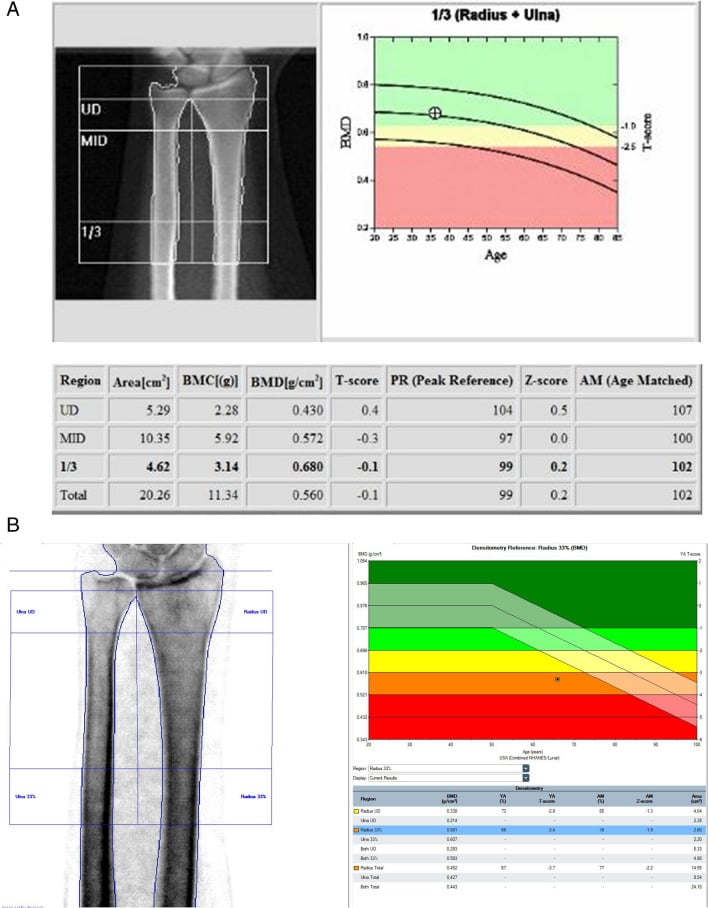
- Distal radius (1/3 radius). Used when the spine and hip cannot be measured, for example after bilateral hip replacements or with severe spinal degeneration
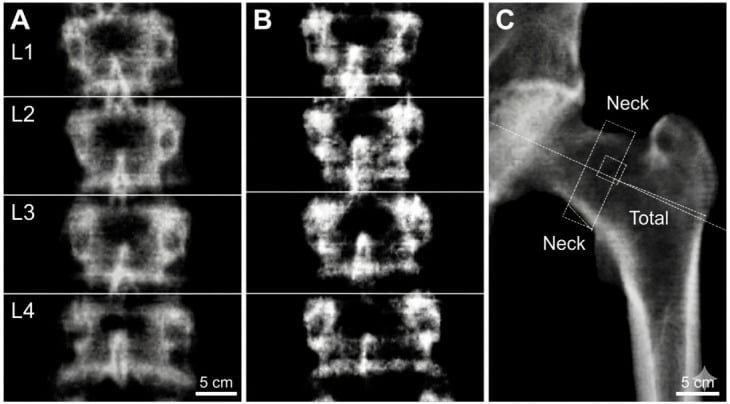
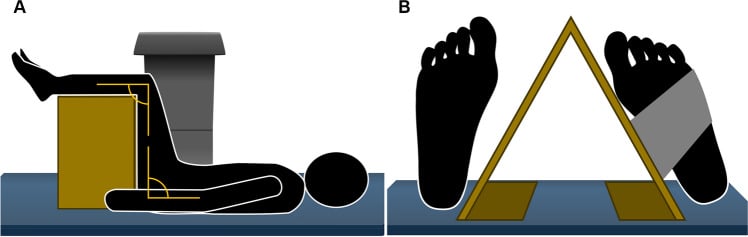
Positioning is part of the measurement. For lumbar acquisition the hips and knees are flexed to 90 degrees over a block to flatten the lordosis. For the hip, the limb is internally rotated 15-20 degrees and immobilised so that the femoral neck is profiled consistently from one scan to the next.
Which regions of interest may be used. The rules are examinable in their own right, and two of them catch candidates out.
- Ward's area and the greater trochanter must not be used for diagnosis. Ward's area in particular is a small, arbitrarily positioned region of low bone density that will read as osteoporotic in almost anybody, so quoting it will overdiagnose. Use the femoral neck and total hip only
- Use the lower of femoral neck and total hip, not their average, and not whichever looks better
- The spine needs at least two evaluable vertebrae. Exclude any vertebra affected by focal structural change (fracture, marked osteophytosis, previous surgery), and exclude a vertebra whose T-score differs from the adjacent one by more than 1.0 SD. If fewer than two vertebrae remain evaluable, the lumbar spine cannot be used for diagnosis at all: report the hip instead rather than quoting a one-vertebra result
- After a unilateral hip replacement, scan the other hip. The forearm is reserved for when both hips and the spine are unusable, or for primary hyperparathyroidism, where cortical bone loss is disproportionate and the 1/3 radius is the site most likely to reveal it
- The forearm is not part of the lowest-site rule for routine diagnosis; it substitutes for an unusable site rather than adding a fourth chance to find a low number. Use the non-dominant forearm, and do not substitute ultradistal forearm values for the diagnostic one-third-radius site
Indications for DXA and Vertebral Fracture Assessment
Knowing who to scan is as examinable as interpreting the result.
Who should have a DXA (ISCD indications)
- Women aged 65 and over, and men aged 70 and over, on age alone
- Postmenopausal women under 65 and men aged 50-69 with a risk factor (low body weight, prior fracture, high-risk medication, or a disease associated with bone loss)
- Any adult with a fragility (minimal-trauma) fracture
- Adults with a condition (e.g. rheumatoid arthritis, hyperparathyroidism, malabsorption, hypogonadism) or taking a medication (especially glucocorticoids, aromatase inhibitors, androgen-deprivation therapy) associated with low bone mass or bone loss
- Anyone being started on, or monitored on, pharmacological osteoporosis therapy
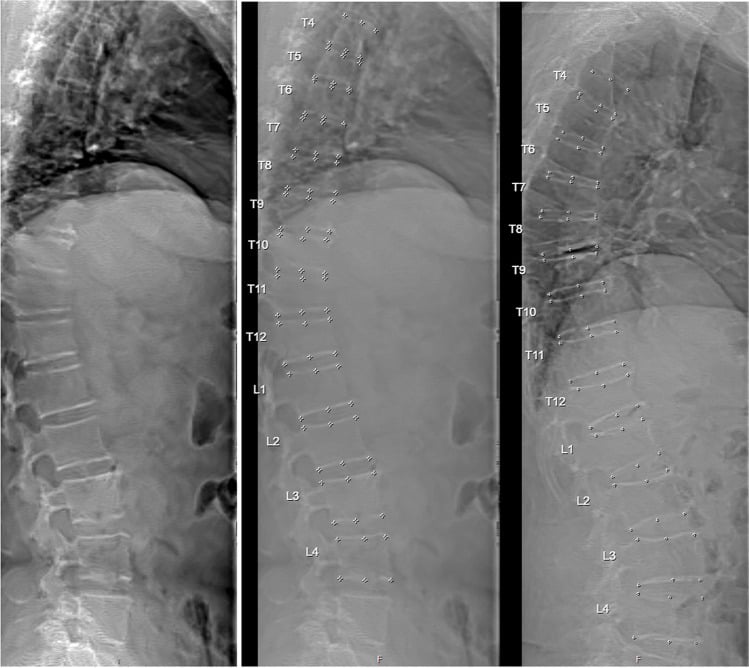
Vertebral fracture assessment. VFA is a lateral spine image acquired on the DXA scanner to detect prevalent vertebral fractures, which often change management: a vertebral fracture means osteoporosis and warrants treatment regardless of T-score. Consider VFA when it may change management, for example a T-score below -1.0 plus any of:
- Women aged 70 and over, or men aged 80 and over
- Historical height loss of more than 4 cm
- A self-reported but undocumented prior vertebral fracture
- Glucocorticoid therapy (5 mg or more of prednisolone daily for 3 months or more)
Genant semiquantitative grading scores each vertebral fracture by the percentage loss of vertebral body height, and the morphology is described as wedge (anterior), biconcave (central endplate) or crush (whole-body) deformity.
- Height loss
- None (normal)
- Severity
- No fracture
- Height loss
- 20-25%
- Severity
- Mild
- Height loss
- 25-40%
- Severity
- Moderate
- Height loss
- Over 40%
- Severity
- Severe
Systematic Approach
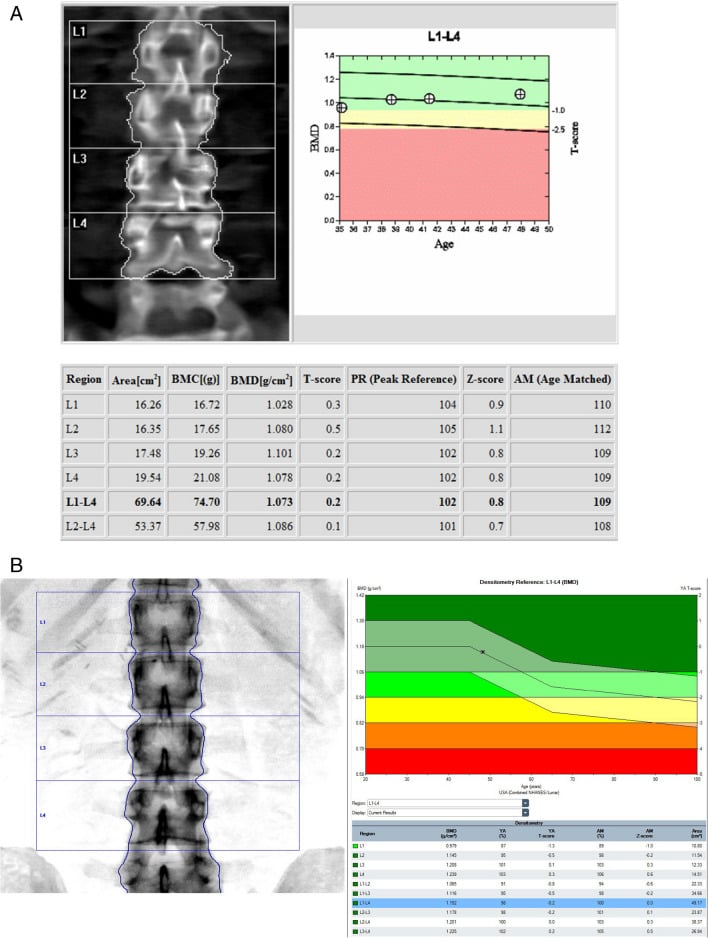
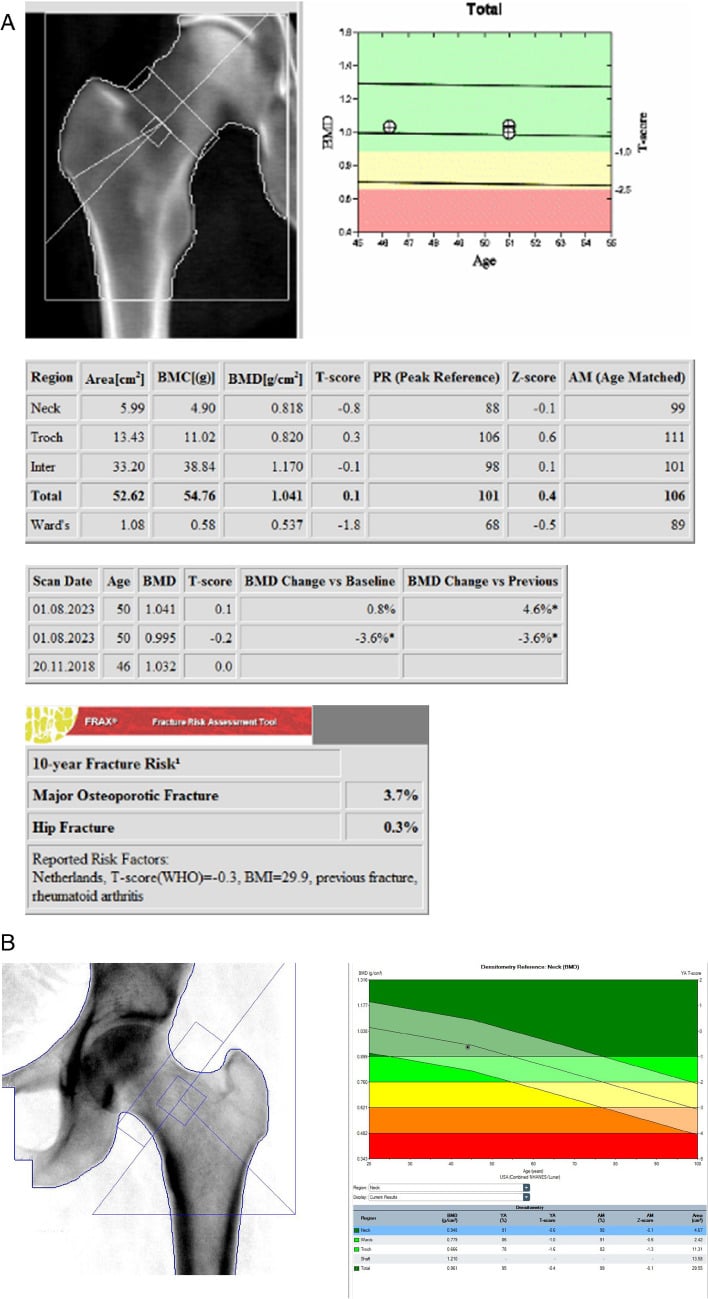
Reading the report. A DXA report has three parts: the scan image with the regions of interest outlined, a reference graph plotting the patient's areal BMD against age, and a table of BMD with the T- and Z-scores for each region. Read the image before the table.
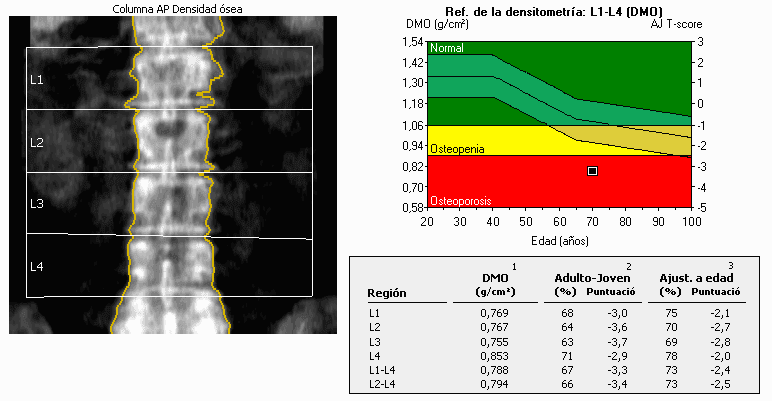
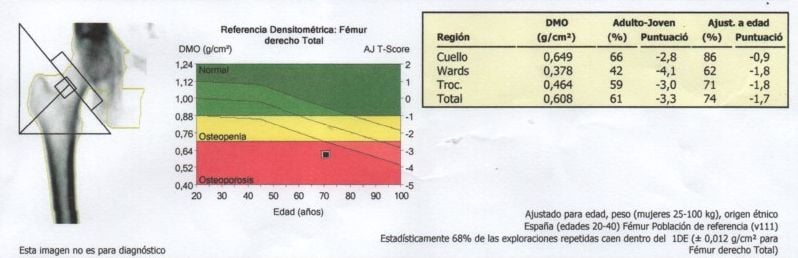
T-score and Z-score. The T-score compares the patient's BMD with the mean of a young adult reference population; the Z-score compares it with age-matched controls. Use the T-score in postmenopausal women and men aged 50 and over, and the Z-score in premenopausal women, men under 50 and children, where a Z-score at or below -2.0 is reported as "below the expected range for age" and one above -2.0 as "within the expected range". Using the wrong score is a common error, and the T-score is meaningless in a young patient.
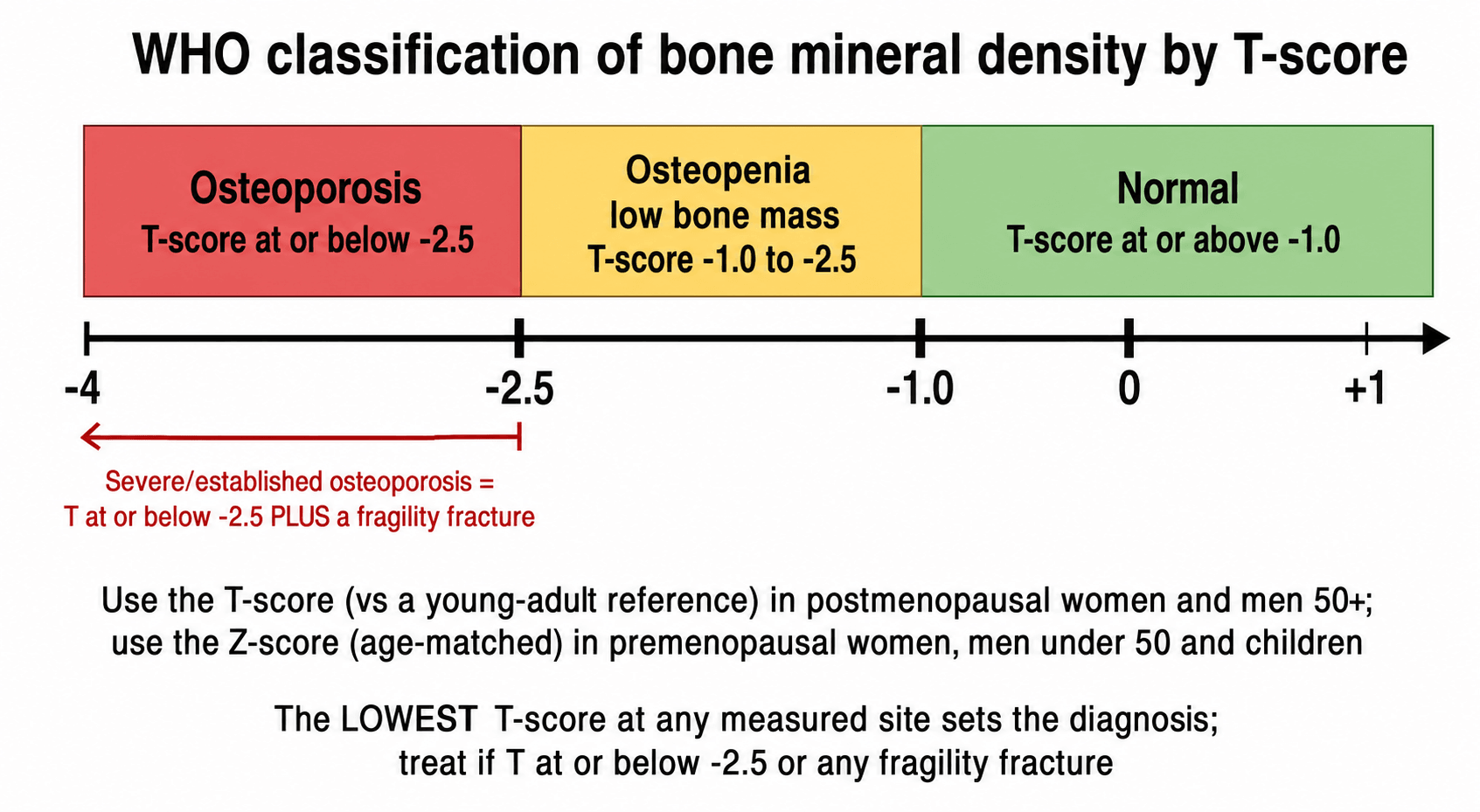
The WHO classification. The T-score places the patient in one of four categories:
- Normal: T-score at or above -1.0
- Osteopaenia (low bone mass): T-score between -1.0 and -2.5
- Osteoporosis: T-score at or below -2.5
- Severe (established) osteoporosis: T-score at or below -2.5 with one or more fragility fractures
The lowest T-score at any measured site determines the overall diagnosis.
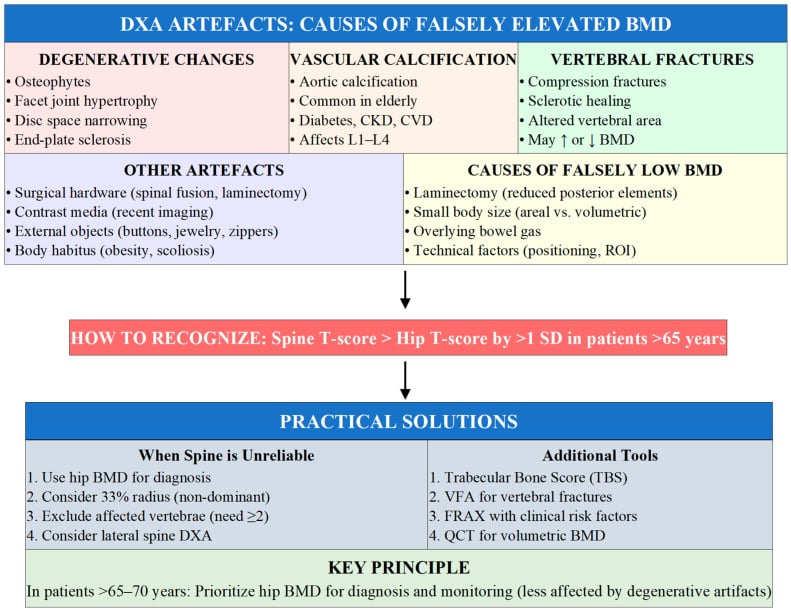
Check the image before the number. Anything that adds mineralised tissue to the lumbar measurement area is counted as vertebral bone, so a spine that reads surprisingly well in an elderly patient is checked against the scan image before the score is accepted. Contrast media from recent imaging has the same effect; positioning, region-of-interest and edge-detection errors may move the result either way. Exclude the affected vertebrae under the two-vertebra rule, and where the spine is not interpretable rely more heavily on the hip or forearm.
DOCSSources of Falsely Elevated DXA
Hook:DOCS: when spine DXA looks surprisingly good, check for these four common causes of false elevation.
Putting it together. The steps below are the order in which a report is read.
- Assessment
- Check the DXA scan image for artefacts and positioning errors
- Key Considerations
- Exclude vertebrae with compression fractures, osteophytes, or overlying calcification from the analysis
- Assessment
- T-score for postmenopausal women and men over 50. Z-score for premenopausal women, men under 50, and children
- Key Considerations
- Using the wrong score is a common error — T-scores are meaningless in young patients
- Assessment
- Normal (above -1.0), Osteopaenia (-1.0 to -2.5), Osteoporosis (at or below -2.5)
- Key Considerations
- The lowest T-score at any measured site determines the overall diagnosis
- Assessment
- Enter BMD and clinical risk factors into the FRAX calculator
- Key Considerations
- FRAX gives 10-year probability of major osteoporotic fracture and hip fracture separately
- Assessment
- Treat if T-score at or below -2.5, or if a fragility fracture is present regardless of T-score. In osteopaenia, use FRAX-based intervention thresholds (e.g. NOGG age-dependent threshold, or the US fixed threshold of 10-year hip risk at or above 3% / major osteoporotic fracture at or above 20%)
- Key Considerations
- Thresholds differ by country and FRAX calibration — quote the principle, not a single national cut-off
- Assessment
- Repeat DXA at 1-2 years to assess treatment response or disease progression
- Key Considerations
- Change must exceed the Least Significant Change (LSC) to be clinically meaningful — typically 3-5% change
Precision and Monitoring
Precision error. DXA precision is critical for monitoring treatment response. The precision error, expressed as the coefficient of variation (CV%), determines the smallest change that represents a real biological change rather than measurement variability. Typical values:
- Lumbar spine: 1.0-1.5% CV
- Total hip: 1.0-1.5% CV
- Femoral neck: 1.5-2.5% CV
The least significant change. The LSC is the minimum change in BMD that exceeds the measurement precision and represents a real biological change with 95% confidence: LSC = 2.77 × precision error. For a spine precision error of 1.5% the LSC is 2.77 × 1.5% = 4.2%, so a change of less than 4.2% at the spine could be due to measurement variability alone.
Where 2.77 comes from, because an examiner may ask: it is 1.96, the 95% confidence multiplier, × √2, because two measurements each carry the precision error and their errors add in quadrature. A single scan is therefore more precise than the difference between two scans, which is the whole reason a small interval change means nothing.
Your unit's number, not the textbook's. The figures above are typical values, not the ones you may quote for your own unit. The ISCD position is that each facility must establish its own precision error, for each technologist, on its own scanner, from a formal in-vivo precision study (conventionally 30 patients scanned twice, or 15 scanned three times, with repositioning between scans). An LSC borrowed from a textbook will be wrong for a service whose precision is worse than average, and will make random noise look like treatment failure.
Monitoring on treatment. Repeat DXA is typically performed every 1-2 years. More frequent scanning is usually not valuable, because treatment-induced changes are slow (bisphosphonates increase BMD by approximately 3-6% at the spine over 3 years) and the LSC means small interval changes are not interpretable. Serial scans should be performed on the same machine, since different manufacturers have different calibration, and ideally by the same technologist using the same positioning, vertebral selection and analysis method.
Rescreening the untreated patient is a different question, and the answer is measured in many years, not one to two. In 4,957 untreated women aged 67 and over with no prior hip or clinical vertebral fracture, followed for up to 15 years, the estimated interval for 10 percent to develop osteoporosis was:
- Estimated testing interval
- 16.8 years
- 95% CI
- 11.5 to 24.6
- Estimated testing interval
- 17.3 years
- 95% CI
- 13.9 to 21.5
- Estimated testing interval
- 4.7 years
- 95% CI
- 4.2 to 5.2
- Estimated testing interval
- 1.1 years
- 95% CI
- 1.0 to 1.3
The osteopenic range (-1.01 to -2.49) was divided into mild, moderate and advanced thirds; evidence level 2, a prospective cohort with competing-risk modelling. The practical message is that repeating a DXA in two years on an untreated woman with a normal or mildly osteopenic result is low-value, whereas advanced osteopenia genuinely warrants rescanning at about a year. Do not carry the treatment-monitoring interval across to a patient who is not on treatment.
FRAX and Clinical Decision-Making
What FRAX calculates. FRAX is a computer-based algorithm developed by the WHO Collaborating Centre that calculates the 10-year probability of hip fracture and of major osteoporotic fracture (hip, spine, forearm or proximal humerus) from individual patient risk factors, with or without BMD.
- Description
- Patient age in years (valid for ages 40-90)
- Impact on Risk
- Fracture risk increases exponentially with age independent of BMD
- Description
- Male or female
- Impact on Risk
- Women have higher absolute fracture risk at any given T-score
- Description
- Weight in kg / height in m²
- Impact on Risk
- Both very low BMI (less than 20) and very high BMI modify risk
- Description
- Any previous osteoporotic fracture
- Impact on Risk
- One of the strongest risk factors — approximately doubles 10-year risk
- Description
- Mother or father had a hip fracture
- Impact on Risk
- Strong genetic risk factor independent of BMD
- Description
- Active smoker at the time of assessment
- Impact on Risk
- Independent risk factor for fracture (also reduces BMD)
- Description
- Current or recent use (prednisolone 5mg or more daily for 3+ months)
- Impact on Risk
- Major secondary osteoporosis risk factor
- Description
- Confirmed diagnosis of RA
- Impact on Risk
- Independent risk factor beyond its effect on BMD
- Description
- Type 1 diabetes, osteogenesis imperfecta, untreated hyperthyroidism, hypogonadism
- Impact on Risk
- Increases risk independent of BMD
- Description
- Excessive alcohol intake
- Impact on Risk
- Dose-dependent increase in fracture risk
- Description
- Can calculate with or without BMD
- Impact on Risk
- Adding BMD significantly improves prediction accuracy
When treatment is indicated. Across guidelines, pharmacological treatment is indicated when any of the following applies:
- T-score at or below -2.5 at the spine, total hip or femoral neck
- A minimal-trauma (fragility) fracture has occurred, particularly a hip or vertebral fracture, regardless of T-score
- FRAX 10-year fracture probability crosses an intervention threshold in a patient with osteopaenia
- Glucocorticoid-induced osteoporosis, which warrants treatment at a higher BMD (e.g. T-score below -1.5) because bone loss is rapid and predominantly trabecular
Which threshold. Approaches differ. The UK NOGG uses an age-dependent threshold set at the risk equivalent to a woman with a prior fracture, whereas US National Osteoporosis Foundation guidance uses a fixed threshold (10-year hip fracture probability at or above 3% or major osteoporotic fracture at or above 20%). Thresholds differ by country and FRAX calibration, so quote the principle rather than a single national cut-off.
Differential of Low Bone Density and Comparison of Modalities
DXA is the diagnostic standard, but the examiner may ask how it compares with alternative techniques and how to distinguish osteoporosis from other causes of radiographically "lucent" or biochemically abnormal bone.
- What it measures
- Areal BMD (g/cm²); T-score and Z-score
- Strengths
- Standard for diagnosis, fracture prediction, treatment monitoring; very low dose
- Limitations / Role
- 2D areal measure, confounded by degenerative artefact; cannot separate cortical from trabecular bone
- What it measures
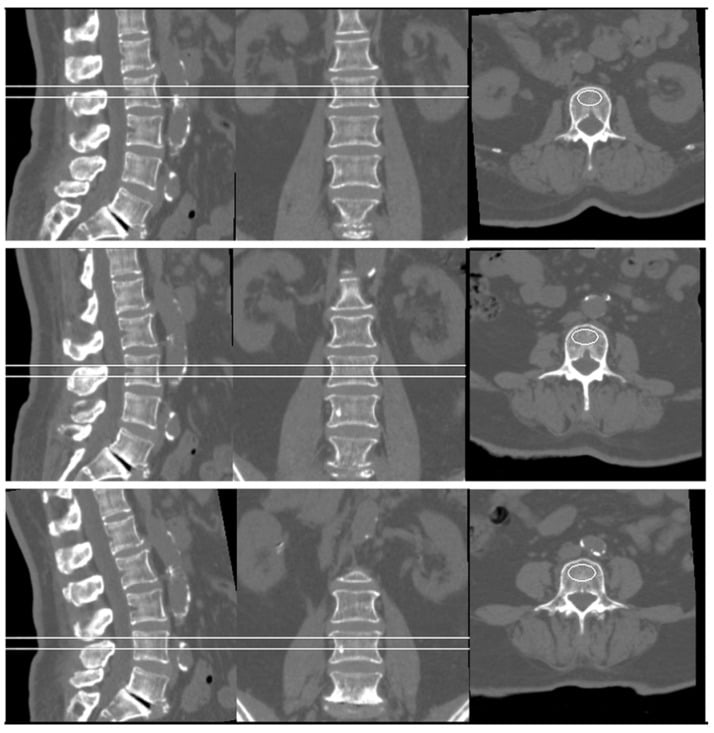
- True volumetric BMD (g/cm³); separates trabecular and cortical compartments
- Strengths
- Not affected by osteophytes or aortic calcification; sensitive to early trabecular loss
- Limitations / Role
- Higher radiation dose; not used for WHO T-score diagnosis; less standardised
- What it measures
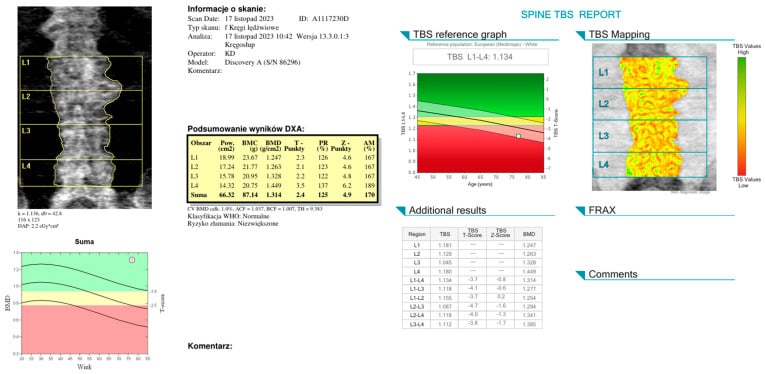
- Grey-level texture index of bone microarchitecture from the spine DXA image
- Strengths
- BMD-independent fracture predictor; can adjust FRAX probability
- Limitations / Role
- Software add-on; affected by soft-tissue thickness; adjunct not a diagnostic test
- What it measures
- Calcaneal speed of sound / broadband attenuation
- Strengths
- Radiation-free, portable, low cost — useful in limited-resource and screening settings
- Limitations / Role
- Cannot diagnose osteoporosis by WHO criteria; used for risk stratification only
- What it measures
- Cortical thinning, lucency, fracture
- Strengths
- Detects fragility fractures and gross structural change
- Limitations / Role
- Insensitive — 30 to 50% of bone mass must be lost before lucency is visible; cannot quantify BMD
- Distinguishing Features
- Postmenopausal or age-related; normal biochemistry; reduced BMD
- Key Tests
- DXA, normal calcium/phosphate/ALP, vitamin D
- Distinguishing Features
- Defective mineralisation; bone pain, Looser zones; low vitamin D
- Key Tests
- Low calcium/phosphate, high ALP, low 25-OH vitamin D, high PTH
- Distinguishing Features
- Cortical (forearm) bone loss predominates; renal stones
- Key Tests
- High calcium, high PTH; distal radius DXA disproportionately low
- Distinguishing Features
- Lytic lesions, anaemia, renal impairment, raised ESR
- Key Tests
- Serum/urine electrophoresis, marrow biopsy, skeletal survey or MRI
- Distinguishing Features
- Chronic kidney disease; mixed osteomalacia and high turnover
- Key Tests
- Calcium, phosphate, PTH, vitamin D, eGFR
- Distinguishing Features
- Glucocorticoids, hypogonadism, thyrotoxicosis, coeliac disease
- Key Tests
- Targeted screen (TFTs, testosterone/oestradiol, coeliac serology, cortisol)
Treatment and Its Skeletal Complications
A DXA result is only useful if it leads somewhere, and the drugs it leads to have two complications that land on an orthopaedic list rather than an endocrinology one.
Bisphosphonates (alendronate 70 mg weekly, risedronate 35 mg weekly orally; zoledronate 5 mg IV annually) bind hydroxyapatite and are taken up by osteoclasts, where the nitrogen-containing agents inhibit farnesyl pyrophosphate synthase in the mevalonate pathway and drive osteoclast apoptosis. Oral dosing requires the patient to stay upright for 30 minutes and take the tablet with plain water on an empty stomach, because the main non-skeletal problem is oesophagitis. IV zoledronate causes a flu-like acute phase reaction after the first dose in a substantial minority, far less on repeat dosing. Correct vitamin D deficiency before starting any potent antiresorptive, or you will precipitate hypocalcaemia.
Denosumab 60 mg subcutaneously 6-monthly is a fully human monoclonal antibody against RANKL. By preventing RANKL from binding RANK it blocks osteoclast formation, function and survival. It is not renally cleared, which makes it attractive in chronic kidney disease, though hypocalcaemia is then a greater concern.
Teriparatide (PTH 1-34) is anabolic: given as a daily subcutaneous injection, the intermittent exposure to PTH favours osteoblast activity over resorption, which is the opposite of what continuous PTH elevation does in hyperparathyroidism. It is reserved for severe osteoporosis, multiple vertebral fractures or failure of antiresorptive therapy, and increasingly used first in the very-high-risk patient.
Denosumab has no drug holiday. Its effect is not retained in bone, so stopping it causes a rebound of bone turnover with rapid loss of the accrued BMD and a recognised risk of multiple vertebral fractures within months — including in patients who had never fractured before. A patient who is going to discontinue denosumab must be transitioned to a bisphosphonate, and a missed or delayed dose is a clinical problem, not an administrative one. This is the single most important prescribing difference between denosumab and the bisphosphonates, and it is a common viva question.
Atypical Femoral Fracture
The definition. This is the complication the orthopaedic surgeon actually manages. The ASBMR case definition requires a fracture between just distal to the lesser trochanter and just proximal to the supracondylar flare, occurring with minimal or no trauma, that is transverse or short oblique, non-comminuted, shows localised periosteal or endosteal thickening of the lateral cortex at the fracture site, and, when complete, has a medial spike. Supporting features include generalised cortical thickening, delayed healing, bilaterality and prodromal thigh or groin pain.
What changes management. Prodromal thigh pain in a patient on long-term bisphosphonate is an incomplete fracture until proven otherwise and warrants imaging; and because these fractures are frequently bilateral, the contralateral femur must be imaged whenever one is found. An incomplete fracture with a lateral cortical lucency and pain is generally treated with prophylactic cephalomedullary nailing, because completion under load is a far worse problem than an elective nail.
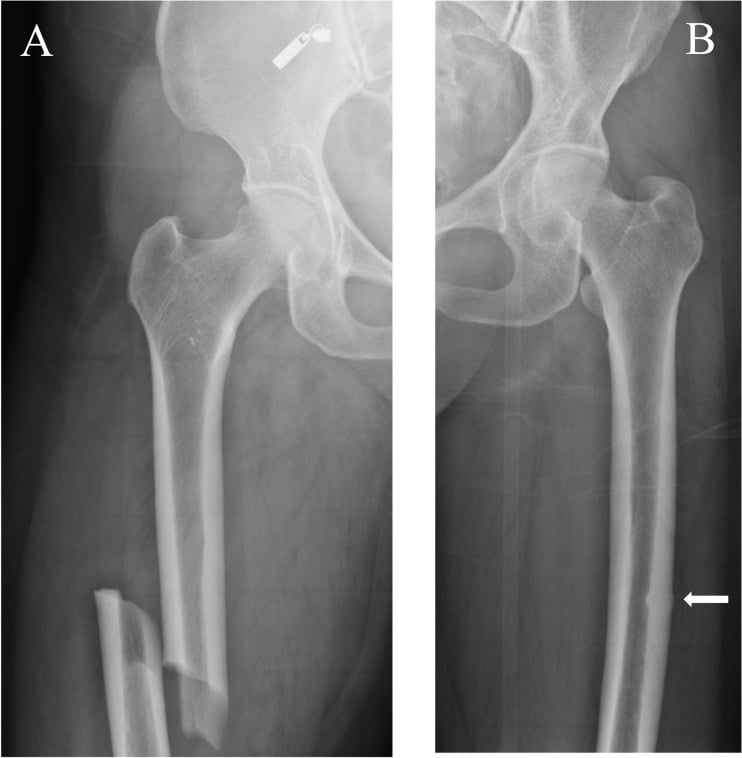
Put the risk in proportion, because fear of this fracture has driven patients off effective treatment. Among 196,129 women on bisphosphonates followed over a decade, 277 atypical fractures occurred. Risk rose steeply with duration, hazard ratio 8.86 (95% CI 2.79-28.20) at 3 to under 5 years and 43.51 (13.70-138.15) at 8 years or more compared with under 3 months of use, and fell rapidly after discontinuation, which is the rationale for the drug holiday. But the absolute trade-off still favours treatment: over 3 years, 149 hip fractures were prevented for every 2 atypical fractures caused in white women. The balance is materially less favourable in Asian women, who had roughly five times the risk of atypical fracture (HR 4.84, 95% CI 3.57-6.56) and in whom the same 3 years prevented 91 hip fractures at the cost of 8 atypical fractures. Glucocorticoid use, height and weight were also independent risk factors. Evidence level 2: large cohort with radiographically adjudicated fractures and multivariable adjustment.
Osteonecrosis of the Jaw
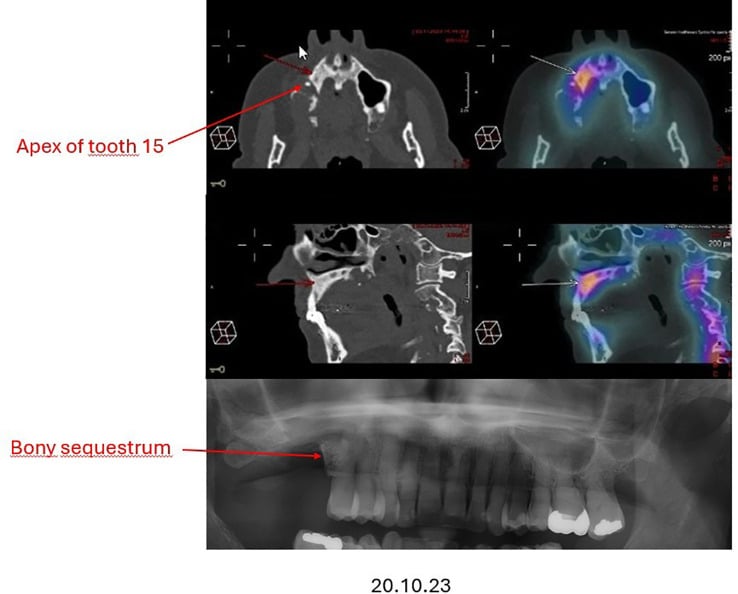
Far rarer at osteoporosis doses than at the oncology doses where it was first described, and the distinction matters when consenting a patient. Encourage dental review and completion of invasive dental work before starting a potent antiresorptive; once treatment is under way, routine dentistry continues and the drug is not stopped reflexively for a filling or a scale and polish. Persistent exposed bone or a non-healing extraction site during treatment warrants dental or maxillofacial assessment rather than stopping therapy without a coordinated plan.
Guidelines, Registries & Global Practice
Global Epidemiology
Osteoporosis is a global public-health problem. Worldwide, roughly 1 in 3 women and 1 in 5 men over the age of 50 will sustain an osteoporotic fracture in their remaining lifetime. Hip fractures are the most disabling: incidence rises exponentially with age and varies several-fold between regions, being highest in Northern Europe and lowest in parts of Africa and Asia, with the absolute global burden shifting towards Asia as populations age. DXA access remains uneven — scanners are concentrated in high-income settings, so FRAX without BMD and quantitative ultrasound retain an important triage role where central DXA is scarce.
Side-by-Side Guidance
- DXA indication & diagnosis
- T-score at or below -2.5 at femoral neck (reference: NHANES III young white women) defines osteoporosis; FRAX for risk
- Intervention threshold
- Country-specific FRAX calibration recommended
- DXA indication & diagnosis
- DXA in those above the FRAX assessment threshold or with clinical risk factors
- Intervention threshold
- Age-dependent FRAX threshold set at the risk of a woman with a prior fragility fracture
- DXA indication & diagnosis
- DXA for all women 65+ and men 70+, and younger adults with risk factors
- Intervention threshold
- Fixed FRAX threshold: 10-year hip risk at or above 3% or major osteoporotic fracture at or above 20%
- DXA indication & diagnosis
- Defines acquisition, ROI selection, LSC and reporting standards; Z-score for young patients
- Intervention threshold
- Sets technical standards rather than drug thresholds
- DXA indication & diagnosis
- DXA plus VFA and FRAX; TBS as an adjunct near thresholds
- Intervention threshold
- FRAX-based, with very-high-risk category favouring anabolic-first sequencing
Registries and Audit
National hip-fracture registries and audits (for example the UK National Hip Fracture Database, and equivalents in several European, Asian and Australasian systems) and Fracture Liaison Service registries track secondary-fracture prevention. They consistently show a large treatment gap: most patients who sustain a fragility fracture never undergo DXA or receive bone-protective therapy — a recurring exam point about systems of care.
High- vs Limited-Resource Practice
In well-resourced systems, central DXA with VFA (and increasingly TBS) is standard, with FRAX calibrated to national fracture data. In limited-resource settings, central DXA may be unavailable; here FRAX without BMD, calcaneal quantitative ultrasound, and clinical case-finding (prior fragility fracture, glucocorticoid use, low body weight) guide treatment. The principle is unchanged worldwide: a low-trauma hip or vertebral fracture warrants bone-protective treatment irrespective of whether a T-score is obtainable.
Controversies and Areas of Uncertainty
The young-adult reference database. The T-score depends entirely on which young-adult reference population is used. ISCD recommends a uniform Caucasian female NHANES III femoral neck reference for all, so that a man is compared with young women at the hip, but spine and ethnicity-specific references vary between manufacturers and countries. The same scan can yield different T-scores on different databases, a reminder that the diagnostic threshold is a statistical construct, not a biological constant.
Treating BMD versus treating fracture risk. Most fragility fractures occur in people with osteopaenic rather than osteoporotic T-scores, because they are far more numerous. This is the central rationale for FRAX, which targets absolute fracture risk rather than a BMD number. The debate is whether to use a fixed intervention threshold (simple, the US approach) or an age-dependent threshold (UK NOGG), and how to handle the new "very high risk" category that favours anabolic-first sequencing.
How long to treat, and drug holidays. The FLEX and HORIZON extension data support reassessing bisphosphonate-treated patients after 3-5 years and considering a holiday in those at lower risk, while continuing in high-risk patients. There is no equivalent holiday for denosumab, which is why transition to a bisphosphonate is required. DXA is central to these decisions, but the optimal monitoring interval is debated.
Beyond areal BMD. DXA cannot capture bone quality: microarchitecture, turnover, geometry. TBS, hip structural analysis, QCT/finite-element analysis and high-resolution peripheral QCT add information, but none has displaced central DXA for routine diagnosis. Whether these refine treatment decisions enough to justify routine use remains an active question.
Type 2 diabetes, where DXA misleads in the opposite direction. A falsely reassuring spine result usually comes from an artefact visible on the image. Type 2 diabetes is the exception: the BMD is genuinely normal or even elevated, yet fracture risk is increased, so the number is real and still reassures you wrongly. FRAX compounds the problem: type 1 diabetes counts as secondary osteoporosis and raises the calculated risk, but type 2 is not an input at all, so both the T-score and the FRAX probability understate the danger. This is the clearest indication for TBS, which is typically degraded in type 2 diabetes even when BMD is not, and a reason to weigh clinical risk factors and any prior fragility fracture more heavily than the densitometry.
Clinical Decision Scenarios
Practise clinical reasoning and management decisions out loud
“You receive a DXA report for a 68-year-old postmenopausal woman showing a lumbar spine T-score of -1.8 and a femoral neck T-score of -2.7.”
“A 35-year-old premenopausal woman on long-term oral prednisolone for rheumatoid arthritis has a DXA showing a lumbar spine T-score of -2.8.”
“An examiner asks you to explain why the DXA-measured T-score at the lumbar spine may be falsely normal or elevated in an elderly patient with multiple clinical risk factors for osteoporosis.”
WHO Classification (T-scores)
- Normal: T-score at or above -1.0
- Osteopaenia: T-score -1.0 to -2.5
- Osteoporosis: T-score at or below -2.5
- Severe: T-score at or below -2.5 PLUS fragility fracture
When to Use Z-score
- Premenopausal women, men under 50, and children
- Z-score at or below -2.0 = 'below expected range for age'
- Z-score above -2.0 = 'within expected range'
- T-scores are NOT VALID in these populations
Sources of False Elevation (DOCS)
- Degenerative osteophytes (10-15% overestimation)
- Overlying calcification (aortic calcification)
- Compression fractures (same mineral in smaller area)
- Scoliosis and surgical hardware
FRAX
- 10-year probability of major osteoporotic fracture and hip fracture
- Inputs: age, sex, BMI, prior fracture, parental hip fracture, smoking, steroids, RA, alcohol
- US fixed threshold: hip risk at or above 3% or major fracture at or above 20%; UK NOGG uses an age-dependent threshold
- Always use the FRAX model calibrated to the patient's own country
Monitoring
- ON TREATMENT: repeat every 1-2 years on the SAME machine
- UNTREATED rescreening is a different question — 16.8y if normal, 17.3y mild osteopenia, 4.7y moderate, 1.1y advanced (Gourlay)
- Change must exceed LSC (typically 3-5% spine, 4-6% hip) — but each unit must derive its OWN precision error
- LSC = 2.77 x precision error; 2.77 = 1.96 x root-2, because two scans each carry the error
- Spine is most responsive to treatment changes
- Use hip as primary site in elderly patients with degenerative spine
Site Rules That Catch Candidates Out
- Ward's area and greater trochanter must NEVER be used for diagnosis
- Use the LOWER of femoral neck and total hip, not the average
- Spine needs at least 2 evaluable vertebrae; exclude any differing by more than 1.0 SD from its neighbour
- Unilateral THA — scan the other hip; forearm only if both hips and spine are unusable
- 1/3 radius is the site of choice in primary hyperparathyroidism (cortical loss)
Gradient of Risk (Marshall)
- 1 SD fall in BMD = about 1.5x fracture risk at most sites — NOT 'doubles'
- Hip BMD for hip fracture: 2.6x. Spine BMD for vertebral fracture: 2.3x
- Site-matched measurement is markedly more predictive
Treatment Complications (Orthopaedic)
- Atypical femoral fracture: transverse/short oblique, non-comminuted, lateral cortical thickening, medial spike, minimal trauma
- Prodromal thigh pain = incomplete AFF until proven otherwise; ALWAYS image the other femur
- Incomplete AFF with pain: prophylactic cephalomedullary nailing
- AFF risk rises with duration (HR 43.5 at 8+ years) and falls fast on stopping — but 149 hip fractures prevented per 2 AFFs over 3 years in white women; 91 per 8 in Asian women
- Denosumab has NO drug holiday — stopping causes rebound multiple vertebral fractures; transition to a bisphosphonate
- Correct vitamin D before any potent antiresorptive (hypocalcaemia)
Evidence Base
BMD and Fracture Risk Prediction
- Pooled 11 prospective cohorts (~90,000 person-years, over 2000 fractures); each 1 SD fall in BMD raised fracture relative risk by about 1.5 (95% CI 1.4-1.6) at most sites.
- Site-specific measurement was superior for matched outcomes — hip BMD best predicted hip fracture (RR 2.6, 95% CI 2.0-3.5).
- Spine BMD best predicted vertebral fracture (RR 2.3, 95% CI 1.9-2.8).
FRAX Development — Clinical Risk Factors and BMD
- FRAX integrates clinical risk factors (BMI, prior fracture, parental hip fracture, glucocorticoids, rheumatoid arthritis, secondary osteoporosis, smoking, alcohol 3+ units/day) drawn from prior international meta-analyses, with or without femoral neck BMD.
- Four models compute 10-year probability of hip fracture and of major osteoporotic fracture, with and without BMD, calibrated to UK fracture and death epidemiology.
- Across age, 10-year hip fracture probability in women ranged from 0.2% (age 50, no risk factors) to about 22% (age 80 with parental hip fracture) — an approximately 100-fold range — with risk factors adding incrementally.
DXA and FRAX are well-validated for fracture risk prediction and treatment guidance.