Imaging in Pregnancy: Safety and Decision-Making
Overview
Pregnancy imaging decisions are built on two facts. Ultrasound and MRI use no ionising radiation, so they are preferred whenever they can answer the clinical question. Most diagnostic radiographs and many justified CT studies still deliver fetal doses well below the level associated with deterministic effects such as malformation or neurodevelopmental injury.
The task. Match the modality to the question, optimise dose when ionising radiation is used, and counsel the patient honestly. Orthopaedic practice meets this most often in trauma, suspected pelvic or spinal injury, infection, and severe back pain with neurological compromise.
The maternal emergency comes first. In trauma, suspected cauda equina syndrome, septic arthritis, an unstable fracture or suspected visceral injury, the correct principle is to image decisively. A missed maternal diagnosis is usually a bigger threat to mother and fetus than the radiation from a justified diagnostic study.
Fetal Radiation and Contrast
The doses. Everything is compared against natural background over the whole pregnancy, and the figures examiners reward are the realistic ones:
- Approximate fetal dose
- 1 to 2 mGy
- Exam takeaway
- The yardstick everything else should be compared against
- Approximate fetal dose
- Essentially negligible (well under 0.01 mGy of scatter)
- Exam takeaway
- The fetus is not in the beam; never a reason to withhold
- Approximate fetal dose
- Under about 0.1 mGy
- Exam takeaway
- Distant from the fetus; scatter only
- Approximate fetal dose
- Roughly 1 to 3 mGy
- Exam takeaway
- Comparable to a whole pregnancy of background
- Approximate fetal dose
- Roughly 4 to 5 mGy
- Exam takeaway
- Low, but prefer MRI which answers most of the same questions
- Approximate fetal dose
- Roughly 10 to 35 mGy (higher with older or multiphase protocols)
- Exam takeaway
- The highest common study; optimise the protocol and justify it explicitly
- Approximate fetal dose
- Ablates the fetal thyroid after about 10 to 12 weeks
- Exam takeaway
- ABSOLUTELY CONTRAINDICATED in pregnancy
The thresholds. Deterministic effects (malformation, growth restriction, neurological injury) have a practical threshold on the order of 100 to 200 mGy and are not expected below about 50 mGy. ICRP states that a fetal dose below about 100 mGy is not a reason to terminate a pregnancy. Every study in the table except iodine-131 sits below that 50 mGy figure, which is why the honest answer to "is it safe?" is almost always yes for a single justified examination: essentially every diagnostic orthopaedic radiograph or extremity CT is orders of magnitude below the threshold, and even a CT of the abdomen and pelvis typically stays well under it.
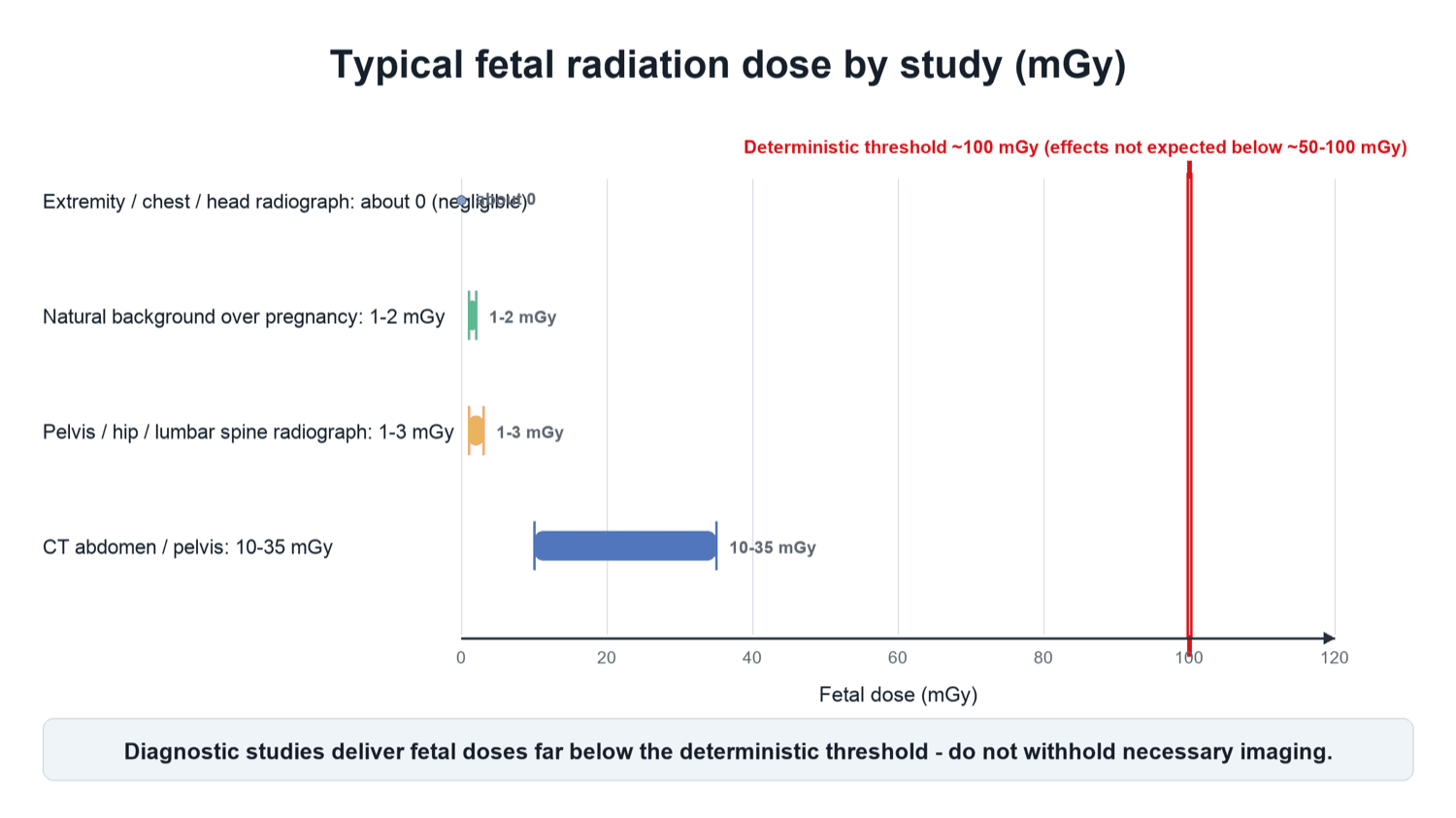
Dose reduction is about protocol, not refusal. When radiographs or CT are the right test:
- Justify the study
- Collimate to the region of interest
- Use a single phase and avoid multiphase acquisitions
- Apply low-dose or iterative-reconstruction CT protocols
- Avoid repeats
The shielding update. Routine external lead "fetal" or "gonadal" shielding is no longer recommended by many bodies (the AAPM among them). It can obscure anatomy, trigger the automatic exposure control to increase the dose, and does little against internal scatter. Optimising the protocol, not a lead apron over the abdomen, is what lowers fetal dose.
Iodinated contrast. It may be used when contrast-enhanced CT is the correct study, and the decision should rest on clinical necessity rather than reflex avoidance. It does cross the placenta, and the theoretical concern is transient suppression of the fetal thyroid by the iodine load; that concern has never been borne out as clinically significant. A single check of neonatal thyroid function in the first week is reasonable and is what the ACR suggests, but in most countries the routine newborn heel-prick screen already covers it, so no extra test is usually needed. Do not withhold a needed contrast-enhanced CT over this.
Breastfeeding. It does not need to be interrupted after contrast, for either iodinated or gadolinium agents: the amount excreted into breast milk and then absorbed by the infant gut is negligible (ACR and ESUR). Telling a mother to "pump and dump" after contrast is a common, outdated myth.
Fluoroscopy in Theatre
Diagnostic imaging is only half of the orthopaedic problem. If the pregnant patient has a fracture that needs fixing, the image intensifier will be on for the duration of the operation, and this is the part of the pathway that is most under a surgeon's own control.
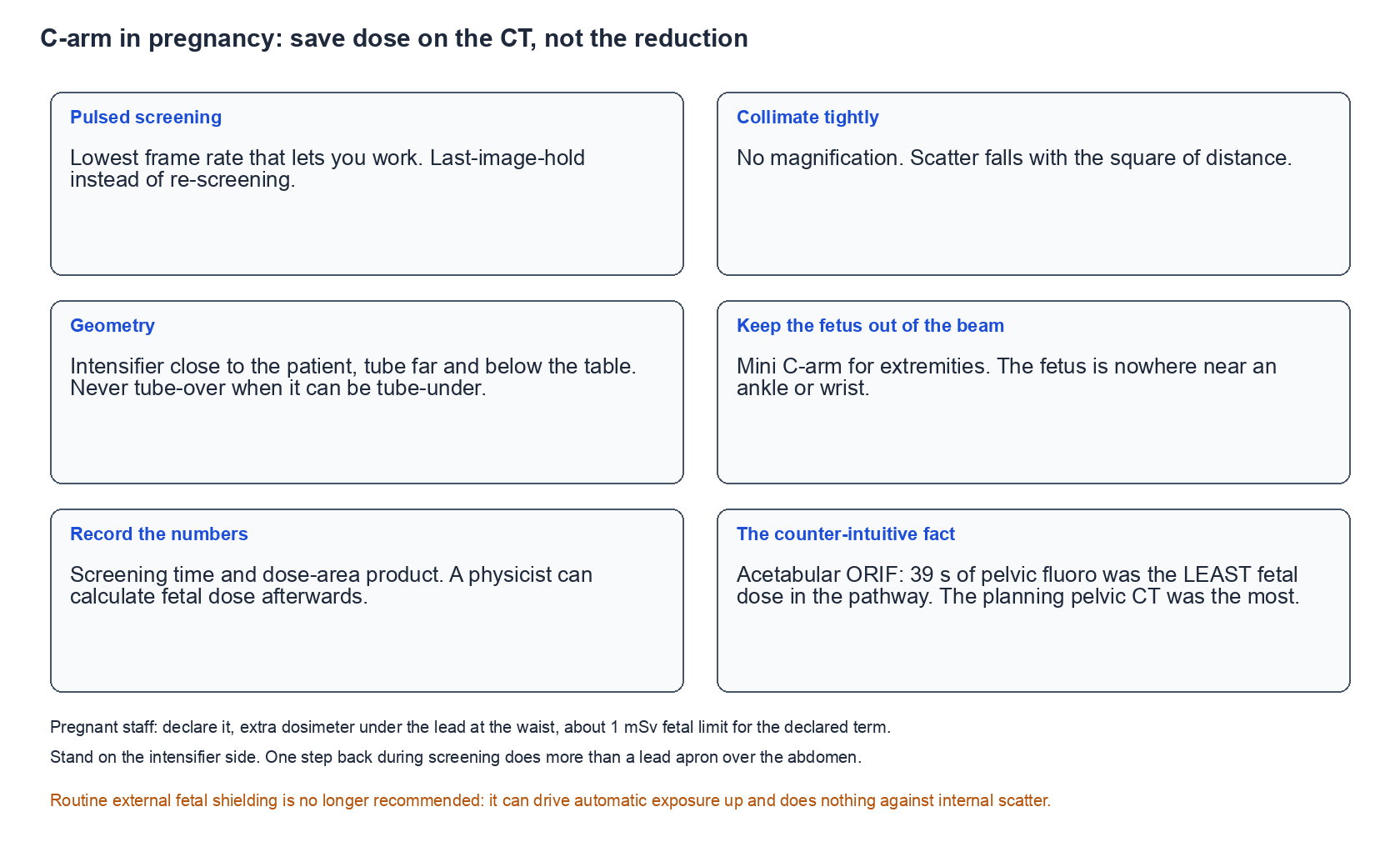
The most useful finding here is counter-intuitive. In a series of eight pregnant women undergoing open reduction and internal fixation of an acetabular fracture between 5 and 26 weeks' gestation, intraoperative pelvic fluoroscopy averaged 39 seconds and conferred the least fetal exposure of any imaging in the pathway, while the pre-operative pelvic CT conferred the most, exceeding 50 mGy in every case that required one. All eight pregnancies reached 36 weeks with normal Apgar scores and seven of eight reductions were anatomic. Evidence level 4: a small retrospective case series with calculated rather than measured fetal doses.
What follows. The place to economise on fetal dose is the pre-operative CT protocol, not the fixation: hobbling the fluoroscopy to protect the fetus buys almost nothing and risks a malreduced acetabulum, which is a lifelong problem for the mother. The figure above 50 mGy sits above the 10 to 35 mGy usually quoted for CT abdomen and pelvis because these were trauma-protocol pelvic CTs concentrated directly on the fetus rather than dose-optimised modern acquisitions. Both figures are real; quote the one that matches the protocol being discussed.
Practical dose reduction with the C-arm. The habits that lower fetal dose:
- Pulsed rather than continuous screening, at the lowest frame rate that lets you work, and last-image-hold instead of re-screening to look at what you just did
- Collimate tightly to the field of interest and avoid magnification, which raises dose rate
- Keep the fetus out of the primary beam wherever the anatomy allows, and remember that scatter falls with the square of distance
- Position the intensifier close to the patient and the tube far from it; never operate with the tube above the table when it can be below
- Use a mini C-arm for extremity work: its dose is a fraction of a standard unit and the fetus is nowhere near the beam
- Brief the radiographer before the incision, and record screening time and dose-area product so a physicist can calculate an actual fetal dose afterwards if anyone asks
- For non-urgent surgery, the second trimester is conventionally preferred; after about 20 weeks use left lateral tilt to avoid aortocaval compression, which is a circulatory rather than a radiation consideration but belongs in the same plan
The Pregnant Member of Theatre Staff
The question is asked at least as often about the surgeon, scrub nurse or radiographer as about the patient, and the answer is reassuring. Modelling scattered dose in orthopaedic theatre during fluoroscopically assisted spinal surgery found that even if the annual occupational dose limits were fully exhausted every year for ten years, the resulting risk of congenital malformation would be at least two orders of magnitude below the spontaneous background rate (level 5: phantom simulation with scatter measurement).
Practically. Declare the pregnancy so that monitoring applies, wear an additional dosimeter under the lead at waist level, and observe the conventional limit of about 1 mSv to the fetus over the declared remainder of the pregnancy, a figure that routine orthopaedic practice with proper lead and sensible positioning does not come close to. Standing on the intensifier side rather than the tube side, and taking one step back during screening, does more than anything else.
Gestational Windows and Deterministic Risk
Gestational age matters because the fetus passes through phases of differing radiosensitivity. Counselling and protocol decisions should reflect this, while remembering that diagnostic doses rarely reach the relevant thresholds: the window changes the counselling, not the indication.
- Dominant concern
- All-or-nothing effect (loss vs unaffected survival)
- Practical implication
- Threshold for lethality around 50 to 100 mGy; a surviving embryo is not left malformed. Pregnancy may not yet be recognised
- Dominant concern
- Congenital malformation if dose is high
- Practical implication
- Most radiosensitive for structural anomaly, but threshold is around 100 to 200 mGy
- Dominant concern
- Highest risk of reduced IQ and severe intellectual disability
- Practical implication
- The peak-sensitivity window for the CNS. ICRP puts the loss at roughly 25 IQ points per 1000 mGy, with severe intellectual disability appearing above a threshold of about 300 mGy — so a 1 to 3 mGy pelvic radiograph is around a hundredth of an IQ point, which is the figure to have ready when a patient asks
- Dominant concern
- Lower CNS sensitivity
- Practical implication
- The same effects require substantially more dose, with the threshold rising to roughly 500 to 700 mGy
- Dominant concern
- No deterministic CNS effect expected at diagnostic doses
- Practical implication
- Stochastic (cancer) risk continues to apply, but structural and neurodevelopmental concerns effectively fall away
- Dominant concern
- Small stochastic increase in childhood cancer
- Practical implication
- No threshold, but small: roughly 1 in 10,000 or less per mGy against a baseline childhood-cancer risk of 0.1 to 0.3 percent
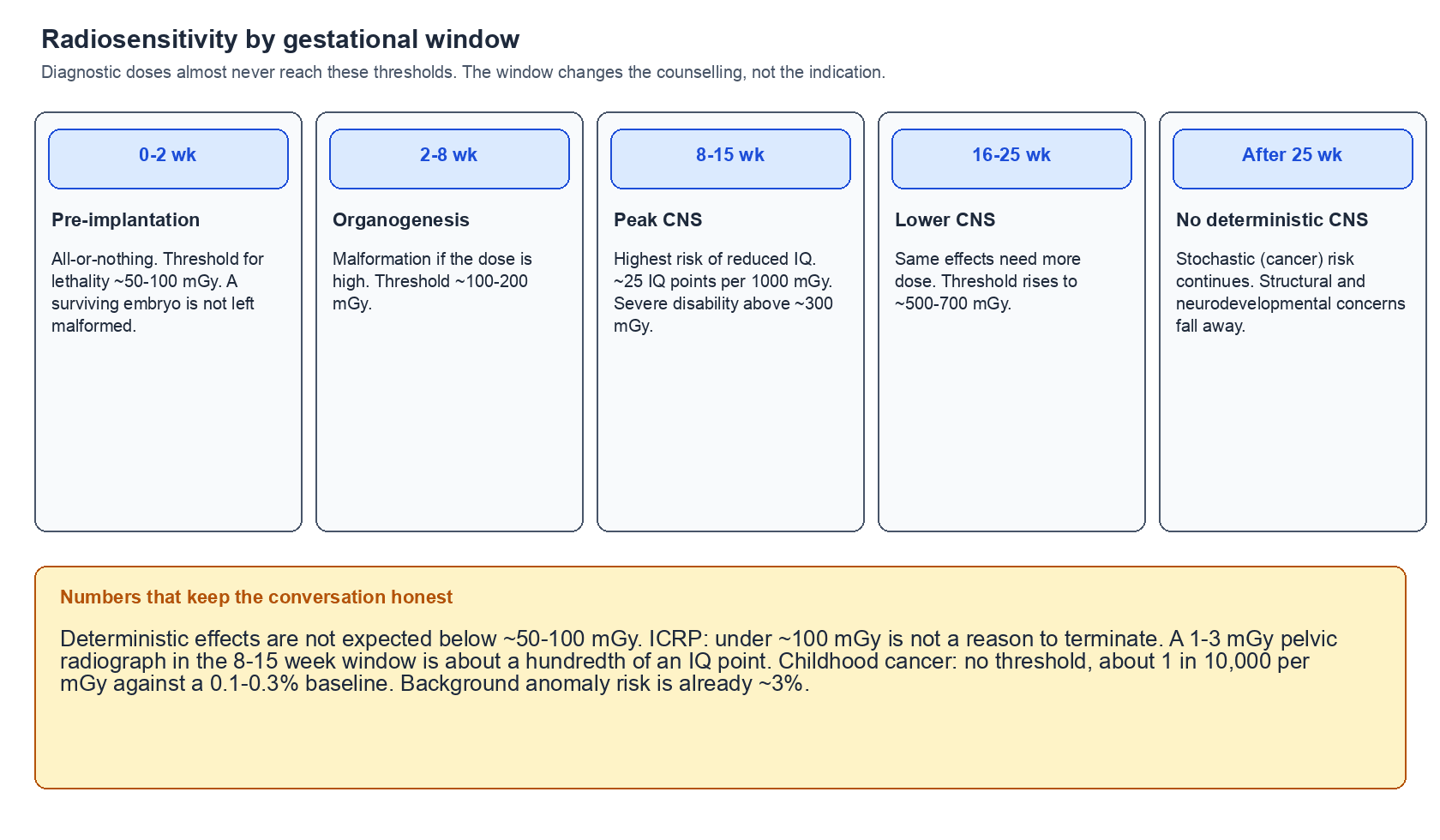
Counselling with real numbers. "Counsel honestly" only works if the risk is anchored to the baseline risks the patient already carries. In the general population the risk of a major congenital anomaly is about 3 per cent (roughly 1 in 33); a single diagnostic study adds a negligible increment to that and to the baseline childhood-cancer risk in the table, dwarfed by the baseline. Even the highest common diagnostic exposures do not reach the level at which termination would be discussed.
Threshold versus no threshold. Deterministic effects have a practical dose threshold, whereas stochastic (cancer) risk is conventionally modelled as having none. Presenting the linear-no-threshold model without the tiny absolute numbers can frighten a patient into refusing necessary imaging or seeking inappropriate termination. Balanced counselling gives both the very low absolute risk and the benefit of an accurate diagnosis.
Practical consent. Document the indication and the discussion. For the highly anxious patient, or one who has had multiple or high-dose studies, ask a medical physicist for an estimated fetal dose. If a study was already done before the pregnancy was known, reassure with the actual estimated dose; the vast majority are far below any threshold.
Differential of the Pregnant Patient with Bone or Back Pain
Not every musculoskeletal complaint in pregnancy is mechanical. Several pregnancy-associated conditions can mimic trauma or degenerative disease, and recognising them changes both imaging choice and management.
- Distinguishing features
- Atraumatic hip or back pain, often third trimester or postpartum
- Preferred imaging
- Non-contrast MRI (marrow oedema); avoids radiation
- Distinguishing features
- Low back / pelvic pain, often peripartum, normal radiographs
- Preferred imaging
- MRI most sensitive; radiograph often negative early
- Distinguishing features
- Mechanical pain over symphysis or sacroiliac joints
- Preferred imaging
- Clinical; radiograph or MRI only if severe or refractory
- Distinguishing features
- Fever, raised inflammatory markers, joint effusion
- Preferred imaging
- Ultrasound-guided aspiration; MRI without gadolinium
- Distinguishing features
- Saddle anaesthesia, bladder dysfunction, bilateral leg symptoms
- Preferred imaging
- Urgent MRI lumbar spine without gadolinium
- Distinguishing features
- Groin pain, antalgic gait, risk factors (steroids)
- Preferred imaging
- Non-contrast MRI
Back and pelvic pain are common in normal pregnancy, but red-flag features (neurological deficit, fever, atraumatic fracture, night pain) demand the same decisive imaging you would offer a non-pregnant patient. The default is non-contrast MRI, which carries no ionising-radiation risk.
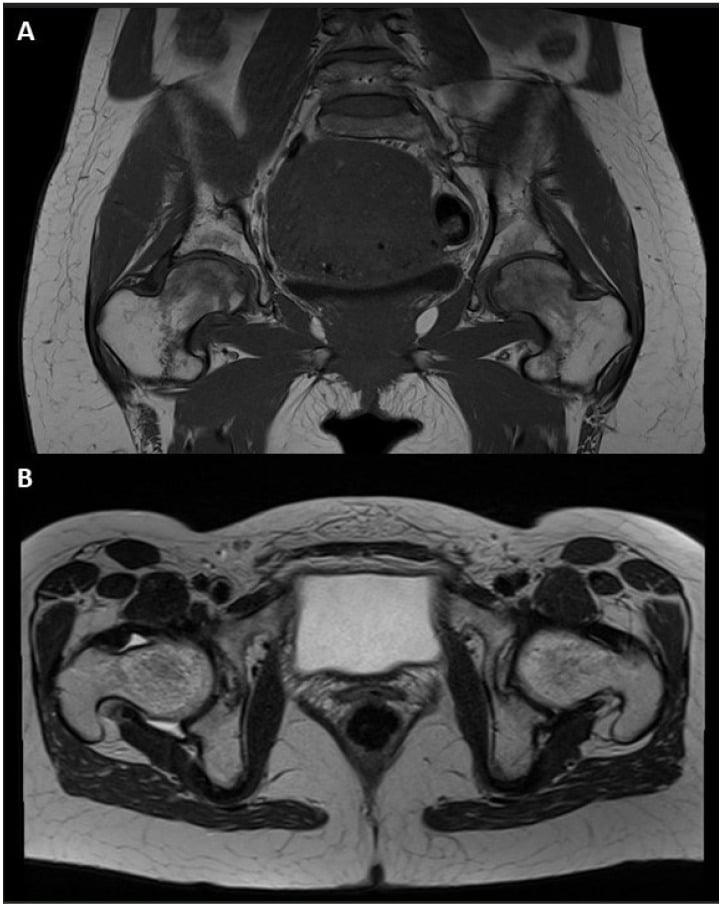
Transient osteoporosis of the hip. The radiograph is often unremarkable, and an unremarkable radiograph neither excludes the diagnosis nor justifies withholding MRI. The MRI is the film that keeps these patients non-weight-bearing until the oedema settles.
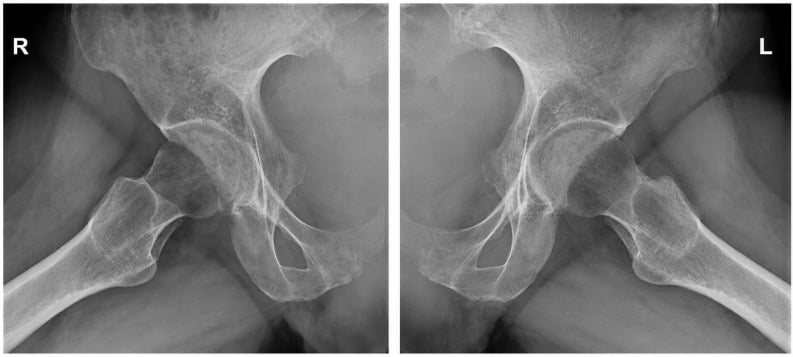
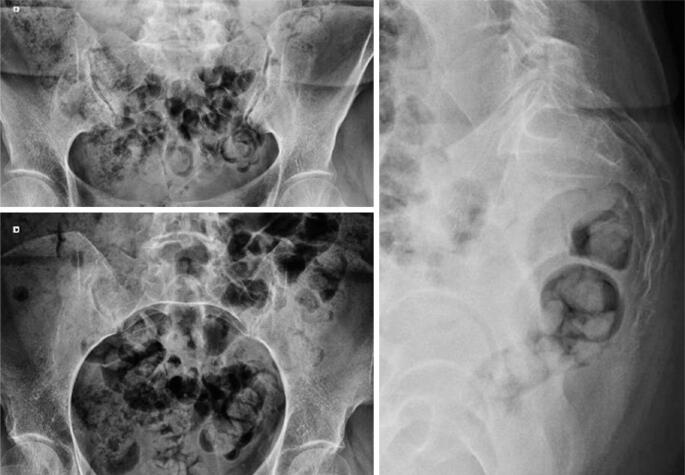
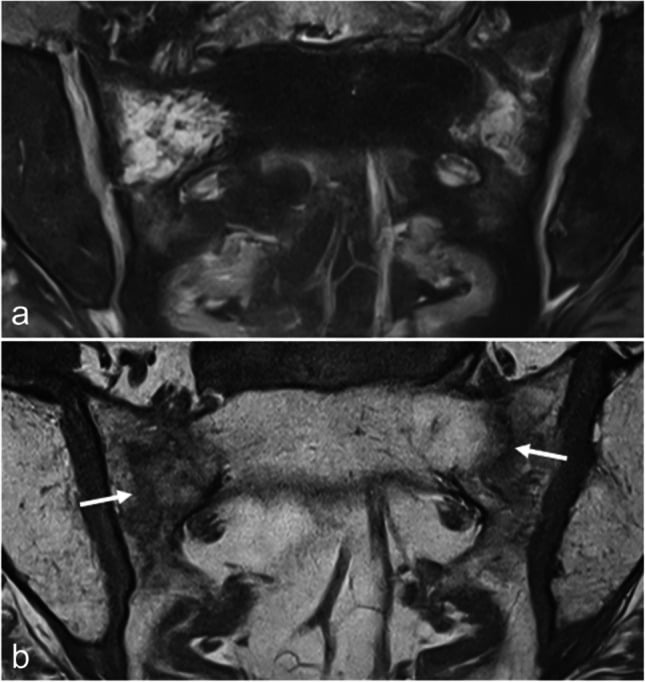
Sacral insufficiency fracture. Peripartum sacral pain with an empty radiograph is the pattern; the next test is MRI, not another film and not a shrug that the pain is mechanical.
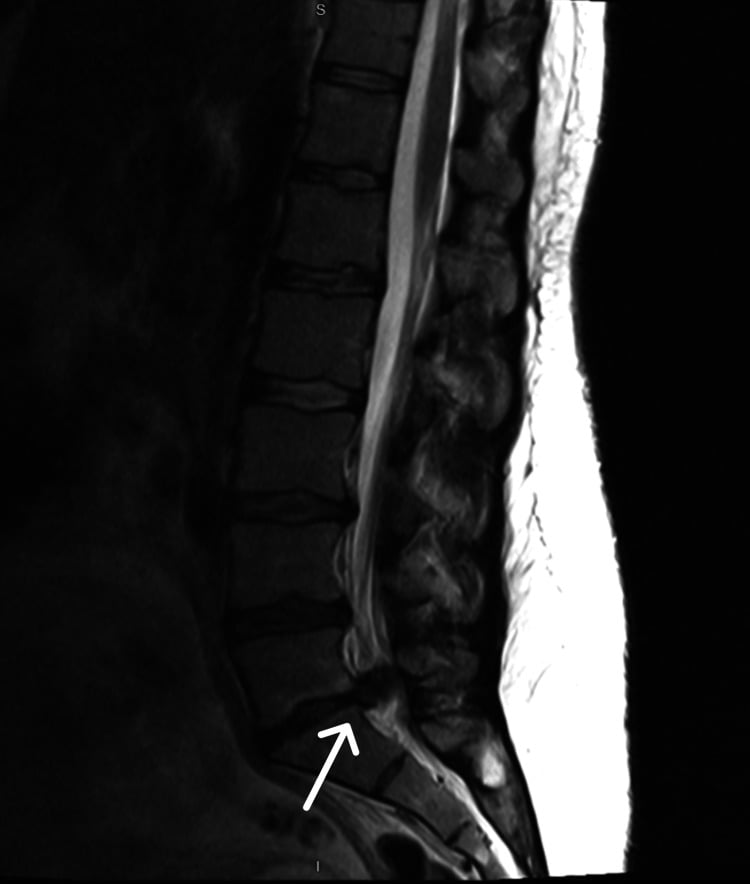
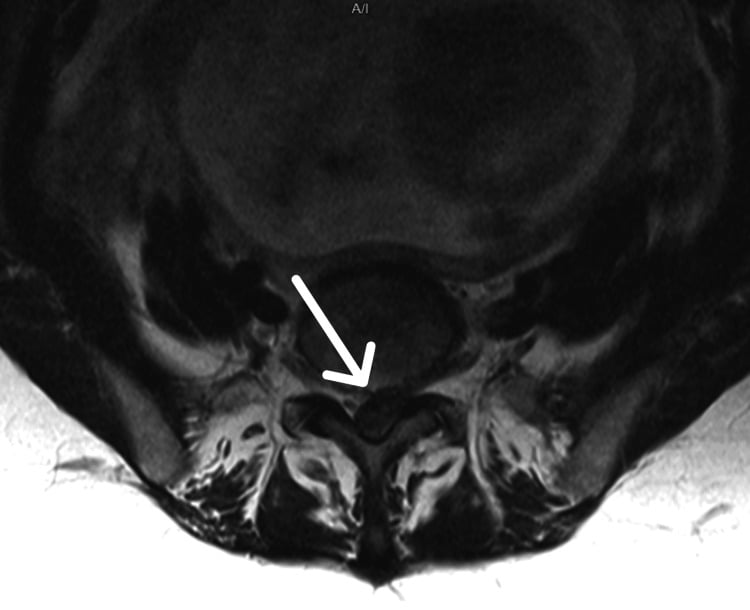
Cauda equina syndrome. Saddle anaesthesia and a litre of residual urine are not mechanical back pain. Urgent non-contrast MRI, then decompression.
Guidelines, Registries & Global Practice
Global Epidemiology
Trauma complicates roughly 6 to 8 percent of pregnancies and is a leading non-obstetric cause of maternal death, which is precisely why decisive maternal imaging is emphasised worldwide. Musculoskeletal complaints are near-universal in pregnancy: pelvic girdle pain and low back pain affect a large proportion of pregnancies, the majority mechanical and self-limiting, but a minority masking insufficiency fracture, transient osteoporosis, infection or neural compression.
Side-by-Side Guidance
- Core position
- Ultrasound and MRI are imaging of choice; do not withhold indicated radiography/CT; single diagnostic studies rarely reach deterministic thresholds
- Core position
- Ionising studies appropriate when justified; emphasise protocol optimisation and realistic, region-specific dose communication
- Core position
- Clinically justified imaging proceeds; non-contrast MRI preferred cross-sectional study; gadolinium avoided unless essential
- Core position
- Fetal doses under about 100 mGy are not a reason to terminate or withhold a justified examination
- Core position
- In major trauma, maternal stabilisation and decisive imaging take priority; fetal monitoring runs in parallel
High- vs Limited-Resource Practice
In well-resourced settings, urgent MRI and dose-optimised multidetector CT are usually available around the clock, so the safest adequate test is rarely out of reach. In limited-resource settings, MRI may be unavailable or delayed; here the justified use of radiographs and CT becomes more important, and ultrasound (including FAST in trauma) carries even greater weight as a radiation-free, bedside, low-cost first-line tool. The underlying principle is universal: match the modality to the question, optimise dose, and never withhold imaging that will change maternal management.
Controversies and Areas of Uncertainty
How strong is the gadolinium signal? The same 2016 Ontario cohort found a statistically significant association between gadolinium MRI and stillbirth or neonatal death, and with a broad rheumatological, inflammatory or infiltrative skin outcome. The absolute numbers were small and confounding by indication is hard to exclude. Most authorities therefore counsel avoidance of gadolinium unless essential, while acknowledging that the evidence is observational rather than causal.
Is first-trimester MRI safe? Theoretical concerns about tissue heating and acoustic noise persist, and many centres still prefer to defer non-urgent MRI beyond the first trimester out of caution. Set against the cohort's finding of no increase in fetal or early-childhood harm, that is a precautionary convention rather than an evidence-based prohibition.
Clinical Imaging
The hierarchy. It follows directly from the radiation principle: lead with the modalities that carry no ionising radiation, and reserve radiography and CT for when they will change management.
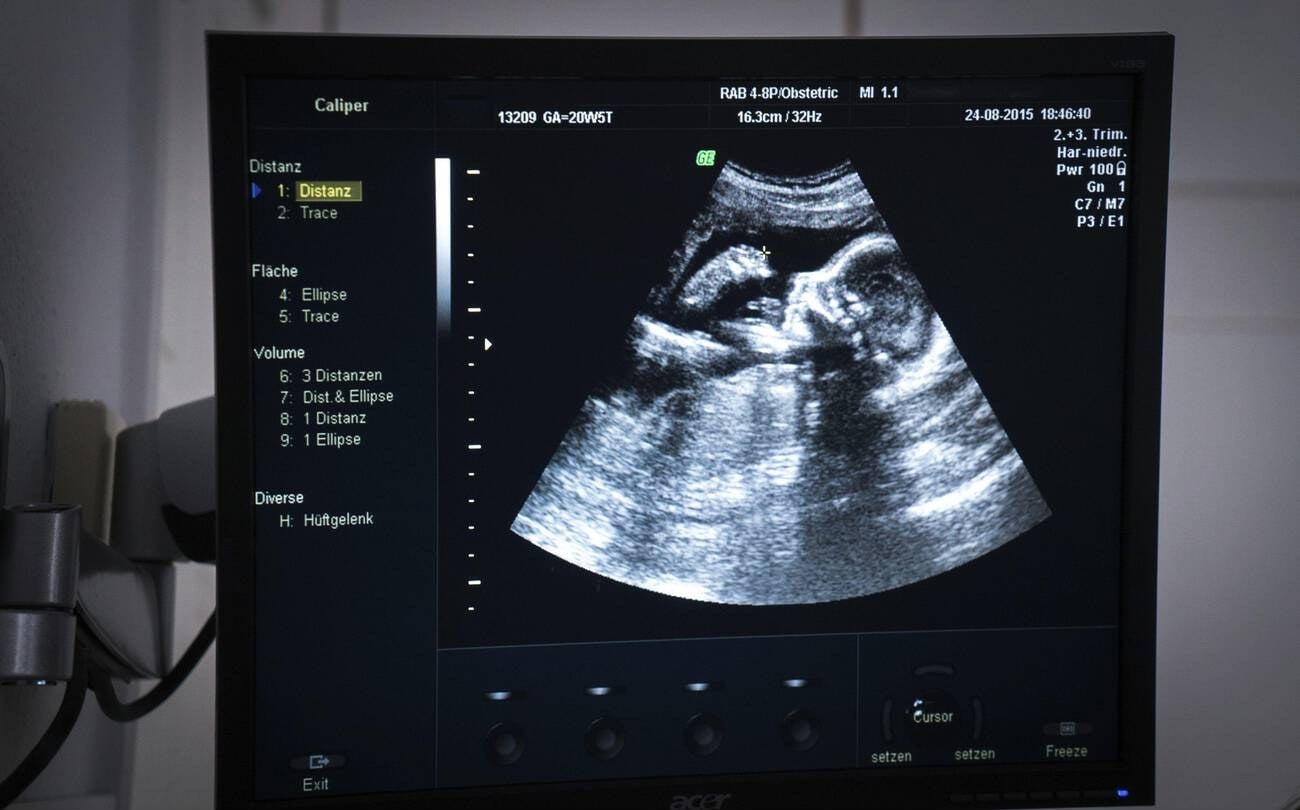
Ultrasound. The first-line modality in pregnancy. It uses no ionising radiation and answers most maternal and fetal questions. The FAST scan extends the same principle to maternal trauma: it is specific for ruling in intra-abdominal haemorrhage but is not sensitive enough to exclude it.
MRI. Generally the preferred cross-sectional modality when ultrasound is non-diagnostic. It uses no ionising radiation and gives excellent spinal, marrow and soft-tissue detail, and a large Ontario cohort (Ray et al, JAMA 2016) found first-trimester non-contrast MRI was not associated with fetal or early-childhood harm. Gadolinium is the exception: it crosses the placenta and carries a measurable signal of fetal harm, so it is reserved for situations in which the added information is essential to management and cannot reasonably be obtained otherwise.
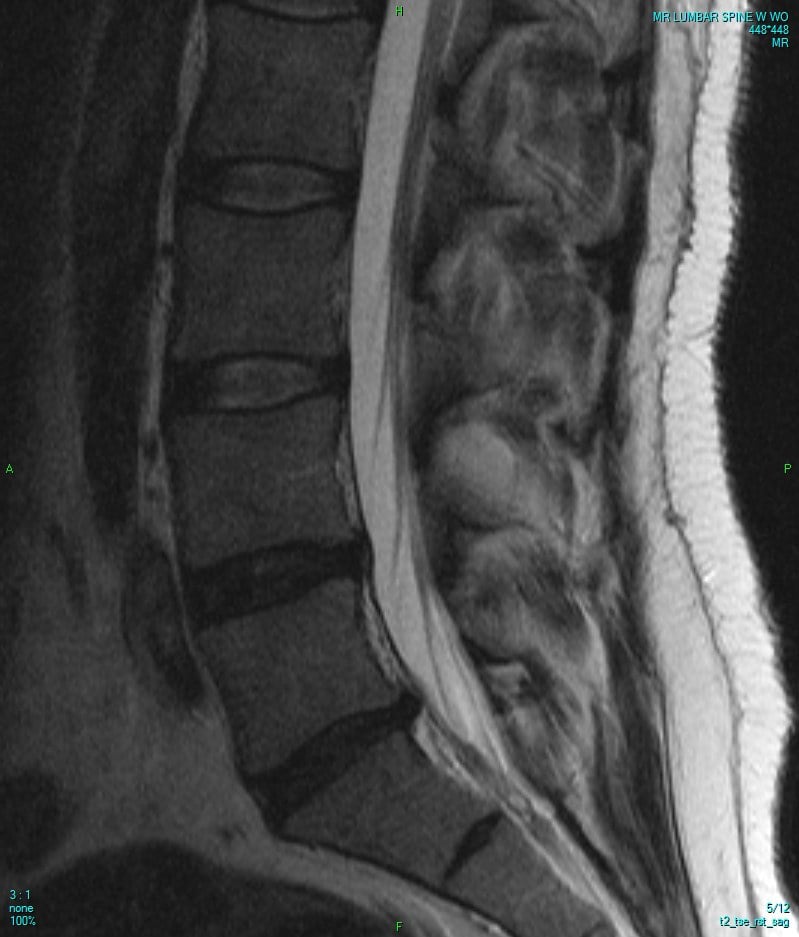
For the pregnant patient with red-flag back pain or suspected cauda equina syndrome, MRI is the investigation of choice. It delineates disc, canal and neural structures without any radiation dose to the fetus, and should never be withheld when neurological compromise is suspected.
Radiographs and CT. They proceed when they will change maternal management; the doses that justify that position are set out in the next section.
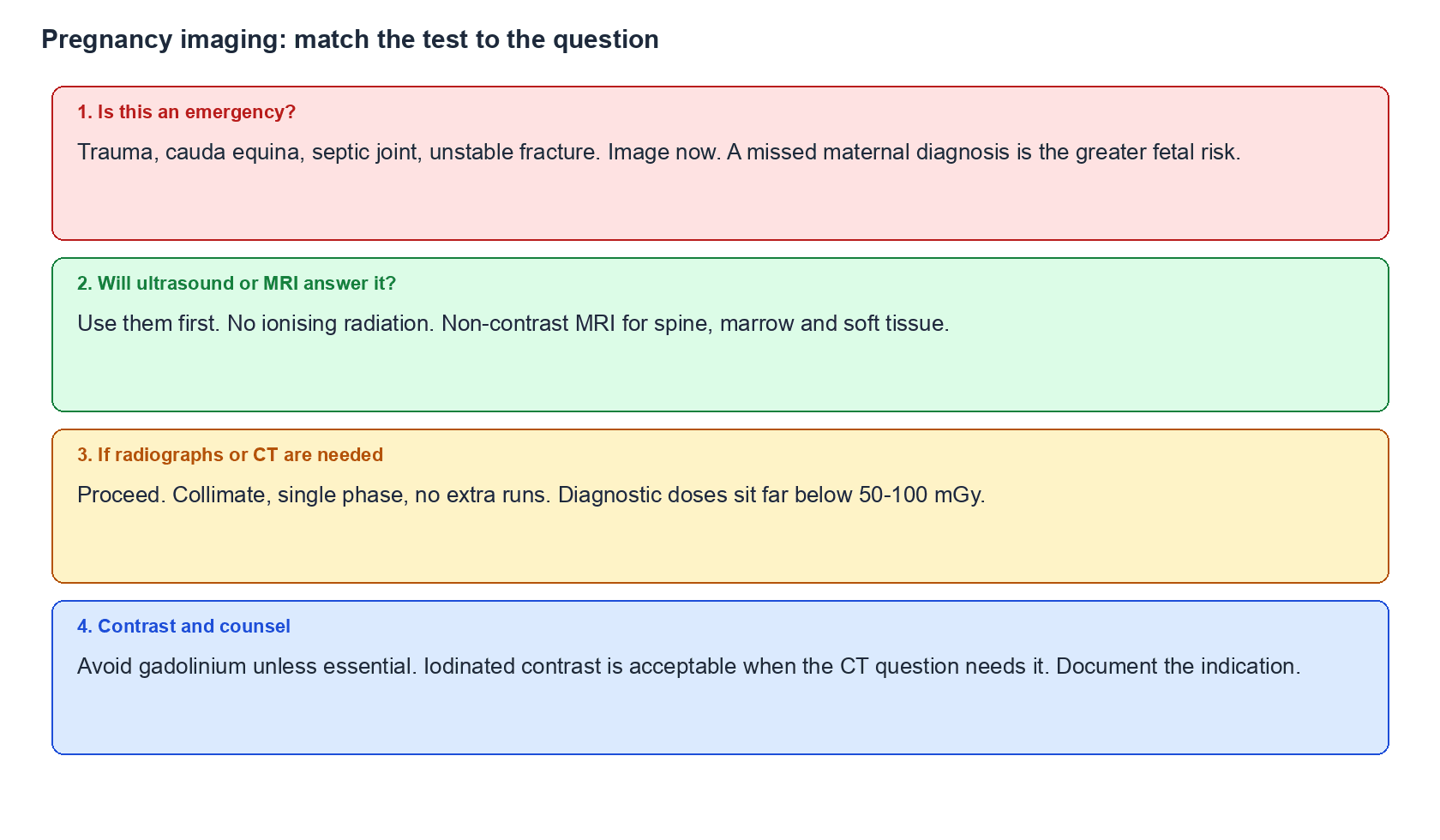
The five-step approach. The same questions in the same order, whatever the presentation:
- Question
- Is the question time-critical or limb/life threatening?
- Preferred action
- Image without delay
- Question
- Will ultrasound or MRI answer it?
- Preferred action
- Use them first when equivalent
- Question
- If radiographs or CT are needed, what body region and protocol are involved?
- Preferred action
- Optimise collimation and avoid extra phases
- Question
- Is contrast essential to answer the question?
- Preferred action
- Avoid gadolinium unless the extra information is necessary
- Question
- Does the patient understand the rationale and expected risk?
- Preferred action
- Explain benefits, dose context, and alternatives
Clinical Decision Scenarios
Practise clinical reasoning and management decisions out loud
“A 12-week pregnant patient presents with severe back pain and possible cauda equina syndrome.”
“A 20-week pregnant patient falls and may have a pelvic fracture.”
“A major trauma patient at 8 weeks gestation may have intra-abdominal injury.”
Preferred Order
- Ultrasound first when adequate
- MRI without gadolinium for most cross-sectional questions
- Radiographs when clinically indicated
- CT when it best answers an urgent question
Counselling Principles
- Use realistic dose language
- Explain that most diagnostic studies are far below deterministic thresholds
- State that maternal diagnosis protects fetal outcome
- Document indication and discussion
Contrast Rules
- Avoid gadolinium unless essential
- Use iodinated contrast if the CT question requires it
- Do not sacrifice diagnosis simply to avoid contrast
- Follow local neonatal thyroid-check policy if relevant
Numbers to Quote
- Background across the whole pregnancy: 1-2 mGy — the yardstick
- Extremity/chest/head/C-spine radiograph and CT head/chest: essentially negligible
- Pelvis, hip, abdomen or lumbar radiograph: 1-3 mGy
- CT abdomen/pelvis: 10-35 mGy (over 50 mGy with older trauma pelvic protocols)
- Tc-99m bone scan 4-5 mGy; iodine-131 is absolutely contraindicated
- Deterministic effects not expected below 50 mGy; under 100 mGy is never a reason to terminate (ICRP)
Gestational Windows
- 0-2 weeks: all-or-nothing, lethality threshold 50-100 mGy
- 2-8 weeks (organogenesis): malformation, threshold 100-200 mGy
- 8-15 weeks: peak CNS sensitivity — about 25 IQ points per 1000 mGy, severe disability above about 300 mGy
- 16-25 weeks: same effects, threshold rises to 500-700 mGy
- Childhood cancer: no threshold, about 1 in 10,000 per mGy vs 0.1-0.3% baseline
In Theatre
- Fluoroscopy for acetabular ORIF averaged 39 seconds and gave LESS fetal dose than the planning CT
- Pulsed screening, last-image-hold, tight collimation, no magnification
- Intensifier close to patient, tube below the table and far from it; mini C-arm for extremities
- Record screening time and DAP so a physicist can calculate fetal dose later
- Pregnant staff: declare it, dosimeter under the lead at waist level, about 1 mSv fetal limit for the declared term
- Second trimester preferred for non-urgent surgery; left lateral tilt after 20 weeks
Viva Bottom Line
- Do not withhold necessary imaging
- Optimise protocol rather than avoid diagnosis
- MRI is preferred, not mandatory — CT myelography if MRI is truly unavailable for cauda equina
- Routine fetal lead shielding is NO LONGER recommended (obscures anatomy, drives AEC up, useless against internal scatter)
- Breastfeeding continues after both iodinated and gadolinium contrast — pump-and-dump is a myth
- Emergency imaging proceeds when management depends on it
Evidence Base
The ACOG and ACR entries are society guidance rather than primary studies and carry no PMID. The recurring theme is consistent across guidelines, the large Ray cohort, and the dosimetry/trauma reviews: necessary imaging proceeds, ultrasound and non-contrast MRI lead, single diagnostic studies sit far below deterministic thresholds, and gadolinium is the one agent to avoid unless essential.
ACOG Guidance on Diagnostic Imaging During Pregnancy and Lactation
- Ultrasound and MRI are the imaging techniques of choice when they answer the clinical question.
- Withholding needed radiography or CT because of pregnancy is discouraged when the result will change management.
- Counselling should emphasise that necessary diagnostic imaging rarely approaches deterministic-risk thresholds.
ACR Practice Guidance for Imaging Potentially Pregnant Patients
- Ionising studies remain appropriate when clinically justified and when the result will materially affect care.
- Protocol design and dose reduction are more important than avoiding every study regardless of diagnostic need.
- Risk communication should use realistic region-specific exposure rather than generic statements that overstate harm.
Association Between MRI Exposure During Pregnancy and Fetal and Childhood Outcomes
- Among 1,424,105 deliveries in Ontario, first-trimester MRI (n=1737) was NOT associated with increased stillbirth/neonatal death, congenital anomaly, neoplasm, or vision/hearing loss versus no MRI.
- Gadolinium MRI at any time in pregnancy (n=397) was associated with a higher risk of a broad set of rheumatological, inflammatory or infiltrative skin conditions (adjusted HR 1.36, 95% CI 1.09 to 1.69).
- Gadolinium exposure was also associated with increased stillbirth or neonatal death (adjusted RR 3.70, 95% CI 1.55 to 8.85).
Fetal Dosimetry at CT: A Primer
- No single diagnostic CT examination commonly used in pregnancy approaches the deterministic-effect dose thresholds for the fetus.
- Fetal dose cannot be measured directly in vivo and is estimated by medical physicists using validated methods; radiologists should understand the magnitude of these doses.
- Knowing dose thresholds for biologic effects allows confident, evidence-based counselling rather than reflexive avoidance.