Osteomyelitis, Septic Arthritis & Prosthetic Joint Infection
Radiography: First-line screening — normal early; periosteal reaction, lysis at 10-14 days
Ultrasound: Best for joint effusion detection and aspiration guidance for septic arthritis
MRI with contrast: Gold standard for osteomyelitis, spinal infection, soft tissue abscess
Bone Scan (Triple-phase): Sensitive but non-specific; useful when MRI unavailable
Labelled WBC Scan: Best nuclear medicine test for PJI when combined with marrow imaging; unreliable in the axial skeleton
FDG-PET: Most accurate single modality for chronic osteomyelitis; limited specificity around metalwork
Key: Normal radiographs DO NOT exclude infection — MRI is needed for early and accurate diagnosis
- MRI with contrast is the imaging modality of choice for osteomyelitis, but its accuracy is setting-dependent: about 90% sensitivity with 82.5% specificity in the foot, falling to 84% sensitivity and only 60% specificity in CHRONIC osteomyelitis, where FDG-PET (96%/91%) takes over.
- Radiographic changes of osteomyelitis (periosteal reaction, lytic destruction) lag 10-14 days behind clinical onset — NORMAL RADIOGRAPHS DO NOT EXCLUDE OSTEOMYELITIS.
- Ultrasound is the first-line imaging modality for suspected septic arthritis — it detects effusion and guides aspiration for diagnostic confirmation.
- For PJI: labelled WBC scan (combined with sulphur colloid) has the best accuracy among nuclear medicine modalities.
- Spinal infection (discitis/osteomyelitis): MRI shows disc signal change, endplate destruction, and paraspinal/epidural abscess — gadolinium helps differentiate abscess from phlegmon.
- “Penumbra sign on MRI: a thin rim of T1 hyperintensity surrounding an intraosseous abscess = SPECIFIC for infection (Brodie abscess). Distinguishes from tumour.
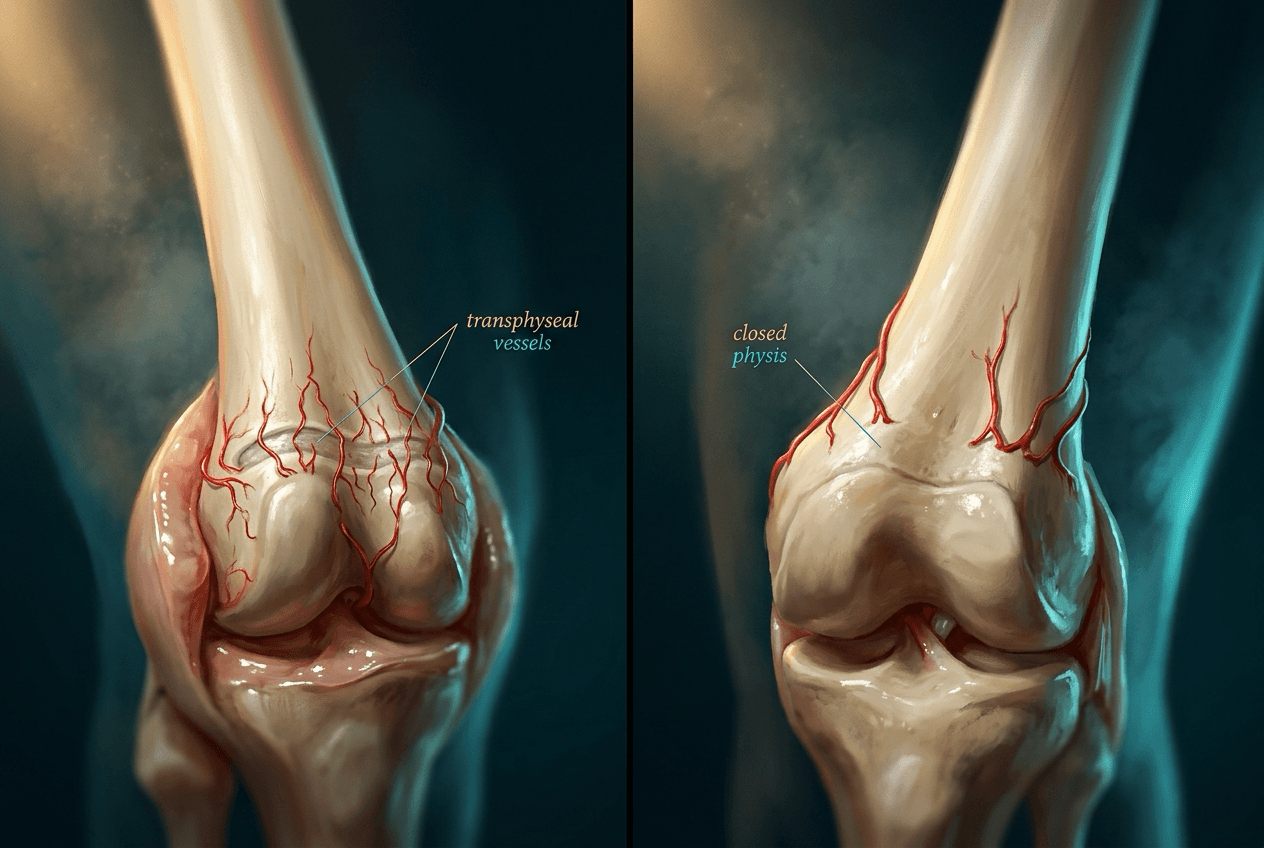
- “In children under 18 months, osteomyelitis can cross the growth plate (transphyseal vessels still patent) — this causes concurrent septic arthritis in adjacent joints.
- “The Cierny-Mader classification combines anatomical type (medullary, superficial, localised, diffuse) with host status (A: healthy, B: compromised, C: treatment worse than disease).
- “FDG-PET is the most accurate single modality for CHRONIC osteomyelitis (96% sensitivity, 91% specificity) and for the axial skeleton — but around a prosthesis its accuracy falls to about 71%, well behind combined leucocyte/marrow imaging.
- “MRI features that distinguish osteomyelitis from neuropathic (Charcot) arthropathy: geographic marrow signal change, sinus tract, soft tissue abscess, and cortical destruction.
Overview
Infection imaging turns on one fact: normal radiographs do not exclude infection. Radiographic change lags 10-14 days behind clinical onset, and by the time it is visible significant bone destruction has already occurred. Which test to request, and in what order, follows from knowing what each modality can see at each stage of the disease.
How the findings evolve. Each modality turns positive at a different point, and that timing is what decides the order in which they are requested.
- Radiographs
- Normal
- MRI
- May show soft-tissue oedema
- Bone scan
- Becomes positive (increased vascularity)
- Radiographs
- May show soft-tissue swelling
- MRI
- Bone marrow oedema
- Bone scan
- Triple-phase scan positive on all three phases
- Radiographs
- Periosteal reaction and rarefaction begin to appear
- MRI
- Established marrow changes, with possible abscess formation
- Bone scan
- Radiographs
- Lytic destruction; sequestrum and involucrum in chronic cases
- MRI
- Delineates the full extent of infection and guides surgical planning
- Bone scan
Imaging supports; the sample decides. Aspiration is the gold standard for confirming infection, and imaging supports but does not replace microbiological diagnosis. When the organism is unknown, image-guided bone biopsy provides culture and histology. The section on biopsy and aspiration below covers how that sample is won.
Systematic Approach
The pathway. Radiographs first, as a baseline: they may show soft-tissue swelling, periosteal reaction or lytic destruction once the lag has passed, and a normal film excludes nothing. Ultrasound next when the joint is the question, because it detects the effusion and guides the aspiration that makes the diagnosis. MRI with contrast for bone and soft tissue, and nuclear medicine only when MRI is unavailable, contraindicated or defeated by metalwork. It is an ordered pathway, not a menu.
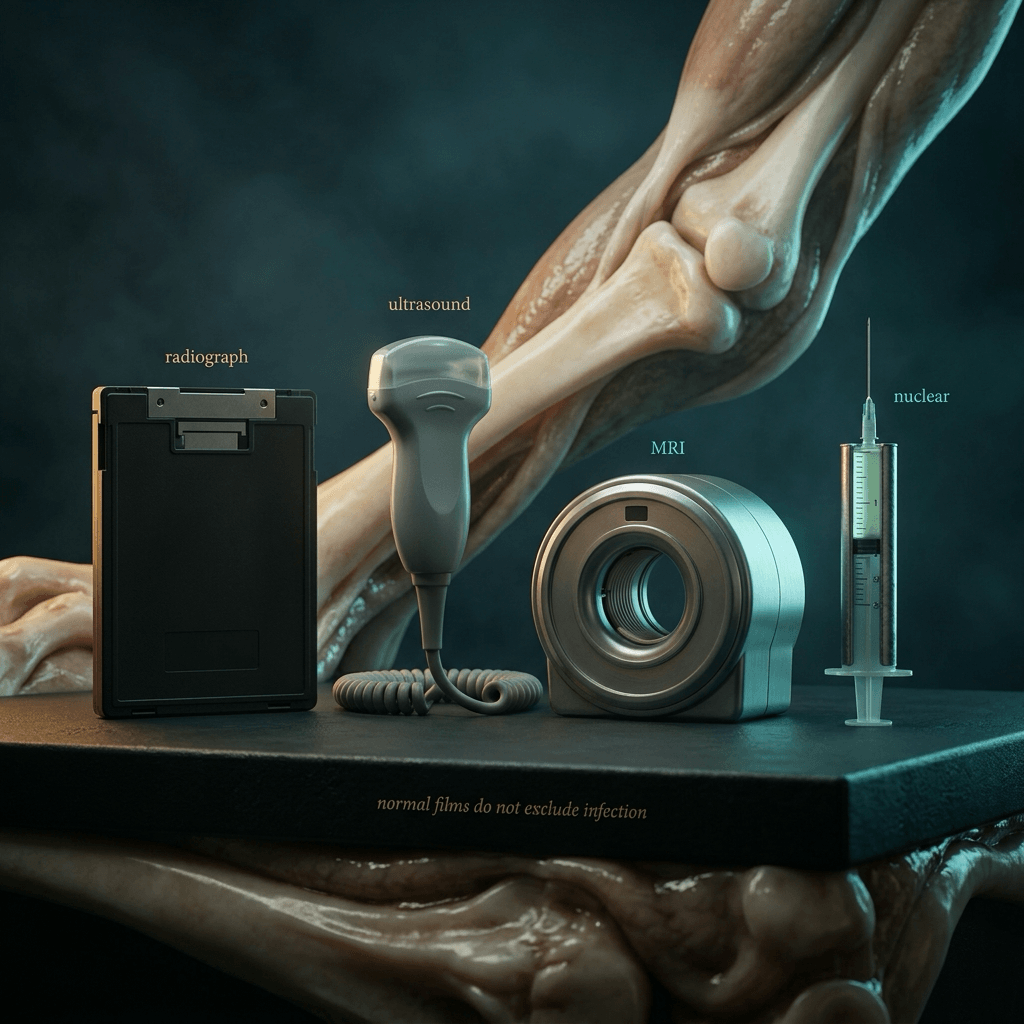
RUMAImaging Algorithm for Suspected MSK Infection
Hook:RUMA: Radiograph, Ultrasound, MRI, Alternative nuclear medicine — the stepwise infection imaging algorithm.
Modality by scenario. The clinical question chooses the test. The table is the working version of the pathway, scenario by scenario.
- First-Line Imaging
- AP + lateral radiograph (often normal). Bloods (CRP, ESR, WCC)
- Advanced Imaging
- Urgent MRI with contrast: marrow oedema, subperiosteal abscess, extent. Bone scan if MRI delayed
- First-Line Imaging
- Radiograph (sequestrum, involucrum, cortical thickening)
- Advanced Imaging
- MRI with contrast for extent and abscess delineation. CT for sequestrum identification and surgical planning
- First-Line Imaging
- Ultrasound: effusion detection + aspiration guidance
- Advanced Imaging
- MRI with contrast if bone involvement suspected (adjacent osteomyelitis). USS is usually sufficient for diagnosis
- First-Line Imaging
- Radiograph (loosening, osteolysis — often non-specific)
- Advanced Imaging
- Combined WBC/sulphur colloid scan or FDG-PET. MRI limited by metalwork artefact. Joint aspirate is gold standard
- First-Line Imaging
- Radiograph (disc space narrowing, endplate irregularity — may be delayed)
- Advanced Imaging
- MRI with contrast: gold standard. Shows disc destruction, endplate oedema, paraspinal/epidural abscess. CT-guided biopsy
- First-Line Imaging
- Radiograph (cortical erosion, periosteal reaction)
- Advanced Imaging
- MRI with contrast: distinguishes osteomyelitis from neuropathic (Charcot) changes. Probe-to-bone test correlates
Labelled leucocyte scintigraphy is a good test in the peripheral skeleton and a useless one in the axial skeleton, and the gap is far wider than most candidates expect. Pooled across the chronic-osteomyelitis literature its sensitivity was 84% (95% CI 72-91%) peripherally but only 21% (95% CI 11-38%) axially — it misses roughly four out of five spinal infections. The reason is that vertebral osteomyelitis frequently appears photopenic (cold) rather than hot, because marrow is replaced and destroyed rather than recruiting labelled cells.
A negative white-cell scan therefore does nothing to exclude spondylodiscitis. Use MRI with gadolinium as the first-line test, and FDG-PET/CT (superior to leucocyte scintigraphy in the axial skeleton) or combined gallium/bone scintigraphy when MRI cannot be performed.
Mimics of infection. Marrow oedema and aggressive periosteal reaction are non-specific, and several entities mimic osteomyelitis on MRI. Knowing the discriminators avoids both over- and under-treatment.
- Key Overlapping Feature
- Marrow oedema, periosteal reaction, soft-tissue enhancement
- Discriminating Feature(s)
- Sinus tract, rim-enhancing abscess, penumbra sign, raised CRP/ESR with clinical sepsis; geographic confluent T1 marrow replacement
- Key Overlapping Feature
- Marrow oedema, bone destruction, joint disorganisation
- Discriminating Feature(s)
- Periarticular, midfoot/Lisfranc distribution, subchondral cysts and intra-articular bodies, NO sinus tract or abscess (Ahmadi)
- Key Overlapping Feature
- Aggressive periosteal reaction, marrow signal change
- Discriminating Feature(s)
- Solid enhancing mass, cortical destruction with soft-tissue mass, ABSENCE of penumbra sign; biopsy decisive
- Key Overlapping Feature
- Marrow oedema, periosteal reaction
- Discriminating Feature(s)
- Linear low-signal fracture line, no abscess or sinus tract, mechanical history
- Key Overlapping Feature
- Marrow signal change, double-line sign
- Discriminating Feature(s)
- Serpiginous geographic margin, double-line sign on T2 (not penumbra), no soft-tissue collection
- Key Overlapping Feature
- Marrow oedema, periosteal reaction, lytic-sclerotic lesions — looks infective
- Discriminating Feature(s)
- Children/adolescents, MULTIFOCAL and recurrent, culture-NEGATIVE, classic medial-clavicle/metaphyseal/pelvic/spinal distribution; whole-body MRI maps lesions; SAPHO adds synovitis/acne/pustulosis/hyperostosis in adults — diagnosis of exclusion
- Key Overlapping Feature
- Synovitis, erosions, effusion
- Discriminating Feature(s)
- Tophi (gout), symmetrical erosive distribution (RA), crystals on aspirate
Crystal arthropathy and septic arthritis can occur SIMULTANEOUSLY. The presence of urate or pyrophosphate crystals on synovial fluid analysis does NOT exclude infection — always send fluid for Gram stain and culture and interpret in the context of the cell count and clinical picture.
Charcot staging. Infection superimposed on a Charcot foot is the hardest differential in musculoskeletal radiology, so the Eichenholtz staging of the underlying process is worth knowing:
- Stage 0 — clinical inflammation with a warm, swollen foot and normal or near-normal radiographs; MRI shows marrow oedema. This is the stage at which offloading protects the architecture
- Stage 1, fragmentation — osteochondral fragmentation, joint subluxation and debris; the destructive phase and the one most easily mistaken for infection
- Stage 2, coalescence — resorption of debris, early fusion of fragments, decreasing warmth and swelling
- Stage 3, consolidation (reconstruction) — remodelling into a stable, often deformed foot; the rocker-bottom deformity dates from here
Clinical Applications
Radiographs. Five classic signs, and the DRIPS mnemonic below carries them:
- Destruction of cortical and cancellous bone: lytic change needs 30-50% bone loss before it is visible
- Rarefaction: regional osteopaenia around the infected area from hyperaemic bone resorption, and it may be the earliest radiographic sign
- Involucrum: the shell of new bone that forms around dead bone in chronic osteomyelitis, encasing the sequestrum
- Periosteal reaction: periosteal new bone, lamellated (onion-skin) or solid; aggressive patterns mimic malignancy
- Sequestrum: dead, devascularised bone seen as a dense fragment within a lytic cavity, which requires surgical removal
Chronic osteomyelitis. The sequestrum, the involucrum and the cloaca are the anatomy of the chronic picture, and the cutaway below shows how they relate. Adult chronic osteomyelitis is classified by Cierny-Mader, which combines the anatomical type (medullary, superficial, localised, diffuse) with host status (A healthy, B compromised, C treatment worse than the disease).
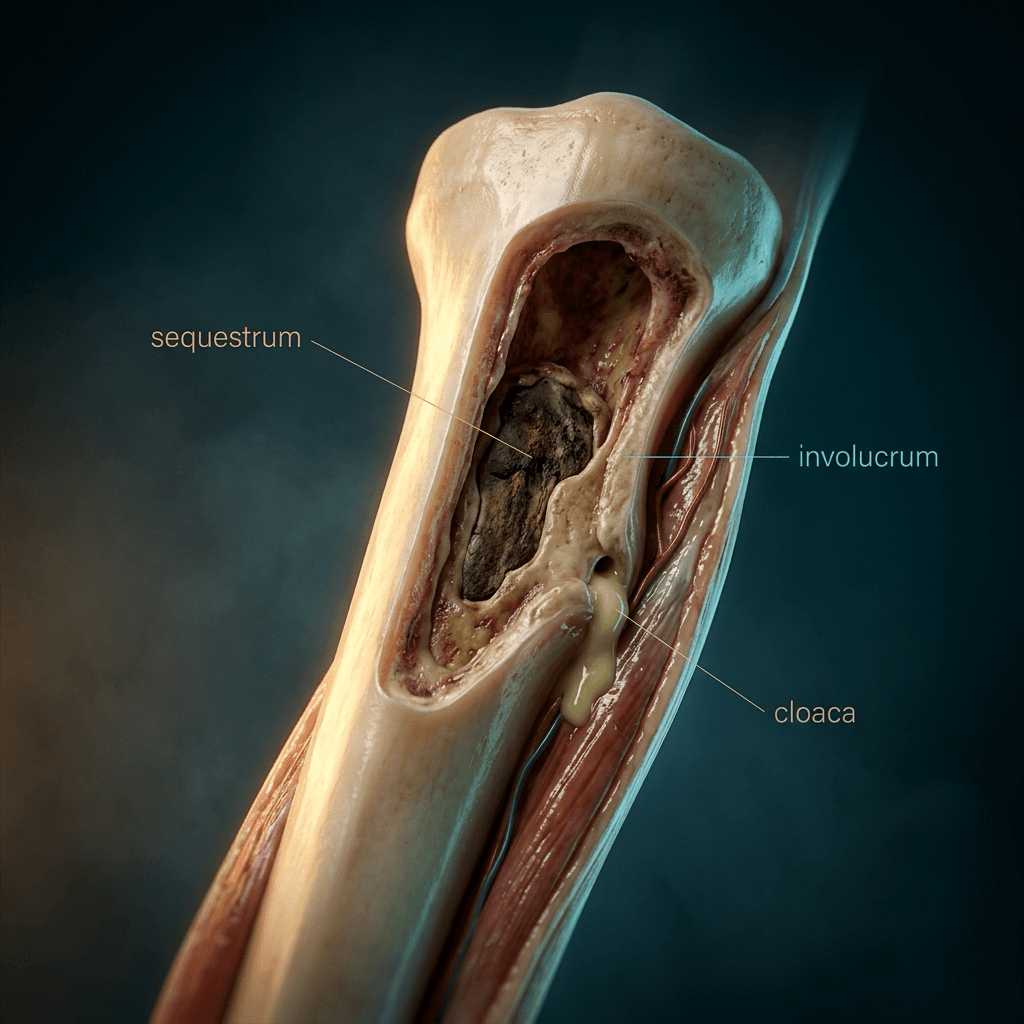
DRIPSRadiographic Signs of Osteomyelitis
Hook:DRIPS: the five classic radiographic signs of osteomyelitis — remember they take 10-14 days to appear.
MRI accuracy depends on the setting. MRI with gadolinium contrast is the imaging modality of choice for osteomyelitis, but quote its accuracy with the setting attached, because MRI is not one test with one number. In acute osteomyelitis and the diabetic foot it performs well: pooled across 16 studies of foot osteomyelitis the diagnostic odds ratio was 42.1, with specificity 82.5% at a 90% sensitivity cut point, enough to rule the diagnosis both in and out and far ahead of bone scanning, radiography or white-cell studies.
In chronic osteomyelitis MRI degrades badly. Pooled across 23 studies its sensitivity was 84% but its specificity only 60% (95% CI 38-78%). Previous surgery, healed infection, metalwork and remodelled marrow all produce the same signal changes, so a positive MRI in a chronically infected limb means much less than the same scan in a previously untouched bone.
Where FDG-PET comes in. That collapse in specificity is the whole reason FDG-PET exists in this algorithm: in the same meta-analysis it achieved 96% sensitivity and 91% specificity for chronic osteomyelitis, the best of any single modality. These are level 1 evidence, from meta-analyses of diagnostic accuracy studies.
Marrow oedema. The most sensitive and least specific MRI finding. On T1 the normal bright fatty marrow is replaced by dark signal; on STIR or T2 fat-sat the marrow is bright. The same pattern is seen in tumour, stress fracture and contusion, so clinical correlation is essential.
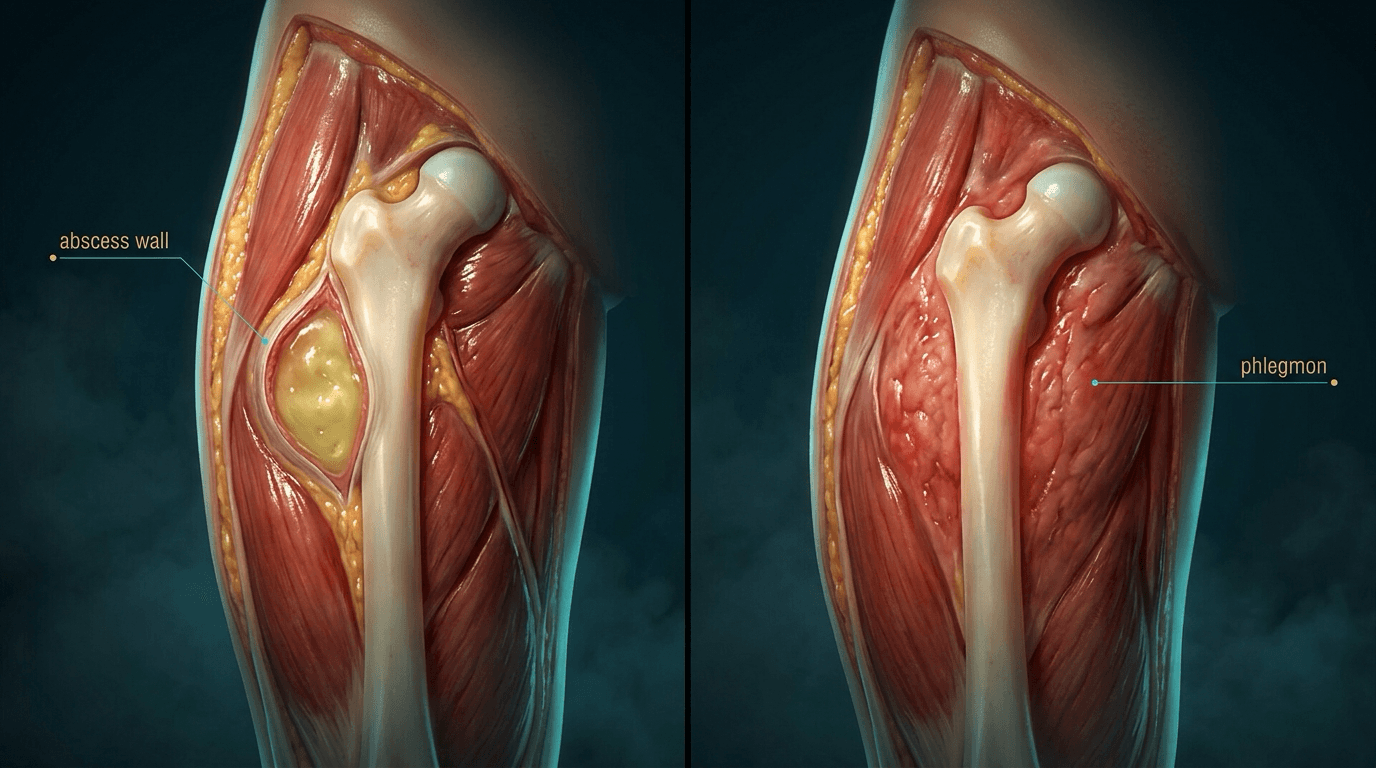
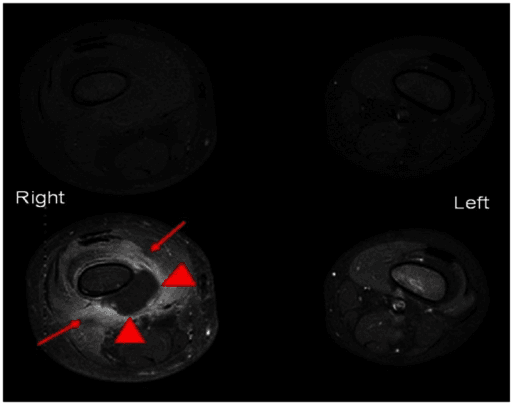
Abscess and phlegmon. On contrast-enhanced T1 fat-sat images an abscess is a collection with ring enhancement, the wall enhancing and the centre not; phlegmon shows diffuse, homogeneous enhancement. The distinction is critical for surgical planning, because abscesses typically require drainage while phlegmon may respond to antibiotics alone.
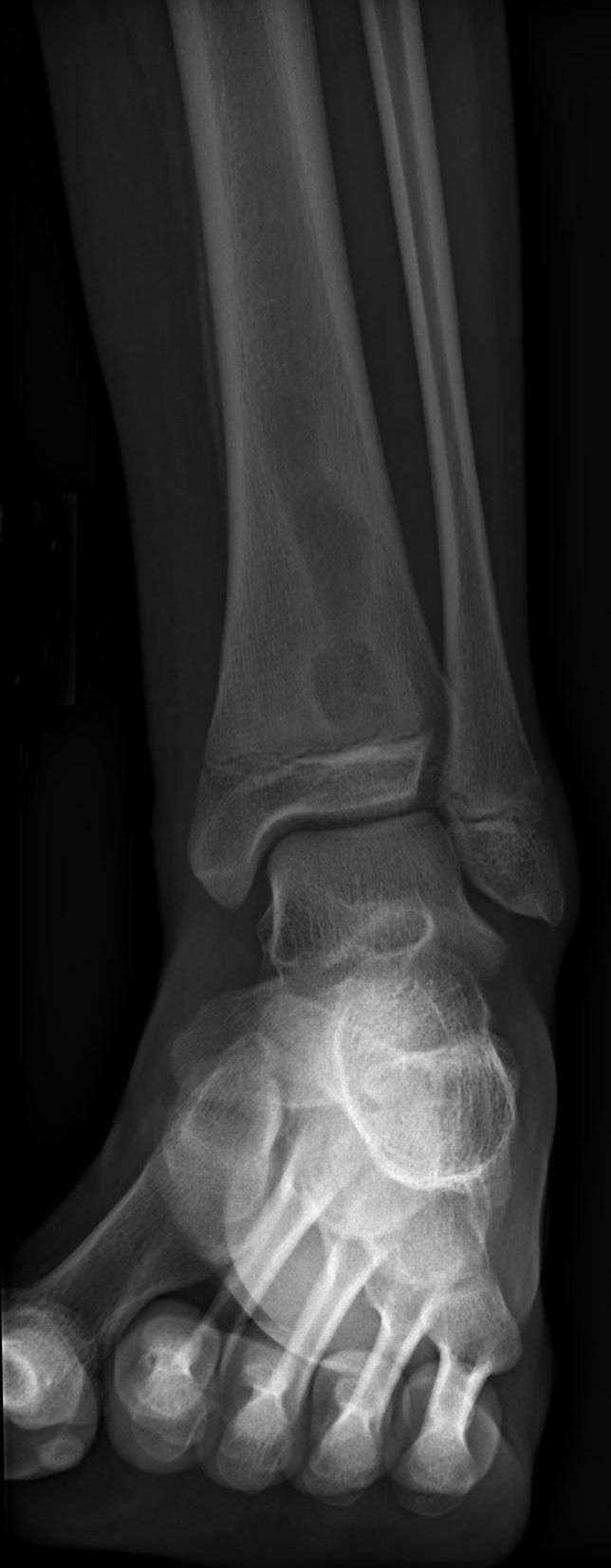
The penumbra sign. A thin rim of T1 hyperintensity, 1-2 mm wide, immediately surrounding an intraosseous abscess, the Brodie abscess (subacute staphylococcal osteomyelitis). The rim is granulation tissue at the interface between abscess and viable bone. It is specific for infection, and it is how a Brodie abscess is separated from a bone tumour. The three images that follow are the same case across modalities.
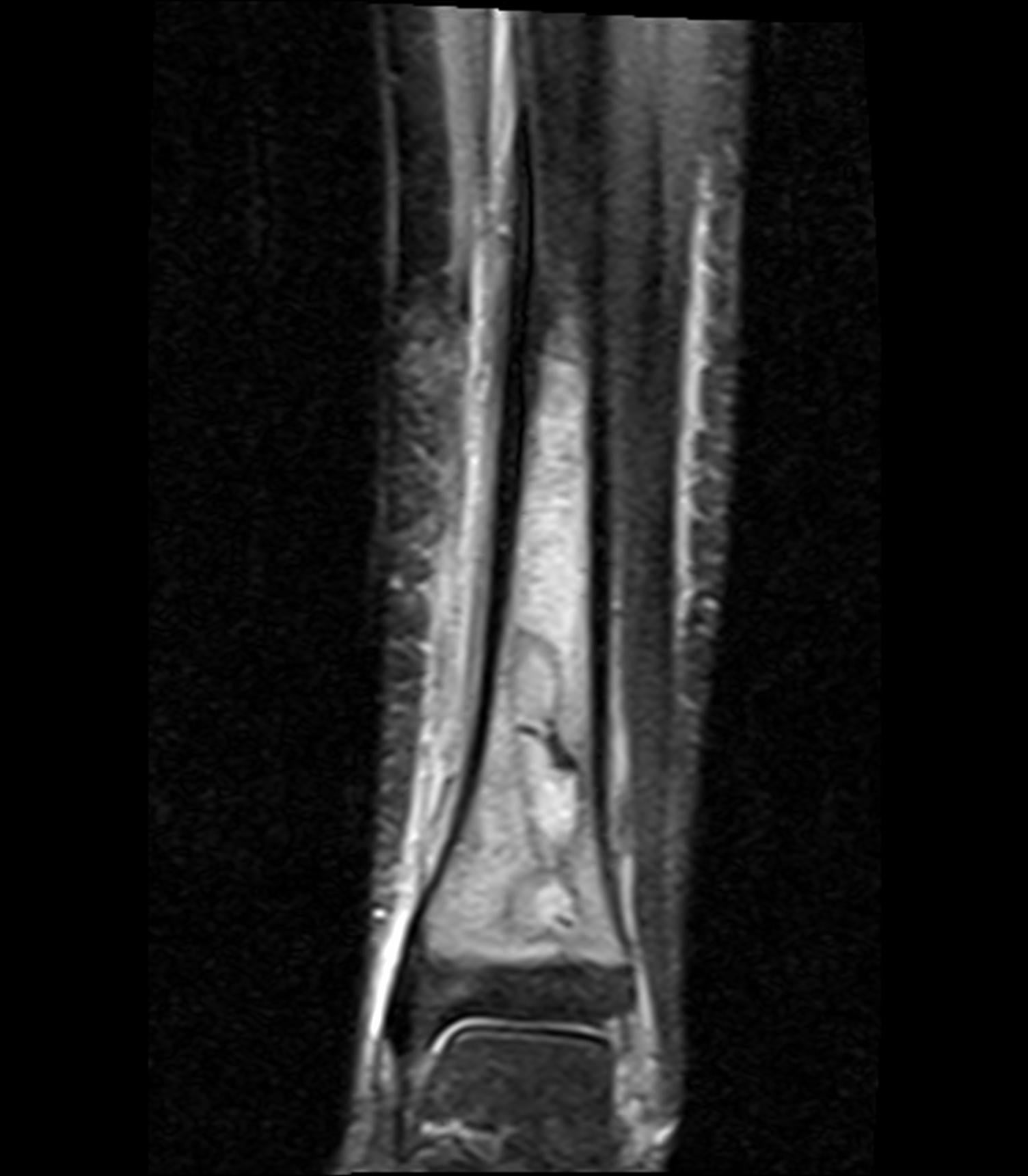
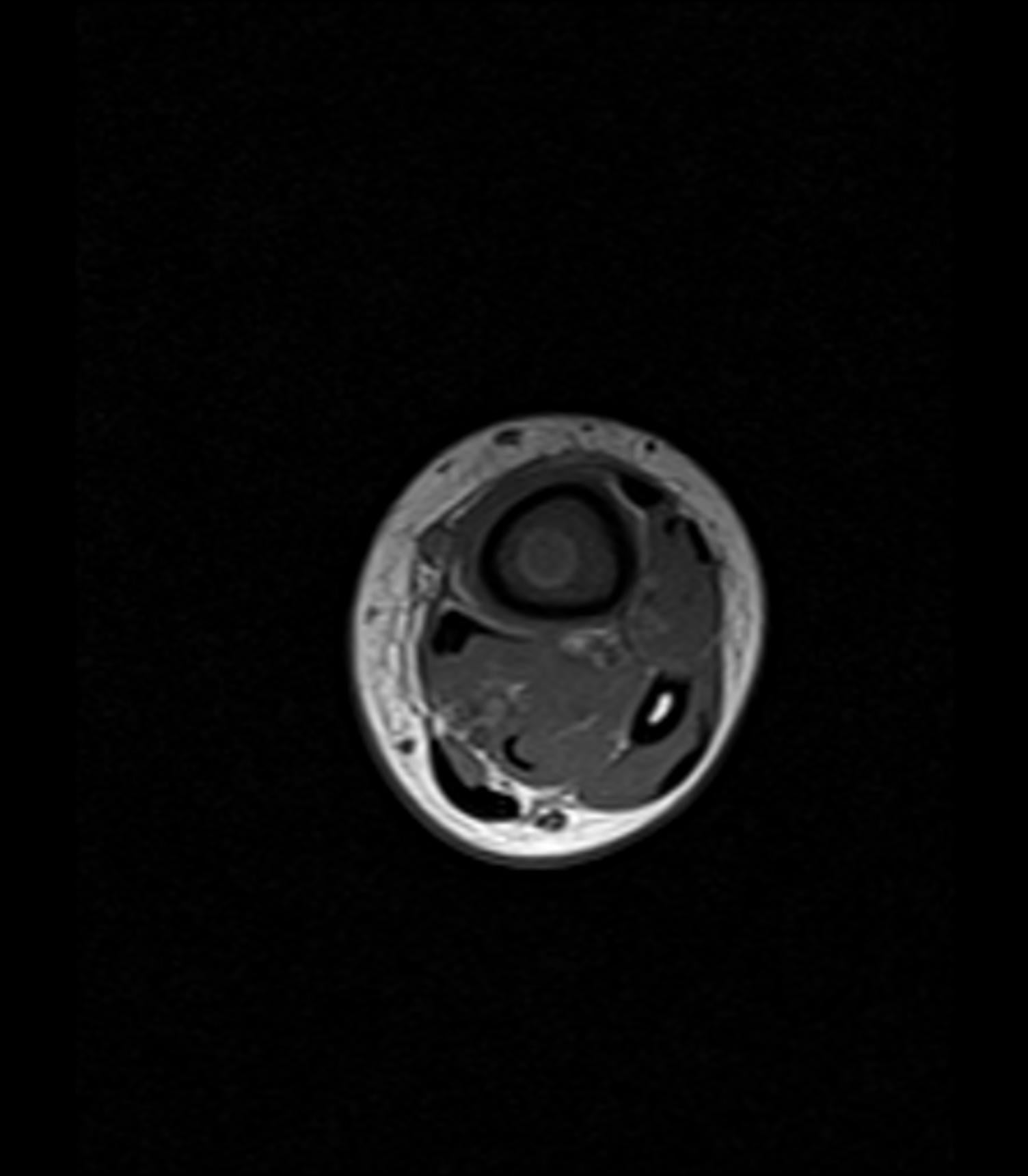
Cortical erosion and sinus tract. Cortical destruction, an interrupted cortex with surrounding soft-tissue oedema and enhancement, is best assessed on contrast-enhanced T1 fat-sat images. A sinus tract is a linear enhancing track from the infected bone through the soft tissues to the skin surface, and it is specific for chronic osteomyelitis.
PACESMRI Features of Osteomyelitis
Hook:PACES: the five key MRI features of osteomyelitis — the Penumbra sign is the most specific.
Children under 18 months. The growth plate still carries transphyseal blood vessels, which allow infection to cross from the metaphysis to the epiphysis and into the adjacent joint, so osteomyelitis and septic arthritis can occur together. After 18 months the growth plate acts as a barrier: the same infection in an older child or adult tends to spare the joint unless it ruptures through the cortex. A toddler with osteomyelitis needs the neighbouring joint examined.
From Image to Organism: Biopsy and Aspiration
Imaging localises and stages infection; it never names the organism, and every management decision that follows — which antibiotic, for how long, whether to operate — depends on a sample. The technical points below are where that sample is won or lost.
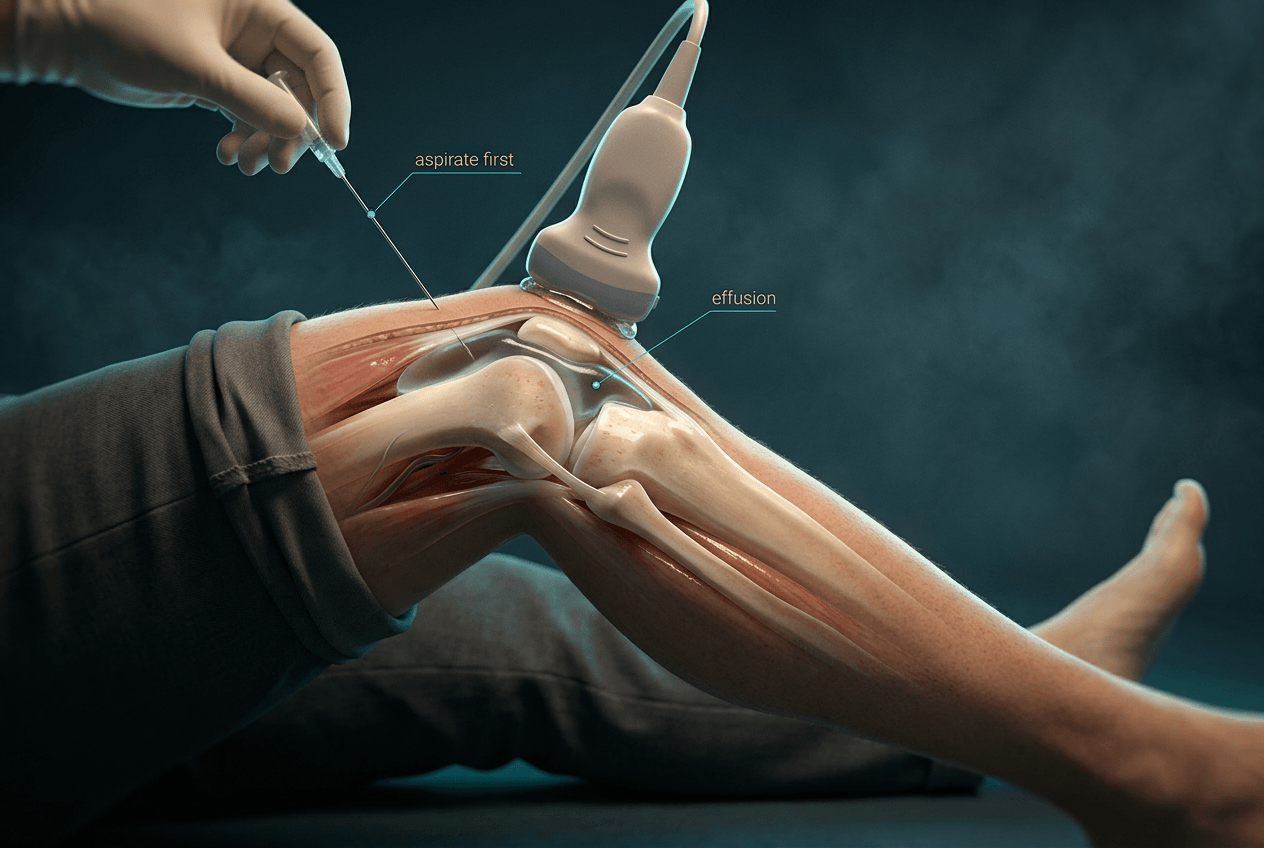
Should antibiotics be held before biopsy? This is the question most often asked and most often got wrong. In a haemodynamically stable patient without neurological compromise, withhold antibiotics until a microbiological diagnosis has been obtained: prior antibiotic exposure materially reduces biopsy yield, and a culture-negative spinal infection commits the patient to months of empirical broad-spectrum therapy with no way to de-escalate.
The exceptions are absolute and must be stated in the same breath: do NOT delay antibiotics in sepsis, haemodynamic instability, or a progressive neurological deficit. In those situations treat first and accept the reduced yield.
Take blood cultures before anything else. They are positive in only about 50% of osteomyelitis, native vertebral osteomyelitis included, and a positive blood culture growing Staphylococcus aureus alongside a compatible MRI can make biopsy unnecessary altogether.
A negative first biopsy does not close the question. If blood cultures are also negative, the options are a repeat image-guided biopsy with larger cores, an open biopsy, or a multidisciplinary decision to treat empirically, not a default assumption that infection has been excluded.
Never treat bone infection off a superficial swab. Swabs of an ulcer or sinus grow colonising skin and wound flora and correlate poorly with what is actually in the bone; bone biopsy is the reference standard in diabetic foot osteomyelitis.
Send every sample for histology as well as culture. Histology detects infection when culture has been suppressed, and identifies the tumour that was masquerading as infection.
For a prosthesis, take multiple separate periprosthetic tissue samples, conventionally three to five, each with clean instruments to avoid cross-contamination, and request extended incubation for around 14 days so that low-virulence organisms such as Cutibacterium acnes are not missed.
The fluid thresholds the imaging is supporting. The cell counts below are what the aspirate the ultrasound guided is being read against.
- Synovial WBC
- Over 50,000 cells/microlitre is highly suggestive (infection can occur below this)
- Neutrophil percentage
- Over 90%
- Synovial WBC
- Over 10,000 cells/microlitre
- Neutrophil percentage
- Over 90%
- Synovial WBC
- Over 3,000 cells/microlitre
- Neutrophil percentage
- Over 70%
The thresholds for a prosthetic joint are an order of magnitude lower than for a native one, which is the single most important number to carry: a synovial white cell count of 8,000 is unremarkable in a native knee and strongly suggestive in a chronic prosthetic one.
The 2018 International Consensus Meeting definition is scored rather than absolute. Two major criteria are individually diagnostic: a sinus tract communicating with the joint or prosthesis, or two positive cultures of the same organism. Failing those, minor criteria are weighted and summed — raised serum CRP or D-dimer, raised ESR, raised synovial white cell count or a positive leucocyte esterase strip, positive alpha-defensin, raised synovial neutrophil percentage, and raised synovial CRP — with a threshold score defining infection and an intermediate band that is judged with intraoperative findings.
Alpha-defensin is an antimicrobial peptide released by synovial neutrophils on contact with a pathogen. Its practical value is that it behaves almost as a binary test and is not degraded by prior antibiotics or by a blood-stained sample.
Guidelines, Registries & Global Practice
Musculoskeletal infection is a global problem with rising incidence driven by an ageing population, increasing arthroplasty volumes, diabetes and intravenous drug use. Periprosthetic joint infection complicates roughly 1-2% of primary hip and knee arthroplasties and a higher proportion of revisions, and native vertebral osteomyelitis has an incidence of approximately 2.4 per 100,000 person-years that rises sharply with age. Imaging recommendations are broadly consistent across major societies, with differences mainly in the role of nuclear medicine versus MRI when the diagnosis is uncertain.
- Osteomyelitis & Spinal Infection
- Gadolinium-enhanced MRI is the modality of choice for native vertebral osteomyelitis; gallium/bone scan or FDG-PET/CT when MRI is contraindicated
- PJI / Periprosthetic
- Radiographs in all; arthrocentesis is the cornerstone; advanced nuclear-medicine imaging only when diagnosis remains uncertain
- Osteomyelitis & Spinal Infection
- MRI with contrast first-line for osteomyelitis and discitis; urgent imaging for suspected spinal epidural abscess
- PJI / Periprosthetic
- Aligns with MSIS/EBJIS criteria; aspiration and synovial biomarkers prioritised; nuclear medicine as adjunct
- Osteomyelitis & Spinal Infection
- MRI for soft-tissue and marrow extent; CT for sequestrum and surgical planning
- PJI / Periprosthetic
- EBJIS 2021 definition integrates clinical, synovial, microbiological and histological criteria; imaging supportive
- Osteomyelitis & Spinal Infection
- Not the primary remit (focus on PJI definitions)
- PJI / Periprosthetic
- 2018 ICM scoring: serum and synovial markers, culture and histology define PJI; imaging is a minor/adjunct criterion
- Osteomyelitis & Spinal Infection
- Confirmatory FRI criteria include fistula/sinus, purulent drainage and positive cultures; imaging (radiograph, CT, MRI, WBC-SPECT/CT) is suggestive
- PJI / Periprosthetic
- Hardware infection assessed with WBC scintigraphy/SPECT-CT and FDG-PET where MRI is degraded by metal
Registry and outcome data. National arthroplasty registries (NJR for England/Wales, AJRR in the US, AOANJRR in Australia, the Swedish and Norwegian registries, and the NZJR) consistently identify infection as a leading cause of early revision after hip and knee arthroplasty, underpinning the high prior probability that drives PJI imaging and aspiration pathways. Registry follow-up of revision-for-infection also informs the choice between debridement-and-implant-retention and one- or two-stage revision once infection is confirmed.
High- vs limited-resource practice variation. Where MRI and radiopharmaceuticals are readily available, gadolinium-enhanced MRI is the default for osteomyelitis and spinal infection, with FDG-PET/CT or WBC/marrow imaging reserved for metal-laden or equivocal cases. In limited-resource settings, plain radiographs, ultrasound (for effusion detection and aspiration guidance) and image-guided or clinical aspiration carry a greater diagnostic burden; triple-phase bone scintigraphy may substitute when MRI is unavailable. Across all settings the unifying principle is unchanged: imaging localises and stages infection, but microbiological confirmation by aspiration or biopsy remains decisive.
Controversies and Areas of Uncertainty
FDG-PET versus WBC/marrow imaging for PJI. FDG-PET is attractive, a single visit with no cell labelling, and highly sensitive, but its specificity around metalwork is limited because inflammatory periprosthetic uptake overlaps with infection. Combined labelled-leukocyte/marrow imaging remains more specific (Love et al), yet is labour-intensive and operator-dependent. Standardised FDG-PET interpretation criteria are still evolving, so practice varies between centres.
The role of imaging in PJI definitions. The major PJI definitions (MSIS, 2018 ICM, EBJIS 2021) are built on serum and synovial biomarkers, culture and histology; imaging contributes little to the formal score. This reflects the non-specificity of cross-sectional imaging around implants, and means a normal scan never excludes PJI when clinical and laboratory suspicion is high.
Contrast in spinal infection. Gadolinium improves detection of epidural and paraspinal abscess and differentiates abscess from phlegmon, but non-contrast MRI already shows the cardinal features, disc and endplate signal change. In renal impairment or gadolinium contraindication, diffusion-weighted imaging and careful non-contrast assessment are used, with FDG-PET/CT as a problem-solving adjunct.
Diagnosing infection on a Charcot foot. Secondary signs (a sinus tract, a soft-tissue collection, an ulcer adjacent to bone) carry the most weight, but no single feature is perfect, and image-guided bone biopsy is often required for a definitive answer before prolonged antibiotics or amputation.
Clinical Decision Scenarios
Practise clinical reasoning and management decisions out loud
“A 5-year-old boy presents with a 3-day history of refusal to walk, fever (39 degrees Celsius), and tenderness over the proximal tibia. His radiograph is normal. Blood tests show CRP 85 and WCC 16,000.”
“A 72-year-old man with a total knee replacement performed 2 years ago presents with persistent knee pain, warmth, and a CRP of 45. The radiograph shows no obvious periprosthetic fracture.”
“An examiner asks you to explain how MRI differentiates osteomyelitis from neuropathic (Charcot) arthropathy in a diabetic foot.”
Imaging Timeline
- Day 0-3: Radiographs NORMAL. MRI shows marrow oedema. Bone scan positive
- Day 7-14: Radiographs show periosteal reaction and rarefaction
- Day 14+: Radiographs show lytic destruction, sequestrum/involucrum
- KEY: Normal radiographs do NOT exclude osteomyelitis
MRI Features (PACES)
- Penumbra sign: T1 hyperintense rim around Brodie abscess (SPECIFIC for infection)
- Abscess: ring enhancement on Gd+. Phlegmon: diffuse enhancement
- Cortical breach: interrupted cortex with surrounding oedema
- Elevated marrow signal on STIR: sensitive but NOT specific
- Sinus tract: linear enhancing tract to skin (SPECIFIC for chronic OM)
PJI Imaging
- Joint aspiration is GOLD STANDARD (WBC count, culture, alpha-defensin)
- Combined WBC + sulphur colloid scan: best nuclear medicine test (sensitivity 100%, specificity 91%)
- Triple-phase bone scan: sensitive but NOT specific (positive for 12-18 months post-op)
- FDG-PET: high sensitivity (96%) but limited specificity around metalwork
Osteomyelitis vs Charcot
- OM: geographic marrow oedema, sinus tract, abscess, ulcer-bone proximity
- Charcot: diffuse marrow oedema, joint destruction, NO abscess
- Sinus tract: 84% sensitive, seen in 0 of 85 non-infected Charcot joints — rules IN, does not rule OUT
- Against infection: subchondral cysts (76% vs 2%) and intra-articular bodies (53% vs 12%)
- Both can coexist (superimposed infection on Charcot) — biopsy is often needed
Evidence Base
MRI Accuracy for Foot Osteomyelitis (Meta-Analysis)
- Across 16 studies, the diagnostic odds ratio for MRI in foot osteomyelitis was 42.1 (95% CI 14.8-119.9), with specificity 82.5% at a 90% sensitivity cut point.
- MRI was markedly superior to technetium-99m bone scanning (DOR 149.9 vs 3.6 in head-to-head studies), plain radiography (81.5 vs 3.3), and white-cell studies (120.3 vs 3.4).
- MRI performance allowed the diagnosis of foot osteomyelitis to be both ruled in and ruled out.
Penumbra Sign in Subacute Osteomyelitis
- In 32 patients referred to an orthopaedic oncology service but proven to have osteomyelitis, the penumbra sign (T1 hyperintense rim around an intraosseous abscess) was present in 24 (75%).
- The penumbra sign was more sensitive than the T2/STIR double-line sign, which was seen in only 29% of cases.
- On histology the rim was composed of highly vascularised granulation tissue with thick-walled arterioles.
MRI evidence supports its role as the gold standard for osteomyelitis diagnosis.