Lunate Facet Depression | Axial Load Mechanism | Articular Restoration Critical
- Lunate facet is the concave articular surface articulating with the lunate
- Axial load drives lunate into radius like a punch into a die
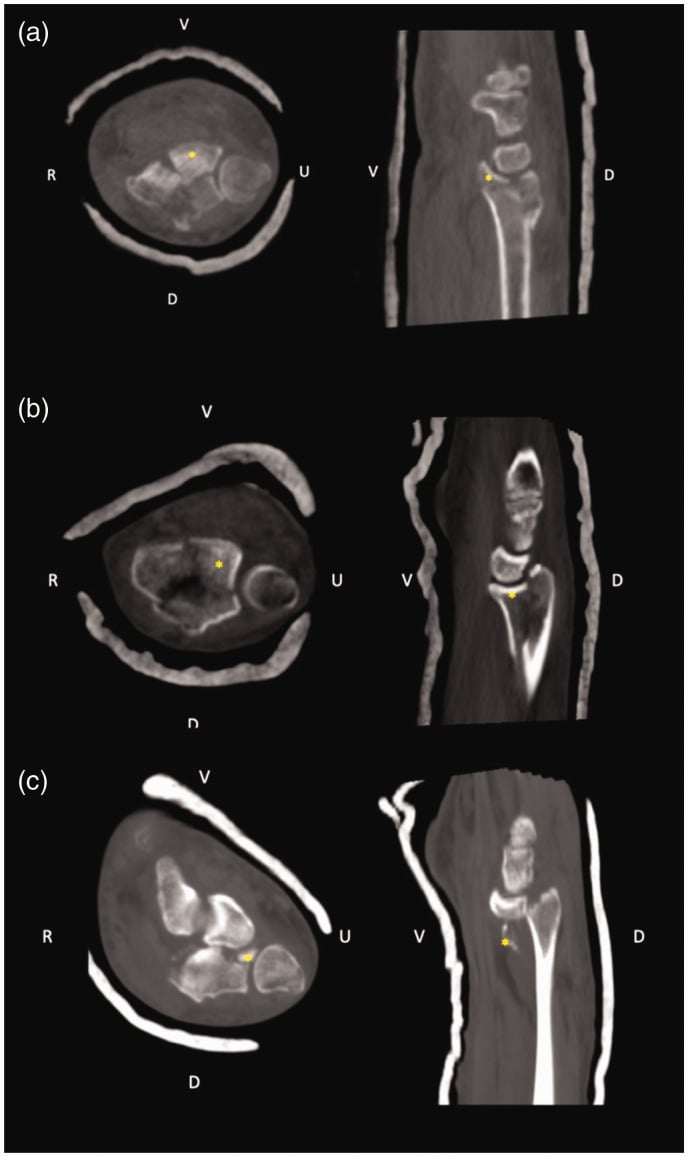
- CT scan essential - plain radiographs underestimate depression depth
- Step-off greater than 2mm predicts post-traumatic arthritis
- Fragment-specific fixation with subchondral support is treatment goal
- “Die-punch is the 'hidden fracture' - easily missed on plain films
- “Always get CT for any high-energy distal radius fracture
- “Volar approach may miss dorsal die-punch - consider dorsal access
- “Bone graft often needed for metaphyseal void after elevation
Overview and Epidemiology
Definition. A die-punch fracture is a depressed articular fracture of the lunate facet of the distal radius. The name is borrowed from metalworking: under axial load the lunate is the punch and the radius the die, and the hard lunate is driven into the softer cancellous bone beneath the facet, leaving a depressed articular fragment. It is the hidden fracture of the distal radius, easily missed on plain films.
How common. Die-punch fragments occur in approximately 20-30% of intra-articular distal radius fractures, and are often part of a complex distal radius fracture pattern. The age distribution is bimodal: young adults after high-energy trauma, and the elderly with osteoporotic bone.
Mechanism. A direct axial load, which is what distinguishes the injury from rotational mechanisms. It is most often high-energy:
- Fall from height, motor vehicle accident, motorcycle crash
- Sports with an axial load on the wrist - wakeboarding, snowboarding, contact sports
Anatomy/Biomechanics
The lunate facet. The ulnar half of the distal radius articular surface, concave in both the sagittal and coronal planes, articulating with the proximal pole of the lunate. It carries approximately 60% of the axial load crossing the wrist. Its medial border is the sigmoid notch, which articulates with the ulnar head.
The scaphoid facet. The radial half of the articular surface: triangular, slightly convex in the sagittal plane, articulating with the proximal pole of the scaphoid. The interfacet ridge separates the two facets.
Why a depressed facet matters. A surface carrying 60% of the wrist's load cannot be left with a step in it. Depression of the lunate facet leads to:
- Altered radiocarpal biomechanics
- Concentrated stress at the margins of the step-off
- Progressive cartilage degeneration
- Post-traumatic radiocarpal arthritis
Beneath the cartilage. The cancellous bone under the lunate facet is organised in layers: a dense subchondral plate supporting the cartilage, a trabecular network oriented to resist axial compression, a metaphyseal transition zone of less dense bone, and a watershed zone of reduced vascularity that is prone to necrosis. It is into this metaphyseal cancellous bone that the punched fragment is driven, and from which it must later be levered back up.
Blood supply. The radial artery supplies the volar and dorsal surfaces and the ulnar artery contributes to the ulnar aspect; the anterior interosseous artery feeds the palmar metaphysis and the posterior interosseous artery the dorsal metaphysis. An extensive periosteal anastomotic network around the metaphysis gives the region generally good healing potential, although comminuted fragments may have a compromised supply.
The volar side. The volar radiocarpal ligaments may be disrupted in severe injuries. Pronator quadratus overlies the volar surface, flexor carpi radialis passes radially and flexor pollicis longus centrally.
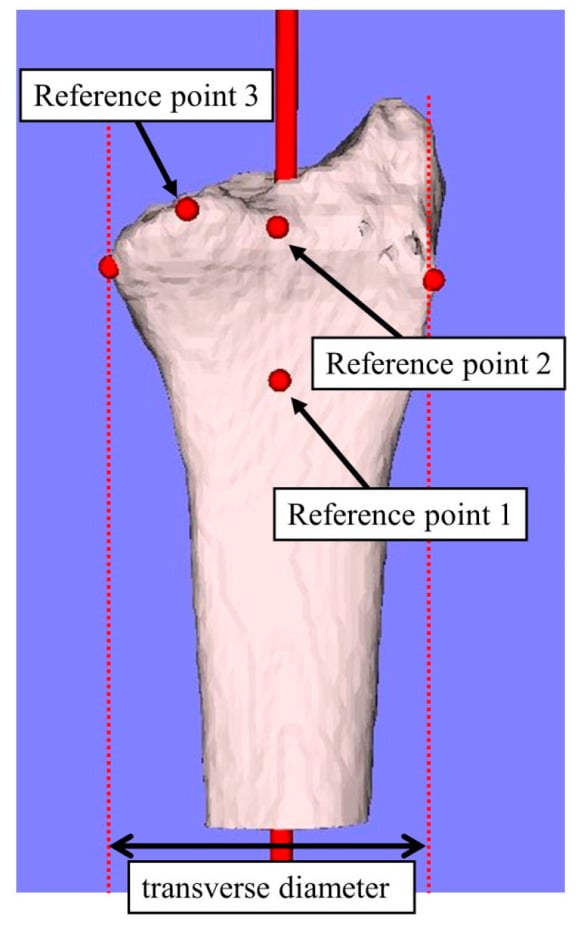
The dorsal side. The extensor compartments pass dorsally over the radius, the dorsal radiocarpal ligaments provide carpal stability, and Lister's tubercle is the landmark for extensor pollicis longus.
Classification Systems
Sander and Medoff is the most commonly used classification specific to die-punch fractures, and the type guides the surgical approach and fixation strategy.
- Pattern
- Central articular depression without significant comminution: a single depressed fragment with an intact peripheral rim
- Treatment
- Elevation with K-wire or screw fixation
- Pattern
- Depressed fragment with a sagittal or coronal split extending from it; more unstable than Type I
- Treatment
- Fragment-specific fixation addressing both components
- Pattern
- Multiple comminuted fragments, metaphyseal extension, associated dorsal or volar cortical disruption
- Treatment
- Complex reconstruction, often requiring bone graft
- Type
- Type I
- Key Feature
- Simple central depression
- Stability
- Relatively stable
- Type
- Type II
- Key Feature
- Depression with split
- Stability
- Unstable
- Type
- Type III
- Key Feature
- Comminuted with extension
- Stability
- Very unstable
- Type
- Type II
- Key Feature
- Classic die-punch pattern
- Stability
- Variable - IIA stable, IIB unstable
- Type
- C2/C3
- Key Feature
- Complete articular fracture
- Stability
- Unstable
Clinical Assessment
History. The mechanism is an axial load, and the energy behind it is the first thing to establish. The answers that change management:
- Energy of the injury - height of the fall, speed of the vehicle
- Position of the wrist at impact
- Associated injuries suggesting polytrauma
- Hand dominance and occupational demands
- Pre-existing wrist pathology
Inspection and palpation. The wrist can look deceptively benign. Swelling over the distal radius is often less dramatic than with a displaced fracture, there is minimal deformity, and ecchymosis may be delayed. Tenderness is diffuse over the distal radius with point tenderness over the dorsal lunate facet; palpate the DRUJ as well.
Movement. Range of motion is significantly limited by pain in the acute setting. Loss of forearm rotation suggests DRUJ involvement.
Neurovascular assessment. Document median nerve sensation in the radial three and a half digits, because carpal tunnel symptoms may develop as the wrist swells. The radial pulse is usually preserved; check capillary refill in the digits.
Any high-energy mechanism warrants thorough polytrauma evaluation:
- Cervical spine assessment
- Ipsilateral upper extremity examination (elbow, shoulder)
- Chest and abdominal examination
- Associated carpal injuries (scapholunate, TFCC)
Special tests. The Watson test (scaphoid shift) looks for scapholunate ligament injury, a common association in high-energy wrist trauma. The piano key test assesses ulnar head stability at the DRUJ, compared with the other side. Grip strength is usually not assessable acutely because of pain, but it is the baseline for rehabilitation.
Differential diagnosis. A die-punch fragment can be subtle and is easily confused with, or coexists with, other distal radius and carpal injuries. Examination alone will not separate them; the discriminating tests are in the table.
- Distinguishing features
- Central articular depression of the lunate facet from axial load; minimal external deformity
- Best discriminating test
- CT with sagittal reconstruction (quantifies step-off)
- Distinguishing features
- Dorsal angulation and shortening without articular step-off; classic dinner-fork deformity
- Best discriminating test
- Lateral radiograph; CT shows intact joint surface
- Distinguishing features
- Small volar-ulnar marginal fragment, risk of volar carpal subluxation; distal to the watershed line
- Best discriminating test
- Lateral radiograph and sagittal CT (volar fragment, carpal translation)
- Distinguishing features
- Widened SL interval, DISI on lateral; positive Watson test; often coexists with die-punch
- Best discriminating test
- PA radiograph (SL gap), MRI or wrist arthroscopy
- Distinguishing features
- Disrupted Gilula arcs, lunate tilt on lateral; high-energy carpal disruption
- Best discriminating test
- Lateral radiograph (spilled-teacup sign), CT
- Distinguishing features
- Loss of forearm rotation, DRUJ tenderness; ulnar-sided injury without radial articular depression
- Best discriminating test
- Clinical DRUJ stability, CT in both rotations
Investigations
Radiographs. The PA view may show only subtle articular irregularity, the lateral can reveal dorsal cortical comminution, and oblique views add another perspective on the fracture lines. Three signs should make you look harder:
- Double cortical sign - the depressed and non-depressed articular surfaces overlap
- Loss of the normal concavity - the lunate facet appears flattened
- Associated fracture lines - sagittal or coronal splits
Why radiographs are not enough. Plain films underestimate the depression, often by several millimetres. They miss pure articular injuries where the fragment is depressed without a cortical break, and overlapping fragments obscure the degree of comminution.
The standard parameters, and why they are the wrong ones here. Measure and quote these on every distal radius film, because an examiner will ask and because you cannot describe a malunion without them:
- How it is measured
- PA: angle between a line along the distal radial articular surface (radial styloid tip to the ulnar corner of the lunate facet) and a line perpendicular to the radial shaft axis
- Normal
- 22-23 degrees
- Commonly accepted limit
- loss of more than 5 degrees
- How it is measured
- PA: distance between two lines perpendicular to the shaft axis, one through the styloid tip and one through the ulnar corner of the articular surface
- Normal
- 11-12 mm
- Commonly accepted limit
- loss of more than 5 mm
- How it is measured
- Lateral: angle between a line joining the volar and dorsal lips of the articular surface and a line perpendicular to the shaft axis
- Normal
- 11-12 degrees volar
- Commonly accepted limit
- dorsal tilt beyond neutral, or more than 10 degrees dorsal
- How it is measured
- PA in neutral rotation: difference in height between the ulnar head and the ulnar corner of the distal radius
- Normal
- neutral, plus or minus 2 mm
- Commonly accepted limit
- positive variance beyond about 2-3 mm
Knirk and Jupiter's most under-quoted finding is a negative one: restoring and maintaining the extra-articular parameters - dorsal tilt and radial length - did not prove critical to the result, except where radial shortening was severe. What predicted arthritis was articular congruity: 91% of joints healing incongruous developed arthritis against 11% of congruous ones.
That is why the die-punch is treated as an entity in its own right. It can sit at the bottom of a joint with entirely normal inclination, height, tilt and variance, because those four parameters describe the position of the rim and the shaft, and the depressed central fragment is attached to neither. A radiograph reported as "anatomically reduced" on the standard measurements can still hide a 4 mm central step. Normal standard parameters are not reassurance in this injury; they are precisely the trap, and the reason CT is mandatory rather than discretionary.
Medoff defined lunate-facet parameters that let you detect and quantify a die-punch on the lateral view before accepting any reduction. Examiners expect you to name and define them, not just say "CT is mandatory":
- Teardrop angle: on the true lateral, the volar rim of the lunate facet projects as a teardrop-shaped density; the angle between the central axis of the teardrop and the central axis of the radial shaft is normally about 70 degrees. A teardrop angle that falls (the teardrop rotating dorsally, toward the shaft axis) signals a dorsally rotated or depressed lunate facet - a malreduced die-punch.
- AP distance: the distance between the centre of the radial-shaft axis and the centre of the lunate-facet teardrop, normally roughly 20 mm; it shortens when the facet is impacted or translated, flagging loss of the volar buttress.
- Articular gap/step: the height difference between the lunate-facet articular surface and the adjacent scaphoid facet across the interfacet ridge.
The teardrop is your lateral-radiograph early warning for lunate-facet malposition. A restored teardrop angle of about 70 degrees and a normal AP distance are the targets that tell you the facet is anatomically reduced (confirmed on CT); a flattened teardrop on a post-fixation film should prompt CT before you accept the result.
CT. Mandatory for any suspected articular involvement or high-energy mechanism, for preoperative planning in every operative case, and to assess the reduction afterwards. Ask for slices of 1mm or less with sagittal, coronal and 3D reconstructions, and compare the contralateral wrist for subtle depressions. Four things come off the scan:
- Step-off - the articular incongruity, measured
- Fragment size - which decides the fixation options
- Degree of comminution - which predicts the need for bone graft
- Dorsal versus volar location - which determines the surgical approach
Look for an associated scapholunate ligament injury on the axial cuts while you are there.
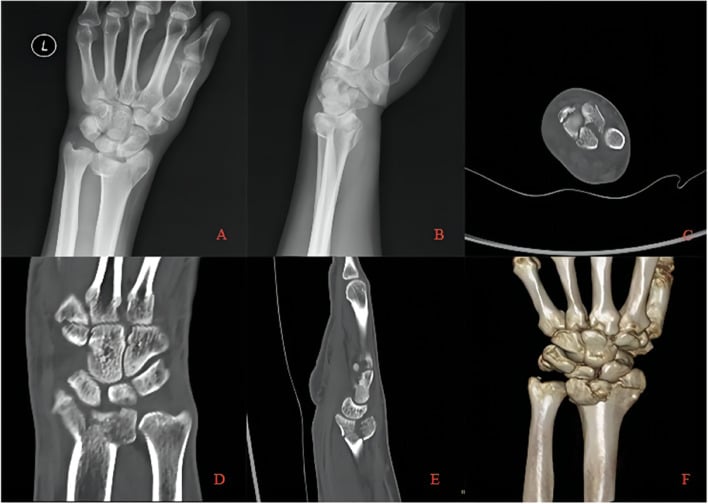
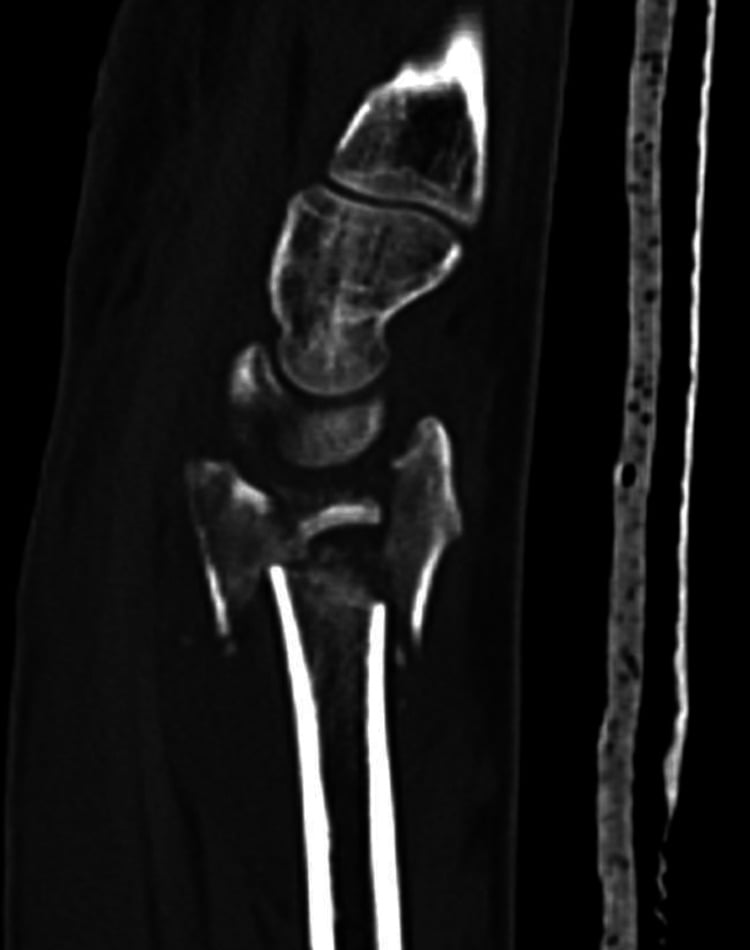
MRI. For suspected ligamentous injury, scapholunate assessment when arthroscopy is unavailable, and TFCC evaluation. It shows ligament disruption, the bone marrow oedema pattern and cartilage injury.
Arthroscopy. The gold standard for ligament assessment: it shows the articular surface reduction directly and evaluates the TFCC and intercarpal ligaments. It is also therapeutic, assisting reduction under vision, debriding loose bodies, and allowing ligament repair or pinning.
Arthroscopy is the reference standard for seeing the articular surface and the intrinsic ligaments, and in a die-punch it lets you confirm that an elevated fragment is genuinely flush rather than trusting fluoroscopy. That is a real advantage and worth stating. But the 2020 AAOS/ASSH guideline is explicit that arthroscopic assistance should be used sparingly and on a case-by-case basis, and the same guideline finds no difference in clinical or radiographic outcome between fixation techniques beyond three months. There is no evidence that routinely adding arthroscopy to fixation improves patient-reported outcome.
The defensible position, and the one to give in a viva: use it selectively - when the CT shows a central depression whose reduction you cannot verify fluoroscopically, when there is a suspected scapholunate or TFCC injury that would change management, or when a step persists on intraoperative imaging - and not as a default addition to every plating. Adding operative time and portals to a case has to be justified by a decision it changes.
- Role
- Initial screening
- Advantages
- Quick, available, low cost
- Limitations
- Underestimates depression
- Role
- Definitive assessment
- Advantages
- Quantifies step-off, shows comminution
- Limitations
- Radiation, cost
- Role
- Soft tissue evaluation
- Advantages
- Ligament and cartilage assessment
- Limitations
- Time, cost, less for bone detail
- Role
- Gold standard
- Advantages
- Direct visualisation, therapeutic
- Limitations
- Invasive, requires expertise
Management Algorithm
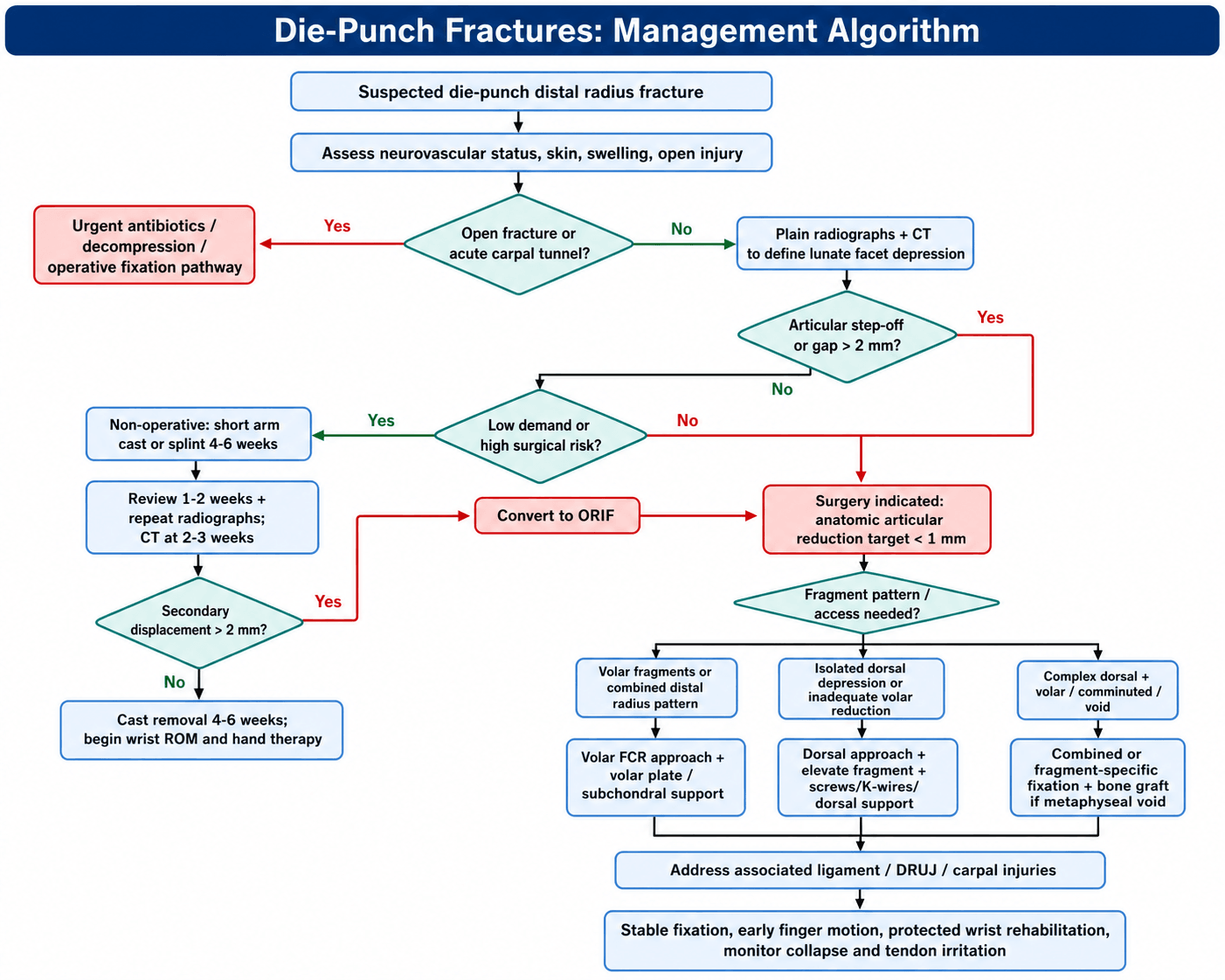
This is the single most important conceptual point of the whole topic, and it is frequently the examiner's "why" question. Closed reduction and external fixation work by ligamentotaxis: traction tightens the capsule and the volar and dorsal radiocarpal ligaments, which pull their attached peripheral rim fragments back into place. The central, impacted die-punch fragment has no capsular or ligamentous attachment. It has been punched down into the metaphyseal cancellous bone and is held there by impaction alone, so traction cannot elevate it; the depressed fragment sits at the bottom of the joint while the rim reduces around it, giving a deceptively acceptable traction radiograph that still has a central step.
The consequences flow directly from this:
- The die-punch must be openly (or arthroscopically) disimpacted and levered up to the level of the surrounding cartilage; it will not come up with traction
- Elevation leaves a metaphyseal void beneath the restored surface, so the fragment must be structurally supported - cancellous bone graft or substitute plus subchondral fixation (a raft of subchondral screws or a buttress plate) to stop it dropping back down
- External fixation or a spanning construct alone is inadequate for a true central die-punch, because it relies on the very ligamentotaxis that does not reach this fragment
The decision. Depth of the step on CT, the pattern of the fracture around it, and what the patient needs from the wrist. The table is the short version; the tabs below give the detail.
- Displacement
- Under 2mm step-off
- Management
- Non-operative with close monitoring
- Key Consideration
- CT follow-up at 2 weeks to assess
- Displacement
- Over 2mm step-off
- Management
- ORIF - elevation and fixation
- Key Consideration
- May need bone graft for void
- Displacement
- Any displacement
- Management
- Fragment-specific fixation
- Key Consideration
- Address both components
- Displacement
- Significant depression
- Management
- Complex reconstruction
- Key Consideration
- Consider external fixation plus ORIF
- Displacement
- Variable
- Management
- Address ligament after bony fixation
- Key Consideration
- Assess with arthroscopy if uncertain
Who. A patient whose CT shows an articular step-off under 2mm with minimal displacement of the fragments, a patient with low functional demand, or one whose medical comorbidities preclude surgery.
The protocol. A short arm cast or splint with the wrist in neutral for 4-6 weeks. The follow-up is the treatment, because a depressed articular fragment readily re-collapses:
- Week 1-2 - clinical review and repeat radiographs
- Week 2-3 - CT to look for secondary displacement
- Week 4-6 - cast removal and range of motion exercises
When to change plan. Increasing step-off on follow-up imaging, displacement developing beyond 2mm, or persistent malposition despite casting are the red flags for secondary surgery.
What to expect. Results are good if the step-off is maintained under 2mm, with 85% satisfactory outcomes in well-selected patients. Late collapse can still occur and may need delayed intervention, so monitoring does not stop when the cast comes off.
Surgical Technique
Set-up. Supine with an arm table, tourniquet on the upper arm at 250-300 mmHg, and a traction tower if it will help.
Incision. A dorsal longitudinal incision over Lister's tubercle, approximately 5-6 cm centred on the wrist and extended proximally as needed for fragment access. Then:
- Incise the extensor retinaculum between the third and fourth compartments
- Identify and protect the EPL tendon
- Retract EDC ulnarly and EPL radially
- Elevate the capsule as an L-shaped flap, ligament-sparing if possible
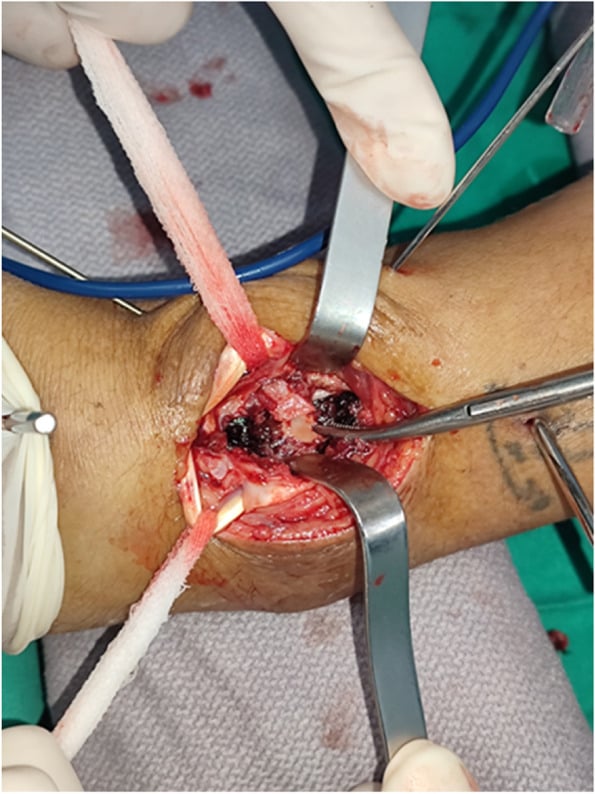
Reduction. The dorsal approach gives a direct view of the lunate facet articular surface: assess the depth of the depression and the fragment size, and look for loose osteochondral fragments. Then elevate:
- Use a small periosteal elevator or dental pick
- Lever the fragment through a metaphyseal window if needed
- Reduce it to the level of the adjacent cartilage
- Confirm the reduction with direct vision and fluoroscopy
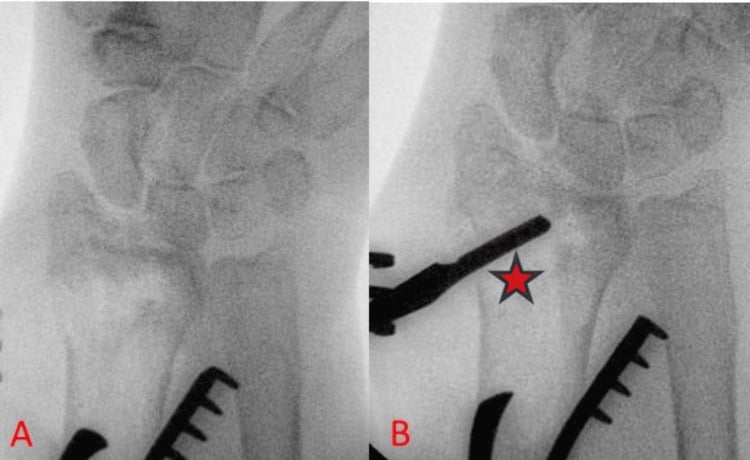
Bone graft. Elevation leaves a metaphyseal void, so assess it and pack cancellous graft, autograft (iliac crest or distal radius) or a synthetic substitute, immediately after elevation. The graft is the subchondral support that stops the elevated fragment collapsing.
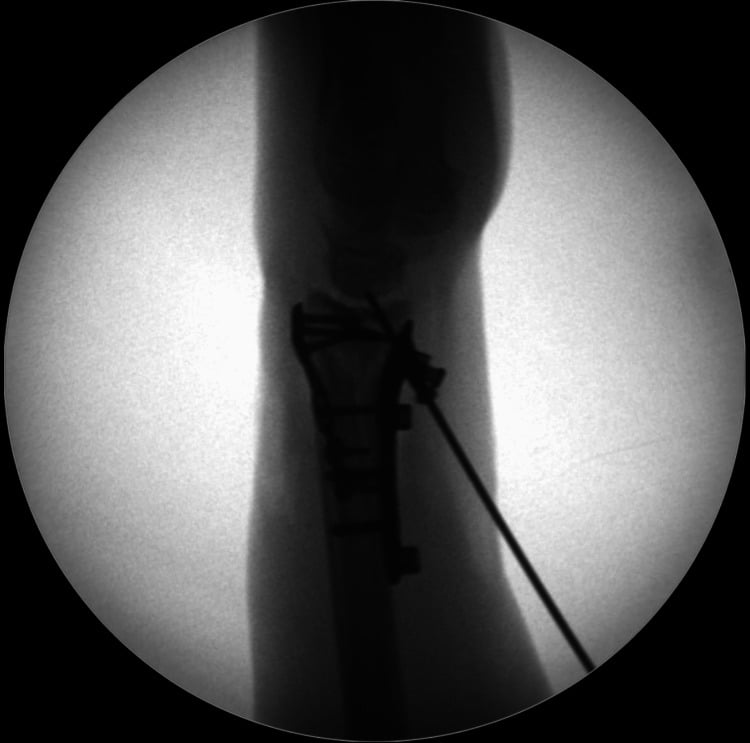
Fixation. K-wires of 1.1 or 1.25 mm capture the reduced fragment to the metaphysis; use two or three for rotational control. A low-profile dorsal plate with subchondral screws supports the articular fragment; consider locking screws for osteoporotic bone.
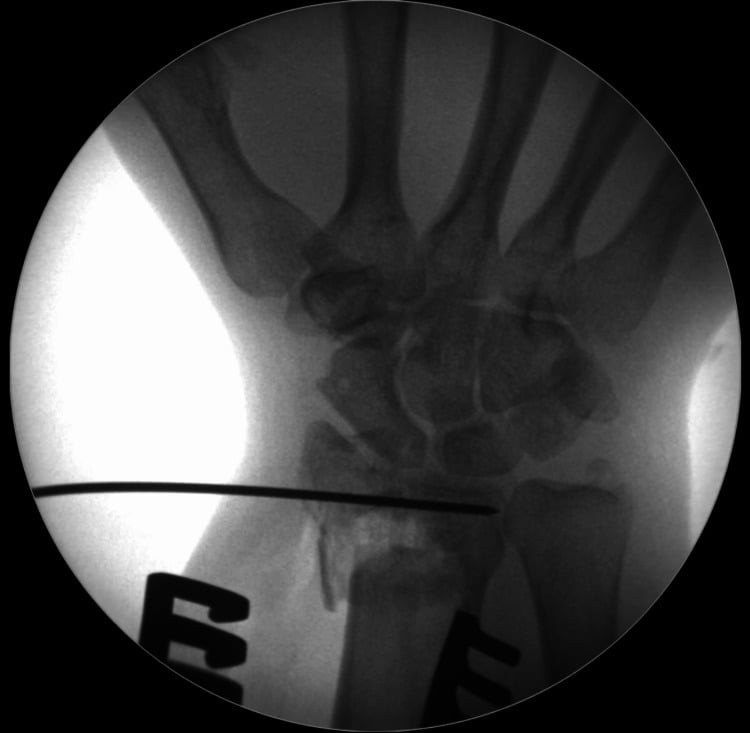
Closure. Repair the capsule, close the retinaculum loosely to allow tendon glide, standard skin closure, and a splint in neutral.
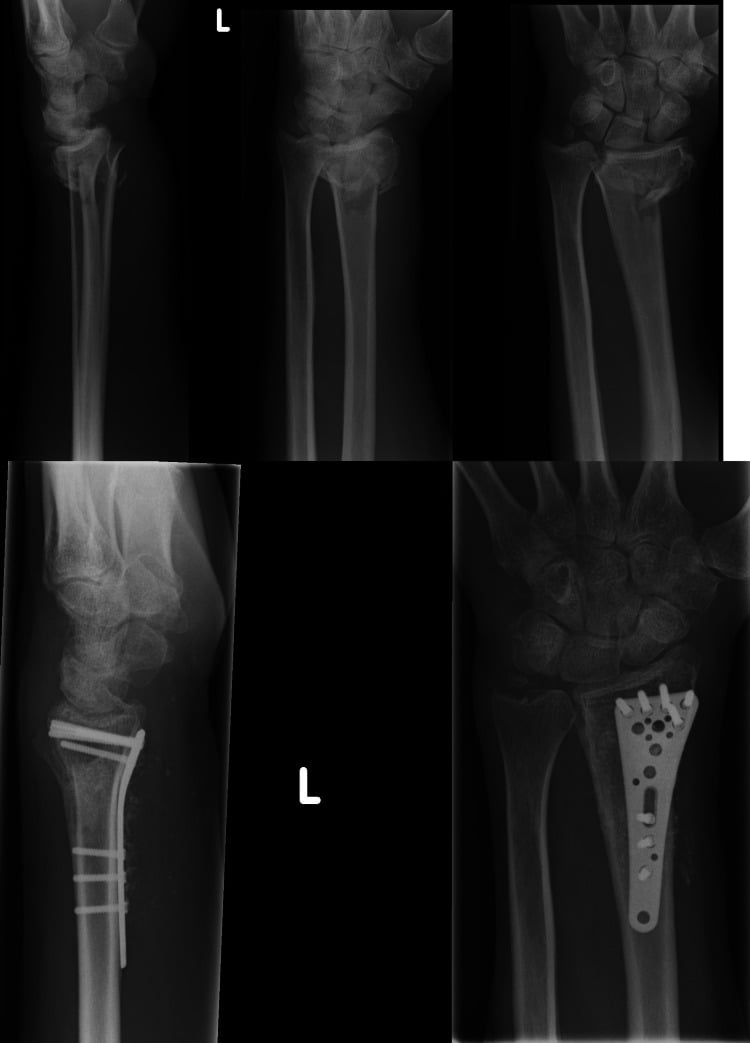
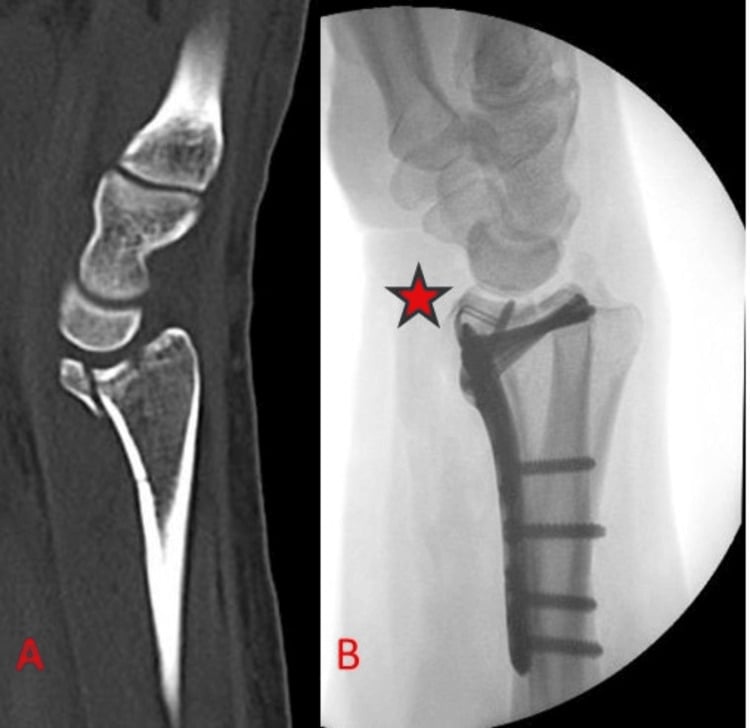
Combined fixation. Uncommon, but appropriate when a dorsal fragment cannot be reduced or supported from the volar side, and the volar approach is often combined with other techniques when the die-punch is part of a larger fracture pattern.
Complications
On the table. Three things go wrong intraoperatively. Iatrogenic fracture during fragment elevation is avoided by gentle technique and the right instruments, and managed with additional fixation if it happens. Screw penetration of the joint causes arthritis, so measure carefully and check on fluoroscopy; a penetrating screw is removed and replaced with a shorter one. In the dorsal approach the EPL is the tendon most at risk; retract carefully, protect it with vessel loops, and repair primarily if it is injured.
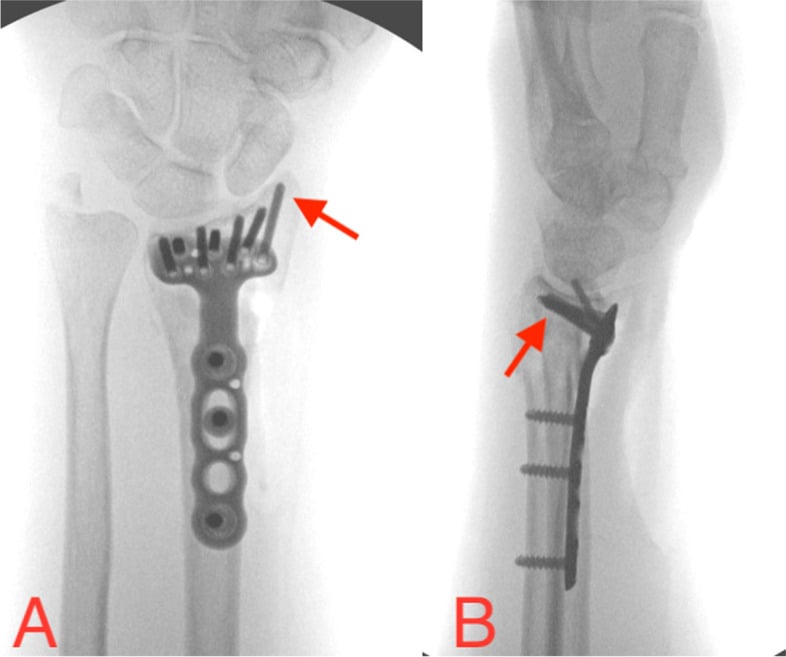
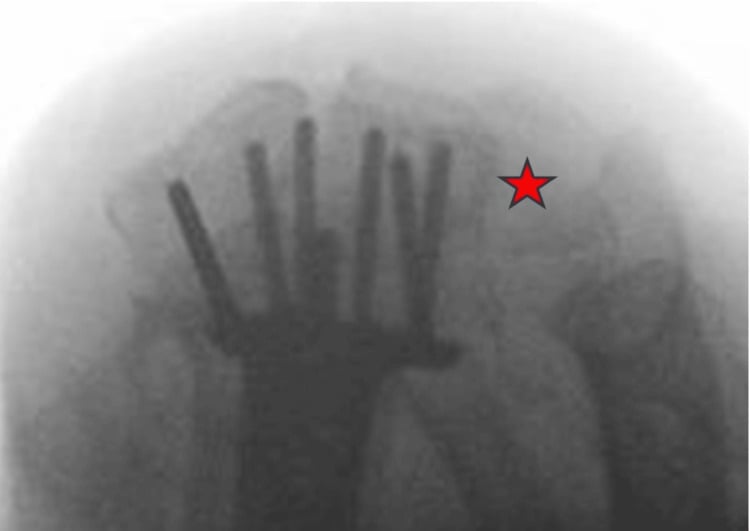
Early. Infection runs at 1-3% and is treated with intravenous antibiotics, with debridement if deep; dehiscence is more common dorsally and is managed with local wound care; a significant haematoma is evacuated. Hardware problems declare themselves early: a K-wire that is backing out is removed, screws loosen more often in osteoporotic bone, and loss of reduction may need revision surgery. Nerve problems are the median nerve (carpal tunnel syndrome, decompressed if needed), the superficial radial nerve (paraesthesiae, which usually resolve) and the posterior interosseous nerve (motor weakness, observed).
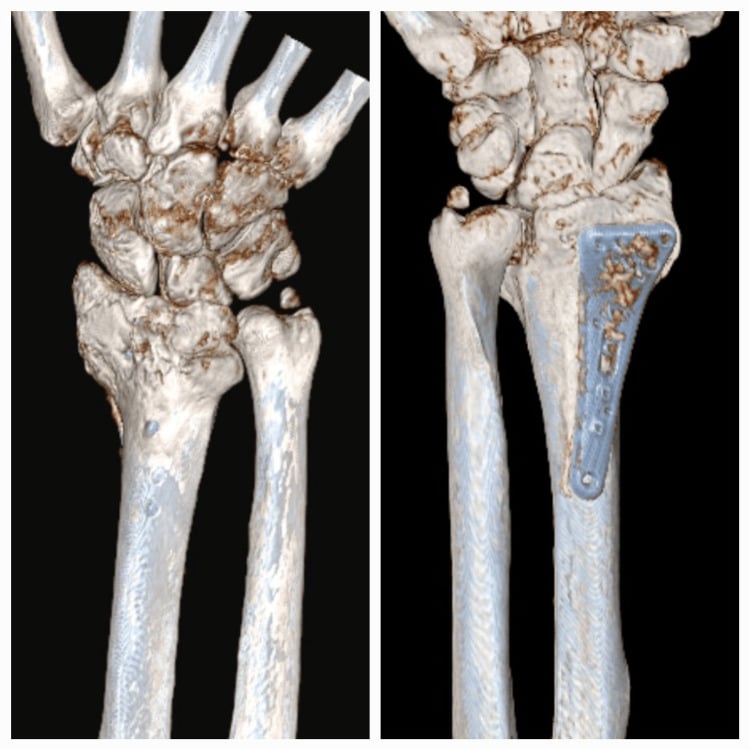
Late. Post-traumatic arthritis is the most significant long-term complication, related to a residual step-off greater than 2mm, and may end in a salvage procedure (fusion or arthroplasty). Articular malunion causes the arthritis; an extra-articular component may limit function, and a corrective osteotomy is considered if it is symptomatic. Dorsal plates often require removal, prominent hardware causes extensor tenosynovitis, and a second operation should be planned for. CRPS follows 5-10% of distal radius fractures, and needs early recognition, treatment and a multidisciplinary approach.
- Prevention
- Anatomic reduction, CT confirmation
- Management
- Consider revision if over 2mm
- Prevention
- Careful measurement, fluoroscopy
- Management
- Remove and replace screw
- Prevention
- Sterile technique, prophylactic antibiotics
- Management
- Antibiotics, debridement
- Prevention
- Low-profile implants, proper placement
- Management
- Hardware removal once healed
- Prevention
- Early mobilisation, pain management
- Management
- Multidisciplinary team
Postoperative Care
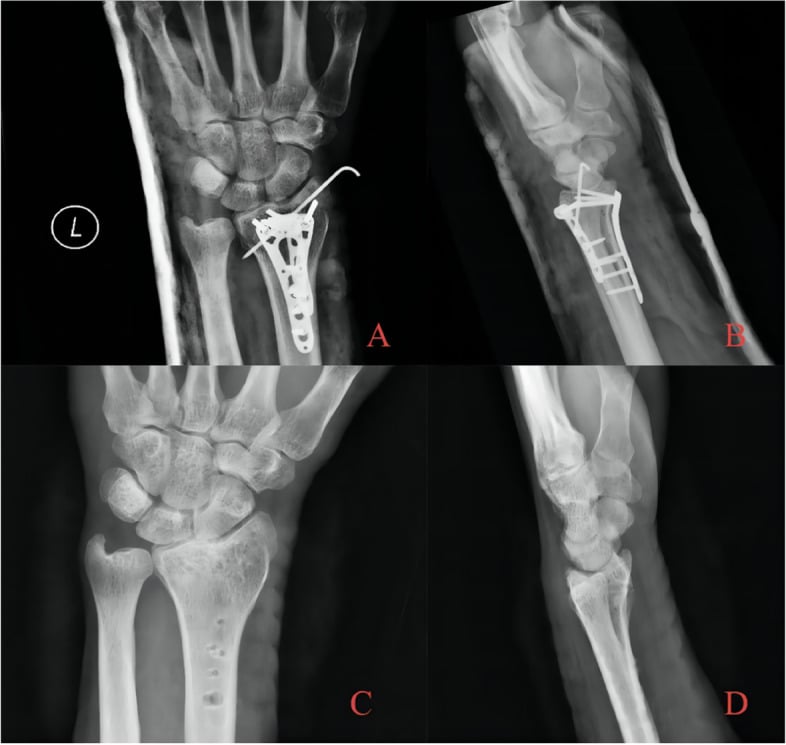
The first two weeks. A volar resting splint with the wrist in neutral, including the forearm, and the fingers moving from day one. The hand stays above heart level when resting, on pillows or in a sling when sitting, which matters most in the first 72 hours; multimodal analgesia and ice control pain and swelling. Neurovascular checks run every 4 hours initially, watching for compartment syndrome and the early signs of infection. Radiographs, AP and lateral, are taken before discharge to confirm the reduction and implant position.
The wound. The first dressing change is at 48-72 hours by the surgeon, with attention to any K-wire sites. Sutures or staples come out at 10-14 days, earlier if the wound is well healed, with steri-strips for support.
- Active finger motion - full fist and extension
- Shoulder and elbow range of motion
- Oedema control
- Transition to a removable splint or cast, worn between exercises
- Begin gentle active wrist flexion and extension at week 2
- Start forearm rotation at week 4
- Continue oedema management
- Radiographs at week 6, with CT if there are concerns about the reduction; discontinue the splint if healed and remove K-wires
- Progressive range of motion, light grip strengthening, occupational therapy referral if needed
- Progress to functional activities and normal daily living
- Progressive strengthening
- Sport-specific activities and work hardening if needed
- Full recovery may take 6 months
Follow-up. Rehabilitation is tailored to the fracture pattern, the stability of the fixation and the patient, but the review schedule is standard:
- Assessment
- Wound check, suture removal
- Imaging
- Optional
- Assessment
- ROM assessment
- Imaging
- Radiographs
- Assessment
- Healing assessment, K-wire removal
- Imaging
- Radiographs
- Assessment
- Functional outcome
- Imaging
- Optional CT if concerns
- Assessment
- Final outcome
- Imaging
- As needed
- Assessment
- Long-term surveillance
- Imaging
- If symptomatic
Outcomes and Prognosis
What recovers. Wrist flexion reaches 80-90% of the contralateral side by 6 months and extension 85-95%; forearm rotation usually recovers fully; grip strength reaches 80% of the contralateral side by 12 months. DASH scores typically return to near-normal by 12 months, and 80-90% of well-treated patients return to their previous level of activity. Satisfaction correlates with the quality of the articular reduction.
What predicts it. The quality of the articular reduction is the key predictor, and the rest of the list is the patient and the injury:
- Favourable - step-off under 1mm achieved at surgery, younger patient, isolated injury, compliance with rehabilitation, good bone quality
- Unfavourable - residual step-off greater than 2mm, significant comminution, associated ligamentous injury, osteoporotic bone, high-energy mechanism with soft tissue injury
Arthritis. The risk is directly related to the residual articular incongruity, and so is how soon it arrives:
- Arthritis Risk
- 10-15%
- Timeline
- 10+ years
- Arthritis Risk
- 30-40%
- Timeline
- 5-10 years
- Arthritis Risk
- 70-90%
- Timeline
- 2-5 years
Salvage. The options once arthritis is established:
- Wrist arthroscopy - debridement for early arthritis
- Partial wrist fusion - four-corner fusion preserving some motion
- Total wrist fusion - reliable pain relief at the cost of motion
- Proximal row carpectomy - motion-preserving salvage
- Total wrist arthroplasty - selected patients
Return to work and sport. Sedentary work at 2-4 weeks and light manual work or light duties at 6-8 weeks; full duties at 12 weeks, with heavy manual work at 12-16 weeks. Non-contact sport at 8-12 weeks, contact sport at 4-6 months with a protective splint initially, and high-impact activities at 6 months or more.
Guidelines, Registries & Global Practice
Global Epidemiology
Distal radius fractures are among the most common fractures worldwide, with a bimodal distribution affecting children and the elderly while remaining significant in young adults. Reported population data over recent decades show an overall rising prevalence in both paediatric and elderly groups (Nellans, Kowalski and Chung, Hand Clin 2012, PMID 22554654). Die-punch (lunate-facet depression) patterns cluster in the high-energy, axial-load young-adult subgroup and within complete intra-articular (AO 23-C) fractures. Knirk and Jupiter studied 43 such intra-articular fractures in 40 young adults (mean age 27.6 years) and reported radiographic post-traumatic arthritis in 65% overall (PMID 3722221).
Major Guidelines, Side by Side
The single highest-quality message across guidelines is that for operatively treated distal radius fractures, fixation technique should follow the fracture pattern rather than any one implant, because randomised evidence shows no clinical or radiographic difference between techniques beyond 3 months.
- Key recommendation relevant to die-punch
- Fixation technique should be driven by fracture pattern (no difference between techniques after 3 months); age ~65 as a proxy for functional demand in the operative-vs-nonoperative decision
- Evidence level
- Strong / moderate
- Key recommendation relevant to die-punch
- CT for intra-articular fractures where it will change management; surgery for unacceptable displacement; early specialist input and hand therapy
- Evidence level
- Consensus / moderate
- Key recommendation relevant to die-punch
- Three-column / column-and-fragment concept; anatomic articular reduction with subchondral support; CT for articular planning
- Evidence level
- Expert consensus
- Key recommendation relevant to die-punch
- Restore articular congruity (target step-off under 2mm) and stable fixation enabling early motion; individualise by pattern and demand
- Evidence level
- Consensus
Registry & Outcome Evidence
There is no dedicated international registry for die-punch fractures specifically; high-level outcome data derive from intra-articular distal radius fracture cohorts and randomised trials feeding the guidelines above. The enduring registry-equivalent evidence remains the dose-response relationship between residual articular incongruity and arthritis first quantified by Knirk and Jupiter (91% arthritis with incongruity vs 11% with a congruous joint, PMID 3722221), reinforced by imaging studies showing CT changes the operative plan (Harness et al., JBJS Am 2006, PMID 16757766).
Practice Variation
- Imaging access: CT with sagittal/coronal and 3D reconstruction is routine in high-resource centres for any suspected articular involvement; in limited-resource settings reliance on plain films persists and risks underestimating depression.
- Implant availability: fragment-specific systems, low-profile dorsal plates and volar locking plates are widely available in high-income settings; elsewhere a single volar locking plate or K-wire constructs predominate, which may inadequately support an isolated dorsal die-punch.
- Rehabilitation: hand-therapy-led early mobilisation is standard where services exist; regional and rural patients may depend on telehealth or staged review.
- Surgical threshold: the under-2mm articular step-off threshold is near-universally cited, but the operative-versus-nonoperative decision is increasingly individualised by patient age and functional demand rather than radiographic parameters alone, consistent with the AAOS/ASSH 2020 CPG.
Viva Scenarios
Clinical Decision Scenarios
Practise clinical reasoning and management decisions out loud
“A 35-year-old man presents after falling 3 meters from a ladder onto an outstretched hand. Plain radiographs show a distal radius fracture with subtle articular involvement. How do you evaluate this injury?”
“CT confirms a Type II Sander-Medoff die-punch fracture with 4mm articular depression and a sagittal split component. How do you plan your surgical approach?”
“Six months after ORIF of a die-punch fracture, your patient complains of progressive wrist pain and stiffness. Radiographs show early degenerative changes at the radiocarpal joint. How do you manage this?”
MCQ Practice Points
Q: What is the most important imaging modality for assessing die-punch fractures? A: CT scanning with sagittal reconstructions is mandatory. Plain radiographs underestimate articular depression by 2-3mm on average and frequently miss die-punch components entirely.
Q: What articular step-off threshold is associated with post-traumatic arthritis, and how good is the evidence for it?
A: The working answer is greater than 2 mm, and it is the number to quote - but quote it knowing where it came from. Knirk and Jupiter did not compare "over 2 mm" with "under 1 mm". They compared the 24 fractures that healed with any residual radiocarpal incongruity (arthritis in 91%) against the 19 that healed with a congruous joint (arthritis in 11%). The 2 mm figure is a later convention that hardened around that paper rather than a threshold the paper tested.
Three limitations belong with it. The series was 43 fractures in 40 young adults, mean age 27.6, and only 3 underwent open reduction and internal fixation - 21 were treated in a cast alone, 17 with pins and a cast, and 2 with external fixation - so it describes the natural history of malreduction rather than a comparison of modern fixation techniques. The endpoint was radiographic arthritis at a mean 6.7 years, and radiographic change after distal radius fracture correlates poorly with pain and function, particularly in older patients. And the same paper found that restoring dorsal tilt and radial length was not critical except with severe shortening - so it is specifically articular congruity, not overall radiographic cosmesis, that the study supports.
The way to use it: in a young patient with a high-demand wrist, an articular step of more than 2 mm is a sound operative indication and the number examiners expect. In a low-demand older patient, the 2020 AAOS/ASSH guidance is explicit that radiographic parameters are a weaker driver than function and age, and a radiographic step does not by itself mandate surgery.
Q: Which articular surface is affected in a die-punch fracture? A: The lunate facet of the distal radius. The lunate acts as the punch driving into the softer cancellous bone of the radial die during axial loading.
Q: What surgical approach best allows direct visualization of a dorsal die-punch fragment? A: The dorsal approach through the third and fourth extensor compartments. This provides direct visualization of the lunate facet, whereas volar approaches rely on fluoroscopic guidance for dorsal fragments.
Q: Why is bone grafting often required after die-punch fragment elevation? A: Elevation of the depressed fragment creates a metaphyseal void. Without bone graft or substitute to fill this void, the elevated fragment lacks subchondral support and may undergo secondary collapse.
Q: What percentage of wrist axial load is transmitted through the lunate facet? A: Approximately 60% of axial load crosses the wrist through the lunate facet. This high load-bearing function explains why articular incongruity leads to rapid degenerative changes.
Understanding these key concepts will help with exam success.
Definition & Mechanism
- Depression of lunate facet of distal radius
- Axial load mechanism - lunate punches into radius
- High-energy injury pattern
- Part of complex distal radius fracture spectrum
- Lunate facet carries 60% of wrist axial load
Imaging Pearls
- CT mandatory - radiographs underestimate by 2-3mm
- Sagittal reconstructions essential for step-off measurement
- Look for double cortical sign on plain films
- Assess for associated SL injury on CT
Treatment Algorithm
- Under 2mm step-off: consider non-operative
- Over 2mm step-off: ORIF indicated
- Dorsal approach for direct visualization
- Bone graft metaphyseal void after elevation
Classification (Sander-Medoff)
- Type I: Simple depression
- Type II: Depression with split
- Type III: Comminuted with extension
- Guides approach and fixation strategy
Surgical Pearls
- Direct visualization superior to fluoroscopy alone
- Subchondral screw support for fragment
- Fill metaphyseal void to prevent collapse
- Fragment-specific fixation for complex patterns
- Assess DRUJ and carpal ligaments
Complications & Outcomes
- Arthritis risk correlates with step-off
- Over 2mm: 70-90% arthritis at 5 years
- Under 1mm: 10-15% arthritis at 10 years
- CRPS 5-10% of distal radius fractures
Evidence Base
Knirk JL, Jupiter JB. Intra-articular fractures of the distal end of the radius in young adults
- Retrospective series of 43 fractures in 40 young adults (mean age 27.6 years)
- Arthritis developed in 91% of joints that healed with residual radiocarpal incongruity versus 11% of congruous joints
- Accurate articular restoration was the single most critical determinant of outcome
- The depressed die-punch fragment was responsible for residual incongruity in 75% of incongruous joints and was anatomically reduced by closed means in only 49%
Melone CP. Articular fractures of the distal radius
- Defined the four-part articular fracture and the displacement of the medial complex
- Melone Type II describes the classic unstable die-punch pattern
- Subdivided into reducible (IIA) and irreducible rotated (IIB) medial complex
- Emphasised that precise reduction of the key medial fragments is essential
Medoff RJ. Essential radiographic evaluation for distal radius fractures
- Superficial assessment of standard PA and lateral films frequently misses the injury pattern and residual articular incongruity
- Defined teardrop angle, AP distance and articular separation as key radiographic parameters of the lunate facet
- Recognition of these landmarks is required to detect subtle articular disruption before accepting a reduction
- Accurate identification of the injury pattern has become essential as anatomic restoration techniques have advanced
Harness NG, Ring D, Zurakowski D, Harris GJ, Jupiter JB. The influence of three-dimensional CT reconstructions on the characterization and treatment of distal radial fractures
- Four observers evaluated 30 intra-articular distal radius fractures
- Adding 3D CT to 2D CT improved both intra- and inter-observer agreement on articular comminution and fragment number
- Sensitivity and accuracy of identifying fracture characteristics (versus intra-operative findings) improved with 3D imaging
- 3D CT significantly increased decisions for an open approach (p less than 0.05) and combined dorsal-and-volar exposure (p less than 0.001)
The evidence supports anatomic reduction with stable fixation and bone grafting as needed, with imaging and implant selection driven by the articular fracture pattern.