Multimodal Approach | Evidence-Based Optimization | Reduced LOS and Complications
- ERAS is multimodal - no single intervention, combination of evidence-based elements
- Patient education is critical - informed patients are more compliant
- Multimodal analgesia reduces opioid use by 40-60% (paracetamol, NSAIDs, local infiltration)
- Early mobilization (day of surgery) reduces complications and LOS
- Goal-directed fluid therapy avoids overload and hypovolemia
- Carbohydrate loading 2h preop reduces insulin resistance and catabolism
- “ERAS protocols reduce LOS by 1-3 days in TKA/THA
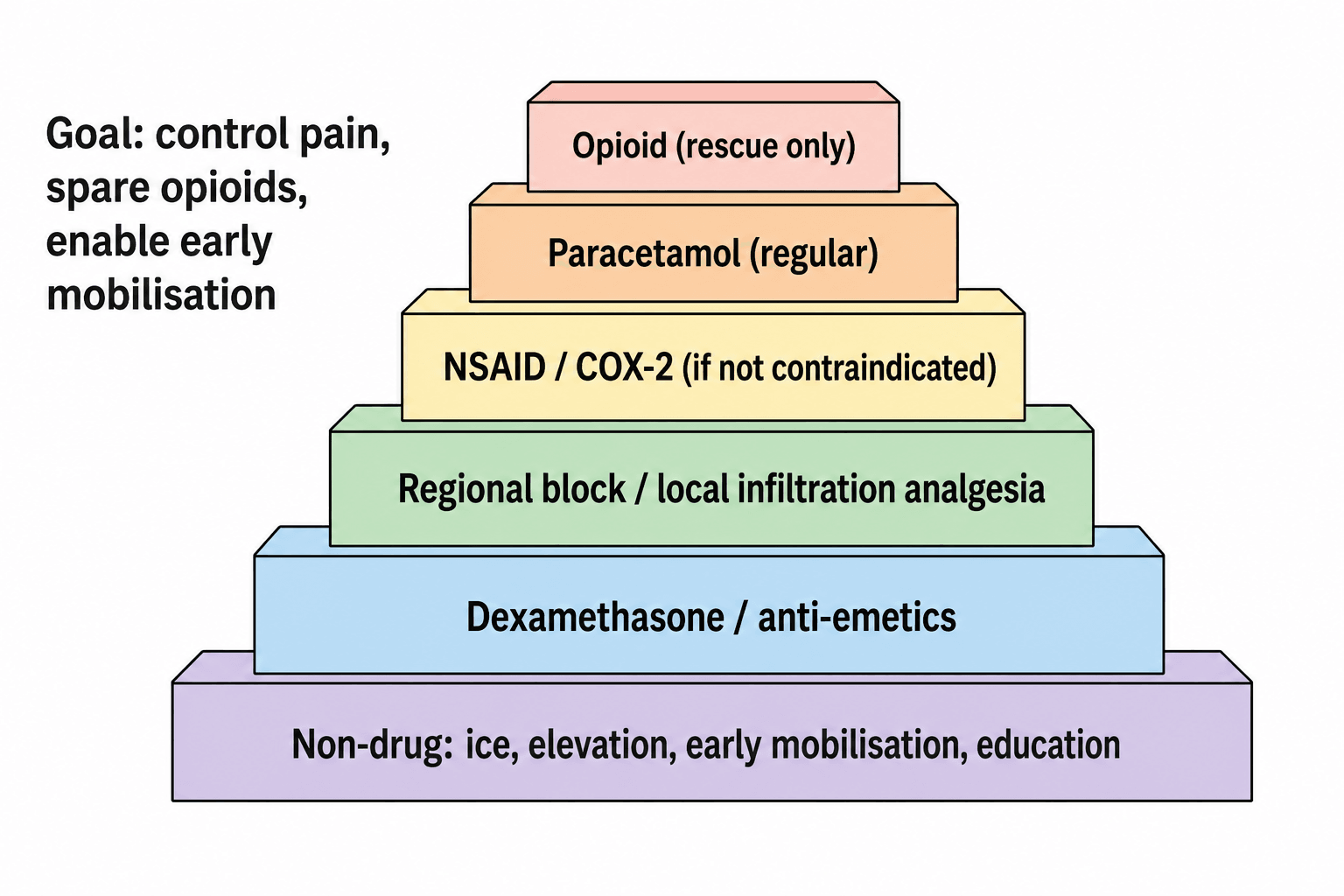
- “Multimodal analgesia cornerstone: paracetamol + NSAID + local infiltration + opioid-sparing
- “Tranexamic acid reduces blood loss by 30-50% in arthroplasty
- “Prehabilitation improves outcomes in frail/elderly patients
Overview and Epidemiology
Enhanced Recovery After Surgery (ERAS) is a multimodal, evidence-based perioperative care pathway designed to reduce surgical stress, accelerate recovery and minimise complications. Henrik Kehlet built it for colorectal surgery in the 1990s and called it fast-track surgery, and it has been adapted to orthopaedic surgery, particularly total joint arthroplasty.
How it reached orthopaedics.
- 1990s - Kehlet develops fast-track surgery in colorectal practice
- 2000s - the principles are adapted to THA and TKA in Scandinavia (Husted, Kehlet)
- 2010s - the ERAS Society publishes guidelines for a range of specialties
- 2016 - ERAS guidelines for THA and TKA are published
- 2020s - widespread adoption, and integration with value-based care
The guidelines. The international ERAS Society has published evidence-based guidance for total hip arthroplasty (2016), total knee arthroplasty (2016), spine surgery (2019) and hip fracture surgery (2019). Each contains 15-24 elements, with every recommendation graded by level of evidence.
What the bundle buys. Length of stay falls by 1-3 days, with discharge typically at 24-48 hours, and medical and surgical complications by 30-50%. Readmissions do not increase, some studies show a reduction, and patient satisfaction scores improve.
The philosophy in one line. Every element is supported by research, no single element is sufficient, delivery depends on coordination across disciplines, and patient education and engagement are treated as critical.
Why ERAS works - the surgical stress response
Each element of the bundle blunts the surgical stress response, the neuroendocrine and inflammatory reaction to tissue injury that drives catabolism and complications. This mechanism is the examiner's favourite "why".
The neuroendocrine limb. Afferent nociceptive and inflammatory signals activate the hypothalamic-pituitary-adrenal axis, raising ACTH and cortisol, and the sympathoadrenal system, releasing catecholamines, with ADH and the renin-angiotensin-aldosterone system alongside. The output is hyperglycaemia and insulin resistance, protein catabolism with negative nitrogen balance and muscle loss, and sodium and water retention.
The inflammatory limb. Tissue trauma releases cytokines, of which IL-6 is the principal driver and correlates with the magnitude of injury, with IL-1 and TNF-alpha. These produce the acute-phase response with its CRP rise, fever, and a degree of immunosuppression that raises infection risk.
Ebb and flow. A brief early hypometabolic "ebb" phase is followed by a catabolic "flow" phase proportional to the magnitude of surgery.
How the bundle attenuates it. Regional or neuraxial anaesthesia and multimodal analgesia block the afferent nociceptive limb, minimally invasive surgery reduces the tissue-injury stimulus, and preoperative carbohydrate loading with early enteral nutrition reduces insulin resistance and catabolism. Normothermia, euvolaemic goal-directed fluids and the avoidance of prolonged fasting and of opioids limit the rest of the derangement. The synergistic blunting of this response, rather than any single element, is why the bundle works.
ERAS targets the cortisol, catecholamine and IL-6 stress response, and the catabolism and insulin resistance it produces, each element addressing a limb of that response.
ERAS Principles and Core Elements
Implementing one or two elements - early mobilisation on its own, say - will not achieve full ERAS benefits. Compliance with the complete bundle is essential.
Grouped by phase. Preoperative elements optimise the patient's condition and set expectations, intraoperative elements minimise the stress response and physiological derangement, and postoperative elements accelerate the return to normal function so that discharge criteria are met.
Preoperative phase - days to weeks before surgery
- Intervention
- Written/verbal information, expectation setting
- Evidence Level
- High (Level I)
- Expected Benefit
- Reduced anxiety, improved compliance
- Intervention
- Exercise program 4-6 weeks preop
- Evidence Level
- Moderate (Level II)
- Expected Benefit
- Improved functional capacity
- Intervention
- Correct malnutrition, protein supplementation
- Evidence Level
- High (Level I)
- Expected Benefit
- Reduced wound complications
- Intervention
- IV iron if Hb under 130g/L (men) or 120g/L (women)
- Evidence Level
- High (Level I)
- Expected Benefit
- Reduced transfusion need
- Intervention
- Stop 4-6 weeks prior if possible
- Evidence Level
- High (Level I)
- Expected Benefit
- Reduced wound/respiratory complications
- Intervention
- Control diabetes, cardiac risk assessment
- Evidence Level
- High (Level I)
- Expected Benefit
- Reduced medical complications
- Intervention
- Avoid unless specific indication
- Evidence Level
- High (Level I)
- Expected Benefit
- Reduced dehydration/electrolyte disturbance
- Intervention
- Clear CHO drink 2h before surgery
- Evidence Level
- Moderate (Level II)
- Expected Benefit
- Reduced insulin resistance
Patient education. An informed patient is less anxious and more compliant. Cover, in writing and in conversation:
- What to expect on the day of surgery
- Realistic pain goals - VAS 3-4, not 0
- The mobilisation timeline, walking on day 0
- Expected length of stay, 24-48 hours for TKA or THA
- The discharge criteria they will have to meet
- Red flags for complications
- The follow-up plan
Delivery can be by booklet, video, group class or one-to-one counselling.
Prehabilitation. A 4-6 week programme of exercise before surgery: quadriceps, hip abductor and core strengthening, with walking or cycling for cardiovascular reserve, alongside the same education and protein supplementation where it is needed. Meta-analyses show modest improvements in functional outcomes, particularly in frail and elderly patients, with a larger effect size in those whose baseline function is poor.
Optimisation before the list. Malnutrition is corrected with protein supplementation, with an albumin target of 35 g/L, and anaemia with intravenous iron where haemoglobin is under 130 g/L in men or 120 g/L in women. Smoking and alcohol stop 4-6 weeks beforehand where that is possible, and diabetes and cardiac risk are addressed before the patient reaches theatre. Bowel preparation is avoided unless there is a specific indication, since it brings dehydration and electrolyte disturbance.
Carbohydrate loading means a clear carbohydrate solution - for example 400mL of a 12.5% drink - taken 2 hours before surgery. It shortens the fasting period, decreases insulin resistance and reduces postoperative catabolism, and is safe in non-diabetic patients. The evidence shows reduced hospital stay and improved patient comfort.
ERAS Application to Orthopaedic Procedures
ERAS for total knee and hip arthroplasty
Arthroplasty has the most mature ERAS protocols in orthopaedics, with Level I evidence behind multiple elements.
The ERAS Society published a multidisciplinary consensus statement for THR and TKR (Wainwright et al., Acta Orthop 2020, available online 2019) covering 17 topic areas of perioperative care. It frames best practice as an opioid-sparing multimodal analgesic approach combined with early mobilisation, optimised education, anaesthetic technique and transfusion strategy. Meta-analytic data (Zhu et al. 2017) show ERAS bundles significantly reduce length of stay and complication rates without increasing readmissions.
A knee hurts more than a hip. TKA is typically more painful than THA in the first 24-48 hours, which is why multimodal analgesia is essential rather than optional here: local infiltration analgesia with ropivacaine and ketorolac, an adductor canal block, paracetamol and a COX-2 inhibitor around the clock, and opioids for breakthrough alone.
Targets after TKA. Straight leg raise by 4 hours, walking with a walker by 6 hours, stairs by day 1, and discharge on day 1-2 if the criteria are met. Those criteria are walking 30m or more with a walker, managing stairs if there are stairs at home, pain controlled on oral analgesia with a VAS under 4, no wound or neurovascular complication, and adequate support at home.
THA is the easier pathway. A hip replacement is generally less painful than a knee, returns to mobilisation faster and carries a lower DVT risk. The patient stands and walks by 4 hours, mobilises independently with aids by the evening of surgery, and can go home on day 1 if the criteria are met.
Hip precautions. Traditional practice restricted flexion beyond 90 degrees, adduction past the midline and internal rotation for 6-12 weeks. An ERAS pathway applies no routine precautions where the implant is stable and the soft tissues have been adequately repaired, and randomised trials show no difference in dislocation rate with or without precautions in primary THA with modern techniques.
What the pooled data show. Meta-analyses and systematic reviews report length of stay a mean 1.5-2.5 days shorter (typically 1-2 days against 3-4 days traditionally), 30-40% fewer medical and 20-30% fewer surgical complications, no increase in readmission - some studies show a reduction - and significant per-patient cost savings from the shorter stay and the avoided complications.
What the registry can and cannot say. ERAS protocols are increasingly adopted by high-volume centres, with no adverse effect on revision rates or patient-reported outcomes in AOANJRR data. The registry does not capture length of stay, so the trend towards shorter stays comes from hospital data rather than from registry reporting.
The natural extension of a mature ERAS pathway is same-day-discharge (day-case/outpatient) hip and knee arthroplasty - increasingly performed and examinable.
- It is the same bundle: multimodal opioid-sparing analgesia, tranexamic acid, spinal anaesthesia with short-acting agents, no drain and no urinary catheter, and day-of-surgery mobilisation - but with discharge on the day of surgery rather than at 1-2 days.
- Patient selection is the safety-critical step: younger, motivated, ASA I-II patients without significant cardiac, pulmonary or obstructive-sleep-apnoea disease or poorly-controlled diabetes, a sensible BMI, low bleeding and VTE risk, and adequate home support with a responsible adult for the first 24 hours; validated tools such as the Outpatient Arthroplasty Risk Assessment (OARA) score aid selection.
- Safeguards: rigorous pre-operative education, a same-day discharge-criteria checklist (mobilising safely, pain controlled on oral analgesia, voiding, no concerning observations), a 24-hour telephone hotline with clear safety-netting, and audited readmission rates.
- Evidence: in well-selected patients, same-day discharge is safe, with readmission and complication rates comparable to inpatient pathways and high satisfaction - but it is not appropriate for the frail, comorbid or poorly-supported patient.
Exam point: day-case arthroplasty is ERAS plus stringent patient selection and safety-netting - the bundle is the same; the difference is who you choose and the support you wrap around same-day discharge.
ERAS Implementation and Challenges
ERAS cannot be implemented by surgeons alone. Success requires buy-in and coordination from anaesthesia, nursing, physiotherapy, pharmacy and hospital administration, and a dedicated ERAS coordinator - a nurse practitioner or clinical nurse specialist - is critical.
Steps to implementation
Assemble the team and find out where you are starting. The team needs a surgeon champion, an anaesthesia lead, a nursing manager, a physiotherapy lead, pharmacy, and hospital administration for resource allocation. Collect baseline length of stay, complication and readmission rates, patient satisfaction scores and cost per episode before anything changes.
Write the protocol. Work from the ERAS Society guidelines, adapt them to local resources and patient population, and turn the result into standardised order sets and documentation.
Train the team. Didactic sessions on the principles and the evidence, hands-on training in the techniques that are new to the unit such as local infiltration analgesia and nerve blocks, and nursing education on the early mobilisation protocol.
Build the patient-facing material. Written information booklets and video modules, with staff trained to deliver the same message consistently.
Start small but whole. Select one surgeon or one procedure type, elective TKA for instance, and implement all the elements rather than a subset, with close monitoring and data collection.
Improve in rapid cycles. Weekly team meetings to review the cases, identify the barriers, and adjust the protocol.
Scale up. Expand to all surgeons and procedure types and standardise across the institution.
Then audit, permanently. Monitor compliance with each element, track length of stay, complications and readmissions, benchmark against national and international data, and review the protocol annually.
Common barriers and solutions
- Impact
- Low compliance with protocol
- Solution
- Education, data sharing, involve stakeholders early
- Impact
- Insufficient PT, nursing staff
- Solution
- Business case to administration (cost savings), prioritize resource allocation
- Impact
- Inconsistent protocols
- Solution
- Surgeon champions, peer influence, data showing improved outcomes
- Impact
- Fear of early discharge complications
- Solution
- Clear discharge criteria, 24h hotline, readmission tracking
- Impact
- Different analgesic techniques
- Solution
- Standardized anesthesia protocol, dedicated ERAS anesthesiologists
- Impact
- Early mobilization labor-intensive
- Solution
- Dedicated ERAS nursing team, PT assistants, adjust nurse-patient ratios
Measuring success
Start with compliance. Record the percentage of patients who receive each element and aim for over 80% compliance with all of them; audit and feedback are essential to maintain it.
The outcomes worth tracking are length of stay as median and mean, medical and surgical complication rates, 30-day readmission, patient satisfaction scores and time to mobilisation, alongside the cost per episode of care and the savings that follow from the shorter stay and the avoided complications.
Differential Diagnosis: Failure to Progress on an ERAS Pathway
When a patient does not meet the discharge criteria on schedule, the clinical skill is to differentiate the cause, because each cause has a different fix. Do not simply attribute slow recovery to the patient; work through the differential.
- Distinguishing features
- High pain scores at rest/movement, declines physiotherapy, splinting
- Action
- Optimise multimodal analgesia; check LIA/block worked; short opioid rescue
- Distinguishing features
- Drowsy, nauseated, low respiratory rate, constipated, paradoxically still in pain
- Action
- Reduce opioids, switch to multimodal/regional, treat PONV
- Distinguishing features
- Dizziness/syncope on standing, falls hypovolaemic or over-diuresed
- Action
- Reassess fluid balance (GDFT), review antihypertensives, graded mobilisation
- Distinguishing features
- Nausea, vomiting, distension, not tolerating diet
- Action
- Prokinetics, multimodal antiemesis, minimise opioids, mobilise
- Distinguishing features
- Disproportionate pain, swelling, wound discharge, fever, neurovascular change
- Action
- Examine wound/limb, bloods/imaging - exclude haematoma, infection, VTE
- Distinguishing features
- Tachycardia/desaturation (PE, chest infection), confusion (delirium), reduced urine output (AKI)
- Action
- Targeted work-up and treatment; escalate to medical/orthogeriatric team
- Distinguishing features
- Clinically fit but no home support, stairs, or transport
- Action
- Early discharge planning, OT/social work, interim rehabilitation
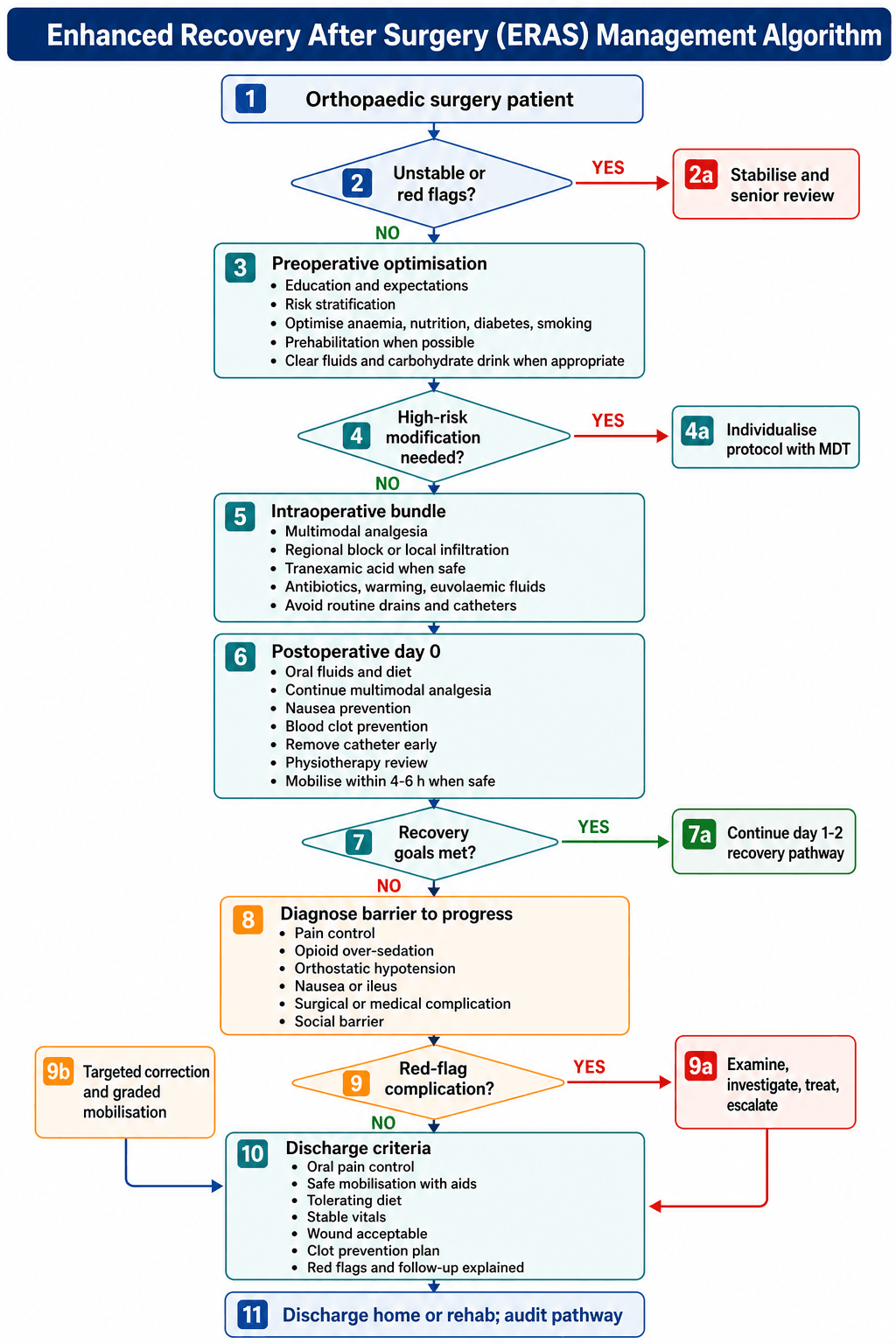
Management Algorithm
Guidelines, Registries & Global Practice
ERAS is a worldwide standard of perioperative care. The defining international reference is the ERAS Society consensus for THR/TKR (Wainwright et al., Acta Orthop 2020; PMID 31663402), supplemented by ERAS Society guidance for spine and hip-fracture surgery and by national society and registry data.
Global epidemiology and burden
- Hip and knee osteoarthritis is a leading global cause of disability, and arthroplasty volumes are rising worldwide with population ageing - making perioperative efficiency a global priority.
- ERAS bundles consistently reduce length of stay and complications across health systems without increasing readmissions (Zhu et al., Postgrad Med J 2017; PMID 28751437).
Major guidelines, side by side
- Key recommendation
- 17-topic perioperative bundle for THR/TKR: opioid-sparing multimodal analgesia + early mobilisation; no single surgical technique privileged
- Evidence basis
- Consensus of meta-analyses/RCTs (Wainwright 2020)
- Key recommendation
- Routine TXA (topical, IV or oral) in primary TJA to reduce blood loss and transfusion
- Evidence basis
- Strong - network meta-analysis (Fillingham 2018)
- Key recommendation
- Hip-fracture surgery on day of or day after admission (within 36h); orthogeriatric co-management; mobilise day 1
- Evidence basis
- National guideline (observational + RCT data)
- Key recommendation
- Multidisciplinary hip-fracture pathway, prompt surgery, early mobilisation, bone health and falls assessment
- Evidence basis
- National standards (registry-informed)
- Key recommendation
- Endorse multimodal ERAS pathways for elective arthroplasty; regional/LIA analgesia to enable early mobilisation
- Evidence basis
- Consensus / systematic reviews
Registry and audit evidence
- What it captures
- Implant survival and revision rates
- Relevance to ERAS
- ERAS pathways have not been shown to harm revision/survivorship; registries track implant - not LOS - so LOS/complication benefit comes from trials and audits, not registries
- What it captures
- Time to surgery, orthogeriatric input, mobilisation, mortality
- Relevance to ERAS
- Associates timely surgery and orthogeriatric co-management with lower mortality and stay (observational)
- What it captures
- Hip-fracture care standards and outcomes
- Relevance to ERAS
- Drives early surgery, multidisciplinary care and day-1 mobilisation
Joint registries (NJR, AJRR, AOANJRR) measure revision/survival, not length of stay or perioperative complications - so they cannot, on their own, prove ERAS reduces stay. The LOS and complication benefits come from RCTs and meta-analyses (Zhu 2017; Fillingham 2018). For hip fracture, registry data are observational; the HIP ATTACK RCT (Lancet 2020) showed ultra-early surgery does not reduce mortality, so the message is "avoid delay", not "operate fastest".
Global practice variation
- High-resource settings: full multidisciplinary ERAS bundles, day-case/short-stay arthroplasty, regional/LIA analgesia, DOAC or LMWH thromboprophylaxis.
- Limited-resource settings: core, low-cost, high-impact elements remain feasible - patient education, reduced fasting with carbohydrate loading, TXA (cheap and effective), spinal anaesthesia for hip fracture, and early mobilisation - even where cardiac-output monitoring or dedicated ERAS coordinators are unavailable.
- Thromboprophylaxis: choice (aspirin vs LMWH vs DOAC) and duration vary by regional guidance and risk profile; the principle (chemical plus mechanical prophylaxis with early mobilisation) is universal.
MCQ Practice Points
Q: What is the recommended fasting protocol for clear fluids before elective orthopaedic surgery under ERAS guidelines?
A: Clear fluids permitted until 2 hours before anaesthesia (carbohydrate loading drink encouraged 2-3 hours pre-op). Traditional overnight fasting (NPO from midnight) is no longer recommended. Light meal can be taken 6 hours before surgery. Carbohydrate loading reduces insulin resistance, postoperative nausea, and protein catabolism. Does not increase aspiration risk in ASA 1-2 patients.
Q: What are the key elements of an ERAS multimodal analgesia protocol for total knee arthroplasty?
A: Preoperative: paracetamol 1g + gabapentin 300mg + celecoxib 200mg (if no contraindication). Intraoperative: local infiltration analgesia (LIA) or adductor canal block. Postoperative: regular paracetamol + NSAID (short course) + low-dose opioid PRN. Goals: opioid-sparing (reduce by 50%), enable early mobilization, reduce nausea/constipation. Avoid femoral nerve block (delays mobilization due to quadriceps weakness).
Q: What is the evidence for early mobilization in ERAS protocols for hip fracture surgery?
A: Day 1 mobilization (within 24 hours of surgery) reduces: mortality, pneumonia, pressure injuries, VTE, delirium, and length of stay. The UK Blue Book and the ANZHFR (Australian and New Zealand Hip Fracture Registry) recommend mobilization on day 1 post-operatively. Key enablers: adequate analgesia, avoidance of indwelling urinary catheters, physiotherapy assessment, and appropriate weight-bearing instructions.
Q: How does ERAS protocol implementation affect length of stay following primary TKA?
A: Reduces average length of stay by 1.5-2 days (from 3-4 days to 1-2 days) without increasing complications or readmissions. Key ERAS components for TKA: preoperative education, carbohydrate loading, multimodal analgesia, no drains, no urinary catheter, early mobilization (day 0 if afternoon surgery), standardized discharge criteria. Same-day discharge TKA is feasible in selected patients.
Q: What are the standardized discharge criteria in an ERAS protocol for total joint arthroplasty?
A: Functional criteria (not time-based): (1) Pain controlled on oral medications (VAS under 4), (2) Independent mobilization with appropriate aid, (3) Manage stairs if required at home, (4) Independent toileting, (5) Wound satisfactory (no excessive drainage), (6) VTE prophylaxis organized, (7) Patient/family comfortable with discharge, (8) Follow-up arranged. Do NOT base discharge on arbitrary number of nights.
ERAS Exam Viva Scenarios
Practise clinical reasoning and management decisions out loud
“You are a consultant orthopaedic surgeon planning to implement an ERAS protocol for total knee arthroplasty in your hospital. What are the key elements you would include, and how would you approach implementation?”
“A 68-year-old woman is undergoing total knee arthroplasty. Describe your multimodal analgesia protocol and the evidence supporting each component.”
“An 82-year-old woman with multiple comorbidities (AF on warfarin, COPD, hypertension) presents with an intracapsular hip fracture. Discuss your perioperative management incorporating ERAS principles.”
Definition and Principles
- ERAS = Enhanced Recovery After Surgery - multimodal, evidence-based perioperative pathway
- Goal: Reduce surgical stress, accelerate recovery, minimize complications
- Core principle: Synergistic effect of multiple interventions (not single intervention)
- Requires multidisciplinary team (surgery, anesthesia, nursing, PT, pharmacy)
- Originally developed for colorectal surgery (Henrik Kehlet 1990s), adapted to orthopaedics 2000s
Key Outcomes
- LOS: Reduced by 1-3 days in TKA/THA (typical 24-48h vs 3-5 days traditional)
- Complications: 30-50% reduction in medical/surgical complications
- Opioid use: 40-60% reduction with multimodal analgesia
- Readmissions: No increase (some studies show reduction)
- Patient satisfaction: Improved
Preoperative Elements
- Patient education (written/verbal, expectation management) - HIGH
- Prehabilitation (4-6 weeks exercise, nutrition) - MODERATE
- Carbohydrate loading (400mL CHO drink 2h preop) - MODERATE
- Anemia correction (IV iron if Hb under 120-130g/L) - HIGH
- Smoking cessation (4-6 weeks prior) - HIGH
- No bowel prep (avoid unless specific indication) - HIGH
Intraoperative Elements
- Multimodal analgesia (paracetamol + NSAID + LIA + nerve block) - HIGH (CRITICAL)
- Tranexamic acid (1-2g IV, reduces blood loss 30-50%) - HIGH
- Goal-directed fluid therapy (euvolemia, avoid overload) - MODERATE
- Normothermia (forced-air warming, warmed fluids) - HIGH
- No routine drains (delays mobilization) - MODERATE
- Antibiotic prophylaxis (within 60min of incision) - HIGH
Postoperative Elements
- Early mobilization (day 0, walking 4h post-op) - HIGH (CRITICAL)
- Early oral nutrition (resume diet day 0) - HIGH
- Multimodal analgesia (continue paracetamol + NSAID, minimize opioids) - HIGH
- DVT prophylaxis (LMWH or DOACs, 10-14d TKA, 28-35d THA) - HIGH
- Avoid urinary catheter (remove day 0-1) - MODERATE
- Multimodal PONV prevention (dexamethasone + ondansetron) - HIGH
Multimodal Analgesia Protocol (TKA/THA)
- Baseline: Paracetamol 1g QID + Celecoxib 200mg BD (or parecoxib IV)
- LIA: Ropivacaine 200mg + ketorolac 30mg + epinephrine infiltrated by surgeon
- Nerve block: Adductor canal block for TKA (preserves quadriceps vs femoral block)
- Adjuncts: Gabapentin 300-600mg single dose preop, dexamethasone 8mg IV
- Opioids: Rescue only (oxycodone IR PRN for breakthrough)
- Result: 40-60% reduction in opioid use, enables early mobilization
Discharge Criteria (MOBILE)
- M - Mobilizing independently (walking 30m+ with aids)
- O - Oral analgesia adequate (VAS under 4, on tablets)
- B - Bowel function normal (passed flatus/BM)
- I - Independent ADLs (or support arranged)
- L - Labs acceptable (no concerning drops in Hb, normal electrolytes)
- E - Education complete (understands red flags, follow-up plan)
Hip Fracture ERAS Specifics
- Early surgery: Target within 36-48h to avoid harmful delay (HIP ATTACK RCT: ultra-early 6h surgery no better than standard timing)
- Orthogeriatrician involvement: From admission (reduces mortality, LOS)
- Fascia iliaca block: Preop analgesia, facilitates assessment
- Anaesthesia: spinal or GA both acceptable (REGAIN: no difference in ambulation, death or delirium); use short-acting agents either way
- Delirium prevention: Minimal opioids, early mobilization, reorientation
- Bone protection: Vitamin D, calcium, fracture liaison service referral
Implementation Essentials
- Multidisciplinary team required (surgery, anesthesia, nursing, PT, pharmacy, admin)
- ERAS coordinator (NP or CNS) critical for success
- Baseline data collection (LOS, complications, costs) before implementation
- Pilot testing (start with one surgeon/procedure, rapid cycle improvement)
- Audit and feedback (monitor compliance with all elements, target 80%+)
- Compliance with full bundle is key - piecemeal implementation ineffective
Evidence Base
- ERAS Society consensus (Wainwright, Acta Orthop 2020): 17 topic areas for THR/TKR
- Zhu meta-analysis (Postgrad Med J 2017): 10 studies/9,936 cases - reduced LOS and complications, no change in readmission
- TXA network meta-analysis (Fillingham, J Arthroplasty 2018): topical/IV/oral TXA all superior to placebo for blood loss and transfusion
- Spine ERAS (Dietz, World Neurosurg 2019): 19 studies - reduced LOS, improved pain, reduced opioids
- Hip fracture timing: NICE within 36h to avoid delay; HIP ATTACK RCT (Lancet 2020) - ultra-early surgery no mortality benefit vs standard
Evidence Base and Key Studies
ERAS Society Consensus for THR/TKR (defining guideline)
- Seventeen topic areas of perioperative care synthesised
- Opioid-sparing multimodal analgesia and early mobilisation are core
- No single surgical technique independently expedites discharge
- Defines the multidisciplinary ERAS bundle for THR/TKR
Multimodal / Fast-Track Surgery (origin of ERAS)
- Coined the multimodal 'fast-track' surgery concept
- Stress-response attenuation underpins accelerated recovery
- Reorganisation of the perioperative team is essential
- Predicted routine 1-2 day stays for major elective surgery
ERAS for Hip and Knee Arthroplasty: Systematic Review and Meta-analysis
- 10 studies, 9,936 arthroplasty cases pooled
- Length of stay significantly reduced (p less than 0.01)
- Total complication incidence reduced (p=0.03)
- No significant change in 30-day readmission (p=0.18)
Tranexamic Acid in Total Knee Arthroplasty: Network Meta-analysis
- 67 studies synthesised for the combined CPG
- Topical, IV and oral TXA all beat placebo for blood loss and transfusion
- No single formulation clearly superior
- Moderate evidence favours pre-incision IV TXA