Sports Medicine | FAI Treatment | Labral Repair | Traction Essential | Nerve Protection Critical
- Cam = femoral-based (alpha angle greater than 55°); Pincer = acetabular-based (overcoverage)
- Mixed FAI is most common (80%) - address both cam and pincer components
- Traction essential for central compartment - 25-50lbs force, break seal with internal rotation
- Aim to be off traction inside 60 minutes - the 1615-hip multicentre series found complications rose significantly beyond that, and hips with pudendal neurapraxia had averaged 61.5 minutes against 43.8. Two hours is an outer limit, not a target
- Lateral femoral cutaneous nerve at risk with the anterior and anterolateral portals
- “Alpha angle greater than 55° on axial MRI indicates cam morphology
- “Positive anterior impingement test (FADIR) is most sensitive clinical sign
- “Always break the vacuum seal with longitudinal traction plus internal rotation before distraction
- “Lateral femoral cutaneous nerve crosses 1-2cm distal and medial to ASIS
Overview
Hip arthroscopy is a minimally invasive surgical technique for diagnosing and treating intra-articular and periarticular hip pathology. The primary indication is femoroacetabular impingement (FAI) with its associated labral tears, though the indications continue to expand.
Morphology is not disease. Cam and pincer shapes are common in people who have no symptoms at all: a systematic review of 2114 asymptomatic hips found cam morphology in 37% overall, 54.8% in athletes against 23.1% in the general population (Frank 2015). That is why the Warwick Agreement (2016) defines FAI syndrome as symptoms plus signs plus imaging findings; imaging morphology alone is not a diagnosis.
Who. Symptomatic FAI presents in athletes and active individuals, typically aged 20-45. Cam is more common in young athletic males, pincer in middle-aged females, and mixed morphology is the most common pattern overall. The high-risk sports load the hip in flexion and include ice hockey, football, martial arts, ballet and Australian Rules football.
Natural history. Untreated FAI leads to progressive cartilage damage and eventual osteoarthritis.
Indications for hip arthroscopy.
- Femoroacetabular impingement (cam, pincer or mixed)
- Labral tears
- Chondral lesions (debridement, microfracture)
- Ligamentum teres tears
- Loose bodies
- Synovial disorders (PVNS, synovial chondromatosis)
- Hip instability (capsular plication)
- Iliopsoas tendon release
Pathophysiology and Mechanisms
The joint. The hip is a ball-and-socket joint with inherent bony stability, enhanced by the acetabular labrum, the capsule and the ligaments. The femoral head is covered by hyaline cartilage except at the fovea, where the ligamentum teres attaches.
The labrum. A fibrocartilaginous ring attached to the acetabular rim, it deepens the acetabulum by 21% and increases its surface area by 28%, and it creates the suction seal that gives the joint its stability. Its blood supply comes from the superior gluteal, inferior gluteal and obturator vessels and is better peripherally than centrally, which is worth remembering when a repair is planned.
Capsule and ligaments.
- Iliofemoral ligament (Y-ligament of Bigelow): the strongest, lying anteriorly
- Pubofemoral ligament: inferior, limits abduction
- Ischiofemoral ligament: posterior, limits internal rotation
- Zona orbicularis: circular fibres around the femoral neck
Neurovascular structures.
- Femoral neurovascular bundle: anterior, protected by iliopsoas, and rarely injured
- Lateral femoral cutaneous nerve: crosses 1-2cm distal and medial to the ASIS
- Superior gluteal nerve: exits above piriformis
- Sciatic nerve: posterior
The two compartments. The arthroscopist works in two spaces, and both need assessing. The central compartment is entered only under traction and holds the labrum, the acetabular cartilage, the ligamentum teres and the femoral head. The peripheral compartment needs no traction and holds the head-neck junction, the medial synovial fold and the zona orbicularis.
Cam morphology. The femoral side. An abnormal bump at the head-neck junction, most often anterosuperior, results from a developmental abnormality during skeletal maturation. During flexion and internal rotation the abnormal convexity shears against the labrum and cartilage, and the pattern of damage is an outside-in abrasion of the acetabular cartilage.
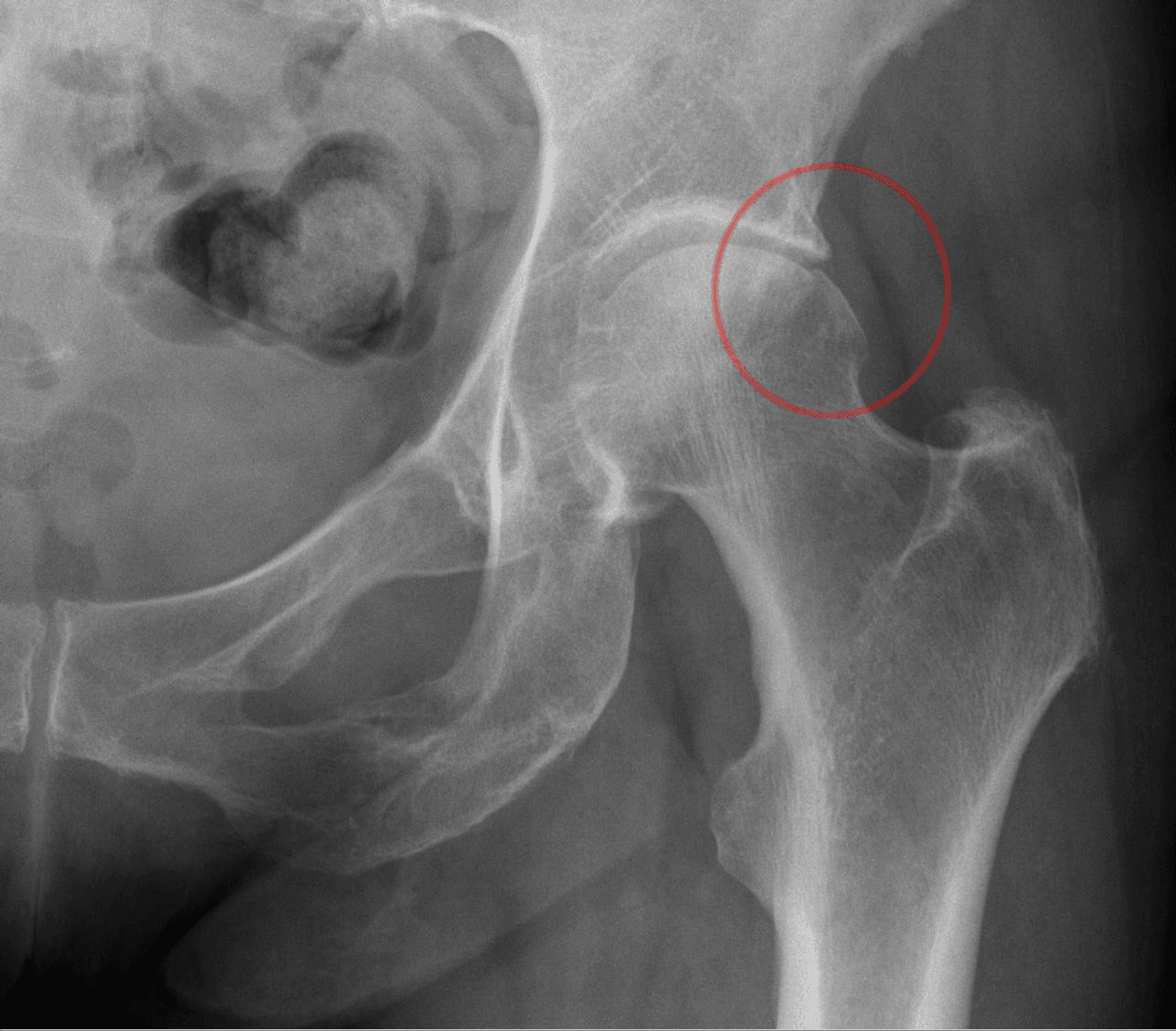
Pincer morphology. The acetabular side. Overcoverage of the femoral head may be global (coxa profunda or protrusio acetabuli) or focal (retroversion of the superior acetabulum). The rim inflicts a crush injury on the labrum, with contrecoup cartilage damage on the posterior acetabulum.
Classification
Three patterns. FAI is classified by which side of the joint carries the abnormal bone. Cam is femoral-based, the aspherical head-neck junction; pincer is acetabular-based, the overcoverage; mixed has both components and is the most common presentation, at approximately 80% of cases. Treating one component in isolation leads to failure, so the intra-operative assessment has to cover both.
Labral tears (Seldes).
- Type 1: detachment of the labrum from the acetabular cartilage, the most common
- Type 2: a cleavage plane within the labral substance
Cartilage damage (Beck).
- Grade 0: normal cartilage
- Grade 1: softening (malacia)
- Grade 2: partial-thickness defect
- Grade 3: full-thickness defect
- Grade 4: exposed subchondral bone
Clinical Assessment
The presentation. A young athletic patient with activity-related groin pain of insidious onset, typically present for more than 3 months, worse with prolonged sitting, pivoting and hip flexion, and often accompanied by clicking, catching or giving way. The symptoms to listen for:
- Deep anterior groin pain, shown as the C-sign: the patient cups a hand over the greater trochanter
- Pain with prolonged sitting, the theatre sign
- Pain with hip flexion activities such as squatting and stairs
- Mechanical symptoms: clicking, catching, locking
The history that changes the plan. Age at onset. Sport participation, with hockey, soccer and dance particularly high-risk. Prior treatments and the response to them. Mechanical symptoms, which suggest labral pathology. Night pain, which suggests more severe pathology or an alternative diagnosis.
Examination. Watch the gait for a Trendelenburg or antalgic pattern, note any pelvic obliquity or limb-length difference, and look for a hip flexion contracture. Measure flexion, extension, abduction, adduction, internal and external rotation and compare each with the other side; FAI typically shows decreased internal rotation in flexion.
Provocative tests.
- FADIR (flexion-adduction-internal rotation), the anterior impingement test: supine with hip and knee at 90° of flexion, then passive adduction and internal rotation. Positive if it reproduces the patient's groin pain. The most sensitive test for FAI, at approximately 95%, but specificity is only approximately 50%, so it must be correlated with imaging
- FABER (flexion-abduction-external rotation), the Patrick test: positive if it reproduces groin pain or motion is limited; can indicate labral or sacroiliac joint pathology
- Stinchfield test: a resisted straight-leg raise reproduces groin pain; suggests intra-articular pathology
- Log roll: passive internal and external rotation with the hip extended; pain suggests intra-articular pathology
Differential diagnosis. Because morphology is so often silent (Frank 2015), FAI syndrome is a clinical diagnosis of exclusion as much as of inclusion. Actively exclude the mimics before attributing pain to impingement.
- Typical patient / pain
- Young active adult, deep anterior groin (C-sign), worse sitting/pivoting
- Discriminating feature
- Positive FADIR; cam/pincer plus symptoms; greater than 50% relief from intra-articular injection
- Typical patient / pain
- Often female, antero-lateral pain, instability/fatigue, micro-instability
- Discriminating feature
- Lateral centre-edge angle less than 20-25°; under-coverage (opposite of pincer)
- Typical patient / pain
- Athlete, lower abdominal/adductor-origin pain with sprinting and Valsalva
- Discriminating feature
- Tender pubic tubercle/adductor origin; pain NOT reproduced by FADIR; negative injection
- Typical patient / pain
- Older patient, stiffness, reduced overall ROM
- Discriminating feature
- Joint space narrowing, osteophytes (Tönnis 2 or more); poor arthroscopy candidate
- Typical patient / pain
- Back pain, dermatomal radiation, neurological signs
- Discriminating feature
- Pain not localised to groin; negative hip provocation; spinal signs positive
- Typical patient / pain
- Lateral hip pain, tender over trochanter, pain lying on side
- Discriminating feature
- Lateral (not groin) tenderness; pain on single-leg stance/resisted abduction
Investigations
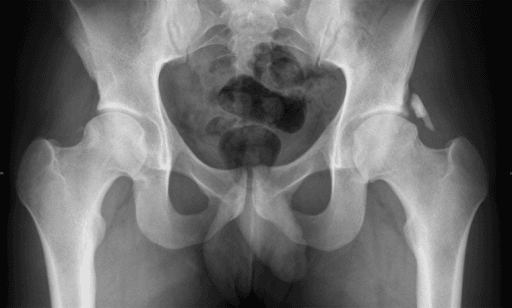
Radiographs. The AP pelvis is the essential initial view, and it can only be read if it is positioned properly, with the coccyx 1-3cm above the symphysis; on it, assess the centre-edge angle, the crossover sign and the posterior wall sign. A lateral view, cross-table lateral (Dunn view) or frog-leg lateral, is where the alpha angle and the head-neck offset are assessed.
The measurements.
- Alpha angle, on an axial view (cross-table lateral radiograph or axial MRI): the angle between the femoral neck axis and the point where the head-neck junction exceeds the radius of the head. Normal is less than 50°; cam morphology is greater than 55°
- Centre-edge (CE) angle, on the AP pelvis: the angle between a vertical line through the femoral head centre and a line to the lateral acetabular edge. Normal is 25-40°; pincer is greater than 40°
- Crossover sign: the anterior and posterior acetabular walls cross before the lateral edge in a figure-of-8 pattern, indicating focal retroversion
MRI. Standard MRI evaluates the labrum, the cartilage and the periarticular soft tissues, and axial oblique views are the best for measuring the alpha angle. MR arthrogram is the gold standard for labral pathology: intra-articular gadolinium improves labral tear detection, with a sensitivity greater than 90%. Radial MRI, a series of views radiating from the femoral neck axis, is best for comprehensive assessment of where the cam lesion lies.
CT. 3D CT provides excellent bony detail of cam and pincer morphology and is useful for surgical planning; low-dose protocols reduce the radiation.
Diagnostic injection. Intra-articular local anaesthetic under fluoroscopic guidance can confirm an intra-articular source of pain. Greater than 50% relief suggests intra-articular pathology and predicts a good surgical outcome.
Non-Operative Management
Who. Non-operative treatment is the choice for:
- Mild symptoms with minimal functional limitation
- Patient preference
- Significant osteoarthritis, a relative contraindication to arthroscopy
- Medical contraindications to surgery
- Initial management while the diagnosis is being confirmed
Modify activity to avoid the aggravating positions, deep flexion and prolonged sitting. Physiotherapy concentrates on core and hip strengthening with a focus on gluteal activation, NSAIDs are used for symptomatic relief, and the patient is taught the pathophysiology and natural history.
Advance to a progressive hip strengthening programme, identify and modify the aggravating sport-specific activities, consider an intra-articular corticosteroid injection if indicated, and reassess the response to conservative treatment.
If improved, continue activity modification and a maintenance programme. If symptoms persist, consider surgery in an appropriate candidate, with a shared discussion of the risks and benefits of surgery against continued non-operative care.
While intra-articular corticosteroid injections may provide temporary relief, they do not address the underlying mechanical problem. Some evidence suggests repeated injections may negatively affect cartilage and outcomes of subsequent surgery. Use judiciously and primarily as a diagnostic tool.
Management Algorithm
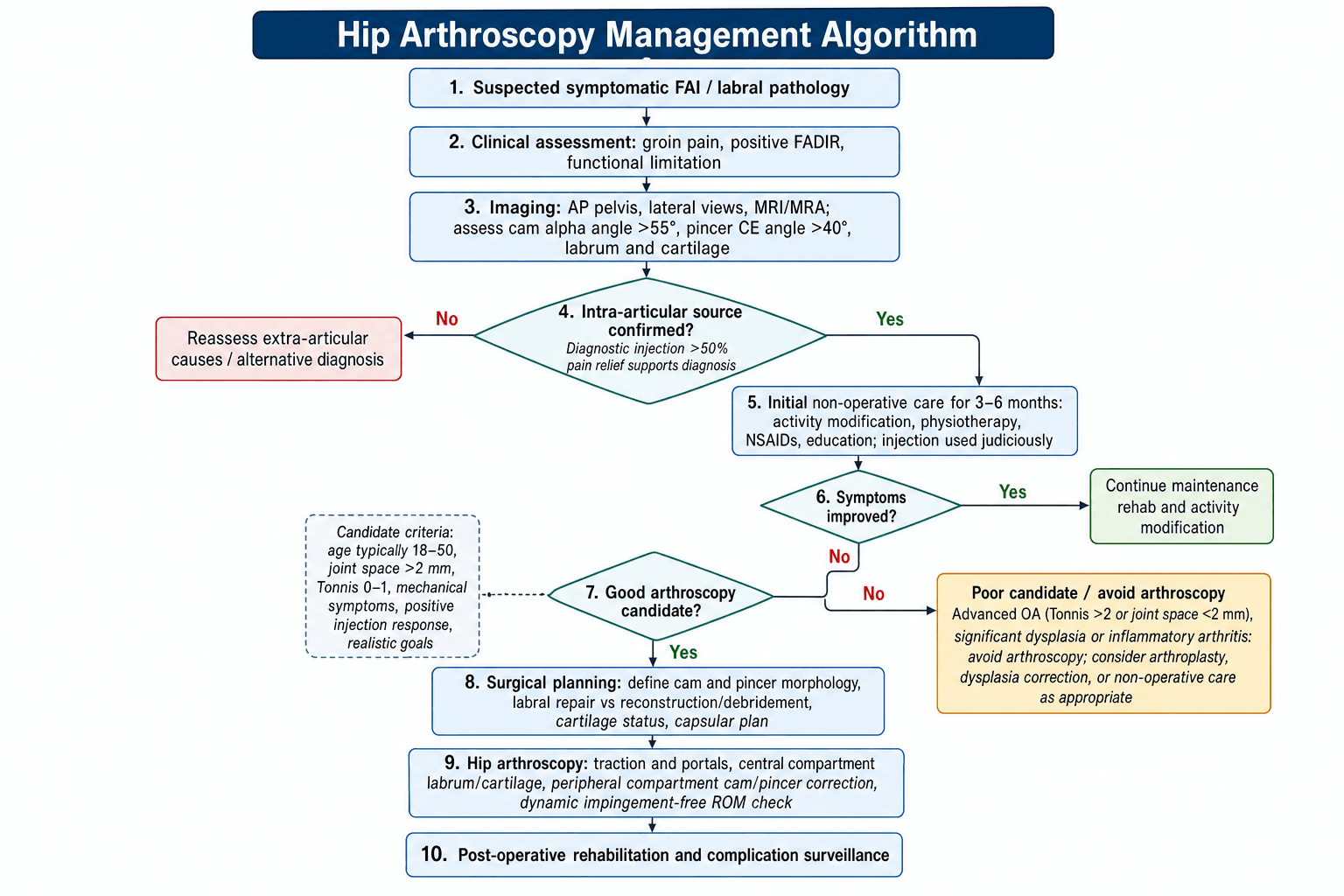
Diagnosis. A positive FADIR test with anterior groin pain in a young active patient, correlated with cam or pincer morphology on imaging and an MR arthrogram to assess the labrum, then confirmed by the injection response.
Candidacy. The good candidate is typically aged 18-50, has a preserved joint space of greater than 2mm with minimal to moderate osteoarthritis (Tönnis 0-1), has failed 3-6 months of conservative management, and has a positive impingement test with pain relief from injection. That last combination, a positive impingement test with a positive injection, is the group with the best outcomes. The poor candidate has any of:
- Advanced osteoarthritis (Tönnis greater than 2)
- Severe joint space narrowing (less than 2mm) with arthritis, where arthroplasty is the consideration
- Significant dysplasia
- Inflammatory arthritis
- Expectations that are unlikely to be met
Planning. Identify the cam location on radial MRI or 3D CT, assess the extent of any pincer morphology, plan the labral management (repair versus debridement), assess the cartilage and decide on capsular management. The decisions that are made on the day are the extent of osteochondroplasty needed, labral repair versus reconstruction, microfracture for cartilage lesions and capsular plication for instability.
Surgical Management
Positioning. Supine on a fracture table is the most common: a well-padded perineal post, the operative limb in a traction boot, and the other limb on a padded post or abducted in a leg holder. The position is familiar, fluoroscopy is easier and anterior access is better; the price is the pressure of the perineal post. Lateral positioning on a dedicated hip arthroscopy table, operative hip up and traction applied through a foot attachment, has no perineal post (less nerve risk) and gravity assists visualisation, but it is unfamiliar to some surgeons and requires the specialised table.
Traction. Typically 25-50lbs of force is needed. Apply longitudinal traction, then internal rotation to break the vacuum seal, and confirm at least 6mm of distraction on fluoroscopy. The target is to be off traction inside 60 minutes: in the 1615-hip series complications rose significantly beyond 60 minutes, and pudendal neurapraxia tracked traction time directly (61.5 versus 43.8 minutes). If the case is running long, release traction and continue in the peripheral compartment, which needs none; cam resection, capsular work and peritrochanteric access are all done off traction. Two hours is the point beyond which serious injury should be expected, not a permission.
1-25-6Traction Safety - '1-25-6'
Hook:Remember 1-25-6: one hour of traction, 25lbs minimum, 6mm distraction.
Portals. Three standard portals:
- Anterolateral (AL): the primary viewing portal, 1cm anterior and superior to the tip of the greater trochanter
- Anterior: the primary working portal, at the intersection of a horizontal line from the ASIS and a vertical line from the greater trochanter
- Posterolateral (PL): 1cm posterior and superior to the greater trochanter, for supplementary viewing and working
Establish them under fluoroscopic guidance with an air arthrogram, confirm the trajectory with a spinal needle, and after the skin incision use blunt trocar insertion to avoid nerve injury.
The sequence.
- Position the patient, supine or lateral
- Apply traction
- Establish the portals under fluoroscopy
- Central compartment work first: labrum, cartilage
- Release traction
- Peripheral compartment work: cam resection
- Dynamic assessment of impingement-free range of motion
Central compartment procedures.
- Labral repair: suture anchors for peripheral labral tears
- Labral debridement: for tears that cannot be repaired
- Acetabular rim trimming: for pincer lesions
- Microfracture: for focal cartilage defects
- Ligamentum teres debridement: for symptomatic tears
- Loose body removal
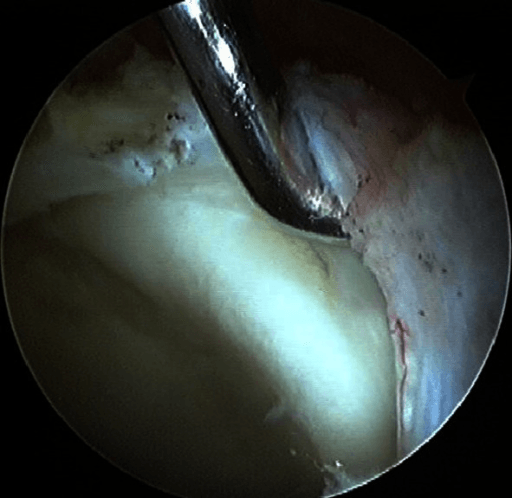
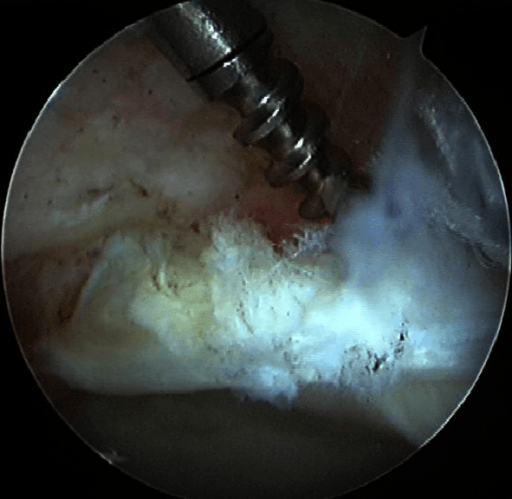
Peripheral compartment procedures.
- Osteochondroplasty: resection of the cam lesion to restore the head-neck offset
- Capsulotomy management: repair or plication as needed
- Iliopsoas release: for a symptomatic internal snapping hip
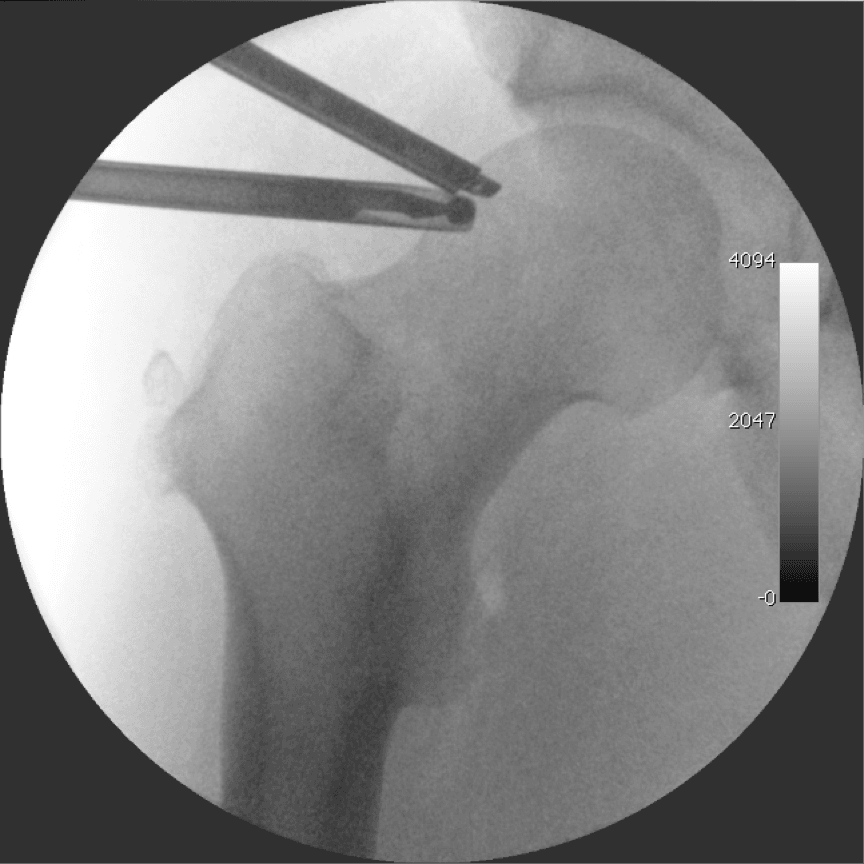
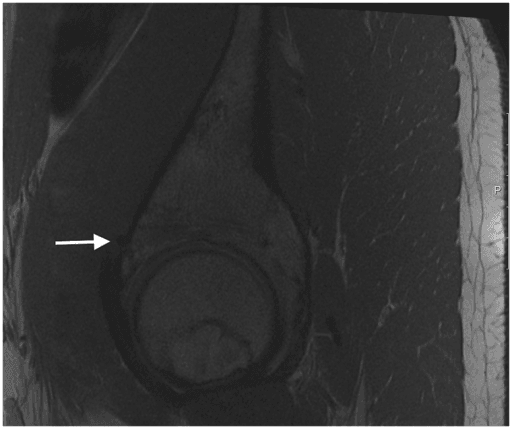
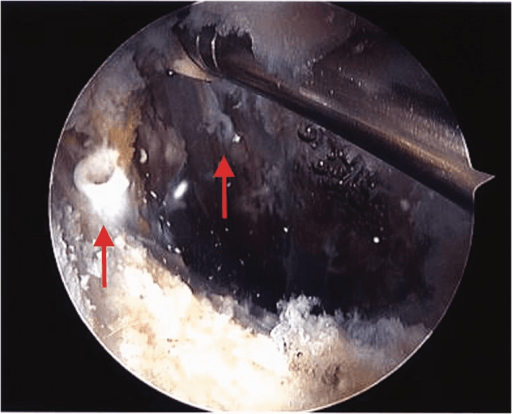
Capsular management. Access to the central compartment requires dividing the iliofemoral ligament. An interportal capsulotomy, a transverse cut connecting the anterolateral and anterior portals, is the basic exposure; a T-capsulotomy adds a longitudinal limb down the femoral neck for wider peripheral-compartment and cam access, at the cost of dividing more of the ligament.
Why closure matters. The iliofemoral ligament is the primary anterior stabiliser of the hip, so an unrepaired capsulotomy, especially a T-capsulotomy, can produce anterior microinstability, a recognised cause of persistent pain and failure and of the rare frank dislocation after hip arthroscopy. Routine capsular closure or plication is increasingly advocated, and the evidence and consensus most strongly support closure in the higher-risk hips where capsular competence is critical: borderline dysplasia, ligamentous laxity or hypermobility, and revision surgery. In the normal, well-covered hip the benefit of routine closure over selective closure is still debated, but most hip-preservation surgeons now repair the capsule.
Complications
The numbers. In the largest prospective multicentre series (Larson 2016, 1615 hips) the overall complication rate was 8.3%, with mostly low-grade events; the rates below are from that series unless stated otherwise.
Nerves. The single most important modifiable factor is traction, and the time threshold and the pudendal timing data are in the traction paragraph above. The lateral femoral cutaneous nerve is the most commonly affected nerve overall; pudendal (perineal) numbness is less common.
- Mechanism
- Anterior/anterolateral portal injury
- Clinical Finding
- Meralgia paraesthetica (lateral thigh numbness) - most common (16.5% transient disturbance, persisting beyond 6 months in only 1.6%)
- Prevention
- Portal placement 1-2cm from ASIS, blunt dissection
- Mechanism
- Perineal post pressure / traction (about 1.4%)
- Clinical Finding
- Perineal numbness, sexual dysfunction
- Prevention
- Well-padded wide post, minimal traction force and time, intermittent release in prolonged cases; consider post-less or lateral positioning
- Mechanism
- Excessive traction, posterior portals
- Clinical Finding
- Posterior thigh numbness, foot drop
- Prevention
- Limit traction force and time, careful posterior portals
- Mechanism
- Proximal portal placement
- Clinical Finding
- Gluteus medius weakness, Trendelenburg
- Prevention
- Stay distal to piriformis, avoid proximal portals
Other complications.
- Fluid extravasation: risk of abdominal compartment syndrome with prolonged cases (no extra-abdominal extravasation observed in the 1615-hip series)
- Femoral neck fracture or stress fracture: 0.1%; the risk comes from excessive osteochondroplasty, so avoid resecting more than about 30% of the neck circumference
- Instability: from excessive rim trimming or an unrepaired capsulotomy (no iatrogenic instability in the 1615-hip series); the impingement correction has to be balanced against preserving stability
- Iatrogenic chondral injury: 1.2%; iatrogenic labral puncture: 0.9%
- Heterotopic ossification: 0.8%; NSAID prophylaxis reduces the incidence
- Avascular necrosis: rare (none in the 1615-hip series), associated with damage to the lateral epiphyseal vessels
- Superficial portal infection: 1.1%
- DVT 0.1% and PE 0.1%: standard risk-stratified VTE prophylaxis
Rehabilitation
Typically 20lbs flat-foot weight-bearing for 2-4 weeks, longer after microfracture. Limit hip flexion to 90° and avoid the FADIR position for 4-6 weeks, and consider a continuous passive motion machine. The goals are to protect the repair, control inflammation and maintain range of motion.
Advance weight-bearing to full as tolerated and progress to a full range of motion. Strengthening begins with aquatic therapy, a stationary bike and hip strengthening that avoids the impingement positions. The goals are to restore motion, begin strengthening and normalise gait.
Progress to the elliptical, swimming and functional exercises, then progressive resistance training. Sport-specific training begins at 12 weeks or later, and return to sport is typically 4-6 months depending on the procedure and the sport.
By procedure. The generic protocol is adjusted to what was done in the joint.
- Protection
- Protect the repair for 4-6 weeks with ROM restrictions; avoid the FADIR position during healing
- Return to sport
- 4-6 months
- Protection
- Protected weight-bearing 6-8 weeks; CPM encouraged for cartilage healing
- Return to sport
- 6-12 months
- Protection
- Earlier weight-bearing (2 weeks); less ROM restriction needed
- Return to sport
- 3-4 months
Outcomes and Prognosis
Short term. At 2 years 85-90% of patients are satisfied. 80-90% return to sport, 70-80% at the same level. Pain scores improve significantly, by 70-80%, and the modified Harris Hip Score improves in 85% or more.
The cartilage decides the long term. The Beck grade of the cartilage predicts both the early result and whether the hip is still the patient's own at 10 years.
- Short-term Outcome
- Excellent (over 90% good/excellent)
- Long-term Outcome
- Over 90% hip preservation at 10 years
- Short-term Outcome
- Good (75-85% good/excellent)
- Long-term Outcome
- 70-80% hip preservation at 10 years
- Short-term Outcome
- Fair (50-60% good/excellent)
- Long-term Outcome
- 50-60% hip preservation at 10 years
Prognostic factors. Age under 40, minimal osteoarthritis, a preserved joint space, labral repair rather than debridement and a positive pre-operative injection response all favour a good result. Advanced osteoarthritis, a joint space under 2mm, full-thickness cartilage loss, age over 50 and significant acetabular dysplasia are the unfavourable factors.
Guidelines, Registries & Global Practice
Global epidemiology. FAI morphology is common and frequently asymptomatic, so imaging must always be correlated with symptoms and signs. A PRISMA systematic review of 2114 asymptomatic hips (mean age 25 years) found asymptomatic cam morphology in 37% overall - 54.8% in athletes versus 23.1% in the general population - and the mean alpha angle in asymptomatic hips was 54° (Frank 2015). This is the single most important framing fact: morphology alone is not disease.
The diagnosis is a triad, not a radiograph. The 2016 Warwick Agreement (international consensus, 25 endorsing societies) introduced the term FAI syndrome, requiring symptoms + clinical signs + imaging findings together. Imaging morphology without symptoms is not FAI syndrome and should not be treated (Warwick 2016).
Guidance side by side
- Core position
- FAI syndrome = symptoms + signs + imaging; first-line either conservative care or surgery after shared decision-making
- Basis / evidence level
- Consensus statement (Level V)
- Core position
- Open and arthroscopic FAI surgery may be used with standard arrangements for governance, consent and audit; recognises evidence is still maturing
- Basis / evidence level
- Interventional procedures guidance
- Core position
- Arthroscopy gives a clinically meaningful but modest benefit over structured physiotherapy at 12 months (iHOT-33 +6.8)
- Basis / evidence level
- Level I RCT
- Core position
- Endorse arthroscopic management for appropriately selected FAI syndrome with preserved joint space and minimal arthritis
- Basis / evidence level
- Society endorsement / expert consensus
Patient selection drives outcome (global, evidence-led). Across health systems the same predictors apply: preserved joint space (2mm or more) and labral repair predict better results, while advanced arthritis (Tönnis 2 or more) and joint space less than 2mm predict failure and conversion to total hip replacement (Philippon 2009). The decisive modifiable intra-operative safety factor is traction - time greater than 60 minutes raises the complication rate (Larson 2016).
Registries and practice variation. Hip arthroscopy is a hip-preservation rather than an arthroplasty procedure, so it is not captured by the major joint replacement registries (NJR England & Wales, AOANJRR Australia, AJRR USA, SHAR Sweden). These registries are nonetheless relevant downstream: a meaningful minority of arthroscopy patients with pre-existing chondral wear later convert to total hip arthroplasty, and registry analyses are used to compare outcomes of THA after prior hip arthroscopy. Volume and access vary widely - arthroscopy is concentrated in high-resource centres with fluoroscopy and traction tables and a learning curve effect on complications, whereas in many regions open surgical hip dislocation or non-operative care predominate. FAI syndrome is recognised worldwide in flexion-loading sports (football/soccer, ice hockey, Australian Rules football, dance, martial arts), reflecting the higher cam prevalence seen in athletes.
Special Considerations
Borderline dysplasia. A centre-edge angle of 20-25° is borderline. Such a hip may benefit from arthroscopy if there is an FAI component, but the failure rate is higher than in non-dysplastic hips, and where the dysplasia is significant a periacetabular osteotomy (PAO) should be considered instead.
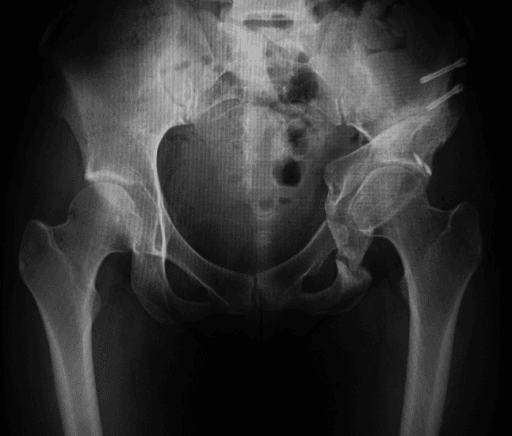
Revision arthroscopy. Success rates are lower than for primary surgery, at 60-70%. The most common reasons for failure are inadequate cam resection, a missed pincer and an untreated labral tear, and revision does better when there is a clear, identifiable pathology to address.
Adolescents. Arthroscopy may be considered in skeletally mature adolescents, and the physes must be confirmed closed before any aggressive osteochondroplasty.
Labral reconstruction. Indicated when the labrum is deficient and cannot be repaired. The options are iliotibial band autograft, tensor fascia lata and allograft; it is an emerging technique with promising early results.
Everything above concerns intra-articular FAI, but extra-articular impingement can coexist with it or mimic it, and it is missed if the only place examined is the joint.
Subspine (AIIS) impingement. A prominent or low-lying anterior inferior iliac spine, often after an AIIS apophyseal avulsion that has healed with overgrowth, or a congenitally low AIIS, impinges on the distal femoral neck in terminal flexion. It causes anterior hip pain and a limited, painful flexion arc. It is assessed on the AP and false-profile radiographs and on 3D CT (Hetsroni AIIS morphology types) and treated by arthroscopic AIIS or subspine decompression, often at the same sitting as the cam and pincer correction.
The other extra-articular types. Ischiofemoral impingement, quadratus femoris between the ischium and the lesser trochanter; greater trochanteric-pelvic impingement; and iliopsoas impingement on the labrum, which produces an anterior 3-o'clock labral tear from a tight psoas.
If anterior impingement pain persists despite a "normal" cam and pincer correction, think of extra-articular impingement, and especially of subspine impingement.
MCQ Practice Points
Q: What are the radiographic definitions of Cam and Pincer FAI? A: Cam FAI is defined by an alpha angle greater than 55 degrees (femoral side). Pincer FAI is defined by a Center-Edge (CE) angle greater than 40 degrees or a crossover sign (acetabular side).
Q: Which nerve is most commonly injured during hip arthroscopy? A: The Lateral Femoral Cutaneous Nerve (LFCN) is the most commonly affected nerve overall (16.5% transient disturbance in large series, persisting beyond 6 months in only 1.6%), typically from the anterior/anterolateral portal. The Pudendal nerve (perineal numbness, about 1.4%) is the classic traction-related injury and is the high-yield answer for "traction complication".
Q: What are the traction safety limits? A: Aim to finish central compartment work and release traction within 60 minutes, using the minimum force that achieves 6mm of distraction (typically 25-50lbs). Sixty minutes is the evidenced threshold - complications rose significantly beyond it across 1615 hips, and pudendal neurapraxia tracked traction time directly (61.5 vs 43.8 minutes). The older "under two hours" teaching describes the point of likely serious injury, not a safe working window.
Q: What joint space width predicts poor outcomes? A: Joint space less than 2mm is a strong predictor of failure and conversion to Total Hip Arthroplasty (50% within 2 years).
Q: What is the most sensitive physical exam test for FAI? A: The FADIR test (Flexion, Adduction, Internal Rotation). It is highly sensitive (95%) but has low specificity.
Clinical Decision Scenarios
Practise clinical reasoning and management decisions out loud
“A 25-year-old male professional soccer player presents with 6 months of right groin pain that is worse with kicking and sprinting. He describes a deep anterior hip pain that is aggravated by prolonged sitting.”
“You are planning hip arthroscopy on a patient with confirmed FAI and labral tear. The examiner asks you to describe your portal placement and the nerves at risk.”
“You are shown radiographs of a hip. The examiner asks you to differentiate between cam and pincer morphology and describe how you would measure the relevant angles.”
“During hip arthroscopy, the anesthetist informs you that you have been operating for 2.5 hours with traction continuously applied. They ask about traction-related complications.”
“A 55-year-old woman presents with hip pain and imaging shows FAI with a joint space of 1.5mm and Tonnis grade 2 osteoarthritis. She is keen for hip arthroscopy to avoid hip replacement.”
FAI Classification
- Cam = femoral bump, alpha greater than 55°, young males
- Pincer = acetabular overcoverage, CE greater than 40°, middle-aged females
- Mixed = most common (80%), address both components
- Crossover sign = focal acetabular retroversion
Traction Safety
- Off traction inside 60 minutes (two hours is an outer limit, not a target)
- 25-50lbs force typically needed
- Minimum 6mm joint distraction
- Break seal with IR before distraction
Nerves at Risk
- LFCN: most common nerve injury (16.5% transient); pudendal ~1.4%
- Lateral femoral cutaneous: anterolateral portal (meralgia)
- Sciatic: excessive traction, posterior portals
- Superior gluteal: proximal portal placement
Portal Placement
- Anterolateral: 1cm anterior/superior to GT tip (viewing)
- Anterior: ASIS horizontal meets GT vertical (working)
- Posterolateral: 1cm posterior/superior to GT
- Always establish under fluoroscopic guidance
Key Numbers
- Alpha angle: greater than 55° = cam
- CE angle: greater than 40° = pincer
- Joint space: less than 2mm = poor outcome
- Traction: off inside 60 min, 25lbs min force, 6mm distraction
Exam Pearls
- FADIR test most sensitive for FAI
- Joint space greater than 2mm critical for good outcomes
- Labral repair preferred over debridement
- LFCN most commonly affected nerve overall (16.5%); pudendal (~1.4%) is the classic traction injury
Evidence Base
Hip Arthroscopy vs Best Conservative Care - UK FASHIoN RCT
- Pragmatic multicentre RCT, 348 patients with FAI syndrome at 23 UK NHS hospitals
- Hip arthroscopy versus personalised hip therapy (physiotherapist-led conservative care)
- Both groups improved; arthroscopy superior at 12 months
- Adjusted mean iHOT-33 difference 6.8 points (95% CI 1.7-12.0) favouring arthroscopy
- Difference exceeded the minimum clinically important difference (6.1 points)
Warwick Agreement on FAI Syndrome (International Consensus)
- International multidisciplinary consensus, 22 panellists from 9 countries, endorsed by 25 societies
- Introduced the term 'FAI syndrome' - requires symptoms PLUS signs PLUS imaging findings
- Imaging morphology alone (cam/pincer) is NOT a diagnosis without symptoms
- Accepted treatments: conservative care, rehabilitation, and arthroscopic or open surgery
Labral Refixation vs Debridement
- Comparative cohort, 94 hips with pincer/combined FAI, mean 3.5-year follow-up
- Good-to-excellent results in 92% of refixation versus 68% of debridement hips (p=0.004)
- Modified Harris Hip Score, SF-12 and VAS pain all significantly better after refixation
- Supports labral preservation to retain the suction-seal function
Alpha Angle and Cam Morphology
- Defined the alpha angle on oblique axial MRI to quantify head-neck concavity
- Mean alpha angle 74° in symptomatic impingement hips versus 42° in asymptomatic controls (p less than 0.001)
- Good inter-observer reproducibility across four observers
- Established the radiographic basis for diagnosing cam morphology
Outcomes Based on Pre-operative Joint Space
- Prospective series, 112 hips, minimum 2-year follow-up
- Modified Harris Hip Score improved from 58 to 84 (mean gain 24 points)
- Joint space narrowing of 2mm or more independently predicted a better outcome (p=0.005)
- Labral repair (versus debridement) also predicted a better outcome (p=0.032)
Complications After Hip Arthroscopy - Prospective Multicentre Series
- 1615 consecutive hips, 4 centres, validated complication grading scheme
- Overall complication rate 8.3% (excluding transient periportal numbness)
- Lateral femoral cutaneous nerve disturbance 16.5% (persisting beyond 6 months in only 1.6%)
- Pudendal (perineal) numbness 1.4%; traction time greater than 60 minutes raised complication risk
- Pudendal neurapraxia hips had longer traction (61.5 vs 43.8 minutes, p less than 0.001)
- Female patients had a significantly higher complication rate than male patients (p=0.017)
- FOUR NEGATIVE RESULTS WORTH KNOWING: BMI had no effect on the complication rate (p=0.103), and there was no difference between primary and revision cases (p=0.123) or between labral repair and debridement (p=0.209). No iatrogenic instability, avascular necrosis or extra-abdominal fluid extravasation occurred in the whole series.