Parathyroid Hormone Excess | Hypercalcaemia | Brown Tumours | Renal Stones
- Primary HPT: Elevated calcium AND elevated/inappropriately normal PTH (adenoma 85%)
- Bone effects: Osteitis fibrosa cystica, brown tumours (lytic lesions), subperiosteal resorption
- Classic triad: Bones (brown tumours), stones (renal calculi), groans (abdominal pain)
- Surgical indications: Age under 50, calcium over 2.85 mmol/L, renal impairment, osteoporosis, brown tumours
- Secondary HPT: Normal/low calcium with elevated PTH (renal failure most common)
- “Elevated calcium WITH elevated PTH distinguishes primary HPT from malignancy
- “Brown tumours are osteoclastic giant cell lesions (not malignant despite name)
- “Subperiosteal resorption on hand X-rays is pathognomonic for hyperparathyroidism
- “Secondary HPT causes renal osteodystrophy with mixed bone disease patterns
Overview and Epidemiology
Hyperparathyroidism is excessive secretion of parathyroid hormone (PTH), and it dysregulates calcium and phosphate homeostasis. It is classified by mechanism into three types, and the treatment of each differs completely.
- Primary HPT - autonomous PTH secretion from a parathyroid adenoma (85%), hyperplasia (10-15%) or, rarely, carcinoma (under 1%)
- Secondary HPT - compensatory PTH elevation in response to chronic hypocalcaemia (renal failure, vitamin D deficiency, malabsorption)
- Tertiary HPT - autonomous PTH secretion developing after prolonged secondary HPT, typically after renal transplant
Why it reaches an orthopaedic surgeon. Hyperparathyroidism causes brown tumours, lytic bone lesions that mimic metastases, as well as pathological fractures and generalised bone loss. In renal failure, secondary HPT leads to renal osteodystrophy, a complex bone disease. Recognising the condition before operating prevents a misdiagnosis of malignancy and guides the choice between medical and surgical management.
Physiology and Pathophysiology
What PTH does. PTH raises serum calcium and lowers serum phosphate, acting on bone and at three points in the kidney. Its effect on bone is indirect: it upregulates RANKL through osteoblasts, and RANKL drives the osteoclasts that release calcium from the skeleton.
- Action
- Increases osteoclast activity
- Result
- Bone resorption, calcium release
- Mechanism
- RANKL upregulation via osteoblasts
- Action
- Decreases phosphate reabsorption
- Result
- Phosphaturia, low serum phosphate
- Mechanism
- Inhibits sodium-phosphate cotransporter
- Action
- Increases calcium reabsorption
- Result
- Reduced calcium excretion
- Mechanism
- Activates calcium channels (TRPV5)
- Action
- Activates vitamin D
- Result
- Increased intestinal calcium absorption
- Mechanism
- Converts 25-OH to 1,25-dihydroxy vitamin D
Primary HPT: adenoma or hyperplasia. An adenoma is a single enlarged gland, usually an inferior one, that has lost normal calcium-sensing feedback and secretes PTH autonomously whatever the calcium level. Removing that gland by targeted adenomectomy cures it. Hyperplasia involves multiple glands (all four) and is associated with the MEN syndromes (MEN1, MEN2A); it needs subtotal or total parathyroidectomy, and familial hypocalciuric hypercalcaemia is its differential.
FHH is a benign genetic condition mimicking primary HPT (elevated calcium, normal/high PTH). Key difference: urine calcium is LOW (calcium/creatinine clearance ratio under 0.01), whereas in primary HPT it is high. FHH does NOT require surgery. Always check 24-hour urine calcium before parathyroidectomy.
Secondary HPT. Chronic hypocalcaemia stimulates the parathyroid glands to increase PTH secretion. The calcium is therefore normal or low with a raised PTH, and the PTH rise is an appropriate response. The causes:
- Chronic kidney disease (most common) - reduced phosphate excretion and impaired 1-alpha hydroxylase, so active vitamin D is low
- Vitamin D deficiency - reduced intestinal calcium absorption
- Malabsorption (coeliac disease, Crohn's) - inadequate calcium absorption
- Chronic loop diuretic use - renal calcium wasting
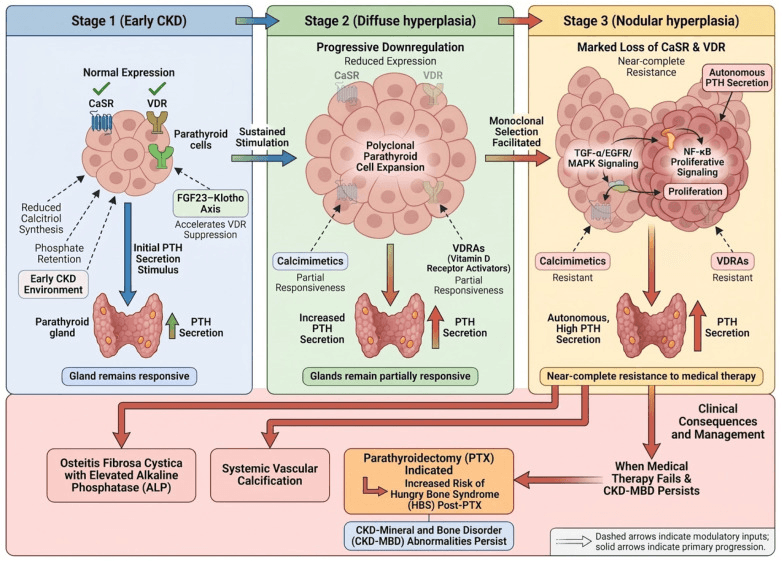
Tertiary HPT. After prolonged secondary HPT the glands become autonomous and no longer respond to calcium feedback. The typical patient has had a renal transplant, had a high PTH before it, and becomes hypercalcaemic afterwards because the glands go on secreting PTH. Medical management is ineffective and parathyroidectomy is required.
Clinical Assessment
Asymptomatic disease is the most common presentation today. Most cases are detected incidentally on routine automated chemistry panels, often during health screening, rather than through symptoms. The typical finding is a mildly elevated calcium (2.6-2.8 mmol/L) with PTH at 1.5-2 times the upper limit of normal and no bone or renal symptoms. These patients are assessed against the surgical indications and, if they meet none, monitored (see Management).
Symptomatic disease. 20-30% present with symptoms. The classic triad is bones, stones and groans, and the symptoms fall into four groups:
- Skeletal - bone pain (diffuse, worse on weight-bearing), pathological fractures, osteitis fibrosa cystica, brown tumours (jaw, ribs, pelvis, long bones), subperiosteal resorption, and osteoporosis with accelerated bone loss and increased fracture risk
- Renal - nephrolithiasis (20% of patients; calcium oxalate or calcium phosphate stones from hypercalciuria), nephrocalcinosis (calcium deposition in the renal parenchyma), and polyuria and polydipsia from the hypercalcaemia
- Gastrointestinal - abdominal pain, constipation, nausea and vomiting; peptic ulcer disease (a historical association); pancreatitis (rare)
- Neuropsychiatric - fatigue, weakness, depression, anxiety, emotional lability, cognitive impairment, and confusion if hypercalcaemia is severe
Skeletal and renal disease of this kind justifies surgery. Neuropsychiatric symptoms on their own are a weak indication (see Controversies).
Brown Tumours
What they are. Brown tumours are osteoclastic giant cell lesions (osteitis fibrosa cystica) that appear as lytic bone lesions. Excess PTH drives osteoclast activity, and focal areas of resorbed bone are replaced by fibrous tissue and giant cells. Haemorrhage within the lesion leaves haemosiderin, which makes it brown to the naked eye. They are benign reactive lesions, not malignant despite the name, and they resolve after parathyroidectomy.
How they present. On radiographs they are lytic, expansile lesions that mimic metastases, myeloma and giant cell tumour. The commonest sites are the jaw (mandible), ribs, pelvis and long bones. They are usually painless unless a pathological fracture occurs, and may present as a palpable bony swelling.
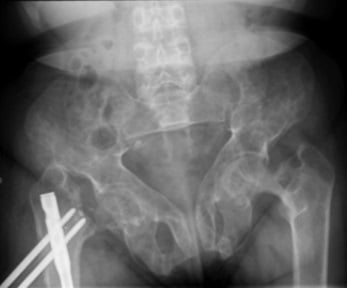
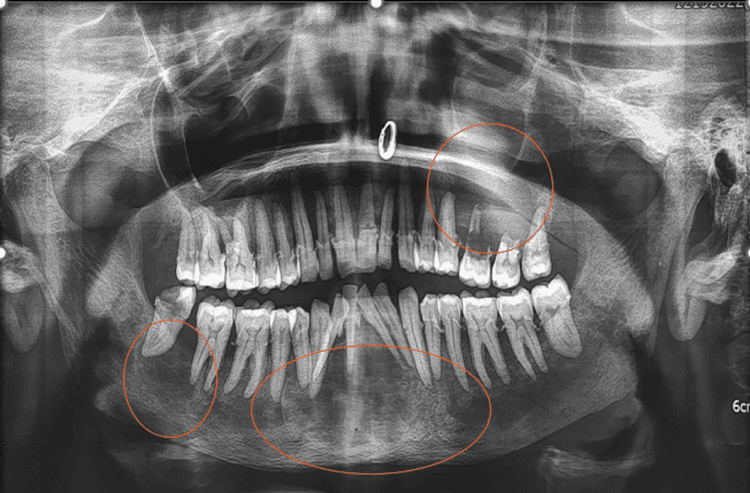
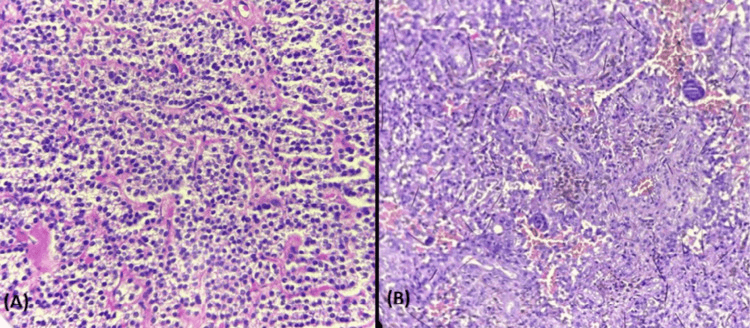
A brown tumour occurs with raised PTH and hypercalcaemia and is often multiple. A giant cell tumour is a true neoplasm (benign but locally aggressive) of young adults aged 20-40, typically solitary at the metaphysis-diaphysis junction, and requires surgical excision. Check calcium and PTH to tell them apart.
Biochemical and Imaging Investigations
Reading calcium and PTH together. The diagnosis is biochemical. Primary HPT is an elevated calcium (over 2.55 mmol/L) with an elevated or inappropriately normal PTH, and the phosphate is usually low. If the calcium is high and the PTH is suppressed, think of malignancy or another cause.
If calcium is elevated, PTH should be suppressed (low). If PTH is in the normal range with elevated calcium, this is inappropriate and indicates primary HPT. The calcium-PTH relationship is key to diagnosis.
- Calcium
- Elevated (over 2.55)
- PTH
- Elevated (or inappropriately normal)
- Phosphate
- Low/normal
- Clinical Context
- Adenoma, hyperplasia, carcinoma
- Calcium
- Low or normal
- PTH
- Elevated (appropriate)
- Phosphate
- Elevated (if renal failure)
- Clinical Context
- CKD, vitamin D deficiency
- Calcium
- Elevated
- PTH
- Elevated (autonomous)
- Phosphate
- Variable
- Clinical Context
- Post-renal transplant, chronic secondary
- Calcium
- Elevated
- PTH
- Suppressed (low)
- Phosphate
- Low/normal
- Clinical Context
- Lung, breast, renal cancer
The rest of the work-up. Alongside calcium and PTH:
- 25-OH vitamin D - rules out vitamin D deficiency, a cause of secondary HPT
- 24-hour urine calcium - separates FHH from primary HPT
- Creatinine and eGFR - renal function, which is a surgical indication if impaired
- Alkaline phosphatase - may be elevated with bone turnover
- PTH
- High or inappropriately normal
- Discriminating feature
- Hypercalcaemia with non-suppressed PTH, low/normal phosphate
- Key test
- Paired Ca + PTH; localisation imaging
- PTH
- Suppressed (low)
- Discriminating feature
- Often acute, severe Ca, weight loss; raised PTHrP or lytic lesions
- Key test
- PTHrP, myeloma screen, imaging
- PTH
- Normal or mildly high
- Discriminating feature
- Lifelong mild hypercalcaemia, family history, LOW urine calcium
- Key test
- Calcium:creatinine clearance ratio under 0.01; CASR gene
- PTH
- High (autonomous)
- Discriminating feature
- Long-standing CKD/dialysis or post-transplant hypercalcaemia
- Key test
- Renal history, longitudinal PTH trend
- PTH
- Suppressed (low)
- Discriminating feature
- Raised 1,25-dihydroxyvitamin D; sarcoid, TB; or exogenous vitamin D
- Key test
- 1,25-OH vitamin D, ACE, chest imaging
Radiology
The plain radiograph. Subperiosteal resorption along the radial side of the middle phalanges on a hand radiograph is the pathognomonic sign. The other findings to look for:
- Salt-and-pepper skull - granular decalcification
- Brown tumours - lytic expansile lesions of the jaw, ribs and pelvis
- Bone cysts - multiple lytic lesions
- Osteopenia - generalised loss of bone density
- Loss of the lamina dura around the teeth on dental radiographs
- Rugger-jersey spine - dense endplates, seen in secondary HPT with renal osteodystrophy
- Chondrocalcinosis - calcium pyrophosphate deposition
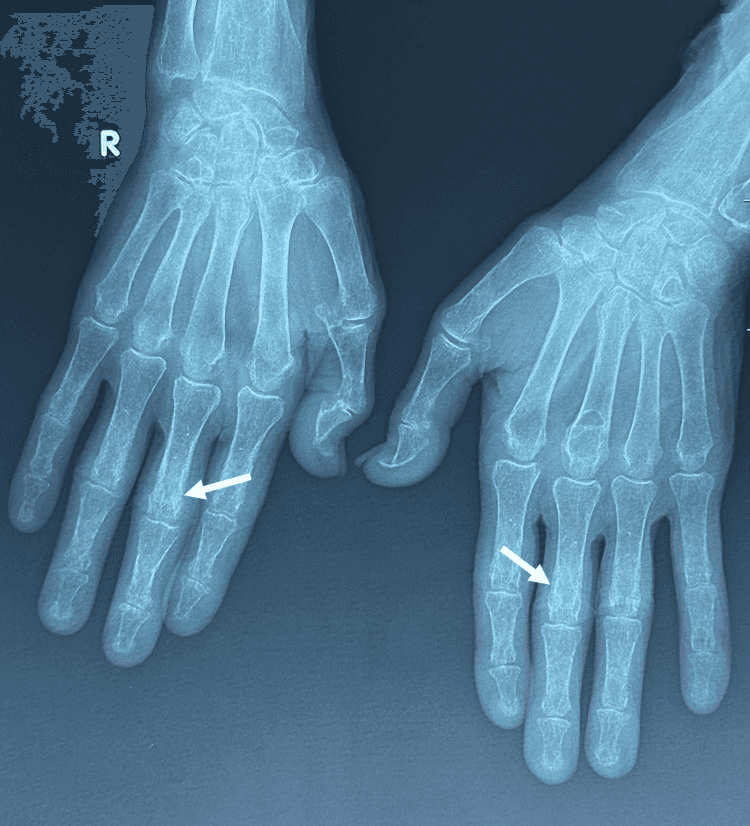
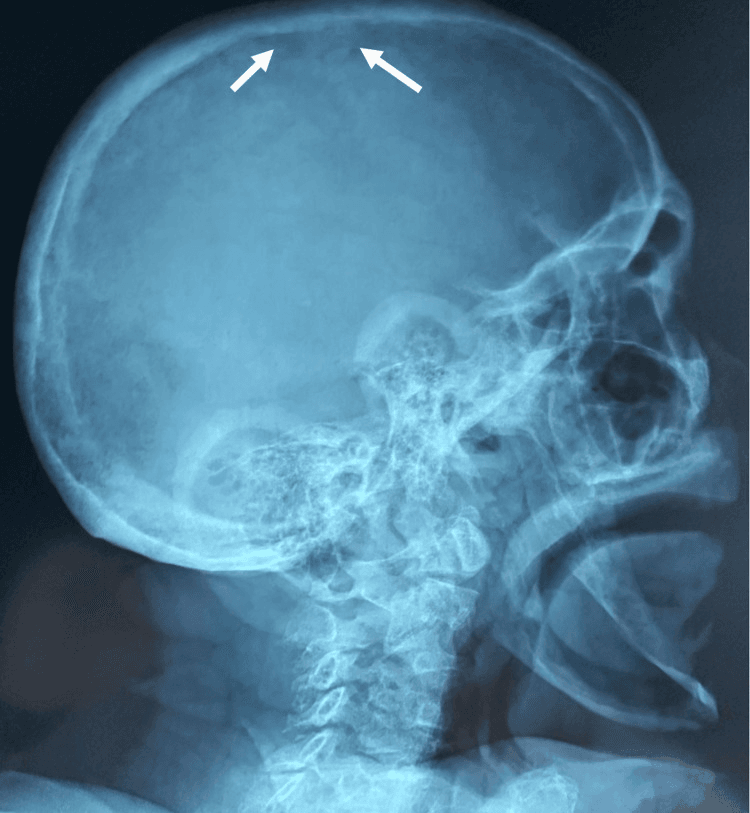
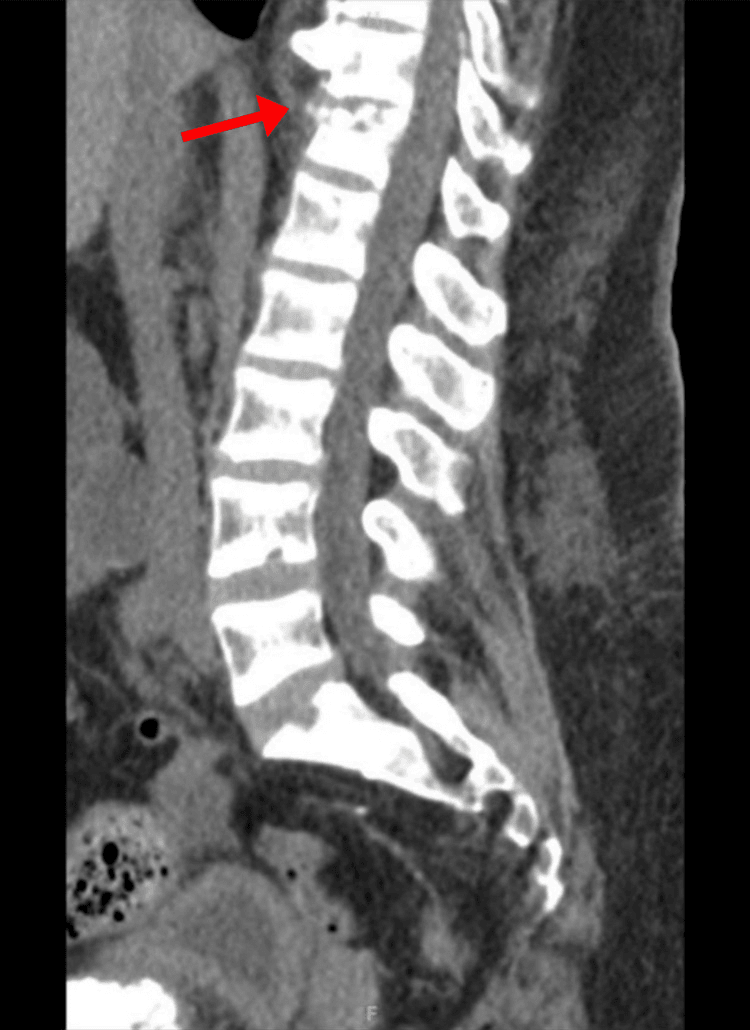
Bone densitometry. DEXA measures bone mineral density as a T-score, and osteoporosis on DEXA is one of the surgical indications. Primary HPT preferentially affects cortical bone, and the distal radius is the most affected site.
Parathyroid Imaging (Preoperative Localisation)
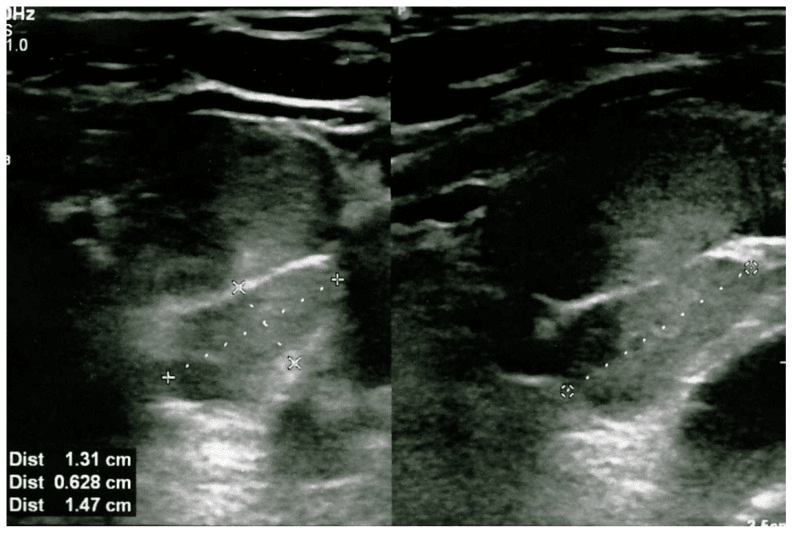
Localisation, not diagnosis. Imaging finds the gland once the biochemistry has made the diagnosis, and its result decides between a focused and a bilateral operation.
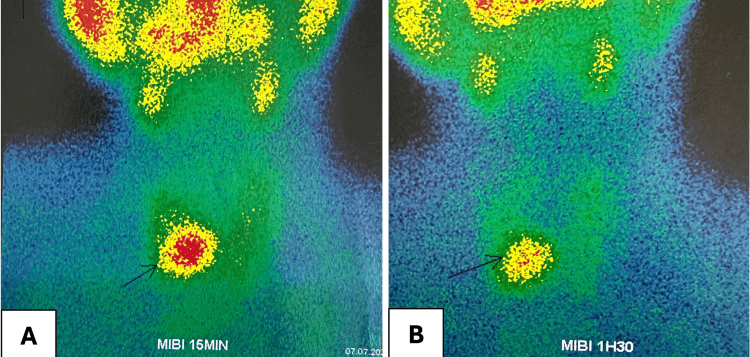
- Technetium-99m sestamibi - nuclear medicine imaging to locate an adenoma preoperatively; sensitivity 70-90% for single adenomas, less for hyperplasia (multiple glands)
- Ultrasound - identifies enlarged glands; operator-dependent; combining it with sestamibi improves localisation
- 4D CT or MRI - high sensitivity for localisation, reserved for reoperative cases or ectopic glands
Medical and Surgical Management
Primary Hyperparathyroidism
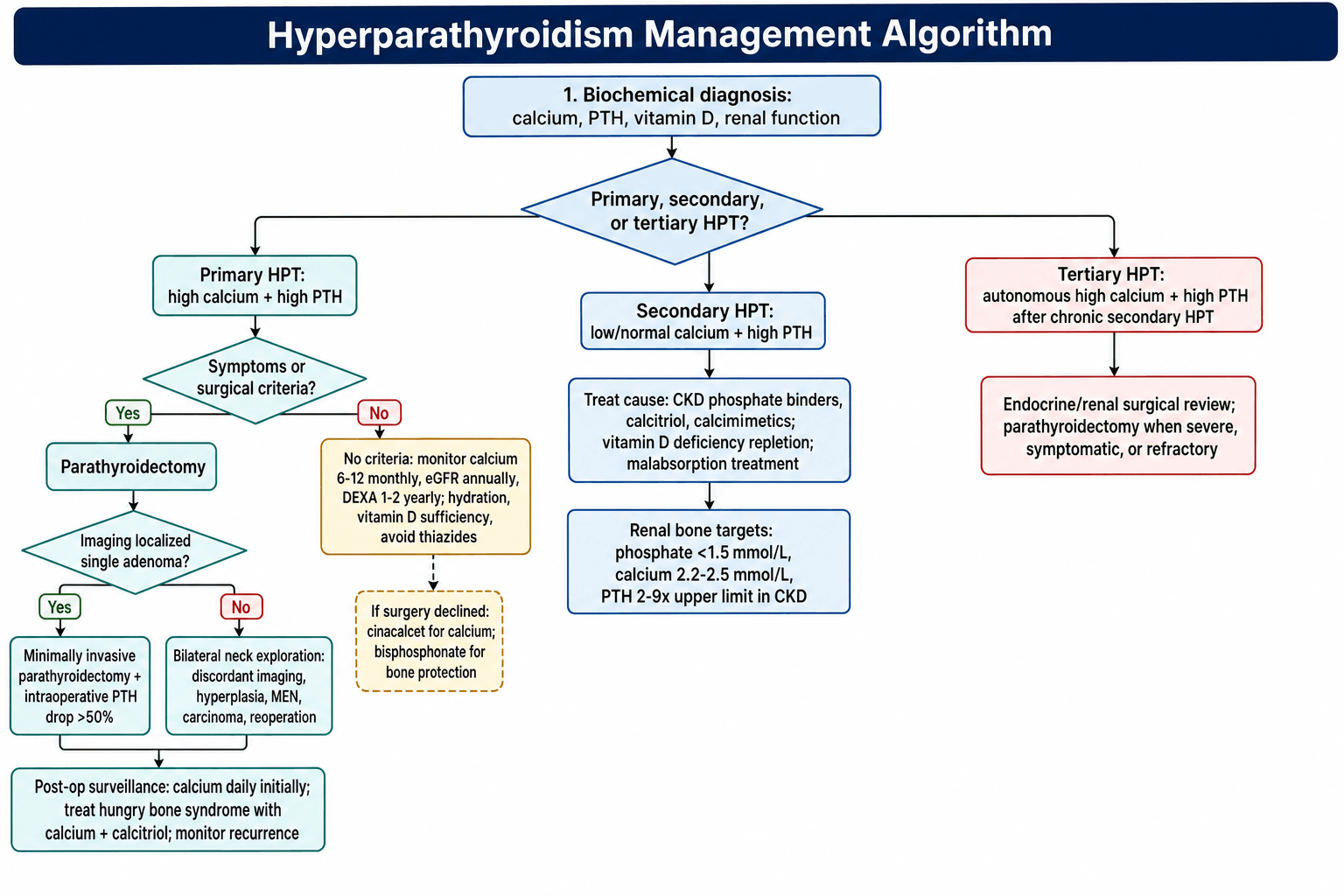
When to operate. The criteria below are the indications for parathyroidectomy; a patient with mild asymptomatic disease who meets none can be observed with monitoring. The table is shaped by the Fourth International Workshop (2014) thresholds, which the Fifth Workshop revised in 2022, most substantially the renal criteria, so check any figure against the newer statement (see Evidence Base).
- Threshold
- Under 50 years
- Rationale
- Long-term risk of bone loss and renal stones
- Threshold
- Over 2.85 mmol/L
- Rationale
- Increased risk of symptoms and complications
- Threshold
- eGFR under 60 mL/min
- Rationale
- Prevent progressive renal impairment
- Threshold
- T-score under -2.5 (any site)
- Rationale
- Osteoporosis increases fracture risk
- Threshold
- Over 400 mg/day
- Rationale
- High risk of nephrolithiasis
- Threshold
- Nephrolithiasis, fracture, brown tumours
- Rationale
- Direct disease-related complications
- Threshold
- Unable to comply with monitoring
- Rationale
- Surgery curative, avoids lifelong surveillance
Minimally invasive parathyroidectomy. When imaging localises a single adenoma and sestamibi and ultrasound are concordant, this is now the preferred operation. The adenoma is removed through a 2-3 cm incision, and intraoperative PTH monitoring confirms cure (see the next section); recovery is faster and morbidity lower. The cure rate was 99.4% in the 1,037 minimally invasive cases of Udelsman's single-surgeon series, a very-high-volume ceiling rather than a typical figure.
Bilateral neck exploration. All four glands are visualised and the abnormal ones removed. It is more invasive but comprehensive, and its cure rate in the same series was 97.1%. Hyperplasia is treated by subtotal parathyroidectomy (3.5 glands) or total parathyroidectomy with autotransplantation. The indications:
- Negative or discordant imaging
- Suspected hyperplasia (MEN syndromes)
- Reoperative surgery
- Parathyroid carcinoma
Observation. An asymptomatic patient who does not meet the surgical criteria is monitored with serum calcium every 6-12 months, eGFR annually and DEXA every 1-2 years, adding a 24-hour urine calcium if nephrolithiasis develops. Alongside monitoring:
- Adequate hydration (2-3 L/day)
- Avoid thiazide diuretics, which increase calcium
- Maintain vitamin D sufficiency (25-OH vitamin D 50-75 nmol/L)
- Weight-bearing exercise
Drugs, if surgery is declined. Calcimimetics such as cinacalcet activate the calcium-sensing receptor and lower PTH and calcium. Bisphosphonates prevent bone loss but do not treat the hypercalcaemia. Neither is curative; they control symptoms only.
Secondary Hyperparathyroidism
Treat the cause. In CKD that means phosphate binders, activated vitamin D (calcitriol) and calcimimetics. Vitamin D deficiency is treated with cholecalciferol, 50,000 IU weekly until replete, and malabsorption by treating the gastrointestinal condition and giving oral or intravenous calcium and vitamin D.
Renal osteodystrophy. Management aims for:
- Phosphate under 1.5 mmol/L, with binders
- Calcium 2.2-2.5 mmol/L
- PTH suppressed to 2-9 times the upper limit of normal for the CKD stage
- Monitor for vascular calcification
Intraoperative PTH Monitoring and the Miami Criterion
Why it works. Intact PTH has a circulating half-life of roughly 2 to 4 minutes because the liver and kidney clear it rapidly. Once the last hyperfunctioning gland is removed, the previously suppressed normal glands cannot yet respond, so serum PTH falls steeply within minutes. That kinetic property makes real-time confirmation of cure possible, and it is the enabling technology behind focused, minimally invasive parathyroidectomy.
- Rule for predicting cure
- Fall of at least 50 percent from the highest baseline at 10 minutes after gland excision
- Reference sample
- Highest of pre-incision or pre-excision level
- Rule for predicting cure
- Fall of at least 50 percent at 20 minutes, or into the normal range, or below the pre-incision value
- Reference sample
- Pre-excision level
- Rule for predicting cure
- Fall of at least 50 percent at 10 minutes from the pre-incision baseline
- Reference sample
- Pre-incision level
- Rule for predicting cure
- Fall into the low-normal reference range at 15 minutes (stricter)
- Reference sample
- Absolute normal range
In practice. A baseline sample is drawn before incision and again just before the adenoma pedicle is clamped; manipulation can transiently spike PTH, so the higher value is the reference. Further samples follow at 5 and 10 minutes after excision. An adequate decay by the Miami criterion confirms that all hyperfunctioning tissue has gone, and the operation can be finished through the small targeted incision.
When PTH fails to fall. An inadequate drop signals residual hyperfunctioning tissue, most often multigland disease (hyperplasia, double adenoma, or a missed or ectopic gland), and mandates conversion to bilateral four-gland exploration. The test is not infallible. A false-positive drop can arise in multigland disease when one dominant gland is removed and another is missed; a false-negative, a persistently high PTH despite cure, can follow difficult gland manipulation or slow clearance in renal impairment.
Hungry Bone Syndrome After Parathyroidectomy
Mechanism. Hungry bone syndrome (HBS) is the orthopaedically important metabolic pitfall of the immediate post-parathyroidectomy period. Chronic PTH excess drives a high-turnover state in which osteoclastic resorption dominates. When parathyroidectomy removes the PTH abruptly, osteoblastic bone formation is suddenly unopposed, and the demineralised skeleton avidly remineralises, drawing large amounts of calcium, phosphate and magnesium out of the circulation.
Definition. The result is a profound, prolonged hypocalcaemia, classically a serum calcium below 2.1 mmol/L persisting for more than 3 to 4 days after surgery, accompanied by hypophosphataemia and hypomagnesaemia.
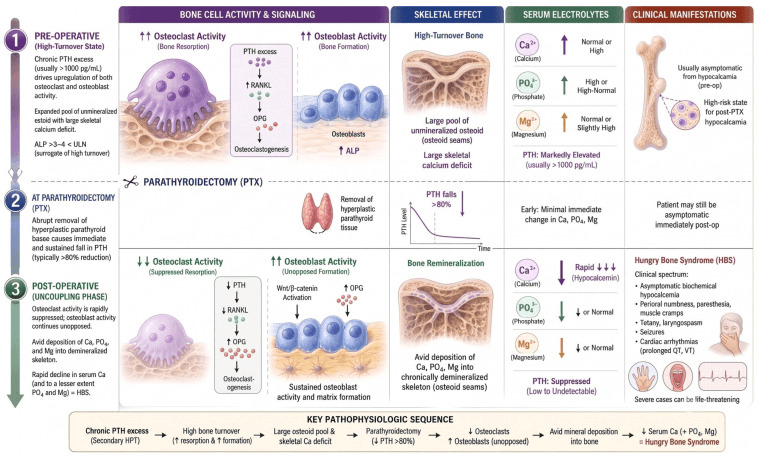
Telling it from hypoparathyroidism. Both cause postoperative hypocalcaemia, and phosphate and PTH separate them. In HBS the calcium is going into bone, so PTH is detectable or even appropriately high and phosphate is low. In hypoparathyroidism, from inadvertent removal or devascularisation of the normal glands, PTH is low or undetectable and phosphate is high. Persistent true hypoparathyroidism is covered in its own topic.
Who is at risk. Markedly elevated preoperative PTH, a high preoperative alkaline phosphatase (a marker of bone turnover), a large adenoma, older age, radiographic osteitis fibrosa cystica or brown tumours, vitamin D deficiency, and renal impairment. Secondary and tertiary HPT carry the highest risk.
Management. Calcium, active vitamin D and magnesium are the treatment:
- Anticipate it in high-risk patients and monitor calcium closely, at least daily at first and often several times a day
- Replete calcium aggressively: intravenous calcium gluconate for symptomatic or severe hypocalcaemia, then high-dose oral calcium
- Give active vitamin D (calcitriol or alfacalcidol) to enhance intestinal calcium absorption and support remineralisation
- Correct magnesium, because hypomagnesaemia impairs PTH secretion and action and perpetuates the hypocalcaemia
- Repletion may be needed for weeks to months, until the skeletal calcium deficit is filled
Prevention. Correct vitamin D deficiency before surgery. In very high-turnover disease some centres give a preoperative bisphosphonate to blunt the postoperative calcium flux.
Complications
- Mechanism
- Brown tumours, osteoporosis
- Presentation
- Fracture with minimal trauma
- Management
- Fixation if needed, parathyroidectomy to heal lesions
- Mechanism
- Hypercalciuria, calcium stones
- Presentation
- Renal colic, haematuria
- Management
- Hydration, treat stones, parathyroidectomy prevents recurrence
- Mechanism
- Calcium deposition in kidney
- Presentation
- Progressive renal impairment
- Management
- Parathyroidectomy to prevent progression
- Mechanism
- Severe hypercalcaemia (over 3.5 mmol/L)
- Presentation
- Confusion, nausea, dehydration, arrhythmias
- Management
- IV fluids, calcitonin, bisphosphonates, urgent parathyroidectomy
- Mechanism
- Rare
- Presentation
- Very high calcium (over 3.5), palpable neck mass
- Management
- En bloc resection with ipsilateral thyroid lobe
Guidelines, Registries & Global Practice
Global Epidemiology
- Prevalence approximately 1-7 per 1000 adults; among the most common endocrine disorders after diabetes and thyroid disease.
- Female predominance roughly 3:1, peaking in postmenopausal women (age 50-70).
- In high-income settings with routine biochemistry screening, most cases are asymptomatic and detected incidentally; in regions where calcium is not measured routinely, patients still present late with florid skeletal disease (brown tumours, fractures) and renal stones, so the classic "bones, stones, groans" picture remains common.
- Secondary HPT prevalence tracks the burden of chronic kidney disease and vitamin D deficiency, which is high across much of South Asia, the Middle East and parts of Africa.
Side-by-Side Guideline Comparison
- Surgical criteria emphasis
- Age under 50, Ca more than 0.25 mmol/L above ULN, eGFR under 60, T-score -2.5 or lower, vertebral fracture, hypercalciuria/stones
- Distinctive point
- Adds vertebral imaging and renal imaging to the work-up; reference standard adopted worldwide
- Surgical criteria emphasis
- Mirrors international criteria; parathyroidectomy is the only definitive cure
- Distinctive point
- Strong endorsement of intraoperative PTH monitoring and surgeon-volume thresholds
- Surgical criteria emphasis
- Refer for surgery if symptomatic, or albumin-adjusted Ca 2.85 mmol/L or higher, or end-organ disease
- Distinctive point
- Cinacalcet only when surgery unsuitable and Ca 2.85 mmol/L or higher with symptoms
- Surgical criteria emphasis
- Control phosphate, calcium and PTH; parathyroidectomy for refractory disease
- Distinctive point
- Frames PTH targets relative to assay ULN by CKD stage; governs dialysis populations globally
Registry and Outcome Notes
- There is no implant registry for parathyroid surgery; outcome benchmarks come from national audit and high-volume series (cure rates 95-99%, permanent hypoparathyroidism and recurrent laryngeal nerve injury each typically under 1-3%).
- Surgeon and centre volume are the strongest determinants of cure and complication rates — a recurring theme across health systems.
High- vs Limited-Resource Practice Variation
- Well-resourced settings: incidental biochemical diagnosis, dual-modality localisation (sestamibi plus ultrasound, with 4D-CT for reoperation), minimally invasive parathyroidectomy with rapid intraoperative PTH, and day-case surgery.
- Limited-resource settings: later presentation with overt bone disease; localisation may rely on ultrasound alone; bilateral neck exploration remains a robust default when rapid PTH assays or nuclear imaging are unavailable; vitamin D repletion before surgery is essential to limit hungry bone syndrome.
Controversies and Areas of Uncertainty
Normocalcaemic primary HPT. Some patients have a consistently elevated PTH with a persistently normal calcium once vitamin D deficiency, renal impairment and drugs have been excluded. Whether and when to operate is unresolved, and a proportion progress to classic hypercalcaemic disease.
Surgery for mild or asymptomatic disease. The SIPH randomised trial shows a bone density benefit from surgery, but no randomised trial has yet shown fewer fractures in mild disease. The threshold for operating on patients who do not meet formal criteria therefore remains debated.
Non-classical (neurocognitive) symptoms. Fatigue, low mood and cognitive complaints are common, but improvement after parathyroidectomy is inconsistent across studies. Alone, they are a weak indication for surgery.
Localisation strategy. The best first-line imaging (ultrasound, sestamibi-SPECT, 4D-CT or choline PET) varies with availability and expertise. Negative imaging does NOT exclude an adenoma and should not deny a patient surgery by an experienced surgeon.
Bilateral exploration or focused surgery. Focused surgery risks missing multigland disease. Intraoperative PTH monitoring reduces that risk without eliminating it, and some centres still favour four-gland assessment.
The place of cinacalcet. It lowers calcium but does not reliably improve bone density or cure the disease. It is reserved for patients unfit for or declining surgery, not offered as an equivalent alternative.
MCQ Practice Points
Q: A patient has serum calcium 2.9 mmol/L and PTH 120 pg/mL. What is the most likely diagnosis? A: Primary hyperparathyroidism. Elevated calcium with elevated (or inappropriately normal) PTH indicates autonomous PTH secretion. In hypercalcemia, PTH should be suppressed; if it's normal or high, that's inappropriate and diagnostic of primary HPT.
Q: What is the histological composition of a brown tumor in hyperparathyroidism? A: Osteoclastic giant cells and hemosiderin-laden macrophages within fibrous tissue. Brown tumors are benign reactive lesions (not malignant) caused by excessive osteoclast activity. The brown color comes from hemosiderin from chronic hemorrhage.
Q: How do you differentiate familial hypocalciuric hypercalcemia from primary hyperparathyroidism? A: 24-hour urine calcium measurement. FHH has LOW urine calcium (calcium/creatinine clearance ratio under 0.01) despite hypercalcemia, due to increased renal calcium reabsorption from calcium-sensing receptor mutation. Primary HPT has HIGH urine calcium. FHH does not require surgery.
Q: A 62-year-old asymptomatic patient with primary HPT has calcium 2.7 mmol/L, normal renal function, and DEXA T-score -2.3. Is surgery indicated? A: No, observation is appropriate. Surgical indications include age under 50, calcium over 2.85 mmol/L, eGFR under 60, or T-score under -2.5. This patient meets none of these criteria and can be monitored with annual calcium, renal function, and DEXA scans.
Q: Which fracture sites are most associated with primary hyperparathyroidism? A: Vertebral compression fractures and distal forearm (Colles) fractures are most common. Cortical bone is preferentially affected due to increased remodeling. Hip fractures are also increased (2-3x risk). Fractures may occur at lower trauma thresholds. Brown tumors are rare but can cause pathologic fractures, particularly in long bone diaphyses.
Exam Viva Scenarios
Practise clinical reasoning and management decisions out loud
“A 58-year-old woman presents with a painless swelling of her jaw. X-ray shows a lytic expansile lesion of the mandible. Blood tests reveal calcium 2.9 mmol/L (normal 2.2-2.5) and PTH 150 pg/mL (normal 10-65). How do you approach this case?”
“A 45-year-old man with end-stage renal disease on hemodialysis for 10 years presents with diffuse bone pain and muscle weakness. Blood tests show calcium 2.0 mmol/L, phosphate 2.5 mmol/L (elevated), PTH 850 pg/mL (markedly elevated). How do you assess and manage this patient?”
“A 49-year-old man is referred with a 6-week history of confusion, polyuria and a solitary expansile lytic lesion of the proximal femur found after a low-energy fracture. Adjusted calcium is 3.6 mmol/L. The referring team has booked a biopsy of the lesion. How do you proceed?”
Key Biochemistry
- Primary HPT: High Ca, High PTH (or inappropriately normal PTH)
- Secondary HPT: Low/Normal Ca, High PTH (appropriate response)
- Tertiary HPT: High Ca, High PTH (autonomous after chronic secondary)
- Malignancy (PTHrP): High Ca, Low PTH (suppressed)
PTH Actions
- Bone: Increases osteoclast activity (via RANKL) - releases calcium
- Kidney DCT: Increases calcium reabsorption
- Kidney PT: Decreases phosphate reabsorption (phosphaturia)
- Kidney 1-alpha hydroxylase: Activates vitamin D (increases gut Ca absorption)
Brown Tumors
- Osteoclastic giant cell lesions (osteitis fibrosa cystica)
- Lytic expansile lesions on X-ray (jaw, ribs, pelvis, long bones)
- BENIGN - regress after parathyroidectomy
- Differentiate from GCT: multiple lesions, elevated Ca/PTH
Surgical Indications (Primary HPT)
- Age under 50 years
- Calcium over 2.85 mmol/L
- eGFR under 60 mL/min
- T-score under -2.5 (osteoporosis)
- Urine calcium over 400 mg/24hr OR nephrolithiasis, fracture, brown tumors
Complications
- Pathological fracture (brown tumors, osteoporosis)
- Nephrolithiasis (20% of primary HPT)
- Hungry bone syndrome (post-parathyroidectomy hypocalcemia)
- Hypercalcemic crisis (Ca over 3.5, needs urgent treatment)
Secondary HPT Management
- Phosphate binders (calcium-based or sevelamer)
- Activated vitamin D (calcitriol) to suppress PTH
- Calcimimetics (cinacalcet) for refractory cases
- Parathyroidectomy if medical management fails (PTH over 800-1000)
Evidence Base and Key Studies
Natural History of Primary HPT With or Without Surgery (15 Years)
- Observational study of 116 patients (99 asymptomatic) followed up to 15 years; 59 had parathyroidectomy and 57 were observed
- After surgery: biochemistry normalised and bone mineral density gains were sustained for the full 15 years
- Without surgery: lumbar spine BMD stayed stable but cortical sites declined (femoral neck approx -10%, distal radius approx -35% in those observed to 15 years)
- 37% of asymptomatic patients developed a new indication for surgery over 15 years, and meeting criteria at baseline did NOT predict who would progress
Minimally Invasive vs Conventional Bilateral Parathyroidectomy
- Single-surgeon series of 1650 consecutive parathyroidectomies (1037 minimally invasive, 613 conventional bilateral exploration)
- Minimally invasive parathyroidectomy: cure rate 99.4%, complication rate 1.45%
- Conventional bilateral exploration: cure rate 97.1%, complication rate 3.10%
- Minimally invasive approach also shortened length of stay and reduced hospital charges
Effect of Parathyroid Surgery on Fractures and Mortality
- Nationwide Danish cohort of 3213 patients with primary HPT (1934 operated, 1279 treated conservatively)
- Surgery was associated with a lower subsequent fracture risk (hazard ratio 0.69, 95% CI 0.56-0.84)
- Mortality was also lower in the surgical group (hazard ratio 0.65, 95% CI 0.57-0.73)
- Kidney/urinary tract stone events were more frequent in the surgical group, reflecting more severe baseline disease
Surgery vs Observation in Mild Primary HPT: 5-Year RCT (SIPH Study)
- Scandinavian multicentre randomised controlled trial: 191 patients with mild primary HPT assigned to parathyroidectomy or observation
- Surgery produced a significant positive treatment effect on BMD at lumbar spine, femoral neck, ultradistal radius and total body versus observation
- Bone turnover markers (P1NP, CTX-1) fell significantly only in the surgical group
- The observation group showed a small but statistically significant decline in BMD at most sites over 5 years
Guidelines for Asymptomatic Primary HPT (Fourth International Workshop, 2014 - superseded by the Fifth Workshop, 2022)
- International consensus surgical criteria: age under 50, serum calcium more than 0.25 mmol/L (1 mg/dL) above the upper limit of normal, eGFR under 60
- Skeletal criteria: BMD T-score -2.5 or lower at any site, and/or vertebral fracture on imaging
- Renal criteria: 24-hour urine calcium over 400 mg/day with raised stone risk, nephrolithiasis, or nephrocalcinosis on imaging
- Patients not meeting criteria should be monitored with periodic calcium, eGFR and BMD assessment
- SUPERSEDED: the Fifth International Workshop (J Bone Miner Res 2022;37:2293-2314) revised these guidelines, most substantially the renal criteria, and applied GRADE methodology to the randomised evidence