From Weight-Bearing Radiographs to Advanced MRI Assessment
Radiography: First-line for ALL knee presentations. Weight-bearing AP + lateral minimum
Rosenberg view: PA flexion weight-bearing for posterior condylar cartilage assessment
Skyline view: Patellofemoral assessment (tilt, subluxation, OA)
MRI: Gold standard for internal derangement (menisci, ACL, PCL, cartilage)
CT: Fracture characterisation (tibial plateau), malalignment assessment
Ultrasound: Effusion assessment, popliteal cyst (Baker cyst), guided injection
Key: Weight-bearing views are mandatory for OA assessment — non-weight-bearing views are inadequate
- Weight-bearing radiographs are ESSENTIAL for knee OA assessment — non-weight-bearing views OVERESTIMATE joint space width.
- Rosenberg view (PA flexion weight-bearing) detects posterior condylar cartilage loss missed on standard AP views.
- MRI is the reference test for internal derangement, but its accuracy against arthroscopy is about 85 percent - roughly one knee in seven is called wrongly, so a confident clinical examination is not overruled by an equivocal scan.
- The Segond fracture (avulsion of the anterolateral tibial plateau) is highly associated with ACL tear in adults — treat as an ACL tear until proven otherwise (in children it may occur with an intact ACL).
- Ottawa Knee Rules determine the need for radiography in acute knee injury — not all injured knees require X-ray.
- “A lipohaemarthrosis (fat-fluid level on horizontal beam lateral) means an intra-articular fracture with marrow fat leaking into the joint - and it will not appear on a cross-table film taken with the beam vertical.
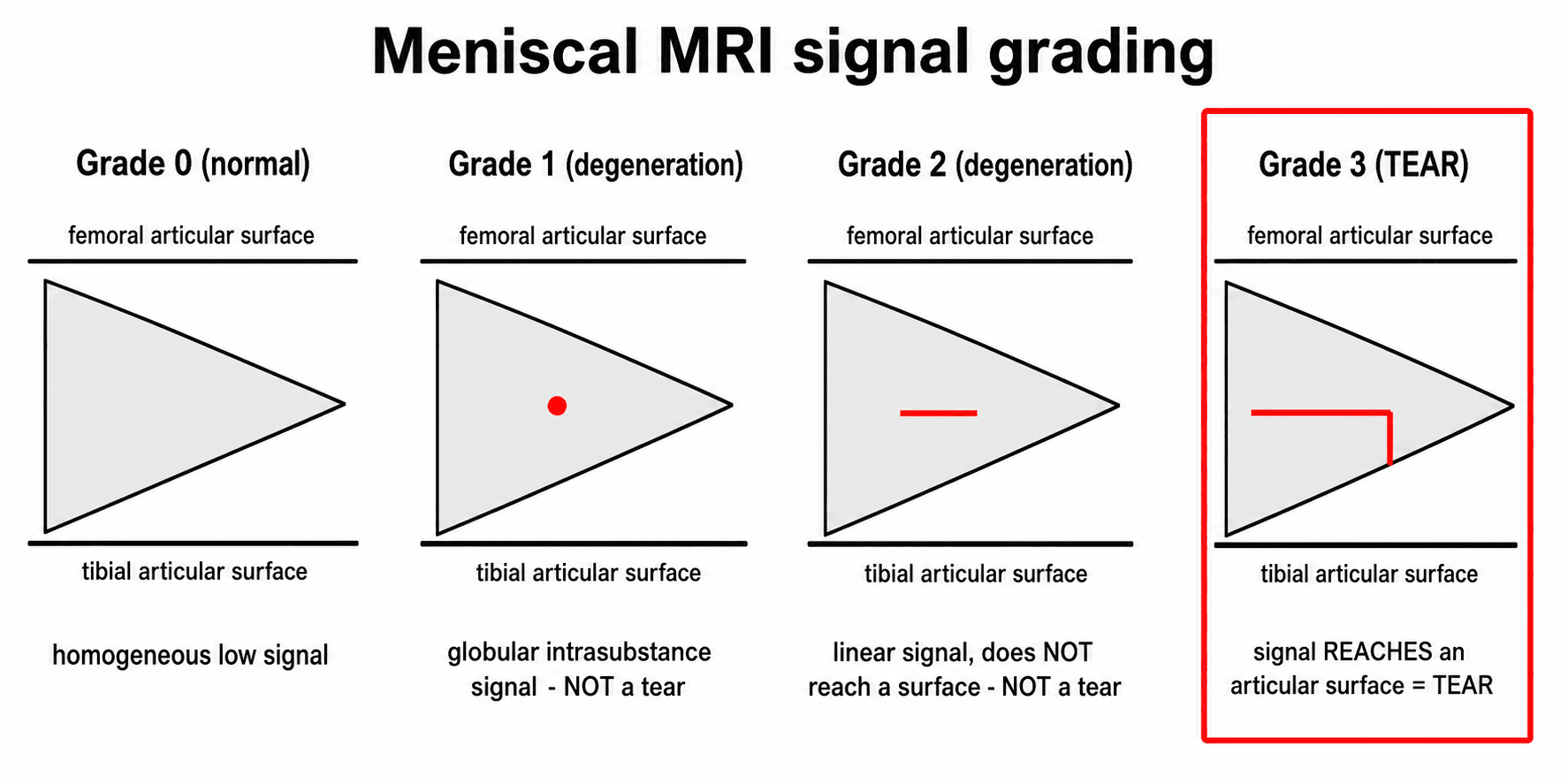
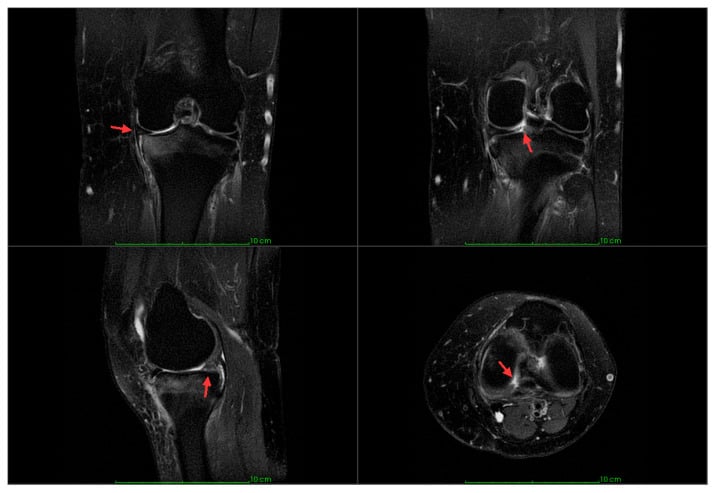
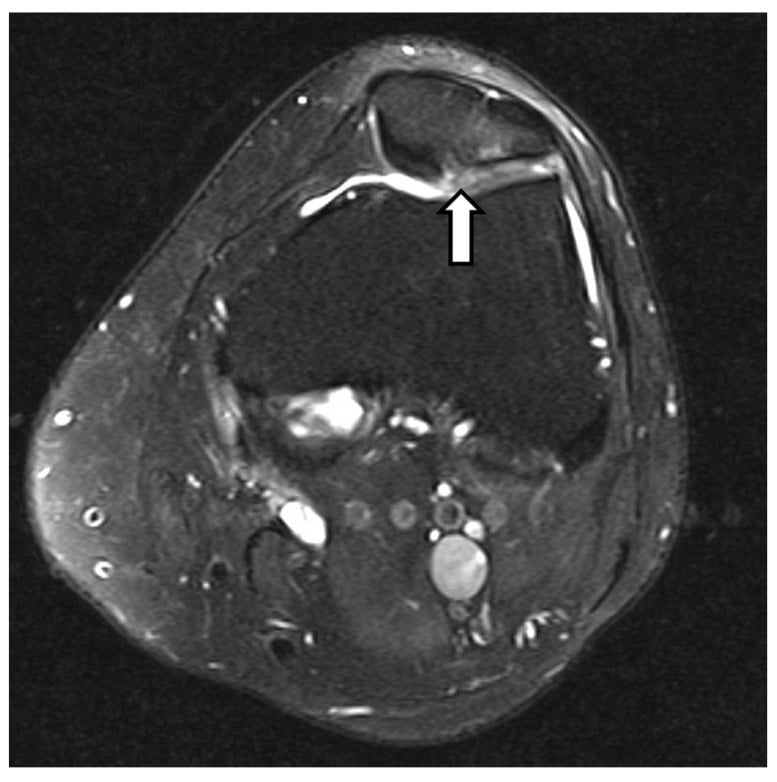
- “Meniscal tear on MRI: high signal on T2 extending to the articular surface (Grade 3). Grade 1-2 intrasubstance signal WITHOUT surface extension is degeneration, NOT tear.
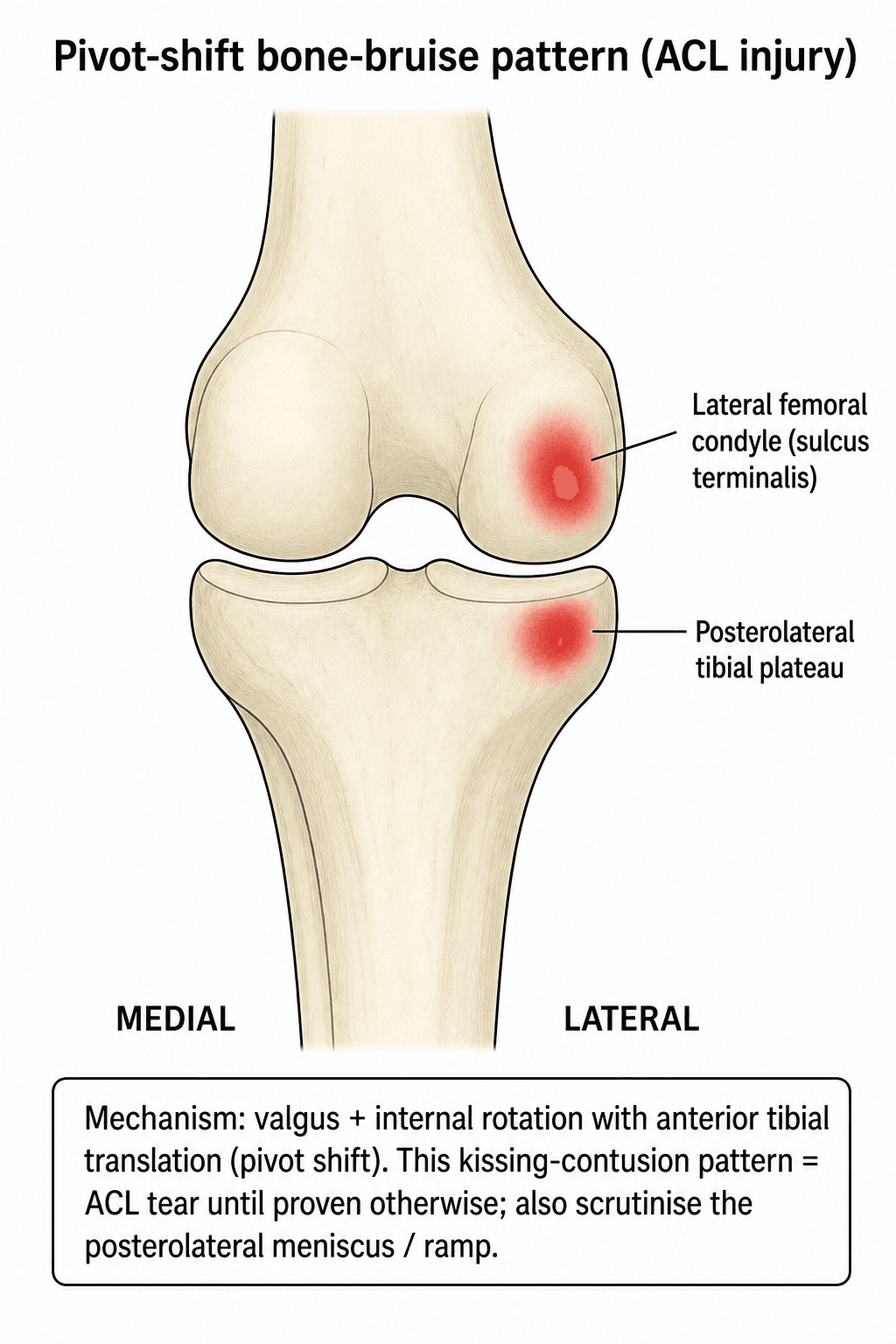
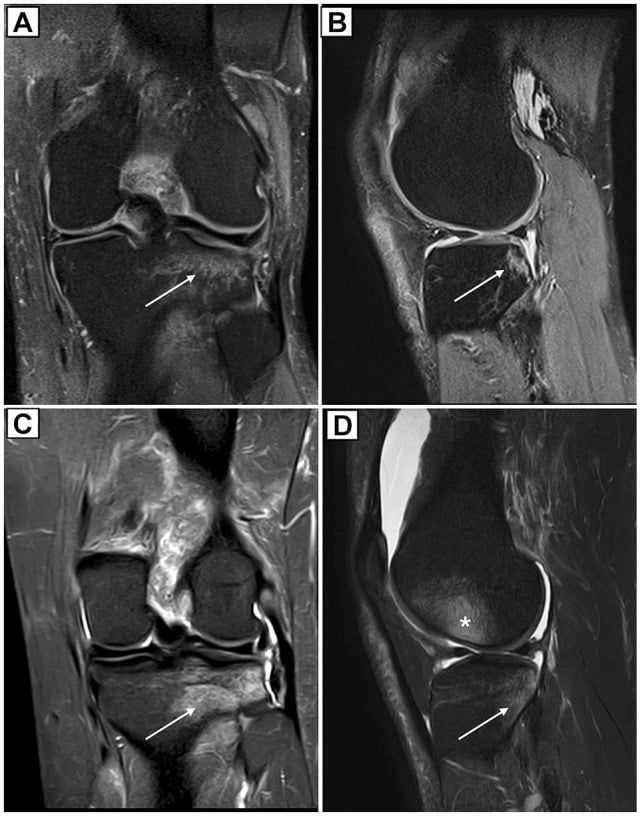
- “ACL tear MRI signs: non-visualisation of the ACL, horizontal/wavy course (loss of normal taut appearance), associated bone bruises (lateral femoral condyle + posterolateral tibial plateau).
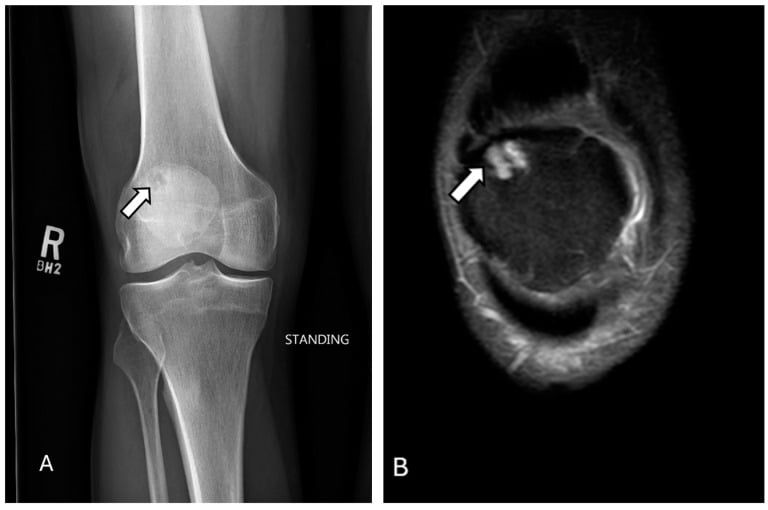
- “Pellegrini-Stieda lesion: calcification at the MCL origin (medial femoral condyle) = old MCL avulsion injury.
- “PCL injuries: associated with dashboard mechanism. MRI shows increased signal or disruption of the normally dark, uniform PCL.
Overview
The knee is the most frequently imaged lower limb joint and one of the most commonly tested imaging assessment topics in fellowship examinations. Systematic knee imaging rests on four principles: choosing the right views (weight-bearing views for osteoarthritis, the Ottawa rules for trauma), reading the radiograph systematically, knowing when MRI or CT adds value, and interpreting the MRI findings of internal derangement accurately.
Weight-bearing is the first principle. Non-weight-bearing radiographs significantly overestimate the remaining joint space, because the cartilage surfaces are not compressed under load. The error can lead to underestimation of the severity of osteoarthritis and to inappropriate surgical decision-making.
The Ottawa Knee Rules. After an acute knee injury, radiographs are indicated only if any of the following is present:
- Age 55 or older
- Tenderness at the fibula head
- Isolated tenderness of the patella
- Inability to flex the knee to 90 degrees
- Inability to weight-bear for 4 steps, both immediately after the injury and in the emergency department
If none of these is met, the probability of a clinically significant fracture is very low (95% CI 0% to 0.4% in the validation cohort) and radiographs can be safely deferred. In prospective validation the rule was 100% sensitive for clinically important fractures while cutting radiograph use by about 28%.
Reading the radiograph. Work through alignment, bones, cartilage spaces, soft tissues and special views in that order, so that the assessment is complete every time:
- Alignment - mechanical axis, tibial plateau alignment, patellar position (alta or baja), varus or valgus angulation, and joint congruence (dislocation)
- Bones - trace every cortex: femoral condyles, tibial plateaus, patella and fibula head, looking for fractures, lytic lesions and avulsion fragments (Segond, tibial spine)
- Cartilage spaces - joint space width, medial against lateral and patellofemoral, on weight-bearing views
- Soft tissues - suprapatellar effusion, lipohaemarthrosis (fat-fluid level), Pellegrini-Stieda calcification, popliteal cyst and soft-tissue swelling
- Special views - Rosenberg for the posterior condyles, skyline for the patellofemoral joint, and the tunnel view of the intercondylar notch for loose bodies and osteochondritis dissecans
Choosing the Right Investigation
Radiographs first. Plain radiographs are the first-line test for every knee presentation, with a weight-bearing AP and a lateral as the minimum. CT characterises fractures (tibial plateau) and malalignment; MRI is the reference test for menisci, cruciates and cartilage; ultrasound answers questions about effusions, popliteal cysts and guided injection. The scenarios in the table below set out the sequence.
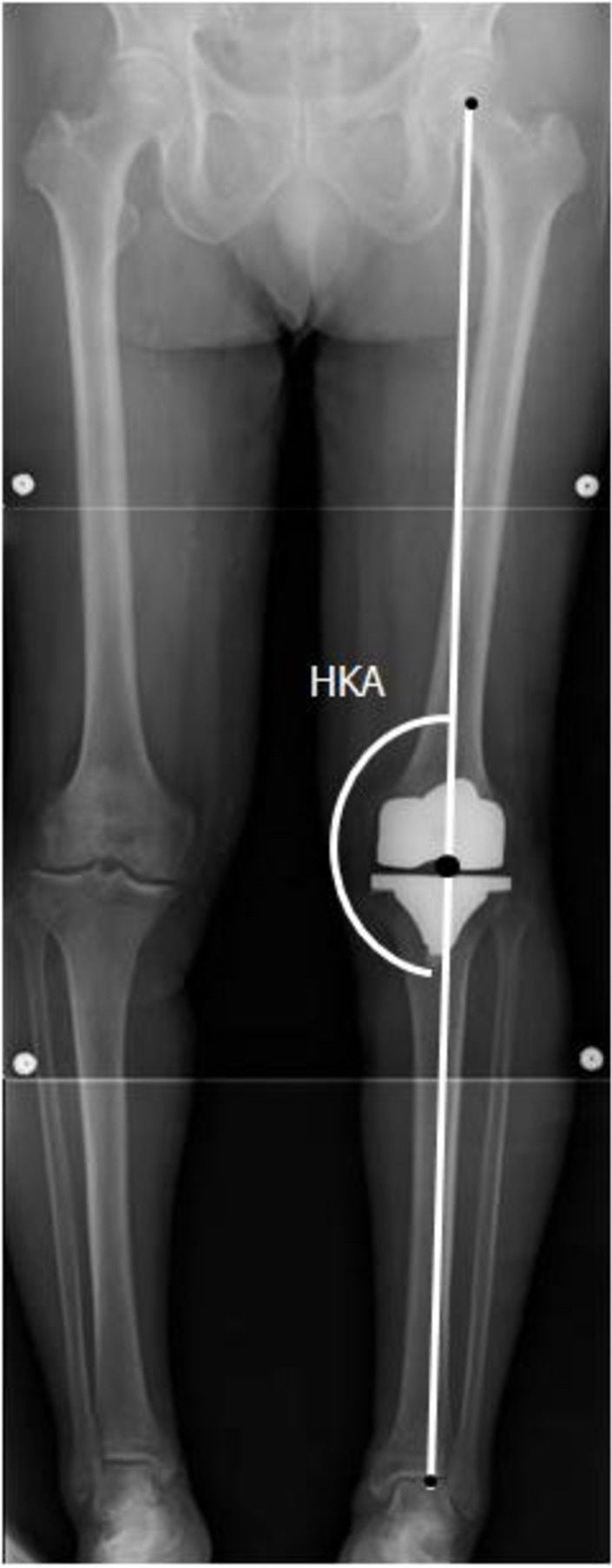
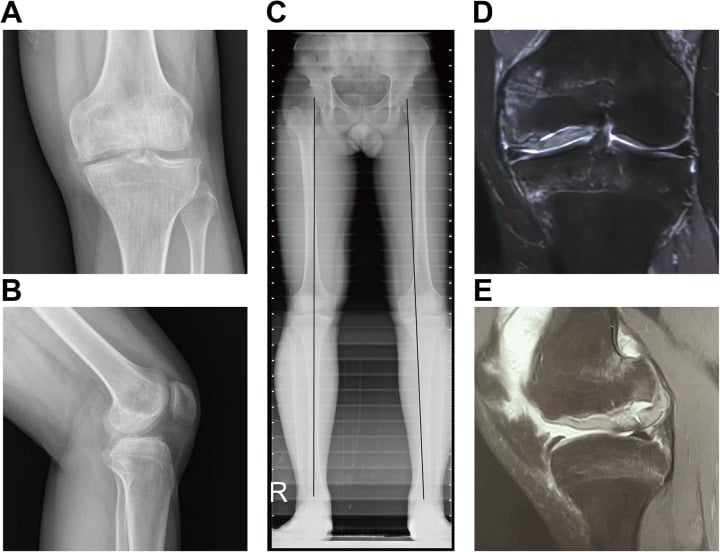
The weight-bearing series. Four views are the key to a comprehensive knee assessment. The standing AP, taken with the beam horizontal, shows the medial and lateral compartment joint space under physiological load. The full-length standing hip-knee-ankle film gives the mechanical axis, and is essential for total knee replacement planning and for assessing a high tibial osteotomy. The Rosenberg view is taken PA with the patient standing and the knees flexed 45 degrees. The skyline view, with the patient seated and the knees flexed 30-45 degrees, shows patellar tracking, tilt, subluxation and the patellofemoral joint space.
Why the Rosenberg view. The standard AP weight-bearing view may miss early to moderate osteoarthritis. Cartilage wear often begins posteriorly on the femoral condyles, and an extension AP projects through the anterior, thicker cartilage, which obscures the posterior wear. Flexing the knees to 45 degrees shifts the beam through the posterior condylar surface, where early cartilage loss occurs; in the original validation against intra-operative findings the view was more accurate, more sensitive and more specific than conventional extension AP views for grade III-IV cartilage loss. It is essential for assessing the severity of osteoarthritis before osteotomy or arthroplasty.
WARSWeight-Bearing Knee Views
Hook:WARS: the four views of a complete weight-bearing knee series.
- First-Line Imaging
- Radiographs (if Ottawa Rules positive): AP + lateral
- Advanced Imaging
- MRI for suspected internal derangement (ACL, meniscus). CT for tibial plateau fracture characterisation
- First-Line Imaging
- Weight-bearing AP + lateral + Rosenberg + skyline
- Advanced Imaging
- Full-length alignment (HKA) for osteotomy or arthroplasty planning. MRI only if diagnostic uncertainty
- First-Line Imaging
- AP + lateral radiographs (Segond fracture, effusion, tibial spine avulsion)
- Advanced Imaging
- MRI: gold standard, highly accurate. Assess associated meniscal (including ramp lesions) and collateral injuries
- First-Line Imaging
- Radiographs usually normal (may show degenerative changes)
- Advanced Imaging
- MRI: gold standard. Grade 3 signal (extends to surface) = tear. Root tears are critical to identify
- First-Line Imaging
- TRUE lateral (trochlear dysplasia) plus skyline for tilt and subluxation
- Advanced Imaging
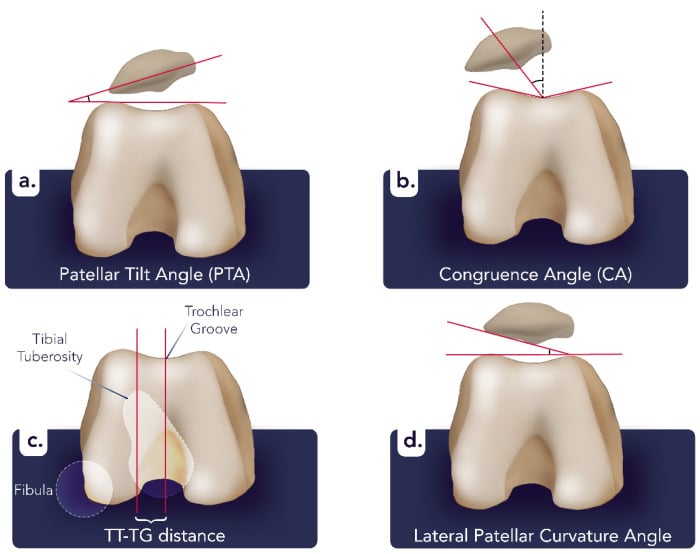
- MRI for cartilage and MPFL. TT-TG over 20mm SUGGESTS pathological lateralisation - it is a CT threshold, MRI values run 2-4mm lower, and it is least reliable in the dysplastic trochlea where the groove has no clear floor
- First-Line Imaging
- AP + lateral radiographs (lipohaemarthrosis on lateral)
- Advanced Imaging
- CT with 3D reconstruction, essential for morphology and planning. Classify on the THREE-COLUMN system rather than Schatzker where reliability matters - on 3D CT the three-column kappa is 0.874 versus 0.552 for Schatzker. Add MRI for the ligaments: 93% of Schatzker IV fractures have an ACL injury
Radiographic and MRI Assessment
Lipohaemarthrosis. A fat-fluid level on a horizontal-beam lateral radiograph: the fat, being less dense, floats on top of the blood. It indicates an intra-articular fracture with marrow fat leaking into the joint through the fracture site, and it is pathognomonic. The most common cause is a tibial plateau fracture, but any intra-articular fracture can produce it, and it requires CT for full characterisation of the fracture.
Segond fracture. A small avulsion fracture of the anterolateral tibial plateau, caused by traction on the anterolateral capsular and ligamentous complex (the anterolateral ligament and capsulo-osseous attachments) during an internal-rotation pivot mechanism. The fragment is a thin vertical sliver of cortical bone off the anterolateral tibial rim, immediately below the articular surface. In adults it is strongly associated with ACL rupture and should be treated as an ACL tear until proven otherwise; in skeletally immature patients a Segond-type avulsion can occur with an intact ACL, so MRI is required to define the full injury pattern.
What else the Segond fracture predicts. It also predicts a meniscal ramp lesion, and the size of that association is worth carrying: ramp lesions are present in about 40 percent of all ACL-injured knees, and a Segond fracture raises the odds of one more than fourfold (odds ratio 4.38). Posteromedial tibial bone bruising and a contact-sport mechanism carry the same warning. The practical problem is that the ramp lesion sits at the posteromedial meniscocapsular junction, where MRI under-detects it compared with arthroscopic probing, so a Segond fracture should change what you look for on the scan and what you probe at arthroscopy, not merely confirm the ACL.
Pellegrini-Stieda lesion. Calcification adjacent to the medial femoral condyle, representing ossification at the origin of the MCL, and the mark of a previous, usually chronic, MCL avulsion injury. It may be seen incidentally and is usually asymptomatic, but can occasionally cause medial knee pain.
Tibial spine avulsion. An avulsion fracture of the tibial eminence, the ACL footprint, most common in children and adolescents aged 8-14 years. The Meyers and McKeever classification:
- Type I - non-displaced
- Type II - hinged, with anterior elevation
- Type III - completely displaced
- Type IV - comminuted
Types III and IV require surgical fixation.
Grading the joint space. Kellgren-Lawrence grading, on weight-bearing views:
- Grade 0 - normal
- Grade 1 - possible osteophytes
- Grade 2 - definite osteophytes, possible joint space narrowing
- Grade 3 - moderate osteophytes, definite joint space narrowing
- Grade 4 - large osteophytes, severe joint space narrowing, subchondral sclerosis and cyst formation
Bone Bruise Patterns and the Mechanism
Bone marrow oedema (contusion) on fluid-sensitive MRI is a fingerprint of the injury mechanism: the location of the "kissing" bruises tells you which structure was loaded and which ligament to scrutinise. Marrow oedema is also the most durable evidence available. The ligament may be partially imaged or equivocal, but the bruise records where the two bones actually collided, and it persists for weeks after the effusion has gone.
- Bruise location
- Lateral femoral condyle (sulcus terminalis) plus posterolateral tibial plateau
- What it points to
- ACL tear - the classic pattern; also raises suspicion of a posterolateral meniscal injury and of a ramp lesion at the posteromedial meniscocapsular junction
- Bruise location
- Anterior proximal tibia
- What it points to
- Posterior force on the flexed knee - PCL injury
- Bruise location
- Lateral femoral condyle and lateral tibial plateau (impaction side), with medial-sided soft-tissue injury
- What it points to
- MCL injury - the bone is bruised laterally while the medial restraint fails
- Bruise location
- Medial patellar facet plus the anterolateral/lateral femoral condyle
- What it points to
- Transient lateral patellar dislocation with MPFL injury - look for an osteochondral fragment
- Bruise location
- 'Kissing' contusions of the anterior femur and anterior tibia
- What it points to
- Hyperextension injury threatening the cruciates (and posterior structures)
Read the bruise, then hunt the lesion. The contusion pattern is a clue, not the diagnosis. A pivot-shift bruise should send you to scrutinise the ACL and the posteromedial meniscocapsular junction for a ramp lesion; a medial-patellar-facet plus lateral-femoral-condyle bruise should send you to the MPFL and to the lateral trochlear and patellar cartilage for an osteochondral fragment. Bone marrow oedema also has non-traumatic mimics (red-marrow reconversion, insufficiency fracture, SIFK), so always correlate the pattern with the clinical mechanism.
Measuring the Patellofemoral Joint
Patellar instability is the one knee problem where the radiographic measurements are the diagnosis, because each one names a separate anatomical reason the patella escapes laterally, and each has a different operation attached to it. A candidate who says only "there is patella alta" has answered a quarter of the question.
Patellar height
Measured on the true lateral. Patellar height is measured on a true lateral with the knee flexed about 30 degrees. The ratios in use are not interchangeable:
- What it measures
- Patellar tendon length divided by patellar bone length
- Normal range and threshold
- Normal about 0.8-1.2; over 1.2 is alta, under 0.8 baja. Independent of knee flexion, but unaffected by (and therefore blind to) a tibial tubercle osteotomy
- What it measures
- Distance from the inferior articular margin of the patella to the anterosuperior tibia, divided by patellar articular length
- Normal range and threshold
- Normal about 0.6-1.2; over 1.2 is alta. The ratio of choice when planning or auditing a distalisation, because it uses the tibia as its reference
- What it measures
- Perpendicular from the inferior patellar articular surface to the tibial plateau line, divided by patellar articular length
- Normal range and threshold
- Normal about 0.5-1.0; over 1.0 is alta
- What it measures
- Tendon length divided by patellar ARTICULAR surface length
- Normal range and threshold
- Over 2.0 is alta; devised because a long non-articular patellar nose distorts the classic ratio
Trochlear dysplasia
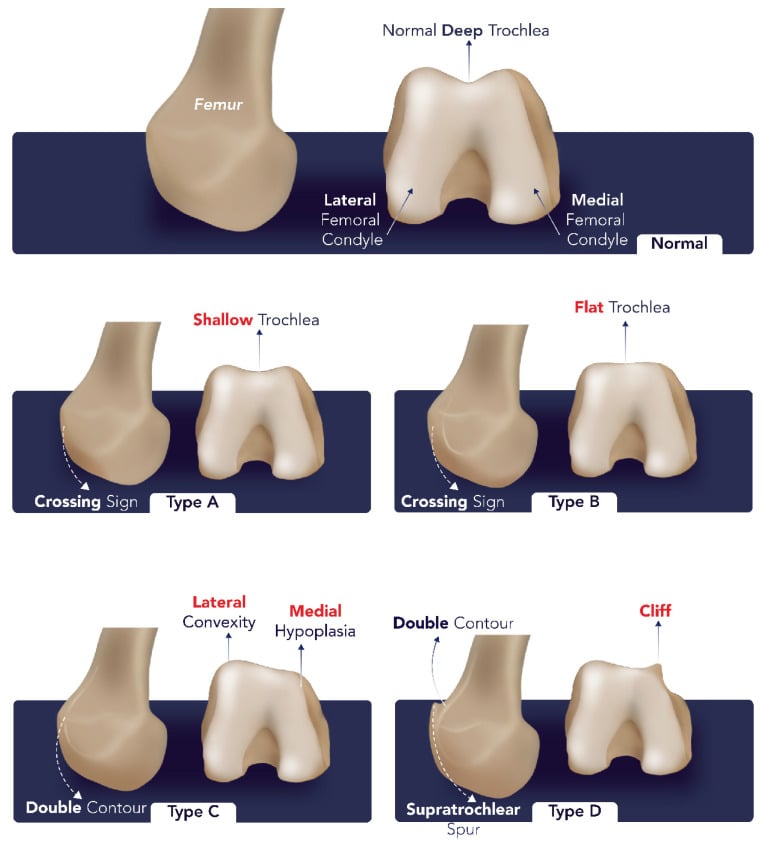
The true lateral radiograph is the diagnostic view, not the skyline. This surprises candidates who assume an axial view must be needed to judge a groove. A true lateral superimposes the two femoral condyles, so any abnormality of the trochlear floor projects as an extra line:
- The crossing sign - the line of the trochlear floor crosses the anterior border of a femoral condyle, meaning the groove has become flat at that point. This is the entry criterion for dysplasia.
- The supratrochlear spur (bump) - a prominence at the proximal trochlea, over which the patella must climb.
- The double contour - the medial trochlear facet projecting behind the lateral, indicating a hypoplastic medial facet.
The Dejour classification (types A to D) is built from these three signs. A is a crossing sign alone with a shallow but symmetrical groove; B adds a spur and a flat trochlea; C adds a double contour with asymmetric facets; D has all of them plus a vertical cliff between the facets. Types B and D are the ones that usually need trochleoplasty rather than a soft-tissue procedure alone.
Putting the measurements together
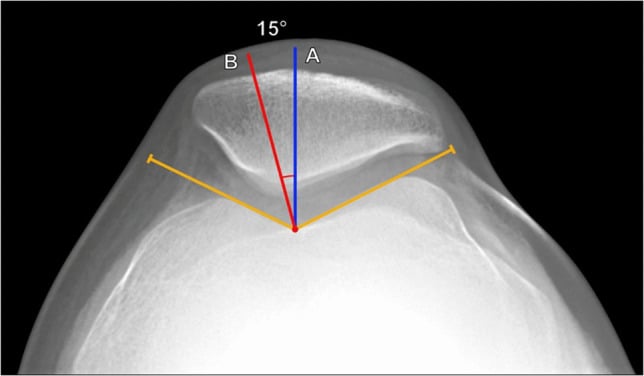
Four independent abnormalities. Lateral patellar instability has four separate causes, and a scan should be interrogated for each: trochlear dysplasia on the true lateral, patella alta on a height ratio, excessive lateralisation of the extensor mechanism on the TT-TG or TT-PCL distance, and patellar tilt of over about 20 degrees on axial imaging. They coexist but are independent, and the operation follows whichever ones are abnormal.
Differential Diagnosis & Imaging Pitfalls
Several normal variants and degenerative findings are commonly over-called as significant pathology, and distinguishing a true tear from a mimic is a recurring exam theme. The table pairs each finding with the mimic that is over-called.
- True pathology (when to call it)
- Grade 3: linear high signal reaching an articular surface = tear
- Mimic / pitfall (do NOT over-call)
- Grade 1-2 intrasubstance signal (no surface contact) = degeneration, not a tear
- True pathology (when to call it)
- True radial or flap tear with surface extension
- Mimic / pitfall (do NOT over-call)
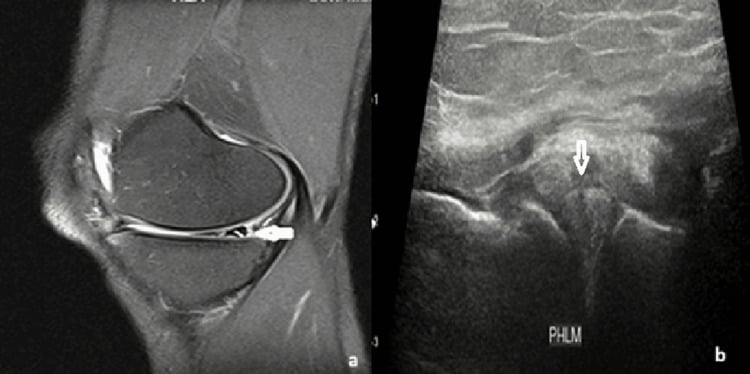
- Transverse (intermeniscal) ligament insertion and popliteus hiatus mimic anterior horn / posterolateral tears
- True pathology (when to call it)
- Genuine narrowing on a weight-bearing or Rosenberg view
- Mimic / pitfall (do NOT over-call)
- Apparent preservation on a non-weight-bearing film (overestimates joint space)
- True pathology (when to call it)
- Non-visualisation, horizontal course, plus pivot-shift bone bruise
- Mimic / pitfall (do NOT over-call)
- Mucoid degeneration / ganglion of the ACL (celery-stalk appearance, ligament intact)
- True pathology (when to call it)
- Pivot-shift bruise pattern, insufficiency/stress fracture, SIFK
- Mimic / pitfall (do NOT over-call)
- Normal red-marrow reconversion or post-exercise oedema in athletes
- True pathology (when to call it)
- True lateral meniscal or chondral lesion
- Mimic / pitfall (do NOT over-call)
- Iliotibial band friction signal and a discoid lateral meniscus (a variant, not a tear unless it tears)
The single most common reportable error in knee MRI is calling Grade 1-2 intrasubstance meniscal signal a "tear." Only signal that unequivocally reaches an articular surface (Grade 3) is a tear. Over-calling degeneration drives inappropriate arthroscopy, particularly in middle-aged and older patients where degenerate meniscal tears respond no better to surgery than to structured exercise.
Ultrasound of the Knee
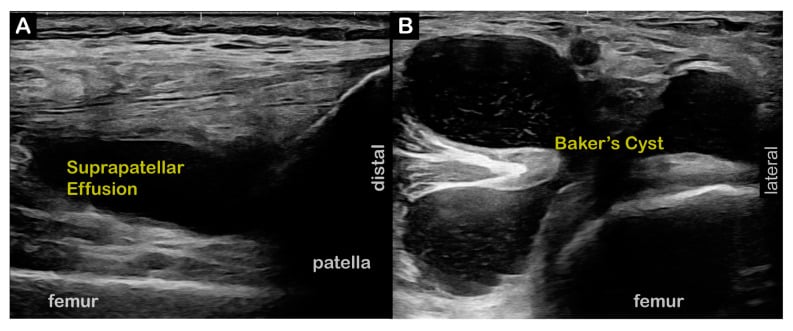
Ultrasound is cheap, dynamic and radiation-free, and it is the only knee modality that images a structure while the patient moves it. Its weakness is the mirror image of that strength: it is operator-dependent, and sound will not travel through bone, so everything inside the joint is hidden. Knowing precisely which questions it answers, and which it cannot, matters most where MRI is scarce.
- What it shows
- Fluid and synovial thickening in the suprapatellar pouch
- Note
- Sensitive for small effusions; guides aspiration
- What it shows
- Fluid in the gastrocnemio-semimembranosus bursa with its characteristic neck; can show rupture tracking down the calf
- Note
- A common cause of posterior knee swelling and a DVT mimic when ruptured
- What it shows
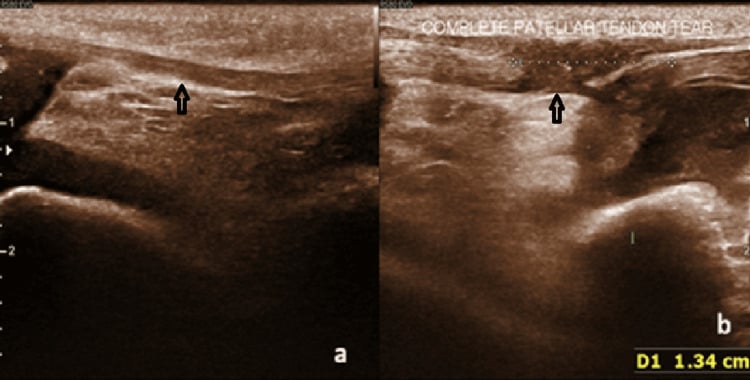
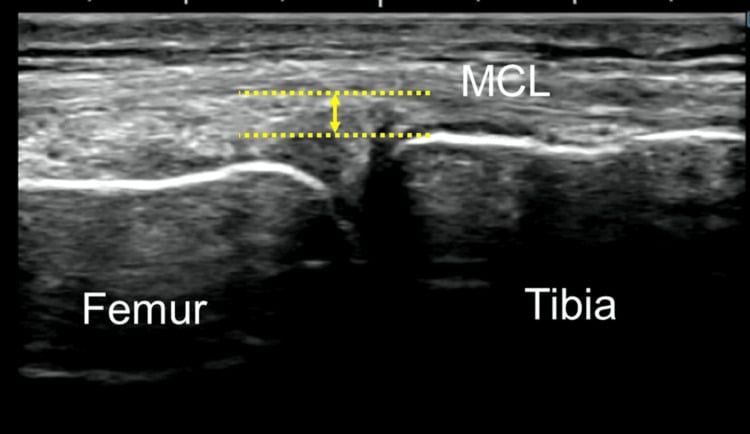
- Quadriceps and patellar tendon (tendinopathy, tears), MCL, iliotibial band
- Note
- Excellent for superficial structures; dynamic stress assessment is possible
- What it shows
- Real-time needle guidance for aspiration and injection
- Note
- Improves accuracy of joint and soft-tissue injections
- What it shows
- Limited - the cruciates, menisci and articular cartilage are largely inaccessible
- Note
- Ultrasound does NOT replace MRI for internal derangement
The blind spot. Ultrasound is the right first tool for an effusion, a suspected Baker cyst, a superficial tendon problem or a guided injection, and it carries more diagnostic weight where MRI is scarce. It cannot reliably assess the cruciate ligaments, the menisci or the articular cartilage, so a haemarthrosis with a positive Lachman still needs an MRI, not just an ultrasound.
Guidelines, Registries & Global Practice
Knee imaging follows a broadly consistent evidence-based algorithm worldwide: plain radiographs first (weight-bearing for any osteoarthritis question), a validated decision rule to ration radiographs after acute trauma, MRI for internal derangement, and CT for fracture morphology. The differences between societies are mostly of emphasis and access rather than of principle.
Global epidemiology. Symptomatic knee OA affects an increasing share of the adult population worldwide and is a leading cause of disability in the Global Burden of Disease estimates, driven by ageing and rising obesity. ACL injuries occur most commonly in young athletes (pivoting/contact sports), and meniscal tears span a bimodal pattern — traumatic tears in the young and degenerate tears in middle age and older. Tibial plateau fractures cluster bimodally too (high-energy injury in the young, low-energy fragility fractures in older adults).
- Acute knee trauma
- Radiographs first; apply a decision rule; MRI for suspected ligament/meniscal injury once fracture excluded
- OA assessment
- Weight-bearing radiographs are the appropriate first test; MRI not routinely indicated
- Suspected internal derangement
- MRI is the preferred advanced test
- Acute knee trauma
- Selective radiography (Ottawa-type rule); avoid routine knee MRI in primary care
- OA assessment
- Weight-bearing radiographs; clinical diagnosis of OA may not need imaging at all
- Suspected internal derangement
- MRI where the result will change management, usually via secondary care
- Acute knee trauma
- Radiographs then CT for articular fractures (tibial plateau) to plan fixation
- OA assessment
- Not the focus; alignment views for deformity planning
- Suspected internal derangement
- MRI to characterise associated ligament/meniscal injury
- Acute knee trauma
- Decision-rule-guided radiography; early MRI in young athletes with a haemarthrosis
- OA assessment
- Weight-bearing plus skyline and alignment views before surgery
- Suspected internal derangement
- MRI gold standard; actively look for ramp and root tears
Registry and audit context. There is no dedicated imaging registry, but national arthroplasty registries (NJR for England/Wales, AJRR in the US, AOANJRR in Australia, the Swedish and Norwegian registries, NZJR) rely on standardised weight-bearing and full-length alignment radiographs for pre-operative planning and outcome audit, reinforcing weight-bearing imaging as the global standard for OA workup.
High- versus limited-resource practice variation. Where MRI is scarce or expensive, ultrasound (effusion, Baker cyst, dynamic patellar tracking, guided injection) and careful clinical examination carry more diagnostic weight, and diagnostic arthroscopy may still be used selectively. In well-resourced settings, pre-operative MRI before arthroscopy is routine and purely diagnostic arthroscopy has largely been abandoned. Decision rules such as the Ottawa Knee Rule are especially valuable in high-volume or resource-limited emergency settings to ration radiography safely.
Controversies & Areas of Uncertainty
MRI in degenerate meniscal tears. In middle-aged and older patients with knee pain, MRI frequently shows a degenerate meniscal tear, and such tears are also highly prevalent in asymptomatic knees. Multiple trials show that arthroscopic partial meniscectomy offers little benefit over exercise therapy for degenerate tears without mechanical locking. The controversy is how much weight to give an MRI tear when the same finding is so common in pain-free knees.
Incidental findings and over-imaging. Early MRI can drive over-treatment by surfacing incidental degeneration, marrow oedema or chondral changes of uncertain significance. Decision rules (Ottawa) and a weight-bearing-first radiograph strategy exist precisely to limit low-value imaging, yet practice variation in MRI access and referral thresholds remains wide between health systems.
The anterolateral ligament and the Segond fracture. The structure avulsed in a Segond fracture has been debated: lateral capsule, anterolateral ligament, or the capsulo-osseous iliotibial band. The clinical message is stable. In adults it signals ACL-complex injury and a high rate of meniscal ramp lesions, but in children it can occur with an intact ACL, so MRI, not the radiograph alone, defines management.
Field strength and 3T MRI. Higher field strength (3T) improves signal-to-noise and the depiction of small structures (cartilage, small meniscal and ligament tears), but 1.5T remains diagnostically adequate for most internal derangement. The incremental value of 3T over a well-performed 1.5T study for routine reporting is real but modest, and access varies globally.
Clinical Decision Scenarios
Practise clinical reasoning and management decisions out loud
“A 65-year-old woman is being assessed for knee osteoarthritis. She brings non-weight-bearing AP and lateral knee radiographs that show mild changes. Her clinical symptoms suggest more severe disease.”
“A 25-year-old footballer presents with acute knee injury after a twisting mechanism. The lateral radiograph shows a fat-fluid level in the suprapatellar pouch.”
“An examiner shows you a knee MRI and asks you to systematically describe your assessment of the menisci and cruciate ligaments.”
Weight-Bearing Views (WARS)
- Weight-bearing AP: mandatory for OA assessment (non-WB overestimates JSW)
- Alignment (HKA): full-length for mechanical axis, surgical planning
- Rosenberg: PA flexion 45 degrees — detects posterior condylar wear missed on AP
- Skyline: patellofemoral assessment (tilt, subluxation, PFJOA)
Key Radiographic Signs
- Lipohaemarthrosis: fat-fluid level on horizontal beam lateral = intra-articular fracture
- Segond fracture: anterolateral tibial avulsion = strongly associated with ACL tear (treat as ACL tear; check for ramp lesion)
- Pellegrini-Stieda: medial epicondylar calcification = old MCL injury
- Tibial spine avulsion: ACL footprint avulsion (children), Meyers-McKeever classification
Meniscal MRI Assessment
- Grade 3 (signal to articular surface) = TEAR. Grade 1-2 = degeneration (NOT tear)
- Absent bow-tie sign: suggests bucket-handle (displaced) tear
- Double PCL sign: displaced bucket-handle fragment lies by PCL
- Root tear: absent root on coronal MRI + extrusion more than 3mm = functional meniscectomy
Patellar Instability — the Four Measurements
- Trochlear dysplasia: diagnosed on the TRUE LATERAL, not the skyline — crossing sign, supratrochlear spur, double contour (Dejour A-D)
- Patella alta: Insall-Salvati over 1.2 (normal 0.8-1.2); Caton-Deschamps over 1.2 — use Caton-Deschamps when planning distalisation
- Lateralised extensor mechanism: TT-TG over 20mm on CT (MRI values run 2-4mm lower); unreliable in a dysplastic trochlea
- Patellar tilt over about 20 degrees on axial imaging
- They coexist but are independent — the operation follows whichever are abnormal
ACL Tear MRI Signs (BLAND)
- Bone bruise: lateral femoral condyle + posterolateral tibial plateau (pivot shift)
- Lax/horizontal ACL course (loss of normal taut appearance)
- Anterior tibial translation more than 7mm (sagittal images)
- Non-visualisation of ligament (most specific sign)
- Deep lateral femoral notch sign (more than 1.5mm)
Evidence Base
MRI vs Arthroscopy for Internal Derangement of the Knee
- Systematic review (arthroscopy as the reference standard) found MRI highly accurate for meniscal and ACL tears, and the most appropriate screening tool before therapeutic arthroscopy.
- Diagnostic performance differed by structure, with accuracy of approximately 85% across medial meniscus, lateral meniscus and ACL.
- MRI is preferable to diagnostic arthroscopy in most patients because it avoids the surgical risks of an operative procedure.
Ottawa Knee Rule — Prospective Validation
- In 1096 adults with acute knee injury, the rule was 100% sensitive (95% CI 0.94-1.0) for the 63 clinically important fractures.
- If the rule was negative, the estimated probability of fracture was 0% (95% CI 0%-0.4%).
- Applying the rule could reduce radiograph use by an estimated 28%, and physicians interpreted it correctly in 96% of cases.
These two studies bracket the imaging pathway at both ends, and both results are lower-key than their reputations. The Ottawa rule earns its place by being essentially 100 percent sensitive in its own validation while removing more than a quarter of radiographs - a rule that safely does less. Be precise if pressed: the single-centre validation reported sensitivity of 1.0, but the lower bound of its confidence interval was 0.94 on 63 fractures, and Bachmann's pooled estimate across 6 studies and 4,249 adults is 98.5 per cent (93.2 to 100) with a specificity of 48.6 per cent. "Around 98 to 100 per cent" is the defensible phrasing; see Ottawa knee rules. MRI earns its place at about 85 percent accuracy, which is good enough to replace diagnostic arthroscopy but not good enough to overrule a clear clinical examination: roughly one knee in seven is called incorrectly, and lateral meniscal tears are the hardest of all to see.