Shaft fractures of the Radius without DRUJ injury
- Galeazzi Equivalent?: Every isolated radius fracture is a Galeazzi until proven otherwise. You MUST check the DRUJ.
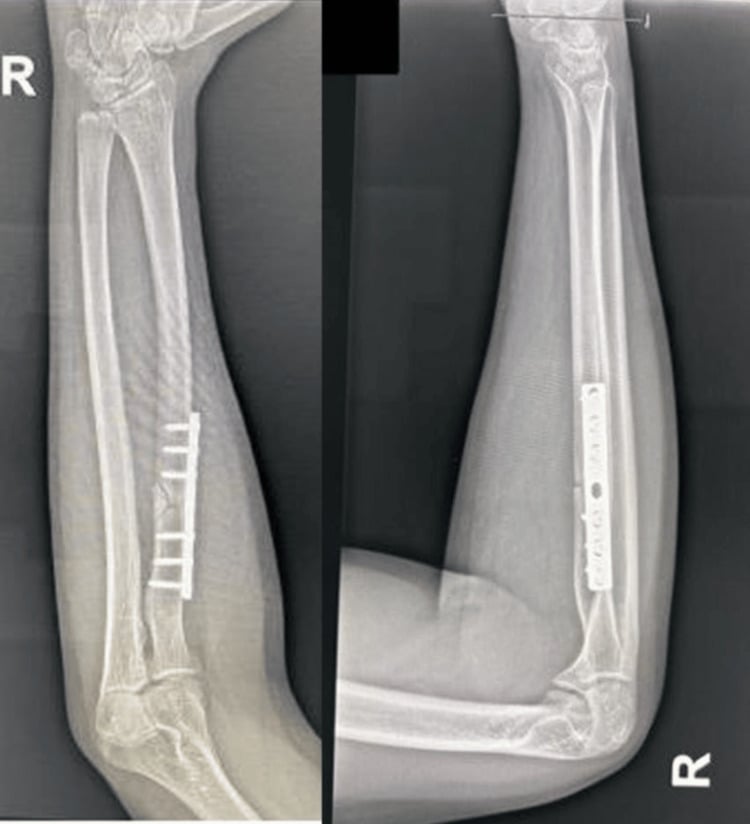
- Radial Bow: Restoring the anatomic bow (curve) of the radius is critical for full supination/pronation.
- Approaches: Henry (volar) is the universal approach and can access the whole radius. Thompson (dorsal) is reserved for the proximal third. Both put the PIN at risk proximally.
- Hardware: 3.5mm LCDCP or LCP plates are standard.
- “Rule of Two: Always x-ray the joint above and below (Elbow and Wrist).
- “Tuberosity: The bicipital tuberosity points Posteriorly in Pronation and Medially in Supination (reduces the gap).
- “Interosseous Nerve: PIN is at risk in proximal fractures (Henry or Thompson).
Overview and Epidemiology
An isolated radius fracture is a fracture of the radial shaft without involvement of the distal radioulnar joint (DRUJ) or the proximal radioulnar joint (PRUJ). It is less common than the both-bone forearm fracture, and it is a diagnosis made only after two look-alikes have been excluded: the Galeazzi injury (distal third of the radius with DRUJ disruption) and the Monteggia injury (proximal ulna with the radial head dislocated).
Mechanism. A direct blow or high-energy trauma. A direct defensive blow is the mechanism of the nightstick fracture, but that name belongs to the isolated fracture of the ulnar shaft (see the differential below), not to the radius.
Who. It is common in young active men after trauma and occurs occasionally in elderly patients after falls. High-energy injuries such as motor vehicle accidents have a high association with compartment syndrome.
Anatomy and Biomechanics
A load-sharing ring. The radius and ulna form a ring, joined by the proximal and distal radioulnar joints and the interosseous membrane (IOM). The radius transmits 80% of the axial load from the wrist. If the IOM is disrupted (Essex-Lopresti), the radius migrates proximally, causing ulnocarpal impaction and elbow dysfunction.
The interosseous membrane. Its central band is the primary longitudinal stabiliser of the forearm. The fibres run obliquely from the radius proximally to the ulna distally, transferring load from the radius (wrist) to the ulna (elbow), and a fracture of the radius disrupts that transfer.
The radial bow. The radius rotates around the straight ulna like a bucket handle, pronation and supination turning about an axis that passes through the radial head and the ulnar head. The radius has a lateral bow with its apex at the level of the pronator teres insertion, and the maximum bow is typically 15 mm from the straight line connecting the tuberosity to the styloid.
Why the bow matters. Lose the bow and you lose the sweep: the radius impinges on the ulna and pronation and supination are lost. Any angulation acts as a cam that blocks rotation, and 10 degrees of angulation can block 50% of it. This is why anatomic reduction is critical.
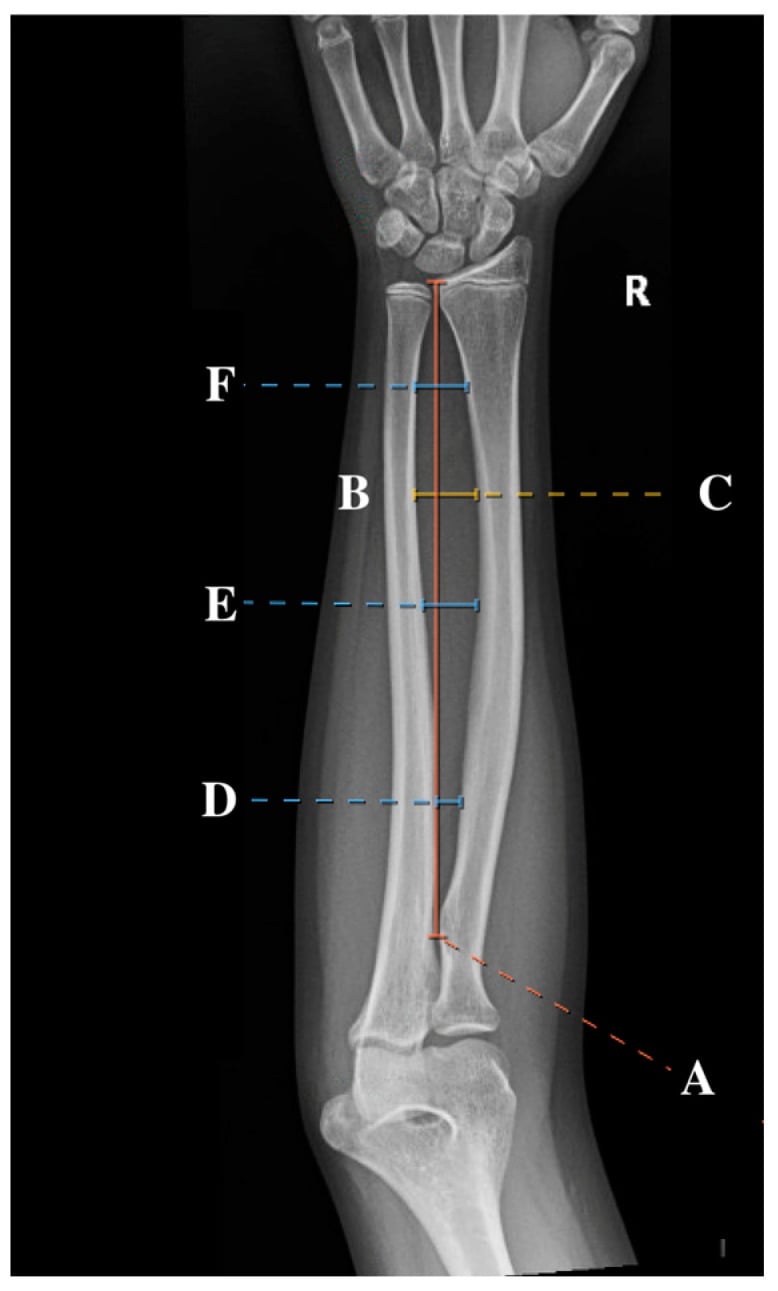
Deforming forces. Biceps (a supinator) and pronator teres (a pronator) pull the fragments into a deformity that depends on the level of the fracture; pronator teres pronates and flexes the middle fragment, and pronator quadratus pronates the distal one. In the proximal third the forearm is plated in supination to match the proximal fragment; the table gives the position for each level.
- Proximal fragment
- Supinated (biceps)
- Distal fragment
- Pronated (pronator teres and quadratus)
- Plate or cast in
- Supination
- Proximal fragment
- Neutral (biceps cancels pronator teres)
- Distal fragment
- Pronated (pronator quadratus)
- Plate or cast in
- Neutral
- Proximal fragment
- Pronated (pronator teres)
- Distal fragment
- Pronated (pronator quadratus)
- Plate or cast in
- Pronation
Blood supply. The nutrient artery enters the radius in the proximal third from the anterior interosseous artery. Fractures distal to it may heal more slowly, their supply arriving by retrograde flow.
Shape and plating surfaces. The shaft is triangular in cross-section, with anterior, posterior and interosseous borders. The volar surface is flat and ideal for plating, and LCDCP plates sit well on it; the dorsal surface is convex and covered by the extensor muscles, so a plate there is prominent. The safe zone for implants is the flat volar surface in the distal two-thirds and the dorsal surface in the proximal third.
Nerves at risk. The anterior interosseous nerve has a section of its own below. The others:
- Superficial radial nerve - lies under brachioradialis, at risk in the Henry approach
- Posterior interosseous nerve (PIN) - pierces supinator, at risk in any proximal exposure, Henry or Thompson
- Median nerve - medial to FCR, at risk in the Henry approach
Classification Systems
AO/OTA. The forearm bones are coded 22, and the pattern guides fixation: a type A fracture can achieve absolute stability with compression plating, while a type C fracture requires bridge plating.
- 22-A - simple (transverse or oblique): A1 ulna alone, A2 radius alone (this topic), A3 both bones
- 22-B - wedge (butterfly fragment)
- 22-C - multifragmentary (comminuted)
By level. Location determines the deforming forces (see Anatomy) and the surgical approach, and is clinically useful for preoperative planning:
- Proximal third - supination deformity; the hardest to access, with the PIN at risk, and requires careful nerve protection during exposure
- Middle third - neutral deformity at the apex of the bow; the most common location for an isolated radius fracture
- Distal third - pronation deformity and the Galeazzi risk; always assess DRUJ stability
Clinical Assessment
History. Establish the mechanism, a direct blow or a fall on the outstretched hand, and look for a defensive wound.
Examination. Note angulation and rotational deformity, then the soft tissues: open wounds, tented skin, a tight compartment. Forearm compartment syndrome is a surgical emergency, announced by pain on passive finger extension (Volkmann's ischaemia). Each nerve has its own motor test:
- PIN - thumbs up (EPL) and finger extension (EDC); wrist extension is preserved (ECRL)
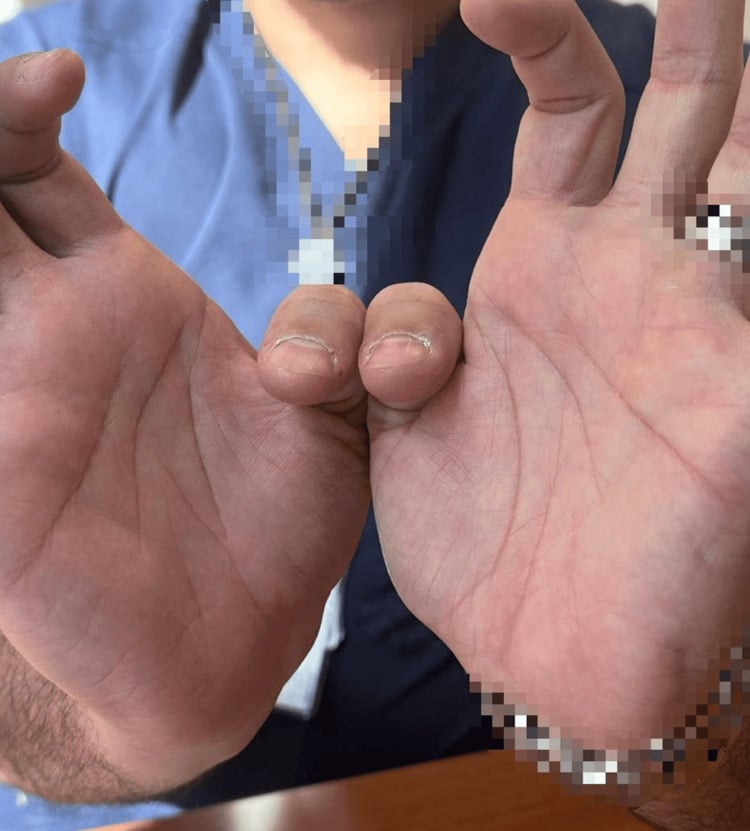
- AIN - the OK sign (FPL and FDP); AIN palsy is common with proximal-third fractures
- Ulnar nerve - crossing the fingers (interossei)
The hidden Galeazzi. If the radius is shortened by more than 5 mm, the DRUJ must be injured: an "isolated" radius fracture with significant shortening is a Galeazzi. The table sets out how each mimic declares itself.
- Bony Lesion
- Radial shaft, ulna intact
- Joint Involved
- DRUJ and PRUJ both normal
- Discriminating Clue
- Less than 5mm shortening, congruent DRUJ on true lateral wrist film
- Bony Lesion
- Distal-third radius
- Joint Involved
- DRUJ disrupted
- Discriminating Clue
- Over 5mm shortening, widened DRUJ, ulnar styloid avulsion
- Bony Lesion
- Proximal ulna
- Joint Involved
- PRUJ (radial head dislocated)
- Discriminating Clue
- Radiocapitellar line does not bisect capitellum on any view
- Bony Lesion
- Radial head/neck
- Joint Involved
- DRUJ + entire IOM
- Discriminating Clue
- Wrist pain after radial head fracture, positive ulnar variance
- Bony Lesion
- Isolated ulnar shaft
- Joint Involved
- Both joints normal
- Discriminating Clue
- Direct defensive blow, radius and both joints intact
Soft-tissue grading. The Tscherne classification grades the soft-tissue injury:
- Grade 0 - minimal soft-tissue damage
- Grade 1 - superficial abrasion or contusion
- Grade 2 - deep contaminated abrasion with local skin or muscle contusion
- Grade 3 - extensive skin contusion or crushing, muscle destruction, compartment syndrome
Investigations
Radiographs. Image the whole forearm and the joints at both ends:
- Forearm AP and lateral - elbow and wrist on one film if possible, or separate films
- Wrist AP and lateral - ulnar variance (shortening) and DRUJ widening
- Elbow AP and lateral - the radial head (Monteggia)
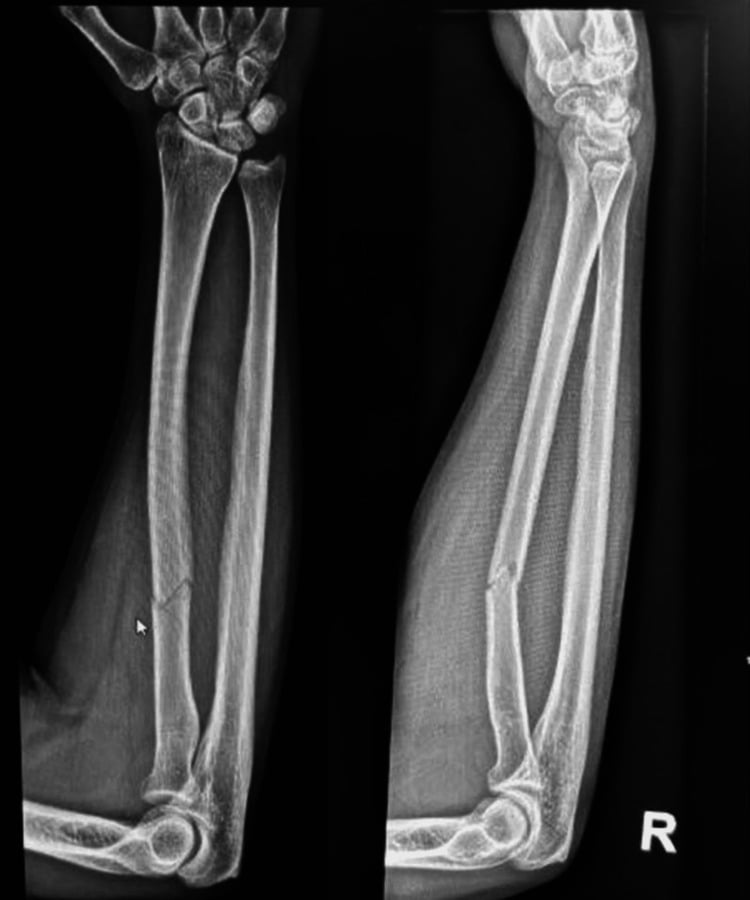
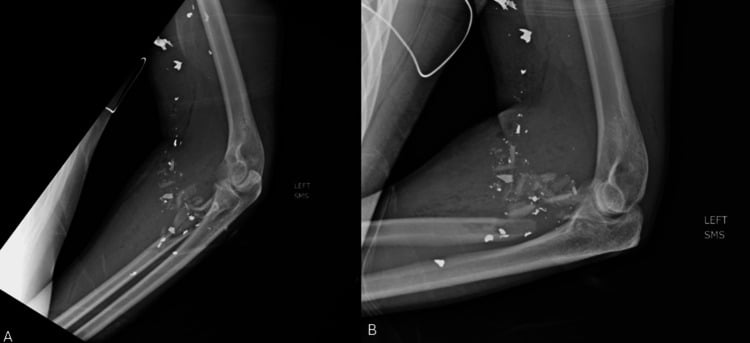
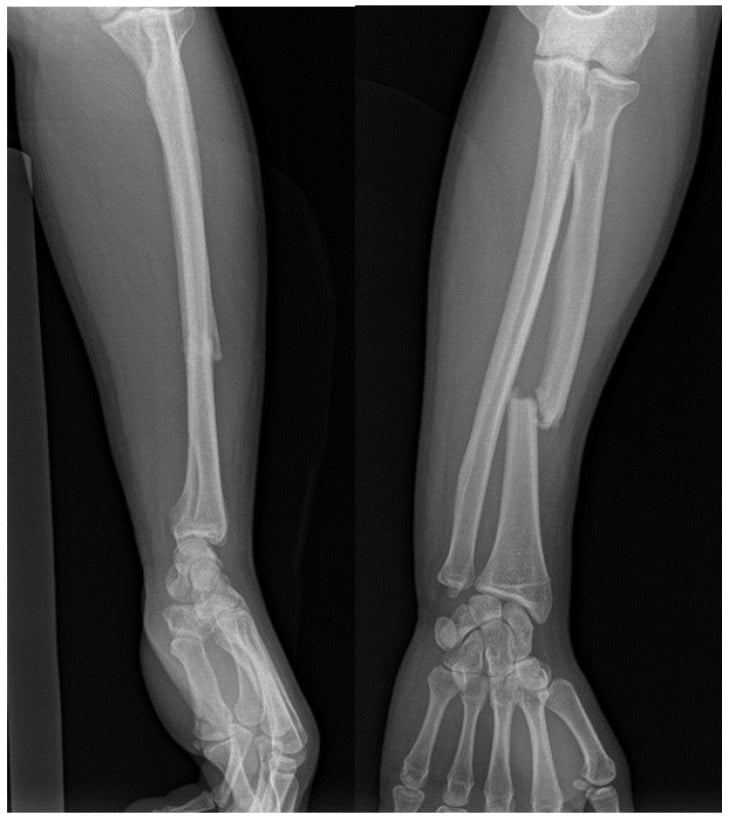
CT is not routine for a simple shaft fracture. It is protocolled as 1 mm slices with 3D reconstructions, and is indicated for:
- Articular extension (an intra-articular fracture)
- Suspected pathological fracture (a lytic lesion)
- Planning complex comminution (butterfly fragments)
- End-segment fractures, very proximal or very distal, to check for joint involvement
MRI is indicated when DRUJ instability is suspected but the radiographs are equivocal. It is sensitive for central or peripheral tears of the triangular fibrocartilage complex (TFCC), and FSE or STIR sequences can visualise the central band of the IOM.
Ultrasound is useful for assessing the continuity of the PIN when a palsy is present, and can assess the integrity of the IOM dynamically.
Management Algorithm
The decision. Three things decide treatment: displacement, fracture pattern and associated injuries. Galeazzi and Monteggia patterns are always ruled out before the fracture is treated as isolated. The goal is anatomic reduction with stable fixation, to allow early motion and prevent complications.
Displacement. An undisplaced fracture (less than 2 mm) may be managed in a cast with weekly monitoring; a fracture displaced more than 2 mm requires surgical fixation. As working limits, angulation greater than 5 degrees is unacceptable and 50% contact is the minimum for stability, though how much a load-sharing radius can tolerate is debated (see Controversies).
- Displacement
- Stable
- Treatment
- Cast (Long Arm)
- Rationale
- Monitoring required weekly. High risk of displacement.
- Displacement
- Unstable
- Treatment
- ORIF (Compression)
- Rationale
- Absolute stability for anatomic healing.
- Displacement
- Unstable
- Treatment
- ORIF (Bridge)
- Rationale
- Relative stability to preserve blood supply.
- Displacement
- Unstable
- Treatment
- I&D + ORIF
- Rationale
- Immediate urgent management.
Special circumstances. Four situations change the plan:
- Open fractures - immediate antibiotics and I&D, with immediate plating if the wound is clean
- Segmental fractures - consider a staged approach (see the section on segmental fractures and bone loss)
- Bone loss - a staged Masquelet technique may be required
- Pathological fractures - biopsy first, then fix; oncologic principles take precedence
The DRUJ. Distal-third fractures are the group in which the joint matters. In Rettig and Raskin's Galeazzi series, fractures within 7.5 cm of the midarticular surface of the distal radius had residual DRUJ instability after anatomic radial fixation in 12 of 22 (55%), against 1 of 18 (6%) for fractures more than 7.5 cm away. Measure the distance on the preoperative film, and test the joint after fixation whatever the answer, one last time before leaving theatre (DOI).
Who is treated in a cast. Non-operative management is rarely appropriate for an adult isolated radius fracture. The indication is an isolated, undisplaced (less than 2 mm), rotationally neutral fracture, which is very rare in adults and better suited to paediatric patients. In an adult it should only be considered in a very low-demand elderly patient with minimal displacement; most adult isolated radius fractures will displace and require surgical fixation.
The cast. A long arm cast, with the forearm rotated to suit the level of the fracture (see the deforming-forces table in Anatomy). Radiograph weekly for 4 weeks to watch for displacement.
The risk of displacement. Displacement is a real risk even when the fracture is undisplaced at first, and no cited series quantifies it. The protection is the weekly radiograph and a low threshold to convert to ORIF if any displacement occurs, not a quoted percentage.
Surgical Technique
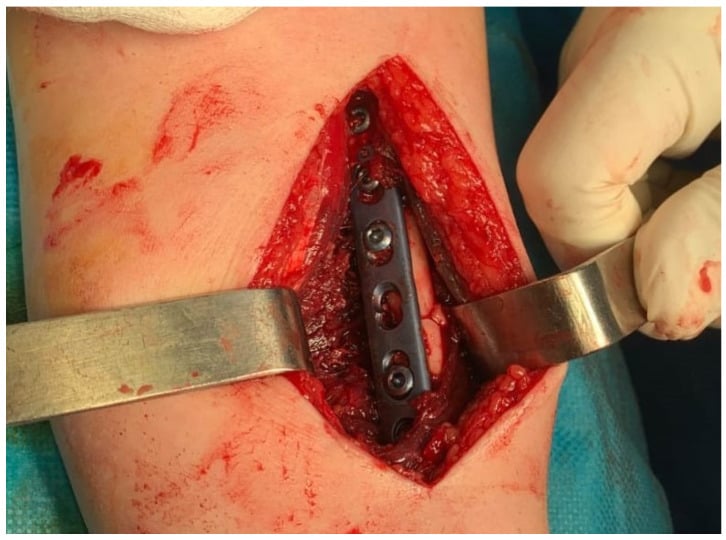
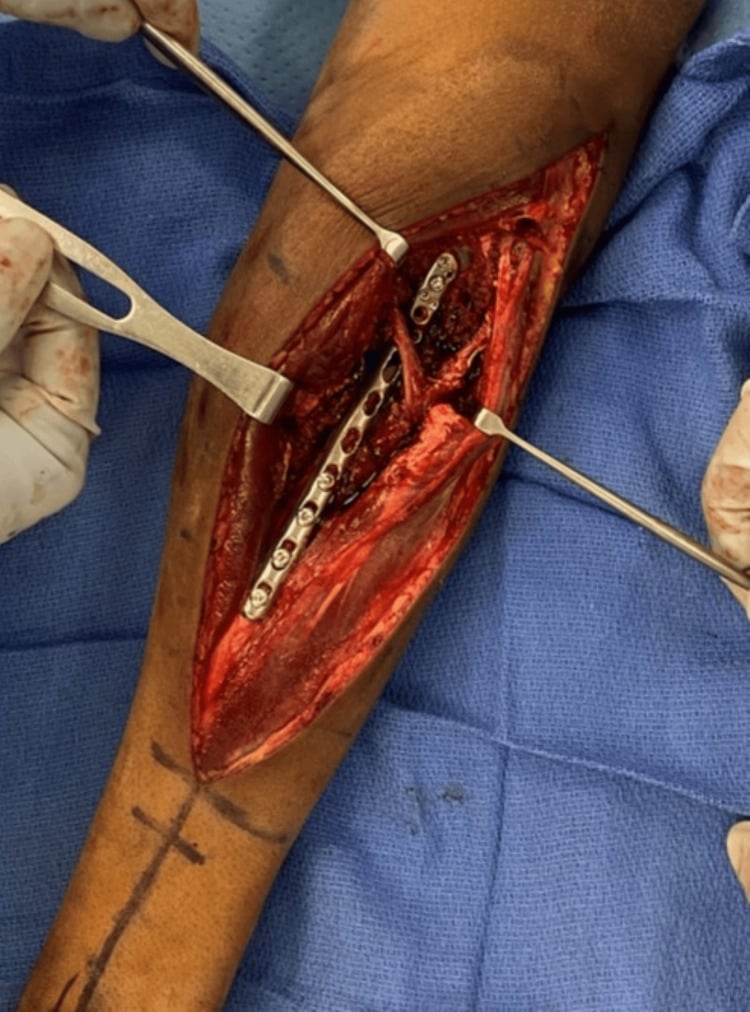
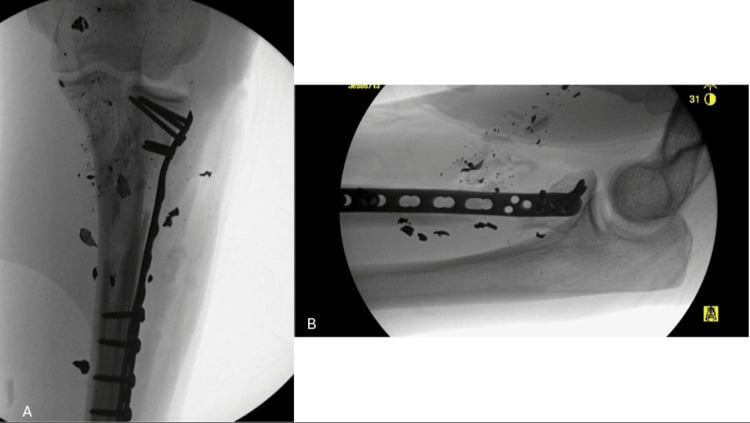
Choosing the approach. Proximal-third fractures can be approached dorsally (Thompson) or volarly (Henry), and both require protection of the PIN. For middle- and distal-third fractures the volar Henry approach is preferred.
The workhorse. The Henry approach is safe for the whole radius. The incision follows a line from the biceps tendon to the radial styloid, and the superficial interval lies between brachioradialis (radial nerve) and FCR (median nerve).
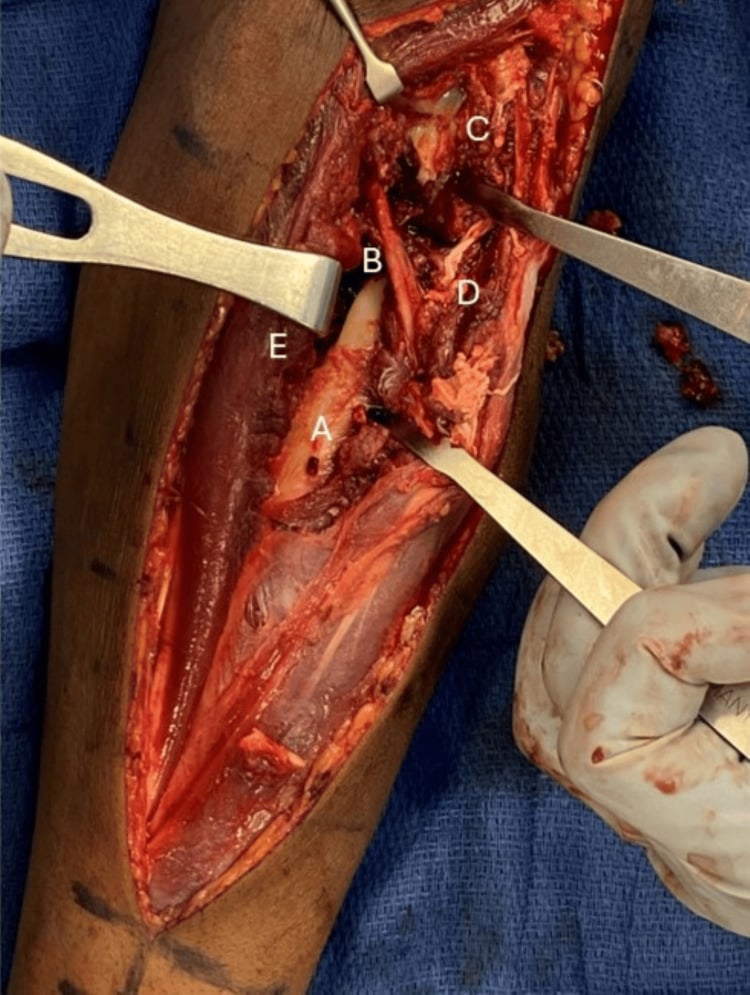
Deep dissection, proximally. Step by step:
- Find the radial recurrent vessels, the leash of Henry: a fan of arteries and veins crossing the field from medial to lateral just distal to the elbow. Ligate or cauterise them individually.
- Once the leash is divided, the supinator muscle fibres can be seen wrapping around the proximal radius.
- Supinate the forearm fully. The PIN runs within supinator, and supination moves it laterally, away from the incision.
- Incise the supinator insertion on the anterior aspect of the radius, down to bone.
- Elevate the muscle laterally without vigorous retraction; the PIN is protected within the muscle belly.
- This exposes the proximal third of the radius.
SPINPIN Protection
Hook:SPIN the forearm to protect the PIN - supination saves the nerve!
When the exposure is tight. Distally, partially releasing the brachioradialis tendon allows much greater retraction. Proximally, the radius cannot be seen without full supination; if supination is blocked, look for an interposed fragment or incomplete soft-tissue release.
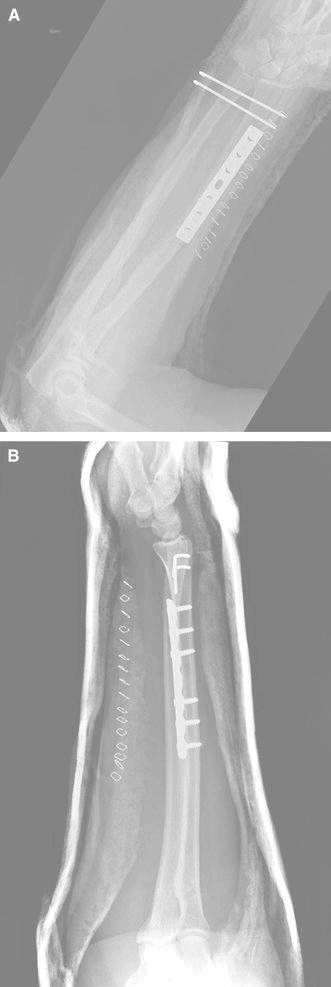
Complications
Compartment syndrome. The forearm is the second most common site for compartment syndrome after the leg. Bleeding into the volar (flexor) or dorsal (extensor) compartments raises the pressure, and the volar compartment is the most critical because it contains the median and ulnar nerves and the flexor muscles. Perfusion pressure is diastolic blood pressure minus compartment pressure; below 30 mmHg, muscle ischaemia begins.
The six Ps. Not all of them are worth the same:
- Pain out of proportion to the injury, breaking through analgesia
- Pain on passive stretch - the earliest and most sensitive sign; extending the fingers stretches the flexors
- Paraesthesia - a late sign
- Paralysis - a late sign (ischaemia)
- Pulselessness - a very late sign (arterial shutoff)
- Pallor - unreliable
Fasciotomy. Treatment is urgent fasciotomy. The volar release is a Henry approach extended from elbow to wrist, S-shaped across the crease, releasing the lacertus fibrosus, the carpal tunnel and the volar fascia; the dorsal release is a straight dorsal incision. Its sequel is Volkmann's ischaemic contracture: a clawed hand, sensory loss and a useless limb.
Radioulnar synostosis. A bone bridge between radius and ulna causes total loss of rotation. The risk factors are a single incision for both bones, a breach of the interosseous membrane, head injury and bone graft. Prevent it with separate incisions and by not dissecting deep into the IOM.
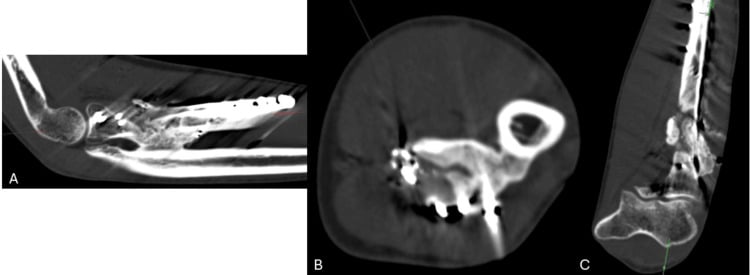
Refracture and plate removal. Refracture after plate removal is the reason not to remove a forearm plate routinely: the forearm is a load-sharing bone, and removing the plate leaves stress risers. Be careful with the figure quoted, though. The paediatric series in the evidence below describes refracture with the implant still in place, clustered at the plate ends, not after removal, and no study cited here measures the risk of removal itself. Remove only symptomatic hardware, after solid union and not before 18-24 months, and counsel that the risk is real but unquantified.
Nerve palsy. PIN palsy (loss of finger extension) is usually a neuropraxia from retraction. Observe for 3 months, with an EMG at 6 weeks if there is no recovery, and consider tendon transfers (Jones transfer) if the palsy is permanent. The AIN is covered in its own section below.
Nonunion. Uncommon after compression plating: the Anderson series in the evidence below united 97.9% of radii. The risk rises with infection, inadequate fixation, bone loss and smoking. An atrophic nonunion requires bone graft and compression.
Elbow instability. This is a missed Monteggia lesion. Always check the elbow.
Implant irritation. Dorsal plates often irritate the extensor tendons (EPL, EDC), and volar plates can irritate FPL, so check the screw lengths. Removal is indicated if the plate is symptomatic after union.
Complex regional pain syndrome. Characterised by allodynia, swelling and colour changes. Prevention rests on vitamin C, early motion and pain control.
Postoperative Care and Rehabilitation
Weeks 0-2: the wound. A posterior slab or removable splint, and elevation, which is critical to reduce swelling and compartment pressure. Active finger motion starts immediately to prevent tendon adhesions and oedema; typing is allowed straight away because the fingers are free.
Weeks 2-6: motion. Sutures come out at 10-14 days. Active elbow flexion and extension begin, and so do supination and pronation, which are often the hardest to regain; practise rotation with the elbow at 90 degrees, which isolates the forearm, and at 0 degrees. No heavy lifting: a cup of coffee only.
Weeks 6-12: strength. Radiographs look for signs of union (callus, bridging), and progressive resistance exercises begin if union is evident. Light duties resume at 6-8 weeks, and driving at about 6 weeks, once out of the splint and able to grip and turn the wheel comfortably.
Months 3-6: return. Manual labour at 3-4 months. Push-ups, an axial load, are not allowed until 3 months. Contact sport is allowed when cortical bridging is seen on 3 of 4 cortices, at 3-6 months depending on the level of contact.
Rotation. Lost pronation is tolerated better than lost supination: shoulder abduction can compensate for pronation, but nothing compensates well for supination.
Oedema and stiffness. Persistent oedema leads to fibrosis of the IOM and stiffness, so early oedema management should be aggressive. If stiffness persists at 6 weeks, dynamic splinting may be required, such as a turnbuckle splint for supination.
The rest of the programme. Four further measures:
- Scar - the Henry scar can be sensitive; desensitisation massage starts at 3 weeks
- Contrast baths - heat and cold to maximise vascular flow and reduce swelling
- Functional tasks - turning doorknobs, using screwdrivers, pouring water
- Proprioception - a gyroscope ball or wobble board for wrist stability late in rehabilitation
Outcomes and Prognosis
Union. Compression plating achieves a union rate greater than 95% with absolute stability, and bridge plating of comminuted fractures gives comparable rates of 90-95%.
Function. Most patients lose 10-20 degrees of rotation compared with the normal side, but the functional loss is minimal. Grip strength usually returns to 90% of normal by 6-12 months, and satisfaction with surgical treatment is high.
The long term. Arthritis is a rare late complication, usually related to malunion or joint injury, and persistent stiffness is uncommon with proper rehabilitation. Good outcomes are associated with anatomic reduction, restoration of the radial bow, stable fixation allowing early motion and the absence of complications; poor outcomes with malunion, nonunion, compartment syndrome and nerve injury.
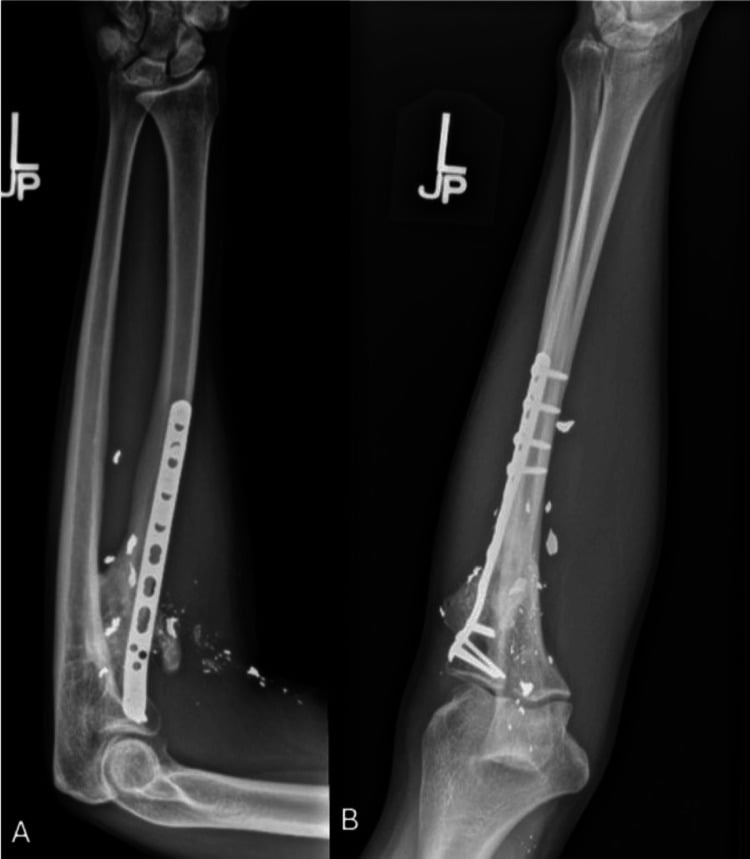
Anterior Interosseous Nerve (AIN) Injury
Anatomy. The AIN is the largest motor branch of the median nerve. It arises in the proximal forearm, approximately 5-8 cm distal to the lateral epicondyle, as the median nerve passes between the two heads of pronator teres, then runs distally on the volar surface of the interosseous membrane between FPL laterally and FDP medially, ending in pronator quadratus. It supplies FPL, FDP to the index (and often the middle) finger, and pronator quadratus, and carries no cutaneous sensation, only deep proprioceptive and joint fibres.
Why it is at risk. Proximal-third radial shaft fractures and the deep volar (Henry) dissection put the AIN at risk from the fracture fragment, haematoma or retraction. Because it lies on the interosseous membrane against the radius, it is vulnerable where the exposure is most proximal.
The abnormal pinch. Without thumb interphalangeal flexion (FPL) and index distal interphalangeal flexion (FDP), the patient cannot form a round tip-to-tip "O"; the pinch collapses into a flat pulp-to-pulp, "square" or "triangle" pinch, which is the pinch-grip or OK-sign test. Pronator quadratus weakness is unmasked by resisted pronation with the elbow fully flexed, which eliminates pronator teres. Sensation is entirely normal, and that is what distinguishes the lesion from a high median nerve palsy.
Management. Most post-traumatic and postoperative AIN palsies are neuropraxia from traction or retraction and recover spontaneously, usually within about 3-6 months, so observe with serial examination. The steps:
- First exclude a mechanical cause of a failed OK sign: FPL or FDP tendon rupture (check the tenodesis effect and look for a laceration at the wrist) and attritional tendon injury from prominent volar hardware
- If there is no recovery, obtain nerve conduction studies and EMG at about 6-12 weeks
- Explore only if the nerve is entrapped by a fragment or implant, or may have been divided
Spontaneous, non-traumatic AIN neuropathy carries the eponym Kiloh-Nevin syndrome.
An AIN palsy is a pure motor loss with no sensory deficit. A PIN palsy loses finger and thumb extension and preserves wrist extension. A high median palsy adds sensory loss and thenar and other flexor involvement. Most AIN lesions are neuropraxia: observe for about 3 months.
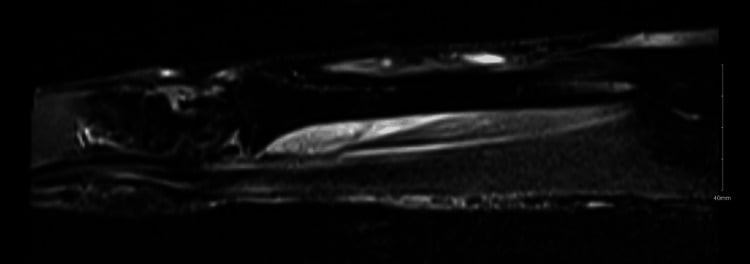
Segmental Fractures and Bone Loss: Nonunion Risk and Reconstruction
Why these fractures behave badly. Segmental patterns, two fracture lines isolating an intercalary segment, and any cortical or critical-sized defect follow a high-energy mechanism, with periosteal stripping and a devascularised middle segment. They carry the highest rates of compartment syndrome, delayed union and nonunion. In Nappo et al's high-energy open forearm series, segmental bone loss carried a relative risk of nonunion of 6.2 and deep infection a relative risk of 9.9, the two dominant nonunion drivers.
Fixation. Length and rotation are hard to judge when a segment is missing, so template against the contralateral normal radius and reproduce the magnitude and location of the radial bow (Schemitsch). Use a long bridge plate spanning both fracture levels (relative stability), and deliberately preserve the soft-tissue attachments of the intercalary segment rather than stripping it bare.
Managing the defect. A staged decision that depends on size:
- Small contained defects - stable fixation plus primary autogenous cancellous graft (iliac crest) usually unites
- Larger segmental defects (greater than a few centimetres) - the induced-membrane (Masquelet) technique: stage one places an antibiotic cement spacer to form a vascular biomembrane and hold length and alignment; stage two, at about 6-8 weeks, removes the spacer and packs cancellous autograft into the preserved membrane
- Very large or infected defects - a vascularised graft (free fibula) provides living bone that hypertrophies and tolerates a poor bed
- Deep infection - debride and stage, and do not graft into contaminated tissue, reflecting the relative risk of 9.9 for infection-associated nonunion
Guidelines, Registries & Global Practice
Global Epidemiology:
- Isolated radial shaft fractures are uncommon relative to both-bone forearm and distal radius fractures, occurring in a bimodal distribution: high-energy trauma in young men (road traffic and sporting injuries) and lower-energy falls in older adults.
- High-energy mechanisms carry a disproportionate burden of compartment syndrome, open injury, and associated DRUJ disruption (the "occult Galeazzi").
Side-by-Side Guideline Principles:
- Core Recommendation
- Anatomic ORIF: absolute stability (compression) for simple patterns, relative stability (bridge) for comminution
- Practical Emphasis
- Restore length, alignment, rotation and radial bow; 3.5mm LC-DCP/LCP
- Core Recommendation
- Diaphyseal forearm fractures in adults are surgical injuries; assess and document neurovascular status and compartments
- Practical Emphasis
- Open fractures follow BOAST open-fracture standards (early antibiotics, combined ortho-plastic care)
- Core Recommendation
- Displaced adult diaphyseal forearm fractures warrant operative fixation to preserve rotation
- Practical Emphasis
- Early mobilisation after stable fixation
- Core Recommendation
- Reproduce the radial bow and DRUJ congruity; reserve non-operative care for truly undisplaced fractures
- Practical Emphasis
- Hand-therapy-led rehabilitation of pronosupination
- Diaphyseal forearm fractures are not separately reported by arthroplasty registries (NJR, AJRR, AOANJRR), but national trauma and open-fracture audits (e.g. UK open-fracture standards) drive timing of debridement and soft-tissue cover, which influence synostosis and nonunion rates.
- Well-resourced settings: Anatomic ORIF with small-fragment locking systems, intraoperative DRUJ assessment, and protocolised hand therapy are standard.
- Limited-resource settings: Stainless-steel non-locking plates and elastic intramedullary nailing are cost-effective alternatives with good union when length and bow are restored; access to formal hand therapy is the main rehabilitation bottleneck.
- Referral logic everywhere: Simple isolated fractures are managed by general orthopaedic surgeons; comminuted, open, or Galeazzi-pattern injuries are best concentrated where DRUJ reconstruction and soft-tissue cover are available.
Controversies & Areas of Uncertainty
Plate or intramedullary nail. Anatomic plating is the established standard for the adult radial shaft, but newer locked forearm nails claim comparable union with less soft-tissue stripping. High-quality comparative data on restoring the radial bow with nails remain limited, so plating stays the default for displaced shaft fractures.
MIPO for the radius. Minimally invasive plating preserves fracture biology and gives comparable early outcomes in small series, but reproducing the radial bow blind risks malrotation. Reserve it for surgeons experienced with the technique and for simpler patterns.
Routine implant removal. No consensus supports prophylactic plate removal, and most removals are unnecessary.
The borderline DRUJ. When the DRUJ is reduced but only "soft" intraoperatively, the choice between cast immobilisation in supination, K-wire transfixation and TFCC repair is unsettled. Meta-analysis shows persistent instability is rare whichever is chosen, favouring the least invasive stable option.
Non-operative thresholds in adults. The displacement and angulation a load-sharing radius can tolerate without functional rotation loss is debated. Most surgeons fix anything that is displaced, rotated or shortened, given the cam effect of even small malalignment.
Bone grafting comminuted fractures. Primary grafting is generally unnecessary if length, alignment and stability are restored, but the role of biologic augmentation in segmental loss (Masquelet, early grafting or vascularised graft) is still individualised.
MCQ Practice Points
Q: Where is the apex of the radial bow located? A: At the level of the Pronator Teres insertion (Middle Third).
Q: Which interval is used for the Volar (Henry) approach? A: Between Brachioradialis and FCR.
Q: What is the primary risk of a single incision for BBFF? A: Radioulnar Synostosis.
Q: How many cortices of fixation are required proximal and distal to the fracture? A: Six cortices (3 bicortical screws) on each side.
Q: An isolated radius fracture with DRUJ tenderness is known as? A: Galeazzi Fracture.
Exam Viva Scenarios
Practise clinical reasoning and management decisions out loud
“A 25-year-old male presents with a mid-shaft radius fracture following a fall. X-rays show 10mm of shortening of the radius. The patient complains of wrist pain. What specific injury must you look for and how would you assess it?”
“You are performing a Henry approach for a proximal third radius fracture. As you dissect deep, you encounter bleeding from a leash of vessels crossing the field. What are these vessels, why are they a landmark, and how do you proceed safely?”
“A patient presents 6 weeks after ORIF of a radius fracture with inability to extend the fingers and thumb. Wrist extension is preserved. What is the diagnosis and management?”
Deforming Forces
- Proximal 1/3: Supinated (Biceps/Supinator)
- Middle 1/3: Neutral position
- Distal 1/3: Pronated (PQ)
- Biceps tuberosity = deformity pivot point
Surgical Goals
- Restore Length
- Restore Radial Bow
- Absolute Stability
- Active Motion
Approaches
- Henry (Volar) = Universal approach
- Thompson (Dorsal) = Proximal only
- Protect PIN (within 4cm of radial head)
- Internervous: FCR (Median)/BR (Radial)
Red Flags
- Shortening over 5mm = suspect Galeazzi
- Compartment Syndrome risk
- Associated Ulna fracture = Both Bone
- DRUJ instability must assess
Key Evidence
- Anderson 1975: Compression plating - 97.9% radius union
- Schemitsch 1992: Radial bow restoration critical for rotation
- Lindgren 2023: 5-11% refracture, mostly at plate ends
- Xiao 2021: Most reduced DRUJs stay stable after radius fixation
Evidence
Compression Plating - The Foundational Series
- 330 acute diaphyseal radius/ulna fractures (244 patients) treated with ASIF compression plates, followed 4 months to 9 years.
- Union rate 97.9% for the radius and 96.3% for the ulna.
- Established rigid compression plating as the standard of care for adult diaphyseal forearm fractures.
Radial Bow Restoration Drives Function
- 55 adults with both-bone forearm fractures, mean 6-year follow-up; malunion quantified against the contralateral normal radial bow.
- Restoring the normal magnitude AND location of the maximum radial bow correlated with good rotation (over 80% of normal) and grip recovery.
- Bone grafting did not affect union rate.
MIPO vs Open Plating for Radial Shaft
- Retrospective comparison of 49 diaphyseal radius fractures: MIPO (n=20) vs conventional ORIF (n=29), single surgeon.
- 100% union in both groups; union time and forearm rotation comparable (MIPO supination 87.3 deg / pronation 79.5 deg).
- No infection or neurovascular injury in either group.
Synostosis After High-Energy Forearm Fractures
- 73 high-energy open forearm fractures in combatants; final union 96%.
- Heterotopic ossification in 55% and radioulnar synostosis in 19%; synostosis (not HO alone) was the main driver of lost rotation.
- Nonunion was associated with segmental bone loss (RR 6.2) and deep infection (RR 9.9).
Refracture With the Implant Still In Situ (paediatric series)
- 349 surgically fixed paediatric forearm fractures; subsequent fracture rate 10.9% after plating vs 5.1% after intramedullary nailing - a difference that did NOT reach significance (p = 0.056).
- 90% of plate refractures occurred at the proximal or distal plate edge (stress riser).
- 90% of plate refractures required revision surgery.
Managing Associated DRUJ Instability
- Systematic review and meta-analysis, 258 patients with DRUJ instability after distal radius fracture.
- Persistent DRUJ instability in only 4 patients (1.5%) overall, with no significant difference between cast immobilisation, K-wire stabilisation, and TFCC repair.
- DASH scores did not differ across treatment groups.
Fracture Distance From the Wrist Predicts DRUJ Instability (Rettig-Raskin)
- 40 Galeazzi fracture-dislocations, all treated by open reduction and internal fixation of the radial shaft, with the DRUJ assessed intraoperatively after anatomic radial fixation.
- Type I - distal third, within 7.5 cm of the midarticular surface of the distal radius: 12 of 22 (55%) still had DRUJ instability after the radius was fixed.
- Type II - middle third, more than 7.5 cm from the joint: only 1 of 18 (6%) had residual instability.
- Residual instability was managed by transfixion wires (10 patients) or open TFCC repair (3 patients).