Non-dissociative carpal instability (CIND) with abnormal motion between the proximal and distal carpal rows
- A painful catch-up clunk is characteristic, not pathognomonic; painless shifting occurs in hypermobile wrists
- Palmar MCI may show reducible VISI, but static alignment and ligament status vary
- The midcarpal shift test must reproduce the patient's symptoms and be compared with the opposite wrist
- Dynamic fluoroscopy can demonstrate the shift; static films may be normal
- Rehabilitation first; surgery is individualised because comparative evidence is absent
- “CIND describes abnormal motion between rows without assuming every intrinsic ligament is completely normal
- “Distinguish reducible midcarpal malalignment from fixed dissociative VISI and broader perilunate injury
- “Generalised laxity is a modifier, not a diagnosis
- “No randomised or comparative treatment trials establish one preferred operation
Overview
Midcarpal instability (MCI) is a non-dissociative or combined carpal instability pattern in which symptoms arise from abnormal motion between the proximal and distal carpal rows. A painful catch-up clunk during loaded deviation is characteristic, but only when it reproduces the patient's symptoms. Painless midcarpal shifting can occur in hypermobile people, and laxity alone is not disease.
Making the diagnosis. Static radiographs and MRI may be normal. The diagnosis integrates symptom reproduction, carpal alignment, dynamic imaging when useful and the exclusion of competing ulnar-sided wrist pathology: TFCC, ECU, intrinsic-ligament and DRUJ disorders. Surgery is kept for persistent, disabling, well-characterised instability.
Epidemiology and Natural History
MCI is uncommon and under-recognised. Constitutional hypermobility is common in reported cohorts, but the exact female-predominance and generalised-laxity percentages come from small referral series and vary from series to series. Some patients report trauma, and some have bilateral findings.
Natural history is heterogeneous. Progression to arthritis is not inevitable.
Anatomy and Carpal Kinematics
Two rows. The proximal row is an intercalated segment whose position reflects ligament balance, contact forces and distal-row motion. During normal radial-ulnar deviation and dart-thrower's motion, the scaphoid, lunate and triquetrum rotate and translate in coupled but non-identical patterns.
The stabilisers. The palmar midcarpal, dorsal radiocarpal, dorsal intercarpal and ulnocarpal ligaments all contribute to row-to-row stability, and the status of both the intrinsic and the extrinsic restraints is assessed rather than assumed. MCI is heterogeneous, so avoid attributing every symptomatic clunk to a single arcuate-ligament lesion.
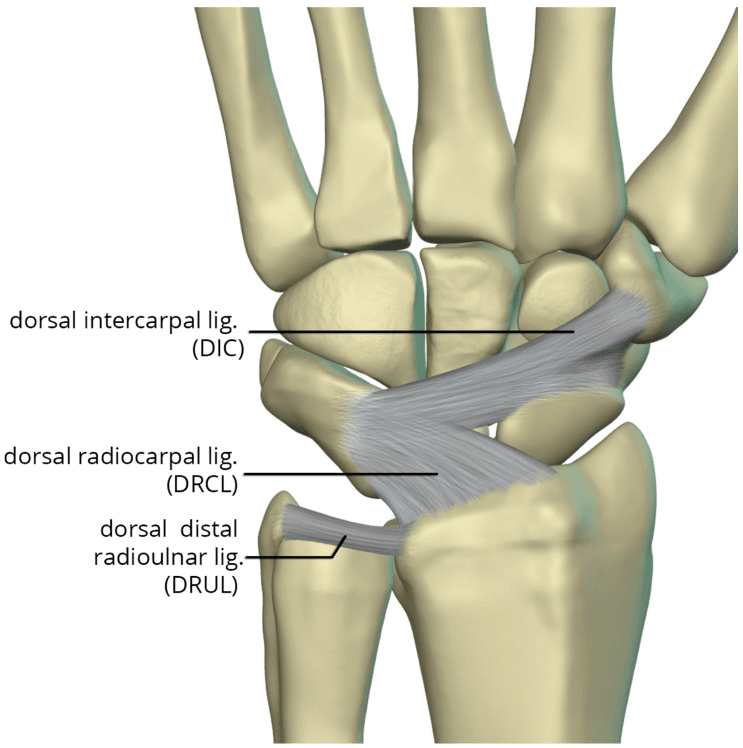
The catch-up shift. A symptomatic shift may occur when the proximal row moves abruptly during loaded deviation. The starting posture, direction and ligament contribution vary among palmar, dorsal and combined phenotypes, so the clunk should not be described as one universal VISI-to-neutral mechanism.
Classification
Lichtman. The Lichtman framework is a historical description of palmar MCI by severity and reducibility, and should not be treated as a validated treatment ladder. It runs from Grade I (dynamic: VISI only with provocation) through Grade II (static reducible: VISI at rest that corrects with radial deviation) and Grade III (static irreducible: persistent VISI) to Grade IV (midcarpal arthritis). The table sets out four descriptive phenotypes.
- Description
- Painful shift only with load
- Imaging
- Resting films may be normal
- Decision emphasis
- Rehabilitation and load modification
- Description
- Resting malalignment corrects with motion/grip
- Imaging
- Dynamic comparison helpful
- Decision emphasis
- Confirm symptoms and secondary restraints
- Description
- Persistent malalignment or broader ligament injury
- Imaging
- Assess intrinsic/extrinsic ligaments and cartilage
- Decision emphasis
- Treat complete pathology
- Description
- Degeneration plus instability
- Imaging
- Joint-space and cartilage loss
- Decision emphasis
- Individualised salvage
Hargreaves. Hargreaves proposed a functional staging, based on the extent of palmar translation of the distal row, as better suited to a functional instability.
Direction and function. Palmar, dorsal and combined midcarpal shifts have been described, and extrinsic and intrinsic restraint abnormalities often overlap. Direction, reducibility, symptom reproduction and cartilage status are more useful than a rigid percentage distribution of subtypes.
Clinical Presentation
History. Patients describe ulnar-sided wrist pain, often with an audible or palpable clunk or snap and a sense of the wrist giving way. Symptoms are mechanical and activity-related, provoked by forceful grip with ulnar deviation (racquet sports, golf, weight-bearing through the hand, push-ups) and by repetitive loading (gymnasts, yoga). Daily tasks such as opening jars, lifting and pushing up from a chair are affected, and a subset of patients can reproduce the clunk voluntarily.
Examination. Swelling is usually minimal. There is dorsal and palmar midcarpal tenderness, and a dorsal capitate prominence may be felt in the VISI position. Range of motion is typically full, while grip strength is commonly reduced relative to the contralateral side.
Generalised laxity. Record a formal Beighton score: thumb-to-forearm, fifth-MCP and elbow/knee hyperextension, and forward flexion. Generalised laxity is a modifier, not a diagnosis.
Provocative Tests
No single test is diagnostic. The midcarpal shift test is the headline manoeuvre and the others are adjuncts; they are performed and interpreted together, always against the asymptomatic contralateral wrist, because baseline laxity is common.
Midcarpal shift test (Lichtman). With the forearm pronated and stabilised, the examiner applies a palmar-directed force on the dorsal capitate while axially loading and ulnarly deviating the wrist. Reproduction of the painful clunk is positive. The catch-up clunk can also be sought on passive radial-to-ulnar deviation.
Supination lift test. With the forearm fully supinated and the hands flat beneath a fixed table, the patient pushes up against its undersurface, or lifts a heavy fixed object, so that the extended wrist loads against resistance. Dorsal or ulnar-sided wrist pain, or a sense of the wrist giving way, is positive; the test stresses the ulnar midcarpal and ulnocarpal region under supinated load. It is also positive in TFCC and distal radioulnar joint pathology, so it supports the diagnosis rather than makes it.
Dorsal-palmar shear (shuck) test. The examiner stabilises the distal row and capitate and translates it dorsally and palmarly across the midcarpal joint, relative to the fixed proximal row and radius. Excessive translation, a painful clunk or apprehension indicates midcarpal laxity. It is the clinical analogue of the arthroscopic midcarpal "bounce" or trampoline assessment.
Reading the result. Each manoeuvre is judged by the magnitude of the shift and, decisively, by whether it elicits a painful clunk that reproduces the patient's symptoms.
Combine the midcarpal shift, supination lift and shear tests, then confirm on dynamic fluoroscopy that the clunk is both symptomatic and reducible before labelling the wrist unstable. A small, painless shift is common in lax but asymptomatic wrists: a positive test in a painless hypermobile wrist is laxity, not disease.
Investigations
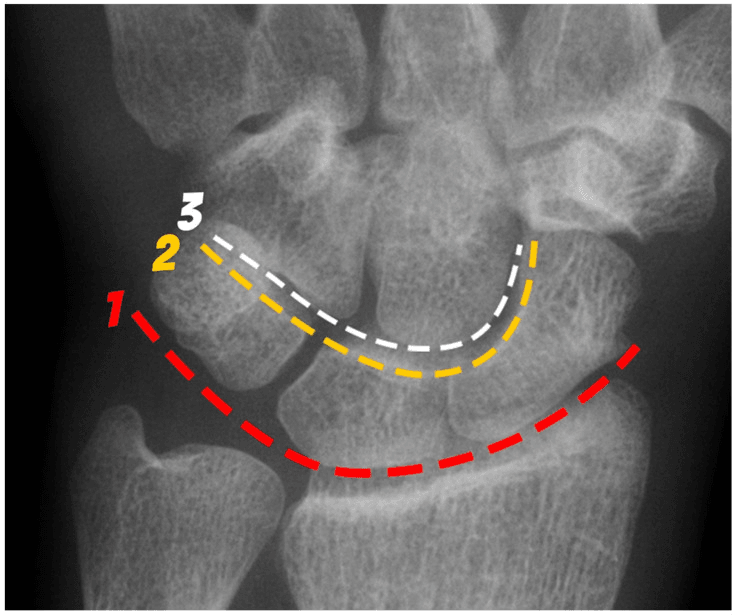
Radiographs. Static PA, lateral and oblique views may be normal. On the PA, the Gilula arcs screen row congruity but may remain normal in dynamic instability. On a true lateral, evaluate radius-lunate-capitate alignment and the scapholunate and capitolunate relationships without relying on one angle in isolation; a well-positioned normal lateral is the reference.
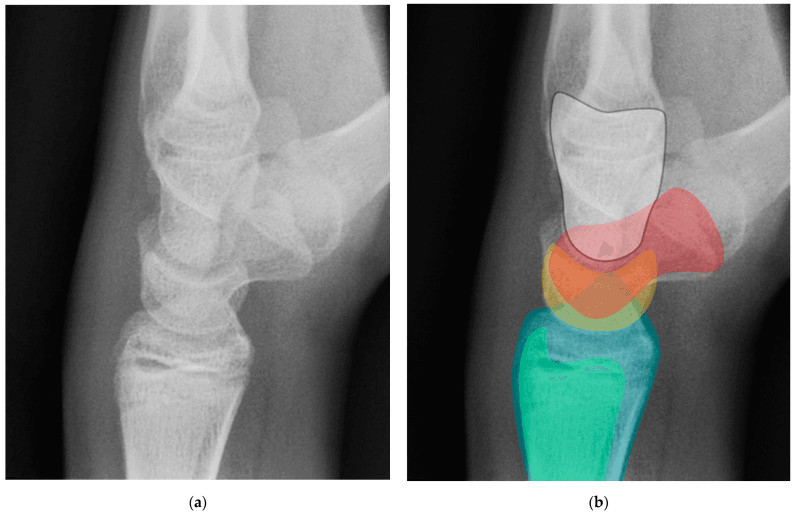
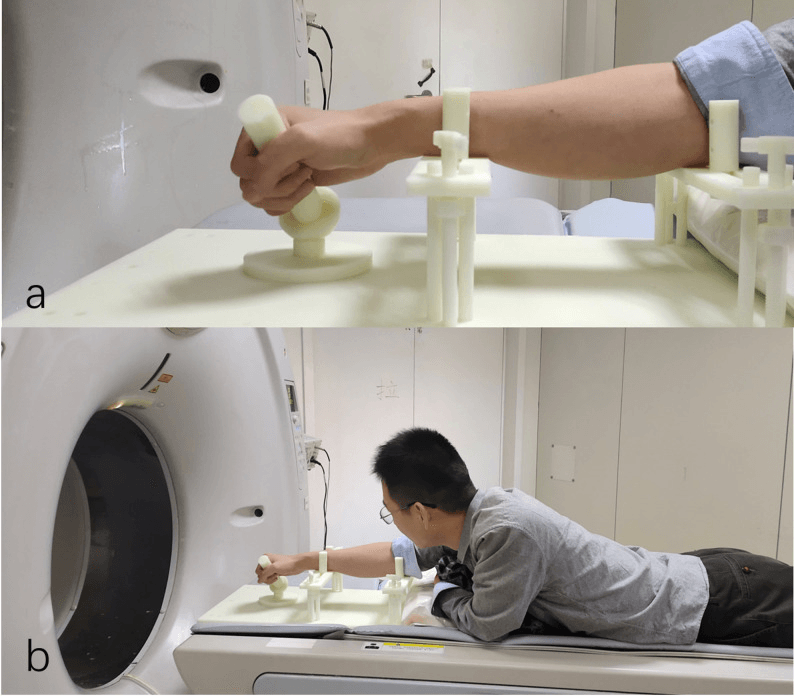
Dynamic imaging. Video fluoroscopy or 4D CT may demonstrate the symptomatic shift and its reducibility when the clinical diagnosis remains uncertain. Comparison with the opposite wrist helps, but constitutional bilateral laxity can limit it. Dynamic analysis measures lunate rotation and translation relative to the radius rather than relying on one static angle.
Chronic capitolunate (dorsal midcarpal) instability and the dorsal stress test
- 12 young patients with vague pain, weakness and clicking after a remote dorsiflexion injury, with normal plain films
- A fluoroscopically controlled dorsal-displacement stress test reproduced dorsal capitate subluxation out of the lunate with apprehension and a painful click
- Attributed to radiocapitate (palmar) ligament attenuation; 11 underwent volar ligament tightening
- Results: 6 excellent, 3 good, 1 fair, 1 poor; mean loss 15 degrees extension and 19 degrees flexion
MRI evaluates the intrinsic ligaments, TFCC, cartilage, occult fracture and other causes, but may not show dynamic laxity. Like arthroscopy, it is not diagnostic without clinical correlation.
Wrist Arthroscopy: Diagnostic and Therapeutic Role
Arthroscopy directly examines the intervals, including their congruity and probe passage, together with the cartilage and any associated ligament lesions. It is also the route for thermal capsular shrinkage (see Management).
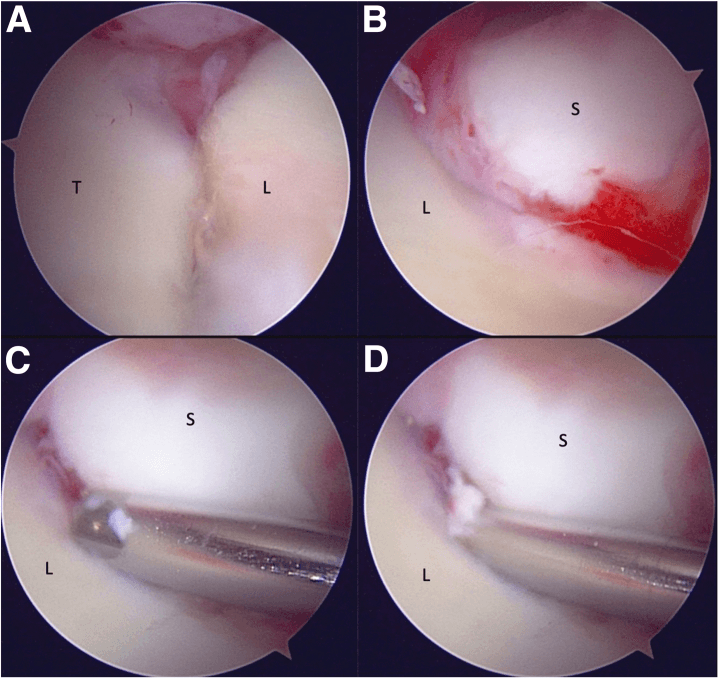
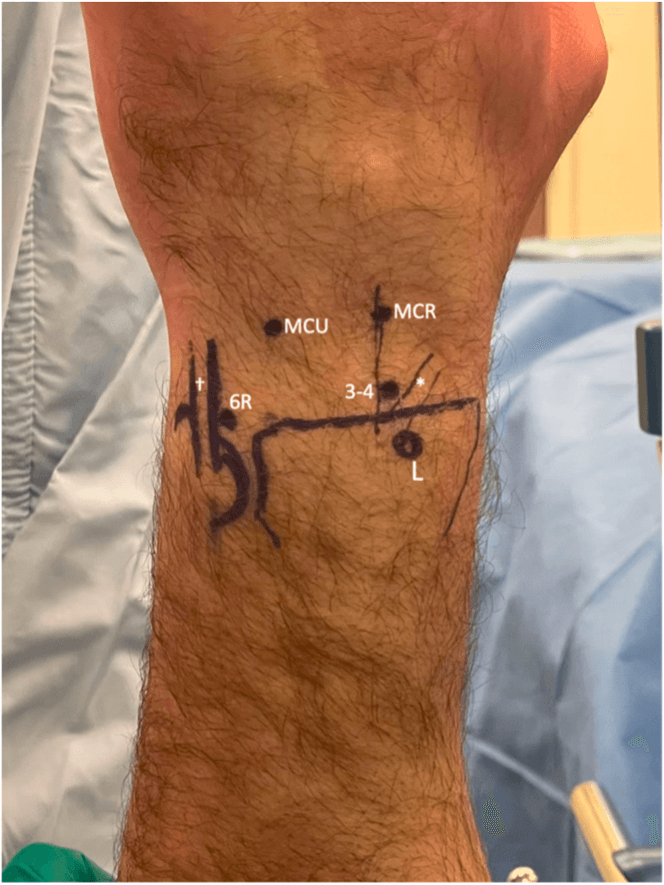
Contemporary review - role of arthroscopy and grade-matched treatment
- Evidence for MCI management rests solely on case series; established (fusion) treatments cost significant motion
- Treatment should be matched to type and grade using the Hargreaves grading system for palmar MCI
- Arthroscopic thermal capsular shrinkage is appropriate for dynamic instabilities
- Static deformities require soft-tissue reconstruction or partial wrist fusion
Authoritative overview and proposed functional staging
- Palmar MCI is the commonest type and the typical cause of a clunking, painful wrist
- Diagnosis is made on clinical grounds with provocative tests; imaging and arthroscopy mainly EXCLUDE other pathology
- Proposes a functional staging scheme (extent of palmar translation of the distal row) better suited to a functional instability
- Explicitly notes there are NO comparative series or randomised studies given the rarity of the condition
Differential Diagnosis
The differential for ulnar-sided wrist pain with mechanical symptoms is wide; the table sets out the discriminators most often tested.
- Key feature
- Catch-up clunk on ulnar deviation, intact intrinsics
- Carpal alignment
- Reducible VISI
- Discriminating test/finding
- Positive midcarpal shift; clunk reproduced/reduced on dynamic fluoroscopy
- Key feature
- Ulnar focal pain, often post-trauma
- Carpal alignment
- VISI (may be fixed)
- Discriminating test/finding
- LT ballottement/shear positive; LT ligament tear on MRI/arthroscopy (dissociative)
- Key feature
- Dorsal radial pain, weak grip
- Carpal alignment
- DISI
- Discriminating test/finding
- Watson shift positive; SL gap/SL angle over 70 degrees; SL ligament tear
- Key feature
- Ulnar pain on rotation/loading
- Carpal alignment
- Normal
- Discriminating test/finding
- Fovea sign, ulnocarpal stress test; TFCC tear and ulnar-positive variance
- Key feature
- Painful snap with supination/ulnar deviation
- Carpal alignment
- Normal
- Discriminating test/finding
- Snap palpable over ECU groove; tendon subluxes on circumduction
- Key feature
- Pain over pisiform
- Carpal alignment
- Normal
- Discriminating test/finding
- Pisotriquetral grind; tenderness localised to pisiform
Both lunotriquetral dissociation and palmar MCI can show a VISI lateral radiograph. MCI is non-dissociative and reducible: the intrinsic ligaments are intact and the VISI corrects with radial deviation or grip. LT dissociation is dissociative and may be fixed: the LT interosseous ligament is torn. Demonstrating reducibility on dynamic fluoroscopy is the key.
Management
First line for every grade. Conservative care is first-line for all grades and may be definitive in dynamic (Grade I) and static reducible (Grade II) disease. The core is a structured hand-therapy programme:
- Dynamic stabilisers: strengthening and co-contraction training of extensor carpi ulnaris, flexor carpi ulnaris and the hypothenar muscles, to control the proximal row actively
- Proprioceptive and dart-thrower's-motion retraining, progressed from unloaded proprioceptive work to closed-chain and sport-specific loading
- Orthoses that block terminal palmar flexion and ulnar deviation, holding a slight radial-deviation and extension posture, reduce provocation; a custom "ulnar boost" orthosis that supports the pisotriquetral complex has been described specifically for CIND
- Activity modification to avoid loaded ulnar deviation
NSAIDs give only short-term relief. Corticosteroid injection has no role and may weaken already-attenuated ligaments.
Function-preserving orthosis for non-dissociative MCI
- Describes a custom orthotic design and therapy plan for carpal instability non-dissociative aimed at restoring pain-free, symptom-free movement
- Supports the ulnar/pisotriquetral side to counter the proximal-row collapse driving the clunk
- Positions therapy and orthotic management as the primary, mobility-preserving intervention
The dart-thrower's plane. The dart-thrower's motion (DTM) is the oblique arc from radial deviation with extension to ulnar deviation with flexion: the plane used to throw a dart, swing a hammer or pour from a jug, and the plane of most functional daily tasks. In-vivo kinematic studies show that during DTM the proximal row (scaphoid and lunate) moves remarkably little relative to the radius, behaving as a near-stationary intercalated segment, and most of the excursion occurs at the midcarpal joint through the distal row.
Why it protects. The symptom-generating movement in palmar MCI is loaded, pure coronal-plane radial-to-ulnar deviation with the wrist near neutral flexion, exactly the arc that lets the VISI-postured proximal row abruptly catch up. Because DTM couples ulnar excursion with flexion, functional loading can be retrained through the diagonal plane while avoiding the terminal coronal ulnar-deviation-under-load position that triggers the clunk. The goal is a stable, pain-free functional arc, not restoration of full coronal deviation.
When to operate. Surgery is considered when a genuine, supervised conservative trial fails, symptoms meaningfully limit function or sport, and dynamic imaging confirms reducible instability. The trial typically runs 3-6 months, although its duration and progression follow the patient's response rather than a fixed calendar. Counsel candidly: the literature is Level IV and soft-tissue procedures have historically been unreliable.
Relative contraindications. Very severe generalised laxity (e.g. Beighton over 7) predicts recurrence. Active workers' compensation or litigation, psychiatric comorbidity and unrealistic expectations all predict poorer outcomes.
- indication
- Reducible (Grade II) palmar MCI after failed rehab
- technique
- Reef/advance dorsal capsule (and ulnar arcuate ligament) to limit proximal-row palmar flexion
- outcomes
- Motion-preserving; results variable and historically inconsistent
- indication
- Focal palmar (or radiocapitate) ligament deficiency
- technique
- Tendon-graft reconstruction of the deficient restraint
- outcomes
- Technically demanding; limited durable data
- indication
- Dynamic (Grade I) or static reducible (Grade II) instability, often with DRC tensioning
- technique
- Radiofrequency shrinkage of redundant capsule, sometimes + open DRC reefing
- outcomes
- Less invasive; early reports favourable but recurrence a concern
- indication
- Grade IV with arthritis, or salvage of failed stabilisation
- technique
- Fuse capitate-hamate-lunate-triquetrum (often with scaphoid excision)
- outcomes
- Reliable pain relief and stability; sacrifices roughly half the motion arc
Soft-tissue stabilisation. The shared aim is to limit excessive palmar flexion of the proximal row while preserving motion. Dorsal capsulodesis advances a distally based dorsal capsular flap and reefs the dorsal restraints. Described variants tension the dorsal radiocarpal ligament, advance the ulnar arm of the arcuate (triquetrohamate-capitate) ligament, or both; arcuate advancement was the most successful soft-tissue option in Lichtman's original series.
What it costs. Roughly 10-20 degrees of flexion-extension is traded for stability, and recurrence is well recognised, particularly in markedly lax wrists.
Arthroscopic thermal shrinkage with open DRC tensioning - modern minimally-invasive option
- 9 patients with palmar MCI (mean age 32), mean symptom duration 15.3 months, mean follow-up 16.8 months
- Combined arthroscopic thermal capsular shrinkage with open dorsal radiocarpal (DRC) ligament suture tensioning
- Significant improvement in pain (VAS), grip strength and QuickDASH/modified Mayo scores with maintained radiocarpal stability
- Mild ROM limitation only; all patients returned to previous work and activities
Salvage arthrodesis. Four-corner fusion, usually with scaphoid excision, is reserved for Grade IV MCI with established midcarpal arthritis or for failed stabilisation, and its stability is durable. Total wrist arthrodesis is the last resort for pan-carpal arthritis or repeated failures, eliminating motion but providing a stable, pain-free wrist.
Management Algorithm
- Confirm symptomatic instability. Reproduce the patient's pain and clunk, assess both wrists and exclude TFCC, ECU, DRUJ, intrinsic-ligament and neurological causes. Use dynamic imaging when it will resolve uncertainty.
- Individual rehabilitation trial. Education, load modification, an activity-blocking orthosis when useful, and proprioceptive and dynamic-stabiliser retraining.
- Persistent reducible instability. Confirm the dominant direction and the deficient restraints before considering arthroscopic or open soft-tissue stabilisation. The evidence does not establish one preferred procedure.
- Fixed malalignment, arthritis or failed stabilisation. Reassess the cartilage and the complete instability pattern; a selected limited fusion or other salvage may trade pain relief for motion.
Complications
After soft-tissue stabilisation.
- Recurrent instability is the most frequent problem, more likely with severe generalised laxity or a premature return to loaded ulnar deviation. Re-confirm the diagnosis, exclude missed pathology, and consider revision reefing, ligament augmentation or salvage fusion.
- Stiffness: the expected loss of flexion-extension is generally well tolerated; excessive stiffness needs directed therapy.
- Persistent pain suggests inadequate correction, an unrecognised coexisting lesion (TFCC, LT) or progression to arthritis.
- Dorsal ganglion at the capsulodesis site, often asymptomatic.
- Neurovascular injury: the dorsal sensory branches of the radial and ulnar nerves are at risk during dorsal exposure and must be protected. Wound infection is uncommon.
After limited fusion. On top of the inherent and substantial loss of motion, the complications are non-union, hardware prominence or loosening, dorsal impingement and adjacent (radiolunate) degeneration.
Outcomes and Prognosis
Outcomes are variable and grade-dependent, and the evidence is Level IV throughout. Limited midcarpal fusion is the most reliable operation for pain relief but costs motion. Soft-tissue stabilisation preserves motion but historically carries meaningful recurrence: in Lichtman's series 6 of 9 soft-tissue reconstructions failed, and Wright reported only 56% good or excellent results overall, with no surgical advantage.
Original surgical series defining palmar MCI - fusion outperformed soft-tissue repair
- 13 patients, 15 procedures for palmar MCI, mean follow-up 48 months, 100% follow-up
- All 6 limited midcarpal arthrodeses were successful
- 6 of 9 soft-tissue reconstructions FAILED
- The most successful soft-tissue option was distal advancement of the ulnar arm of the arcuate ligament combined with dorsal capsulodesis (stable in 3 of 5)
Carpal instability non-dissociative (CIND) - large series, modest results
- 45 patients with proximal-row instability and intact intrinsic interosseous ligaments (arthrographically/surgically confirmed)
- Mean follow-up 5.8 years; 7 treated non-operatively, 38 operatively
- Only 56% good/excellent overall, with NO significant difference between surgical and non-surgical groups
- Best results were in ulna-minus CIND treated by joint-levelling osteotomy (83% good/excellent)
Newer techniques. Modern minimally invasive approaches report encouraging early results in small series but lack long-term and comparative data.
Prognosis. Severe generalised laxity, workers' compensation or litigation, bilateral disease, high-demand sport and unrealistic expectations all mark a poorer prognosis.
Guidelines, Registries & Global Practice
There are no dedicated society guidelines for MCI (AAOS, BOA/BSSH, AO, EFORT, ASSH) given its rarity and the absence of high-level evidence - practice is built on expert case series and review (Lichtman; Wright; Hargreaves). The points below summarise the global, society-agnostic consensus and where practice genuinely varies.
- Widely agreed position
- Clinical (midcarpal shift + Beighton) confirmed by dynamic fluoroscopy; imaging mainly excludes other pathology
- Where practice varies
- Availability of dynamic video fluoroscopy and 4D CT (research/tertiary centres only)
- Widely agreed position
- Supervised proprioceptive rehabilitation and activity-blocking orthosis
- Where practice varies
- Access to certified hand therapists; emphasis on dart-thrower's retraining
- Widely agreed position
- Motion-preserving soft-tissue stabilisation (capsulodesis / DRC tensioning / arthroscopic shrinkage)
- Where practice varies
- Use of arthroscopic thermal shrinkage - popular in some units, abandoned in others over durability
- Widely agreed position
- Limited midcarpal (four-corner) fusion as reliable salvage
- Where practice varies
- Fixation method (circular plate vs screws vs K-wires) and scaphoid excision
Global epidemiology: a rare, under-recognised instability with consistent reports of female predominance (around 4:1), young age, and generalised laxity in 60-70%. High- vs limited-resource settings: in well-resourced units, dynamic fluoroscopy, wrist arthroscopy and certified hand therapy are routine, enabling motion-preserving surgery; in limited-resource settings the diagnosis is often missed or made clinically, conservative care predominates, and surgical management - if undertaken - is more likely to be a definitive fusion than a technically demanding soft-tissue reconstruction. No implant registry captures MCI procedures specifically, reflecting the predominance of soft-tissue rather than arthroplasty surgery.
Controversies and Areas of Uncertainty
What is the primary lesion? MCI was historically attributed to triquetrohamate or ulnar arcuate ligament laxity, but contemporary work implicates dorsal radiocarpal (DRC) ligament insufficiency as a key driver of palmar MCI, which is why DRC tensioning features in modern procedures. The true biomechanical culprit remains debated.
Which classification? Because MCI is a functional instability, often with normal static films, neither the radiograph-based Lichtman grades nor Hargreaves' functional staging is universally accepted.
Does dynamic instability need surgery at all? A positive midcarpal shift occurs in many asymptomatic hypermobile people, so the threshold for intervention, and the reliability of the provocative tests, are contested.
Soft tissue or fusion? There are no comparative or randomised trials to adjudicate between motion-preserving but historically unreliable soft-tissue stabilisation and reliable but motion-sacrificing fusion, and the choice is individualised.
Arthroscopic thermal shrinkage. Once popular, it was then questioned for durability and for chondral and capsular safety. Newer combined techniques (shrinkage with DRC tensioning) report better early results but need validation.
MCQ Practice Points
Q: What is the pathognomonic clinical finding in midcarpal instability?
A: The catch-up clunk - a painful clunk during ulnar deviation under axial load as the proximal row suddenly shifts from VISI to neutral/extension, reducing the palmarly subluxed capitate. It reproduces the patient's symptoms and is reducible, distinguishing MCI from fixed dissociative VISI.
Q: Why are static radiographs often normal in MCI, and what is the key confirmatory test?
A: Because MCI is a functional, reducible instability - any VISI corrects with radial deviation or grip, and the lesion is ligament attenuation not rupture. The key confirmatory investigation is dynamic video fluoroscopy through radial-to-ulnar deviation under load, capturing the reducible catch-up clunk.
Q: How is MCI distinguished from lunotriquetral dissociation?
A: Both can show a VISI lateral film, but MCI is non-dissociative (intrinsic SL/LT ligaments intact) and reducible, whereas LT dissociation is dissociative (LT interosseous ligament torn, positive LT ballottement/shear) and may be fixed.
Q: Which ligaments are implicated in palmar MCI?
A: Classically the palmar midcarpal ligaments - triquetrohamate-capitate (ulnar arm of the arcuate ligament) and the STT complex. Contemporary evidence also implicates dorsal radiocarpal (DRC) ligament insufficiency, which is why DRC tensioning is incorporated into modern procedures.
Q: What is the strength of the evidence base for MCI treatment?
A: Uniformly Level IV - small retrospective case series only, with no comparative or randomised trials. Limited midcarpal fusion is the most reliable operation for pain; soft-tissue stabilisation preserves motion but is historically less predictable.
Clinical Decision Scenarios
Practise clinical reasoning and management decisions out loud
“A 24-year-old female gymnast presents with painful clunking in her right wrist that has progressively worsened over a year. The clunk occurs with certain movements and is painful. Examination shows a positive midcarpal shift test. How would you assess and manage her?”
“The same gymnast returns after 6 months of hand therapy and activity modification. She has improved somewhat but still clunks and has pain with gymnastics, which she wants to continue. Grip is 60% of the other side. She asks about surgery. How do you counsel her?”
“A 45-year-old manual worker has chronic ulnar wrist pain and clunking 5 years after a fall. Radiographs show a VISI pattern with midcarpal joint space narrowing and osteophytes. Conservative measures have failed. What is your approach?”
Definition and Pathognomonic Features
- Non-dissociative carpal instability (CIND): intrinsic SL/LT ligaments INTACT; abnormal motion BETWEEN the carpal rows
- Hallmark: painful, reducible catch-up clunk on ulnar deviation under load
- Anatomic basis: palmar midcarpal (triquetrohamate/arcuate, STT) and dorsal radiocarpal ligament insufficiency
- Generalised ligamentous laxity in 60-70%; female predominance ~4:1, young patients
Clinical Diagnosis - Key Test
- Midcarpal shift test (Lichtman): palmar-directed force on dorsal capitate + axial load + ulnar deviation reproduces the clunk
- Adjuncts: supination lift test, dorsal-palmar shear test
- Always assess Beighton score and compare with the asymptomatic side
- A positive shift without symptoms is NOT pathology
Classification
- Lichtman Grade I (dynamic) - VISI only with provocation
- Grade II (static reducible) - VISI at rest, corrects with radial deviation
- Grade III (static irreducible) - persistent VISI
- Grade IV (arthritic) - midcarpal arthritis
- Subtypes: palmar (80-90%, VISI) vs dorsal/capitolunate (rare); Hargreaves functional staging is an alternative
Investigation
- Radiographs often normal; lateral may show reducible VISI (capitolunate over 15 degrees palmar, scapholunate under 30 degrees)
- KEY: dynamic video fluoroscopy capturing the reducible catch-up clunk
- MRI/arthroscopy mainly to EXCLUDE TFCC, LT and SL pathology; 4D CT is an emerging adjunct
Management
- First-line: proprioceptive/dynamic-stabiliser rehabilitation + activity-blocking orthosis, 3-6 months
- Reducible refractory disease: dorsal capsulodesis / arcuate advancement / arthroscopic shrinkage with DRC tensioning (expect ~10-20 degrees motion loss)
- Grade IV arthritis or failed stabilisation: limited (four-corner) fusion; total wrist fusion as last resort
- Evidence is Level IV only - no comparative or randomised trials
Complications and Prognosis
- Recurrent instability is the leading problem after soft-tissue surgery (worse with severe laxity/high demand)
- Expected stiffness ~10-20 degrees; persistent pain suggests missed pathology or arthritis
- Dorsal sensory nerve branches at risk on dorsal exposure
- Fusion: reliable pain relief but ~50% motion loss; risks non-union and adjacent degeneration
- Poor prognosis: Beighton over 7, workers' comp/litigation, bilateral disease, elite sport
Viva Talking Points
- Emphasise NON-dissociative, REDUCIBLE instability between intact rows
- Diagnosis is clinical + dynamic fluoroscopy; static films often normal
- Distinguish from LT dissociation (dissociative, may be fixed)
- Rehab first; motion-preserving soft tissue for reducible disease; fusion for arthritis/salvage
- Be honest that the evidence is Level IV