Imaging Articular Cartilage for Surgical Decision-Making
- Normal articular cartilage is 2-4mm thick and appears as a smooth, intermediate-signal layer on most sequences.
- PD fat-suppressed and T2 fat-suppressed are the standard sequences for morphological cartilage assessment.
- MRI is highly sensitive (70-95%) for full-thickness cartilage defects but less reliable (40-70%) for partial-thickness lesions.
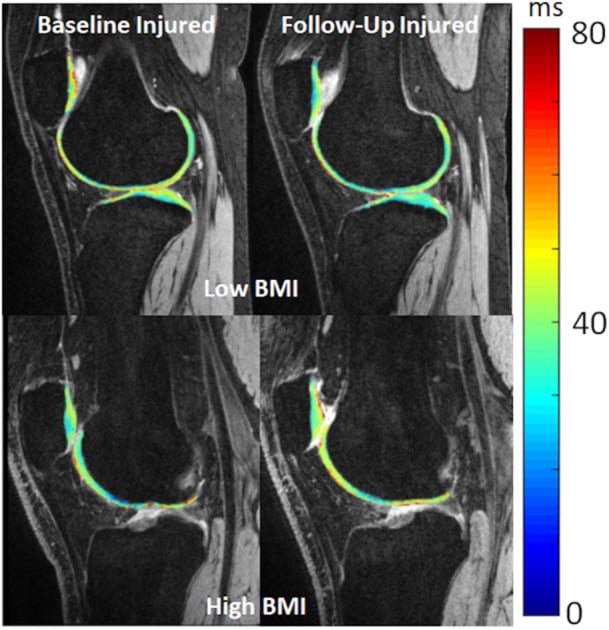
- T2 mapping and dGEMRIC are quantitative techniques that detect biochemical cartilage changes BEFORE morphological damage is visible.
- The modified Outerbridge classification (Grades 0-4) is used to grade cartilage lesions on MRI.
- “3T MRI provides superior cartilage imaging compared to 1.5T due to improved signal-to-noise ratio and spatial resolution.
- “MR arthrography (direct, with intra-articular gadolinium) improves detection of partial-thickness cartilage lesions.
- “Normal cartilage shows a layered appearance on high-resolution imaging: the deep radial zone has lower signal than the superficial transitional zone.
- “Post-cartilage repair MRI (MOCART score) assesses: fill grade, integration, surface, signal, subchondral bone, effusion.
- “Cartilage cannot heal spontaneously — even small defects will progress without intervention, making early detection critical.
Overview
Why cartilage cannot be left alone. Articular cartilage is avascular and its chondrocytes have limited proliferative potential, so it lacks any intrinsic healing capacity. Once damaged, a defect tends to progress to a larger lesion and eventually to osteoarthritis; defects of greater than 2cm² in the weight-bearing zone of the knee produce symptoms and risk that progression, which is why early detection matters.
What MRI gives the surgeon. It is the primary non-invasive modality for articular cartilage, providing defect size, depth and location and the condition of the surrounding subchondral bone. That is the preoperative characterisation surgical planning needs.
Why it is hard. The tissue is thin, about 2-4mm and thicker only on the patella, it has subtle internal structural variation, and a partial-thickness lesion can be difficult to distinguish from normal signal heterogeneity. That difficulty drove the development of dedicated high-resolution cartilage sequences and of quantitative techniques that detect biochemical change before macroscopic damage occurs.
MRI against arthroscopy. Arthroscopy remains the gold standard: it allows direct visualisation, probing of the cartilage surface and immediate treatment. MRI is non-invasive, shows the full extent of subchondral bone change and marrow oedema, and assesses areas the arthroscope cannot reach. The correlation between the two is best for full-thickness defects, where MRI sensitivity is 70-95%, and weaker for partial-thickness lesions at 40-70%: MRI tends to underestimate partial-thickness disease, and overestimating its sensitivity there is the common trap.
ICRS Cartilage Lesion Classification
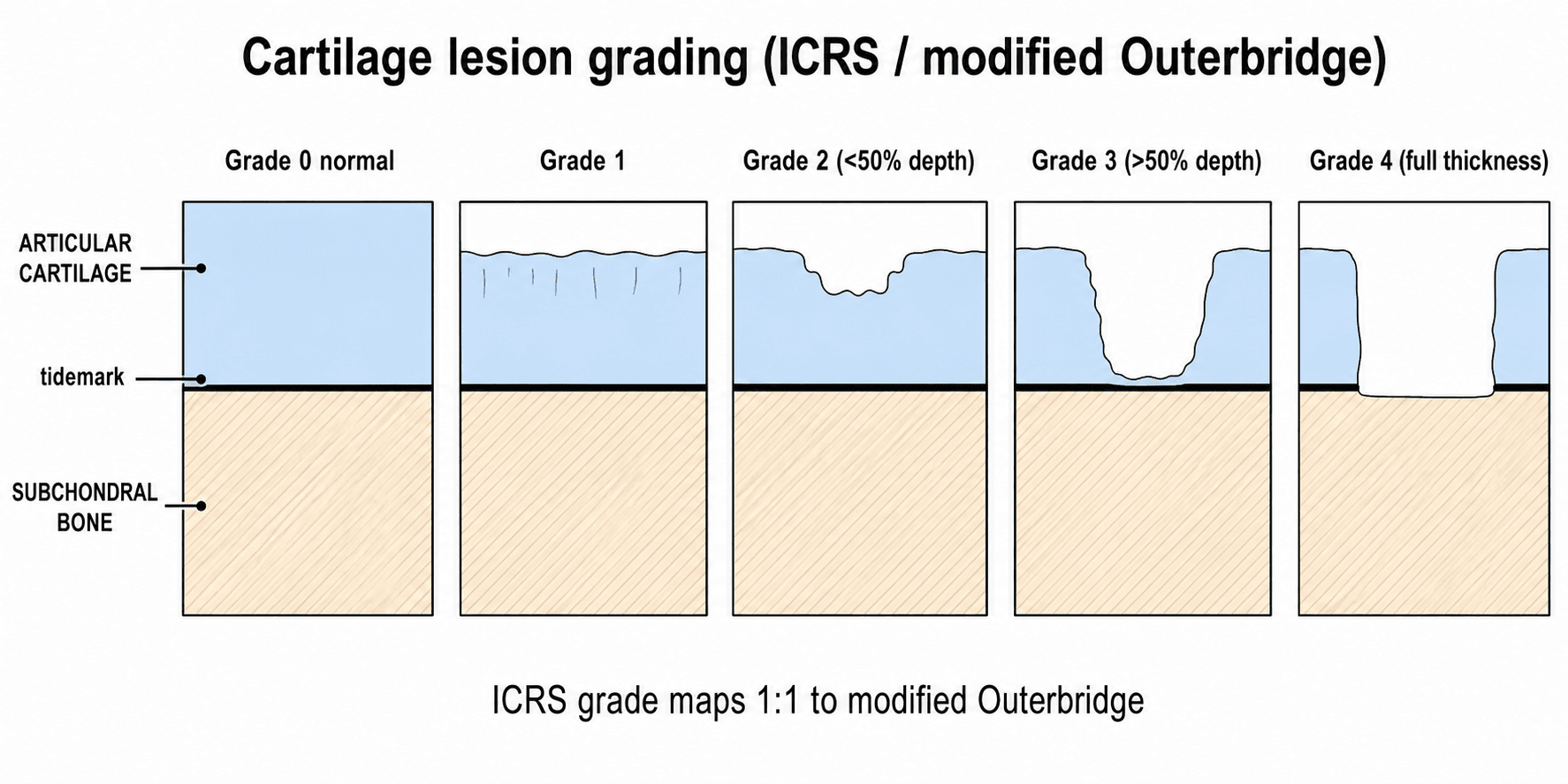
Two systems, one set of thresholds. The modified Outerbridge grades are the most widely quoted on MRI; the ICRS (International Cartilage Repair Society) grade is the international reporting standard used at arthroscopy and is increasingly applied to MRI. Examiners expect you to know both and how they map onto each other, and the mapping is 1:1 because the depth thresholds are shared: a defect of less than 50% of cartilage depth is Grade 2, more than 50% is Grade 3, and full thickness to bone is Grade 4.
- Description
- Normal cartilage
- Modified Outerbridge equivalent
- Grade 0
- Description
- Intact surface - 1a soft indentation/fibrillation, 1b superficial fissures and cracks
- Modified Outerbridge equivalent
- Grade 1 (signal change, intact surface)
- Description
- Defect extending less than 50 percent of cartilage depth
- Modified Outerbridge equivalent
- Grade 2
- Description
- Defect more than 50 percent of depth, down to but not through the calcified layer/subchondral bone
- Modified Outerbridge equivalent
- Grade 3
- Description
- Full-thickness defect breaching the subchondral bone plate
- Modified Outerbridge equivalent
- Grade 4
Reading the grades on MRI. Grade 1 is a focal increase in signal within the cartilage on PD or T2 with an intact articular surface, corresponding to softening or early degeneration. In Grade 2 the surface is disrupted but the deep cartilage remains; Grade 3 involves more than half the depth, or is full-thickness without reaching bone. Grade 4 is full-thickness loss with exposed subchondral bone, often with subchondral oedema and cyst formation and with the secondary bone changes of sclerosis, cysts and osteophytes.
Why ICRS as well. It is more granular (the 1a/1b and 3a-d subdivisions), it is the international standard for describing lesions in cartilage-repair reporting and registries such as the German Cartilage Registry, and it has a separate ICRS OCD scheme for osteochondral lesions. In a viva, grade the lesion in both systems and quote the depth thresholds.
Systematic Approach
Read the cartilage in a fixed order.
- Identify the sequence. PD-FS or T2-FS is the most appropriate for cartilage morphology. Cartilage appears intermediate grey and fluid appears bright, and that contrast is essential for detecting a surface defect.
- Assess thickness. Compare thickness across the articular surface and note focal thinning. Normal thickness varies by location: femoral condyle 2-3mm, tibial plateau 2-3mm, patellar surface 3-5mm, the thickest.
- Grade the defect with the modified Outerbridge classification (Grades 0-4), set out in the next section.
- Measure it. Document the AP dimension, width and depth in millimetres, because size determines treatment. Each plane contributes something: the sagittal image shows lesion depth and subchondral cysts, the coronal localises the lesion on the weight-bearing surface, and the axial defines transverse extent.
- Assess the subchondral bone for oedema, cysts and sclerosis beneath the defect. Subchondral change indicates chronicity and may affect surgical outcome, and large cysts may require bone grafting, so bone oedema and cystic change mean that treatment planning must address the osteochondral unit, not the cartilage alone.
- Check for associated pathology: meniscal tears, ligament injuries, loose bodies and alignment. Cartilage defects rarely occur in isolation, and the associated pathology must be addressed simultaneously.
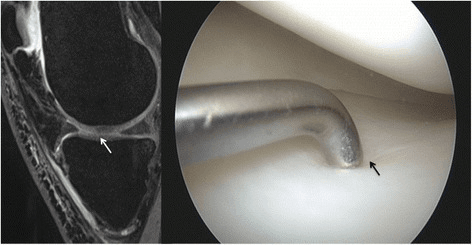
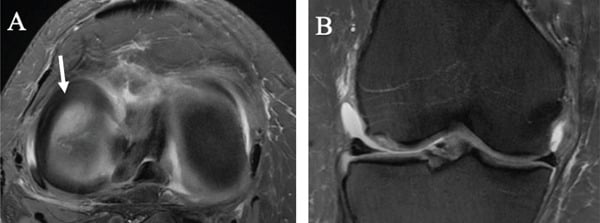
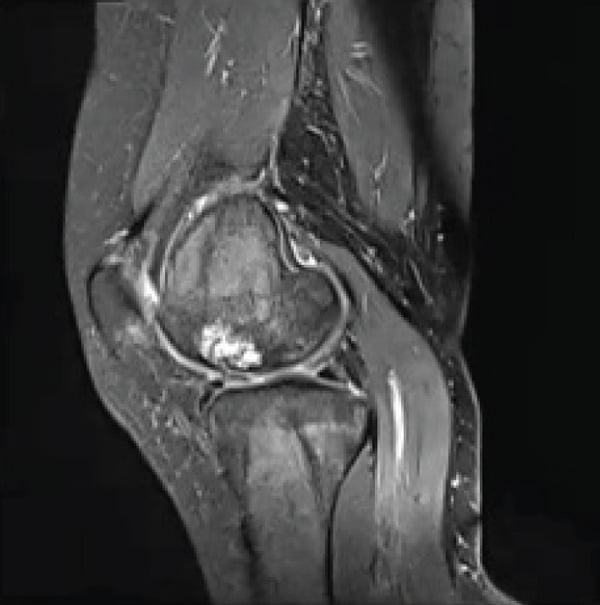
The ceiling on all of this. Know it before you grade confidently. Across 14 Level I and 13 Level II studies, MRI sensitivity for knee articular cartilage abnormality ranged from 26% to 96% (specificity 50-100%, accuracy 49-94%), and for detecting early osteoarthritis specifically it ranged from 0% to 86%. The heterogeneity between sequences, field strengths, grading systems and readers was so great that the authors could not pool the data into a meta-analysis at all, which is itself the finding: there is no single sensitivity figure for "MRI for cartilage", because the answer depends almost entirely on the protocol used.
Two practical consequences follow. MRI is dependable for full-thickness loss and unreliable for early and partial-thickness change, so a normal-looking cartilage surface on a routine protocol does not exclude early degeneration, and arthroscopy remains the reference standard for complete assessment. And because performance is protocol-dependent rather than modality-dependent, the useful question in a viva is never "how good is MRI at cartilage?" but "what sequence, at what field strength, read by whom?"
Cartilage Imaging Sequences
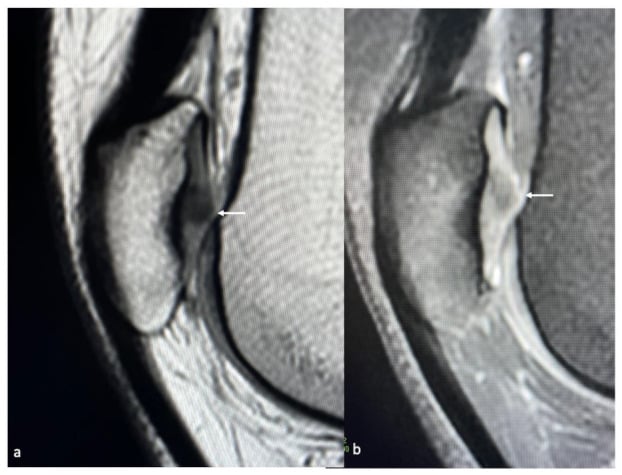
PD fat-suppressed is the workhorse for cartilage morphology. A long TR and short TE give it a high signal-to-noise ratio, cartilage is intermediate against bright fluid so surface defects and partial-thickness lesions show, and fat suppression eliminates the competing signal from epiphyseal fat and marrow. T2-weighted fat-suppressed can also be used for cartilage but has lower SNR than PD and may underestimate the extent of lesions that PD contrast shows better.
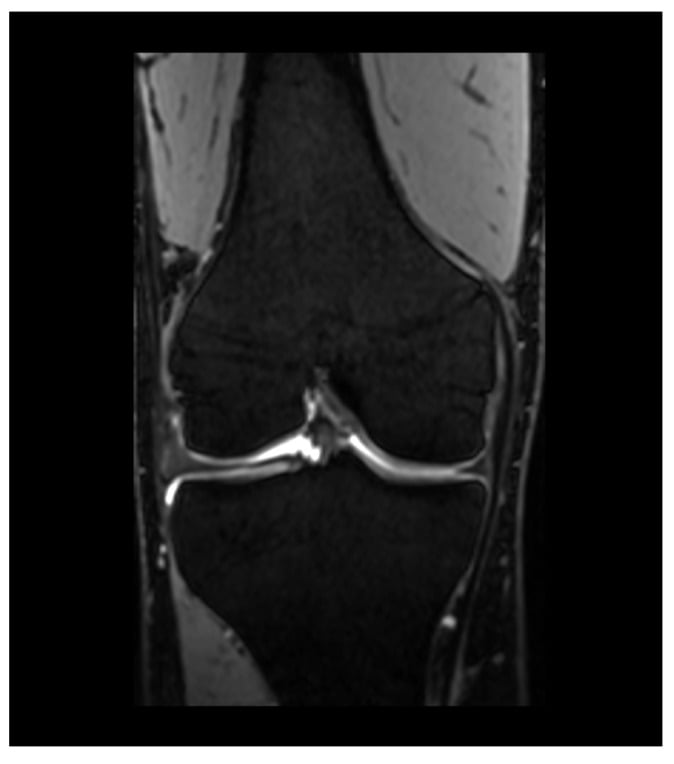
3D gradient-echo sequences (SPGR, FLASH, DESS, MERGE) acquire isotropic thin slices of 0.5-1mm that allow multiplanar reformatting and quantitative thickness mapping. They are increasingly used for research studies that need volumetric cartilage measurement, for pre- and post-operative monitoring of cartilage repair, and for thickness maps overlaid on 3D joint models.
Do not read the 3D gradient-echo sequence as a research luxury; the detection gap is large. With arthroscopic correlation in 48 patients, sagittal fat-suppressed 3D SPGR detected hyaline cartilage defects with 75-85% sensitivity against 29-38% for standard sequences, at identical specificity (97% versus 97%). That is roughly a doubling of detection for no loss of precision, and adding the standard images back alongside SPGR gave no further advantage (86% sensitivity, 97% specificity), so the dedicated sequence is doing the work, not the combination. Request it by name when chondral pathology is the clinical question rather than hoping for it within a routine knee protocol.
The corollary is the one that reaches patients: a quarter of that cohort had isolated cartilage lesions that had been clinically mistaken for meniscal tears, invisible on the standard sequences and visible on SPGR. A routine knee MRI reported as normal in a patient with mechanical symptoms has not excluded a chondral lesion. The caveat worth stating in a viva is that the study used 1990s hardware, and modern equivalents (DESS, MERGE, 3T) differ from the SPGR protocol tested: the principle transfers, the exact figures should not be quoted as current performance.
Field strength. 3T significantly improves cartilage imaging quality over 1.5T by increasing SNR and spatial resolution, and is preferred for dedicated cartilage assessment when available.
MR arthrography. Direct arthrography with dilute intra-articular gadolinium outlines subtle surface defects and improves the detection of partial-thickness lesions.
Cartilage Repair Assessment
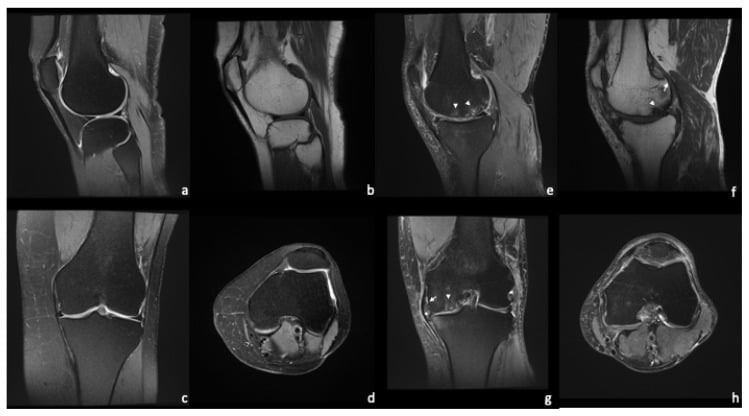
MOCART. Monitoring repair on MRI matters more as the number of cartilage repair procedures grows, and the MOCART (Magnetic Resonance Observation of Cartilage Repair Tissue) score is the standardised tool for post-operative assessment. The original has since been refined into MOCART 2.0, which redefines several variables (fill, integration, surface, structure, signal, bone, subchondral changes) on a clearer point scale, but the underlying framework is unchanged. Alongside the variables in the table it records effusion, its presence and degree, since a large effusion may indicate poor repair integrity.
- Best Outcome
- Complete fill (100%)
- Intermediate
- Over-fill (hypertrophic) or slight under-fill (75-100%)
- Worst Outcome
- Significant under-fill (less than 50%) or complete graft failure
- Best Outcome
- Complete integration — no visible cleft between repair and native cartilage
- Intermediate
- Partial integration — incomplete border with focal cleft
- Worst Outcome
- No integration — persistent cleft, delamination
- Best Outcome
- Smooth surface, flush with native cartilage
- Intermediate
- Irregular surface, mild fibrillation
- Worst Outcome
- Fissured, severely irregular, or absent surface
- Best Outcome
- Isointense to native cartilage on all sequences
- Intermediate
- Mild hyperintensity (suggests more fibrous composition)
- Worst Outcome
- Markedly abnormal signal (suggests failure or fibrocartilage only)
- Best Outcome
- Intact subchondral lamina with normal marrow
- Intermediate
- Mild irregularity or oedema
- Worst Outcome
- Subchondral overgrowth, large cysts, or persistent osteolysis
Repair tissue against hyaline cartilage. True hyaline repair tissue is isointense to the surrounding native cartilage on all sequences. Fibrocartilage, the repair microfracture produces, tends to have slightly different signal characteristics: often mildly hyperintense on PD and T2, with a less distinct layered appearance. That signal difference can help distinguish the type of repair tissue, which has prognostic implications, because hyaline-like repair from ACI/MACI generally has better long-term durability than fibrocartilage.
Cartilage MRI Beyond the Knee
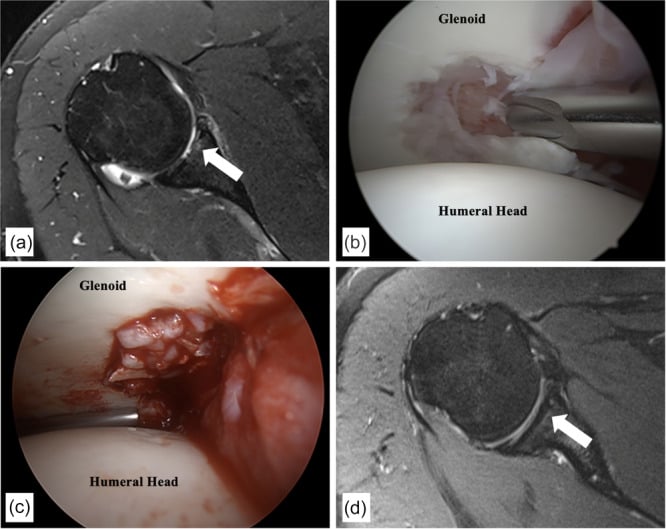
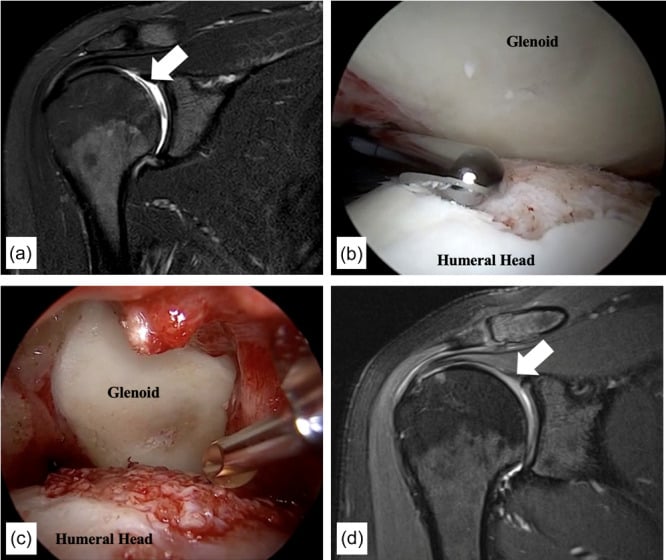
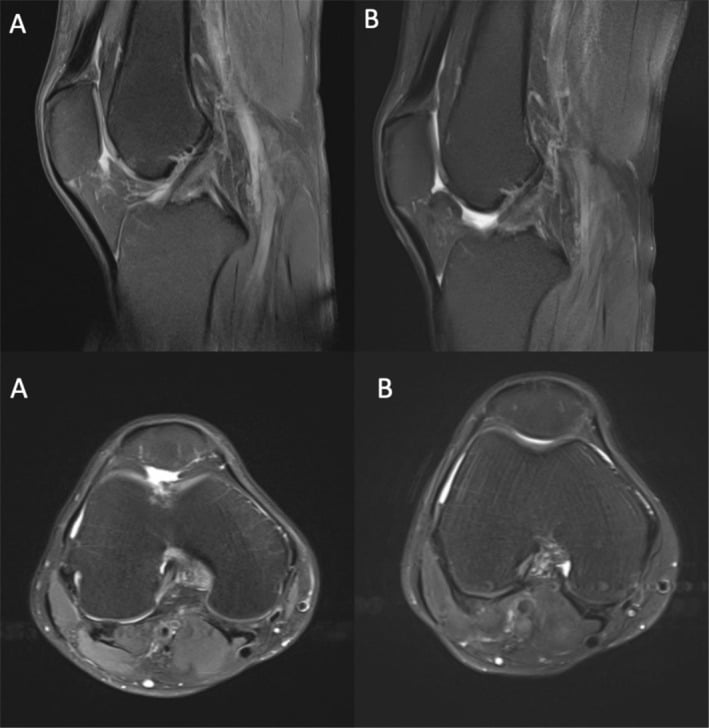
The governing rule. Cartilage imaging is taught around the knee because that is where the cartilage is thickest and the evidence deepest, but the joint-specific differences are examinable and they follow one rule: away from the knee, cartilage gets thinner and more curved, which lowers sensitivity and makes high-resolution 3T imaging and arthrography more important.
- Cartilage feature
- Thin, sharply curved acetabular and femoral cartilage; closely related to the labrum
- Imaging approach and use
- MR arthrography (often with traction) for cartilage and labral assessment; dGEMRIC and T2 mapping are classically used in dysplasia and femoroacetabular impingement to gauge cartilage quality before joint preservation
- Cartilage feature
- Thinner (around 1 to 1.6 mm) but stiffer cartilage
- Imaging approach and use
- Assess osteochondral lesions of the talus for size, depth, subchondral cyst and stability; high-resolution and arthrography improve detection
- Cartilage feature
- Very thin glenohumeral cartilage
- Imaging approach and use
- Hardest joint to assess; MR arthrography helps outline subtle surface defects
The hip dGEMRIC application. The classic non-knee use of compositional cartilage MRI is in the hip: a low dGEMRIC index, meaning GAG depletion, in hip dysplasia or femoroacetabular impingement predicts a poorer outcome from joint-preserving surgery such as periacetabular osteotomy, so it can inform whether to preserve or replace the joint.
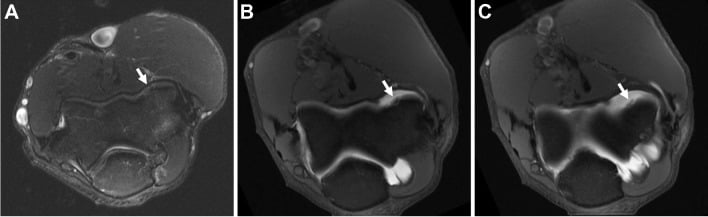
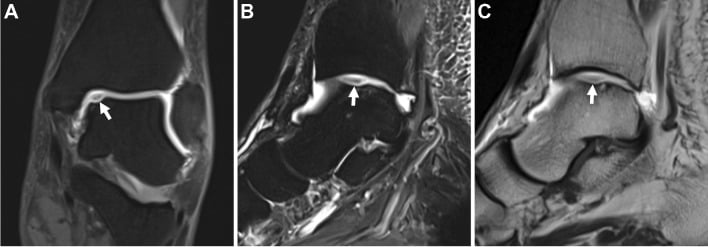
Differential Diagnosis & Imaging Pitfalls
Mimics. A focal cartilage signal abnormality or apparent defect on MRI has several mimics, and distinguishing a true chondral lesion from an artefact or a normal variant is a high-yield discriminator. The table gives the appearance of each and the feature that separates it from a true lesion.
- Typical Appearance
- Focal cartilage loss; fluid tracks into defect on PD-FS/T2; underlying marrow oedema or cyst
- Distinguishing Feature
- Reproduces on two orthogonal planes; correlates with subchondral change
- Typical Appearance
- Increased intracartilaginous signal where collagen lies at 55° to B0 (e.g. posterior femoral condyle on short-TE sequences)
- Distinguishing Feature
- Disappears or lessens on long-TE (T2) sequences; no surface breach or subchondral change
- Typical Appearance
- Apparent thinning at curved surfaces from thick slices or oblique sampling
- Distinguishing Feature
- Resolves on thin-slice/3D isotropic imaging; no fluid cleft
- Typical Appearance
- Layered appearance — lower-signal deep radial zone, higher-signal transitional zone
- Distinguishing Feature
- Smooth, uniform, follows expected zonal pattern; intact surface
- Typical Appearance
- Subchondral fragment with high-signal interface; may have overlying cartilage defect
- Distinguishing Feature
- Fluid/granulation at the fragment interface signals instability — key surgical determinant
- Typical Appearance
- Subchondral low-signal line with extensive marrow oedema, often medial femoral condyle in older patients
- Distinguishing Feature
- Subchondral line and oedema dominate; overlying cartilage may initially be intact
- Typical Appearance
- Low-signal foci within cartilage (calcium pyrophosphate)
- Distinguishing Feature
- Linear/punctate low signal paralleling the surface; correlate with radiograph/CT
The single most examined pitfall is the magic-angle effect causing artefactual high signal in curved cartilage (classically the posterior femoral condyle) on short-TE sequences such as PD or gradient echo. If a "lesion" vanishes on the T2-weighted sequence and there is no surface breach or subchondral change, suspect magic angle rather than true pathology.
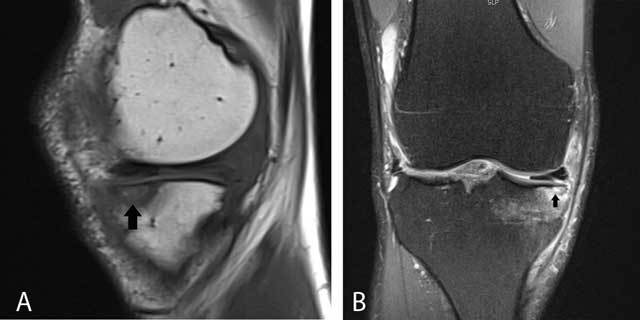
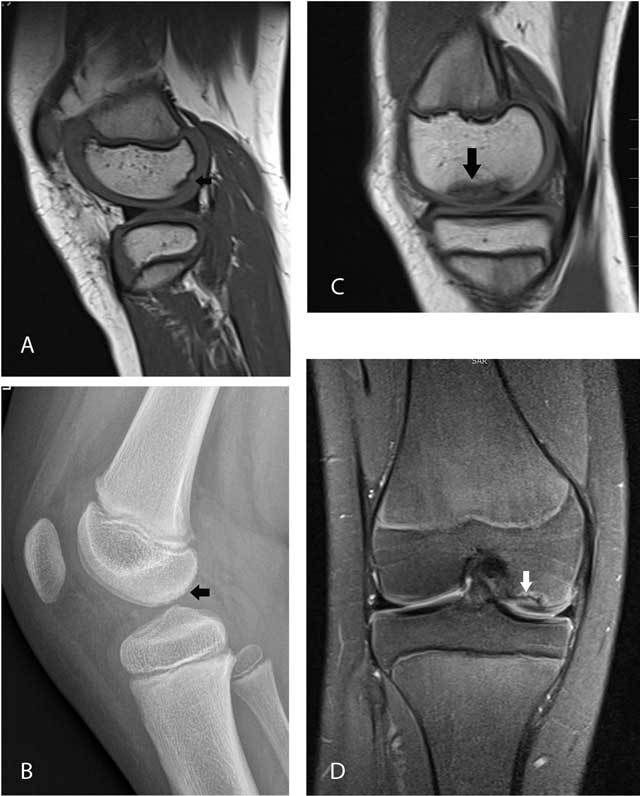
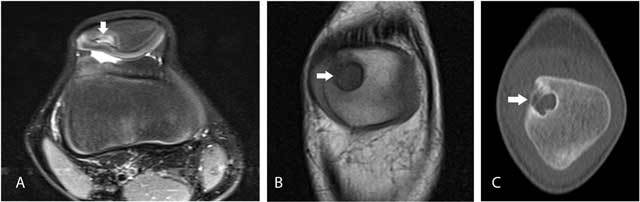
Guidelines, Registries & Global Practice
Global Epidemiology
Focal chondral and osteochondral lesions are found in 60-66% of knee arthroscopies in mixed populations, and full-thickness (Outerbridge/ICRS Grade III-IV) defects in roughly 5-11% — frequently in young, active patients. Untreated symptomatic full-thickness defects greater than 2cm² in the weight-bearing zone progress toward osteoarthritis, making accurate non-invasive characterisation a global priority across exam syllabuses.
Side-by-Side Society Guidance
- Imaging Recommendation
- ICRS cartilage lesion classification on MRI and arthroscopy; dedicated cartilage sequences for grading and sizing
- Repair Threshold Emphasis
- Defect size, depth, containment and bipolar status drive technique choice
- Imaging Recommendation
- MRI to characterise symptomatic chondral lesions before surgery; recognises MRI under-detects partial-thickness disease
- Repair Threshold Emphasis
- Limited strong evidence to favour one repair over another; shared decision-making
- Imaging Recommendation
- MRI for suspected internal derangement and chondral injury; ACI/MACI recommended (TA477) for defined defects without significant OA
- Repair Threshold Emphasis
- Autologous chondrocyte implantation for symptomatic defects (typically over 2cm²) and minimal OA
- Imaging Recommendation
- Standardised MRI protocols (PD-FS plus a 3D cartilage sequence); MOCART/MOCART 2.0 for repair follow-up
- Repair Threshold Emphasis
- Consensus algorithms by lesion size (microfracture/AMIC for small, OAT, ACI/MACI for larger)
Registry & Resource-Setting Variation
- Registries: Cartilage repair is captured in dedicated registries such as the German Cartilage Registry (KnorpelRegister DGOU) and the Swedish/UK cartilage cohorts; large joint registries (NJR UK, AJRR US, AOANJRR Australia, SHAR Sweden) track downstream arthroplasty, where early cartilage treatment is a strategy to delay replacement.
- High-resource settings: 3T scanners, dedicated 3D cartilage sequences and quantitative mapping (T2, T1rho, dGEMRIC) are increasingly available; MACI and matrix-based techniques are offered in specialist centres.
- Limited-resource settings: 1.5T (or lower) MRI with PD-FS is the practical standard; advanced cell-based repair and quantitative imaging are often unavailable, so management leans on microfracture/marrow stimulation and clinical-radiographic correlation. Examiners worldwide expect candidates to reason from defect size, depth and patient factors rather than from access to any single technology.
Controversies & Areas of Uncertainty
Which is the standard. Arthroscopy is the traditional reference standard, but it only assesses the surface, cannot probe subchondral bone or composition, and has its own interobserver variability. There is debate over whether high-resolution 3T MRI should now be considered the practical standard for sizing and grading before surgery.
Does repair-tissue MRI predict outcome? MOCART correlates with short-term clinical scores, but the link between repair-tissue morphology or signal and durable long-term function is inconsistent: a good MRI appearance does not guarantee good symptoms, and vice versa. MOCART 2.0 aims to improve this, and long-term validation is ongoing.
Incidental lesions. Asymptomatic chondral lesions are common, especially with age. Whether an MRI-detected defect is the symptom generator must be judged against the clinical picture, and over-treating incidental lesions is a recognised risk.
Clinical Decision Scenarios
Practise clinical reasoning and management decisions out loud
“A 28-year-old footballer has an MRI showing a 3cm² full-thickness cartilage defect on the medial femoral condyle with underlying subchondral oedema.”
“An examiner asks you about quantitative MRI techniques for assessing cartilage health beyond standard morphological imaging.”
“You review a follow-up MRI 12 months after ACI/MACI of the medial femoral condyle. The repair tissue is hyperintense on PD-FS compared to the surrounding native cartilage.”
Optimal Sequences
- PD fat-suppressed: standard morphological cartilage sequence
- 3D GRE (SPGR/FLASH/DESS): thin isotropic slices for quantitative mapping
- MR arthrography: improves partial-thickness defect detection (85-92% sensitivity)
- 3T preferred over 1.5T for cartilage assessment
Outerbridge MRI Grading
- Grade 0: Normal cartilage
- Grade 1: Signal change, intact surface (softening)
- Grade 2: Partial-thickness less than 50% depth
- Grade 3: Partial-thickness more than 50% depth or full-thickness without bone
- Grade 4: Full-thickness with exposed subchondral bone
Treatment by Defect Size
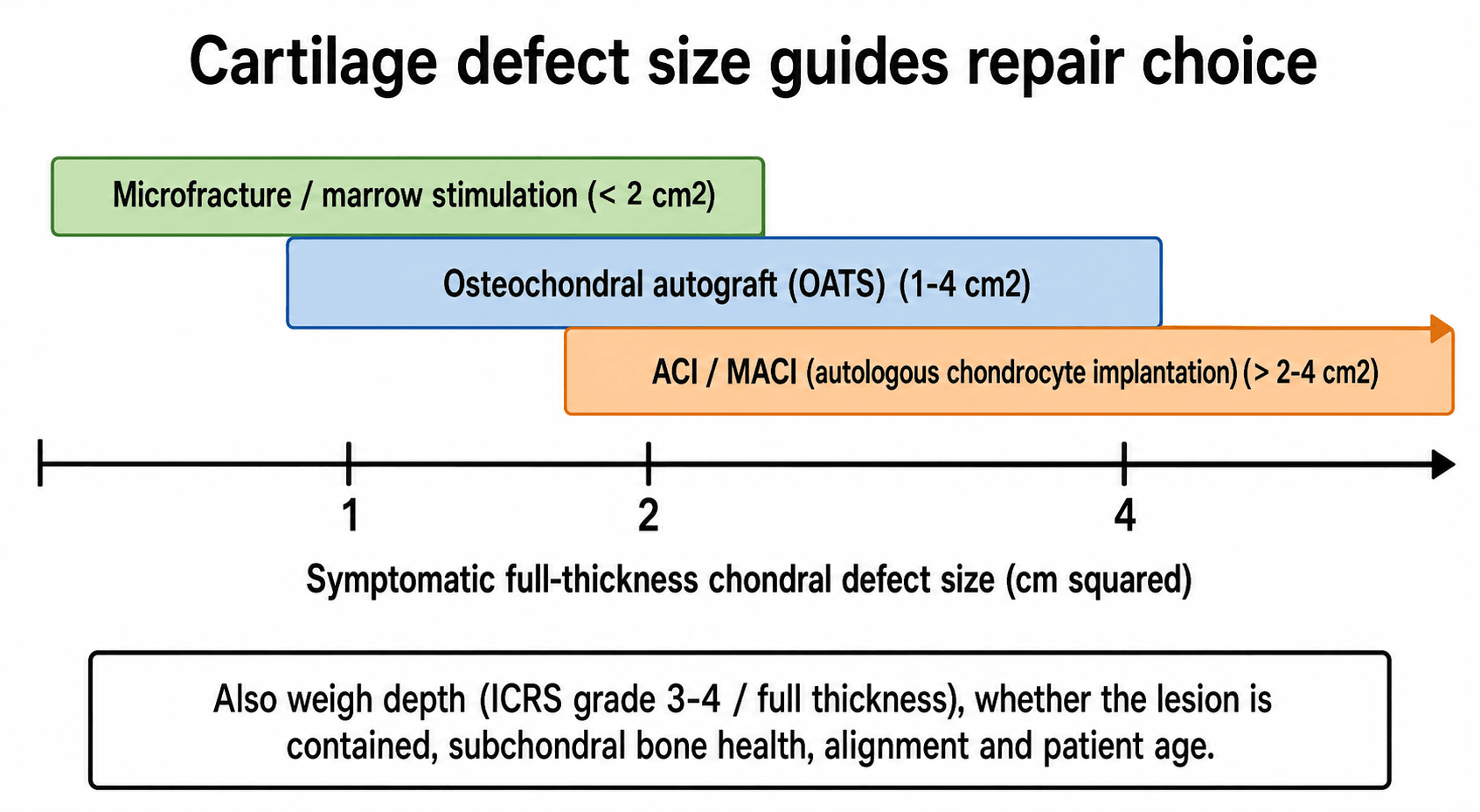
- Less than 2cm²: Microfracture (fibrocartilage result)
- 1-4cm²: OATS (true hyaline cartilage, donor site morbidity)
- More than 2-4cm²: ACI/MACI (hyaline-like repair, two-stage)
- Always address alignment (HTO), meniscal status, and ligament stability
Quantitative Techniques
- T2 mapping: collagen integrity and water content (non-invasive, no contrast)
- dGEMRIC: GAG content (requires IV gadolinium + 90-min delay)
- T1rho: proteoglycan content (research, not widely available)
- All detect biochemical changes BEFORE morphological damage
MOCART Score (Post-Repair)
- Fill grade, Integration, Surface, Signal, Bone interface, Effusion
- Isointense signal to native cartilage = best outcome
- Hyperintense signal = more fibrocartilaginous or immature
- Fill grade and integration are strongest outcome predictors
Evidence Base
Diagnostic Performance of MRI for Knee Articular Cartilage
- Across 14 Level I and 13 Level II studies, MRI sensitivity for identifying knee articular cartilage abnormalities ranged widely from 26% to 96% (specificity 50-100%, accuracy 49-94%).
- For detecting EARLY osteoarthritis specifically, sensitivity was even more variable at 0-86% — confirming MRI under-detects early/partial cartilage change.
- Heterogeneity of MRI sequences and field strengths was so great that a formal meta-analysis could not be performed.
Fat-Suppressed 3D SPGR vs Standard MRI for Cartilage Defects
- In 48 patients with arthroscopic correlation, sagittal fat-suppressed 3D SPGR was far more sensitive for hyaline cartilage defects than standard MRI (75-85% versus 29-38%, p less than 0.001) with equal specificity (97% versus 97%).
- One quarter of patients had isolated cartilage lesions clinically mistaken for meniscal tears that were missed on standard sequences but seen on SPGR.
- Combining standard and SPGR images gave no added diagnostic advantage over SPGR alone (sensitivity 86%, specificity 97%).
A dedicated 3D gradient-echo cartilage sequence roughly doubles defect detection versus routine knee MRI; full-thickness loss is detected far more reliably than partial-thickness change.