Imaging patients with orthopaedic hardware
Susceptibility: Different magnetic properties cause local field distortion
Signal void: No signal from metal itself
Geometric distortion: Spatial mismapping of signal
Pile-up artefact: Signal displaced and concentrated
Key: MARS techniques address susceptibility and geometric distortion
- Metal artefact = signal void + geometric distortion
- Titanium causes less artefact than stainless steel or cobalt-chrome
- 1.5T preferred over 3T for metal artefact reduction
- MARS sequences: SEMAC, MAVRIC, VAT (View Angle Tilting)
- Increase bandwidth, use spin echo over gradient echo
- “Susceptibility artefact proportional to field strength
- “Stainless steel: 10x more artefact than titanium
- “Short tau inversion recovery (STIR) better than fat-sat near metal
- “Thinner slices and higher matrix reduce artefact
- “ALTR assessment around MoM hips requires MARS MRI
Physics of Metal Artefact
With the rising number of patients carrying orthopaedic implants, imaging around metal is an increasingly important skill. The core knowledge is which materials cause most artefact, why 1.5T is preferred, and what the basic MARS techniques do. Assessment of adverse local tissue reaction (ALTR) around metal-on-metal hips is a common application.
Where the artefact comes from. Metals have a different magnetic susceptibility from the surrounding tissue, so an implant distorts the local magnetic field. The metal itself returns no signal because it has no mobile protons, and the field distortion around it mismaps the signal from the tissue nearby.
- Cause
- No mobile protons in metal
- Appearance
- Black region at metal location
- Cause
- Local field inhomogeneity
- Appearance
- Blooming, signal distortion around metal
- Cause
- Frequency mismapping
- Appearance
- Spatial displacement of anatomy
- Cause
- Signal misregistration
- Appearance
- Bright bands adjacent to void
- Cause
- Off-resonance effects
- Appearance
- Incomplete fat suppression near metal
What sets the severity. The implant's material, its alignment in the magnet, the spatial resolution and the sequence all change how much artefact an implant produces, and severity is proportional to field strength. Alignment is the one lever not covered in the sections below: placing the implant's long axis parallel to B0 reduces artefact.
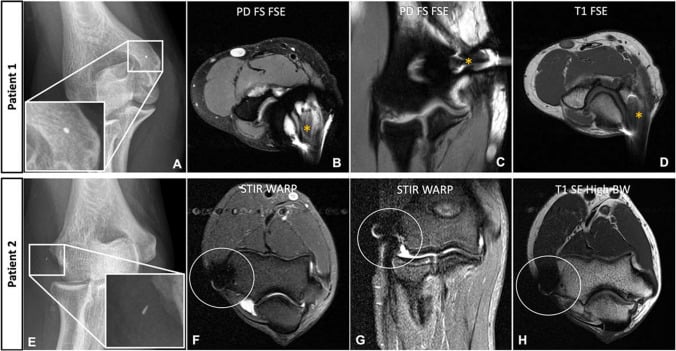
Implant Material Properties
Artefact follows the magnetic susceptibility of the material, from none with PEEK to severe with stainless steel.
- Susceptibility
- Low
- Artefact Severity
- Minimal
- Common Uses
- Plates, screws, stems, spinal implants
- Susceptibility
- Moderate
- Artefact Severity
- Moderate-high
- Common Uses
- Femoral heads, tibial trays, bearing surfaces
- Susceptibility
- High
- Artefact Severity
- Severe
- Common Uses
- Older implants, some screws, wires
- Susceptibility
- Low
- Artefact Severity
- Minimal
- Common Uses
- Trabecular metal, acetabular augments
- Susceptibility
- Very low
- Artefact Severity
- Minimal
- Common Uses
- Ceramic-like bearing surfaces
- Susceptibility
- None
- Artefact Severity
- None
- Common Uses
- Spinal cages, radiolucent
Choosing the implant. When post-operative MRI is anticipated, choose titanium implants when possible. Cobalt-chrome is the difficulty in arthroplasty: metal-on-metal hip bearings cause significant artefact and need MARS sequences for ALTR surveillance, and total knee replacements with cobalt-chrome femoral components are also challenging to image.
Standard Protocol Optimisation
Before any dedicated sequence is added, the ordinary parameters of the protocol can be set to limit artefact.
- Adjustment
- Use 1.5T over 3T
- Effect
- Artefact proportional to B0
- Adjustment
- Increase (wide bandwidth)
- Effect
- Reduces geometric distortion
- Adjustment
- Decrease (thin slices)
- Effect
- Reduces through-plane distortion
- Adjustment
- Increase (high resolution)
- Effect
- Improves spatial resolution
- Adjustment
- Spin echo over gradient echo
- Effect
- Less susceptibility-sensitive
- Adjustment
- STIR over chemical fat-sat
- Effect
- STIR works despite field inhomogeneity
- Adjustment
- Optimise (not too long)
- Effect
- Balance SNR and blurring
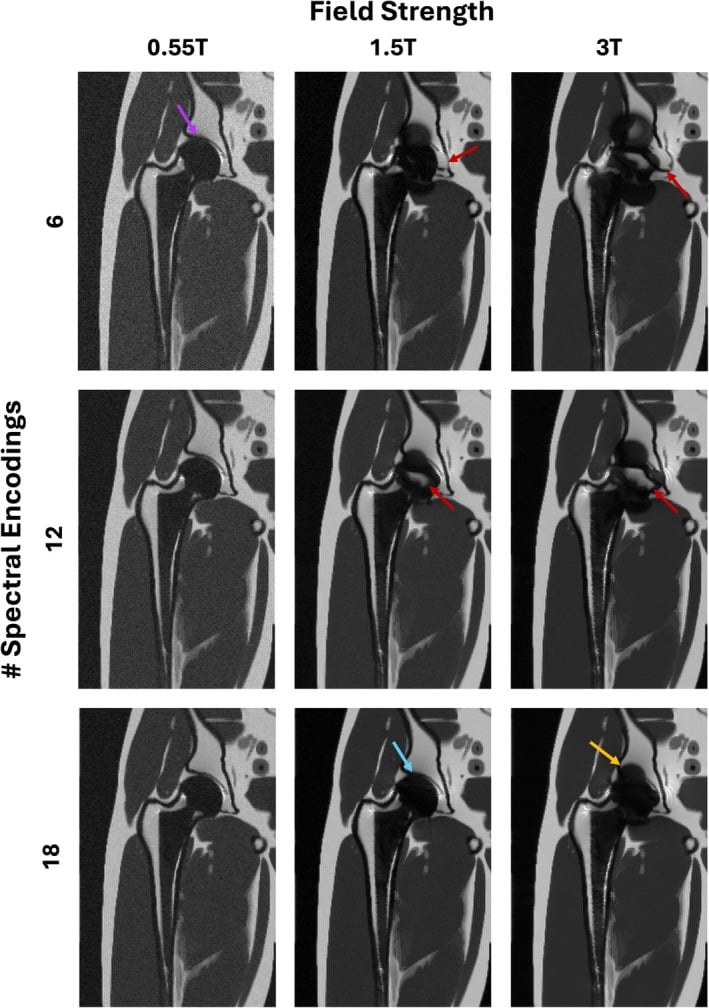
Why 1.5T. Metal artefact is directly proportional to field strength, and 3T produces approximately twice the artefact of 1.5T for the same implant. For routine imaging around metal, 1.5T is preferred despite its generally lower SNR. Modern multispectral MARS (MAVRIC-SL) can make 3T diagnostically useful (Choi 2015), but 1.5T remains the default where artefact is the limiting factor.
Why STIR, not chemical fat saturation. Chemical fat saturation relies on a uniform magnetic field to excite fat selectively, and the field inhomogeneity around metal makes it fail. STIR suppresses fat by inversion recovery, a T1 property, and so works regardless of field uniformity.
Why Spin Echo, Not Gradient Echo, Near Metal
The problem is static. Near an implant the dominant problem is the large static off-resonance, the field inhomogeneity produced by the metal's susceptibility, and whether a sequence can undo the dephasing it causes decides how much artefact that sequence shows. General sequence physics is developed in the mri-imaging-principles topic; this section gives the metal-specific reason.
- Gradient echo (GRE)
- Gradient reversal only - no refocusing pulse
- (Fast) spin echo (FSE / TSE)
- 180-degree refocusing pulse
- Gradient echo (GRE)
- Not refocused - T2*-weighted, dephasing persists
- (Fast) spin echo (FSE / TSE)
- Refocused - spins rephase at the echo, signal recovered
- Gradient echo (GRE)
- Severe blooming, large signal voids
- (Fast) spin echo (FSE / TSE)
- Much reduced
- Gradient echo (GRE)
- Avoid
- (Fast) spin echo (FSE / TSE)
- Workhorse, and the backbone of all 3D MARS sequences
Why gradient echo fails. Gradient echo has no 180-degree refocusing pulse, so it cannot undo the phase that spins accumulate in the implant's static field inhomogeneity. The T2* sensitivity prized elsewhere for detecting haemosiderin or calcium becomes catastrophic blooming around metal.
Why spin echo works. The 180-degree pulse of spin echo and fast spin echo reverses the static dephasing and recovers the signal, and a short inter-echo spacing limits dephasing between refocusing pulses. Near any implant, image with FSE/TSE; SEMAC, MAVRIC and WARP are all built on spin-echo (VAT) backbones.
Where the Distortion Goes: Frequency-Encode Direction, Bandwidth and the VAT/SEMAC Split
Distortion follows the frequency axes. Metal off-resonance mismaps signal along the frequency-encode (readout) direction in-plane and along the slice-select direction through-plane, because both axes use frequency to localise signal. The phase-encode direction is largely spared. That single fact explains the bandwidth rule, the value of swapping encoding directions, and why VAT and SEMAC are separate tools.
Receiver bandwidth. A higher receiver bandwidth spreads more hertz across each pixel, so a given off-resonance shift displaces signal by fewer pixels: less in-plane distortion and a smaller void. The price is signal-to-noise, which falls roughly with the square root of bandwidth, so bandwidth is increased when SNR allows.
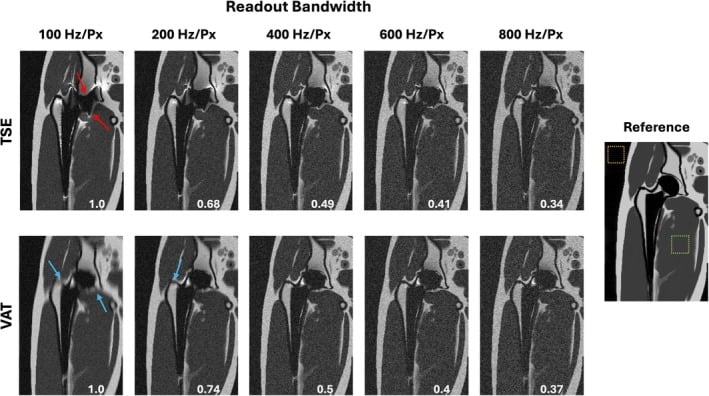
Steering the artefact. Because the in-plane displacement runs along the frequency-encode axis, swapping the frequency- and phase-encode directions moves the pile-up and void off the structure you care about.
Why VAT and SEMAC are different tools. View-angle tilting corrects the in-plane, readout-direction distortion with an extra readout gradient. SEMAC adds slice-direction (z) phase encoding to correct the through-plane distortion. Combining them, with MAVRIC's multi-frequency acquisition, covers both directions, which is why these are the definitive techniques for large cobalt-chrome arthroplasty when the simple levers are not enough.
Differential Diagnosis of Periprosthetic Masses on MARS MRI
A mass is not automatically a pseudotumour. A solid or cystic periprosthetic mass must always be correlated with the bearing type, serum metal ions, inflammatory markers and joint aspiration. Infection and, rarely, sarcoma are the dangerous mimics, and they change management entirely.
- Typical Patient
- MoM hip, raised Co/Cr ions
- MARS MRI Features
- Peri-articular cystic or solid mass, variable wall thickness, synovitis
- Discriminators
- Communicates with joint, abductor/tendon damage, ion levels elevated
- Typical Patient
- Pain, raised CRP/ESR, sinus
- MARS MRI Features
- Lamellated synovitis, fluid collections, reactive marrow oedema, sinus tract
- Discriminators
- Systemic inflammatory markers, positive aspirate; ions normal
- Typical Patient
- Older non-MoM bearing
- MARS MRI Features
- Expansile low-signal synovial masses, focal osteolysis around implant
- Discriminators
- Bearing is metal-on-poly/ceramic; ions normal
- Typical Patient
- Recent surgery or anticoagulation
- MARS MRI Features
- Well-defined collection, blood-degradation signal, no enhancing solid component
- Discriminators
- Temporal relation to surgery, resolves over time
- Typical Patient
- Lateral hip pain
- MARS MRI Features
- Fluid in greater trochanteric bursa, no intra-articular mass
- Discriminators
- Confined to bursa, no abductor destruction
- Typical Patient
- No bearing-related cause, growing mass
- MARS MRI Features
- Heterogeneous enhancing mass, may not respect joint planes
- Discriminators
- Independent of implant, biopsy required if atypical
Guidelines, Registries & Global Practice
- Region
- UK
- Position on Imaging
- Risk-stratified follow-up of MoM hips; cross-sectional imaging (MARS MRI or ultrasound) indicated for symptomatic patients or rising/raised metal ions
- Region
- US
- Position on Imaging
- Recommends clinical follow-up and considers cross-sectional imaging (MRI/US/CT) in symptomatic patients or with abnormal ion levels
- Region
- US
- Position on Imaging
- Supports a combined algorithm of symptoms, examination, radiographs, serum metal ions and MARS MRI for evaluating the painful MoM hip
- Region
- UK
- Position on Imaging
- Endorses surveillance pathways using metal ions plus MARS MRI or ultrasound for soft-tissue/pseudotumour assessment
- Region
- Europe
- Position on Imaging
- Aligns with stratified surveillance; cross-sectional imaging for symptomatic or high-risk implants
Advanced MARS Techniques
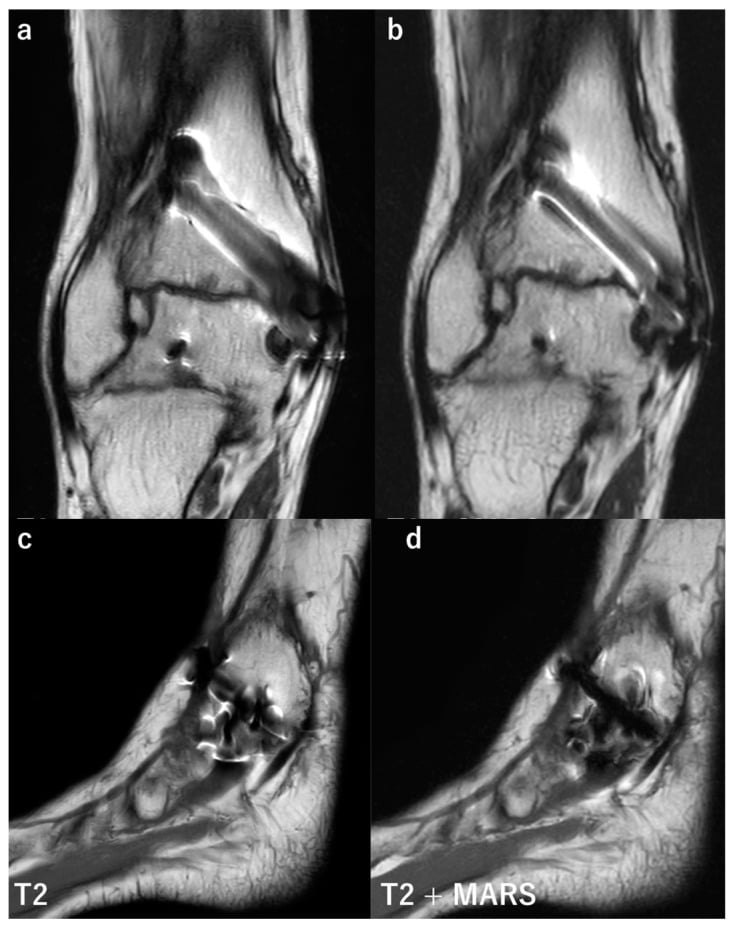
View-angle tilting (VAT). VAT applies an additional gradient during readout that tilts the view angle, correcting in-plane geometric distortion caused by the metal. It is effective but increases scan time, and it is often combined with increased bandwidth.
SEMAC. Slice-encoding for metal artefact correction addresses the through-plane (slice-direction) distortion by acquiring multiple z-phase encoding steps for each slice, which resolves signal pile-up and slice distortion. The cost is a significant increase in scan time, although in knee arthroplasty compressed-sensing SEMAC has brought it under 5 minutes per sequence (Fritz 2016).
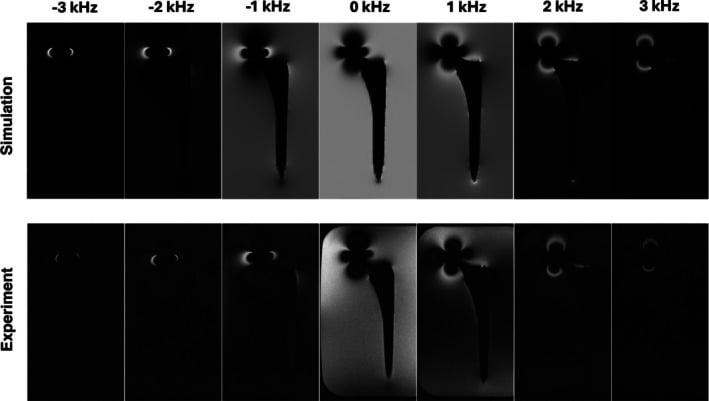
MAVRIC. Multi-acquisition variable-resonance image combination acquires images at multiple frequencies to cover the range of off-resonance the metal causes, then combines the sub-images into an artefact-reduced composite. It is effective for large metal implants, at the cost of long scan times. MAVRIC-SL combines it with SEMAC.
WARP. A Siemens proprietary technique that combines VAT with optimised bandwidth and slice-profile correction. It is faster than SEMAC or MAVRIC with good artefact reduction, and is available as a standard option on many Siemens scanners.
- Mechanism
- In-plane distortion correction
- Scan Time
- Moderate increase
- Availability
- Widely available
- Mechanism
- Through-plane encoding
- Scan Time
- Significant increase
- Availability
- GE, Siemens, Philips
- Mechanism
- Multi-frequency acquisition
- Scan Time
- Significant increase
- Availability
- GE
- Mechanism
- Combined SEMAC + MAVRIC
- Scan Time
- Long
- Availability
- GE
- Mechanism
- VAT + optimisation
- Scan Time
- Moderate increase
- Availability
- Siemens
A smaller void is not the whole answer. MAVRIC reduces the component-adjacent void more than a conventional MARS set, but its images are more blurred, so choose the advanced sequence for the diagnostic target rather than for the smallest void.
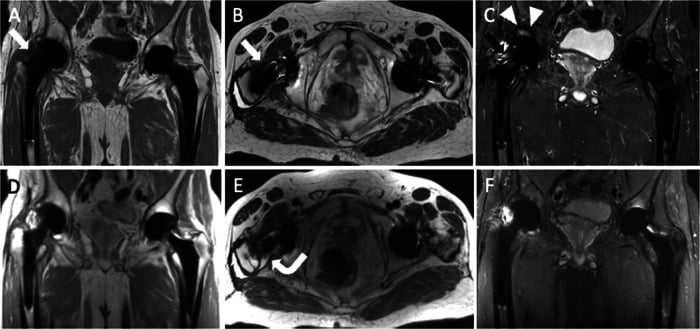
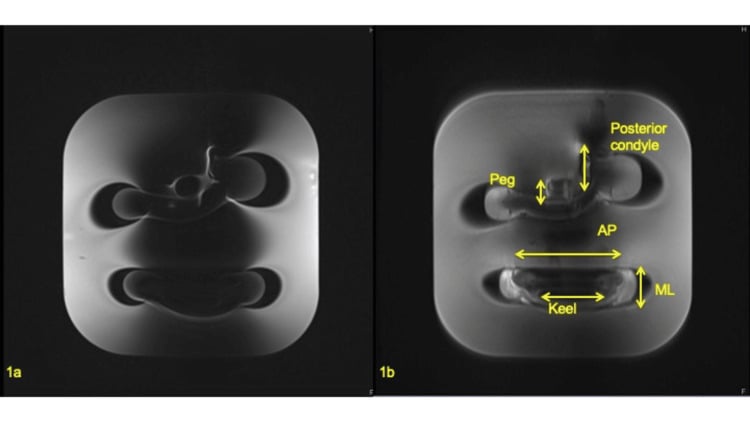
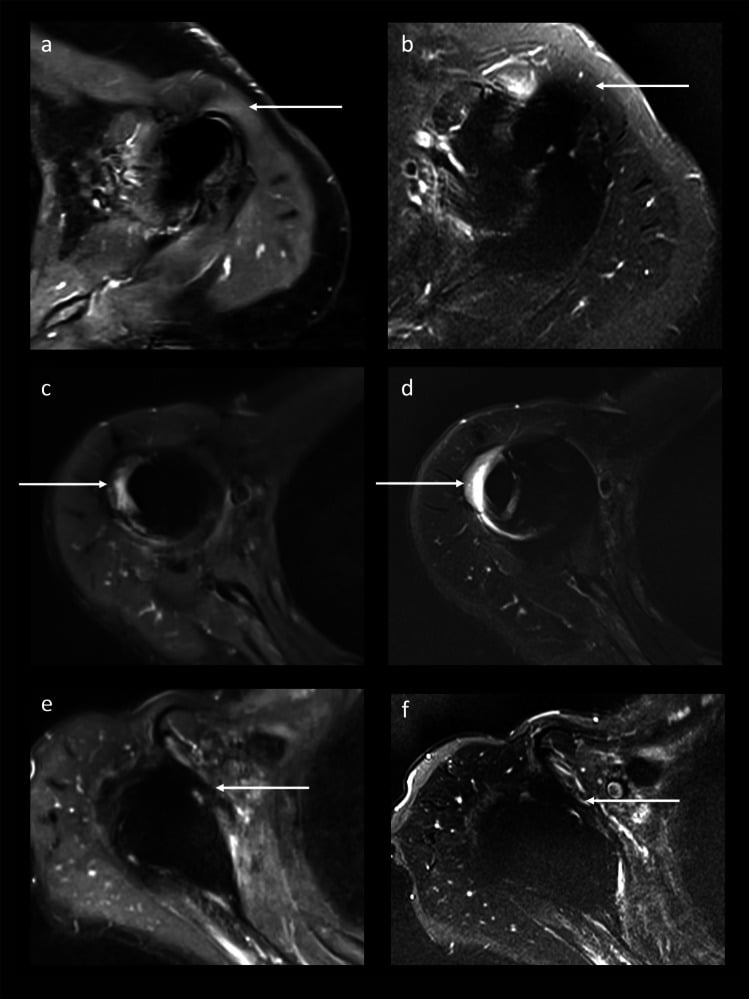
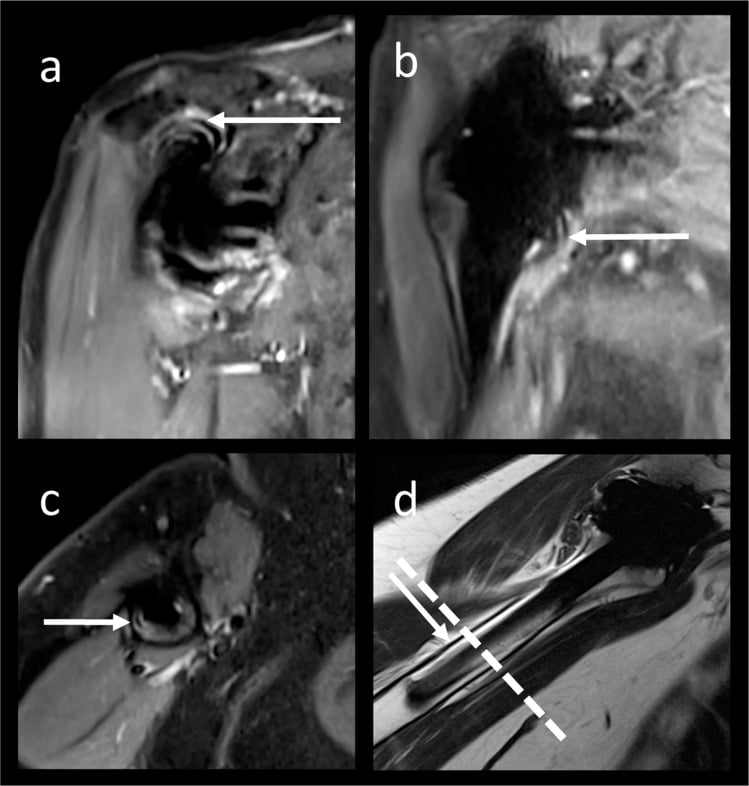
Compressed-sensing SEMAC has its own false positives. It can show marrow that VAT obscures, but it can also create apparent muscle oedema distant from the implant, and its ripple artefact can mimic lamellated synovitis or loosening. Read corrected images with the conventional sequence: a finding that tracks the ripple pattern, or disappears on another plane or sequence, is artefact until proved otherwise.
Protocol Selection
- Field Strength
- 1.5T
- Key Sequences
- PD fat-sat, STIR, T1
- MARS Technique
- MARS (MAVRIC, SEMAC, WARP)
- Field Strength
- 1.5T
- Key Sequences
- PD, STIR
- MARS Technique
- VAT or MARS
- Field Strength
- 1.5T
- Key Sequences
- T1, T2, STIR sagittal/axial
- MARS Technique
- VAT, MARS if available
- Field Strength
- 1.5T
- Key Sequences
- STIR (oedema), T1
- MARS Technique
- Standard optimisation often sufficient
- Field Strength
- 1.5T
- Key Sequences
- PD fat-sat, STIR
- MARS Technique
- MARS if available
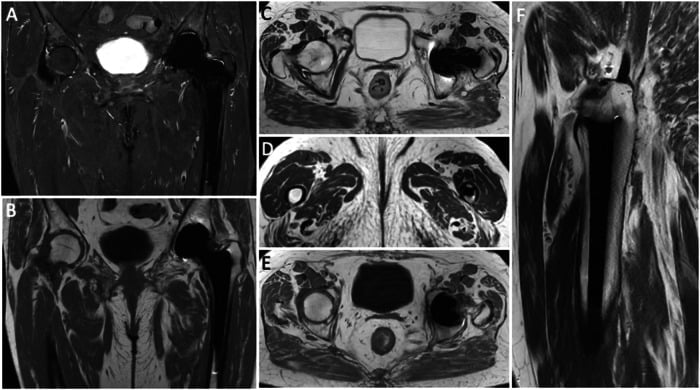
When standard MRI is adequate. Small titanium screws and plates often produce acceptable images with standard optimised protocols (increased bandwidth, thin slices, spin echo). MARS sequences add scan time and are most valuable for large cobalt-chrome implants such as hip replacements, which is where full 3D SEMAC or MAVRIC is reserved.
Controversies and Areas of Uncertainty
Clinical Imaging Applications
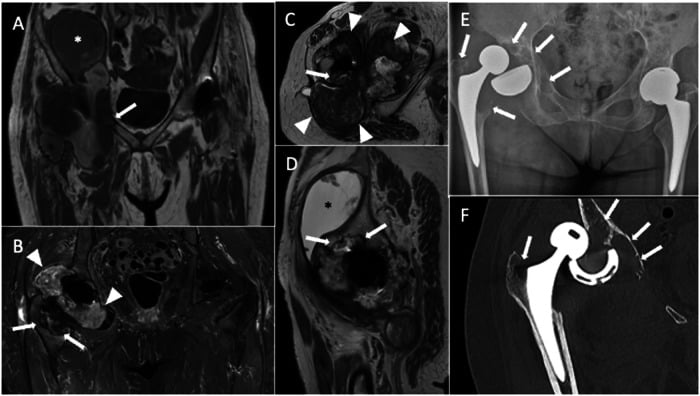
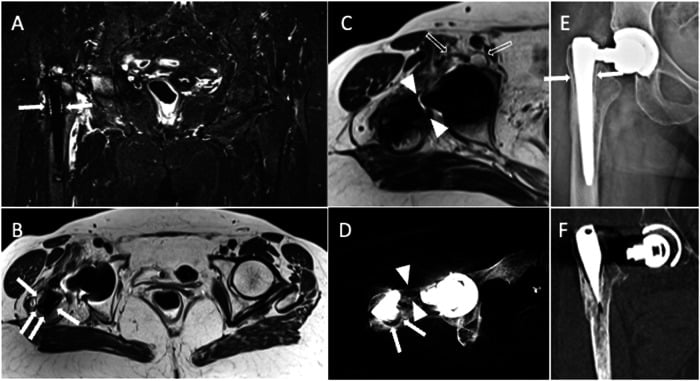
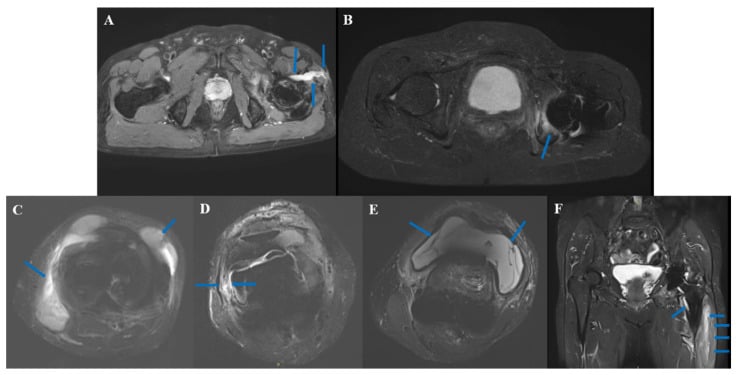
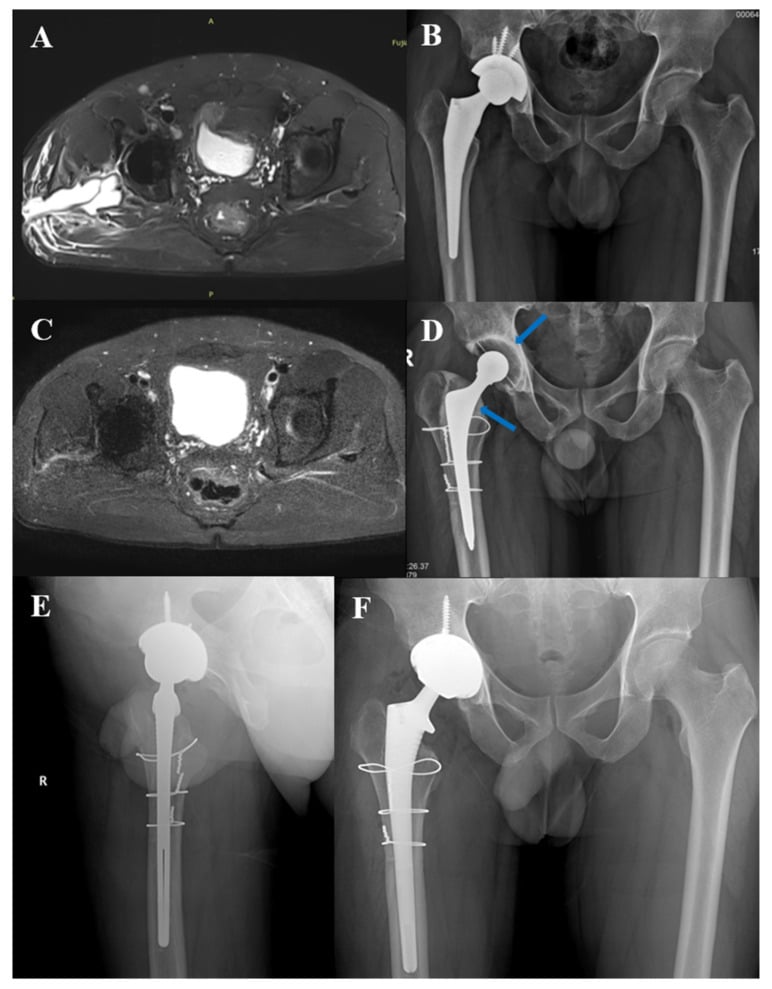
ALTR around metal-on-metal hips. Metal-on-metal hip bearings can cause adverse local tissue reaction (metallosis, pseudotumour), and MRI with MARS is essential for its assessment. Look for the findings below and for osteolysis, and compare the imaging with blood metal ion levels for management decisions.
- MRI Appearance
- Cystic or solid mass adjacent to hip
- Significance
- May compress neurovascular structures
- MRI Appearance
- T2 bright, may have debris
- Significance
- Periarticular, trochanteric bursa
- MRI Appearance
- Oedema (T2 high) or atrophy (T1 fat)
- Significance
- Abductors commonly affected
- MRI Appearance
- Discontinuity, retraction
- Significance
- May affect surgical approach
- MRI Appearance
- Low signal debris, synovial thickening
- Significance
- Metal particle deposition
Spinal instrumentation. After fusion, MRI is requested for adjacent segment disease, recurrent stenosis or infection around the instrumentation. MARS helps visualise the neural structures, STIR is essential for infection, and CT may complement MRI for bone detail.
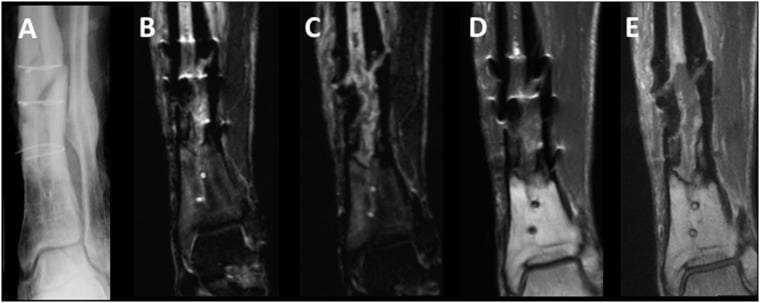
Prosthetic joint infection. MARS MRI can assess the soft tissue around an arthroplasty for abscess, sinus tracts and inflammatory changes, but metal artefact still limits the bone-implant interface. Nuclear medicine (WBC/marrow scan) is often preferred for the diagnosis of PJI; MRI is better for soft-tissue extent and surgical planning. The distribution of findings defines the extent of debridement, and does not replace microbiological diagnosis.
Clinical Decision Scenarios
Practise clinical reasoning and management decisions out loud
“A patient with a painful metal-on-metal hip replacement is referred for MRI. Blood cobalt level is 12 ppb (elevated). You are asked about optimal imaging.”
“A patient 2 years post lumbar fusion with persistent leg pain is referred for MRI. The spine surgeon wants to assess for recurrent disc herniation.”
“You are asked to explain why MRI around metal implants is challenging. An orthopaedic trainee asks what material causes the least artefact.”
Material Artefact Severity
- Titanium: Least artefact
- Tantalum/Oxinium: Low artefact
- Cobalt-chrome: Moderate-high
- Stainless steel: Severe (10x titanium)
Protocol Optimisation
- 1.5T over 3T (artefact proportional to B0)
- Spin echo over gradient echo
- Increase receiver bandwidth
- STIR not chemical fat-sat
- Thin slices, high matrix
MARS Techniques
- VAT: In-plane correction
- SEMAC: Through-plane encoding
- MAVRIC: Multi-frequency acquisition
- WARP: Siemens combined technique
Clinical Applications
- MoM hip ALTR surveillance
- Post-fusion spine assessment
- Periprosthetic soft tissue
- PJI soft tissue extent
Evidence Base
SEMAC — Original Slice-Encoding Technique
- SEMAC extends a view-angle-tilting (VAT) spin-echo sequence with additional z-phase encoding, resolving distorted excitation profiles that cause through-plane distortion.
- VAT suppresses in-plane distortion while z-phase encoding corrects through-plane distortion, so spins are repositioned to their true spatial locations.
- The method requires no additional hardware and was validated in phantom and in vivo spine and knee studies with feasible scan times.
MAVRIC vs Conventional FSE After Arthroplasty
- In 122 patients (74 hip, 27 shoulder, 21 knee arthroplasties), MAVRIC showed significantly better visualisation of synovium and periprosthetic bone than metal-artefact-reduction FSE at all three joints.
- Synovitis and periprosthetic osteolysis were detected only on MAVRIC images in a substantial proportion of subjects.
- Supraspinatus tendon tears in 44% of relevant subjects were seen only on MAVRIC and not on FSE.
MAVRIC-SL at 3T in Hip Arthroplasty
- In 21 hips, MAVRIC-SL reduced measured artefact area versus 2D FSE by 59.9% at the level of the hip and 31.3% at the femur (both significant).
- Joint capsule and obturator externus/iliopsoas attachment sites were better depicted, and abnormal findings were significantly better shown with MAVRIC-SL.
- MAVRIC-SL increased diagnostic confidence even at 3T, a field strength normally avoided around large metal implants.