Forestier Disease | Mechanical Dysphagia from Anterior Osteophytes
- DISH (Forestier's Disease) is a systemic condition causing 'flowing wax' calcification of the ALL.
- OALL is the cervical manifestation, which can mechanically compress the oesophagus (Dysphagia) or Airway.
- The airway can be 'Difficult' to intubate due to osteophytes preventing visualisation.
- Surgery (Osteophytectomy) is reserved for severe dysphagia or airway compromise.
- Unlike OPLL, OALL does NOT typically cause myelopathy directly.
- “Look for 'Candle Wax' dripping appearance on X-ray.
- “Ask about 'Aspiration Pneumonia' history in elderly patients with neck stiffness.
- “Differentiation from Ankylosing Spondylitis (AS): DISH spares the SI joints and facets.
- “Surgery should preserve the disc space (Osteophytectomy ONLY) unless instability exists.
Overview and Epidemiology
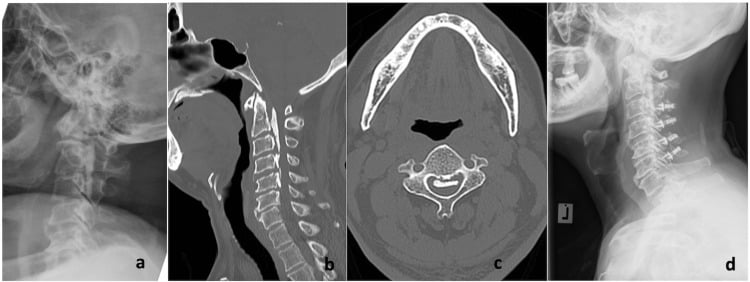
Definition. Diffuse idiopathic skeletal hyperostosis (DISH, Forestier disease) is a systemic, non-inflammatory enthesopathy that lays down "flowing" ossification along the spinal ligaments and the peripheral entheses, sparing the disc and the synovial joints. OALL, ossification of the anterior longitudinal ligament, is its cervical expression. It grows anteriorly, so it compresses the pharynx, oesophagus and airway rather than the cord.
Who. Radiographic prevalence rises with age, from roughly 10 percent over 50 years to up to 25-30 percent over 70 years in autopsy and CT cohorts. Men are affected about twice as often as women (2:1), and the disease is rare under 40 years.
The metabolic link. DISH is strongly linked to metabolic syndrome: type 2 diabetes, obesity and hypertension. It is increasingly viewed as a metabolic bone phenotype rather than simple "wear and tear".
Where. Cervical osteophytes are most marked at C3-C6.
How often it causes dysphagia. Not reliably established. Almost every published series is a collection of symptomatic cases with no denominator, so the widely quoted percentages have nothing behind them. The measurable quantity runs the other way: of 455 patients referred with dysphagia, 51 (11.2%) met Resnick criteria for DISH (García Callejo, PMID 31122675). That is the proportion of dysphagia caused by DISH, not the proportion of DISH causing dysphagia, and the two are routinely swapped.
Pathophysiology and Anatomy
The anterior longitudinal ligament. A broad ligament covering the front of the vertebral bodies, it prevents hyperextension. In DISH it ossifies but spares the annulus fibrosus and nucleus pulposus, unlike in ankylosing spondylitis.
Swallowing. The act runs in three phases:
- Oral - the bolus is prepared
- Pharyngeal - the pharynx constricts, the hyoid elevates and the epiglottis inverts
- Oesophageal - peristalsis
Where OALL interferes. OALL disrupts the pharyngeal phase, either by physically blocking epiglottic inversion or by narrowing the pharyngeal space. A mechanical block to epiglottic inversion leads to silent aspiration and pneumonia.
OALL vs OPLL
The mirror image. OPLL, ossification of the posterior longitudinal ligament, forms behind the vertebral bodies and grows into the spinal canal, compressing the cord and causing cervical myelopathy. OALL grows anteriorly and causes dysphagia and airway obstruction without myelopathy. The two are mirror-image problems and a classic exam pairing.
What they share. Both are ectopic-ossification disorders within the DISH / metabolic ossification spectrum, and the two can coexist in the same patient, anterior and posterior ossification together. OPLL is notably more common in East-Asian populations.
- OALL
- Anterior longitudinal ligament
- OPLL
- Posterior longitudinal ligament
- OALL
- Anteriorly (away from canal)
- OPLL
- Posteriorly (into the canal)
- OALL
- Dysphagia / airway obstruction
- OPLL
- Cervical myelopathy (cord compression)
- OALL
- Anterior osteophytectomy (no fusion usually)
- OPLL
- Posterior decompression (laminoplasty/laminectomy) for multilevel disease
OPLL in brief. OPLL is classified by morphology into continuous, segmental, mixed and localised (circumscribed) types. Multilevel disease is typically decompressed posteriorly by laminoplasty, and dural ossification and CSF leak are recognised hazards of anterior resection. The dedicated OPLL topic develops all of this.
Classification Systems
Resnick and Niwayama criteria. The gold standard for diagnosing DISH and distinguishing it from ordinary spondylosis:
- Flowing calcification along the anterolateral aspect of at least 4 contiguous vertebral bodies
- Preservation of disc height in the involved segments, and absence of extensive radiographic changes of degenerative disc disease (vacuum sign, marginal sclerosis)
- Absence of apophyseal joint ankylosis or of sacroiliac joint erosion, sclerosis or fusion
DISHResnick Criteria for DISH
Hook:Diagnostic criteria.
DISH or ankylosing spondylitis. The third criterion is there to exclude ankylosing spondylitis (AS). The two diseases separate on age, the sacroiliac joints, the disc and HLA-B27:
- DISH (Forestier)
- Old (over 50)
- Ankylosing Spondylitis (AS)
- Young (under 40)
- DISH (Forestier)
- Normal (Spared)
- Ankylosing Spondylitis (AS)
- Fused (Sacroiliitis)
- DISH (Forestier)
- Preserved
- Ankylosing Spondylitis (AS)
- Calcified/Narrowed
- DISH (Forestier)
- Normal Prevalence
- Ankylosing Spondylitis (AS)
- Highly Associated (+)
Dysphagia severity. Graded from incidental to severe:
- Grade 1 - asymptomatic, an incidental finding
- Grade 2 - mild dysphagia, solids only; managed with dietary modification
- Grade 3 - moderate dysphagia, liquids and solids, with weight loss; needs investigation
- Grade 4 - severe dysphagia with aspiration risk; tube feeding or surgery indicated
Clinical Assessment
Symptoms. Dysphagia, the sense of food sticking, is the most common presenting symptom of cervical OALL (a minority of all cervical DISH). The other symptoms:
- Globus - the feeling of a lump in the throat
- Dysphonia - hoarseness, from recurrent laryngeal nerve compression or vocal cord oedema
- Airway symptoms - stridor and sleep apnoea
- Dyspnoea - rare, caused by laryngeal oedema or a massive C3 osteophyte compressing the glottis
- Stiffness - decreased cervical range of motion
Examination. A hard, bony mass is palpable in the posterior pharynx; beware the gag reflex. The neck is stiff and has lost extension. The neurological examination is usually normal, because OALL grows out of the canal, not into it.
Large anterior osteophytes at C3/4 can physically block the laryngoscope blade from displacing the tongue and epiglottis. Awake fibreoptic intubation is often required.
Imaging and Investigations
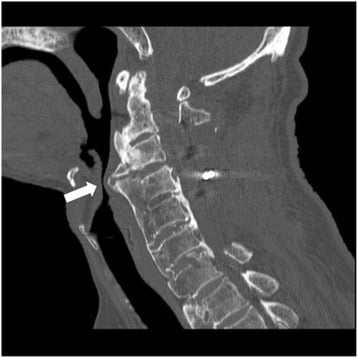
The principle. Dysphagia, aspiration, weight loss or stridor should prompt swallow and ENT assessment rather than attribution to an incidental radiographic finding. CT shows the exact osteophyte level and its relationship to the airway, but intrinsic mucosal disease still requires endoscopic or swallow evaluation.
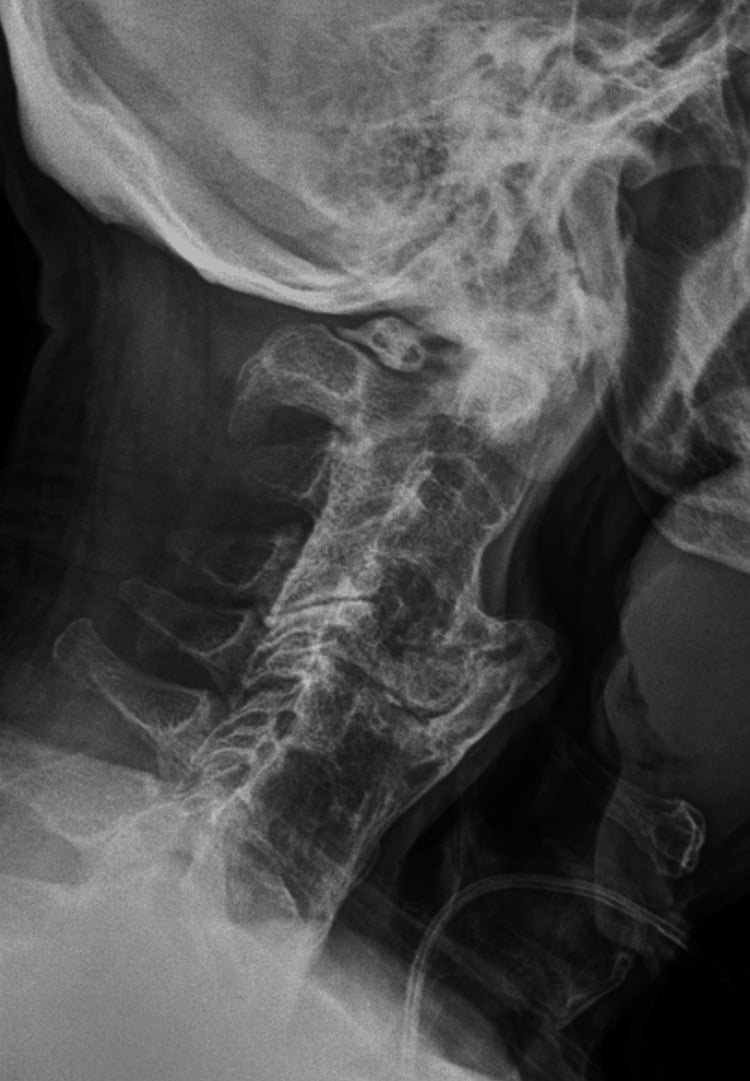
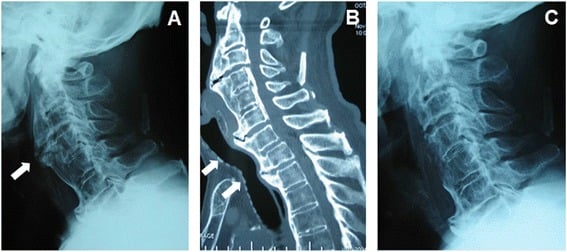
Lateral radiograph: screening. The film shows the "flowing candle wax" appearance anterior to the vertebral bodies. A radiolucent line separates the ossified ligament from the vertebral body, marking the unossified deep layer. Check the disc heights, which are spared.
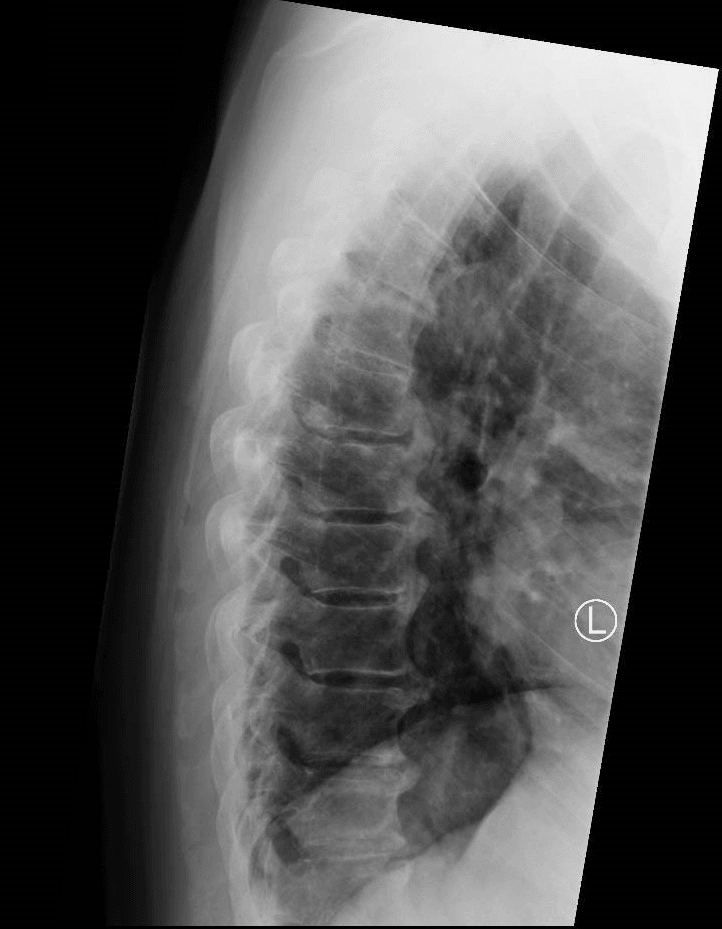
Videofluoroscopic swallow: function. A barium swallow done as a videofluoroscopic swallowing study (VFSS) is critical to demonstrate the mechanical cause of the dysphagia. It shows the bolus hitting the osteophyte and spiralling, or being aspirated.
CT: planning. CT defines the bony anatomy for resection, mapping the craniocaudal extent and thickness of the anterior mass. Thin-slice CT is the definitive bony roadmap before osteophytectomy.
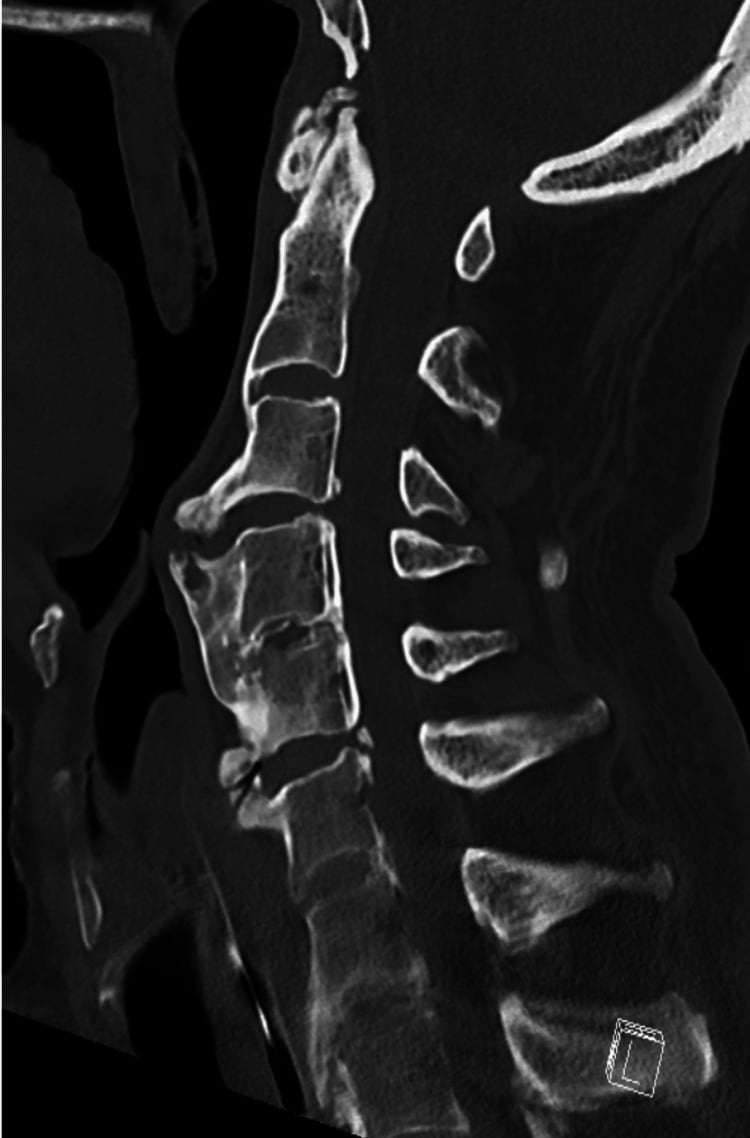
ENT nasendoscopy: before surgery. Mandatory, to rule out intrinsic malignancy or a vocal cord palsy before any operation.
Management
The decision. An incidental finding is observed. Symptoms start a workup whose first job is to exclude malignancy or stricture; only when that confirms extrinsic compression does the severity of the dysphagia choose between conservative care and anterior osteophytectomy.
- 1
Dysphagia Symptoms Present
- 2
Rule out Malignancy/Stricture
- 3
Severity of Dysphagia
Non-operative care. First-line treatment:
- Dietary modification - soft foods and thickened fluids, with speech pathology involvement
- NSAIDs - to reduce soft-tissue inflammation around the osteophytes
- Steroids - a short course for an acute flare of dysphagia
- Review - monitor weight and signs of aspiration
Surgery. Osteophytectomy is reserved for severe dysphagia, weight loss or aspiration, or for airway compromise.
Surgical Technique
The operation. Anterior cervical osteophytectomy resects the anterior bony mass to decompress the oesophagus, through a standard Smith-Robinson anterior cervical approach.
Positioning. Supine, with the neck slightly extended, in a Mayfield head clamp or on a horseshoe. Be careful: hyperextension can fracture the fused spine.
Step by step.
- Incision - a transverse skin incision at the level of the osteophyte, confirmed with fluoroscopy
- Dissection - deep dissection medial to the carotid sheath and lateral to the trachea and oesophagus
- Exposure - the prevertebral fascia will be tight over the mass, and identifying the "valley" between the osteophyte and the disc space is crucial
- Adhesions - chronic inflammation often leaves the oesophagus adherent to the tip of the osteophytes, so the risk of perforation is significantly higher than in a standard ACDF. Peel it off gently with a peanut dissector or a wet Raytec
- Resection - a high-speed diamond burr or a Leksell rongeur takes down the "peaks" over the vertebral bodies; at the "valleys" over the discs, take care not to violate the annulus
- Limits - resect flush with the anterior margin of the vertebral body, and do not chase lateral osteophytes near the foramen transversarium (vertebral artery risk)
- Disc sparing - do not enter the disc space
- Bone wax - apply it to the bleeding cancellous surface
- Closure - a deep drain is essential; close platysma and skin
Fusion. Generally not indicated unless there is pre-existing instability, because fusion increases adjacent segment disease.
Complications
- Risk Level
- High
- Management
- Retraction injury. Observe. Vocal cord medialisation if permanent.
- Risk Level
- High (Adhesions)
- Management
- Direct repair + muscle flap. NGT feeding. Antibiotics.
- Risk Level
- Moderate (years)
- Management
- Use bone wax. Ensure complete resection.
- Risk Level
- Moderate
- Management
- Place drain. Watch airway.
Persistent dysphagia. The table leaves out one further complication of osteophytectomy: swallowing that stays difficult after the operation.
Radiographic osteophyte regrowth is well recognised because the underlying metabolic driver persists, but symptomatic recurrence of dysphagia is uncommon — about 4 percent in the largest pooled surgical series at a mean follow-up of nearly 4 years. Counsel patients that regrowth is slow and most stay symptom-free.
Postoperative Care
The airway first. Monitor for retropharyngeal haematoma or oedema, watching for stridor. Nasogastric feeding may be needed after an oesophageal repair or with severe oedema. If there are dural or oesophageal concerns, repeat a contrast swallow before oral intake.
Outcomes and Prognosis
Dysphagia. Success is high for dysphagia resolution, with improvement in about 95 percent of operated patients in the largest pooled series, a series built mostly of case reports (see the Harlianto review below). Eating ability and quality of life improve significantly.
Aspiration. Aspiration may not resolve if its cause was neurological or permanent muscle damage.
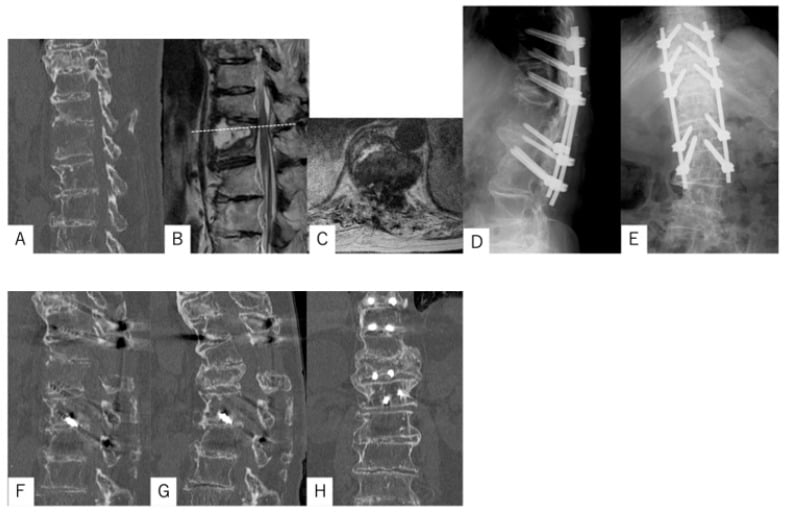
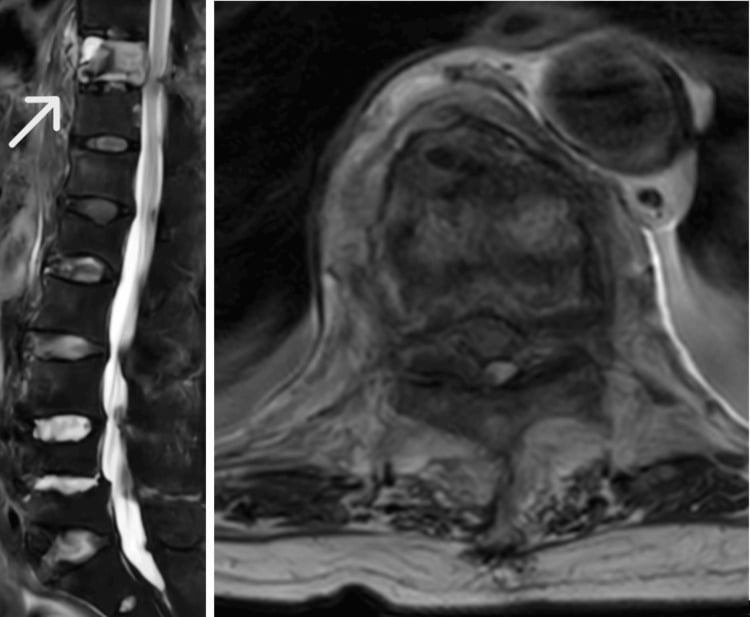
The Chalk-Stick (Ankylosed-Spine) Fracture
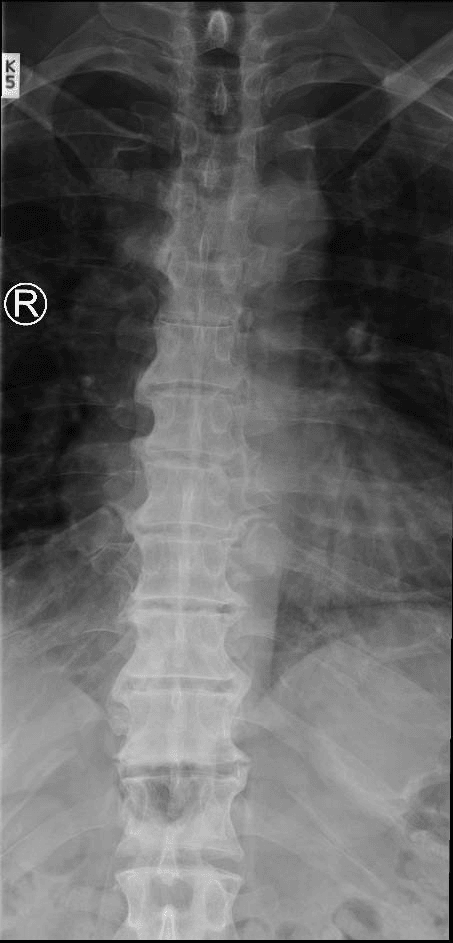
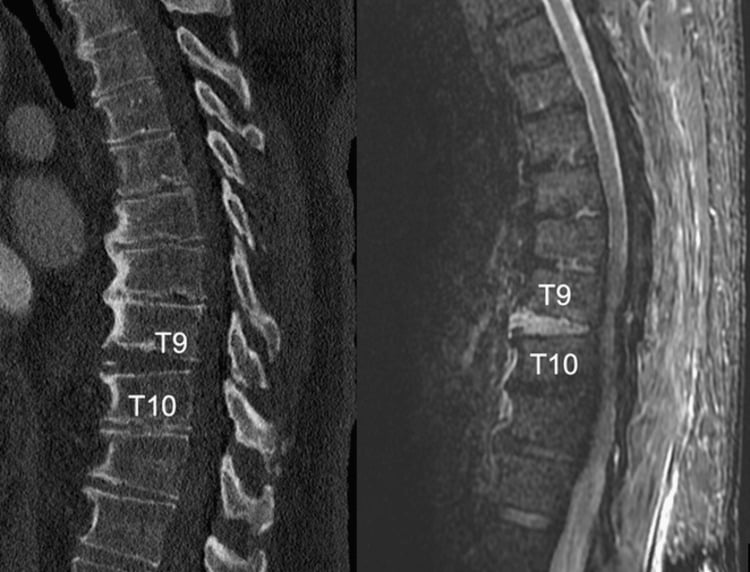
What it is. DISH leaves a rigid, brittle, "bamboo-like" spine, fused and often osteoporotic, as ankylosing spondylitis does. A fracture in it runs transversely across the entire ossified column, like snapping a stick of chalk, usually as a hyperextension injury through a disc space or vertebral body. The long, stiff lever arms on either side behave like long-bone segments, so this is an inherently unstable three-column injury, even after trivial or low-energy trauma such as a fall from standing or a minor knock.
Why it is dangerous.
- It is frequently missed or diagnosed late, obscured by the ossified mass and the pre-existing deformity on plain films
- High rates of spinal epidural haematoma, cord injury and mortality; neurological deterioration can be delayed
- DISH fractures cluster at the thoracolumbar junction (Harlianto meta-analysis), whereas AS fractures favour the mid-thoracic spine
Management. Treat new spinal pain after any trauma in an ankylosed-spine patient as a fracture until excluded.
- Imaging - full-length CT of the whole spine, looking for non-contiguous fractures; add MRI for neural, ligamentous or epidural injury, that is when there is a neurological deficit or a suspected disco-ligamentous hyperextension injury (Tavolaro), balancing the risk of moving the patient
- Handling - immobilise and transfer in the patient's own fixed posture. Never force the neck or spine straight: this can displace the fracture and injure the cord, the same hyperextension caution that applies to operative positioning
- Definitive treatment - usually long-segment instrumented stabilisation, because long lever arms and poor bone make short constructs fail. Many of these fractures need surgery even when they look "minimally displaced"
General fracture classification and fixation are developed in the cervical-spine-fracture, subaxial-cervical-fractures, thoracolumbar-fractures and ankylosing-spondylitis topics.
Guidelines, Registries & Global Practice
Global epidemiology
- Radiographic DISH is common worldwide in older adults: roughly 10 percent over 50 and 25-30 percent over 70, with consistent male predominance across European, North American and Asian CT/autopsy cohorts.
- Population studies repeatedly tie DISH to metabolic syndrome, so prevalence tracks with regional obesity and type 2 diabetes burden.
- Symptomatic cervical OALL (dysphagia or airway obstruction) remains uncommon, and the published surgical literature is dominated by case reports and small series — no randomised data exist.
- Relevant stance
- Treats the ankylosed (DISH/AS) spine as a high-risk fracture pattern; low-energy trauma needs full-length CT and a high index of suspicion for unstable three-column injury.
- Relevant stance
- No DISH-specific guidance; managed under general dysphagia (2-week-wait cancer pathway to exclude malignancy first) and spinal trauma standards.
- Relevant stance
- No dedicated guideline; surgical decompression reserved for refractory mechanical dysphagia or airway compromise after ENT/swallow workup.
- Relevant stance
- Cervical OALL is a recognised predictor of difficult intubation — plan awake fiberoptic technique and avoid forced hyperextension.
Registry & practice variation
- There is no implant registry relevant to OALL because osteophytectomy is usually fusion-free; registry data (NJR, AOANJRR, AJRR) only apply if an instrumented fusion is added for instability or a chalk-stick fracture.
- Well-resourced settings: video fluoroscopic swallow study, CT planning, ENT nasendoscopy and awake fiberoptic intubation are standard before surgery.
- Limited-resource settings: diagnosis often rests on plain lateral radiographs and barium swallow; dietary modification and speech-pathology input carry most of the load, with surgery reserved for severe weight loss or aspiration.
Controversies & Areas of Uncertainty
- No high-level evidence: the entire surgical literature is case reports and small series; there are no randomised trials or formal guidelines, so recommendations are consensus-based (Harlianto/Verlaan systematic review).
- Fusion vs osteophytectomy alone: most authors avoid routine fusion to spare adjacent-segment disease and operative time, reserving it for instability or iatrogenic disc violation — but the threshold is not standardised.
- Defining "mechanical" dysphagia: dysphagia in elderly DISH patients is often multifactorial (neurological, presbyphagia, reflux). A positive swallow study does not guarantee the osteophyte is the sole cause, and a subset have persistent symptoms after technically successful surgery.
- Predicting recurrence: radiographic regrowth is common yet symptomatic recurrence is rare (~4 percent); no reliable predictor or proven preventive (bisphosphonates, metabolic control) exists.
- Imaging in trauma: whether every ankylosed-spine trauma patient needs MRI in addition to CT remains debated — current data suggest selective use for neurological deficit or suspected disco-ligamentous injury.
Related pages: Diffuse Idiopathic Skeletal Hyperostosis for the systemic disease of which cervical OALL is one expression, and Ossification of the Posterior Longitudinal Ligament for the mirror-image condition that compresses the cord rather than the oesophagus; Ankylosing Spondylitis for the inflammatory disease the Resnick criteria exist to exclude, and which shares the brittle-spine fracture risk with a different distribution; Cervical Myelopathy and Spinal Cord Injury for the neurological consequences of a chalk-stick fracture; and ACDF for the anterior cervical approach and its complication profile.
MCQ Practice Points
Q: Which feature distinguishes DISH from Ankylosing Spondylitis? A: Preservation of SI joints and Facet joints (No ankylosis).
Q: What structure ossifies in DISH? A: Anterior Longitudinal Ligament (ALL).
Q: Post-operative hoarseness after osteophytectomy is most likely due to? A: Recurrent Laryngeal Nerve (RLN) neurapraxia (from retraction).
Q: DISH is strongly associated with which metabolic disorder? A: Type 2 Diabetes Mellitus / Obesity.
Q: When is fusion indicated in OALL surgery? A: Only if instability is present. (E.g. fracture or iatrogenic disc violation). Routine fusion is unnecessary.
Exam Day Cheat Sheet
Key Concepts
- Flowing Anterolateral Ossification
- Disc Height Preserved
- SI Joints Normal
- Dysphagia over Dyspnea
Criteria (Resnick)
- 4+ Contiguous bodies
- Discs spared
- No Facet/SI fusion
- Flowing Candles
Surgery
- Indication: Severe Dysphagia/Wt Loss
- Procedure: Anterior Osteophytectomy
- Protect Esophagus!
- No Fusion usually
Risks
- Esophageal Perforation
- RLN Palsy
- Recurrence
- Hematoma (Airway)
Clinical Decision Scenarios
Practise clinical reasoning and management decisions out loud
“75M presents with 6 months of progressive difficulty swallowing solids. He has lost 5kg. He has a history of 'stiff neck'. Lateral X-ray shows massive anterior bone formation C3-C6. What is the diagnosis and workup?”
“You are called to ED for a DISH patient who has fallen and hit his head. GCS 8. The ED registrar cannot intubate. Why?”
“During osteophytectomy, you notice a Bubble in the wound field. What has happened and what do you do?”
Evidence Base
Radiographic & pathological criteria for DISH
- Evaluated 215 cadaveric spines and 100 patients with the disease.
- Defined the radiographic hallmark: flowing anterolateral ossification with a subjacent radiolucent line and preserved disc height.
- Established the three-part criteria distinguishing DISH from ankylosing spondylitis and degenerative spondylosis.
Surgical outcomes for cervical DISH dysphagia/airway obstruction
- 138 articles describing 419 patients (mean age 67 years, 85% male).
- Surgery (most often anterolateral approach) in 66 percent; dysphagia improved in 95.5 percent of operated patients.
- Total post-operative complication rate 22.1 percent (12.7 percent within 1 month).
- Dysphagia recurred in only 4 percent (12 patients) at mean 3.7-year follow-up.
Airway management in OALL of the cervical spine
- Two OALL patients with unexpectedly difficult tracheal intubation from anterior bridging osteophytes.
- Osteophytes displace the posterior hypopharyngeal wall, defeating both direct and fiberoptic-assisted awake intubation.
- OALL found in roughly 12 percent of autopsies and progresses with age.
DISH, metabolic disease and bone quality (Camargo cohort)
- 1545 postmenopausal women; DISH prevalence 8.2 percent.
- DISH associated with significantly higher obesity, metabolic syndrome, hypertension and type 2 diabetes.
- Despite higher lumbar BMD, DISH carried lower trabecular bone score and more vertebral fractures (28.6 vs 15.1 percent).
Vertebral fracture prevalence in DISH vs AS
- 7 DISH studies (n=1193): pooled vertebral fracture prevalence 22.6 percent (95% CI 13.4-33.4).
- 26 AS studies (n=2875): pooled prevalence 15.2 percent.
- DISH fractures cluster at the thoracolumbar junction; AS at the mid-thoracic spine.
CT vs MRI in ankylosing spine trauma
- 124 DISH/AS trauma patients imaged with both CT and MRI.
- MRI revealed additional injuries in 4.8 percent and changed management in 3.2 percent — mostly disco-ligamentous hyperextension injuries.
- Authors advise selective MRI for non-ankylosed levels or neurological deficit.