Osteomyelitis, septic arthritis, MRI escalation and surgical drainage
- Acute haematogenous osteomyelitis often begins in the metaphysis.
- Septic arthritis can rapidly damage cartilage.
- Kingella infection in toddlers can be subtle.
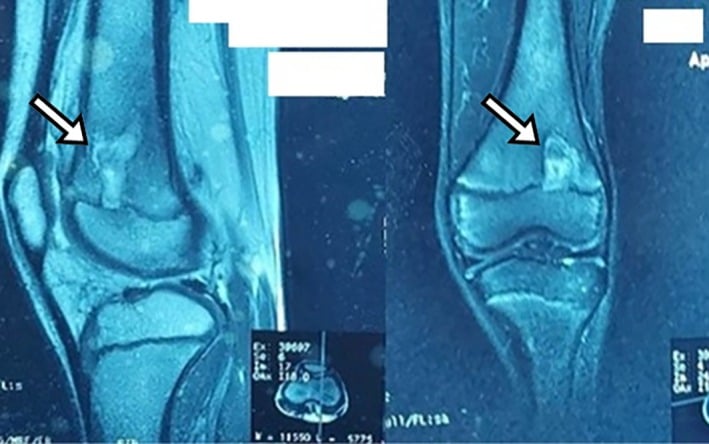
- MRI defines marrow, subperiosteal abscess and adjacent joint involvement.
- Antibiotic duration and route depend on organism, response and local protocols.
- “Pseudoparalysis in a baby is infection until proven otherwise.
- “Hip and shoulder infections in infants can cross into the joint through transphyseal vessels.
- “Culture before antibiotics when safe, but do not delay antibiotics in a septic child.
- “Failure of CRP to fall should trigger a search for undrained pus.
Overview and Epidemiology
Paediatric bone and joint infection is time-sensitive because bacteria, pus and inflammatory pressure can damage cartilage, physis and bone quickly. The two core diagnoses are acute haematogenous osteomyelitis and septic arthritis, but many children sit between these categories. Metaphyseal infection may spread to an adjacent joint, a subperiosteal abscess may mimic a joint problem, and pyomyositis may present as a painful limb with fever.
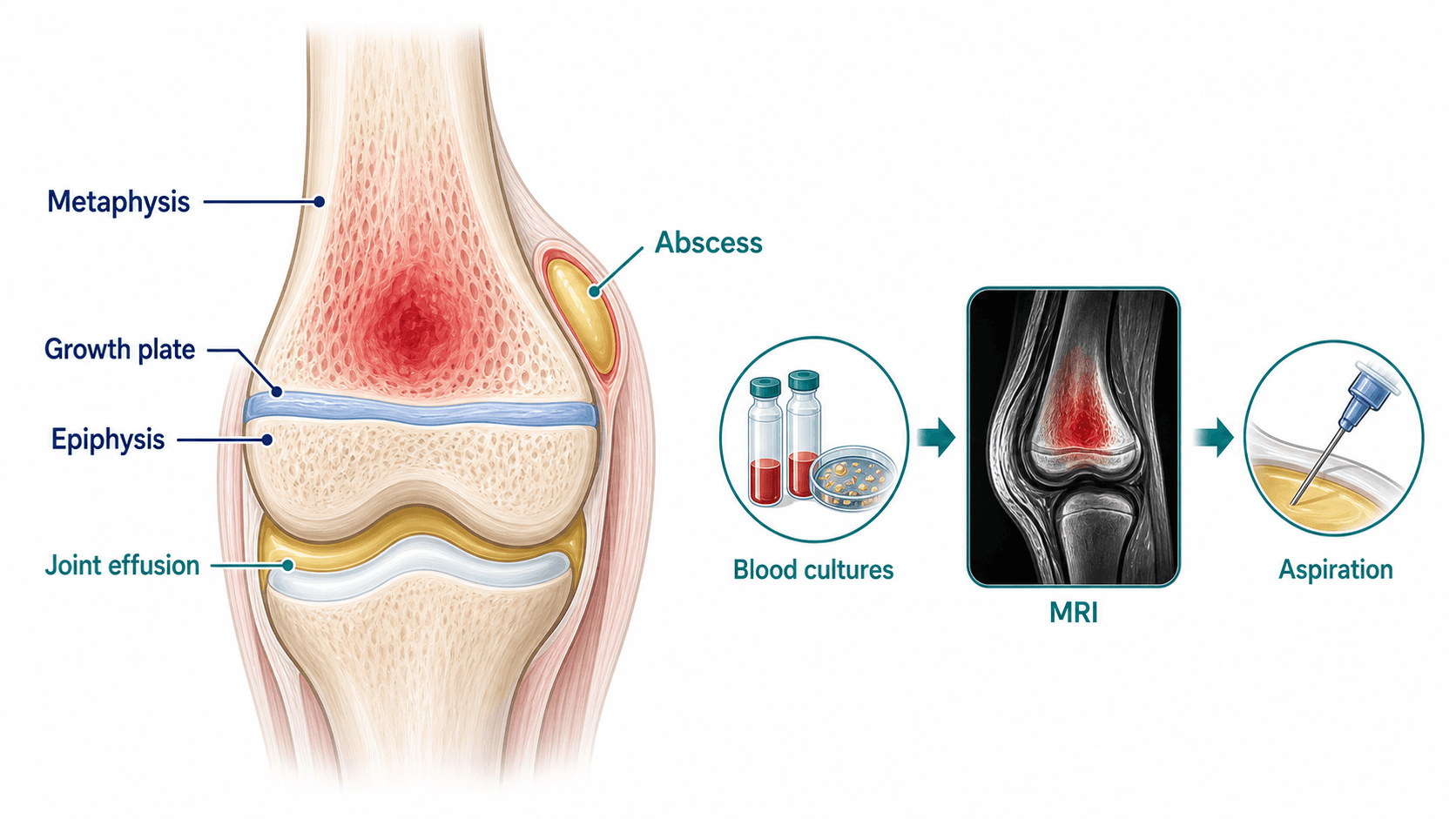
Where it starts. Acute haematogenous osteomyelitis often starts in metaphyseal bone around the knee, hip, ankle and shoulder. Septic arthritis is an orthopaedic emergency because pus within a joint can rapidly damage cartilage, and because draining the joint is a source-control decision, not merely an antibiotic decision.
Age changes the picture. Neonates and infants may present with irritability, poor feeding or pseudoparalysis rather than a classic fever. Toddlers with Kingella kingae infection may have a subtler systemic response than children with Staphylococcus aureus. Children with sickle cell disease, immunosuppression, penetrating wounds or unusual exposures need organism-specific thinking.
The question that matters. The key management question is whether this child has pus that needs drainage, and whether cultures have been obtained without delaying treatment. Antibiotics treat bacteria, but undrained pus can keep the child febrile, painful and systemically unwell.
Pathophysiology
Seeding. Bacteria seed metaphyseal vessels, where sluggish flow and vascular loops favour bacterial deposition. Infection raises intramedullary pressure, compromises perfusion and can break through the cortex into a subperiosteal abscess.
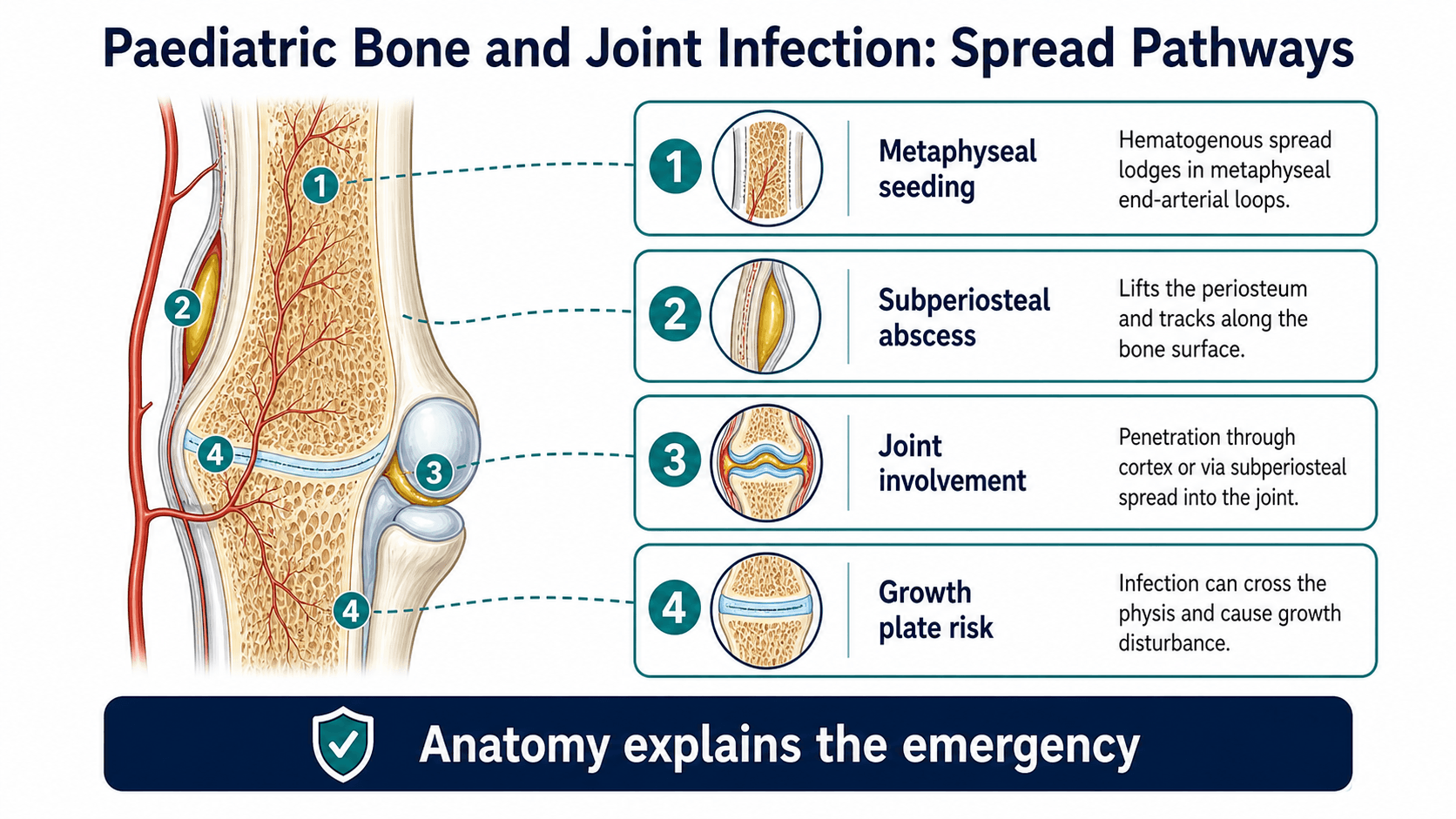
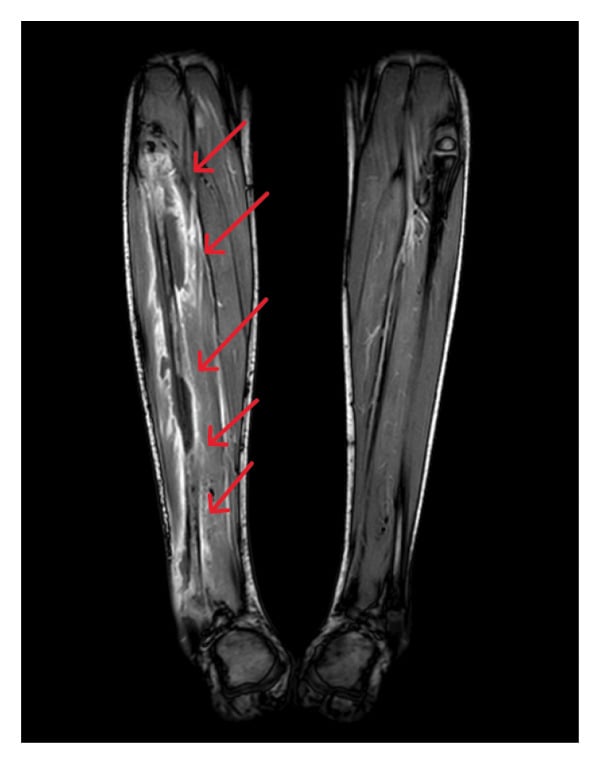
How the joint is damaged. In septic arthritis, pus and inflammatory mediators damage cartilage by pressure, enzymes and impaired nutrition. Source control is urgent.
The organisms. The history should change the antibiotic and culture strategy.
- Staphylococcus aureus is a common pathogen. MRSA risk depends on local epidemiology, and empiric antibiotics must match local resistance patterns
- Kingella kingae is important in toddlers and young children; it sets two traps, covered under Management
- Special exposures (sickle cell disease, puncture wounds, bites, water or farm exposure) change organism probability
- Neonates have their own organisms, below
The Intra-articular Metaphysis and Combined Infection
Where the metaphysis lies. A key anatomical reason a metaphyseal osteomyelitis becomes a septic joint is the position of the metaphysis relative to the joint capsule. At most joints the metaphysis is extracapsular, so a metaphyseal abscess that breaks through the cortex forms a subperiosteal collection. At a handful of joints the metaphysis lies inside the capsule, and there a metaphyseal abscess can rupture directly into the joint, converting osteomyelitis into a secondary (combined) septic arthritis.
- Intracapsular metaphysis
- Proximal femoral metaphysis is within the capsule
- Consequence
- Proximal femoral osteomyelitis can decompress into the hip - combined infection and risk to the femoral head blood supply
- Intracapsular metaphysis
- Proximal humeral metaphysis is intracapsular
- Consequence
- Proximal humeral osteomyelitis can seed the shoulder joint
- Intracapsular metaphysis
- Proximal radial metaphysis is intracapsular
- Consequence
- Radial neck osteomyelitis can involve the elbow
- Intracapsular metaphysis
- Distal fibular (and part of distal tibial) metaphysis is intracapsular
- Consequence
- Distal fibular osteomyelitis can involve the ankle
A second route in infants. The intracapsular route operates at any age. In infants up to around 18 months, transphyseal vessels that cross the physis also connect the metaphysis, epiphysis and joint, adding to the risk of combined bone-and-joint infection; hip and shoulder infections in this age group can rapidly become combined bone-joint infection.
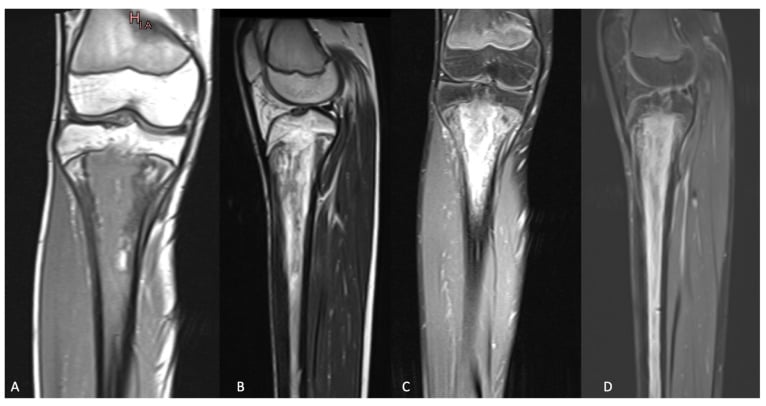
A "septic hip" may in fact be a proximal femoral osteomyelitis decompressing into the joint, which is why the adjacent joint must always be assessed.
Neonatal Bone and Joint Infection
Why it is missed. Infection in the neonate behaves as a distinct entity and is easy to miss because the classic signs are usually absent. A septic neonate may simply feed poorly, be irritable or lethargic, or stop moving a limb (pseudoparalysis), often without fever or a raised white-cell count, rather than showing systemic toxicity.
Multifocal. Multiple bones and joints are commonly involved, so examine every limb and joint and image widely rather than the symptomatic site alone.
Organisms. Group B streptococcus and S. aureus predominate, with Gram-negatives such as E. coli. Empiric cover must include group B streptococcus, S. aureus and Gram-negative organisms.
Spread and sequelae. Patent transphyseal vessels readily carry infection from metaphysis to epiphysis and joint, so anticipate combined bone-and-joint infection and assess the adjacent joint. The rate of physeal and epiphyseal damage, growth arrest, deformity and avascular necrosis (especially at the hip) is high, and the answer is early aspiration or drainage and long-term growth follow-up.
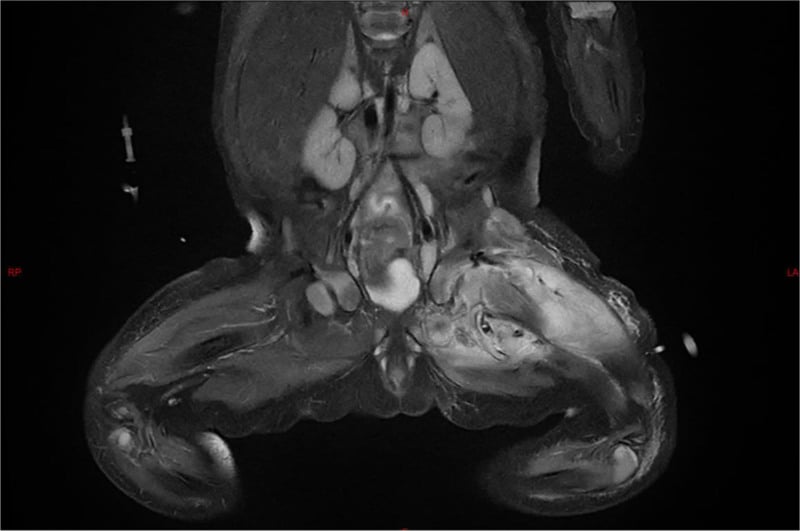
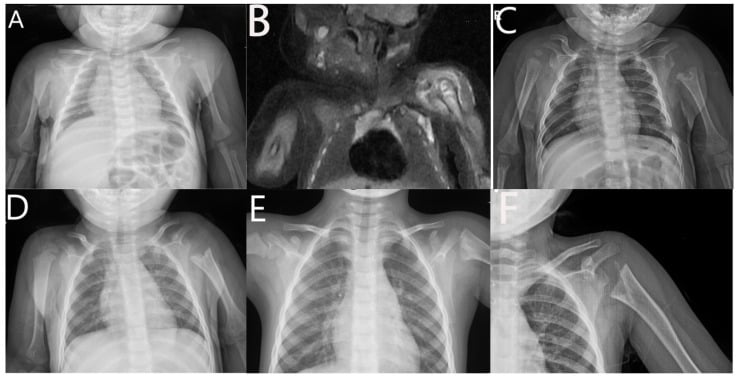
Treat pseudoparalysis as infection until proven otherwise. Pseudoparalysis, poor feeding or irritability should trigger a full septic screen, examination of every limb, and a very low threshold to investigate, including ultrasound, MRI and aspiration.
Classification
The same infection can be described by anatomic site, by timing and by risk status.
- Osteomyelitis: infection centred in bone marrow and cortex.
- Septic arthritis: infection within a joint space.
- Combined infection: osteomyelitis with adjacent septic arthritis, especially in young children.
- Pyomyositis or abscess: soft-tissue collection that may mimic bone pain.
Clinical Presentation
A child with fever, severe limb pain and refusal to use the limb has infection until proven otherwise. Do not be reassured by a normal early X-ray.
History. Establish severity, likely source, organism clues and whether cultures may already be compromised.
- Ask specifically
- Acute severe pain, progressive limp, refusal to walk, refusal to use limb, pseudoparalysis and response to analgesia.
- Why it matters
- Defines urgency and distinguishes bone tenderness from joint sepsis.
- Ask specifically
- Fever, rigors, malaise, poor feeding, irritability, lethargy or sepsis features.
- Why it matters
- Toxic children need immediate treatment; neonates may be subtle.
- Ask specifically
- Skin infection, varicella, puncture wound, surgery, bite, farm, water or footwear puncture.
- Why it matters
- Changes organism and antibiotic thinking.
- Ask specifically
- Antibiotics already given, prior aspiration, previous admission and immunisation status where relevant.
- Why it matters
- Culture yield and empiric strategy may be affected.
- Ask specifically
- Sickle cell disease, immunosuppression, diabetes, indwelling lines, renal disease, malignancy or neonatal history.
- Why it matters
- Raises risk of unusual organisms or severe spread.
- Ask specifically
- Back pain, abdominal pain, psoas symptoms, refusal to sit, refusal to crawl or multifocal pain.
- Why it matters
- May indicate discitis, pelvic osteomyelitis, psoas abscess or multifocal infection.
Examine the whole child first. Tachycardia, fever, toxicity, dehydration and reduced interaction change urgency. A toxic child, or one with sepsis features, may have progressing systemic infection: resuscitate, involve paediatrics, infectious diseases and orthopaedics, and do not delay antibiotics for perfect cultures.
Then localise the problem. Each local finding sets a different course:
- Painful passive joint motion is septic arthritis until proven otherwise, and starts the urgent aspiration or washout pathway
- Focal metaphyseal tenderness makes osteomyelitis likely, but adjacent joint spread must be excluded; MRI when extent or abscess is uncertain
- A skin portal or puncture wound may identify the entry point and organism risk; culture when possible and broaden the exposure history
- Severe swelling or pain out of proportion raises concern for abscess, aggressive infection or compartment syndrome, and calls for senior review and an urgent imaging and source-control decision
Always assess adjacent joints and the spine when the child will not walk. Document neurovascular status and look for skin portals, puncture wounds, cellulitis, surgical scars, bites and pressure areas.
The child who will not let you move a joint passively is different from the child with focal bone tenderness; both are serious, but septic arthritis changes the clock.
Investigations
Blood tests. FBC, ESR and CRP support the diagnosis and track the response. CRP is particularly useful for monitoring because it changes faster than ESR.
Cultures. Look for the source (skin, respiratory, trauma or puncture wound) when planning microbiology. Obtain blood cultures before antibiotics when safe, but do not leave a septic child untreated for ideal culture timing. Joint aspirate, bone aspirate, abscess fluid or operative tissue is sent for Gram stain, culture and sensitivity whenever drainage or biopsy occurs. The results narrow therapy and identify Kingella, MRSA or unusual organisms.
Radiographs come first. They may show alternative diagnoses, advanced bone change, fracture or tumour, but they can be normal early in osteomyelitis.
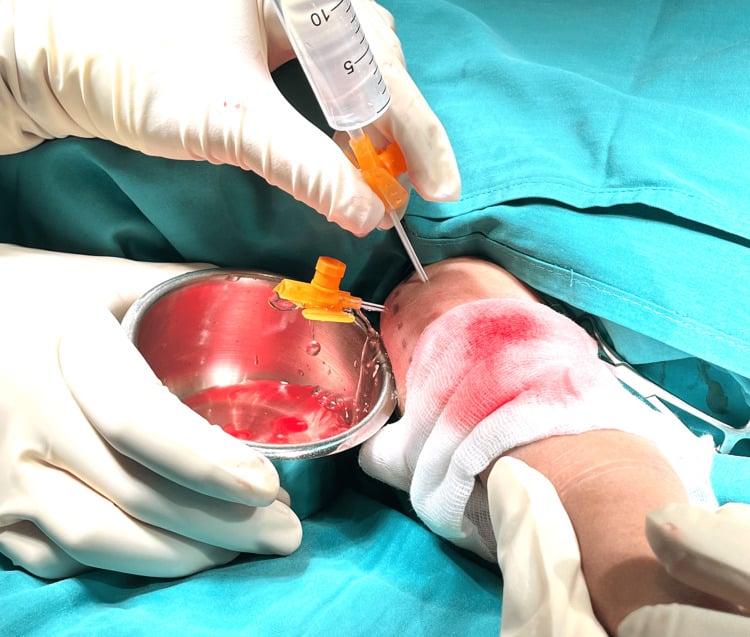
Ultrasound is useful for joint effusion and superficial collection. When a septic joint is suspected, urgent ultrasound-guided or operative aspiration confirms pus and obtains culture.
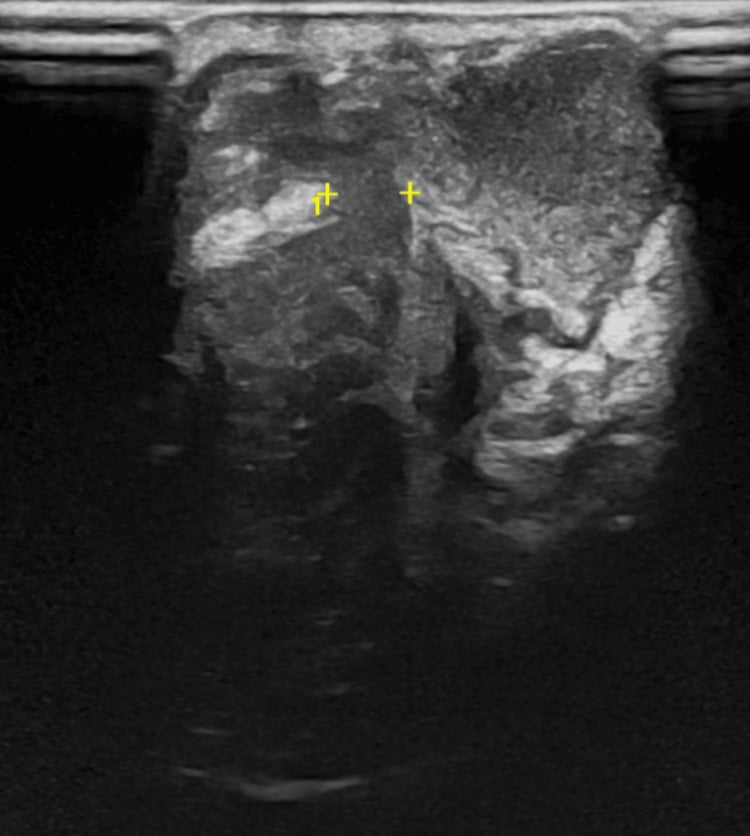
MRI is the best escalation test when suspicion persists. It shows marrow oedema, subperiosteal and intraosseous abscess, pyomyositis, soft-tissue spread, multifocal disease and adjacent joint involvement, and so defines whether antibiotics alone are enough. When the response is poor, repeat MRI or ultrasound finds an undrained abscess or the wrong diagnosis.
Differential Diagnosis
- Clue
- Well child with hip effusion and improving symptoms.
- Risk if mistaken for simple infection
- Calling true septic arthritis benign.
- Clue
- Focal tenderness, mechanism or healing periosteal reaction.
- Risk if mistaken for simple infection
- Unnecessary antibiotics or missed safeguarding concern.
- Clue
- Night pain, bruising, pallor, weight loss or systemic symptoms.
- Risk if mistaken for simple infection
- Biopsy delay or inappropriate drainage procedure.
- Clue
- Morning stiffness, multiple joints, recurrent swelling or rash.
- Risk if mistaken for simple infection
- Prolonged antibiotics without rheumatology diagnosis.
- Clue
- Recurrent sterile inflammatory bone lesions, often multifocal.
- Risk if mistaken for simple infection
- Repeated antibiotics and surgery without inflammatory diagnosis.
- Clue
- Refusal to sit or walk, back stiffness, abdominal or psoas symptoms.
- Risk if mistaken for simple infection
- Missed spinal or pelvic source.
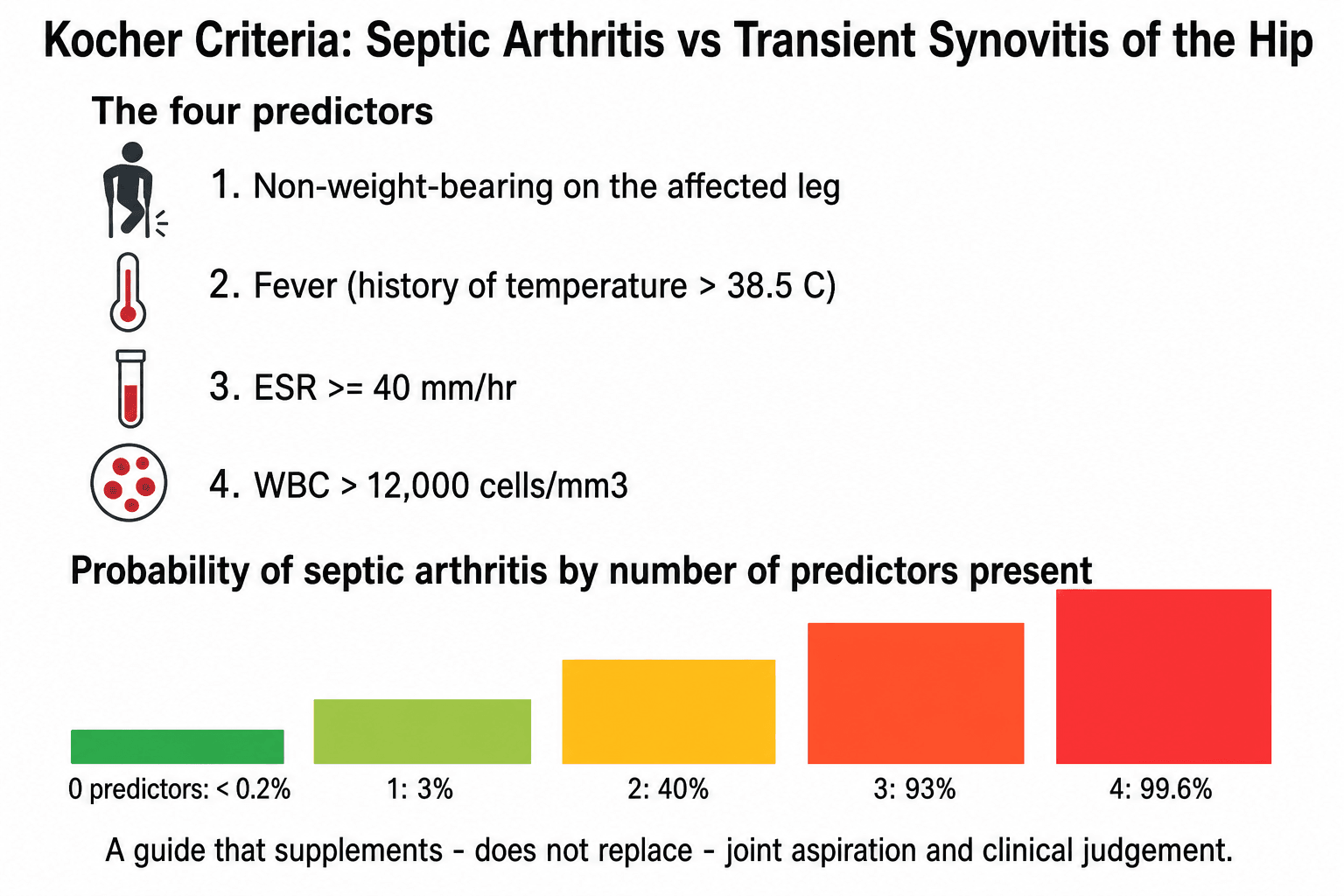
Transient synovitis and the Kocher rule. For the irritable hip, Kocher's rule uses four independent predictors: non-weight-bearing on the affected leg, a history of fever, an ESR of at least 40 mm/hr and a white cell count over 12,000. The probability of septic arthritis stratifies by how many are present:
- None: under 0.2%
- One: 3%
- Two: 40%, a near coin toss and the situation the rule cannot settle
- Three: 93.1%
- Four: 99.6%
The original 1999 predictor is a history of fever; the familiar threshold of over 38.5 degrees comes from the 2004 prospective validation. The rule is a guide that supplements, not replaces, joint aspiration and clinical judgement, and CRP and Kingella are not captured by the original model.
Management
Three linked goals. Stabilise the child, identify and treat the organism, and obtain source control when pus is present. Antibiotics without source control may fail; surgery without microbiology may make definitive treatment harder.
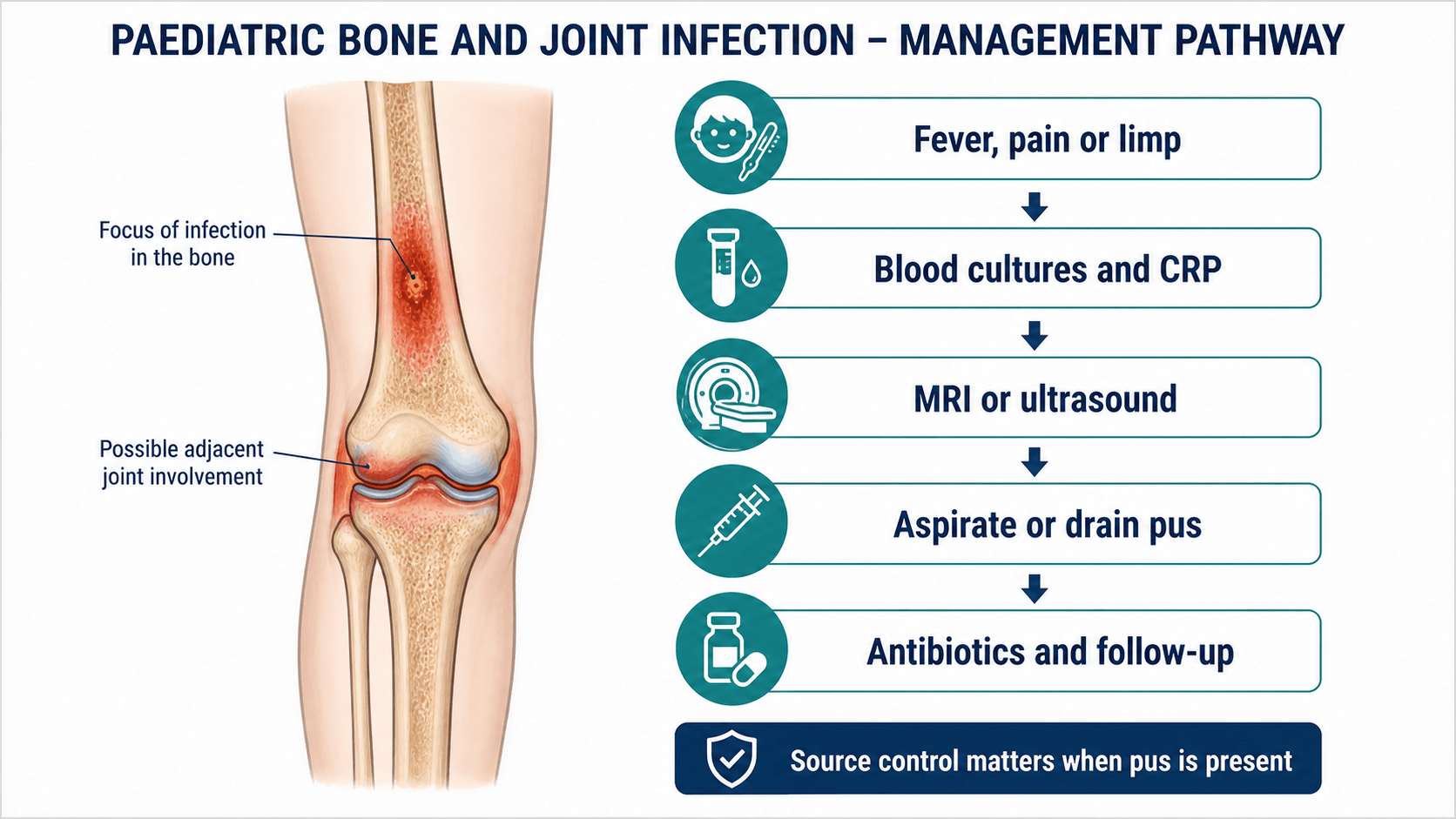
Initial pathway. Start with the child, then the diagnosis:
- Assess sepsis and resuscitate if needed
- Immobilise for comfort and give analgesia
- Obtain blood cultures and inflammatory markers
- Image to localise bone, joint or soft-tissue infection
- Start empiric antibiotics according to local protocols, after cultures when safe
The fork: septic joint or not. The most important decision is septic arthritis versus osteomyelitis without joint sepsis. Painful passive motion, effusion, fever, raised CRP or the aspirate findings point to a septic joint, which is a cartilage emergency: pus under pressure needs drainage. Osteomyelitis may be managed medically, with antibiotics and close clinical and CRP monitoring, if the child is stable and no drainable collection has been identified.
Drainage decisions. By scenario:
- Septic arthritis: drain urgently, by aspiration or operative washout, plus antibiotics. Washout reduces the bacterial load
- Subperiosteal, intraosseous or soft-tissue abscess: drain if large, symptomatic, accessible or not responding, because antibiotics penetrate poorly into undrained pus
- Osteomyelitis that changes course: abscess, adjacent joint spread, toxic sepsis or failure of inflammatory markers to fall should trigger repeat imaging and source control
- Fever, pain or CRP that do not improve: consider repeat washout
Coordinate drainage and antibiotic decisions with paediatrics and infectious diseases.
Empiric cover and Kingella. Kingella kingae has changed the interpretation of the well-looking toddler with osteoarticular infection. Fever and blood tests may be less dramatic, so age, joint symptoms, PCR where available and clinical trajectory matter. Two practical traps follow, and both are avoidable.
- The inflammatory response is genuinely blunted. In a series of 62 culture-proven invasive Kingella infections, only mild-to-moderate elevation of serum markers was seen unless there was endocarditis or a prolonged arthritis, and 80% of the children had a concurrent trivial-seeming respiratory or gastrointestinal illness. A child who scores low on the Kocher rule can still have a culture-proven septic joint.
- The more dangerous: Kingella is intrinsically resistant to vancomycin and clindamycin, the two agents most often reached for to cover MRSA. An empiric regimen aimed only at MRSA leaves Kingella untreated, and Kingella is the leading cause in the 6 to 24 month group wherever blood-culture-bottle inoculation and PCR are used to find it.
Check that the chosen regimen covers both: a beta-lactam such as cefazolin covers Kingella, and MRSA cover is added to it rather than substituted for it. Culture yield also depends on technique: inoculate synovial fluid into blood-culture bottles, because Kingella grows poorly on solid media.
Monitoring and the oral switch. Clinical response should be visible: falling fever, decreasing pain, improved limb use and falling CRP. Route and duration depend on the organism, the CRP fall, fever resolution, function and source control. Switch IV to oral antibiotics only when the child is clinically improving, the response is secure and the medication can be absorbed, and tailor the drug to the organism and sensitivities.
How long, and how much of it intravenously. "Several weeks of intravenous antibiotics" was the standard answer for decades, and two Finnish randomised trials replaced it. Both are worth quoting with their numbers, because the numbers are the point:
- Acute haematogenous osteomyelitis: 20 days total, with only 2-4 days intravenous, was equivalent to 30 days when the clinical response was good and the CRP normalised within 7-10 days. In that trial 24% had no surgery at all, and most of the rest had only a diagnostic aspiration or drilling.
- Septic arthritis: 10 days total, again with 2-4 days intravenous, gave recovery equivalent to 30 days, stopping when the response was good and the CRP had fallen to 20 mg/L. Only 12% needed anything more than percutaneous aspiration, with no excess of problems in hip or shoulder disease.
The CRP is doing the work in both protocols. It is not a formality at follow-up; it is the variable that licenses the switch to oral and the stop date. A CRP that fails to fall is the trial's own exit criterion, and clinically it should send you looking for undrained pus rather than prompting a longer course of the same antibiotic.
Both trials were conducted in Finland, where S. aureus caused around 89% of cases and every strain was methicillin-susceptible. The short, largely oral courses are validated for uncomplicated MSSA disease in a child who is responding and whose CRP is falling quickly - and for nothing else. In an MRSA-prevalent setting, with a resistant or unusual organism, with an undrained collection, in a neonate, or in a child who is not improving, the trial durations do not apply and local guidance governs. Quoting "10 and 20 days" without that qualifier is the trap, not the answer.
When the child does not improve. Persistent fever, pain, poor function or a rising CRP often means source control is incomplete. Reassess the child and repeat imaging, looking for undrained pus, a resistant or wrong organism, the wrong diagnosis, an adjacent septic joint, multifocal infection or inadequate drug delivery.
Before discharge. Plan physiotherapy once pain and infection control allow, and follow growth, joint motion and recurrence risk.
Complications
Delayed or inadequate source control can lead to abscess expansion and to the fracture, chronic infection, growth disturbance, joint damage and avascular necrosis listed below.
Early
- Sepsis and clinical deterioration
- Abscess formation or spread to adjacent joint
- Pathological fracture in severe osteomyelitis
- Joint dislocation or cartilage injury in septic arthritis
- Need for repeat drainage
Late
- Growth arrest or angular deformity
- Limb-length discrepancy after physeal injury
- Avascular necrosis after septic hip
- Chronic osteomyelitis or sinus formation
- Joint stiffness, chondrolysis or degenerative change
The biggest mistake is treating infection as a single dose of antibiotics. Source control, organism control and growth follow-up are all part of the treatment.
Guidelines, Registries & Global Practice
Paediatric bone and joint infection is managed worldwide, but organism prevalence, imaging access and antibiotic resistance differ markedly between settings. A globally valid answer states the principle, then flags the local variable that changes it.
Global epidemiology
- Acute haematogenous osteomyelitis has an estimated incidence of roughly 1 to 13 per 100,000 children per year in high-income countries, with higher rates reported in some low- and middle-income and Indigenous populations.
- Septic arthritis incidence is broadly similar in magnitude, peaking in children under 3 years; boys are affected more often than girls.
- Staphylococcus aureus is the dominant pathogen at all ages worldwide. Kingella kingae is the leading cause in the 6 to 24 month group where blood-culture-bottle inoculation and PCR are used. Group B streptococcus and Gram-negative organisms feature in neonates.
- Community-associated MRSA prevalence varies enormously by region and is the single most important driver of empiric antibiotic choice.
Side-by-side guideline comparison
- Imaging stance
- MRI preferred when extent or a collection is uncertain.
- Treatment emphasis
- GRADE-based; early oral switch, shorter courses, surgery for source control.
- Imaging stance
- Radiograph first, MRI with and without contrast as the key advanced study, ultrasound to guide hip aspiration.
- Treatment emphasis
- Imaging should change management, not just confirm inflammation.
- Imaging stance
- Ultrasound and MRI used pragmatically; urgent aspiration of the irritable hip.
- Treatment emphasis
- Prompt source control; supports shorter, oral-switch antibiotic regimens with paediatric ID input.
- Imaging stance
- MRI where available; PCR and blood-culture bottles to capture Kingella.
- Treatment emphasis
- Short-course, early-oral regimens informed by the Finnish RCTs.
Registry and surveillance notes
- Unlike arthroplasty, paediatric infection has no single global implant registry; evidence comes from national surveillance, MRSA resistance monitoring and multicentre cohorts such as the Finnish trials.
- Antimicrobial resistance surveillance networks (for example regional MRSA and Kingella susceptibility data) effectively function as the registries that shape empiric protocols.
High- vs limited-resource practice variation
- Well-resourced setting
- Early MRI and ultrasound on demand.
- Limited-resource setting
- Reliance on radiographs and clinical course; MRI may be delayed or unavailable.
- Well-resourced setting
- PCR, blood-culture bottles, rapid sensitivities.
- Limited-resource setting
- Plate culture only, lower Kingella yield, more empiric treatment.
- Well-resourced setting
- Often earlier, less advanced disease.
- Limited-resource setting
- Later presentation with more chronic osteomyelitis, sequestrum and deformity.
- Well-resourced setting
- Short IV then early oral switch.
- Limited-resource setting
- Longer IV courses and more open surgery where oral bioavailability or follow-up is uncertain.
Controversies and Areas of Uncertainty
Several long-held teachings have softened as randomised and registry data have accumulated. Examiners reward candidates who can state where genuine equipoise exists rather than reciting dogma.
- Traditional view
- Several weeks of IV therapy.
- Current evidence and nuance
- Peltola RCTs support roughly 10 days for septic arthritis and 20 days for osteomyelitis, mostly oral, when CRP normalises quickly in uncomplicated MSSA disease.
- Traditional view
- Prolonged IV via PICC line.
- Current evidence and nuance
- Early oral switch once improving reduces line complications without worsening outcomes; PICC-related harm is now a recognised driver of change.
- Traditional view
- Formal arthrotomy for every septic joint, especially hip and shoulder.
- Current evidence and nuance
- Many joints settle after single aspiration plus antibiotics; the hip remains the joint with the lowest threshold for formal drainage.
- Traditional view
- Four-variable rule reliably separates septic arthritis from transient synovitis.
- Current evidence and nuance
- External validation is inconsistent; CRP adds value and Kingella is not captured, so the rule guides rather than decides.
- Traditional view
- ESR central to diagnosis.
- Current evidence and nuance
- CRP responds faster and is the preferred monitoring marker; failure of CRP to fall should trigger a search for undrained pus.
- Traditional view
- Reserve MRI for failures.
- Current evidence and nuance
- Earlier MRI changes management by revealing abscess, pyomyositis or adjacent joint disease, but availability and sedation needs limit universal use.
Viva Approach and Common Pitfalls
- Safe answer
- Name bone, joint, both or soft tissue.
- Common miss
- Treating every painful limb as a single diagnosis.
- Safe answer
- Look for septic joint, subperiosteal abscess, intraosseous abscess or pyomyositis.
- Common miss
- Continuing antibiotics while source control is incomplete.
- Safe answer
- Pain, fever, mobility and CRP should move in the right direction.
- Common miss
- Ignoring a rising CRP or persistent refusal to use the limb.
- Safe answer
- Blood, joint, bone or abscess cultures when safe.
- Common miss
- Missing organism data, especially after prior antibiotics.
- Safe answer
- Growth, joint motion, recurrence and limb-length or angular deformity.
- Common miss
- Stopping care once fever resolves.
Common pitfalls
- Calling it transient synovitis in a febrile non-weight-bearing child.
- Using normal X-ray to exclude early osteomyelitis.
- Forgetting Kingella in toddlers.
- Not imaging the adjacent joint.
- Continuing antibiotics without looking for undrained abscess when CRP rises.
- Stopping follow-up before growth risk is clear.
Clinical Decision Scenarios
Practise clinical reasoning and management decisions out loud
“A four-year-old has fever, refuses to weight bear and cries with passive hip rotation. What do you do?”
“A child with distal femur osteomyelitis remains febrile and CRP is rising after antibiotics. What next?”
“An 18-month-old has a 2-day limp and a low-grade temperature. They look well, CRP is only mildly raised and the white cell count is normal. The knee is held flexed and resists passive extension. How do you proceed?”
Antibiotic Duration (Peltola RCTs)
- Osteomyelitis: 20 days total, only 2-4 days IV — equivalent to 30 days
- Septic arthritis: 10 days total, only 2-4 days IV — equivalent to 30 days
- The CRP licenses the switch and the stop: normalising by 7-10 days (osteomyelitis), fallen to 20 mg/L (septic arthritis)
- A CRP that will not fall means undrained pus, not a longer course of the same drug
- VALID ONLY for uncomplicated MSSA in a responding child — the trials were all-MSSA Finnish cohorts (89% S. aureus). Not for MRSA settings, neonates, resistant organisms or undrained collections
Recognise
- Fever
- Refusal to walk/use limb
- Pseudoparalysis
- Painful passive joint motion
- Metaphyseal tenderness
Investigate
- FBC ESR CRP
- Blood cultures
- X-ray first
- MRI for marrow/abscess
- Aspiration for septic joint
Treat
- Analgesia
- Cultures when safe
- Empiric antibiotics
- Drain pus
- Monitor CRP and function
Do Not Miss
- Septic hip
- Infant transphyseal spread
- Abscess
- Osteomyelitis
- Growth disturbance
Evidence Base: Guidelines and Landmark Trials
These cards are the landmark evidence and current society guidelines that should anchor any viva answer on paediatric bone and joint infection. Two Finnish randomised controlled trials by Peltola and colleagues reshaped global practice by showing that most children can be treated with short antibiotic courses and minimal surgery, while the Kocher prediction rule remains the most cited tool for the irritable hip.
PIDS/IDSA 2021 guideline: diagnosis and management of acute haematogenous osteomyelitis
- First joint PIDS/IDSA clinical practice guideline for acute haematogenous osteomyelitis (AHO), using GRADE methodology.
- MRI is the preferred advanced imaging modality when diagnosis, extent or a drainable collection is uncertain.
- Early transition to oral antibiotics and shorter total courses are recommended once the child is improving and CRP is falling, with surgery reserved for source control.
PIDS/IDSA 2023 guideline: diagnosis and management of acute bacterial arthritis
- Companion guideline to the 2021 AHO document, covering acute bacterial arthritis (ABA) in children using GRADE methodology.
- Synovial fluid and blood cultures should be obtained before or close to antibiotic initiation, and synovial fluid should be inoculated into blood-culture bottles to improve Kingella detection.
- Adjacent osteomyelitis must be considered when symptoms are prolonged or the inflammatory response is marked, and timely drainage is linked to antimicrobial therapy.
Evidence Base: Care Pathways
Standardised pathways improve diagnosis and shorten IV treatment
- Retrospective comparison of 117 children (54 pre-guideline, 63 post-guideline) with acute bone and joint infection.
- Implementing an evidence-based pathway significantly reduced IV antibiotic duration and PICC line use (both P less than 0.001).
- Bacterial identification increased (P equals 0.040) without any rise in length of stay or readmission.
Kingella kingae: why the well-looking toddler is dangerous, and the antibiotic trap
- 62 children with culture-proven invasive Kingella kingae infection - 42 bacteraemia, 20 positive synovial fluid. Most were previously healthy and aged 5 to 22 months.
- 80 per cent had a concurrent mild respiratory or gastrointestinal illness, which is the history that makes the presentation look trivial.
- THE INFLAMMATORY RESPONSE IS BLUNTED: only mild-to-moderate elevation of serum inflammatory markers, except in those with endocarditis or a prolonged arthritis. A child scoring low on the Kocher rule can still have a culture-proven septic joint.
- THE ANTIBIOTIC TRAP: every isolate was resistant to VANCOMYCIN and CLINDAMYCIN - the two agents most often chosen to cover MRSA. An empiric regimen aimed at MRSA alone leaves Kingella untreated.
- 4 of the 42 bacteraemic children (10 per cent) had endocarditis and 2 needed emergency cardiac surgery, so a positive blood culture warrants thinking beyond the joint.