Inflammatory | Synovitis | Deformity | Multijoint
- Ulnar drift from MCP radial collateral destruction + extensor subluxation
- Boutonniere = PIP flexion + DIP extension (central slip rupture)
- Swan-neck = PIP hyperextension + DIP flexion (volar plate laxity)
- Medical optimisation before surgery - continue methotrexate (older teaching to stop it 2 weeks pre-op is superseded)
- Proximal-to-distal surgery - wrist before digits, correct deforming forces first
- “RF positive 70%, anti-CCP more specific (95%) for RA diagnosis
- “Caput ulnae syndrome = dorsal ulnar head prominence from DRUJ destruction
- “Vaughan-Jackson lesion = EDM/EDC rupture from attrition on ulnar head
- “Synovectomy only effective if done under 6 months of synovitis onset
Overview and Epidemiology
Rheumatoid arthritis (RA) is a chronic inflammatory autoimmune disease affecting approximately 1% of the population worldwide. The hand is involved in 90% of patients, which makes it the most common site of RA manifestation.
Who. Peak onset is at 40-60 years, with a 3:1 female predominance. There is an HLA-DR4 association (70%), and smoking doubles the risk of RA and worsens its severity.
Which joints. The MCP joints are the most commonly affected and the DIP joints the least:
- MCP joints - 95%
- PIP joints - 80%
- Wrist - 60-70% early in the disease
- DIP joints - rarely affected, under 10%
- Thumb - Nalebuff deformities in 50%
Why it matters. Hand involvement causes progressive functional disability through synovitis, tendon rupture and joint destruction. Modern biologic DMARDs have revolutionised medical management, but surgery remains critical for correcting established deformities. The key is medical optimisation before surgery, then addressing the deformities in a proximal-to-distal sequence so that the deforming forces are corrected.
Pathophysiology
Synovitis comes first. RA begins with immune-mediated synovial inflammation driven by T cells, B cells and inflammatory cytokines (TNF-alpha, IL-6). The synovium hypertrophies into pannus, which invades cartilage and bone. Left unchecked, the inflammation goes on to destroy ligaments, attrit tendons and erode bone.
The sequence in the hand. The destruction runs a recognisable course:
- Early (0-2 years), synovial inflammation. Pannus forms from hypertrophic synovium and inflammatory cells, proteases degrade the articular cartilage, marginal erosions appear at the joint edges, and the collateral ligaments and volar plate stretch.
- Intermediate (2-5 years), tendon and ligament failure. Radial collateral destruction lets the extensor sublux and the fingers drift ulnarly; central slip attenuation produces the boutonniere and volar plate laxity the swan-neck; tendons rupture from attrition on roughened bone (Vaughan-Jackson, Mannerfelt).
- Late (over 5 years), fixed deformity. Bone-on-bone joint destruction, soft-tissue contractures that prevent passive correction, spontaneous ankylosis in some joints, and arthritis mutilans: severe bone resorption, the opera-glass hand.
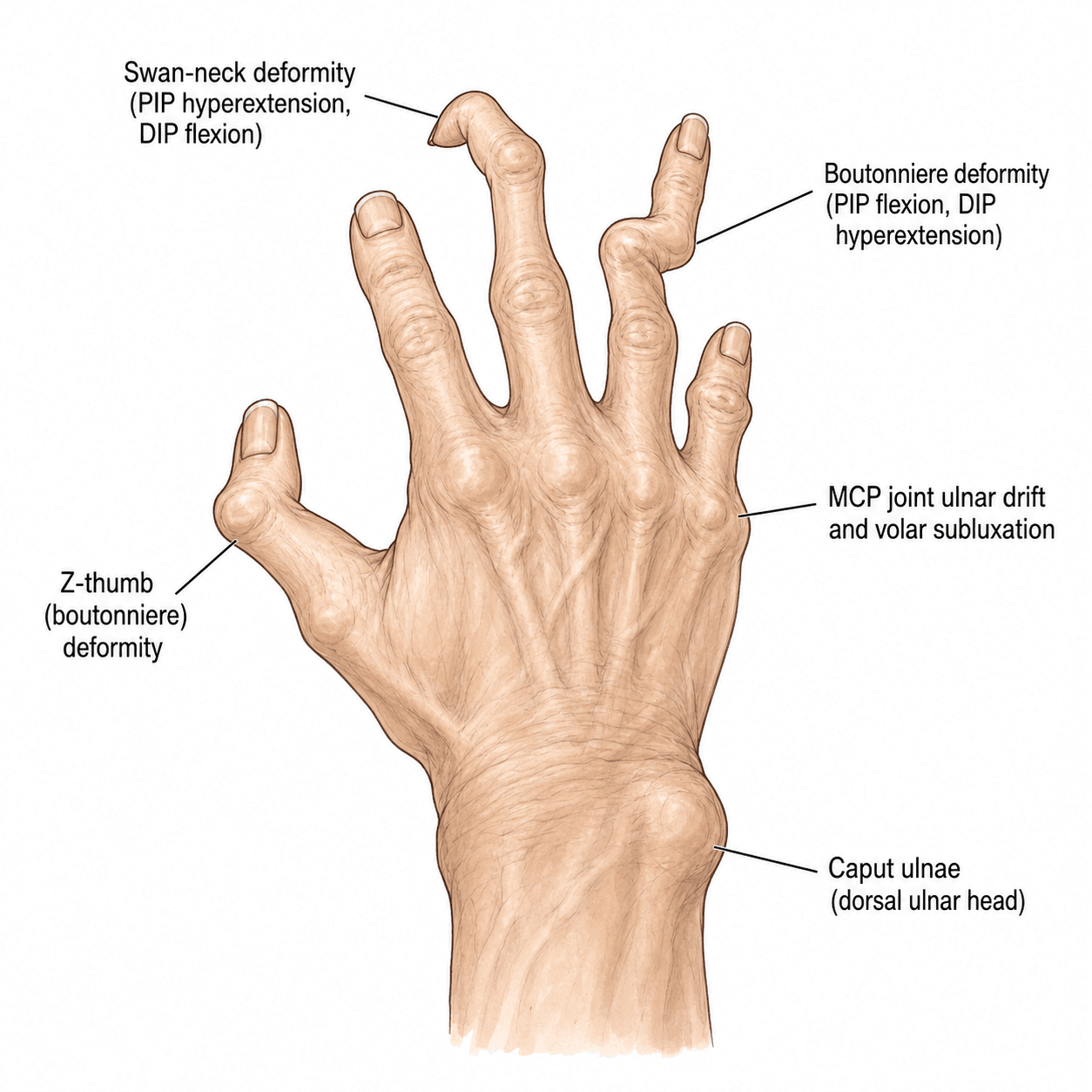
Ulnar drift at the MCP joints. Synovitis destroys the radial collateral ligament, the extensor tendon subluxes ulnarly, and the intrinsics then pull the fingers into ulnar deviation. The deviation is progressive and worst with grip.
The boutonniere. The central slip ruptures or attenuates and the lateral bands migrate volar to the PIP axis, so the PIP flexes. Terminal extension is preserved because the lateral bands are intact, and the DIP extends. Shortened lateral bands resist correction and the oblique retinacular ligament contracts, worsening the deformity; after 6-12 months it is fixed, no longer passively correctable, and needs arthrodesis.
The swan-neck. The primary lesion is volar plate laxity or FDS rupture: an attenuated volar plate allows the PIP to hyperextend, and FDS rupture removes the PIP flexion force. Intrinsic tightness pulls the PIP into extension, the lateral bands tighten, and the DIP flexes. Nodules in the flexor tendon can also cause it: the trigger finger causes MCP flexion, and the PIP extends in compensation.
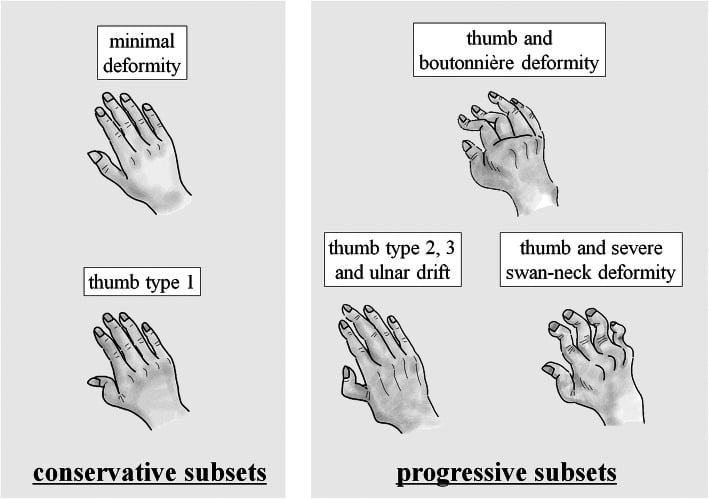
The thumb Z-deformity. The primary lesion is CMC subluxation (Nalebuff Type III) or MCP hyperextension (Type II), and the IP flexes in compensation to allow pinch. The result is loss of opposition and pinch strength.
Classification Systems
Nalebuff Classification of RA Thumb Deformities
- Deformity Pattern
- MCP flexion, IP extension
- Primary Pathology
- MCP synovitis → volar plate stretching
- Treatment
- MCP arthroplasty or arthrodesis
- Deformity Pattern
- MCP hyperextension, IP flexion
- Primary Pathology
- MCP ligament laxity → hyperextension
- Treatment
- MCP fusion or volar capsulodesis
- Deformity Pattern
- CMC subluxation, MCP hyperext, IP flex
- Primary Pathology
- CMC synovitis → adduction collapse
- Treatment
- CMC stabilisation + MCP fusion
- Deformity Pattern
- CMC arthritis, adduction contracture
- Primary Pathology
- CMC joint destruction
- Treatment
- CMC arthroplasty or arthrodesis
- Deformity Pattern
- Multiple joint involvement
- Primary Pathology
- Progressive pannus at all joints
- Treatment
- Staged reconstruction, proximal to distal
- Deformity Pattern
- Bone resorption, instability
- Primary Pathology
- Severe osteolysis
- Treatment
- Fusion if salvageable, otherwise adaptive
In Type I (boutonniere) the MCP is the problem joint, flexed from synovitis, and the IP compensates with extension. In Type II (swan-neck) the MCP ligaments fail and allow hyperextension, and the IP compensates with flexion for pinch. Type III is also a swan-neck, but driven by CMC subluxation proximally. Knowing the primary pathology determines the surgical target.
2010 ACR/EULAR Classification Criteria (Diagnosis)
The 2010 ACR/EULAR criteria replaced the 1987 ACR criteria to enable earlier classification of RA, focusing on the features that predict persistent and erosive disease rather than on late deformity. A patient with synovitis in at least one joint and no better alternative diagnosis is classified as definite RA with a score of 6 or more out of 10 across four domains.
- Category
- 1 large joint
- Score
- 0
- Category
- 2-10 large joints
- Score
- 1
- Category
- 1-3 small joints
- Score
- 2
- Category
- 4-10 small joints
- Score
- 3
- Category
- Over 10 joints (at least 1 small)
- Score
- 5
- Category
- Negative RF and anti-CCP
- Score
- 0
- Category
- Low-positive RF or anti-CCP
- Score
- 2
- Category
- High-positive RF or anti-CCP
- Score
- 3
- Category
- Normal CRP and ESR
- Score
- 0
- Category
- Abnormal CRP or ESR
- Score
- 1
- Category
- Less than 6 weeks
- Score
- 0
- Category
- 6 weeks or more
- Score
- 1
2010 ACR/EULAR Rheumatoid Arthritis Classification Criteria
- Joint ACR/EULAR initiative replacing the 1987 criteria, which lacked sensitivity in early disease
- Score of 6 or more of 10 across four domains (joints, serology, acute-phase reactants, symptom duration) classifies definite RA
- Requires at least one joint with definite clinical synovitis not better explained by another diagnosis
- Deliberately weights small-joint involvement and high-titre serology to capture patients at risk of persistent, erosive disease early
Clinical Presentation
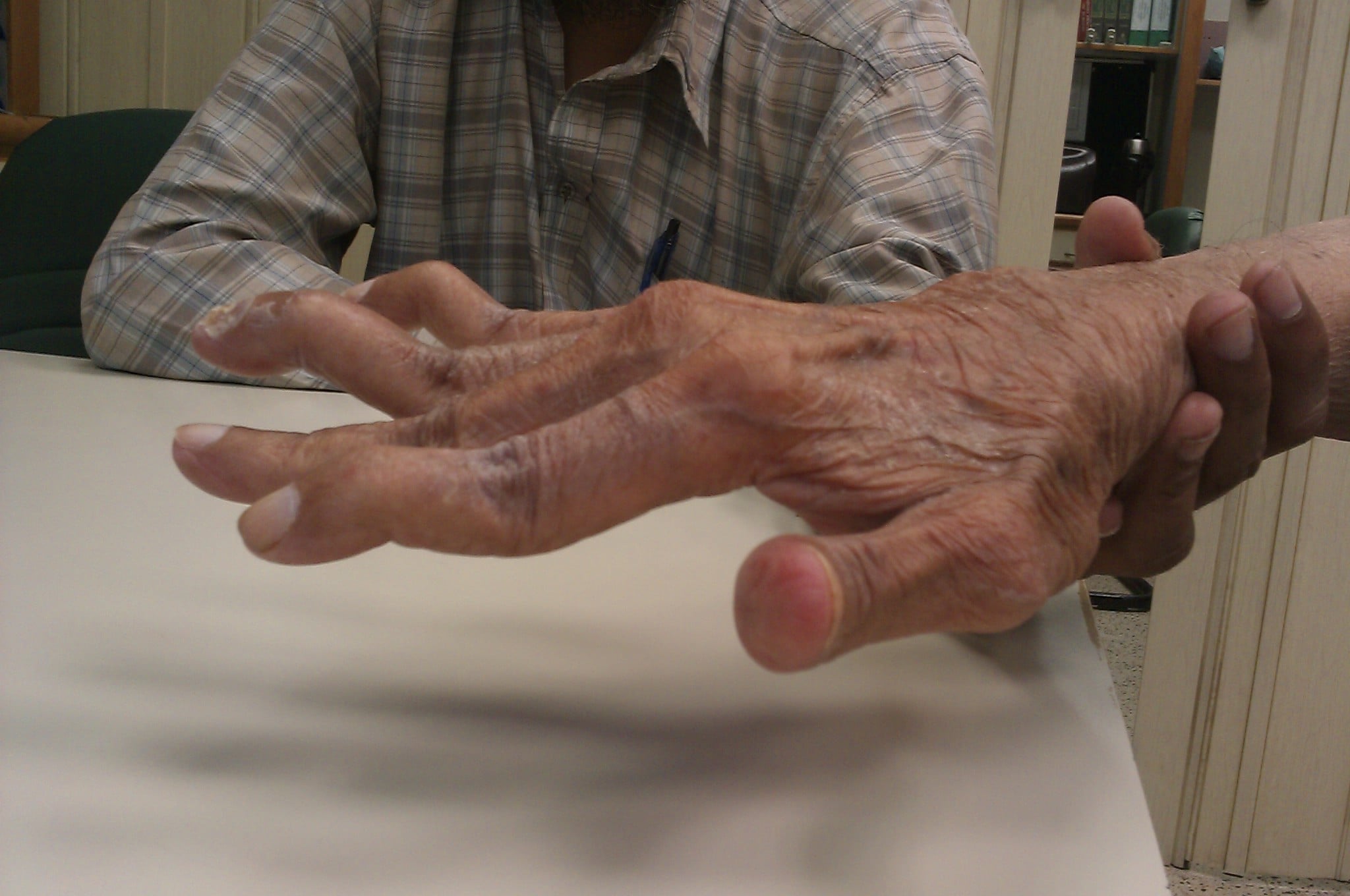
History. Ask about the pain pattern, which in RA is worse with rest and improves with activity, and about what the hands can no longer do: grip, pinch and fine motor tasks. Then look beyond the hand:
- Systemic symptoms - fatigue, fever, weight loss
- Extra-articular disease - nodules, lung involvement, vasculitis
Examination. Look, feel and move, then test function and the tendons:
- Look - soft, boggy swelling, deformities, nodules, skin thinning
- Feel - warm, boggy MCP and PIP synovitis; ulnar head prominence
- Move - reduced range of motion, pain at end-range, crepitus
- Function - pinch and grip strength; ulnar drift with grip
- Tendons - trigger fingers, palpable ruptures
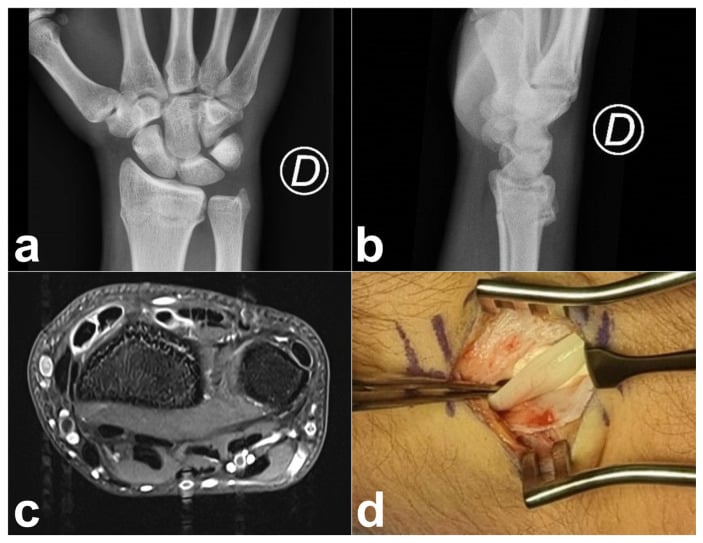
Caput ulnae syndrome. DRUJ destruction leaves the distal ulna prominent dorsally. The ulnar head is painful with forearm rotation, and it is the site of extensor tendon attrition.
Vaughan-Jackson lesion. The ulnar-sided extensors rupture in sequence as they attrit on the caput ulnae, progressing ulnar to radial:
- EDM (extensor digiti minimi) - first to rupture
- EDC to the ring finger - second
- EDC to the middle finger - third
The treatment is early Darrach or hemiresection (see Surgical Technique).
Mannerfelt lesion. FPL rupture from attrition on a volar scaphoid osteophyte. It is less common than the Vaughan-Jackson lesion but causes complete loss of thumb IP flexion.
RA. Morning stiffness over 1 hour; soft, boggy swelling (synovitis); symmetric involvement of both hands and multiple joints; the DIP joints spared, unlike OA; systemic features; RF or anti-CCP positive.
OA. Morning stiffness under 30 minutes; hard, bony swelling (osteophytes, Heberden's and Bouchard's nodes); asymmetric, wear pattern; the DIP joints affected (Heberden's nodes); no systemic features.
Differential Diagnosis of the Inflammatory or Deformed Hand
- Joint Pattern
- Symmetric MCP/PIP/wrist, spares DIP
- Key Discriminators
- Boggy synovitis, ulnar drift, marginal erosions, rheumatoid nodules
- Serology / Investigation
- RF and anti-CCP positive; anti-CCP highly specific
- Joint Pattern
- DIP involvement, asymmetric, ray/dactylitis
- Key Discriminators
- Nail pitting, dactylitis (sausage digit), skin psoriasis, enthesitis
- Serology / Investigation
- RF and anti-CCP usually negative; pencil-in-cup erosions on XR
- Joint Pattern
- DIP and PIP, asymmetric
- Key Discriminators
- Heberden/Bouchard nodes, gull-wing central erosions, bony hard swelling
- Serology / Investigation
- Seronegative; normal or mildly raised CRP
- Joint Pattern
- MCP, reducible deformity
- Key Discriminators
- Deformity passively correctable, non-erosive on XR despite ulnar drift
- Serology / Investigation
- ANA positive, anti-CCP usually negative (distinguishes from RA)
- Joint Pattern
- Asymmetric, mono/oligoarticular
- Key Discriminators
- Tophi, acute attacks, chondrocalcinosis (CPPD)
- Serology / Investigation
- Negatively (urate) or positively (CPPD) birefringent crystals
Anti-CCP is the single most useful serological discriminator: it is typically negative in psoriatic arthritis, erosive OA and the Jaccoud arthropathy of SLE. A correctable (non-erosive) ulnar drift with a positive ANA but a negative anti-CCP points to lupus rather than RA.
Investigations
Serology. Rheumatoid factor is positive in 70% of patients, with a sensitivity of 70% and a specificity of 85%. Anti-CCP antibodies are also positive in 70% but are more specific, at 95%; Schellekens' 2000 validation put the figure at approximately 96-98%. Anti-CCP predicts more aggressive, erosive disease and guides earlier DMARD initiation, and patients with high titres benefit from biologic agents earlier in the disease course.
Inflammatory markers. ESR and CRP are elevated during flares and track disease activity.
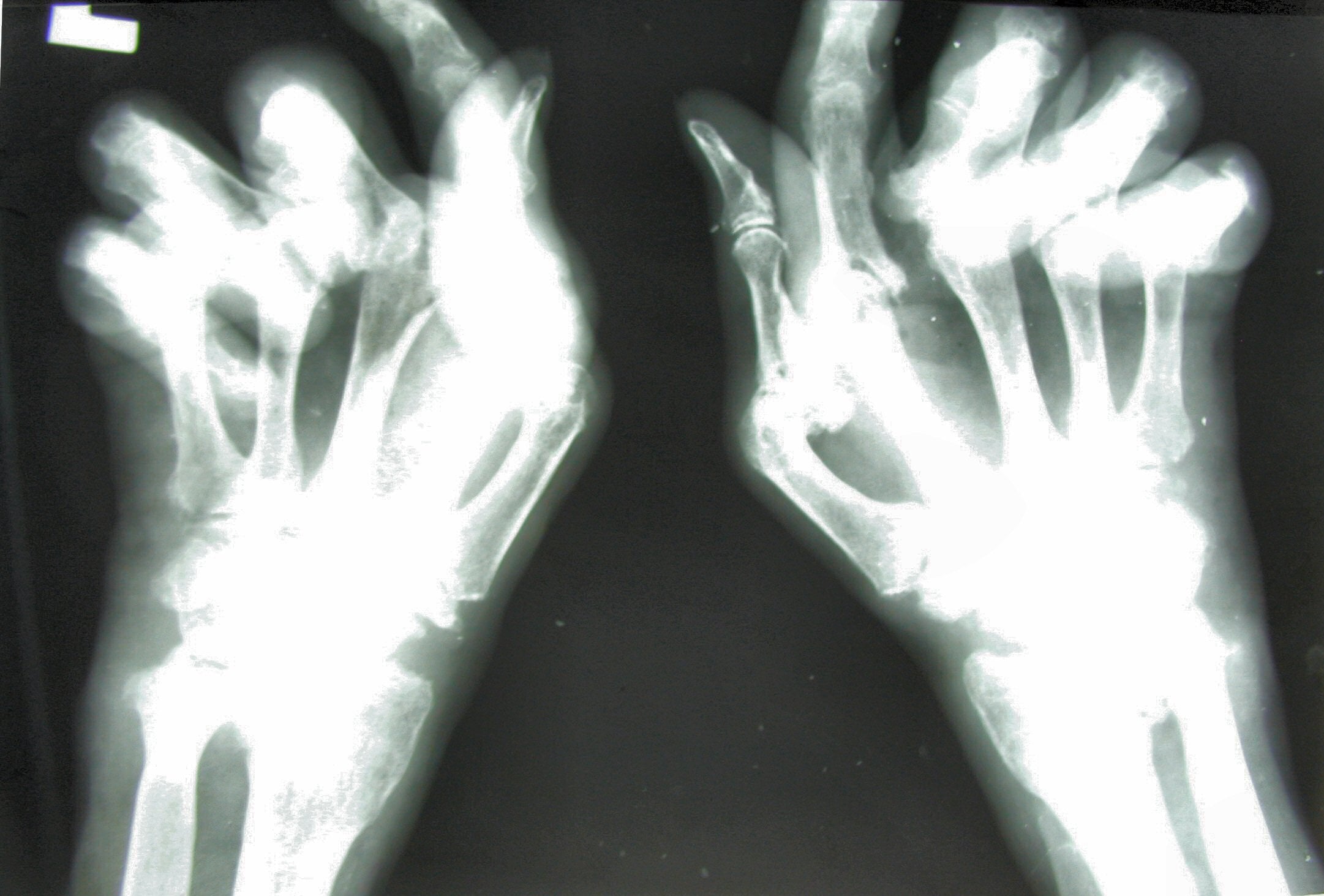
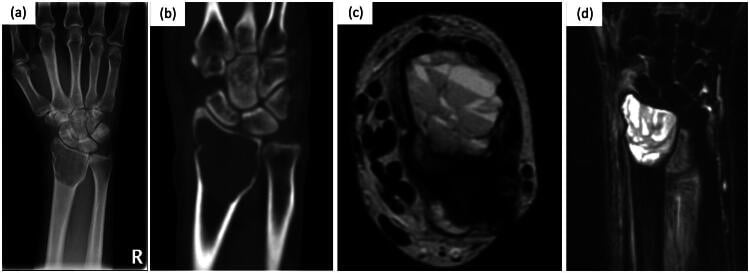
Radiographs. The standard hand series is PA, lateral and oblique views. The findings follow the stage of disease:
- Early - periarticular osteopenia, soft-tissue swelling, symmetric joint space narrowing
- Late - marginal erosions at the joint edges, subluxations and deformities, bone resorption (arthritis mutilans), ankylosis
MRI and ultrasound. Advanced imaging detects early disease (synovitis before radiographic change), assesses tendon integrity before surgery and monitors the response to DMARDs. MRI shows synovial enhancement with contrast, bone marrow oedema, tenosynovitis and early erosions.
Management Algorithm
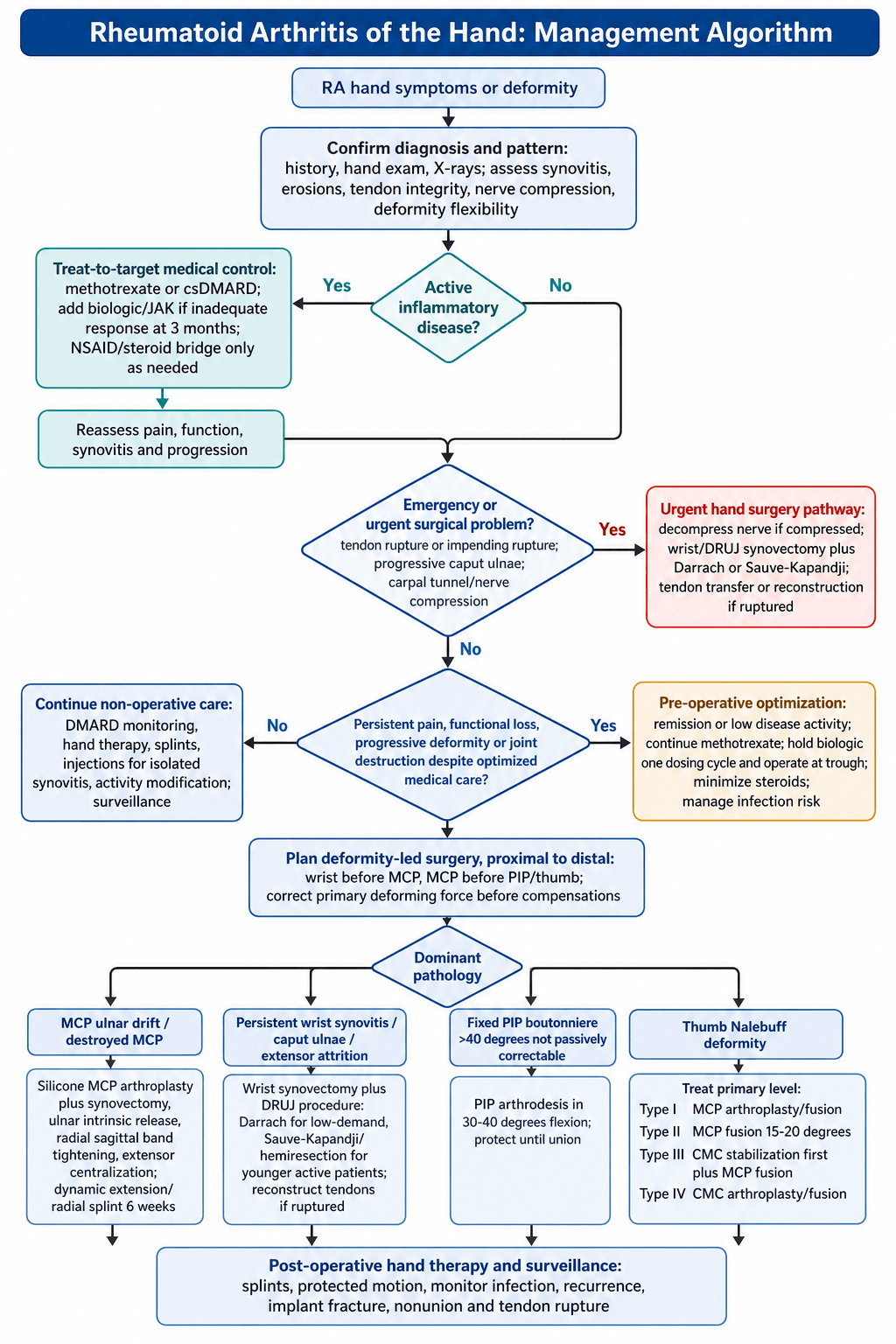
Medical Management (Primary)
First line. Methotrexate is the gold-standard DMARD, started at diagnosis, with sulfasalazine and hydroxychloroquine as alternatives.
- 10-25mg weekly, oral or subcutaneous
- Folic acid 5mg daily alongside
- LFTs and FBC monitored every 3 months
Escalation. If the response is inadequate at 3 months, add a biologic DMARD. The target is low disease activity or remission.
- TNF-alpha inhibitors (adalimumab, etanercept)
- IL-6 inhibitors (tocilizumab)
- B-cell depletion (rituximab)
- JAK inhibitors (tofacitinib)
Symptom control. NSAIDs are for short-term pain and inflammation. Corticosteroids are used as prednisolone 5-10mg daily during flares, as an intra-articular injection for single-joint synovitis, and as bridge therapy while DMARDs take effect (6-12 weeks).
DMARD initiation within 2 years of symptom onset is critical. Early aggressive treatment prevents erosive disease, preserves joint function, and reduces need for surgery. Delay beyond 2 years results in irreversible joint damage.
Pre-operative Optimisation
Medication. Each drug class has its own rule, and current evidence-based guidance has changed the one for methotrexate:
- Methotrexate - continue through hand surgery. It does not raise infection or wound complications and continuing it avoids a flare; the older teaching to stop it for 2 weeks is superseded
- Biologics (TNF-alpha inhibitors) - withhold one dosing cycle and schedule surgery at the trough; resume once the wound has healed and infection is excluded
- Corticosteroids - continue at the lowest effective dose, because of the risk of adrenal suppression if stopped; minimise long-term use
- NSAIDs - stop about 7 days before surgery, per local protocol
Disease activity. Schedule surgery during remission or low disease activity: active synovitis increases infection risk and impairs healing. Before elective surgery look for a low disease activity score (DAS28 under 3.2), CRP and ESR trending down, and no active synovitis at the surgical site, and defer surgery during an acute flare.
Surgical Indications
Surgery is indicated for:
- Persistent pain despite optimal medical management
- Functional impairment affecting ADLs or work
- Tendon rupture, or impending rupture (tenosynovitis)
- Progressive deformity with joint destruction
- Nerve compression (carpal tunnel syndrome is common in RA)
- Stage
- No deformity yet
- Treatment
- Synovectomy + medical optimisation
- Key Pearl
- Window of opportunity - DMARDs critical
- Stage
- Passively correctable
- Treatment
- MCP arthroplasty + soft tissue rebalancing
- Key Pearl
- Silicone implants standard, 80% satisfaction
- Stage
- PIP flexion contracture over 40°
- Treatment
- PIP arthrodesis in function
- Key Pearl
- Arthroplasty fails in fixed contracture
- Stage
- EDM/EDC rupture
- Treatment
- Darrach + tendon transfer/graft
- Key Pearl
- Prevent further ruptures with DRUJ excision
Before any operation in a rheumatoid patient, hand surgery included, the cervical spine is the critical safety consideration: neck manipulation during intubation can cause catastrophic cord injury. RA destabilises the cervical spine in three patterns:
- Atlantoaxial subluxation (AAS), the commonest. Pannus and transverse-ligament incompetence allow anterior C1-on-C2 translation. The anterior atlanto-dental interval (ADI) is abnormal over about 3 mm, but the posterior atlanto-dental interval (PADI), the actual space available for the cord, is the better predictor of neurological risk, with surgery considered when it falls below about 14 mm.
- Basilar invagination (cranial settling), the most dangerous. Vertical migration of the odontoid towards the foramen magnum, risking brainstem compression.
- Subaxial subluxation. Multilevel "staircase" instability lower down.
Clinical. Neck pain and occipital headache, and an insidious myelopathy that is easily masked by the arthritis of the hands and limbs: actively look for hyperreflexia, gait change, sphincter disturbance and Lhermitte's sign.
Peri-operative rule. Obtain flexion-extension cervical radiographs, and MRI if there is instability or myelopathy, before elective surgery and general anaesthesia. When instability is present use awake fibreoptic intubation with in-line stabilisation and flag it explicitly to the anaesthetist. In any RA patient going to theatre, clear the cervical spine first.
Surgical Technique
MCP Joint Arthroplasty with Soft Tissue Rebalancing
Consent. Warn of implant fracture or failure and recurrent ulnar drift (rates under Complications), stiffness (see Outcomes), infection at 2-3%, higher in RA, and digital nerve injury, which is rare (under 2%).
Equipment. Silicone implants of Swanson or Sutter design (sizes 0-3), MCP head and base reamers, a sagittal saw for bone resection, 3-0 and 4-0 sutures for soft-tissue repair, and 0.045" K-wires for temporary fixation.
Surgical steps
- Approach. A dorsal longitudinal incision over the MCP joints: a single incision for index through small (4 joints), or individual incisions per digit. Elevate skin flaps to expose the extensor mechanism.
- Extensor hood. Split the hood longitudinally, incising between the sagittal band and the extensor tendon; reflect the radial-sided hood ulnarly to expose the MCP joint capsule.
- Synovectomy. Excise the hypertrophic synovium completely, removing pannus from the joint and tendon sheath, and send a specimen for culture to rule out infection.
- Joint resection. Remove the metacarpal head with a sagittal saw, ream the metacarpal canal and the proximal phalanx base, and preserve the collateral ligament origins if possible.
- Implant. Trial the size, insert the implant into the metacarpal canal first, reduce the joint, insert the distal stem into the phalanx, and confirm alignment and smooth motion.
- Soft-tissue rebalancing (critical). Correct the ulnar drift: release the ulnar sagittal band and intrinsics, tighten (reef) the radial sagittal band, centralise the extensor tendon over the MCP, and consider radial collateral ligament reconstruction. Close the hood with 3-0 braided suture and check that the tendon centralises as the finger flexes.
- Closure and splinting. Skin with 4-0 nylon, a bulky dressing, and a dynamic extension splint (protocol under Rehabilitation).
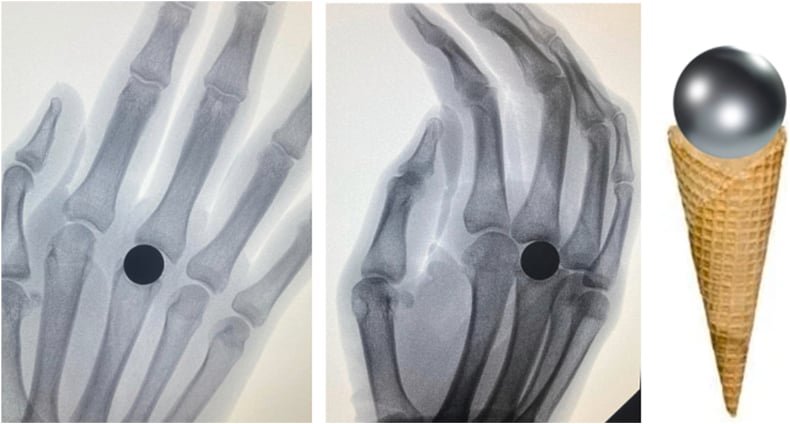
The implant alone will fail without soft tissue rebalancing. The deforming forces, intrinsics pulling ulnarly and the sagittal band incompetent radially, persist after the arthroplasty. Ulnar intrinsic release with radial sagittal band tightening prevents recurrent ulnar drift; without that rebalancing, recurrent drift is quoted at 30%.
The Rheumatoid Wrist
The proximal driver. The rheumatoid wrist drives the finger deformities from above and has its own reconstruction ladder beyond the DRUJ.
Zigzag collapse. Radiocarpal synovitis lets the carpus translate ulnarly and the wrist deviate radially, and the fingers compensate by deviating ulnarly. Volar and ulnar carpal translocation and caput ulnae accompany the collapse. Correcting the radially deviated wrist is therefore part of correcting MCP ulnar drift, which is the proximal-to-distal principle: stabilise and correct the wrist and DRUJ before MCP reconstruction.
The radiocarpal reconstruction ladder. In escalating order:
- Synovectomy and dorsal tenosynovectomy - early, to relieve synovitis and prevent extensor tendon rupture
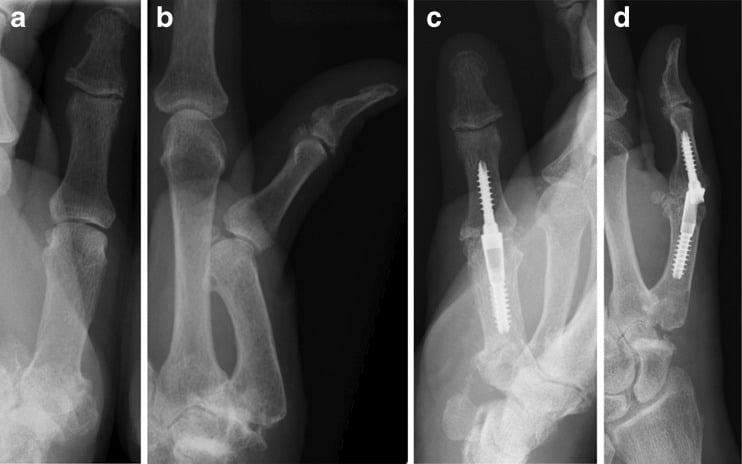
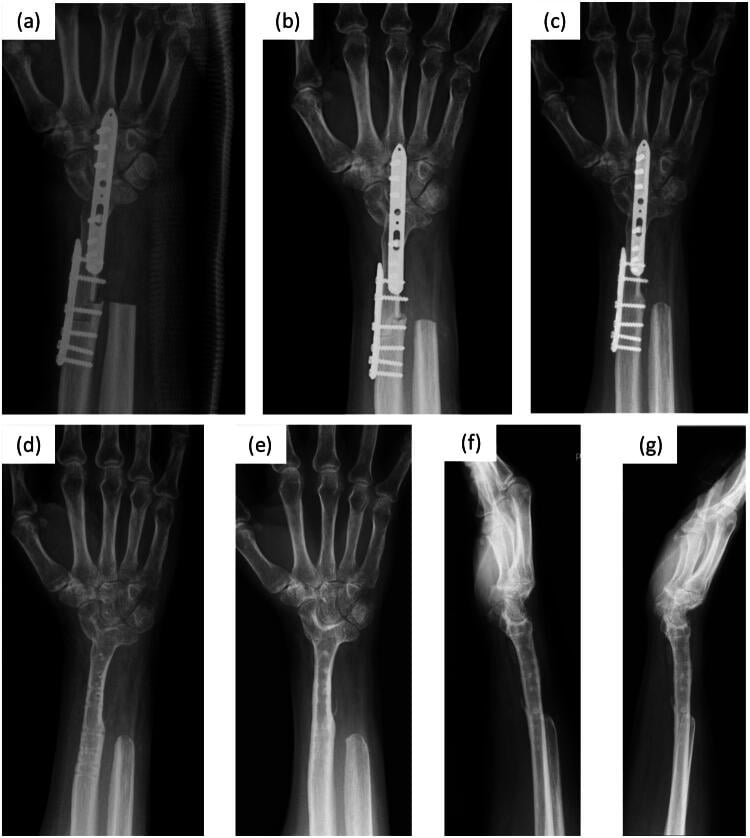
- Partial fusion, radiolunate (Chamay) or radioscapholunate - stabilises the carpus and halts ulnar and volar translocation while preserving some midcarpal motion, in the unstable but not yet destroyed wrist
- Total wrist arthrodesis - the durable, reliable, pain-relieving salvage for the destroyed or painful wrist, especially in high-demand patients and those who load the wrist through crutches or a wheelchair. It sacrifices motion, which is acceptable when other joints or the contralateral wrist retain movement
- Total wrist arthroplasty - preserves motion for the lower-demand patient and is valuable in bilateral disease, so that both wrists are not fused, but has higher loosening and failure than arthrodesis
Complications
- Incidence
- 2-5%
- Risk Factors
- Immunosuppression (MTX, biologics), corticosteroids, diabetes
- Management
- Aggressive antibiotics, consider implant removal if deep
- Incidence
- 10-20% at 10 years
- Risk Factors
- High-demand activities, poor bone quality
- Management
- Observation if painless, revision arthroplasty or fusion if symptomatic
- Incidence
- 10-15%
- Risk Factors
- Inadequate soft tissue rebalancing, poor compliance with splinting
- Management
- Revision soft tissue balancing, intrinsic release
- Incidence
- 20-30%
- Risk Factors
- Prolonged immobilisation, poor therapy compliance
- Management
- Hand therapy, dynamic splinting, may need manipulation
- Incidence
- 5-10%
- Risk Factors
- Smoking, corticosteroids, poor bone quality
- Management
- Revision fusion with bone graft if symptomatic
- Incidence
- 3-5%
- Risk Factors
- Unaddressed caput ulnae, continued attrition
- Management
- Tendon transfer or reconstruction, Darrach if not done
RA patients are immunosuppressed by the disease and its medications (methotrexate, biologics, corticosteroids), and their infection risk is 2-5 times higher than that of non-RA patients. Alongside the pre-operative drug management above, reduce it with prophylactic antibiotics (a first-generation cephalosporin), meticulous sterile technique, and close post-operative monitoring for signs of infection.
Postoperative Care and Rehabilitation
Post-MCP Arthroplasty Rehabilitation
- Splinting: Dynamic extension splint with outrigger
- MCP held in extension and radial deviation
- Passive ROM exercises initiated day 3-5
- Critical: Maintain radial pull to prevent recurrent ulnar drift
- Continue dynamic splint full-time
- Active ROM exercises 5x daily (remove splint)
- Blocking exercises to isolate MCP motion
- Scar massage and oedema control
- Wean from splint (nighttime only)
- Progressive grip strengthening
- Functional activities (ADLs)
- Assess for recurrent drift, adjust therapy
- Resume normal activities
- Continue nighttime splint for 3-6 months
- Monitor for implant fracture, recurrent deformity
- Annual follow-up indefinitely
Recurrent ulnar drift comes mostly from poor splinting compliance. The dynamic extension splint provides a radial-directed force to counteract ulnar pull during healing, and patients must understand that wearing it full-time for 6 weeks, then at night for 6 months, is essential to prevent recurrence.
Outcomes and Prognosis
- Pain Relief
- 80-90% significant improvement
- Function
- ROM improved in 60%, reduced in 30%
- Satisfaction
- 80% satisfied
- Revision Rate
- 10-20% at 10 years (implant fracture)
- Pain Relief
- 90% complete relief
- Function
- Stable grip platform, no motion
- Satisfaction
- 85% satisfied
- Revision Rate
- 5-10% (nonunion, malunion)
- Pain Relief
- 70% relief if done early (under 6 months synovitis)
- Function
- Preserves ROM, prevents tendon rupture
- Satisfaction
- 75% satisfied
- Revision Rate
- 30% require repeat synovectomy at 5-10 years
- Pain Relief
- 90% relief of ulnar-sided wrist pain
- Function
- Forearm rotation improves
- Satisfaction
- 80% satisfied
- Revision Rate
- 10% instability/convergence requiring revision
Factors associated with worse surgical outcomes in RA hand:
- Active disease at time of surgery (defer until remission)
- Poor medical compliance (methotrexate, biologics)
- Smoking (impairs wound healing, increases nonunion)
- Advanced age with poor bone quality (implant failure, nonunion)
- Inadequate soft tissue rebalancing (recurrent deformity)
- Poor rehabilitation compliance (stiffness, recurrent drift)
Guidelines, Registries & Global Practice
Global Epidemiology
Rheumatoid arthritis affects approximately 0.5-1% of adults worldwide, with a consistent female predominance of roughly 3:1 and peak onset between 40 and 60 years. Prevalence is highest in some Indigenous North American populations and lowest in parts of sub-Saharan Africa and East Asia, reflecting genetic (HLA-DRB1 shared epitope) and environmental (notably smoking) contributions. The hand is involved in the majority of patients over the disease course, and is the most common site requiring reconstructive surgery. Critically, the incidence of major rheumatoid hand surgery has fallen substantially in the biologic era, mirroring earlier diagnosis (2010 ACR/EULAR criteria) and treat-to-target medical control (TICORA).
Side-by-Side Guideline Guidance
- Scope
- Diagnosis and medical treat-to-target
- Key Position
- Classify and treat early; methotrexate first-line, escalate to biologic/targeted synthetic DMARD if target not met; short-term glucocorticoid bridging only
- Evidence Basis
- RCT and systematic review (Level 1)
- Scope
- Diagnosis, monitoring, referral
- Key Position
- Refer suspected persistent synovitis urgently; treat-to-target with monthly review until target met; offer hand exercise and therapy
- Evidence Basis
- Guideline (Level 1-2 underpinning)
- Scope
- Perioperative DMARD management and hand surgery
- Key Position
- Continue methotrexate through surgery; withhold biologics around surgery timed to dosing cycle; involve hand therapy
- Evidence Basis
- Guideline / consensus
- Scope
- Surgical optimisation
- Key Position
- Methotrexate may be continued perioperatively; biologics held one dosing interval and surgery scheduled at the trough; resume once wound healed and no infection
- Evidence Basis
- Consensus / cohort
Earlier teaching to stop methotrexate before surgery has been superseded: current ACR/EULAR-aligned perioperative guidance supports continuing methotrexate through hand surgery, as it does not increase infection or wound complications and avoids disease flare. Biologics are withheld for one dosing cycle and surgery booked at the trough, then resumed once the wound is healed and infection is excluded. Quote both the traditional and the current position in vivas and state the current evidence-based answer.
Registry and Outcome Evidence
- Falling surgical burden: National cohort and registry data across Scandinavia, the UK and the USA show declining rates of rheumatoid hand and wrist surgery since widespread biologic use
- Implant durability: Long-term series (Goldfarb and Stern) document ~63% silicone MCP implant fracture at 14 years - durability, not early failure, is the key issue
- Treat-to-target benefit: TICORA-type strategies reduce radiographic progression and downstream reconstruction
- DRUJ procedure choice varies: Darrach (older/lower demand) vs Sauve-Kapandji or hemiresection (younger, motion-preserving)
- Implant vs fusion decisions for MCP/PIP differ by surgeon and region
- Access: biologic availability and elective hand-surgery waiting times differ markedly between health systems, shifting the surgical/medical balance
Glucocorticoids in RA - Evidence Informing the 2022 EULAR Update
- Systematic literature review underpinning the 2022 EULAR RA management recommendations
- Confirmed efficacy of short-term glucocorticoid bridging; most patients can stop within 12-24 months
- Dose- and duration-dependent harms confirmed: osteoporotic fracture, serious infection, diabetes and increased mortality
- Supports using the lowest effective steroid dose for the shortest time as a bridge while DMARDs take effect
MCQ Practice Points
Q: What is the primary pathologic mechanism of MCP ulnar drift in rheumatoid arthritis? A: Radial collateral ligament destruction with ulnar subluxation of the extensor tendon. The radial collateral ligament fails from synovitis, allowing the extensor tendon to subluxate ulnarly. Intrinsic muscles then pull the fingers into progressive ulnar deviation, worsened with grip.
Q: What is the typical sequence of extensor tendon rupture in Vaughan-Jackson lesion? A: EDM (extensor digiti minimi) ruptures first, followed by EDC ring, then EDC middle. The sequence progresses from ulnar to radial as tendons attrit on the prominent dorsal ulnar head (caput ulnae). EDM ruptures first because it is most ulnar and has the thinnest cross-section.
Q: What is the primary pathology distinguishing boutonniere from swan-neck deformity? A: Boutonniere: Central slip rupture/attenuation causes PIP flexion and DIP extension. Lateral bands migrate volar to PIP axis. Swan-neck: Volar plate laxity or FDS rupture causes PIP hyperextension and DIP flexion. Intrinsics pull PIP into hyperextension.
Q: What is the specificity of anti-CCP antibodies for rheumatoid arthritis diagnosis? A: 95% specificity for RA (compared to RF at 85%). Anti-CCP antibodies are highly predictive of erosive disease and indicate need for early aggressive DMARD therapy. Combination of RF + anti-CCP positive is 90% predictive of erosive RA.
Q: What is the most important soft tissue procedure to prevent recurrent ulnar drift after MCP arthroplasty? A: Ulnar intrinsic release combined with radial sagittal band tightening. Releasing the ulnar intrinsics removes the ulnar-deviating force, while tightening the radial sagittal band centralizes the extensor tendon over the MCP joint. Implant alone without soft tissue rebalancing has 30% recurrence rate.
Q: In Nalebuff Type III thumb deformity, what is the primary pathology and surgical target? A: CMC joint subluxation is the primary pathology (not MCP). The thumb metacarpal adducts and subluxates at CMC from ligamentous laxity. MCP hyperextension and IP flexion are compensatory to achieve pinch. Surgical treatment must address CMC stabilization first before correcting MCP deformity, otherwise recurrence is inevitable.
Exam Viva Scenarios
Practise clinical reasoning and management decisions out loud
“A 55-year-old woman with 8-year history of seropositive RA presents with progressive ulnar deviation of MCP joints in both hands. She is on methotrexate and adalimumab with good systemic disease control. Her ulnar deviation is approximately 30 degrees and partially correctable passively. What is your assessment and management?”
“A 60-year-old man with longstanding RA presents unable to extend his small and ring fingers at the MCP joint. Examination reveals prominent dorsal ulnar head and loss of EDM and EDC ring finger function. What is your assessment and surgical management?”
“A 50-year-old woman with RA has progressive thumb deformity with CMC joint subluxation, MCP hyperextension to 40 degrees, and compensatory IP flexion. She has weak pinch and difficulty with activities requiring precision grip. Describe your classification and surgical approach.”
Key Pathophysiology
- Synovial inflammation (pannus) invades cartilage and bone causing progressive destruction
- Ulnar drift = radial collateral ligament destruction + ulnar extensor subluxation + intrinsic contracture
- Boutonniere = central slip rupture, PIP flexion, DIP extension (lateral bands volar to PIP axis)
- Swan-neck = volar plate laxity or FDS rupture, PIP hyperextension, DIP flexion
- Vaughan-Jackson = EDM, EDC ring, EDC middle sequential rupture from caput ulnae attrition
Classification
- Nalebuff Thumb Type I = boutonniere (MCP flexion, IP extension) = MCP synovitis
- Type II = swan-neck (MCP hyperext, IP flex) = MCP ligament laxity
- Type III = swan-neck from CMC subluxation (treat CMC first!)
- Boutonniere deformity staging: Stage I (under 30° lag, correctable), Stage II (30-50°), Stage III (over 50°, fixed)
Medical Management
- DMARDs within 2 years critical - window of opportunity to prevent erosions
- Anti-CCP 95% specific for RA, predicts erosive disease
- Methotrexate gold standard, add biologic if inadequate response at 3 months
- Pre-op: continue MTX (older teaching to stop 2 weeks before is superseded), biologics 1 dosing cycle, continue corticosteroids
Surgical Pearls
- Proximal-to-distal surgery sequence - correct wrist before MCP, MCP before PIP
- MCP arthroplasty requires soft tissue rebalancing: ulnar intrinsic release + radial sagittal band reef
- Darrach (distal ulna excision) for caput ulnae prevents further extensor ruptures
- Dynamic extension splint for 6 weeks post-MCP arthroplasty prevents recurrent drift
- Synovectomy only effective if done under 6 months of synovitis onset
Complications
- Infection 2-5% (immunosuppression from RA medications)
- MCP implant fracture 10-20% at 10 years (mostly asymptomatic)
- Recurrent ulnar drift 10-15% (inadequate soft tissue balancing or poor splinting compliance)
- Stiffness 20-30% (ROM may worsen but pain improves)
- Arthrodesis nonunion 5-10% (smoking, corticosteroids, poor bone quality)
Evidence Base and Key Trials
Silicone MCP Arthroplasty vs Medical Treatment (Landmark Prospective Trial)
- Multicentre prospective controlled cohort across 3 referral centres (USA and England), 70 surgical and 93 non-surgical patients with severe ulnar drift or extensor lag
- One-year data analysed for 45 surgical cases and 72 non-surgical controls
- Surgical group: significant improvement in overall Michigan Hand Outcomes Questionnaire (MHQ) score despite worse baseline function; non-surgical group unchanged
- Ulnar deviation and extensor lag improved significantly after silicone MCP arthroplasty (SMPA); non-surgical group did not improve
- Grip strength, pinch strength and Arthritis Impact Measurement Scales showed no significant change in either group
TICORA: Tight Control (Treat-to-Target) in Rheumatoid Arthritis
- Single-blind RCT in 111 patients: intensive monthly tight-control management vs routine outpatient care
- Mean fall in disease activity score (DAS) greater with tight control: -3.5 vs -1.9 (difference 1.6, 95% CI 1.1-2.1, p less than 0.0001)
- Good response achieved in 82% of intensive group vs 44% routine; remission (DAS less than 1.6) in 65% vs 16%
- Tight control substantially reduced radiographic disease progression and improved physical function and quality of life at no additional cost
Anti-CCP Antibodies: Landmark Diagnostic Validation
- Defining study introducing the cyclic citrullinated peptide (anti-CCP) ELISA
- Anti-CCP highly specific for RA: 98% in prevalent sera and 96% in an early-arthritis clinic cohort, with moderate sensitivity (sensitivity 48-68% depending on cohort)
- Anti-CCP significantly more specific than IgM rheumatoid factor (96% vs 91%, p = 0.016)
- Combining anti-CCP with IgM-RF raised positive predictive value to 91%
- Anti-CCP at first visit predicted erosive disease at 2 years (PPV 91%)