Childhood Vitamin D Deficiency | Defective Endochondral Ossification | Growth Plate Disorder
- Rickets = defective mineralisation of growth plate in children (vs osteomalacia in adults)
- Rachitic rosary, bowing, widened wrists/ankles = classic skeletal features
- X-ray shows widened, irregular, frayed metaphyses with cupping
- Treatment: vitamin D 2000-6000 IU daily until healing, then 400-600 IU maintenance
- Surgical correction (osteotomy) ONLY after medical optimisation - 12-18 months treatment
- “Distinguish nutritional rickets (low vitamin D) from X-linked hypophosphataemia (normal vitamin D, low phosphate)
- “Rachitic rosary = swelling at costochondral junctions (palpable beading along sternum)
- “Bowing deformities: genu varum (most common), genu valgum, windswept deformity
- “Delayed surgical correction until biochemistry normalised prevents recurrence
Overview and Definition
Rickets is a metabolic bone disease of childhood in which growing bone fails to mineralise, at the growth plate (physis) and in osteoid. The hallmark is failure of endochondral ossification: unmineralised cartilage matrix accumulates, and skeletal deformity and growth disturbance follow.
Rickets and osteomalacia. Rickets is the paediatric equivalent of osteomalacia. Osteomalacia affects the osteoid of mature bone in adults; rickets affects cartilage mineralisation in bones that are still growing.
Where it occurs. Rickets is preventable and remains a significant global health problem. Incidence is higher in Northern Europe, Canada and the northern US, where sunlight is limited, and the disease has re-emerged in developed countries as sun exposure has fallen and more infants are breastfed without supplementation. It is endemic in the Middle East and South Asia, where cultural sun avoidance operates despite abundant sunlight.
Who is at risk. The children to look for:
- Exclusively breastfed infants without vitamin D supplementation
- Dark-skinned children in high-latitude countries, whose cutaneous UV-B synthesis is reduced
- Children whose sun exposure is limited by cultural or religious practice (covering clothing) or an indoor lifestyle
- Preterm infants, whose vitamin D requirements are increased
- Infants of mothers with vitamin D deficiency during pregnancy
- Vegan or vegetarian diets without fortified foods
- Chronic kidney disease, which impairs 1-alpha hydroxylation of vitamin D
Pathophysiology
The vitamin D pathway. UV-B radiation converts 7-dehydrocholesterol in the skin to cholecalciferol (vitamin D3). Hepatic 25-hydroxylase converts D3 to 25-OH vitamin D (calcidiol), the main storage form, and renal 1-alpha hydroxylase converts that to 1,25-OH vitamin D (calcitriol), the active hormone. Calcitriol increases intestinal calcium and phosphate absorption and promotes skeletal mineralisation.
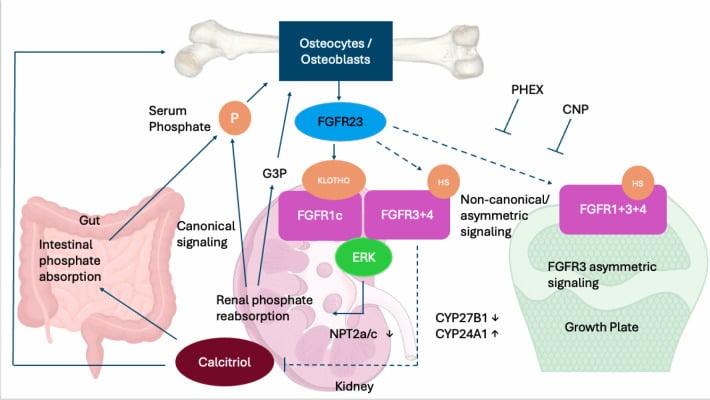
Regulation. Hypocalcaemia triggers PTH release, the secondary hyperparathyroidism of calcium deficiency, and PTH stimulates 1-alpha hydroxylase to increase active vitamin D production. FGF23 inhibits 1-alpha hydroxylase and increases renal phosphate excretion.
At the physis. Endochondral ossification needs adequate calcium, phosphate and vitamin D. When calcium and phosphate availability at the growth plate falls, chondrocytes still proliferate and hypertrophy and cartilage matrix is still produced, but hydroxyapatite cannot be deposited in it. Unmineralised hypertrophic cartilage accumulates and the growth plate widens, to 10-20 times its normal thickness.
The histology. The chondrocytes lose their columnar organisation, hypertrophic chondrocytes persist (failed apoptosis), and the zone of provisional calcification becomes irregular, patchy and incomplete. Vascular invasion and osteoblast and osteoclast activity at the metaphysis are disorganised, producing the metaphyseal widening, cupping and fraying that are the radiographic hallmark.
The skeletal consequences. Soft, unmineralised bone deforms under weight-bearing stress into bowing, genu varum or valgum, and disrupted longitudinal growth causes growth failure and short stature. The skeleton is fragile and fractures pathologically, and frontal bossing, delayed fontanelle closure and the rachitic rosary complete the picture.
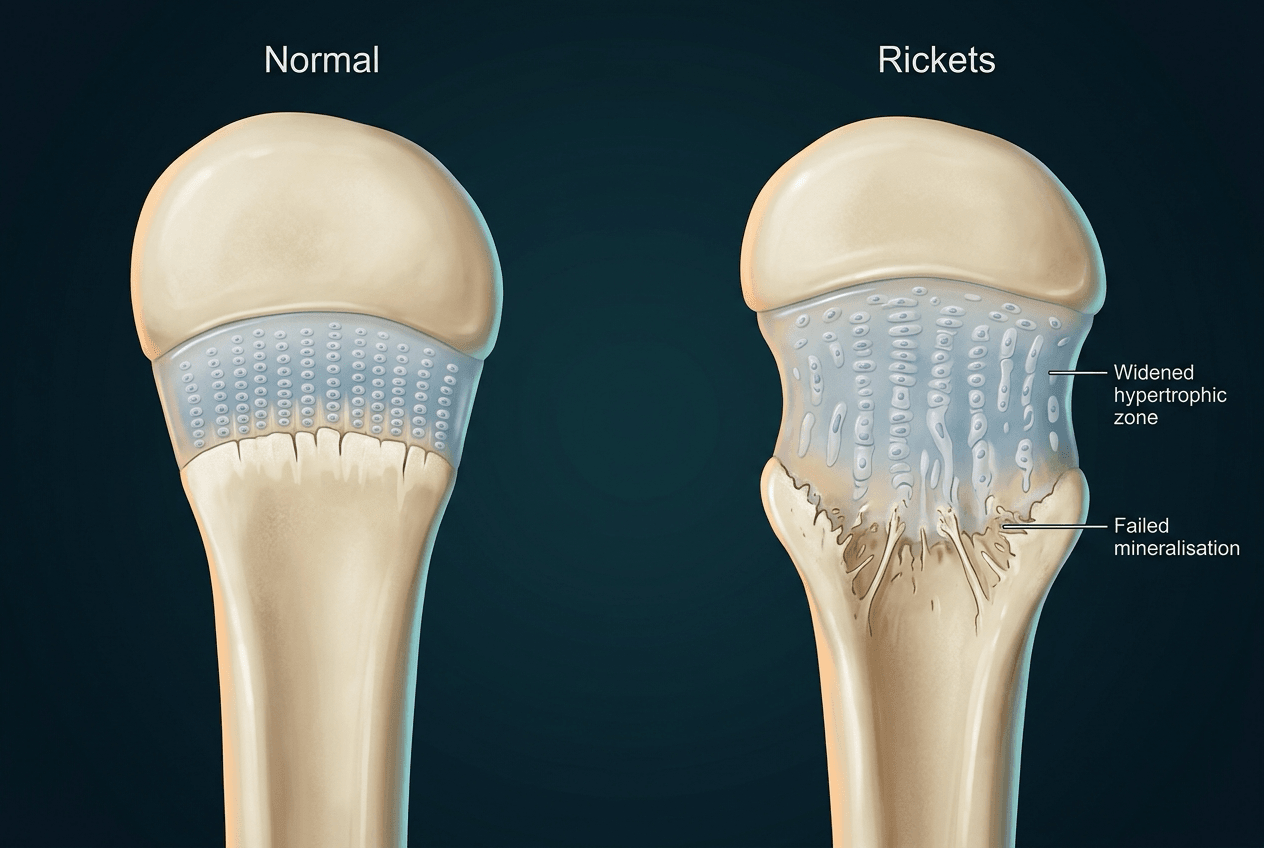
Nutritional (calcipenic) rickets. Vitamin D deficiency reduces intestinal calcium and phosphate absorption. The hypocalcaemia causes secondary hyperparathyroidism, and PTH increases renal phosphate loss and bone resorption, so both calcium and phosphate are low and mineralisation is inadequate.
X-linked hypophosphataemia (phosphopenic rickets). A PHEX mutation raises FGF23. FGF23 wastes phosphate through the kidney by reducing proximal tubular reabsorption, and it inhibits 1-alpha hydroxylase, so active vitamin D is reduced despite a normal 25-OH D. The result is severe isolated hypophosphataemia with a normal calcium.
Vitamin D-dependent rickets. In type I a CYP27B1 mutation leaves 1-alpha hydroxylase deficient, and active vitamin D cannot be produced. In type II a VDR mutation makes the vitamin D receptor defective; the resistance to calcitriol drives 1,25-OH D levels very high.
Classification
The aetiological classification separates rickets from calcium deficiency, rickets from phosphate deficiency, and the vitamin D-dependent forms.
Calcipenic rickets. Calcium deficiency, from:
- Nutritional vitamin D deficiency, the most common cause
- Dietary calcium deficiency, with a predominantly plant-based diet in developing countries
- Malabsorption of the fat-soluble vitamin: coeliac disease, cystic fibrosis, inflammatory bowel disease, biliary atresia
- Anticonvulsants: phenytoin and phenobarbital induce hepatic vitamin D catabolism
Phosphopenic rickets. Phosphate deficiency, from:
- X-linked hypophosphataemia (PHEX), X-linked dominant and the most common hereditary form
- Autosomal dominant hypophosphataemic rickets (FGF23), with elevated FGF23
- Autosomal recessive hypophosphataemia (DMP1, ENPP1)
- Hereditary hypophosphataemic rickets with hypercalciuria (SLC34A3)
- Tumour-induced osteomalacia (FGF23-secreting tumours)
- Fanconi syndrome (renal tubular phosphate wasting)
Vitamin D-dependent rickets. Type I is 1-alpha hydroxylase deficiency (CYP27B1 mutation) and type II a vitamin D receptor defect (VDR mutation). Both are autosomal recessive.
Clinical Presentation
The features change with age.
Infants (0-12 months). The skeletal signs are craniotabes (soft skull bones with a ping-pong ball sensation), frontal bossing, delayed fontanelle closure, the rachitic rosary (costochondral junction swelling, palpable as beading along the sternum) and Harrison's groove, an indentation along the diaphragm attachment. The infant is hypotonic, a floppy baby, with delayed sitting, crawling and standing, and severe deficiency adds hypocalcaemic seizures, carpopedal spasm, and laryngospasm with stridor. Failure to thrive and growth retardation follow; early diagnosis is critical to prevent permanent skeletal deformity.
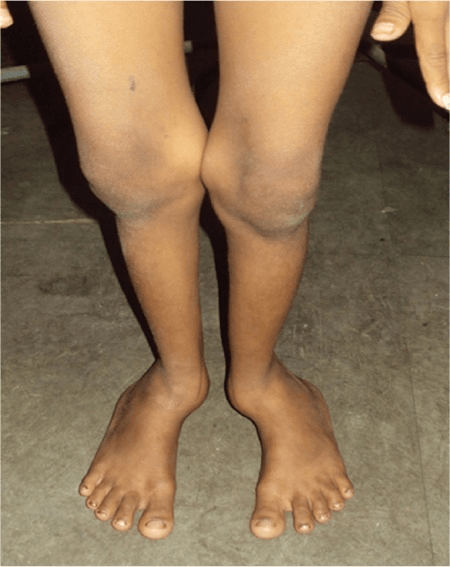
Toddlers (1-3 years). The skeletal signs are most visible at this age, which is the peak age for orthopaedic presentation. Genu varum is the most common deformity; the wrists and ankles are visibly and palpably widened, the rosary is prominent, and walking is delayed by leg bowing and muscle weakness, with a waddling gait. Short stature, delayed tooth eruption and dental enamel defects accompany it. Greenstick fractures occur with minimal trauma, and metaphyseal fractures may mimic non-accidental injury.
Older children (over 3 years). Genu valgum is more common than varum at this age. A windswept deformity (varus on one side, valgus on the other), coxa vara, and spinal deformity (scoliosis, kyphosis) also appear, with proximal muscle weakness, bone pain especially in the lower limbs, and easy fatigability. Stature is short relative to genetic potential, and puberty is delayed if the disease is severe. Late-onset rickets is often due to a hereditary form (X-linked hypophosphataemia) or to chronic kidney disease.
Metaphyseal fractures in rickets can mimic abuse. Both cause corner fractures and metaphyseal lucencies, and these features separate them:
- Rickets: symmetric metaphyseal changes, rachitic rosary, abnormal biochemistry (low vitamin D, high ALP), no bruising
- Non-accidental injury: asymmetric injuries, multiple fractures of different ages, soft-tissue bruising, normal biochemistry
Always consider rickets in the differential diagnosis of metaphyseal fractures in infants. But rickets does not exclude abuse: the two can coexist.
Laboratory Findings
The pattern of calcium, phosphate and the two vitamin D metabolites separates the types; the alkaline phosphatase is raised in all four.
- Calcium
- Low-normal
- Phosphate
- Low-normal
- 25-OH Vit D
- Very low
- 1,25-OH Vit D
- Low
- ALP
- Very high
- PTH
- High
- Calcium
- Normal
- Phosphate
- Very low
- 25-OH Vit D
- Normal
- 1,25-OH Vit D
- Low-normal
- ALP
- High
- PTH
- Normal
- Calcium
- Low
- Phosphate
- Low
- 25-OH Vit D
- Normal
- 1,25-OH Vit D
- Very low
- ALP
- High
- PTH
- High
- Calcium
- Low
- Phosphate
- Low
- 25-OH Vit D
- Normal
- 1,25-OH Vit D
- Very high
- ALP
- High
- PTH
- High
Further tests.
- FGF23, elevated in X-linked hypophosphataemia and tumour-induced osteomalacia
- Genetic testing: PHEX (X-linked hypophosphataemia), CYP27B1 (vitamin D-dependent type I), VDR (type II)
- Renal tubular function (urinary phosphate, amino acids, glucose) for Fanconi syndrome
- Parental vitamin D levels, to assess familial risk
Imaging
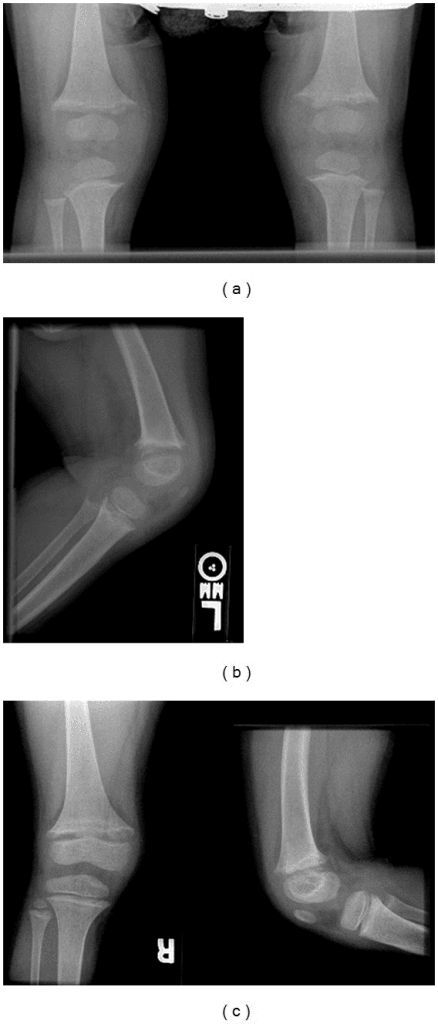
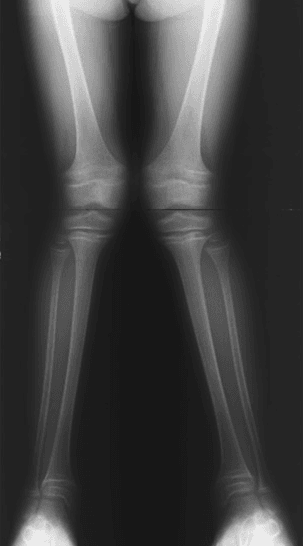
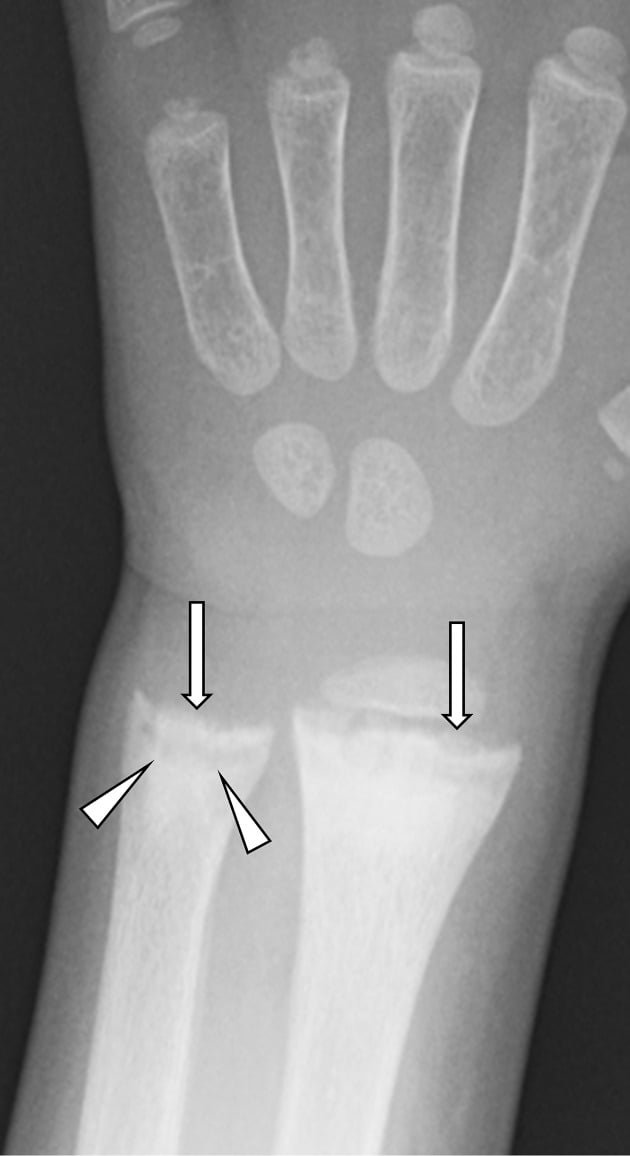
The growth plate. The pathognomonic findings are at the physis: a growth plate widened to greater than 3 mm, loss of the sharp zone of provisional calcification, frayed, irregular metaphyses with a "paintbrush" appearance, and metaphyseal cupping, a concave deformity. They are most visible at the distal radius and about the knee.
The rest of the skeleton. Generalised osteopenia with a coarsened trabecular pattern and cortical thinning, varus or valgus bowing and, in long-standing cases, Looser zones.
Which films. The radiographs that make the diagnosis:
- Wrists (AP): the distal radial and ulnar metaphyses are highly sensitive
- Knees (AP): the distal femoral and proximal tibial metaphyses
- Long bones, to assess the severity of bowing
- Chest: the rachitic rosary is not usually visible radiographically
Healing. The return of a sharp zone of provisional calcification is the earliest sign. The growth plates then narrow, a sclerotic metaphyseal healing line appears and bone density improves.
Grading Rickets Severity and Healing on Radiographs
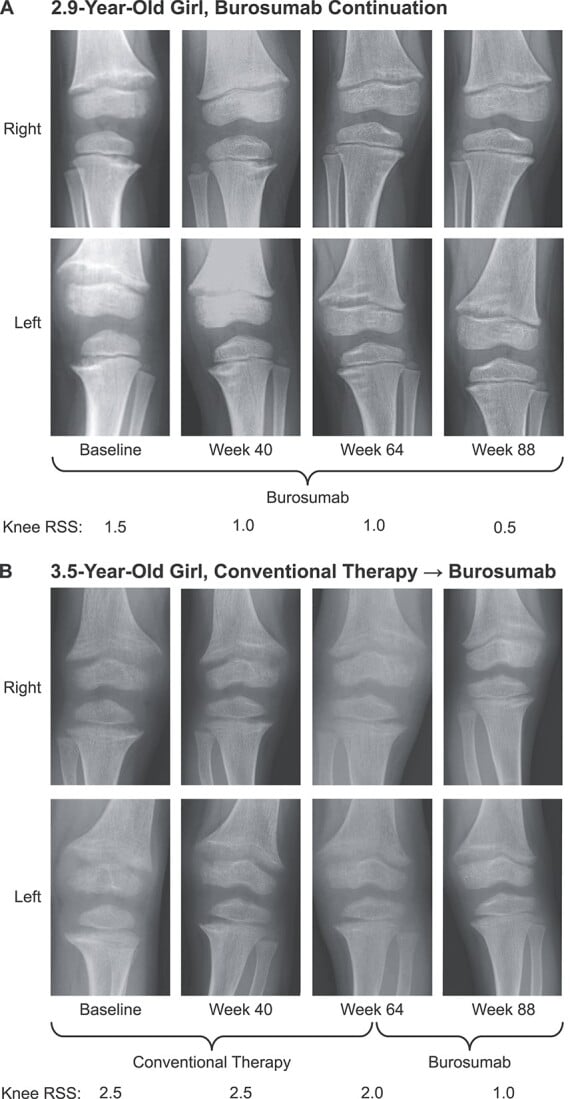
- The Thacher rickets severity score (grading severity). A validated 10-point radiographic score based on the wrist (distal radius and ulna) and the knee (distal femur and proximal tibia). Each site is graded for the degree of metaphyseal fraying, cupping/concavity and the proportion of the growth plate affected (the wrist contributing up to 4 points and each knee physis up to 3), summing to 0 (normal) to 10 (most severe). It lets you objectively grade a child at baseline and track change - it fell from about 1.9 to under 1 on burosumab in the trials.
- The RGI-C (Radiographic Global Impression of Change - grading healing). A paired-comparison tool in which a blinded radiologist scores the change between baseline and follow-up films (roughly -3 markedly worse to +3 completely healed, 0 = no change). It was the primary endpoint of the burosumab phase 3 trial (+1.9 burosumab vs +0.8 conventional) and captures healing that the severity score alone can miss.
- What "healing" looks like on these scores. Recovery is scored as the return of the sharp zone of provisional calcification (the earliest sign), then narrowing of the widened physis, filling-in of the cupped and frayed metaphysis, and a dense metaphyseal healing line - the same radiographic sequence the topic lists under healing, now quantified.
- Why it matters. Objective scoring underpins the evidence base (drug trials), helps decide how long to treat before considering surgery, and gives a defensible viva answer to "how do you know the rickets is healing?" beyond "the X-ray looks better."
Q: How do you objectively grade rickets severity and healing on radiographs? A: Use the Thacher rickets severity score - a validated 0-10 radiographic score of metaphyseal fraying, cupping and the proportion of physis affected at the wrist (distal radius/ulna) and knee (distal femur/proximal tibia) - to grade severity and track it (it fell to under 1 on burosumab). Grade healing with the Radiographic Global Impression of Change (RGI-C), a blinded paired comparison (about -3 worse to +3 fully healed) that was the burosumab phase 3 primary endpoint. Both follow the healing sequence - return of the provisional calcification zone first, then physeal narrowing and a metaphyseal healing line.
Differential Diagnosis
Bowing in a small child has several causes, and the age, the biochemistry and the appearance of the growth plates separate them. Hypophosphatasia, an alkaline phosphatase deficiency, also widens the growth plates; its low ALP is diagnostic.
- Age
- 6-24 months peak
- Biochemistry
- Low vitamin D, high ALP
- X-Ray Features
- Widened, frayed metaphyses, osteopenia
- Age
- Under 2 years
- Biochemistry
- Normal
- X-Ray Features
- Normal growth plates, mild symmetric bowing
- Age
- Under 3 years (infantile) or 8-15 years (adolescent)
- Biochemistry
- Normal
- X-Ray Features
- Beaking of medial tibial metaphysis, fragmented medial epiphysis
- Age
- Variable
- Biochemistry
- Low ALP (diagnostic)
- X-Ray Features
- Widened growth plates, but low ALP distinguishes from rickets
Management
Medical treatment comes first and is the primary treatment for nutritional rickets. The regimen depends on the type.
Loading. Active disease is treated with vitamin D3 (cholecalciferol) 2000-6000 IU daily for 8-12 weeks, the dose based on severity and age. The alternative is a single dose of 50,000-150,000 IU (Stoss therapy).
Calcium. Give 500-1000 mg elemental calcium daily in divided doses. It is essential in the first 4-6 weeks to prevent hungry bone syndrome.
Monitoring. The schedule:
- Calcium, phosphate and ALP at 1, 3 and 6 months
- 25-OH vitamin D at 3 months, target greater than 75 nmol/L
- Radiographs at 3-6 months to assess healing
Maintenance. Once healed, vitamin D 400-600 IU daily continues lifelong, with dietary calcium of 800-1000 mg daily.
Expected response. Biochemistry normalises by 3-6 months and the radiographs heal by 6-12 months. Mild to moderate deformity corrects spontaneously by 12-18 months.
Once vitamin D and calcium are started, severe rickets can develop profound hypocalcaemia and hypophosphataemia as the replenished skeleton avidly takes up minerals. It presents with tetany, carpopedal spasm or seizures within the first 2 weeks of treatment, and the risk factors are severe rickets, a very high ALP and prolonged deficiency. Prevent it with concurrent calcium supplementation and a serum calcium every 48 hours for the first 2 weeks; if it is symptomatic, give IV calcium gluconate and increase the oral calcium dose.
Orthopaedic Management
Never operate on active rickets. Optimise medically and wait 12-18 months for spontaneous deformity correction; surgery is only for the residual deformity after healing.
Indications. Surgery is considered for:
- Residual deformity after medical optimisation (12-18 months of treatment)
- Mechanical axis deviation greater than 10-15 degrees
- Functional impairment: gait disturbance or pain
- Progressive deformity despite treatment, especially in XLH
Contraindications. Surgery is avoided with:
- Active rickets, the biochemistry not yet normal
- Age under 2-3 years, when spontaneous correction is possible
- Mild deformity (less than 10 degrees) with good function
- Poor compliance with medical treatment
Before surgery. Confirm normal biochemistry (25-OH vitamin D greater than 75 nmol/L, normal calcium, phosphate and ALP), radiographic healing with the zone of provisional calcification restored, and no active rickets clinically or radiographically.
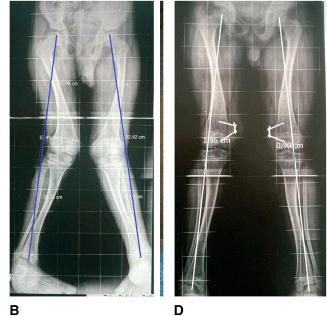
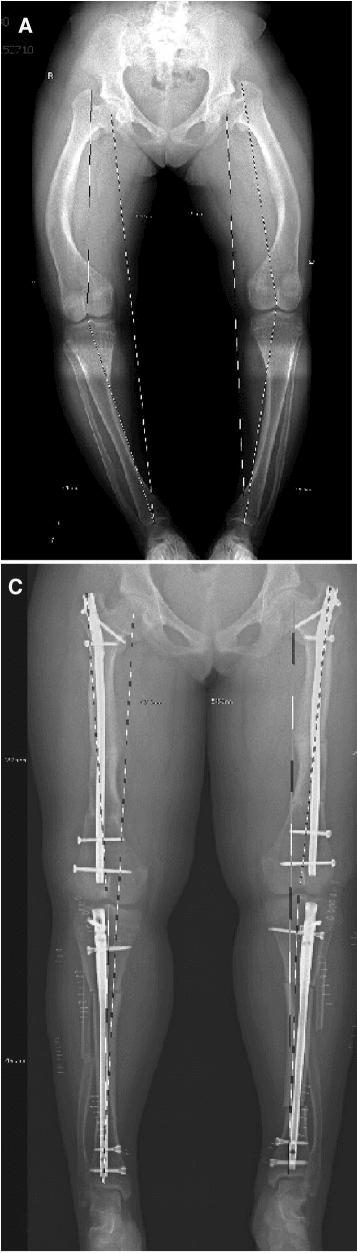
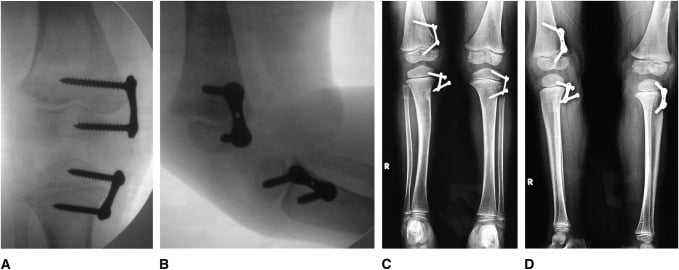
While the physes are open. Guided growth (hemiepiphysiodesis) is preferred in the growing child because it is minimally invasive and corrects gradually. A medial or lateral tension-band plate (eight-plate) is used, or staples, which are now less common. Correction takes 12-24 months, is reversible if it overshoots, and needs compliant follow-up every 3-6 months. Severe deformity, greater than 20-30 degrees, is corrected by proximal tibial or distal femoral osteotomy, acutely or gradually in an external fixator.
After skeletal maturity. Corrective osteotomy is the definitive treatment: single-level (proximal tibia or distal femur) for a unifocal deformity, double-level for a multi-apical one. Dome, wedge, or opening or closing wedge osteotomies are fixed internally with plate and screws or with an external fixator.
Surgical Technique
Guided growth. For a growing child with open physes and genu varum or valgum that remains greater than 10-15 degrees after medical optimisation. The eight-plate technique:
- Supine on a radiolucent table
- Fluoroscopy to confirm the level of the physis
- Small incision over the target physis: lateral for varus, medial for valgus
- Plate straddling the physis with two screws, one epiphyseal and one metaphyseal
- Position confirmed fluoroscopically
Rate and follow-up. Expect correction of 1-2 degrees per month, with standing alignment radiographs every 3-6 months. Bilateral and multi-level plating (femur and tibia) may be needed.
Osteotomy planning. For severe deformity or closed physes, at the proximal tibia or distal femur. Find the CORA (centre of rotation of angulation) and plan the correction angle and level. An opening wedge needs bone graft and is more technically demanding; a closing wedge is simpler but shortens the limb; a dome osteotomy allows gradual correction in an external fixator.
Operating on rachitic bone. Bone quality may be compromised by osteopenia, so larger implants give better fixation. Healing is delayed, so the non-weight-bearing period is longer, and the risk of malunion and nonunion is higher in active disease; biochemical optimisation is ensured before and after surgery.
Complications
Hypocalcaemic crises are life-threatening emergencies: tetany (carpopedal spasm, positive Chvostek and Trousseau signs), generalised tonic-clonic seizures, laryngospasm with stridor and respiratory compromise, and, rarely, arrhythmia from a prolonged QT interval. Treat with IV calcium gluconate 10%, 1-2 mL/kg over 10 minutes, with cardiac monitoring and airway support, intubating if laryngospasm is severe.
- Severe hypocalcaemia, less than 1.8 mmol/L, needs immediate treatment even if asymptomatic
- A suspected pathological fracture, especially metaphyseal, needs non-accidental injury ruled out
- Every child with rickets and a calcium less than 2.0 mmol/L needs a baseline ECG to assess the QT interval
Skeletal complications. Pathological fractures are metaphyseal and follow minimal trauma, as greenstick or Salter-Harris II injuries. Deformity progresses (genu varum or valgum, coxa vara, scoliosis, kyphosis), and the risk of slipped capital femoral epiphysis is increased in untreated or undertreated rickets. Craniosynostosis is a rare complication, and a severe rachitic rosary can deform the chest wall enough to compromise breathing.
Systemic complications. Muscle weakness takes the form of a proximal myopathy with a waddling gait, and diffuse bone pain makes walking difficult. Severe chronic hypocalcaemia can cause developmental delay and, rarely, a dilated cardiomyopathy. Vitamin D plays a role in immune regulation, and infection risk is increased.
Vitamin D toxicity. Overcorrection causes hypercalcaemia (nausea, vomiting, polyuria, constipation, altered mental status) and hypercalciuria with nephrocalcinosis and renal stones. The risks are excessive supplementation, greater than 10,000 IU daily for prolonged periods, and calcitriol treatment of vitamin D-dependent rickets type I. Monitor serum calcium and the urinary calcium/creatinine ratio; reduce or stop vitamin D, hydrate, and add loop diuretics if severe.
Recurrent deformity. This is the most common complication when surgery is performed on active rickets. Recurrence and deformity progression are high when surgery is performed on biochemically uncontrolled rickets, and recurrence is substantially lower once metabolic control and radiographic healing are established. Prevention is confirming biochemical normalisation, radiographic healing and an adequate duration of treatment before operating; if deformity recurs, repeat the medical optimisation and consider revision only after full healing.
Delayed union and nonunion. The risk factors are active rickets, inadequate medical optimisation and poor compliance with vitamin D. Optimise vitamin D and calcium, consider bone stimulation, and revise a persistent nonunion.
Over- and undercorrection after guided growth. The correction rate with hemiepiphysiodesis is unpredictable, especially in metabolic bone disease. Close follow-up every 3-6 months with standing alignment radiographs, and prompt implant removal, prevent it. A mild error is observed, asymmetry is treated with contralateral surgery, and a severe error with osteotomy.
Hardware complications. Plates and screws can fracture in osteopenic bone, eight-plates migrate in soft bone, and surgical site infection carries the standard orthopaedic risk.
Postoperative Care
After guided growth. The child bears weight as tolerated immediately, with no cast or immobilisation. Review is at 6 weeks and then every 3-6 months, with a standing alignment film at each visit.
- Assessment
- Wound check, initial X-ray
- Assessment
- Standing alignment film
- Assessment
- Assess correction progress
- Assessment
- Consider implant removal if corrected
Implant removal. Remove the eight-plates when the mechanical axis has normalised, under a brief anaesthetic. Delay risks overcorrection, and rebound deformity is watched for afterwards, especially in XLH.
After osteotomy. Protected weight-bearing lasts 6-12 weeks, longer than typical because of the metabolic bone disease, in a cast or brace, and weight-bearing progresses as serial radiographs show callus. Delayed healing is expected, so monitor closely for nonunion and consider bone stimulation if healing is slow.
Medical treatment continues. Vitamin D and calcium continue indefinitely, with biochemistry monitored during healing, to prevent recurrence. Long-term surveillance means annual biochemistry, growth monitoring and a watch for recurrence, especially in XLH, with repeat surgery if deformity recurs.
Outcomes
Nutritional rickets. The prognosis is excellent if treatment is early and complete. Full recovery is expected with adequate treatment, mild deformities correct spontaneously, and surgery is rarely needed with proper medical management. Full height potential is achievable, preserved if treatment starts before age 2, and catch-up growth is variable, better when treated early.
X-linked hypophosphataemia. Hereditary forms require lifelong management. XLH often requires multiple surgeries despite good medical control, and residual short stature is common, with an average height loss of 2-3 SD. Burosumab is showing improved outcomes over conventional therapy.
Surgery. Guided growth achieves correction in more than 90%, osteotomy unites in 85-95% (lower than in normal bone), and recurrence after proper optimisation is less than 10%. In hypophosphataemic rickets, guided growth restores a neutral mechanical axis in around 70% of limbs (Horn 2017).
- Good Outcome
- Early treatment (less than 2 years)
- Poor Outcome
- Late presentation
- Good Outcome
- Good vitamin D/calcium compliance
- Poor Outcome
- Poor compliance
- Good Outcome
- Nutritional
- Poor Outcome
- Hereditary (XLH)
- Good Outcome
- After 12-18 months optimisation
- Poor Outcome
- Active rickets
Untreated or undertreated rickets. The sequelae are lasting:
- Permanent short stature, the growth potential lost if treatment comes after puberty
- Residual deformity (bow legs, knock knees, coxa vara) requiring adult reconstruction
- Early osteoarthritis of the knee (tibiofemoral) and hip from malalignment and abnormal loading
- Chronic mechanical pain from the deformity
- Gait abnormality: waddling or limping
Teeth. Dental problems include delayed tooth eruption, enamel hypoplasia and an increased caries risk, and enamel defects from the critical period of deficiency persist despite treatment.
Guidelines, Registries & Global Practice
Global Epidemiology
- Nutritional rickets is a preventable global public health problem that has re-emerged in high-income countries and remains endemic in parts of Africa, the Middle East and South Asia.
- Two distinct geographies of cause: vitamin D-deficiency rickets predominates at high latitude / low sunlight, while dietary calcium-deficiency rickets predominates in sun-rich, low-dairy populations (Pfitzner/Thacher, Nigeria).
- Highest-risk infants worldwide: exclusively breastfed without supplementation, born to vitamin D-deficient mothers, with darkly pigmented skin, or with covering clothing / limited sun exposure.
- X-linked hypophosphataemia is the commonest inherited (non-nutritional) rickets, incidence roughly 1 in 20,000.
Side-by-Side Guideline Comparison
- Core recommendation
- 25-OH D over 50 nmol/L sufficient; treat with vitamin D at least 2000 IU/day for 12+ weeks PLUS calcium 500 mg/day; infants 400 IU/day from birth
- Core recommendation
- All infants/children at least 400 IU/day vitamin D from soon after birth
- Core recommendation
- Routine infant supplementation; "Healthy Start" vitamins; treat deficiency, fortify staple foods
- Core recommendation
- Higher treatment/maintenance doses acceptable; targets 25-OH D over 75 nmol/L in at-risk groups
High- vs Limited-Resource Practice
- High-resource: ready 25-OH D / FGF23 / genetic testing, multidisciplinary metabolic bone clinics, and access to burosumab for XLH.
- Limited-resource: diagnosis often clinical/radiographic; treatment relies on affordable cholecalciferol and dietary calcium (calcium-deficiency rickets is frequently missed if only vitamin D is treated). Food fortification (milk, flour) is the key population-level strategy.
Related pages: Osteomalacia is the same defect of mineralisation after the physes have closed - the distinction is skeletal maturity, not biochemistry, which is why an adult with these labs has no rachitic metaphyses to look for; Vitamin D Deficiency for the commonest cause and its supplementation thresholds; XLH and Oncogenic Osteomalacia for the FGF23-driven phosphopenic disease that the burosumab trials carded above were built around, and for its acquired tumour-induced mimic; Hypophosphatasia for the rachitic radiograph with a LOW alkaline phosphatase, which is the one biochemical pattern that inverts the usual rule; Renal Osteodystrophy for renal rickets and why it does not respond to native vitamin D; Blount Disease for the principal non-metabolic cause of the bowed toddler, and the differential this page's imaging section exists to settle; Guided Growth for Angular Deformity for the technique in the Horn series; and Calcium Homeostasis and Metabolic Bone Disease for the PTH-vitamin D-phosphate axis underlying every biochemical pattern in the table above.
Why the Deformity Pattern Changes with Age
Infants show craniotabes, toddlers develop genu varum, and older children develop genu valgum or a windswept deformity - and the reason the pattern changes with age is the key to recognising it.
- Rickets amplifies the age-appropriate physiological alignment. Normal tibiofemoral alignment evolves: infants are physiologically varus, passing through neutral at around 18-24 months, reaching peak physiological valgus at about 3-4 years, then settling to the adult angle by roughly 7 years. Because rickets softens the metaphysis and physis so the bone deforms under load, it exaggerates whatever alignment prevails at the age of peak disease activity - hence genu varum in the walking toddler (deforming during the physiological-varus phase) and genu valgum in the older child (deforming during the physiological-valgus phase).
- Windswept deformity (varus in one limb, valgus in the other) reflects asymmetric loading and growth on top of the same soft-bone mechanism.
- The worst change is at the fastest-growing, most-loaded physes. The florid metaphyseal fraying and cupping cluster around the knee (distal femur, proximal tibia) and the wrist (distal radius) - the physes contributing most to longitudinal growth - which is exactly why these are the best radiographs for diagnosis and scoring.
- Practical consequence. The direction of the deformity does not change the medical treatment, but it shapes the surgical plan (which side to tether in guided growth - lateral for varus, medial for valgus) and is a reminder that a young child's mild symmetric bowing may still be physiological, so the biochemistry and the metaphyseal appearance, not the bowing alone, make the diagnosis.
Q: Why do toddlers with rickets get bow legs but older children get knock knees? A: Rickets softens bone so it deforms under load, exaggerating the age-appropriate physiological alignment. Normal alignment runs from infant varus → neutral at ~18-24 months → peak valgus at ~3-4 years → adult angle by ~7 years, so a child deforming as a walking toddler bows into genu varum, while one deforming later bows into genu valgum (or a windswept pattern with asymmetric loading). The most florid metaphyseal change is at the fastest-growing physes (knee and wrist), which is why those films are used for diagnosis - and the deformity direction guides which physis to tether at guided growth.
Controversies & Areas of Uncertainty
There is no universal agreement on the ideal 25-OH D threshold. The Global Consensus sets sufficiency at over 50 nmol/L, while the Endocrine Society and some surgeons target over 75 nmol/L peri-operatively. Routine high-dose supplementation in vitamin D-replete populations has not shown skeletal benefit and risks hypercalciuria.
In sun-rich, low-dairy regions, rickets is driven by dietary calcium deficiency with normal vitamin D. Treating with vitamin D alone in these children is ineffective - yet calcium-only versus combined regimens, and the exact calcium dose, remain debated.
Burosumab is superior to conventional therapy in trials, but long-term safety, cardiovascular/ectopic-mineralisation outcomes, optimal start age and lifelong duration are unresolved, and cost restricts access. When to switch a stable child on conventional therapy is not standardised.
The "wait 12-18 months" rule is expert consensus, not trial-derived. The threshold deformity for surgery, guided growth versus osteotomy in XLH (where correction is slower and overcorrection/repeat procedures are common, Grote 2023), and rebound after implant removal all remain areas of genuine uncertainty.
State the principle and the evidence level rather than a false-precision number: "Medical optimisation before surgery is consensus-based; recurrence is high in uncontrolled disease and low after metabolic control." Acknowledge that calcium and vitamin D thresholds differ between guidelines and that burosumab's long-term role is still being defined. Examiners reward candidates who distinguish established evidence from convention.
MCQ Practice Points
Q: A child presents with rickets. Biochemistry shows normal calcium, very low phosphate (0.4 mmol/L), normal 25-OH vitamin D, and elevated alkaline phosphatase. What is the most likely diagnosis? A: X-linked hypophosphatemia (XLH). The key distinguishing features are normal vitamin D but severe hypophosphatemia. Nutritional rickets would have low vitamin D. XLH is caused by PHEX gene mutation leading to elevated FGF23, which causes renal phosphate wasting.
Q: What is the earliest radiographic sign of rickets healing after initiating vitamin D treatment? A: Return of the sharp zone of provisional calcification at the metaphysis. This appears within 2-4 weeks of adequate treatment. Subsequently, the growth plate narrows, metaphyseal cupping improves, and a dense metaphyseal healing line appears.
Q: A 12-month-old with active nutritional rickets and severe genu varum is referred for orthopedic management. What is the appropriate initial treatment? A: Medical optimization with vitamin D and calcium replacement, NOT surgery. Active rickets must be treated medically first. Vitamin D 2000-4000 IU daily for 8-12 weeks plus calcium supplementation. Surgical correction (if needed) only after biochemical normalization and 12-18 months of treatment. Many deformities correct spontaneously with medical therapy alone.
Q: When is surgical correction indicated for rickets-related deformities? A: After medical optimization (12-18 months treatment, biochemistry normalized) AND residual deformity greater than 10-15 degrees with functional impairment. Never operate on active rickets - very high recurrence rate. Guided growth (hemiepiphysiodesis) preferred in growing children; corrective osteotomy after skeletal maturity.
Q: What is hungry bone syndrome in rickets and how do you prevent it? A: Severe hypocalcemia and hypophosphatemia occurring in the first 2 weeks after initiating vitamin D treatment. The skeleton avidly takes up minerals once vitamin D is replenished. Prevention: give concurrent calcium supplementation (500-1000 mg daily) and monitor calcium closely (every 48 hours for first 2 weeks). Treatment: IV calcium gluconate if symptomatic (tetany, seizures).
Q: How do you distinguish X-linked hypophosphatemia from nutritional rickets? A: Key differences: (1) XLH has normal calcium and vitamin D but very low phosphate; nutritional rickets has low vitamin D and low-normal calcium/phosphate. (2) XLH shows X-linked dominant inheritance (family history); nutritional is environmental. (3) XLH persists despite vitamin D supplementation; nutritional improves rapidly. (4) Confirm XLH with elevated FGF23 and PHEX gene testing.
Exam Viva Scenarios
Practise clinical reasoning and management decisions out loud
“A 14-month-old toddler presents with delayed walking and bow legs. Parents are vegan and the child is exclusively breastfed. Examination shows widened wrists and ankles, rachitic rosary, and bilateral genu varum. X-rays show widened, frayed metaphyses at wrists and knees. Blood tests show calcium 2.0 mmol/L, phosphate 0.9 mmol/L, alkaline phosphatase 650 U/L, 25-OH vitamin D 15 nmol/L. What is your diagnosis and management?”
“A 4-year-old boy presents with progressive bow legs and short stature. He has been on vitamin D supplementation since infancy without improvement. Family history reveals his mother and maternal grandfather had similar leg deformities. X-rays show active rickets changes and severe genu varum. Biochemistry shows normal calcium (2.3 mmol/L), low phosphate (0.5 mmol/L), normal 25-OH vitamin D (60 nmol/L), high alkaline phosphatase (400 U/L). What is your diagnosis and how do you manage this?”
“A 6-year-old girl with treated nutritional rickets (now biochemistry normal) has residual bilateral genu varum (mechanical axis deviation 20 degrees). Parents are requesting surgical correction. How do you assess and manage this?”
Key Pathophysiology
- Defective mineralization of growth plate (physis) and osteoid in children
- Accumulation of unmineralized hypertrophic cartilage - widened growth plates
- Unlike osteomalacia (adults), rickets affects endochondral ossification
- Peak age 6-24 months (nutritional), older children (hereditary forms)
Classic Presentation
- Rachitic rosary (costochondral swelling)
- Increased wrist and ankle size (widened metaphyses)
- Craniotabes (soft skull in infants)
- Knock knees or bow legs (genu valgum/varum)
- Epiphyseal widening on X-ray
- Tetany if severe hypocalcemia
- Short stature and growth delay
Biochemistry by Type
- Nutritional: low Ca/vitamin D, high ALP, low-normal PO4
- X-linked hypophosphatemia: normal Ca/vitamin D, very low PO4, high FGF23
- Vitamin D-dependent type I: low Ca, normal 25-OH D, very low 1,25-OH D
- Vitamin D-dependent type II: low Ca, normal 25-OH D, very high 1,25-OH D (receptor resistance)
X-Ray Hallmarks
- Widened, irregular, frayed metaphyses (paintbrush appearance)
- Loss of sharp zone of provisional calcification
- Metaphyseal cupping (concave deformity)
- Generalized osteopenia, bowing deformities
- Best views: wrists (AP), knees (AP)
Treatment Protocol
- Nutritional rickets: Vitamin D 2000-6000 IU daily for 8-12 weeks + calcium 500-1000 mg daily
- Maintenance: 400-600 IU daily lifelong
- X-linked hypophosphatemia: Burosumab (first-line) or phosphate 20-60 mg/kg/day + calcitriol
- Monitor: calcium/PO4/ALP at 1,3,6 months; X-rays at 3-6 months for healing
Surgical Pearls
- Medical optimization FIRST - never operate on biochemically active rickets (high recurrence)
- Wait 12-18 months after biochemical normalization for spontaneous correction
- Surgical indications: residual deformity greater than 10-15 degrees after 12-18 months treatment
- Guided growth (hemiepiphysiodesis) preferred in growing children
- Corrective osteotomy after skeletal maturity or if very severe deformity
- Continue vitamin D supplementation lifelong to prevent recurrence
Evidence Base and Key Studies
Global Consensus Recommendations on Nutritional Rickets
- GRADE-based consensus of 33 experts from 11 international scientific organizations - the global reference standard
- Defines nutritional rickets diagnostically as a combination of clinical, biochemical and radiographic abnormality
- Vitamin D sufficiency defined as 25-OH D over 50 nmol/L; deficiency under 30 nmol/L; insufficiency 30-50 nmol/L
- Treatment: minimum 2000 IU/day vitamin D for at least 12 weeks PLUS calcium 500 mg/day (dietary or supplement)
- Universal infant supplementation 400 IU/day from birth; food fortification advocated to eradicate rickets
Absence of Vitamin D Deficiency in Children with Endemic Rickets (Nigeria)
- Cross-sectional study of 218 Nigerian children aged 6-35 months in a region where rickets is endemic
- NO child had 25-OH D under 10 ng/mL - vitamin D deficiency was absent in this sunny equatorial population
- 9.2% had clinical rickets; affected children had lower serum calcium (9.1 vs 9.4 mg/dL) but similar 25-OH D
- Children with and without rickets had no difference in vitamin D levels
- The authors' interpretation - offered as a hypothesis the data are consistent with - is that dietary calcium insufficiency accounts for rickets in this population
Prevention of Rickets and Vitamin D Deficiency (AAP Clinical Report)
- AAP clinical report: all infants, children and adolescents need a minimum 400 IU/day vitamin D from soon after birth
- Replaced the prior 200 IU/day recommendation based on new clinical trial evidence
- Exclusively breastfed infants at highest risk - human milk is a poor source of vitamin D
- Adequate sunlight cannot be reliably assumed and carries skin-cancer risk, so supplementation is advised universally