Paediatric Spine | Pars Defect | Stress Fracture | Extension Pain
- Definition: A defect (stress fracture) in the pars interarticularis.
- Mechanism: Repetitive hyperextension (Gymnasts, Fast Bowlers, Linebackers).
- Presentation: Extension-based low back pain. Tight hamstrings.
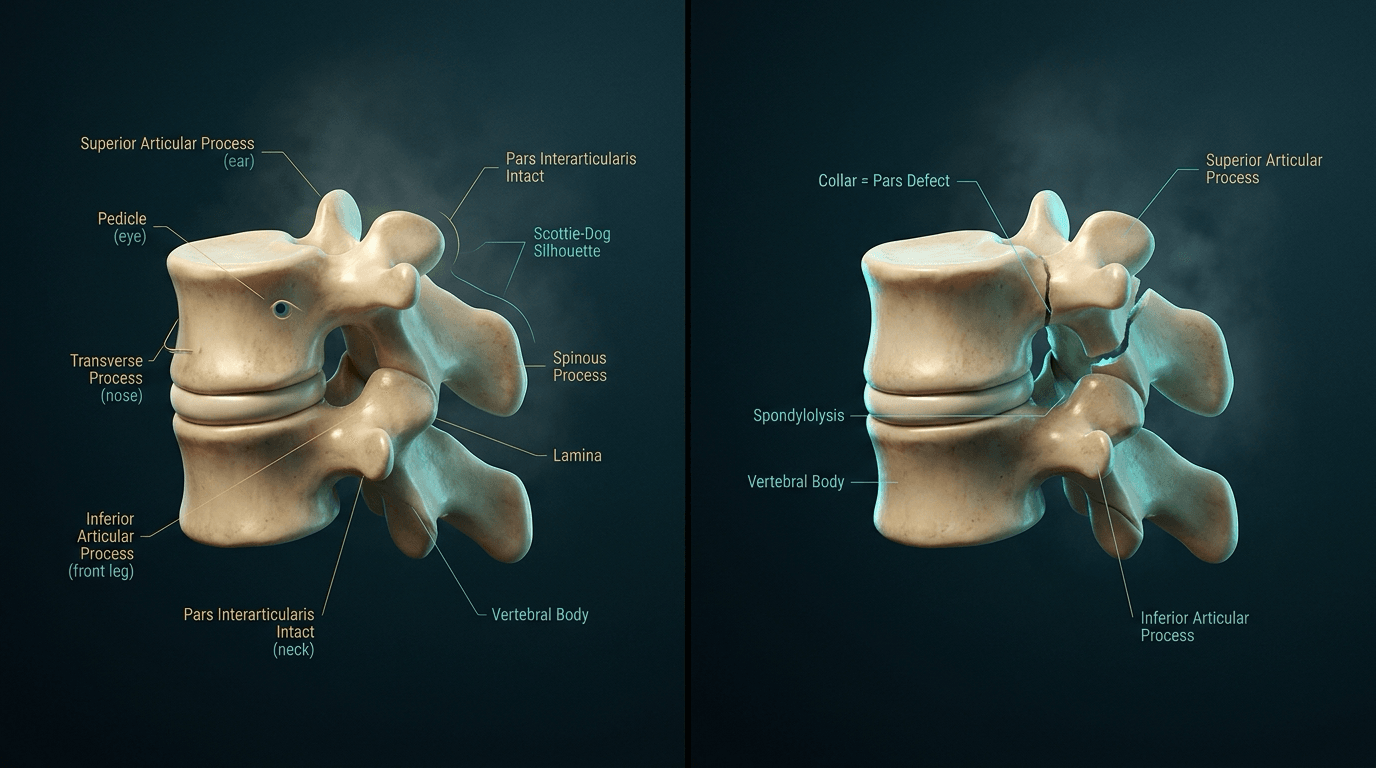
- Scottie Dog: Visible on Oblique X-rays (Collared dog = fracture).
- Imaging: MRI is the preferred first line (STIR oedema = acute) to spare radiation; SPECT is more sensitive for the earliest stress reaction but carries a high dose.
- “The 'Scottie Dog' sign is classic but oblique views are high radiation and often skipped for MRI.
- “Hamstring tightness is a cardinal sign (Phalen-Dickson sign is for Spondylolisthesis, but tightness present in lysis too).
- “Unilateral lysis often results in sclerosis of the CONTRALATERAL pedicle (Wilkinson syndrome).
- “Direct repair (Buck's) preserves motion in lysis with no slip and a healthy disc; at L5 it is technically demanding and many surgeons choose L5-S1 fusion.
Overview and Epidemiology
Paediatric spondylolysis is a stress fracture of the pars interarticularis, the isthmus of the neural arch. It is a fatigue failure of bone under repetitive extension and rotation.
Who. A teenager, with incidence peaking in the growth spurt and a peak age of 14-16. The sports that load the spine in repeated extension carry the risk: gymnastics, cricket fast bowling, diving and football, where linebackers and linemen are the classic patients. Hyperlordotic posture adds to it.
Associations. Prevalence is extremely high in the Inuit population, at about 50%. There is an association with spina bifida occulta at S1.
Scheuermann's disease. Lysis is more frequent in Scheuermann's, because the compensatory lumbar hyperlordosis below a rigid thoracic kyphosis loads the pars. The figure usually quoted is 50%, from Ogilvie and Sherman (Spine 1987, PMID 3589821), but that was 18 patients, all with increased lordosis, and the lysis was asymptomatic in every case.
Treat that figure as a reason to look rather than a rate to quote: their practical conclusion was that a Scheuermann patient who develops low back pain should have the lumbar spine imaged. The landmark 32-year natural-history cohort of 67 Scheuermann patients (Murray, JBJS 1993) observed no spondylolisthesis at all, so lysis without slip is the expected pattern.
Definitions
The terminology changes with the pathology:
- Spondylolysis: a defect in the pars interarticularis, with no slip
- Spondylolisthesis: translation of one vertebra on another
- Isthmic spondylolisthesis: a slip caused by a lysis; the L5 body slips forward and leaves the posterior elements behind
- Dysplastic spondylolisthesis: a slip caused by congenital facet insufficiency, in which the pars is often intact
- Spondyloptosis: complete dislocation of L5 in front of the sacrum, a slip of over 100%
In children the slips are mostly isthmic or dysplastic. Degenerative slips belong to adults.
Pathophysiology and Mechanisms
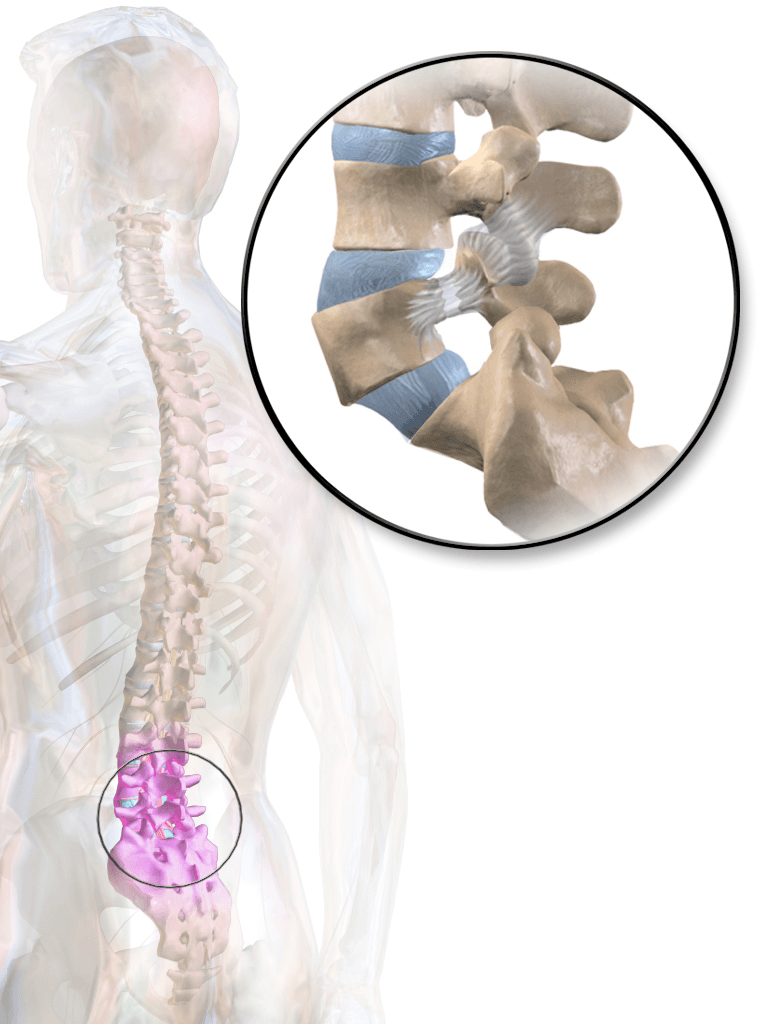
The weak link. The pars interarticularis is the bridge of bone between the superior and inferior articular facets, and the weak link in the neural arch. In extension the inferior facet of the vertebra above impacts the pars of the vertebra below, the nutcracker mechanism. A defect here is spondylolysis; when it is bilateral, the vertebral body can slip forward on the one below, which is spondylolisthesis.
Why L5. L5 is the usual level. Its pars is susceptible because shear forces are highest at the lumbosacral junction, and because it sits at the transition from the mobile spine to the fixed pelvis.
Spinopelvic Parameters
The geometry of the pelvis plays a crucial role in the aetiology and progression of lysis and listhesis.
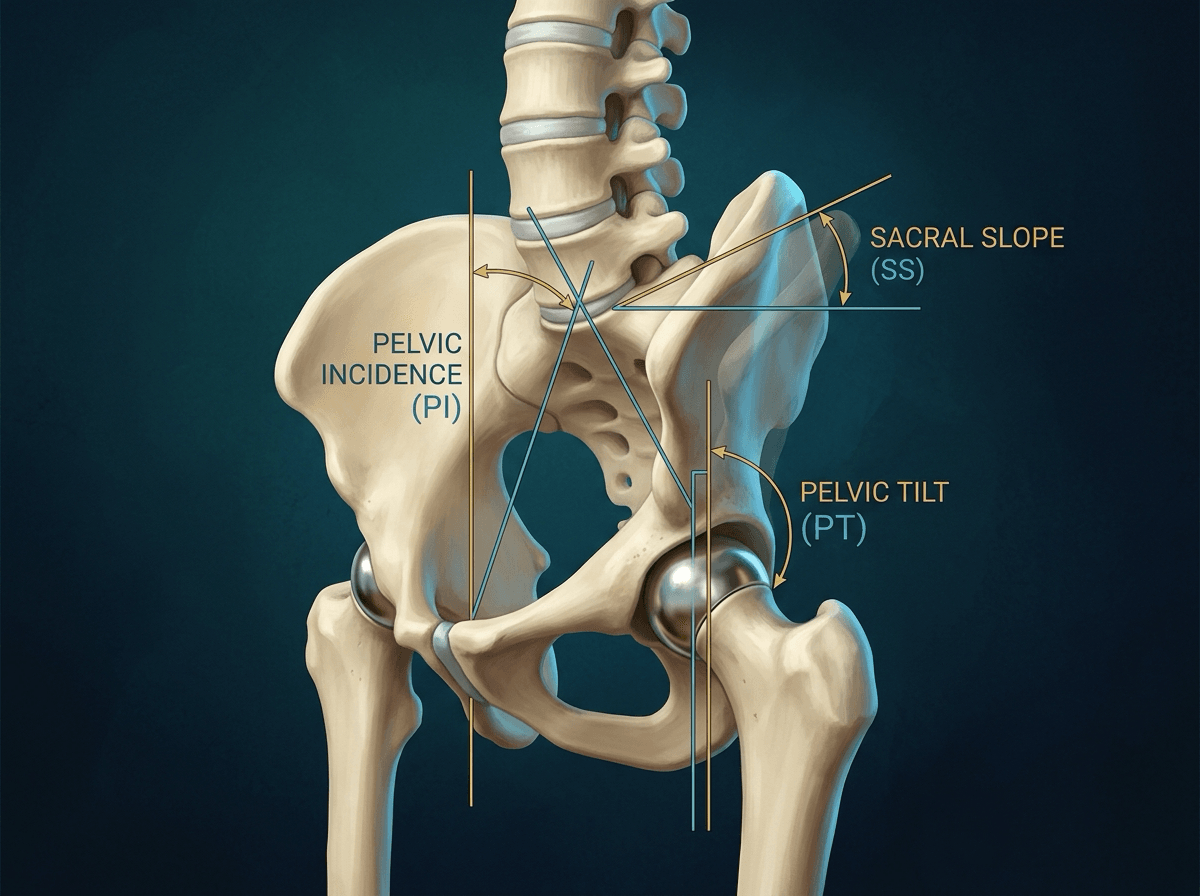
Pelvic incidence (PI) is an anatomical constant, fixed by morphology. It is the angle between the line perpendicular to the sacral plate and the line joining the sacral midpoint to the femoral head axis. A PI over 60° predisposes to spondylolisthesis, because the sacrum is more vertical and shear at L5-S1 is higher. A low PI protects against slip but may cause impingement.
Sacral slope (SS) is the angle of the sacral plate to the horizontal. A high PI usually brings a high SS, over 50°, and a steep sacral slope increases the anterior shear component of gravity. This is the "ski-slope" effect that turns a pars crack into a slip.
Pelvic tilt (PT) is compensatory. As the body tries to keep its balance over a high slip, the pelvis retroverts and PT rises, and this produces the crouched gait of a high-grade listhesis. The three are linked: PI = SS + PT.
Understanding PI is essential for surgical planning, especially if fusion is considered.
Classification
Wiltse is the standard classification; Meyerding grades the degree of slip.
- Type I, dysplastic. A congenital deficiency of the S1 dome or the L5 arch. The facets are often oriented axially or sagittally, which allows the slip. It is highly associated with spina bifida occulta and carries a high risk of progression to a high-grade slip.
- Type II, isthmic. The classic stress-fracture lesion of the pars, in three forms:
- IIA, lytic: a stress fracture in which the bone fails under tension and shear; the common form in athletes
- IIB, elongated pars: the bone "heals" with fibrous tissue that lengthens over time and lets the body slip forward; the pars is intact but attenuated
- IIC, acute fracture: a traumatic event triggers the break; rare
- Type III, degenerative. Adult instability from facet joint and disc degeneration, most common at L4/5 (against L5/S1 for isthmic). Rare in children.
- Type IV, traumatic. A high-energy fracture from a motor vehicle accident or fall, often with other spinal fractures.
- Type V, pathological. Tumour (perhaps an osteoid osteoma or a metastasis) or infection (osteomyelitis).
- Type VI, iatrogenic. Post-surgical destabilisation, from removing too much pars or facet at laminectomy.
Clinical Assessment
Pain. Low back pain that is worse in extension, the position that closes the facet joints and loads the pars, which is why a young gymnast, fast bowler or lineman is the classic patient. It is usually localised to the belt line, occasionally radiating into the buttocks or posterior thighs.
Radicular pain. True radiculopathy is rare in an isolated lysis. It should make you look for a higher-grade slip, since the L5 root is stretched over the back of the sacrum as L5 translates forward.
Examination. Look for hyperlordosis and tenderness at L5/S1. Hamstring tightness is close to universal and is the most reliable physical sign in this condition. It is a protective response rather than a true contracture, which is why it recovers: measure the popliteal angle and follow it, because it often improves as the pain settles.
The stork test. Pain on standing on one leg and extending the spine implicates the pars on the standing side. In the prospective series that formally assessed it against bone scintigraphy with SPECT, the test was neither sensitive nor specific, and the authors concluded it should not be relied on to exclude the diagnosis.
A positive test may direct imaging, but a negative test does not rule out an active pars lesion in an athlete whose history fits. Image anyway.
These red-flag symptoms call for immediate MRI and surgical decompression:
- Saddle anaesthesia (perineal numbness)
- Bladder retention or incontinence (overflow)
- Bowel incontinence
- Significant bilateral lower limb weakness
In high-grade (dysplastic) slips, the lumbosacral kyphosis creates a "pincer" effect on the cauda equina between the L5 body and the S1 posterior elements.
The High-Grade Slip Phenotype and the Phalen-Dickson Sign
An isolated lysis often looks normal on inspection. A high-grade isthmic or dysplastic slip produces a characteristic phenotype that can be examined, and it marks spondylolisthesis rather than isolated spondylolysis. Finding it should prompt assessment of slip grade and spinopelvic balance.
The Phalen-Dickson sign is a crouched gait with the hips and knees flexed, the knees held flexed through stance and gait. It results from hamstring tightness or spasm and the lumbosacral kyphosis of a high-grade slip. The hamstring spasm limits the popliteal angle and is protective splinting rather than true neural tension. In severe slips the gait may be frankly waddling.
The back and trunk. As L5 translates forward, the posterior sacral prominence becomes visible, giving heart-shaped ("flat") buttocks, and the L5 spinous process is felt as a palpable step-off at the lumbosacral junction. The trunk shortens, with a low rib-to-pelvis distance and a transverse abdominal crease. A compensatory hyperlordosis above the slip and pelvic retroversion (a high pelvic tilt) keep the trunk balanced.
Investigations
- What it shows
- Grade of slip; cheap and fast
- Limitation
- Low sensitivity for lysis
- Role
- Screening
- What it shows
- Scottie dog with a collar
- Limitation
- Significantly higher dose; low sensitivity compared with MRI and SPECT
- Role
- Historical standard, often low yield; avoid routinely
- What it shows
- High signal in the pars (oedema): a stress reaction before fracture
- Limitation
- Can miss the earliest stress reaction (Masci) and chronic non-union
- Role
- First-line diagnosis of active pain; no radiation
- What it shows
- Increased uptake (hot spot); highest sensitivity for turnover; localises the lesion and detects pre-lysis
- Limitation
- High dose: a SPECT/CT is equivalent to about 500 chest radiographs
- Role
- Problem solving if MRI is normal but suspicion is high; guides brace versus rest
- What it shows
- Best bony detail: the fracture line (sharp or sclerotic) and its morphology
- Limitation
- Radiation
- Role
- Assessment of healing
MRI first. STIR MRI comes first in children because it spares the gonads radiation and shows marrow oedema before there is a cortical break. That makes it the best first test. SPECT is still the more sensitive for the earliest stress reaction, which is why a normal MRI does not end the work-up when suspicion is high.
A normal radiograph does not exclude an early stress lesion.
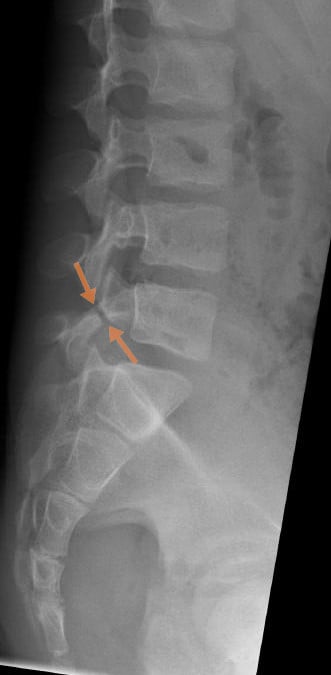
The Scottie dog. The Scottie dog is visible on an oblique film, and a collar across its neck is the lysis. Oblique views are high-dose and are often skipped in children in favour of MRI, but the map still wins vivas.
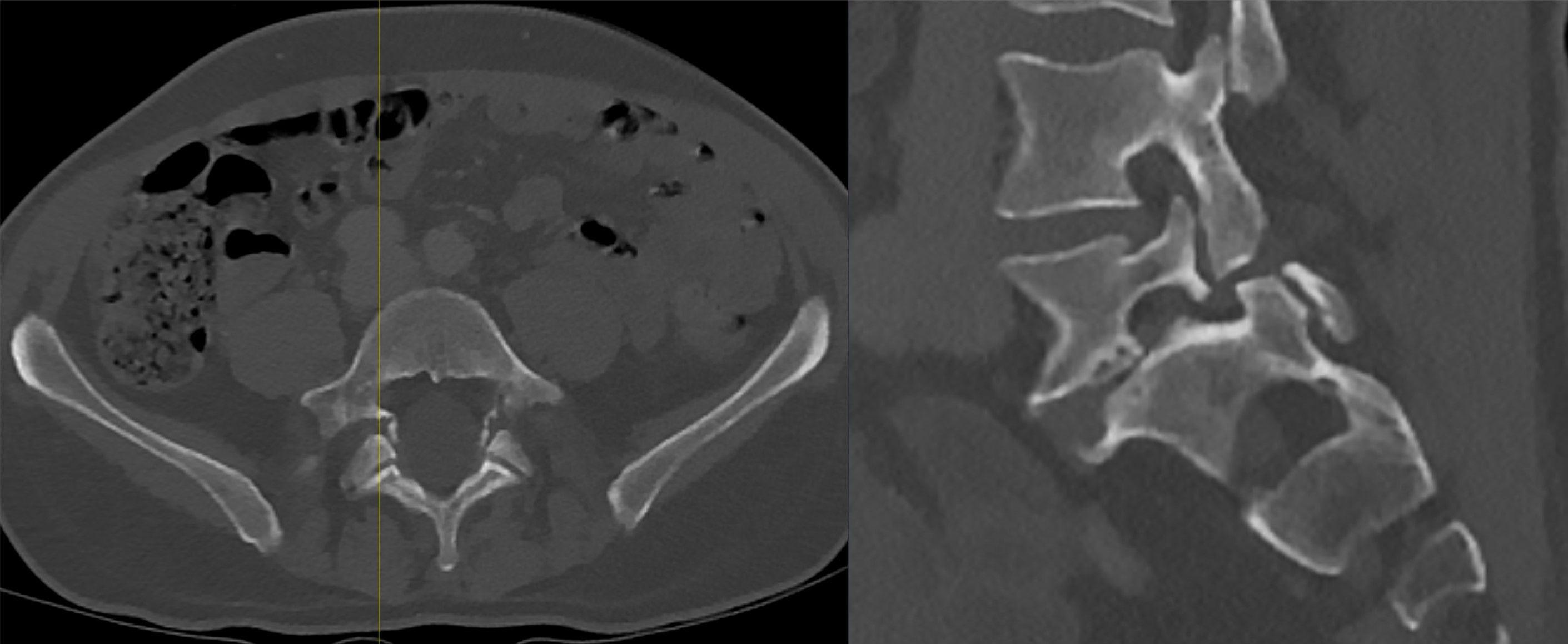
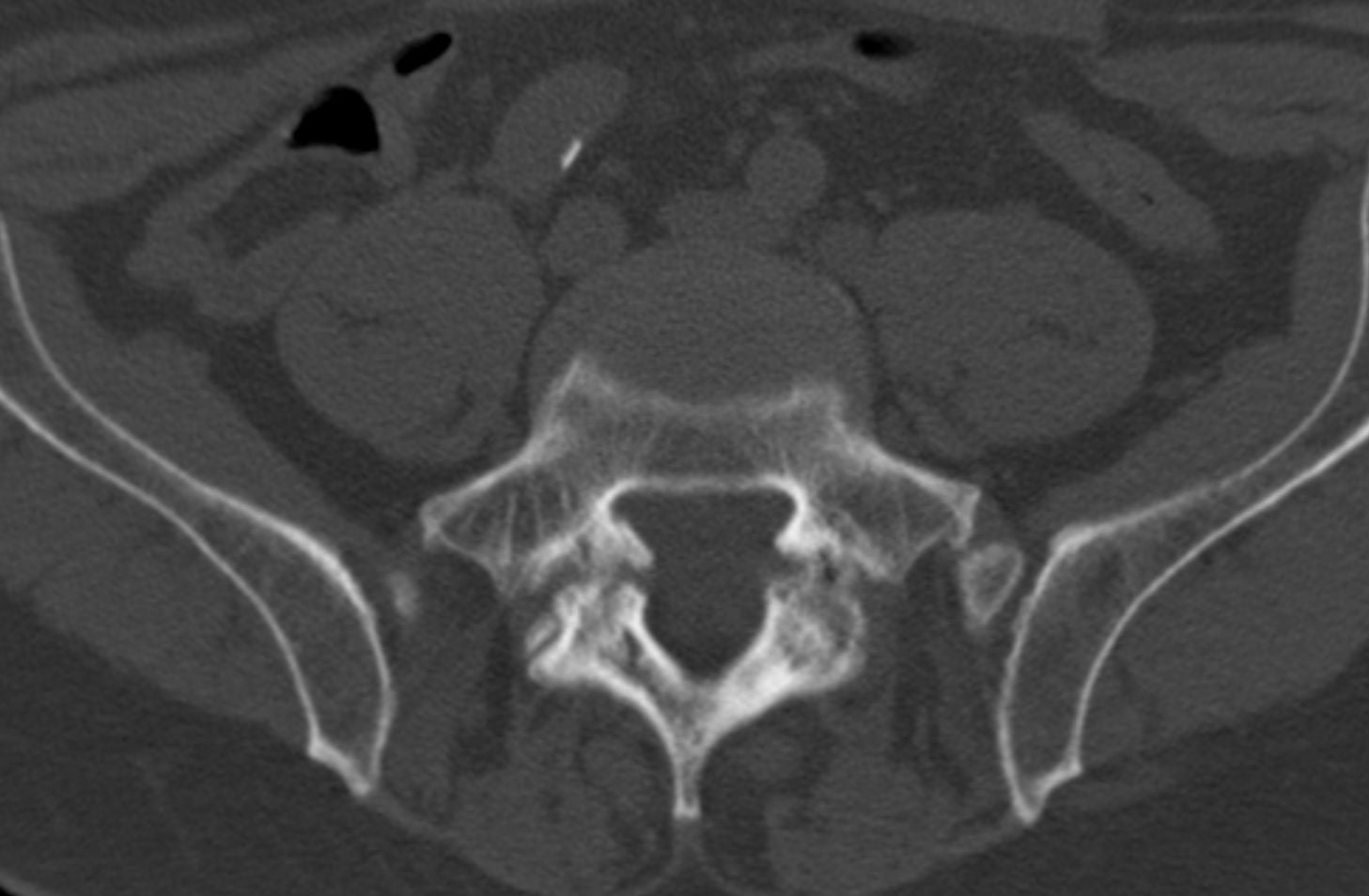
CT for healing. CT defines the chronicity of a lysis and whether it can still unite: rounded sclerotic margins mean non-union. Do not CT first in a painful child. MRI comes first; CT is for the question of healing.
Differential Diagnosis
Adolescent low back pain has a different differential from the adult's. Mechanical and discogenic pain is far less common and an organic cause is found more often, so red flags must be actively excluded.
- Distinguishing Features
- Extension pain, single-leg stork test positive, tight hamstrings, athlete
- Key Investigation
- MRI STIR (pars/pedicle oedema); CT for healing
- Distinguishing Features
- Night pain, dramatically relieved by NSAIDs, painful scoliosis
- Key Investigation
- CT shows nidus with sclerotic rim; do not confuse with reactive pedicle sclerosis
- Distinguishing Features
- Younger child, refusal to walk, fever, raised CRP/ESR
- Key Investigation
- MRI with contrast; blood cultures
- Distinguishing Features
- Rigid thoracic/thoracolumbar kyphosis, anterior wedging
- Key Investigation
- Lateral radiograph (over 5 degrees wedging at 3 adjacent levels)
- Distinguishing Features
- Flexion-pattern pain, positive straight-leg raise, true radiculopathy
- Key Investigation
- MRI lumbar spine
- Distinguishing Features
- Adolescent, acute axial load, radicular pain mimicking disc
- Key Investigation
- CT shows bony fragment off the vertebral rim
- Distinguishing Features
- Constant non-mechanical pain, weight loss, neurology, night pain
- Key Investigation
- MRI whole spine; bloods; refer urgently
Management Algorithm
Clinical success does not require bony union. This is the central principle of the topic. Pooled clinical success was 83.9% across 15 studies and 665 patients at a minimum of one year, yet in the same meta-analysis overall radiographic union was only 28%, so most patients get better while the defect remains. Do not chase union on imaging in a child whose pain has settled; fibrous union is an acceptable outcome.
Rest and analgesia. Stop the offending sport for 3-6 months, and give NSAIDs.
Bracing. The antilordotic Boston overlap brace is for symptom control and activity compliance, not union, worn either full time for 3-6 months or when symptomatic. In the pooled data braced patients did not have a better clinical outcome than unbraced (p = 0.75), so this is no longer the open question it is often posed as. Brace a child who cannot otherwise comply with activity restriction or who needs symptom control, not in the expectation of healing the pars.
Physiotherapy. Hamstring stretching is crucial, with core (abdominal) strengthening and pelvic tilt exercises. Avoid hyperextension (McKenzie) exercises initially and use a flexion bias to open the neural foramen and unload the pars. The Williams flexion exercises are:
- Pelvic tilt
- Single knee to chest
- Double knee to chest
- Partial sit-ups
- Hamstring stretch
- Hip flexor stretch
- Squat
Return to sport once pain-free with a full range of movement.
Surgical Technique
Pars repair (Buck's or Scott's) reconnects the broken bone without fusing the joint, so motion is preserved. It is indicated for lysis at L1-L4 with no slip (grade 0) and a healthy disc on MRI; L5 is hard to repair because of its depth.
There are three ways to hold the repair:
- Buck's repair: a lag screw directly across the defect
- Scott's wiring: a wire around the transverse process to the spinous process
- Pedicle screw-hook: a screw in the pedicle with a rod and hook on the lamina, compressing the defect
Buck's Technique
Midline incision, exposing the lamina and pars.
Debride the fibrous tissue (the pseudarthrosis) from the defect, drill to bleeding bone and pack the defect with local or iliac bone graft. Iliac crest bone graft is the gold standard; local bone from the lamina is often insufficient. BMP is generally contraindicated in direct repair because of the risk of stenosis or overgrowth in the canal.
Insert the screw from the inferior lamina, across the pars, into the pedicle or body, and compress the defect.
High-Grade Slip Surgery: Reduction, In-Situ Fusion and the Gaines Procedure
For high-grade slips the central, examinable debate is whether to reduce the slip or fuse it in situ, and the dominant hazard is to the L5 nerve root.
In-situ fusion. Posterolateral fusion in situ, often L4-S1, is the traditional option with the lower neurological risk. It accepts the deformity but reliably arrests progression and relieves pain in most patients, and it remains the safe default.
Reduction. Reduction with instrumented fusion improves the sagittal profile by correcting the lumbosacral kyphosis and restoring balance, but carries a substantially higher risk of L5 root injury. That injury occurs predominantly during the final part of the reduction, when correcting the slip and kyphosis stretches the root over the sacral dome.
Many surgeons therefore perform a deliberate partial reduction, prioritise correcting the slip angle (the lumbosacral kyphosis) over the translation, and use intra-operative neuromonitoring. Reduction remains controversial.
Spondyloptosis and the Gaines procedure. When L5 has translated completely in front of the sacrum (Meyerding grade V), one described salvage is the Gaines procedure: a staged L5 vertebrectomy, excising the L5 body anteriorly and then the L5 posterior elements from behind, with L4 reduced directly onto S1. It is technically demanding, has a high neurological complication rate and is reserved for severe, fixed deformity.
Complications
- Specifics
- Failure of defects to heal
- Prevention
- Adequate debridement, compression, bone graft.
- Specifics
- Screw breakage/pullout
- Prevention
- Don't oversize screws. Avoid excessive torque.
- Specifics
- L5 root at risk
- Prevention
- Careful dissection.
Postoperative Care and Rehabilitation
Recovery Pathway
The goal is bone or fibrous healing and symptom control. An antilordotic TLSO with thigh extension is used; whether it should be worn 23 hours a day is controversial. Walking is allowed, but no sport, no PE and no bending, lifting or twisting.
Restore core strength and flexibility, weaning the brace over 2 weeks. Physiotherapy covers gentle hamstring stretching, transversus abdominis activation, and dead bug and bird-dog exercises in a neutral spine. A CT at 12 weeks to assess union is questionable, and only worth considering if return to contact sport is contemplated or pain persists.
Sport-specific reconditioning, progressing from jogging to running to sprinting and then to non-contact sport-specific drills. A cricketer, for example, moves from batting to bowling off a reduced run-up.
Return to contact requires freedom from pain, a full range of movement and normal strength. Whether radiographic union is also needed is debated: an asymptomatic non-union allows play in many leagues, but a risk of refracture or progression exists.
Outcomes
Prognosis is excellent for most adolescents. Giving up the sport is the hardest part.
Which defects heal. Unilateral defects heal far more often than bilateral, 71% against 18% in the pooled data of Klein's meta-analysis, but even unilateral healing is not universal. Bilateral defects have low healing rates but high asymptomatic rates, and terminal (sclerotic) defects essentially never unite, which is acceptable.
Guidelines, Registries & Global Practice
Global epidemiology
- Overall prevalence of the pars defect is approximately 6% of the adult population (Fredrickson), with a strong hereditary component and a marked association with spina bifida occulta.
- Highest prevalence is reported in some Inuit/circumpolar populations (historically up to ~40-50%), suggesting a genetic predisposition layered on activity.
- It is the single most common identifiable cause of low back pain in the young athlete worldwide; hyperextension/rotation sports (gymnastics, diving, cricket fast bowling, pole vault, dance, throwing, American football line play) carry the greatest risk.
Side-by-side guidance
- Emphasis
- Treat persistent adolescent back pain as organic until excluded; MRI without ionising radiation favoured first line in children
- Emphasis
- Activity modification and physiotherapy are first-line; bracing optional; surgery reserved for failed prolonged conservative care
- Emphasis
- Low back pain over 2-3 weeks in an adolescent athlete is spondylolysis until proven otherwise; load management and technique correction central to prevention and rehabilitation
- Emphasis
- Spinopelvic parameters (pelvic incidence) guide decisions in higher-grade slips; in-situ vs reduction remains case-dependent
Registry and surveillance notes
- There is no dedicated spondylolysis implant registry; outcomes derive from sport-injury surveillance cohorts (e.g. junior cricket fast-bowler programmes) and observational meta-analyses rather than arthroplasty-style registries.
- Sport-governing-body workload surveillance (limits on bowling/throwing frequency, mandatory rest, screening of skeletally immature athletes) is the main population-level prevention lever and is broadly convergent across cricketing nations.
High- vs limited-resource practice variation
- Well-resourced settings: MRI STIR as first-line, low-dose/limited CT for healing assessment, and access to motion-preserving repair where indicated.
- Limited-resource settings: diagnosis often rests on plain radiographs and clinical findings (extension pain, tight hamstrings, stork test); management is overwhelmingly activity modification and physiotherapy, which is appropriate given the benign natural history and the high rate of good clinical outcomes without union.
- Persistent athletic back pain beyond 2-3 weeks warrants imaging and specialist input in any setting; early recognition reduces progression to a terminal non-union.
Areas of Uncertainty and Controversy
Klein's meta-analysis found bracing did NOT change clinical outcome versus activity restriction alone. Many centres now reserve a brace for symptom control in the child who cannot otherwise rest, rather than as a healing device.
MRI is preferred to spare radiation, but it can miss the earliest stress reaction that SPECT/CT detects (Masci). Practice varies: some use limited low-dose CT after a positive SPECT for problem-solving and to grade healing.
A stable fibrous (terminal) defect is an accepted endpoint. Most patients become asymptomatic without union, so return-to-sport decisions are increasingly driven by symptoms and function rather than CT healing.
For isolated L5 lysis with a healthy disc, motion-preserving repair is attractive but technically demanding; many surgeons still choose L5-S1 fusion for reliability. There is no high-level randomised evidence to settle this.
MCQ Practice Points
Q: Which level is most commonly affected in pediatric spondylolysis? A: L5 (90% of cases).
Q: What structure corresponds to the 'neck' of the Scottie Dog? A: The Pars Interarticularis. (Eye = Pedicle, Nose = Transverse Process, Ear = Superior Facet, Leg = Inferior Facet).
Q: Why is SPECT/CT falling out of favor? A: High radiation dose. MRI STIR sequences can detect early stress reactions without radiation.
Q: What position does the Boston brace for spondylolysis hold the spine in? A: Antilordotic (Flexion). This unloads the posterior elements (pars).
Q: What congenital anomaly is associated with spondylolysis? A: Spina Bifida Occulta (at S1).
Q: Unilateral pedicle sclerosis with contralateral lysis is called: A: Wilkinson Syndrome. (Often misdiagnosed as Osteoid Osteoma).
Q: Which pelvic parameter is a constant risk factor for slip progression? A: Pelvic Incidence (PI). High PI (greater than 60 deg) correlates with isthmic spondylolisthesis.
Q: Which modality is best to distinguish a visible fracture line as acute vs chronic/non-union? A: CT Scan. Rounded sclerotic margins indicate chronic non-union. Sharp irregular margins indicate acute fracture.
Clinical Decision Scenarios
Practise clinical reasoning and management decisions out loud
“A 14-year-old male gymnast presents with low back pain worsening with back handsprings. He has tight hamstrings.”
“X-rays show a unilateral L5 lysis. MRI shows sclerosis of the contralateral pedicle.”
“A 16-year-old cricket fast bowler has persistent pain after 9 months of rest and bracing. CT shows a bilateral L5 lysis with sclerotic margins and no slip.”
Diagnostic Triad
- Extension Pain (Stork Test)
- Tight Hamstrings
- Pars Edema (MRI STIR)
Wiltse Classification
- I: Dysplastic
- II: Isthmic (Lytic)
- III: Degenerative
- IV: Traumatic
- V: Pathologic
- VI: Iatrogenic
Management Rules
- Acute: Rest + Brace (3-6m)
- Chronic: Rehab to Surgery
- Surgery: Repair if L1-L4, Fusion if L5?
- Return to sport: Pain free (Union not mandatory)
- Wilkinson Syndrome: Do NOT Biopsy
Evidence Base
Note the Masci finding in particular: it is frequently mis-quoted. The original data actually favour scintigraphy/SPECT plus limited CT over MRI for detecting the earliest bone stress, even though MRI is preferred clinically to spare radiation. Know the difference between "best test" and "best first test".
MRI vs Bone Scintigraphy (SPECT) for Active Lysis
- Prospective cohort of 71 young athletes with low back pain; 55% had active lysis on bone scintigraphy with SPECT
- MRI detected bone stress in only 40 of 50 pars shown active on SPECT (LOWER sensitivity for early stress, p=0.001)
- MRI matched CT for visualising established fractures (18 of 19, p=0.345)
- The one-legged hyperextension (stork) test was neither sensitive nor specific
Natural History of Lysis and Listhesis
- Prospective radiographic study of 500 unselected first-grade children followed into adulthood
- Incidence of spondylolysis 4.4% at age 6, rising to 6% in adulthood
- Slip progression was unusual and was rare after adolescence
- Strong association with spina bifida occulta; no slip became symptomatic in the studied cohort
Nonoperative Treatment Meta-Analysis
- Meta-analysis of 15 observational studies (665 patients) for clinical outcome and 10 studies (847) for radiographic union
- Pooled clinical success 83.9%; bracing did NOT change clinical outcome versus no brace (p=0.75)
- Overall bony union only 28%, yet good clinical outcomes occurred without union
- Unilateral defects healed 71% vs bilateral 18.1% (p<0.0001); acute defects healed 68% while terminal defects healed in NONE
Direct Pars Repair (Original Description)
- Original description of direct screw repair of the pars defect
- Lag screw placed across the defect with bone grafting after debridement of fibrous tissue
- Restores the neural arch and preserves the motion segment, avoiding fusion in young patients
MRI Marrow Oedema Precedes Symptomatic Injury (Fast Bowlers)
- 65 junior elite cricket fast bowlers prospectively scanned through one 8-month season
- 15 (23%) developed a lumbar bone stress injury; ALL 15 had preceding bone marrow oedema on MRI
- Marrow oedema 2 weeks before a high-load tournament carried a very high risk of progression (RR 18.9)
- Higher proportion of bowling days and shorter in-season breaks predicted injury more than ball counts
Progression of Slip in Children (Long-Term)
- 272 children and adolescents followed radiographically for a mean of 14.8 years
- About 90% of the eventual slip was already present at first presentation
- The percentage of primary slip was the only radiographic variable predicting progression
- In-situ posterior/posterolateral fusion had no statistically significant effect on slip progression
Spondylolysis Risk in a High-Risk Sport (Pole Vault)
- Prospective cohort of 135 collegiate pole vaulters over one season
- Low back was the single most common injury site (16.7%); 83% of back injuries occurred at the plant/takeoff (forced hyperextension)
- One-third of lumbar injuries were spondylolysis, and 75% of those were season-ending
- Prior injury raised the odds of new injury 2.7-fold