PIPJ Hyperextension + DIPJ Flexion
- Characterised by PIPJ Hyperextension and DIPJ Flexion.
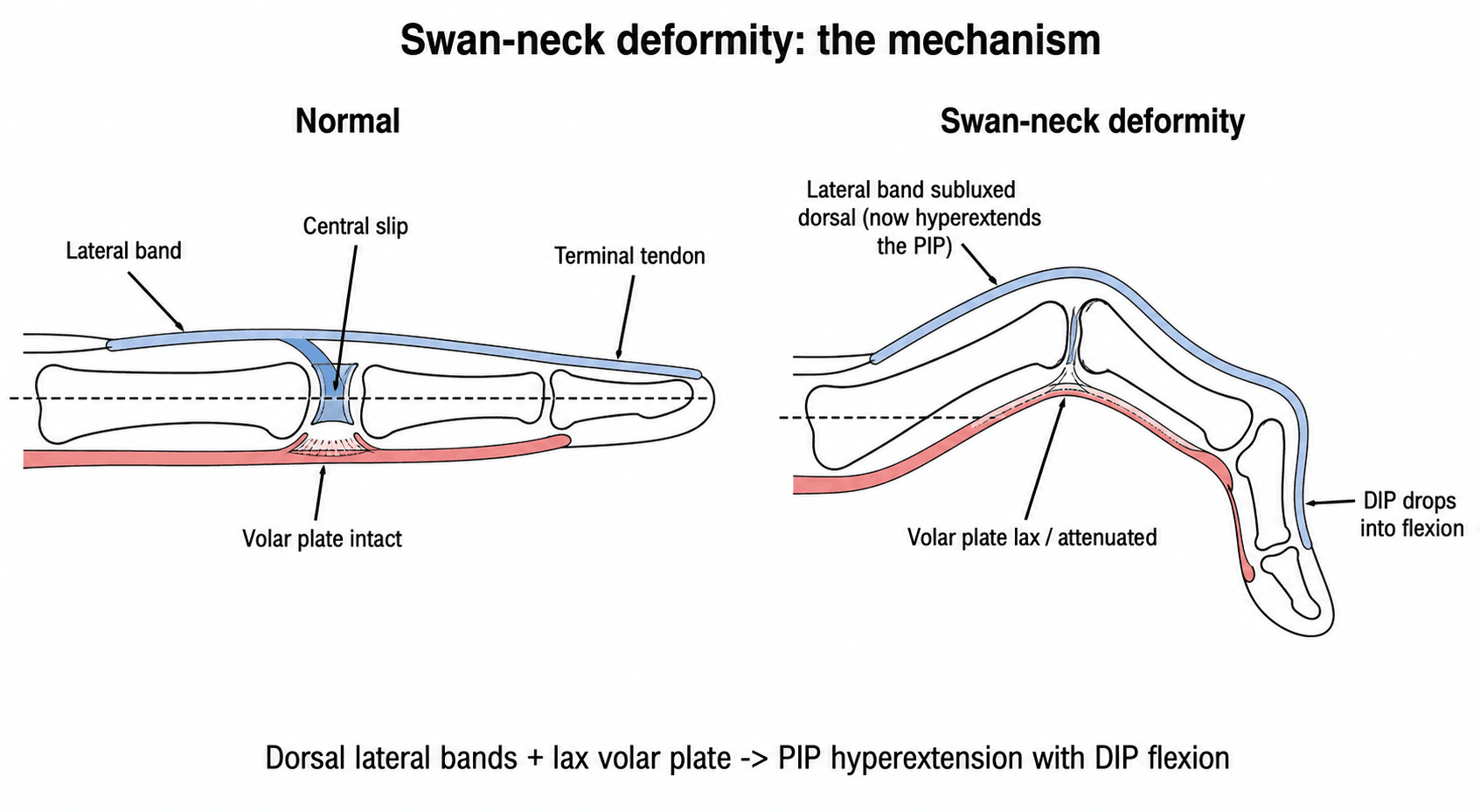
- Driven by dorsal subluxation of the lateral bands (opposite of Boutonniere).
- Can be Primary (Volar plate laxity/Intrinsic tightness) or Secondary (Mallet finger).
- Bunnell's Intrinsic Tightness Test discriminates Type I from Type II.
- Conservative management involves blocking PIPJ hyperextension (Figure-of-8 splint).
- Surgery ranges from soft tissue balancing (FDS tenodesis) to salvage (Fusion).
- “If the PIPJ is stiff, tenodesis will NOT work. You must release the contracture first.
- “In Mallet-induced Swan Neck, treating the DIPJ often corrects the PIPJ (if flexible).
- “Intrinsic tightness is defined as less PIP flexion when the MCP is extended vs flexed.
Overview
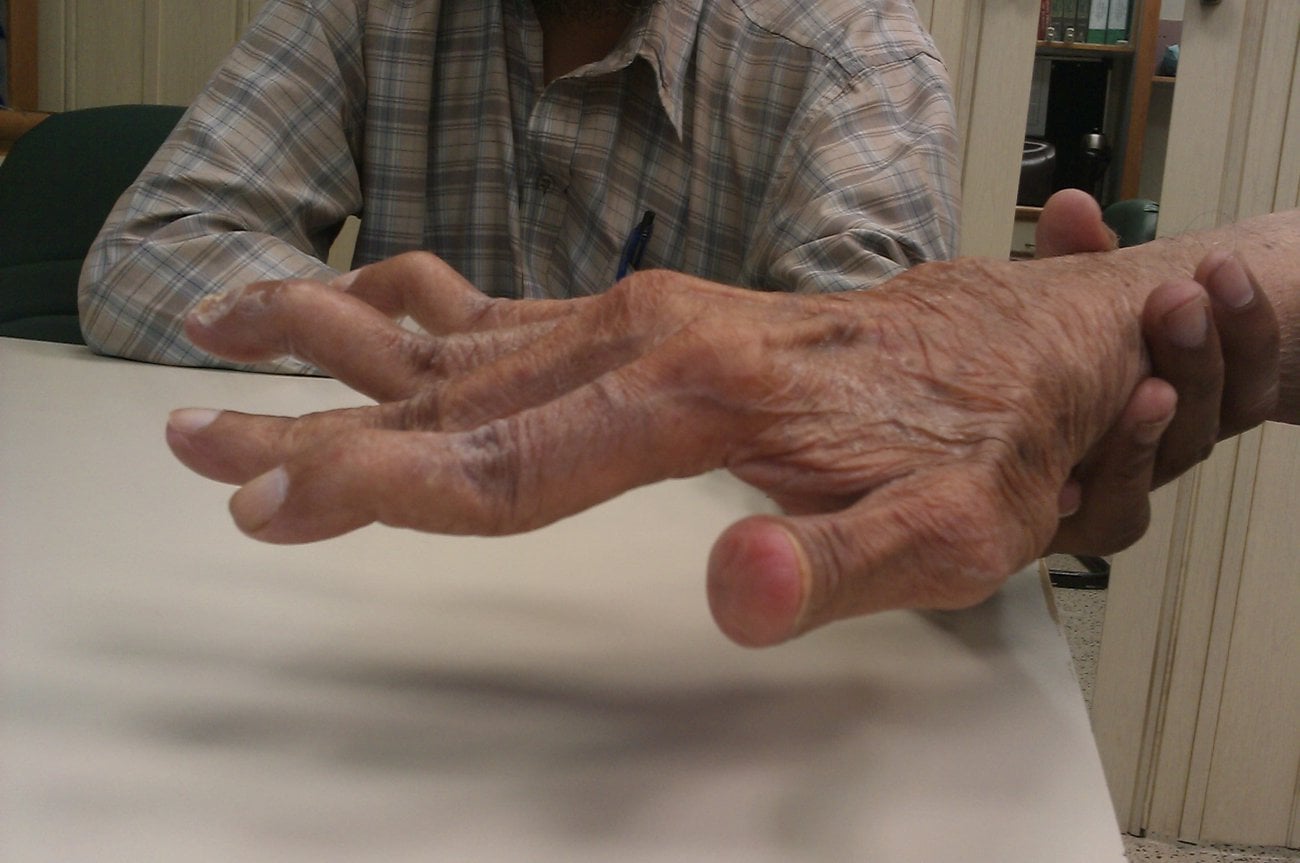
Definition. Swan-neck deformity is hyperextension of the PIPJ with reciprocal flexion of the DIPJ. It is caused by an imbalance in which the extensor mechanism subluxes dorsally at the PIPJ, and it is the mechanical reverse of a Boutonniere deformity.
Telling the postures apart. The table sets swan neck against the boutonniere, mallet and jersey finger, joint by joint and restraint by restraint.
- PIPJ
- Hyperextended
- DIPJ
- Flexed
- Lateral Bands
- Dorsal Subluxed
- Volar Plate
- Lax/Ruptured
- PIPJ
- Flexed
- DIPJ
- Hyperextended
- Lateral Bands
- Volar Subluxed
- Volar Plate
- Normal/Contracted
- PIPJ
- Normal
- DIPJ
- Flexed
- Lateral Bands
- Normal
- Volar Plate
- Normal
- PIPJ
- Normal
- DIPJ
- Extended (cannot flex)
- Lateral Bands
- Normal
- Volar Plate
- Normal
A mechanical imbalance. The deformity is a mechanical imbalance rather than a single structural failure. Successful treatment must therefore restore balance, by blocking PIPJ hyperextension, re-anchoring the distal extensor or both, rather than simply releasing one structure.
Pathophysiology and Mechanisms
The extensor apparatus. The lateral bands normally lie dorsal to the axis of rotation of the PIPJ, where they act as extensors. The transverse retinacular ligament prevents their dorsal migration; in swan neck it stretches or fails, and the triangular ligament becomes tight and shortened. The interplay of these ligaments creates the balance.
The volar restraints. The volar plate is the primary static restraint to hyperextension, and it must be lax, ruptured or attenuated before the PIPJ can hyperextend at all. The FDS tendon is a dynamic stabiliser against hyperextension.
The collapse. Once the volar plate gives way, the lateral bands sublux dorsally and function purely as PIPJ extensors, and the joint becomes locked in hyperextension. The extensor mechanism is now tethered proximally at the hyperextended PIPJ, so the terminal tendon loses effective excursion and the unopposed pull of FDP draws the DIPJ into flexion. Dorsal lateral bands, extensor mechanism overpull and volar plate failure produce the classic zig-zag of PIPJ hyperextension with DIPJ flexion.
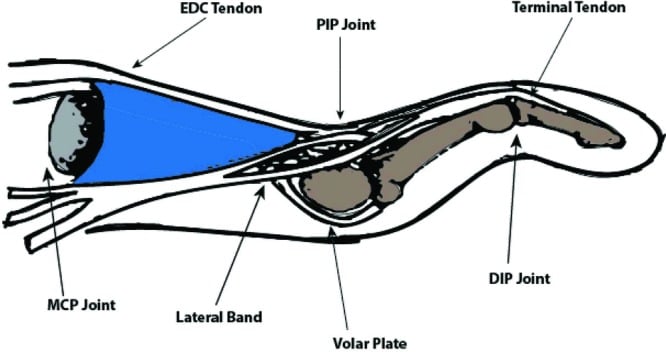
The rheumatoid zig-zag. In the rheumatoid hand the swan neck is rarely an isolated PIPJ problem. It is one link in a zig-zag (concertina) collapse that the examiner wants traced from the wrist outwards:
- Wrist - radial deviation and carpal supination or collapse shift the load distally
- MCP joint - synovitis stretches the radial sagittal band and leads to volar subluxation and ulnar drift; the intrinsics, often fibrotic, then shorten and pull the lateral bands taut
- PIP joint - the tightened intrinsics plus a stretched volar plate produce PIPJ hyperextension, with reciprocal DIPJ flexion
Correct proximal to distal. A swan-neck reconstruction done while leaving a subluxed, ulnar-drifted MCP joint uncorrected will recur, because the proximal driver is untreated. Wrist and MCP malalignment, and systemic disease control, belong in the plan alongside the PIPJ.
Classification Systems
Nalebuff (rheumatoid). Four types, graded by PIPJ flexibility, intrinsic tightness and the radiograph:
- Type I - the PIPJ is flexible in all positions, with no intrinsic tightness
- Type II - the PIPJ is flexible, but intrinsic tightness is present (Bunnell positive)
- Type III - PIPJ flexion is limited (stiff) but the joint surface is preserved; the X-ray is often normal
- Type IV - the PIPJ is stiff and the X-ray shows joint destruction
The classification guides treatment from splinting (I) through release (II) and mobilisation (III) to salvage (IV). The crucial division is flexible (I/II), amenable to soft-tissue surgery, against fixed (III/IV), where soft-tissue procedures fail and the joint itself must be addressed.
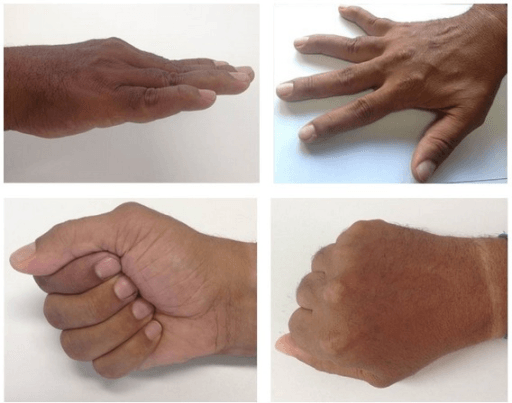
FLIDNalebuff Classification
Hook:The lid (FLID) is on the deformity.
Aetiology. Nalebuff is rheumatoid-specific. Independent of it, localise the primary driver, because treatment targets the cause:
- PIPJ-driven (primary) - volar plate laxity or rupture, RA synovitis distending the joint and stretching the volar plate, or FDS rupture removing the dynamic restraint
- MCPJ-driven (proximal) - intrinsic tightness or spasticity (cerebral palsy, post-stroke) pulling the lateral bands dorsal, or extensor habitualis
- DIPJ-driven (distal, secondary) - chronic mallet finger, where loss of the terminal tendon anchor concentrates extensor force at the PIPJ (Fowler's mechanism)
- Systemic laxity - SLE or Jaccoud arthropathy and connective-tissue laxity (Ehlers-Danlos), producing a flexible, non-erosive deformity
Always identify the level before choosing a procedure: fixing the PIPJ in a mallet-driven deformity is a classic error.
- Typical Patient
- Older female, polyarticular
- Joint Erosion
- Yes (late)
- First-Line Treatment
- DMARD control + splint, then staged surgery
- Typical Patient
- Any age, prior DIP injury
- Joint Erosion
- No
- First-Line Treatment
- Treat the DIPJ (splint/fusion) first
- Typical Patient
- Young, spastic hand
- Joint Erosion
- No
- First-Line Treatment
- Tone management, selective release; guarded
- Typical Patient
- Female, non-erosive lupus
- Joint Erosion
- No (reducible)
- First-Line Treatment
- Conservative; reducible deformity
- Typical Patient
- Young, hyperextension injury
- Joint Erosion
- No
- First-Line Treatment
- Block hyperextension; tenodesis/SORL
Clinical Assessment
Examination. The PIP hyperextension and DIP flexion are obvious. What has to be established is whether the PIPJ reduces easily on passive correction, which separates Types I and II from Type III, and whether the finger can initiate flexion or locks. Check that the DIPJ extends passively, to look for a mallet, and always document the passive range of motion.
In rheumatoid arthritis the intrinsic muscles often become fibrotic and tight, which pulls the lateral bands taut and hyperextends the PIPJ. If you simply perform a capsulodesis or tenodesis without releasing the intrinsics, the deformity will recur or the finger will be stiff. Intrinsic tightness must be assessed.
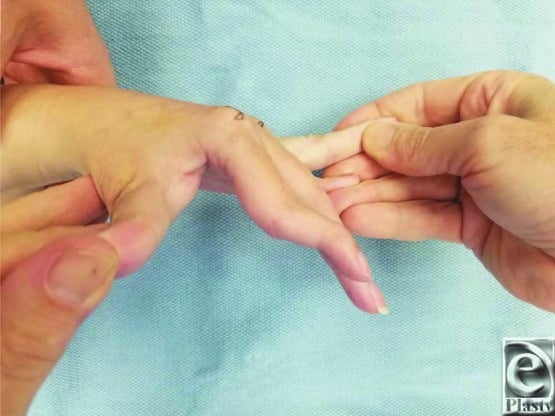
Bunnell's intrinsic tightness test. Passive PIP flexion is compared with the MCP extended, which tightens the intrinsics, and with the MCP flexed, which relaxes them:
- Extend the MCP joint, passively flex the PIPJ and note the angle (intrinsics tight)
- Flex the MCP joint, passively flex the PIPJ and note the angle (intrinsics relaxed)
The test is positive when PIP flexion in step 1 is less than in step 2, and intrinsic tightness is a key feature of Type II. It is negative when flexion is equal, which indicates joint stiffness, or better in step 1, which indicates extrinsic tightness.
Investigations
Radiographs. AP and lateral views. They are crucial to rule out joint destruction before soft-tissue reconstruction is offered. Look for:
- joint space narrowing or erosions (Type IV)
- the degree of hyperextension
- a mallet fracture at the DIPJ
Management Algorithm
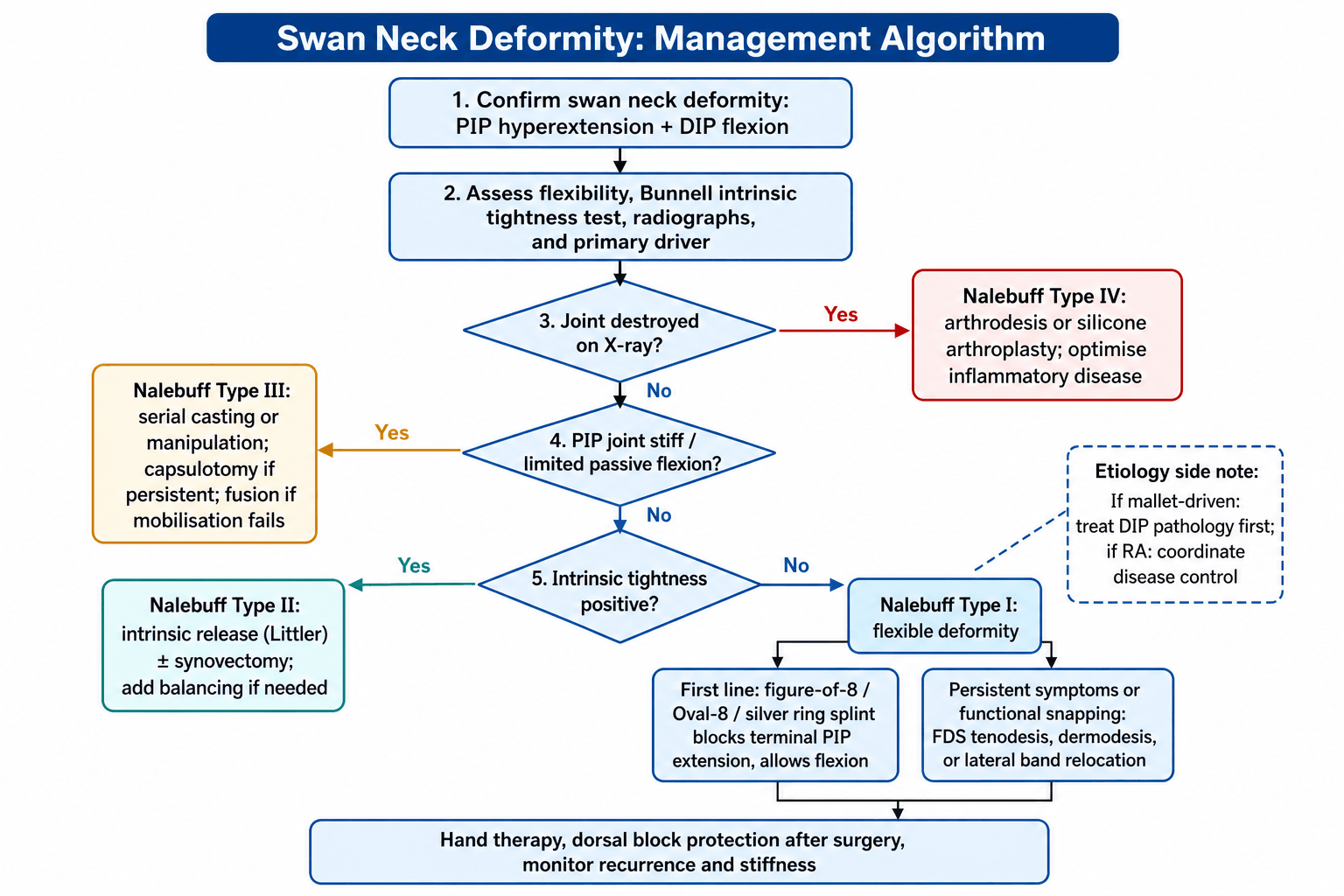
Splinting. First line for Type I. A figure-of-8, Oval-8 or silver ring splint blocks the last 10-20 degrees of extension, preventing hyperextension while allowing full flexion. It is highly effective for mobile deformities, and patients often wear silver rings permanently as jewellery.
Silver ring or thermoplastic. In a randomised crossover trial of 50 patients with RA and mobile swan-neck deformity, silver ring and cheap prefabricated thermoplastic splints improved dexterity essentially identically (SODA gain 11.2 versus 10.8, difference -0.5, 95% CI -2.2 to 1.2). There was no significant difference in any other clinical measure or in overall satisfaction, and preference was close to an even split: 24 patients chose the silver ring, 21 the thermoplastic and 2 neither. The jewellery-like appearance is a genuine advantage for some patients and produced modestly better scores on a few satisfaction items at 12 weeks, but it is a reason to offer a choice, not to default to the more expensive device.
Surgery by type. Surgery must address the underlying cause, intrinsic or joint:
- Type I (mobile) - FDS tenodesis (swallow tail), dermodesis (skin shortening) or lateral band relocation
- Type II (tight) - intrinsic release (Littler) and release of the ulnar lateral band, before or with the balancing procedure
- Type III (stiff) - mobilise first by serial casting, closed manipulation or capsulotomy; fusion if that fails
- Type IV (destroyed) - salvage by arthrodesis (fusion) or silicone arthroplasty
Surgical Considerations
FDS tenodesis (swallow tail). For the mobile Type I deformity. A hemislip of FDS becomes a check-rein that prevents PIP hyperextension:
- Divide one hemislip of the FDS tendon proximally, in the palm or at P1
- Pass it through the flexor sheath and anchor it into P2 bone, or loop it
- Tension it with the PIPJ flexed 20-30 degrees
- Protect the tenodesis afterwards in a dorsal block splint
Intrinsic release (Littler). For Type II. The oblique fibres of the extensor hood (the triangular area) are excised. This removes the extending force on the PIPJ, which the oblique fibres carry, while the transverse fibres are preserved to keep MCP flexion; the goal is to reduce the extending moment arm. In RA it is often combined with synovectomy.
Fowler central slip tenotomy. For a chronic mallet finger, or mallet-driven (DIPJ) swan neck, with a persistent DIPJ extensor lag and a supple PIPJ. The central slip (and the dorsal apparatus) is divided over the proximal part of the middle phalanx. This releases the proximal tether, so extensor force is transmitted distally to the terminal tendon, restoring active DIPJ extension and correcting the imbalance. It is a joint-sparing alternative to DIPJ fusion when a chronic mallet is the driver.
A small PIPJ extensor lag of around 10 to 15 degrees is accepted. A true boutonniere is the feared over-correction if too much is divided, so the PIPJ volar restraints must be competent.
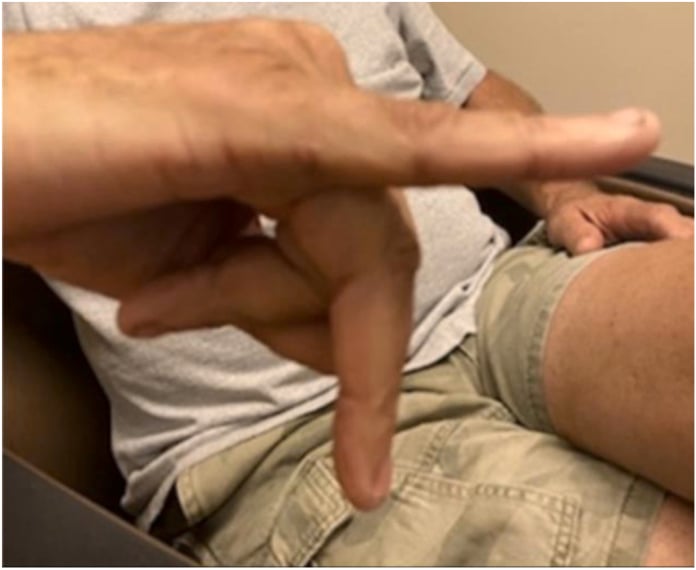
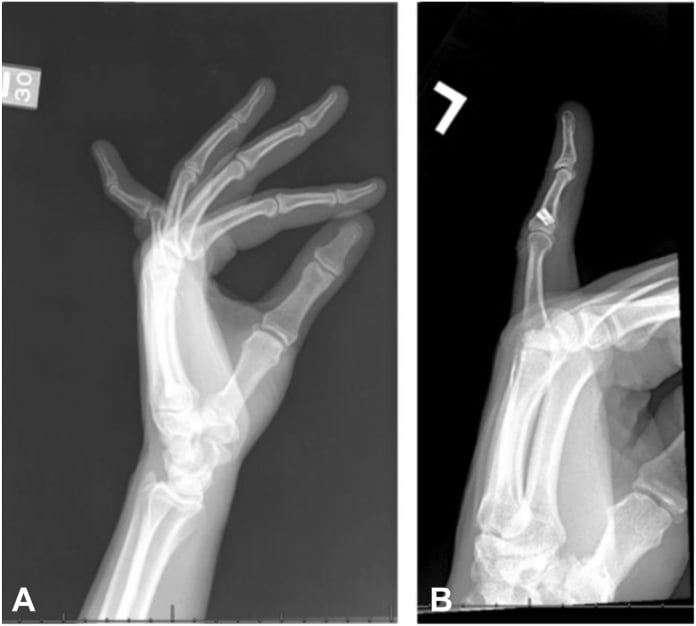
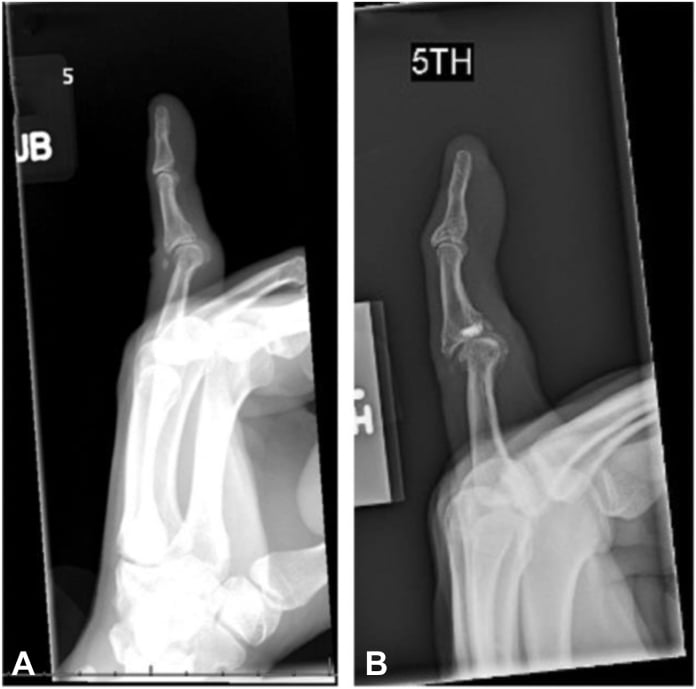
Volar plate reconstruction and repair. The figures show chronic volar plate insufficiency with PIP hyperextension, treated by volar plate reconstruction or repair and followed for up to 11 years.
Complications
After surgery. Correcting the hyperextension trades motion for stability, and careful patient selection and realistic expectations are essential:
- Recurrence - common in RA because the disease progresses, in up to 30% at 5 years
- Stiffness - correction of hyperextension often results in loss of full flexion
- Infection - increased risk with silicone implants or immunosuppressive RA medications
- Tendon rupture - an FDS tenodesis can fail if tensioned too tightly or if manipulation is forceful
- Implant failure - silicone arthroplasty fractures over time (7-10 year lifespan)
- Neuroma - risk of digital nerve injury with lateral approaches
- Flexion contracture - over-correction can limit extension, reported in 15% of tenodesis cases
With conservative care. Regular follow-up detects progression early:
- skin irritation: ring splints may cause pressure sores if poorly fitted
- progression: the deformity may worsen despite splinting, especially in RA
- functional decline: locking episodes interfere with daily activities
- psychological impact: the visible deformity affects body image and social function
- non-compliance: splints may be removed for cosmetic or comfort reasons
Rehabilitation
- Dorsal block splint preventing extension past 20 degrees
- Active flexion allowed
- Wean, and start gentle active extension
- Check there is no recurrence of the hyperextension "snap"
- Grip strengthening with putty and Theraputty exercises
- Night splinting often continued for 3-6 months to prevent recurrence
- Fine motor tasks for dexterity: picking up coins, buttons, writing
- The goal is a functional range (30-80 degrees), which is better than full range
- Occupation-specific work simulation to prepare for return to work
- Silver ring splints worn permanently in some cases
- Regular hand therapy reviews to detect recurrence early
- In RA, coordination with rheumatology for DMARD optimisation
Prognosis
By treatment. Patient satisfaction depends on realistic expectations and appropriate procedure selection:
- Splinting (Type I) - excellent functional outcomes, with 80-90% symptom control from ring splints
- FDS tenodesis - good results in 70-80%, with some loss of full flexion (10-20 degrees) expected
- Intrinsic release - effective for Type II, but may need to be combined with tenodesis
- Fusion (Type III/IV) - reliable pain relief, with a functional position of 30-45 degrees preferred
- Arthroplasty - fair function for 7-10 years; silicone fracture is inevitable in the long term
Both tenodesis series in the Evidence Base (Brulard, Kakutani) reported active flexion increasing after surgery, with extension the range given up, so read the expected flexion loss above alongside them.
By cause. Underlying disease control is critical for sustained improvement:
- Traumatic - the best outcomes; young patients with an isolated injury recover well with conservative care
- Rheumatoid - a high recurrence rate, and progressive disease limits long-term success
- Mallet-induced - treating the DIPJ pathology corrects the PIPJ if it is addressed early (within 3 months)
- Cerebral palsy and spasticity - poor outcomes; spasticity often overcomes surgical correction
Prognostic factors. Serial photography helps document progression or improvement:
- duration: early intervention (less than 6 months) yields better outcomes
- joint status: preserved cartilage is essential for soft-tissue procedures
- disease activity: active RA synovitis predicts recurrence, so optimise with DMARDs first
- compliance: splint adherence determines the success of conservative management
- age: younger patients have better tissue quality but higher functional demands
- multiple digits: widespread involvement suggests a systemic cause, with a guarded prognosis
Guidelines, Registries & Global Practice
Global Epidemiology
- Rheumatoid arthritis is the dominant systemic cause of swan-neck deformity, with a global prevalence of roughly 0.5-1% of adults and a 2-3:1 female predominance; deformity risk rises with disease duration and inadequate disease control.
- Finger deformities (swan-neck, boutonniere, ulnar drift) develop in a substantial proportion of long-standing, poorly controlled RA, but their incidence has fallen markedly in the biologic/DMARD era.
- Non-rheumatoid causes are seen worldwide: post-traumatic (chronic mallet, volar plate injury), connective-tissue disease (SLE / Jaccoud arthropathy, Ehlers-Danlos with constitutional laxity), and neuromuscular spasticity (cerebral palsy, post-stroke).
Side-by-Side Guideline Positions (no level-1 surgical RCTs exist; principles are consensus-based)
- Emphasis
- Classification-driven management; non-operative splinting first for flexible deformity; arthrodesis for unstable/destroyed joints in high-demand hands
- Emphasis
- Treat the underlying mechanism (intrinsic vs joint vs distal mallet); hand therapy and ring splinting before surgery; staged reconstruction in multi-digit RA
- Emphasis
- Restore mechanical balance (block PIPJ hyperextension, re-establish distal anchor) rather than isolated release; protect repairs in dorsal-block splinting
- Emphasis
- Optimise systemic disease control (DMARD/biologic) before elective hand reconstruction to reduce recurrence
Registry & Evidence Notes
- No dedicated swan-neck registry exists; PIPJ implant arthroplasty data are captured within national arthroplasty/implant registries and small institutional series.
- Best comparative evidence is the splint crossover RCT (silver ring vs thermoplastic) showing equivalence, and medium-term tenodesis cohorts; surgical correction rests largely on Level IV evidence.
Disease Control as the Foundation
- In RA, the single most important determinant of long-term outcome is systemic disease activity; uncontrolled synovitis predicts recurrence after any reconstruction.
- Coordinated rheumatology, hand surgery and hand therapy input is the global standard of care.
High- vs Limited-Resource Practice Variation
- High-resource settings: early DMARD/biologic therapy, custom silver-ring or thermoplastic splints, specialist hand therapy, and selective soft-tissue reconstruction; deformity is increasingly prevented rather than corrected.
- Limited-resource settings: later presentation with fixed (Nalebuff III/IV) deformity is common; durable, low-maintenance solutions (figure-of-8 splints, arthrodesis) are favoured over implant arthroplasty where implants, imaging or revision capacity are scarce.
- Untreated trauma (chronic mallet progressing to secondary swan neck) remains a preventable cause where access to early hand care is limited.
Controversies & Areas of Uncertainty
Swan-neck management is built almost entirely on Level IV cohorts and expert opinion. There are no surgical RCTs and no head-to-head comparison of reconstruction techniques, so most "best procedure" debates remain unresolved.
- Tenodesis vs SORL vs intrinsic release: No comparative trial defines the superior soft-tissue procedure. Half-FDS tenodesis has the most supportive medium-term data; SORL reconstruction is elegant but prone to graft attenuation over time, particularly in rheumatoid tissue.
- Splint type: Often debated as silver-ring "superior" to thermoplastic, but the only RCT found them equivalent in dexterity gain. Choice should be driven by patient preference, comfort and cosmesis, not assumed superiority.
- Timing of surgery in RA: Whether to reconstruct flexible deformities early (before fixed contracture) or defer until function is clearly compromised is unsettled; aggressive early surgery risks stiffness, while delay risks progression to fixed Type III/IV disease.
- Multi-digit surgery: The trade-off between correcting several digits in one stage versus staging to protect against global hand stiffness has no trial evidence and remains a judgement call.
- Arthrodesis vs arthroplasty for the destroyed joint: Fusion gives reliable, durable stability for high-demand hands; pyrocarbon/silicone arthroplasty preserves motion but carries implant failure and revision concerns. The balance shifts with patient demand, digit involved and resource setting.
MCQ Practice Points
Q: What constitutes a positive Bunnell test? A: Decreased PIP flexion when the MCP joint is extended (vs flexed).
Q: Which ligament normally prevents dorsal subluxation of the lateral bands? A: Transverse Retinacular Ligament.
Q: In Nalebuff Type II, what is the defining feature? A: Intrinsic muscle tightness.
Q: What is the primary function of a Figure-of-8 splint in Swan Neck? A: To block PIP hyperextension while allowing flexion.
Q: What is the surgical treatment for Nalebuff Type II Swan Neck? A: Intrinsic release (Littler procedure) to address the underlying intrinsic muscle tightness.
Q: How does a Mallet finger cause Swan Neck deformity? A: Loss of the terminal tendon anchor causes proximal retraction of the extensor mechanism, concentrating extension force at the PIPJ.
Viva Scenarios
Practise clinical reasoning and management decisions out loud
“A 60-year-old with RA has Swan Neck deformities in fingers 3, 4, 5. She wants surgery because they 'lock'. What is your assessment?”
“A patient presents with a chronic Mallet finger and a secondary Swan Neck deformity. The PIPJ is flexible. How do you treat the Swan Neck?”
“A young carpenter had a hyperextension injury. Now has a fixed Swan Neck (Type III). X-ray is normal. He needs strength.”
“A 55-year-old woman with well-controlled rheumatoid arthritis presents with Swan Neck deformities in all fingers of her dominant hand. She is an artist and cannot hold a brush. Radiographs show preserved joint spaces. What is your approach?”
Classification (Nalebuff)
- Type I: Mobile
- Type II: Intrinsic Tight
- Type III: Stiff
- Type IV: Arthritis
Management
- Splint: Oval-8 / Ring
- Sx I: Tenodesis
- Sx II: Intrinsic Release
- Sx III/IV: Fusion
Mechanics
- Volar Plate Laxity
- Lateral Bands Dorsal
- Bunnell Test Positive
- Mallet drive
Evidence Base
Nalebuff Classification (Foundational Paper)
- Original paper grouping rheumatoid swan-neck deformities into four types based on PIPJ flexibility in different MCP positions plus radiographic joint status
- Defined a treatment algorithm matched to each type, from soft-tissue balancing to salvage arthrodesis
- Established intrinsic tightness as the discriminator between flexible types