T10-L2 Junction | TLICS Guides Treatment | PLC is Key
- TLICS score (morphology + PLC + neurology) guides treatment decisions
- Posterior ligamentous complex (PLC) is the key stability determinant
- T12-L1 junction is the most commonly injured level (transition zone)
- Burst fractures may be managed non-op if TLICS less than 4 and neurologically intact
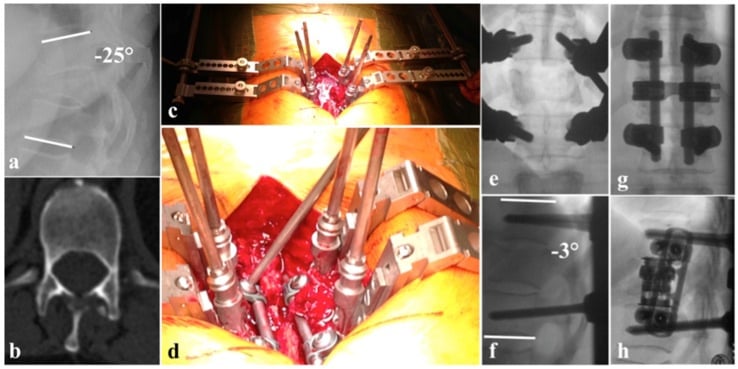
- Short segment fixation (one above, one below) is current trend
- “TLICS 5 or more indicates surgical management; a score of 4 is the indeterminate zone
- “Indeterminate PLC on imaging = 2 points, disrupted = 3 points
- “Neurogenic claudication suggests cauda equina level
- “Thoracolumbar junction is transition from rigid kyphotic thoracic to mobile lordotic lumbar
Overview and Epidemiology
Thoracolumbar fractures are the most common spinal fractures. They cluster at the thoracolumbar junction, T10-L2, with the peak incidence at T12-L1.
Why T12-L1. The junction is where the rigid, kyphotic thoracic spine, stabilised by the rib cage, meets the mobile, lordotic lumbar spine, which has no ribs. This transition zone creates a stress concentration: energy focuses here, which makes it the most common fracture site.
Who. Motor vehicle accidents and falls are the primary mechanisms, and the distribution is bimodal:
- Young patients after high-energy trauma, with a male predominance
- Elderly patients with osteoporotic fractures, with a female predominance
Anatomy and Biomechanics
The three columns. Denis divided the spine into three columns, and the concept still frames how stability is discussed.
- Structures
- Anterior 2/3 vertebral body, disc, ALL
- Function
- Compression resistance
- Structures
- Posterior 1/3 vertebral body, disc, PLL
- Function
- Key stability (compression and tension)
- Structures
- Pedicles, facets, laminae, spinous processes, PLC
- Function
- Tension band, flexion resistance
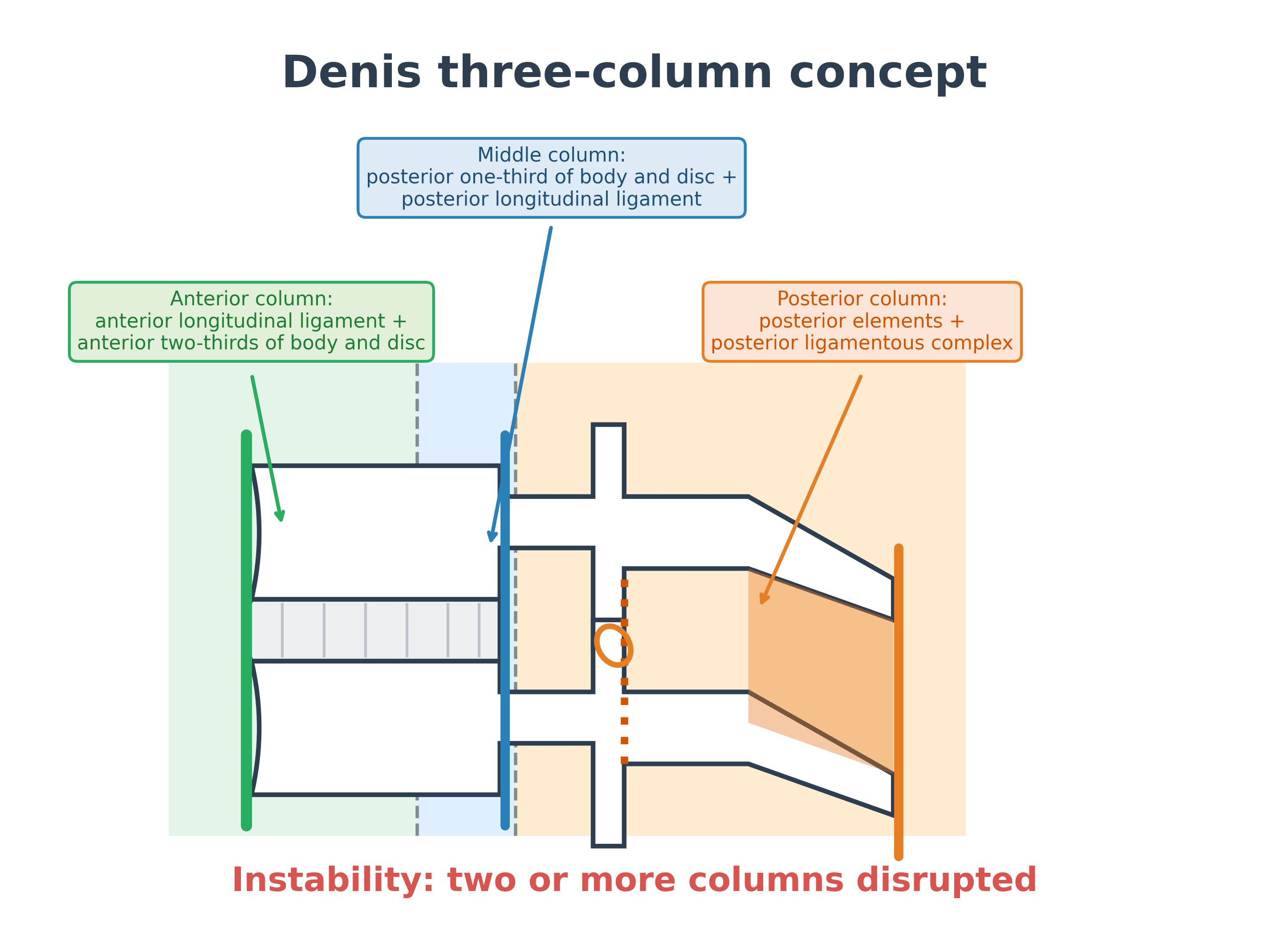
Why the middle column matters. In Denis's concept the middle column is the key to stability. Injury to it, as in a burst fracture, is more significant than injury to the anterior column alone, as in a compression fracture, and a two-column injury is unstable.
The posterior ligamentous complex. The PLC is the posterior tension band:
- Supraspinous ligament - the superficial posterior structure
- Interspinous ligament - between the spinous processes
- Ligamentum flavum - between the laminae
- Facet joint capsules
Why the PLC decides stability. It is the primary restraint to flexion, so when it is disrupted the spine fails in flexion, and a brace or cast cannot substitute for it. This is why TLICS weights a disrupted PLC at 3 points.
Cord or cauda equina. The conus medullaris ends between T12 and L2, typically at L1-L2. Above the conus a fracture injures the spinal cord and produces upper motor neuron signs, and at the conus the picture is mixed. Below it only the cauda equina is at risk, a lower motor neuron injury with a better prognosis: an incomplete cauda equina injury does better than a complete cord injury.
Mechanism of injury. Each mechanism has its typical pattern:
- Flexion-compression - compression and burst fractures
- Flexion-distraction - Chance fractures, seat-belt injuries
- Translation/rotation - fracture-dislocations, the most unstable
- Extension - hyperextension injuries, which are rare
Classification Systems
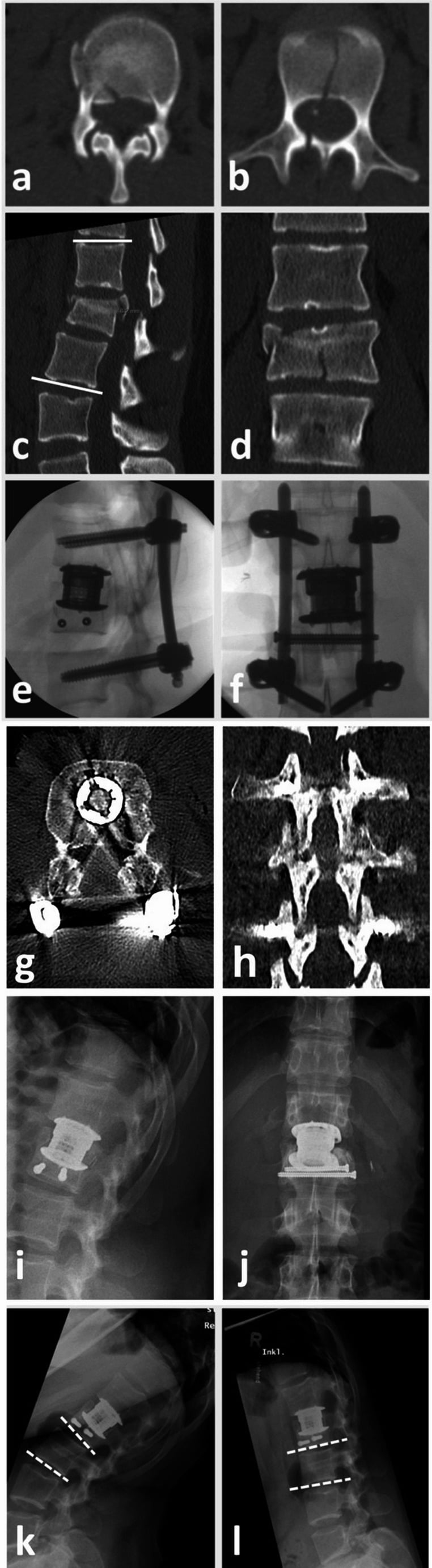
The Thoracolumbar Injury Classification and Severity Score (TLICS) is the most widely used classification for guiding treatment decisions. It adds three components, morphology, PLC status and neurological status, and the total points to the treatment.
Morphology (1-4 points)
- Points
- 1
- Description
- Loss of vertebral height, anterior wedge
- Points
- 2
- Description
- Anterior and posterior cortex involvement, canal compromise
- Points
- 3
- Description
- Horizontal displacement or rotation
- Points
- 4
- Description
- Abnormal separation of vertebrae (flexion or extension)
Posterior ligamentous complex (0-3 points)
- Points
- 0
- Imaging Findings
- Normal anatomy, no widening
- Points
- 2
- Imaging Findings
- Interspinous widening, subtle T2 signal
- Points
- 3
- Imaging Findings
- Facet diastasis, T2 signal in PLC, widened spinous processes
Neurological status (0-3 points)
- Points
- 0
- Description
- No deficit
- Points
- 2
- Description
- Radiculopathy
- Points
- 2
- Description
- Complete deficit
- Points
- 3
- Description
- Incomplete deficit
- Points
- 3
- Description
- Its own category
Reading the neurology score. A complete cord or conus injury scores lower than an incomplete one, because there is less neural tissue left to protect; salvageable cord is the strongest argument for decompression, and it earns the highest neurological score. Cauda equina injury is scored as its own category at 3, alongside incomplete cord injury. It is not an extra point added to another row, and the maximum for this component is 3.
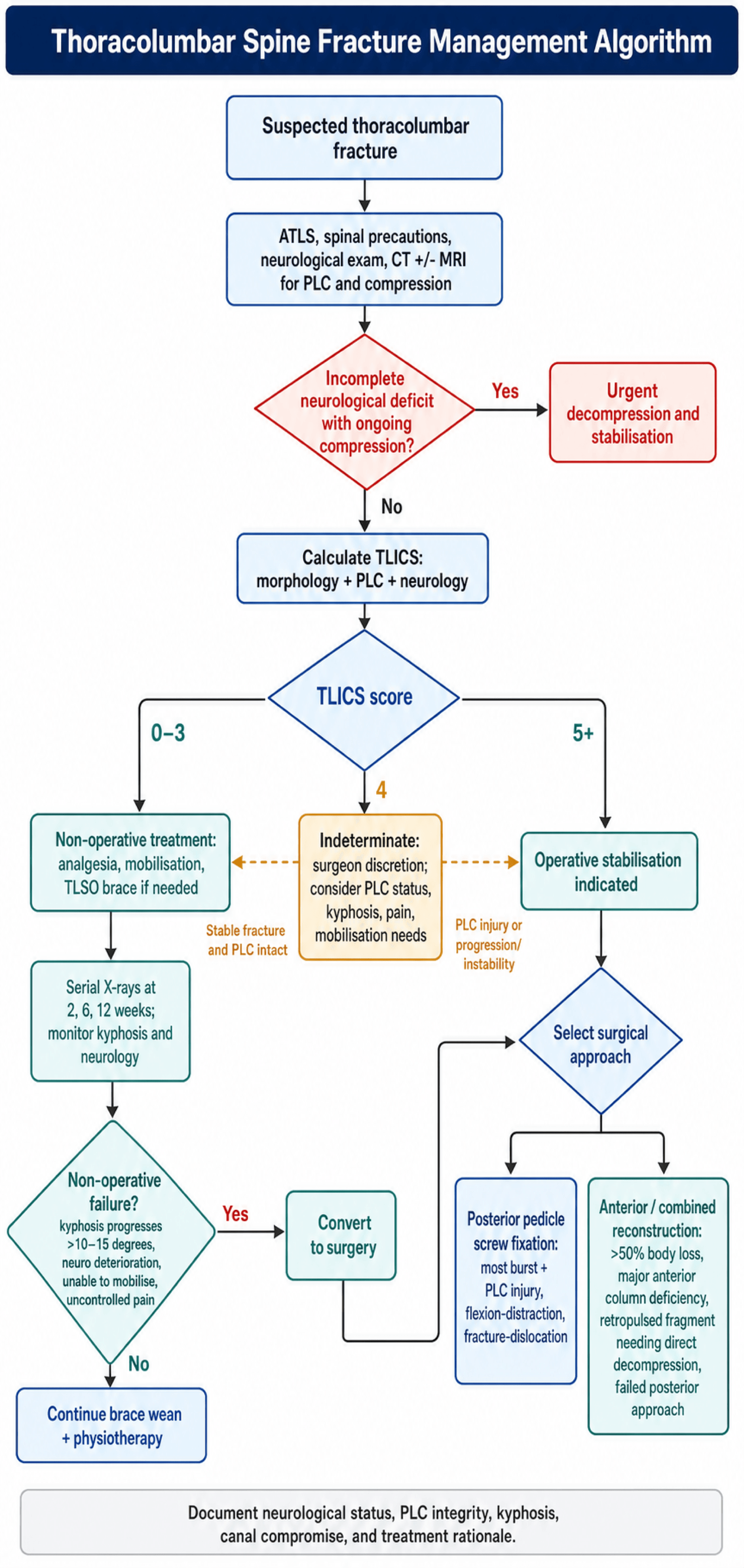
- TLICS 0-3: Non-operative (brace)
- TLICS 4: Surgeon discretion (often non-op if PLC intact)
- TLICS 5+: Operative
Clinical Assessment
History. Energy level guides suspicion. Establish:
- Mechanism: motor vehicle accident, fall from height, fall from standing
- Neurological symptoms: weakness, numbness, bowel or bladder disturbance
- Previous spine problems
- Osteoporosis risk factors
Examination of the spine. Log-roll the patient and palpate the full length of the spine. Inspect for bruising, especially transverse bruising, deformity and swelling, and palpate for tenderness, a step-off or an interspinous gap. A complete lower-limb neurological examination follows.
Associated injuries. These are common: 50% of patients have other injuries.
- Abdominal - liver, spleen and kidneys; flexion-distraction (Chance) injuries carry associated intra-abdominal injury in up to 50%, hollow viscus and mesentery
- Other spinal levels - 10-15% have non-contiguous fractures
- Calcaneus - from the axial-load mechanism
- Head - altered consciousness affects the reliability of the examination
The neurological examination. Whether the injury lies above or below the conus determines what you find.
- Cord (above the conus)
- Hyperreflexia, Babinski+
- Cauda Equina (below the conus)
- Hyporeflexia/areflexia
- Cord (above the conus)
- Increased (spasticity)
- Cauda Equina (below the conus)
- Decreased (flaccid)
- Cord (above the conus)
- Symmetric, level-dependent
- Cauda Equina (below the conus)
- Asymmetric, root pattern
- Cord (above the conus)
- Spastic, small capacity
- Cauda Equina (below the conus)
- Atonic, overflow
- Cord (above the conus)
- Variable
- Cauda Equina (below the conus)
- Better (peripheral nerve)
- L1: Inguinal region
- L2: Anterior thigh, hip flexion
- L3: Knee, knee extension
- L4: Medial ankle, ankle dorsiflexion
- L5: Dorsal foot, big toe extension
- S1: Lateral foot, ankle plantarflexion
- S2-5: Perianal sensation (critical for complete vs incomplete)
The sacral examination. Document sacral sparing, perianal sensation, anal contraction and bladder function, because conus and cauda equina findings determine urgency and prognosis.
Investigations
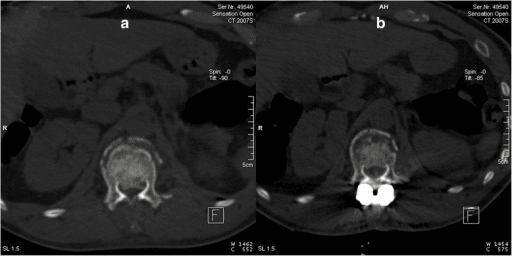
CT first. CT of the thoracolumbar spine is first-line in trauma: thin cuts from T10 to L3, extended as needed, with sagittal and coronal reconstructions. Read it for:
- Vertebral body - loss of height (%), endplate involvement
- Canal compromise - percentage occlusion
- Posterior elements - pedicle, facet and lamina fractures
- Spinous process widening - suggests PLC injury
- Translation/rotation - a highly unstable pattern
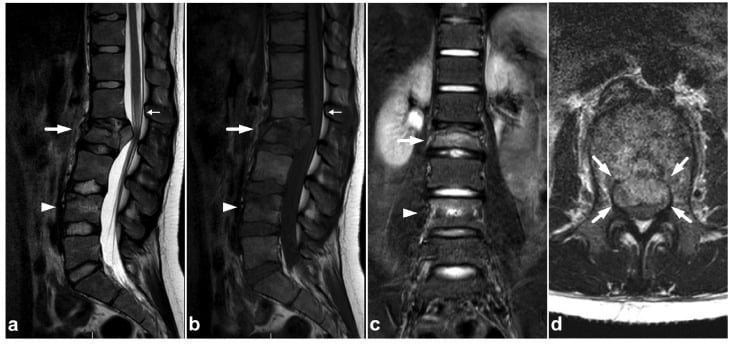
MRI for the PLC and the cord. MRI is essential for assessing the PLC and the cord, and is obtained when there is a neurological deficit or the PLC needs assessing. STIR is best for ligament injury and T2 for cord oedema or contusion, and MRI helps separate an indeterminate PLC from an injured one.
- Widened interspinous space with T2/STIR hyperintensity
- Facet widening or subluxation with fluid
- Disruption of supraspinous ligament (high signal replacing dark line)
- Ligamentum flavum signal change
These findings convert "indeterminate" (2 points) to "injured" (3 points) on TLICS.
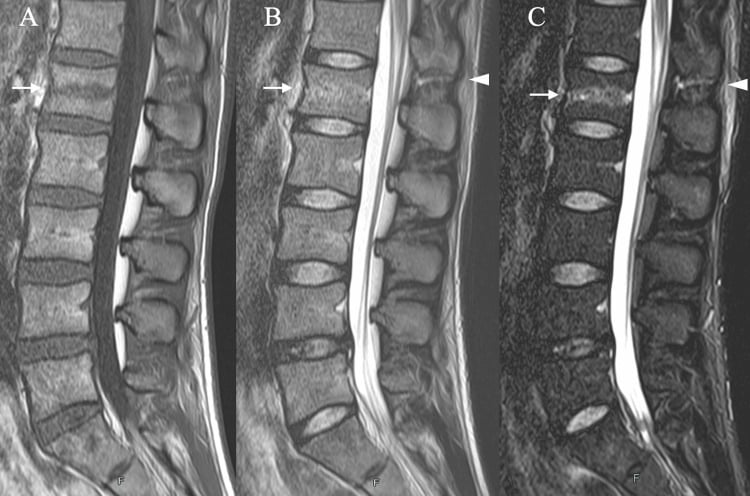
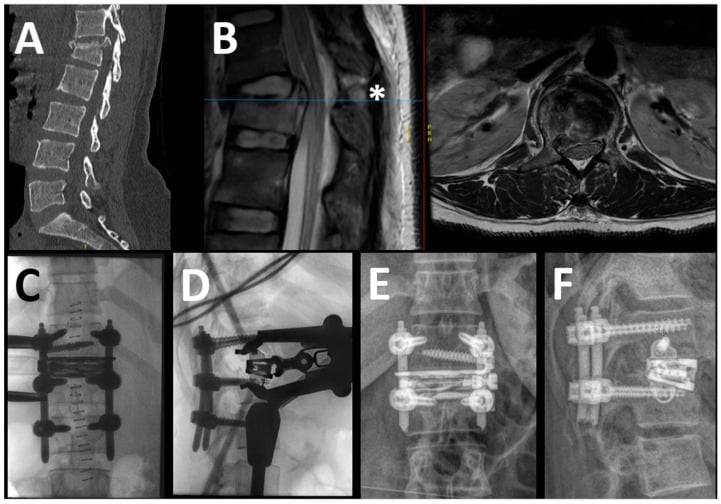
Bone quality. In the elderly or osteoporotic patient, consider DEXA. Bone quality affects treatment and may influence the decision for cement augmentation or a longer construct.
- Imaging
- CT thoracolumbar
- Key Question
- Rule out fracture, assess morphology
- Imaging
- MRI if surgical candidate
- Key Question
- PLC status for TLICS
- Imaging
- Urgent MRI
- Key Question
- Cord/cauda compression, surgical planning
- Imaging
- CT, consider MRI if surgery
- Key Question
- Multiple levels, PLC status
Management
Who. TLICS 0-3: compression fractures with an intact PLC and some burst fractures with TLICS less than 4, in a neurologically intact patient with a stable fracture pattern.
Non-Operative Protocol
Pain control, bed rest as needed, log-roll precautions. May stand with TLSO if tolerated.
TLSO brace (thoracolumbar sacral orthosis) full-time except sleeping. Serial X-rays at 2, 6, 12 weeks. Monitor for kyphosis progression.
Gradual brace weaning. Physiotherapy for core strengthening. Return to activities based on symptoms and imaging.
Convert to surgery if:
- Kyphosis progresses more than 10-15 degrees
- Neurological deterioration
- Unable to mobilise with brace
- Uncontrolled pain
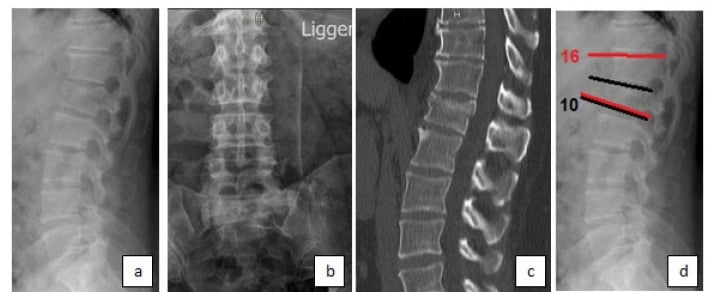
The osteoporotic compression fracture. The other half of the bimodal distribution is the osteoporotic vertebral compression fracture (VCF), where the problem is bone quality rather than high-energy instability. Most are managed conservatively with analgesia, early mobilisation and a brace if needed, and, crucially, with osteoporosis treatment: calcium and vitamin D, antiresorptives or anabolics, and a fracture-liaison referral.
Cement augmentation. For the subgroup with severe, persistent pain and an unhealed fracture, with marrow oedema on STIR confirming acuity, cement augmentation of the vertebral body is an option:
- Vertebroplasty - cement injected directly
- Balloon kyphoplasty - a balloon creates a cavity and partly restores height before low-pressure cement
The evidence is genuinely contested. Early sham-controlled trials (INVEST, Buchbinder) showed no benefit over placebo, whereas VAPOUR (early, severely painful acute fractures) and the VERTOS trials suggested faster pain relief in carefully selected acute cases. Augmentation is therefore reserved for the acutely painful, non-healing fracture, not routine use. Always exclude a pathological or malignant cause before augmenting, and remember that augmentation treats the pain, not the underlying osteoporosis.
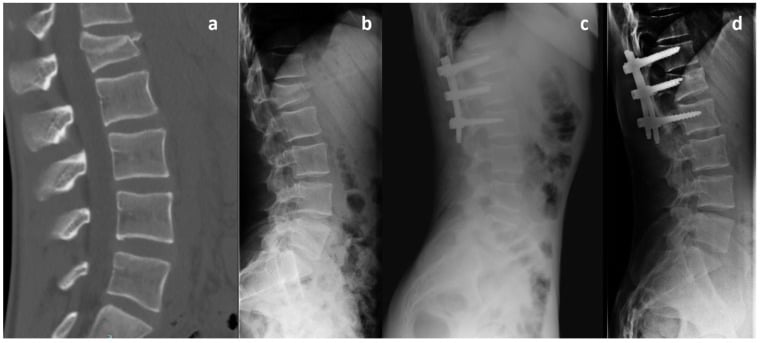
TLICS tells you whether to operate; the Load Sharing (McCormack) Classification helps decide how, specifically whether a short-segment posterior construct will survive or whether the anterior column must be supported. It scores the fractured vertebra 3 to 9 from three CT features, each worth 1-3 points. The minimum is 3, not 0, because every feature scores at least 1.
- Comminution - less than 30% / 30 to 60% / more than 60% of the body
- Fragment apposition or spread - minimal / spread of about 2 mm over less than half the body / wide spread over more than half
- Kyphotic deformity to correct - 3 degrees or less / 4 to 9 degrees / 10 degrees or more
A score of 6 or less is generally safe for short-segment posterior fixation alone. A score of 7 or more predicts failure of a short-segment construct and calls for anterior column support, a longer construct, or the addition of a screw at the fracture level.
- Pattern Example
- Compression fracture, PLC intact
- Treatment
- TLSO brace 8-12 weeks
- Key Pearl
- Most common scenario - non-op works well
- Pattern Example
- Burst, indeterminate PLC
- Treatment
- Surgeon preference
- Key Pearl
- MRI critical - PLC status determines treatment
- Pattern Example
- Burst + disrupted PLC
- Treatment
- Posterior stabilisation
- Key Pearl
- Short segment pedicle screws
- Pattern Example
- Translation + incomplete neuro deficit
- Treatment
- Urgent posterior decompression + fusion
- Key Pearl
- Consider anterior if significant vertebral body loss
Surgical Technique
Consent. Neurological injury is rare if there is no deficit before surgery. Consent also covers infection, hardware failure, the need for revision or additional levels (5-10%), adjacent segment disease as a long-term risk, and DVT/PE; their rates are in the complications table.
Equipment
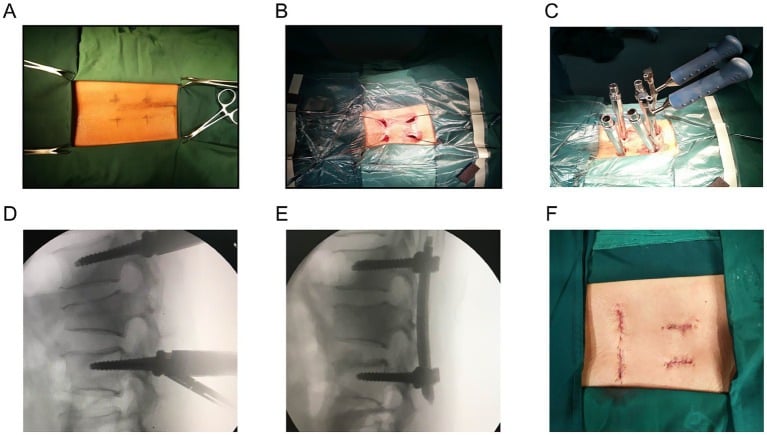
- Imaging - fluoroscopy or navigation
- Pedicle screws - appropriate sizes, polyaxial heads
- Rods - pre-contoured or malleable
- Decompression instruments - if laminectomy is planned
- Cell saver - for major reconstructions
Complications
- Incidence
- 5-15%
- Prevention/Management
- Adequate construct length, consider index screws
- Incidence
- 10-20%
- Prevention/Management
- Include index level, cement augmentation in osteoporosis
- Incidence
- 5-10%
- Prevention/Management
- Bone graft, smoking cessation
- Incidence
- Up to 30% long-term
- Prevention/Management
- Short segment when possible
- Incidence
- Less than 1%
- Prevention/Management
- Navigation, neuromonitoring, careful technique
- Incidence
- 1-3%
- Prevention/Management
- Prophylactic antibiotics, meticulous technique
- Incidence
- 2-5%
- Prevention/Management
- Mechanical and chemical prophylaxis
Hardware failure is more common in short-segment constructs. Osteoporosis, severe kyphosis and anterior column deficiency are its risk factors. It is prevented with index-level screws and cement augmentation, and anterior column support should be considered.
Loss of correction is recurrence of kyphosis after the initial reduction. It is prevented by an adequate construct and by addressing the anterior column if the loss there is significant.
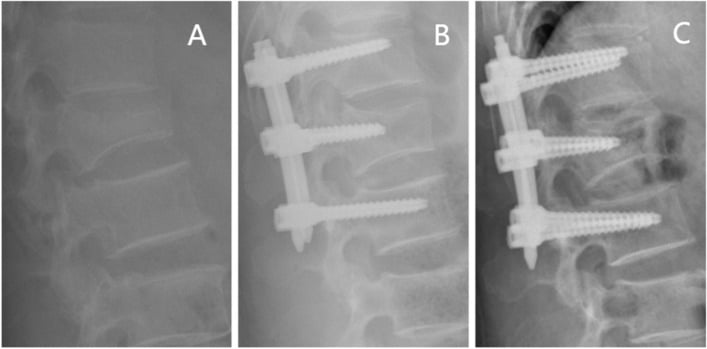
Postoperative Care
Rehabilitation Timeline
- Wound drain (remove 24-48h)
- DVT prophylaxis
- Pain management
- Early mobilisation if neurology intact
- Mobilise with physio
- Brace (TLSO) if additional support desired
- Wound check at 2 weeks
- Progressive activity
- X-rays at 6 weeks
- Core strengthening programme
- CT to assess fusion at 6-12 months, earlier if there is concern about the hardware or loss of correction
- Return to work/activity based on imaging and symptoms
- Long-term surveillance for adjacent segment disease
Bracing after surgery. Practice varies. Some surgeons use a TLSO for 6-12 weeks for additional support and others rely on the instrumentation alone; consider it in osteoporosis, after a single-level short-segment construct, or when compliance is a concern.
Outcomes and Prognosis
Neurological recovery. A patient who is intact stays intact with appropriate treatment. Cauda equina injury has good potential for recovery if decompressed and incomplete cord or conus injury moderate potential, while a complete injury carries a poor neurological prognosis.
After non-operative treatment. Results are good for stable fractures (TLICS 0-3) and most patients return to normal function, but 10-15% develop progressive kyphosis.
After surgery. Instrumentation brings high fusion rates, and kyphosis correction is maintained in 80-85%. Adjacent segment disease is the main long-term concern.
Guidelines, Registries & Global Practice
Global epidemiology:
Thoracolumbar fractures are the most common spinal column injuries, concentrated at the T10-L2 junction with peak incidence at T12-L1. A bimodal pattern is seen worldwide: high-energy injuries (road trauma, falls from height) in young men, and low-energy osteoporotic fractures in older women. In resource-limited settings, road-traffic and fall mechanisms dominate, and short-segment pedicle screw fixation can be delivered safely and cost-effectively - a Cambodian series reported good neurological recovery in 65% of incomplete spinal cord injuries treated operatively at a cost of US$100-280 per surgery (Chua et al, World Neurosurg 2018, PMID 29550593, DOI).
Guideline and classification landscape (side-by-side):
- Tool
- TLICS score
- Treatment driver
- Morphology + PLC + neurology; surgery if 5 or more
- Evidence basis
- Consensus; reliability validated (Level 4)
- Tool
- AO Spine TL + TL AOSIS
- Treatment driver
- Type A/B/C + neurology + modifiers
- Evidence basis
- International consensus, kappa 0.72 (Level 4)
- Tool
- TLICS-based algorithms
- Treatment driver
- Non-op for intact stable burst
- Evidence basis
- RCT-supported for stable burst (Level 2)
- Tool
- Spinal injury assessment pathway
- Treatment driver
- Imaging triage, early specialist referral
- Evidence basis
- Guideline consensus + evidence review
- Tool
- Spinal clearance & SCI standards
- Treatment driver
- Timely transfer, MRI for cord/PLC
- Evidence basis
- Standards of care (consensus)
- No dedicated international thoracolumbar fracture registry exists comparable to arthroplasty registries; outcome evidence derives from RCTs, prospective cohorts (e.g. STASCIS) and national spinal-injury databases.
- National spinal cord injury registries and trauma networks (e.g. UK Major Trauma Network, Australian state trauma systems, North American Spinal Cord Injury models systems) report epidemiology and rehabilitation outcomes rather than implant survival.
- TLICS 4 (indeterminate): the principal area of global disagreement - surgeon discretion drives wide variation between operative and non-operative care.
- Construct length: short-segment fixation predominates in North America/Europe; longer constructs and routine index-level screws are favoured for higher-energy or osteoporotic patterns.
- Bracing after surgery and for stable burst fractures: practice is inconsistent and increasingly questioned by trials showing equivalence of no-brace protocols.
- Anterior vs posterior approaches: anterior/combined surgery is more common where significant anterior column loss or direct decompression is prioritised.
- Distinguishing features
- High-energy mechanism, acute pain, marrow oedema on STIR
- Key investigation
- CT for morphology, MRI (STIR) for acuity/PLC
- Distinguishing features
- Low-energy/no trauma, older patient, anterior wedging, often multiple
- Key investigation
- MRI for acuity; DEXA; assess for occult malignancy
- Distinguishing features
- Pedicle destruction, posterior wall convexity, soft-tissue mass, known primary
- Key investigation
- MRI with contrast, CT, staging/biopsy
- Distinguishing features
- Benign: retropulsion of a posterior fragment, band-like oedema; malignant: epidural mass, pedicle involvement
- Key investigation
- MRI (diffusion/chemical-shift), biopsy if uncertain
- Distinguishing features
- Rigid fused spine, trivial trauma, transverse 'carrot-stick' fracture, high instability
- Key investigation
- CT whole spine (often unstable; low threshold for fixation)
- Distinguishing features
- Insidious pain, fever, raised inflammatory markers, endplate/disc destruction
- Key investigation
- MRI with contrast, blood cultures, biopsy
- Complete neurological examination at presentation
- TLICS score or equivalent classification
- MRI interpretation for PLC status
- Treatment rationale documented
- Informed consent including hardware failure risks
- Missed diagnosis (inadequate imaging)
- Delayed surgery with neurological deficit
- Failure to document baseline neurology
- Inadequate follow-up and progression to kyphosis
MCQ Practice Points
Q: A patient has an L1 burst fracture with PLC disruption on MRI and is neurologically intact. What is the TLICS score? A: Morphology (burst) = 2 + PLC (disrupted) = 3 + Neurology (intact) = 0 = TLICS 5 (surgical indication)
Q: What structures make up the posterior ligamentous complex? A: Supraspinous ligament, interspinous ligament, ligamentum flavum, and facet joint capsules.
Q: Why is T12-L1 the most common fracture level? A: It is the transition zone between the rigid kyphotic thoracic spine (rib stabilization) and the mobile lordotic lumbar spine. Energy concentrates at this junction.
Q: At what level does the conus medullaris typically end? A: L1-L2 (ranges T12-L2). Injuries above this level involve the cord; below involve only cauda equina.
Q: What modification to short segment fixation reduces failure rates? A: Adding index level screws (screws into the fractured vertebra) improves kyphosis control and reduces implant failure.
Q: What is ligamentotaxis and when does it work? A: Using distraction to reduce retropulsed fragments via the intact PLL. Works best if PLL intact, surgery within 72 hours, and adequate distraction achieved.
Exam Viva Scenarios
Practise clinical reasoning and management decisions out loud
“A 28-year-old man falls from 4 meters landing on his feet. CT shows an L1 burst fracture with 40% canal compromise. He is neurologically intact. MRI shows no PLC injury. What is your assessment and management?”
“A 35-year-old restrained passenger in an MVA presents with T12-L1 distraction injury on CT. She has ASIA D incomplete paraparesis. MRI confirms PLC disruption and cord edema. Describe your surgical approach.”
“A 55-year-old diabetic smoker presents 6 weeks after posterior short segment fixation (T12-L2) for an L1 burst fracture. X-rays show screw pullout and progressive kyphosis to 30 degrees. How do you manage this?”
TLICS Classification
- Morphology: Compression=1, Burst=2, Translation=3, Distraction=4
- PLC: Intact=0, Indeterminate=2, Injured=3
- Neurology: Intact=0, Root=2, Complete=2, Incomplete=3
- TLICS 0-3=non-op, 4=indeterminate, 5+=surgical
Key Anatomy
- T12-L1 most common (transition zone)
- Conus ends L1-L2 (above=cord, below=cauda)
- Denis three columns: anterior, middle, posterior
- PLC is the key stability determinant
Treatment Algorithm
- TLICS less than 4, PLC intact: TLSO brace 8-12 weeks
- TLICS 5+: Posterior pedicle screw fixation
- Incomplete neuro deficit: Urgent surgery
- Significant anterior loss: Consider combined approach
Surgical Pearls
- Short segment + index screws reduces failure
- Distraction injuries: use COMPRESSION (not distraction)
- Ligamentotaxis works if PLL intact and less than 72h
- Cement augmentation in osteoporosis
Complications
- Hardware failure: 5-15%
- Loss of correction: 10-20%
- Adjacent segment disease: up to 30%
- Risk factors: smoking, diabetes, osteoporosis
Evidence Base
TLICS: Defining Classification
- Introduced the Thoracolumbar Injury Classification and Severity Score (TLICS)
- Three components: injury morphology, posterior ligamentous complex integrity, neurological status
- Composite score stratifies patients into operative and non-operative groups
- Developed by international Spine Trauma Group consensus
AO Spine Thoracolumbar Classification
- International consensus morphological system: Type A (compression), Type B (tension band), Type C (displacement/translation)
- Adds neurological grade (N0-N4, NX) and patient-specific modifiers (M1-M2)
- Substantial interobserver reliability for injury type (kappa = 0.72)
- Designed to harmonise global communication and research
Operative vs Non-operative for Stable Burst Fractures (Long-term RCT)
- Prospective RCT: 47 patients with stable burst fracture and no neurological deficit
- Operative (arthrodesis/instrumentation) vs non-operative (cast/orthosis)
- No significant difference in pain or return to work at mean 44 months
- Complications more frequent in the operative group
Fracture-level (Index) Screw in Short-segment Fixation
- Prospective RCT, 72 patients with unstable thoracolumbar burst fractures, 4 groups
- Adding a screw at the fractured level improved intraoperative correction and its maintenance
- Benefit most pronounced in the short-segment fixation subgroup
- Mean follow-up 50 months
PLC Disruption on CT/MRI: Reliability
- Spine Trauma Study Group inter-rater study of PLC injury indicators
- Facet diastasis on CT was the most reliable single indicator of PLC disruption (kappa = 0.40)
- Posterior oedema-like signal on T2 FAT SAT MRI showed fair agreement (70.5%)
- Identification of frankly disrupted PLC on T1 MRI was poor (48.9% agreement)
Cement Augmentation of Pedicle Screws in Osteoporotic Bone
- Human osteoporotic cadaveric biomechanical study
- PMMA cement augmentation significantly increased pedicle screw pullout strength
- Fenestrated screws confined cement to the vertebral body, reducing canal extrusion risk
- High-viscosity PMMA was safely injectable through fenestrations
Surgical Timing in Acute SCI (STASCIS)
- Prospective multicentre cohort, 313 patients with acute cervical SCI
- Early (less than 24h) vs late decompression
- Early surgery: 19.8% achieved 2 or more grade AIS improvement vs 8.8% late (adjusted OR 2.8)
- No increase in complications or mortality with early surgery