Most Common Long Bone Fracture | 25% Open | Compartment Syndrome
- IM nail is treatment of choice for most tibial shaft fractures (closed or open)
- Compartment syndrome: high risk in tibial fractures - maintain vigilance for 24-48 hours
- Open fractures: Gustilo-Anderson classification guides antibiotics and soft tissue coverage timing
- Acceptable alignment: 5° varus/valgus, 5-10° AP angulation, 10° rotation, 10mm shortening
- Anterior knee pain after nailing is common (20-50%) - discuss with patients
- “25% of tibial shaft fractures are open - highest rate of any long bone
- “Suprapatellar nailing reduces anterior knee pain compared to infrapatellar
- “Compartment syndrome can occur in closed fractures - maintain high index of suspicion
- “Non-union more common in smokers, high-energy, and open fractures
Overview and Epidemiology
Tibial shaft fractures are the most common long bone fracture, about 2% of all fractures, and 25% of them are open, the highest rate of any long bone. Examiners use them to test compartment syndrome, open fracture management and the technical detail of nailing.
Who. The distribution is bimodal. Young men sustain high-energy injuries, with a peak at 20-30 years and a male to female ratio of 3:1 in young adults. Older women sustain low-energy osteoporotic fractures, with a peak over 60 years.
Mechanism. A direct blow or a twisting injury:
- High-energy: motor vehicle accidents, motorcyclists, pedestrians
- Sport: skiing and football (rotational)
- Low-energy: falls in the elderly
Anatomy
The bone. The shaft is triangular in cross-section, and its anteromedial surface is subcutaneous. That border has minimal soft-tissue cover, which explains the high open fracture rate. The interosseous membrane binds it to the fibula, and the canal is narrowest at the isthmus, at the junction of the middle and distal thirds.
Around the knee. The tibial plateau is covered in its own topic. The proximal landmarks that matter for this one:
- Tibial tubercle: the patellar tendon insertion
- Gerdy's tubercle: the iliotibial band insertion
- Proximal fibula: the safe zone for nailing
The four compartments. Any tibial fracture puts all four compartments of the leg at risk of compartment syndrome.
- Contents
- Tibialis anterior, EHL, EDL, peroneus tertius
- Nerve
- Deep peroneal
- First Sign of Syndrome
- Weak toe/ankle dorsiflexion, 1st web space numbness
- Contents
- Peroneus longus and brevis
- Nerve
- Superficial peroneal
- First Sign of Syndrome
- Weak eversion, lateral leg numbness
- Contents
- Tibialis posterior, FHL, FDL, popliteus; posterior tibial artery
- Nerve
- Tibial nerve
- First Sign of Syndrome
- Weak toe flexion, sole numbness
- Contents
- Gastrocnemius, soleus, plantaris
- Nerve
- Sural nerve
- First Sign of Syndrome
- Weak plantarflexion, lateral foot numbness
The anterior compartment is usually the first to develop compartment syndrome because it is the smallest and least compliant. Test for pain on passive plantarflexion of the toes and first web space sensation.
The blood supply. The nutrient artery enters posterolaterally in the upper-middle third and supplies the inner two-thirds of the cortex. Periosteal vessels from the surrounding muscles supply the outer third.
The named arteries. The anterior tibial artery passes anteriorly through the interosseous membrane and is at risk in proximal fractures. The posterior tibial artery runs posterior to the deep compartment and is the main blood supply to the foot.
Segmental fractures. A segmental fracture disrupts the blood supply from both ends and from the periosteum, with a higher risk of non-union and devitalisation. Consider staged treatment.
Classification Systems
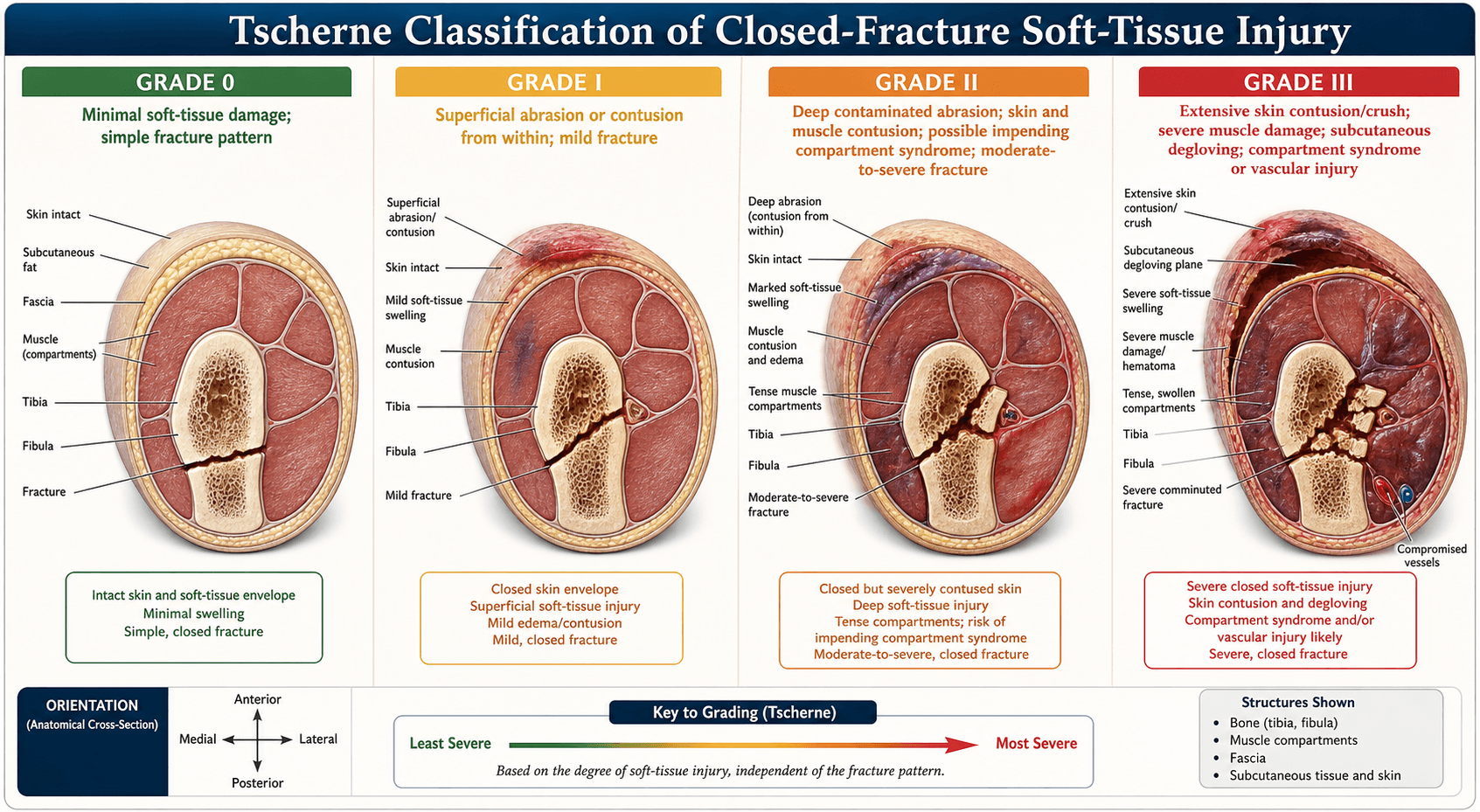
Gustilo-Anderson grades an open fracture, Tscherne grades the soft-tissue envelope of a closed one, and AO/OTA describes the fracture pattern. Applying Tscherne to an open fracture is a classic exam trap.
Gustilo-Anderson Open Fracture Classification
- Wound
- Under 1cm
- Contamination
- Clean
- Soft Tissue
- Minimal damage
- Treatment
- Abx, debride, primary IM nail
- Wound
- 1-10cm
- Contamination
- Moderate
- Soft Tissue
- Moderate crush
- Treatment
- Abx, debride, IM nail
- Wound
- Over 10cm
- Contamination
- High
- Soft Tissue
- Adequate coverage possible
- Treatment
- Abx, serial debride, nail or ex fix
- Wound
- Over 10cm
- Contamination
- High
- Soft Tissue
- Requires flap/graft
- Treatment
- Ex fix, plastic surgery, later nail
- Wound
- Over 10cm
- Contamination
- High
- Soft Tissue
- Vascular injury needing repair
- Treatment
- Vascular repair, ex fix, ?amputation
These are automatic Gustilo Type III regardless of wound size:
- High-energy mechanism
- Farm contamination
- Segmental fracture
- Vascular injury
- Delayed presentation over 8 hours
Clinical Assessment
History. The answers that change management:
- Mechanism: high or low energy
- Time since injury, which matters for an open fracture
- Environment: a farm injury is contaminated
- Walking ability before the injury
- Smoking, a risk for non-union
Examination.
- Skin: an open wound, skin tenting, blisters
- Compartments: tense, painful on passive stretch
- Neurovascular: deep peroneal and posterior tibial pulses
- Knee and ankle, for associated injuries
- Deformity: shortening and angulation
Compartment syndrome. Tibial fractures carry the highest compartment syndrome risk. The early signs are pain out of proportion to the injury and pain on passive stretch. Paralysis and pulselessness are late and indicate irreversible damage, so do not wait for them; if in doubt, measure the pressures or perform a fasciotomy.
Pressure thresholds. An absolute pressure over 30 mmHg, or a delta pressure (diastolic blood pressure minus compartment pressure) under 30 mmHg, is an indication for fasciotomy. The clinical diagnosis is paramount, and if in doubt, decompress.
Continuous monitoring. Continuous compartment pressure monitoring is not universally adopted. Over-reliance on the numbers risks both missed and unnecessary fasciotomies, and serial clinical assessment remains central.
5 PsCompartment Syndrome 5 Ps
Hook:The first 2 Ps (Pain, Pressure) are EARLY signs - don't wait for the other 3!
Differential Diagnosis & Mimics
- Distinguishing Feature
- Acute trauma, deformity, point tenderness over diaphysis
- Key Investigation
- AP/lateral X-ray including knee and ankle
- Pitfall
- Always image joints above and below
- Distinguishing Feature
- Pain out of proportion, pain on passive stretch, tense compartment
- Key Investigation
- Clinical; compartment pressures if equivocal
- Pitfall
- Can occur with closed or even minimally displaced fractures
- Distinguishing Feature
- Insidious activity-related pain, athlete/runner, no acute trauma
- Key Investigation
- MRI or bone scan (X-ray often normal early)
- Pitfall
- Anterior cortex 'dreaded black line' is high-risk for completion
- Distinguishing Feature
- Proximal fibula fracture with ankle pain/instability
- Key Investigation
- Full-length tibia-fibula and ankle X-rays
- Pitfall
- Missed if leg not fully imaged
- Distinguishing Feature
- Low-energy mechanism, prior pain, lytic/sclerotic lesion
- Key Investigation
- X-ray, MRI, staging if malignancy suspected
- Pitfall
- Do not nail a possible primary bone tumour before staging/biopsy
- Distinguishing Feature
- Articular involvement at knee or ankle
- Key Investigation
- CT with reconstructions
- Pitfall
- Intra-articular extension changes fixation strategy
In a low-energy tibial fracture with antecedent pain or a suspicious lesion, exclude a pathological (especially primary malignant) cause before reaming and nailing - intramedullary instrumentation can disseminate tumour and compromise limb salvage. Stage and biopsy first if in doubt.
Investigations
Radiographs. AP and lateral views of the tibia, including the knee and ankle joints. They show the fracture pattern, displacement, any fibular fracture and any joint involvement.
CT. Indicated if articular extension into the plateau or plafond is suspected, with 3D reconstructions for complex patterns.
CT angiography. For diminished pulses, an expanding haematoma or a suspected Gustilo IIIC injury. Do not delay surgery for it.
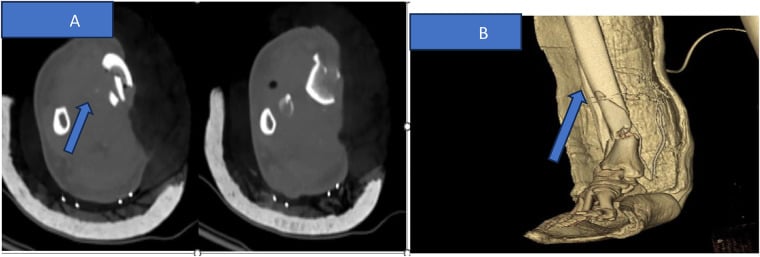
The fibula. An intact fibula may cause varus malalignment; consider a fibular osteotomy if reduction proves difficult. A fibular fracture at the same level suggests higher energy. A proximal fibular fracture means checking for ankle instability, the Maisonneuve pattern.
Management Algorithm
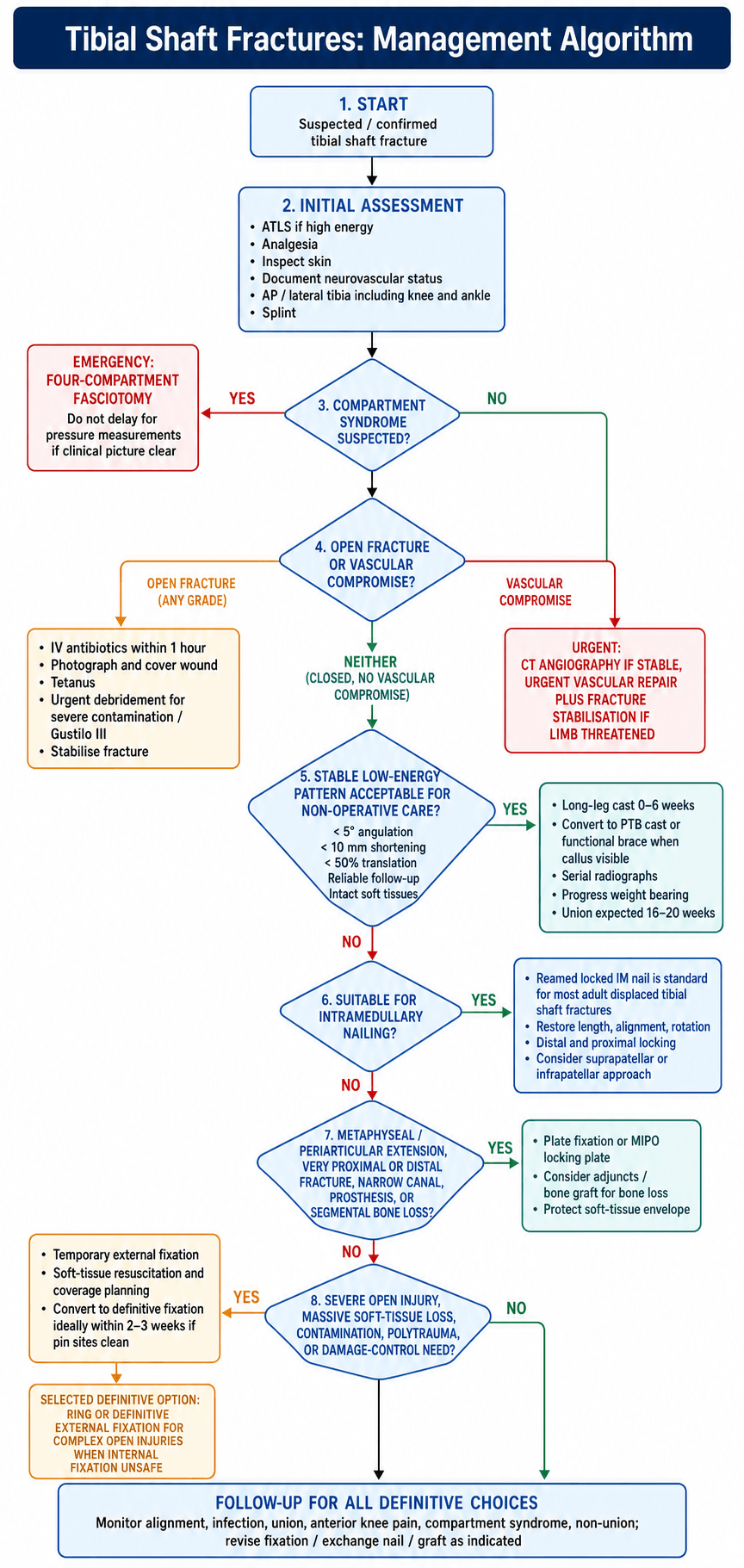
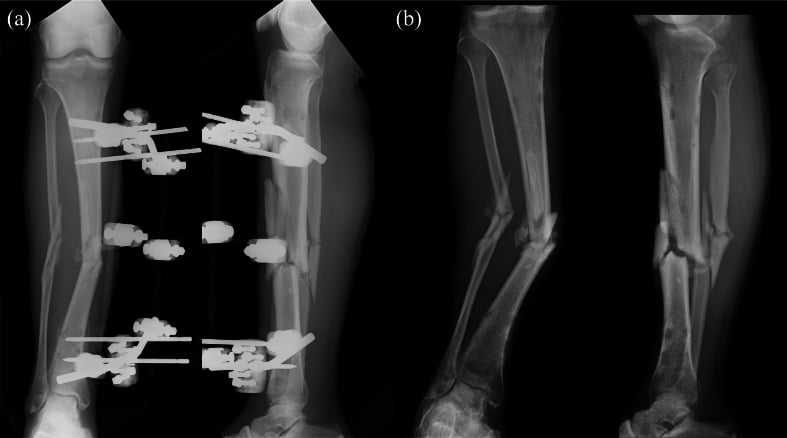
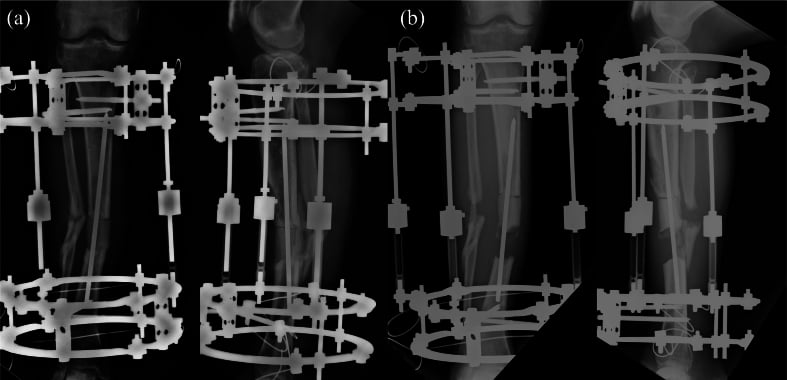
The decision. Two emergencies are dealt with first: compartment syndrome, and an open fracture or vascular compromise. A stable, low-energy closed fracture within acceptable limits can be treated in a cast and brace. Otherwise a reamed, locked intramedullary nail is the treatment of choice for most tibial shaft fractures, closed or open. A plate is used where a nail is unsuitable, and external fixation, temporary and then converted, for a severe open injury or polytrauma.
- Key Feature
- Low energy, minimally displaced
- Treatment
- Cast vs IM nail
- Pearl
- Cast if patient preference and reliable
- Key Feature
- High energy, spiral, segmental
- Treatment
- Reamed locked IM nail
- Pearl
- Gold standard treatment
- Key Feature
- Open wound, varying contamination
- Treatment
- Debridement + IM nail (primary or staged)
- Pearl
- IV Abx within 1 hour
- Key Feature
- Soft tissue loss, vascular injury
- Treatment
- Ex fix initially, then nail/coverage
- Pearl
- Needs plastic surgery for soft tissue
- Key Feature
- Pain out of proportion, tense
- Treatment
- Emergency 4-compartment fasciotomy
- Pearl
- Don't wait for diagnosis - act
Acceptable alignment. The 5-5-10-10 rule. Greater malalignment leads to abnormal joint loading.
- 5° of varus or valgus (coronal plane)
- 5-10° of anterior or posterior angulation (sagittal plane); the 5° figure is debated, and up to 10° is accepted
- 10° of rotation, which is very difficult to assess; compare with the contralateral leg
- 10 mm of shortening, especially with an intact fibula
Open fractures. The genuinely time-critical step is IV antibiotics within 1 hour, with tetanus prophylaxis. In the emergency department, photograph the wound, cover it with saline-soaked gauze and splint the leg; do not explore it there. Step the antibiotics up as contamination increases:
- Gustilo I-II: a cephalosporin, cefazolin 2 g IV
- Gustilo III: add an aminoglycoside, gentamicin, for Gram-negative cover
- Farm contamination: add penicillin for Clostridium
Debridement timing. Debride urgently, on a planned trauma list, NOT against a six-hour clock (PMID 34058873). The historical six-hour rule is not strongly supported by evidence (Harley 2002). Current consensus prioritises early antibiotics and thorough debridement over a rigid clock, with urgency driven by contamination and physiology.
Vascular compromise. A threatened limb needs angiography and vascular repair with fracture stabilisation.
Intramedullary Nailing
In open fractures. The nail is acceptable for open fractures up to Gustilo IIIA.
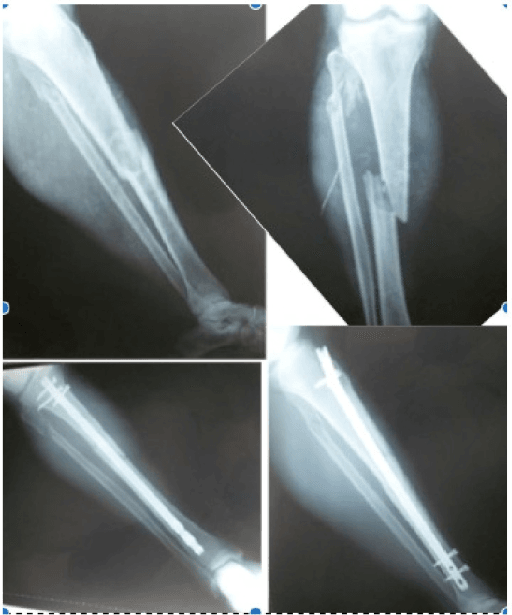
Reamed or unreamed. Reaming is preferred for most fractures and provides an autograft effect. The SPRINT trial found the advantage in closed fractures, where reamed nailing reduced the primary composite event, largely through less dynamisation. In open fractures there was no significant difference, and unreamed nailing is acceptable.
Suprapatellar or infrapatellar. The infrapatellar approach is the traditional one and may cause more knee pain. Suprapatellar nailing reduces knee pain, is easier in the obese and eases reduction of proximal fractures, but concerns remain about intra-articular debris and patellofemoral cartilage.
Where that leaves the choice. Long-term comparative data are still limited, a study has shown similar outcomes, and the approach remains surgeon preference.
Compartment Syndrome Management
Fasciotomy within 6 hours of symptom onset to prevent irreversible muscle necrosis. After 8 hours, myonecrosis begins. Volkmann's contracture is the end result of missed compartment syndrome.
The decision. A confirmed clinical diagnosis or high suspicion is enough. Do not delay for pressure measurements if the clinical picture is clear.
The fasciotomy.
- Two incisions: an anterolateral incision releases the anterior and lateral compartments, and a posteromedial incision releases the deep and superficial posterior compartments.
- Release all four compartments, extending the incisions if the muscle keeps bulging.
- Assess muscle viability by the 4 Cs and debride non-viable muscle.
- Leave the wounds open under a loose dressing and return to theatre at 48-72 hours for reassessment, then delayed primary closure, skin graft or VAC therapy.
Colour (pink, not grey/black), Contractility (twitches when stimulated), Consistency (firm, not mushy), Capacity to bleed (should bleed when cut). Debride non-viable muscle.
Surgical Technique
Intramedullary Nailing
Positioning. Supine on a radiolucent table, with C-arm access for AP and lateral views and a bump under the knee. For the infrapatellar approach the knee is flexed to 90° over a triangle or padded bolster; for the suprapatellar approach it is semi-extended.
Entry. Infrapatellar entry goes through the patellar tendon, splitting it (transtendinous), or beside it (paratendinous). Suprapatellar entry goes through the quadriceps tendon with the knee semi-extended.
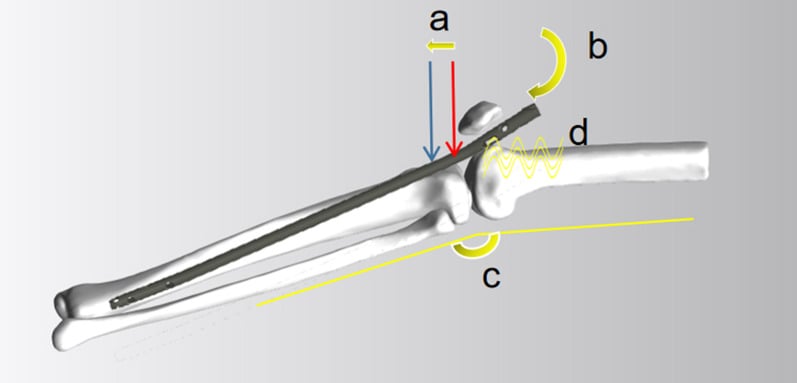
The entry point. On the tibial plateau, slightly medial to the lateral tibial spine, high and in line with the canal. The entry point is critical for alignment: a lateral entry causes valgus, a medial entry varus, and one too anterior drives procurvatum.
The nail.
- Pass the guidewire across the fracture and confirm its position on AP and lateral views.
- Ream sequentially to 1-1.5mm larger than the nail diameter, over-reaming for compaction of the reaming debris.
- Insert an appropriately sized nail, correcting rotation and checking it clinically and fluoroscopically. Avoid distraction at the fracture.
- Lock distally first, usually with 2 screws, then proximally. Lock statically for unstable fractures, and consider end caps to make later removal easier.
Fluoroscopy throughout confirms alignment against the 5-5-10-10 limits.
Reduction aids.
- Blocking (Poller) screws on the concave side of a coronal or sagittal deformity, and in metaphyseal fractures
- Percutaneous bone reduction clamps for temporary stabilisation
- A universal distractor
- A fracture table with skeletal traction for difficult reductions
- A temporary external fixator for severe comminution
Open reduction. For failed closed reduction, soft-tissue interposition or an associated articular injury.
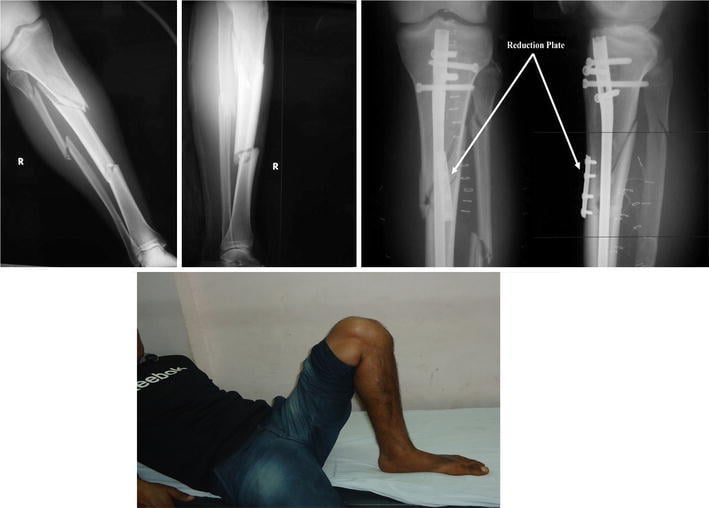
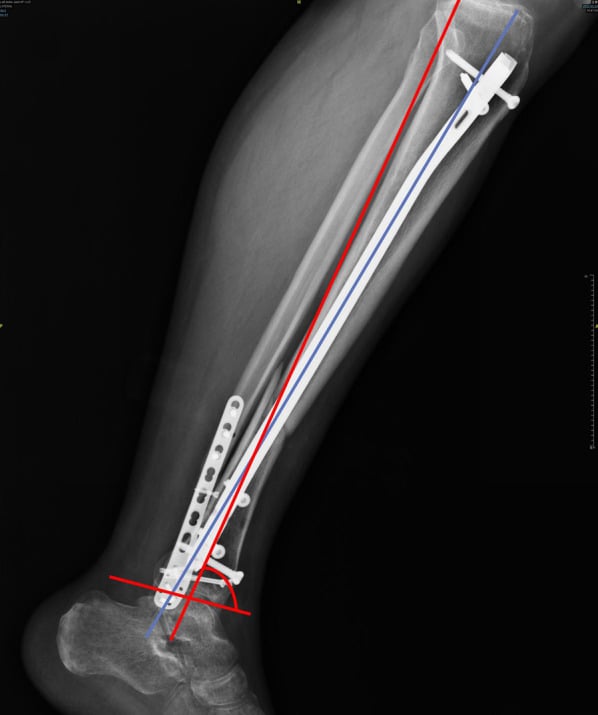
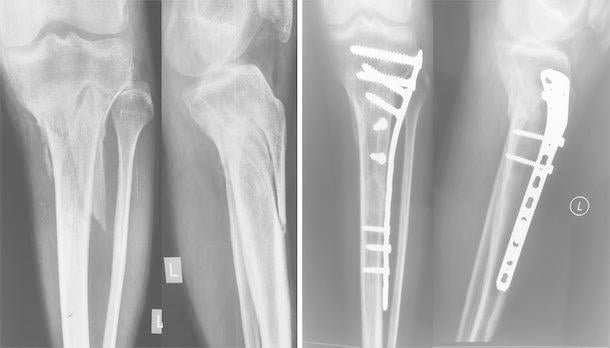
Proximal-third (metaphyseal-diaphyseal) tibial shaft fractures are the classic nailing trap, and the deformity is predictable: the short proximal fragment is pulled into apex-anterior angulation (procurvatum) by the patellar tendon/quadriceps and extensor forces, and into valgus by the start-point and muscle pull. A standard knee-flexed infrapatellar nail makes both worse (flexing the knee tips the proximal fragment further). Know the corrective toolkit:
- Nail in the semi-extended position (suprapatellar, or a lateral parapatellar semi-extended approach) - relaxes the extensor pull and is the single biggest fix for procurvatum.
- Get the start point right - the entry point above; too lateral drives valgus, too anterior drives procurvatum.
- Blocking (Poller) screws placed on the concave side of each deformity to narrow the metaphyseal funnel and steer the nail (e.g. a posterior blocking screw in the proximal fragment to correct apex-anterior; a lateral blocking screw to correct valgus).
- Provisional reduction held before reaming/nailing: a percutaneous clamp, a universal distractor, or a unicortical anterolateral plate to hold length and alignment while the nail passes.
- Consider plate fixation (MIPO) outright if the fragment is too short for reliable nail control.
By Level and Pattern
Distal third and segmental fractures. In the distal third, place the interlocking screws close to the fracture and consider a plate. A segmental fracture takes a long nail, which may need exchange for non-union.
The fibula in distal-third fractures. Whether to fix it is debated. Fixation can aid alignment but may over-constrain, and it is not routinely required.
Complications
- Incidence
- 5-10%
- Risk Factors
- High-energy, crush, young males
- Management
- Emergency 4-compartment fasciotomy
- Incidence
- 5-10%
- Risk Factors
- Open fracture, smoking, infection
- Management
- Exchange nail, bone graft, plate
- Incidence
- 5-15%
- Risk Factors
- Inadequate fixation, poor reduction
- Management
- Osteotomy and correction
- Incidence
- 1-5% closed, higher open
- Risk Factors
- Open fracture, soft tissue damage
- Management
- Washout, antibiotics, ? hardware removal
- Incidence
- 20-50%
- Risk Factors
- Infrapatellar approach, prominent hardware
- Management
- Hardware removal, rarely severe
- Incidence
- Rare
- Risk Factors
- Early weight bearing, non-union
- Management
- Revision fixation
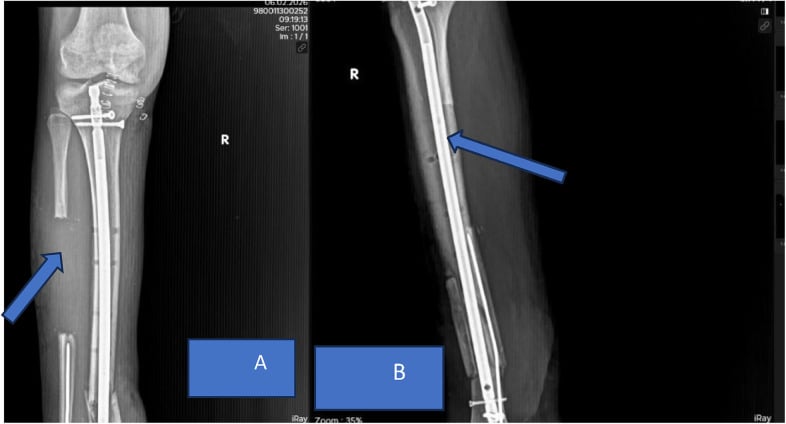
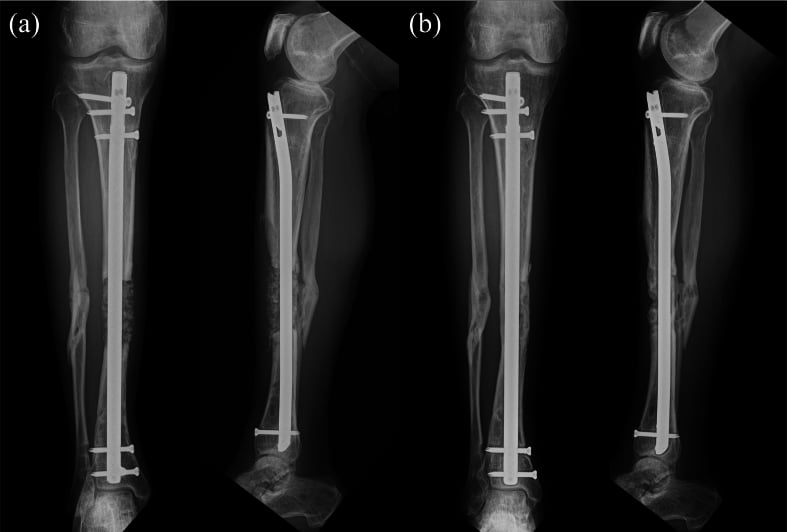
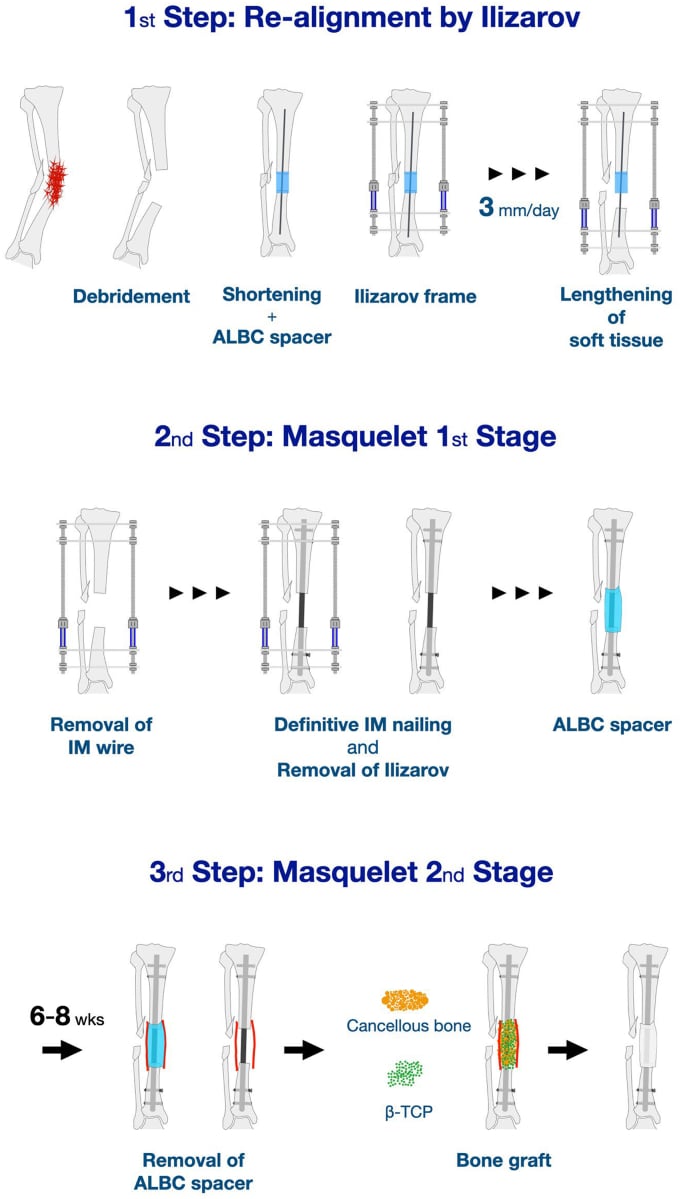
The tibia is the classic nonunion bone, and "exchange nail, bone graft or plate" is not an answer until you have characterised the nonunion. The framework:
- Step 0 - exclude infection. A septic nonunion masquerades as an aseptic one. Check CRP/ESR, scrutinise the history (open injury, wound issues), and have a low threshold for sampling. No graft or revision fixation will work over active infection - treat the infection (debridement, dead-space/soft-tissue management, targeted antibiotics, possibly staged Masquelet) first.
- Hypertrophic ("elephant-foot") nonunion = a MECHANICAL problem. There is abundant callus but inadequate stability; the biology is fine. The fix is more stability: exchange reamed nailing (a larger nail plus the reaming autograft effect) or dynamisation of a statically-locked nail, or revision to a plate. Bone graft is usually not needed.
- Atrophic/oligotrophic nonunion = a BIOLOGICAL problem. Poor callus, poor vascularity. The fix is to restore biology: debride to bleeding bone and add osteoinductive/osteoconductive/osteogenic support (autograft - including RIA graft - and/or BMP) plus adequate stability.
- The unifying "diamond concept": durable union needs mechanical stability + an osteoconductive scaffold + osteoinductive signal + osteogenic cells (and a viable host) - identify which limb is deficient and supply it.
Postoperative Care
Wounds. Check surgical wounds at 48 hours and again at the 2-week review. Care for fasciotomy wounds if one was performed, and use negative pressure wound therapy for significant soft-tissue defects.
Thromboprophylaxis. Chemical prophylaxis for 4-6 weeks, LMWH preferred (enoxaparin 40mg daily), with mechanical prophylaxis in TED stockings.
Weight bearing.
- Most nailed tibias: weight bearing as tolerated immediately
- Unstable or comminuted patterns: touch weight bearing for 6 weeks
- Plate fixation: typically non-weight-bearing for 6-8 weeks
Rehabilitation. Early range of motion of the ankle and knee, oedema management and gait training with appropriate aids, progressing to strengthening, range-of-motion exercises, advancing gait training and a return to functional activities. Early mobilisation reduces complications and optimises recovery.
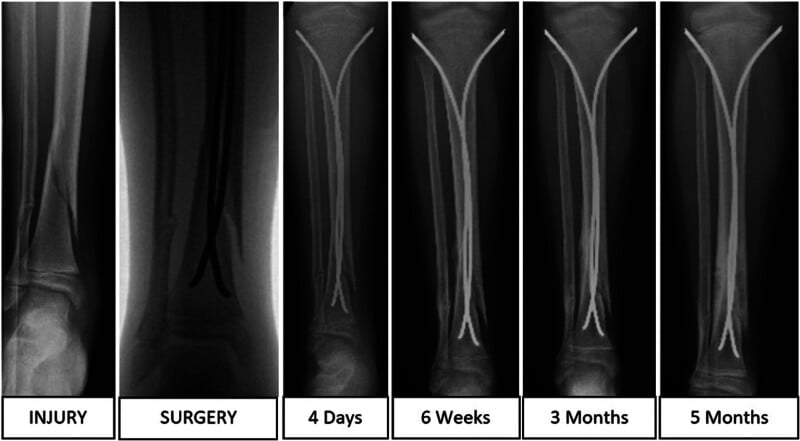
Review. Clinical and radiological review at 6 weeks, then assessment of union at 12 weeks, with radiographs at both. They assess callus formation and implant position and monitor for malunion or hardware failure. The red flags between visits:
- Increasing pain or swelling
- Wound complications
- Progressive deformity
- Persistent non-weight-bearing pain
Union. Clinically, pain-free weight bearing; radiologically, bridging callus on 3 cortices. Open fractures take longer to unite than closed ones, as the outcomes table shows.
Return to activity. Light activities at 3 months post-union, and full sport typically at 6-12 months depending on demands. Driving typically resumes at 6-8 weeks in an automatic car, later in a manual.
Hardware removal. Not routinely recommended. Consider it for symptomatic hardware, such as prominent implants or anterior knee pain, after a minimum of 12-18 months post-union, and warn of refracture through the screw holes. Where hardware is retained, review annually. Long-term follow-up monitors for late complications and assesses functional outcome.
Outcomes and Prognosis
- Union Rate
- 95-98%
- Time to Union
- 16-20 weeks
- Key Factors
- Gold standard treatment
- Union Rate
- 85-95%
- Time to Union
- 20-26 weeks
- Key Factors
- Soft tissue management critical
- Union Rate
- 80-90%
- Time to Union
- 24-32 weeks
- Key Factors
- Higher complication rate
- Union Rate
- 70-85%
- Time to Union
- Variable
- Key Factors
- High risk complications, may need flap
Prognostic factors. Favourable factors are a simple fracture pattern, adequate soft-tissue coverage, not smoking, a young patient, good bone quality and early stable fixation. Unfavourable ones are a comminuted or segmental pattern, a higher-grade open fracture, smoking, an elderly patient, diabetes or peripheral vascular disease, and infection.
Function. Most patients achieve good to excellent function after nailing, and a return to pre-injury activity levels is expected in the majority. High-energy injuries and open fractures have more variable outcomes.
Guidelines, Registries & Global Practice
- Most common long bone fracture worldwide (~2% of all fractures)
- Incidence roughly 17 per 100,000 person-years in high-income settings
- Bimodal: young men (high-energy road traffic and sport) and older women (low-energy falls)
- Road traffic injury is the dominant high-energy cause in low- and middle-income countries
- Plastic surgery availability dictates feasibility of early "fix and flap" for Gustilo IIIB
- Implant access (modern nails vs external fixators) varies by resource setting
- Transfer distance to a level 1 / orthoplastic centre affects debridement and coverage timing
- Antibiotic stewardship and microbiology support differ regionally
- Open Fracture Antibiotics
- IV co-amoxiclav or cefuroxime within 1h; add Gram-negative cover for contamination
- Debridement Timing
- Within 12h for high-energy (24h for low-energy); immediate if marine/agricultural/sewage contamination
- Soft-tissue Coverage
- Definitive coverage within 72h, ideally combined ortho-plastic 'fix and flap'
- Open Fracture Antibiotics
- First-generation cephalosporin within 1h; add aminoglycoside/Gram-negative cover for type III
- Debridement Timing
- Urgent but not strictly 6h; based on contamination and physiology
- Soft-tissue Coverage
- Early coverage; staged for severe contamination
- Open Fracture Antibiotics
- Early IV prophylaxis; escalate cover with Gustilo grade
- Debridement Timing
- Thorough debridement prioritised over a fixed clock
- Soft-tissue Coverage
- Reconstructive ladder; temporary ex-fix then definitive fixation + flap
- Open Fracture Antibiotics
- Earliest available IV antibiotic; tetanus prophylaxis
- Debridement Timing
- As soon as safe theatre access allows
- Soft-tissue Coverage
- External fixation when plastics unavailable; transfer for coverage
- Long-bone fracture registries (e.g. national hip/trauma databases) consistently show intramedullary nailing as the dominant diaphyseal construct
- Open fracture databases (e.g. UK open-fracture audits aligned to BOAST) demonstrate lower deep-infection rates with combined orthoplastic care and timely coverage
- Registry follow-up confirms higher reoperation in open and high-energy patterns, consistent with SPRINT findings
- High-resource: reamed locked nail, suprapatellar option, early free-flap coverage
- Limited-resource: external fixation as definitive treatment more common; staged nailing if implants available
- Damage-control orthopaedics principles apply universally in polytrauma
- Compartment syndrome vigilance and fasciotomy thresholds are identical worldwide
Key documentation: (1) Time of injury and time of first antibiotic dose for open fractures, (2) Serial compartment checks with times recorded, (3) Consent including anterior knee pain risk for nailing, (4) Smoking-cessation counselling documented. Missed compartment syndrome is among the most common sources of orthopaedic litigation in every jurisdiction.
MCQ Practice Points
Q: What percentage of tibial shaft fractures are open? A: 25% - the highest rate of any long bone. This is due to the subcutaneous anteromedial border of the tibia with minimal soft tissue coverage.
Q: What is the earliest clinical sign of anterior compartment syndrome in the leg? A: Pain on passive plantarflexion of the toes and first web space sensory changes (deep peroneal nerve distribution). Do not wait for paralysis or pulselessness.
Q: What did the SPRINT trial show regarding reamed vs unreamed tibial nailing? A: Reamed nailing had lower re-operation rates for closed tibial shaft fractures. For open fractures, there was no significant difference. Reamed nailing is now standard for closed fractures.
Q: What antibiotic regimen is recommended for Gustilo Type III open fractures? A: Cephalosporin (cefazolin 2g) PLUS aminoglycoside (gentamicin). Add penicillin if farm contamination is present to cover Clostridium species.
Q: What are the acceptable alignment parameters for tibial shaft fractures? A: The 5-5-10-10 rule: 5° varus/valgus, 5-10° AP angulation, 10° rotation, 10mm shortening. Greater malalignment leads to abnormal joint loading and poor outcomes.
Q: What did the FLOW trial show about open fracture wound irrigation? A: Low-pressure saline irrigation is as effective as high-pressure. Soap provided no benefit and may actually increase complications. Simple saline irrigation is recommended.
Exam Viva Scenarios
Practise clinical reasoning and management decisions out loud
“A 35-year-old motorcyclist presents after an accident with a closed, displaced mid-shaft tibial fracture with an intact fibula. He has no other injuries. X-rays show 15° of valgus angulation and 2cm overlap. Neurovascular exam is normal. How would you manage this patient?”
“A 25-year-old pedestrian hit by a car presents with an open tibial fracture. There is a 15cm wound on the anterolateral leg with exposed bone and significant soft tissue stripping. There is no active bleeding and dorsalis pedis pulse is palpable. What is your management?”
“You are called to the ward 8 hours post-operatively for a 28-year-old man who had IM nailing of a closed tibial shaft fracture. The nurses report he is in severe pain despite IV morphine. His leg is in a backslab. On examination, he has severe pain on passive toe extension, the anterior compartment feels tense, and he reports tingling over the first web space. What is your management?”
Key Facts
- Most common long bone fracture
- 25% are open (highest rate)
- 5-10% non-union rate
- IM nail = gold standard treatment
Compartment Syndrome
- 5 Ps: Pain, Pressure, Paresthesias, Paralysis, Pulselessness
- First 2 Ps are EARLY - act on these
- Fasciotomy within 6 hours
- All 4 compartments must be released
Open Fracture Protocol
- Antibiotics within 1 hour
- Gustilo I-II: cefazolin
- Gustilo III: add gentamicin
- Farm: add penicillin
Fixation Choice
- IM nail: most tibial shaft fractures
- Reamed beats unreamed for closed (SPRINT)
- Ex fix: IIIB/IIIC initially
- Plate: metaphyseal, narrow canal
Acceptable Alignment (5-5-10-10)
- 5° varus/valgus
- 5-10° AP angulation
- 10° rotation
- 10mm shortening
Evidence Base and Key Trials
SPRINT Trial - Reamed vs Unreamed Tibial Nailing
- Multicentre blinded RCT - 1319 adults randomised, 1226 (93%) completed 1-year follow-up
- Closed fractures: reamed nailing reduced the primary composite event (11% vs 17%; RR 0.67, 95% CI 0.47-0.96, p=0.03), largely driven by less dynamisation
- Open fractures: no significant difference (RR 1.27, 95% CI 0.91-1.78, p=0.16)
- Delaying reoperation for nonunion to at least 6 months substantially reduced reoperation
Nail vs Plate - Extra-articular Proximal Tibia
- Prospective RCT of 58 closed extra-articular proximal tibial fractures - MIPO plating vs intramedullary nailing
- Nailing had significantly shorter hospital stay (p=0.035) and union time (p=0.004)
- No difference in infection, knee range of motion, malunion or nonunion
- Both implants provided rigid fixation preventing secondary collapse