Schatzker Classification | Three-Column Concept | Staged Surgery
- CT is ESSENTIAL for surgical planning - reveals posterior column and true depression
- Wrinkle sign indicates safe soft tissue for ORIF (no wrinkles = no surgery)
- Three-column concept: Lateral, Medial, Posterior - each needs specific approach
- Bicondylar patterns (V-VI) require staged approach and dual plating
- Single lateral plate fails in bicondylar fractures - this is a common exam trap
- “Hoffa fragment = posterior column involvement requiring specific approach
- “Medial plateau fracture = high-energy until proven otherwise
- “Moore classification for fracture-dislocation patterns
- “Rasmussen radiological criteria for articular reduction assessment
Overview and Epidemiology
A tibial plateau fracture is an injury to a weight-bearing articular surface, and it tests your understanding of articular fracture principles, soft-tissue management and staged surgery. Examiners focus on the classification, on when not to operate, on the choice of approach and on avoiding complications.
Who. The distribution is bimodal: young patients with high-energy injuries, where men predominate, and elderly patients with low-energy injuries, where women predominate. The causes are sports injuries, motor vehicle accidents and falls from height. The lateral plateau is the more commonly involved, in 55-70%.
Why it matters. Associated soft-tissue injuries are common, rehabilitation is significant, and the injury has implications for work and function. The long-term risk of post-traumatic osteoarthritis is 10-30% (Rademakers 2007, PMID 17211262; Wasserstein 2014, PMID 24430414).
Anatomy and Biomechanics
The two plateaus. The lateral plateau is convex, less congruent with the femoral condyle, and sits higher, 3mm proximal to the medial. It is the more prone to depression fractures, and the lateral meniscus covers 80% of it. The medial plateau is concave and more congruent, with the larger weight-bearing surface and stronger subchondral bone; the medial meniscus covers 50%.
The eminence. The intercondylar eminence is central and contains the ACL and PCL insertions.
Load and stability. In neutral alignment the load is shared 60% medial, 40% lateral, and the menisci transmit 50% of the axial load. Articular cartilage is 2-4mm thick. The medial plateau and the MCL give valgus stability; the lateral plateau, the LCL and the posterolateral corner give varus stability.
Why alignment matters. A fracture disrupts the biomechanical axis, and restoring the mechanical axis is essential for long-term knee function and for preventing arthrosis. The articular surface's tolerance of residual step-off is graded:
- Under 2mm: good long-term outcomes
- 2-5mm: progressive arthrosis
- Over 5mm: accelerated OA
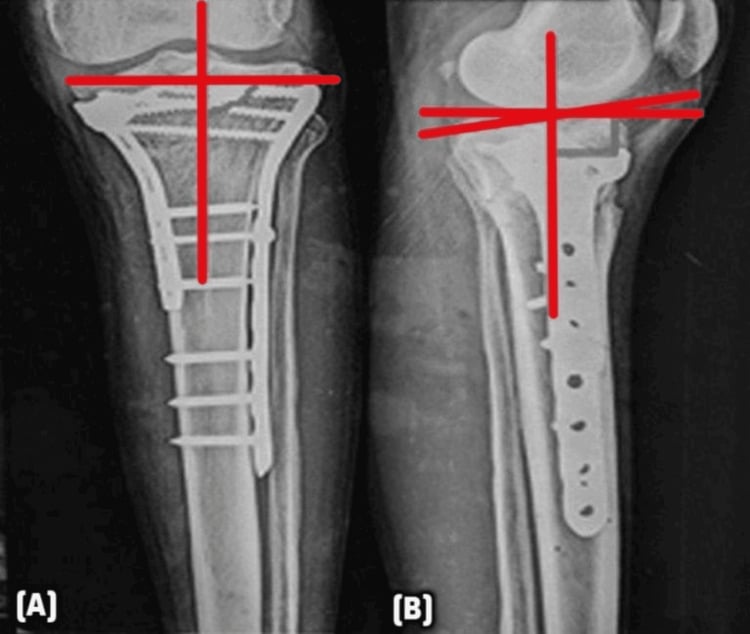
Posterior slope. The plateau slopes 7-10° posteriorly, and the slope must be restored during fixation. Slope is the number that matters after a plateau heals: it governs anterior tibial translation and the ACL. Alignment after a plateau fracture is read on long films, not on the knee series.
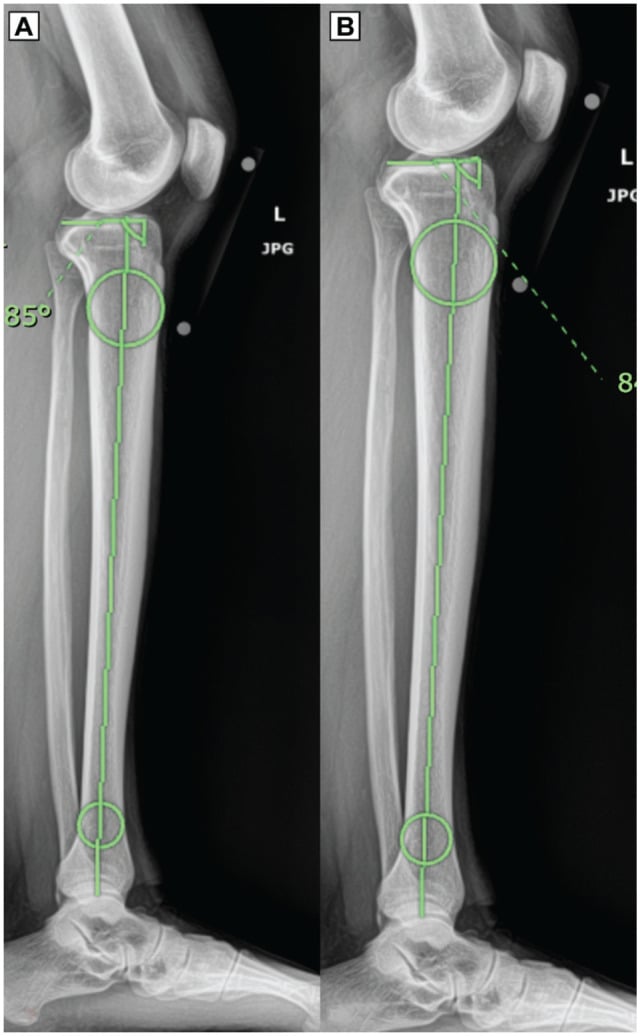
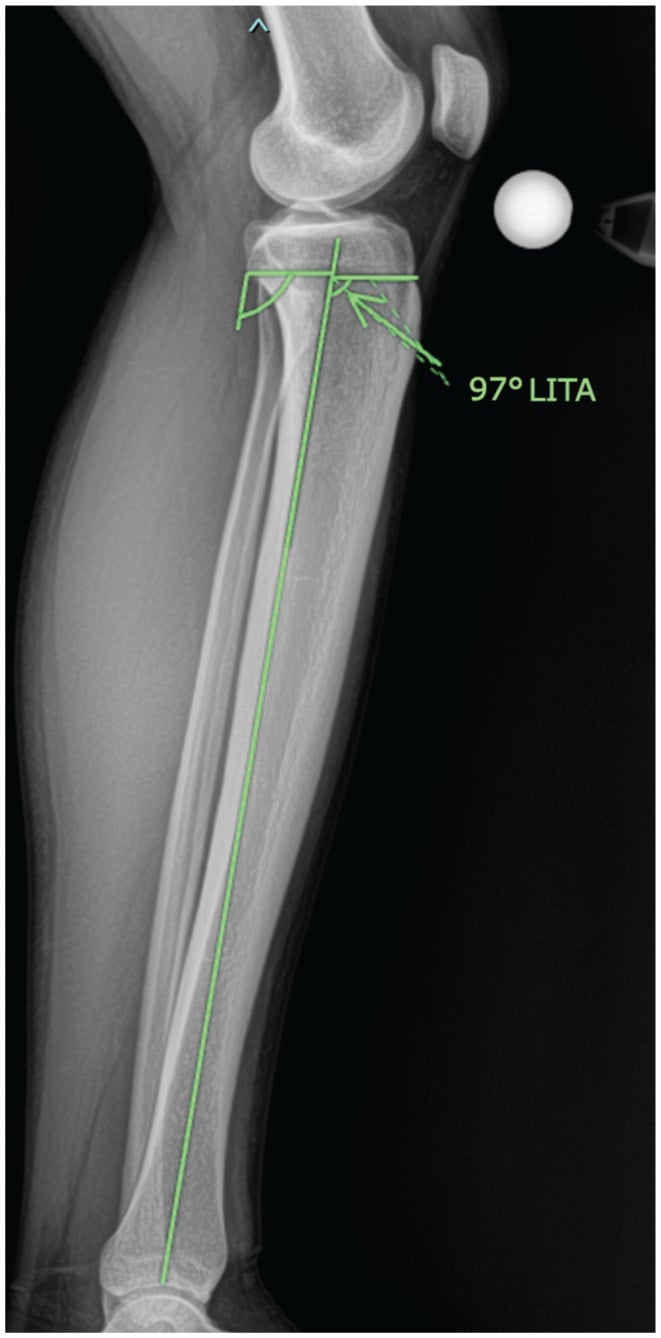
Structures at risk. The popliteal artery lies directly posterior to the tibia, separated from it only by the popliteus muscle, and tethering at the soleal arch makes it vulnerable to injury with posterior displacement. During posterior approaches the neurovascular bundle must be carefully protected.
The common peroneal nerve is at risk in all lateral approaches. It wraps around the fibular neck 1-2cm distal to the joint line; always identify and protect it, and remember that knee flexion relaxes it.
- Location
- Posterior, at soleal arch
- Risk During
- Posterior approaches
- Prevention
- Protect with retractors, flex knee
- Location
- Around fibular neck
- Risk During
- Lateral approaches
- Prevention
- Identify and protect, avoid stretch
- Location
- Through interosseous membrane
- Risk During
- Anterolateral approach
- Prevention
- Careful dissection at membrane
- Location
- Medial plateau
- Risk During
- Medial approach
- Prevention
- Ligate if bleeding
Classification Systems
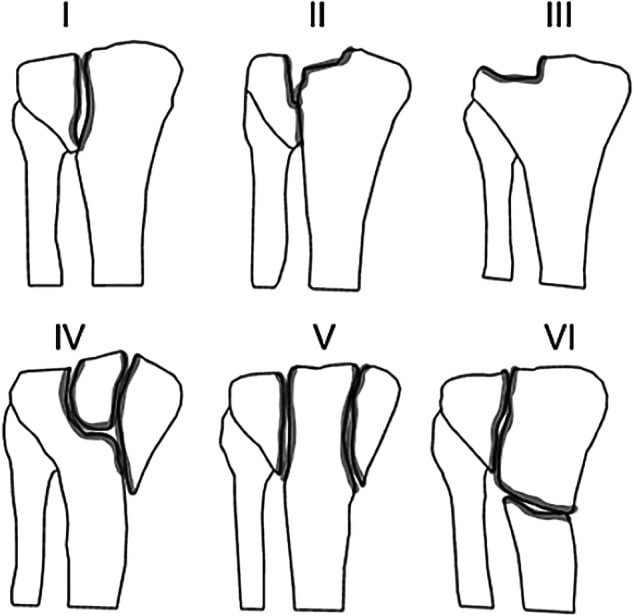
Schatzker (1979, PMID 445923). Six types, and the number carries the energy of the injury. Types I-III are split and depression patterns of the lateral plateau from low-energy injuries; types IV-VI, the medial, bicondylar and dissociated patterns, are high-energy. Type II is the most common.
- Pattern
- Lateral split (wedge)
- Mechanism
- Low-energy valgus
- Pattern
- Lateral split-depression
- Mechanism
- Low-energy valgus
- Pattern
- Pure lateral depression
- Mechanism
- Low-energy axial
- Pattern
- Medial plateau fracture
- Mechanism
- HIGH-energy varus
- Pattern
- Bicondylar (split), metaphysis intact
- Mechanism
- HIGH-energy axial
- Pattern
- Metaphyseal-diaphyseal dissociation
- Mechanism
- HIGH-energy
Type II or type III? Type II has a split component, a cortical break, as well as the depression; type III is a pure depression with the cortex intact. The distinction changes the surgical approach, because a type II can be opened like a book to reach the depression.
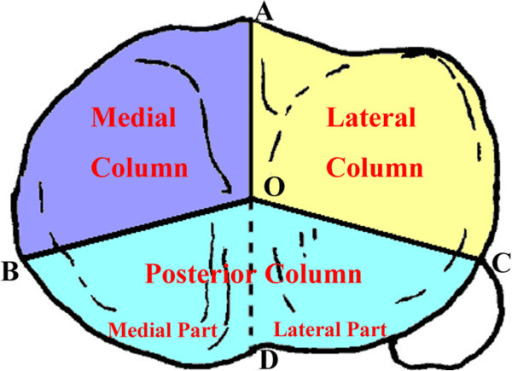
The three columns (Luo 2010, PMID 20881634). A CT-based classification for surgical planning. It divides the plateau into lateral, medial and posterior columns, and every involved column needs its own approach and plate.
- Anatomy
- Lateral plateau + anterolateral cortex
- Primary Approach
- Anterolateral
- Fixation
- Lateral buttress/locking plate
- Anatomy
- Medial plateau + anteromedial cortex
- Primary Approach
- Anteromedial or posteromedial
- Fixation
- Medial buttress plate
- Anatomy
- Posterior aspect of both condyles
- Primary Approach
- Posteromedial ± posterolateral
- Fixation
- Posterior plating, raft screws
Moore (fracture-dislocations). Moore's classification is used for fractures associated with knee dislocation.
- Location
- Medial plateau
- Dislocation Direction
- Lateral
- Key Feature
- Coronally split, entire condyle
- Location
- Lateral plateau
- Dislocation Direction
- Medial/Posterior
- Key Feature
- Coronally split with dislocation
- Location
- Rim avulsion
- Dislocation Direction
- Variable
- Key Feature
- Ligament avulsion, rim fracture
- Location
- Rim compression
- Dislocation Direction
- Variable
- Key Feature
- Compression of tibial rim
- Location
- Four-part
- Dislocation Direction
- Variable
- Key Feature
- Four-part split, bicondylar
Moore Type I-II fractures are associated with knee dislocation. Mandatory vascular assessment with ABI and CT angiography if any concern.
Clinical Assessment
History. The mechanism is an axial load with a valgus or varus force, the "bumper fracture", and the energy level matters: the height of the fall, the speed of the vehicle. Ask about osteoporosis, diabetes and smoking, about anticoagulation, which affects timing, and about the patient's activity level and occupation.
Examination. Look for swelling, bruising, deformity and wounds; feel for tenderness, crepitus and an effusion; movement is limited by pain and instability. The neurovascular examination is mandatory, and all four compartments of the leg are assessed.
Palpate the dorsalis pedis and posterior tibial pulses, and calculate the ABI if there is ANY concern. Test the common peroneal nerve (foot drop) and the posterior tibial nerve (sole sensation).
Pain on passive stretch of the toes, tense compartments and pain out of proportion signal compartment syndrome: keep a low threshold for fasciotomy.
The soft tissues decide the timing. Assess the skin first: is the fracture open (grade it by Gustilo), are there fracture blisters and are they clear or blood-filled, and is the skin under tension, tented, or at risk of impending necrosis?
Then the swelling, with the wrinkle test: can you see skin wrinkles over the anterior tibia? No wrinkles means the leg is too swollen for ORIF. The wrinkle test is mandatory before ORIF; document it in the notes with photographs.
The timing decision. A positive wrinkle test with good skin means proceed to ORIF. A negative test means a spanning external fixator and a wait of 7-21 days for the swelling to resolve. Until the wrinkles return, reduce the swelling with ice, a splint and elevation above heart level, continued until the test is positive.
Clear blisters = epidermis only, can operate through. Blood-filled (haemorrhagic) blisters = full-thickness injury, AVOID incisions through these areas.
Associated injuries. Each associated injury has its own incidence, method of assessment and implications.
- Incidence
- 50-90%
- How to Assess
- MRI or direct visualisation
- Implications
- Address at time of fixation
- Incidence
- 20-30%
- How to Assess
- Examination under anaesthesia, MRI
- Implications
- May need reconstruction
- Incidence
- 20%
- How to Assess
- Stress testing, MRI
- Implications
- Usually heals with fracture fixation
- Incidence
- 10-15%
- How to Assess
- Dial test, external rotation
- Implications
- Often needs repair/reconstruction
- Incidence
- 2-3%
- How to Assess
- ABI, CTA if concern
- Implications
- Emergent vascular surgery
Differential diagnosis. The acute painful swollen knee after injury:
- Discriminating Features
- Bony tenderness over the plateau, valgus/varus mechanism, lipohaemarthrosis, axial-load injury
- Key Investigation
- AP/lateral radiographs then CT
- Discriminating Features
- Younger patient, ACL-type mechanism, central bony fragment without articular depression
- Key Investigation
- Radiograph / CT; MRI for ACL
- Discriminating Features
- Tenderness localised to femoral condyle, coronal split on lateral film
- Key Investigation
- CT (coronal plane fracture often missed on X-ray)
- Discriminating Features
- Gross instability, dimple sign, high suspicion for vascular injury
- Key Investigation
- Vascular assessment, ABI, CT angiography
- Discriminating Features
- Anterior tenderness, inability to straight-leg-raise, palpable gap
- Key Investigation
- Radiograph; ultrasound/MRI for tendon
- Discriminating Features
- Effusion without bony tenderness, normal radiographs, mechanism-specific instability
- Key Investigation
- MRI
- Discriminating Features
- Effusion, normal radiographs, focal subchondral signal
- Key Investigation
- MRI
Investigations
Radiographs. The first-line study is a standard knee series of AP, lateral and oblique views, with stress views if a ligamentous injury is suspected. The key measurements:
- Tibial plateau angle (joint line)
- Condylar widening
- Depression depth
CT. Mandatory for surgical planning in all displaced fractures, with axial, coronal, sagittal and 3D reconstructions. Plain radiographs miss posterior column involvement in up to 30% of cases, and the scan shows what they cannot:
- Articular depression depth, often underestimated on X-ray: guides the need for grafting
- Posterior column involvement: determines the approach
- Fragment size: determines whether screws will hold
- Comminution: influences spanning versus length-stable fixation
- Coronal plane fracture lines
Posterior column involvement (seen on CT) requires ADDITIONAL posterior approach - cannot be addressed through anterolateral approach alone. This is WHY CT is mandatory!
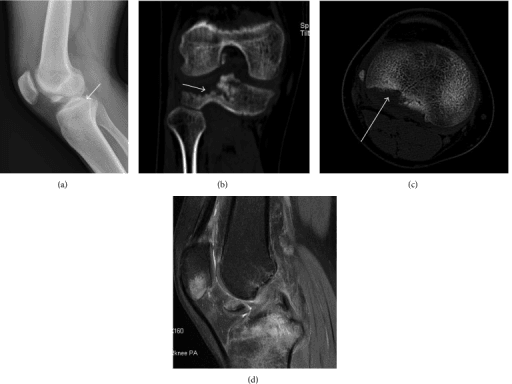
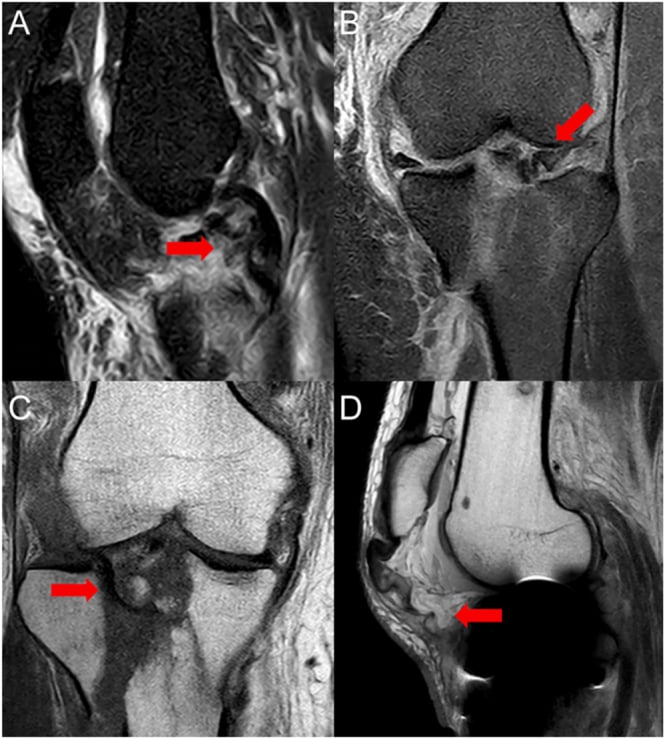
What CT changes: the plan more than the label. In a prospective study, three experienced trauma surgeons blindly read radiographs alone, radiographs plus CT, and radiographs plus MRI for each injury (PMID 12368643). Adding CT changed the Schatzker classification in only 6% of cases and raised inter-observer agreement modestly, from a mean kappa of 0.68 to 0.73. Adding MRI changed the classification in 21% and the management plan in 23%, and lifted kappa to 0.85 for classification and 0.86 for the plan.
CT earns its place by defining depression depth, articular comminution and the posterior and posteromedial fragments, and therefore the approach and implant, not by relabelling the Schatzker type. That is exactly why the three-column concept is a CT construct, and why, if asked why CT is mandatory, you argue operative planning rather than reclassification.
Note the limits before quoting these numbers: three observers at a single centre, and MRI is not routine practice for these injuries, its advantage here coming largely from documenting the soft-tissue injury that plain films and CT cannot show. Estimates also vary between series; other work puts the CT-induced change in classification nearer 12% and the change in planned treatment around 26%. Quote the direction of the effect, that CT shifts the plan more than the label, rather than defending one precise percentage.
MRI. Indicated for a suspected meniscal injury (for surgical planning), for evaluating ligamentous injury, and for an occult fracture in a non-displaced injury. It is usually done post-operatively or after the swelling subsides.
Management Algorithm
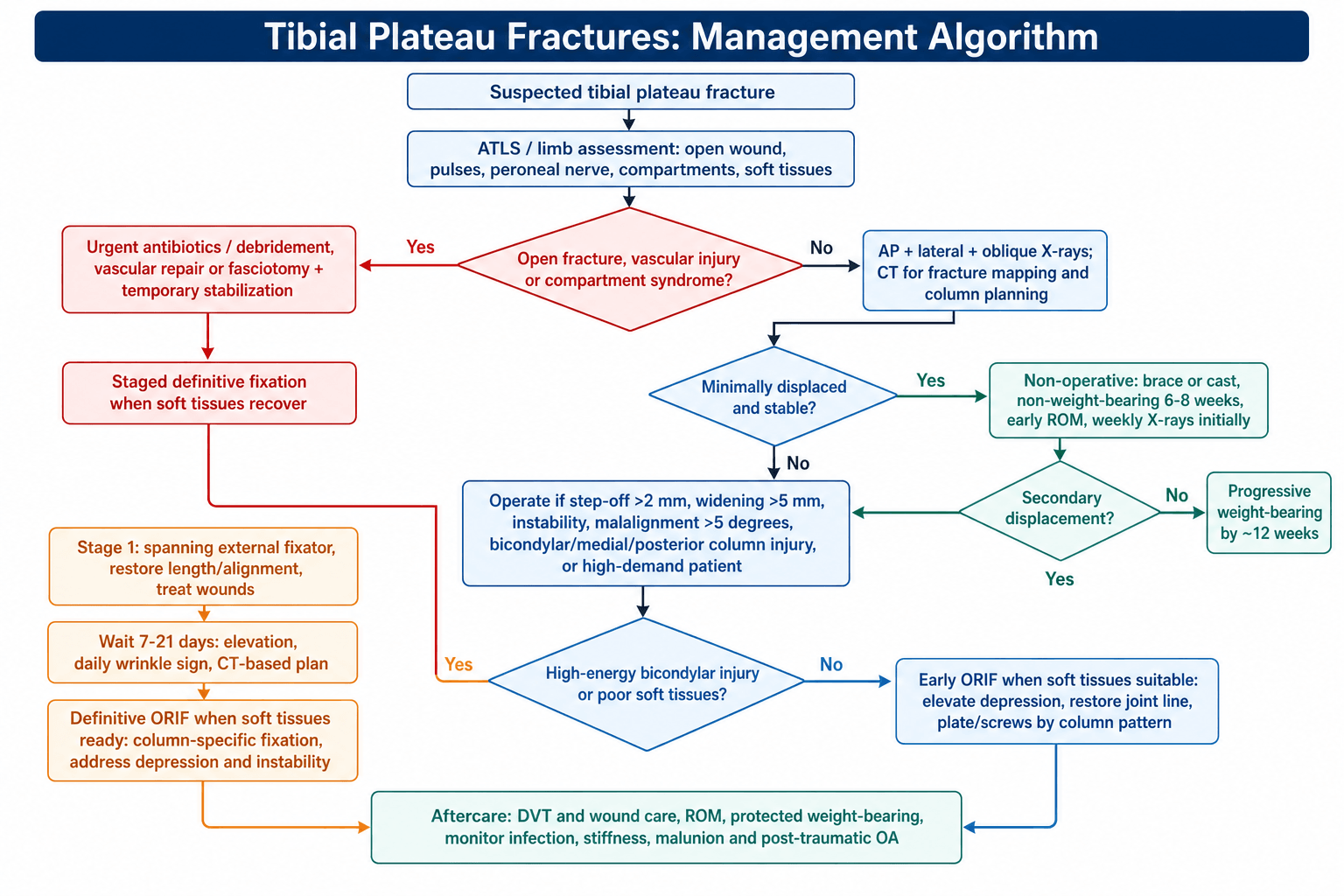
The decision by pattern. The Schatzker type points to the operation, and the patient and the state of the soft tissues shape how and when it is done.
- Fracture Pattern
- Schatzker I (lateral split)
- Treatment
- Lag screws (percutaneous) ± buttress plate
- Key Pearl
- Simple pattern = simple fix
- Fracture Pattern
- Schatzker II (split-depression)
- Treatment
- ORIF: elevate, bone graft, buttress plate
- Key Pearl
- Support the subchondral bone
- Fracture Pattern
- Schatzker III
- Treatment
- Arthroscopic-assisted vs open elevation, raft screws, graft
- Key Pearl
- Elevate via cortical window
- Fracture Pattern
- Schatzker IV (medial)
- Treatment
- Medial buttress plate essential
- Key Pearl
- High-energy = ligament injury
- Fracture Pattern
- Schatzker V-VI
- Treatment
- STAGE: Ex-fix → wait → dual ORIF (VI: dual plating or ring fixation)
- Key Pearl
- Wrinkle sign before definitive
Who. The absolute indications for conservative management:
- Non-displaced or minimally displaced (under 2mm step-off)
- Stable knee on stress testing
- Low functional demand
- Severe medical comorbidities precluding surgery
The protocol. A long leg cast or hinged knee brace, non-weight-bearing for 6-8 weeks, with progressive range of motion starting at week 2-4 and full weight-bearing by 12 weeks.
Watch for displacement. Serial radiographs monitor the position, weekly for the first 2-3 weeks. Any secondary displacement converts treatment to operative management.
Circular fixation, the alternative to dual plating. The staged pathway ends in dual plating, but for the high-energy bicondylar fracture with a poor soft-tissue envelope there is an alternative definitive strategy, circular (Ilizarov or hybrid) external fixation, which the COTS randomised trial supports. Its best indications are Schatzker V-VI, especially VI (metaphyseal-diaphyseal dissociation), with compromised soft tissues, open injuries, or where extensive dual-plate dissection would risk the skin.
The concept is limited internal fixation plus a ring frame. The articular surface is reduced and held with percutaneous or limited screws, and the ring or hybrid frame bridges the metaphyseal-diaphyseal zone, achieving stability without the soft-tissue stripping of open plating.
Periarticular tensioned wires and half-pins should stay roughly at least 14mm below the joint line to remain extracapsular; a wire that enters the capsular reflection can seed a septic arthritis.
Against dual plating in COTS, ring fixation gave less blood loss, a shorter hospital stay and fewer and less severe reoperations, with equivalent articular reduction and 2-year WOMAC. The trade-off is pin-site infection, the burden of the frame, knee stiffness and the need for surgeon expertise.
Surgical Technique
Consent. The specific risks to discuss:
- Superficial infection in 2-5%, deep infection in 1-2%
- Wound complications, higher in Schatzker V-VI
- Peroneal nerve injury (1-2%)
- Stiffness, which is common
- Malunion or nonunion (5-10%)
- Post-traumatic OA
- Hardware removal, which may be needed
Equipment. Have ready:
- Plates: lateral locking plate, medial buttress plate, posterior plates
- Screws: lag, raft and locking screws
- Graft: bone graft substitute or autograft
- Imaging: two image intensifiers ideally, for AP, lateral and Schatzker views
- Reduction tools: femoral distractor, reduction clamps, bone tamp
Filling the void. Elevating a depressed articular fragment leaves a metaphyseal void, and supporting it is what stops the surface re-collapsing. Raft screws placed immediately beneath the subchondral bone provide the mechanical support, and the void filler buttresses them. The goal is a stable subchondral construct, raft screws plus a structural void fill, that holds the elevated joint line until union.
The choice of filler is examinable:
- Autograft (iliac crest) is osteogenic but limited in volume and carries donor-site morbidity; allograft avoids that
- Calcium phosphate cement has high compressive strength and a lower rate of articular subsidence and loss of reduction than the weaker, faster-resorbing calcium sulfate, which makes it the favoured filler under a reduced articular surface
For the lateral column. The patient is supine with a bump under the hip and the knee slightly flexed.
Step-by-Step
A curved incision parallel to the lateral joint line and centred over the lateral plateau, on a line from the fibular head to Gerdy's tubercle. Length 10-15cm, extensile if needed.
- Incise iliotibial band in line with skin incision
- Identify and protect common peroneal nerve at fibular neck
- Retract tibiofemoral joint with Z-retractors
Common peroneal nerve wraps around fibular neck. Flex knee to relax. Never use retractors near fibular head without visualisation.
- Submeniscal arthrotomy to visualise articular surface
- Elevate tibialis anterior muscle from lateral tibial surface
- Expose metaphysis for plate application
For Type II (split-depression)
- Open the split fragment like a book
- Visualise depressed articular fragments
- Use bone tamp to elevate depression
- Pack with bone graft
- Reduce split fragment over elevated joint
- Provisional K-wire fixation
- Lag screws for split component
- Raft screws (subchondral) to support elevated segment
- Apply lateral buttress/locking plate
- Final imaging in all planes
Troubleshooting. The common intraoperative problems and their fixes:
- Cause
- Inadequate exposure
- Solution
- Use femoral distractor to open joint, extend arthrotomy, consider arthroscopy
- Cause
- Impacted into metaphysis
- Solution
- Use larger tamp, more force, consider wider cortical window
- Cause
- No subchondral support
- Solution
- Add raft screws, more bone graft, check for void
- Cause
- Inadequate reduction of split
- Solution
- Re-apply reduction clamp, add lag screw across condyle
- Cause
- Osteoporosis
- Solution
- Use locking screws, consider cement augmentation, longer construct
- Cause
- Wrong approach
- Solution
- Add posteromedial or posterolateral approach
Arthroscopic-assisted reduction (ARIF). ARIF suits the simple low-energy patterns, Schatzker I-III: a clean split and/or central depression without metaphyseal comminution. It is not appropriate for bicondylar V-VI or metaphyseal-comminuted fractures. The depression is elevated through a metaphyseal cortical window with a bone tamp under arthroscopic control, then held with percutaneous raft or lag screws, with or without a small plate. Its advantages:
- Direct articular visualisation of the reduction, more accurate than fluoroscopy for confirming a step-off under 2mm
- The associated intra-articular injuries can be diagnosed and treated: lateral meniscal tears in well over half of displaced lateral fractures, chondral and cruciate injury
- Less soft-tissue stripping and smaller incisions than open exposure
Arthroscopic irrigation fluid can leak through the fracture and capsular tear into the leg compartments and precipitate acute compartment syndrome. Use low pump or gravity inflow, keep the operative time as short as possible and monitor the calf continuously. Avoid ARIF in high-energy or comminuted fractures with capsular disruption, where the risk is greatest.
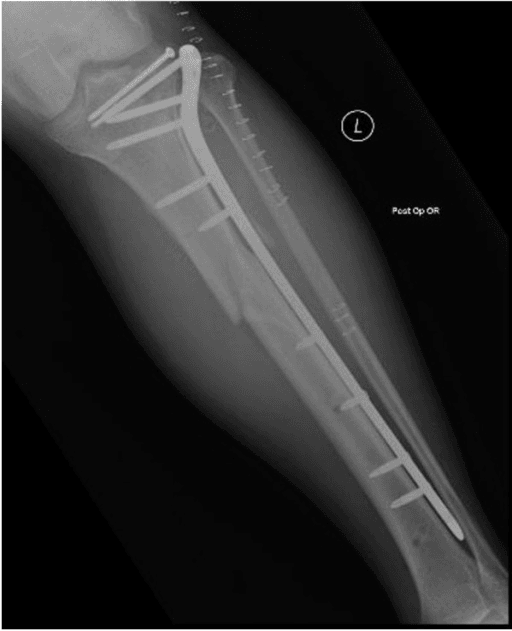
Judging the reduction. Postoperative alignment is measured as the MPTA and PPTA on the AP and lateral films. The reduction is judged by these angles, not by the look of the plate.
Complications
- Incidence
- 5-10%
- Risk Factors
- Schatzker V-VI, diabetes, smoking, early surgery
- Management
- Early: debridement, antibiotics. Late: may need flap
- Incidence
- 5-10%
- Risk Factors
- High-energy, polytrauma, prolonged surgery
- Management
- Four-compartment fasciotomy URGENT
- Incidence
- 10-20%
- Risk Factors
- Immobility, no prophylaxis
- Management
- Prophylaxis mandatory, anticoagulation
- Incidence
- 10-30%
- Risk Factors
- Poor reduction, cartilage damage, malalignment
- Management
- Activity modification, eventual arthroplasty
- Incidence
- 5-10%
- Risk Factors
- Poor fixation, single plate for bicondylar
- Management
- High tibial osteotomy if symptomatic
- Incidence
- 15-25%
- Risk Factors
- Delayed mobilisation, prolonged immobilisation
- Management
- Early physio, may need MUA or arthrolysis
- Incidence
- 10-20%
- Risk Factors
- Thin soft tissue, prominent plate
- Management
- Hardware removal when healed
Monitor high-energy fractures closely after surgery. Pain out of proportion, pain with passive toe stretch and tense compartments = fasciotomy. Clinical diagnosis - do not wait for compartment pressure measurements if clinical suspicion.
Postoperative Care and Rehabilitation
Rehabilitation Protocol
- DVT prophylaxis: enoxaparin or TED/pneumatic boots
- Pain control: multimodal, consider nerve block
- Wound care: monitor for haematoma, infection
- ROM: start passive ROM in CPM if available
- Weight-bearing: toe-touch or non-weight-bearing
- Weight-bearing: non-weight-bearing or touch-weight-bearing
- ROM goal: 0-90° by 6 weeks
- Exercises: quad sets, straight leg raises, gentle ROM
- X-rays: 2 weeks, 6 weeks for union assessment
- Remove sutures: 2-3 weeks
- Weight-bearing: progressive based on radiographic healing
- ROM goal: full ROM by 12 weeks
- Strengthening: progressive resistance exercises
- X-rays: 12 weeks for union confirmation
- Full weight-bearing: when radiographic union confirmed
- Return to work: sedentary 6-8 weeks, manual labour 4-6 months
- Return to sport: 6-12 months depending on sport
- Surveillance: annual X-rays for OA development
Weight-bearing by pattern. Schatzker I-III fractures may be allowed early protected weight-bearing. Types IV-VI are kept strictly non-weight-bearing for a minimum of 6-8 weeks, and osteoporotic bone needs extended protected weight-bearing.
Red flags. What to watch for after surgery:
- Increasing pain or swelling: infection?
- Loss of range of motion: stiffness, arthrofibrosis
- Hardware prominence: may need removal
- Progressive deformity: loss of fixation
Outcomes and Prognosis
- Good Outcomes
- 80-90%
- Key Factors
- Anatomic reduction, stable fixation
- Good Outcomes
- 75-85%
- Key Factors
- Elevation quality, graft support
- Good Outcomes
- 70-80%
- Key Factors
- Medial buttress, ligament healing
- Good Outcomes
- 60-75%
- Key Factors
- Soft tissue handling, staged approach
- Good Outcomes
- 40-60%
- Key Factors
- High complication rate
Predictors of a poor outcome. The poor prognostic factors are:
- High-energy mechanism (Schatzker V-VI)
- Bicondylar involvement
- Greater than 10mm initial depression
- Associated ligament injury
- Post-traumatic OA precursors (cartilage damage)
- Smoking, diabetes, obesity
- Articular step-off greater than 2mm
Guidelines, Registries & Global Practice
Global Epidemiology
Tibial plateau fractures account for roughly 1% of all fractures and about 8% of fractures in the elderly, with a bimodal distribution: high-energy injuries (road traffic and fall-from-height) in younger men, and low-energy fragility fractures in older women. The lateral plateau is involved most often (Schatzker I-III predominate in most series), reflecting the physiological valgus axis of the knee. Incidence is rising in ageing high-income populations driven by osteoporotic and sporting injuries, while motor-vehicle trauma dominates in low- and middle-income settings.
Side-by-Side Guidance
- Region
- Global
- Key Position
- Articular reduction (step 2mm or less), restore mechanical axis and slope, column-specific approaches, staged ORIF for compromised soft tissues
- Evidence Basis
- Expert consensus + cohort evidence
- Region
- UK
- Key Position
- Senior decision-making, ortho-plastic input for high-energy/open patterns, definitive fixation only when soft tissues allow
- Evidence Basis
- Guideline (consensus)
- Region
- UK
- Key Position
- Senior multidisciplinary planning, CT for intra-articular fractures, VTE assessment, regional major-trauma networks
- Evidence Basis
- Guideline (GRADE)
- Region
- Canada
- Key Position
- Ring fixation a valid lower-morbidity alternative to dual plating in bicondylar fractures
- Evidence Basis
- Level 1 RCT [PMID 17142411]
- Region
- USA
- Key Position
- Anatomic articular restoration; individualised VTE prophylaxis after lower-limb trauma
- Evidence Basis
- Guideline / appropriate-use
Registry & Practice Variation
There is no dedicated international tibial plateau fracture registry; most outcome data derive from trauma databases and population cohorts. Population-level Canadian data show a 10-year total knee arthroplasty rate of 7.3% after operative fixation, a 5.3-fold increase over matched controls (Wasserstein et al., [PMID 24430414]). AOANJRR captures subsequent arthroplasty outcomes following tibial plateau fractures. Practice varies internationally: dual plating dominates in North America and Europe, whereas circular/ring fixation retains strong support where soft-tissue compromise is common or plating expertise is limited. Access also varies - high-income systems can deliver staged spanning external fixation within hours, whereas resource-limited settings may rely more heavily on definitive external fixation.
- Neurovascular status pre- and post-operatively
- Soft tissue assessment and rationale for timing
- CT scan findings and surgical plan based on CT
- Informed consent including alternatives
- Intraoperative imaging confirming reduction quality
- Compartment syndrome: Missed or delayed diagnosis
- Peroneal nerve injury: Failure to document preop status
- Wound complications: Operating on compromised soft tissue
- Malunion: Inadequate reduction or single plate for bicondylar
MCQ Practice Points
Q: A 60-year-old woman falls from standing and has lateral tibial plateau fracture with 6mm depression but no cortical split. What Schatzker type is this?
A: Schatzker Type III - pure depression without split component. Type II would have both split AND depression. This distinction is important as Type III may be treated arthroscopically.
Q: During the anterolateral approach to the tibial plateau, which structure is at greatest risk and how is it protected?
A: Common peroneal nerve at the fibular neck. Protected by flexing the knee to relax the nerve, direct visualization during dissection, and avoiding retractors at the fibular head area.
Q: What is the consequence of using a single lateral plate for a Schatzker V (bicondylar) tibial plateau fracture?
A: Varus collapse of the medial column. The unsupported medial condyle collapses, leading to progressive varus malalignment. Dual plating with medial buttress is required.
Q: A patient with Schatzker VI fracture has tense swelling and blood-filled blisters. What is the appropriate initial management?
A: Spanning external fixator with staged delayed ORIF. Blood-filled blisters indicate full-thickness skin injury. Operating definitively risks wound dehiscence and infection. Wait 7-21 days for wrinkle test positive.
Q: Why is CT scan mandatory for tibial plateau fracture surgical planning?
A: CT reveals posterior column involvement (missed in 30% on X-ray), true articular depression depth, fracture comminution, and guides approach selection. Plain X-ray underestimates depression and misses coronally-oriented fractures.
Q: What is the incidence of post-traumatic osteoarthritis following tibial plateau fractures, and what factors predict poor outcome?
A: 10-30% develop symptomatic OA. Predictors: articular step-off greater than 2mm, high-energy mechanism, meniscal injury, malalignment, and cartilage damage at time of injury.
Exam Viva Scenarios
Practise clinical reasoning and management decisions out loud
“A 55-year-old woman falls off a ladder and presents with a painful swollen knee. X-rays show a lateral tibial plateau fracture with 8mm of articular depression and a split component. How would you assess and manage this patient?”
“Walk me through your surgical technique for a Schatzker VI fracture in a 35-year-old male involved in a motorcycle accident. He is day 10 post-injury, wrinkle test is positive, and CT shows involvement of lateral, medial, and posterior columns.”
“A 45-year-old patient is day 1 post-ORIF for a Schatzker V fracture. The nurse calls because the patient has severe pain despite IV morphine, and pain with passive toe extension. How do you manage this?”
Key Anatomy
- Lateral plateau: convex, 3mm higher, depression-prone
- Medial plateau: concave, 60% weight-bearing, stronger bone
- Popliteal vessels: directly posterior, at risk in posterior approaches
- Common peroneal nerve: wraps fibular neck, at risk in lateral approaches
- Posterior tibial slope: 7-10°, must restore
Classification (Schatzker)
- Type I: Lateral split (wedge) - low energy - screws/plate
- Type II: Lateral split-depression - most common - ORIF + graft
- Type III: Pure depression - elevate, graft, raft screws
- Type IV: Medial plateau - HIGH energy - medial plate required
- Type V: Bicondylar - staged dual plating
- Type VI: Metaphyseal-diaphyseal dissociation - staged, dual/ring
Treatment Algorithm
- Soft tissue first: wrinkle test mandatory before ORIF
- No wrinkles = spanning external fixator, wait 7-21 days
- CT for ALL surgical planning (posterior column)
- Single lateral plate for bicondylar = FAILURE
- Articular step under 2mm, slope 7-10°, neutral alignment
Surgical Pearls
- Three-column concept: each column needs its approach and plate
- Anterolateral: protect peroneal nerve, flex knee
- Posteromedial: protect popliteal vessels, flex knee
- Submeniscal arthrotomy for articular visualization
- Bone graft mandatory for depression patterns
Complications
- Compartment syndrome: 5-10%, pain with passive stretch
- Wound complications: 5-10%, higher in V-VI
- Post-traumatic OA: 10-30% (Rademakers 2007; Wasserstein 2014)
- Varus collapse: single plate failure in bicondylar
- Stiffness: 15-25%, may need MUA
Evidence Base
Schatzker - The Tibial Plateau Fracture: The Toronto Experience
- Original six-type classification derived from the 1968-1975 Toronto series
- Types I-III are low-energy lateral plateau injuries; Types IV-VI are higher-energy
- Medial plateau (Type IV) and bicondylar (V-VI) patterns carry the worst prognosis
- Classification stratifies fractures by mechanism, displacement and treatment
Luo - Three-Column Fixation for Complex Tibial Plateau Fractures
- Introduced the CT-based three-column (lateral, medial, posterior) concept
- Prospective cohort of 29 Schatzker V-VI three-column fractures
- Combined posterior (inverted L) and anterolateral approaches achieved satisfactory reduction in all but one case
- Posterior column involvement is poorly seen on plain films and drives approach selection
Barei - Bicondylar Fractures Treated with Dual Incisions and Medial/Lateral Plates
- 83 AO/OTA 41-C3 bicondylar fractures treated with anterolateral + posteromedial dual plating
- Satisfactory articular reduction (2mm or less) achieved in only 55% despite dual incisions
- Accurate articular reduction independently predicted better MFA functional scores (p=0.029)
- Only 2 deep infections, supporting the dual-incision strategy over a single extensile midline approach