Linked vs Unlinked Design | Rheumatoid Arthritis Classic Indication | Ulnar Nerve Protection Critical | Triceps Management Essential
- Classic indication: Rheumatoid arthritis with severe joint destruction and minimal bone loss
- Ulnar nerve management: Must be identified, protected, and often transposed anteriorly
- Triceps-sparing approach: Preserves extensor mechanism, allows early rehabilitation
- Weight restriction: Lifetime limit of 2-5kg lifting to reduce bushing wear and loosening
- Linked implants: Sloppy hinge design allows 7-10 degrees varus-valgus laxity to reduce stress
- “Linked TEA is preferred for bone loss, instability, or revision - relies on hinge for stability
- “Ulnar nerve palsy is the most common neurological complication - always identify and protect
- “Triceps insufficiency causes significant functional deficit - extensor mechanism is critical
- “Aseptic loosening at ulna is more common than humerus due to smaller bone stock
Overview and Epidemiology
Total elbow arthroplasty (TEA) replaces the ulnohumeral and radiocapitellar articulations to restore a pain-free, functional arc of motion. It is performed less often than hip or knee arthroplasty because of the elbow's complex biomechanics and higher complication rates, and the same complex anatomy makes the operation technically demanding.
Who. Rheumatoid arthritis has historically been the most common indication, at 60-70% of cases, which is why TEA is more common in women, in whom RA is more prevalent. Post-traumatic arthritis and acute distal humerus fractures are an increasing share.
The functional arc for activities of daily living is 30-130 degrees of flexion and 50 degrees each of pronation and supination. TEA aims to restore this arc while providing stability and pain relief.
Indications. The elbow destroyed by arthritis:
- Rheumatoid arthritis - the classic indication, with severe joint destruction
- Primary osteoarthritis - less common, typically with stiffness
- Post-traumatic arthritis - following distal humerus fracture malunion
- Haemophilic arthropathy - severe recurrent haemarthrosis
And the acute or failed fracture:
- Distal humerus fracture in the elderly - comminuted, osteoporotic bone
- Failed ORIF - nonunion or malunion with arthritis
- Unreconstructable fracture - when ORIF is not possible
- Age over 65 with low demand and comminution - better outcomes than ORIF on the Mayo score (the other endpoints are set out under Outcomes)
Contraindications. Some rule TEA out; others weigh against it.
- Absolute - active infection, inadequate soft-tissue coverage, a non-functional upper limb (for example after stroke)
- Relative - young age (under 60), high activity level, prior septic arthritis, severe bone loss without reconstruction options
Anatomy and Biomechanics
The joint. The elbow is a trochoginglymoid joint, hinge and pivot combined, made up of three articulations.
- Bones
- Trochlea - trochlear notch
- Motion
- Flexion-extension (hinge)
- Stability Contribution
- Primary stability in extension
- Bones
- Capitellum - radial head
- Motion
- Pronation-supination (pivot)
- Stability Contribution
- Secondary stabilizer, axial load (40%)
- Bones
- Radial head - radial notch of ulna
- Motion
- Forearm rotation
- Stability Contribution
- Minimal contribution to elbow stability
Stability. The primary stabilisers are the ulnohumeral articulation, in which the coronoid is critical, the anterior bundle of the medial collateral ligament and the lateral collateral ligament complex (LUCL). The radial head, the capsule and the common flexor and extensor origins are secondary. Loss of the primary stabilisers leads to instability that may require a linked TEA.
The medial collateral ligament. The anterior bundle is the most important part: it arises from the medial epicondyle and inserts on the sublime tubercle of the coronoid. The posterior bundle tightens in flexion, and the transverse ligament contributes little.
The lateral collateral ligament complex. It comprises the radial collateral ligament, the annular ligament, which stabilises the proximal radioulnar joint, and the lateral ulnar collateral ligament. The LUCL is the most important of the three and prevents posterolateral rotatory instability.
The ulnar nerve. It passes posterior to the medial epicondyle in the cubital tunnel, between the epicondyle and the olecranon, covered by Osborne's (arcuate) ligament. It is at risk during the medial approach and must be identified early, protected and often transposed anteriorly.
The triceps. Its three heads, the long head from the scapula and the lateral and deep medial heads from the humerus, insert on the olecranon through a common tendon. It is critical for elbow extension and function, triceps insufficiency causes significant functional limitation, and preservation or secure repair of the tendon is essential to the success of a TEA.
Classification Systems
Implants are classified by constraint, that is, by what provides their stability.
- Mechanism
- Sloppy hinge with 7-10 degrees varus-valgus
- Indications
- Bone loss, instability, RA, revision
- Key Features
- Coonrad-Morrey, Discovery Elbow
- Mechanism
- Ball and socket, relies on soft tissues
- Indications
- Primary OA, intact ligaments
- Key Features
- Kudo, Capitellocondylar
- Mechanism
- Can switch between linked and unlinked
- Indications
- Intraoperative flexibility
- Key Features
- Latitude, Nexel
- Mechanism
- Distal humerus replacement only
- Indications
- Acute fracture in elderly
- Key Features
- Stryker Discovery Hemi
Linked or unlinked. A linked implant is used when the soft tissues are incompetent or bone loss is significant, because the hinge provides the stability the soft tissues cannot. An unlinked implant relies on intact ligaments and soft tissues. The distinction is similar to that between constrained and unconstrained knee arthroplasty.
The sloppy hinge. The linked hinge allows 7-10 degrees of varus-valgus laxity and is not a fully constrained hinge. The laxity transfers stress to the soft tissues rather than concentrating all the force at the bone-cement interface, which reduces the risk of loosening.
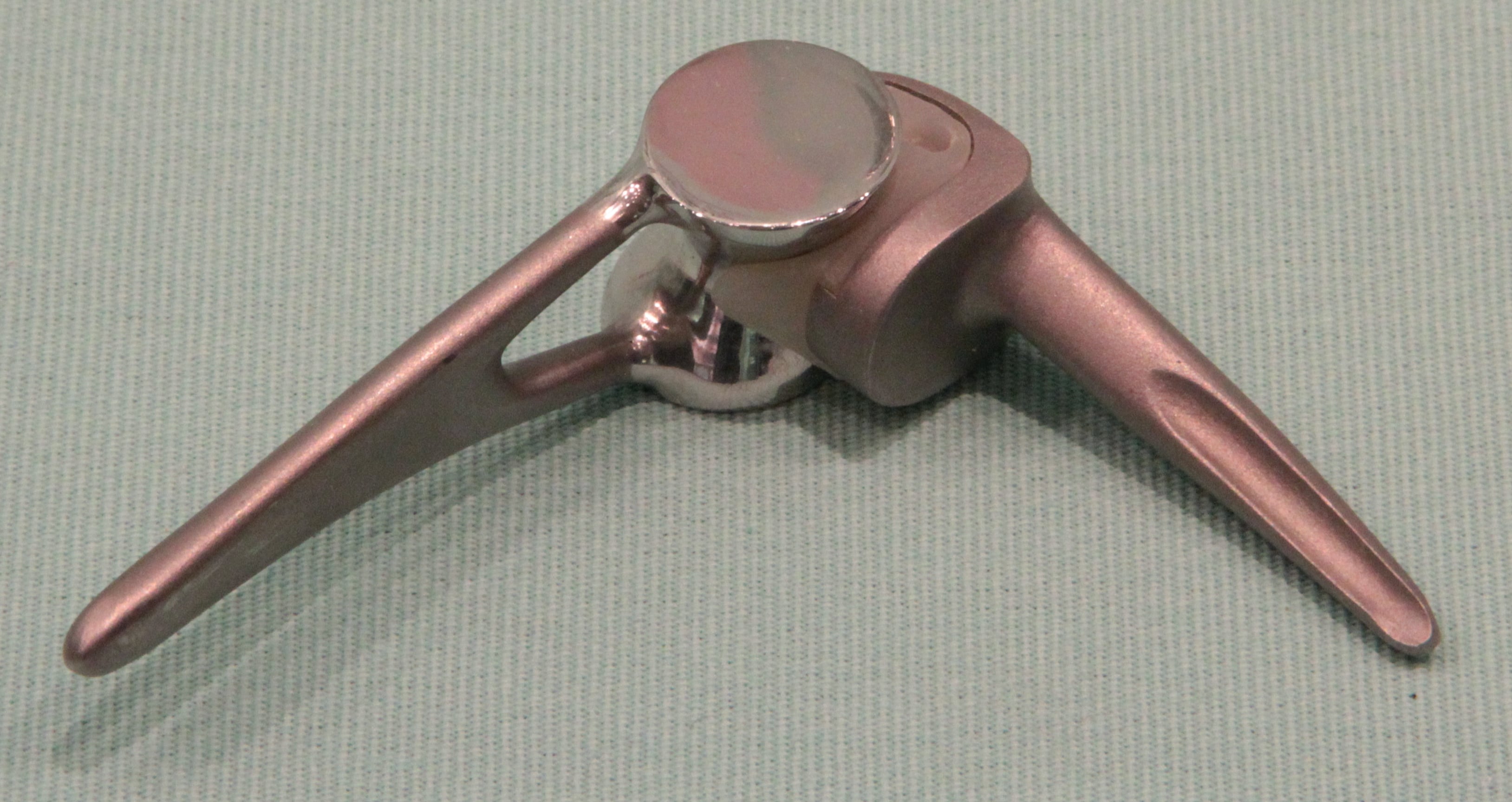
Distal humeral hemiarthroplasty. It replaces only the distal humeral articular surface, the trochlea and capitellum, which then articulates against the native ulna and radial head. The implant table lists it for the acute fracture in the elderly; it is also the examinable alternative for the younger or higher-demand patient in whom both ORIF and TEA are unattractive. Its indication is an isolated, unreconstructable distal humeral articular fracture (or selected AVN or nonunion) in a patient too young or active for the lifelong restrictions of TEA, but in whom stable ORIF is not feasible.
It depends on the elbow around it, and if the columns or ligaments are deficient, a linked TEA is the correct choice instead.
- The medial and lateral columns must be intact or reconstructable: the implant has no cross-column stem fixation and depends on the columns and the ligament origins
- The collateral ligaments must be competent or repairable
What it gains and what it risks. It preserves bone and carries no lifelong weight restriction, which suits the more active patient. The main concern is progressive wear and erosion of the native surfaces it articulates with, the greater sigmoid notch of the ulna and the radial head, along with the technical difficulty of matching native trochlear sizing, and its evidence base is smaller than that for TEA.
Clinical Assessment
History. Pain is diffuse, may radiate to the forearm, is related to activity and, in advanced arthritis, present at rest, with a grinding, mechanical character. It shows as difficulty with activities of daily living: dressing, eating and hygiene. Ask about previous elbow surgery, which affects the approach and the quality of the soft tissues. The associated symptoms:
- Stiffness - loss of extension is common and compromises the functional arc
- Weakness - reduced grip strength, difficulty lifting
- Instability - giving way, recurrent dislocations
- Numbness in the ulnar distribution (ring and little fingers)
Examination. Look for swelling, forearm muscle wasting, rheumatoid nodules, surgical scars and the carrying angle. Measure active motion against the normal: flexion to 145 degrees, extension to 0-5 degrees of hyperextension, pronation 80 and supination 85 degrees. Passive motion may be preserved despite pain. Document the pre-operative arc, the reference against which the result will be compared, and test triceps and forearm muscle strength.
- Purpose
- MCL integrity
- Technique
- Elbow at 20-30 degrees flexion, apply valgus stress
- Positive Finding
- Medial opening, pain
- Purpose
- LUCL integrity / PLRI
- Technique
- Supination, valgus, axial load while extending from flexion
- Positive Finding
- Clunk or apprehension
- Purpose
- Extensor mechanism function
- Technique
- Resist elbow extension against gravity
- Positive Finding
- Weakness indicates triceps pathology
- Purpose
- Ulnar nerve irritation
- Technique
- Tap posterior to medial epicondyle
- Positive Finding
- Tingling in ulnar distribution
Pre-existing ulnar neuropathy (cubital tunnel syndrome) is common in RA, in 15-25% of patients. Document any sensory or motor deficit before surgery and consider nerve conduction studies if neuropathy is suspected: it affects surgical planning and informed consent.
The rheumatoid patient as a whole. The elbow is one joint in a systemic disease:
- Cervical spine - atlantoaxial instability; flexion-extension radiographs if suspected
- Other joints - hip, knee and shoulder involvement may affect priorities
- Medications - DMARDs and biologics may need adjustment peri-operatively
- Skin - rheumatoid nodules and fragile skin at the surgical site
Investigations
Radiographs. AP and lateral elbow radiographs are the essential first-line imaging. They show joint space, bone quality and deformity, allow the carrying angle and alignment to be measured, show loose bodies and osteophytes, and assess the bone stock for implant sizing.
CT adds advanced bony assessment: 3D reconstruction for complex deformity, bone stock for revision, templating for implant selection and any previous hardware. It is also useful in acute fractures.
- Joint Space
- Minimal narrowing
- Osteophytes
- Small osteophytes
- Bone Changes
- Minimal sclerosis
- Joint Space
- Moderate narrowing
- Osteophytes
- Moderate osteophytes
- Bone Changes
- Subchondral sclerosis and cysts
- Joint Space
- Bone on bone
- Osteophytes
- Large osteophytes / ankylosis
- Bone Changes
- Severe destruction, bone loss
Differential diagnosis. The cause of the painful arthritic elbow changes the implant, the risk, or whether arthroplasty is needed at all.
- Typical Patient
- Female, polyarticular, seropositive
- Distinguishing Features
- Symmetrical erosions, periarticular osteopenia, synovitis, nodules; raised RF/anti-CCP
- Implication for TEA
- Classic indication; linked design for ligament/bone deficiency
- Typical Patient
- Male, manual worker, dominant arm
- Distinguishing Features
- Osteophytes, preserved joint space, terminal-extension block, mechanical locking
- Implication for TEA
- Unlinked or debridement (O-K) if ligaments intact
- Typical Patient
- Any age, prior fracture/surgery
- Distinguishing Features
- Asymmetric destruction, deformity, hardware, heterotopic ossification
- Implication for TEA
- Higher revision/complication risk; linked design
- Typical Patient
- Immunosuppressed, RA, diabetic
- Distinguishing Features
- Acute pain, warmth, raised ESR/CRP, positive aspirate
- Implication for TEA
- Absolute contraindication until eradicated
- Typical Patient
- Older, metabolic risk factors
- Distinguishing Features
- Acute flares, tophi, chondrocalcinosis, crystals on aspirate
- Implication for TEA
- Treat medically; arthroplasty rarely needed
Blood tests. They look for infection and measure the patient's fitness to heal:
- ESR and CRP - rule out infection and assess disease activity
- Rheumatoid factor and anti-CCP - confirm the diagnosis of RA
- HbA1c - diabetic control, for infection risk
- Albumin and lymphocyte count - nutritional markers of healing capacity
Infection must be excluded before elective TEA. If there is any suspicion, aspirate the joint and send the fluid for cell count, culture and crystals, alongside the inflammatory markers. Proceed with surgery only when infection is definitively ruled out.
Management Algorithm
Non-operative management first. The first line is a trial of conservative treatment:
- Activity modification and lifestyle counselling
- NSAIDs for pain and inflammation
- Physiotherapy for range of motion and strength
- Intra-articular corticosteroid injection, of limited effect
- Optimised disease-modifying therapy in RA
Joint-preserving surgery. Considered in the young, before arthroplasty:
- Arthroscopic debridement - removal of loose bodies and osteophytes
- Outerbridge-Kashiwagi (O-K) procedure - fenestration of the olecranon fossa
- Synovectomy - RA with recurrent synovitis but minimal joint destruction
- Interposition arthroplasty - distraction with a fascia lata graft, for the young active patient
TEA, the definitive option. It is indicated when conservative management has failed and severe joint destruction causes pain and functional limitation, in a low-demand patient, typically over 60, who accepts a lifelong weight restriction and has adequate soft-tissue coverage. For most patients with end-stage elbow arthritis who meet these criteria, it provides reliable pain relief and functional improvement.
Surgical Technique
Choosing the approach. Triceps management is the key differentiating factor between the approaches. The Bryan-Morrey approach is the most commonly used for primary TEA, and triceps-sparing approaches are gaining popularity for faster rehabilitation.
- Triceps Management
- Reflect triceps off olecranon with medial capsule flap
- Advantages
- Good exposure, triceps in continuity
- Disadvantages
- Requires careful reattachment
- Triceps Management
- Work around triceps without detachment
- Advantages
- Preserves extensor mechanism, early rehab
- Disadvantages
- Limited exposure for severe deformity
- Triceps Management
- Longitudinal split of triceps tendon
- Advantages
- Direct exposure
- Disadvantages
- Risk of triceps weakness
- Triceps Management
- Between anconeus and ECU
- Advantages
- Protects triceps completely
- Disadvantages
- Limited medial exposure
Templating. Size the humeral and ulnar components on radiographs, assess any bone loss that will need augmentation, and plan the approach around prior surgery and soft-tissue quality.
Optimising the patient. Coordinate with the rheumatologist to optimise RA disease activity, and consider a DMARD or biologic holiday peri-operatively, which is controversial. Control glycaemia in diabetics, and assess and optimise nutrition.
Biologic agents (TNF inhibitors, rituximab) are associated with increased infection risk. Consider withholding them 2-4 weeks pre-operatively depending on the agent's half-life, balancing infection risk against disease flare. It is a multidisciplinary decision with rheumatology.
Consent. Document every point and make sure the patient understands the activity restrictions:
- The lifelong weight restriction
- Potential ulnar nerve symptoms
- Infection
- Loosening and possible revision
- Possible triceps weakness
- Periprosthetic fracture
Complications
- Incidence
- 10-15% at 10 years
- Risk Factors
- High activity, obesity, poor cement technique
- Management
- Revision TEA with long stems and bone graft
- Incidence
- 2-5%
- Risk Factors
- RA, diabetes, immunosuppression, prior surgery
- Management
- I&D vs two-stage revision vs resection arthroplasty
- Incidence
- 5-10%
- Risk Factors
- Pre-operative neuropathy, traction injury, direct injury
- Management
- Observation (most resolve), exploration if no recovery
- Incidence
- 5%
- Risk Factors
- Poor repair, avulsion, RA with poor tissue
- Management
- Revision repair, tendon reconstruction
- Incidence
- 5-10%
- Risk Factors
- Soft tissue incompetence, component malposition
- Management
- Convert to linked TEA or revision
- Incidence
- 5-10%
- Risk Factors
- High activity, non-compliance with weight restriction
- Management
- Bushing exchange if components stable
- Incidence
- 5%
- Risk Factors
- Trauma, osteoporosis, stress risers
- Management
- Fixation or revision depending on site
Aseptic loosening. It is the most common long-term mode of failure. The ulnar component loosens more often than the humeral, because the ulna has less bone stock. It presents with pain, decreased motion and radiographic lucency.
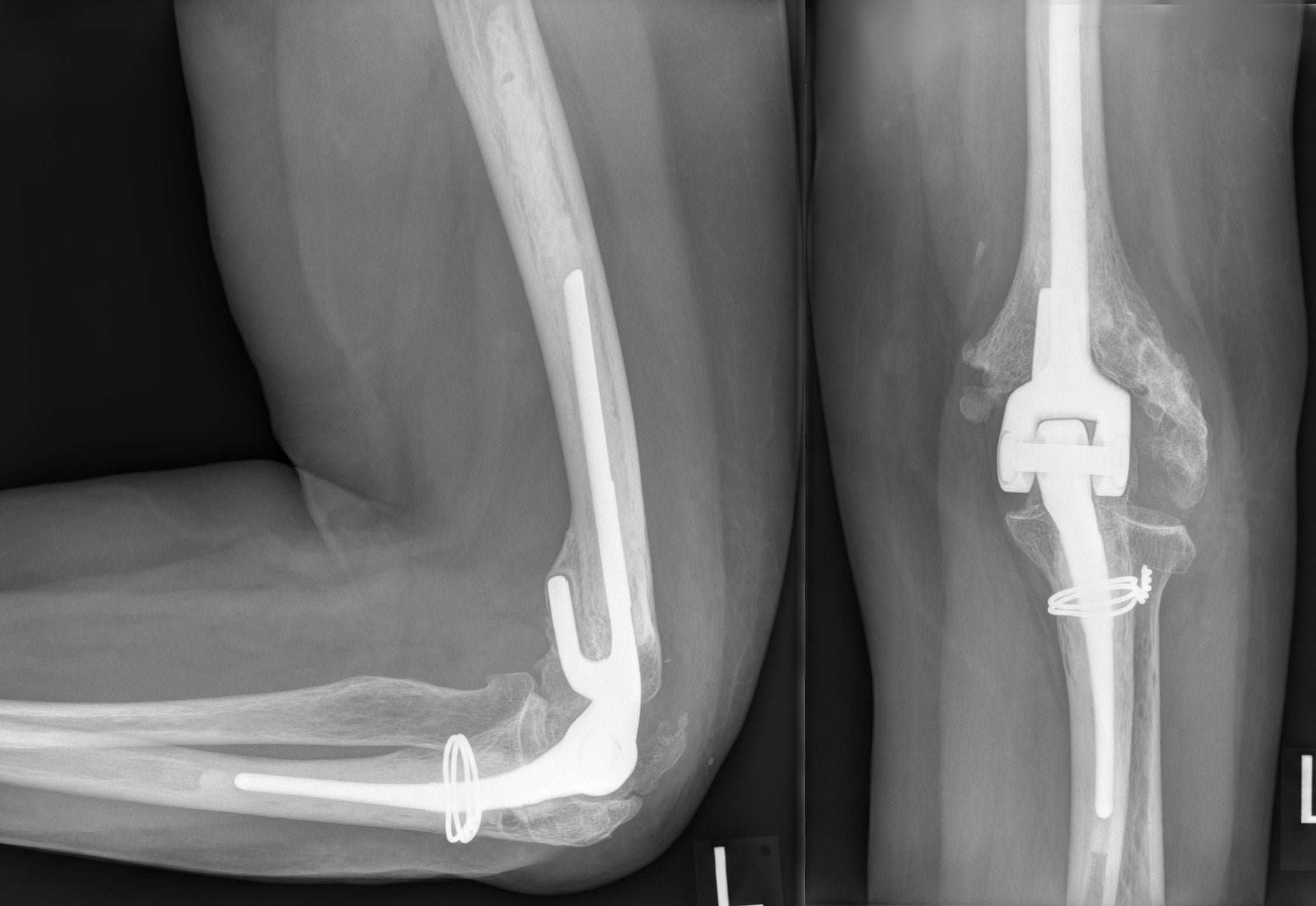
Bushing wear. In a linked implant the bushing is polyethylene, and its wear leads to instability.
Deep infection after TEA is a serious complication. The options:
- I&D with polyethylene exchange - acute infection with stable components
- Two-stage revision with an antibiotic spacer - chronic infection
- Resection arthroplasty (flail elbow) - if the infection cannot be eradicated
Antibiotic suppression may be considered in selected cases.
Periprosthetic fracture: the Mayo (O'Driscoll) classification. It is based on the location of the fracture relative to the components and incorporates implant fixation and bone stock.
- Type I - condyles or columns. The bone around, but not along, the stem. The components are stable, so these are usually managed non-operatively, or by symptomatic fragment excision.
- Type II - along the stem. The humeral or ulnar shaft alongside a stemmed component, subclassified by bone stock and fixation. Good bone with a well-fixed stem takes ORIF; poor bone or a loose stem needs revision with a longer-stemmed component, with or without strut allograft.
- Type III - beyond the stem tip. A diaphyseal fracture distal or proximal to the tip of the stem. With a well-fixed stem, treat it as a standard diaphyseal fracture (ORIF); with a loose stem, revise.
The governing principle. Whatever the type, the decision hinges on three things: location, implant fixation (loose or well-fixed) and bone stock. A well-fixed stem in good bone is fixed; a loose stem or poor bone stock is revised with a long-stemmed component and bone graft.
Rehabilitation
Post-Operative Rehabilitation Protocol
- Posterior splint in 90 degrees of flexion
- Elevation for swelling control
- Finger and wrist motion encouraged
- Wound care and monitoring
- Ulnar nerve function assessment
- Begin active-assisted range of motion
- Gravity-assisted extension
- Forearm rotation exercises
- Avoid resisted extension, to protect the triceps repair
- A hinged brace may be used
- Progress to active motion
- Light resistance exercises
- Continue to avoid heavy lifting (weight restriction education)
- Functional activities for ADLs
- Continue triceps protection
- Transition to a home exercise programme
- Reinforce the lifelong weight restriction
- Return to low-demand activities
- Regular clinical and radiographic follow-up
- Annual surveillance recommended
The weight restriction. A lifelong limit of 2-5 kg minimises stress on the prosthesis and is critical for TEA longevity; the upper figure is roughly the single lift, and repetitive lifting should be far less. Repetitive or single heavy lifting accelerates bushing wear, component loosening and periprosthetic fracture, and non-compliance leads to early failure.
Counselling. TEA is a semi-permanent solution, and the patient must understand the activity limitations. Education and compliance are essential: discuss the restriction at consent and reinforce it at every follow-up visit.
Outcomes
Function. Pain relief is significant in more than 90% of patients. Range of motion improves, typically to a 30-130 degree arc, the ability to perform activities of daily living improves, and satisfaction is generally high when expectations are managed.
- Pain Relief
- Excellent
- ROM Improvement
- Good
- Survivorship
- 85-90% at 10 years
- Notes
- Best studied indication
- Pain Relief
- Good
- ROM Improvement
- Fair
- Survivorship
- 75-85% at 10 years
- Notes
- Higher revision rate
- Pain Relief
- Good
- ROM Improvement
- Variable
- Survivorship
- 80-90% at 5 years
- Notes
- Better than ORIF on Mayo score at 2 years - but DASH, reoperation and motion arc did not differ
- Pain Relief
- Fair-Good
- ROM Improvement
- Fair
- Survivorship
- 60-70% at 10 years
- Notes
- Complex, higher failure
What decides the result. The underlying diagnosis matters, rheumatoid elbows doing better than post-traumatic ones, and so do:
- Patient selection - low demand, and adherence to the weight restriction
- Surgical technique and implant position
- Bone quality and soft-tissue health
Guidelines, Registries & Global Practice
Global Epidemiology and Practice Variation:
Total elbow arthroplasty is a low-volume procedure worldwide, typically 1-2% of the volume of hip or knee arthroplasty. Historically rheumatoid arthritis dominated the case mix, but improved disease-modifying and biologic therapy has steadily reduced the rheumatoid burden, and most national series now report a rising proportion of acute distal humeral fractures and post-traumatic arthritis. Linked semiconstrained designs predominate in most high-income health systems, with unlinked resurfacing implants reserved for selected primary osteoarthritis or younger patients with competent soft tissues.
- Position on TEA
- Endorses TEA for end-stage inflammatory and selected post-traumatic arthritis, and primary TEA for non-reconstructable distal humeral fractures in low-demand elderly
- Evidence Basis / Comment
- Supported by Level 1 RCT evidence (McKee) for the fracture indication
- Position on TEA
- Recommends TEA be concentrated in specialist upper-limb units; primary TEA reasonable for unreconstructable elderly distal humeral fractures
- Evidence Basis / Comment
- Reflects NJR low-volume data and the volume-outcome relationship
- Position on TEA
- Mandatory recording of every elbow replacement in the National Joint Registry; supports informed consent with registry survival data
- Evidence Basis / Comment
- Registry surveillance rather than a clinical guideline per se
- Position on TEA
- Linked semiconstrained TEA favoured for fracture and revision settings; emphasises soft-tissue and ulnar nerve handling
- Evidence Basis / Comment
- Consensus and registry-informed (Nordic, Norwegian, Danish registries)
- The Danish registry cohort (Plaschke 2014) reported 90% 5-year and 81% 10-year survival, with higher revision for unlinked and fracture-sequelae cases
- The Norwegian Arthroplasty Register and Nordic Arthroplasty Register Association confirm low national volumes and higher revision burden than large-joint arthroplasty
- The National Joint Registry (England, Wales, NI, IoM) captures every elbow replacement and demonstrates a clear volume-outcome relationship favouring high-volume centres
- The AOANJRR (Australia) reports TEA outcomes annually, with linked designs predominant and rheumatoid/post-traumatic arthritis the leading indications
- In many countries, access to specialised upper-limb and revision elbow surgeons is limited in rural and remote regions, with transfer to metropolitan or specialist centres required for complex revision; telehealth increasingly supports pre-operative assessment and long-term surveillance of regional patients
- TEA appears in both written and viva components of the fellowship examination
- Focus on indications, implant selection (linked vs unlinked), surgical approach, and complications
- Level 1 evidence comparing TEA with ORIF for elderly distal humeral fractures (McKee RCT) is frequently examined
MCQ Practice Points
Q: What is the key difference between linked and unlinked total elbow arthroplasty? A: Linked (semi-constrained) TEA has a sloppy hinge mechanism connecting humeral and ulnar components, providing inherent stability. It allows 7-10 degrees of varus-valgus laxity. Unlinked TEA relies on intact soft tissues (collateral ligaments) for stability. Linked is preferred for RA, bone loss, instability; unlinked for primary OA with intact ligaments.
Q: What is the most common neurological complication of total elbow arthroplasty? A: Ulnar nerve palsy (5-10%). The ulnar nerve runs posterior to medial epicondyle and is at risk during medial exposure. Pre-existing ulnar neuropathy is common in RA patients (15-25%). Most post-operative palsies are neurapraxia and recover spontaneously. The nerve should be identified early, protected, and often transposed anteriorly.
Q: What is the expected 10-year survivorship of total elbow arthroplasty for rheumatoid arthritis? A: 85-90% 10-year survivorship. Rheumatoid arthritis remains the best indication for TEA with the most predictable outcomes. Post-traumatic arthritis and younger patients have lower survivorship. Most failures are due to aseptic loosening or infection.
Q: Why is preservation or secure repair of the triceps mechanism critical in total elbow arthroplasty? A: The triceps is the only extensor of the elbow. Triceps insufficiency leads to significant functional deficit with inability to extend against gravity. Unlike the knee where quadriceps weakness is partly compensated, there is no alternative elbow extensor. Secure repair with transosseous sutures is essential.
Q: What is the recommended lifelong weight restriction after total elbow arthroplasty? A: Separate the two limits, because they are not the same number. The conventional advice is a single-event lift of no more than about 5 kg and repetitive lifting kept far lower, of the order of 1-2 kg. This is surgical convention rather than a trial result - no randomised study has tested a threshold - but the reasoning is sound: the elbow transmits forces of up to around 3 times body weight during ordinary activity, and the prosthesis has a small bearing surface and a cemented stem to dissipate it. Non-compliance is associated with accelerated bushing wear, loosening and periprosthetic fracture. Emphasise it at every follow-up, and be explicit that it is permanent - this is the only major joint replacement whose purpose is to relieve pain and restore motion rather than to restore load-bearing capacity.
Medicolegal Considerations
Key medicolegal points for total elbow arthroplasty:
-
Informed consent must include:
- Lifelong weight restriction (2-5kg) and activity limitations
- Ulnar nerve palsy risk (5-10%), often temporary
- Infection risk (2-5%), may require multiple surgeries
- Aseptic loosening and need for future revision
- Triceps weakness possibility
- Periprosthetic fracture risk
-
Pre-operative documentation:
- Comprehensive neurological examination including ulnar nerve
- Document pre-existing ulnar symptoms (common in RA)
- Assessment of previous surgery, skin quality, infection history
- Radiographs and CT showing bone stock
-
Operative notes:
- Ulnar nerve identification, management, transposition if performed
- Triceps management and repair technique
- Implant details, cement technique
- Range of motion at completion
-
Post-operative care:
- Clear rehabilitation protocol provided
- Weight restriction counselling documented
- Follow-up plan with annual surveillance
Additional Clinical and Access Considerations:
- Higher body mass index and heavy manual occupation are relative contraindications to weigh in patient selection
- Access to specialised revision elbow surgery may be limited in regional, rural, or remote areas, with onward referral to specialist centres for complex cases
- Where occupational injury or compensation is involved, document occupational demands and activity restrictions thoroughly
- Coordinate peri-operative biologic and DMARD management with rheumatology for inflammatory arthritis patients
Exam Viva Scenarios
Practise clinical reasoning and management decisions out loud
“A 68-year-old woman with a 30-year history of rheumatoid arthritis presents with severe right elbow pain and stiffness. She has difficulty with activities of daily living including feeding and hygiene. She has failed medical management including biologics and has had one intra-articular steroid injection with minimal relief. On examination, range of motion is 50-100 degrees, she has a 10-degree fixed flexion deformity, and there is crepitus with motion. Radiographs show bone-on-bone narrowing of the ulnohumeral joint with erosions and cyst formation. How would you manage this patient?”
“An 82-year-old woman presents after a fall with a displaced comminuted intra-articular distal humerus fracture. CT scan shows a highly comminuted C3 fracture with significant articular involvement and osteoporotic bone. She lives independently, is right-hand dominant, and has well-controlled diabetes. Her pre-injury function was normal. What are your treatment options and which would you recommend?”
“A 70-year-old woman is 48 hours post total elbow arthroplasty for rheumatoid arthritis. She reports numbness in her ring and little fingers and is unable to spread her fingers apart. On examination, she has intrinsic weakness with loss of finger abduction. Her wound is healing well with no signs of hematoma. How do you assess and manage this complication?”
Key Anatomy and Biomechanics
- Elbow: Trochoginglymoid joint - ulnohumeral (hinge), radiocapitellar (pivot), proximal radioulnar
- Primary stabilizers: Ulnohumeral joint (coronoid critical), MCL anterior bundle, LUCL
- Secondary stabilizers: Radial head, capsule, common flexor/extensor origins
- Ulnar nerve: Posterior to medial epicondyle in cubital tunnel - at risk during surgery
- Functional arc: 30-130 degrees flexion, 50 degrees pronation/supination
Implant Selection
- Linked (semi-constrained): Sloppy hinge with 7-10 degrees varus-valgus laxity - for RA, bone loss, instability
- Unlinked (resurfacing): Relies on soft tissues - for primary OA with intact ligaments
- Cemented fixation: Gold standard especially for poor bone quality (RA, osteoporosis)
- Linked preferred for trauma (ligament integrity uncertain), revision, bone deficiency
Surgical Approach
- Bryan-Morrey: Triceps-reflecting - good exposure, most commonly used for primary TEA
- Triceps-sparing (paratricipital): Preserves extensor mechanism, limited exposure
- Ulnar nerve: Identify early, protect, transpose anteriorly subcutaneously
- Triceps repair: Critical for function - crossed cruciate suture through drill holes
Complications
- Aseptic loosening: 10-15% at 10 years, ulna loosens more than humerus
- Infection: 2-5%, two-stage revision or resection arthroplasty if cannot eradicate
- Ulnar nerve palsy: 5-10%, most neurapraxia that recovers
- Triceps insufficiency: 5%, significant functional deficit if occurs
- Bushing wear: Linked TEA complication from high activity or non-compliance
Outcomes and Key Pearls
- Survivorship: 85-90% at 10 years, 75-80% at 15 years
- RA has best outcomes, post-traumatic arthritis has higher failure
- Weight restriction: 2-5kg lifelong - critical for implant longevity
- TEA vs ORIF for elderly distal humerus fracture: TEA has better outcomes (McKee RCT)
- Document pre-operative ulnar nerve status - medicolegal importance
Evidence Base
TEA vs ORIF for Distal Humeral Fractures in the Elderly (Landmark RCT)
- Multicentre prospective RCT comparing primary semiconstrained TEA with ORIF for displaced intra-articular (OTA 13C) distal humeral fractures in patients over 65
- 42 patients randomised (21 per arm); 5 patients allocated to ORIF were converted to TEA intra-operatively because stable fixation could not be achieved
- TEA produced significantly better Mayo Elbow Performance Scores at 3, 6, 12 and 24 months (e.g. 86 vs 73 at 2 years, p=0.015)
- Operative time averaged 32 minutes shorter with TEA (p=0.001)
- Reoperation rate 12% (3/25) for TEA vs 27% (4/15) for ORIF (not statistically significant)
- The advantage is endpoint-specific, and worth stating honestly: DASH favoured TEA early (43 vs 77 at 6 weeks) but the groups converged by 2 years (34 vs 38, p=0.6), and the flexion-extension arc never differed (107 vs 95 degrees, p=0.19). MEPS is the one endpoint that separated them at every timepoint
Long-Term Survivorship of Coonrad-Morrey TEA in Rheumatoid Arthritis (461 Elbows, Mayo Clinic)
- Single-institution series of 461 primary Coonrad-Morrey linked semiconstrained TEAs for rheumatoid arthritis (387 patients), median follow-up 10 years (range 2-30)
- Survivorship free of revision or removal for any reason: 92% at 10 years (95% CI 88-94), 83% at 15 years (77-88) and 68% at 20 years - but note the 20-year interval is 56% to 78%, so the long-term figure is far less precise than the shorter ones and should not be quoted as a point value
- This is not a pure rheumatoid series: 55 of the 461 arthroplasties were performed for concurrent traumatic or post-traumatic conditions, and concomitant traumatic pathology is itself one of the identified risk factors for revision
- Survivorship with aseptic loosening as the endpoint was 88% at 20 years
- Radiographic bushing wear in 23% but revision for isolated bushing wear in only 2%
- Risk factors for revision: male sex, concomitant traumatic pathology, and a polymethylmethacrylate ulnar component surface finish
Primary Linked TEA for Acute Distal Humeral Fractures (Systematic Review)
- PRISMA systematic review of 10 studies (269 patients) of primary TEA for acute distal humeral fractures
- Coonrad-Morrey implant used in 83%; Bryan-Morrey approach commonest (33.7%), triceps-reflecting management in 42%
- Mean postoperative arc 102.3 degrees flexion-extension and 145.8 degrees pronation-supination
- Mean Mayo Elbow Performance Score 89.5; excellent scores when surgery performed within 7 days of injury
- Overall complication rate 21.5%
Complications of Total Elbow Replacement (Systematic Review)
- Systematic review of the published complications of total elbow replacement across implant designs and indications
- Confirms that TEA carries a substantially higher complication burden than hip or knee arthroplasty
- Major complication categories: aseptic loosening, deep infection, ulnar neuropathy, triceps insufficiency, periprosthetic fracture and bushing/polyethylene wear
- Ulnar nerve dysfunction is the most frequent neurological complication and aseptic loosening the leading mechanical failure mode
- Highlights wide variation in complication definitions and reporting across studies
Implant Survival and Risk Factors for Revision (Danish Registry, 324 TEAs)
- Registry-based cohort of 324 primary TEAs (234 patients) in eastern Denmark, 1980-2008, mean follow-up 8.7 years
- Overall implant survival 90% at 5 years and 81% at 10 years
- Unlinked designs had a relative risk of revision of 1.9 (95% CI 1.1-3.2) compared with linked designs
- Fracture sequelae carried a relative risk of revision of 1.9 (95% CI 1.05-3.45) versus other indications
- Confirms inferior survival for unlinked implants and for post-traumatic/fracture-sequelae indications at population level
Linked Semiconstrained vs Unlinked TER in Inflammatory Arthritis
- Case-comparison series of 21 total elbow replacements in 14 juvenile idiopathic arthritis patients (14 unlinked Kudo 5, 7 linked Coonrad-Morrey), mean 11.7-year follow-up
- Survivorship with revision as endpoint 95% at 5 years and 68% at 10 years overall
- REOPERATION, INCLUDING REVISION, WAS REQUIRED IN 9 OF 21 ELBOWS (42.9%) - a considerably starker counselling figure than survivorship alone, and one the card previously omitted
- Ten-year survival was nominally similar between designs, 70% unlinked against 69% linked, but the confidence intervals are 40-89% and 28-94% respectively on 14 and 7 elbows, so this comparison is uninformative rather than reassuring
- Mean age at surgery was only 39.5 years (range 26-52), which is why long-term survivorship matters more here than in the rheumatoid population
- Radiographic aseptic loosening was high in the unlinked group (85.7%), though many remained asymptomatic
- Bilateral replacement was an independent risk factor for revision within 10 years