Vertebral Artery Injury in Cervical Trauma
More than half of VAIs are clinically silent at presentation. The widely quoted 10–40% untreated stroke risk is for BCVI as a whole - carotid and vertebral pooled - and carotid injury carries the heavier share; isolated vertebral injury does better, because of the collateral described below. What does not change with vessel is the timing: risk peaks in the first 24 hours, and in the largest isolated vertebral series every stroke had already happened before treatment could start. So the argument for early screening is not the size of the number - it is that the window closes fast. Don't wait for symptoms - screen by injury pattern (foramen-transversarium fracture, facet dislocation, C1–C3) with CTA.
Closed reduction or operative manipulation of a high-risk cervical injury can propagate a dissection. Screen with CTA where feasible and coordinate antithrombotic timing with the spinal plan - without unduly delaying urgent reduction of a cord-threatening injury.
Overview & Epidemiology
Vertebral artery injury is one half of blunt cerebrovascular injury (BCVI) - blunt trauma to the carotid or vertebral arteries. It matters because it is a potentially preventable cause of posterior-circulation (vertebrobasilar) stroke: the diagnosis is made on imaging, not symptoms, and early antithrombotic therapy markedly reduces both stroke and death (EAST: stroke odds ratio 0.20, mortality odds ratio 0.17). Detection rises sharply when a screening protocol is used (odds ratio ~4.7) and is far higher among high-risk cervical injuries than low-risk ones (odds ratio ~12.7). The whole topic is therefore an argument for structured early screening of the right cervical-trauma patients.
Pathophysiology & Anatomy
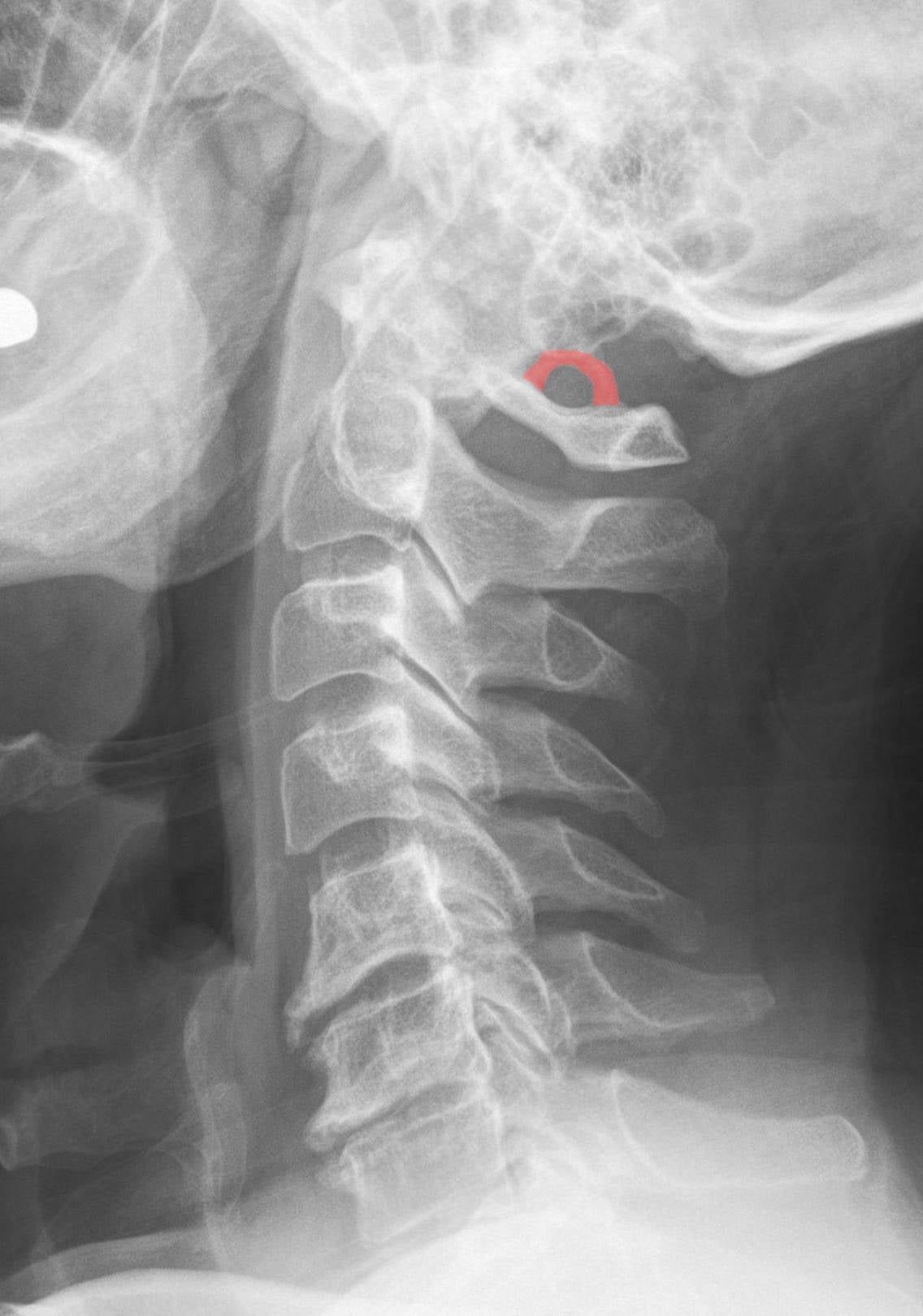
The vertebral artery has four segments: V1 (pre-foraminal) from the subclavian to C6; V2 (foraminal) ascending through the transverse foramina from C6 to C2; V3 (extraspinal) from C2, looping around the atlas to pierce the dura; and V4 (intradural), joining its fellow to form the basilar artery. The V2 segment's bony, enclosed course through the transverse foramina, and the mobile V3 loop at the craniocervical junction, are what make the artery vulnerable in cervical trauma: a fracture that breaches the foramen transversarium, a facet dislocation/subluxation, a distraction injury, or an upper cervical fracture can stretch, compress or tear the vessel — causing intimal injury, dissection, thrombosis, pseudoaneurysm or occlusion.
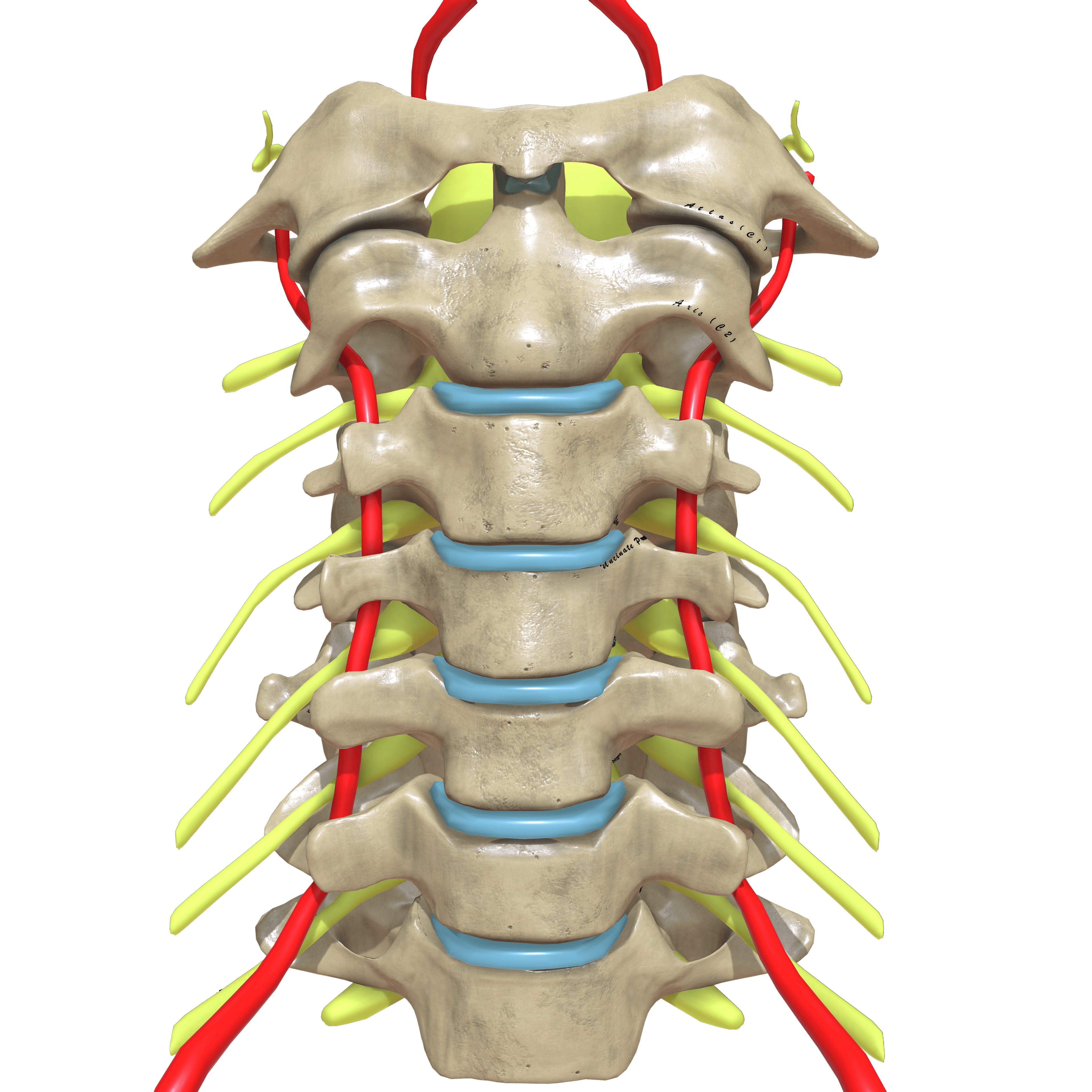
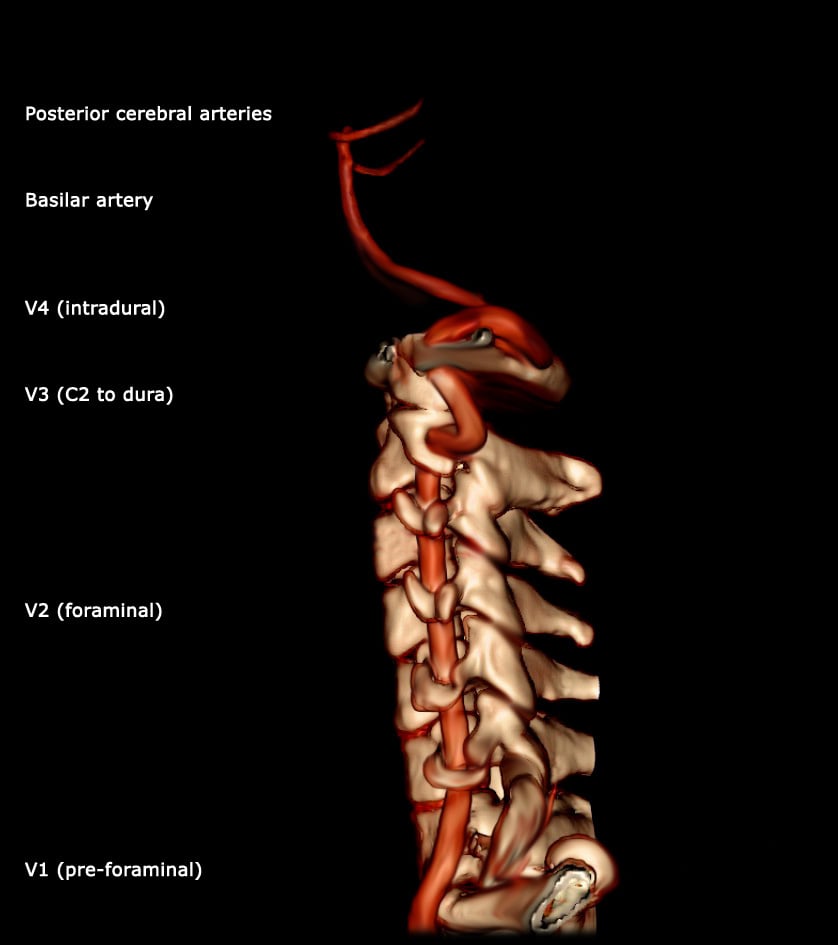
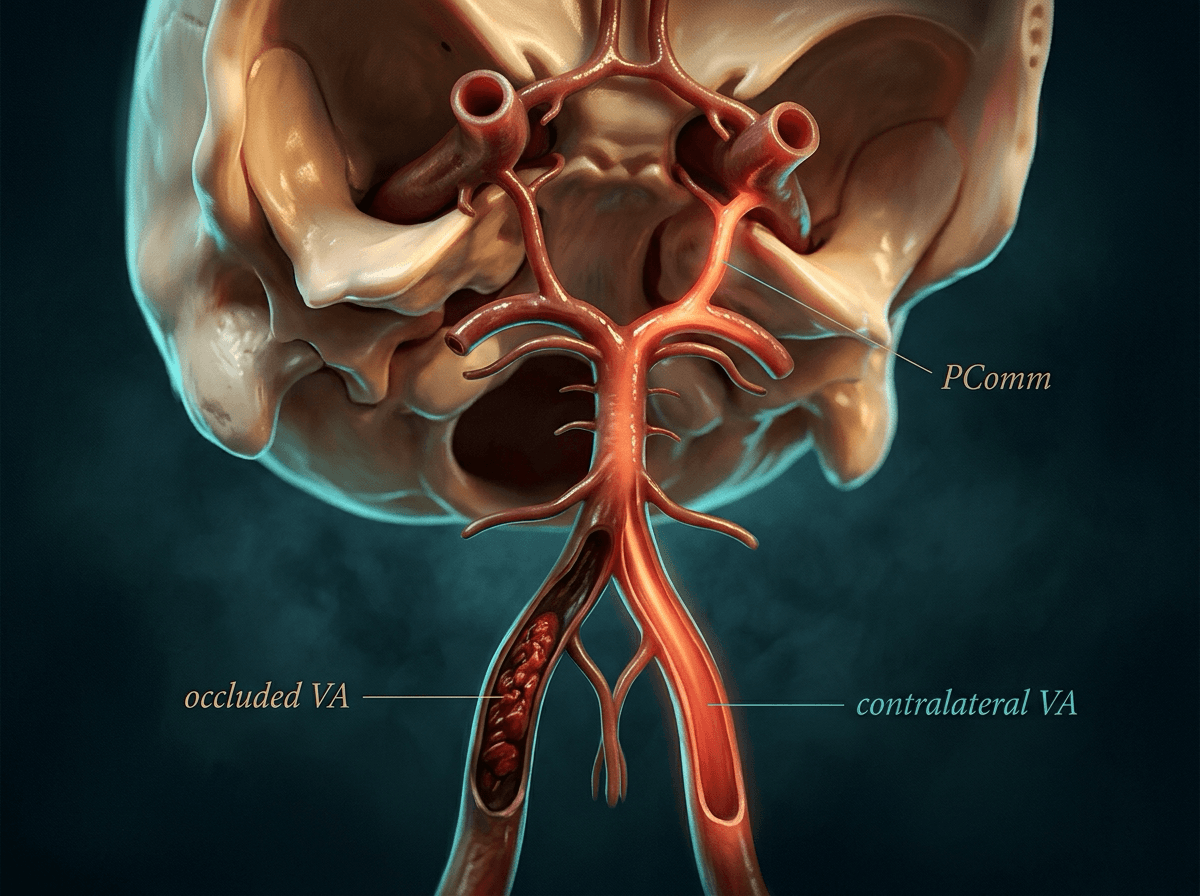
The reason an isolated unilateral VAI often does not cause a stroke is collateral flow: the two vertebral arteries unite to form the single basilar artery, and the posterior communicating arteries link the posterior (vertebrobasilar) to the anterior (carotid) circulation through the Circle of Willis - so the contralateral VA and the carotid system can still perfuse the territory if one VA occludes. This tolerance is conditional, and the exceptions are what make an injury dangerous: when the injured vessel is the dominant vertebral artery (one VA - often the left - is usually larger, and the contralateral may be hypoplastic or end in PICA without reaching the basilar), when both vertebral arteries are injured, or when thrombus embolises distally into the basilar/PICA territory rather than simply occluding locally. This is why an isolated, non-dominant grade IV occlusion is often tolerated on aspirin, whereas a dominant-artery or bilateral injury - or any embolic propagation - is far more dangerous, and why antithrombotics (which prevent embolism) matter even when flow looks preserved.
Iatrogenic Injury: The Vertebral Artery in Cervical Spine Surgery
Every mechanism above is something that happens to your patient before they reach you. This one is the mechanism you control. The artery that a foramen-transversarium fracture threatens is the same artery a C2 screw threatens, and the anatomy that makes it vulnerable is variant in roughly a third of people and invisible without a preoperative CT.
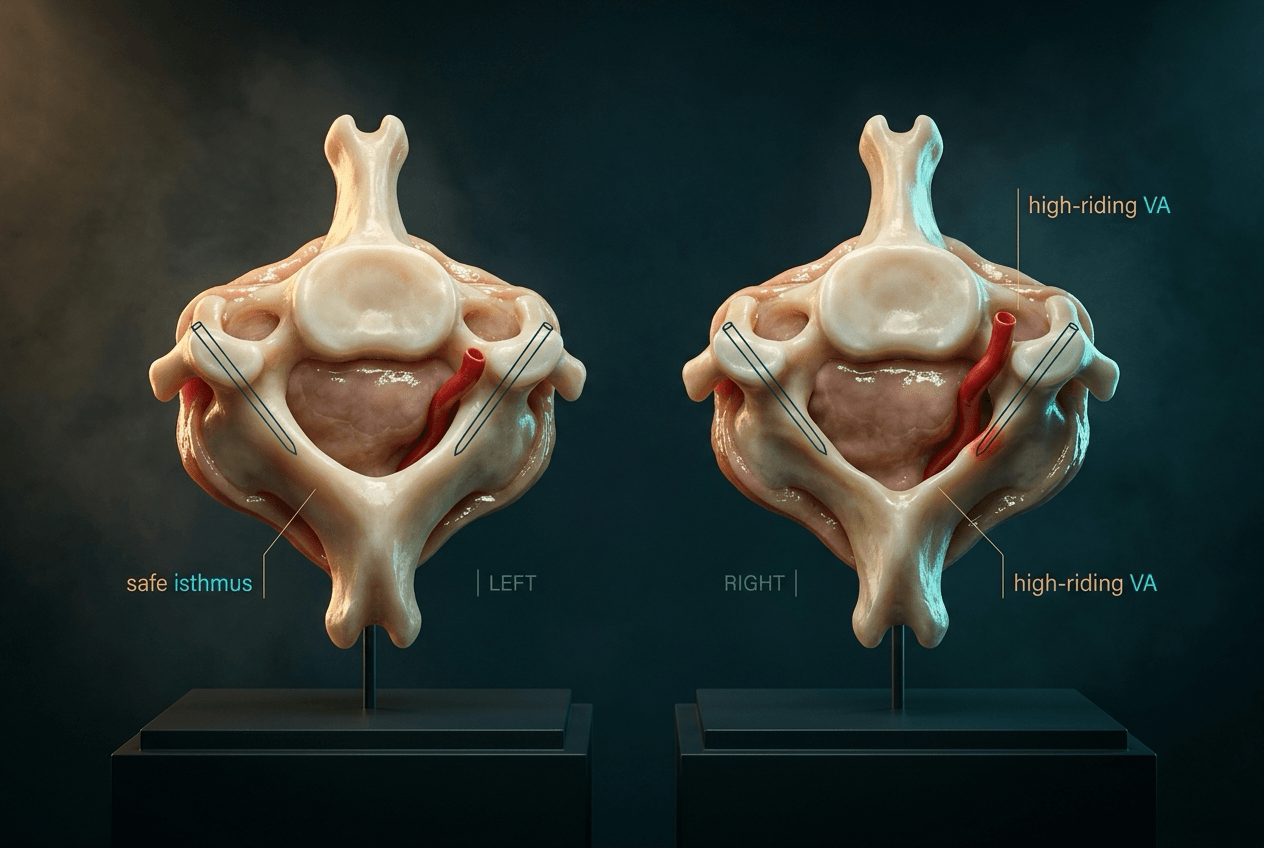
A high-riding vertebral artery is one whose transverse foramen sits so far medial and cranial within the C2 lateral mass that the bone corridor for a pars or transarticular screw is too thin to take one safely. It is defined on the preoperative CT by an isthmus thickness under 5 mm or an internal height of the isthmus under 2 mm, and on a series of 100 consecutive cervical CTs it was present in 32% of patients - 13 left-sided, 9 right-sided and 10 bilateral. That is not a rarity to be aware of; it is a variant you should expect to meet in one patient in three, and it is frequently unrecognised because nobody measured.
Why other sources say 10 per cent, or 18 to 23 per cent, for the same variant. The definition above is
the most inclusive one in use, so it returns the highest prevalence, and the figures are not in conflict -
they measure different things. Mandel's cadaveric study of 205 C2 vertebrae applies a single 5 mm floor
to isthmus height and width and puts about 10 per cent at risk. Paramore reconstructed CT along
the planned screw trajectory and judged 18 to 23 per cent unsuitable on at least one side. The criteria
used here add an internal height under 2 mm, which captures the shallow-but-wide isthmus the other two
miss, and reach 32 per cent. A wider net, not a more dangerous population. Whenever you quote a number,
say which criterion produced it - and see /topics/occipitocervical-fusion for how the choice changes the
construct you plan.
The same study found a fully formed arcuate foramen (ponticulus posticus) in 14%, with a further 24% partially formed. This matters for a different screw: the ponticulus can be mistaken on exposure for a broad C1 posterior arch, and a C1 lateral mass screw started on what is actually the roof of the arcuate foramen enters the artery. The two anomalies coexist on the same side in about 5%.
- What it threatens
- C2 pars screw and, above all, C1-C2 transarticular screw - the corridor passes directly over the artery
- What to do instead
- C2 pedicle screw if the pedicle itself is adequate; otherwise a C2 laminar (translaminar) screw, which avoids the artery altogether, or a unilateral construct with the screw on the safe side only
- What it threatens
- C1 lateral mass screw started too superiorly - the bony ring is mistaken for arch
- What to do instead
- Identify the true posterior arch and start the screw on the lateral mass proper; do not judge the entry point by feel alone once a ponticulus is known to be present
- What it threatens
- Any bilateral transarticular construct
- What to do instead
- Translaminar screws bilaterally, or an alternative fixation strategy - accept that both sides are unavailable rather than taking one 'carefully'
- What it threatens
- Raises the consequence of any injury from tolerable to potentially fatal
- What to do instead
- Weigh the whole construct again; an injury to a dominant or solitary vessel is the scenario in which posterior-circulation infarction actually occurs
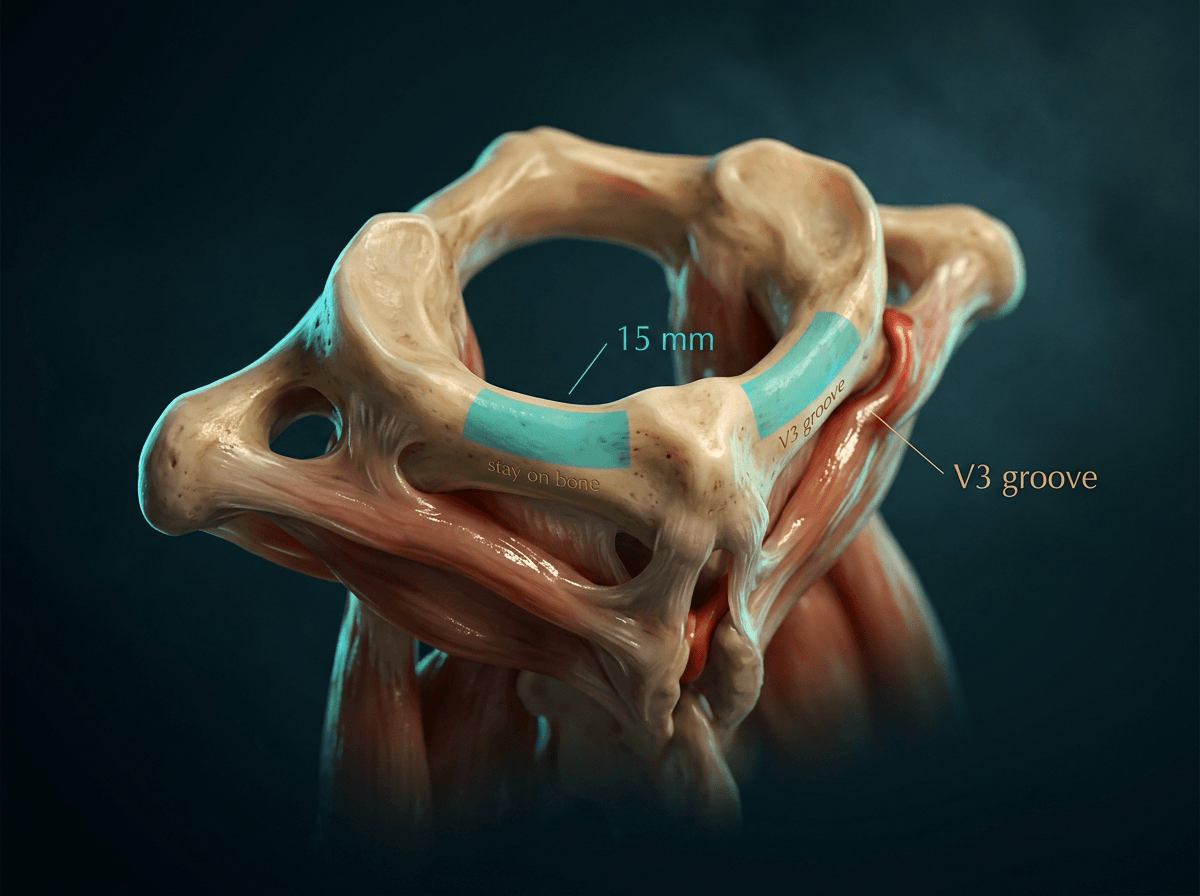
The V3 segment leaves the C2 transverse foramen, runs upwards and laterally to the C1 transverse foramen, then turns medially across the superior surface of the posterior arch of C1 in a groove before piercing the dura. That horizontal course is what a subperiosteal exposure of the C1 arch runs into.
A cadaveric study measuring the landmarks directly found the distance from the posterior tubercle of C1 to the groove cradling the vertebral artery to be 19.1 ± 3.8 mm. Taking the lower end of that spread, staying within roughly 15 mm of the midline on the C1 arch is the practical rule - and the variability is the point: a mean of 19 mm with a standard deviation of nearly 4 mm means the artery is appreciably closer to the midline in some patients than the average suggests. The authors' other warning is the more important one: blind dissection is what injures the artery. Work subperiosteally, stay on bone, and do not sweep laterally into the soft tissue above the arch looking for a plane.
Do not chase it. Blind attempts to clip or cauterise in a bleeding field injure the artery further, and may injure the other structures around it.
- Tamponade immediately - direct pressure with haemostatic packing controls almost all of these.
- Do not explore the vessel blindly and do not attempt bipolar coagulation of a vessel you cannot see.
- Complete or abandon the instrumentation deliberately - a construct left half-finished in a patient who now needs angiography is its own problem. Where a screw on the opposite side was planned, reconsider it: bilateral vertebral artery injury is the situation to avoid at all costs.
- Postoperative angiography to define the lesion, grade it and decide on antithrombotic therapy - which is the same decision tree as for a blunt injury, complicated by fresh surgical haemostasis.
- Wake and assess neurologically as a priority, and be alert for delayed posterior-circulation signs.
Reported vertebral artery injury during C1-C2 transarticular screw placement is 1.3-4.1%, and a high-riding artery is the commonest setting. Preoperative CT assessment of the isthmus is not an optional refinement - it is how that number is kept low.
Clinical Presentation
The defining clinical feature of VAI is that it is commonly asymptomatic at first - more than half of patients have no neurological signs at presentation, so the injury is found on screening imaging rather than examination. When it does declare, it produces a posterior-circulation (vertebrobasilar) stroke or TIA: vertigo, ataxia, diplopia, dysarthria, visual-field loss, or a depressed conscious level - often a day or more after the injury. Other clues are local: neck pain, a cervical bruit or thrill, or an expanding neck haematoma. The teaching point for the exam is blunt: a normal neurological examination does not exclude VAI, and the window to prevent the stroke is in the first hours.
When VAI does cause a posterior-circulation infarct, expect recognisable patterns rather than vague "dizziness":
- Lateral medullary (Wallenberg) syndrome - the classic VA/PICA-territory stroke: ipsilateral facial pain/temperature loss, Horner's syndrome, ataxia, vertigo/nystagmus and bulbar signs (dysphagia, hoarseness), with contralateral body pain/temperature loss - a "crossed" sensory pattern.
- Basilar artery occlusion - the catastrophic end: fluctuating or reduced consciousness, quadriparesis and cranial-nerve signs, the locked-in syndrome - a time-critical neurological emergency.
- Cerebellar infarction - vertigo, ataxia and vomiting; the danger is that a large cerebellar infarct swells, compressing the fourth ventricle and brainstem and causing obstructive hydrocephalus, which can require suboccipital decompressive craniectomy with or without an external ventricular drain.
Recognising these as the consequence of an untreated VAI is what links the silent injury to the urgent screen.
Investigations: Screening & Grading
Because BCVI is frequently clinically silent initially, screening is based on injury patterns and risk factors (modified Denver/Memphis-type criteria). Screen for VAI/BCVI with:
- Cervical spine fractures — especially through the foramen transversarium, C1–C3 fractures, and facet (sub)luxation/dislocation or fracture-subluxation;
- Severe head injury (low GCS), basilar skull fracture, Le Fort II/III facial fractures;
- Cervical bruit/thrill, expanding neck haematoma, seatbelt sign over the neck, or near-hanging;
- Focal neurology unexplained by brain imaging, or a stroke/TIA pattern.
A pragmatic rule (and the EAST practice guideline position): screen any patient whose injuries would otherwise prompt a CT of the neck or chest — liberal screening catches the silent majority.
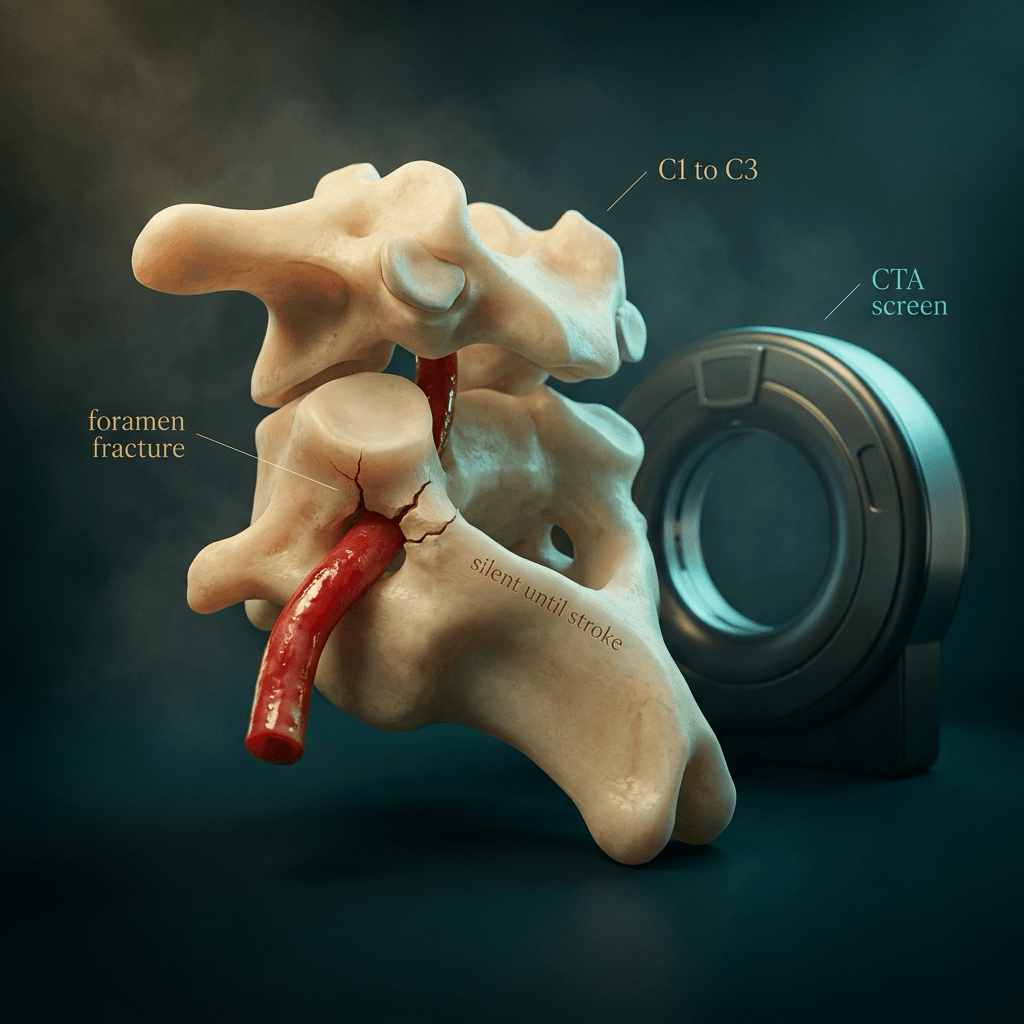
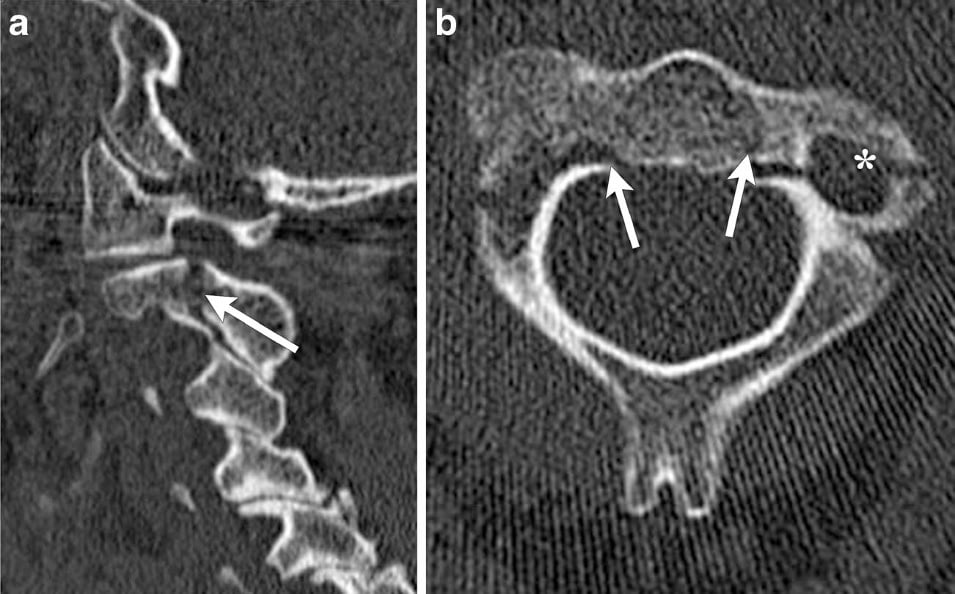
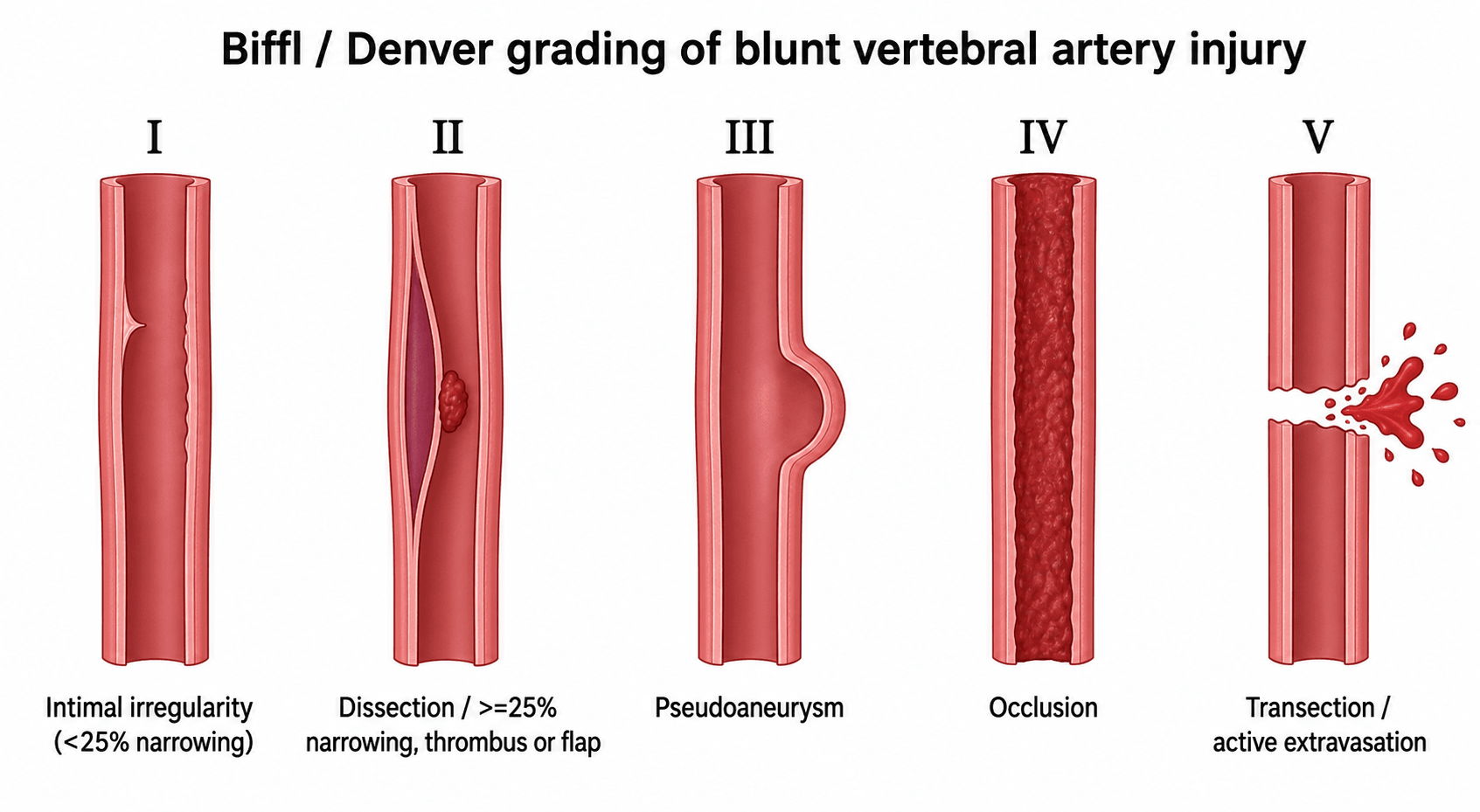
CT angiography (CTA) of the neck is the screening modality of choice (widely available, fast); digital subtraction angiography (DSA) remains the reference standard and is used in selected/equivocal cases or for intervention. Injuries are graded by the Biffl/Denver scale (I–V), which guides treatment and prognosis, and follow-up imaging is often used to track lesion evolution.
- Lesion
- Intimal irregularity / dissection with under 25% luminal narrowing
- Lesion
- Dissection or intramural haematoma with 25% or more narrowing, intraluminal thrombus, or a raised intimal flap
- Lesion
- Pseudoaneurysm
- Lesion
- Complete occlusion
- Lesion
- Transection with active extravasation (or AV fistula in some schemes)
Management
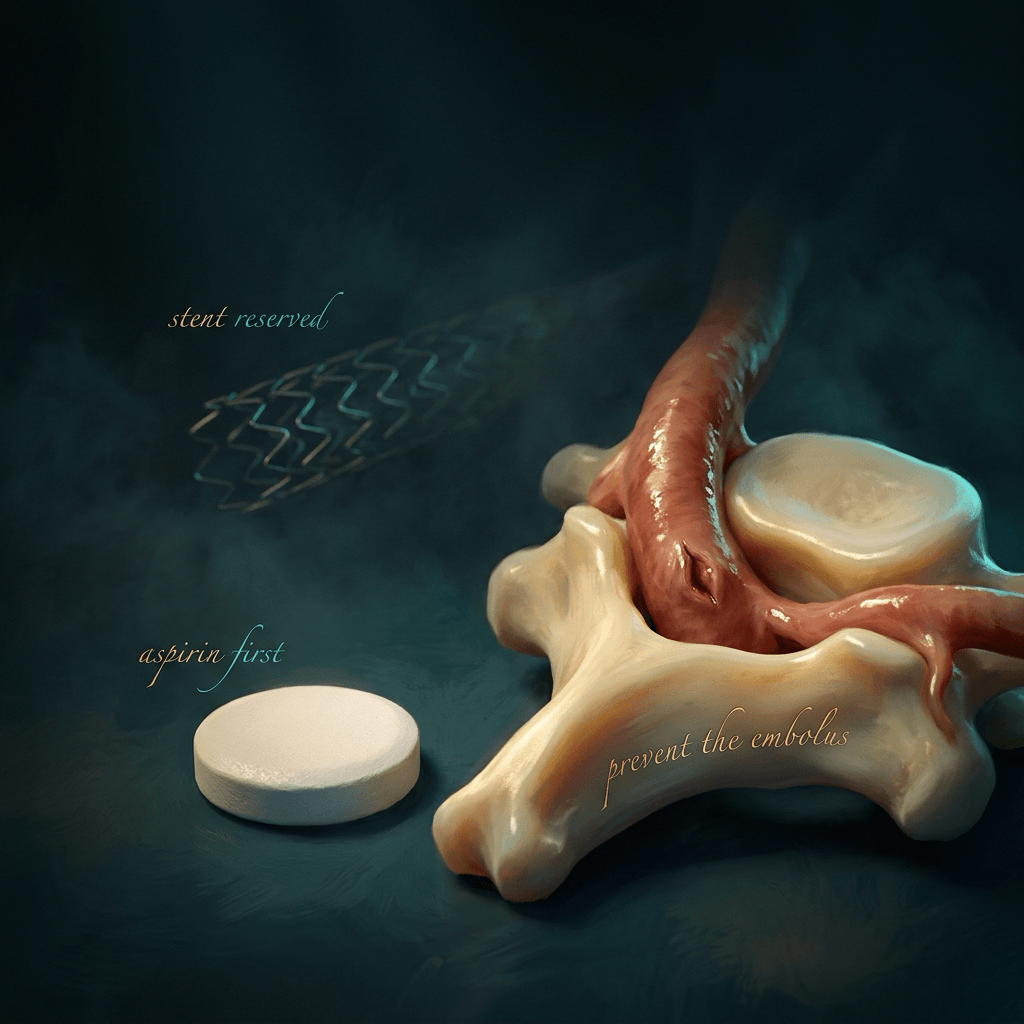
The goal is stroke prevention. Antithrombotic therapy — aspirin or therapeutic anticoagulation (heparin) — is the mainstay and has proven safety in trauma patients; treatment is guided by the grade of injury and started as early as the overall injury burden safely allows (given the early stroke window). For isolated vertebral artery injury the stroke rate is low and aspirin is generally effective (particularly for grade I and IV). Endovascular intervention (stent, coil/occlusion) is reserved for selected lesions — e.g. an enlarging pseudoaneurysm (grade III) or a grade V injury (the EAST guideline recommends against routine stenting as an adjunct to antithrombotics for grade II–III). The choice of agent and timing is individualised by balancing stroke risk against bleeding risk (concomitant TBI, solid-organ injury, planned surgery).
Aspirin or therapeutic anticoagulation is the core treatment and reduces both stroke and mortality. Start as early as the injury burden allows; for isolated VAI the stroke rate is low and aspirin is generally effective (especially grades I and IV). Balance against bleeding risk (TBI, solid-organ injury, surgery) and arrange follow-up imaging for grade II/III lesions, which can progress.
- Lesion
- Intimal irregularity / under 25% narrowing
- Typical management
- Antithrombotic (often aspirin); usually resolves
- Lesion
- Dissection/haematoma ≥25% narrowing, thrombus, intimal flap
- Typical management
- Antithrombotic; follow-up imaging (can progress)
- Lesion
- Pseudoaneurysm
- Typical management
- Antithrombotic; endovascular if enlarging/symptomatic
- Lesion
- Occlusion
- Typical management
- Antithrombotic (aspirin); monitor for posterior-circulation stroke
- Lesion
- Transection / active extravasation
- Typical management
- Endovascular/surgical control (often vessel occlusion)
- 1Suspect by patternForamen-transversarium fracture, facet (sub)luxation/dislocation, distraction injury, or C1–C3 fracture — plus the broader Denver criteria. A normal neuro exam does not exclude VAI.
- 2Screen early with CTACT angiography of the neck is the screening test of choice; DSA for equivocal cases or intervention. Screen within the first hours — stroke risk peaks at 24 h.
- 3Grade and start antithromboticsGrade with Biffl/Denver. Start aspirin or therapeutic anticoagulation as soon as the overall injury burden allows; isolated VAI does well on aspirin (esp. grades I and IV).
- 4Think of the vessel before you reduceManipulation/closed reduction can propagate a dissection — screen where feasible and coordinate antithrombotic timing with the spinal plan, without unduly delaying urgent reduction of a cord-threatening injury.
In a high-risk cervical injury (facet dislocation, foramen-transversarium fracture), remember the vertebral artery when planning closed reduction or operative manipulation — screen with CTA where feasible and weigh the small risk of propagating a dissection, while not unduly delaying urgent reduction of a cord-threatening injury. Coordinate antithrombotic timing with the spinal surgical plan and any associated injuries.
Complications & Prognosis
- Detail
- The dominant complication. The 10-40% untreated figure is for BCVI overall; isolated vertebral injury sits well below it, and in a 156-patient isolated-VAI series only three strokes occurred - all before treatment began. Risk is highest in the first 7 days and peaks within 24 hours, which is why screening is urgent even though the absolute risk is lower than the pooled number suggests
- Detail
- Grade II dissections/haematomas can progress despite therapy; pseudoaneurysms (III) may enlarge - hence follow-up imaging
- Detail
- Grade I often resolves; grade IV occlusion does not recanalise early but isolated VAI still has a low stroke rate on aspirin; grade V is the most dangerous
- Detail
- Antithrombotics must be balanced against TBI, solid-organ injury and planned surgery - though they are proven safe in trauma overall
- Detail
- Early antithrombotic therapy substantially reduces stroke and mortality (EAST: stroke OR 0.20, mortality OR 0.17)
Mnemonics & Memory Aids
ARTERYThe artery at risk
Hook:The ARTERY at risk: at-risk patterns, runs in V2/V3, time-critical, CTA, reduce risk with antithrombotics.
SCREENWho to screen
Hook:SCREEN for VAI by pattern, not symptoms: Spine pattern, Cervical signs, Reduced GCS, Established neuro, Everyone needing CT neck/chest, Near-hanging.
I to VBiffl/Denver grades
Hook:Biffl I-V: intimal, narrowing/dissection, pseudoaneurysm, occlusion, transection.
Viva practice
Practise clinical reasoning and management decisions out loud
“A patient with a cervical facet dislocation and a fracture through the foramen transversarium is neurologically intact. Why are you concerned about the vertebral artery, who would you screen, and how?”
“CTA confirms a grade II vertebral artery dissection with 30% narrowing. How would you manage it, and how does treatment vary by grade? What if you also need to reduce the cervical injury?”
Anatomy & risk
- V1 pre-foraminal, V2 foraminal (transverse foramina), V3 atlas loop, V4 intradural to basilar
- V2/V3 most at risk; injures posterior (vertebrobasilar) circulation
- At-risk injuries: foramen transversarium fracture, facet (sub)luxation, distraction, C1-C3 fracture
Why it matters
- Stroke in 10-40% if untreated - but that is BCVI overall; isolated vertebral injury is lower
- More than half SILENT initially; stroke risk peaks first 24h (highest first 7 days)
- Screen early - don't wait for symptoms
Screen & grade
- CTA neck = screening modality of choice (DSA reference standard in select cases)
- Screen Denver-type criteria + anyone needing CT neck/chest
- Biffl/Denver grades I-V guide treatment
Management
- Antithrombotics (aspirin or anticoagulation) = mainstay, safe in trauma; grade-guided
- Isolated VAI: low stroke rate, aspirin effective (esp. I, IV); follow-up imaging for II
- Endovascular for enlarging pseudoaneurysm (III)/grade V; not routine stenting II-III; consider vessel before cervical reduction
Evidence
Blunt carotid arterial injuries: implications of a new grading scale
- Derived the Biffl/Denver I-V grading scale from 76 patients with 109 blunt arterial injuries, with prognostic and therapeutic implications.
- Grade-specific behaviour: two-thirds of grade I healed regardless of therapy; grade II progressed in ~70% despite heparin; only 8% of grade III pseudoaneurysms healed with heparin but 89% resolved after stenting; grade IV occlusions did not recanalise; grade V transections were lethal.
- Stroke risk increased with injury grade - the basis for grade-guided treatment.
Evaluation and management of blunt cerebrovascular injury: A practice management guideline from the Eastern Association for the Surgery of Trauma
- GRADE-based systematic review/meta-analysis (23 studies): a screening protocol increased BCVI detection (OR 4.74), and high-risk cervical injuries had far higher detection than low-risk (OR 12.7).
- Antithrombotic therapy reduced stroke (OR 0.20) and mortality (OR 0.17) versus no antithrombotic therapy.
- Recommends screening protocols, CTA for high-risk cervical injuries, antithrombotic therapy for diagnosed BCVI, and AGAINST routine stenting as an adjunct to antithrombotics for grade II-III injuries.
Management of Blunt Cerebrovascular Injury
- Untreated BCVI causes stroke in 10-40% of patients, but more than half do not present with stroke symptoms initially; stroke risk is highest in the first 7 days (peak in the first 24 hours).
- CT angiography is the screening modality of choice (DSA in selected cases); screen all patients with injuries that would otherwise prompt CT of the neck or chest.
- Antithrombotic therapy is the mainstay and is safe in trauma patients; endovascular intervention benefits selected patients; treatment is guided by injury grade.
Blunt Traumatic Vertebral Artery Injuries: Incidence, Therapeutic Management, and Outcomes
- 156 isolated blunt vertebral artery injuries: most patients (135/156) were treated with aspirin alone; the risk of stroke after cervical vertebral artery injury was low.
- Aspirin prophylaxis was efficacious in grade I and grade IV injuries; data are limited for grades II and III.
- The three strokes that occurred were detected within 24 hours of admission, before treatment was started - reinforcing early screening and treatment.
Ipsilateral arcuate foramen and high-riding vertebral artery: implication on C1-C2 instrumentation
- 100 consecutive cervical CT scans. A high-riding vertebral artery - isthmus thickness under 5 mm or internal isthmus height under 2 mm - was present in 32% of patients: 13 left, 9 right and 10 BILATERAL.
- A fully formed arcuate foramen (ponticulus posticus) was present in 14%, with a further 24% partially formed.
- Ipsilateral arcuate foramen AND high-riding vertebral artery coexisted in 5%.
- The authors' conclusion is the practical one: both anomalies are common and are often not recognised, and identifying them on the preoperative CT is what allows the safest instrumentation technique to be chosen.
A review of complications associated with craniocervical fusion surgery
- 22 reports covering 2,274 craniocervical and upper cervical fusion procedures analysed for complications.
- Vertebral artery injury occurred in 1.3% to 4.1% of C1-C2 transarticular screw placements, MOST COMMONLY in the setting of a high-riding vertebral artery.
- The commonest complications overall were instrumentation failure after nonunion - up to 7% for occipitocervical and 6.7% for atlantoaxial fusion - alongside dural tears and wound infection.
- The authors attribute safety to preoperative assessment of anatomic variants and preparation for perioperative management of complications.
Simple identification of the third segment of the extracranial vertebral artery (ELITE approach)
- 16 cadaver heads dissected bilaterally with silicone-injected vessels, measuring the bony landmarks that locate the V3 segment.
- The distance from the posterior tubercle of C1 to the groove cradling the vertebral artery on the posterior arch was 19.1 plus or minus 3.8 mm.
- The V3 segment was identified successfully in every specimen using bony landmarks alone, and the artery was injured in none.
- The authors state the hazard plainly: blind dissection below the level of the foramen magnum can injure the vertebral artery.
The I-V grading scale comes from Biffl et al. 1999 (DOI); the screening and antithrombotic recommendations (and the detection/stroke/mortality odds ratios) from the EAST practice guideline (Kim et al. 2020, DOI); the stroke-risk figures and CTA-screening synthesis from Stone et al. 2018 (DOI); and the isolated-vertebral-artery outcomes from Zeineddine et al. 2022 (DOI). Note the one tension worth holding in mind: the 10-40% untreated stroke figure is BCVI-wide, pooling carotid with vertebral, while the isolated-vertebral series is markedly more reassuring. Both are on this page, and the difference is the vessel, not a disagreement. For the iatrogenic material, the prevalence of high-riding vertebral artery and arcuate foramen is from Elgafy et al. 2014 (DOI), the transarticular-screw injury rate from Lall et al. 2010 (DOI), and the C1 exposure distances from Wanibuchi et al. 2009 (DOI). The segmental vertebral-artery anatomy is standard, well-established reference. (See also our cervical-trauma topics.)