Chondral Defects | Size-Based Treatment | Microfracture vs OATS vs ACI
- Articular cartilage has NO blood supply - cannot heal spontaneously
- Treatment algorithm based on DEFECT SIZE and patient factors
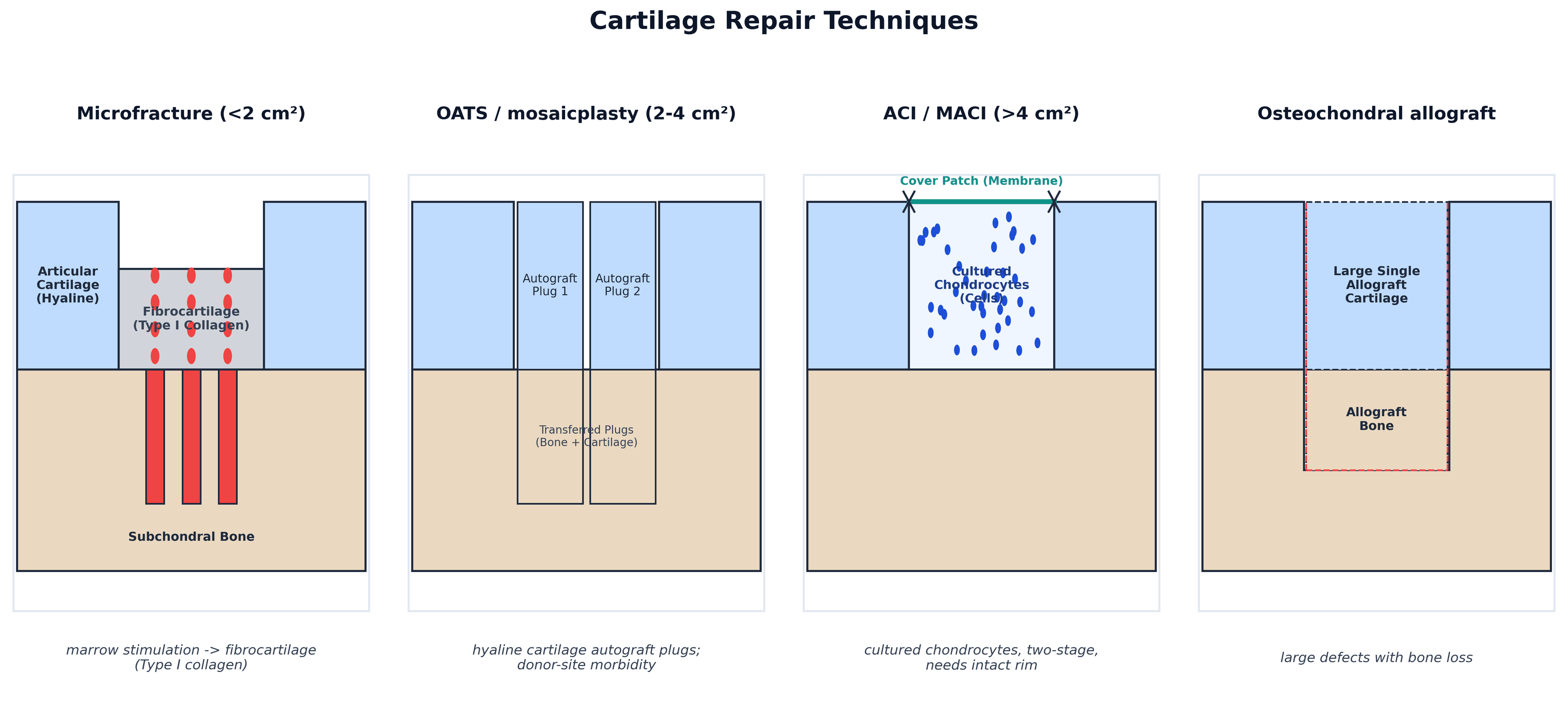
- Microfracture: less than 2cm² - creates fibrocartilage (Type I collagen)
- OATS: 2-4cm² - hyaline cartilage transfer, limited donor site
- ACI/MACI: greater than 4cm² - cultured chondrocytes, expensive, two-stage
- “Fibrocartilage from microfracture is mechanically inferior to hyaline
- “OATS donor site morbidity limits graft size
- “ACI requires intact cartilage rim (shoulders)
- “Osteochondral allograft for large defects with bone loss
Overview and Epidemiology
Articular cartilage is avascular, aneural and alymphatic. It takes its nutrition by diffusion from synovial fluid, and without a blood supply there is no inflammatory healing response. Every repair on this page works around that fact: either a channel is opened to the marrow (microfracture) or cells are brought in from outside (ACI). The zonal architecture is set out in articular cartilage structure, and the reasons the tissue cannot regenerate itself in cartilage healing and repair.
Who. Cartilage damage is seen in 60% of knee arthroscopies. Peak incidence is between 10 and 50 years, males are more commonly affected, and sports injuries are a common cause. Defects are traumatic or degenerative, and the distinction shapes who is a candidate for repair (see Clinical Assessment).
Natural history. Full-thickness defects do not heal; partial-thickness defects may not progress. Size correlates with symptoms, the surrounding cartilage is at risk, and an untreated defect leads to osteoarthritis.
Pathophysiology and Mechanisms
The zones. Hyaline cartilage is layered, and the collagen orientation and the load resisted differ by zone:
- Superficial (tangential) zone - Type II collagen parallel to the surface; resists shear
- Middle (transitional) zone - oblique collagen; resists compressive forces
- Deep (radial) zone - perpendicular collagen; anchors to the tidemark
- Calcified cartilage - above the subchondral bone; the tidemark separates it from the deep zone
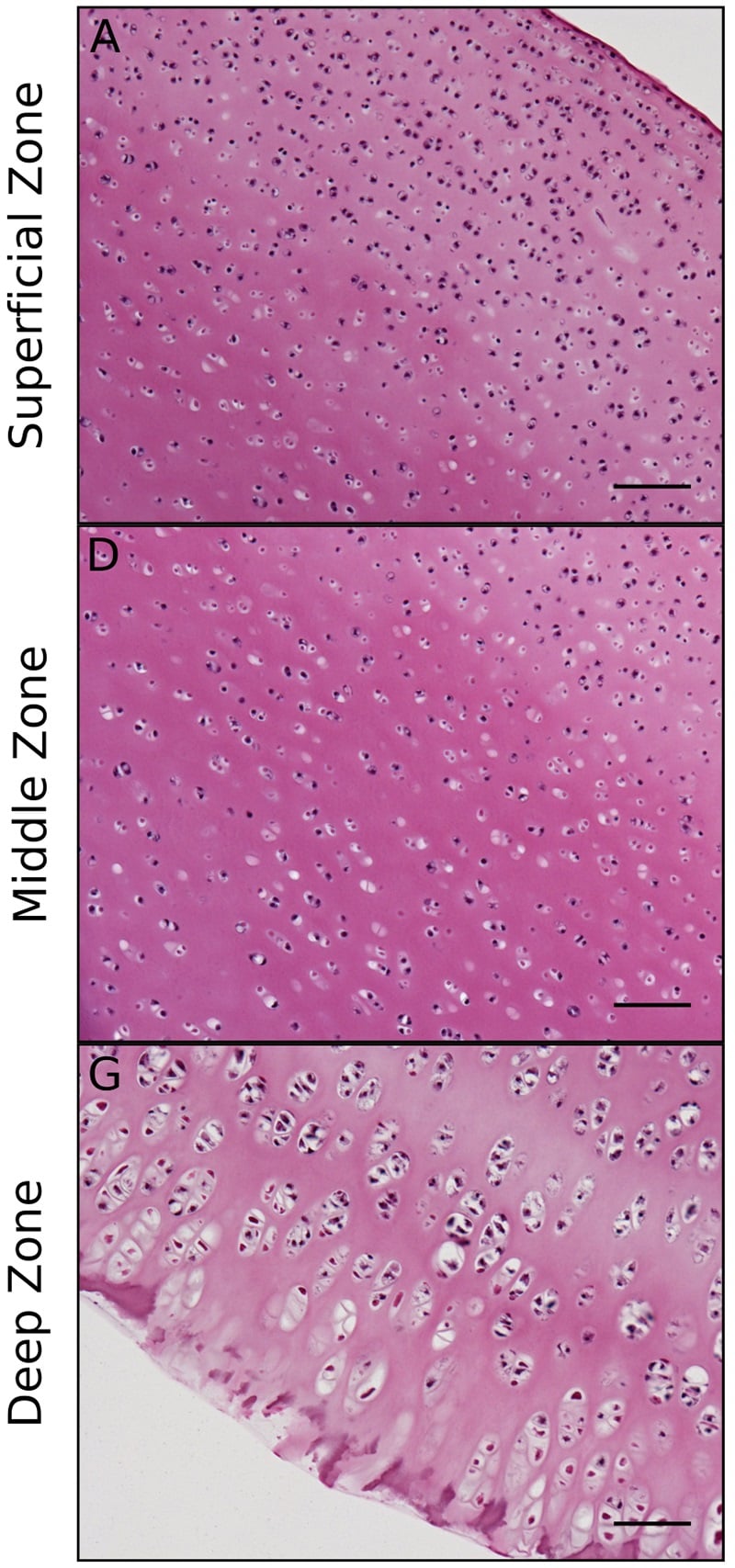
Composition. Water is 65-80% of wet weight and is biphasic with the solid matrix. Type II collagen is 10-20% of wet weight and provides tensile strength. Proteoglycans (aggrecan) carry a negative charge that attracts water, and that is what resists compression. Chondrocytes occupy only 1-5% of the volume; they maintain the matrix and do not divide.
Biomechanics. Compressive strength comes from the proteoglycan-water interaction and tensile strength from the collagen network. Lubrication is boundary and fluid film, and the coefficient of friction is 0.001-0.01, lower than ice on ice.
Classification Systems
Grade the lesion with ICRS, and know Outerbridge because it is older and less commonly used now but may appear in exam questions. The size grouping that chooses the operation is in Management.
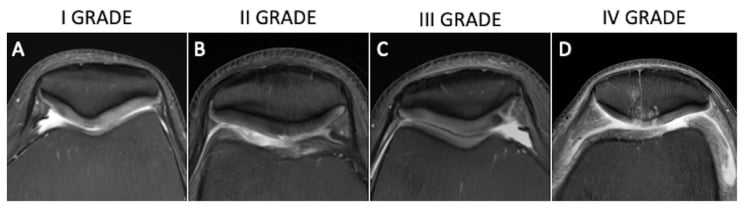
The International Cartilage Repair Society grading, with what each grade implies for treatment.
- Description
- Normal
- Depth
- Intact
- Treatment Implication
- No treatment
- Description
- Superficial
- Depth
- Softening/fibrillation
- Treatment Implication
- Conservative
- Description
- Less than 50%
- Depth
- Abnormal
- Treatment Implication
- Debridement/microfracture
- Description
- Greater than 50%
- Depth
- Not to calcified layer
- Treatment Implication
- Microfracture/OATS
- Description
- Greater than 50%
- Depth
- To calcified layer
- Treatment Implication
- Microfracture/OATS
- Description
- Greater than 50%
- Depth
- Through calcified layer
- Treatment Implication
- Restorative procedure
- Description
- Greater than 50%
- Depth
- Blistering
- Treatment Implication
- Restorative procedure
- Description
- Full thickness
- Depth
- To subchondral bone
- Treatment Implication
- Size-based algorithm
Clinical Assessment
History. Establish whether the onset was acute trauma or insidious, and whether the pain is activity-related with mechanical symptoms. Locking or catching raises the question of a loose body. Ask about the pattern of swelling (the effusion) and about previous surgery, which may represent a failed treatment.
Examination. An effusion is common after an acute injury, and tenderness is focal at the joint line. Range of motion is usually preserved unless the knee locks. Assess alignment for varus or valgus, and stability with ACL and meniscal tests.
A cartilage procedure done in isolation will fail if ACL insufficiency, meniscal deficiency or malalignment is left untreated, so the assessment must cover all of them. Combined procedures (ACL reconstruction with microfracture, HTO with a cartilage procedure) may be needed; the pairings are set out in Management.
Traumatic or degenerative. A traumatic defect is single and contained, with healthy surrounding cartilage, and is a good candidate for a restorative procedure. A degenerative defect is one of multiple lesions with poor surrounding cartilage, and kissing lesions are common; it is a poor candidate for isolated cartilage surgery, and arthroplasty or osteotomy should be considered instead.
Investigations
MRI is the gold standard for cartilage evaluation. Proton density sequences, T2 mapping and dGEMRIC are used, and the assessment covers location, size, depth and bone oedema. Kissing (bipolar) lesions carry a worse prognosis, and the quality of the surrounding cartilage affects surgical planning.
Radiographs are taken weight-bearing:
- Standing AP - joint space narrowing
- Rosenberg view (45° flexion PA) - more sensitive
- Long leg alignment films - the mechanical axis, before any osteotomy
- Lateral - the patellofemoral joint and trochlear dysplasia
Arthroscopy is the definitive assessment. The probe detects softening and depth, size is measured with a calibrated probe or ruler, the rim is assessed for stability if ACI is being considered, and a biopsy is taken if proceeding to ACI.
Differential Diagnosis
- Key Distinguishing Feature
- Activity-related pain, mechanical symptoms, well-localized lesion
- Best Investigation
- MRI (T2 map) / arthroscopy
- Why It Matters
- Index diagnosis - size and depth drive treatment
- Key Distinguishing Feature
- Subchondral bone fragment, younger patient, often stable lesion
- Best Investigation
- MRI assesses fragment stability
- Why It Matters
- May be amenable to fixation rather than resurfacing
- Key Distinguishing Feature
- Joint space narrowing, osteophytes, bipolar/diffuse change
- Best Investigation
- Weight-bearing radiographs
- Why It Matters
- Contraindicates isolated cartilage repair
- Key Distinguishing Feature
- Joint-line tenderness, positive McMurray, no full-thickness cartilage loss
- Best Investigation
- MRI
- Why It Matters
- Often coexists - address concurrently
- Key Distinguishing Feature
- Older patient, acute pain, marked bone marrow oedema
- Best Investigation
- MRI
- Why It Matters
- Resurfacing inappropriate; treat the bone
- Key Distinguishing Feature
- Anterior pain, stairs/squatting, often no discrete defect
- Best Investigation
- Clinical + skyline view
- Why It Matters
- Address maltracking before any cartilage surgery
Management Algorithm
The decision. Size is the primary determinant of treatment, and it must be combined with patient age, activity, location, depth and concomitant pathology rather than used in isolation.
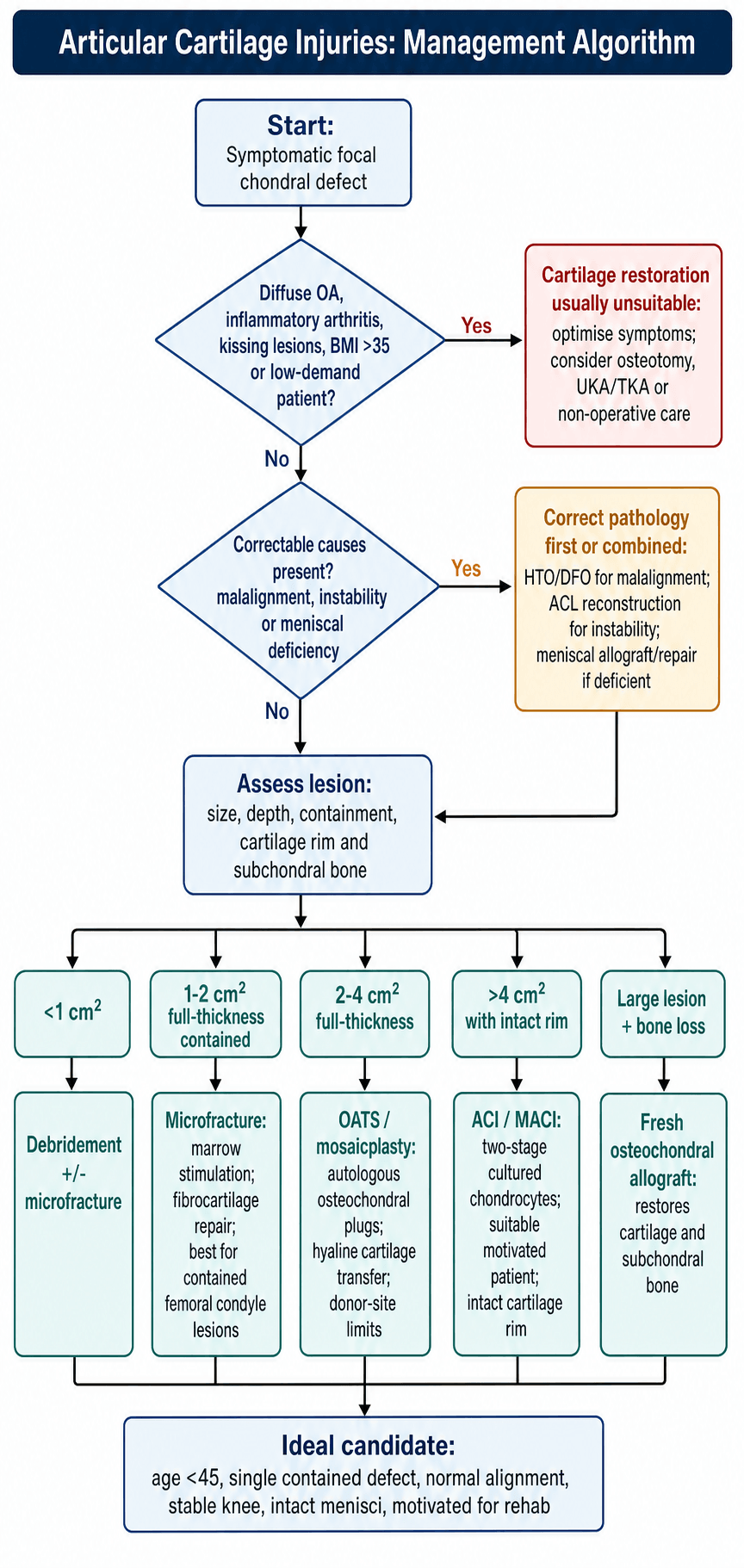
- Depth
- Any depth
- First-Line Treatment
- Debridement +/- microfracture
- Key Consideration
- May do well with debridement alone
- Depth
- Full thickness
- First-Line Treatment
- Microfracture
- Key Consideration
- Best for contained lesions
- Depth
- Full thickness
- First-Line Treatment
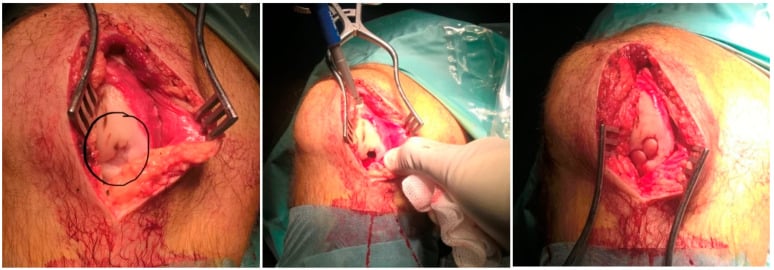
- OATS (mosaicplasty)
- Key Consideration
- Limited by donor availability
- Depth
- Full thickness
- First-Line Treatment
- ACI/MACI
- Key Consideration
- Two-stage, expensive
- Depth
- Into subchondral
- First-Line Treatment
- Osteochondral allograft
- Key Consideration
- Fresh allograft for viability
Debridement is the first step of the ladder: it removes loose fragments.
Which size. Every number above is useless without knowing what is being measured, and this is where the algorithm is most often misapplied. The size that decides the operation is the defect measured arthroscopically after debridement back to stable, vertical, healthy cartilage walls, not the size reported on MRI. The two differ systematically and in one direction: the debrided defect is larger, because undermined and delaminated cartilage at the rim looks intact on MRI and is removed once probed. A lesion reported as 1.8 cm² can comfortably become 2.5 cm² on the table, which moves it out of marrow-stimulation territory and into a graft or cell-based procedure. Three practical consequences follow:
- Consent for the range, not the plan. A patient booked for microfracture on an MRI measurement should be consented for the possibility of a larger procedure, or for a staged approach with a biopsy taken at the index arthroscopy if cell therapy is a realistic destination.
- Measure it properly. Use a calibrated arthroscopic probe, and record the defect in two perpendicular dimensions after debridement rather than estimating an area by eye.
- The thresholds were derived against durability, not early pain relief. Marrow stimulation performs respectably at one to two years across a wide range of defect sizes; what deteriorates with time and with increasing size is the durability of the fibrocartilage fill. A threshold quoted without that context invites the wrong conclusion when a large defect appears to do well at first review.
Microfracture (under 2cm²). Marrow stimulation is single-stage and low-cost, the first line for small lesions and best for a contained defect on the femoral condyle. Penetrating the subchondral plate gives the marrow elements access to the defect, and the repair tissue they form is fibrocartilage.
Microfracture produces Type I collagen (fibrocartilage), which is mechanically inferior to native Type II collagen (hyaline cartilage). Fibrocartilage has only 25% of the stiffness and durability of hyaline. This is why larger defects need better solutions.
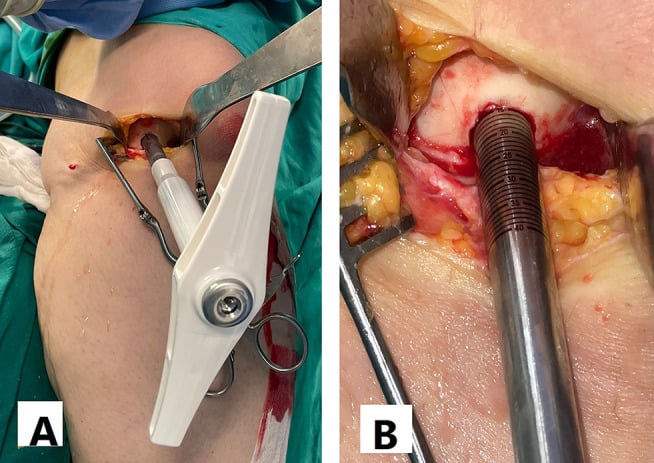
OATS / mosaicplasty (2-4cm²). Osteochondral autograft transfer moves cylindrical plugs of true hyaline cartilage, with their bone, from a non-weight-bearing area into the defect. The ceiling is the donor: availability and donor-site morbidity limit how many plugs can be taken, and therefore how large a defect can be resurfaced.
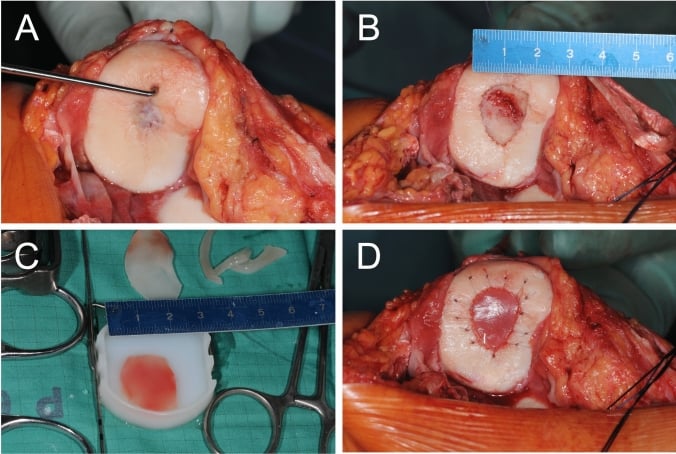
ACI / MACI (over 4cm²). Cultured autologous chondrocytes are implanted at a second operation, so the procedure is two-stage and expensive, and it requires an intact cartilage rim (shoulders). It gives the best long-term hyaline-like restoration for large lesions.
Fresh osteochondral allograft (large with bone loss). A single graft replaces both cartilage and subchondral bone, which makes it the option when the lesion involves the subchondral bone. Chondrocyte viability requires fresh tissue.
Patient factors. The ideal candidate:
- Age under 45 years
- Single, contained defect
- Normal alignment
- Stable knee (intact ligaments)
- Intact menisci
- High demand, motivated for rehabilitation
- Normal BMI
Relative contraindications, for whom alternative options should be considered:
- Age over 55 (consider HTO or UKA instead)
- Multiple or kissing (bipolar) lesions, or diffuse osteoarthritis
- Uncorrected malalignment (address alignment first)
- Ligament insufficiency
- Meniscal deficiency
- Low-demand patient
- BMI over 35
- Inflammatory arthritis
SLIMPrerequisites for Cartilage Surgery
Hook:Keep your cartilage patient SLIM (address all these first)!
Concomitant pathology. Each is paired with the cartilage procedure:
- Malalignment - HTO or DFO, staged or concurrent, to unload the diseased compartment: a varus knee with a medial defect needs a medial opening-wedge HTO, and a valgus knee with a lateral defect needs a DFO
- ACL deficiency - ACL reconstruction
- Meniscal deficiency - meniscal allograft
- Patellofemoral lesion - tibial tubercle osteotomy; anteromedialisation (Fulkerson) unloads a distal or lateral patellar facet lesion
When you realign to protect a cartilage repair, the planned correction differs from a standard osteotomy for established OA. For a varus knee with a medial cartilage procedure, aim to bring the mechanical (weight-bearing) axis to neutral or only slightly into the lateral compartment to off-load the medial repair without overloading the healthy lateral side. The classic Fujisawa point (mechanical axis crossing the tibial plateau at roughly 62% of its width from medial, i.e. just lateral to the midline) is the target for osteotomy treating medial OA; for a focal cartilage repair many surgeons deliberately correct less (toward neutral) to avoid transferring load onto the opposite compartment. This is exactly why long-leg alignment films are mandatory before any cartilage surgery.
Surgical Technique
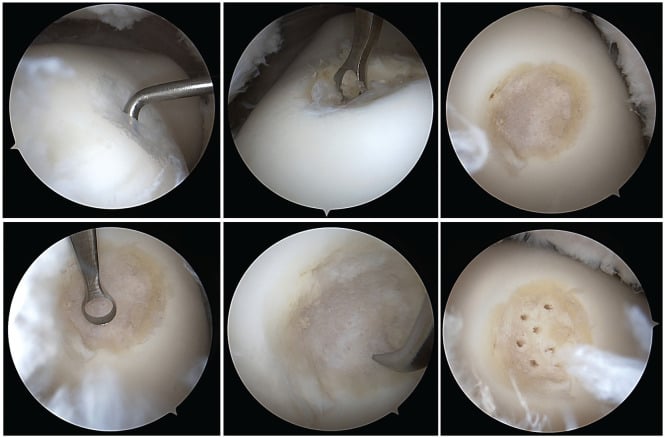
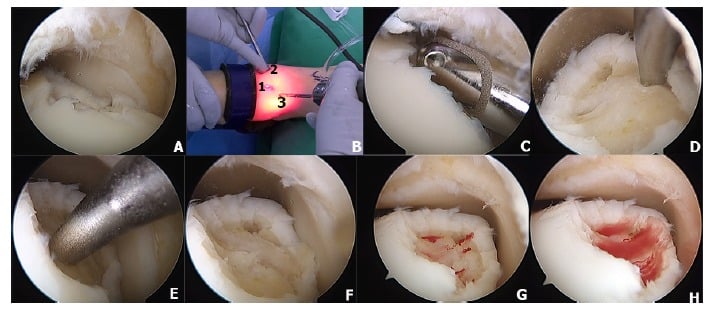
Prepare the defect (Steadman). Debride unstable cartilage back to stable vertical walls, then deal with the calcified layer.
The calcified cartilage layer must be removed. Left in place it prevents integration of the repair tissue with the subchondral bone and leads to delamination. Curette to bleeding bone, but preserve the subchondral plate.
Awl the base. A curved arthroscopic awl makes holes 3-4mm deep and 3-4mm apart, 3-4 holes per cm², starting peripherally and working centrally.
Confirm marrow access. Reduce the arthroscopic pressure and watch for fat droplets from the holes: the marrow element, and the precursor of the "super clot". The postoperative protocol is in Postoperative Care.
Complications
- Complication
- Intralesional osteophyte
- Incidence
- Common
- Management
- Revision restorative procedure
- Complication
- Fibrocartilage deterioration
- Incidence
- 5+ years
- Management
- Consider second-line procedures
- Complication
- Donor site morbidity
- Incidence
- 5-10%
- Management
- Limit harvest size and number
- Complication
- Plug subsidence
- Incidence
- 5%
- Management
- Proper depth preparation
- Complication
- Hypertrophy
- Incidence
- 15-30%
- Management
- Secondary debridement
- Complication
- Delamination
- Incidence
- 10%
- Management
- Proper rim preparation
- Complication
- Arthrofibrosis
- Incidence
- 5%
- Management
- Appropriate CPM and therapy
- Complication
- Failure
- Incidence
- Variable
- Management
- Address malalignment, revise to higher tier
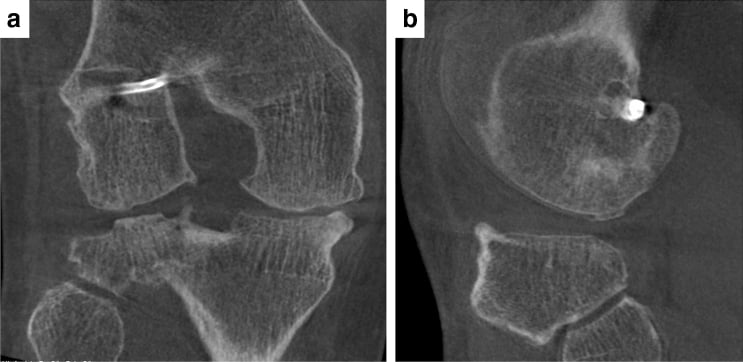
Graft delamination and hypertrophy are the main ACI-specific complications. Delamination occurs when the calcified layer is not removed or when the surrounding cartilage rim is inadequate. Hypertrophy (overgrowth of repair tissue) may require debridement but is usually a sign of successful healing.
Postoperative Care
Microfracture and ACI/MACI share the protocol below: CPM, and NWB or TTWB for 6-8 weeks. After microfracture, impact is avoided for 4-6 months.
Rehabilitation Protocol
CPM 6-8 hours/day. NWB or TTWB with crutches. Avoid shear forces. Focus on ROM and quadriceps activation.
Gradual weight-bearing progression. PWB to FWB by 12 weeks. Pool exercises, stationary bike.
Full weight-bearing. Progressive strengthening. Low-impact activities (swimming, cycling). No impact sports.
Impact activities gradually introduced. Sport-specific training. Full return 9-12 months for high-level athletes.
Premature weight-bearing damages the immature repair tissue and leads to failure. Strict adherence to the NWB/TTWB protocol is essential. CPM promotes nutrition by diffusion and prevents adhesions.
Outcomes and Prognosis
Microfracture. 70-80% good or excellent at 5 years. Durability is limited, the fibrocartilage degrades over time, and it is best regarded as a bridge procedure.
OATS. 80-90% good outcomes, limited by the number of plugs that can be taken.
ACI/MACI. 80-90% satisfaction at 10 or more years, and the best long-term hyaline restoration, at the cost of an expensive two-stage procedure.
Osteochondral allograft. 75-85% survival at 10 years; the best option for large defects with bone loss.
Prognosis. Young age, a single defect, femoral condyle location, normal alignment, intact menisci and a first-time procedure predict a good result. Age over 40, bipolar lesions, patellofemoral location, malalignment and revision surgery predict a poor one.
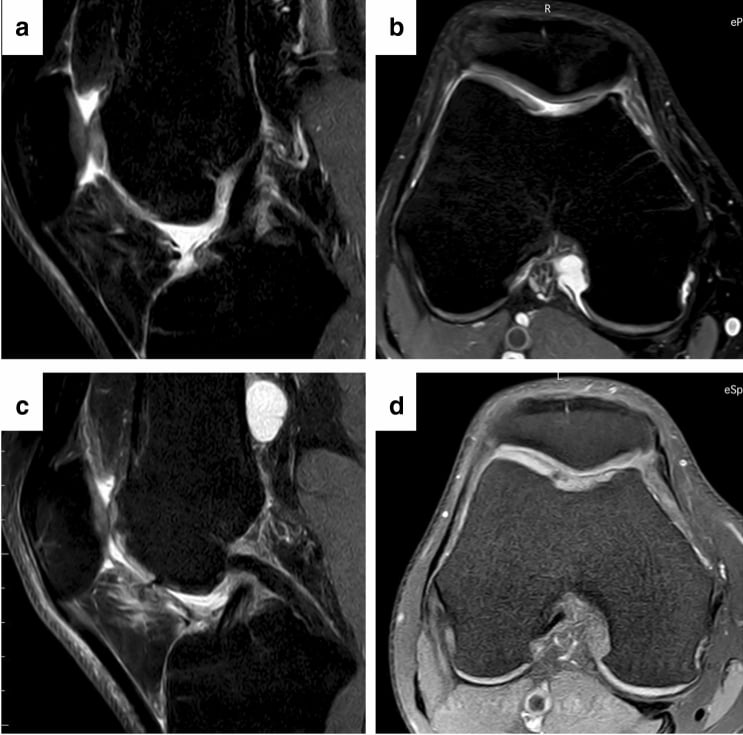
Magnetic Resonance Observation of Cartilage Repair Tissue (MOCART) evaluates repair tissue quality after cartilage surgery. It assesses fill, integration, surface, structure, signal intensity, subchondral bone, adhesions and effusion.
Osteochondral Lesions of the Talus (Site-Specific)
The knee dominates cartilage teaching, but the talar dome is the second most common site and behaves differently enough to be a favourite viva extension. The same biological ladder applies, but the thresholds, morphology and classification are talus-specific.
Morphology by location. Posteromedial lesions are the commonest: typically deeper and cup-shaped, and often atraumatic or degenerative. Anterolateral lesions are usually shallower and wafer-shaped, and more clearly traumatic, following an inversion injury. This shapes both diagnosis and the choice of resurfacing.
Imaging and access. MRI assesses cartilage, bone oedema and subchondral cysts; CT best defines the bony geometry and cyst size for planning. Posteromedial lesions are hard to reach and may need a medial malleolar osteotomy for open grafting.
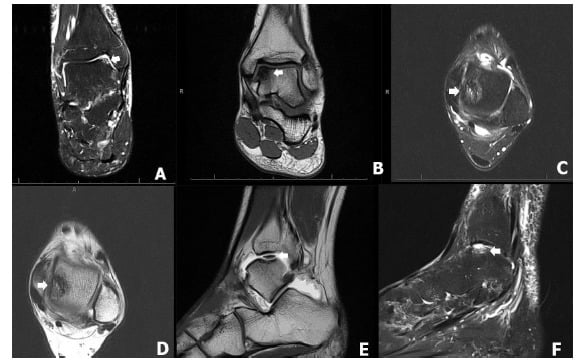
- Description
- Small area of subchondral compression (trabecular injury); cartilage intact
- Description
- Partially detached osteochondral fragment
- Description
- Completely detached fragment but undisplaced (remains in the crater)
- Description
- Detached and displaced fragment (loose body)
As at the knee, lesion size and subchondral bone quality decide treatment, but the talar cut-off is smaller. Small lesions (broadly under roughly 1.5 cm² / 150 mm²) without a large subchondral cyst do well with bone-marrow stimulation (microfracture/drilling). Larger lesions, or those with a significant subchondral cyst or after failed marrow stimulation, are better served by an osteochondral graft - autograft (OAT, e.g. from the knee) or allograft - because marrow stimulation does not reconstruct the bony defect. Symptomatic Berndt-Harty stage III-IV lesions generally need surgery; many stage I-II are trialled non-operatively first.
Guidelines, Registries & Global Practice
- Focal chondral lesions seen in roughly 60% of knee arthroscopies
- Full-thickness (ICRS 3 to 4) defects in around 5 to 11% of arthroscopies
- Peak presentation 30 to 50 years; sports and trauma common in younger patients
- Medial femoral condyle and patella most frequent sites
- Untreated full-thickness defects are a recognized precursor to osteoarthritis
- MACI (matrix-applied ACI) holds FDA approval (US, 2016) and EMA approval for symptomatic femoral condylar defects
- First-generation periosteal ACI largely abandoned for membrane/matrix techniques
- No single dominant cartilage-repair registry; data come mostly from RCTs and institutional series
- Fresh OCA depends on tissue-bank logistics and is concentrated in higher-resource centres
- Cell-therapy products vary widely in regulatory status by region
- Position on Microfracture
- Standard option for small defects
- Position on ACI/MACI
- ACI recommended option for defects over 2cm² with no prior repair and intact rim
- Emphasis
- Defect size and treatment-naive status drive ACI eligibility
- Position on Microfracture
- First-line for small contained lesions
- Position on ACI/MACI
- Preferred for larger lesions; correct alignment/stability first
- Emphasis
- Patient selection and concomitant pathology
- Position on Microfracture
- Acceptable for lesions under 2 to 2.5cm²
- Position on ACI/MACI
- Favoured for larger lesions and active patients
- Emphasis
- Lesion size threshold and activity demand
In high-resource settings the full ladder (microfracture, OATS, ACI/MACI, fresh OCA) is available, often combined with osteotomy or meniscal transplant. In limited-resource settings, debridement and microfracture predominate because they are single-stage, low-cost, and need no cell-culture facility or tissue bank. Cell-based therapy and fresh allograft are restricted by cost, cold-chain logistics, and regulatory approval rather than by clinical indication.
Cartilage surgery is a common viva topic. Know the size-based algorithm cold. Be prepared to discuss why you would choose one procedure over another, address concomitant pathology, and understand the biological differences between repair tissue types. A strong candidate also acknowledges that long-term RCT data (Knutsen) show no clear winner and that no procedure reliably prevents osteoarthritis.
Controversies and Areas of Uncertainty
Subchondral bone overgrowth (intralesional osteophyte) and subchondral cysts after microfracture may compromise later restorative surgery, and the size of that effect is now quantified rather than theoretical. In 321 patients undergoing autologous chondrocyte implantation, defects previously treated with a subchondral-penetrating procedure failed at 26% (29 of 111 joints) against 8% (17 of 214) in those with no prior marrow stimulation — a threefold increase, with failure defined as more than a quarter of the grafted area requiring removal at a later operation. Drilling (28%), abrasion (27%) and microfracture (20%) did not differ significantly from one another. Evidence level 2 (prospective cohort, minimum 2-year follow-up).
The consequence for the algorithm is real: choosing marrow stimulation first is not a free option that leaves every door open. It is a reasonable first-line choice in a small contained defect, but in a patient whose lesion size or activity makes cell therapy a likely eventual destination, the first operation materially worsens the odds of the second. Some surgeons therefore prefer marrow stimulation augmented with scaffolds, or move straight to cell therapy in larger lesions.
Industry RCTs (SUMMIT, Saris) favour cell therapy for larger lesions, but independent long-term RCTs (Knutsen 5 and 15 year) show no clear advantage over microfracture and no protection against OA. Cost-effectiveness remains debated.
The 2cm² and 4cm² cut-offs are pragmatic teaching figures. Real decisions weigh location, depth, bone involvement, patient age, activity, and prior surgery - not size alone.
Minced/particulated cartilage, scaffold-based one-step techniques, BMAC and PRP augmentation, and allogeneic cell products are under active study but lack long-term high-level evidence.
MCQ Practice Points
Q: What is the upper size limit for microfracture? A: Less than 2cm². Beyond this, consider OATS (2-4cm²) or ACI/MACI (greater than 4cm²).
Q: What type of cartilage does microfracture produce? A: Fibrocartilage (Type I collagen). Native articular cartilage is hyaline (Type II collagen). Fibrocartilage is mechanically inferior.
Q: What is required for successful ACI? A: Intact surrounding cartilage rim (shoulders). This is needed to contain the implanted chondrocytes and prevent leakage.
Q: What limits the size of defects treatable with OATS? A: Donor site availability. Harvesting too many plugs causes donor site morbidity. Typically limited to 2-4cm² defects.
Q: Why must the calcified cartilage layer be removed in microfracture? A: Prevents integration of repair tissue with subchondral bone. Leaving it causes delamination of the fibrocartilage layer.
Q: Why must osteochondral allografts be fresh? A: Chondrocyte viability. Cells die with freezing - must implant within 28 days of harvest for living cartilage.
Exam Viva Scenarios
Practise clinical reasoning and management decisions out loud
“A 25-year-old soccer player presents with knee pain after a twisting injury. MRI shows a 1.5cm² ICRS Grade 4 chondral defect on the medial femoral condyle. The knee is otherwise normal. How would you manage this?”
“A 32-year-old woman has persistent medial knee pain. MRI shows a 4.5cm² full-thickness defect on the medial femoral condyle. Long leg films show 5° of varus. She has failed 6 months of conservative treatment. How would you proceed?”
“A 28-year-old returns 3 years after microfracture for a 2cm² medial femoral condyle defect. He has recurrent symptoms. MRI shows poor fill and subchondral cysts. Alignment is normal. What are your options?”
Size-Based Algorithm
- Less than 2cm² = Microfracture
- 2-4cm² = OATS/Mosaicplasty
- Greater than 4cm² = ACI/MACI
- Large + bone loss = OCA
Tissue Produced
- Microfracture = Fibrocartilage (Type I)
- OATS = Hyaline (transplanted)
- ACI = Hyaline-like (Type II)
- OCA = Hyaline (transplanted)
Prerequisites (SLIM)
- Stability (ligaments intact)
- Limb alignment (correct malalignment)
- Intact menisci
- Motivation for rehab
Microfracture Technique
- Debride to stable vertical walls
- Remove calcified cartilage layer
- Awl holes 3-4mm deep, 3-4mm apart
- Confirm fat droplets (marrow access)
Postoperative Protocol
- CPM 6-8 hours/day for 6 weeks
- NWB or TTWB 6-8 weeks
- No impact for 4-6 months
- Full return 9-12 months
Key Studies
- SUMMIT trial: MACI superior to microfracture
- Steadman: Microfracture 75% good at 11 years
- Hangody: OATS 92% good at 10 years
- Size matters for treatment selection
Evidence Base and Key Studies
Brittberg - First-in-Human Autologous Chondrocyte Implantation
- Landmark first clinical series of ACI in 23 patients (defects 1.6 to 6.5 cm²)
- Cultured autologous chondrocytes injected under a sutured periosteal flap
- 14 of 16 femoral condylar transplants good to excellent at 2 years
- Patellar lesions did markedly worse than femoral condylar lesions
- Biopsy showed hyaline-like cartilage in 11 of 15 femoral grafts
Steadman - Microfracture for Traumatic Chondral Defects (11-Year)
- 72 patients (75 knees), age 45 years and younger, isolated traumatic full-thickness defects
- Average 11.3-year follow-up (range 7 to 17 years), 95% retention
- Lysholm improved from 59 to 89, Tegner from 3 to 6
- 80% of patients rated themselves improved at 7 years
- Younger age predicted greater functional improvement
Knutsen - ACI vs Microfracture RCT (5-Year)
- 80 patients randomized to first-generation ACI (n=40) vs microfracture (n=40)
- Both groups improved significantly at 2 and 5 years
- No significant clinical or radiographic difference between groups at 5 years
- 9 failures (23%) in EACH group by 5 years
- No correlation between histological repair quality and clinical outcome
Knutsen - ACI vs Microfracture, 14 to 15-Year Follow-up
- Long-term follow-up of the original 80-patient RCT
- No significant difference between ACI and microfracture at 14 to 15 years
- 17 failures (ACI) vs 13 (microfracture); more TKAs in ACI group (6 vs 3)
- Around half of all patients had radiographic OA (Kellgren-Lawrence 2 or higher)
- Authors raise concern that neither procedure reliably prevents OA
Saris - Characterized Chondrocyte Implantation vs Microfracture (36-Month Clinical)
- 118 patients randomized to characterized chondrocyte implantation (n=57) vs microfracture (n=61)
- Significantly greater overall KOOS improvement with CCI at 36 months (P=0.048)
- More treatment responders with CCI (83% vs 62%)
- Benefit greatest when symptom onset was under 3 years
- Companion 2008 paper (PMID 18202295) showed superior structural/histological repair at 1 year
SUMMIT Trial - MACI vs Microfracture (2-Year RCT)
- 144 patients with symptomatic defects 3 cm² or larger (mean lesion 4.8 cm²)
- MACI significantly better than microfracture for co-primary KOOS pain and function at 2 years (P=0.001)
- Fewer treatment failures with MACI (12.5% vs 31.9%)
- Histology and MRI repair-tissue quality similar between groups
- No unexpected safety signals
Hangody - Autologous Osteochondral Mosaicplasty (10-Year Experience)
- 831 patients undergoing mosaicplasty over 10 years
- Good to excellent results in 92% of femoral condylar implantations
- Lower success at the patella/trochlea (79%) than femoral condyle
- Long-term donor-site morbidity only 3% (Bandi score)
- Arthroscopic biopsies confirmed survival of transplanted hyaline cartilage
Levy/Bugbee - Fresh Osteochondral Allograft of the Femoral Condyle
- 122 patients (129 knees), median 13.5-year follow-up
- Graft survivorship 82% at 10 years, 74% at 15 years, 66% at 20 years
- Durable improvement in pain and function scores
- Age over 30 years and 2 or more prior knee surgeries predicted failure
- 47% underwent a reoperation but most retained the graft
Mithoefer - Microfracture Evidence-Based Systematic Review
- Systematic review of 28 studies, 3122 patients
- Consistent functional improvement in the first 24 months
- Conflicting evidence on durability beyond 2 years
- Variable defect fill on MRI correlated with functional outcome
- Limited hyaline repair tissue and possible functional deterioration over time
ICRS Cartilage Injury Classification (Reference Standard)
- Standardized arthroscopic grading (0 to 4) of chondral lesions
- Grade-3 subdivided (3A to 3D) by depth into the calcified layer
- Includes ICRS Cartilage Repair Assessment (CRA) for repair tissue
- Globally adopted reporting standard for cartilage studies