Pathologic genu varum | Medial physeal growth disturbance | Infantile vs adolescent forms
- DIFFERENTIATION FROM PHYSIOLOGIC GENU VARUM: physiologic resolves by age 2-3 years, is bilateral, MDA under 11 degrees, with no radiographic metaphyseal changes
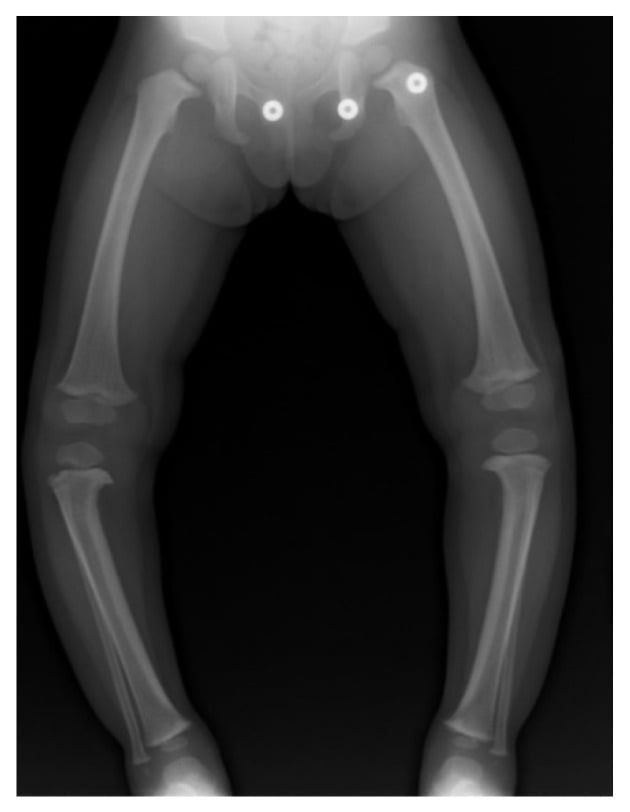
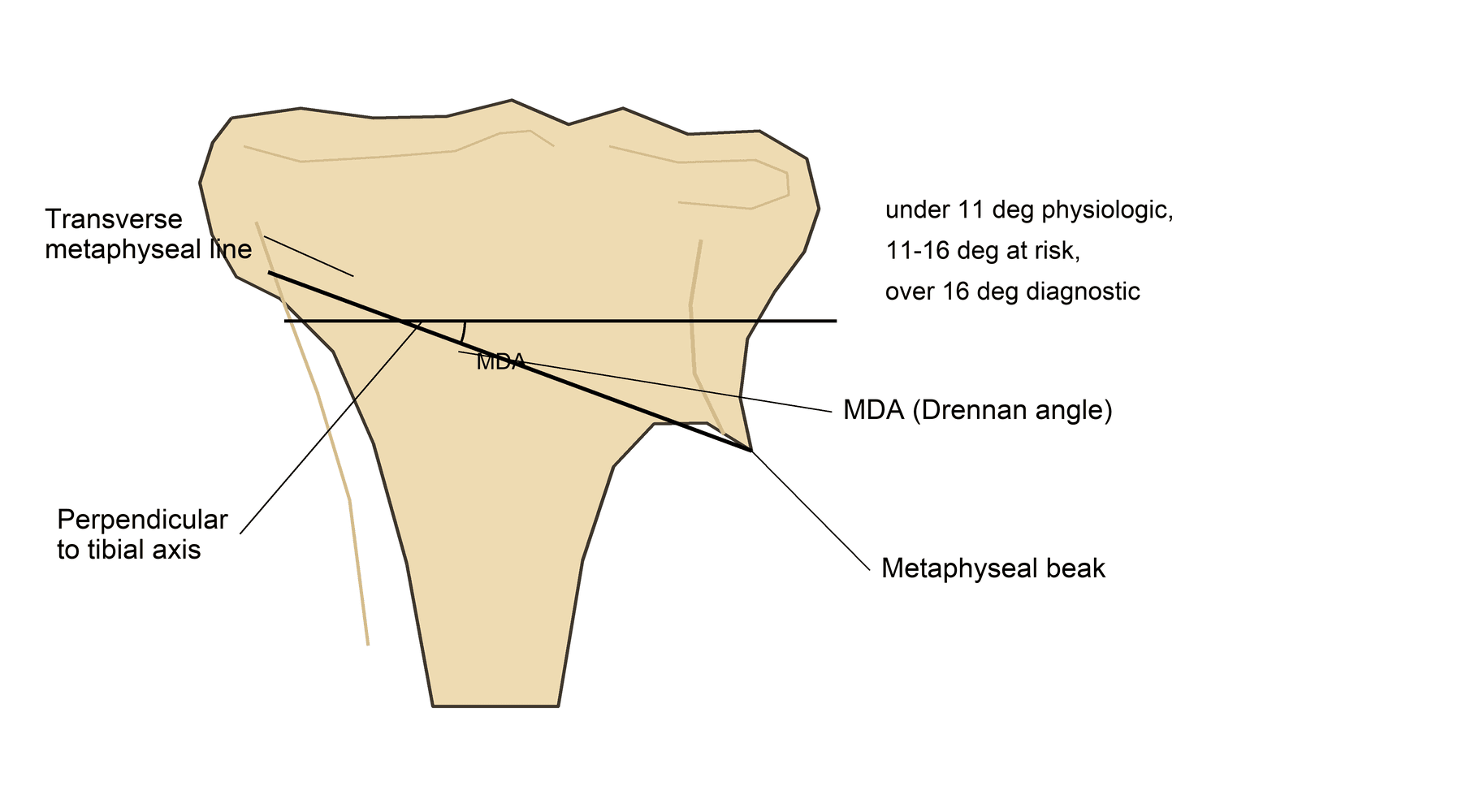
- CRITICAL IMAGING MEASUREMENT: the metaphyseal-diaphyseal angle (Drennan) measured on a standing AP radiograph - over 11 degrees predicts progression, over 16 degrees is diagnostic
- TWO DISTINCT FORMS: infantile (under 4 years, often bilateral, better bracing response) versus adolescent (over 8 years, unilateral, obesity-related, poor bracing response)
- BRACING WINDOW: most effective for Stage I-II infantile disease in children aged 1-3 years, requiring a KAFO (knee-ankle-foot orthosis) worn 23 hours daily for 1-2 years
- SURGICAL TIMING: osteotomy preferred before age 4 years (better remodelling); recurrence risk falls sharply after age 5; the adolescent form requires osteotomy at presentation
- “Langenskiöld Stage IV or higher = surgery required
- “MDA over 16 degrees = pathologic, will not resolve spontaneously
- “Beware combined femoral and tibial deformity in severe cases
- “Physeal bar develops in neglected cases - Stage VI disease
Overview and Epidemiology
What it is. Blount disease (tibia vara) is a pathologic growth disturbance of the medial side of the proximal tibial physis: endochondral ossification fails at the medial metaphysis and the limb bows into progressive genu varum. Untreated it progresses to permanent deformity, a lateral thrust gait, medial compartment osteoarthritis and functional disability.
Two diseases under one name. The infantile form, the more common, begins before age 4 in a child who often walked early, is bilateral in 60-80%, and is the form that may still answer to a brace. The adolescent form begins after 8-10 years, is unilateral in 80%, is tied to obesity, and is less predictable and worse in prognosis: it needs surgery.
- Infantile
- 1-3 years
- Adolescent
- 8+ years
- Infantile
- Bilateral 60-80%
- Adolescent
- Unilateral 80%
- Infantile
- Mild association
- Adolescent
- Strong association
- Infantile
- Common (under 10 months)
- Adolescent
- Not associated
- Infantile
- African/Hispanic predominance
- Adolescent
- Less ethnic variation
- Infantile
- Langenskiöld I-III
- Adolescent
- Advanced changes, often beyond bracing
- Infantile
- Good if Stage I-II and under 3 years
- Adolescent
- Poor, surgery required
- Infantile
- May stabilise after growth
- Adolescent
- Progressive during growth
- Infantile
- Defer if possible, best before age 4
- Adolescent
- Early surgery recommended
Who gets it. Prevalence varies markedly by population: higher in children of African and Afro-Caribbean descent and in regions where infants walk early, and relatively rare in Northern European and Caucasian populations. Boys outnumber girls about 3:1, and incidence is rising worldwide in parallel with childhood obesity, especially the adolescent form.
Risk factors. Two are mechanical and familiar: walking before 10 months, and obesity, which matters most in the adolescent form and where BMI is an independent predictor of being listed for surgery. The rest are African or Hispanic descent, vitamin D deficiency (controversial), and mechanical stress on the immature medial physis.
Pathophysiology
Normal growth at the knee. The proximal tibial physis contributes 55-60% of tibial growth, and its medial and lateral halves should grow symmetrically, about 6mm per year overall. Growth velocity peaks in infancy and again in early adolescence.
Normal alignment moves with age. A newborn stands in 10-15° varus, the mechanical axis is neutral at 12-18 months, swings to 10-12° valgus between 2 and 4 years, and settles at the adult 5-7° valgus by 6-7 years. Physiologic bowing follows that curve and resolves by age 2-3; a knee that stays varus, or worsens, past that point is the one to worry about.
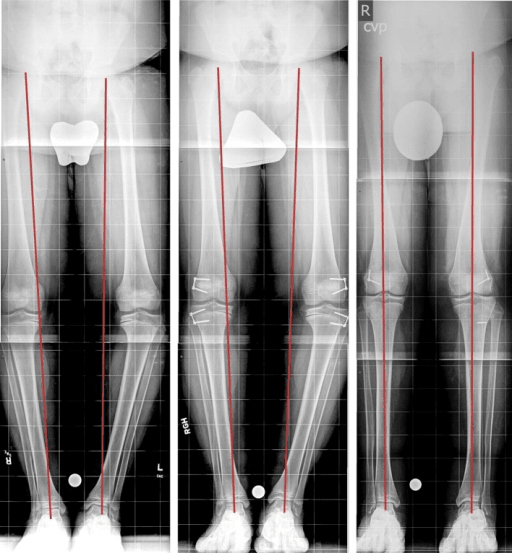
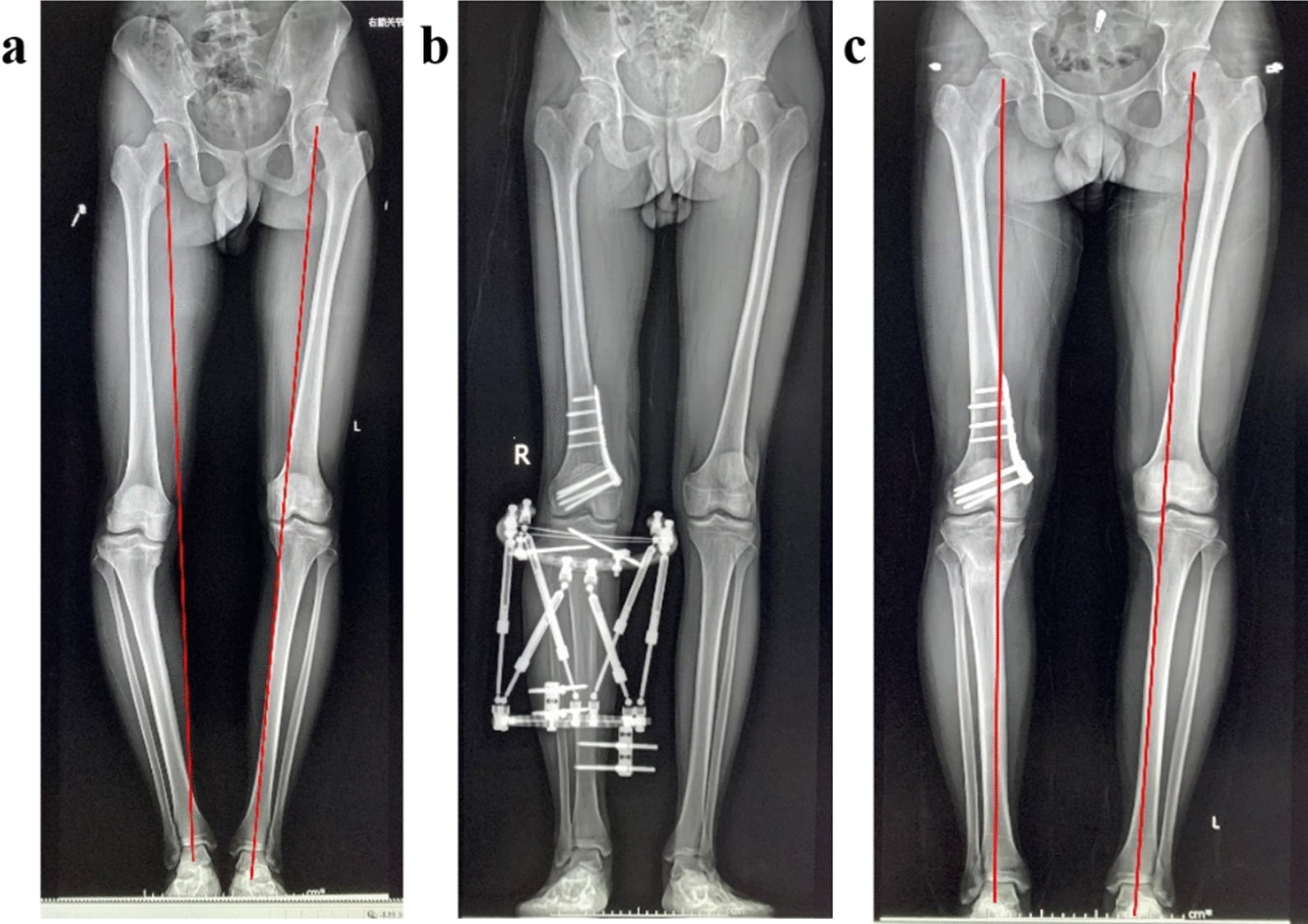
The mechanical axis. A line from the centre of the femoral head to the centre of the ankle normally passes through, or just lateral to, the medial tibial spine. In Blount disease it passes medial to the knee, so the medial compartment carries more of the load.
Hueter-Volkmann is the engine. Increased compression across a physis decreases growth; decreased compression increases it. Mechanical overload of the medial physis therefore suppresses medial growth, the knee drifts further into varus, and the varus raises medial stress again. The cycle does not break on its own.
What the physis becomes. Histology shows disorganised architecture with loss of the columnar arrangement, fibrocartilaginous tissue replacing normal physeal cartilage, a thickened medial periosteum, and islands of cartilage left in the metaphysis where resorption has failed. The physis is not necrotic, it is replaced, and the changes deepen from Stage I to Stage VI.
What adds to the load. Early walking increases medial compartment stress, obesity dramatically increases joint reaction forces, and internal tibial torsion increases the frontal-plane moment arm, loading the medial physis asymmetrically.
What the deformity is made of. Varus angulation is the primary deformity, and the rest accumulate around it:
- Internal tibial torsion in 60-80% of cases
- Procurvatum, anterior bowing, in advanced cases
- A medial physeal bar at Stage VI
- Leg length discrepancy from asymmetric growth
- Deformity
- Varus - the primary deformity
- Assess
- Standing AP / long-leg radiograph (MDA, mechanical axis)
- Correct
- Valgus osteotomy to 5-10 degrees valgus
- Deformity
- Internal tibial torsion (60-80% of cases)
- Assess
- Thigh-foot angle (prone, knees flexed 90 degrees)
- Correct
- External de-rotation of the distal fragment
- Deformity
- Procurvatum - apex-anterior bowing / increased posterior tibial slope
- Assess
- LATERAL standing radiograph
- Correct
- Multiplanar (dome) osteotomy or a circular frame
Procurvatum is the plane that hides. Apex-anterior bowing of the proximal tibia with an increased posterior tibial slope develops in advanced and adolescent cases, particularly in heavier children, and procurvatum correlates with BMI in early-onset disease. The AP radiograph does not show it, so it has to be sought on the lateral standing film. A purely frontal-plane valgus osteotomy that ignores it leaves residual sagittal malalignment, which is why significant procurvatum calls for a dome osteotomy or a circular frame that corrects varus, torsion and procurvatum together.
Classification and Measurement
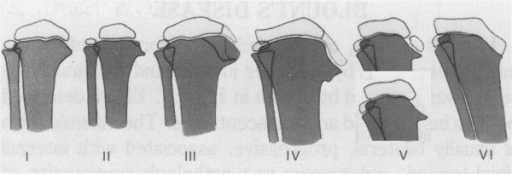
Langenskiöld. Published in 1952 and revised in 1964, it grades infantile Blount disease in six stages by the radiographic appearance of the medial proximal tibial metaphysis and epiphysis, and it is the classification used worldwide. It carries the treatment decision with it: Stages I-III may respond to bracing, Stages IV-VI require surgery.
The Depressed Medial Plateau (Intra-Articular Deformity)
There are two levels of deformity, not one. In advanced infantile and adolescent disease the medial tibial plateau itself becomes depressed: the medial joint surface slopes downward medially, producing joint-line obliquity and medial articular incongruity, which is LaMont's type C lesion. A standard metaphyseal osteotomy does not address it.
Why that matters. Correct the metaphysis alone and the limb can look aligned on the film while the joint stays incongruent and the lateral thrust persists, which sets up recurrence and early medial osteoarthritis.
- Metaphyseal varus
- Proximal tibial metaphysis, below the physis
- Plateau depression
- The medial tibial articular surface / epiphysis
- Metaphyseal varus
- Varus angulation, medial metaphyseal beak
- Plateau depression
- Downsloping/depressed medial plateau, joint-line obliquity
- Metaphyseal varus
- Mechanical-axis varus
- Plateau depression
- Persistent lateral thrust and medial incongruity even after metaphyseal correction
- Metaphyseal varus
- Metaphyseal valgus osteotomy (the workhorse)
- Plateau depression
- Medial plateau elevation osteotomy (intra-articular), often fixator-assisted, plus lateral hemiepiphysiodesis
- Metaphyseal varus
- —
- Plateau depression
- Residual lateral thrust, recurrence and early medial osteoarthritis despite an 'aligned' metaphyseal osteotomy
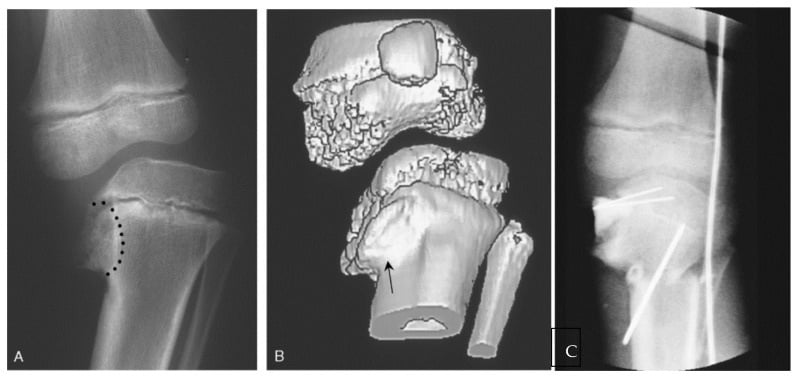
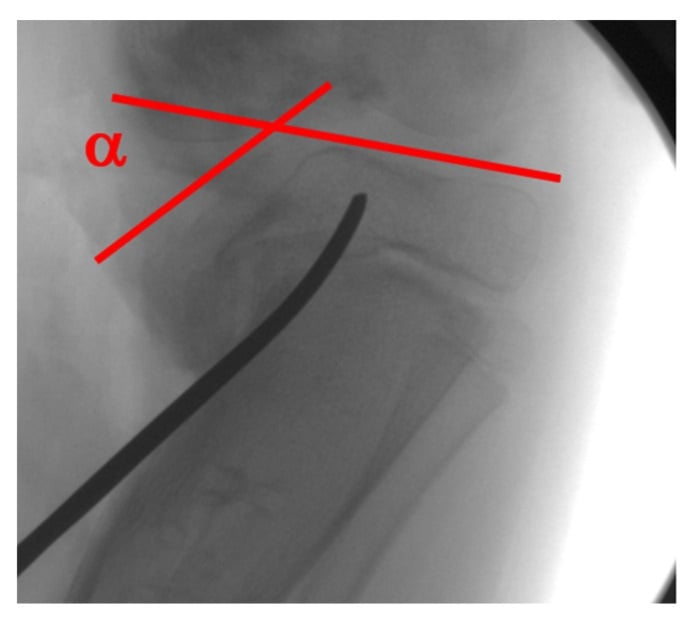
What a medial hemiplateau elevation actually is
The problem it solves. In advanced disease - Langenskiöld V-VI in an older child - the posteromedial tibial plateau is depressed, so the articular surface slopes medially downward and the deformity sits inside the joint rather than in the shaft. A proximal tibial metaphyseal osteotomy can restore the mechanical axis and still leave the joint line sloped, so the knee stays incongruent, keeps its medial thrust, and tends to recur and degenerate.
The procedure. An intra-epiphyseal (intra-articular) osteotomy that elevates the depressed posteromedial plateau back to a level articular surface, grafting the metaphyseal void created beneath it. It is almost always combined:
- with a proximal tibial metaphyseal valgus/derotation osteotomy to correct the limb axis, and
- with a lateral proximal tibial hemiepiphysiodesis to stop the lateral physis re-creating varus, and/or medial physeal bar resection
Who needs it. The older child, roughly over 7 to 8 years, with advanced disease and a fixed intra-articular medial slope that metaphyseal realignment alone cannot correct. Assess joint-line obliquity on the standing film or MRI before planning. Its precise role and timing remain debated; see Controversies.
Clinical Presentation
How they present. Parents bring a child whose bowed legs are not improving, or are visibly worsening, often with an abnormal gait - waddling, or thrusting outward - and sometimes with lateral wear on the shoe soles. Knee or leg pain belongs to the older child and is uncommon in the infantile form. The infantile form declares itself between 18 months and 3 years, once walking is established; the adolescent form between 8 and 15 years, often at the growth spurt.
The history that changes management. Ask when the child first walked, because walking before 10 months is a risk factor, and ask about birth weight and current weight. Then establish whether the deformity is unilateral or bilateral and whether it is progressing or static, and take a family history of bowed legs or metabolic bone disease, a dietary history for vitamin D and calcium, and a record of any previous bracing or treatment.
Red flags for another diagnosis. Short stature or involvement of other joints points to a skeletal dysplasia, pathologic fractures to rickets or another metabolic bone disease, and developmental delay to a genetic syndrome.
Physical Examination
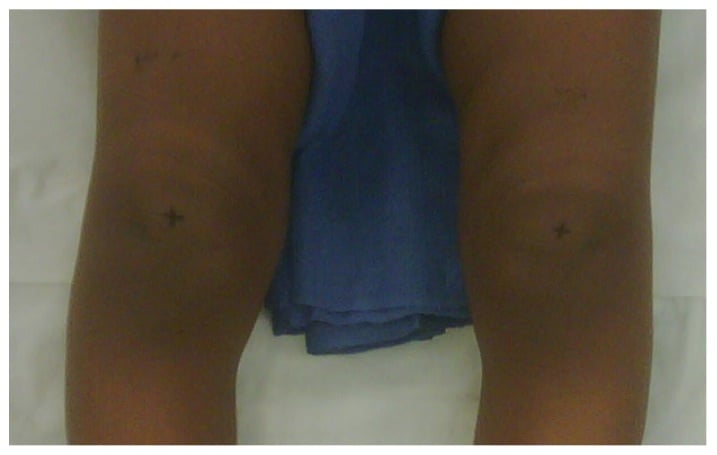
Watch them walk first. The lateral thrust - a dynamic varus thrust during stance - is the finding that matters: it means the medial compartment is functionally insufficient, and it predicts progression. Bilateral disease waddles, with reduced cadence and stride length.
Standing alignment. Measure the intercondylar distance between the medial femoral condyles with the ankles together: under 6cm is normal in a young child, and over 6-8cm suggests pathologic bowing. In unilateral disease compare knee heights for asymmetry.
Rotation. Internal tibial torsion is read from the thigh-foot angle, normally about 10 degrees external. Check femoral version by internal rotation with the child prone.
The rest of the knee and limb. Increased medial gapping on varus stress means LCL laxity from chronic lateral stretch, while a varus that will not correct is bony and belongs to advanced disease. Measure true leg length from ASIS to medial malleolus, since medial overgrowth and asymmetric growth produce discrepancy, and record knee range, ligament stability and neurovascular status, excluding a neuromuscular disorder.
The general examination. BMI with height and weight percentiles, and a deliberate look for the signs of rickets - widened wrists, costochondral beading - or of a skeletal dysplasia.
Investigations
The standing AP radiograph is the investigation. It must be weight-bearing to mean anything and should include both knees for comparison. On it you stage the disease by Langenskiöld and take the key measurements - the MDA, the tibiofemoral angle and the intercondylar distance - looking for medial beaking, a metaphyseal defect, widening of the physis and epiphyseal wedging.
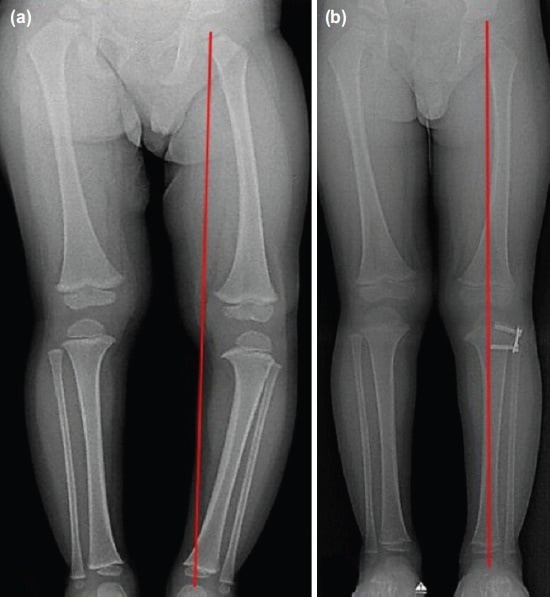
The standing long-leg film is for planning. It shows the mechanical axis from femoral head to ankle, separates the femoral from the tibial contribution to the deformity, measures true leg length discrepancy, and gives the mechanical axis deviation: the distance from the knee centre to that axis. Obtain it when surgery is being planned.
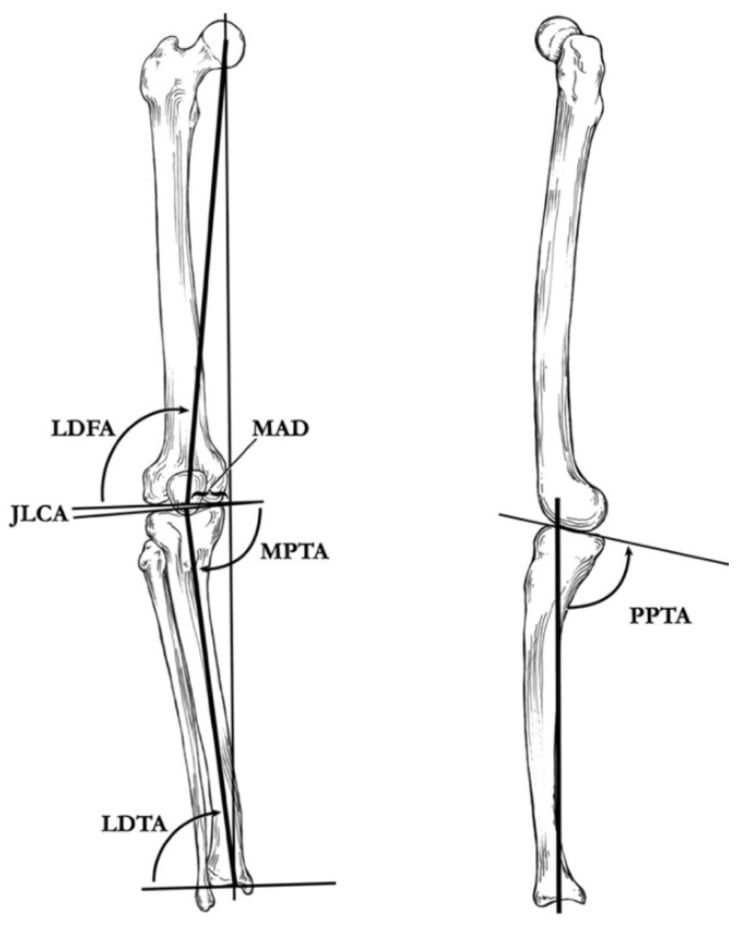
The lateral film shows what the AP cannot: procurvatum and the tibial slope, both needed for surgical planning.
Follow-up imaging. Standing AP films of both knees at diagnosis, then:
- Every 3-4 months for a child under 3 with Stage I-II disease in a brace
- Every 6 months on observation, until skeletal maturity
- Immediately after surgery, at 6 weeks, at 3 months, then every 6 months
Differential Diagnosis
Genu varum in a child has a short differential, of which physiologic bowing is by far the most common, and the examiner will expect you to work through it before settling on Blount disease. Age and the MDA separate physiologic bowing from Blount disease; biochemistry, the pattern of skeletal involvement and the history separate the others.
- Distinguishing features
- Age: Under 2 years; Bilateral, symmetric; MDA under 11 degrees; Resolves by age 2-3 years; No metaphyseal changes on radiograph
- Distinguishing features
- Widened physis throughout skeleton; Metaphyseal fraying and cupping; Costochondral beading (rachitic rosary); Low calcium/phosphate, elevated ALP; Low 25-OH vitamin D
- Distinguishing features
- Unilateral, sudden onset; Abrupt angular deformity (not gradual); Cortical defect with radiolucent zone; Spontaneous resolution typical; Age 2-3 years
- Distinguishing features
- Multiple joint involvement; Short stature; Family history often positive; Examples: Achondroplasia, metaphyseal chondrodysplasia; Characteristic radiographic features
- Distinguishing features
- Very low alkaline phosphatase; Premature loss of teeth; Widened physis, bone softening; Elevated urinary phosphoethanolamine
- Distinguishing features
- Renal impairment on biochemistry; Check urea, creatinine, calcium, phosphate and parathyroid hormone
- Distinguishing features
- History of proximal tibial fracture or osteomyelitis; Physeal bar from growth plate injury; Unilateral deformity; May have associated leg length discrepancy
Management
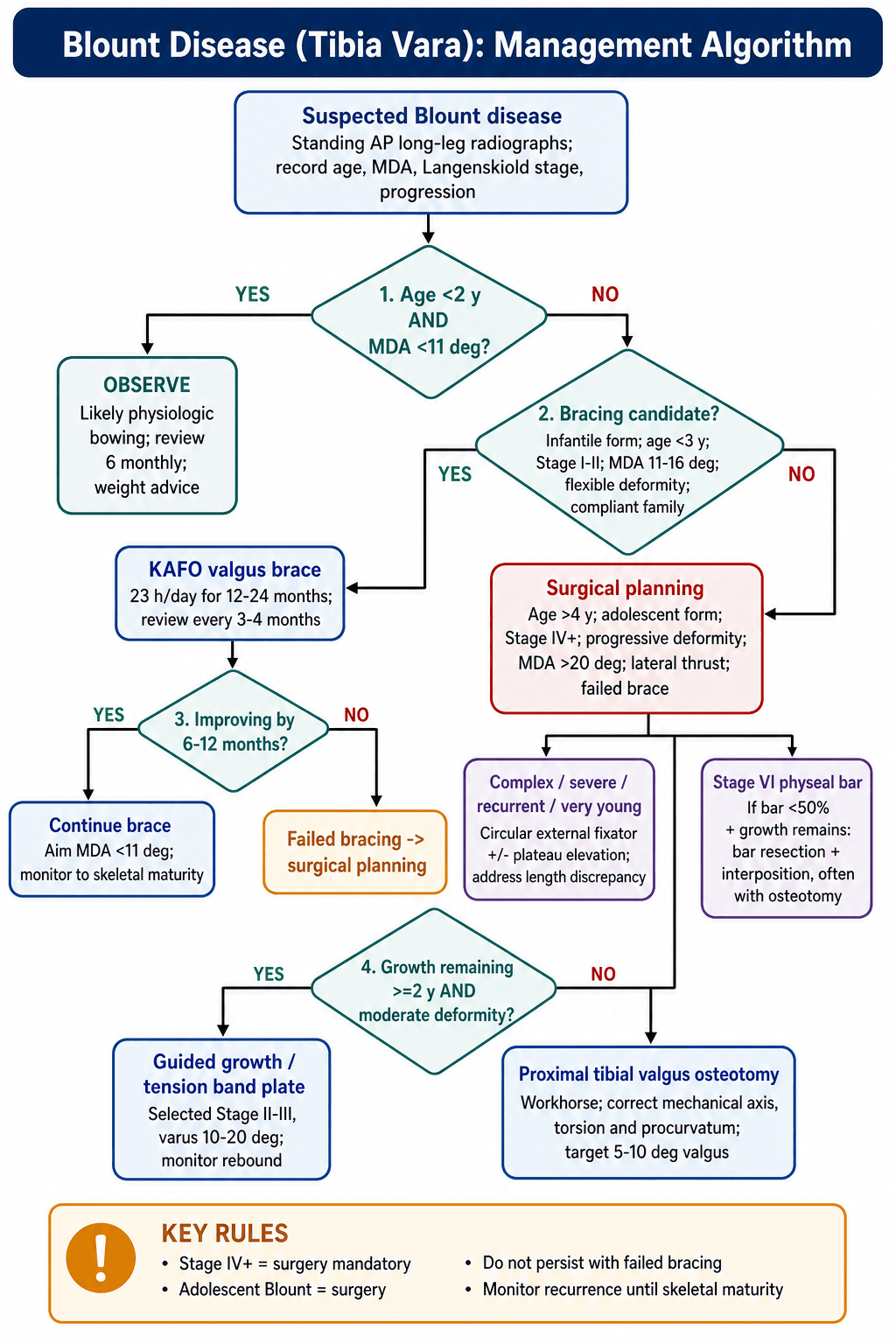
The decision rests on three things: age, Langenskiöld stage and the MDA. Age under 3 years is the critical factor for bracing success, and Stage IV or higher is operative whatever the age.
- Langenskiöld Stage
- Any
- MDA
- Under 11°
- Treatment
- Observe
- Langenskiöld Stage
- I-II
- MDA
- 11-16°
- Treatment
- Bracing trial
- Langenskiöld Stage
- I-III
- MDA
- Any
- Treatment
- Bracing with caution
- Langenskiöld Stage
- Any
- MDA
- Any
- Treatment
- Surgery
- Langenskiöld Stage
- Any
- MDA
- Any
- Treatment
- Surgery
Observation is for physiologic genu varum - under 2 years with an MDA under 11 degrees - and for the borderline child with an MDA of 11-16 degrees. Review clinically and radiographically every 6 months, watching for a rising MDA or an advancing Langenskiöld stage, and counsel on the natural history and on weight.
Bracing: every criterion has to be met.
- Infantile Blount disease, onset before age 4
- Age under 3 years, preferably 1-3 years
- Langenskiöld Stage I or II, occasionally Stage III if the child is very young
- MDA 11-16 degrees (some authorities include up to 20 degrees)
- A compliant family, because the brace is worn 23 hours a day
Age over 3-4 years, Stage IV or higher, the adolescent form and a fixed deformity are contraindications.
The orthosis and the protocol. A custom-moulded KAFO running from upper thigh to ankle and delivering a valgus force, worn 23 hours a day with removal for bathing only, for 12-24 months, reviewed clinically and radiographically every 3-4 months. Night-time bracing alone does not work.
What success looks like. The MDA falls by 5 degrees or more, the tibiofemoral angle loses varus and the stage does not advance, with an MDA under 11 degrees as the target.
What failure looks like. The MDA progresses despite 6-12 months of bracing, the Langenskiöld stage advances, the child reaches 4 years without improvement, or the brace is not being worn. Any of these converts the plan to surgery.
The numbers. Bracing corrects 60-80% of Stage I-II disease under age 3, 20-40% of Stage III, and essentially none of Stage IV disease or of older children. Those figures come from series with differing stage mixes and compliance, and no randomised comparison of bracing against observation exists.
Recognise a failing brace early
Non-compliance is the commonest reason bracing fails, so judge before you start whether the family can deliver 23 hours a day. Persevering past the point of failure gains nothing and delays definitive surgery in a child whose window for correction is closing.
Surgical Pitfall - Peroneal Nerve Injury
The common peroneal nerve courses around the fibular neck, close to the surgical field, and is at significant risk during proximal tibial osteotomy. The risk is highest with a lateral closing wedge, with a proximal fibular osteotomy, and with excessive acute lengthening or stretch.
Know where it is: posterior to the biceps femoris tendon and anterior to the lateral gastrocnemius. Avoid excessive lateral dissection, take the fibula at mid-shaft or protect the nerve if the osteotomy must be proximal, limit acute lengthening to under 10-15mm, and consider an external fixator for gradual correction when the risk is high. Document the neurological examination before surgery and again immediately afterwards.
Effectiveness of overcorrection in preventing recurrence after valgus osteotomy
- Langenskiöld stage II disease (aged 30-40 months) failing bracing, treated with valgus osteotomy
- Recurrence 28.6% (4/14 legs) without overcorrection (FTA 7-13 degrees) vs 12.5% (6/48 legs) with overcorrection (FTA over 13 degrees)
- Difference did not reach statistical significance (p = 0.434)
- ROC analysis showed overcorrection beyond 15 degrees valgus gave no additional benefit
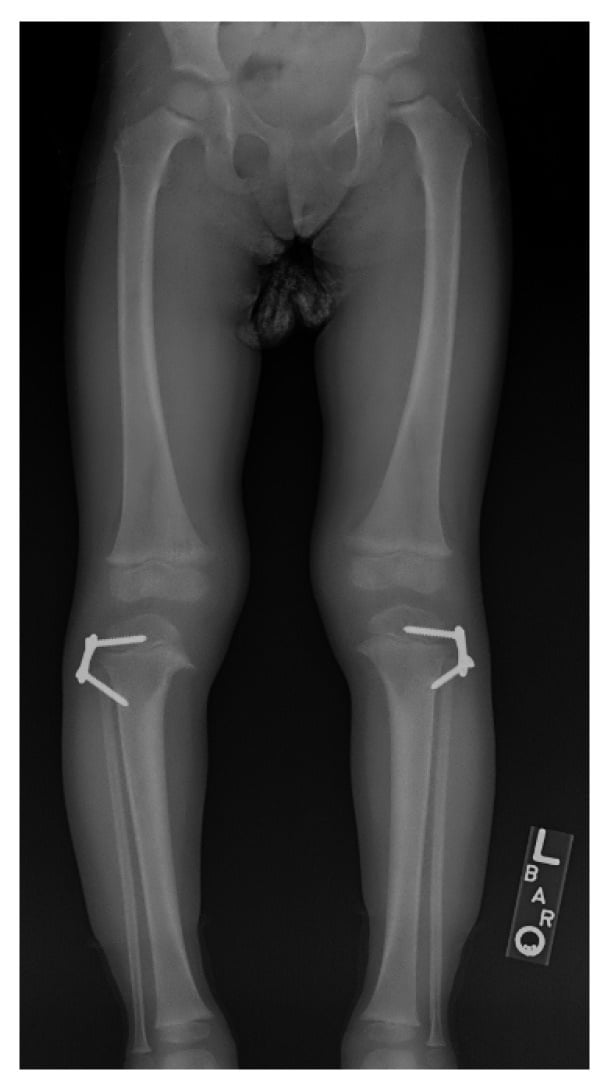
Guided growth for angular correction using a tension band plate
- Prospective series of 34 patients with 65 deformities treated with a non-locking tension band (2-hole) plate
- 32/34 patients corrected to neutral at a mean of 11 months with no permanent growth arrests
- Correction approximately 30% faster than with stapling; 4 idiopathic genu valgum cases had rebound
- Only the 2 adolescent Blount patients had insufficient correction and may need osteotomy
Complications
Peroneal nerve palsy is the most feared complication of proximal tibial osteotomy, with an incidence of 1-5% depending on technique. It is usually a neurapraxia that recovers over 3-6 months. Risk rises with a lateral closing wedge, with excessive acute lengthening and with a proximal fibular osteotomy. Document it immediately after surgery, fit an AFO for the foot-drop, and arrange EMG at 6 weeks if nothing has recovered.
Compartment syndrome is rare and devastating, and the risk rises with extensive soft-tissue dissection or acute lengthening. Pain out of proportion and pain on passive stretch are the findings, and suspicion alone justifies immediate fasciotomy.
Vascular injury is very rare; the anterior tibial artery is the structure at risk with a proximal fibular osteotomy. Know the anatomy and obtain vascular consultation if injury is suspected.
Wound and hardware problems - infection, dehiscence and haematoma - are commoner around external fixator pin sites and in obese patients, along with loss of fixation and prominent hardware.
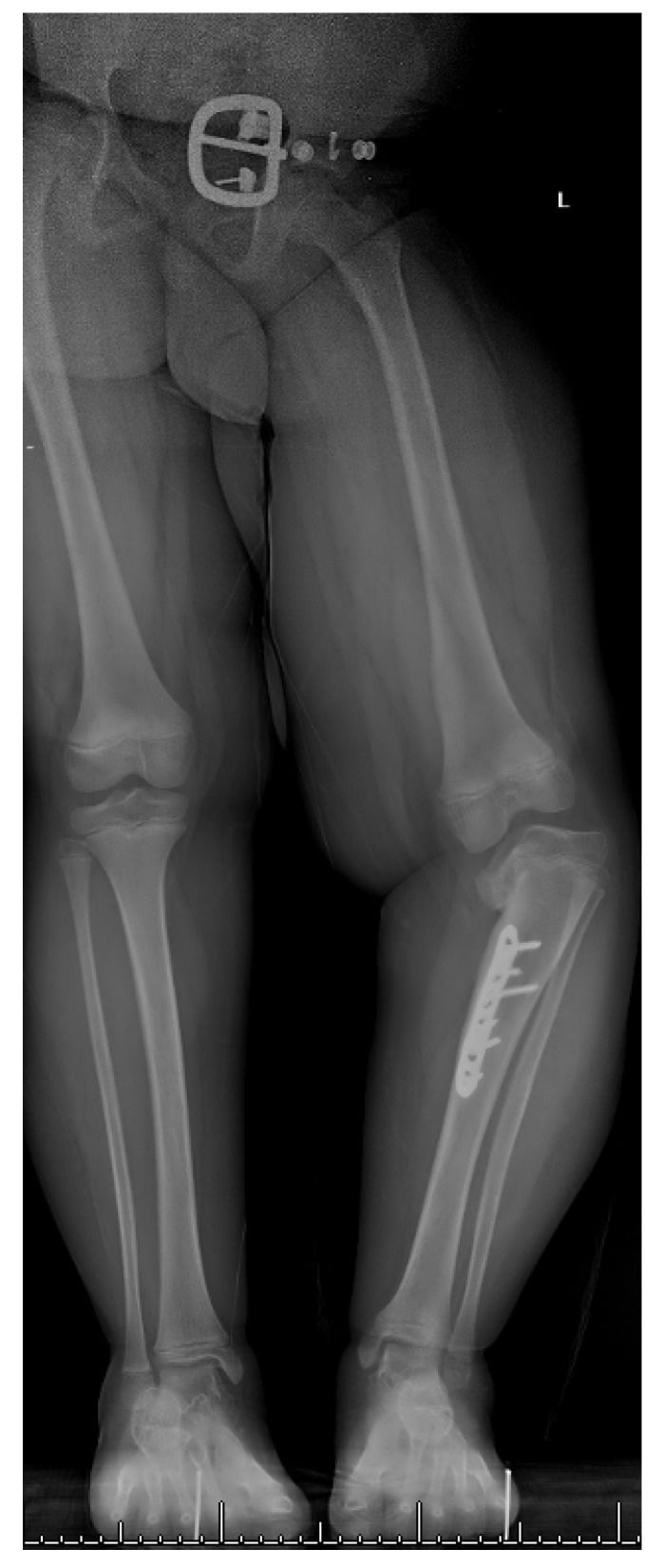
Recurrence after surgery for infantile tibia vara and a modified classification
- 82 patients (115 limbs) over 22 years; 48 limbs required at least one repeat surgery for recurrence
- Mean age at surgery 4.3 years (no recurrence) vs 6.2 years (recurrence) - age 5 a critical transition
- Recurrence high for Langenskiöld stage III (50%) and stage IV (69.6%)
- A modified A/B/C classification of metaphyseal/epiphyseal slope predicted recurrence (type C 71.7%) better than Langenskiöld; pre-op MAD, MPTA and BMI did not differ between groups
Outcomes and Prognosis
Infantile disease treated in time does well. Around 85-90% of appropriately treated children have satisfactory alignment at maturity, and long-term function is excellent, with a low risk of osteoarthritis where the alignment is corrected before a persistent lateral thrust develops.
Adolescent disease is a harder proposition. Surgery achieves satisfactory short-term alignment in the same 85-90%, and recurrence is lower because little growth is left to undo it, but these patients carry a higher rate of early osteoarthritis from the overload that preceded correction. Obesity management is critical to the long-term result, and bracing has nothing to offer them.
What decides the outcome: age at treatment, the Langenskiöld stage together with the slope morphology, obesity, compliance, and laterality - bilateral infantile disease often responds better to bracing.
Guidelines, Registries & Global Practice
Global epidemiology:
- Prevalence varies markedly by population - higher in those of African, Afro-Caribbean and Hispanic descent and in regions where infants walk early
- Relatively rare in Northern European/Caucasian populations
- Rising worldwide with childhood obesity, particularly the adolescent (late-onset) form; obesity is an independent, modifiable risk factor for needing surgery
Side-by-side principles (consistent across major bodies):
- There is no single dominant national guideline for Blount disease; practice is driven by classic and contemporary evidence (Levine & Drennan; Feldman & Schoenecker; Stevens; LaMont) and instructional reviews (e.g. POSNA/JPO updates)
- Diagnosis: standing AP radiograph with the Drennan MDA is the universally accepted screening/diagnostic tool; MRI is favoured (over CT) for physeal/bar assessment in children to limit radiation
- Conservative care: KAFO bracing for infantile Stage I-II under age 3 is widely offered, though its efficacy remains debated and is not universally adopted
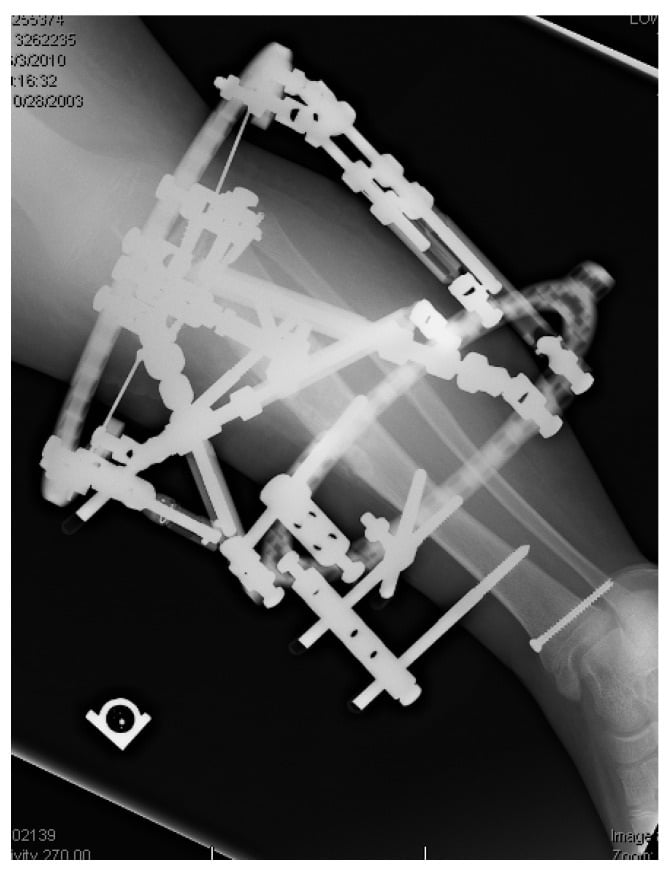
- Surgery: proximal tibial valgus osteotomy is the global workhorse; growth modulation (tension band plating) and circular external fixators (Ilizarov, Taylor Spatial Frame) are established alternatives where expertise and implants are available
Registry note: Blount disease is a paediatric deformity condition and is not tracked by arthroplasty/implant registries (NJR, AJRR, AOANJRR, SHAR, NZJR). Evidence derives from single-centre and multicentre paediatric series rather than registry data.
High- vs limited-resource variation:
- In well-resourced settings, early screening, MRI, guided growth, and computer-assisted hexapod fixators are available, enabling earlier and less invasive correction
- In limited-resource or remote settings, late presentation with severe (Stage IV-VI) deformity is more common; treatment relies on osteotomy with simple internal or external fixation, and weight-management/lifestyle programmes may be less accessible
- Culturally appropriate counselling, family involvement, and interpreter support improve adherence to bracing and follow-up in all settings
Controversies & Areas of Uncertainty
Four decisions in Blount disease are genuinely unsettled. Saying so, and saying why, is a stronger viva answer than asserting a protocol - each of these rests on small single-centre series rather than comparative trials.
Bracing is widely accepted for Stage I disease under age 3. Its value in Stage II is disputed: some series report worthwhile correction, others rapid progression to Stage III despite a well-fitted, well-worn brace. No randomised comparison of bracing against observation exists, and reported success rates (60-80% for Stage I-II under 3) come from series with differing stage mixes and compliance, so they are not directly comparable. The 6-month rule is pragmatic rather than evidence-based: if the MDA has not improved by 6 months, further bracing is unlikely to help and surgery becomes the next step.
With an MDA of 14-16 degrees and an open physis, either is defensible. Guided growth is reversible and avoids osteotomy morbidity, but needs growth remaining and does not correct internal tibial torsion. Osteotomy gives immediate, durable correction but carries compartment syndrome, neurovascular injury and recurrence risk. No trial has compared them in this middle band, so surgeon experience, growth remaining, the presence of torsion, and family preference decide it.
In Langenskiold IV-VI with a depressed medial plateau, some surgeons perform valgus osteotomy with overcorrection alone; others add intra-articular elevation of the plateau with bone graft. The argument for elevating is joint congruity; the argument against is the added intra-articular morbidity in a child. The decision turns on the size of the step-off and the child's age - there is no comparative series and no threshold step-off above which elevation is proven necessary.
In unilateral disease, whether to perform prophylactic hemiepiphysiodesis of the normal limb to pre-empt limb-length discrepancy is unsettled. Some do it routinely; others wait until the predicted discrepancy exceeds 1.5-2 cm at maturity before intervening. Waiting risks a larger discrepancy; acting early operates on a normal limb. No study has compared the two strategies, so growth-remaining prediction and family preference drive it.
MCQ Practice Points
The following topics are frequently tested in Orthopaedic exams related to Blount disease:
Q: What is the most important radiographic measurement for predicting progression of physiologic genu varum to Blount disease?
A: Drennan's metaphyseal-diaphyseal angle (MDA).
- MDA under 11 degrees: physiologic, likely to resolve
- MDA 11-16 degrees: at risk for progression, close monitoring required
- MDA over 16 degrees: diagnostic of Blount disease, will not resolve spontaneously
MDA is measured on standing AP radiograph as the angle between a line tangent to the medial and lateral metaphyseal beaks and a line along the tibial shaft longitudinal axis.
Q: A 2-year-old child with bilateral genu varum has an MDA of 13 degrees and Langenskiöld Stage I changes. What is the most appropriate initial management?
A: Full-time KAFO bracing for 12-24 months, worn 23 hours daily.
This child meets the criteria for a bracing trial: age appropriate (under 3 years), Stage I disease, MDA in the predictive range (11-16 degrees). Success rate is 60-80% for Stage I-II under age 3. Monitor every 3-4 months; convert to surgery if no improvement by 6-12 months.
Critical point: night-time only bracing is ineffective - it must be full-time.
Q: What Langenskiöld stage represents the threshold beyond which bracing is ineffective and surgery is required?
A: Stage IV (medial metaphyseal overgrowth). Stages I-III may respond to bracing if early and age-appropriate. Once Stage IV changes are present (medial metaphyseal beak projecting beneath the epiphysis), osteotomy is required. Stages V and VI absolutely require surgery.
Q: A 3.5-year-old undergoes proximal tibial valgus osteotomy for bilateral Blount disease. What is the most common complication?
A: Recurrence of varus deformity. Recurrence rates: under age 4-5 years 30-50%; age 4-8 years 15-20%; over age 8 years under 10%. Prevention includes overcorrection to 5-10 degrees valgus, lateral hemiepiphysiodesis, and intensive monitoring until skeletal maturity.
Q: What nerve is most at risk during proximal tibial osteotomy for Blount disease?
A: Common peroneal nerve, which courses around the fibular neck. Risk is highest with lateral closing wedge osteotomy, proximal fibular osteotomy, excessive acute lengthening (over 10-15mm), and significant lateral dissection. Most injuries are neurapraxia recovering over 3-6 months. Document baseline and immediate post-op neuro exam.
Q: What is the target correction angle for proximal tibial valgus osteotomy in Blount disease?
A: 5-10 degrees valgus (overcorrection from neutral) to compensate for the recurrence tendency and restore the mechanical axis. Under-correction to neutral results in higher recurrence; more aggressive overcorrection (~10 degrees) may be used in recurrent cases or very young children, though overcorrection beyond ~15 degrees gives no added benefit.
Q: What percentage of Blount disease cases have associated internal tibial torsion?
A: 60-80%. Assess with the thigh-foot angle (prone, knees flexed 90 degrees; normal ~10 degrees external). Internal tibial torsion should be corrected simultaneously during osteotomy by externally rotating the distal fragment 10-20 degrees; failure to address rotation leaves persistent functional impairment despite angular correction.
Q: Which form of Blount disease has a lower recurrence rate after surgery, infantile or adolescent?
A: The adolescent form has a lower recurrence rate (under 10% vs 30-50% for infantile operated under age 4) because of limited remaining growth. However, the adolescent form has worse overall outcomes - it often presents late with severe deformity, has limited remodeling potential, is strongly linked to obesity, and carries a higher risk of early osteoarthritis from chronic overload prior to correction.
Summary
Blount disease (tibia vara) is a pathologic growth disturbance of the medial proximal tibial physis producing progressive genu varum. Two distinct forms exist: infantile (onset under 4 years, often bilateral) and adolescent (onset after 8 years, obesity-related, usually unilateral).
Key diagnostic features:
- Drennan's metaphyseal-diaphyseal angle (MDA): over 16 degrees diagnostic; 11-16 degrees a gray zone
- Langenskiöld classification (Stages I-VI): Stage IV is the threshold for surgery
Management:
- Observation: physiologic genu varum with MDA under 11 degrees
- Bracing (KAFO): age under 3 years, Stage I-II, MDA 11-16 degrees, 23 hours daily for 12-24 months (60-80% success)
- Surgery: Stage IV or higher, failed bracing, age over 4 years, all adolescent disease
- Options: proximal tibial valgus osteotomy (workhorse; correct to 5-10 degrees valgus); guided growth for selected early cases; external fixator for severe/complex or very young
Critical exam points: differentiate from physiologic bowing using MDA and age; Stage IV = surgery mandatory; overcorrect to 5-10 degrees valgus; address internal tibial torsion (60-80%); and counsel about recurrence when operating on young children. Long-term monitoring until skeletal maturity is essential, particularly after early surgery.
Exam Day Cheat Sheet
Must-Know Classification
- Langenskiöld Stages I-VI: I (mild beaking) → II (metaphyseal defect) → III (fragmentation) → IV (metaphyseal overgrowth) → V (epiphyseal separation) → VI (physeal bar)
- Stage IV = the mandatory surgery threshold
- Drennan MDA: under 11° (physiologic), 11-16° (at risk), over 16° (diagnostic)
- Two forms: infantile (under 4 years, bilateral, better bracing response) versus adolescent (over 8 years, unilateral, obesity-related, poor bracing response)
Critical Differentials
- Physiologic genu varum: resolves by age 2-3, MDA under 11°, bilateral, no metaphyseal changes
- Rickets: widened physis throughout the skeleton, frayed metaphysis, low Ca/PO4, elevated ALP
- Focal fibrocartilaginous dysplasia: unilateral, abrupt angulation, cortical defect, self-limiting
- Skeletal dysplasia: multiple joint involvement, short stature, family history
Bracing Protocol (MUST KNOW ALL CRITERIA)
- Age under 3 years (preferably 1-3 years) - the critical factor
- Langenskiöld Stage I-II (occasionally early Stage III)
- MDA 11-16 degrees (some include up to 20 degrees)
- KAFO worn 23 hours daily for 12-24 months; night-time only is ineffective
- Success rate 60-80% for Stage I-II under age 3 years
- Monitor every 3-4 months, recognize failure by 6-12 months
Surgical Indications & Principles
- Langenskiöld Stage IV or higher (absolute indication)
- Failed bracing, age over 4 years, all adolescent disease, progressive deformity with lateral thrust
- Proximal tibial valgus osteotomy is the workhorse procedure
- Target 5-10 degrees valgus (overcorrect; beyond about 15° there is no benefit)
- Address internal tibial torsion simultaneously (present in 60-80%)
- Fibular osteotomy often required (mid-shaft is safer for the peroneal nerve)
Complications (High Yield)
- Peroneal nerve palsy (1-5% incidence, usually recovers in 3-6 months)
- Recurrence (most common long-term; 30-50% if under age 4-5, under 10% over age 8)
- Compartment syndrome (rare but devastating - keep a high index of suspicion)
- Physeal bar formation (Stage VI, or from surgery crossing the physis)
- Malunion and leg-length discrepancy
Viva Scenario Approach
- Always measure the MDA - under 11° versus 11-16° versus over 16° guides management
- Stage the disease using Langenskiöld - Stage IV is the surgery threshold
- Assess age - under 3 years consider bracing, 3-4 borderline, over 4 surgery
- Rule out metabolic causes if atypical (young age, short stature, bilateral and symmetric)
- Counsel about recurrence if operating on young children (30-50% if under age 4-5)
- Don't forget rotation - internal tibial torsion in 60-80%, corrected simultaneously
Quick Exam Tips
- MDA over 16° = diagnostic of Blount disease (will NOT resolve)
- Stage IV = medial metaphyseal beak = surgery required
- Age under 3 + Stage I-II = try bracing (23 hrs/day, not night-only)
- Peroneal nerve at risk - ALWAYS mention in surgical consent/complications
- Overcorrect to 5-10° valgus to prevent recurrence
- Recurrence highest if surgery under age 4-5 years
- Adolescent form = unilateral, obesity, poor bracing response, needs surgery
Clinical Decision Scenarios
Practise clinical reasoning and management decisions out loud
“A 20-month-old child presents with bilateral genu varum. The parents are concerned that the bowing is worsening. The child walked at 11 months of age. The standing AP radiograph shows an MDA of 9 degrees bilaterally with no metaphyseal changes. How would you manage this child?”
“A 3.5-year-old child with bilateral infantile Blount disease has been compliant with full-time KAFO bracing for 18 months (started at age 2 years). Initial MDA was 14 degrees bilaterally, Langenskiöld Stage II. Current radiographs show MDA 17 degrees and progression to Stage III bilaterally. What is your recommendation?”
“A 13-year-old obese boy (BMI 35) presents with right knee pain and progressive varus deformity over the past year. Standing long-leg radiographs show MDA 22 degrees, Langenskiöld Stage IV, mechanical axis passes 4 cm medial to knee center, and 2 cm leg length discrepancy (right shorter). How would you manage this patient?”
“A 7-year-old child presents with recurrent varus deformity. She had bilateral proximal tibial valgus osteotomies at age 3.5 years for infantile Blount disease with good initial correction. Current radiographs show MDA 16 degrees bilaterally, Langenskiöld Stage IV bilaterally, and mechanical axis medial to knees. She has a lateral thrust gait. What would you do?”
Evidence Base
Physiological bowing and tibia vara: the metaphyseal-diaphyseal angle
- Defined the metaphyseal-diaphyseal angle (MDA) to differentiate physiologic bowing from infantile tibia vara before radiographic changes appear
- 29 of 30 extremities with an initial MDA over 11 degrees developed radiographic tibia vara
- Only 3 of 58 extremities with an MDA of 11 degrees or less developed diagnostic changes
- Approximately 60% of the deformity in tibia vara arises in the proximal metaphysis vs ~20% in physiologic bowing
Use of the metaphyseal-diaphyseal angle in the evaluation of bowed legs
- 106 children (179 limbs) with physiologic bowing vs 19 children (32 limbs) with Blount disease
- Mean MDA 9 degrees (physiologic) vs 19 degrees (Blount), p less than 0.0000001
- Greatest false-positive/false-negative overlap (error rate over 5%) when the MDA was between 9 and 16 degrees
- MDA aids identification of Blount disease but should not be the sole diagnostic criterion