Volar-Radial Wrist Tendinopathy
- Flexor carpi radialis (FCR) tendinopathy is a cause of VOLAR-RADIAL wrist pain arising where the FCR tendon runs through a tight FIBRO-OSSEOUS TUNNEL against the TRAPEZIAL RIDGE and the SCAPHOID tuberosity before inserting onto the bases of the second (and third) metacarpals; the confined course makes it prone to friction/tendinopathy.
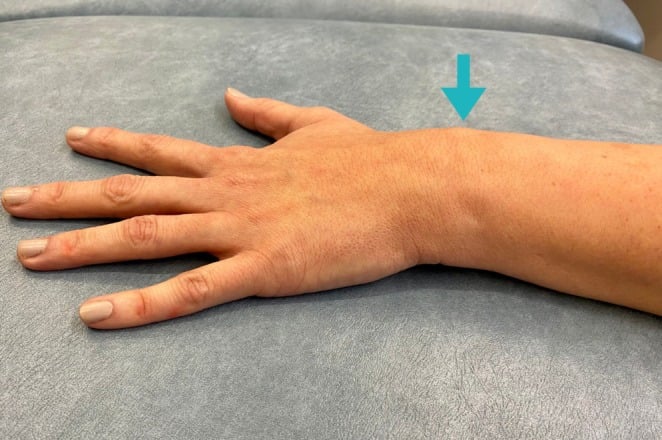
- It presents with pain and tenderness over the FCR tendon at and just proximal to the volar-radial wrist crease, worse on RESISTED wrist FLEXION and RADIAL DEVIATION and on direct palpation; it is usually an overuse/degenerative tendinopathy rather than a true acute inflammation.
- There are important ASSOCIATIONS: the FCR runs immediately adjacent to the TRAPEZIOMETACARPAL (basal-thumb) and SCAPHOTRAPEZIOTRAPEZOID (STT) joints, so FCR symptoms frequently accompany basal-thumb/STT OSTEOARTHRITIS, and FCR tendinopathy (and even rupture) is a recognised COMPLICATION of TRAPEZIOMETACARPAL SUSPENSION ARTHROPLASTY, where tissue is wrapped around the FCR for suspension.
- PUT A NUMBER ON 'RECOGNISED COMPLICATION' - IT IS NOT RARE. In a series of 21 hands undergoing the APL 'HAMMOCK' suspension arthroplasty with at least one year of follow-up, FCR tendinopathy occurred in a THIRD (7 of 21, 33.3 percent): TENDINITIS in 3 (14.3 percent) and frank TENDON RUPTURE in 4 (19.0 percent). Every rupture happened WITHIN SIX MONTHS, typically after a wrist-stressing activity, which is why the first postoperative year is the monitoring window. Note the size: 21 hands, so each rupture moves the figure by about 5 percentage points, and this rate applies to the APL-around-FCR technique rather than to suspension arthroplasty in general.
- BE CAREFUL WITH THE 'MANUAL WORKER' RISK FACTOR. In that series manual workers had FCR tendinopathy in 50 percent against 18.2 percent of non-manual workers, an odds ratio of 4.5 - but with 21 hands this did NOT reach statistical significance (p=0.18). It is a reasonable basis for counselling and postoperative restriction, not an established risk factor.
- The DIFFERENTIAL of volar-radial wrist pain must be worked through: DE QUERVAIN'S tenosynovitis (first dorsal compartment, more dorso-radial, positive Finkelstein test), STT and trapeziometacarpal OSTEOARTHRITIS, scaphoid pathology, and radial-sided wrist ganglia - examine and image (radiographs for the basal-thumb/STT joints; ultrasound/MRI for the tendon) to localise the source.
- MANAGEMENT is NON-OPERATIVE first: activity modification/rest, a wrist (and sometimes thumb) SPLINT, non-steroidal anti-inflammatories, physiotherapy, and a CORTICOSTEROID INJECTION into the FCR tunnel/sheath for refractory symptoms - conservative measures such as non-steroidal anti-inflammatories and bracing were effective for every case of post-arthroplasty FCR TENDINITIS in the published series, whereas all four tendon RUPTURES required surgery.
- SURGERY is reserved for symptoms that fail conservative care: release/decompression of the FCR fibro-osseous tunnel with debridement of the diseased tendon (addressing any adjacent STT/TMC arthritis as indicated); and, where the tendon has ruptured, surgical management as appropriate.
- “FCR tendinopathy = VOLAR-RADIAL wrist pain over the FCR where it runs in a tight tunnel against the TRAPEZIAL RIDGE/scaphoid; worse on resisted flexion + radial deviation.
- “Think of the NEIGHBOURS: basal-thumb (trapeziometacarpal) and STT osteoarthritis sit right next to the FCR - and FCR tendinopathy/rupture is a recognised complication of TMC SUSPENSION ARTHROPLASTY.
- “Quantify that complication: after the APL hammock procedure, tendinopathy in 33.3% (7/21), tendinitis 14.3%, RUPTURE 19.0%, every rupture within 6 MONTHS after a wrist-stressing activity. Manual workers 50% vs 18.2% (OR 4.5) but NOT significant at n=21. Tendinitis settled with NSAIDs and bracing; all ruptures needed surgery.
- “Differential = de Quervain's (dorso-radial, Finkelstein), STT/TMC OA, scaphoid pathology. Non-operative first (splint/NSAIDs/injection); tunnel release/debridement if refractory; surgery for rupture.
Tenderness is over the FCR tendon at/just proximal to the volar-radial wrist crease, worse on resisted flexion and radial deviation - the tendon runs in a tight tunnel against the trapezial ridge/scaphoid.
The FCR sits beside the trapeziometacarpal and STT joints - look for basal-thumb/STT arthritis, and remember FCR tendinopathy/rupture complicates suspension arthroplasty. Exclude de Quervain's and scaphoid pathology.
Anatomy & Presentation
The FCR tendon runs through a tight fibro-osseous tunnel against the trapezial ridge and the scaphoid tuberosity before inserting on the bases of the second (and third) metacarpals. This confined course - immediately adjacent to the trapeziometacarpal and scaphotrapeziotrapezoid (STT) joints - makes it prone to friction tendinopathy and explains its close association with basal-thumb/STT arthritis. It presents with volar-radial wrist pain and tenderness over the tendon at and just proximal to the wrist crease, worse on resisted wrist flexion and radial deviation and on direct palpation; it is usually a degenerative overuse tendinopathy rather than true acute inflammation.
The FCR Tunnel Anatomy and Its Surgical Relations
- A separate canal - not the carpal tunnel. The FCR runs in its own fibro-osseous canal (the "FCR tunnel"), a groove in the trapezium roofed by a fibrous septum (a split of the flexor retinaculum attaching to the trapezial ridge and scaphoid) - so it is separated from the carpal tunnel contents. The tendon occupies most of this tight canal and angulates (~30 degrees) around the trapezial ridge before insertion, which concentrates friction/compression there.
- Insertion. Primarily the base of the 2nd metacarpal, with slips to the 3rd metacarpal base and the trapezial tubercle - not the pisiform (that is flexor carpi ulnaris).
- Neurovascular relations (surgical relevance). The radial artery lies just radial to the FCR (a useful landmark); the palmar cutaneous branch of the median nerve runs between FCR and palmaris longus (at risk in a volar/FCR approach); the median nerve is ulnar and deep, and the superficial radial nerve is dorsal.
- Function. FCR flexes and radially deviates the wrist (and assists pronation) - which is why resisted flexion/radial deviation provokes the pain.
Q: Describe the FCR tunnel anatomy and its surgical relations.
A: The FCR runs in its own fibro-osseous canal - a groove in the trapezium roofed by a septum off the flexor retinaculum - separate from the carpal tunnel; it angulates ~30 degrees around the trapezial ridge (concentrating friction) before inserting on the 2nd (+/- 3rd) metacarpal base, NOT the pisiform (that is FCU). The radial artery lies just radial to it; the palmar cutaneous branch of the median nerve runs between FCR and palmaris longus (at risk in a volar approach). FCR flexes and radially deviates the wrist.
The Attritional Mechanism and FCR Rupture
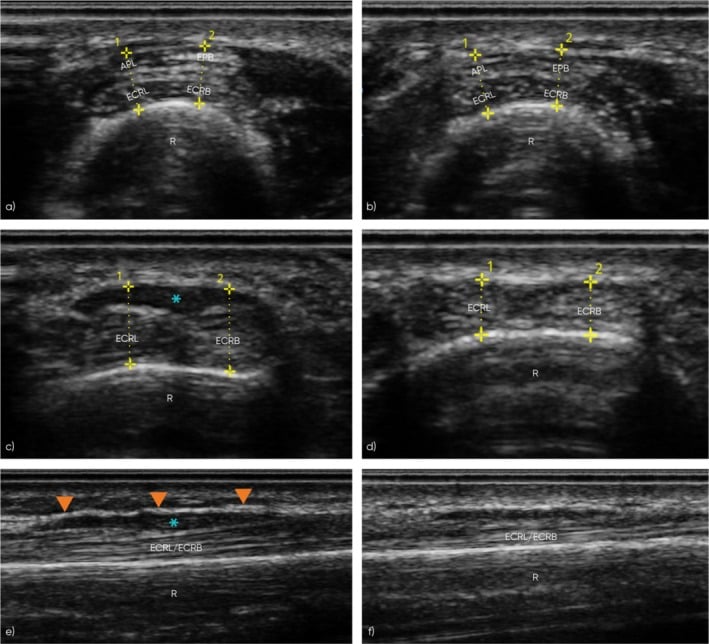
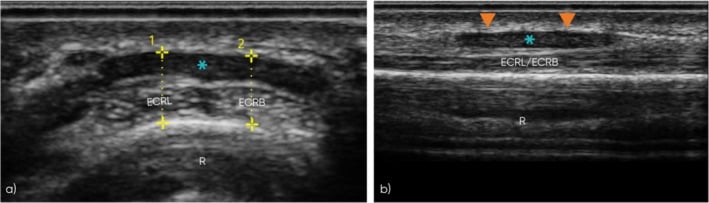
- The attritional mechanism. Osteophytes from STT / trapeziometacarpal osteoarthritis (and the trapezial ridge) project into the tight FCR canal and mechanically abrade the gliding tendon, causing chronic attrition tendinopathy and, ultimately, attritional rupture - directly analogous to extensor attrition ruptures (e.g. EPL over Lister's tubercle, or extensors over the caput ulnae in the Vaughan-Jackson pattern), but here the FCR frays over trapezial/STT osteophytes.
- Causes of FCR rupture. (1) Attritional over STT/trapezial osteophytes (spontaneous, in basal-thumb OA); (2) a complication of trapeziometacarpal suspension arthroplasty (the abductor-pollicis-longus "hammock" wrap - rupture within the first 6 months, especially in manual workers or after wrist-stressing activity); (3) rarely acute laceration/trauma.
- Why the deficit is often subtle. Because flexor carpi ulnaris and palmaris longus provide most wrist flexion, an isolated FCR rupture is frequently well-tolerated - so a spontaneous, low-demand rupture may be managed conservatively, whereas a post-arthroplasty rupture (which destabilises the reconstruction) or a symptomatic/high-demand rupture requires surgery.
Q: Why does STT/basal-thumb OA cause FCR tendinopathy and rupture, and how is rupture managed?
A: Osteophytes from STT/trapeziometacarpal OA and the trapezial ridge project into the tight FCR canal and abrade the gliding tendon → attrition tendinopathy and attritional rupture (analogous to EPL over Lister's tubercle). FCR rupture is also a complication of TMC suspension arthroplasty (the APL "hammock" wrap - within 6 months, manual workers). Because FCU and palmaris longus supply most wrist flexion, an isolated spontaneous rupture is often tolerated (conservative if low-demand), but a post-arthroplasty rupture (destabilising the reconstruction) or a symptomatic rupture needs surgery.
Differential & Workup
- Where / sign
- Over the FCR tendon, volar-radial, at the crease
- Discriminator
- Pain on resisted flexion + radial deviation; tender over FCR
- Where / sign
- First dorsal compartment, dorso-radial
- Discriminator
- Positive Finkelstein; APL/EPB tendons
- Where / sign
- Base of thumb / CMC joint
- Discriminator
- Positive grind test; radiographic CMC arthritis
- Where / sign
- Distal scaphoid / trapezium-trapezoid
- Discriminator
- Radiographic STT joint narrowing; tender STT
- Where / sign
- Anatomical snuffbox / scaphoid
- Discriminator
- Snuffbox tenderness; scaphoid imaging
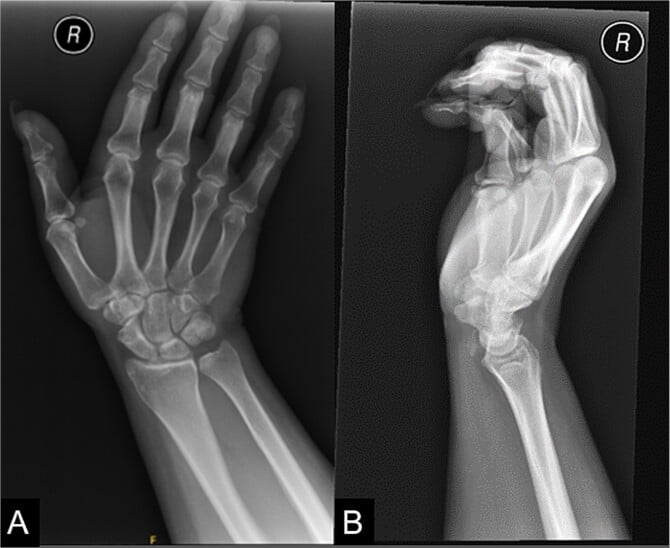
Radiographs (including a basal-thumb/STT view) assess the adjacent joints for osteoarthritis; ultrasound or MRI characterises the FCR tendon (tendinopathy, tenosynovitis, partial tear/rupture). A diagnostic injection into the FCR sheath can both confirm the source and treat it.
Management
- Non-operative (first line): activity modification/rest, a wrist (+/- thumb) splint, non-steroidal anti-inflammatories, physiotherapy, and a corticosteroid injection into the FCR tunnel/sheath for refractory symptoms - effective for most FCR tendinitis.
- Treat the neighbours: address coexisting basal-thumb/STT osteoarthritis as indicated.
- Surgery (refractory): release/decompression of the FCR fibro-osseous tunnel with debridement of the diseased tendon.
- Rupture: FCR tendon rupture (e.g. after suspension arthroplasty, or rarely from chronic attrition over the trapezium) requires surgical management rather than conservative care.
- After an APL hammock arthroplasty specifically: expect FCR tendinopathy in around a third, with rupture in roughly a fifth, all within six months - so restrict wrist-stressing activity through that window and review actively rather than waiting for the patient to report.
The neighbouring diagnoses have their own pages. The joint that most often drives the pain attributed to this tendon, and whose surgery generates the complication above, is thumb carpometacarpal arthritis; the dorso-radial mimic with the positive Finkelstein test is de Quervain's tenosynovitis.
Two points keep FCR tendinopathy from being mismanaged. First, the FCR runs right beside the trapeziometacarpal and scaphotrapeziotrapezoid joints, so volar-radial wrist pain attributed to the tendon is frequently driven by - or accompanied by - basal-thumb or STT osteoarthritis; localise the source with examination, radiographs and, if needed, a diagnostic injection, and treat the joint as well as the tendon. Second, FCR tendinopathy and even rupture are common rather than merely recognised complications of the APL hammock suspension arthroplasty, in which the abductor pollicis longus is wrapped around the FCR. In a series of 21 hands followed beyond a year, a third developed FCR tendinopathy - tendinitis in 14.3 percent and outright rupture in 19.0 percent - and every rupture occurred within six months, usually after a wrist-stressing activity. So new or persistent FCR symptoms after basal-thumb surgery should be taken seriously: tendinitis settled with anti-inflammatories and bracing in every case, but all four ruptures required surgery, and the first six months are the window that matters. With only 21 hands those percentages are imprecise, and they belong to this particular technique rather than to suspension arthroplasty as a class.
Mnemonics & Memory Aids
FCR
Hook:FCR: Fibro-osseous tunnel (flexion+radial deviation pain), Check the neighbours (TMC/STT OA, arthroplasty complication), Rest first / Release if refractory.
Clinical Decision Scenarios
Practise clinical reasoning and management decisions out loud
“A patient has volar-radial wrist pain over the FCR tendon. How do you assess and manage it?”
Presentation
- Volar-radial wrist pain over the FCR at/just proximal to the wrist crease
- Worse on resisted wrist flexion and radial deviation; tender over the tendon
- FCR runs in a tight tunnel against the trapezial ridge/scaphoid
Associations & differential
- Basal-thumb (trapeziometacarpal) and STT osteoarthritis (adjacent joints)
- After APL hammock arthroplasty: tendinopathy 33.3%, tendinitis 14.3%, RUPTURE 19.0% - all ruptures within 6 months (n=21)
- Differential: de Quervain's (dorso-radial, Finkelstein), scaphoid pathology
Management
- Non-operative first: rest/splint, NSAIDs, physiotherapy, FCR-sheath injection
- Treat coexisting basal-thumb/STT arthritis
- Refractory: FCR tunnel release + debridement; rupture = surgery
Evidence & Key Studies
Flexor carpi radialis tendinopathy after suspension arthroplasty for trapeziometacarpal arthritis
- Retrospective study of 21 hands in 21 patients undergoing the hammock procedure - wrapping the abductor pollicis longus around the FCR - for primary trapeziometacarpal arthritis, with more than one year of follow-up.
- FCR tendinopathy occurred in 7 patients (33.3 percent): tendinitis in 3 (14.3 percent) and tendon rupture in 4 (19.0 percent). Conservative treatment with non-steroidal anti-inflammatories and bracing was effective for the tendinitis; all ruptures required surgery.
- All ruptures occurred within 6 months, often after wrist-stressing activity. Manual workers had a higher incidence (50 versus 18.2 percent, odds ratio 4.5) but this did not reach significance (p=0.1818) in a cohort of 21 - so occupation is a plausible rather than an established risk factor, and the whole rate is specific to the APL hammock technique.
The occurrence of FCR tendinopathy (and rupture) as a complication of trapeziometacarpal suspension arthroplasty, the effectiveness of conservative treatment (non-steroidal anti-inflammatories and bracing) for the tendinitis, the need for surgery for rupture, and the critical first-postoperative-year window come from the cited Nakai series. The anatomy of the FCR fibro-osseous tunnel against the trapezial ridge, its association with basal-thumb/STT osteoarthritis, and the differential with de Quervain's and scaphoid pathology are standard, well-established teaching. That series is a single retrospective cohort of 21 hands, so the percentages carry wide uncertainty and apply to the APL hammock technique rather than to suspension arthroplasty generally. No study gives an incidence of primary (non-operative) FCR tendinopathy in the general population, no trial compares splinting, injection or tunnel release for it, and no threshold or interval for imaging or intervention has been validated - so none is quoted here.