Axial Load | TAL Integrity Determines Stability | Rule of Spence Screening
- Rule of Spence (overhang over 6.9mm) raises suspicion of TAL rupture but has been shown to predict it unreliably - cadaveric testing puts ligament failure nearer 3.2mm, so a normal measurement does NOT exclude injury
- MRI is gold standard for TAL integrity assessment - not just Rule of Spence
- 40-50% have associated C2 fractures - always assess entire cervical spine
- Steel's Rule of Thirds: Canal expansion explains low neurological injury rate
- Midsubstance TAL rupture (Dickman I) cannot heal - requires surgical stabilization
- “Jefferson expands the canal (low neuro injury) vs Hangman's translates (higher risk)
- “ADI over 3mm in adults indicates atlantoaxial instability
- “Goel-Harms technique is current gold standard for C1-C2 fusion
- “Original 6.9mm threshold has magnification limitations - use clinical judgment
Overview and Clinical Significance
Sir Geoffrey Jefferson described the injury in 1920: a burst fracture of the atlas from axial compression. C1 is a ring with thin anterior and posterior arches, and when it is compressed between the skull and C2 it is the ring that gives way.
Who. Atlas fractures are approximately 11% of all cervical fractures (Lyons & Mian 2022). The contemporary population is bimodal but increasingly geriatric, with a mean age of about 71 years and the majority over 70, and low-energy falls are now the leading mechanism; the high-energy axial-load burst remains the classic young-patient pattern. Over half are non-isolated injuries, and neurological injury is rare in a pure Jefferson fracture.
Mechanism. An axial load to the vertex:
- Diving into shallow water, head first
- A fall onto the top of the head
- A head-first motor vehicle accident with vertex impact
- An object falling onto the head
Why neurological injury is rare. The classic Jefferson fracture displaces the lateral masses outward, which increases the space available for the cord; translational injuries, by contrast, compromise the canal. "Jefferson expands, Hangman's translates" is the rule, and the neurological injury rate is about 10%.
Steel's rule of thirds: at the level of C1 the canal is one third dens, one third cord and one third space. A pure Jefferson fracture with lateral expansion adds to that space, which is why neurological injury is uncommon.
Pathophysiology and Mechanisms
The atlas. C1 is unique among cervical vertebrae, and its structure explains both the fracture and its assessment:
- Description
- Thin bone, articulates with dens via facet
- Clinical Relevance
- Fractures under axial load at weakest point
- Description
- Thin bone, vertebral artery groove
- Clinical Relevance
- Common fracture site, vertebral artery at risk
- Description
- Bear weight from skull, articulate C0 and C2
- Clinical Relevance
- Lateral displacement measured for stability
- Description
- Contains vertebral artery
- Clinical Relevance
- Artery injury possible with displaced fractures
- Description
- Ring structure only
- Clinical Relevance
- Unique biomechanics, no disc above or below
- Description
- Posterior tubercle only
- Clinical Relevance
- Palpation landmark (C1 not palpable)
The transverse atlantal ligament. The TAL is the most important structure for C1-C2 stability: a strong band running between the lateral masses, passing posterior to the dens and holding it against the anterior arch. It is part of the cruciform ligament complex and is the primary restraint to anterior translation of C1, while still allowing C1 to pivot around the dens in rotation. With the ligament intact the atlantodental interval is under 3mm in an adult; rupture lets the ADI increase, and an intact TAL is what makes a Jefferson fracture a stable injury.
How the ring breaks. Axial load to the vertex passes through the occipital condyles onto the wedge-shaped lateral masses of C1 and forces them apart. The ring fails at its weakest points, the anterior and posterior arches, the lateral masses displace outward, and if the displacement is severe the TAL may rupture or avulse.
Classification Systems
Landells is the standard morphological classification of atlas fractures, based on which parts of the C1 ring are broken:
- Description
- Isolated single-arch fracture (anterior OR posterior arch alone)
- Stability
- Stable
- Management
- Collar
- Description
- Burst - both anterior AND posterior arches (the true Jefferson fracture)
- Stability
- Depends entirely on TAL
- Management
- Assess TAL integrity
- Description
- Unilateral lateral mass fracture
- Stability
- Variable
- Management
- Assess TAL and articular congruity
Levine-Edwards classifies traumatic spondylolisthesis of the AXIS - the hangman's fracture of C2 (types I, II, IIA and III). It has nothing to do with the atlas, and using it for a C1 injury is a recognisable error in a viva.
The confusion is easy to make because these two injuries travel together: in the Kesterson series below, all four unstable Jefferson fractures had an associated type II odontoid fracture. So you will frequently be classifying a C1 and a C2 injury in the same patient - Landells (or Gehweiler) for the atlas, Levine-Edwards for the hangman's, Anderson-D'Alonzo for the odontoid.
Clinical Assessment
History. The mechanism is an axial load to the vertex, in one of the forms listed in the Overview. The patient complains of occipital or suboccipital neck pain, headache and limited range of motion; neurological symptoms are rare with an isolated Jefferson fracture.
Examination. Maintain cervical spine immobilisation until the spine is cleared, and complete the ATLS primary survey before the focused spine examination. Then:
- Inspection: cervical collar in place, head position
- Palpation: posterior midline tenderness (C1 is not directly palpable)
- Neurological: full motor and sensory examination, cranial nerves
- Vascular: assess for vertebral artery injury if the fracture is displaced
Canadian C-Spine Rule. A Jefferson fracture typically presents with a dangerous mechanism (diving, a fall from height), neck pain and tenderness, and an inability to actively rotate the neck 45 degrees, so imaging is indicated.
Investigations
Plain radiographs. Two views carry the information:
- Open-mouth (odontoid) view: essential for measuring lateral mass displacement. The edges of the C1 lateral masses are compared with those of C2 and the overhang on each side is summed.
- Lateral cervical radiograph: the atlanto-dental interval (normal under 3mm in adults and under 5mm in children), prevertebral soft tissue swelling and C1-C2 alignment.
CT is the gold standard for delineating the fracture. It shows the pattern (bilateral arch fractures), the number and location of the fracture lines, lateral mass displacement more accurately than a radiograph, associated fractures of C2 and the occipital condyles, and any bone avulsed from the TAL insertion. What it cannot do is show the ligament: ligamentous injury is not assessed, subtle instability may be missed, the findings must be correlated with the clinical examination, and MRI is needed for the TAL.
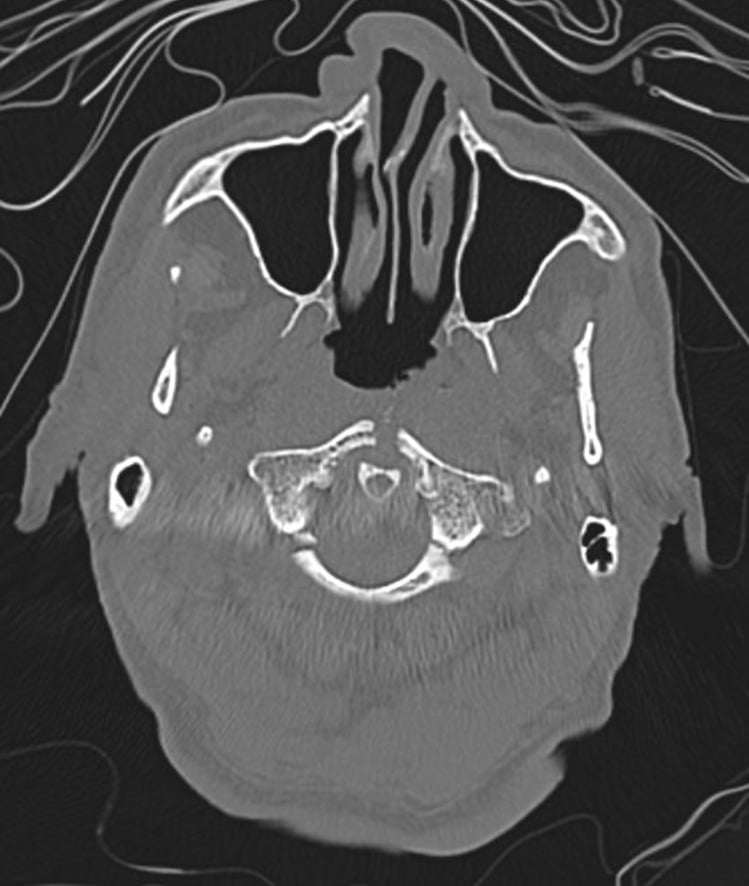
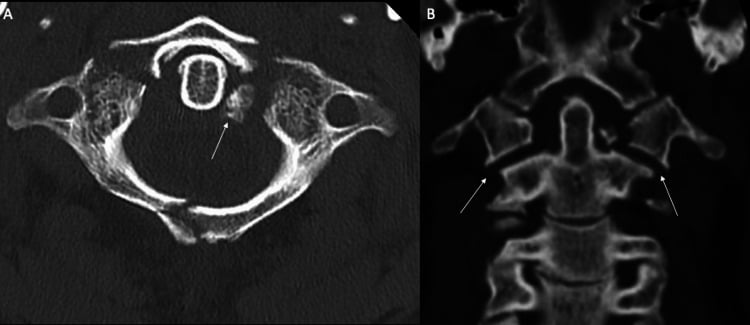
MRI is the gold standard for TAL integrity: it visualises the ligament directly and distinguishes a bony avulsion from a midsubstance tear. Indications:
- Combined LMD approaching or exceeding 6.9mm
- ADI greater than 3mm
- Any concern for ligamentous instability
- Neurological deficit
- Planning for definitive management
- TAL Status
- Intact
- Implication
- Stable injury, collar treatment
- TAL Status
- Partial injury
- Implication
- Close monitoring, consider halo
- TAL Status
- Complete rupture (Type I)
- Implication
- Unstable, surgery likely
- TAL Status
- Avulsion (Type II)
- Implication
- May heal with immobilization
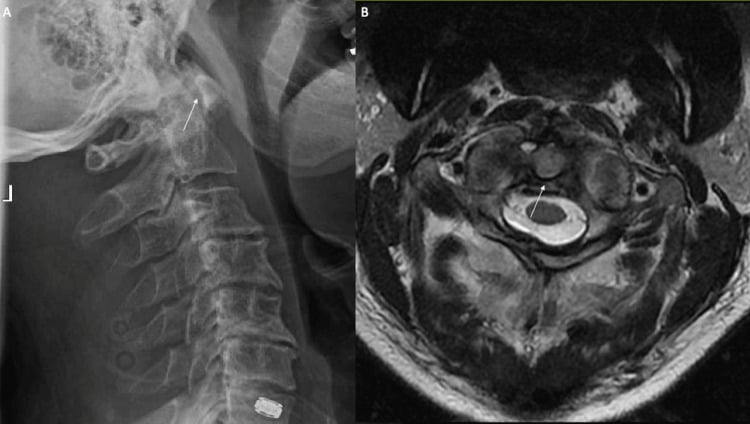
The rule of Spence. Lateral mass displacement is measured on the open-mouth view or on coronal CT:
- Measure the overhang of the C1 lateral mass beyond C2 on each side
- Add the two measurements to give the combined LMD
- Greater than 6.9mm (or 7mm): the TAL is likely incompetent
- Less than 6.9mm does not exclude TAL injury; clinical correlation is needed
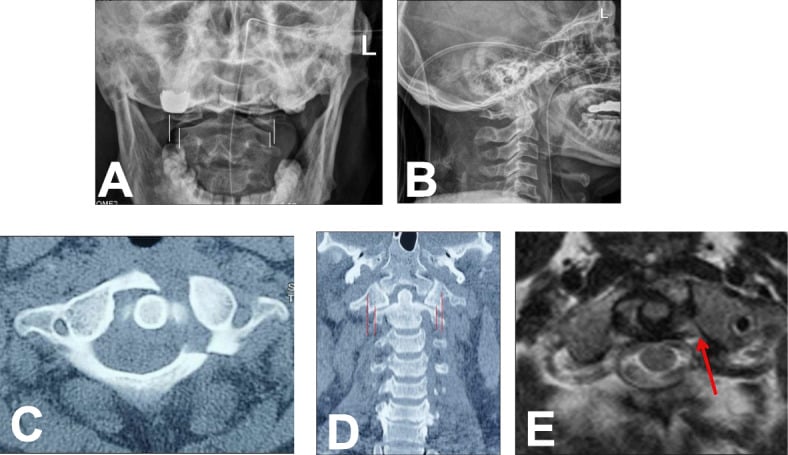
The rule was derived in 1970 from cadaveric specimens measured on plain radiographs, where magnification, rotation and head tilt all distort the overhang. It has since failed on both of its claims. Modern biomechanical testing (Woods 2018, 11 specimens loaded to failure) found the transverse ligament ruptures at a mean lateral mass displacement of 3.2mm, with high probability of failure beyond 3.8mm - less than half the classic threshold - and a 2022 review from Theodore's group is titled "the rule of Spence is finally ready for retirement" because the rule neither predicts ligament injury reliably nor informs the operative decision. The direction of the error is what matters at the bedside: because true failure displacement is LOWER than 6.9mm, a reassuring measurement does not exclude a torn ligament. Treat any significant displacement as a reason to image the ligament, and let MRI, the atlantodental interval and the Dickman type drive management.
Differential Diagnosis and Associated Injuries
Not every C1 fracture is a Jefferson fracture. The spectrum, and what each pattern means for stability:
- Mechanism
- Axial load
- Pattern
- Bilateral anterior and posterior arch
- Stability
- Depends on TAL
- Mechanism
- Extension
- Pattern
- Isolated posterior arch
- Stability
- Stable
- Mechanism
- Extension with rotation
- Pattern
- Isolated anterior arch
- Stability
- Usually stable
- Mechanism
- Axial with lateral bend
- Pattern
- Through lateral mass
- Stability
- Usually stable
- Mechanism
- Axial or rotation
- Pattern
- At craniocervical junction
- Stability
- Variable
The atlas rarely breaks alone. Around 40-50% of Jefferson fractures have an associated C2 injury, most commonly a type II odontoid fracture, with hangman's (C2 pars) and C2-body fractures also seen, and there are recognised combined atlas-axis patterns. Combined C1-C2 injuries are more unstable and have worse outcomes than either alone, and they may alter management significantly, so CT of the entire cervical spine is mandatory.
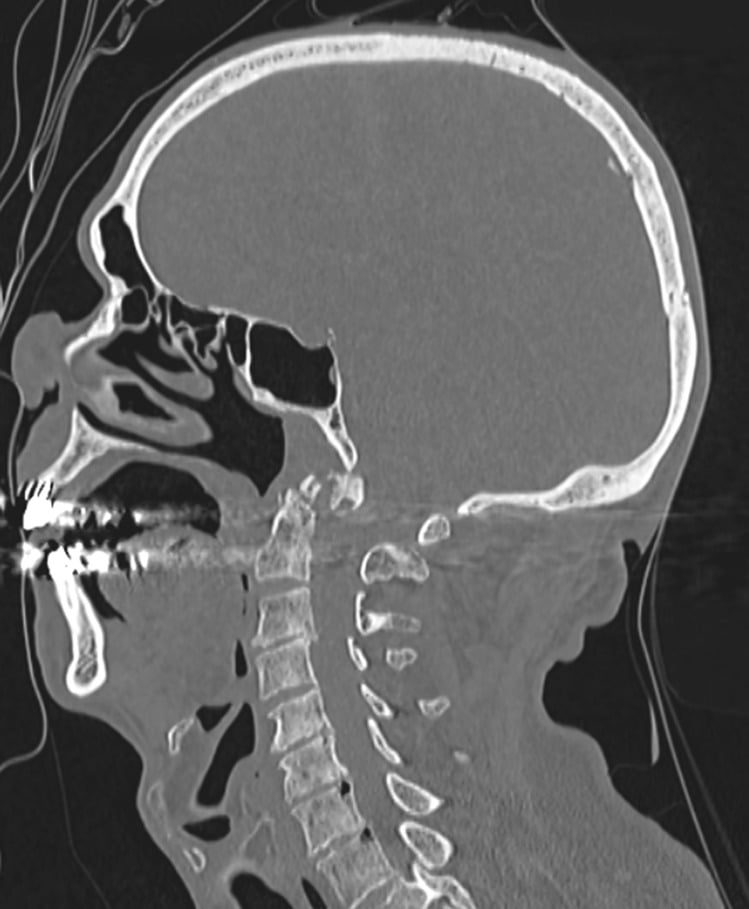
The examinable consequence of the association is that the C2 (axis) component usually determines the construct, not the Jefferson fracture in isolation:
- A Jefferson (with whatever TAL status) plus a type II odontoid typically needs a C1-C2 fusion that addresses both; direct C1 osteosynthesis is off the table because the odontoid injury already mandates atlantoaxial stabilisation.
- A Jefferson plus a hangman's (C2 pars) may need a construct spanning the relevant levels, sometimes occipitocervical, again driven by the C2 injury.
- The more-unstable, less-healable component dictates operative versus halo or collar management.
So scrutinise C2 and the occipital condyles on the CT before settling the plan, and let the dominant (usually C2) injury lead the decision.
Occipital condyle fractures. Type I is comminuted and stable, type II is a basilar skull extension, and type III is an avulsion and unstable. Include the skull base in the CT, and use MRI for ligamentous injury.
Vertebral artery injury. The risk rises with displaced fractures and with involvement of the foramen transversarium. The injury may be asymptomatic initially and carries a stroke risk if unrecognised, so CTA screening is indicated; consider it whenever the fracture involves the transverse foramen.
In polytrauma patients with a Jefferson fracture, assume there are associated injuries until proven otherwise. Complete cervical spine CT and thorough assessment of the craniocervical junction are mandatory.
Management Algorithm
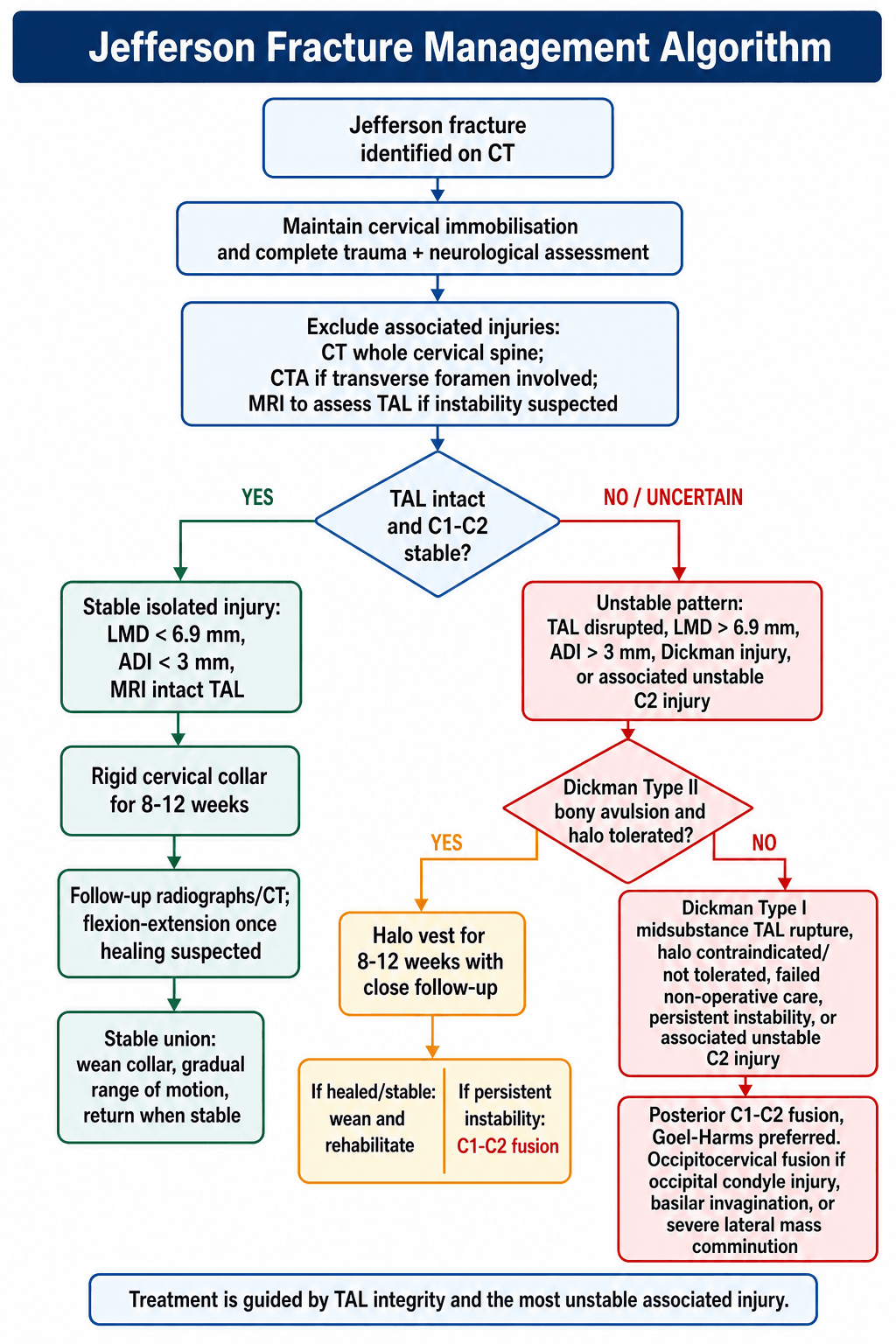
The decision. Management turns on the integrity of the TAL and on the most unstable associated injury. Maintain immobilisation, complete the trauma and neurological assessment, exclude associated injuries, and then sort the fracture by its ligament: an intact TAL is treated in a rigid collar, a Dickman type II bony avulsion may be given a trial of halo, and a Dickman type I midsubstance rupture is fused. The Dickman evidence card below puts the halo trial in proportion: 74% of type II injuries healed in a rigid orthosis and roughly one in four came to delayed surgery, which is why the halo is a monitored trial rather than a promise.
- Key Finding
- ADI under 3mm, isolated C1
- Stability
- Stable
- Treatment
- Rigid collar 8-12 weeks
- Key Finding
- Dickman Type II on MRI
- Stability
- Potentially stable
- Treatment
- Halo vest 8-12 weeks (may heal)
- Key Finding
- Dickman Type I on MRI
- Stability
- Unstable
- Treatment
- C1-C2 fusion (Goel-Harms)
- Key Finding
- Combined C1-C2 injury
- Stability
- Variable
- Treatment
- Manage as worst injury dictates
Who. An isolated Jefferson fracture with an intact TAL, a combined LMD under 6.9mm with an MRI-confirmed intact TAL, and selected Dickman type II bony avulsions.
- Duration
- 8-12 weeks
- Indications
- Stable fracture, TAL intact
- Considerations
- Most common, patient-friendly
- Duration
- 8-12 weeks
- Indications
- Unstable pattern, TAL avulsion
- Considerations
- Better immobilization, patient tolerance issues
- Duration
- Not recommended
- Indications
- None for acute fracture
- Considerations
- Insufficient immobilization
Surgical Technique
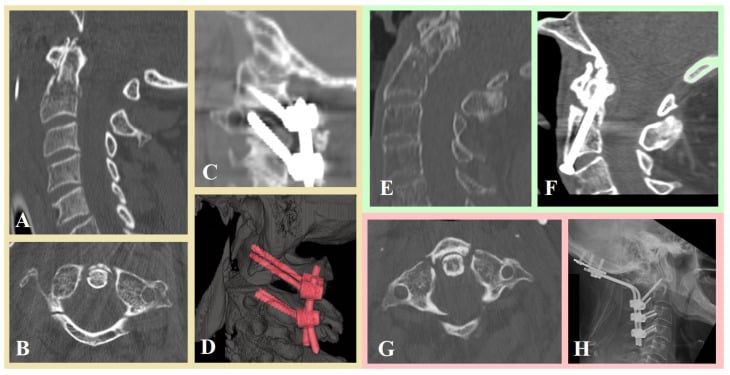
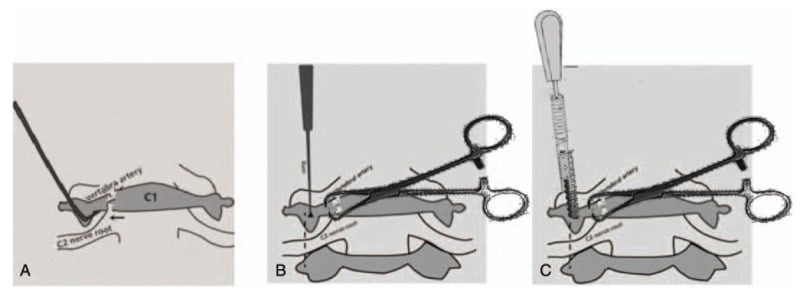
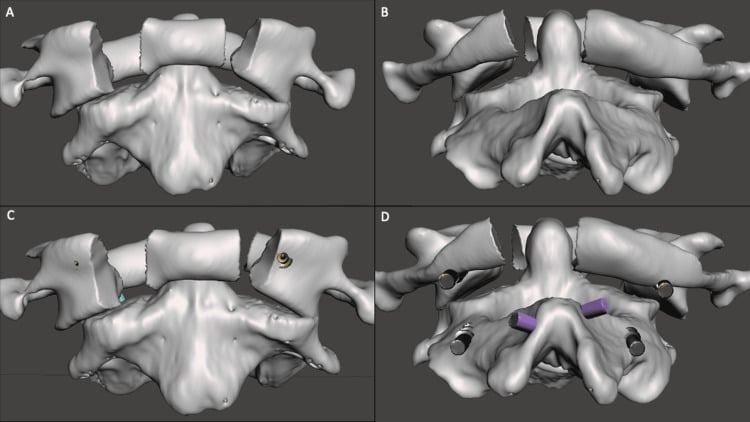
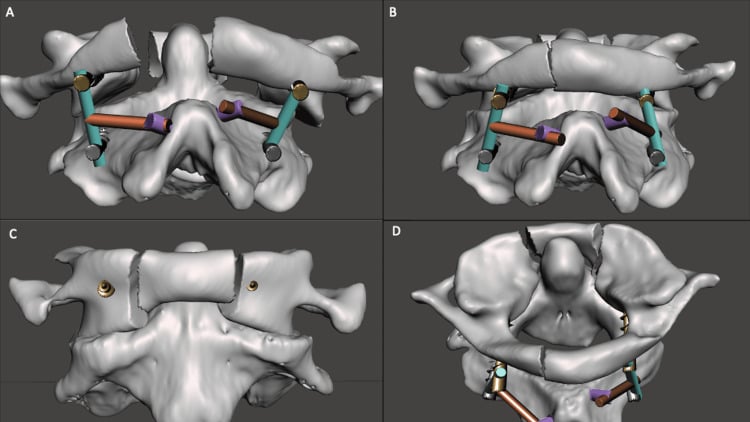
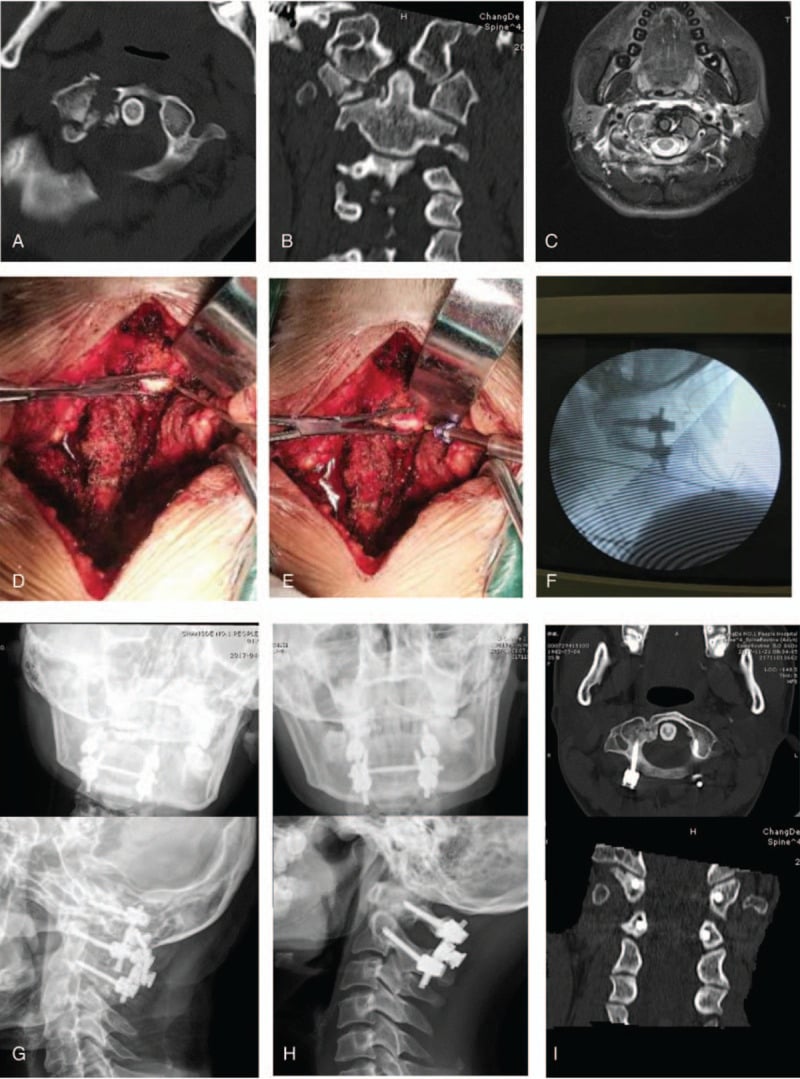
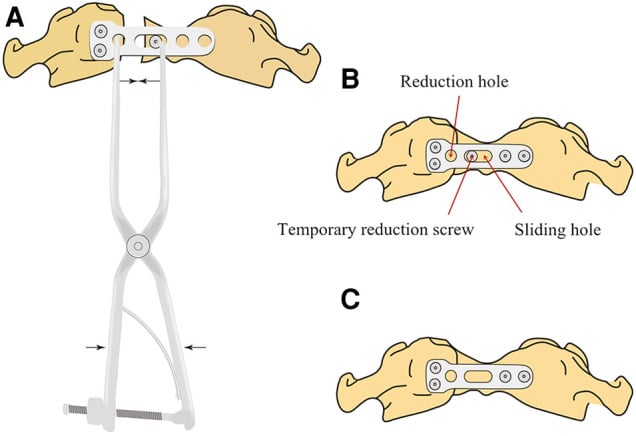
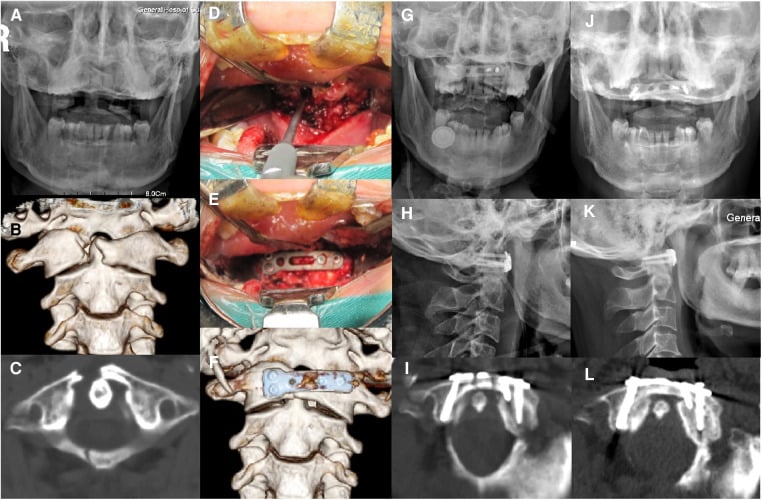
Imaging review. Thin-cut CT through C1-C2, MRI to confirm the TAL rupture, and CTA to map the course of the vertebral artery. Assess the bone quality for screw purchase and plan a trajectory that avoids the artery.
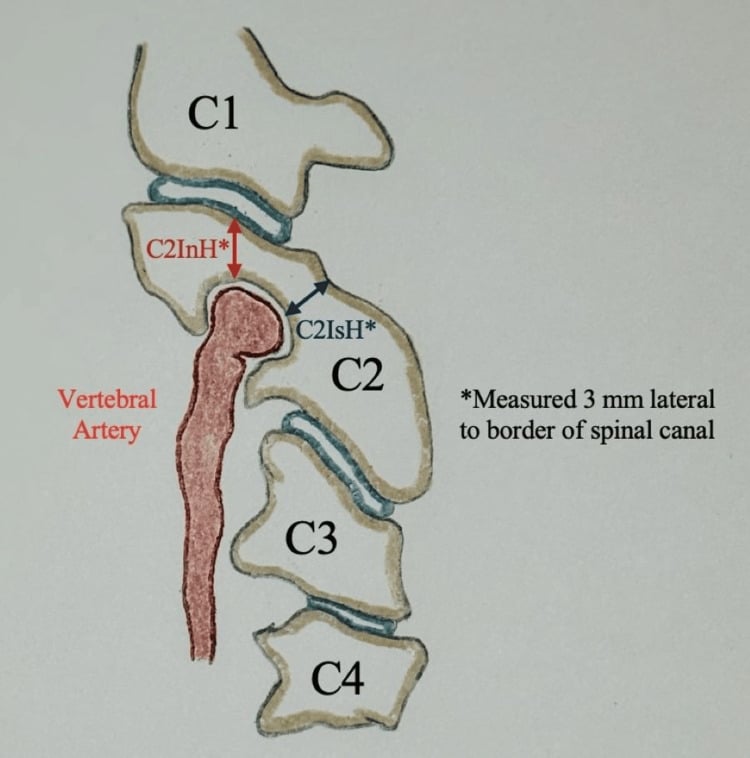
Positioning. The head is held in Mayfield pins with gentle extension to open the posterior space. Fluoroscopy (AP and lateral) and neuromonitoring (SSEPs and MEPs) are set up, and the airway is secured with the cervical instability in mind.
Complications
- Incidence
- 5-10%
- Risk Factors
- Severe displacement, inadequate immobilization
- Management
- Extended immobilization or surgery
- Incidence
- Variable
- Risk Factors
- Missed TAL injury, insufficient treatment
- Management
- Late C1-C2 fusion
- Incidence
- Rare
- Risk Factors
- Displaced fracture through foramen
- Management
- CTA screening, observation or intervention
- Incidence
- Uncommon
- Risk Factors
- Malunion, chronic instability
- Management
- Usually asymptomatic, fusion if symptomatic
- Incidence
- With fusion
- Risk Factors
- C1-C2 fusion performed
- Management
- Expected, usually well-tolerated
Vertebral artery injury complicates 2-4% of screw placements, more often with C2 transarticular screws and less often with the Goel-Harms technique, and may require intraoperative vascular surgery.
C5 nerve root palsy presents as shoulder abduction weakness. It is rare but recognised and typically transient; the mechanism is unclear (traction versus cord shift), and most recover with physiotherapy by 6-12 months.
Infection. Deep wound infection occurs in 1-3%, more often in polytrauma. It is treated with prolonged antibiotics, hardware removal may be needed if it becomes chronic, and fusion can still occur.
Hardware failure. Screw loosening or breakage is usually related to non-union and may require revision surgery. Prevention is good bone quality, and augmentation options are available.
Vertebral artery injury during C1-C2 instrumentation can be catastrophic. Always obtain preoperative CTA to map vertebral artery anatomy. Consider navigation guidance for complex anatomy. Have vascular surgery backup available for high-risk cases.
Postoperative Care
The first 24-48 hours. ICU or step-down unit monitoring with neurological checks every 2-4 hours. The cervical collar stays on even after fusion, the drain comes out at 24 hours, and mobilisation with physiotherapy and occupational therapy starts early.
Analgesia and prophylaxis. Multimodal analgesia, with opioids as needed initially, a transition to non-opioid agents, neuropathic agents if needed, and no NSAIDs for the first 6 weeks while the fusion heals. DVT prophylaxis is sequential compression devices, early mobilisation and chemical prophylaxis per the trauma protocol, balancing bleeding risk against DVT risk and continuing until the patient is fully ambulatory.
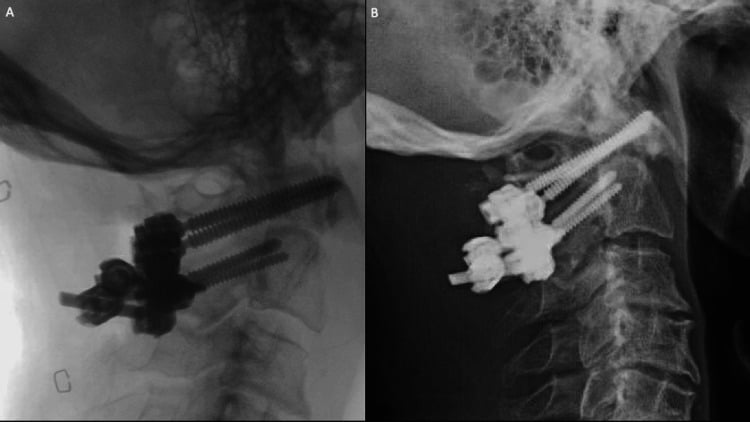
Immobilisation. After C1-C2 fusion the instrumentation provides the stability; a rigid collar for 6-8 weeks adds support during fusion, protects against inadvertent movement and is for comfort rather than primary immobilisation. After collar treatment of a stable fracture the collar is worn continuously for 8-12 weeks, 24 hours a day except for supervised bathing, with the fit checked at each visit and skin care to prevent breakdown; compliance is critical to healing.
- Non-operative (Collar)
- Clinical exam, collar check
- Operative (Fusion)
- Wound check, remove sutures, clinical exam
- Non-operative (Collar)
- Radiographs (AP/lateral), assess healing
- Operative (Fusion)
- Radiographs, assess fusion, collar weaning
- Non-operative (Collar)
- CT to confirm union, flexion-extension XR
- Operative (Fusion)
- CT to assess fusion, begin gentle ROM
- Non-operative (Collar)
- Final stability check, return to activity clearance
- Operative (Fusion)
- Confirm solid fusion, full activity clearance
- Non-operative (Collar)
- Discharge if stable and healed
- Operative (Fusion)
- Final fusion assessment, long-term follow-up
Rehabilitation runs in three phases:
- Phase 1 (0-6 weeks), immobilisation: collar on continuously, no neck movement, upper limb range-of-motion exercises, gentle walking as tolerated, no lifting, bending or twisting
- Phase 2 (6-12 weeks), protected mobilisation: continue the collar if non-operative, wean it if operative and the fusion is progressing; gentle isometric neck exercises; a gradual increase in daily activities; no contact sports or high-risk activities
- Phase 3 (3-6 months), active rehabilitation: full range-of-motion exercises once stability is confirmed, strengthening for the neck and shoulder girdle, proprioception training, and a supervised, gradual return to work and sport
Return to activity. Sedentary work can continue in the collar after non-operative treatment and resumes 2-4 weeks after surgery, with an ergonomic workstation, frequent position changes and no prolonged neck flexion. Driving is not allowed in a collar because neck rotation is limited; it resumes once the collar is weaned, range of motion is restored, blind spots can be checked safely and the patient is off narcotic analgesia, typically 3-4 months after injury. Contact sport waits a minimum of 6 months, for a confirmed solid fusion or healed fracture, full range of motion and strength, and an individual risk assessment that weighs the long-term consequences of a fusion.
What to watch for during follow-up:
- Non-union or malunion: persistent pain, motion on flexion-extension views
- Hardware failure: screw loosening or breakage, if operative
- Infection: wound problems, fever, raised inflammatory markers
- C5 nerve root palsy: shoulder weakness
- Chronic pain, which may need a pain management referral
- Adjacent segment degeneration, a long-term concern after fusion
Outcomes and Prognosis
Stable fractures in a collar. Union is 90-95% with a rigid collar, typically complete by 12 weeks, and non-union is rare when the patient is compliant with immobilisation; most achieve solid bony healing with minimal long-term complications. Good to excellent outcomes are likewise 90-95%, with a return to full activity in most cases, minimal residual neck pain, a full cervical range of motion preserved and high patient satisfaction. Expect sedentary work at 2-4 weeks (in the collar), physical work and recreational sport at 3-6 months, contact sport at 6-12 months after confirmed healing, and driving after the collar is removed and range of motion restored.
Unstable fractures fused. Fusion rate, function and motion loss by construct:
- Fusion Rate
- 95-98%
- Functional Outcome
- Excellent stability, good function
- Motion Loss
- 50% cervical rotation
- Fusion Rate
- 90-95%
- Functional Outcome
- High fusion rate, technically demanding
- Motion Loss
- 50% cervical rotation
- Fusion Rate
- 80-90%
- Functional Outcome
- Often requires supplemental halo
- Motion Loss
- 50% cervical rotation
- Fusion Rate
- 95%+
- Functional Outcome
- Very stable, greater motion loss
- Motion Loss
- All C1-C2 rotation + flexion-extension
After C1-C2 fusion most patients adapt to the lost rotation over 6-12 months, may need to turn the whole body to check blind spots, can still take part in most activities, and satisfaction is generally high, better than living with instability.
Prognosis. No specific prognostic scoring system exists for Jefferson fractures, and more displacement means a higher risk of instability. A good outcome is predicted by:
- Early diagnosis and appropriate treatment
- An isolated Jefferson fracture with no associated injuries
- Compliance with the immobilisation protocol
- Young age and good bone quality
- No neurological injury at presentation
A poorer outcome is predicted by:
- Associated C2 fractures or craniocervical injuries
- Delayed diagnosis or treatment
- Severe displacement requiring surgery
- Polytrauma with multiple comorbidities
- Pre-existing cervical pathology
Left untreated. A stable fracture may heal with fibrous union, and chronic instability is possible. An unstable fracture carries a high risk of progressive C1-C2 instability, and a type I TAL rupture does not heal, so atlantoaxial subluxation progresses. Chronic pain is common with untreated instability, and late myelopathy is its rare but serious complication.
Guidelines, Registries & Global Practice
Global Epidemiology
The epidemiology of atlas (C1) fractures has shifted internationally from a young, high-energy pattern toward a predominantly geriatric, low-energy-fall pattern as populations age. The key figures below frame how Jefferson and other atlas fractures present in modern practice.
- Figure
- ~11.1%
- Implication
- Common upper-cervical injury
- Figure
- ~71 years
- Implication
- Now predominantly geriatric
- Figure
- ~64% of cases
- Implication
- Aging-population driven
- Figure
- Low-energy fall (~74%)
- Implication
- Classic axial-load Jefferson is the minority
- Figure
- Only ~42%
- Implication
- Whole-spine CT mandatory
- Figure
- Rose ~700%
- Implication
- Increasing clinical burden
Guideline Comparison
There is no high-level (Level I) randomised evidence in Jefferson fracture management; international guidance is consensus- and observational-evidence based, but converges on a single principle: treatment is stratified by transverse atlantal ligament (TAL) integrity, not by the bony pattern alone.
- Core Recommendation
- TAL intact: external immobilisation alone; TAL disrupted: immobilisation or surgical fixation/fusion (isolated atlas fracture guideline, 2002 and 2013 update)
- Evidence Level
- Level III
- Core Recommendation
- Upper-cervical injury classification incorporates morphology and ligamentous status; TAL-incompetent atlas injuries favour stabilisation
- Evidence Level
- Consensus
- Core Recommendation
- Spinal column injury managed within major-trauma networks; CT first-line, MRI for ligamentous assessment; stable patterns collar-managed
- Evidence Level
- Consensus / Standards
- Core Recommendation
- Concordant TAL-based stratification; rising geriatric incidence drives interest in primary fixation vs prolonged orthosis in the elderly
- Evidence Level
- Consensus
The chief area of international practice variation is the elderly TAL-disrupted or displaced atlas fracture: halo-vest immobilisation is poorly tolerated and carries significant morbidity in older patients, so some units favour early posterior C1-C2 fixation (Goel-Harms) while others accept fibrous union or non-rigid collar with anticipated chronic stability. There is no Level I evidence to mandate either path.
Registry and Outcomes Evidence
Unlike arthroplasty, there is no dedicated international Jefferson-fracture implant registry; outcome data derive from national trauma datasets and institutional series. National major-trauma registries (for example the Trauma Audit and Research Network in the UK, and the Australia & New Zealand Trauma Registry) capture cervical spine injuries and support benchmarking of process and outcome across trauma systems. Large administrative databases (such as the US National Electronic Injury Surveillance System used by Lyons & Mian 2022) provide the most robust incidence and demographic data.
Imaging and Access Considerations
CT is the global first-line investigation and is near-universally available at trauma centres; the practical bottleneck worldwide is timely MRI for TAL assessment, which is often unavailable out-of-hours or in regional and lower-resource settings. Where MRI is required for borderline Rule of Spence measurements, interfacility transfer or teleradiology-guided triage is commonly used. Driving is restricted while a rigid collar is worn because cervical rotation and blind-spot checking are impaired; return-to-work and return-to-sport timelines are individualised to confirmed healing or fusion.
MCQ Practice Points
Q: What is the Rule of Spence threshold for TAL incompetence in Jefferson fractures?
A: 6.9mm combined lateral mass displacement. This is the sum of overhang on both sides measured on open-mouth radiograph or coronal CT. Important caveat: this is a screening tool, not diagnostic. MRI is the gold standard for TAL integrity assessment. The original threshold came from cadaveric studies with radiographic magnification, so clinical judgment is essential.
Q: A Jefferson fracture patient has MRI showing midsubstance TAL rupture. What is the treatment?
A: Surgical stabilization with C1-C2 fusion (Goel-Harms technique is current gold standard). This is Dickman Type I - midsubstance ruptures cannot heal as ligament-to-ligament healing is poor. In contrast, Dickman Type II (bony avulsion) may heal with halo immobilization as bone-to-bone healing is possible.
Q: What percentage of Jefferson fractures have associated C2 injuries?
A: 40-50%. This is why complete cervical spine CT is mandatory in all Jefferson fractures. Look specifically for odontoid fractures (Type II most common) and Hangman's fractures. Combined C1-C2 injuries may significantly alter management, with treatment dictated by the most unstable injury.
Q: Why is neurological injury rare in isolated Jefferson fractures despite upper cervical instability?
A: Steel's Rule of Thirds explains the low neuro injury rate. At C1, the spinal canal is divided into thirds: 1/3 dens, 1/3 cord, 1/3 space. Jefferson fractures cause lateral expansion of the ring, which increases space available for the cord rather than compressing it. This contrasts with translation injuries (like Hangman's) which compress the canal. Only 10% neurological injury rate in pure Jefferson fractures.
Q: What functional deficit occurs after C1-C2 fusion for unstable Jefferson fracture?
A: Loss of approximately 50% of cervical rotation. The atlantoaxial joint (C1-C2) accounts for half of total cervical rotation. This has important implications for driving (difficulty checking blind spots), sports, and occupational activities. Most patients adapt well over 6-12 months, but preoperative counseling is essential.
Q: What is the normal atlanto-dental interval (ADI) in adults vs children?
A: Under 3mm in adults, under 5mm in children. Measured on lateral radiograph from the posterior cortex of the anterior C1 arch to the anterior cortex of the dens. ADI greater than 3mm in adults suggests TAL insufficiency and atlantoaxial instability. Children have physiologic ligamentous laxity accounting for the higher normal value.
Exam Cheat Sheet
Key Anatomy
- C1 ring vertebra = no vertebral body
- TAL = primary restraint to anterior translation
- Steel's Rule of Thirds: 1/3 dens, 1/3 cord, 1/3 space
- Vertebral artery in transverse foramen at risk
Classification
- Stable = TAL intact on MRI (a low LMD does not prove this)
- Unstable = TAL incompetent on MRI or a widened/mobile ADI
- Dickman I = midsubstance tear (surgery)
- Dickman II = bony avulsion (may heal)
Treatment Algorithm
- Stable (TAL intact): rigid collar 8-12 weeks
- Dickman II (avulsion): halo vest 8-12 weeks
- Dickman I (rupture): C1-C2 fusion (Goel-Harms)
- Associated C2: manage as worst injury dictates
Surgical Pearls
- Goel-Harms = current gold standard technique
- C1 lateral mass + C2 pedicle/pars screws
- Avoids vertebral artery with C2 screws
- Allows intraoperative reduction
Complications
- Non-union: 5-10% if inadequate immobilization
- Chronic instability: missed TAL injury
- Vertebral artery injury: rare but serious
- Loss of 50% cervical rotation with fusion
Clinical Decision Scenarios
Practise clinical reasoning and management decisions out loud
“A 25-year-old male dove into shallow water and presents with neck pain. Radiographs show a Jefferson fracture with combined lateral mass displacement of 8mm. How would you manage this patient?”
“Explain the biomechanics of Jefferson fracture and why neurological injury is rare despite being an unstable upper cervical fracture.”
“A 45-year-old female has a Jefferson fracture with lateral mass displacement of 5mm. MRI shows an intact TAL. How would you manage this, and what is your follow-up protocol?”
Evidence Base
Rule of Spence - Original Cadaveric Study
- In cadaveric atlas specimens, combined lateral mass displacement of approximately 6.9mm (sum of bilateral overhang) was the point beyond which the transverse atlantal ligament failed. This threshold has been adopted clinically as a screening rule despite the magnification inherent in plain radiographs.
Dickman Classification of TAL Injuries
- TAL injuries classified into Type I (midsubstance disruption, n=16) and Type II (bony avulsion of the C1 lateral mass tubercle, n=23). Type I injuries did not heal without internal fixation and were treated with early surgery. Type II injuries had a 74% success rate with rigid orthosis (26% failure requiring delayed surgery).
Evaluation & Treatment of Jefferson Fractures
- In 17 Jefferson fractures, stable patterns were managed successfully with rigid collar or Minerva immobilisation, while all 4 unstable fractures had an associated Type II odontoid fracture and underwent occiput-C2 fusion. Diagnosis was delayed in 3 patients owing to inadequate open-mouth radiographs.
Isolated Atlas Fractures - Guideline (Original 2002)
- Recommends isolated atlas fractures with an intact TAL be treated with cervical immobilisation alone, and fractures with TAL disruption be treated with either immobilisation or surgical fixation and fusion. Evidence was insufficient to support treatment standards.
Management of Isolated Atlas Fractures - Updated Guideline
- The 2013 update of the AANS/CNS guideline reaffirms management of isolated atlas fractures by TAL status, recommending external immobilisation for TAL-intact patterns and considering surgical fixation/fusion for TAL-disrupted patterns.
Goel-Harms C1-C2 Polyaxial Screw-Rod Fixation
- Described C1 lateral mass plus C2 pars/pedicle polyaxial screws connected by rods. In 37 patients there was no neural or vascular injury and solid fusion in all cases on early follow-up. The technique permits intraoperative reduction of fixed subluxation and avoids the vertebral-artery risk of transarticular screws.
Epidemiology of Atlas Fractures (20-Year Analysis)
- Across an estimated 38,092 US atlas fractures (2001-2020), atlas fractures represented 11.1% of all cervical fractures, mean age was 71 years, 64% occurred in patients over 70, and 74% resulted from low-energy falls. Only 42% were isolated injuries (58% had a concomitant injury). Incidence rose markedly with age (over 70 per million at 80+ years) and increased nearly 700% over two decades.
Fifty Years Later: the Rule of Spence Is Ready for Retirement
- A review of the rule's history and of every subsequent study of lateral mass displacement thresholds concludes that the rule of Spence is inaccurate ON BOTH OF ITS CLAIMS: it neither reliably predicts a transverse atlantal ligament injury nor informs the surgical decision.
- The authors' recommendation is to replace it with the parameters that do carry information - the atlantodental interval, the Dickman injury type, and the AO Spine upper cervical classification.
- The paper's closing position, from the group that has published most on this injury, is that the rule was revolutionary in 1970 and should now be retired as a rule while its historical importance is acknowledged.
What Displacement Actually Ruptures the Ligament: 3.2mm, Not 6.9mm
- Eleven cadaveric transverse atlantal ligaments were stretched laterally to failure on a materials testing machine, with lateral mass displacement recorded by high-resolution high-speed camera.
- MEAN LATERAL MASS DISPLACEMENT AT LIGAMENT FAILURE WAS 3.2mm (SD 1.2) - less than half the classic 6.9mm - and mean failure force was 242N (SD 82).
- From their data, displacement beyond 3.8mm carries a high probability of ligament failure; the difference from the classic threshold was significant at P less than 0.001.
- The authors' conclusion is that the rule is conceptually valid but numerically wrong, and that displacement is NOT a reliable independent indicator and should be adjunctive to MRI rather than an absolute rule.
A CT Alternative: Atlantodental Interval on Neutral and Flexed Scans
- Ten cadaveric occipitocervical specimens were CT-scanned in neutral and in 10 degrees of flexion, intact and after simulated Jefferson fracture and/or transverse ligament section.
- The atlantodental interval increased by 2.5% in intact spines and 6.25% after a Jefferson fracture WITH AN INTACT LIGAMENT - neither significant - but by 34% after ligament disruption alone and 25% after disruption plus fracture (both P less than 0.005).
- Change in spinal canal cross-sectional area did not discriminate (P greater than 0.70).
- The method was more sensitive than the rule of Spence and the authors state at the outset that the rule of Spence is inaccurate for assessing ligament integrity.