Tibiofemoral Mechanics | Patellofemoral Tracking | Ligament Function
- Screw-home mechanism: Automatic tibial external rotation 10° during terminal extension locks knee
- Femoral rollback 20-25mm at 90° flexion prevents posterior impingement, maintained by PCL and posterolateral corner
- ACL resists 85% of anterior tibial translation, secondary restraints resist remaining 15%
- Patellofemoral reaction force = 3-4x body weight during stair climbing, 7-8x during squatting
- Medial femoral condyle contacts 60% of tibial plateau, lateral 40% (medial bias in load distribution)
- “Q-angle averages 14° males, 17° females (increased angle raises patellofemoral stress)
- “Instant center of rotation shifts posteriorly with flexion (crucial for TKA design)
- “MCL is primary valgus restraint at 30° flexion (ACL at full extension)
- “Coupled motion: Tibial internal rotation with knee flexion, external rotation with extension
Overview
The knee is the largest joint in the body and bears forces of up to 6 times body weight during activity: 2-3 times body weight in walking, up to 6 times in running. It has to balance mobility, 0-140° of flexion, against the stability needed for weight-bearing, and it does so through the interplay of bone geometry, ligaments, menisci and the surrounding musculature. The principles below inform diagnosis, surgical technique, rehabilitation and implant design.
Four ideas organise the topic:
- Four-bar linkage. The ACL and PCL form a crossed linkage that constrains motion while allowing rollback
- Screw-home mechanism. Terminal tibial external rotation locks the knee in extension
- Coupled motion. Flexion couples with tibial internal rotation; extension with external rotation
- Instant centre of rotation. Shifts posteriorly with flexion, which matters for implant design
Tibiofemoral Biomechanics
Joint geometry and congruency
An incongruent joint. The convex femoral condyles articulate with relatively flat tibial plateaus. The mismatch allows a large range of motion but leaves the joint with minimal intrinsic stability, so the knee depends on its menisci and ligaments, and meniscectomy or ligament injury significantly increases contact stress.
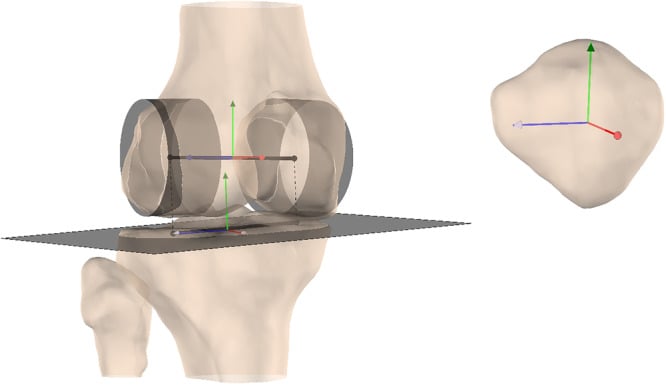
The femoral condyles. The medial condyle is longer, has the larger radius and extends further distally; the lateral condyle is shorter, has the smaller radius and flattens posteriorly. Both articular surfaces are spherical anteriorly and flatten posteriorly, and the asymmetry between the two condyles is what drives the screw-home mechanism in terminal extension.
The tibial plateaus. The medial plateau is concave, larger and more conforming; the lateral plateau is convex or flat, smaller and less conforming. In the sagittal plane the plateau slopes 5-10° posteroinferiorly.
Motion patterns
Rolling and gliding. Flexion combines rolling and gliding (sliding) of the femoral condyles on the tibial plateaus, and the ratio changes with the flexion angle: rolling dominates early flexion, gliding dominates deep flexion.
- Dominant Motion
- Rolling dominant
- Femoral Contact Point
- Moves posteriorly on tibia
- Clinical Significance
- Gait cycle, stance phase
- Dominant Motion
- Mixed rolling and gliding
- Femoral Contact Point
- Progressive posterior shift
- Clinical Significance
- Stair climbing, chair rise
- Dominant Motion
- Gliding dominant
- Femoral Contact Point
- 20-25mm posterior rollback
- Clinical Significance
- Squatting, kneeling
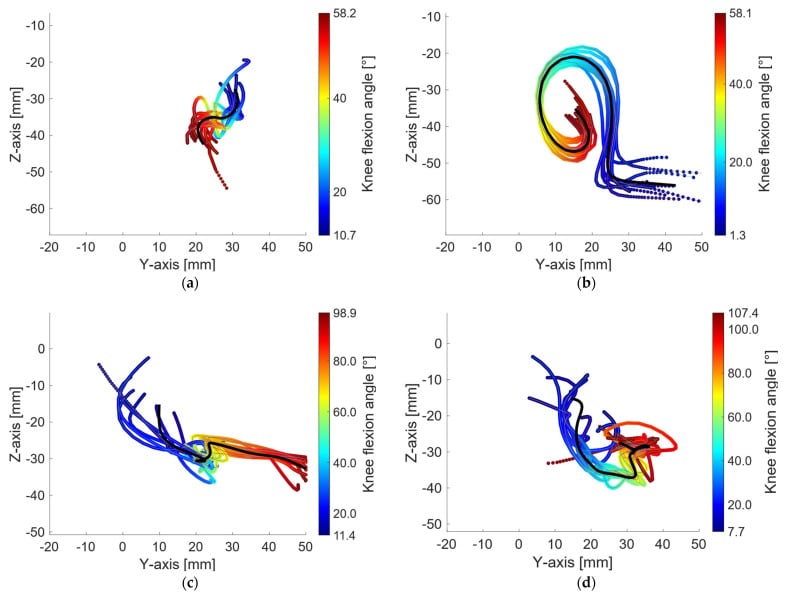
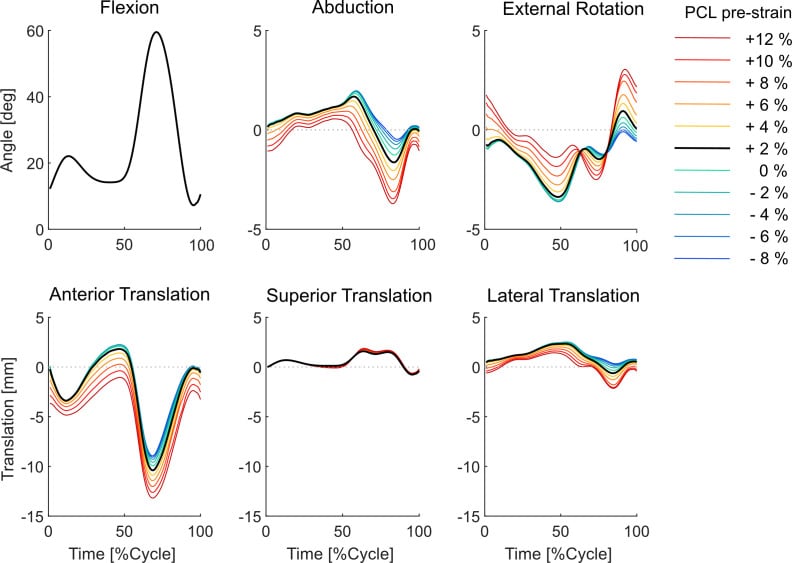
Femoral rollback. As the knee flexes the femoral condyles translate posteriorly on the tibial plateau, reaching 20-25mm at 90°. Rollback maintains the moment arm of the extensor mechanism, which prevents quadriceps insufficiency, keeps the posterior soft tissues from impinging and allows deep flexion without bony contact. The PCL and the posterolateral corner control it, maintaining rollback while resisting excess.
Screw-Home Mechanism
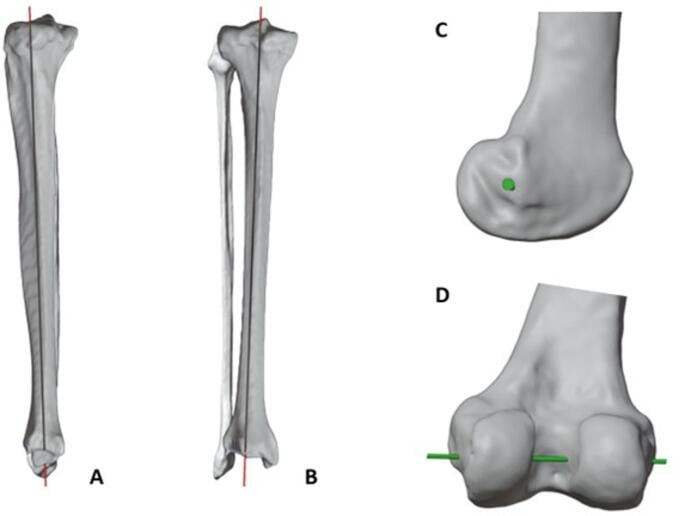
What it is. During the last 20-30° of extension the tibia rotates externally on the femur by about 10°, automatically, and the knee locks in full extension. The locked position is what allows energy-efficient standing without muscle effort.
Why it occurs. The lateral femoral condyle is shorter than the medial. Tibial external rotation aligns the femoral condyles with the tibial plateaus, giving maximum bony congruency at full extension.
How it unlocks. The popliteus contracts and internally rotates the tibia. This has to happen before the knee can flex from full extension, so a popliteus injury causes difficulty unlocking.
Q: How do you demonstrate screw-home mechanism clinically? A: Place patient supine with knee flexed 20°. Passively extend knee while palpating tibial tuberosity. Feel tibial external rotation during terminal extension. Absence suggests ACL or meniscal pathology affecting normal kinematics.
Ligament Function and Load Sharing
Anterior cruciate ligament
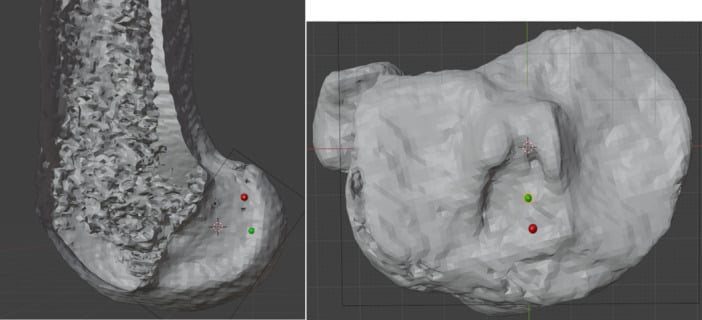
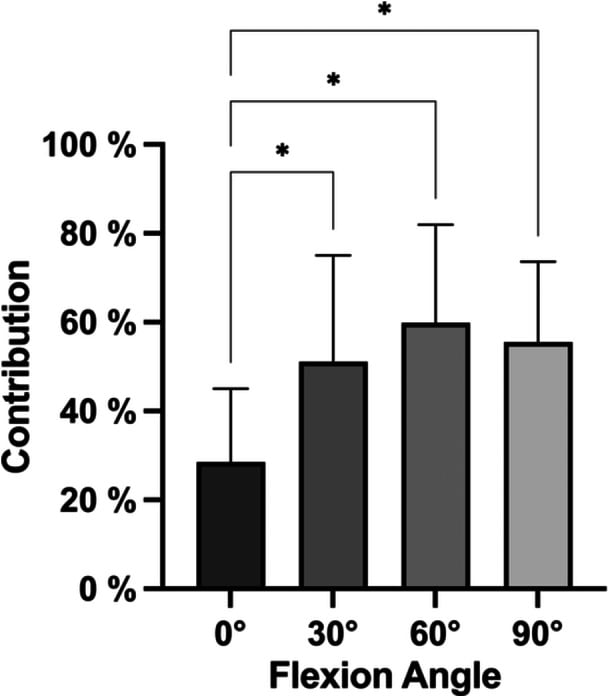
Primary restraint. The ACL resists 85% of the anterior drawer force at 30° of flexion, the Lachman position, which is also where its tension peaks. Its secondary functions are to resist internal rotation and valgus stress.
Two bundles. The anteromedial bundle is tight in flexion and the posterolateral bundle tight in extension, so the two tension reciprocally across the arc: the posterolateral bundle contributes most near extension, the anteromedial bundle remains an important restraint into flexion.
How it fails. The pivot-shift injury combines valgus, internal rotation and anterior translation; the non-contact mechanism is deceleration with the foot planted and the knee near extension. The result is abnormal anterior translation and rotatory instability, because the secondary restraints are insufficient on their own.
Secondary restraints. Together these resist approximately the remaining 15% of anterior drawer force:
- Posterior horns of the medial and lateral menisci
- MCL and medial capsule
- Posterolateral corner
- Iliotibial band
The ACL-deficient knee loses its anterior restraint and develops abnormal kinematics. Reconstruction restores the primary restraint and, with it, normal motion patterns.
Posterior cruciate ligament
Function. The PCL resists posterior tibial translation and maintains femoral rollback during flexion.
The deficient knee. Without the PCL the tibia translates posteriorly to excess and rollback is lost, which leads to:
- Patellofemoral pain, from loss of extensor mechanism leverage
- Increased medial compartment load
- Difficulty descending stairs or slopes
Collateral ligaments
- Primary Restraint
- Valgus stress (30° flexion)
- Peak Load Angle
- 25° flexion for superficial MCL
- Associated Structures
- Medial meniscus, posterior capsule
- Primary Restraint
- Varus stress (30° flexion)
- Peak Load Angle
- 30° flexion for LCL
- Associated Structures
- Posterolateral corner, lateral meniscus
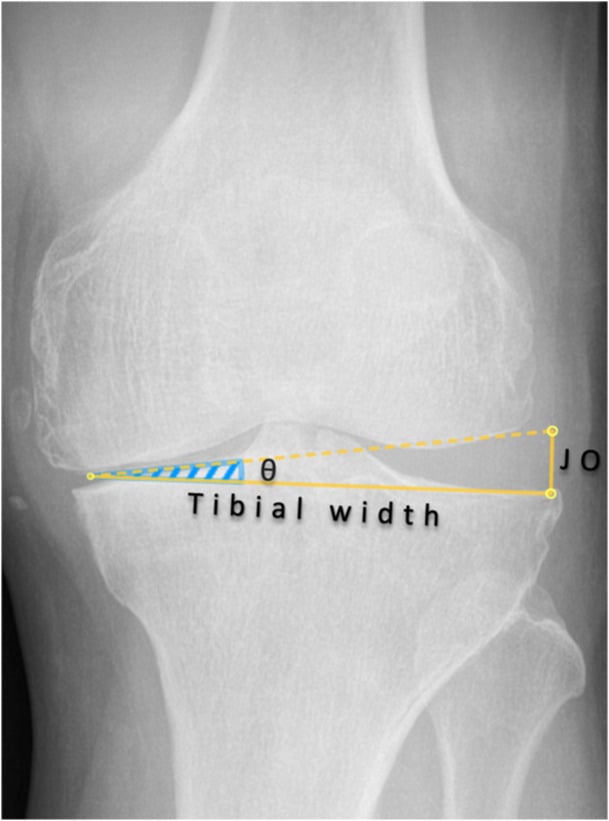
Through the arc. At full extension the ACL and posterior capsule become the primary restraints to valgus and varus stress and the MCL drops to a secondary role. At 30° of flexion the collaterals are isolated and maximally stressed.
Patellofemoral Biomechanics
Joint forces
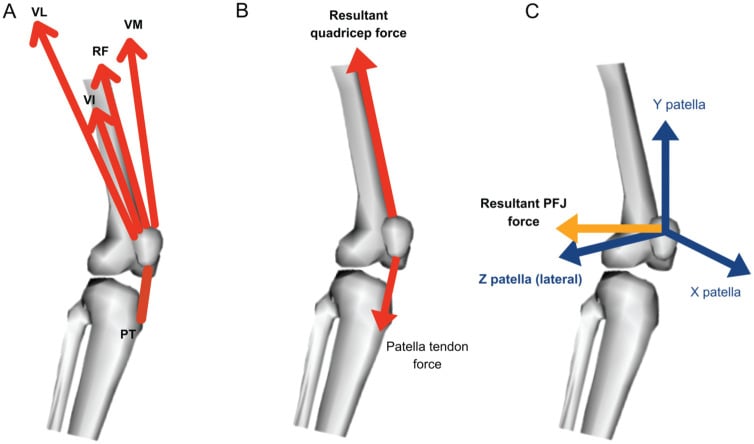
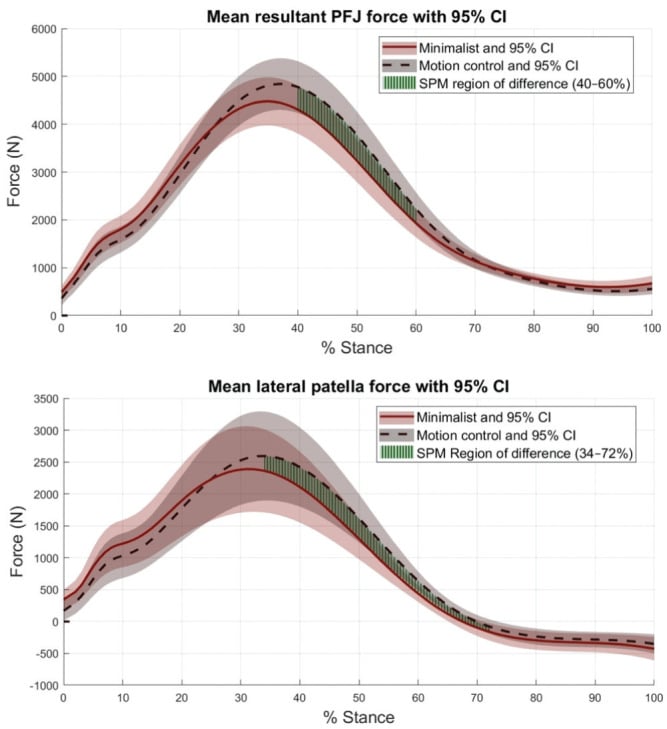
The lever. The patella increases the moment arm of the quadriceps, which makes extension more efficient, at the cost of large compressive forces across the patellofemoral joint.
How large. The reaction force increases exponentially with flexion:
- Walking: 0.5 times body weight
- Stair climbing: 3-4 times
- Squatting at 90°: 7-8 times
- Deep squat at 135°: up to 8-10 times
Why it climbs. Greater flexion demands greater quadriceps force, and the lever arm of the patellar tendon shortens in deep flexion. Contact stress peaks at 60-90° of flexion, which is why anterior knee pain is felt on stairs and squats.
Patellar tracking
A balance of stabilisers. Normal tracking depends on the balance between the medial and lateral stabilisers. The shares below are fractions of the total restraint measured against lateral translation, with every structure tested as the denominator, not fractions of the medial side alone.
- Restraint Direction
- Resists lateral displacement
- Contribution
- 60% of the TOTAL restraint at 20° flexion
- Failure Pattern
- Patellar dislocation (lateral)
- Restraint Direction
- Dynamic medial stabiliser
- Contribution
- Active stabilisation in extension
- Failure Pattern
- VMO atrophy worsens tracking
- Restraint Direction
- Cuts both ways: a passive lateral tether, but ALSO contributes 10% of the restraint AGAINST lateral translation
- Contribution
- 10% of total restraint - small, but in the direction opposite to the one usually assumed
- Failure Pattern
- Tightness causes lateral tilt and compression, yet releasing it removes restraint against dislocation - part of why isolated lateral release fails for instability
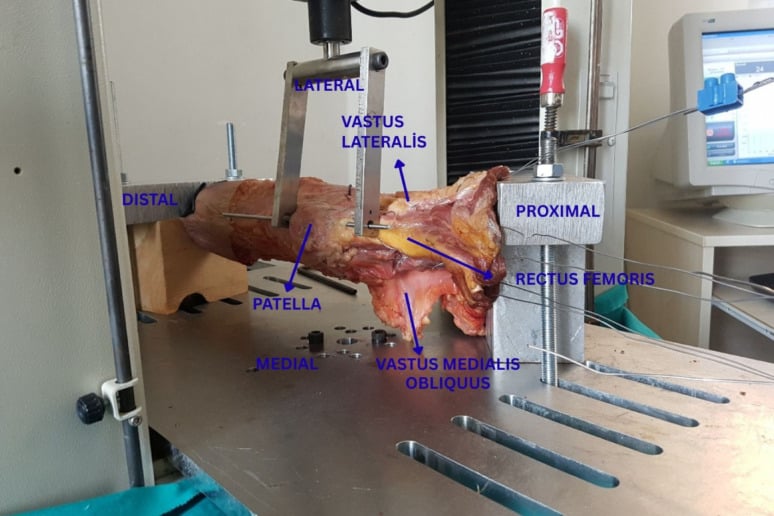
Q-angle. The quadriceps angle measures the line of quadriceps pull relative to the patellar tendon and averages 14° in males and 17° in females, the difference reflecting the wider female pelvis. A larger angle raises lateral patellar stress and predisposes to lateral tracking disorders.
Load Distribution and Contact Mechanics
The menisci. They transmit 40-60% of the load across the knee, more in flexion, enlarging the contact area and reducing peak stress on the articular cartilage. Remove them and the stress concentrates:
- Total meniscectomy: peak contact stress rises 200-300%
- Partial meniscectomy: 65-100%, depending on how much is removed
- Either raises the risk of osteoarthritis
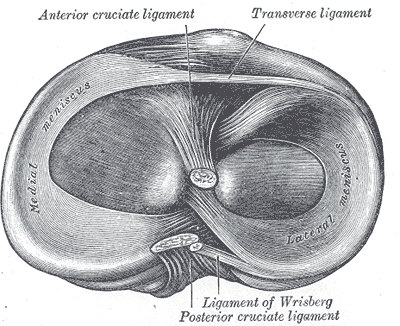
Alignment. In neutral alignment the load splits 60% medial, 40% lateral. Varus alignment shifts it further medially and overloads the medial compartment; valgus shifts it laterally and overloads the lateral compartment.
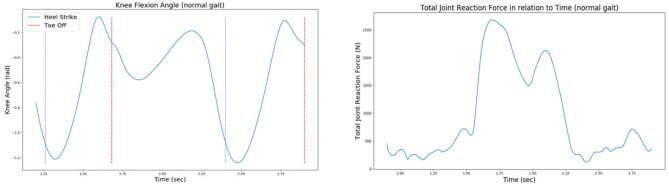
Through the gait cycle. Finite element models of gait place the highest contact stresses at loading response and push-off.

Meniscal Hoop Stress
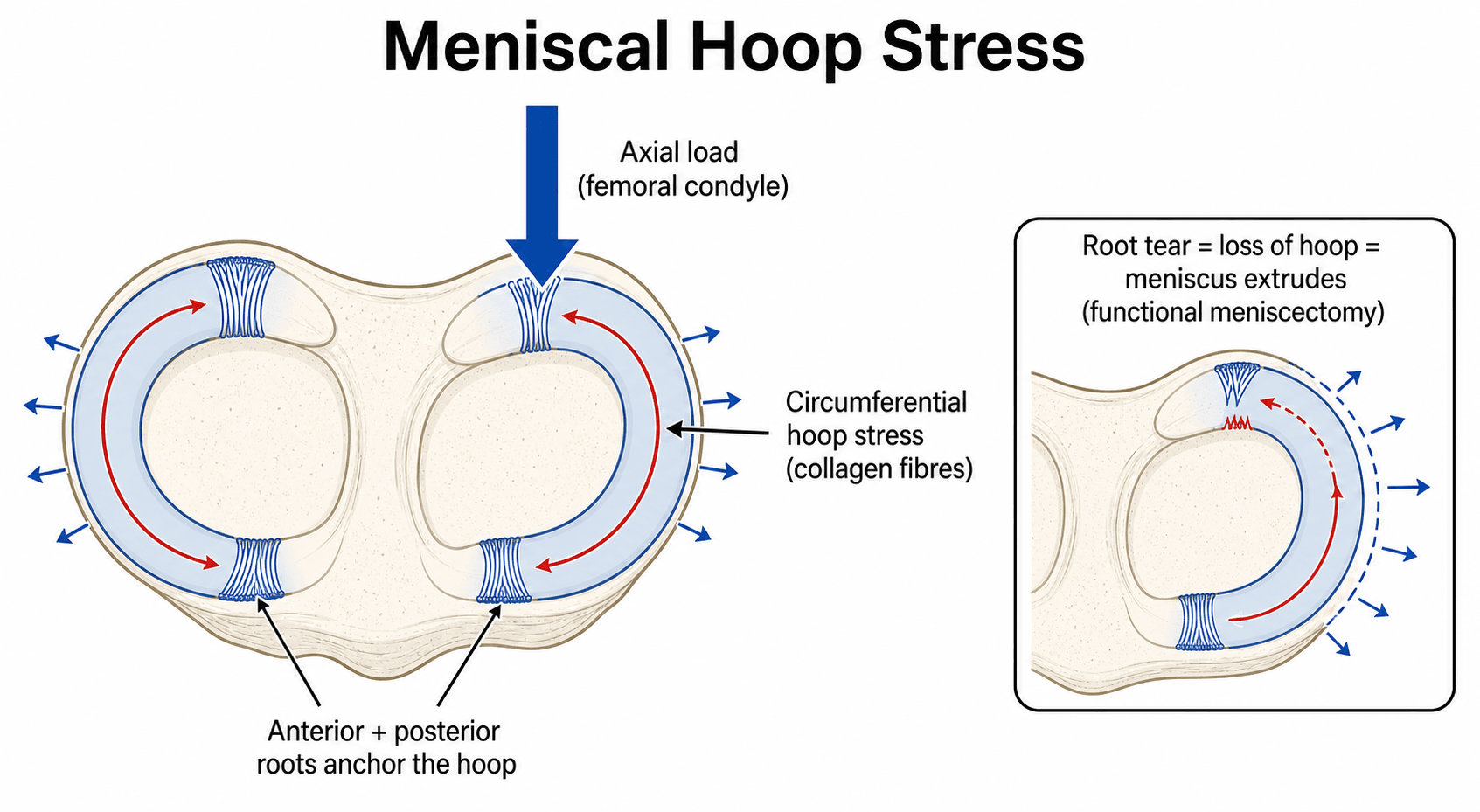
The menisci transmit load not just by filling the joint space but through a specific mechanism, circumferential (hoop) stress, and understanding it explains why some meniscal tears are biomechanically catastrophic while others are tolerated.
The mechanism. The meniscus is built from circumferentially oriented collagen fibres, with a few radial tie fibres, anchored to the tibia at the anterior and posterior roots. Under axial compression the wedge-shaped meniscus tends to extrude peripherally; the circumferential fibres, held by the roots, resist that by developing circumferential tensile stress. Vertical compressive load is thereby converted into circumferential tension, spread over a larger area, and the articular cartilage is protected.
Why the tear pattern matters. The pattern decides whether the hoop survives:
- Effect on hoop stress
- Largely PRESERVES the circumferential fibres
- Biomechanical consequence
- Hoop function maintained; repairable, better prognosis
- Effect on hoop stress
- DISRUPTS the circumferential fibres
- Biomechanical consequence
- Abolishes hoop stress in that segment - functionally like a meniscectomy
- Effect on hoop stress
- Detaches the anchor, so no hoop tension can develop
- Biomechanical consequence
- Equivalent to a total meniscectomy; causes meniscal extrusion and rapid cartilage loss
A radial tear that reaches the rim, or a root avulsion, abolishes hoop stress and is biomechanically equivalent to total meniscectomy, which is why root repair is emphasised.
Clinical Applications
Total knee arthroplasty design
The femoral component must replicate normal posterior rollback. Its J-curve matches the native condylar geometry and its asymmetric condyles replicate the medial-lateral differences, with the goal of restoring normal kinematics and range of motion.
The tibial component carries a posterior slope of 0-7° to facilitate rollback. More conformity lowers contact stress but reduces mobility, and the choice between a flat and a dished insert is a trade-off between stability and constraint. The polyethylene must withstand 3-6 times body weight cyclically.
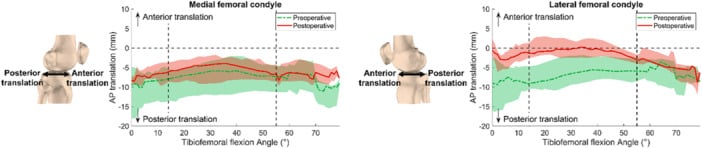
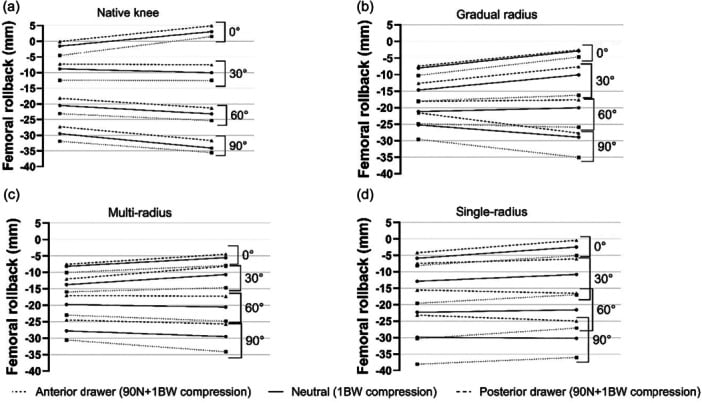
Cruciate-retaining versus posterior-stabilised. A CR design preserves the PCL and so keeps femoral rollback naturally; a PS design resects the PCL and substitutes a cam-post mechanism. Both aim to restore the 20-25mm of posterior translation at 90° flexion, though as the figures below show, no design simply reproduces it.
Gait and the Knee Adduction Moment (KAM)
The concept. During stance the ground reaction force passes medial to the knee joint centre, creating an external knee adduction moment that loads the medial compartment: the dynamic counterpart of the static 60:40 medial bias, and the single most important gait-derived determinant of medial-compartment load.
Why it matters. The magnitude of the KAM, and the KAM impulse over stance, correlates with medial-compartment load and predicts progression of medial knee osteoarthritis; a varus thrust during gait increases it. Every medial-offloading strategy therefore works by reducing the KAM:
- How it reduces medial load
- Shifts the mechanical axis laterally, moving load off the medial compartment
- How it reduces medial load
- Applies a corrective valgus moment across the knee
- How it reduces medial load
- Moves the ground reaction force vector laterally (modest, variable effect)
- How it reduces medial load
- Reduces the moment arm or the magnitude of the ground reaction force
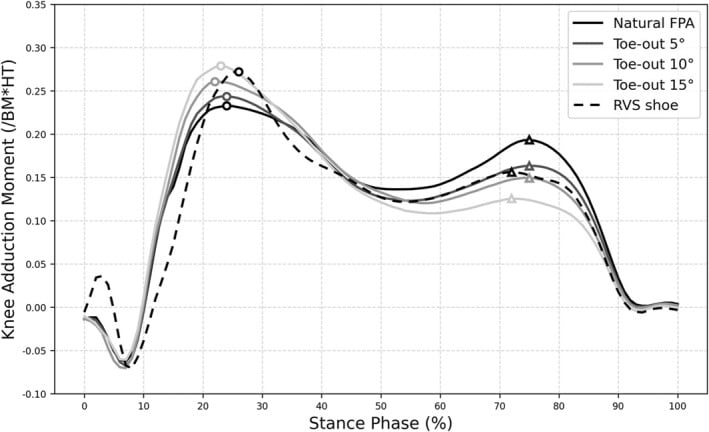
HTO, valgus brace, lateral wedge, gait retraining and weight loss all work by the same route: lowering the knee adduction moment, the dynamic link between alignment and compartment load.
Mapping Kinematics to Instability Patterns
Reciting ligament functions in isolation is a frequent viva failure. The credit goes to translating each restraint into its clinical instability pattern, its provocative test and the abnormal motion produced, which amounts to the biomechanical differential diagnosis of the unstable knee.
- Abnormal Motion
- Anterior translation + anterolateral rotatory instability
- Key Clinical Test
- Lachman (most sensitive), pivot-shift
- Distinguishing Feature
- Pivot-shift reproduces the giving-way; Lachman soft end-point
- Abnormal Motion
- Posterior translation, loss of rollback
- Key Clinical Test
- Posterior drawer, quadriceps active test, posterior sag
- Distinguishing Feature
- Sag sign at 90°; difficulty descending stairs/slopes
- Abnormal Motion
- Valgus laxity (maximal at 30°)
- Key Clinical Test
- Valgus stress at 0° and 30°
- Distinguishing Feature
- Laxity at 30° only = isolated MCL; laxity at 0° implies cruciate/capsule too
- Abnormal Motion
- Varus + external rotation instability
- Key Clinical Test
- Dial test (asymmetric ER at 30°), varus stress, external rotation recurvatum
- Distinguishing Feature
- Increased ER at 30° but not 90° suggests isolated PLC; both implies PCL involvement
- Abnormal Motion
- Lateral patellar translation/dislocation
- Key Clinical Test
- Patellar apprehension, glide test, J-sign
- Distinguishing Feature
- Apprehension near extension; positive lateral glide over 50% of patellar width
Guidelines, Registries & Global Practice
Knee biomechanics is examined across every major fellowship. The numbers and mechanisms are universal; the clinical translation differs mainly in implant selection and alignment philosophy, where the national arthroplasty registries provide the strongest comparative evidence.
Global Epidemiology and Examination Relevance
- The knee is the largest synovial joint and the most commonly replaced joint worldwide; symptomatic knee osteoarthritis affects a large and rising share of adults over 60, driven by ageing and obesity.
- Core examined concepts are consistent globally: ACL load sharing (approximately 85% primary restraint), femoral rollback (20-25mm at 90°), the screw-home mechanism (around 10° tibial external rotation), and patellofemoral force escalation with flexion.
- The four-bar cruciate linkage, instant centre of rotation, and coupled rotation are standard basic-science viva material in all curricula.
Alignment Philosophy: Side-by-Side
- Emphasis
- Evidence-based OA management; implant selection by surgeon and registry data
- Practical Position
- Mechanical alignment remains the reference standard; kinematic alignment is an accepted alternative under study
- Emphasis
- Cost-effectiveness and non-operative optimisation before arthroplasty
- Practical Position
- Mechanical-alignment TKA with proven implants (NJR-monitored); restricted indications for newer techniques
- Emphasis
- Articular restoration and joint-line preservation in trauma/periarticular fixation
- Practical Position
- Restore native posterior slope and coronal alignment to recreate normal kinematics after fracture
- Emphasis
- Personalised/functional alignment debate; meniscus preservation
- Practical Position
- Growing interest in kinematic and functional alignment; strong consensus favouring meniscus repair over resection
Registry Evidence (Arthroplasty Kinematics)
- NJR (UK), AJRR (US), AOANJRR (Australia), SHAR (Sweden), Norwegian and NZJR all track TKA implant survival and revision by design.
- Registries consistently show that cruciate-retaining (CR) and posterior-stabilised (PS) TKA achieve comparable long-term survivorship; the choice is driven by PCL competence, deformity and surgeon preference rather than a clear kinematic superiority.
- Registry surveillance was central to identifying poorly performing designs early, reinforcing the principle that kinematic theory must be validated by real-world revision data.
High- vs Limited-Resource Practice Variation
- High-resource settings: fluoroscopic and optical gait analysis, robotic/navigated alignment, and routine MPFL reconstruction for patellar instability are available; meniscus repair is prioritised over resection.
- Limited-resource settings: clinical kinematic assessment (Lachman, pivot-shift, screw-home palpation) and plain radiographs carry the diagnostic load; meniscectomy may still be performed where repair facilities or follow-up are unavailable, accepting the higher long-term osteoarthritis risk demonstrated by contact-mechanics studies.
- The biomechanical reasoning is identical everywhere; resource constraints alter how aggressively native kinematics can be restored.
Controversies and Areas of Uncertainty
Knee biomechanics is mature, but several practice-relevant debates remain genuinely unsettled and are favourite higher-order viva probes:
- Alignment philosophy in TKA. Mechanical alignment is the validated reference standard, but kinematic and functional alignment aim to better reproduce native rollback and soft-tissue balance. Registry-level evidence of superior survivorship for kinematic alignment is not yet established, so it remains under evaluation rather than standard of care.
- CR versus PS TKA. Both replicate rollback differently (intact PCL versus cam-post), and registries show comparable survivorship. The "correct" choice is patient-specific (PCL competence, deformity) rather than universally superior.
- The medial-pivot concept. Although described as the "normal" kinematic pattern, in-vivo fluoroscopy shows a true medial pivot in only about half of normal knees during deep flexion, questioning how faithfully any single implant design should enforce it.
- Posterior tibial slope. Increased slope facilitates rollback and flexion but raises ACL/graft strain and anterior tibial translation; the optimal slope, especially in ACL-deficient and revision knees, is debated.
- The "isometric" ACL. The ACL is not truly isometric; anteromedial and posterolateral bundles tension reciprocally, fuelling the single- versus double-bundle reconstruction debate, where double-bundle has not shown consistent clinical superiority.
MCQ Practice Points
Q: What percentage of knee joint load is transmitted through the menisci in a healthy knee? A: 40-60% - The menisci are critical load distributors. Total meniscectomy increases peak contact stress by 200-300%, significantly raising osteoarthritis risk.
Q: What percentage of anterior drawer restraint does the ACL provide at 30° flexion? A: 85% - The ACL is the primary anterior restraint. Secondary restraints (menisci, MCL, capsule) resist only 15%, which is insufficient to prevent abnormal kinematics when ACL is torn.
Q: How much posterior femoral translation (rollback) occurs at 90° knee flexion? A: 20-25mm - Femoral rollback is critical for maintaining extensor mechanism leverage and preventing posterior impingement. PCL and posterolateral corner resist excessive rollback.
Exam Viva Scenarios
Practise clinical reasoning and management decisions out loud
“Examiner asks: Describe the screw-home mechanism of the knee. Why does it occur and what is its clinical significance?”
“Examiner shows fluoroscopy of ACL-deficient knee and asks: Explain the biomechanical functions of the ACL and what happens when it is torn.”
“Examiner asks: A patient describes anterior knee pain that is worst going down stairs and rising from a chair, but minimal on level walking. Explain the biomechanics, and how patellar stability is maintained.”
Tibiofemoral Motion
- Screw-home mechanism = 10° tibial ER in terminal extension (locks knee)
- Femoral rollback = 20-25mm posterior at 90° flexion (PCL maintains)
- Rolling dominant 0-30°, gliding dominant 30-140°
- Functional ROM for ADLs = 0-110° flexion
Ligament Functions
- ACL: 85% anterior translation restraint, secondary IR/valgus
- PCL: 95% posterior translation restraint, maintains rollback
- MCL: Primary valgus restraint at 30° flexion
- LCL/PLC: Primary varus restraint, posterolateral stability
Patellofemoral Mechanics
- PF force: 0.5x BW walking, 3-4x BW stairs, 7-8x BW squatting
- Q-angle: 14° males, 17° females (higher = more lateral stress)
- MPFL provides 50-60% medial restraint to patellar dislocation
- Contact stress peaks at 60-90° flexion
Load Distribution
- Menisci transmit 40-60% of joint load
- Total meniscectomy increases peak stress 200-300%
- Medial:lateral load ratio = 60:40 in neutral alignment
- Varus shifts load medially, valgus shifts laterally
TKA Design Principles
- Must replicate 20-25mm femoral rollback at 90° flexion
- Tibial slope 0-7° facilitates rollback
- CR-TKA preserves PCL, PS-TKA uses cam-post mechanism
- Goal: restore normal kinematics and ROM 0-120°
Key Numbers
- Joint forces: 2-3x BW walking, up to 6x BW running
- Popliteus unlocks knee (IR tibia) to initiate flexion
- PCL is 2x stronger than ACL
- Secondary restraints resist only 15% anterior drawer
Evidence Base
The biomechanical principles in this topic rest on a small number of classic cadaveric and in-vivo studies that remain the most-cited primary sources in knee biomechanics. Each card below is linked to its PubMed record for independent verification.
ACL is the Primary Restraint to Anterior Drawer (85%)
- Cadaveric selective-cutting study quantifying primary vs secondary restraints
- ACL provided approximately 85% of the total restraining force to anterior drawer
- Remaining restraint shared by iliotibial tract, mid-medial and mid-lateral capsule, and collaterals
- PCL was the primary restraint (approximately 90%) to posterior drawer
PCL and Posterolateral Structures: Selective-Cutting Stability Study
- Seventeen cadaveric knees tested at 0-90° with sequential ligament sectioning
- PCL was the principal restraint to posterior tibial translation at all flexion angles
- LCL and deep posterolateral (popliteus-arcuate) complex were principal restraints to varus and external rotation
- Isolated PCL section did not increase varus or external rotation - combined injury required for major rotatory instability
Multicentre In-Vivo Kinematics: Femoral Rollback and Paradoxical Motion
- Summation of over 70 fluoroscopic studies: 811 knees, 733 subjects, 33 TKA designs
- Normal and ACL-retaining knees showed the greatest posterior femoral translation (rollback)
- PCL-retaining TKA most commonly showed paradoxical ANTERIOR femoral translation in deep flexion
- A medial-pivot pattern was seen in only about 55% of knees during deep flexion (substantial variability)
Menisci Transmit a Major Fraction of Tibiofemoral Load
- In-vitro micro-indentation transducer mapping of tibial-surface pressure in 18 cadaveric knees
- A significant fraction of joint compressive load is transmitted through the menisci
- Total (medial) meniscectomy caused a drastic alteration in tibial pressure distribution
- Findings link meniscectomy to elevated contact stress and post-meniscectomy degeneration
MPFL is the Primary Soft-Tissue Restraint to Lateral Patellar Translation (60%)
- Nine fresh-frozen cadaveric knees, sequential sectioning at 20° flexion
- MPFL provided 60% of the total restraint to lateral patellar translation
- Medial patellomeniscal ligament contributed 13%, lateral retinaculum 10%
- Superficial medial retinaculum and patellotibial ligament were not functionally important
Patellofemoral Contact Mechanics and the Odd-Facet Phenomenon
- Cadaveric dye-staining of patellofemoral contact under simulated weight-bearing through the arc of motion
- Contact band sweeps inferior-to-superior across the patella as flexion increases
- The medial 'odd facet' is a habitual non-contact area until very deep flexion (around 135°)
- Patella holds the quadriceps tendon off the femur until tendofemoral contact forms in deep flexion