Know the question | know the population | know the limit
- A landmark trial is not an automatic rule. It is a strong decision anchor only when the patient, intervention, comparator and outcome match the case.
- Surgical trials often have crossover and incomplete blinding. Interpret intention-to-treat and as-treated results carefully.
- The primary outcome matters. A trial powered for function may not answer rare complications, implant survival or subgroup effects.
- Negative does not mean useless. Many trials show that routine surgery adds little for broad low-risk groups but may still help selected patients.
- Trial literacy changes management discussions. It improves consent, shared decision-making and avoidance of low-value surgery.
- “Open every trial discussion with the PICO and the primary outcome.
- “State what the trial changed and what it did not answer.
- “Be careful applying pragmatic trial results to excluded high-risk subgroups.
- “In fracture trials, distinguish radiographic success from patient-centred function and reoperation.
- “In arthroplasty prophylaxis trials, separate symptomatic VTE, bleeding, mortality and protocol context.
Overview
Landmark trials are the studies that changed, challenged or clarified a common orthopaedic decision. They are most useful when they are remembered as clinical questions rather than as acronyms, because a trial is a strong decision anchor only when its patient, intervention, comparator and outcome match the case in front of you.
The question first. Before a trial can be applied it has to be stated as a PICO; no PICO, no application.
- Patient - age, injury, severity, setting and exclusions
- Intervention - operation, implant, pathway or medication
- Comparator - non-operative care, another operation or placebo
- Outcome - function, reoperation, complications, mortality or cost
What a complete discussion covers. A good landmark-trial discussion answers six questions:
- What patient population was studied?
- What was the intervention and comparator?
- What primary outcome was used?
- What was the practice signal?
- What are the limitations and excluded patients?
- How should the result affect consent and management?
“This trial asked whether intervention X compared with Y improved outcome Z in patient group P; the main signal was this, but I would not apply it automatically to these excluded or higher-risk patients.”
Concepts and Core Principles
Five questions decide whether a result should change practice, and a famous trial can still fail any of them. Take them in order.
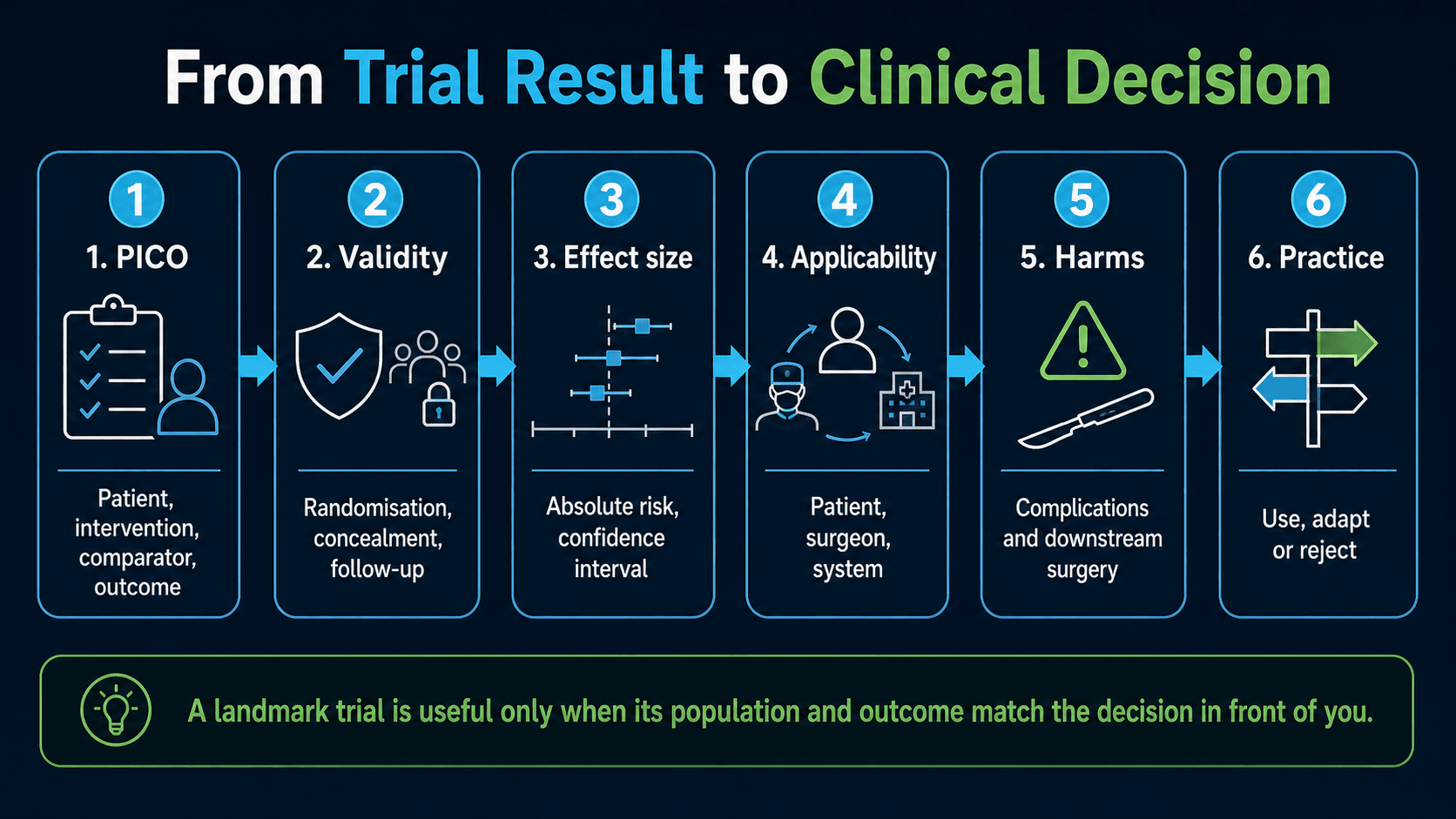
Clinical relevance. Does the trial answer a decision surgeons face often? Common decisions such as distal radius fixation or proximal humerus surgery affect many patients.
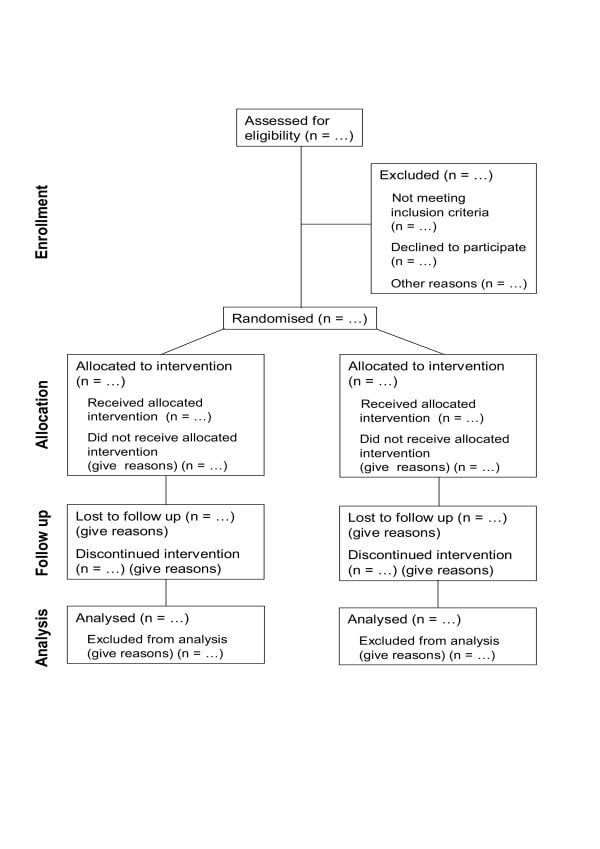
Internal validity. Were randomisation, allocation, follow-up and outcome assessment credible? Ask who was included and excluded, whether randomisation was protected, whether outcome capture was complete and whether the primary outcome was clinically meaningful. A flawed trial can mislead even if it is large.
Effect size. Is the difference clinically meaningful, not just statistically significant? Ask what the real size of the benefit or harm is, because a small difference may not justify operative risk.
Applicability. Do the inclusion criteria match the patient in front of you, and does the trial setting match yours? A trial may exclude severe displacement, open injury, frailty or revision cases, and a subgroup has to be graded as powered or exploratory before it is used.
Downstream consequences. Did the trial capture reoperation, complications, cost and later crossover? Orthopaedic decisions often have delayed consequences, and the trade-off to weigh is the risks, costs and downstream procedures.
Classification of Landmark Trials
Three distinctions decide how a result should be read: what the trial set out to show, how its result is framed, and whether it was randomised at all.
- Strength
- Tests whether an intervention can work under controlled conditions.
- Limitation
- May not represent everyday surgical practice.
- Strength
- Tests whether a strategy works in real clinical settings.
- Limitation
- Treatment heterogeneity and crossover can dilute the result.
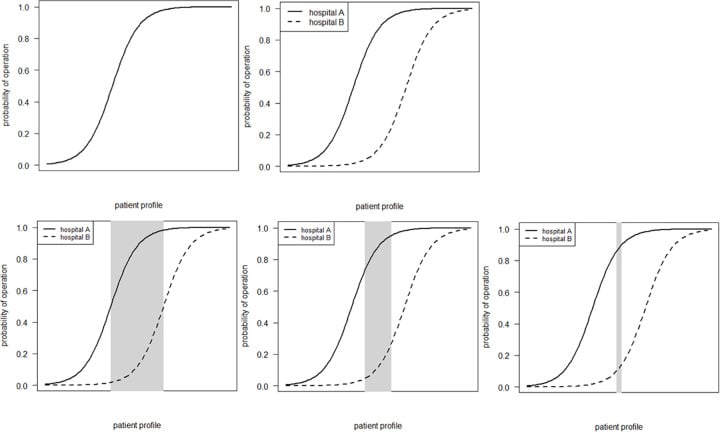
Why randomisation matters. In a non-randomised comparison, patient treatment preferences and local practice decide who is operated on, which is confounding by indication. That is why registry and cohort data serve prognosis, implant surveillance and counselling rather than establishing a treatment rule.
Analysis Populations: Intention-to-Treat, Per-Protocol and As-Treated
Which population a result is analysed in determines what the trial actually proves, and it is examined alongside the crossover that plagues surgical trials. There are three analysis sets, and each answers a different question.
- Who is analysed
- Every patient in the group they were RANDOMISED to, regardless of the treatment actually received or any crossover
- Strength and bias
- Preserves randomisation and prognostic balance; reflects the pragmatic 'offer' of a strategy; conservative in a superiority trial because crossover dilutes the effect toward the null
- Who is analysed
- Only patients who completed the assigned treatment without major protocol deviation
- Strength and bias
- Estimates efficacy under ideal adherence, but BREAKS randomisation — the adherent subgroup can differ prognostically (selection bias)
- Who is analysed
- Patients grouped by the treatment they ACTUALLY received, irrespective of allocation
- Strength and bias
- Also breaks randomisation; useful descriptively but cannot carry the primary causal claim
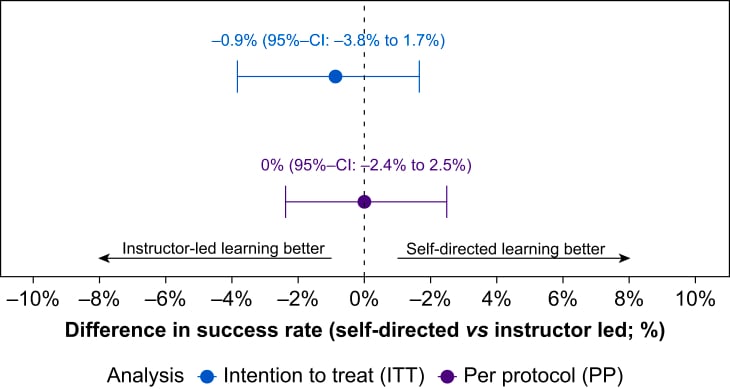
Which way the bias runs. In a superiority trial intention-to-treat is the conservative primary analysis: high crossover, as in SPORT or the roughly 30 percent physiotherapy-to-surgery crossover in METEOR, pushes the groups together and dilutes a real effect, so a no-difference intention-to-treat result may understate efficacy. In a non-inferiority trial the opposite is true. Crossover and non-adherence make the groups look similar and bias the result toward a false conclusion of non-inferiority, so both intention-to-treat and per-protocol analyses should be reported and should agree before the claim is trusted.
Judging a Subgroup Claim
A subgroup finding is a hypothesis until prespecification, a significant interaction test, biological plausibility and replication support it. Knowing how to grade the claim is what separates a defensible answer from a misleading one.
- Credible claim
- Prespecified in the protocol or analysis plan with a stated direction
- Unreliable claim
- Post-hoc — found by searching the data after seeing the results
- Credible claim
- A significant test of INTERACTION (effect modification) between subgroup and treatment
- Unreliable claim
- Comparing within-subgroup p-values ('significant in A, not in B') — which does NOT prove the subgroups differ
- Credible claim
- A small, prespecified number of subgroups
- Unreliable claim
- Many subgroups, so chance alone yields false positives (multiplicity)
- Credible claim
- Biologically plausible and consistent across other studies
- Unreliable claim
- Isolated, no mechanism, never replicated
The worked example. The FAITH smoker and displaced or basicervical-fracture signals are the textbook case: hypothesis-generating, to be quoted as worth testing and never as proven effect modification. The classic error is reading significant in one subgroup, not the other as proof that the treatment works differently between them; only the interaction test can answer that.
Trauma Trials
Fracture trials answer a strategy question for a defined injury group, and each is remembered best by the decision it settled.
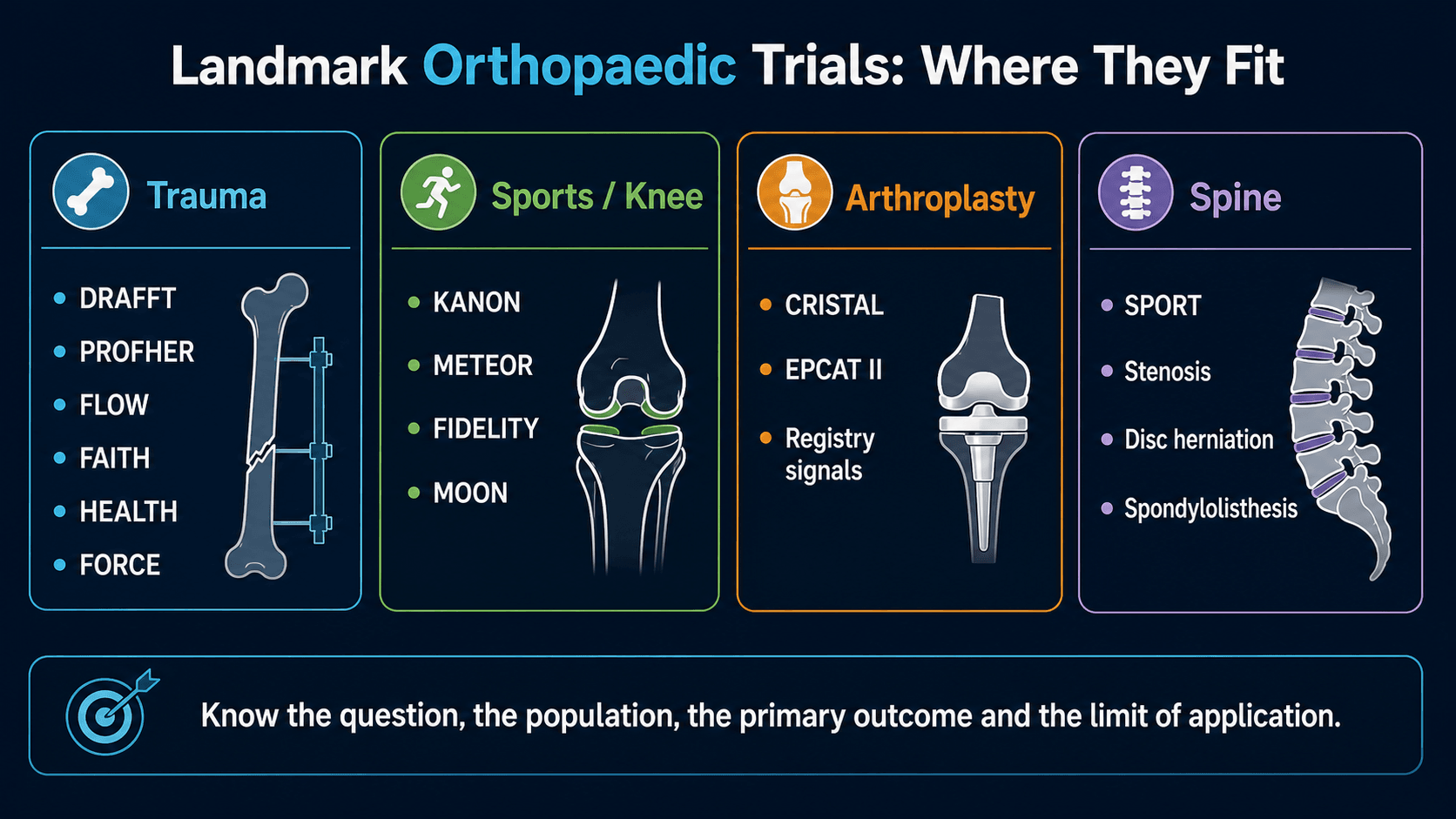
DRAFFT. For adult dorsally displaced distal radius fractures, once the decision to operate has been made, how do K-wires compare with a volar locking plate? In 461 patients there was no clinically relevant difference in the Patient-Rated Wrist Evaluation at 12 months (difference -1.3, P = 0.40) and no difference in complications. K-wires cost about 727 pounds less per patient, so plating is not justified as the routine default.
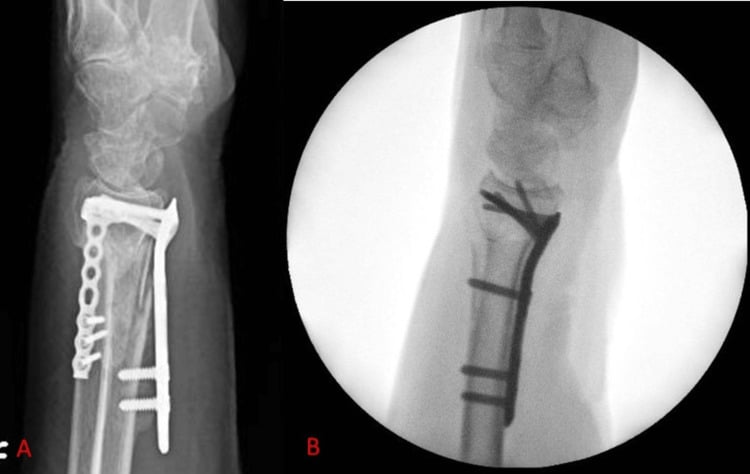
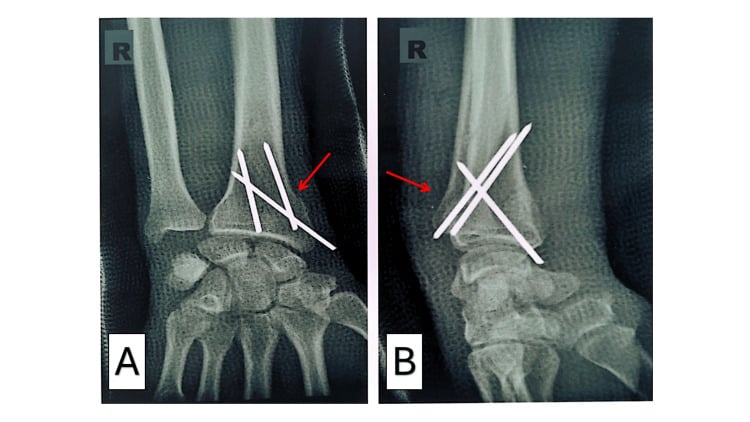
DRAFFT 2. After manipulation of a dorsally displaced distal radius fracture, is K-wire fixation better than a moulded cast? A moulded cast was equivalent to K-wires after an acceptable reduction, so automatic fixation is avoided when stability and patient factors permit casting. Keep the pair apart: DRAFFT compared K-wires with a volar plate after a decision to fix, DRAFFT 2 compared a moulded cast with K-wires after manipulation.
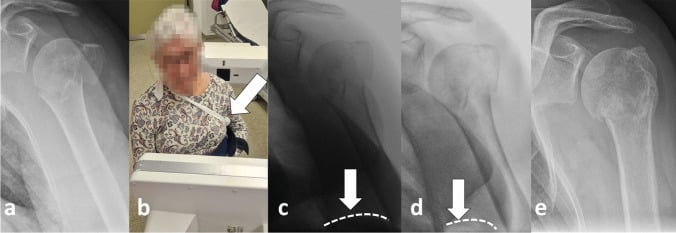
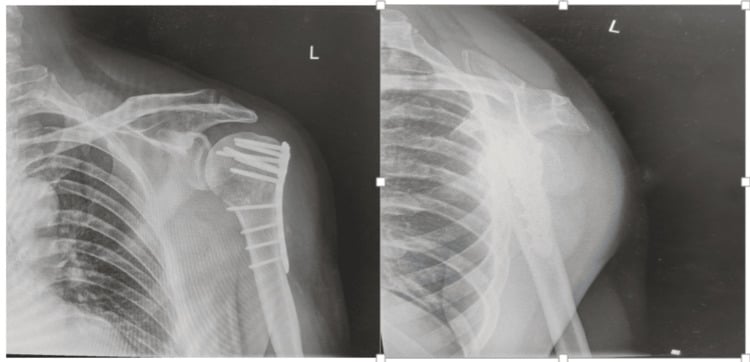
PROFHER. For displaced proximal humerus fractures in adults, does surgery improve patient-reported outcomes over non-operative care? In 250 adults the Oxford Shoulder Score was 39.1 with surgery and 38.3 without over two years (difference 0.75, P = 0.48), far below the 5-point minimal clinically important difference, and surgery also cost more. Selected patterns and younger high-demand patients still need individual assessment.
FLOW. In open fractures, what irrigation pressure and solution should be used? Pressure changed nothing, with about 13 percent reoperation at high, low and very low pressure alike, so very low pressure is as good and the cheapest. Soap was worse than saline, 14.8 versus 11.6 percent reoperation (hazard ratio 1.32, P = 0.01). The answer is saline at very low pressure.
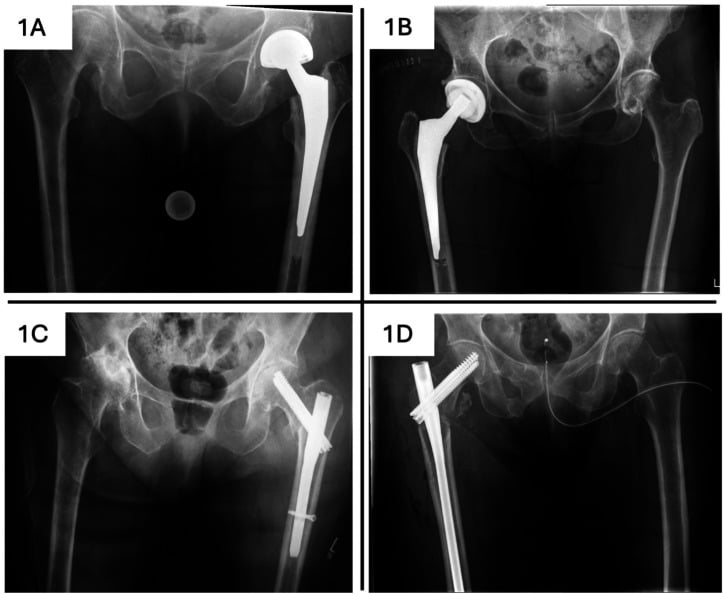
FAITH. For femoral neck fracture fixation, do a sliding hip screw and cancellous screws differ? There was no difference in 24-month reoperation (20 versus 22 percent, hazard ratio 0.83), but avascular necrosis was significantly more common with the sliding hip screw (9 versus 5 percent, hazard ratio 1.91, P = 0.03). Smokers and displaced or basicervical fractures may still favour the sliding hip screw.
HEALTH. For a displaced femoral neck fracture in an independently ambulatory older adult, total hip arthroplasty or hemiarthroplasty? The primary outcome, a secondary hip procedure by 24 months, did not differ (7.9 versus 8.3 percent). The authors call the functional gain from total hip arthroplasty clinically unimportant, and dislocation was commoner with it (4.7 versus 2.4 percent). FAITH is a fixation trial and HEALTH a replacement trial: match the trial to whether you are fixing or replacing.
FORCE. For paediatric distal radius torus fractures, bandage or rigid immobilisation? In 965 children pain at 3 days was equivalent (3.2 versus 3.1 on a 10-point scale, well inside the 1.0-point equivalence margin), with no difference in pain or function over 6 weeks. A bandage and immediate discharge is sufficient. This is an equivalence trial: it was designed to prove sameness, not to fail to find a difference.
Fracture trials usually answer a strategy question for a defined injury group. They do not remove the need to assess displacement, soft tissue, bone quality, open injury, neurovascular status, patient demand and ability to comply with follow-up.
Sports and Knee Trials
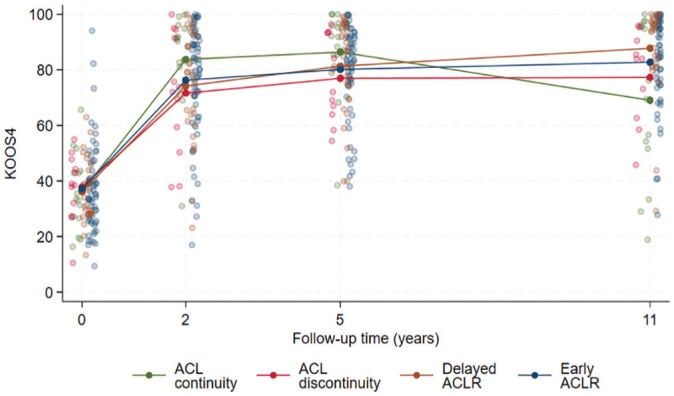
KANON. Early ACL reconstruction versus structured rehabilitation with optional delayed reconstruction, in 121 young active adults. KOOS4 improvement was identical at 2 years (39.2 versus 39.4, difference 0.2, P = 0.96). The headline is the crossover, not the null: 36 of 59 assigned to rehabilitation first, about 61 percent, never needed a reconstruction at all.
METEOR. Arthroscopic partial meniscectomy versus physical therapy for a meniscal tear with osteoarthritis, in patients aged 45 and over. Among 351 patients WOMAC improvement was 20.9 versus 18.5 at 6 months (difference 2.4, not significant). But 30 percent of the physical-therapy arm crossed over to surgery within 6 months, which is why this is read as a strategy result, not proof that surgery does nothing.
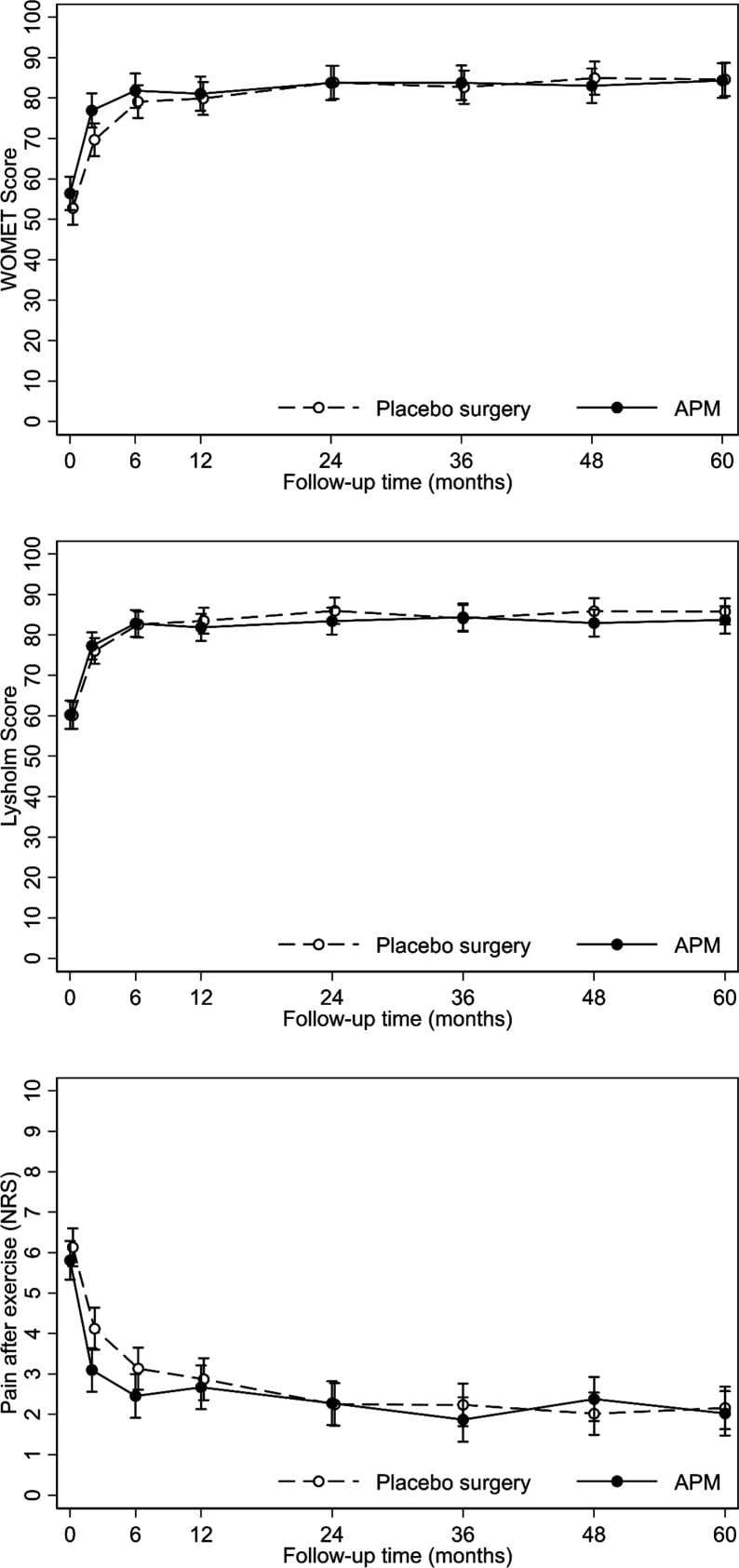
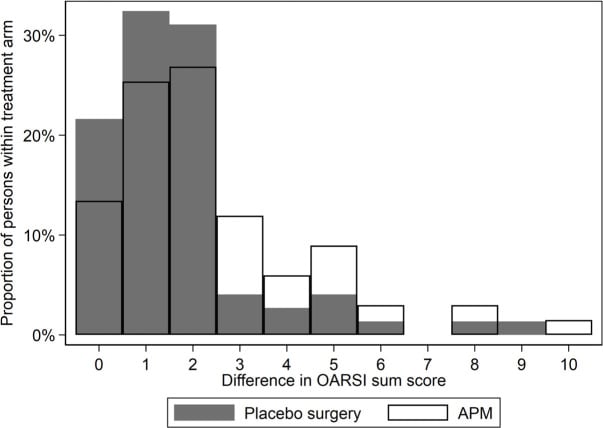
FIDELITY. Arthroscopic partial meniscectomy versus sham surgery for a degenerative meniscal tear, explicitly without osteoarthritis, in patients aged 35 to 65. In 146 patients, double-blind, there was no difference in any primary outcome at 12 months (Lysholm improvement 21.7 versus 23.3 points). Because the comparator was sham rather than physiotherapy, the trial isolates the operation itself, which makes it the strongest single challenge to routine arthroscopic partial meniscectomy. Keep the pair apart: METEOR is meniscectomy versus physiotherapy with osteoarthritis, FIDELITY is meniscectomy versus sham without it.
MOON. Prospective ACL cohort evidence on outcomes, graft choice and predictors. It is a cohort, not a randomised trial: useful for prognosis, graft selection and counselling, but it cannot establish a treatment rule and is open to confounding by indication.
The central counselling point is not “arthroscopy never works.” It is that high-quality evidence has narrowed the indication: degenerative meniscal symptoms with osteoarthritis usually need education, rehabilitation and non-operative care before considering arthroscopy, unless there is a specific mechanical problem or atypical scenario.
Arthroplasty Trials
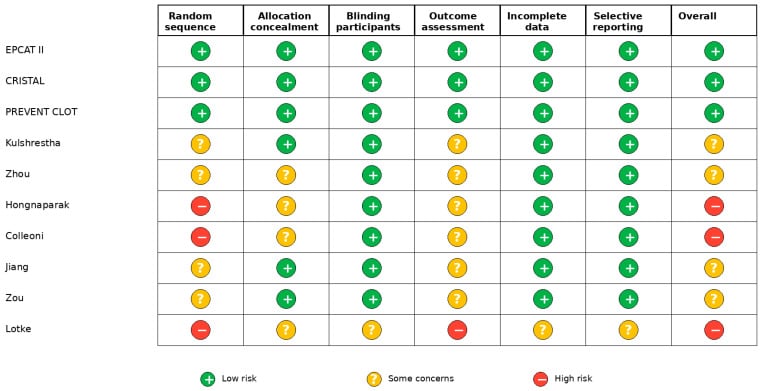
CRISTAL. Aspirin monotherapy from day zero versus enoxaparin for symptomatic VTE after hip or knee arthroplasty, in 9711 patients. Aspirin failed non-inferiority and enoxaparin was significantly superior: symptomatic VTE 3.45 versus 1.82 percent at 90 days (difference 1.97 percent, P = 0.007), nearly a doubling rather than a marginal loss. No secondary outcome, including bleeding, favoured enoxaparin.
EPCAT II. After 5 days of rivaroxaban, can aspirin continue extended prophylaxis after hip or knee arthroplasty? The comparison was extended aspirin versus rivaroxaban after the 5 days of rivaroxaban. In 3424 patients aspirin was non-inferior, VTE 0.64 versus 0.70 percent, with no difference in bleeding. The absolute rates are five times lower than CRISTAL's because every patient here had already had 5 days of rivaroxaban. Aspirin can continue prophylaxis; that is not the same as starting it alone at day zero, which is what CRISTAL tested and found wanting.
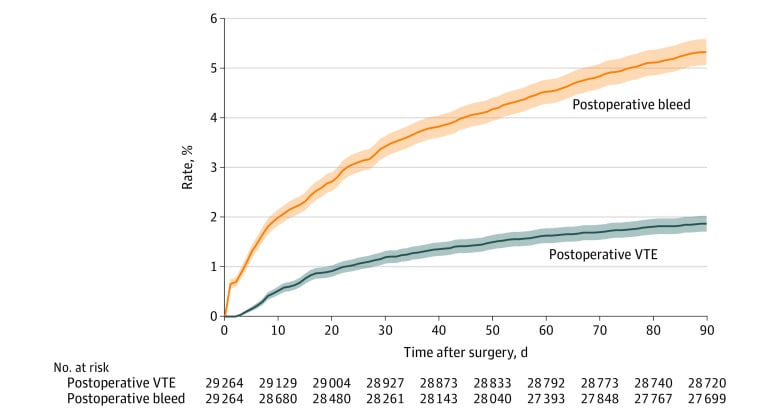
Registry signals. Which implants, bearings or fixation strategies survive in real-world use? Registry findings are powerful for implant surveillance but remain observational and confounded.
Spine Trials
SPORT is one programme with three arms, and each is quoted differently.
Disc herniation. Surgery versus non-operative care for lumbar disc herniation. Surgery gives faster symptom relief for selected patients, with the two arms converging over time. Read the as-treated analysis alongside the intention-to-treat one: crossover ran in both directions and was large enough to blunt the randomised comparison.
Spinal stenosis. A decompression strategy versus non-operative care for symptomatic lumbar stenosis. Benefit from surgery in selected symptomatic stenosis was sustained at 2, 4 and 8 years; durability is the point here, not just early relief. Selection and expectation-setting still govern the result.
Degenerative spondylolisthesis. Surgery versus non-operative care for degenerative spondylolisthesis with stenosis, which also showed benefit sustained to 8 years in selected symptomatic patients. This arm studied a degenerative slip with stenosis: it does not transfer to isthmic spondylolisthesis, a different disease with a pars defect.
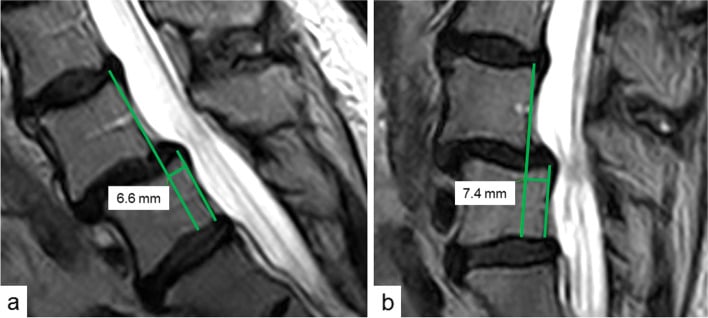
Spine trials are highly affected by crossover, symptom severity, imaging-symptom correlation and patient preference. Quote the signal, then explain how patient selection changes the decision.
Clinical Relevance and Application
The most common error is overgeneralisation. A landmark trial should anchor a decision, not replace clinical judgement, and the traps below are the ways an answer goes wrong.
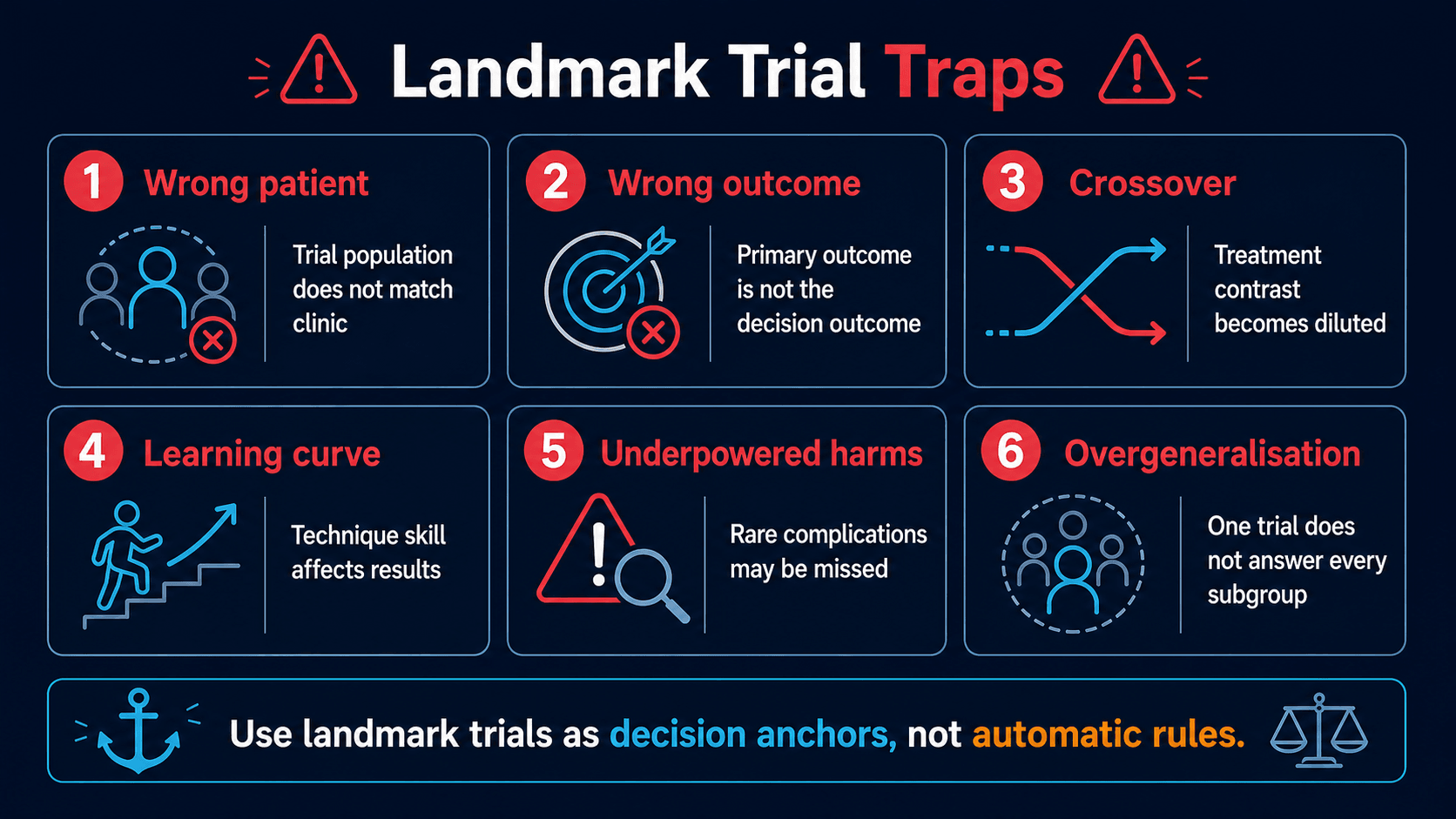
“PROFHER showed no difference” or “DRAFFT changed distal radius fixation” is incomplete. A useful answer states the population, comparator, outcome and limitation. The wrong extrapolation is often more dangerous than not knowing the acronym.
- Good Answer
- PROFHER studied surgery versus non-operative care for displaced proximal humerus fractures in adults.
- Weak Answer
- PROFHER says no surgery.
- Good Answer
- The key outcome was patient-reported function, not perfect radiographic anatomy.
- Weak Answer
- The X-ray looks better after surgery.
- Good Answer
- I would still individualise younger patients, fracture-dislocations, head-splitting injuries and clear surgical indications.
- Weak Answer
- The trial applies to every proximal humerus fracture.
- Good Answer
- This evidence supports shared decision-making and avoids routine surgery in broad low-risk groups.
- Weak Answer
- I quote the acronym and stop.
Guidelines, Registries and Global Practice
Landmark trials are interpreted differently by major societies and are continuously cross-checked against arthroplasty registry data. Knowing where guidance converges and diverges is a global-exam expectation.
- Guidance Convergence
- AAOS and BOA / BOAST broadly support non-operative care for many displaced fractures, echoing PROFHER.
- Where Practice Diverges
- Thresholds for surgery in younger, high-demand patients and fracture-dislocations vary by region and surgeon.
- Guidance Convergence
- BOA / BAPRAS open fracture standards and AO principles favour normal saline at low pressure and timely debridement, consistent with FLOW.
- Where Practice Diverges
- Antibiotic regimens and debridement timing targets differ between health systems.
- Guidance Convergence
- AAOS, NICE and ISTH all endorse routine pharmacological prophylaxis with individual risk assessment.
- Where Practice Diverges
- Aspirin monotherapy is more accepted in some North American pathways than in several European protocols after CRISTAL.
- Guidance Convergence
- ESSKA and AAOS appropriate-use guidance discourage routine arthroscopy without mechanical symptoms.
- Where Practice Diverges
- Access to structured physiotherapy varies widely, shifting real-world thresholds for surgery.
Arthroplasty registries (NJR for England and Wales, AOANJRR in Australia, the Swedish and Norwegian registries, AJRR in the US, NZJR in New Zealand) capture implant survivorship, revision rates and rare complications across millions of procedures that no single randomised trial can power for. They are essential for the HEALTH-type question of dislocation and revision after hip-fracture arthroplasty.
Trial conclusions assume access to physiotherapy, theatre time, implants and follow-up imaging. In limited-resource settings, a casting strategy (DRAFFT 2, FORCE) or non-operative pathway (PROFHER) may be even more attractive, while reliable structured rehabilitation (METEOR, KANON) can be the rate-limiting step rather than the operation.
Controversies and Areas of Uncertainty
Landmark trials answer a defined question, but several remain genuinely contested. Stating the controversy honestly is a marker of a strong candidate.
Proximal humerus surgery. PROFHER challenged routine surgery, but it excluded fracture-dislocations and head-split patterns and enrolled mostly older patients. The signal is against routine surgery for typical displaced fractures, not against surgery for clearly operative patterns or high-demand young patients.
VTE prophylaxis after arthroplasty. CRISTAL favoured enoxaparin while EPCAT II found extended aspirin acceptable after initial rivaroxaban, and guidelines diverge. Separate aspirin from day zero from sequential aspirin, and stratify by individual VTE and bleeding risk.
Degenerative meniscectomy. FIDELITY and METEOR challenge routine arthroscopy, yet some patients with true mechanical symptoms still improve. Reserve arthroscopy for genuine mechanical locking or a repairable tear after a proper rehabilitation trial.
Spine surgery selection. SPORT crossover blurs the randomised comparison, leaving the as-treated benefit open to interpretation. Treat SPORT as support for shared decision-making in well-selected symptomatic patients, not proof for either extreme.
Pragmatic versus explanatory results. Pragmatic trials reflect real practice, but heterogeneity and crossover can mask a real effect in a subgroup. A negative pragmatic trial narrows but rarely abolishes an indication; look for prespecified subgroups.
Clinical Scenarios
Practise clinical reasoning and management decisions out loud
“An older adult presents with a displaced proximal humerus fracture. The radiograph is shown and the examiner asks whether PROFHER means surgery should never be offered.”
“A patient with degenerative meniscal symptoms and osteoarthritis asks whether arthroscopy will fix the problem.”
“A colleague says EPCAT II and CRISTAL prove aspirin is either always safe or never safe after arthroplasty.”
“An examiner asks how FAITH and HEALTH guide your management of an intracapsular femoral neck fracture in an older adult.”
How to quote
- State patient group.
- State intervention and comparator.
- State primary outcome.
- State practice signal and limitation.
Trauma
- DRAFFT: distal radius fixation choices.
- PROFHER: proximal humerus surgery challenged.
- FLOW: open fracture irrigation evidence.
- HEALTH: THA versus hemiarthroplasty tradeoffs.
- FORCE: simple care for torus fracture.
Sports/Knee
- KANON: ACL rehab-first strategy for selected patients.
- METEOR: physical therapy strong for meniscus with OA.
- FIDELITY: degenerative meniscectomy challenged by sham trial.
- MOON: ACL cohort for prognosis and counselling.
Arthroplasty/Spine
- CRISTAL and EPCAT II answer different prophylaxis questions.
- SPORT supports selected spine surgery but crossover matters.
- Registry signals are useful but observational.
Common errors
- Overgeneralising.
- Ignoring exclusions.
- Forgetting the primary outcome.
- Treating non-inferiority like superiority.
- Using a trial as an automatic rule.
Evidence Base
DRAFFT distal radius fixation
- DRAFFT randomised adults with a dorsally displaced distal radius fracture to K-wires versus volar locking plate and found no clinically relevant difference in the Patient-Rated Wrist Evaluation at 12 months.
- K-wires cost substantially less, so plate fixation was not justified as routine for this broad group.
- DRAFFT 2 (PMID 35152940) then showed moulded cast was equivalent to K-wires after acceptable manipulation, further discouraging routine surgery.
PROFHER proximal humerus
- 250 adults with a displaced proximal humerus fracture involving the surgical neck, randomised to surgery versus non-operative care.
- No difference in the Oxford Shoulder Score over two years, so surgery showed no patient-reported advantage in this population.
- The trial strongly challenged routine fixation for broad adult displaced proximal humerus fracture groups; the HTA report (PMID 25822598) confirmed surgery was also more costly.
FLOW open fracture irrigation
- 2447 patients with an open extremity fracture across 41 centres, randomised to high, low or very low irrigation pressure and to castile soap or normal saline.
- Reoperation within 12 months was similar across all three pressures (about 13 percent each), so very low pressure is an acceptable low-cost option.
- Soap produced more reoperations than saline (hazard ratio 1.32, 95 percent CI 1.06 to 1.66, P equals 0.01), favouring normal saline.
HEALTH femoral neck fracture
- 1495 independently ambulatory adults aged 50 or older with a displaced femoral neck fracture, randomised to total hip arthroplasty versus hemiarthroplasty.
- No significant difference in the primary outcome of secondary hip procedures within 24 months.
- THA gave small advantages in function and quality of life but a numerically higher dislocation rate, so patient selection remains central.
FAITH femoral neck fixation
- 1108 patients aged 50 or older with a low-energy hip fracture requiring fixation, randomised to a sliding hip screw versus multiple cancellous screws.
- No difference in 24-month reoperation (20 percent sliding hip screw versus 22 percent cancellous screws, hazard ratio 0.83, 95 percent CI 0.63 to 1.09).
- Avascular necrosis was more common with the sliding hip screw (9 versus 5 percent), but smokers and those with displaced or basicervical fractures may do better with it.
FORCE paediatric torus fracture
- 965 children aged 4 to 15 with a distal radius torus (buckle) fracture across 23 UK hospitals, randomised to the offer of a soft bandage and immediate discharge versus rigid immobilisation and follow-up.
- Pain at 3 days was equivalent (3.21 versus 3.14 on the Wong-Baker FACES scale, within the prespecified margin of 1.0).
- No difference in pain or function over 6 weeks, supporting a bandage-and-discharge strategy that reduces overtreatment.