Two Pathways of Bone Formation | Membranous vs Cartilage Template | Development
- Intramembranous: bone forms directly from mesenchymal condensation (no cartilage intermediate)
- Endochondral: bone forms by replacing cartilage template through coordinated chondrocyte maturation
- Flat bones (skull, clavicle, mandible) form via intramembranous ossification
- Long bones form via endochondral ossification with growth plates for longitudinal growth
- Both pathways produce lamellar bone; woven bone is the immature (or pathological) form, always replaced by lamellar bone
- “Clavicle is unique: intramembranous ossification but medial physis for growth
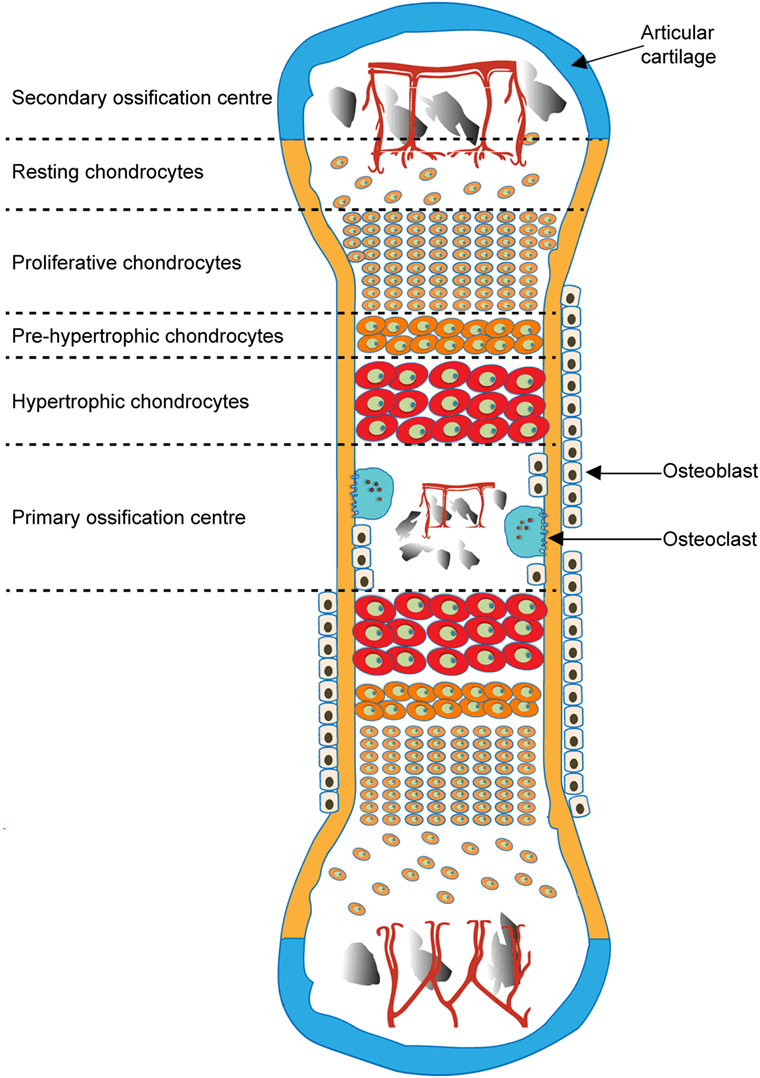
- “Growth plate zones: Reserve, Proliferative, Prehypertrophic, Hypertrophic, Ossification
- “Salter-Harris fractures exploit growth plate zone weakness
- “Distraction osteogenesis uses intramembranous ossification
Overview and Development
Ossification is the process of bone formation, and bone develops and heals by two fundamentally different pathways. Both end in the same product, lamellar bone; which pathway a bone takes is determined by anatomical location and mechanical environment, not by the final bone type.
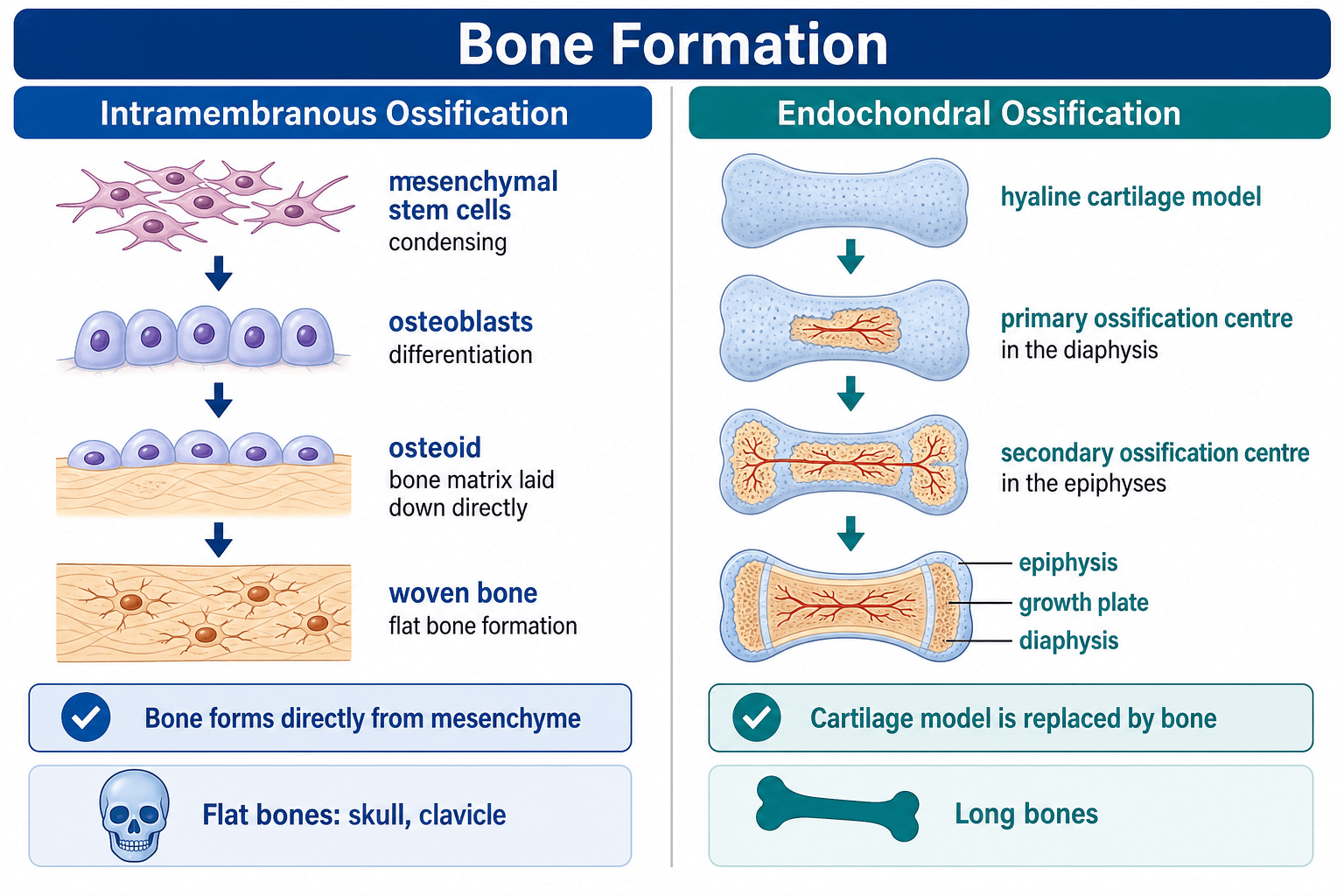
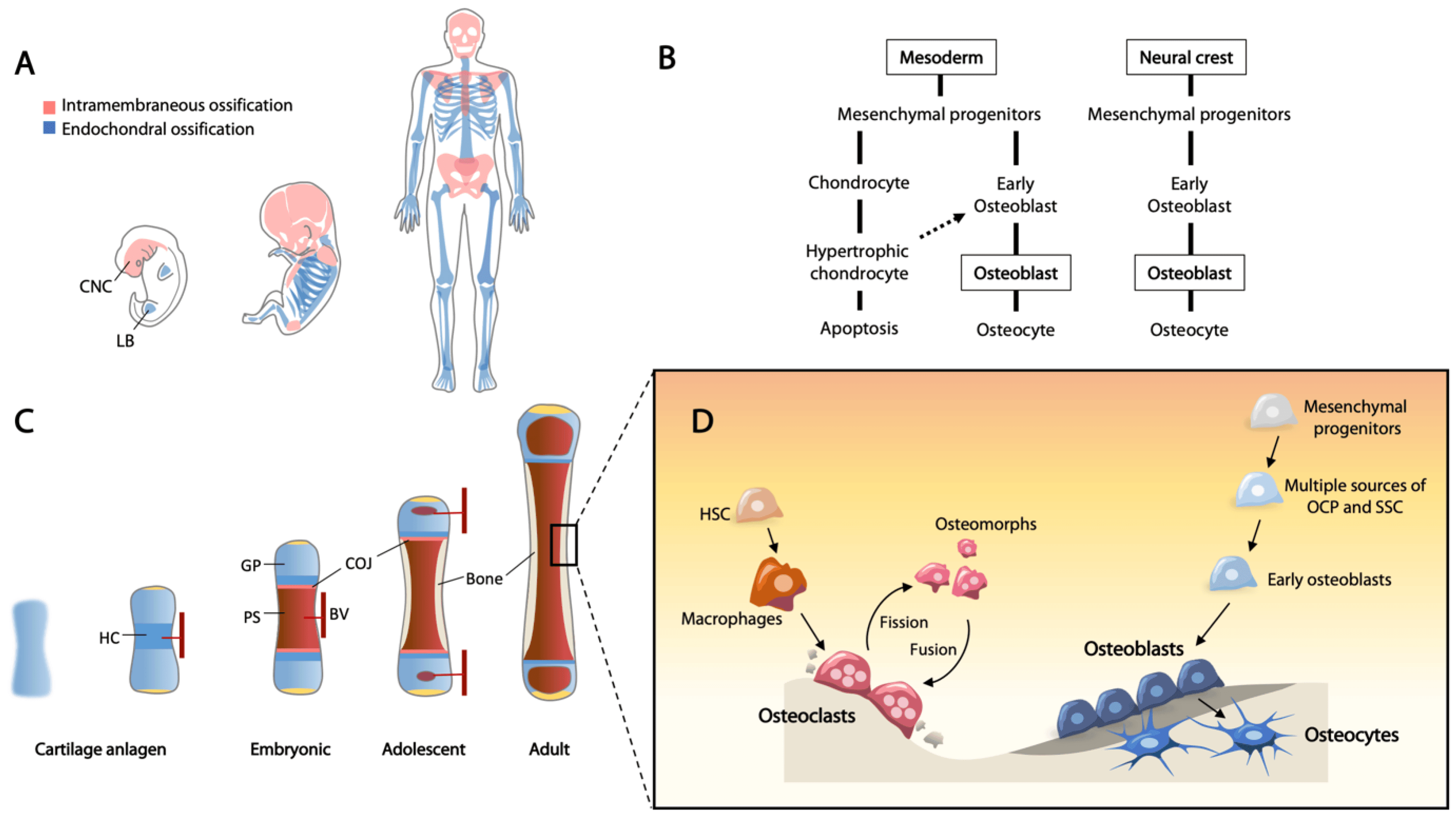
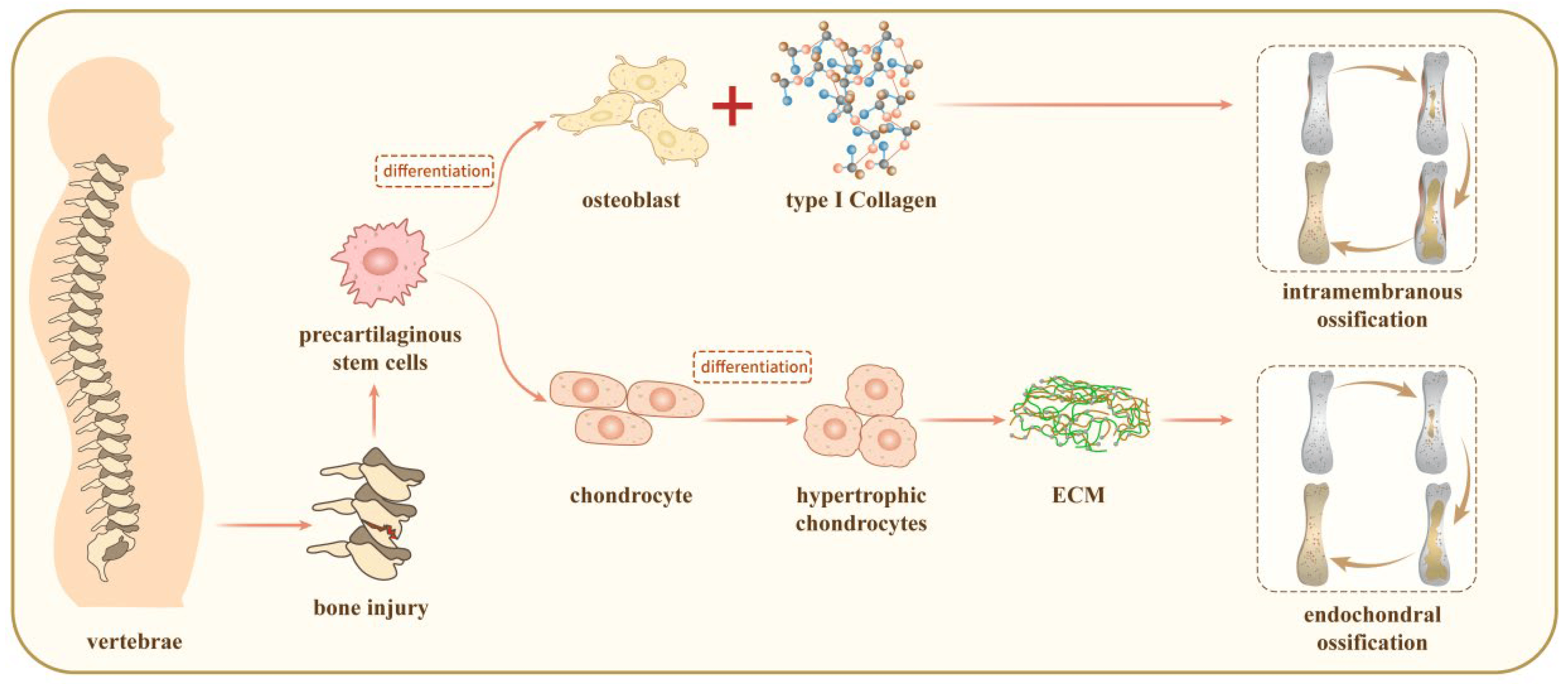
- Intramembranous ossification - bone forms directly from mesenchymal stem cells, with no cartilage intermediate. It builds the flat bones (skull vault, facial bones, mandible) and the clavicle, and is also the route of primary fracture healing and distraction osteogenesis.
- Endochondral ossification - bone replaces a hyaline cartilage template. It builds the long bones, vertebrae, pelvis, ribs and most of the skeleton; the rib cage as a whole is mixed. The growth plates are persistent zones of endochondral ossification, and the same pathway runs secondary fracture healing through a cartilaginous callus.
Mechanisms: Intramembranous
Direct bone formation. Mesenchymal cells become osteoblasts and make bone without first making cartilage. Vascular invasion is direct, several ossification centres form and coalesce, and bone is laid down rapidly.
Intramembranous Ossification Steps
Mesenchymal stem cells aggregate at the ossification centre, forming condensed tissue with increased cell density and vascularity.
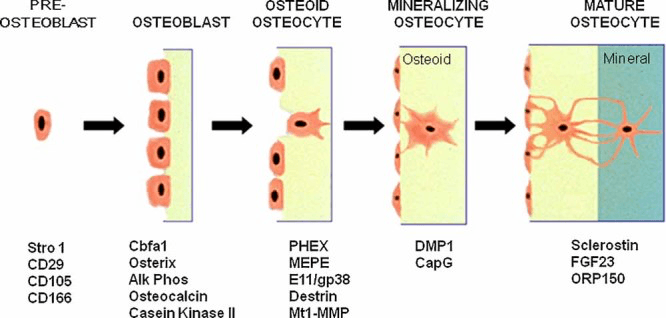
MSCs differentiate into osteoblasts under the influence of the Runx2 and Osterix transcription factors, and the cells secrete osteoid (unmineralised matrix).
Osteoblasts deposit type I collagen and non-collagenous proteins as osteoid, along spicules radiating from the ossification centre.
Hydroxyapatite is deposited within the osteoid after a 10-day lag phase. Some osteoblasts become embedded as osteocytes, and trabeculae form.
The initial woven bone (disorganised collagen) is gradually replaced by organised lamellar bone through remodelling.
Periosteum forms at the surface, appositional growth creates cortical bone, and the trabecular spaces become marrow cavities.
Which bones. The flat bones of the skull and face, the mandible and the clavicle:
- Skull vault - frontal, parietal, occipital and temporal (flat parts)
- Face - maxilla, zygomatic, nasal
- Mandible
- Clavicle - the only long bone formed intramembranously, yet it has a medial physis (see the clavicle section below)
Endochondral Ossification
Bone by replacement. Most of the skeleton is first modelled in hyaline cartilage and then replaced by bone. The growth plate is an endochondral ossification zone that persists until skeletal maturity.
Endochondral Ossification Steps
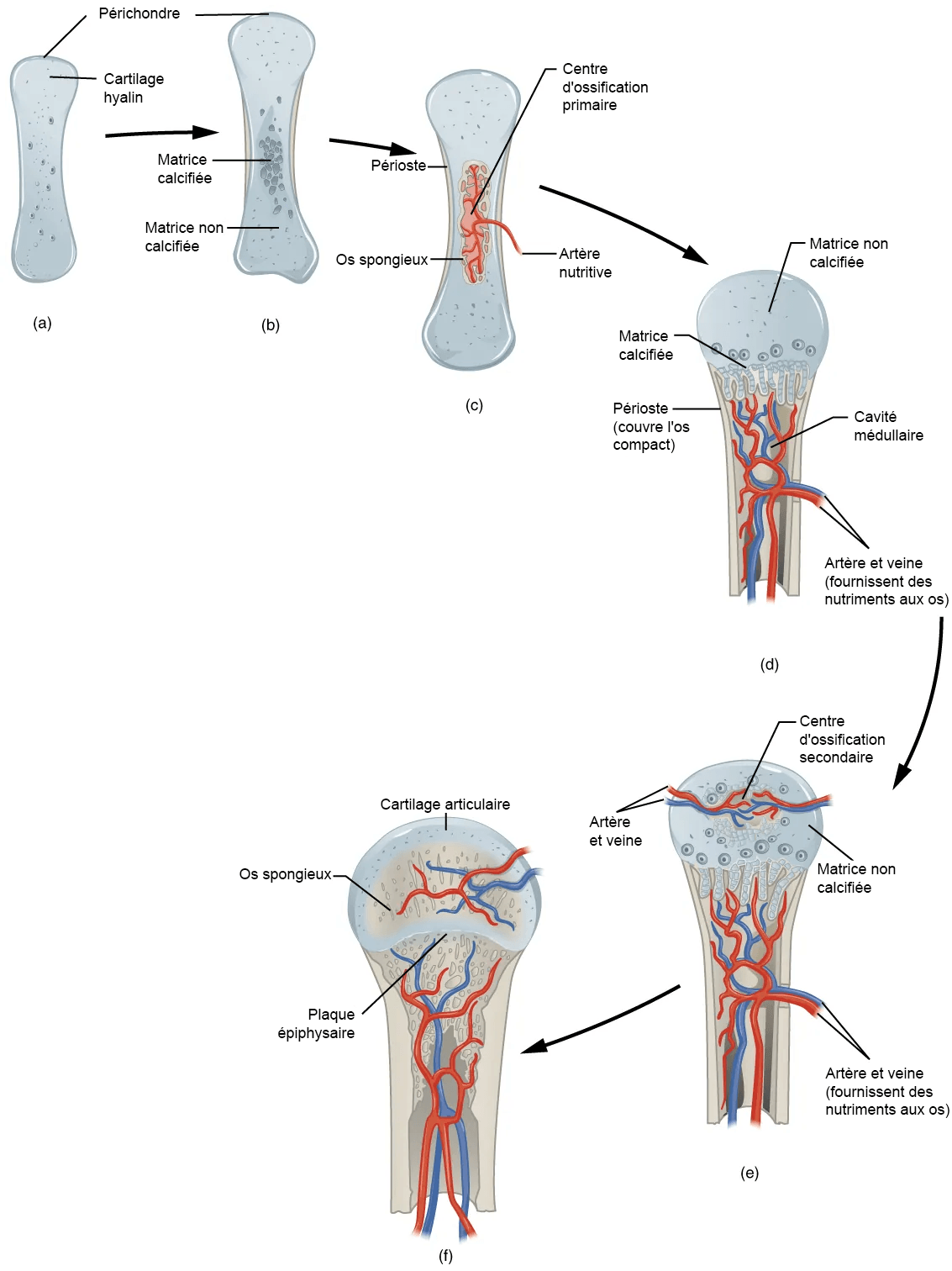
Mesenchymal cells condense and differentiate into chondrocytes, forming a hyaline cartilage model whose shape matches the final bone.
Central chondrocytes enlarge (hypertrophy) and the matrix calcifies. Hypertrophic cells secrete VEGF, attracting blood vessels.
Vascular invasion at mid-diaphysis, at week 8 of fetal development. Chondrocytes undergo apoptosis, and osteoblasts arrive and deposit bone on the calcified cartilage scaffold.
Intramembranous bone forms around the mid-shaft via the periosteum, providing structural support while the cartilage is replaced.
Epiphyseal ossification centres develop from birth to adolescence by the same process: vascular invasion, chondrocyte apoptosis, bone deposition.
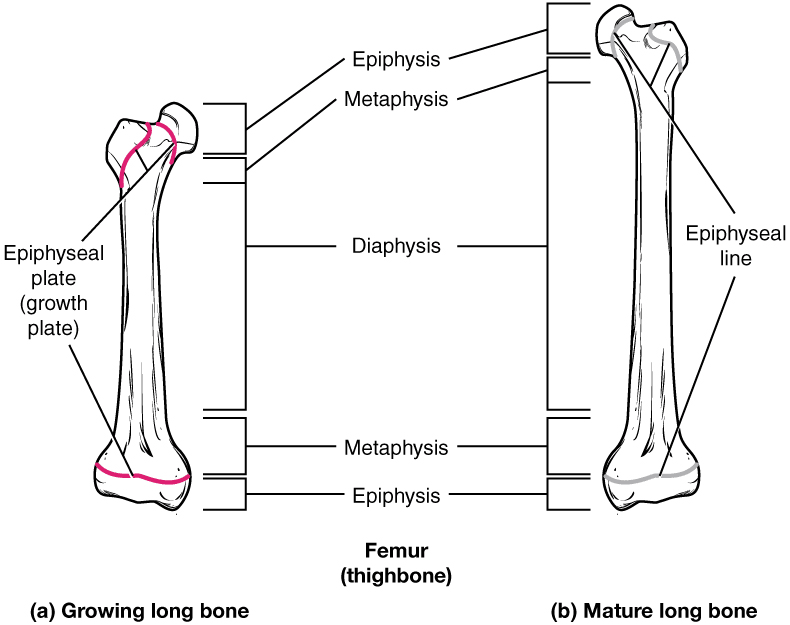
Cartilage persists between diaphysis and epiphysis as the growth plate, where endochondral ossification continues until skeletal maturity, driving longitudinal growth.
Oestrogen-mediated closure at skeletal maturity. The cartilage is fully replaced by bone, leaving the epiphyseal line as a scar.
Growth Plate Structure and Function
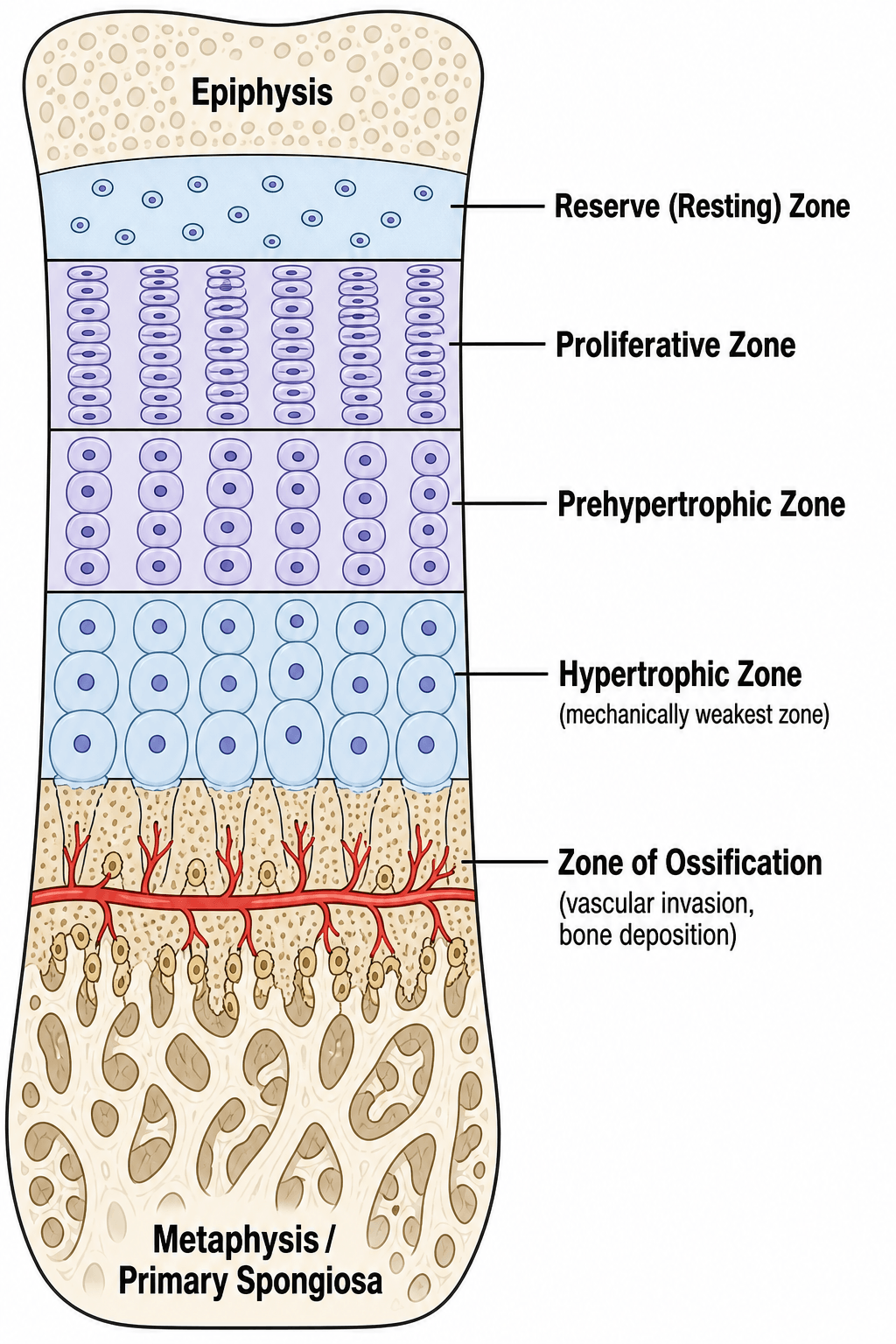
- Cell Characteristics
- Sparse, small chondrocytes
- Matrix
- High proteoglycan
- Function
- Stem cell niche
- Cell Characteristics
- Columnar stacks, flat cells
- Matrix
- Type II collagen
- Function
- Rapid cell division
- Cell Characteristics
- Cells begin enlarging
- Matrix
- Transition matrix
- Function
- Maturation initiation
- Cell Characteristics
- Large cells (10x volume)
- Matrix
- Type X collagen, calcified
- Function
- Matrix mineralisation
- Cell Characteristics
- Chondrocyte apoptosis
- Matrix
- Calcified cartilage scaffold
- Function
- Vascular invasion, bone deposition
The hypertrophic zone is the weakest point in the growth plate because its large cells have minimal matrix, and it is where Salter-Harris fractures propagate. The zone of Ranvier (peripheral fibrous ring) provides lateral support and circumferential growth.
Comparison of Ossification Pathways
- Intramembranous
- None (direct)
- Endochondral
- Cartilage template
- Intramembranous
- Flat bones, clavicle
- Endochondral
- Long bones, axial skeleton
- Intramembranous
- Early, throughout
- Endochondral
- Late, after hypertrophy
- Intramembranous
- From around week 5 (clavicle, the first bone to ossify)
- Endochondral
- Week 8 (primary centre)
- Intramembranous
- Appositional only
- Endochondral
- Interstitial (physis) + appositional
- Intramembranous
- Primary union, distraction
- Endochondral
- Secondary union (callus)
Woven versus lamellar bone. Woven bone, with its disorganised collagen, is an immature or pathological form seen in rapid ossification, and it is always replaced by lamellar bone.
Disorders of ossification. The table sorts the ossification disorders by the pathway each predominantly affects.
- Molecular defect
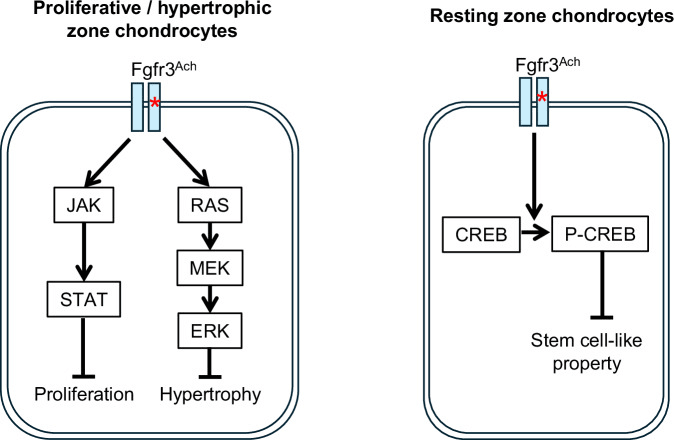
- FGFR3 gain-of-function (G380R)
- Pathway predominantly affected
- Endochondral (proliferative zone)
- Discriminating clinical clue
- Rhizomelic short limbs, macrocephaly, normal trunk and intellect
- Molecular defect
- RUNX2 haploinsufficiency
- Pathway predominantly affected
- Both (osteoblast maturation) — clavicle/skull
- Discriminating clinical clue
- Absent/hypoplastic clavicles, wide fontanelles, dental anomalies
- Molecular defect
- Type I collagen (COL1A1/2)
- Pathway predominantly affected
- Both (matrix quality)
- Discriminating clinical clue
- Fragile bones, blue sclerae, dentinogenesis imperfecta
- Molecular defect
- Vitamin D / phosphate handling
- Pathway predominantly affected
- Endochondral (defective mineralisation of hypertrophic zone)
- Discriminating clinical clue
- Widened physis, metaphyseal cupping/fraying, bowing
- Molecular defect
- Cathepsin K loss (pyknodysostosis)
- Pathway predominantly affected
- Remodelling (osteoclast)
- Discriminating clinical clue
- Dense brittle bone + acro-osteolysis distinguishes pyknodysostosis
Clinical Applications
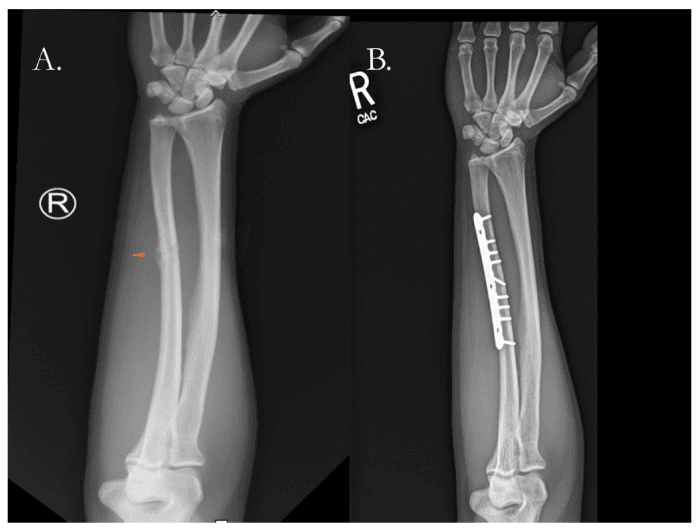
Primary (direct) healing. Absolute stability, such as compression plating, lets bone heal by intramembranous ossification. A cutting cone crosses the fracture and there is no visible callus.
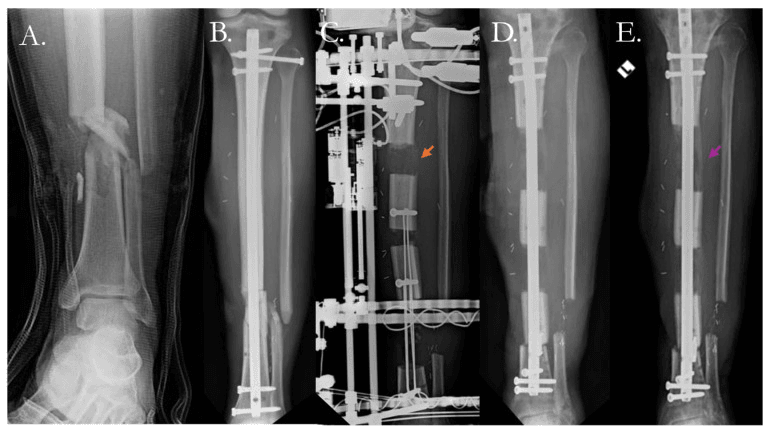
Secondary (indirect) healing. Relative stability, from an intramedullary nail or a cast, heals through endochondral ossification. A cartilaginous callus is replaced by bone, and external callus is visible.
Why callus is cartilage. Where there is movement at the fracture site, low oxygen tension favours cartilage formation over direct bone; cartilage is more tolerant of motion and hypoxia. As vascularity and stability improve, the cartilage is replaced by bone by endochondral ossification, recapitulating embryonic development.
Guidelines, Registries & Global Practice
Global Epidemiology of Ossification Disorders
- Global frequency
- ~1 in 15,000–30,000 live births
- Pathway affected
- Endochondral (proliferative zone)
- Global frequency
- ~1 in 15,000–20,000
- Pathway affected
- Both (matrix quality)
- Global frequency
- ~1 in 1,000,000
- Pathway affected
- Both (osteoblast maturation) — clavicle/skull
- Global frequency
- ~1–10 per 100,000 adolescents (rising with obesity)
- Pathway affected
- Endochondral (hypertrophic zone shear)
Side-by-Side Society Guidance
- Relevant position
- Fracture-healing biology — absolute stability favours direct (intramembranous/contact) healing; relative stability favours endochondral callus
- Relevant position
- Paediatric physeal injury management; vitamin D / metabolic bone optimisation in healing
- Relevant position
- Standards for paediatric fracture and limb-reconstruction care, including physeal-sparing principles
- Relevant position
- Limb-lengthening and bone-transport (distraction osteogenesis) standards and complication reporting
- Relevant position
- Multidisciplinary care; vosoritide as the first disease-modifying option in eligible children
Registry and Outcome Notes
- Distraction osteogenesis / limb reconstruction registries (e.g. ASAMI/ILLRS-affiliated databases) track external-fixator vs magnetic intramedullary lengthening — both rely on tension-stress intramembranous regenerate.
- Magnetic motorised nails (e.g. lengthening intramedullary devices) have shifted practice from external frames in high-resource settings; circular frames remain the workhorse where implant cost is prohibitive.
High- vs Limited-Resource Practice Variation
- High-resource: magnetic lengthening nails, vosoritide for eligible achondroplasia, advanced 3D deformity planning.
- Limited-resource: Ilizarov/circular external fixation remains the global standard for lengthening and bone transport — low implant cost, no power source, supports infected/segmental defect reconstruction.
- SUFE and physeal injuries present later in settings with limited access to imaging, increasing avascular necrosis and growth-arrest rates.
Controversies and Areas of Uncertainty
- Optimal distraction rate/rhythm: ~1 mm/day in divided steps is the Ilizarov standard, but younger patients and accordion/dynamisation protocols may tolerate variation; over-rapid distraction risks poor regenerate, too slow risks premature consolidation.
- Definition of "primary" healing: truly gap-free contact (Haversian/cutting-cone) healing is rare clinically; most "absolute stability" constructs heal through a mix of contact and small-gap intramembranous bone.
- Disease-modifying dysplasia therapy: vosoritide improves growth velocity (a surrogate), but durable effects on final height, body proportion, foramen magnum stenosis and quality of life are still being established.
- Physeal-bar prevention: no intervention reliably prevents bar formation after high-grade Salter-Harris injuries; interposition grafting outcomes remain variable.
Related pages: Physis and Growth Plate Anatomy for the zonal architecture summarised here and Physeal Injuries: Salter-Harris for why fractures propagate through the hypertrophic zone; Fracture Healing for the same two pathways operating in repair — direct healing is intramembranous, callus is endochondral; Distraction Osteogenesis and Limb Lengthening Principles for the clinical exploitation of tension-stress intramembranous regenerate; Osteoblasts and Bone Formation and Bone Remodeling for the shared cellular endpoint of both routes; and Achondroplasia and Cleidocranial Dysostosis for the two dysplasias that dissect the pathways apart — FGFR3 striking endochondral bone while sparing the skull vault, and RUNX2 loss striking both.
The Master Switch: Why the Same Mesenchyme Takes Two Roads
One progenitor, two fates. Both pathways arise from the same osteochondroprogenitor in a mesenchymal condensation. What decides the route is the balance of a few master regulators, and that is what an examiner is probing with "why does this bone form one way and that bone the other?"
Sox9, the master chondrogenic factor. Sox9 drives the progenitor to become a chondrocyte and lay down the hyaline cartilage template, committing it to the endochondral route. It is required for the condensation and for chondrocyte differentiation, and SOX9 loss-of-function causes campomelic dysplasia.
Runx2 (Cbfa1), then Osterix (Sp7), the master osteogenic factors. These drive the progenitor to become an osteoblast. In the intramembranous route the cell goes straight to Runx2 and Osterix and secretes osteoid with no Sox9 cartilage phase.
Runx2 is needed by both routes. The Komori Runx2-null mouse made no bone at all by either route (see the evidence cards), so the two pathways do not differ in their end-cell, only in whether a cartilage intermediate is made first. It is also why RUNX2 haploinsufficiency hits the most membranous bones, the clavicle and skull vault, hardest; the detailed dysplasia phenotypes are covered in the skeletal dysplasia and cleidocranial dysostosis topics.
Wnt/beta-catenin, the tipping switch. Canonical Wnt signalling tips a bipotential osteochondroprogenitor toward the osteoblast (high Wnt, Runx2 and Osterix) or the chondrocyte (low Wnt permits Sox9). High Wnt also drives the periosteal bone collar and the secondary ossification centres that flank the endochondral template.
Putting it together. Intramembranous versus endochondral is set upstream, by the Sox9-versus-Runx2 balance under Wnt control, not by the final bone, since both yield lamellar bone. In endochondral bone the Sox9 chondrocytes build and then hypertrophy on the Ihh-PTHrP clock, after which Runx2 and Osterix osteoblasts invade and replace them.
The Clavicle: The Exception That Uses Both Pathways
Two pathways in one bone. The clavicle is the first bone in the body to begin ossifying, around week 5 of fetal life, and its central shaft forms by intramembranous ossification from two primary centres that fuse. It also has two cartilaginous growth zones that ossify endochondrally: a medial (sternal) physis that contributes the large majority of its longitudinal growth, and a smaller lateral (acromial) end. The body is intramembranous and the ends endochondral, which makes it genuinely a hybrid.
The last physis to fuse. The medial clavicular physis is the last physis in the body to appear and to fuse. The medial epiphysis ossifies only in the late teens and fuses at roughly 22 to 25 years.
Why it matters clinically.
- In adolescents and young adults a presumed sternoclavicular dislocation is usually a medial clavicular physeal (Salter-Harris) injury: the strong sternoclavicular ligaments hold the epiphysis while the metaphysis displaces. This changes management, and a posterior displacement can threaten mediastinal structures.
- The lateral end's thick periosteal sleeve means paediatric "AC" injuries are often periosteal-sleeve avulsions that remodel, unlike adult acromioclavicular dislocations.
- Congenital pseudarthrosis of the clavicle (classically right-sided) is a failure of the two intramembranous primary centres to unite.
Fracture and sternoclavicular-joint management belong to the clavicle fracture and sternoclavicular topics. The point here is that the clavicle is the single bone that shows both ossification pathways at once.
MCQ Practice Points
Q: Which bones form via intramembranous ossification? A: Flat bones of skull, facial bones, mandible, and clavicle. All other bones use endochondral ossification.
Q: Which growth plate zone is the weakest and site of Salter-Harris fracture propagation? A: Hypertrophic zone - large cells with minimal surrounding matrix make this the mechanically weakest area.
Q: What type of ossification occurs in distraction osteogenesis? A: Intramembranous ossification - direct bone formation along axis of tension stress without cartilage intermediate.
Q: Why does secondary fracture healing use endochondral ossification? A: Low oxygen tension and movement at fracture site favors cartilage formation. Cartilage is more tolerant of hypoxia and motion. As vascularity improves, cartilage is replaced by bone via endochondral pathway.
Q: What is unique about clavicle ossification? A: Only long bone formed by intramembranous ossification but has a medial growth plate (physis) for longitudinal growth. First bone to ossify (week 5-6 fetal life).
Exam Viva Scenarios
Practise clinical reasoning and management decisions out loud
“Compare and contrast intramembranous and endochondral ossification.”
“Describe the zones of the growth plate and explain the clinical relevance to Salter-Harris fractures.”
“A child presents with disproportionate short stature affecting the limbs more than the trunk, with normal intelligence and macrocephaly. How does ossification biology explain the phenotype, and how does this contrast with a child who has clavicular and skull-vault defects?”
Intramembranous
- Direct mesenchyme → bone (no cartilage)
- Flat bones: skull, face, mandible, clavicle
- MSC → osteoblast → osteoid → mineralization
- Used in: primary fracture healing, distraction osteogenesis
Endochondral
- Mesenchyme → cartilage → bone (cartilage template)
- Long bones, axial skeleton, pelvis
- Cartilage model → hypertrophy → vascular invasion → ossification
- Growth plate = persistent endochondral zone until closure
Growth Plate Zones
- Reserve: sparse cells, stem cell niche
- Proliferative: columnar stacks, rapid division
- Hypertrophic: large cells, calcified matrix (WEAKEST)
- Ossification: apoptosis, vascular invasion, bone deposition
Growth Plate Regulation
- Ihh-PTHrP loop maintains proliferative zone
- Growth hormone → IGF-1 → promotes growth
- Estrogen (high dose) → physeal closure
- Zone of Ranvier = peripheral fibrous support
Clinical Applications
- Primary fracture healing = intramembranous
- Secondary fracture healing = endochondral (cartilage callus)
- Salter-Harris fractures through hypertrophic zone
- SUFE = shear through hypertrophic zone of proximal femur
Key Differences
- Intramembranous: early vascular, direct bone, appositional growth
- Endochondral: late vascular, cartilage first, interstitial + appositional
- Both produce lamellar bone (same end product)
- Woven bone = immature form, always replaced
Evidence and References
Developmental Regulation of the Growth Plate
- Landmark review synthesising the signalling networks controlling endochondral bone formation
- Detailed the Ihh-PTHrP negative feedback loop: Ihh from prehypertrophic/hypertrophic chondrocytes drives PTHrP, which delays hypertrophy and maintains the proliferative pool
- Integrated FGF, BMP and Wnt signalling with Runx2/Sox9 transcriptional control
- Disruption of these pathways underlies human skeletal dysplasias
The Amazing Osteocyte
- Osteocytes comprise 90 to 95 percent of all bone cells and are the longest-lived bone cell
- Act as the principal mechanosensors orchestrating both osteoblast and osteoclast activity
- Function as endocrine cells regulating phosphate metabolism (via FGF23) and calcium availability
- Glucocorticoids and inflammatory cytokines induce osteocyte death, impairing remodelling
Cbfa1/Runx2 Is Essential for Both Ossification Pathways
- Cbfa1 (Runx2) knockout mice showed a complete lack of ossification and died at birth from respiratory failure
- Both intramembranous and endochondral ossification were blocked, owing to maturational arrest of osteoblasts
- Established Runx2 as the master transcription factor for osteoblast differentiation
- Cartilage anlage formed normally but no mineralisation occurred