Treat the child first, then classify the pelvis or hip injury and the risk it creates
- Paediatric pelvis and hip trauma is not one diagnosis; it is a set of injury families with different priorities.
- The child with a pelvic ring injury may have abdominal, urogenital, vascular, head, chest or spine injury.
- A paediatric traumatic hip dislocation needs prompt reduction and post-reduction imaging.
- A displaced paediatric femoral neck fracture is a high-risk injury requiring urgent senior planning.
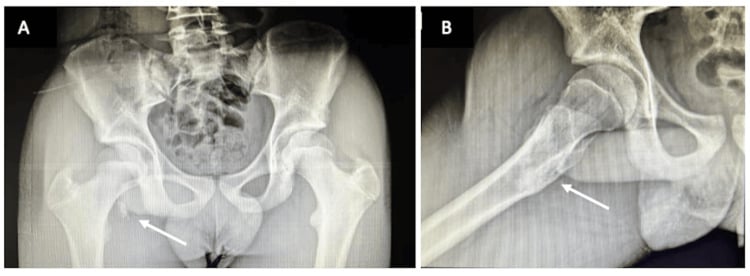
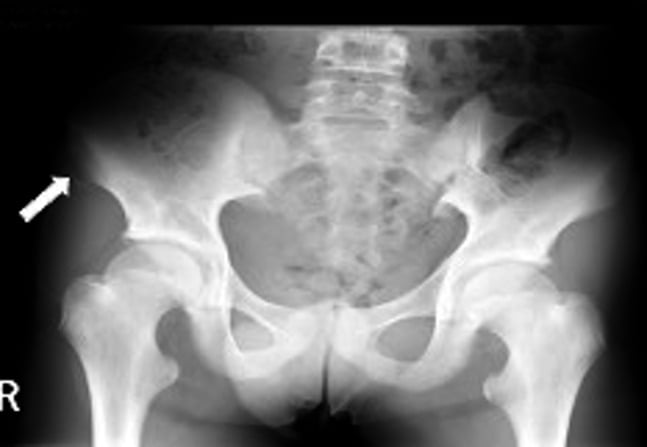
- Pelvic apophyseal avulsions are common in adolescent athletes and should not be confused with malignancy or infection when the history is acute and mechanical.
- “Do not let an obvious limb posture distract from primary survey and associated injury screening.
- “After hip dislocation reduction, a concentric reduction is not enough; look for loose bodies, femoral head injury and acetabular injury.
- “Delbet type, displacement and reduction quality matter more than the generic phrase hip fracture.
- “Low-energy femoral neck fracture in a child should trigger pathology or bone fragility thinking.
- “Apophyseal avulsion treatment is decided by displacement, function, sport demand, symptoms and chronicity.
Paediatric Pelvis and Hip Trauma
Overview and Epidemiology
Paediatric pelvis and hip trauma ranges from the common sports-related apophyseal avulsion to rare, high-risk injuries: traumatic hip dislocation, acetabular fracture and paediatric femoral neck fracture. Each injury family has different priorities.
Why the child is different. The child's pelvis has open physes, apophyses, thick periosteum, relatively elastic bone and important growth centres. These features change both the fracture patterns and the complications.
The mechanism points to the family. A low-energy sprinting or kicking injury in an adolescent suggests an apophyseal avulsion. A fall from height, road trauma or crush injury should raise concern for pelvic ring injury, acetabular injury, hip dislocation, femoral neck fracture and associated injuries.
The low-energy femoral neck fracture. A normal child should not fracture the femoral neck with trivial force. A low-energy femoral neck fracture, especially without a clear major trauma mechanism, should prompt assessment for a tumour-like lesion, metabolic bone disease, endocrine disease, infection or non-accidental injury in the right clinical setting.
Anatomy and Biomechanics
The paediatric pelvis and hip contain multiple growth-related weak points, and each one changes management.
The triradiate cartilage. It contributes to acetabular growth, so a displaced acetabular injury can cause growth disturbance as well as incongruity. Its injuries are classified by Bucholz (see Classification).
The proximal femur. The proximal femoral physis, femoral neck and greater trochanteric apophysis influence proximal femoral growth and alignment, and the physis matters for the head-neck relationship. A transphyseal injury raises high concern for both AVN and growth arrest.
The femoral head blood supply. It is vulnerable after both femoral neck fracture and traumatic hip dislocation. Displacement, fracture location, intracapsular pressure and reduction quality all contribute to AVN risk, which is why reduction timing, reduction quality and long follow-up matter. It is also why a child who otherwise heals fractures well can have devastating sequelae after proximal femoral trauma.
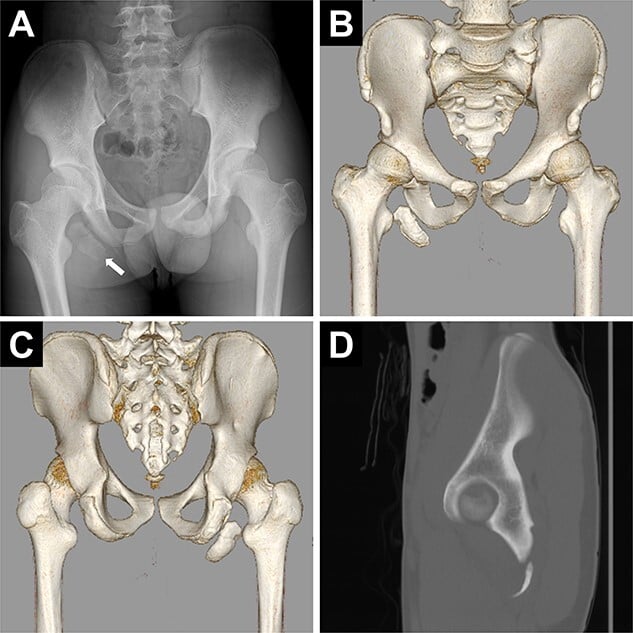
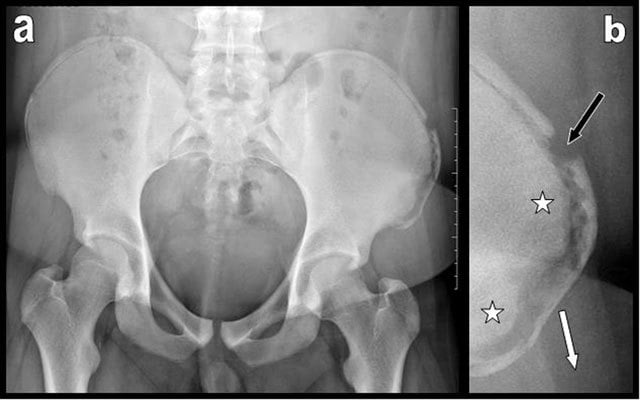
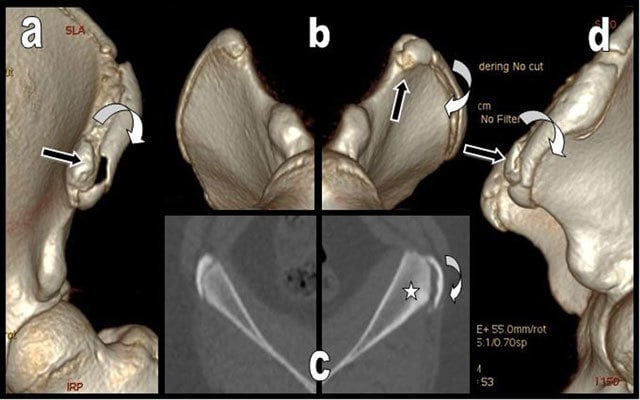
The apophyses. Pelvic apophyses are traction sites for powerful muscles, so an adolescent athlete can avulse a fragment through the physis or apophysis before the tendon fails. The ASIS, AIIS, ischial tuberosity, iliac crest and lesser trochanter can all avulse.
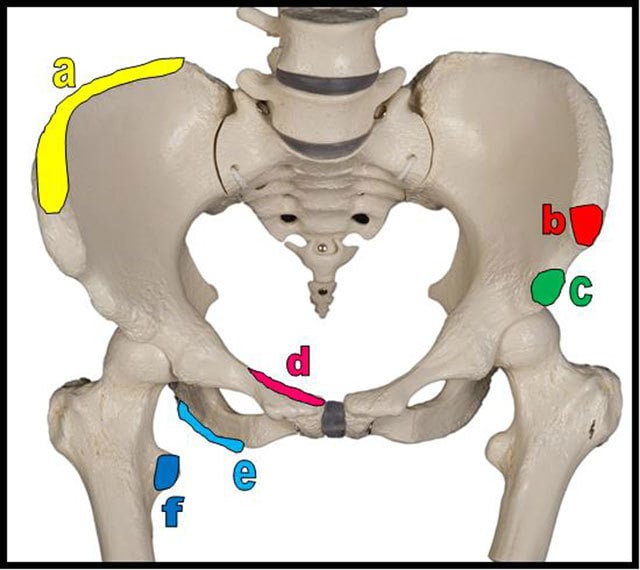
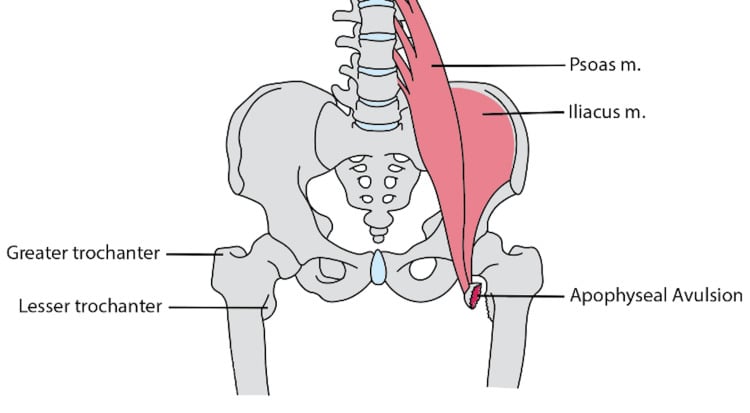
The elastic ring. A child can have major internal injury with only subtle bony injury. Do not rely on fracture displacement alone to judge the severity of the trauma.
Pathophysiology
Pelvic ring. Injury occurs when force overcomes the elasticity of the ring and its ligamentous restraint. Stable injuries may involve isolated pubic rami or iliac wing fractures. Unstable patterns can involve anterior and posterior ring disruption, vertical displacement, bleeding and major associated injury.
Where the bleeding comes from. In children, haemodynamic instability is often from associated injury rather than pelvic bleeding alone, but severe pelvic haemorrhage still occurs. The source may be pelvic, abdominal or both.
Hip dislocation. Force drives the femoral head out of the acetabulum. Posterior dislocation is classically associated with dashboard-type mechanisms, but children can dislocate with lower energy because their soft tissues are more elastic, and the low-energy dislocation of the younger child differs from high-energy adolescent trauma. The longer the hip remains dislocated, the greater the concern for femoral-head perfusion and chondral injury.
Femoral neck fracture. Uncommon but dangerous. The fracture line, the displacement and the treatment itself can compromise femoral-head perfusion, and poor reduction or inadequate fixation can produce nonunion or coxa vara.
Apophyseal avulsion. A traction injury: the muscle-tendon unit pulls off an apophyseal fragment during sprinting, kicking or sudden eccentric contraction.
Classification Systems
Classify first by injury family, because the family decides which feature drives treatment.
- Examples
- Rami, iliac wing, APC, LC, vertical shear, complex ring injury
- Treatment-driving feature
- Haemodynamics, posterior ring stability and associated injury
- Examples
- Wall, column, transverse, triradiate cartilage involvement
- Treatment-driving feature
- Joint congruity, displacement and growth risk
- Examples
- Posterior, anterior, inferior, fracture-dislocation
- Treatment-driving feature
- Time to reduction, concentricity and loose bodies
- Examples
- Delbet I to IV
- Treatment-driving feature
- Location, displacement, verticality and vascular risk
- Examples
- ASIS, AIIS, ischial tuberosity, iliac crest, lesser trochanter
- Treatment-driving feature
- Displacement, sport demand, chronicity and nerve symptoms
Pelvic ring: Torode and Zieg. The adult terms (APC, LC, vertical shear) are borrowed for the pelvic ring, but the paediatric scheme is the Torode and Zieg classification, which stratifies by stability and by the risk of associated injury and bleeding:
- Type I, avulsion fracture: apophyseal avulsion of the bony pelvis (e.g. ASIS, AIIS, ischium); benign, the sports injury family.
- Type II, iliac wing fracture: from a direct lateral force (including iliac apophyseal avulsion/"bucket-handle"-type); generally stable.
- Type III, simple ring fracture: a stable ring injury (e.g. pubic rami, or a ring fracture without an unstable segment).
- Type IV, ring disruption (unstable): bilateral pubic (straddle) fractures, anterior and posterior ring disruption, or a fracture involving the acetabulum. This is the resuscitation-and-associated-injury group, carrying the highest energy, transfusion, associated-injury and mortality risk.
The revised Torode-Zieg splits Type III into IIIa (stable, isolated anterior ring) and IIIb (anterior ring fracture with a non-displaced posterior ring injury). IIIb behaves with more morbidity than a truly isolated anterior fracture, because the occult posterior injury raises the risk.
Femoral neck: Delbet. Delbet classifies the paediatric femoral neck fracture by location.
- Location
- Transphyseal
- Why it matters
- Highest concern for femoral-head perfusion and growth disturbance
- Location
- Transcervical
- Why it matters
- High-risk intracapsular fracture; reduction and fixation quality are crucial
- Location
- Basicervical (cervicotrochanteric)
- Why it matters
- More extracapsular but still risks coxa vara and fixation failure
- Location
- Intertrochanteric
- Why it matters
- Lower AVN concern than intracapsular patterns but needs stable alignment
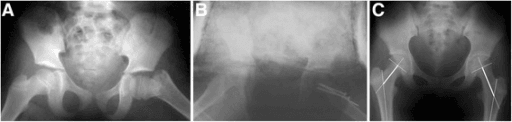
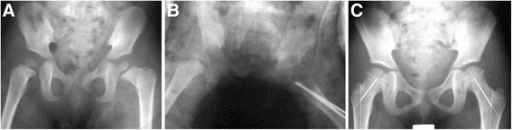
Triradiate cartilage: Bucholz. Acetabular growth-plate trauma is classified by Bucholz on Salter-Harris lines:
- Type I (Salter-Harris I/II pattern): the fracture runs through the hypertrophic zone, sparing the germinal layer. Growth potential is preserved, so the prognosis for continued acetabular growth is good.
- Type II (Salter-Harris IV pattern): the fracture crosses the germinal/metaphyseal portion, with a higher risk of bony bridge and growth arrest.
- Type V (Salter-Harris V, crush): a compression/crush injury of the triradiate cartilage, with the worst prognosis.
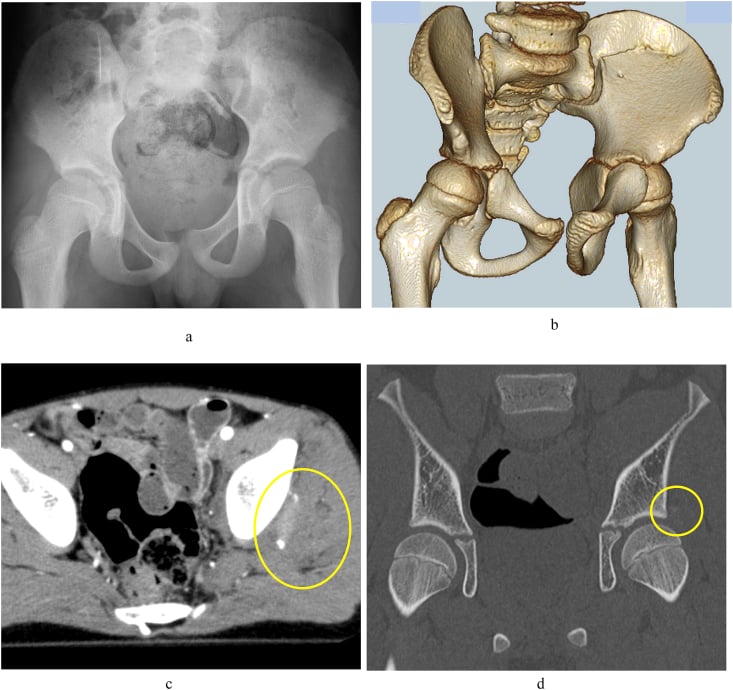
A Bucholz Type V injury is often radiographically occult initially and can look unremarkable on the first film, yet it leads to premature triradiate closure, a shallow dysplastic acetabulum, progressive subluxation and early arthritis, especially in the young child (under about ten years) who has the most growth remaining. These children need long-term surveillance for acetabular dysplasia/subluxation even when early films look benign, and may need later reconstructive osteotomy.
Apophyseal avulsion sites. The site points to the muscle that pulled the fragment off and the typical mechanism.
- Muscle pull
- Sartorius and tensor fascia lata
- Typical mechanism
- Sprint start or sudden acceleration
- Muscle pull
- Rectus femoris
- Typical mechanism
- Kicking or forceful hip flexion
- Muscle pull
- Hamstrings
- Typical mechanism
- Sprinting, hurdling, forced hip flexion with knee extension
- Muscle pull
- Abdominal muscles
- Typical mechanism
- Twisting or direct sport injury
- Muscle pull
- Iliopsoas
- Typical mechanism
- Forceful hip flexion; in adults this would be suspicious for malignancy
Clinical Assessment
The child first. Start with the primary survey, analgesia and immobilisation. Stabilise the child and define associated injuries before focusing on definitive orthopaedic reconstruction.
History in high-energy trauma. Ask about:
- Mechanism, speed, height, crush, seatbelt and pedestrian impact
- Loss of consciousness
- Abdominal pain, urinary symptoms and perineal pain
- Neurological symptoms and pain in other limbs
What to document. Record:
- Haemodynamic status and abdominal findings
- Perineal bruising and blood at the urethral meatus
- Rectal tone when indicated
- Lower-limb neurological function and distal perfusion
Screen for abdominal, urogenital, head, chest and spine injury, femoral shaft fracture, knee injury, ipsilateral and other limb injuries, and open wounds. In high-energy trauma these are the high-value misses. A pelvic fracture in a child is a marker of significant trauma until proven otherwise.
Pelvic ring injury. Look for pelvic pain, instability, abdominal tenderness and perineal bruising. Document haemodynamics, associated injuries, urogenital signs and neurology.
Hip dislocation. The hip sits in a fixed posture with severe pain and shortening; held flexed, adducted and internally rotated, it is a posterior dislocation. Record limb position and sciatic and femoral nerve function before reduction, provided this does not delay urgent care, and record them again after reduction.
Femoral neck fracture. Groin pain, inability to weight bear and a painful log roll. Avoid repeated painful or forceful movement, and document distal neurovascular status.
Apophyseal avulsion. The history is usually a sudden sport-related pop or sharp pain at a specific apophyseal site, followed by difficulty running or kicking. Look for local tenderness at the ASIS, AIIS, ischium or iliac crest, and record the sport mechanism, symptoms suggesting displacement, and any hamstring or hip flexor weakness.
Sorting the presentation. Once the child is safe, the presentation usually points to one family and its first question:
- Most likely injury family
- Pelvic ring injury
- Immediate question
- Is the child haemodynamically unstable or bleeding?
- Do not miss
- Urogenital, abdominal, head, chest and spine injury
- Most likely injury family
- Posterior hip dislocation
- Immediate question
- Can it be reduced promptly and safely?
- Do not miss
- Sciatic nerve injury, femoral head injury, loose body
- Most likely injury family
- Paediatric femoral neck fracture
- Immediate question
- What is the Delbet type and displacement?
- Do not miss
- AVN, coxa vara, nonunion, pathological fracture
- Most likely injury family
- ASIS or AIIS avulsion
- Immediate question
- How displaced and what sport demand?
- Do not miss
- Misdiagnosis as muscle strain or tumour
- Most likely injury family
- Acetabular or triradiate injury
- Immediate question
- Is the joint congruent and growth plate involved?
- Do not miss
- Growth disturbance, arthritis, intra-articular step
- Discriminating features
- Clear mechanism, acute onset, focal bony tenderness, often able to localise
- Key investigation
- Radiographs then CT or MRI as indicated
- Discriminating features
- Adolescent, often overweight, groin or referred knee pain, obligatory external rotation on flexion, minor or no trauma
- Key investigation
- AP and frog-lateral pelvis radiographs
- Discriminating features
- Fever, refusal to weight bear, raised inflammatory markers, hip held flexed and externally rotated, no clear trauma
- Key investigation
- Inflammatory markers, ultrasound, aspiration, MRI
- Discriminating features
- Insidious limp in younger child, painless or mild pain, no acute trauma
- Key investigation
- Radiographs, MRI for early disease
- Discriminating features
- Low-energy mechanism, lytic or sclerotic lesion, pain preceding injury
- Key investigation
- Radiographs, MRI, oncology or metabolic workup
- Discriminating features
- Inconsistent history, delayed presentation, injury not matching developmental stage
- Key investigation
- Skeletal survey, safeguarding referral
- Discriminating features
- Gradual onset, tenderness without fracture, normal radiographs
- Key investigation
- Clinical diagnosis, MRI if uncertain
A child with hip pain, fever and refusal to weight bear is septic arthritis until proven otherwise; do not anchor on a minor trauma history.
Investigations
Radiographs first. Initial imaging usually includes an AP pelvis in trauma, plus targeted hip and femur views if pain localises to the hip or proximal femur. They give a fast initial classification and fracture screen.
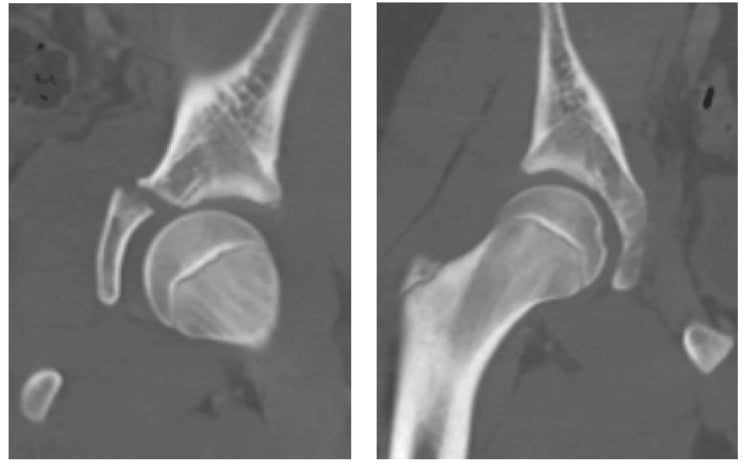
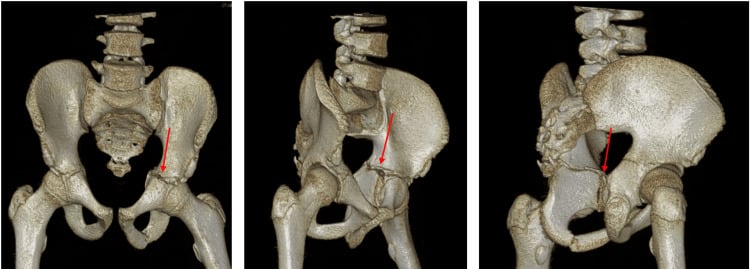
CT with reconstructions defines what radiographs cannot. Use it for:
- Pelvic ring displacement and the posterior ring
- Acetabular fracture, joint congruity and posterior wall injury
- Intra-articular fragments
- Post-reduction assessment of a hip dislocation
- Complex trauma planning
MRI is useful for:
- Occult injury, including occult femoral neck fracture
- Chondral injury, labrum and soft tissue
- Femoral-head perfusion concern
- Marrow oedema
After a hip reduction. A reduced-looking radiograph can hide fragments. Post-reduction radiographs, plus CT or MRI when indicated, look for loose bodies, the femoral head, the posterior wall and concentricity.
The suspicious femoral neck. When a femoral neck fracture may be occult or pathological, MRI and targeted laboratory or tumour workup where indicated avoid missing a stress, pathological or infection-related fracture.
Apophyseal avulsion. Plain radiographs often diagnose displaced fragments. MRI is useful when radiographs are negative but symptoms strongly localise to an apophysis, or when differentiating avulsion from infection or tumour-like conditions; it shows oedema, avulsion and soft-tissue injury.
Management Decisions
Pelvic ring
Stable injuries. Stable rami or iliac wing fractures are usually treated with analgesia and mobilisation as tolerated or protected weight-bearing. Associated injury still needs screening.
Unstable injuries and haemodynamic instability. These need trauma-team resuscitation: the primary survey, a transfusion strategy, haemorrhage control with a pelvic binder or external stabilisation when indicated, and operative or interventional control of bleeding.
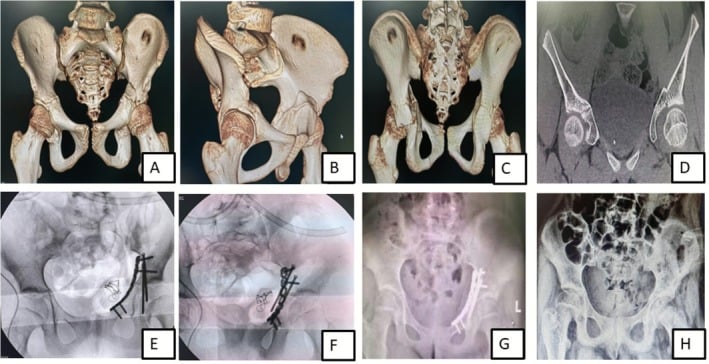
The unstable posterior ring goes to specialist pelvic fixation planning, with CT-based classification and growth-aware implants.
Open pelvic injury. Antibiotics, debridement, contamination control and multidisciplinary care, with a deliberate search for perineal, rectal and urogenital injury.
Hip dislocation
Reduce promptly. Reduce with adequate analgesia, sedation or anaesthesia. Obtain pre-reduction radiographs if they do not delay reduction and are needed to exclude fracture. Urgent reduction relieves pressure on the femoral head and shortens the time of chondral injury.
Do not force it. Repeated forceful attempts can create an iatrogenic fracture; an irreducible hip goes to open reduction (see Surgical Technique).
After reduction. Document neurovascular status again and assess concentricity with the imaging described under Investigations. Protect weight-bearing until pain, imaging and associated injuries allow progression. Protected rehabilitation lets pain and soft tissues settle, but too much immobilisation causes stiffness.
Where the 6-hour target comes from. The 6 hours in the summary is a convention anchored to the classic observation (Mehlman et al., paediatric traumatic hip dislocation series) that AVN was many-fold more frequent when reduction was delayed beyond about 6 hours. It is a small-numbers retrospective association, not a validated threshold. It points the right way, the cost of speed is trivial, and no one has proposed a reason to wait: treat it as "reduce this hip in this admission, now", not as permission to use the full six hours.
Femoral neck
Urgent, senior, anatomical. Displaced paediatric femoral neck fractures require urgent senior planning. Displaced Delbet I and II fractures carry the highest AVN and nonunion concern and need urgent reduction and stable fixation. The aim is anatomical reduction, with stable fixation to avoid nonunion and coxa vara.
Closed or open. Open reduction is preferable to accepting an imperfect closed reduction, because reduction quality affects union and coxa vara. A high-quality closed reduction is accepted, and some series favour closed reduction for lower AVN (see Controversies).
Capsular decompression. Consider it in high-risk intracapsular fractures.
Apophyseal avulsion
Most heal without surgery. Most adolescent pelvic apophyseal avulsions are treated non-operatively with rest, analgesia, protected weight-bearing, progressive physiotherapy and staged return to sport. For the minimally displaced acute avulsion, most return to sport with staged rehabilitation.
Surgery is selective. It is considered, after careful discussion, for large displacement, persistent symptoms, painful nonunion, neurological irritation or elite/high-demand requirements. Fixation is decided case by case, balancing faster restoration against surgical risk, and "large" has no validated number (see Controversies).
The ischial tuberosity with sciatic symptoms needs early specialist review, because sciatic irritation and nonunion can be disabling.
Chronic pain or nonunion. Review with MRI or CT and consider delayed surgery. Persistent symptoms may prevent sport despite healed-looking radiographs.
Surgical Technique
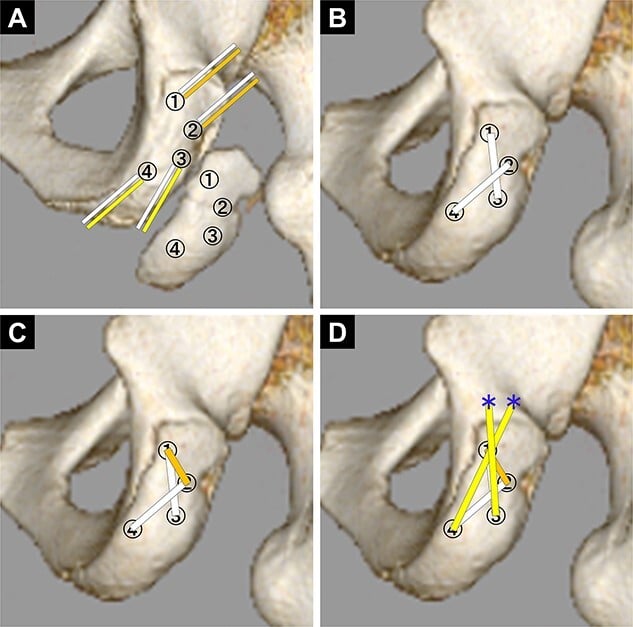
Technique depends on the injury family. The common principle is that paediatric fixation should restore alignment and stability while respecting growth plates, cartilage, the soft-tissue envelope and future growth.
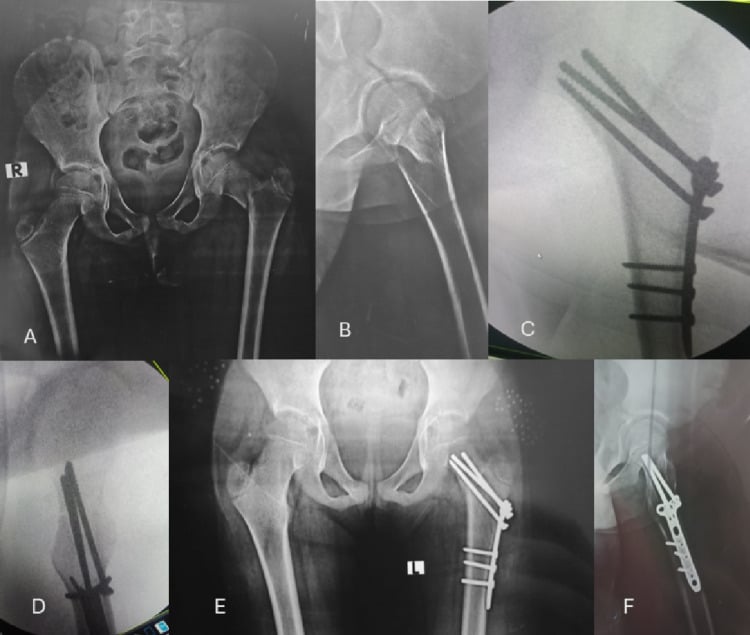
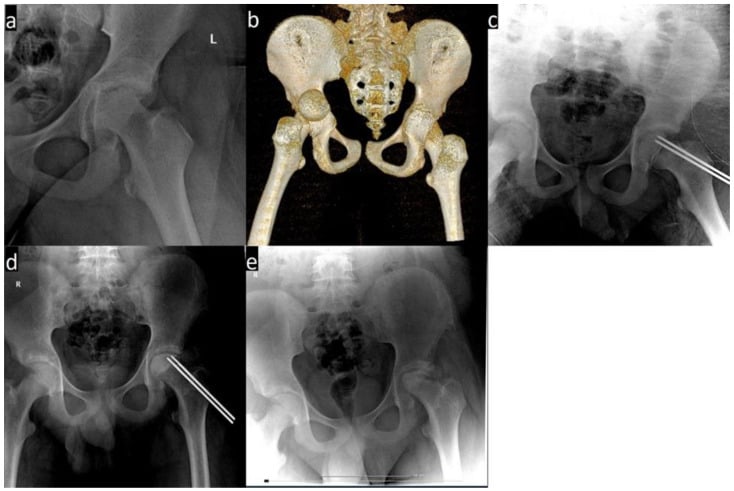
Femoral neck fixation. Position on a radiolucent table and obtain AP and lateral imaging. Reduce anatomically and fix with screws or a plate construct depending on age and pattern. Avoid joint penetration, avoid physeal damage when possible, compress the fracture and protect the blood supply.
Open reduction of the femoral neck. Use an approach that allows direct reduction, clear interposed tissue, reduce under vision and confirm fluoroscopically. Do not accept varus or rotational malreduction.
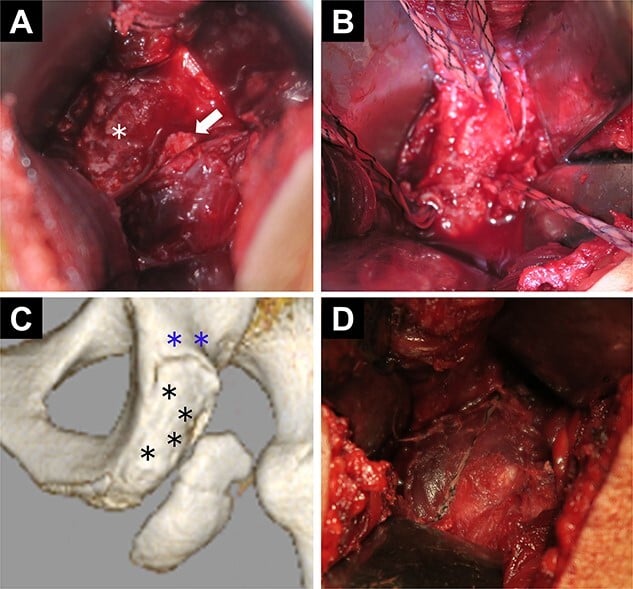
Open reduction of a hip dislocation. Indicated for an irreducible dislocation, an incarcerated fragment or a nonconcentric reduction. Avoid repeated closed-force attempts; inspect and remove the obstacles.
Acetabular fixation. A specialist approach chosen by the fracture and the triradiate involvement. Aim for a congruent joint while minimising growth-plate injury.
Apophyseal avulsion fixation. Approach the fragment directly, protect nearby nerves, then reduce and fix it with a screw or suture construct. Do not overtreat small avulsions; the ischial tuberosity requires sciatic nerve awareness.
Complications
AVN is the feared complication after paediatric femoral neck fracture and traumatic hip dislocation. It can present late, as can growth problems, and early normal imaging does not exclude it.
Growth disturbance. Triradiate cartilage injury, proximal femoral physeal injury and pelvic growth asymmetry can produce deformity or early arthritis.
Functional failure. Persistent pain, coxa vara, nonunion, stiffness, chondrolysis, nerve injury and failure to return to sport can matter more to the child than radiographic union alone.
- Prevention strategy
- Prompt hip reduction, anatomical femoral neck reduction, stable fixation
- Surveillance
- Serial radiographs and clinical review over time
- Prevention strategy
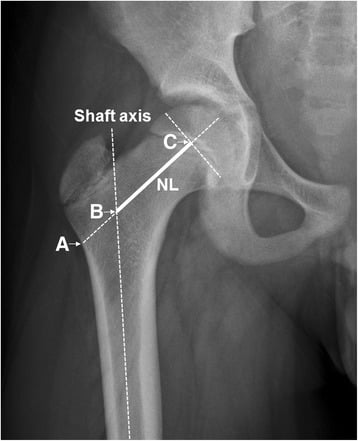
- Avoid varus reduction and unstable fixation
- Surveillance
- Neck-shaft angle and gait follow-up
- Prevention strategy
- Adequate reduction, compression and protected loading
- Surveillance
- Pain, radiographs and CT when union uncertain
- Prevention strategy
- Restore joint congruity and remove loose bodies
- Surveillance
- Pain, range and imaging as symptoms evolve
- Prevention strategy
- Identify displaced/high-demand injuries and rehabilitate progressively
- Surveillance
- Persistent pain and sport limitation
Postoperative Care
Postoperative care must match stability and biology. After a pelvic ring injury the child needs pain control, a mobilisation plan, skin care and care of associated injuries, and adolescents need a venous thromboembolism risk assessment. After femoral neck fixation weight-bearing is protected, and serial radiographs watch for joint penetration or loss of fixation. After a hip dislocation, follow range, pain and weight-bearing progression.
- Early follow-up
- Pain, mobility, associated injuries, stability
- Late follow-up
- Asymmetry, gait, chronic pain
- Early follow-up
- Concentric reduction, fragments, nerve recovery
- Late follow-up
- AVN, chondrolysis, stiffness, growth disturbance, recurrent instability
- Early follow-up
- Reduction, fixation, protected loading
- Late follow-up
- AVN, coxa vara, nonunion, growth disturbance
- Early follow-up
- Pain control and gait
- Late follow-up
- Return to sport, nonunion, persistent weakness
Outcomes and Prognosis
Stable pelvic ring injuries and minimally displaced apophyseal avulsions usually do well with non-operative care and rehabilitation. Unstable pelvic injuries, acetabular injuries, hip dislocations and femoral neck fractures carry outcome risk because they involve joint congruity, femoral-head perfusion, growth centres and associated trauma.
Poor prognosis. These features predict a worse outcome:
- Delayed hip reduction, nonconcentric reduction, or an associated femoral head or acetabular fracture
- Displaced Delbet I or II femoral neck fracture, poor reduction quality or unstable fixation
- Triradiate cartilage injury
- High-energy polytrauma
- Delayed diagnosis of apophyseal avulsion with nonunion
Guidelines, Registries & Global Practice
Paediatric pelvic ring fractures account for roughly 1 to 5 percent of all paediatric fractures and well under 1 percent of paediatric fractures involve the acetabulum or femoral neck. Traumatic hip dislocation in children is rare; in younger children it can follow low-energy trauma because of soft-tissue elasticity, whereas adolescents typically need high-energy mechanisms. These are uncommon injuries, so high-quality randomised data are scarce and most guidance derives from cohort studies, registries and expert consensus.
- Focus
- Polytrauma sequence
- Practical recommendation
- Treat the child first: airway, breathing, circulation and haemorrhage control precede definitive fracture care; a paediatric pelvic fracture is a marker of major trauma
- Focus
- Paediatric femoral neck fracture and hip dislocation
- Practical recommendation
- Urgent anatomical reduction and stable fixation for displaced necks; prompt reduction of dislocations with post-reduction cross-sectional imaging
- Focus
- Major trauma in children and non-accidental injury
- Practical recommendation
- Network-based major-trauma pathways, senior decision-making, low threshold for safeguarding assessment in low-energy or inconsistent injuries
- Focus
- Fixation principles
- Practical recommendation
- Growth-aware fixation that respects physes and triradiate cartilage while achieving stable, anatomical reduction
- Focus
- Apophyseal avulsion and acetabular injury
- Practical recommendation
- Predominantly non-operative avulsion care with selective fixation; specialist planning for displaced acetabular and triradiate injuries
Registry evidence specific to paediatric pelvis and hip trauma is limited because implant survival registries (NJR, AOANJRR, AJRR, the Swedish and Norwegian registries) are built around arthroplasty rather than paediatric fracture fixation. Population-based trauma registries and large single-centre series therefore carry the epidemiological weight, and they consistently show that displacement, Delbet type, reduction quality and associated injuries — not geography — determine outcome.
- Typical pathway
- On-site paediatric orthopaedics, CT/MRI, interventional radiology and intensive care
- Pragmatic priority
- Early cross-sectional imaging, definitive fixation and structured AVN surveillance
- Typical pathway
- Initial stabilisation then transfer
- Pragmatic priority
- Resuscitate, control pain, obtain essential radiographs, avoid repeated forceful reduction and discuss early transfer
- Typical pathway
- Plain radiographs, limited CT/MRI, restricted implant range
- Pragmatic priority
- Prioritise prompt hip reduction and life-saving haemorrhage control; manage displaced necks and acetabular injuries with the best available stable fixation and clinical follow-up
Across all settings the common thread is the same: stabilise the child, classify the injury family, achieve prompt and accurate reduction of the hip and femoral neck, respect growth centres, and commit to long-term avascular-necrosis and growth surveillance. Where local expertise or imaging is lacking, early discussion and transfer beat repeated reduction or fixation attempts.
References
- 1Berdini M, Procaccini R, Carola D, Marinelli M, Gigante A. "Modified Stoppa Approach for ORIF of a Paediatric Transverse Acetabular Fracture: Case Report and Systematic Review of Internal Fixation in Children". Children. 2026PubMed
- 2Dong B, Li F, Li C. "Risk factors for avascular necrosis in pediatric femoral neck fractures: a systematic review and meta-analysis". Journal of Orthopaedic Surgery and Research. 2025PubMed
- 3Chen YP, Lin CH, Hong CK, Yao SH, Chen CH. "Plate Versus Screw Fixation in Treating Pediatric Femoral Neck Fractures: A Systematic Review". Journal of Pediatric Orthopedics. 2026PubMed
- 4De Salvo S et al.. "Radiological, clinical and functional outcome of children with traumatic hip dislocation: a multicenter review of 66 cases". Archives of Orthopaedic and Trauma Surgery. 2025PubMed
- 5Lu Y et al.. "Iatrogenic femoral neck fractures or separation of the proximal femoral epiphysis during closed reduction of irreducible femoral head fracture-dislocations in children: a review of 12 cases". Journal of Orthopaedics and Traumatology. 2026PubMed
- 6Molina LL et al.. "Outcomes of Conservative Versus Surgical Treatment of Adolescent Pelvic and Hip Avulsion Fractures: A Systematic Review and Meta-Analysis". Journal of Pediatric Orthopedics. 2026PubMed
- 7Ferraro SL et al.. "Acute Pelvic and Hip Apophyseal Avulsion Fractures in Adolescents: A Summary of 719 Cases". Journal of Pediatric Orthopedics. 2023PubMed
- 8Van Wagoner C et al.. "Associated Urogenital Injuries Following Pelvic Trauma in Pediatrics: A 15-Year Single-Center Retrospective Study". Cureus. 2026PubMed
Controversies and Areas of Uncertainty
Because these injuries are rare, much of practice rests on cohort data and expert opinion rather than randomised trials. Several genuine areas of debate recur in vivas.
- The debate
- Older teaching urged reduction within 6 to 24 hours; recent meta-analysis found no overall association with timing, though delayed reduction worsened long-term AVN in subgroup analysis
- Pragmatic position
- Still reduce urgently: displacement and reduction quality dominate, but avoidable delay is hard to defend
- The debate
- Some series favour closed reduction and internal fixation for lower AVN; others argue open reduction guarantees anatomical alignment
- Pragmatic position
- Accept a high-quality closed reduction; convert to open reduction rather than accept varus, rotation or persistent displacement
- The debate
- Capsulotomy or aspiration may lower intracapsular pressure and theoretically protect perfusion, but evidence is weak and inconsistent
- Pragmatic position
- Reasonable in displaced intracapsular Delbet I and II fractures; not proven, so individualise
- The debate
- Recent review suggests plates reduce AVN and physeal closure in displaced and Delbet III/IV patterns, but data are low level
- Pragmatic position
- Choose by pattern and child size; protect the physis where possible
- The debate
- Commonly quoted 15 to 20 mm thresholds are not validated; outcomes are good with both treatments
- Pragmatic position
- Decide on displacement plus symptoms, demand and chronicity, not a single number
Clinical Scenarios
Practise clinical reasoning and management decisions out loud
“A 12-year-old is brought after a road trauma with pelvic pain and hypotension. The AP pelvis shows pelvic ring disruption. How do you manage this?”
“A 9-year-old has a posterior hip dislocation after a fall. What is your treatment sequence?”
“A 15-year-old sprinter has sudden pain at the ischial tuberosity with a displaced apophyseal avulsion. How do you decide treatment?”
“An 11-year-old has a displaced transcervical (Delbet II) femoral neck fracture after a fall from height. How do you manage this and what do you tell the family?”
First Priorities
- Primary survey, analgesia and associated injury screening.
- AP pelvis plus targeted hip and femur imaging.
- CT for complex pelvic ring, acetabular and post-reduction hip questions.
- MRI for occult injury, chondral injury, AVN concern and subtle apophyseal injury.
High-Risk Injuries
- Hip dislocation: urgent reduction and post-reduction imaging.
- Femoral neck fracture: Delbet type, displacement, anatomical reduction and stable fixation.
- Acetabular fracture: joint congruity and triradiate cartilage risk.
- Unstable pelvic ring injury: resuscitation, bleeding and associated injuries.
Common Sports Injury
- Apophyseal avulsion commonly affects ASIS, AIIS, ischial tuberosity, iliac crest and lesser trochanter.
- Most are treated non-operatively.
- Surgery is considered for selected displaced, high-demand, neurological or chronic symptomatic cases.
Complications
- AVN after hip dislocation or femoral neck fracture.
- Coxa vara and nonunion after femoral neck fracture.
- Growth disturbance after acetabular or physeal injury.
- Post-traumatic arthritis, stiffness and return-to-sport failure.
“A strong paediatric pelvis and hip trauma approach starts with resuscitation, then separates pelvic ring, acetabular, hip dislocation, femoral neck and apophyseal injuries by the risk each creates.”
Evidence Base
Risk factors for AVN after paediatric femoral neck fracture
- Initial displacement was the strongest predictor of avascular necrosis (RR 2.98, 95% CI 2.04 to 4.35).
- Delbet type I or II fractures (RR 1.96), poor reduction quality (RR 2.43) and age 12 years or older (RR 1.40) all increased AVN risk.
- In long-term follow-up of at least 5 years, delayed reduction raised AVN risk (RR 2.63) and closed reduction outperformed open reduction (RR 0.40).
Plate versus screw fixation for paediatric femoral neck fractures
- Functional outcomes by Ratliff criteria were comparable between plate and screw fixation overall.
- Plate fixation showed lower rates of avascular necrosis and premature physeal closure, with a slightly higher coxa vara rate.
- The advantage of plate fixation was clearest in displaced fractures and Delbet type III or IV patterns.