Juvenile Kyphosis | Thoracic Greater Than 45 Degrees | Vertebral Wedging | Bracing vs Surgery
- Diagnostic criteria: Thoracic kyphosis greater than 45°, 3+ consecutive vertebrae with greater than 5° anterior wedging each
- Rigid kyphosis: Does NOT correct on hyperextension (unlike postural kyphosis which corrects)
- Peak incidence: 12-17 years during growth spurt, male predominance
- Bracing effective in immature patients: Greater than 1 year growth remaining, kyphosis 50-75°
- Surgical threshold: Greater than 75° kyphosis, progressive despite bracing, neurological symptoms
- “Adams forward bend test shows angular kyphosis (not smooth curve like postural)
- “Tight hamstrings and hip flexors common - always assess flexibility
- “Check for associated scoliosis (30% have combined deformity)
- “MRI if neurological symptoms - rare thoracic disc herniation can occur
Overview and Epidemiology
Scheuermann disease is the most common cause of structural kyphosis in adolescents. Vertebral wedging produces an exaggerated thoracic kyphosis that is rigid: it does not correct with hyperextension.
Who. Prevalence is 1-8% of adolescents, varying with the diagnostic criteria used. Males predominate 2:1 on historical figures, although the ratio may be equalising. Presentation peaks in the adolescent growth spurt, 12-17 years, and the diagnosis is often made when parents notice a "round back" or stooped posture. Historically it was associated with heavy manual labour (juvenile disc disorder).
Pathophysiology and Mechanisms
Cause. Multifactorial. There is a genetic component, autosomal dominant with variable penetrance, and mechanical overload during growth compresses the front of the vertebral body. A cartilage endplate abnormality is possible, and the disease is associated with growth plate disorders.
The wedge. Repetitive loading damages the vertebral endplates at the anterior growth plate, and growth becomes asymmetric, the posterior vertebral body growing faster than the anterior. Each affected vertebra contributes more than 5° of wedging. Disc material herniates into the weakened endplates as Schmorl nodes, and disc-space narrowing follows as a secondary degenerative change.
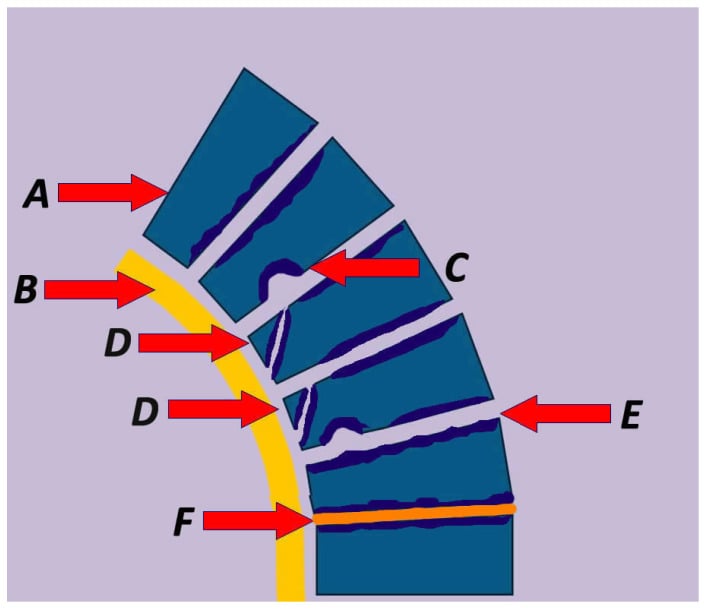
The consequences. The wedged vertebrae sum to an increased thoracic kyphosis, and the lumbar and cervical regions compensate with hyperlordosis. The pelvis compensates as well, and that compensation is part of the preoperative plan. The soft tissues adapt around the deformity:
- Hamstrings and hip flexors tighten
- The pectorals shorten, tightening the anterior chest wall
- The centre of gravity shifts forward
- Normal Range
- 20-45°
- Scheuermann Threshold
- Greater than 45° (with vertebral wedging)
- Surgical Threshold
- Greater than 75°
- Normal Range
- 40-60°
- Scheuermann Threshold
- May be increased (compensatory)
- Surgical Threshold
- Consider in surgical planning
- Normal Range
- 20-40°
- Scheuermann Threshold
- May be increased (compensatory)
- Surgical Threshold
- Assess for chin-on-chest risk
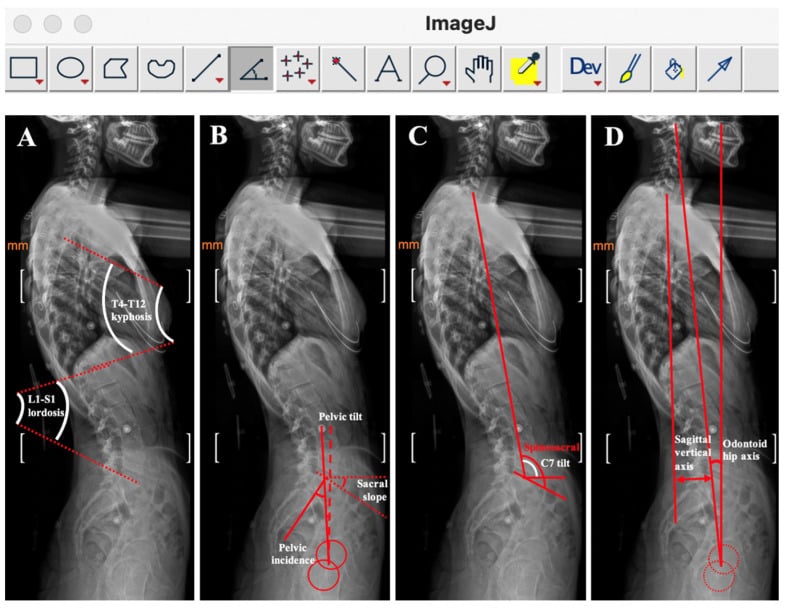
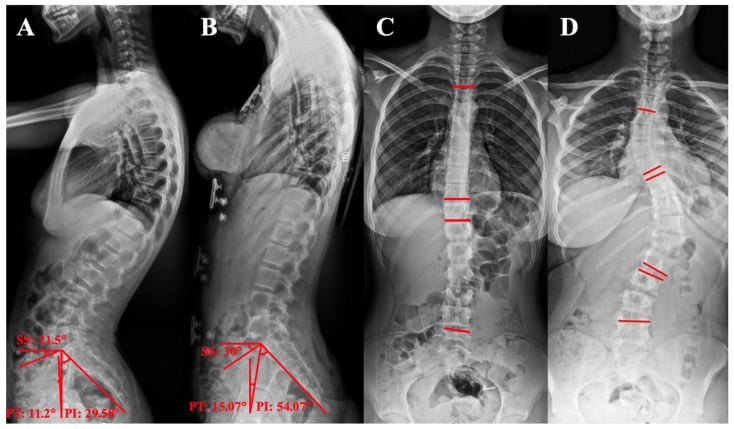
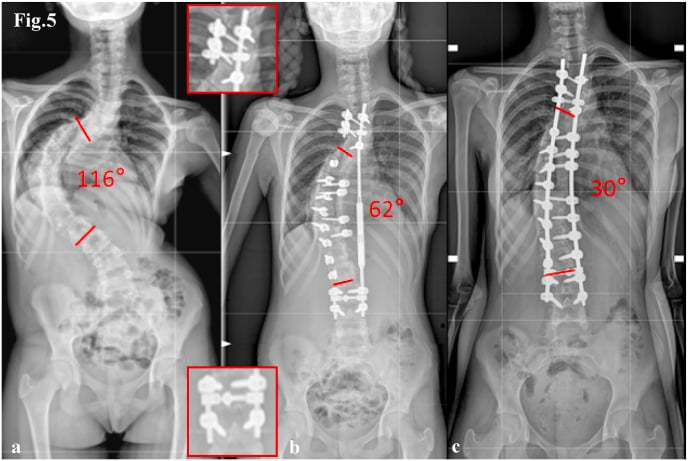
30% of Scheuermann patients have associated scoliosis. Always check for coronal plane deformity as well. Combined kyphoscoliosis may affect surgical planning.
Classification Systems
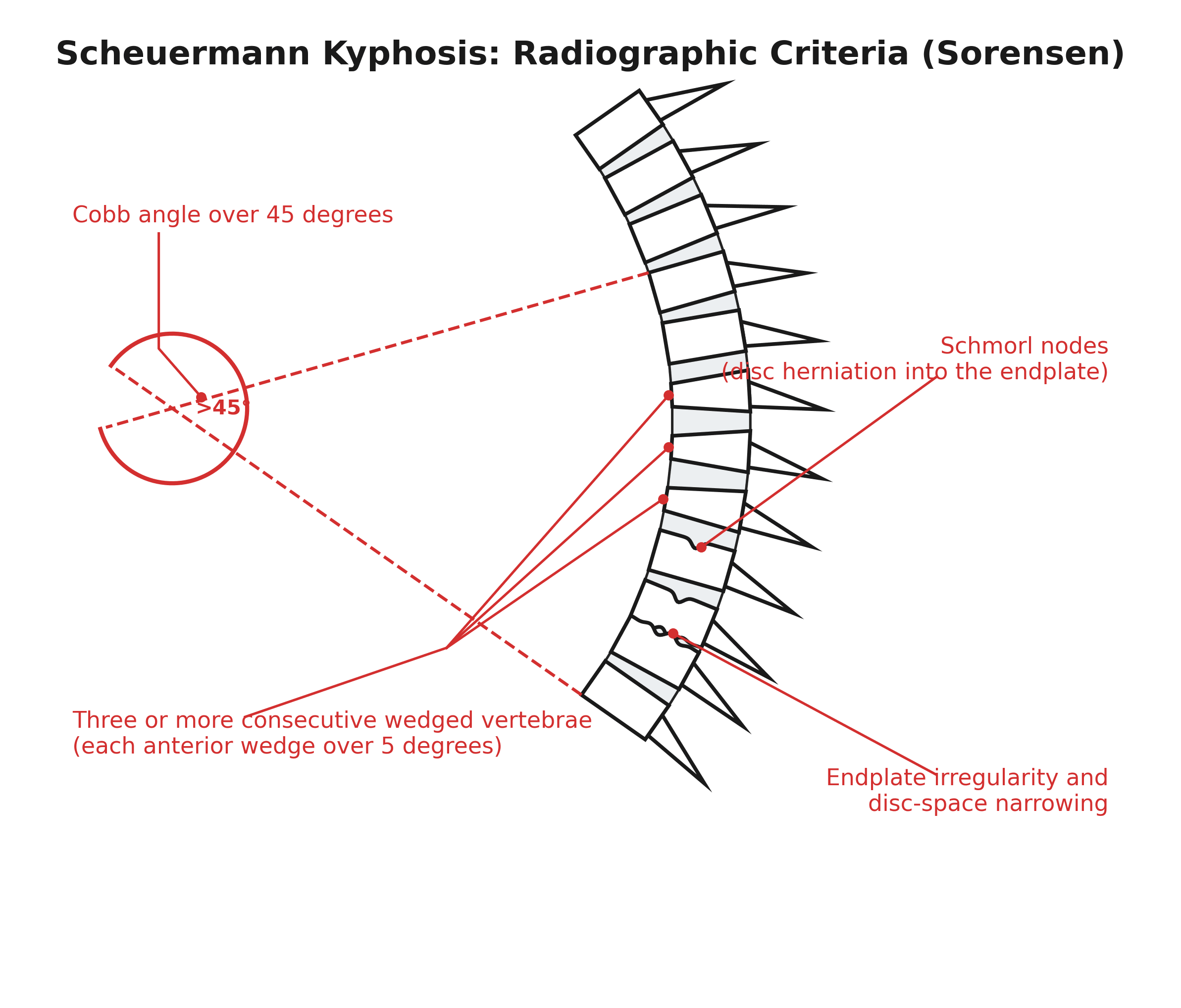
Sorensen's criteria (1964) are the standard for diagnosis. Both must be met:
- Thoracic kyphosis greater than 45°, the Cobb angle on a standing lateral radiograph
- Three or more consecutive vertebrae, each with anterior height loss and more than 5° of anterior wedging
Some authors use greater than 40° as the kyphosis threshold. The supportive findings are not required for the diagnosis:
- Vertebral endplate irregularities: wavy, irregular endplates
- Schmorl nodes, disc herniation into the vertebral body
- Disc-space narrowing
- Increased AP diameter of the apical vertebrae
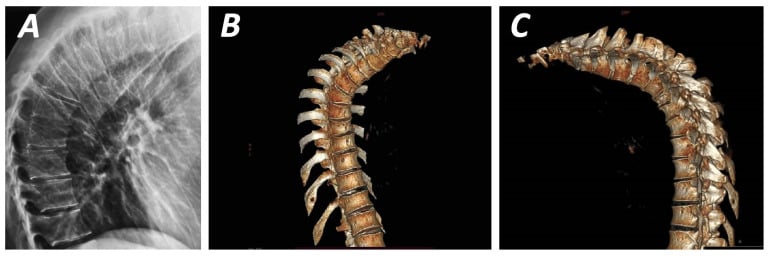
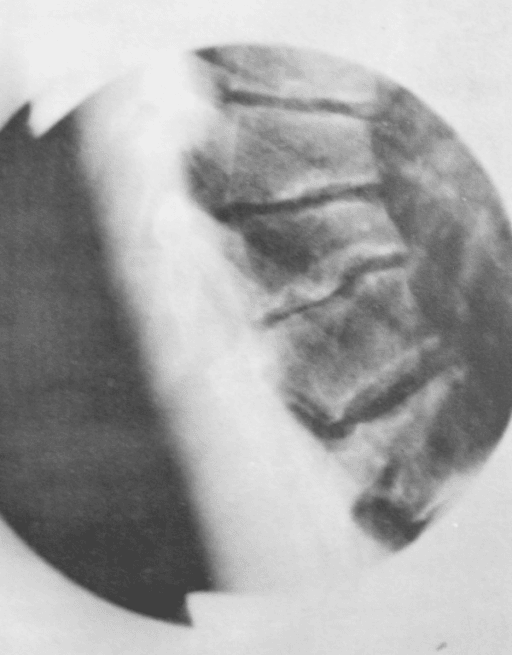
Two types. The apex of the curve separates them. The classic thoracic form is the more common and the better tolerated.
- Apex Location
- T7-T9
- Pain Profile
- Often asymptomatic or mild
- Prognosis
- Generally good, cosmetic concern
- Apex Location
- T10-L2
- Pain Profile
- More common back pain
- Prognosis
- Higher degenerative risk
Atypical (lumbar or thoracolumbar) Scheuermann. A distinct, exam-favoured entity, more painful than the thoracic form and more likely to cause functional limitation and pain in adulthood. It is seen most often in adolescent athletes and manual workers (gymnasts, rowers, fast bowlers, weightlifters). Repetitive flexion plus axial loading injures the immature vertebral endplate and ring apophysis, producing Schmorl nodes, endplate irregularity and disc-space narrowing at the thoracolumbar junction, often with little or no visible kyphotic deformity.
It presents as back pain. Activity-related low back pain is the dominant symptom, not a cosmetic round back, and lumbar Scheuermann may present primarily as low back pain rather than visible kyphosis. Recognise it as a cause of "mechanical" adolescent back pain rather than dismissing it as a sprain.
Clinical Assessment
History. Onset is gradual and noticed during the growth spurt. Pain is present in 50%, usually activity-related and localised to the apex. Ask how the back affects sport and sitting tolerance, and whether there is a family history, which may be positive. Neurological symptoms are rare, but ask about weakness and numbness.
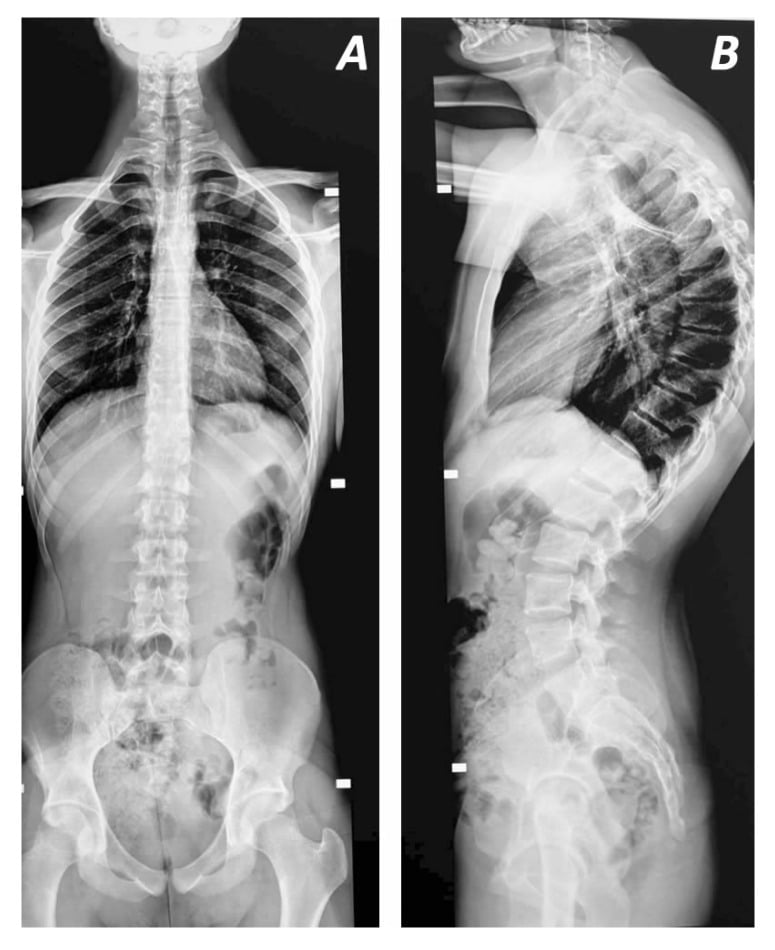
Inspection. Standing, the thoracic kyphosis is exaggerated, with a forward head posture and often protracted shoulders; the lumbar lordosis is increased and the cervical spine extended. On the Adams forward bend the kyphosis has an angular apex rather than a smooth curve. Look for the rib hump or asymmetry of an associated scoliosis.
Flexibility. The hyperextension test decides whether the curve is structural. Then test the tight soft tissues: hamstring tightness is very common (straight leg raise), the Thomas test for hip flexor tightness is often positive, and shoulder flexibility shows pectoralis tightness.
Have patient lie prone and hyperextend the spine (or extend over examiner's arm). Scheuermann kyphosis remains fixed (rigid, structural). Postural kyphosis corrects completely (flexible, non-structural). This single test distinguishes the two conditions.
Neurology. Examine fully if there are any symptoms, checking reflexes, strength and sensation in the lower limbs. Cord compression is rare but possible with severe kyphosis, and a thoracic disc can herniate into the spinal canal.
Investigations
Radiographs. A standing lateral spine radiograph with the arms forward on a support is the standard view for measuring kyphosis. The Cobb angle is measured from the superior endplate of the first tilted vertebra to the inferior endplate of the last tilted vertebra, usually T4-T12 or the affected levels. An AP view assesses scoliosis.
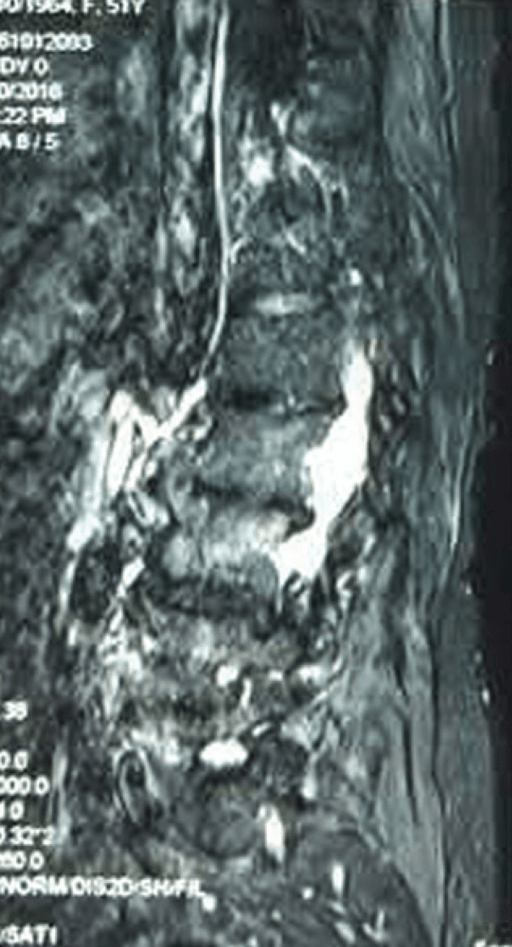
Other imaging. The diagnosis itself is radiographic, and MRI is for the atypical case: it is indicated only for neurological symptoms, to assess the cord and disc. CT is rarely needed, for surgical planning in complex cases, and a bone scan is not routinely indicated.
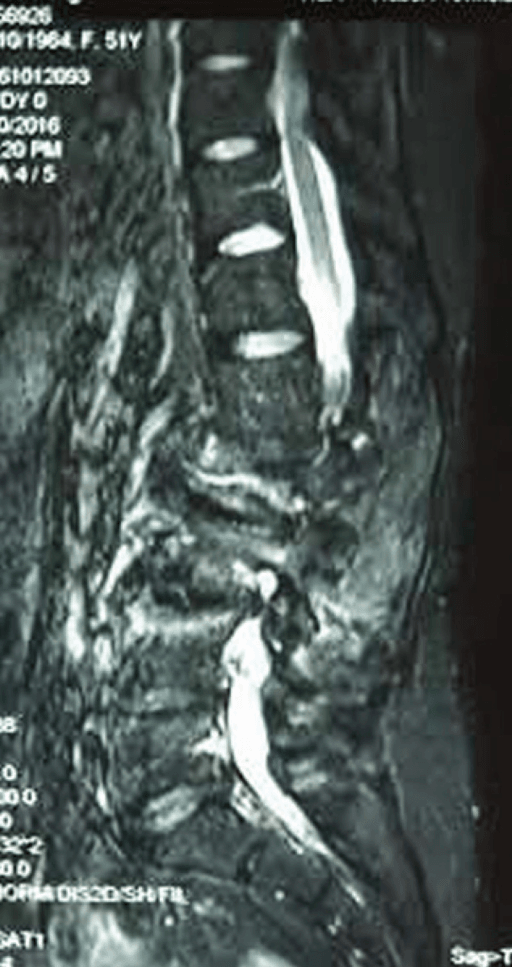
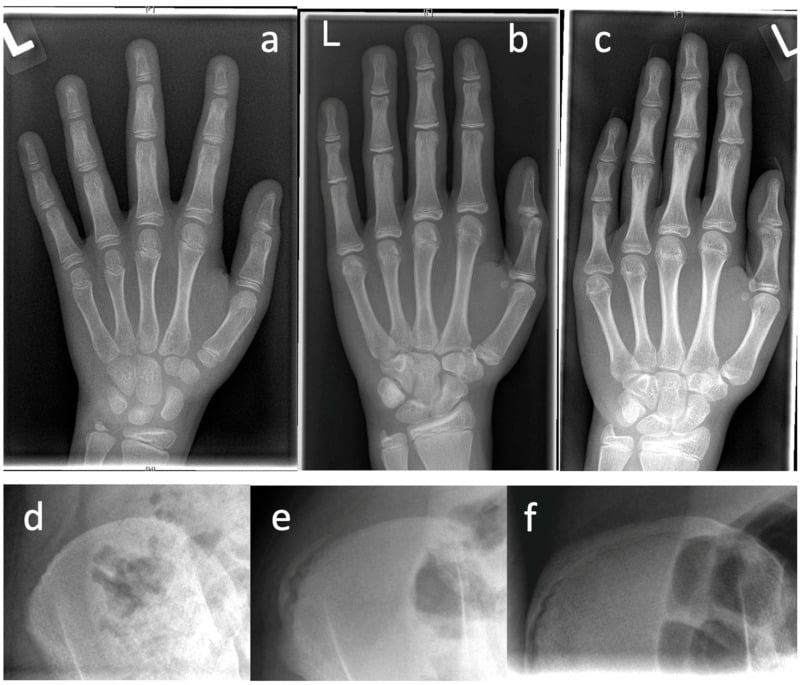
Skeletal maturity. It is critical to bracing candidacy. Assess the Risser sign on the iliac crest, with a hand radiograph for bone age if needed.
Differential Diagnosis
The structural, rigid kyphosis of Scheuermann disease must be distinguished from other causes of an increased thoracic or thoracolumbar curve in a young person. Getting this wrong risks bracing a flexible postural curve, which needs only posture training and exercises, or missing infection, tumour or a syndromic/neuromuscular cause.
- Key Discriminating Features
- Rigid, angular apex; 3+ wedged vertebrae over 5°; Schmorl nodes; positive family history; pain often present, activity-related
- Confirmatory Test
- Standing lateral radiograph (Cobb, wedging, endplate change)
- Key Discriminating Features
- Smooth round curve, fully corrects on hyperextension, no vertebral wedging, usually painless
- Confirmatory Test
- Hyperextension test + normal radiograph
- Key Discriminating Features
- Present from infancy/early childhood, often sharp angular gibbus; failure of formation/segmentation
- Confirmatory Test
- Radiograph ± CT showing hemivertebra/bar; high cord risk
- Key Discriminating Features
- Constitutional symptoms, night pain, sharp gibbus, vertebral destruction
- Confirmatory Test
- MRI (paraspinal abscess, disc/endplate destruction), inflammatory markers
- Key Discriminating Features
- Long C-shaped curve, hypotonia or spasticity, known syndrome (e.g. Marfan, neurofibromatosis)
- Confirmatory Test
- Underlying disease workup; MRI for dystrophic change/dural ectasia
- Key Discriminating Features
- Acute pain, trauma or steroid history, single-level wedge
- Confirmatory Test
- Radiograph/MRI marrow oedema; bone density assessment
A sharp angular gibbus, constitutional symptoms or rapid progression should prompt MRI to exclude infection (TB) or tumour before attributing a kyphosis to Scheuermann disease. Scheuermann produces a broad rounded structural curve over several segments, not a single-segment sharp angulation.
Management Algorithm
The decision. Curve size and skeletal maturity set the treatment.
- Skeletal Maturity
- Any
- Treatment
- Observation, physiotherapy, posture training
- Expected Outcome
- Stable, rarely progresses
- Skeletal Maturity
- Immature (Risser 0-3)
- Treatment
- Milwaukee brace or TLSO 16-23 hrs/day
- Expected Outcome
- Prevents progression, some correction
- Skeletal Maturity
- Mature (Risser 4-5)
- Treatment
- Physiotherapy, activity modification
- Expected Outcome
- Bracing ineffective after maturity
- Skeletal Maturity
- Any
- Treatment
- Surgical consultation
- Expected Outcome
- Likely needs operative treatment
Physiotherapy. The programme covers:
- Core strengthening, especially the extensors
- Hamstring and hip flexor stretching
- Pectoralis stretching
- Postural awareness training
- Activity modification, avoiding heavy lifting
It continues during bracing and after brace weaning, postural awareness is lifelong, and activity is modified if symptomatic.
Bracing. For the skeletally immature patient (Risser 0-3, more than 1 year of growth remaining) with a kyphosis of 50-75° who is compliant. A Milwaukee brace, which extends to the chin, or a TLSO is worn 16-23 hours a day until skeletal maturity, then weaned over 6-12 months, with exercises continued throughout. Compliance is the key determinant of bracing success.
BRACEBRACE - Bracing Criteria
Hook:To BRACE, patient must meet all criteria - immature, kyphosis 50-75°, compliant.
Atypical (lumbar) disease. Management is load-based and symptom-driven: relative rest from the offending sport, activity modification, core and hamstring rehabilitation, and analgesia. Bracing is reserved for refractory pain rather than for cosmesis, and surgery is almost never required. Most settle with skeletal maturity, although the segment carries a higher long-term degenerative/disc risk.
When to operate. The indications for surgery are:
- Kyphosis greater than 75°, the most common indication
- Progressive kyphosis despite bracing
- Intractable pain not responsive to conservative care
- Neurological deficit, which is rare (thoracic disc or cord compression)
- Cosmetic concern in a skeletally mature patient
- Description
- Pedicle screw fixation, osteotomies if stiff
- When Used
- Most common, kyphosis less than 80-90°
- Description
- Anterior release ± fusion then posterior fusion
- When Used
- Very stiff curves, kyphosis greater than 80-90°
- Description
- Smith-Petersen or Ponte osteotomies
- When Used
- Improve flexibility for correction
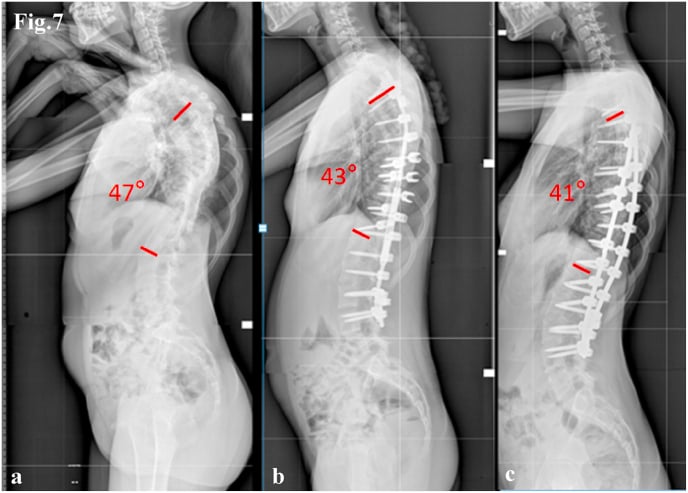
The operation. Posterior-only fusion is now the most common, and modern techniques favour it with multiple-level osteotomies; anterior release is rarely needed. The goals are to correct the kyphosis to the 40-50° range, achieve solid fusion, maintain sagittal balance and relieve pain.
Surgical Technique
Posterior spinal fusion with instrumentation is the standard approach for Scheuermann kyphosis.
Surgical Steps
- Prone position on appropriate frame
- Arms forward, knees slightly flexed
- Neuromonitoring (SSEPs, MEPs) throughout
- Midline incision over affected levels
- Subperiosteal exposure of posterior elements
- Usually T2/T3 to L1/L2 depending on curve
- Ponte osteotomies at multiple levels to increase flexibility
- Remove ligamentum flavum and facet joints
- Allows posterior column shortening and correction
- Pedicle screws at all levels (or hybrid with hooks)
- Dual rods (usually cobalt chrome or titanium)
- Sequential compression to correct kyphosis
- Use of set screws to lock correction
- Decorticate transverse processes and facets
- Apply bone graft (local autograft ± allograft)
- Close in layers over drain
Principles. Preserve the lower lumbar lordosis to avoid a flat back, and achieve correction with compression rather than distraction. These principles are essential for durable correction and for avoiding junctional complications.
Fusion levels. Level selection is the main way to prevent junctional kyphosis.
- Proximally, include the proximal end vertebra, the most cephalad vertebra of the measured kyphotic Cobb. Stopping short of it leaves an uninstrumented kyphotic segment that becomes proximal junctional kyphosis (PJK).
- Distally, extend the construct to the sagittal stable vertebra (SSV), the most proximal vertebra touched by the posterior sacral vertical line (a vertical line from the posterosuperior corner of S1), and at least to the first lordotic disc. Stopping above the SSV, in particular at or above the first lordotic vertebra alone, leaves the lower curve unbalanced and predisposes to distal junctional kyphosis (DJK).
Which distal rule is best is still debated; the Controversies section below sets out the argument.
How much to correct. Conventional teaching adds a third rule, avoid over-correction: aim toward a physiological kyphosis of about 50°, matched to pelvic incidence, rather than a straight spine, with gentle proximal fixation. The Scheuermann-specific data make that rule less secure than level selection. In the largest operative series PJK was associated with greater residual kyphosis and a LOWER percentage correction, so under-correction is at least as much a concern as over-correction, and the role of correction magnitude is unsettled.
Combined anterior-posterior surgery. Reserved for severe, rigid curves (greater than 80-90°), and now less commonly needed with modern posterior osteotomy techniques. The anterior release, through a thoracotomy or thoracoscopic approach, removes the discs at multiple levels (usually 4-6) and releases the anterior longitudinal ligament; an anterior strut graft may be added. Posterior instrumentation and fusion follow as above, in the same or a staged procedure, and more correction is achievable with the anterior release. The costs are higher morbidity than posterior-only surgery, pulmonary complications from the thoracotomy and a longer operative time.
Complications
- Incidence
- Up to 32% proximal, 5% distal
- Prevention/Management
- Include the proximal end vertebra, fuse distally to the sagittal stable vertebra
- Incidence
- Less than 1%
- Prevention/Management
- Neuromonitoring, careful correction
- Incidence
- 5-10%
- Prevention/Management
- Adequate bone graft, avoid smoking
- Incidence
- 1-3%
- Prevention/Management
- Prophylactic antibiotics, meticulous technique
- Incidence
- Variable
- Prevention/Management
- Adequate fixation, patient compliance
- Incidence
- Common
- Prevention/Management
- Padding, skin checks, brace adjustments
Proximal junctional kyphosis. The most common complication after kyphosis surgery, and the dominant complication of Scheuermann surgery, occurring at the level above the instrumentation. In the largest Scheuermann operative series, PJK of 10° or more affected 32% of patients, and distal junctional kyphosis 5%. The established risk factors:
- Poor bone quality
- Stopping the construct short of the proximal end vertebra
- Disruption of the posterior ligamentous complex at the upper instrumented vertebra
- Malaligned global sagittal balance
The dependable levers are level selection and soft-tissue preservation at the top of the construct, not a fixed correction target.
Postoperative Care and Rehabilitation
Post-Surgery Protocol
- Mobilise day 1-2 with physiotherapy
- Wean pain control, oral medications
- Drain removal when output minimal
- Wound check before discharge
- Limited activity, no bending/twisting/lifting
- Walking encouraged, increase distances
- Wound care, monitor for infection
- May use brace if surgeon preference
- Gradual increase in activity
- May return to school/desk work
- No sports or heavy activity
- X-rays to assess alignment
- Progressive return to activities
- Sports typically 6-12 months
- Physical therapy for core strength
- Final X-rays at 1-2 years
Outcomes
After bracing. Bracing is effective in preventing progression if the criteria are met, but it rarely achieves significant correction of established deformity. Long-term function is good for curves less than 75°, and back pain may persist, though it is usually manageable.
After surgery. Satisfaction rates are high, greater than 90%, with correction from an average of 75° to 45-50° and pain improvement in most patients. Return to full activities takes 6-12 months, and long-term fusion outcomes are generally good.
Guidelines, Registries & Global Practice
Global Epidemiology:
- Reported prevalence 1-8% of adolescents, varying with the diagnostic threshold (greater than 40° vs greater than 45°) and the population screened
- Danish twin data estimate heritability at 0.74 with an underlying population prevalence near 1.9% and an approximately 2:1 male predominance
- Peak presentation in the pubertal growth spurt (roughly 12-17 years), reflecting the period of maximal anterior vertebral growth
- Diagnostic & Conservative Stance
- Greater than 45° with structural wedging; bracing for flexible curves 55-80° in the immature
- Operative Stance
- Surgery generally reserved for curves over 70-75°, progression or refractory pain
- Diagnostic & Conservative Stance
- Observation and physiotherapy for mild curves; bracing offered selectively in the immature
- Operative Stance
- Deformity surgery centralised to specialist units; posterior-only with osteotomies favoured
- Diagnostic & Conservative Stance
- Emphasis on standing sagittal Cobb and global sagittal balance; brace for progressive immature curves
- Operative Stance
- Posterior column osteotomies + segmental pedicle screws; anterior release for very rigid curves only
- Diagnostic & Conservative Stance
- Structured bracing and physiotherapeutic scoliosis-specific exercises in the immature
- Operative Stance
- Refers for surgery when bracing fails or curve is severe
There is no single international consensus number: thresholds differ because evidence is largely retrospective and outcome measures vary. The common thread is structural confirmation plus skeletal maturity to decide between bracing and surgery.
- Unlike arthroplasty, Scheuermann kyphosis has no dedicated worldwide implant registry; deformity outcomes are reported through SRS morbidity-and-mortality databases and multicentre study groups
- Spinal deformity registries (e.g. national paediatric spine collaboratives) track instrumentation complications such as PJK, infection and reoperation across centres
- Well-resourced settings: standing long-cassette/EOS imaging, custom TLSO/CAD bracing with compliance sensors, neuromonitoring (SSEP/MEP/triggered EMG) and cell salvage for surgery
- Limited-resource settings: reliance on plain radiographs, generic off-the-shelf bracing, later presentation with larger rigid curves, and fewer centres offering safe deformity surgery with neuromonitoring - shifting the balance toward conservative management or referral
Controversies & Areas of Uncertainty
Sorensen's greater than 5° wedging of 3+ contiguous vertebrae is classic, but some authors diagnose with a single wedged vertebra plus typical endplate change, and use greater than 40° rather than greater than 45° as the kyphosis cut-off. There is no universally agreed numeric definition.
Brace efficacy is supported only by retrospective data. The curve magnitude at which to start, target wear time, and whether physiotherapeutic scoliosis-specific exercises add benefit all vary between centres and societies.
Conventional teaching links over-correction to proximal junctional kyphosis, and many surgeons deliberately correct only toward physiological kyphosis (around 50°), matching correction to pelvic incidence rather than aiming for a "straight" spine. The Scheuermann-specific data cut the other way: in the largest operative series, PJK was associated with greater residual kyphosis and a lower percentage correction. The question is genuinely unresolved, and level selection is the better-supported lever.
Selecting the lowest instrumented vertebra (first lordotic vertebra vs sagittal stable vertebra) to minimise distal junctional kyphosis remains debated, with different rules proposed and no randomised comparison.
Anterior release has largely fallen out of routine use because posterior column osteotomies achieve comparable correction - a meta-analysis of 13 studies and 1,147 patients found posterior-only surgery with osteotomies matched combined anterior-posterior results, while posterior-only surgery without osteotomies corrected about 5.6° less - but its precise residual role in the most rigid curves is still individualised rather than protocol-driven.
MCQ Practice Points
Q: What are the Sorensen criteria for Scheuermann kyphosis? A: Thoracic kyphosis greater than 45° with 3 or more consecutive vertebrae each having greater than 5° anterior wedging. Supportive findings include Schmorl nodes, endplate irregularities, and disc space narrowing.
Q: How do you differentiate Scheuermann from postural kyphosis clinically? A: Hyperextension test - Scheuermann does NOT correct (rigid, structural). Postural kyphosis corrects fully (flexible, non-structural).
Q: When is bracing indicated for Scheuermann kyphosis? A: Kyphosis 50-75° in skeletally immature patients (Risser 0-3) with greater than 1 year growth remaining. Bracing is ineffective after skeletal maturity.
Q: What is the surgical threshold for Scheuermann kyphosis? A: Greater than 75° kyphosis, or progressive curve despite bracing, or intractable pain, or neurological symptoms.
Medicolegal Considerations
- Document hyperextension test result (rigid vs flexible)
- Record Cobb angle and vertebral wedging measurements
- Document skeletal maturity assessment (Risser sign)
- Record neurological examination findings
- Document bracing compliance discussions
- Proximal junctional kyphosis risk (10-20%)
- Neurological injury risk (less than 1%)
- Pseudarthrosis, infection, hardware failure
- Blood loss and transfusion possibility
- Long fusion and loss of motion
Although rare, thoracic cord compression can occur with severe Scheuermann kyphosis. Document neurological examination at each visit. Missing progressive weakness could lead to delayed treatment and worse outcomes.
Clinical Decision Scenarios
Practise clinical reasoning and management decisions out loud
“A 14-year-old boy presents with progressive round back posture noticed by his parents over the past year. He complains of mild mid-back pain after prolonged sitting. How would you differentiate Scheuermann kyphosis from postural kyphosis?”
“A 16-year-old girl with known Scheuermann kyphosis returns after completing 2 years of bracing. Her curve has progressed from 55° to 70° despite reported compliant brace wear. She now has daily back pain. Why might the kyphosis have progressed despite bracing?”
“A 15-year-old with severe Scheuermann kyphosis (85°) presents with new onset lower limb weakness over 2 weeks. He has difficulty walking and describes numbness in both legs. What is your immediate concern and management?”
Diagnosis
- Kyphosis greater than 45° (Cobb angle)
- 3+ consecutive vertebrae with greater than 5° wedging each
- Schmorl nodes, endplate irregularities
- Hyperextension test: does NOT correct (rigid)
Bracing
- Kyphosis 50-75°
- Risser 0-3 (immature)
- Greater than 1 year growth remaining
- 16-23 hours/day until maturity
Surgery
- Kyphosis greater than 75°
- Progressive despite bracing
- Intractable pain
- Neurological symptoms
Surgical Approach
- Posterior fusion with pedicle screws
- Ponte osteotomies for correction
- Anterior release rarely needed
- Goal: 45-50° final kyphosis
Complications
- PJK 10-20% (most common)
- Neurological less than 1%
- Pseudarthrosis 5-10%
- End fusion at lordotic vertebra
Evidence Base
Landmark natural-history, genetic-epidemiology, bracing, and operative studies are summarised with the actual sample sizes and conclusions of each paper.
Natural History at 32-Year Follow-up (Iowa cohort)
- 67 patients (mean kyphosis 71°) reviewed at mean 32 years vs 34 matched controls
- More intense back pain, reduced trunk extension range and strength than controls
- No difference in education, days off work, ADL interference, self-esteem or social limitation
- Restrictive lung disease only when kyphosis exceeded 100° with apex T1-T8
- Mild scoliosis was common, but SPONDYLOLISTHESIS WAS NOT OBSERVED in any of the 67 patients - the association widely taught here is with spondyloLYSIS, not slip (50% but in only 18 patients, and asymptomatic in all: Ogilvie, Spine 1987, PMID 3589821), so image the lumbar spine if a Scheuermann patient develops low back pain, and expect a pars defect without a slip
Genetic Epidemiology - Danish Twin Study
- 11,436 complete twin pairs analysed by classical twin modelling
- Heritability estimate 0.74 (95% CI 0.65-0.81); environment 0.26
- Estimated female prevalence 1.9%; male threshold lower (about 2:1 male predominance)
- Prevalence stable across a 50-year age span