Classification | Grading | Fusion Decisions
- Isthmic = pars defect, young, L5-S1
- Degenerative = facet arthropathy, older, L4-L5
- Meyerding grades I-V based on slip percentage
- High-grade (greater than 50%) usually needs reduction consideration
- Fusion indicated for symptomatic with instability or progression
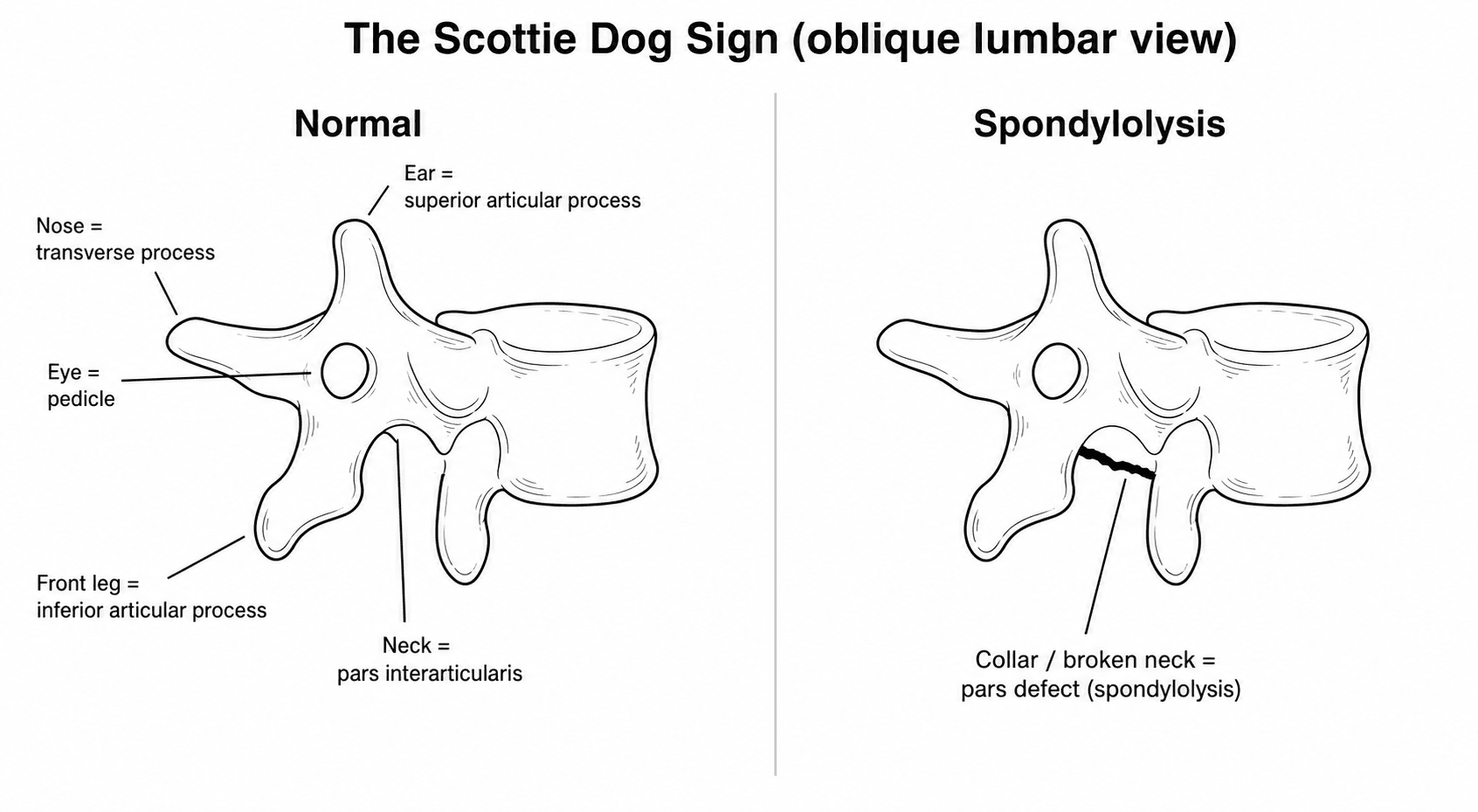
- “Scotty dog sign on oblique X-ray = pars defect
- “Degenerative rarely exceeds Grade II
- “L5 radiculopathy common in isthmic L5-S1
- “Slip angle more important than grade for high-grade
Overview and Epidemiology
Spondylolisthesis is the forward slip of a vertebra on the one below. Of the Wiltse types, isthmic and degenerative are the two common ones, and the examination turns on telling them apart: the isthmic slip is a pars defect in a young patient, most commonly at L5-S1, and the degenerative slip is facet arthropathy with an intact pars in an older patient, most commonly at L4-L5.
- Isthmic (Type II)
- Young (teens to 30s)
- Degenerative (Type III)
- Older (over 50)
- Isthmic (Type II)
- L5-S1 (90%)
- Degenerative (Type III)
- L4-L5 (most common)
- Isthmic (Type II)
- Defect (lysis)
- Degenerative (Type III)
- Intact
- Isthmic (Type II)
- Pars fracture
- Degenerative (Type III)
- Facet arthropathy
- Isthmic (Type II)
- Can progress to high-grade
- Degenerative (Type III)
- Rarely exceeds Grade II
Risk factors for an isthmic slip. Extension sports such as gymnastics and cricket fast bowling, repetitive hyperextension, the adolescent growth spurt and a genetic predisposition. Males are affected more than females.
Risk factors for a degenerative slip. Age over 50 and female sex, with a female-to-male ratio of 3:1. Sagittally oriented facets, disc degeneration and postmenopausal hormonal factors add to the risk.
Pathophysiology and Mechanisms
The pars defect. The pars interarticularis, or isthmus, is the bridge of bone between the superior and inferior articular processes. Spondylolysis is a fatigue fracture of the pars from repetitive hyperextension and rotation. A unilateral defect is spondylolysis without listhesis; bilateral defects allow the vertebra to slip forward.
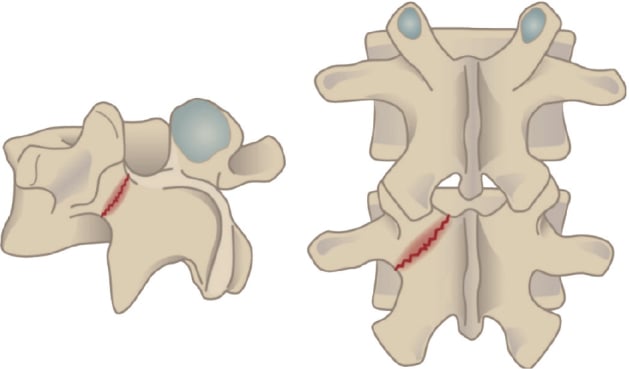
How the vertebra slips. In an isthmic slip the pars breaks, the posterior elements separate from the vertebral body, and the body slides forward on the intact disc. In a degenerative slip the pars is intact but the facets degenerate, become incompetent and allow forward translation.
Which root is compressed. In the isthmic slip it is the L5 root in the foramen, the exiting root. In the degenerative slip it is the L5 root in the lateral recess, the traversing root, together with foraminal stenosis. Understanding the compression pattern guides the decompression.
- Exiting Root
- L4
- Traversing Root
- L5
- Clinical
- L5 radiculopathy common (degenerative)
- Exiting Root
- L5
- Traversing Root
- S1
- Clinical
- L5 radiculopathy (foraminal narrowing in isthmic)
Classification Systems
Wiltse-Newman. The classification sorts slips by mechanism. Type II, isthmic, is the most common and has three subtypes: IIa lytic (fatigue fracture), IIb elongated intact pars and IIc acute pars fracture.
- Name
- Dysplastic
- Mechanism
- Congenital facet abnormality
- Level
- L5-S1
- Name
- Isthmic
- Mechanism
- Pars defect (lytic, elongated, acute)
- Level
- L5-S1
- Name
- Degenerative
- Mechanism
- Facet arthropathy, intact pars
- Level
- L4-L5
- Name
- Traumatic
- Mechanism
- Acute fracture other than pars
- Level
- Any
- Name
- Pathologic
- Mechanism
- Tumour, infection, bone disease
- Level
- Any
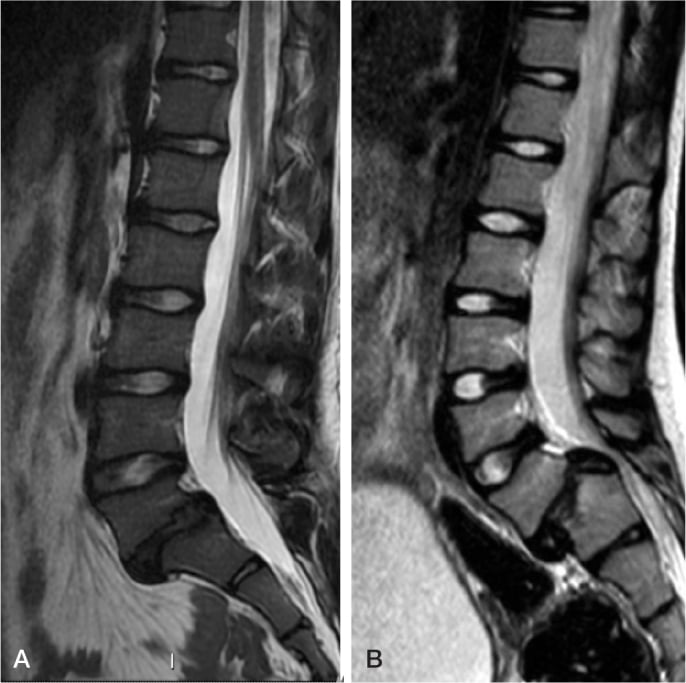
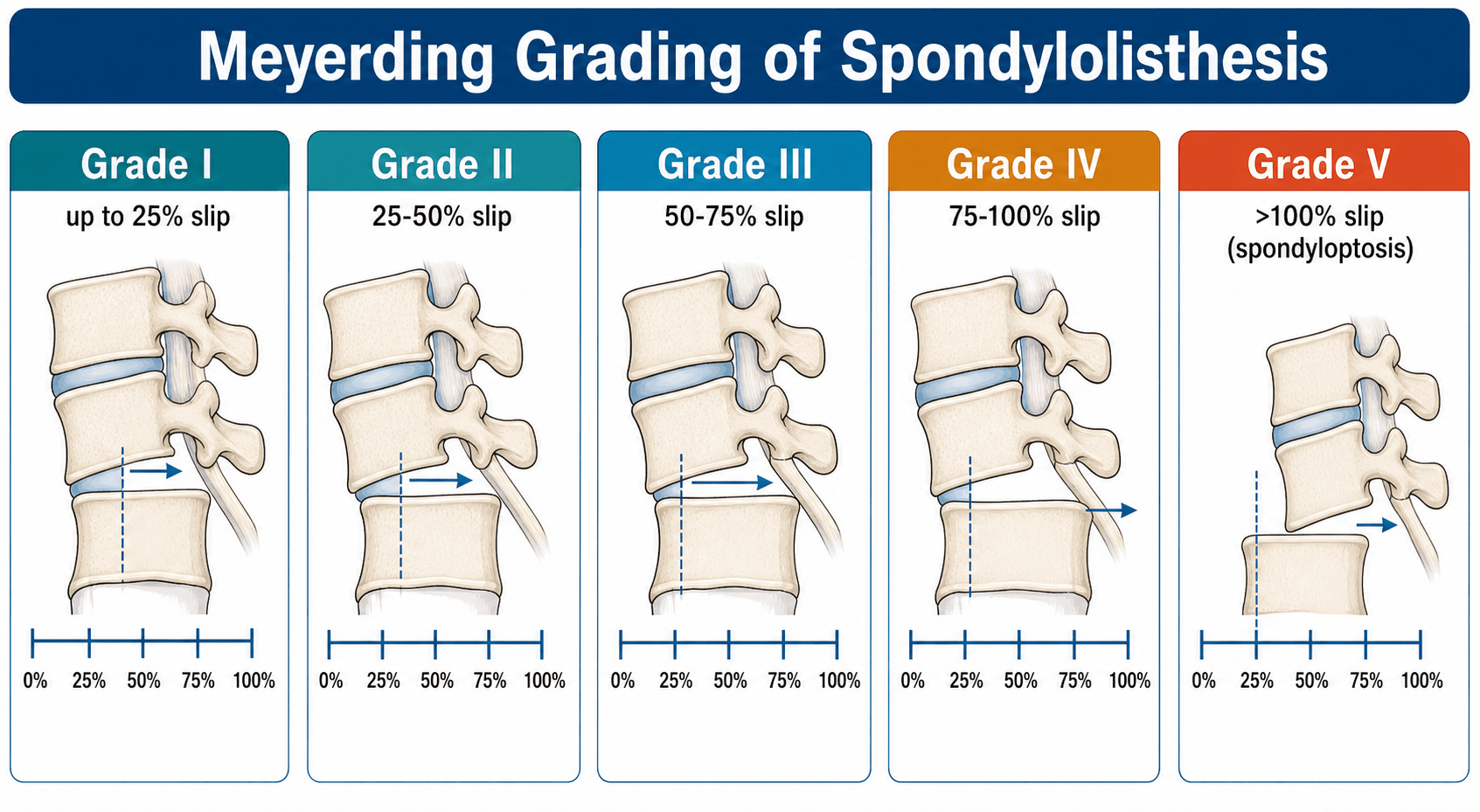
Meyerding. The grade is the forward slip of L5 as a percentage of the S1 endplate, read in quarters; how to measure it is set out below. Grades I and II are low-grade. Grade III and above, a slip of more than 50%, is high-grade and requires special consideration for reduction.
Marchetti-Bartolozzi. This classification helps predict behaviour and guide treatment in high-grade slips. The developmental slip is dysplastic, with a dome-shaped sacrum and a high slip angle, and carries a higher risk of progression. The acquired slip is isthmic with a more horizontal sacrum, and carries a lower risk.
Spinopelvic Balance and the SDSG Classification
Why the pelvis matters. Pelvic incidence is a fixed parameter, and a high pelvic incidence allows more slip before imbalance. In sagittal imbalance the patient leans forward and flexes the hips and knees to compensate, and high-grade spondylolisthesis often causes significant imbalance requiring correction. Sacral inclination affects neural tension and posture.
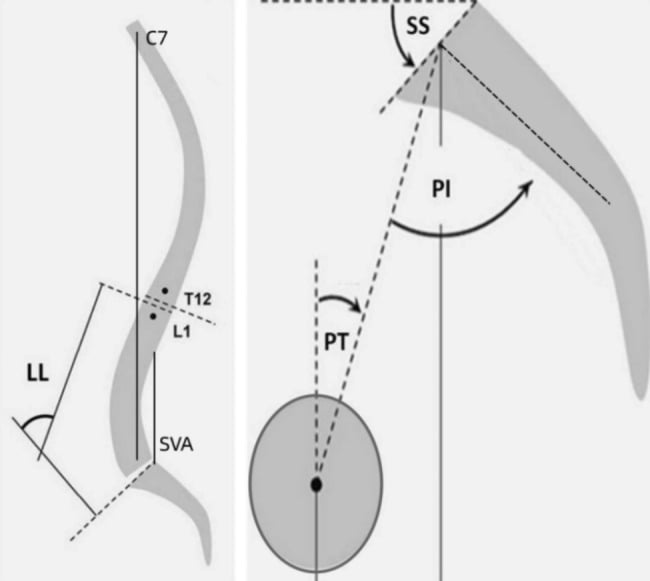
The SDSG classification sorts L5-S1 slips by grade and by spinopelvic alignment.
- Slip grade
- Low-grade
- Spinopelvic alignment
- Low pelvic incidence (nutcracker type)
- Slip grade
- Low-grade
- Spinopelvic alignment
- Normal pelvic incidence
- Slip grade
- Low-grade
- Spinopelvic alignment
- High pelvic incidence (shear type)
- Slip grade
- High-grade
- Spinopelvic alignment
- Balanced pelvis (high sacral slope, low pelvic tilt)
- Slip grade
- High-grade
- Spinopelvic alignment
- Unbalanced (retroverted) pelvis, balanced spine
- Slip grade
- High-grade
- Spinopelvic alignment
- Unbalanced pelvis and unbalanced (forward) spine
Balanced or unbalanced. In a high-grade slip the key distinction is the pelvis. A balanced pelvis has a high sacral slope and low pelvic tilt; an unbalanced pelvis retroverts to compensate for the slip, with a low sacral slope, high pelvic tilt and a "vertical sacrum".
What it decides. An unbalanced or retroverted pelvis (types 5 to 6) is the setting in which reduction to restore spinopelvic balance is most strongly considered. A balanced high-grade slip may be managed with in-situ fusion.
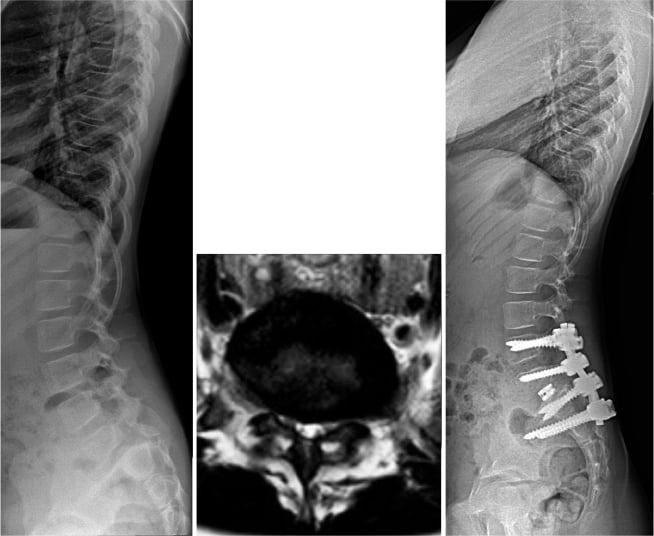
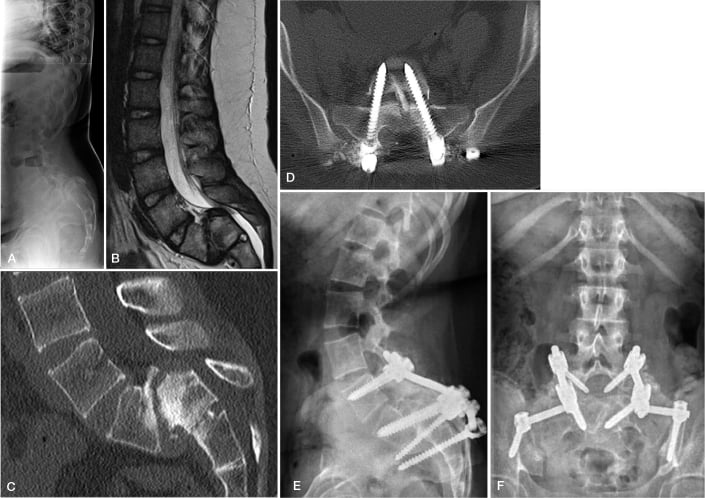
Clinical Assessment
History. Back pain is worse with extension, and leg pain follows a radicular pattern. Claudication points to associated stenosis. Take a sports history for the isthmic slip, and note the age of onset: young suggests isthmic, old suggests degenerative.
Examination. Look at posture, which may show hyperlordosis or a flexed stance, and test the L5 and S1 roots. Tight hamstrings are found especially in high-grade slips.
Signs of a high-grade slip. Besides tight hamstrings, look for:
- A palpable step-off
- Flattened buttocks (vertical sacrum)
- A waddling (pelvic waddle) gait, if severe
- A shortened trunk
- Severe sagittal imbalance, which may be present
Differential diagnosis. Mechanical and radicular back pain has a broad differential. The key discriminators are the presence of a slip on the standing lateral radiograph, dynamic motion on flexion-extension and the pattern of neural compression.
- Distinguishing Features
- Pars defect without forward translation; extension-related pain
- Key Investigation
- Oblique X-ray, CT, SPECT/MRI for activity
- Distinguishing Features
- Neurogenic claudication, no vertebral translation
- Key Investigation
- Standing lateral X-ray (no slip), MRI
- Distinguishing Features
- Acute dermatomal radiculopathy, positive SLR, no slip
- Key Investigation
- MRI
- Distinguishing Features
- Extension/rotation pain, no instability, no neural deficit
- Key Investigation
- MRI/CT, diagnostic facet block
- Distinguishing Features
- Night pain, weight loss, destructive lesion (Wiltse V)
- Key Investigation
- MRI with contrast, CT, biopsy
- Distinguishing Features
- Acute injury, fracture other than pars (Wiltse IV)
- Key Investigation
- CT, MRI for ligamentous injury
Investigations
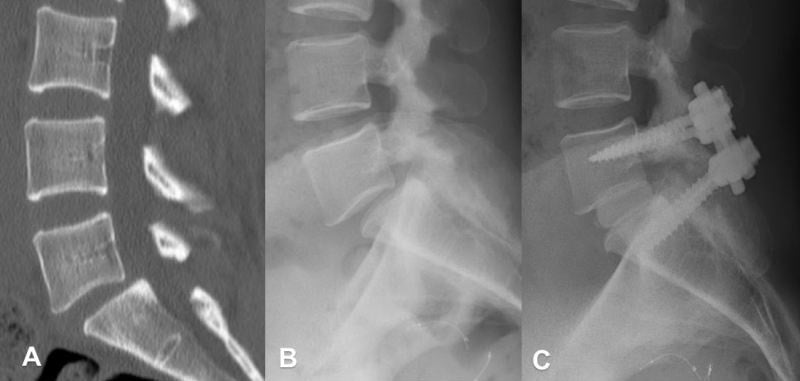
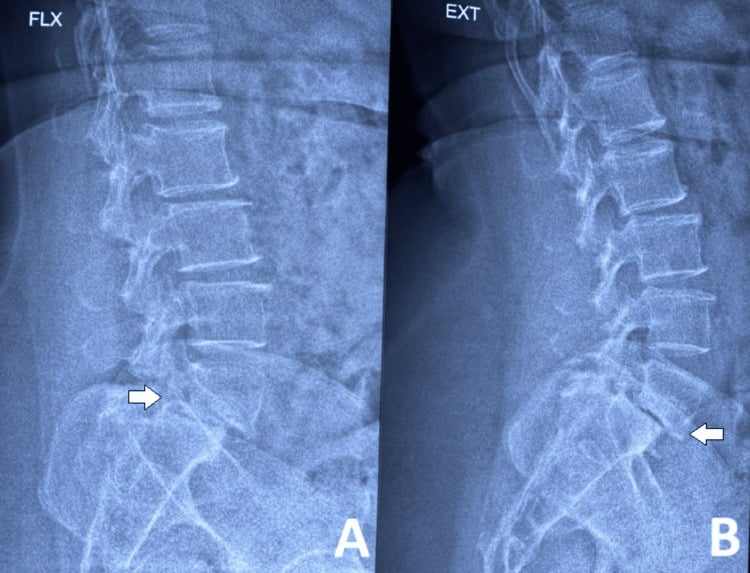
Plain radiographs. Take AP and lateral views, standing preferred, because standing laterals better demonstrate the true slip. The lateral gives the Meyerding grade and slip angle, the oblique view shows the pars defect, and flexion-extension views show dynamic motion and instability.
The Scotty dog. The oblique view is the one for the pars, whose posterior elements outline the dog below.
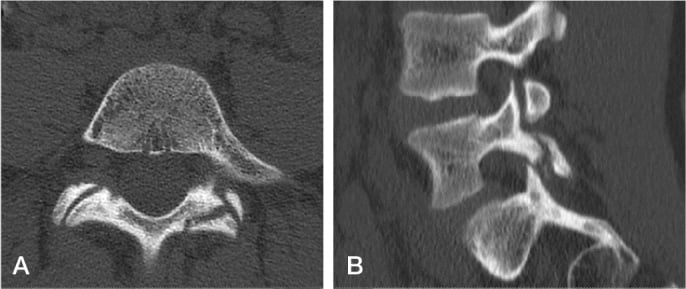
CT shows pars defects better than MRI. It gives detail of the defect, assesses healing potential (acute versus chronic), defines the bony anatomy and serves preoperative planning.
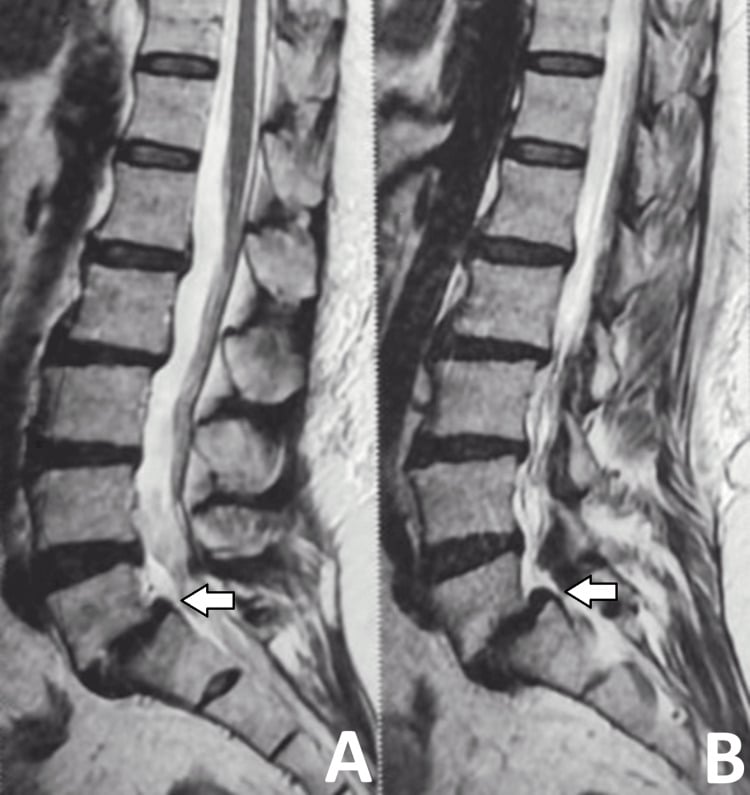
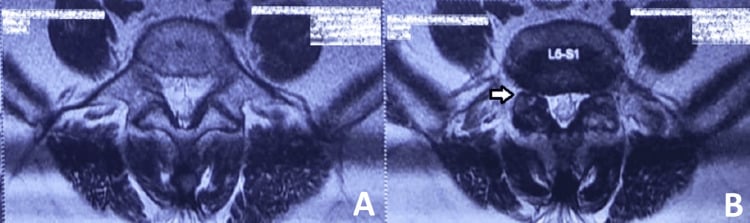
MRI assesses neural compression, nerve root impingement, stenosis and disc degeneration, and rules out other pathology. It is essential for surgical planning when neurological symptoms are present.
Measuring the Slip: Grade and Slip Angle
Two measurements from the standing lateral radiograph drive grading and prognosis: the amount of forward slip and the kyphotic angulation across the slip.
- How it is taken
- Divide the S1 superior endplate into quarters and grade by which quarter the posteroinferior corner of L5 overlies
- What it means
- Grade I to IV by quarter; Grade V is spondyloptosis (L5 below the S1 endplate)
- How it is taken
- Anterior displacement of L5 divided by the AP width of the S1 endplate, times 100
- What it means
- A precise continuous slip percentage, useful for tracking progression
- How it is taken
- Angle between the inferior endplate of L5 and the posterior cortex of S1
- What it means
- Measures lumbosacral kyphosis; a higher (more kyphotic) angle means worse deformity and higher progression risk
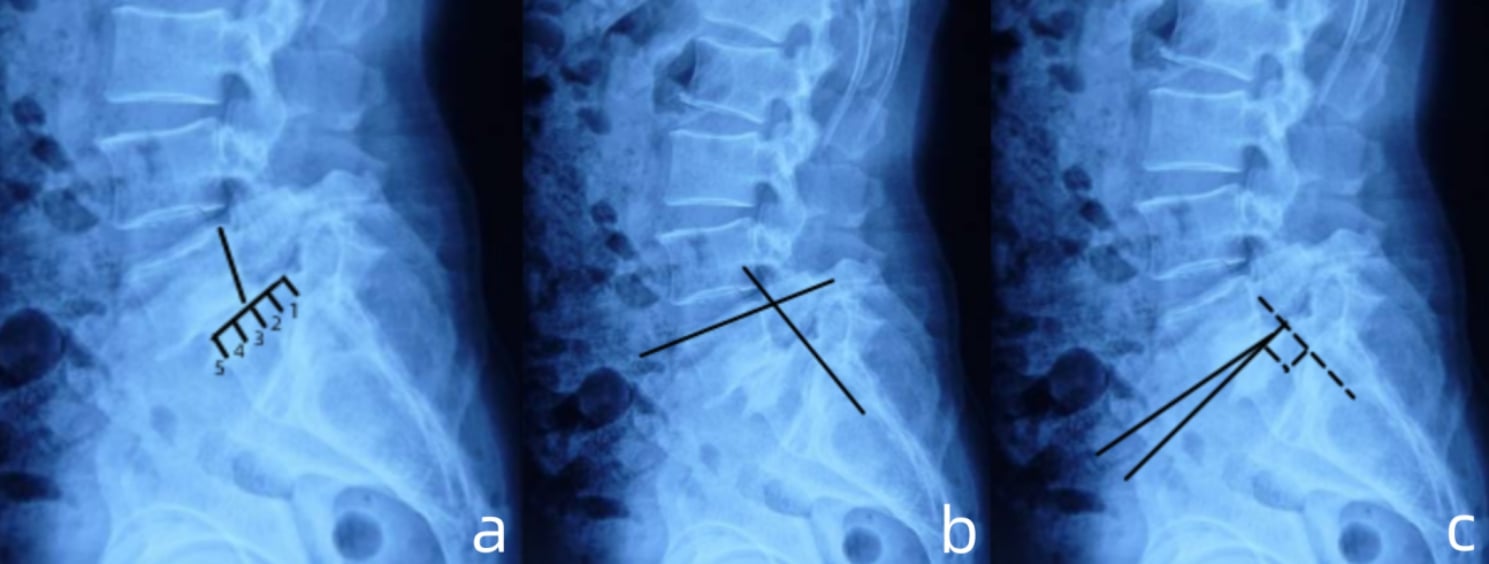
The Meyerding grade and Taillard percentage measure how far L5 has translated; the slip angle measures how kyphotically it has rotated on the sacrum. Because the slip angle reflects lumbosacral kyphosis and sagittal balance, it is more important than grade in high-grade slips: a high slip angle indicates worse sagittal imbalance and predicts progression better than grade.
Management Algorithm
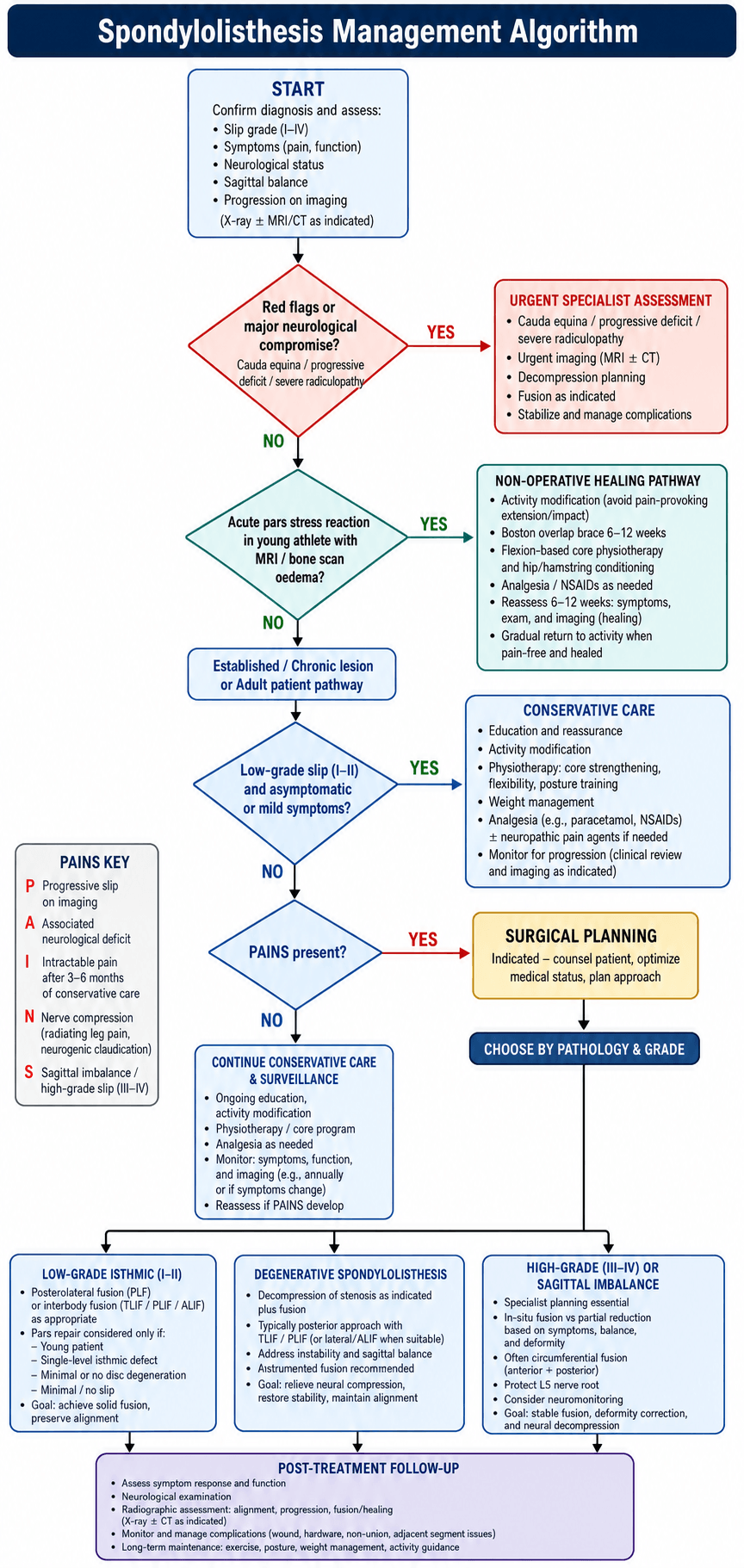
The acute pars stress reaction. In a young athlete the defect may heal if caught early (bone scan or MRI oedema positive). Treat with a Boston overlap brace for 6-12 weeks, activity modification and physiotherapy (flexion-based, core).
The established lesion. Chronic or established lesions are managed with physiotherapy and core strengthening, activity modification and weight management, with monitoring for progression. Many patients with low-grade slips remain asymptomatic.
When to operate. Surgery is for refractory symptoms or objective instability. The indications:
PAINSSurgical Indications
Hook:When listhesis causes PAINS, consider surgery!
Choosing the operation. Match the technique to the pathology; the choice depends on grade, symptoms and surgeon experience.
- Low-grade isthmic (I-II). Posterolateral fusion, TLIF or PLIF, or ALIF. Isthmic slips often go to ALIF or circumferential fusion; direct pars repair is described below.
- Degenerative. TLIF with decompression, or posterolateral fusion; a posterior approach is often sufficient.
- High-grade. Whether to fuse in situ or reduce is controversial (see Controversies); consider partial reduction.
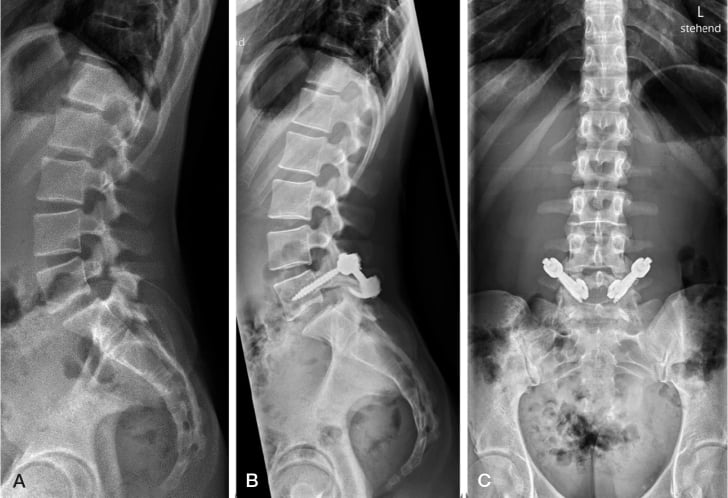
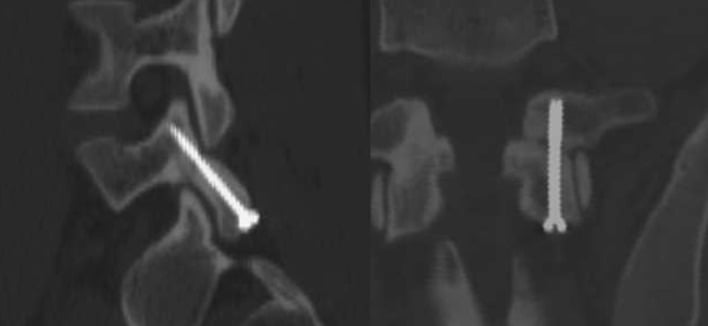
Direct pars repair. In young patients with single-level isthmic spondylolysis, no significant disc degeneration and no or minimal slip, direct repair (Buck repair, Scott wiring or a pedicle screw-hook construct) is an option, and it preserves motion.
Surgical Technique
Instrumented posterolateral fusion. Indicated for most low-grade listhesis. The key point is adequate decompression of the affected roots while achieving solid fusion.
- Prone positioning
- Midline approach, exposing the transverse processes
- Pedicle screw placement
- Decompression if needed (laminectomy, foraminotomy)
- Decortication and bone grafting to the transverse processes
Interbody fusion. Three routes to the disc space:
- TLIF (transforaminal). Unilateral facetectomy and an interbody cage through the foramen; good for degenerative listhesis.
- PLIF (posterior). Bilateral cages, with more retraction of the neural elements.
- ALIF (anterior). The best disc height restoration, preserving the posterior muscles, and often combined with posterior instrumentation. It is excellent for isthmic L5-S1, where it provides excellent access.
High-grade slips. Circumferential fusion, anterior and posterior, is often needed. The decision is how far to reduce:
- In-situ fusion fuses the slip in its current position, with lower neurological risk, and does not correct the deformity.
- Partial reduction gives some correction of slip and angle, balancing correction against risk, and is the most commonly used.
- Full reduction gives the best sagittal correction, with the highest L5 nerve root risk, and may require sacrifice of the L5 root.
L5 nerve root at significant risk with reduction of high-grade slips. The root is draped over the sacral dome and tethered. Aggressive reduction can stretch and injure it. Consider partial reduction and neuromonitoring.
Complications
- Notes
- 5-15% depending on technique
- Prevention/Management
- Adequate graft, rigid fixation, smoking cessation
- Notes
- With reduction
- Prevention/Management
- Partial reduction, neuromonitoring
- Notes
- Long-term
- Prevention/Management
- Consider minimising fusion length
- Notes
- Especially in young
- Prevention/Management
- Monitor, early fusion if progressing
- Notes
- 5-10%
- Prevention/Management
- Careful technique, primary repair
What affects fusion. Fusion rates are affected by the number of levels, smoking, biology, technique and bone graft quality; the interbody question is taken up under Controversies.
Postoperative Care
Spondylolisthesis Fusion Recovery
Pain control. DVT prophylaxis. Early mobilisation. Brace if used. Neurological checks (especially after high-grade reduction).
Activity restrictions (no BLT: bending, lifting, twisting). Wound care. Gradual walking increase. Brace compliance if prescribed.
Radiographs to assess. Begin physiotherapy for core strengthening. Gradual activity increase. Wean brace.
Fusion consolidation. Return to activities. Final radiographs for fusion assessment. CT if fusion in doubt.
Solid fusion shows no motion on flexion-extension, bridging bone and no lucencies around the hardware. A CT scan is the gold standard for fusion assessment.
Outcomes and Prognosis
Prognostic factors. Outcomes are better with a low-grade slip, predominant leg pain, good bone quality, a non-smoker and single-level disease. They are worse with a high-grade slip, predominant back pain, osteoporosis, smoking and multi-level disease.
Guidelines, Registries & Global Practice
Global Epidemiology
- Isthmic spondylolysis/spondylolisthesis: affects roughly 4-6% of the general adult population; the classic Fredrickson cohort found pars defects in about 4.4% of children by age 6 and 6% by adulthood, most at L5.
- Marked ethnic variation: prevalence is far higher in some Inuit/Alaska Native populations (reported up to 30-50%) and lower in some Black African populations - evidence for a strong genetic and biomechanical contribution.
- Sport exposure: rates rise sharply with repetitive lumbar hyperextension - cricket fast bowlers, gymnasts, divers, weightlifters and rowers.
- Degenerative spondylolisthesis: predominantly over age 50, female-to-male around 3:1, classically L4-L5, associated with sagittally-oriented facets and disc degeneration.
Side-by-Side Guideline Positions
- Core Position
- Decompression indicated for symptomatic stenosis with listhesis; fusion considered where instability present
- Emphasis
- Evidence-graded; supports surgery over medical/interventional care
- Core Position
- Decompression for stenosis; fusion not routine and reserved for demonstrable instability or deformity
- Emphasis
- Conservative-first; cautious about adding fusion
- Core Position
- Decision driven by instability, deformity and sagittal/spinopelvic parameters rather than slip grade alone
- Emphasis
- Classification- and alignment-led planning
- Core Position
- Individualised; the SLIP and Swedish trials diverge on primary endpoint and reoperation while agreeing on disability, so no universal fusion mandate
- Emphasis
- Shared decision-making, registry-informed
Registry & Practice Variation
- Registry signal: large spine registries (e.g. Swespine, the UK British Spine Registry) consistently show good patient-reported gains after decompression for degenerative listhesis, with wide centre-to-centre variation in fusion rates that is not fully explained by case mix - underscoring practice-pattern (rather than evidence) driven fusion.
- High-resource settings: ready access to MRI, intraoperative neuromonitoring, navigation/robotics and interbody implants; greater use of circumferential reconstruction for high-grade slips.
- Limited-resource settings: reliance on plain radiographs and clinical assessment; in-situ posterolateral fusion (without expensive interbody cages or neuromonitoring) remains a safe, durable default, particularly for high-grade slips where reduction risk is highest.
Wherever you sit your exams, the same core is tested: Wiltse and Meyerding classifications, isthmic vs degenerative differences, surgical indications (PAINS), the SLIP versus Swedish trial fusion question - and what the two actually disagreed about, and the L5 root risk in high-grade reduction.
Controversies and Areas of Uncertainty
Decompression alone or with fusion. The defining modern debate, and it is narrower than it sounds. SLIP (Ghogawala, 2016) favoured adding fusion in grade I degenerative listhesis on its primary endpoint, the SF-36 physical component, and on reoperation. The Swedish Spinal Stenosis Study (Forsth, 2016) found no benefit, including in its listhesis stratum. On the Oswestry Disability Index both trials were null, so the two agree wherever they can be compared directly.
Instability does not explain the trials. The common reconciliation, fuse the unstable segment, decompress the stable one, is clinically sensible, but it is not what separates these trials: SLIP explicitly enrolled patients with stable degenerative spondylolisthesis and still favoured fusion. Treat instability as a reasonable decision rule in its own right, not as the explanation for the trial results.
Examiners reward a candidate who can say what the trials actually disagreed about: SLIP's primary endpoint (SF-36 physical component) and reoperation, where SLIP found 14% versus 34% while the Swedish study found 22% versus 21%. Say that, note that SLIP was small (n=66) and enrolled only grade I slips with stenosis, then give a principled decision - segment stability, the extent of facet resection needed for decompression, deformity and patient factors - rather than a dogmatic "always fuse" or "never fuse".
In-situ fusion or reduction in high-grade slips. Reduction improves sagittal and spinopelvic alignment but carries a real risk of L5 nerve root injury, highest during the final stage of reduction. No RCT settles this; many surgeons favour partial reduction with neuromonitoring over both full reduction and pure in-situ fusion.
Interbody or posterolateral fusion. Interbody fusion (TLIF or ALIF) raises radiographic fusion rates, but the clinical advantage over posterolateral fusion is small and of debated significance, while adding cost and potential morbidity.
Healing and return to sport in spondylolysis. The optimal brace type, duration and timing of return to sport in adolescent athletes remain poorly standardised, and the value of bracing over activity restriction alone is contested.
MCQ Practice Points
Q: What is the most common type of spondylolisthesis? A: Type II (Isthmic) - pars defect from fatigue fracture. Most common level is L5-S1.
Q: What is the most common level for degenerative spondylolisthesis? A: L4-L5. Degenerative rarely exceeds Grade II. Isthmic is most common at L5-S1.
Q: What defines high-grade spondylolisthesis? A: Grade III or higher (greater than 50% slip). Grade III = 50-75%, Grade IV = 75-100%, Grade V = spondyloptosis.
Q: What does the collar on the Scotty dog sign represent? A: Pars interarticularis defect (spondylolysis). Seen on oblique lumbar X-ray.
Q: What nerve root is most at risk during reduction of high-grade L5-S1 spondylolisthesis? A: L5 nerve root. Draped over sacral dome and tethered; stretched with reduction.
Exam Viva Scenarios
Practise clinical reasoning and management decisions out loud
“A 17-year-old fast bowler presents with back pain worse with extension and bowling. X-rays show bilateral pars defects at L5 with Grade I spondylolisthesis. How do you manage?”
“A 68-year-old woman has failed conservative treatment for neurogenic claudication. MRI shows L4-L5 stenosis and Grade I degenerative spondylolisthesis with 4mm dynamic instability. What is your surgical plan?”
“A 15-year-old girl presents with worsening back pain and hamstring tightness. X-rays show L5-S1 isthmic spondylolisthesis Grade III (55% slip) with high slip angle. What are the management considerations?”
Wiltse Classification
- I Dysplastic: congenital facet
- II Isthmic: pars defect (most common)
- III Degenerative: facet arthropathy
- IV Traumatic: acute fracture
- V Pathologic: tumor/infection
Meyerding Grades
- I: 0-25% (low-grade)
- II: 25-50% (low-grade)
- III: 50-75% (high-grade)
- IV: 75-100% (high-grade)
- V: greater 100% (spondyloptosis)
Isthmic vs Degenerative
- Isthmic: young, L5-S1, pars defect
- Degenerative: old, L4-L5, intact pars
- Degenerative rarely exceeds Grade II
- Isthmic can progress to high-grade
Surgical Indications (PAINS)
- Progressive slip
- Associated neurological deficit
- Intractable pain (failed conservative)
- Nerve compression
- Sagittal imbalance
High-Grade Considerations
- In-situ vs reduction controversy
- L5 root at risk with reduction
- Slip angle more important than grade
- Often needs circumferential fusion
Key Imaging Signs
- Scotty dog collar = pars defect
- Standing laterals best for grading
- Flexion-extension for instability
- MRI for neural compression assessment
Evidence Base and Key Studies
The three NEJM randomised trials below are the most-quoted evidence in any spine viva, and the way they are usually quoted is wrong twice over. SPORT did not show that surgery beats non-operative care in its randomised comparison - the intention-to-treat analysis of the randomised cohort showed no statistically significant effect on any primary outcome, and the large figures everyone quotes come from an as-treated analysis after roughly 40% crossover in each direction. And SLIP and the Swedish Spinal Stenosis Study did not reach opposite conclusions on the same question. Read the endpoints in the cards below: on the Oswestry Disability Index, which both trials measured, both were null - P=0.06 in SLIP and P=0.24 in the Swedish study. SLIP favoured fusion on its own primary endpoint, the SF-36 physical-component summary, and on reoperation. The famous disagreement is largely a disagreement about which endpoint was made primary.
SPORT - Surgical vs Nonsurgical Treatment for Degenerative Spondylolisthesis
- Randomised plus observational cohorts, 607 patients, 13 US centres, degenerative listhesis with stenosis
- Intention-to-treat analysis of the randomised cohort showed NO statistically significant effect on any primary outcome - crossover ran at roughly 40% in each direction
- The widely quoted figures are from the AS-TREATED analysis of both cohorts combined: at 2 years bodily pain 18.1 (95% CI 14.5-21.7), physical function 18.3 (95% CI 14.6-21.9), Oswestry -16.7 (95% CI -19.5 to -13.9)
- Treatment standardised as decompressive laminectomy with or without fusion