Diagnosis | Imaging | Medical Management | Surgical Indications
- Thoracolumbar junction (T10-L2) is most common site
- Relative preservation of disc HEIGHT (lost in 22% of TB vs 59% of pyogenic) helps distinguish the two - but disc SIGNAL changes in 82% of TB, so the disc is involved, and the stronger discriminators are a thin smooth abscess wall (94% vs 18%) and subligamentous spread (93% vs 24%)
- Cold abscess does not contain pus - caseous material
- MRI is the imaging modality of choice - high sensitivity, detects marrow, abscess and cord involvement
- Medical treatment first - surgery for specific indications
- “Paradiscal type is most common - adjacent vertebrae + disc involvement
- “Skip lesions in 10-15% - always image whole spine
- “A large psoas abscess alongside vertebral destruction is highly suggestive of TB but NOT pathognomonic - pyogenic spondylodiscitis, Crohn's disease and primary staphylococcal psoas abscess all produce one. What favours TB is the abscess MORPHOLOGY: a thin, smooth, often calcified wall (94% vs 18% pyogenic) and a collection disproportionately large for the patient's systemic upset
- “Neurological deficit from granulation tissue, abscess, or kyphosis
Overview and Epidemiology
Spinal tuberculosis (Pott's disease) is the most common form of skeletal tuberculosis, first described by Percivall Pott in 1779. It is a significant cause of morbidity, particularly in endemic regions, and remains important in low-incidence high-income settings because of immigration.
Who and where. Spinal TB accounts for 50% of all skeletal TB and is the second most common form of extrapulmonary TB. It can occur at any age but peaks in the second and third decades, with a male to female ratio of approximately 1.5:1. The thoracolumbar junction (T10-L2) is most commonly affected, and approximately 10-15% of patients have skip lesions, non-contiguous involvement at another level.
Global burden. Incidence, and the risk factors behind it, differ with how endemic the setting is:
- Estimated Incidence
- More than 100/100,000
- Risk Factors
- Crowding, poverty, HIV
- Estimated Incidence
- 10-100/100,000
- Risk Factors
- Immigration, immunosuppression
- Estimated Incidence
- Less than 10/100,000
- Risk Factors
- Imported cases, reactivation
Pathophysiology and Anatomy
Route of infection. Haematogenous spread from a pulmonary focus is the most common route, with arterial dissemination to the vertebral bodies. The paradiscal arteries supply adjacent vertebrae, which is how the paradiscal type arises, and Batson's venous plexus may facilitate spread.
Secondary spread. The infection spreads by four routes:
- Subligamentous, under the anterior longitudinal ligament (ALL)
- Epidural, causing cord compression
- Paravertebral, forming a cold abscess
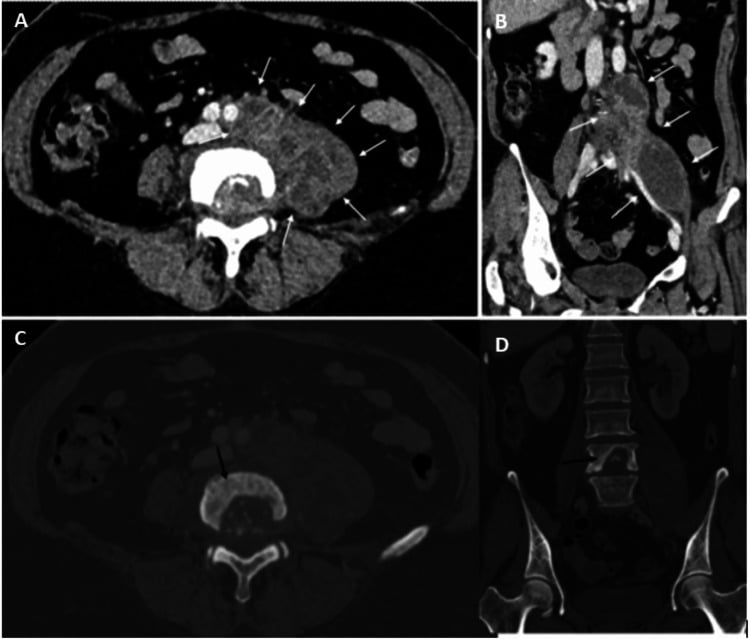
- Along the psoas sheath, as a psoas abscess; a bilateral psoas abscess is a characteristic pattern of tracking
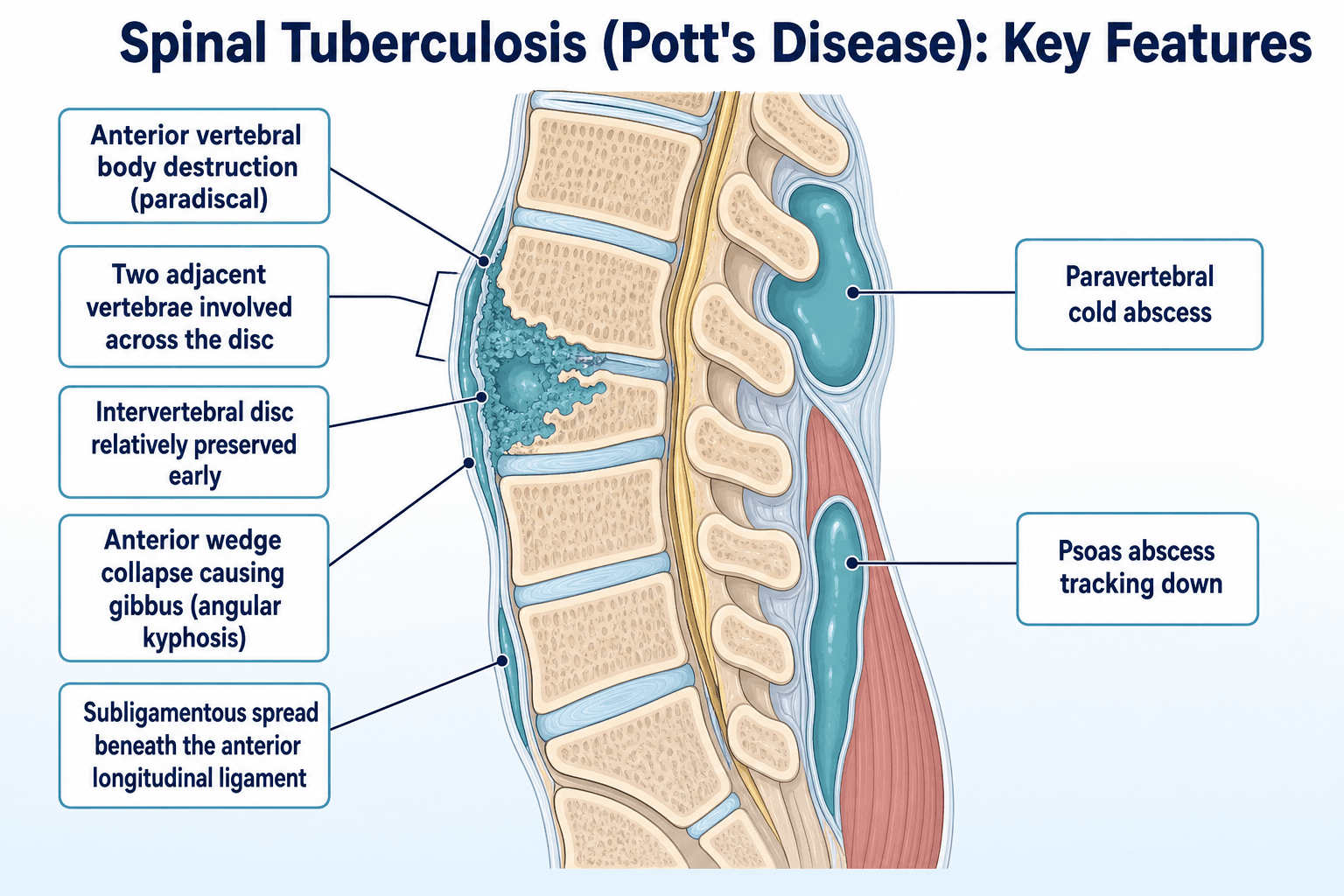
The lesion. Granulomatous inflammation with caseous necrosis destroys bone and forms sequestra, with minimal new bone formation, unlike pyogenic infection. The destruction is gradual and less explosive than in pyogenic disease, and an abscess may form within the vertebral body itself (intraosseous abscess). Granulation tissue proliferates, and healing brings fibrosis.
The cold abscess. Characteristic of TB, it contains caseous, cheese-like material, not pus. It collects in the paravertebral, epidural and psoas spaces and can track along fascial planes.
Patterns of involvement. Four anatomical types are recognised.
Paradiscal (50-75%). The most common pattern: the adjacent vertebral bodies and the intervening disc, reached by arterial spread through the paradiscal arteries. The disc is destroyed late, unlike in pyogenic infection, and the disease may extend to multiple levels.
Central. Isolated involvement of one vertebral body, with concertina collapse; it may produce an ivory vertebra. Disc height is spared initially.
Anterior subligamentous. The infection spreads under the ALL over several levels, scalloping the front of the bodies, and can produce skip lesions. Extensive as it is, it may spare vertebral integrity initially.
Posterior (2-10%). Involves the neural arch (pedicle, lamina, spinous process). It is more common in the lower lumbar spine and may cause early neurological deficit.
Classification Systems
Kumar classification grades neurological status.
- Description
- No deficit
- Neurological Findings
- Normal
- Description
- Sensory
- Neurological Findings
- Sensory loss only
- Description
- Motor - ambulatory
- Neurological Findings
- Motor weakness, can walk
- Description
- Motor - non-ambulatory
- Neurological Findings
- Cannot walk
- Description
- Complete paraplegia
- Neurological Findings
- No function below lesion
Tuli classification types the paraplegia by whether the disease is active or healed. It guides the surgical approach and the prognosis for neurological recovery.
- Subtype
- Description
- Active disease with paraplegia
- Subtype
- A1
- Description
- Minimal bone loss, severe deficit
- Subtype
- A2
- Description
- Moderate bone loss, severe deficit
- Subtype
- A3
- Description
- Extensive bone loss with deficit
- Subtype
- Description
- Healed disease with paraplegia
- Subtype
- B1
- Description
- Cord compression from healed kyphosis
- Subtype
- B2
- Description
- Reactivation in previously healed lesion
Clinical Assessment
Presentation. The onset is insidious, typically over weeks to months, where pyogenic infection is acute over days to weeks.
- Frequency
- 90-95%
- Characteristics
- Insidious, localised, constant
- Frequency
- 50-70%
- Characteristics
- Weight loss, night sweats, fever
- Frequency
- 20-30%
- Characteristics
- Weakness, sensory changes
- Frequency
- 30-40%
- Characteristics
- Visible kyphosis (gibbus)
- Frequency
- 20-30%
- Characteristics
- Swelling (groin, flank)
History. Beyond the duration and the constitutional symptoms (weight loss, night sweats, low-grade fever), establish:
- Neurological symptoms: weakness, numbness, bowel and bladder
- Contact history (TB exposure)
- Country of origin and travel
- Immunocompromise: HIV, diabetes, immunosuppressants
- Previous TB treatment
The spine. Look for the gibbus, an angular kyphosis: a short, sharp angulation over one or two segments, unlike the smooth, rounded curve of osteoporotic or postural kyphosis. Then feel for localised tenderness and paraspinal muscle spasm, note the restricted range of motion, and search the paravertebral region, groin and flank for a cold abscess.
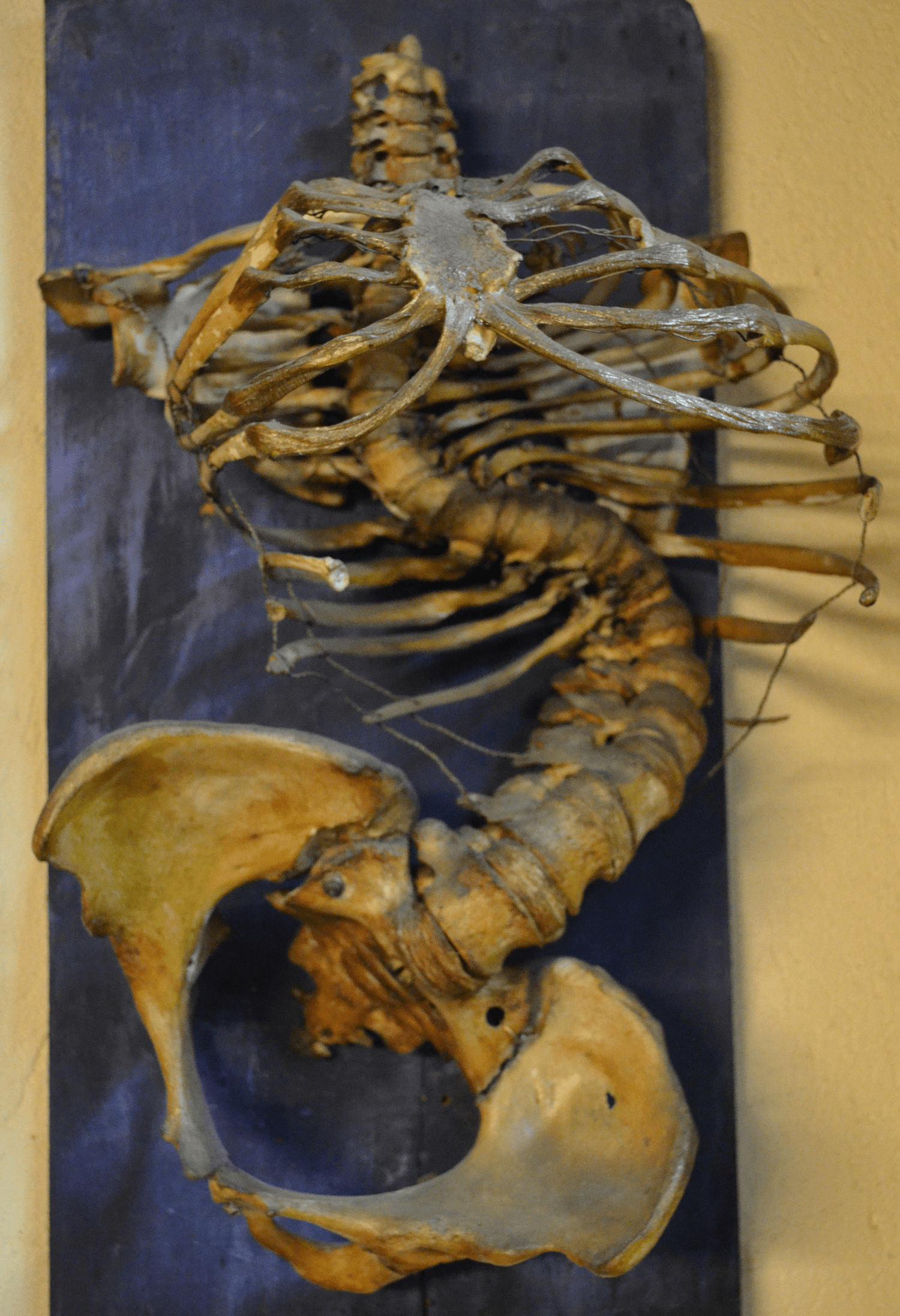
The cold abscess on examination. A non-tender, fluctuant swelling that lacks the heat, redness and pain of acute inflammation and the systemic toxicity of a pyogenic abscess; that absence is characteristic. It may track to distant sites, such as the groin in a psoas abscess, and a groin or iliac fossa swelling with back pain is spinal TB until the MRI says otherwise.
Neurological examination. Record motor power by myotome, the sensory level and the reflexes. Look for long tract signs (spasticity, clonus, Babinski), assess bladder and bowel function, and watch the gait.
Systemic examination. Look for lymphadenopathy, pulmonary findings of primary TB, a peripheral cold abscess and signs of other organ involvement.
- Rapidly progressive neurological deficit
- Complete paraplegia
- Bladder or bowel dysfunction
- Respiratory compromise (cervical lesions)
- Signs of MDR-TB or treatment failure
Investigations
Blood and microbiology. The essential tests:
- Expected Finding
- Elevated (often more than 50)
- Notes
- Useful for monitoring
- Expected Finding
- Elevated
- Notes
- Less specific than ESR
- Expected Finding
- Usually positive
- Notes
- Does not confirm active disease
- Expected Finding
- May be positive
- Notes
- If pulmonary involvement
- Expected Finding
- Rule out coinfection
- Notes
- Important for management
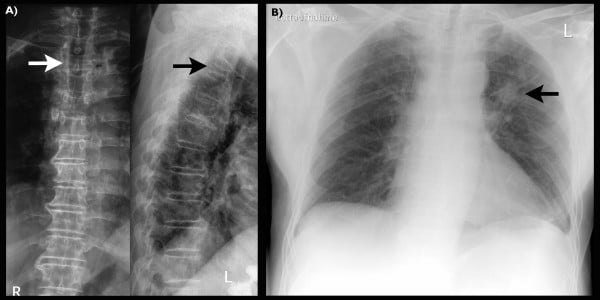
Plain radiographs. First-line, and late. They become positive only when 50% of the trabecular bone has been destroyed, which may take 4-6 months, and then show vertebral destruction, collapse and kyphosis. They are also the reminder to look at the chest.
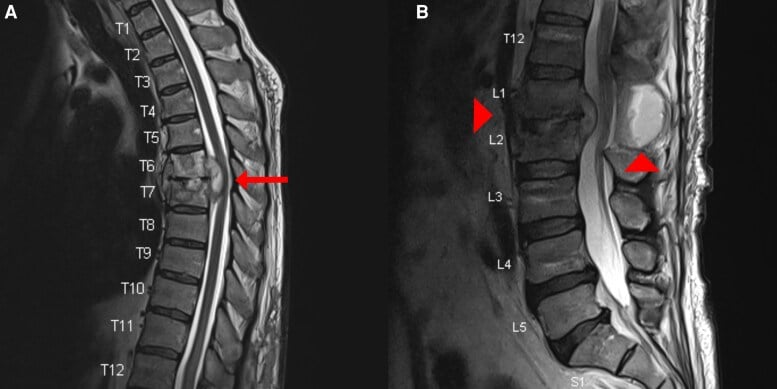
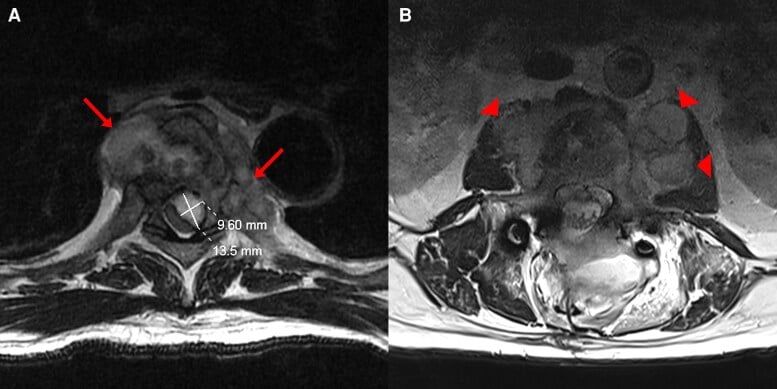
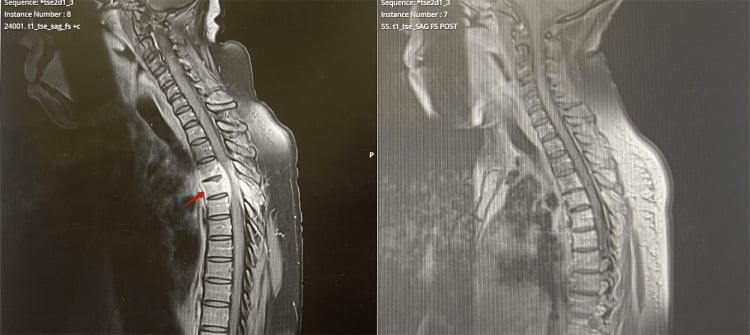
MRI is the modality of choice. It has high sensitivity for marrow oedema, paravertebral and epidural abscess and cord compression, and detects disease earlier than plain films, months before they become positive. It is essential for the soft tissues and identifies skip lesions, so always image the whole spine. The findings:
- T1: hypointense marrow signal
- T2/STIR: hyperintense marrow oedema
- Contrast: rim enhancement of the abscess
- Epidural extension, causing cord compression
- Skip lesions
- Psoas and paravertebral abscess
The disc sign is real but weak. "TB spares the disc" is the most-quoted discriminator from pyogenic spondylitis and the least powerful one, so be precise about which disc finding you mean. Disc signal changes in 82% of tuberculous spondylitis against 95% of pyogenic: the disc is involved in the large majority of TB and is not "preserved" in any absolute sense. What is relatively spared is disc height, lost in only 22% of TB against 59% of pyogenic.
Why height survives. The mycobacterium lacks the proteolytic enzymes that let pyogenic organisms digest the nucleus, so the disc is inflamed but not destroyed. The mechanism explains height preservation, not signal normality, and late in the disease the disc narrows secondary to collapse of the adjacent bodies.
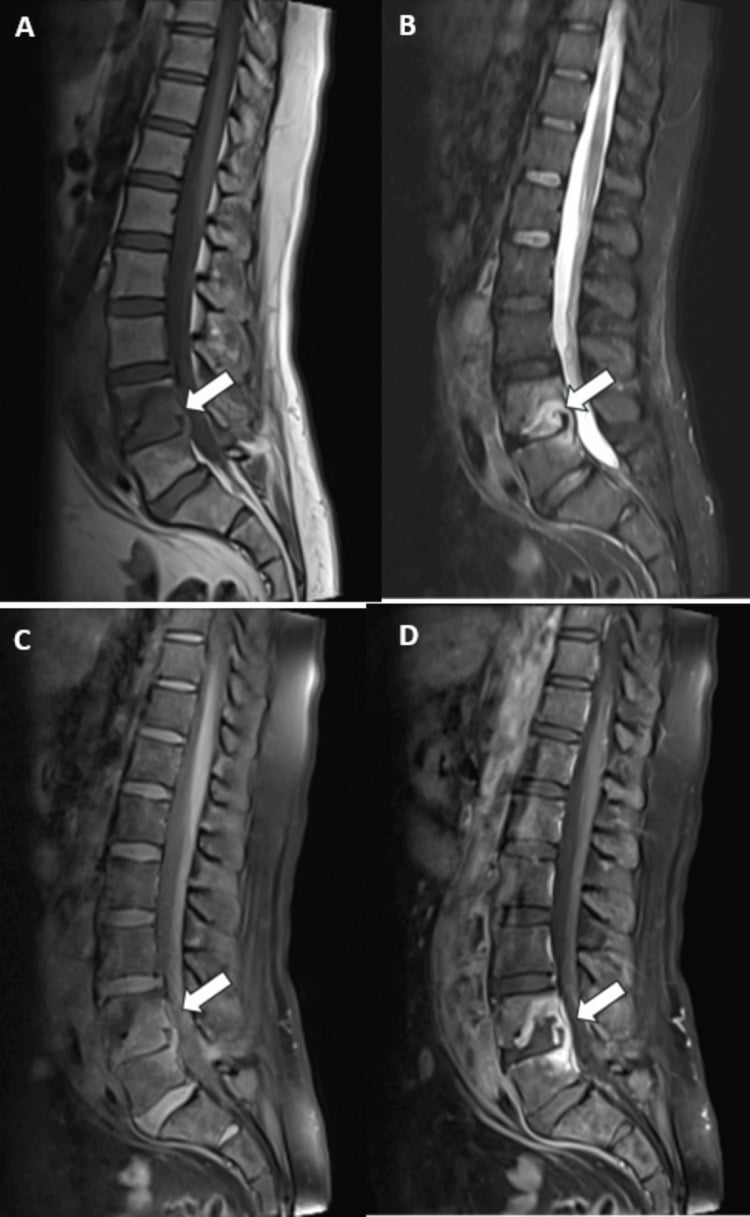
Lead with the structural signs. A thin, smooth abscess wall and subligamentous spread under the ALL separate the two infections far more sharply than the disc, followed by epidural extension and vertebral collapse. Add the clinical tempo. The frequencies below are pooled from a meta-analysis.
- Tuberculosis
- Insidious (weeks-months)
- Pyogenic
- Acute (days-weeks)
- Tuberculosis
- Common (93%)
- Pyogenic
- Uncommon (24%)
- Tuberculosis
- 94%
- Pyogenic
- 18%
- Tuberculosis
- 77%
- Pyogenic
- 25%
- Tuberculosis
- 68%
- Pyogenic
- 24%
- Tuberculosis
- 22%
- Pyogenic
- 59%
- Tuberculosis
- 82%
- Pyogenic
- 95%
CT. Superior bone detail, the pattern of bony destruction, and guidance for biopsy, but it is still blind to the epidural collection. Its particular contribution is calcification within the paravertebral soft tissue, a slow-disease marker: strongly suggestive of a chronic granulomatous process and effectively ruling out an acute pyogenic collection, but not pathognomonic for TB, since brucellar and fungal abscesses also calcify. CT is for calcification, biopsy planning and the chest.
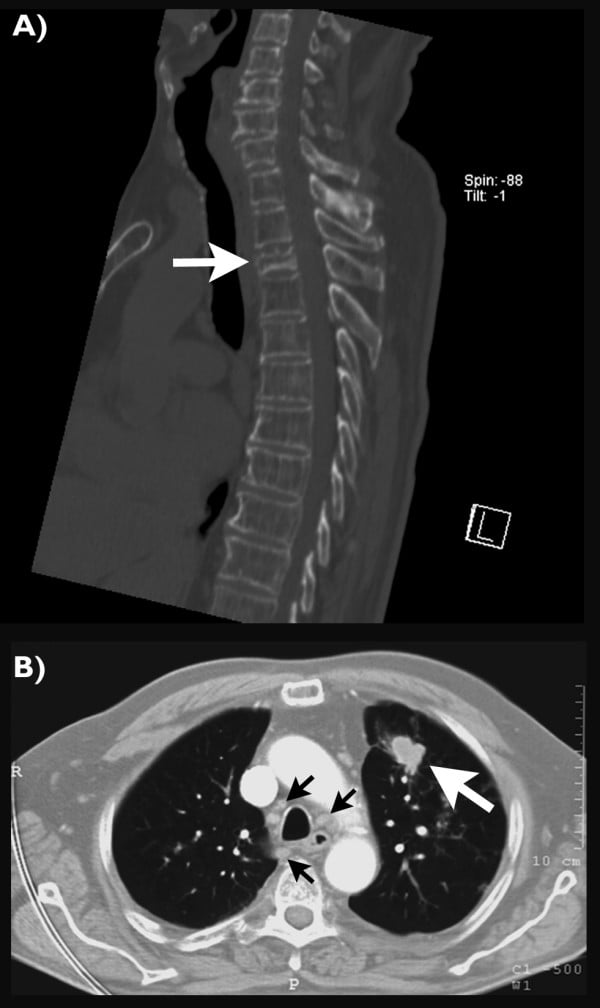
Tissue diagnosis. Obtain tissue by CT-guided percutaneous biopsy, open surgical biopsy or abscess aspiration. Histology looks for caseous necrosis, epithelioid granulomas and Langhans giant cells, and the specimen also goes for AFB staining and PCR (GeneXpert). Biopsy is indicated in particular for:
- Atypical presentation
- Negative Mantoux/IGRA
- Suspected MDR-TB
- Excluding malignancy
- Failed empirical treatment
Differential diagnosis. The discriminating features and the key test for each:
- Discriminating features
- Insidious, subligamentous spread, disc relatively spared early, thin-walled cold abscess, calcification
- Key test
- Biopsy: caseating granuloma, Xpert/culture
- Discriminating features
- Acute, high fever, early disc destruction, thick irregular abscess wall
- Key test
- Blood cultures, biopsy culture
- Discriminating features
- Endemic / livestock contact, lower lumbar, gas in disc, little deformity
- Key test
- Serology, blood culture
- Discriminating features
- Older, disc characteristically spared, posterior element / pedicle destruction, no abscess
- Key test
- MRI, biopsy, serum electrophoresis
- Discriminating features
- Immunocompromised, indolent, can mimic TB
- Key test
- Biopsy fungal stain/culture
The trap. Metastatic disease and myeloma also spare the disc, so disc preservation alone does not confirm infection. A paravertebral cold abscess and subligamentous spread point to TB, whereas pedicle destruction without an abscess favours malignancy.
Management
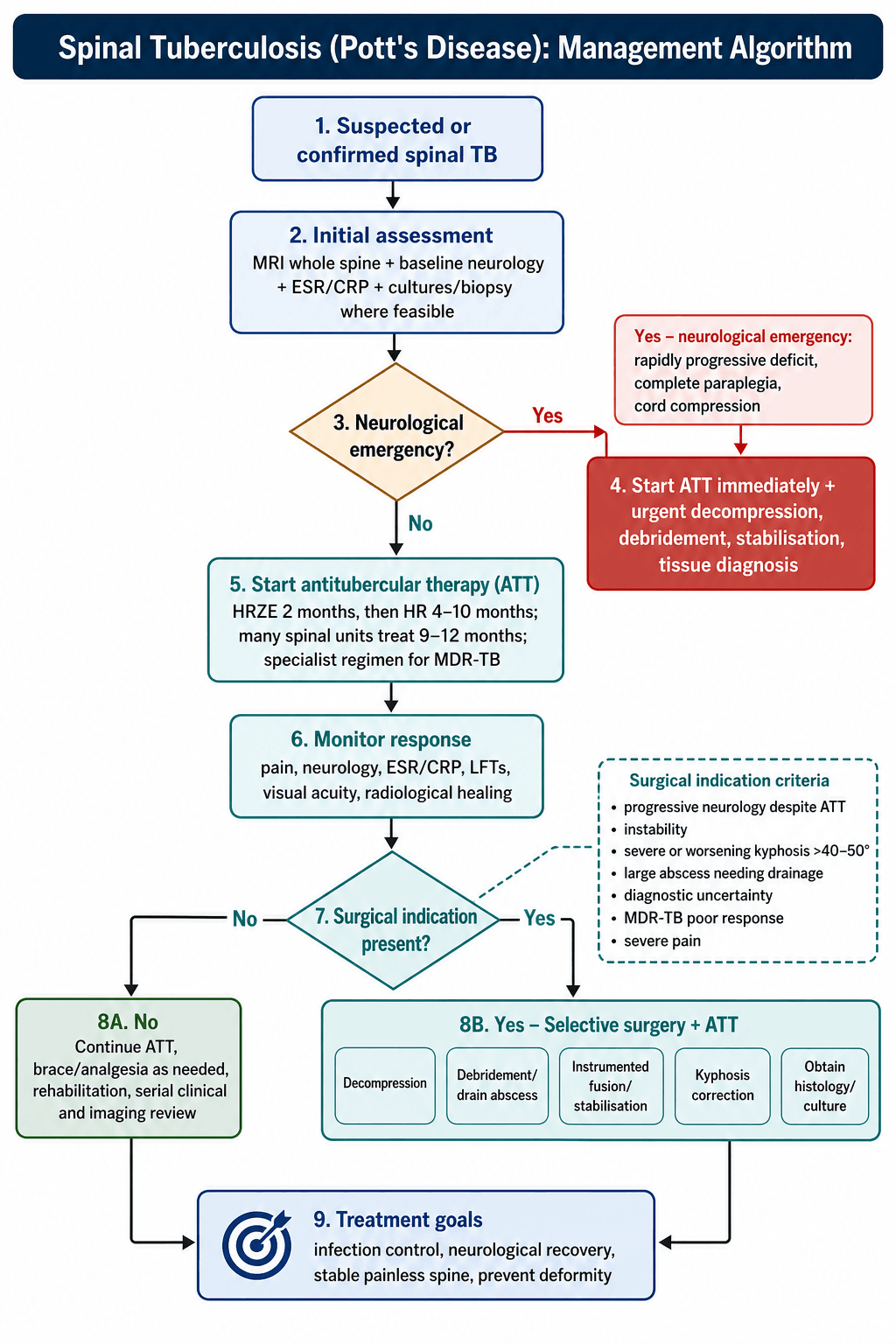
Medical first. Antitubercular therapy (ATT) alone succeeds in 85-90% of cases when the neurological deficit is not severe, and even with neurology medical treatment is often effective. Surgery is reserved for progressive neurology, instability, failure of medical treatment and severe kyphosis.
The regimen. Four drugs in an intensive phase, then two in continuation:
- Duration
- 2 months
- Drugs
- HRZE (4 drugs)
- Duration
- 4-10 months
- Drugs
- HR (2 drugs)
Doses are weight-based, with a maximum for each drug:
- H (Isoniazid): 5 mg/kg (max 300 mg)
- R (Rifampicin): 10 mg/kg (max 600 mg)
- Z (Pyrazinamide): 25 mg/kg (max 2 g)
- E (Ethambutol): 15 mg/kg (max 1.2 g)
How long. The continuation range reflects a genuine split in guidance. WHO endorses a 6-month regimen for drug-susceptible disease (2 months HRZE then 4 months HR), supported by the MRC ambulant-chemotherapy RCT, in which 6 months of isoniazid plus rifampicin gave a 94% favourable outcome at 10 years. CNS/spinal-focused guidance (e.g. the British Infection Society) recommends 12 months: 2 months of four drugs then at least 10 months of isoniazid and rifampicin. Many spinal units extend to 9-12 months in extensive or slow-responding disease.
Drug-resistant disease. MDR-TB requires substantially longer, specialist-directed treatment, with second-line drugs (fluoroquinolones, injectables) over an extended 18-24 months.
Monitoring. Check LFTs, uric acid and visual acuity at baseline, and LFTs monthly through the intensive phase. The response is slow, taking weeks to show. Follow it clinically and by the ESR trend, and look for radiological healing with MRI at 6 months.
Risk factors for hepatotoxicity include age more than 35, pre-existing liver disease, alcohol use, and concurrent hepatotoxic medications. Stop ATT if ALT rises more than 5x ULN or symptoms develop.
Complications
Disease-related complications and their management:
- Incidence
- 30-50%
- Management
- Surgical correction if severe
- Incidence
- 20-30%
- Management
- Decompression ± steroids
- Incidence
- 20-30%
- Management
- Drainage if large
- Incidence
- 5-10%
- Management
- Debridement, prolonged ATT
- Incidence
- Variable
- Management
- Instrumented fusion
Pott's paraplegia of early onset. In active disease the paraplegia results from reversible anterior compression by an epidural cold abscess, caseous granulation tissue, or sequestrum and debris. It carries the better prognosis and usually recovers well with decompression and ATT.
Pott's paraplegia of late onset. It appears years after the disease has healed and carries a worse prognosis. The cord is compressed by the internal salient (internal gibbus), the bony ridge of the healed kyphus projecting into the canal at the apex, and by dural and peridural fibrosis, with the cord stretched and draped over the bony ridge. Rarely the cause is reactivation or, late, cord atrophy or syringomyelia. Treatment is anterior decompression that removes the internal salient: an anterior problem needs an anterior solution.
Because the compression is almost always anterior, laminectomy does NOT relieve it and removes the only remaining intact posterior tension band, accelerating kyphosis and worsening neurology. Laminectomy is reserved for the uncommon case of posterior-element (neural-arch) disease causing posterior compression.
Preventing kyphosis. Early recognition and appropriate treatment can prevent severe kyphosis. Consider early surgery in children with significant vertebral destruction to prevent late kyphotic deformity.
Complications of treatment. On the medical side, hepatotoxicity (2-10%), drug reactions and interactions, and the development of MDR. Surgery risks infection, neurological injury, hardware failure, pseudarthrosis and recurrence.
Long-term sequelae. Residual kyphosis, chronic pain, residual neurological deficit, adjacent segment disease and, in children, growth disturbance.
Outcomes and Prognosis
Neurological recovery depends on how severe the deficit is at presentation.
- Recovery Rate
- 70-80%
- Timeframe
- 3-6 months
- Recovery Rate
- 50-70%
- Timeframe
- 6-12 months
- Recovery Rate
- 20-30%
- Timeframe
- Variable
What favours recovery. A short duration of deficit, incomplete paraplegia, younger age, compression by soft tissue rather than bone, and early initiation of treatment. The extent of vertebral destruction also bears on the prognosis.
Medical treatment alone. Healing takes 6-12 months, and residual kyphosis follows in 30-50%.
Combined medical and surgical treatment. Neurological improvement in 70-90%, fusion in 90-95%, and the deformity correction is maintained.
Long-term prognosis. The outcome turns on the extent of the initial disease, the timing of treatment, the adequacy of ATT, the surgical technique and patient compliance. Light activities resume at 3-6 months and full activities at 6-12 months, depending on neurological status.
Guidelines, Registries & Global Practice
Global Epidemiology
Tuberculosis remains a leading infectious cause of death worldwide, with around 1.3 million deaths annually. Spinal TB is the most common musculoskeletal manifestation, affecting roughly 1 to 2% of all cases of TB, and skeletal involvement occurs in approximately 10% of those with active disease. Burden is concentrated in South and South-East Asia, Sub-Saharan Africa and the Western Pacific. In low-incidence high-income settings, the overwhelming majority of cases are in people born in high-burden countries, frequently presenting as reactivation of latent infection years after migration. HIV co-infection, which is endemic in parts of Sub-Saharan Africa, adds substantially to both the burden and complexity of management.
Major Guidance Side-by-Side
- Drug regimen
- 2 months HRZE then 4 months HR (6 months total)
- Surgical trigger
- Not a surgical body; medical cure expected in uncomplicated disease
- Drug regimen
- 4 drugs for 2 months then isoniazid + rifampicin for at least 10 months (12 months total)
- Surgical trigger
- Decompression for cord compression with deficit
- Drug regimen
- Ambulant 6-9 months HR adequate without paraplegia
- Surgical trigger
- Routine radical surgery confers no healing benefit in uncomplicated disease
- Drug regimen
- Chemotherapy continued through and after surgery
- Surgical trigger
- Deficit, instability, severe / progressive kyphosis, failed medical therapy, diagnostic doubt
The most important guideline divergence to recognise is duration: WHO endorses a 6-month regimen for drug-susceptible disease (supported by the MRC ambulant-chemotherapy RCT), whereas neurological/CNS-focused guidance such as the British Infection Society recommends a longer 12-month course (2 months of four drugs then at least 10 months of isoniazid and rifampicin) for spinal and CNS disease. Many spinal units extend treatment to 9-12 months in extensive or slow-responding disease.
Diagnostic Standards
A tissue diagnosis (culture, histology and nucleic-acid amplification) is the worldwide gold standard before committing a patient to prolonged therapy, and is especially important in low-prevalence settings and to detect drug resistance. Xpert MTB/RIF on bone or abscess material gives rapid results and simultaneously reports rifampicin resistance, but its sensitivity on bone is only moderate when used alone, so it should be paired with histopathology and culture rather than replacing them.
Practice Variation by Resource Setting
- Diagnosis
- MRI plus image-guided biopsy with Xpert and culture; drug-susceptibility testing routine
- Surgery
- Instrumented single- or two-stage reconstruction; titanium implants
- Diagnosis
- Often clinical/radiographic diagnosis; empirical ATT where confirmation is impractical
- Surgery
- Middle-path regimen; surgery rationed to deficit and major deformity
In resource-limited high-burden regions, empirical antitubercular therapy on clinical and radiographic grounds is common where biopsy is impractical, and a conservative "middle-path" approach (chemotherapy with selective surgery) predominates. In low-incidence settings, mandatory public-health notification, contact tracing, directly observed therapy for adherence, and multidisciplinary input from infectious diseases, spinal surgery, radiology and rehabilitation are standard.
MCQ Practice Points
Q: What is the most common location for spinal tuberculosis?
A: The thoracolumbar junction (T10-L2) is the most common site for spinal TB. The thoracic spine is involved in approximately 50% of cases, lumbar in 35%, and cervical in 15%. The paradiscal region is the most common pattern of involvement.
Q: Which feature distinguishes spinal TB from pyogenic spondylitis?
A: Say "relative preservation of disc HEIGHT", not "the disc is spared", because the pooled data separate those two claims. Disc height is lost in 22% of tuberculous against 59% of pyogenic spondylitis - a genuine discriminator. But disc signal change is present in 82% of TB against 95% of pyogenic, so the disc is abnormal in the large majority of tuberculous cases and "spared" overstates it. The mechanism explains exactly this split: mycobacteria lack the proteolytic enzymes that let pyogenic organisms digest the nucleus pulposus, so the disc becomes inflamed but is not destroyed, and its height is maintained until late collapse of the adjacent bodies narrows it mechanically.
And if you are asked for the BEST discriminator, the disc is not it. A thin, smooth abscess wall (94% vs 18%) and subligamentous spread beneath the anterior longitudinal ligament (93% vs 24%) separate the two conditions far more sharply. One caution to add unprompted: metastasis and myeloma also spare the disc, so disc preservation supports infection over pyogenic infection - it does not by itself establish that the lesion is infective at all.
Q: Which MRI features best distinguish tuberculous from pyogenic spondylitis?
A: A pooled meta-analysis found subligamentous spread (93% vs 24%), a thin, smooth-walled abscess (94% vs 18%) and epidural extension (77% vs 25%) favour TB, whereas disc signal change and disc height loss are more common in pyogenic infection. MRI is the modality of choice because it detects disease far earlier than plain films, which become positive only once substantial trabecular bone is destroyed.
Q: What percentage of spinal TB patients have skip lesions?
A: 10-15% of patients have skip lesions (non-contiguous vertebral involvement). This is why whole spine imaging with MRI is recommended in all suspected cases of spinal TB to detect all levels of involvement.
Q: What percentage of patients with uncomplicated spinal TB respond to medical treatment alone?
A: 85-90% of patients with uncomplicated spinal TB respond to antitubercular therapy alone without surgery. Surgery is reserved for specific indications including progressive neurology, instability, and failure of medical treatment.
Clinical Decision Scenarios
Practise clinical reasoning and management decisions out loud
“A 35-year-old man from India presents with 4 months of progressive back pain, night sweats, and weight loss. He has low-grade fever and difficulty walking due to leg weakness. MRI shows T11-12 vertebral destruction with anterior soft tissue collection.”
“A 50-year-old man presents with back pain and low-grade fever. MRI shows L3-4 vertebral body involvement with disc changes and paravertebral collection. Both TB and pyogenic infection are being considered.”
“A 28-year-old woman presents with complete paraplegia of 2 weeks duration. MRI shows T7-8 vertebral destruction with large epidural collection causing severe cord compression. She has confirmed pulmonary TB on sputum.”
Key Facts
- 50% of skeletal TB is spinal
- T10-L2 most common location
- Paradiscal type most common (50-75%)
- Skip lesions in 10-15% - image whole spine
TB vs Pyogenic
- TB: Insidious onset, low-grade fever, disc HEIGHT relatively preserved (lost in 22% vs 59%) though disc signal changes in 82%
- Pyogenic: Acute onset, high fever, early disc destruction
- TB: Thin smooth abscess wall, calcification
- Pyogenic: Thick irregular wall, no calcification
Imaging
- MRI is the modality of choice - high sensitivity for marrow, abscess and cord
- MRI detects disease months before plain films become positive
- X-ray: positive only when 50% bone destroyed (4-6 months)
- Always image whole spine for skip lesions
Management
- Medical first: 85-90% respond to ATT alone
- ATT: HRZE 2 months, then HR 4-10 months
- Surgery: progressive neurology, instability, large abscess
- Combined approach for complex cases
Surgical Indications
- Severe kyphosis (more than 40-50 degrees)
- Unstable spine
- Resistant (MDR) TB
- Granulation tissue compressing cord
- Extensive abscess
- Regressing neurology despite ATT
Evidence and Guidelines
MRC Trial: Ambulant Chemotherapy vs Radical Surgery (10-Year Report)
- Randomised trial of 235 patients without paraplegia, three arms: radical anterior resection + 6 months HR (Rad6), ambulant 6 months HR (Amb6), ambulant 9 months HR (Amb9)
- At 10 years a favourable outcome was reached in 90% (Rad6), 94% (Amb6) and 99% (Amb9)
- Ambulant 6-month isoniazid plus rifampicin was effective for spinal TB without paraplegia
- Exception: children under 15 with an initial kyphosis angle over 30 degrees, in whom kyphosis increased substantially
Comprehensive Review for the Modern Spine Surgeon
- Skeletal TB affects roughly 10% of those with active disease; infection begins in the anterior vertebral body
- Tissue diagnosis (culture, histology, PCR) is the gold standard for confirmation
- Multidrug chemotherapy is the cornerstone of management and can be curative with minimal residual kyphosis
- Surgery is reserved for neurological deficit or severe kyphosis: debridement, deformity correction and stable fusion
MRI Features Differentiating Tuberculous from Pyogenic Spondylitis (Meta-analysis)
- 32 studies pooled; subligamentous spread far more common in TB (93% vs 24%)
- Thin and regular abscess wall favours TB (94% vs 18%); epidural extension also favours TB (77% vs 25%)
- Vertebral collapse (68% vs 24%) and kyphosis (39% vs 3%) favour TB
- Disc signal change (82% vs 95%) and disc height loss (22% vs 59%) favour pyogenic infection
Xpert MTB/RIF on Bone Specimens for Spinal TB
- Prospective study of 106 patients with suspected spinal TB using a composite reference standard
- Xpert MTB/RIF alone: sensitivity 63.3% against the composite standard, with high specificity
- Combining Xpert with histopathology raised pooled sensitivity to 95% and specificity to 97.8%
- Xpert simultaneously detects rifampicin resistance, aiding rapid identification of MDR disease
Prediction of Final Gibbus Deformity (Rajasekaran Formula)
- 90 patients with thoracic and thoracolumbar lesions followed for 6 years
- Initial vertebral body loss correlated strongly with final gibbus angle (correlation coefficient 0.83)
- Final kyphosis was predictable with about 90% accuracy in non-operatively treated patients
- Allows selection of patients who need radical resection and grafting to prevent severe kyphosis
Single-Stage Anterior Decompression with Posterior Instrumentation
- 38 patients with panvertebral disease, deficit or severe kyphosis treated via an anterolateral extrapleural approach
- Single-stage anterior decompression, posterior instrumentation and circumferential grafting avoided staged surgery
- Mean kyphosis corrected by 25 degrees in those operated for deformity
- All but one patient with a neurological deficit recovered complete motor and sensory function