Infrapatellar Rupture and Repair
- Definition: Disruption of the patellar ligament linking the inferior pole of the patella to the tibial tubercle, abolishing the extensor mechanism
- Demographics: Typically males under 40; quadriceps tendon rupture is the disease of patients over 40
- Mechanism: Sudden eccentric quadriceps contraction against a flexed knee (landing from a jump, missed step) — most commonly at the inferior pole
- Diagnostic triad: palpable infrapatellar gap + loss of active knee extension (no straight-leg raise) + patella alta on lateral radiograph
- Management: Complete ruptures require early surgical repair — never managed conservatively
- “Patella alta with Insall-Salvati greater than 1.2 is the hallmark radiographic sign
- “Ultrasound is a rapid bedside confirmatory test; MRI clarifies level and tissue quality
- “Bilateral or spontaneous rupture = systemic disease until proven otherwise
- “Outcomes are good but full power recovery takes 6-12 months; stiffness is the main complication
Patellar Tendon Rupture
Overview & Epidemiology
Patellar tendon rupture, more correctly rupture of the patellar ligament, is the least common of the three extensor-mechanism injuries, after patella fracture and quadriceps tendon rupture. In younger, athletic patients it is the dominant one.
Who. Predominantly males under 40, often athletic. Quadriceps tendon rupture is the corresponding injury in patients over 40.
Background tendinopathy. A complete rupture almost always follows pre-existing tendinopathy; the tendon rarely fails when truly healthy. Up to roughly one-third of patients have a local or systemic risk factor (listed under Pathophysiology), and systemic factors dominate in bilateral ruptures.
Bilateral rupture. Simultaneous bilateral rupture is rare. When it follows low-energy trauma, it signifies systemic disease.
Anatomy & Biomechanics
The ligament. A continuation of the central quadriceps tendon, it runs from the inferior pole of the patella to the tibial tubercle. It is approximately 4-6 cm long, 25-30 mm wide and 5-7 mm thick.
Blood supply. Vessels reach it from the infrapatellar fat pad posteriorly and from the peritendinous retinacular plexus anteriorly. There is a relatively hypovascular zone at the proximal third / inferior pole, which corresponds to the most common rupture site.
Biomechanics. The extensor mechanism transmits very high tensile loads: peak patellofemoral and tendon forces can reach multiples of body weight during jumping and stair descent. The patella acts as a fulcrum that increases the moment arm of the quadriceps. Loss of patellar tendon continuity abolishes active terminal extension and the ability to lock the knee in stance.
Pathophysiology
Mechanism. The classic injury is a sudden eccentric quadriceps contraction against a flexed knee, landing from a jump or missing a step, with the knee usually flexed about 60 degrees at the moment of failure. The tendon fails when the applied eccentric load exceeds its tensile strength. In a healthy tendon that requires extreme force; in a degenerate one, ordinary activity such as stumbling or rising from a chair can suffice.
Histology. Ruptured tendons typically show mucoid / angiofibroblastic degeneration (tendinosis) rather than acute inflammation. That explains the friable "mop-end" tissue found at surgery, and the role of antecedent tendinopathy.
Where it fails. Most commonly at the proximal insertion, as an inferior pole avulsion; less commonly in mid-substance; least commonly at the tibial tubercle.
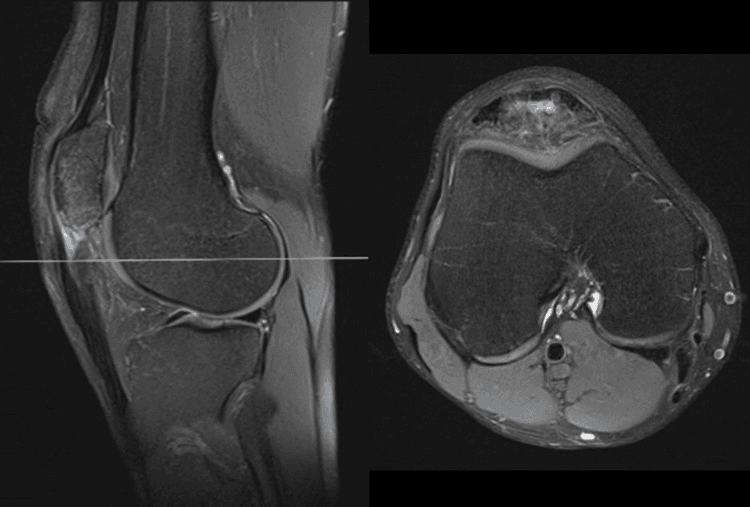
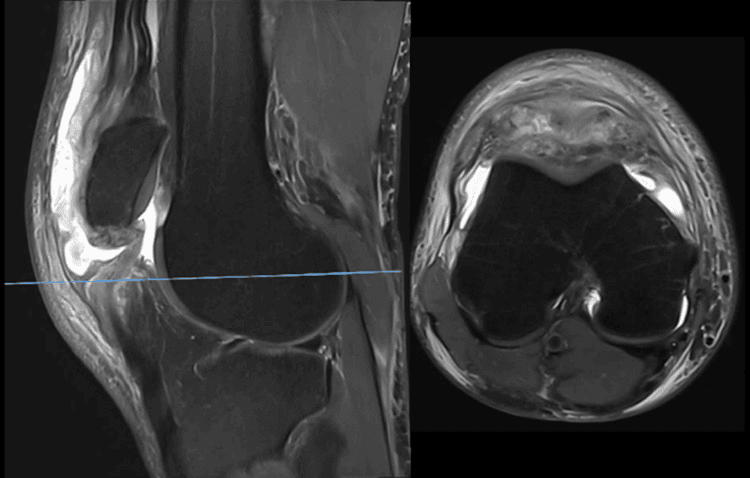
Risk factors. Local risk factors are antecedent tendinopathy (jumper's knee), a prior peritendinous corticosteroid injection and a prior ACL bone–patellar tendon–bone graft harvest. Systemic factors (corticosteroids, chronic renal failure with secondary hyperparathyroidism, diabetes, inflammatory arthropathy, fluoroquinolones) impair collagen quality and underlie spontaneous and bilateral ruptures. The systemic causes of degenerate, rupture-prone tendons, especially relevant in bilateral or spontaneous rupture, are:
- Chronic corticosteroid or anabolic-steroid use
- Chronic renal failure and dialysis, with secondary hyperparathyroidism
- Diabetes mellitus
- Rheumatoid arthritis and other inflammatory arthropathy
- Systemic lupus erythematosus
- Gout and crystal deposition
- Thyroid and other endocrinopathy
- Infection / immunosuppression
- Fluoroquinolone antibiotics
Clinical Presentation
History. A sudden pop or giving way during eccentric loading (a jump landing, a missed step, a fall), with immediate inability to weight-bear or extend the knee. Always ask about systemic risk factors, prior anterior knee symptoms of tendinopathy, and steroid or fluoroquinolone use.
Examination. Three findings make the diagnosis:
- A palpable infrapatellar gap below the inferior pole of the patella
- Loss of active knee extension: the patient cannot perform a straight-leg raise or hold the extended knee against gravity (extensor lag)
- A high-riding patella (patella alta), palpable proximally, often with a haemarthrosis
Always examine the contralateral knee, and screen the other tendons (quadriceps, Achilles) if a systemic cause is suspected.
Extensor lag and fixed flexion. An extensor lag is the difference between the passive extension a joint can be pushed to and the active extension the patient can achieve and hold against gravity. The joint reaches full extension passively but the extensor mechanism cannot deliver the force, which is the signature of an extensor-mechanism disruption. In a fixed flexion deformity the joint cannot be passively extended: a mechanical or capsular block, not an extensor-mechanism problem.
The partial-tear trap. Loss of active extension is where the diagnosis is made, and precisely where a complete rupture is missed. The medial and lateral retinacula run alongside the patellar tendon and can transmit some extensor force even when the central tendon is torn, so an intact retinaculum may permit weak, painful extension. A patient with a partial central tear, or a complete tear with intact retinacula, may therefore weakly extend the last few degrees or briefly hold a straight-leg raise, and a cursory examination looks reassuring.
That is exactly how a complete rupture gets mislabelled a "sprain" (the chronic-neglected viva). The distinction between an extensor lag and a fixed flexion deformity, and how extension is tested, is what separates the diagnosis made on the day from the one made three months later.
Test extension against gravity and resistance through the full arc from a flexed start, not just the terminal few degrees. A patient who cannot initiate extension from a flexed knee, or who has any extensor lag, has a functionally significant disruption. Palpate for the infrapatellar gap, compare patellar height with the other side, and if any doubt remains obtain ultrasound or MRI.
Investigations
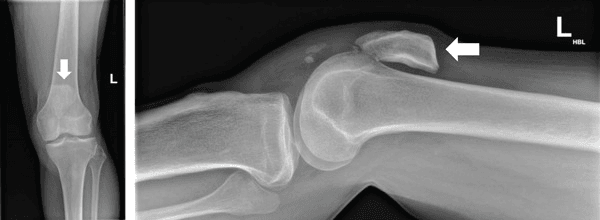
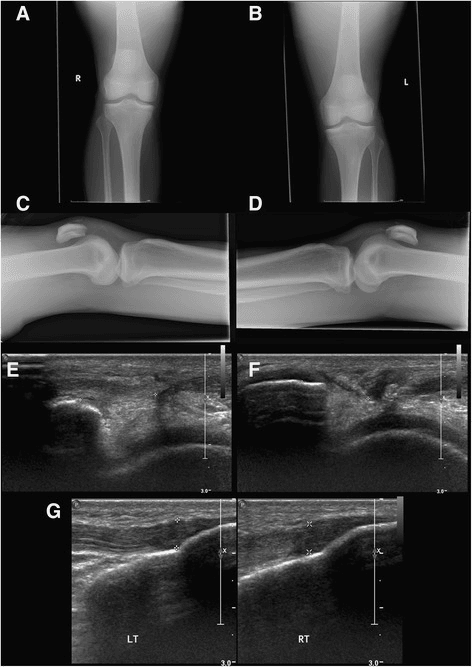
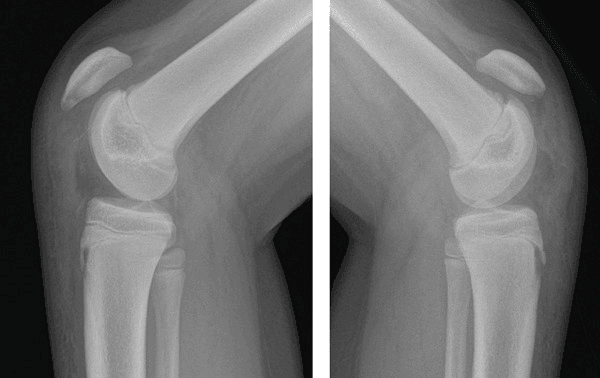
Plain radiographs are first-line, and the lateral view is the key one. With the tendon ruptured, the patella loses its distal tether and migrates proximally: patella alta is the hallmark radiographic sign. Look also for an avulsed bony fragment from the inferior pole or the tubercle, and exclude a patella fracture.
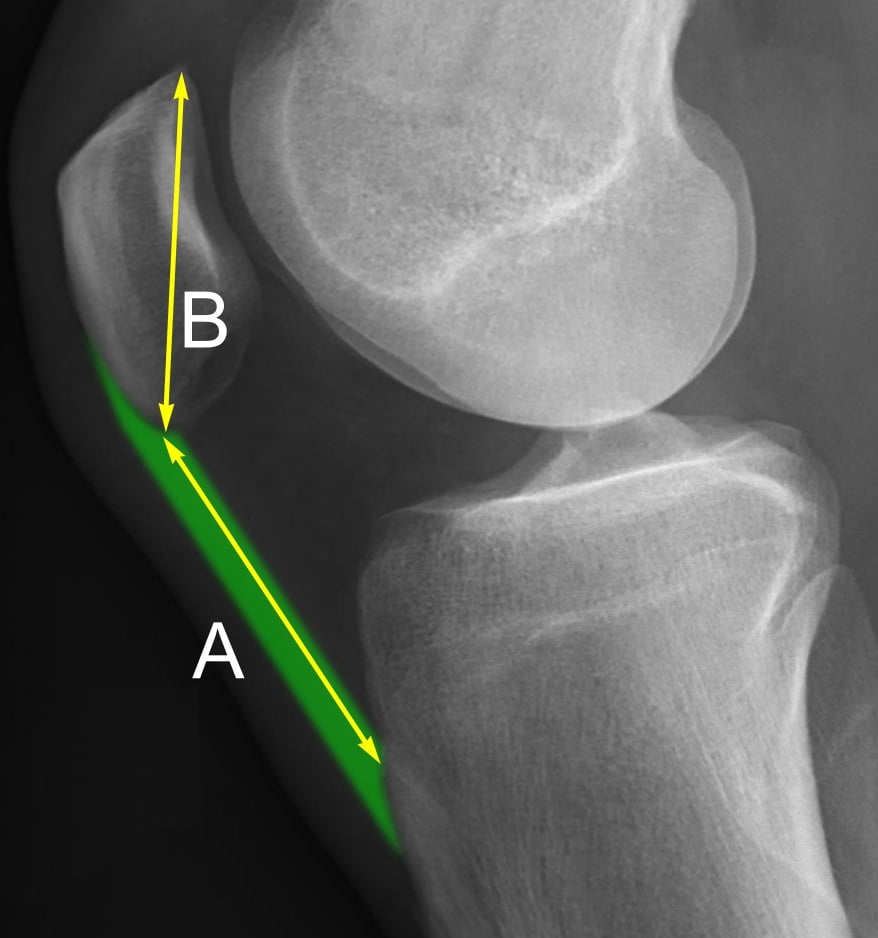
The Insall-Salvati ratio quantifies the alta: patellar tendon length divided by patellar diagonal length, on a lateral radiograph at 30 degrees of flexion. Normal is about 1.0 (range 0.8-1.2).
- Over 1.2 is patella alta: think patellar tendon rupture
- Under 0.8 is patella baja: think quadriceps tendon rupture, or an over-tightened repair
The Caton-Deschamps index (articular surface to anterosuperior tibia, divided by patellar articular length; normal about 1.0) is independent of patellar tendon length. It is the alternative preferred when the tendon itself is abnormal, or after TKA.
Ultrasound gives rapid, dynamic, bedside confirmation of tendon discontinuity, gap size, and partial versus complete tears. On longitudinal scans a rupture shows loss of tendon continuity with a hypoechoic gap. It is highly operator-dependent.
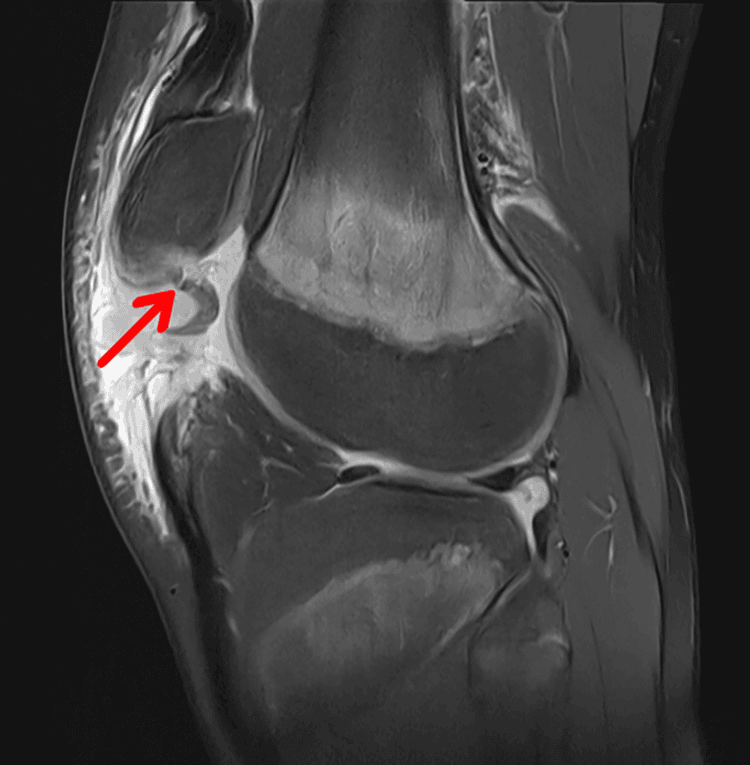
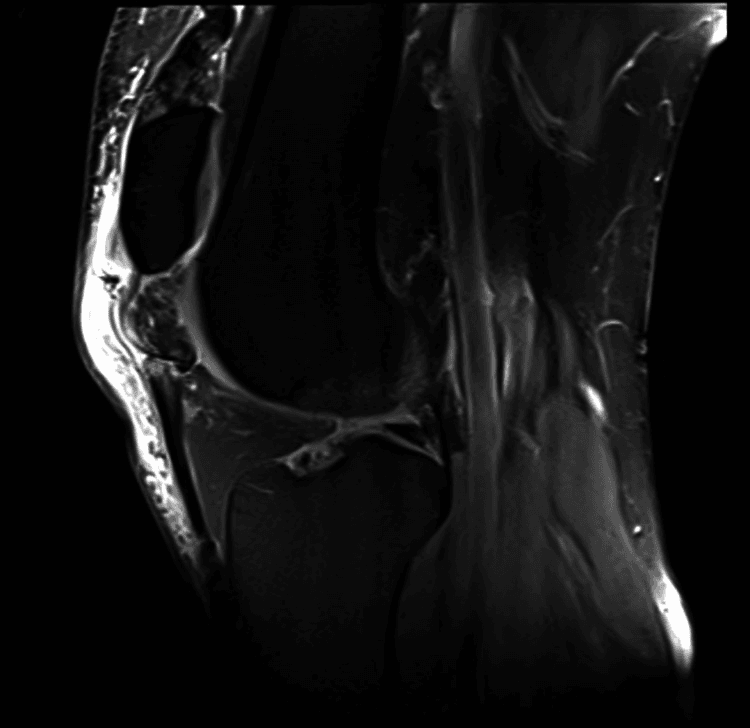
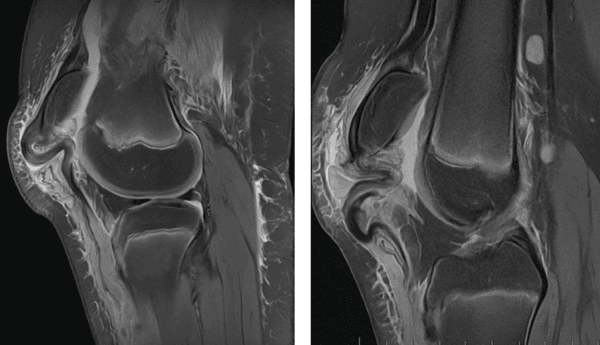
MRI is the most sensitive modality. It defines the level of rupture (proximal, mid-substance or distal), completeness, gap size, tissue quality and concomitant injury. It is most useful in equivocal, partial, chronic or atypical cases, and not required when the clinical triad is unequivocal.
Differential diagnosis. The causes of acute loss of knee extension, and the features that separate them:
- Typical patient
- Athlete under 40
- Patella position
- Alta (Insall-Salvati over 1.2)
- Defect / key sign
- Gap BELOW patella; loss of SLR
- Typical patient
- Patient over 40, comorbid
- Patella position
- Baja / low-riding
- Defect / key sign
- Gap ABOVE patella; loss of SLR
- Typical patient
- Direct blow or fall
- Patella position
- Fragments diastased
- Defect / key sign
- Bony tenderness; fracture on X-ray
- Typical patient
- Adolescent (open physis)
- Patella position
- Alta if displaced
- Defect / key sign
- Avulsed tubercle fragment on X-ray
- Typical patient
- Young, twisting injury
- Patella position
- Laterally displaced / relocated
- Defect / key sign
- MPFL tenderness; apprehension
Management
Complete patellar tendon rupture is a surgical injury: conservative treatment leaves a permanent extensor lag and severe functional disability. Only a genuinely partial tear with intact active extension, the retinaculum preserved and the patient able to straight-leg raise, may be treated non-operatively in a brace with the knee in extension.
The principles. Repair early, restore patellar height, augment friable tissue, and mobilise early to avoid stiffness.
Indication. A complete rupture presenting within 2-3 weeks, before retraction and scarring set in.
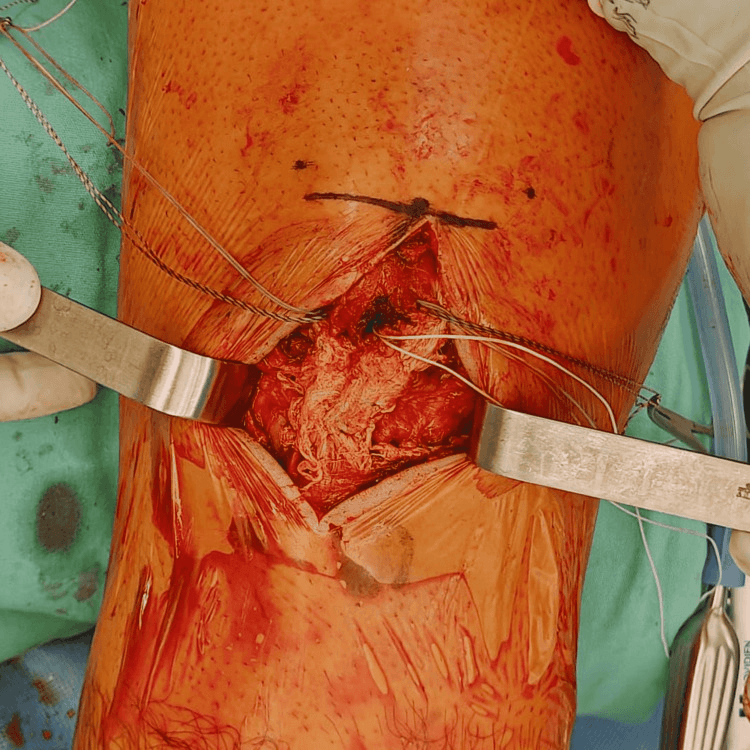
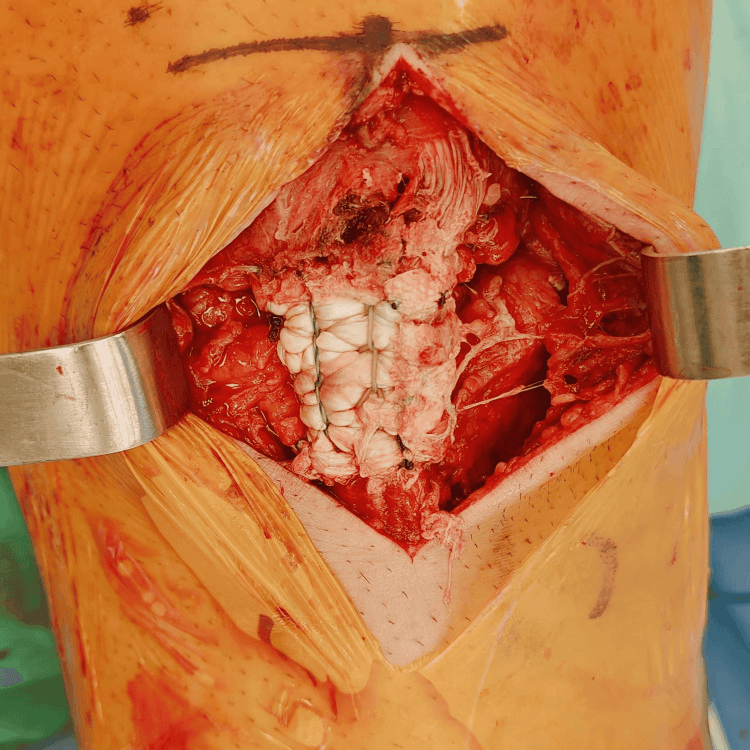
The Krackow stitch. A patellar tendon repair is only as good as its hold on the tendon, and the tendon is usually the weakest part of the construct, which is why the locking Krackow suture is the workhorse. It runs a series of interlocking loops down each side of the tendon, each grasping the collagen bundles, so the suture locks onto the tissue rather than sliding through it. The two limbs exit as strong strands to pass through bone tunnels or tie to anchors.
Why not a simple stitch. A simple or mattress suture cheese-wires straight out of degenerate, friable "mop-end" tissue under load. The Krackow's locking loops distribute the load along a long purchase and give a high load-to-failure, which permits a secure reattachment and early protected motion. The same locking principle is used to repair the quadriceps and Achilles tendons, and in tendon transfers.
Technique.
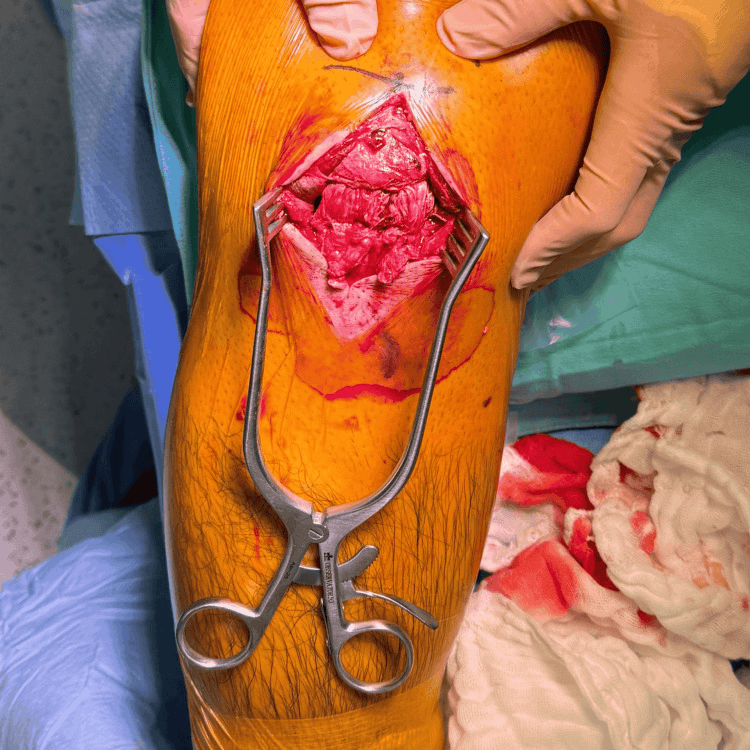
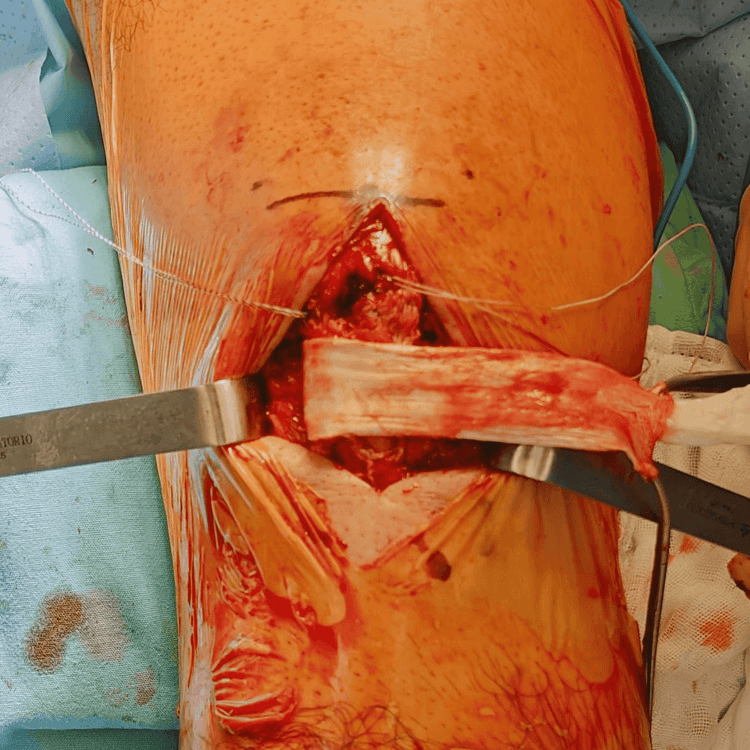
- Midline anterior incision; identify and debride the ragged tendon ends and the inferior pole.
- Place locking Krackow sutures (heavy non-absorbable, e.g. #5 / #2 high-strength) in each limb of the tendon, taking a 4-5 cm purchase.
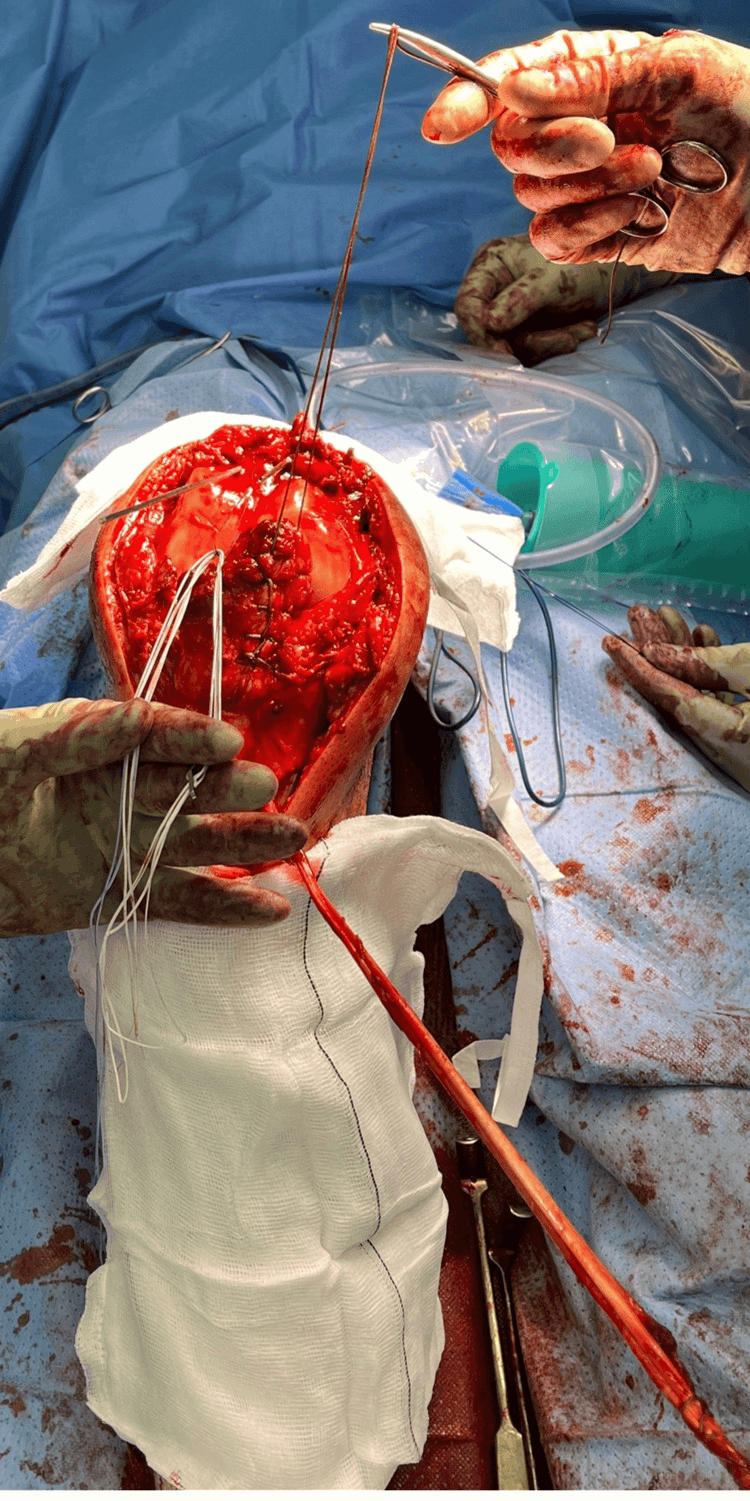
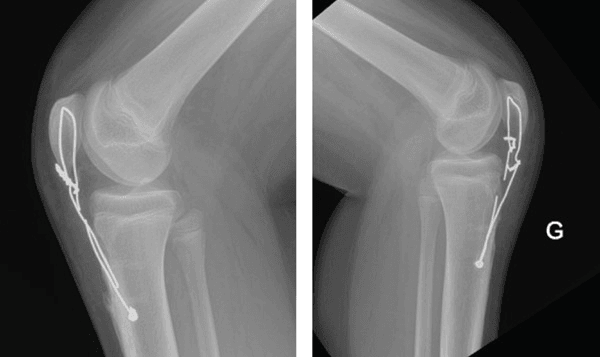
- Reattach through 3 vertical transosseous patellar tunnels or 2-3 suture anchors in the inferior pole.
- Repair the medial and lateral retinacular extensions of the tear.
- Confirm patellar height on an intra-operative lateral image and compare with the contralateral side. Restoring a normal Insall-Salvati ratio (about 1.0) is the goal; avoid over-tightening.
Tunnels or anchors. The two are biomechanically equivalent for ultimate load to failure; suture anchors show lower cyclic gap formation.
Management Algorithm
The management pathway is determined by completeness, active extension, timing and tissue quality. Brace a genuinely partial tear with preserved extension; repair a complete acute rupture promptly; augment poor tissue; and reconstruct chronic defects with tendon graft when direct approximation is impossible.
Related pages: Extensor Mechanism Ruptures for the umbrella topic covering the whole mechanism, of which this is the distal half; Quadriceps Tendon Rupture for the proximal counterpart, which occurs in an older population and produces patella BAJA rather than alta - the single most useful discriminator on the lateral radiograph; Patella Fractures for the third way the mechanism fails, and the one that must be excluded before you call an infrapatellar gap a tendon rupture; Patellar Height Abnormalities for how Insall-Salvati, Caton-Deschamps and Blackburne-Peel differ and which of them survives a change in patellar length; Patellar Tendinitis for the antecedent tendinopathy present in most ruptures; Tendon Healing for the biology that dictates the protected-motion protocol; TKA Extensor Mechanism Failure for the post-arthroplasty setting, where outcomes are worse and augmentation is advised in every case; and Achilles Tendon Rupture for the same Krackow-and-early-motion principles applied to the other great load-bearing tendon.
Complications
- Stiffness, from arthrofibrosis or prolonged immobilisation, is treated by MUA or arthrolysis.
- Patella baja follows over-tightening the repair and brings anterior knee pain, wear and limited flexion.
- Hardware irritation from inferior pole anchors or cerclage knots is treated by removal. Augmentation wires can also break.
- Re-rupture, reported in under 5%, is associated with aggressive early flexion.
Guidelines, Registries & Global Practice
Global epidemiology
- Patellar tendon rupture is the rarest of the three extensor-mechanism injuries but predominates in active males under 40 worldwide; quadriceps tendon rupture predominates over 40.
- A substantial minority (up to roughly one-third) carry local or systemic risk factors; systemic disease underlies most bilateral ruptures across all populations.
Society guidance & consensus (side by side)
- Position on patellar tendon rupture
- No disease-specific guideline; consensus and review literature support early surgical repair of complete ruptures with anatomic restoration of patellar height.
- Position on patellar tendon rupture
- No dedicated BOAST; managed under knee/soft-tissue trauma principles — urgent diagnosis of extensor-mechanism disruption and timely surgical repair.
- Position on patellar tendon rupture
- Describes operative repair (transosseous suture / anchors) and augmentation techniques as standard for extensor-mechanism reattachment.
- Position on patellar tendon rupture
- EFORT Open Reviews synthesis (Tandogan 2022) endorses early surgical repair, augmentation for poor/chronic tissue, and allograft for complex/post-TKA reconstruction.
There is broad international consensus rather than divergent national guidelines: complete rupture is a surgical injury, repaired early, with augmentation and reconstruction reserved for poor tissue, chronic and post-arthroplasty cases.
Registry note
- No dedicated patellar tendon rupture registry exists. Relevant signal comes from arthroplasty registries (NJR, AJRR, AOANJRR), where extensor-mechanism disruption is a recognised, function-limiting complication after TKA that drives revision and poorer patient-reported outcomes — the population in which reconstruction (and allograft) is most often required.
High- vs limited-resource practice variation
- Well-resourced settings: ready access to MRI, suture anchors, suture-tape internal brace and tissue-bank allograft (Achilles / full extensor-mechanism) for complex reconstruction.
- Limited-resource settings: reliance on clinical diagnosis and plain radiographs, transosseous tunnel repair with heavy suture and stainless-steel cerclage wire, and autograft (hamstring, contralateral BTB) where allograft is unavailable or unaffordable — all of which deliver good outcomes when applied to the correct indication.
Controversies & Areas of Uncertainty
Suture anchors or transosseous tunnels. Beyond the biomechanical differences above, clinical outcomes are similar. The choice remains surgeon preference and tissue quality, not high-level clinical evidence.
Routine augmentation in acute repair. Augmentation is intuitively protective, but with comparable scores in good-quality acute tears, universal augmentation of healthy young tendon is debated. It is clearly favoured for poor tissue, chronic and post-TKA cases.
Timing thresholds. "Acute" (under 2-3 weeks) versus "chronic" is a useful heuristic, but the true point at which retraction mandates reconstruction varies with tissue quality rather than a fixed day count.
Allograft or autograft for chronic and post-TKA reconstruction. Achilles allograft gives the best comparative scores in post-TKA series. Allograft cost, availability and incorporation risk keep hamstring and quadriceps autograft techniques relevant, especially in younger patients and resource-limited settings.
Accelerated or protected rehabilitation. Early motion reduces the dominant complication, stiffness, but must be balanced against re-rupture risk. The optimal protocol, and how much augmentation should change it, is not standardised.
Bilateral simultaneous rupture: staged or single-stage repair. No comparative trials exist; the decision is individualised around rehabilitation feasibility, comorbidity and social support.
Exam Viva Scenarios
Practise clinical reasoning and management decisions out loud
“A 30-year-old basketball player lands from a jump and feels a pop in his knee. He has immediate swelling and cannot stand up. On examination, there is a palpable defect below the patella and he cannot perform a straight leg raise. X-ray shows an Insall-Salvati ratio of 1.5. How do you assess and manage this injury?”
“You are called to the Emergency Department to see a 42-year-old man who has presented unable to walk after a fall down stairs. He reports that both knees 'gave way' simultaneously as he tried to catch himself. On examination, he has bilateral palpable infrapatellar gaps and cannot perform a straight leg raise on either side. He is obese (BMI 36) and on further history reveals he has had a renal transplant 3 years ago and is on long-term immunosuppression (prednisone 10mg daily, tacrolimus). He also has chronic kidney disease stage 3 and secondary hyperparathyroidism. X-rays of both knees show bilateral patella alta with Insall-Salvati ratios of 1.4 on the right and 1.6 on the left. How do you approach this patient's management and what are the specific considerations?”
“You are seeing a 38-year-old manual laborer in your clinic who was referred from a rural area. He sustained a patellar tendon rupture 9 months ago when he fell from a ladder at work. He was initially seen at a local hospital where he was told he had a 'knee sprain' and was given a knee brace and told to rest. He never had surgery. Over the past 9 months, he has been unable to work and has severe difficulty with stairs and standing from a seated position. He walks with a significant limp and cannot perform a straight leg raise. On examination, you note significant quadriceps atrophy, patella alta (the patella is palpable very high in the suprapatellar region), a large gap below the patella, and he has developed a significant extensor lag - he can achieve about 20° of active extension but cannot fully extend or hold the leg straight. His passive range of motion is 20° to 110° (he has developed a fixed flexion contracture). X-rays show an Insall-Salvati ratio of 2.1 indicating severe patella alta. The patellar tendon stump is retracted and scarred to the fat pad on MRI, and there is significant quadriceps muscle contracture and fatty infiltration. He is desperate to return to work and wants surgical reconstruction. How do you counsel him and what are the surgical options?”
Diagnostic Triad
- 1. Palpable Gap (Infra-patellar)
- 2. Loss of Active Extension
- 3. Patella Alta (X-ray)
Radiology
- Insall-Salvati: T/P
- Normal: 1.0 (0.8-1.2)
- Greater than 1.2 = Alta (Tendon Rupture)
- Less than 0.8 = Baja (Quad Rupture)
Key Evidence
Extensor mechanism ruptures — contemporary review
- Native patellar tendon ruptures occur in younger patients than quadriceps tendon ruptures
- Up to one-third of patients have local or systemic risk factors; these are more frequent in bilateral disruptions
- Complete disruptions should be repaired surgically; augmentation is advised for poor tissue quality, chronic tears or defects
- High rates of return to work/sport are reported with re-rupture rates under 5%
- Extensor mechanism injuries after TKA have inferior outcomes and warrant augmentation in all cases
Patellar tendon restoration — systematic review of repair vs reconstruction
- 23 studies, 738 patients across acute, chronic, post-TKA and post-ACLR settings
- Acute repairs achieved mean post-operative Lysholm scores of 84 to 99.5
- In the primary setting, primary repair with and without augmentation gave comparable Lysholm scores
- Cerclage augmentation alone yielded the lowest Lysholm scores and should not be relied upon as the sole construct
- In post-TKA patients, allograft reconstruction (KSS 79-88) outperformed autograft (KSS 70)
Suture anchor vs transosseous tunnel — biomechanical meta-analysis
- Systematic review and meta-analysis of 7 biomechanical studies, 128 cadaveric specimens (66 suture anchor, 62 transosseous)
- Suture anchor fixation produced significantly lower cyclic gap displacement than transosseous tunnels
- No significant difference in ultimate load to failure between the two techniques
- Both remain widely used and acceptable constructs in clinical practice
Chronic patellar tendon reconstruction after TKA — graft comparison
- 21 chronic post-TKA reconstructions in three groups of 7 (Achilles allograft, quadriceps+semitendinosus autograft, full extensor mechanism allograft)
- Mean extensor lag improved from about 50 degrees to about 3 degrees; mean KSS rose from 44.7 to 78.9
- Achilles allograft (KSS 87.7) significantly outperformed autograft (KSS 70.0)
- Authors conclude Achilles tendon allograft should be considered the gold-standard repair for chronic post-TKA lesions
Return to play after patellar tendon repair in professional athletes
- 103 professional baseball, basketball, American football and soccer athletes after patellar tendon repair
- 79 of 103 (76.7%) successfully returned to play
- American football athletes had the lowest return-to-play rate and the shortest adjusted careers
- Soccer athletes showed short-term performance decline that recovered to baseline by seasons 2-3
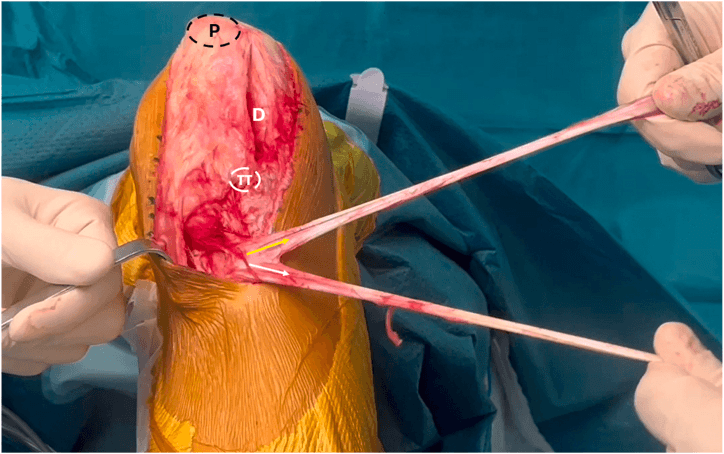
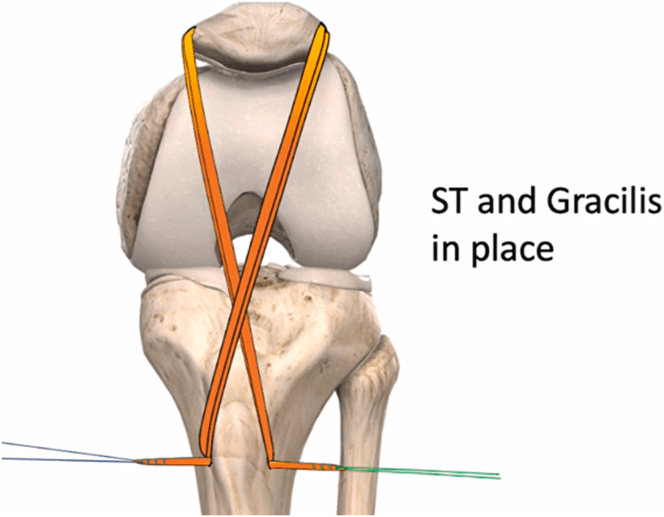
Hamstring double-row reconstruction for post-TKA patellar tendon rupture
- 14 patients (mean age 68.1) with post-TKA patellar tendon rupture reconstructed using ipsilateral semitendinosus and gracilis double-row technique
- Median Caton-Deschamps index improved from 1.8 to 1.25 (p = 0.014)
- Median active knee-extension loss fell from 25 degrees to 5 degrees
- Tegner-Lysholm and Kujala scores significantly improved at mean 3.8-year follow-up
References
The evidence cards above draw on the following sources:
- Tandogan RN, et al. Extensor mechanism ruptures. EFORT Open Rev. 2022. PMID 35638613. DOI
- Fortier LM, et al. Patellar tendon restoration techniques: a systematic review. Eur J Orthop Surg Traumatol. 2024. PMID 39212690. DOI
- Imbergamo C, et al. Failure rates of suture anchor vs transosseous tunnel for patellar tendon repair: meta-analysis. Orthop J Sports Med. 2022. PMID 36035892. DOI
- Lamberti A, et al. Surgical options for chronic patellar tendon rupture in TKA. Knee Surg Sports Traumatol Arthrosc. 2016. PMID 27815584. DOI
- Nguyen MT, Hsu WK. Performance-based outcomes following patellar tendon repair in professional athletes. Phys Sportsmed. 2019. PMID 31291548. DOI
- Akgun E, et al. Double-row hamstring reconstruction for patellar tendon rupture after TKA. Medicine (Baltimore). 2024. PMID 38669383. DOI