Proximal Median Nerve Compression | Forearm Pain | Sensory AND Motor Loss
- Palmar Cutaneous Branch: Involved in pronator syndrome, SPARED in CTS - key differentiator
- Forearm Pain: Hallmark of pronator syndrome, absent in CTS
- Four Compression Sites: Lacertus (commonest in contemporary series), pronator teres (the classical target), FDS arch, ligament of Struthers
- Pronator Provocation: Resisted pronation reproduces symptoms
- Less Common Than CTS: Pronator syndrome is rare, often misdiagnosed as CTS
- “Thenar sensation loss = pronator syndrome not CTS
- “Forearm pain = proximal median nerve compression
- “Resisted pronation + flexion = provocative test
- “NCS often normal (unlike CTS where abnormal)
Overview and Epidemiology
Pronator syndrome is compression of the median nerve in the proximal forearm. It is named after the pronator teres, long taught as the usual site of compression, but contemporary series find the lacertus fibrosus responsible in most patients, which is why some authors now argue the condition should be renamed.
Why it matters. It is an uncommon but important differential for median nerve symptoms. It is frequently misdiagnosed as carpal tunnel syndrome (CTS), which leads to failed carpal tunnel releases, and the key is recognising thenar sensory loss and forearm pain.
Who. It is rare, quoted at anywhere from about 1% of the frequency of CTS to roughly an order of magnitude less frequent. Women are affected twice as often as men (2:1), the peak age is 30-50 years, and bilateral disease is uncommon (10-15%).
Risk factors. Occupational and anatomical factors both contribute:
- Repetitive pronation and gripping, as in mechanics and assembly workers
- Weightlifting, especially supination and pronation exercises
- Anomalous anatomy: a ligament of Struthers or aberrant muscles
- Direct trauma, such as fractures and contusions of the forearm
- Hypertrophy of pronator teres
Anatomy and Pathophysiology
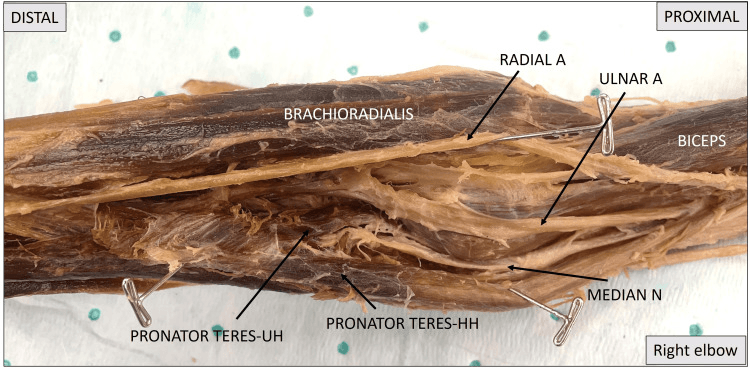
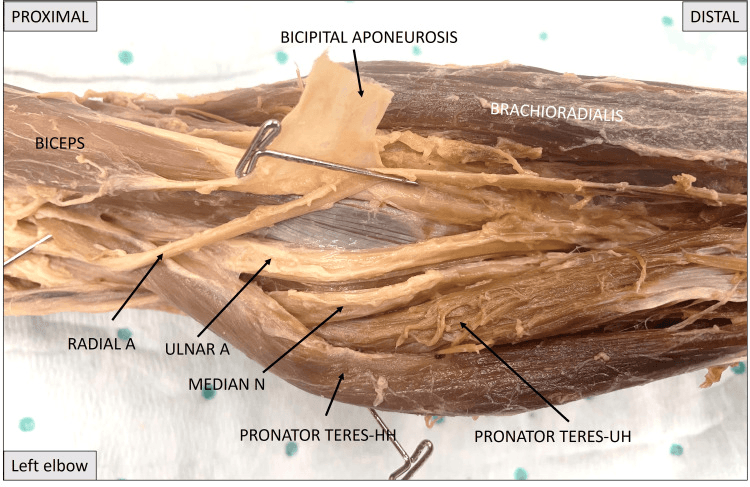
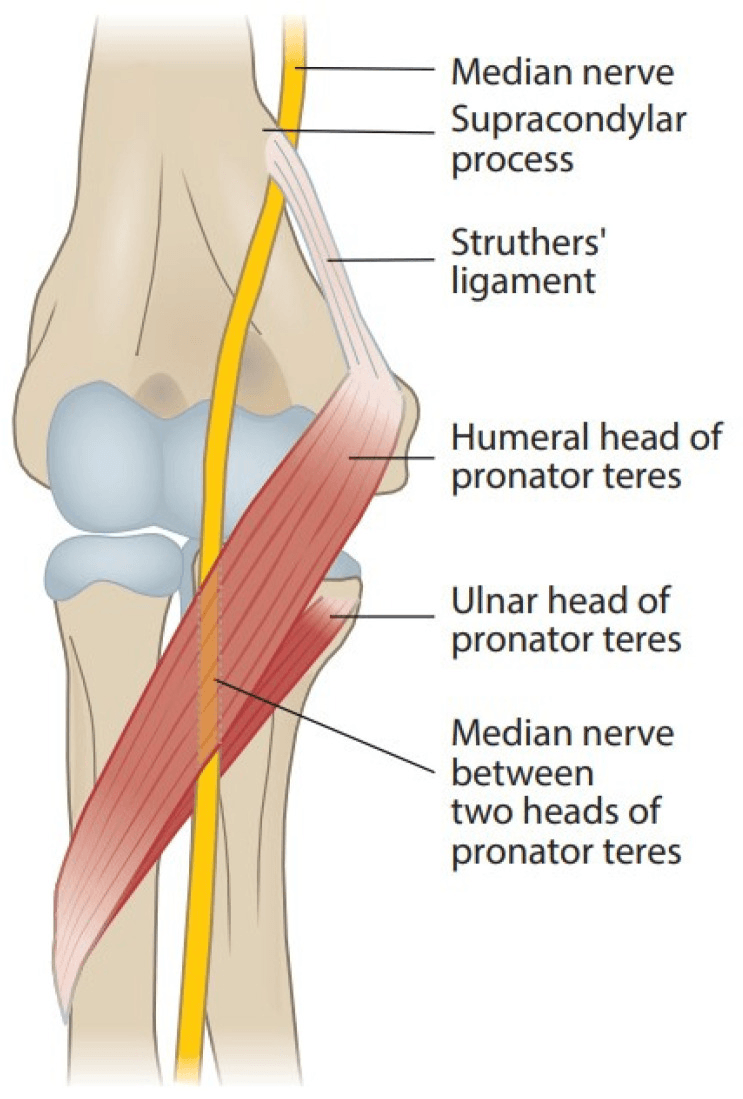
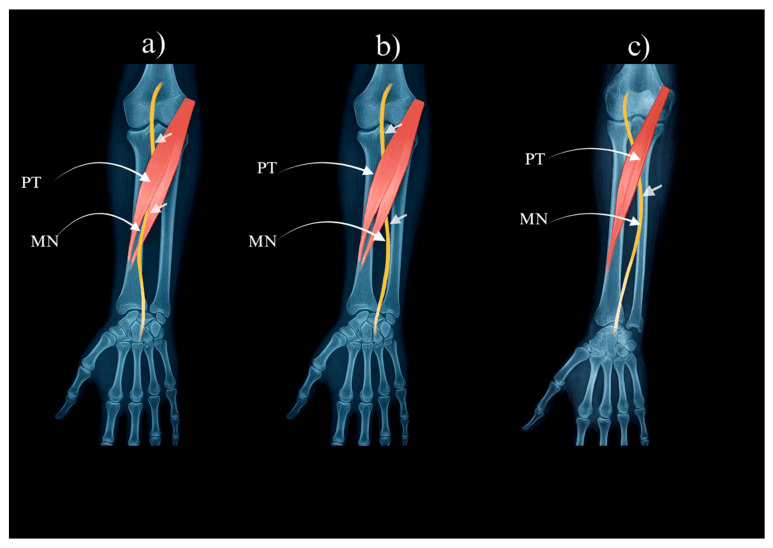
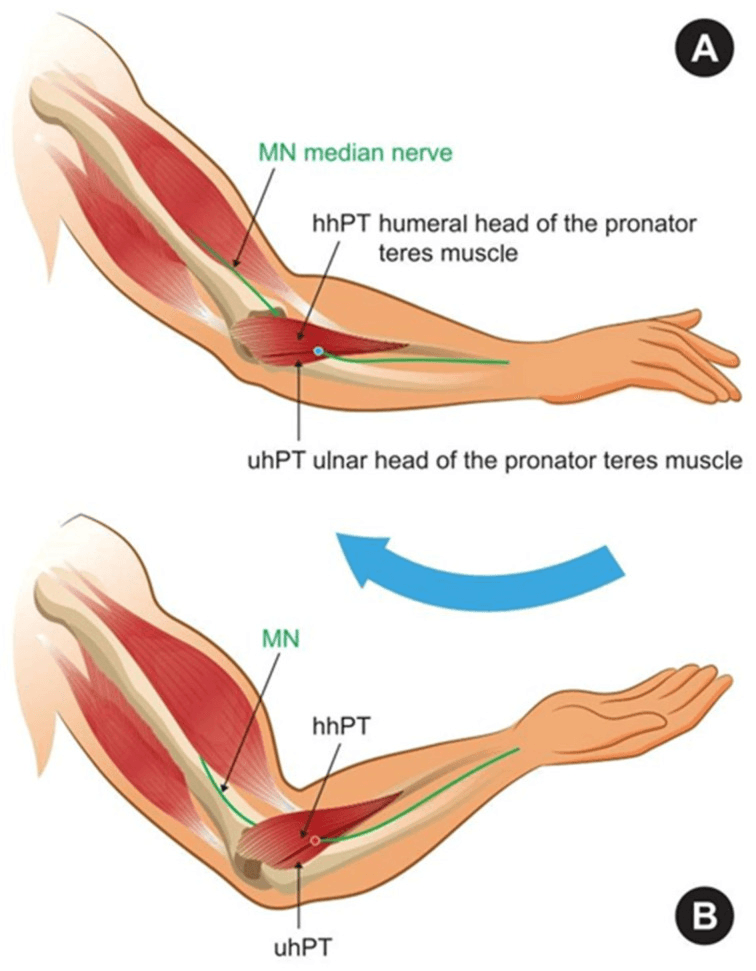
The course of the nerve. The median nerve enters the forearm between the humeral and ulnar heads of pronator teres. Proximal to this it may pass under the lacertus fibrosus; distal to it, it passes under the fibrous arch of FDS. Compression at any of these sites causes pronator syndrome.
Four potential sites, proximal to distal.
- Ligament of Struthers - an anomalous ligament from a supracondylar process to the medial epicondyle, present in about 1% of the population. The nerve passes underneath it, and although rare it must be identified if present.
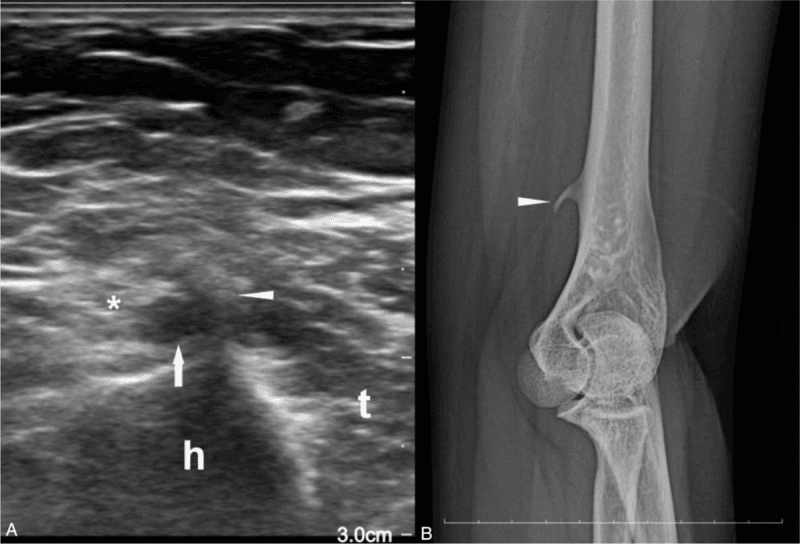
- Lacertus fibrosus (bicipital aponeurosis) - fascia from the biceps tendon crossing over the median nerve, tight in full elbow extension with the forearm supinated.
- Pronator teres - the interval between its humeral and ulnar heads, where the nerve is compressed by forceful or repetitive pronation. This is the classical primary target.
- FDS arch - the fibrous arch of flexor digitorum superficialis to the middle finger, beneath which the nerve passes; it tightens with resisted finger flexion.
What compression does. The compression is dynamic, occurring with muscle contraction. The sequence runs from chronic ischaemia and nerve irritation to progressive fibrosis and scarring, and eventually demyelination and axonal damage.
Classification Systems
Classification by Anatomical Site
- How often implicated
- Rare - the supracondylar process is present in about 1% of people
- Provocative Maneuver
- Elbow extension
- Release Technique
- Divide ligament, excise supracondylar process
- How often implicated
- The site in the large majority of patients in contemporary series
- Provocative Maneuver
- Elbow extension + supination
- Release Technique
- Divide bicipital aponeurosis
- How often implicated
- The classical primary target; frequency never reliably measured
- Provocative Maneuver
- Resisted pronation
- Release Technique
- Release between two heads
- How often implicated
- Uncommon in isolation; the commonest second site at revision
- Provocative Maneuver
- Resisted finger flexion
- Release Technique
- Release fibrous arch
No reliable distribution exists. The classical teaching that the pronator teres is the site in the large majority comes from operative series in which the pronator was the structure routinely exposed and divided. Hartz found tendinous bands there in most explored forearms, which reports where the surgeon looked, not where the nerve is compressed.
Contemporary series point the other way. 446 patients in the Shah Mardan review, plus Hagert's 44 and Ahmad's 93, had isolated lacertus release, and 99.6% recovered immediately, with only four of 446 later needing a superficialis arcade release. Those series are selected too, since they diagnosed lacertus syndrome and released the lacertus, so neither figure is a measured distribution.
In practice. Test all four sites clinically and expect the lacertus to be implicated far more often than the traditional teaching allows; on current evidence it is the site most often responsible and the one most often missed. Multiple sites may coexist in the same patient.
Clinical Assessment
Symptoms. The hallmark is an aching pain in the proximal volar forearm; CTS causes hand and wrist symptoms but not forearm pain. Numbness follows the median nerve distribution, including the thenar eminence.
Pattern. Onset is insidious, developing gradually over weeks to months. Symptoms are activity-related, worse with repetitive pronation and gripping, and nocturnal waking is less common than in CTS. Ask about occupation and repetitive pronation; the red flags are rapid progression and severe weakness.
Why thenar sensation decides it. The palmar cutaneous branch leaves the median nerve 5 cm proximal to the wrist and supplies the thenar eminence, so it is spared in CTS but involved in pronator syndrome. Palmar cutaneous sensory loss is pathognomonic.
Examination.
- Sensation over the thenar eminence (palmar cutaneous branch)
- Power in APB, FPL and FDP: usually normal, though there may be subtle weakness
- The OK sign: normal, because FPL and FDP work, unlike in AIN syndrome
- Tenderness to palpation over the pronator muscle
- Tinel's sign over pronator teres, which is less specific
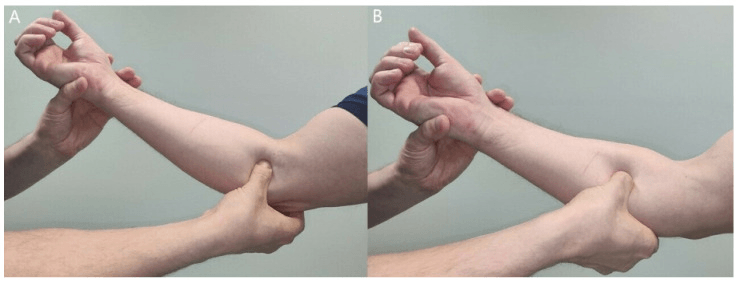
- Resisted pronation reproducing the forearm pain: the key test
- Resisted FDS flexion, which may reproduce symptoms
- Phalen's and Tinel's at the wrist: Phalen's is negative, unlike in CTS
- Technique
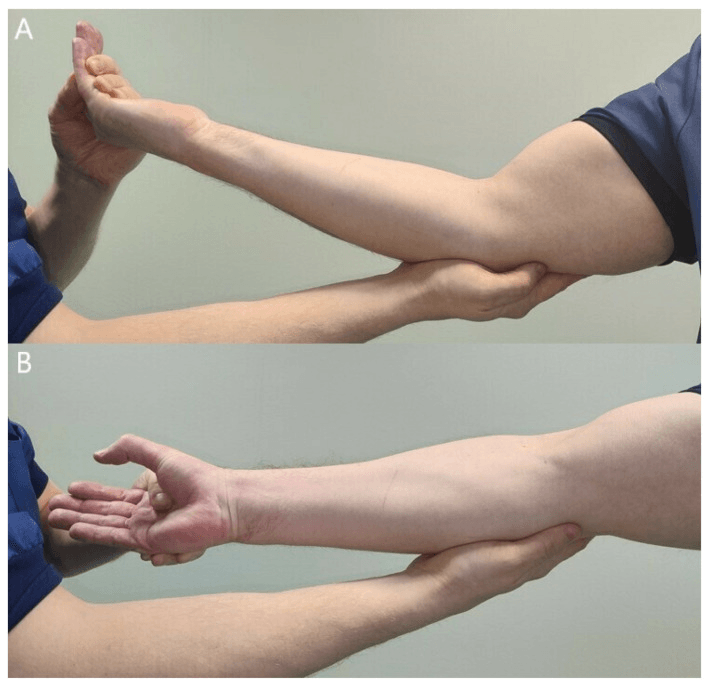
- Resist forearm pronation with elbow 90° flexed
- Positive Finding
- Forearm pain/paresthesias
- Sensitivity
- Moderate (60-70%)
- Technique
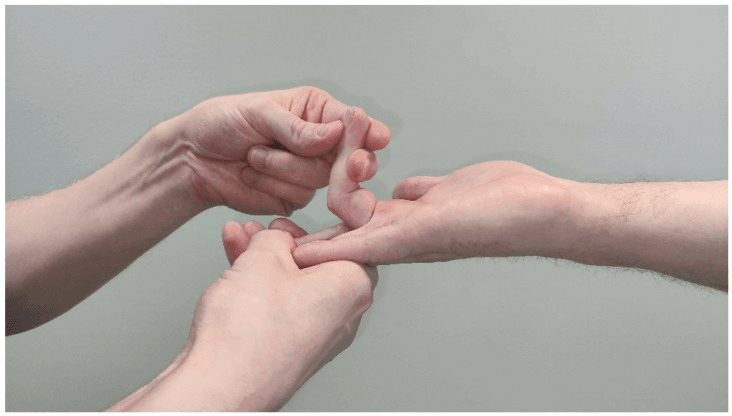
- Resist isolated PIP flexion of middle finger
- Positive Finding
- Forearm pain/paresthesias
- Sensitivity
- Low (30-40%)
- Technique
- Full elbow extension + supination held 60 seconds
- Positive Finding
- Symptoms reproduced
- Sensitivity
- Moderate (50-60%)
- Technique
- Compress pronator teres for 30 seconds
- Positive Finding
- Paresthesias in median distribution
- Sensitivity
- Moderate (40-60%)
Against carpal tunnel syndrome, the diagnosis it is most often mistaken for:
- Pronator Syndrome
- Proximal volar forearm
- Carpal Tunnel Syndrome
- Wrist and hand
- Pronator Syndrome
- LOST (palmar cutaneous involved)
- Carpal Tunnel Syndrome
- NORMAL (palmar cutaneous spared)
- Pronator Syndrome
- Less common
- Carpal Tunnel Syndrome
- Very common (hallmark)
- Pronator Syndrome
- Negative
- Carpal Tunnel Syndrome
- Positive
- Pronator Syndrome
- POSITIVE
- Carpal Tunnel Syndrome
- Negative
- Pronator Syndrome
- Often normal
- Carpal Tunnel Syndrome
- Abnormal (prolonged latency)
Differential diagnosis.
- CTS, the most common misdiagnosis: no thenar sensory loss, nocturnal symptoms
- AIN syndrome: pure motor, no sensory loss
- C6/C7 radiculopathy: neck pain, dermatomal pattern
- Thoracic outlet syndrome
- Medial epicondylitis
Lacertus Syndrome and the Scratch-Collapse Test
Lacertus tunnel syndrome. A growing literature argues that the lacertus fibrosus is frequently the true, and often sole, compression point. Some authors call it lacertus tunnel syndrome and treat it as a distinct subset of pronator syndrome rather than a minor secondary site.
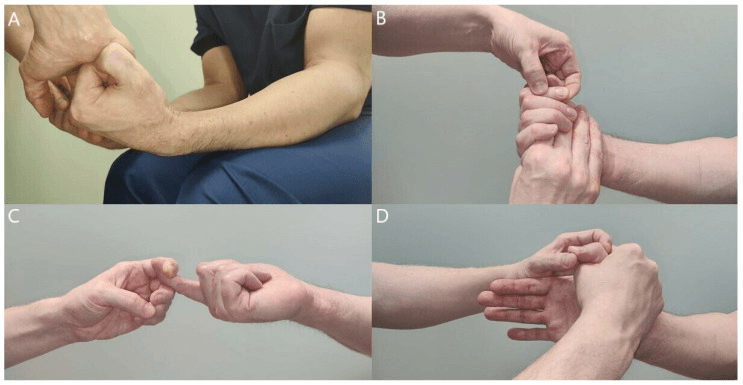
Hagert's three signs. The diagnosis is clinical:
- Weakness of median-innervated muscles distal to the lacertus: test FPL, the FDP to the index and APB against resistance
- Pain on pressure over the median nerve at the lacertus
- A positive scratch-collapse test
The scratch-collapse test. The seated patient holds both arms adducted, elbows flexed 90 degrees, and resists the examiner's external-rotation force. The examiner lightly scratches the skin over the compression site, the lacertus. A transient loss of external-rotation resistance, a brief "collapse", on the affected side is positive and localises the level.
Why the signs matter. Because electrodiagnostics are usually normal, these clinical signs are the diagnosis. Recognising lacertus compression also explains the roughly 10% of pooled surgical series who had already undergone a failed carpal tunnel release before the proximal lesion was found.
Investigations
The diagnosis is clinical. It rests on forearm pain, median sensory symptoms including the thenar eminence, and a positive resisted pronation test.
Electrodiagnostics. NCS are usually normal in pronator syndrome, the key difference from CTS, where prolonged latency is expected. Forearm segment conduction may show mild slowing if severe, and EMG may show minimal denervation in median-innervated muscles.
Imaging.
- Radiograph: look for a supracondylar process if a ligament of Struthers is suspected
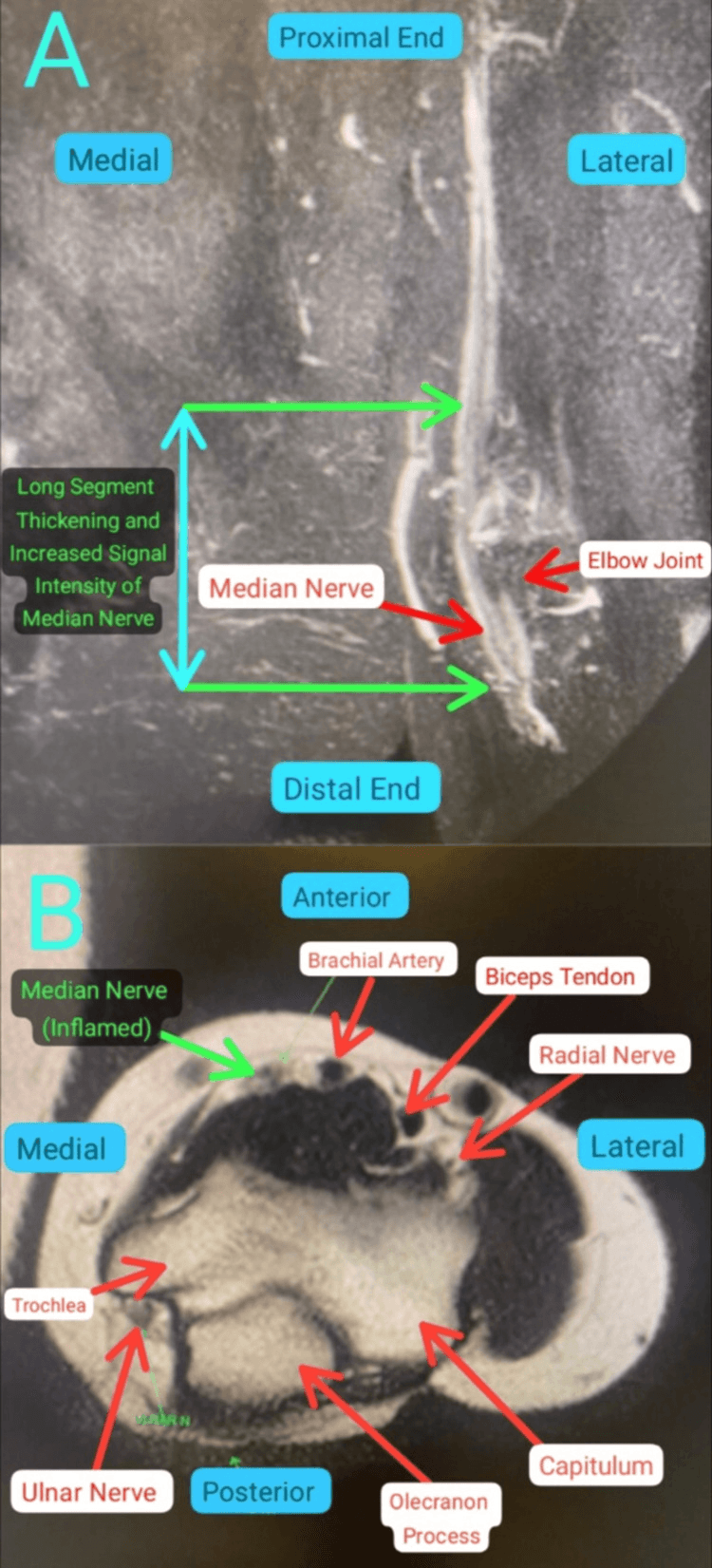
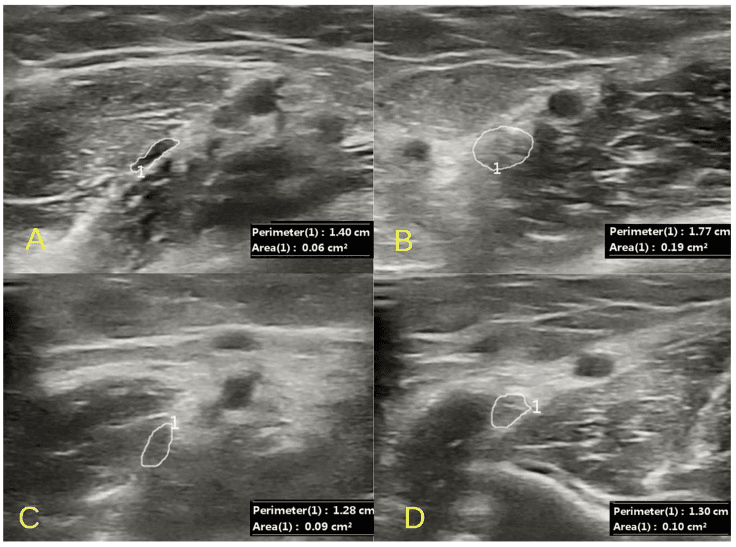
- MRI of the forearm: if a mass lesion is suspected, after failed conservative treatment, or for pre-operative planning. It may show nerve compression or signal change, muscle hypertrophy, masses or anomalous muscles and structures
Diagnostic injection. Local anaesthetic injected around pronator teres that gives temporary relief suggests pronator syndrome, and helps confirm the diagnosis in uncertain cases.
Management
Conservative treatment first. Give a trial of 3-6 months before considering surgery; 30-40% respond. The components:
- Initial phase, 0-3 months: activity modification to avoid repetitive pronation and gripping, with an ergonomic workplace assessment and NSAIDs for pain
- A forearm splint in neutral pronation-supination if symptoms are severe, less effective than in CTS but able to provide relief
- Physiotherapy: stretching and strengthening of the forearm muscles, nerve gliding exercises, and manual therapy for muscle release
- Corticosteroid injection around pronator teres, which may give temporary relief and can be diagnostic and therapeutic; limit to 1-2 injections
When to operate. Surgery is appropriate after a failed conservative trial.
- Relative indications
- Persistent symptoms interfering with work or daily activities
- Contraindications
- Improving with conservative treatment
- Relative indications
- Clearly positive provocative tests
- Contraindications
- Uncertain diagnosis
- Relative indications
- Temporary relief from a diagnostic injection
- Contraindications
- Medical comorbidities precluding surgery
- Relative indications
- Patient preference after informed discussion
- Contraindications
- Unrealistic patient expectations
Surgical Technique
Open decompression. Release all four potential sites: multiple compression sites often coexist, and complete decompression from proximal to distal is essential. The medial antebrachial cutaneous nerve is the structure at highest risk.
Surgical Steps
Supine, arm table, tourniquet. Lazy-S incision from 2cm proximal to the elbow crease, crossing the antecubital fossa medial to the biceps tendon and extending 8-10cm down the volar forearm along the FCR-PL interval.
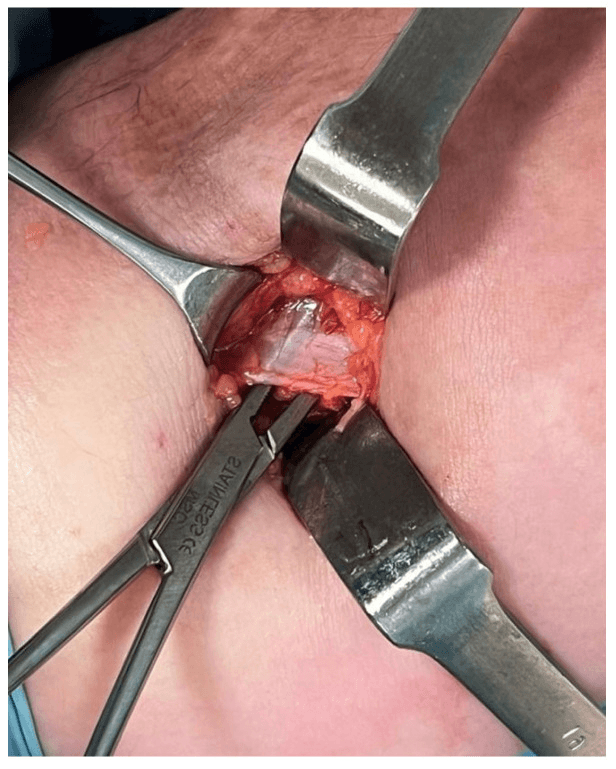
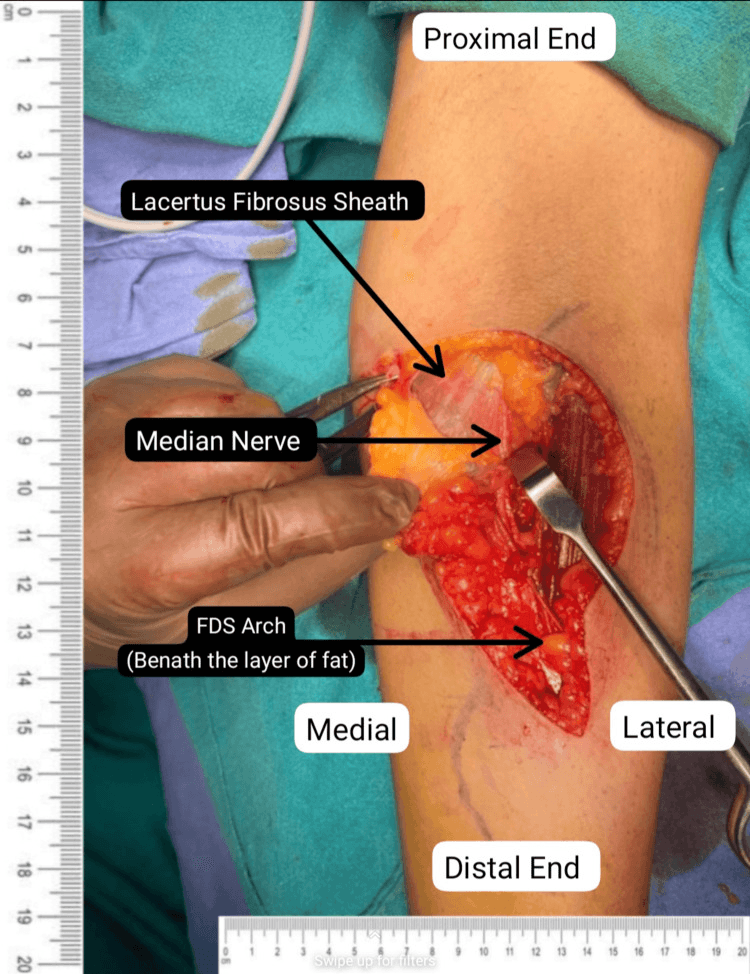
Identify and protect the medial antebrachial cutaneous nerve. Identify the median nerve proximal to the elbow, check for a ligament of Struthers (palpate for a supracondylar process), and divide the lacertus fibrosus.
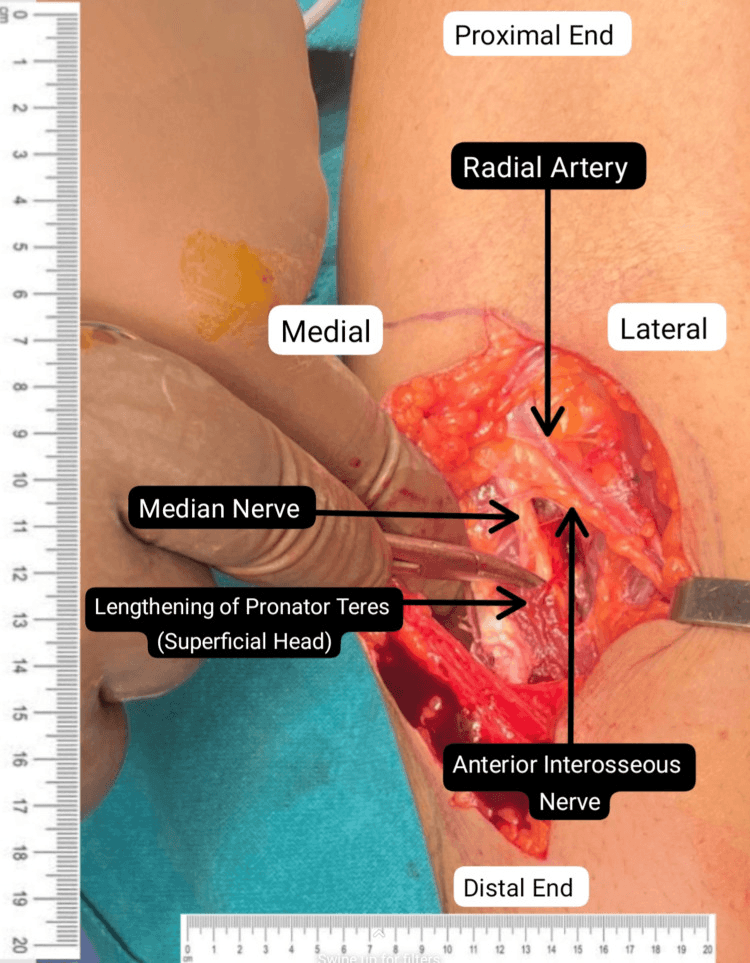
Identify the humeral and ulnar heads of pronator teres and trace the median nerve between them. Release or divide the humeral head if tight, and ensure the nerve glides freely.
Follow the nerve distally to the FDS arch and release the fibrous arch of FDS (to the middle finger) if present, completing decompression throughout the forearm.
Identify the AIN branch coming off the median nerve and ensure it is not compressed by fibrous bands or Gantzer's muscle. Release if tight.
Layered closure; do not repair pronator teres if divided. Bulky dressing and forearm splint in neutral position.
- Location
- Crosses field superficially
- How to Protect
- Identify early, retract carefully
- Location
- Medial to median nerve proximally
- How to Protect
- Gentle dissection, avoid traction
- Location
- May have anomalous course
- How to Protect
- Look for aberrant vessels
- Location
- Branches 4-6cm distal to epicondyle
- How to Protect
- Protect during distal dissection
What you may find.
- Management
- Release or divide humeral head
- Management
- Divide all compressive bands
- Management
- Divide if compressing nerve
- Management
- Ligate and excise
- Management
- Divide ligament, excise supracondylar process
- Management
- Release arch completely
Wide-Awake (WALANT) Release and Intra-operative Confirmation
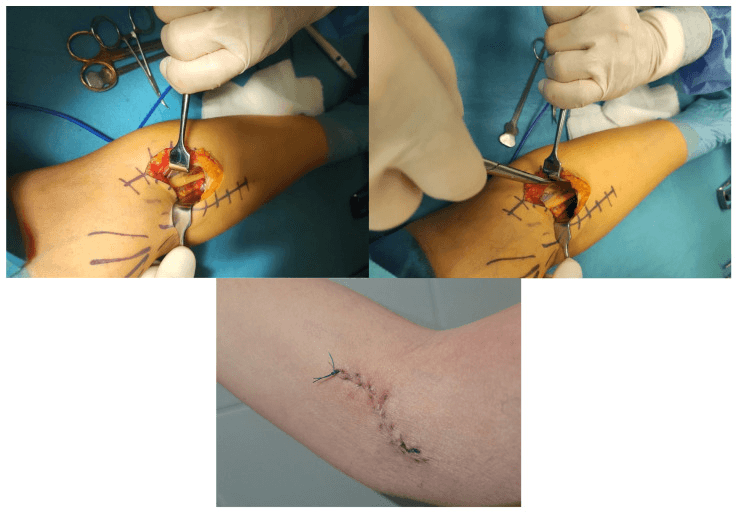
The awake approach. Release is increasingly performed wide-awake under local anaesthesia with lidocaine-adrenaline and no tourniquet (WALANT), through a small incision of about 2 cm at the lacertus. It is a day-case procedure with low morbidity.
Proof on the table. Because the patient is awake and without a tourniquet, the return of median-muscle strength can be tested immediately after release, confirming that the correct structure was decompressed. The awake series saw this in essentially all patients.
The percutaneous option. An emerging ultrasound-guided percutaneous release of the lacertus, performed superficial to pronator teres under WALANT, reproduces the immediate strength return through a millimetric skin incision with same-week return to work.
Outcomes and the caveat. Awake lacertus release gives large early functional gains, with QuickDASH falling by roughly 25-45 points across series, and few complications. The caveats are careful case selection and the reminder that a persistent case may still need a carpal tunnel or superficialis-arcade release.
Set against the open operation. The open decompression releases every site; the awake series diagnosed lacertus syndrome and released the lacertus alone. Their results belong to that selected group.
Complications
- Incidence
- 10-15%
- Management
- Careful dissection, neurolysis if symptomatic
- Incidence
- 15-20%
- Management
- Ensure all sites released at initial surgery
- Incidence
- 20-30%
- Management
- May indicate wrong diagnosis or incomplete release
- Incidence
- Rare (under 2%)
- Management
- Gentle handling, avoid excessive traction
- Incidence
- 5-10%
- Management
- Standard wound care, antibiotics if needed
Why surgery fails. Incomplete decompression and persistent symptoms are common, for these reasons:
- A wrong initial diagnosis: the problem was actually CTS, radiculopathy or another condition
- Incomplete surgical release of all compression sites
- Coexisting compression, whether CTS or cervical pathology (double crush)
- Progression of symptoms post-operatively
Postoperative Care
Postoperative Protocol
Forearm splint in neutral position and wound care, with finger and elbow range of motion immediately. Sutures out at 10-14 days.
Discontinue the splint. Active range of motion, gentle pronation and supination, and scar massage; no strengthening yet.
Progressive strengthening and functional exercises, with a gradual return to gripping and pronation activities.
Return to full activities. Sensory recovery usually comes within 6-12 weeks; motor recovery, if weakness was present, may take 3-6 months.
Return to work. Light duty at 2-4 weeks and full duty at 6-8 weeks for most occupations; manual labour may require 8-12 weeks.
Outcomes and Prognosis
Results of surgery. Surgical decompression gives good to excellent results in 70-80%. Relief is complete in 50-60% and partial in 20-30%; 10-20% do not improve, often because the diagnosis was wrong.
Prognostic factors.
- Better Outcome
- Short (under 6 months)
- Worse Outcome
- Long (over 1-2 years)
- Better Outcome
- Clear clinical diagnosis, positive injection
- Worse Outcome
- Uncertain diagnosis, normal exam
- Better Outcome
- Identifiable compression (ligament, band)
- Worse Outcome
- No clear pathology at surgery
- Better Outcome
- Isolated pronator syndrome
- Worse Outcome
- Coexisting CTS or cervical issues
Guidelines, Registries & Global Practice
Global epidemiology. Proximal median nerve entrapment is genuinely uncommon and historically under-recognised; it is roughly an order of magnitude less frequent than carpal tunnel syndrome. There is a female predominance (around 2:1 to 3:1 across recent series) and a working-age peak (late 30s to 50s). A recurring international observation is that a meaningful minority of patients — about 10% in pooled lacertus-release data — have already undergone a failed carpal tunnel release before the proximal lesion is recognised.
No dedicated registry. Unlike arthroplasty, peripheral nerve decompressions are not captured by national joint or implant registries (NJR, AJRR, AOANJRR, Swedish/Norwegian/NZJR). Evidence is therefore driven by case series, prospective cohorts and the 2025 PRISMA systematic review rather than registry data — a point worth stating explicitly in a viva.
Side-by-side guidance (no society has a stand-alone pronator-syndrome guideline):
- Position relevant to proximal median compression
- CTS guidelines emphasise excluding proximal/cervical causes before CTR; no specific pronator guidance
- Position relevant to proximal median compression
- Treat as a clinical diagnosis; reserve surgery for failed conservative care; document differentiation from CTS
- Position relevant to proximal median compression
- Anatomy-based teaching of the four compression sites; complete decompression at operation
- Position relevant to proximal median compression
- Growing recognition of lacertus-level compression and wide-awake (WALANT) release
High- vs limited-resource practice. Where ultrasound and WALANT theatres are available, image-guided or minimal-incision awake release is increasingly favoured, allowing intra-operative confirmation of returned strength and same-day discharge. In limited-resource settings the diagnosis remains primarily clinical (history, thenar sensory testing, resisted pronation and scratch-collapse test), open decompression under regional/general anaesthesia is standard, and a diagnostic local-anaesthetic block is a cheap, useful confirmatory step. Electrodiagnostics are helpful chiefly to exclude CTS and cervical radiculopathy rather than to confirm pronator syndrome, since they are frequently normal.
Documentation / consent points (exam-relevant, billing-agnostic): record palmar cutaneous sensory testing, an adequate conservative trial (3-6 months), the differential considered (CTS, AIN syndrome, C6/C7 radiculopathy, TOS), and consent covering persistent symptoms (20-30%), cutaneous nerve injury and incomplete relief.
Related pages: Carpal Tunnel Syndrome is the diagnosis this is mistaken for in both directions - 10.5% of patients in the Shah Mardan review had already had a carpal tunnel release before the proximal lesion was found - and the discriminator is the palmar cutaneous branch, which leaves the nerve 5 cm proximal to the wrist and so is spared at the carpal tunnel; Recurrent and Revision Carpal Tunnel Syndrome for the patient in front of you when that mistake has already been made; Anterior Interosseous Nerve Syndrome for the purely motor branch lesion that shares this anatomy but produces no sensory loss at all, and Anterior Interosseous Nerve Anatomy for why; Median Nerve Anatomy for the course, the branching order and the reason the palmar cutaneous branch is the single most useful clinical sign here; Pronator Teres Anatomy for the two heads and the interval the nerve runs between; Flexor-Pronator Mass Strain and Tendinopathy for the far commoner cause of the same forearm pain with no neurological findings; and Cubital Tunnel Syndrome for the other nerve compressed at the elbow, which coexists often enough that both should be examined at the same visit.
MCQ Practice Points
Q: What is the key sensory finding that differentiates pronator syndrome from CTS? A: Loss of sensation over the thenar eminence. The palmar cutaneous branch of the median nerve exits 5cm proximal to the wrist and supplies the thenar eminence. It is compressed in pronator syndrome but spared in CTS.
Q: Which site is responsible in pronator syndrome? A: Name all four, and know that the answer has changed. The syndrome is named after the pronator teres, between whose two heads the nerve passes, and that was long taught as the usual site. Contemporary series find the lacertus fibrosus responsible in most patients: 446 patients across the Shah Mardan systematic review had isolated lacertus release with immediate return of function in 99.6%, and only four needed a later superficialis arcade release. The other two sites are the FDS arch and, rarely, a ligament of Struthers arising from a supracondylar process present in about 1% of people. No study has ever measured a true distribution, so quote the direction and not a percentage.
Q: How do NCS findings differ between pronator syndrome and CTS? A: NCS often NORMAL in pronator syndrome. CTS typically shows prolonged distal motor latency and sensory latency. Pronator syndrome is primarily a clinical diagnosis.
Q: What is the ligament of Struthers? A: Anomalous ligament from supracondylar process to medial epicondyle. Present in only 1% of population. When present, median nerve passes underneath and can be compressed. Palpable bony prominence on distal humerus suggests diagnosis.
Q: What is the most specific provocative test for pronator syndrome? A: Resisted forearm pronation with elbow at 90 degrees flexion. Reproduction of forearm pain and paresthesias in median nerve distribution is positive test.
Q: Can a patient have both pronator syndrome and carpal tunnel syndrome? A: Yes - double crush syndrome. The median nerve can be compressed at multiple levels. Both conditions can coexist in 10-20% of cases. May need decompression at both levels.
Exam Viva Scenarios
Practise clinical reasoning and management decisions out loud
“A 35-year-old office worker presents with 4 months of volar forearm pain and numbness in the thumb and index finger. Symptoms are worse with typing. She has normal Phalen's and Tinel's at the wrist. She has sensory loss over the thenar eminence. Resisted pronation reproduces her forearm pain. What is your diagnosis and management?”
“A 45-year-old woman had carpal tunnel release 6 months ago but still has persistent forearm pain and median nerve paresthesias including over the thenar eminence. What is your approach?”
“You are performing pronator syndrome decompression. After releasing the lacertus fibrosus and pronator teres, you notice the median nerve is still compressed by a thick fibrous arch under the FDS. You also notice the AIN branch seems compressed by an anomalous muscle. What do you do?”
“A 52-year-old patient presents with nocturnal hand numbness and daytime forearm pain. Examination reveals sensory loss over the thenar eminence and in the median nerve distribution of the hand. Both Phalen's test and resisted pronation test are positive. NCS shows prolonged distal motor latency at the wrist. What is your diagnosis and management approach?”
Key Differentiators from CTS
- Forearm pain (hallmark) - CTS causes hand/wrist pain
- Thenar sensory loss (palmar cutaneous involved)
- NCS often normal (CTS has abnormal NCS)
- Resisted pronation positive (negative in CTS)
Four Compression Sites
- Lacertus fibrosus (bicipital aponeurosis)
- Pronator teres (the classical primary target)
- FDS arch (fibrous arch to middle finger)
- Struthers ligament (anomalous, 1%)
Clinical Diagnosis
- Volar forearm pain + median nerve symptoms
- Sensory loss over thenar eminence (key finding)
- Positive resisted pronation test
- Less nocturnal symptoms than CTS
Investigations
- NCS usually normal (unlike CTS)
- EMG may show minimal median muscle changes
- MRI if mass or anomaly suspected
- Diagnostic injection can confirm diagnosis
Surgical Technique
- Lazy-S incision, antecubital fossa to forearm
- Release all four compression sites systematically
- Protect medial antebrachial cutaneous nerve
- Ensure AIN branch not compressed (Gantzer's muscle)
Outcomes and Pearls
- Conservative success low (30-40%)
- Surgical success 70-80%
- Incomplete release = main cause of failure
- Can coexist with CTS (double crush)
Evidence Base
Hartz, Linscheid, Gramse & Daube (Mayo Clinic)
- 39 patients over 7 years; aching forearm discomfort, hand weakness, thumb/index numbness
- Distinctive sign: tenderness over proximal pronator teres aggravated by resisted pronation
- Electrophysiology abnormal in only a few; localisation rarely possible
- 36 operations: 28 good/excellent, 5 fair, 3 unchanged; failure from inadequate release or misdiagnosis
Lee & LaStayo
- Comprehensive review of proximal median neuropathies mimicking CTS
- Pronator and AIN syndromes are rare relative to CTS; suspect when CTS fails to respond
- Differentiation rests on paraesthesia pattern and muscle weakness pattern, not electrodiagnostics
- Conservative strategy: rest/immobilisation, modalities, nerve gliding, then surgery
Hagert (Karolinska)
- 44 patients with proximal median nerve entrapment released prospectively (WALANT, no tourniquet)
- Diagnosis on 3 signs: weakness in median muscles distal to lacertus, tenderness at lacertus, positive scratch-collapse test
- Immediate intra-operative return of median muscle strength in all subjects
- QuickDASH fell from 35.4 to 12.7 at 6 months (p less than 0.0001)
Ahmad et al
- 93 patients with lacertus syndrome (subset of pronator syndrome); 77% women, mean age 38.7
- Isolated lacertus release under WALANT after 3 months of failed hand therapy
- Mean QuickDASH fell from 53 to 7.8 immediately and 10.6 at 6 months (p less than 0.001)
- Grip strength rose 16 to 24 kg; pinch 9 to 13 kg
Shah Mardan et al
- 7 studies, 446 patients undergoing isolated lacertus fibrosus release; mean follow-up 16.1 months
- 10.5% had prior failed carpal tunnel release before correct diagnosis
- Immediate pain relief and return of strength in 99.6%; only 2 complications (haematoma, infection)
- 7 residual cases needed later CTR (3) or superficialis arcade release (4)
Apard et al
- 15 consecutive patients: percutaneous ultrasound-guided lacertus release under WALANT
- Immediate return of muscle strength sustained at follow-up
- VAS pain fell from 6.2 to 0.6 by week 4; all working patients back to work by week 1
- No anaesthetic/surgical complications; one self-resolving haematoma