Bracing and AFOs
- The fundamental principle of foot and ankle orthotics is to MATCH THE ORTHOSIS TO THE BIOMECHANICAL DEFICIT: an orthosis is chosen for what it must do - support, offload pressure, control a flexible or fixed deformity, substitute for weak muscles, or stabilise an unstable/arthritic joint - so understanding the patient's specific problem (and whether deformities are flexible or fixed) is the key to prescribing correctly.
- FOOT ORTHOSES (insoles) act on the foot itself: they support the arch, redistribute and OFFLOAD plantar pressure (with metatarsal pads/bars, heel cups/posts), accommodate fixed deformity and cushion - used for plantar fasciitis, metatarsalgia, flexible flatfoot and, importantly, OFFLOADING the at-risk/diabetic/insensate or ulcerated foot (total-contact/accommodative insoles), where evidence supports footwear/insoles for improving stability and gait.
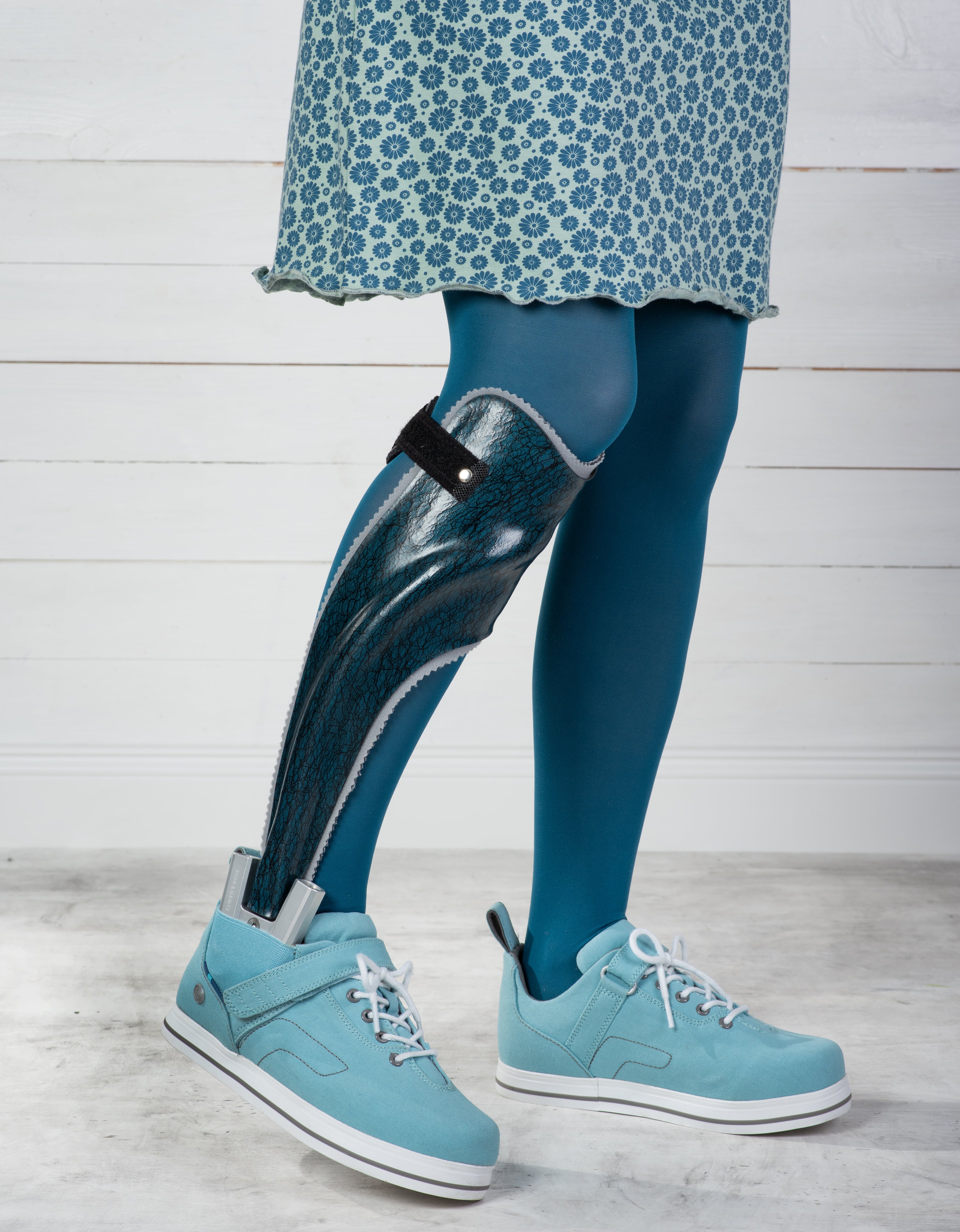
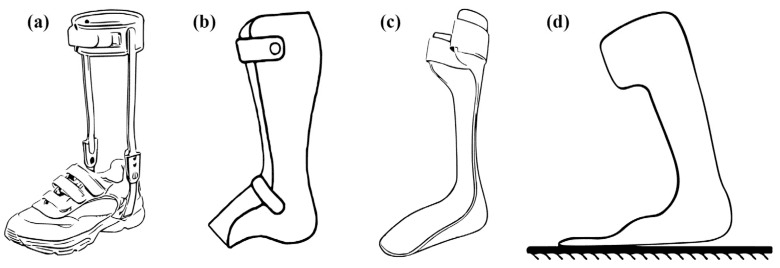
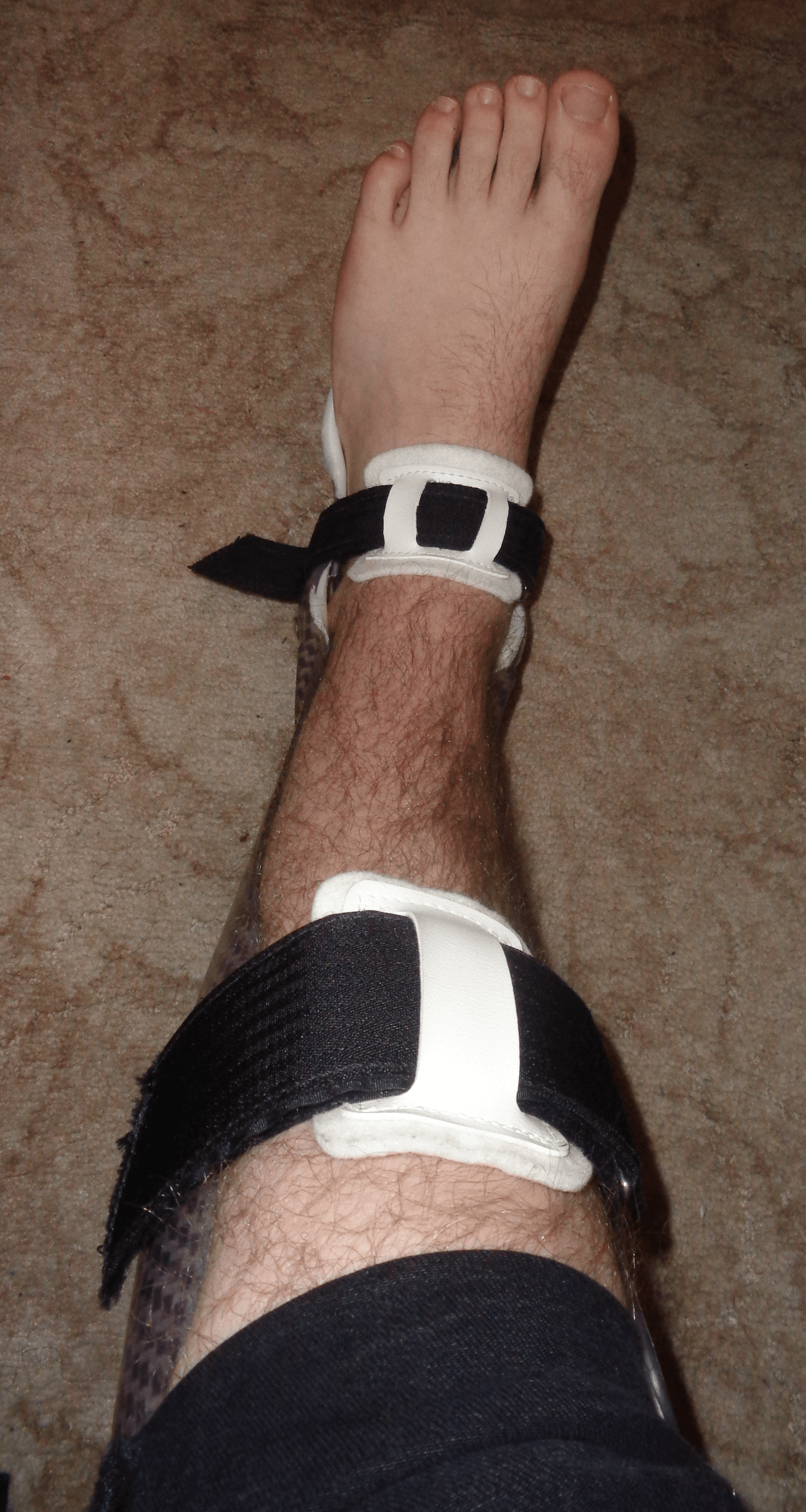
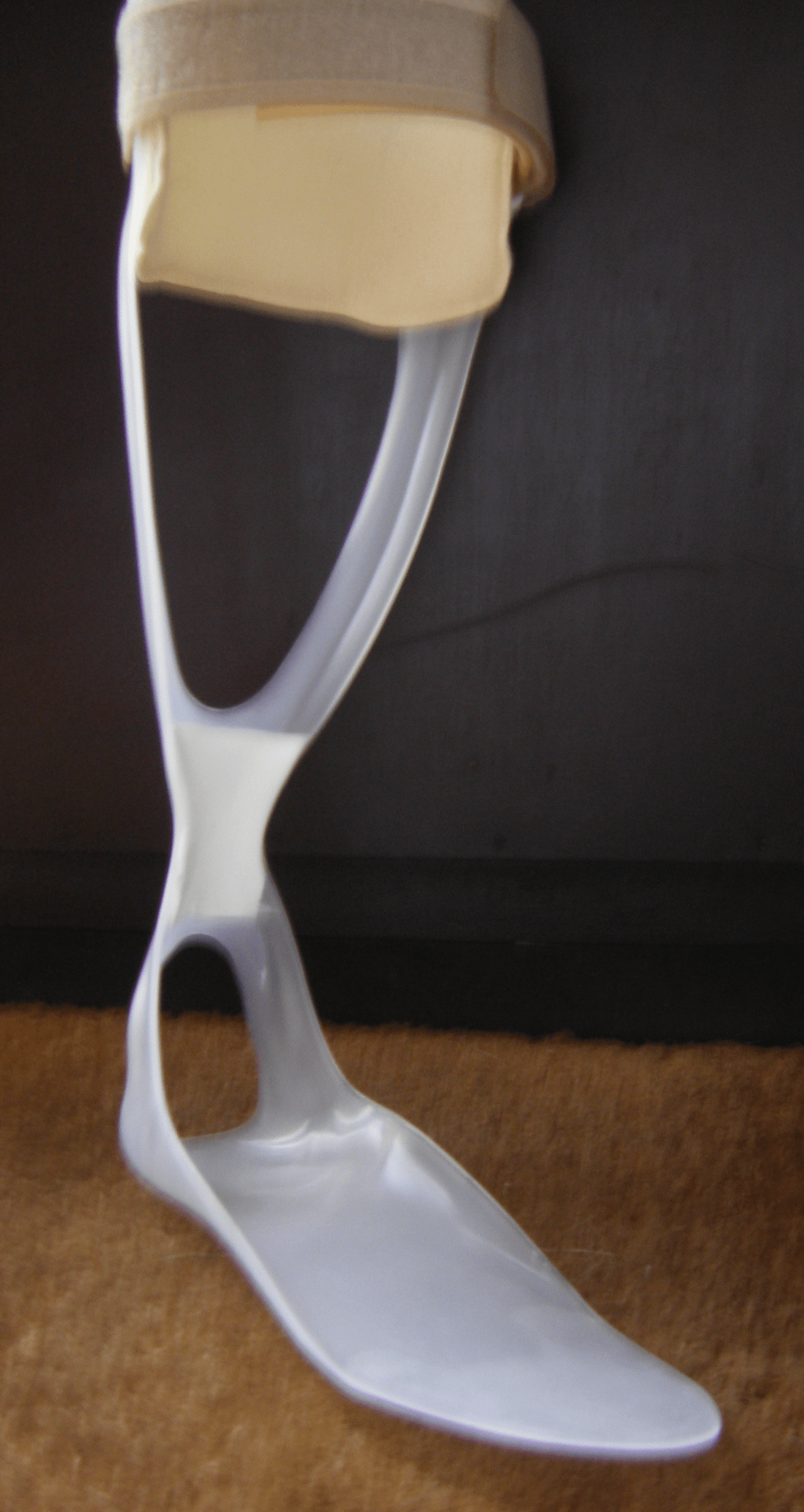
- ANKLE-FOOT ORTHOSES (AFOs) control the ankle and foot through stance and swing; the simplest is the POSTERIOR LEAF SPRING (PLS) AFO, a flexible posterior AFO that provides DORSIFLEXION ASSIST in swing for a FLEXIBLE FOOT DROP (e.g. common peroneal nerve palsy, flexible neurological foot drop) while allowing some plantarflexion - dorsiflexion-assist orthoses/devices increase swing-phase dorsiflexion and alleviate drop-foot.
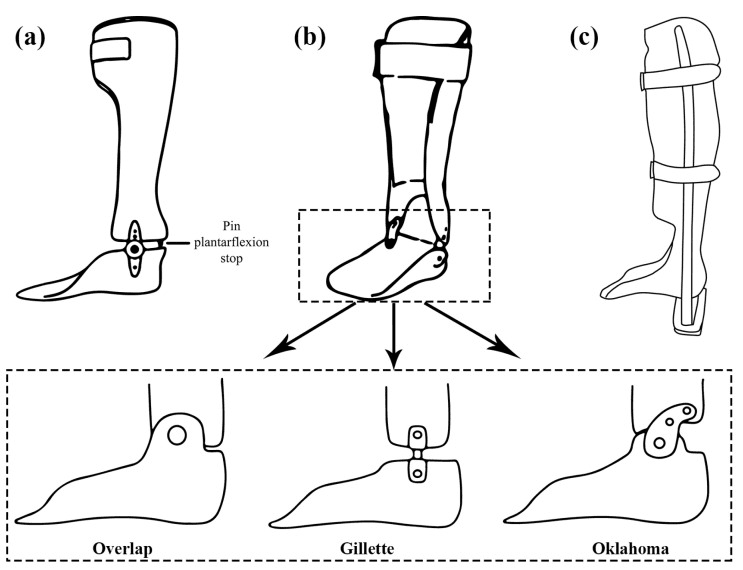
- A SOLID/RIGID AFO immobilises the ankle and is used for a FIXED deformity, significant instability, spasticity or pain that needs full control; a HINGED/articulated AFO permits controlled dorsiflexion (with a plantarflexion stop) - useful when some ankle motion is desirable, e.g. to allow tibial advance while blocking foot drop.
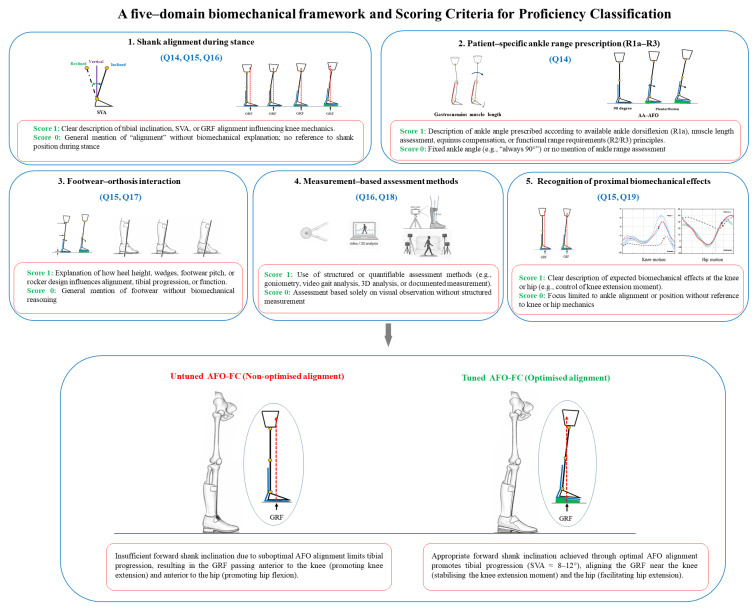
- A GROUND-REACTION (floor-reaction) AFO has an anterior tibial shell and a rigid footplate that, by resisting forward tibial advance in stance, generates a knee-extension moment - it substitutes for QUADRICEPS weakness and controls a CROUCH gait (e.g. in cerebral palsy or quadriceps insufficiency), provided there is no fixed knee-flexion contracture.
- SPECIALISED devices match specific pathologies: the ARIZONA (gauntlet) AFO - a lace-up leather AFO with rigid stays - controls the hindfoot and ankle for HINDFOOT/ANKLE ARTHRITIS and stage II-III adult-acquired flatfoot (posterior tibial tendon dysfunction); the CROW (Charcot Restraint Orthotic Walker) boot and total-contact casts/insoles OFFLOAD the CHARCOT or ulcerated/insensate foot to prevent and heal ulceration; and a PTB (patellar-tendon-bearing) AFO offloads the tibia/ankle - the overarching goals being to support, offload, control deformity, improve gait and prevent ulceration.
- “Match the orthosis to the deficit: FOOT ORTHOSES/insoles (support/offload/accommodate); AFOs control ankle/foot in stance + swing.
- “POSTERIOR LEAF SPRING AFO = flexible foot drop (dorsiflexion assist); SOLID/RIGID AFO = fixed deformity/instability/spasticity; HINGED = controlled dorsiflexion; GROUND-REACTION (floor-reaction) AFO = QUADRICEPS weakness/crouch (no fixed knee flexion).
- “ARIZONA/gauntlet AFO = hindfoot/ankle arthritis & PTTD; CROW boot / total-contact cast = CHARCOT/ulcerated foot offloading; PTB-AFO offloads the tibia. Goals: support, offload, control deformity, improve gait, prevent ulceration.
Posterior leaf spring AFO for flexible foot drop (dorsiflexion assist); ground-reaction AFO for quadriceps weakness/crouch (no fixed knee flexion).
Solid/rigid AFO for fixed deformity/instability; Arizona AFO for hindfoot/ankle arthritis & PTTD; CROW boot / total-contact for the Charcot/ulcerated foot (offload).
The Orthosis Matched to the Deficit
The governing principle is to match the orthosis to the biomechanical deficit. Foot orthoses/insoles support the arch, offload pressure (metatarsal pads, heel cups), accommodate fixed deformity and cushion - for plantar fasciitis, metatarsalgia, flexible flatfoot, and offloading the at-risk/ulcerated foot. AFOs control the ankle/foot: a posterior leaf spring (PLS) AFO gives dorsiflexion assist for flexible foot drop; a solid/rigid AFO controls a fixed deformity, instability or spasticity; a hinged AFO allows controlled dorsiflexion; and a ground-reaction (floor-reaction) AFO resists tibial advance to substitute for quadriceps weakness/crouch (needs no fixed knee-flexion contracture). Specialised devices: the Arizona (gauntlet) AFO for hindfoot/ankle arthritis and PTTD, and the CROW boot / total-contact cast/insoles to offload the Charcot or ulcerated foot. Goals: support, offload, control deformity, improve gait, and prevent ulceration.
- What it does
- Supports arch; offloads/redistributes pressure; accommodates deformity
- Typical indication
- Plantar fasciitis, metatarsalgia, flexible flatfoot, at-risk/ulcerated foot
- What it does
- Flexible; dorsiflexion assist in swing
- Typical indication
- Flexible foot drop (e.g. common peroneal palsy)
- What it does
- Immobilises the ankle (full control)
- Typical indication
- Fixed deformity, instability, spasticity, pain
- What it does
- Allows controlled dorsiflexion (plantarflexion stop)
- Typical indication
- When some controlled ankle motion is desirable
- What it does
- Anterior shell resists tibial advance → knee-extension moment
- Typical indication
- Quadriceps weakness / crouch gait (no fixed knee flexion)
- What it does
- Lace-up rigid hindfoot/ankle control
- Typical indication
- Hindfoot/ankle arthritis; PTTD (adult-acquired flatfoot)
- What it does
- Total-contact offloading of the foot
- Typical indication
- Charcot foot / neuropathic ulceration
Prescribing Principles & Goals
- Define the deficit: Is the foot drop flexible or is there a fixed deformity? Is there instability, spasticity, quadriceps weakness, hindfoot/ankle arthritis, or an insensate/ulcerated (Charcot) foot?
- Foot drop: flexible → posterior leaf spring AFO (dorsiflexion assist); needing more control/fixed → solid/rigid or hinged AFO.
- Quadriceps weakness/crouch: ground-reaction (floor-reaction) AFO - but only if there is NO fixed knee-flexion contracture.
- Hindfoot/ankle arthritis or PTTD: Arizona/gauntlet AFO (or bracing) to control and offload.
- Charcot/insensate/ulcerated foot: total-contact cast/insole or CROW boot to OFFLOAD and prevent/heal ulceration.
- Goals: support, offload pressure, control deformity, improve gait efficiency, relieve pain and prevent ulceration - reviewing fit and skin to avoid pressure complications, especially in the insensate foot.
Two principles keep orthotic prescription safe and effective. First, MATCH the orthosis to the specific deficit and to whether deformities are flexible or fixed: a posterior leaf spring AFO that suits a flexible foot drop is inadequate for a fixed deformity or a spastic, unstable ankle (which need a solid or hinged AFO), and a ground-reaction AFO only works for quadriceps weakness/crouch if there is no fixed knee-flexion contracture - prescribing the wrong device wastes time and can worsen gait. Second, watch the SKIN, especially in the INSENSATE/diabetic or Charcot foot: orthoses and total-contact devices that offload pressure are central to preventing and healing neuropathic ulceration, but a poorly-fitting brace can itself cause pressure ulceration in a foot that cannot feel it, so fit, accommodation of bony prominences and regular skin review are essential. The overarching aim is to support, offload, control deformity and improve gait while doing no harm.
Offloading the neuropathic ulcer: why non-removable wins
The total-contact cast is named repeatedly above, and the reason it sits at the top of the offloading hierarchy is worth stating plainly: it is the reference standard for healing a plantar neuropathic ulcer, and the decisive property is that it is non-removable. Removable devices work biomechanically but fail behaviourally - the patient takes them off, and pressure returns to the ulcer for exactly the part of the day that matters. The instant total-contact cast, a removable walker rendered irremovable by wrapping it, exists to capture that adherence advantage without the casting skill.
The corollary is the contraindications, which are the examinable half. A total-contact cast is not applied over active infection, osteomyelitis or a deep undrained ulcer - it conceals what needs daily inspection - nor in significant peripheral arterial disease, where the offloading device can cause the ischaemic damage it was meant to prevent, nor where the skin is too fragile or the patient cannot manage the gait. Those patients get a removable device that is actually inspected. The full offloading and ulcer-management pathway belongs to Diabetic Foot Ulcers and Charcot Neuroarthropathy; the point for this topic is that the choice between devices is decided by adherence and by what the wound needs looked at, not by biomechanics alone.
"Watch the skin" - what that actually means
Being told to monitor the skin is useless without a threshold. The practical rules are:
- Review the fit within the first 24 to 48 hours of issuing any new device to an insensate foot, and again at one to two weeks - not at a routine three-month appointment, by which time an ulcer has formed.
- The actionable sign is erythema that persists after the device is removed. Redness that fades within about 20 to 30 minutes reflects acceptable loading; redness, warmth or induration still present beyond that indicates pressure high enough to cause damage, and the device must be modified before it is worn again. Teach the patient this rule explicitly - it converts "watch the skin" into something they can act on.
- Daily self-inspection, including the sole and between the toes with a mirror or a family member, in anyone insensate.
- Accommodate, do not compress, bony prominences - relieve over the prominence and load the surrounding area, which is the whole principle of a total-contact interface.
Why orthoses fail, and the complications of wearing one
The commonest reason an orthosis does not work is that it is not being worn, and this is rarely volunteered unless asked directly. A brace in a cupboard treats nothing, so ask about actual hours of use, and address the reasons - discomfort, difficulty donning it with poor hand function or obesity, shoe fit, appearance, weight, or noise. Issue with a graduated break-in schedule rather than an instruction to wear it all day from the outset, and make sure the patient owns footwear that accommodates the device, since an AFO that does not fit into any shoe the patient owns will not be used.
The device itself carries complications:
- Pressure ulceration and skin breakdown, particularly over the malleoli, the navicular, the fifth metatarsal base and at trim lines - and most dangerously in the insensate foot.
- Disuse weakness and dependence. An orthosis that immobilises unloads the muscles it substitutes for, so prolonged rigid bracing weakens the calf and ankle stabilisers; where recovery is expected, plan the exit.
- Contracture and stiffness from prolonged immobilisation in one position, most importantly an equinus contracture from an AFO habitually set in plantarflexion.
- Gait deviation from a badly tuned device - an AFO that is too rigid blocks the second and third rockers and causes vaulting, circumduction or knee hyperextension; the fix is tuning, not a bigger brace.
- Falls, especially where a rigid device abolishes ankle proprioceptive strategy in an older patient.
Classifying Foot Orthoses: Accommodative vs Functional
- Accommodative (soft) foot orthoses. Made of cushioning materials (e.g. Plastazote, PORON, EVA) that conform to and offload/redistribute pressure and accommodate a FIXED deformity - the device of choice to protect the insensate/diabetic, rheumatoid or ulcerated foot (total-contact insoles). They cushion and redistribute load; they do not realign the foot.
- Functional (corrective, semi-rigid/rigid) foot orthoses. Made of polypropylene/carbon, moulded from a cast or scan to control abnormal motion and support a FLEXIBLE deformity (e.g. excessive pronation, flexible flatfoot). The UCBL (University of California Biomechanics Laboratory) orthosis is the classic rigid deep-heel-cup device that controls a flexible hindfoot.
- Common features. A metatarsal pad/bar offloads the metatarsal heads (metatarsalgia/Morton's), a heel cup/post or medial heel wedge controls the rearfoot, a medial arch support lifts the arch, and a heel raise/rocker sole adjusts loading. Devices may be prefabricated (off-the-shelf) or custom.
- The rule. Correct a flexible deformity (functional) and accommodate a fixed one (accommodative) - the same logic that drives AFO selection.
Accommodative = soft, offloads, for a FIXED/insensate foot (diabetic, rheumatoid, ulcerated - total-contact); functional = rigid, controls motion, for a FLEXIBLE deformity (the UCBL rigid heel-cup is the exemplar). Add a metatarsal pad for metatarsalgia and a heel cup/medial post for rearfoot control. Correct the flexible, accommodate the fixed.
The Biomechanical Principles (Three-Point Fixation, Trim Lines, Ground-Reaction Force)
An AFO works by resisting tibial advance to create a knee-extension moment, and the mechanics behind that are worth developing (the gait cycle itself is in Gait Cycle Analysis).
- Three-point fixation (force-couple). Any orthosis controls or corrects a deformity by a three-point pressure system - a corrective force applied at the apex of the deformity, balanced by two opposing counter-forces proximal and distal to it. This is the fundamental mechanical principle of all bracing.
- Trim lines set the stiffness. Where an AFO's borders sit relative to the malleolar/ankle axis determines how rigid it is: posterior, narrow trim lines make a flexible posterior-leaf-spring AFO that stores and returns energy for dorsiflexion assist, whereas bringing the trim lines anterior to the malleoli makes a rigid (solid) AFO; material (carbon vs polypropylene) and thickness also tune stiffness.
- Ground-reaction force and moments. An AFO changes where the ground-reaction-force vector passes relative to the joints. A ground-reaction AFO holds the GRF anterior to the knee in stance, creating an external knee-extension moment that substitutes for the quadriceps; the ankle setting / plantarflexion stop tunes the knee (a plantarflexion bias at heel strike creates a knee-flexion moment; resisting dorsiflexion drives knee extension) - this ankle-knee coupling, plus footplate length and AFO-footwear "tuning", is how the device reshapes the gait moments.
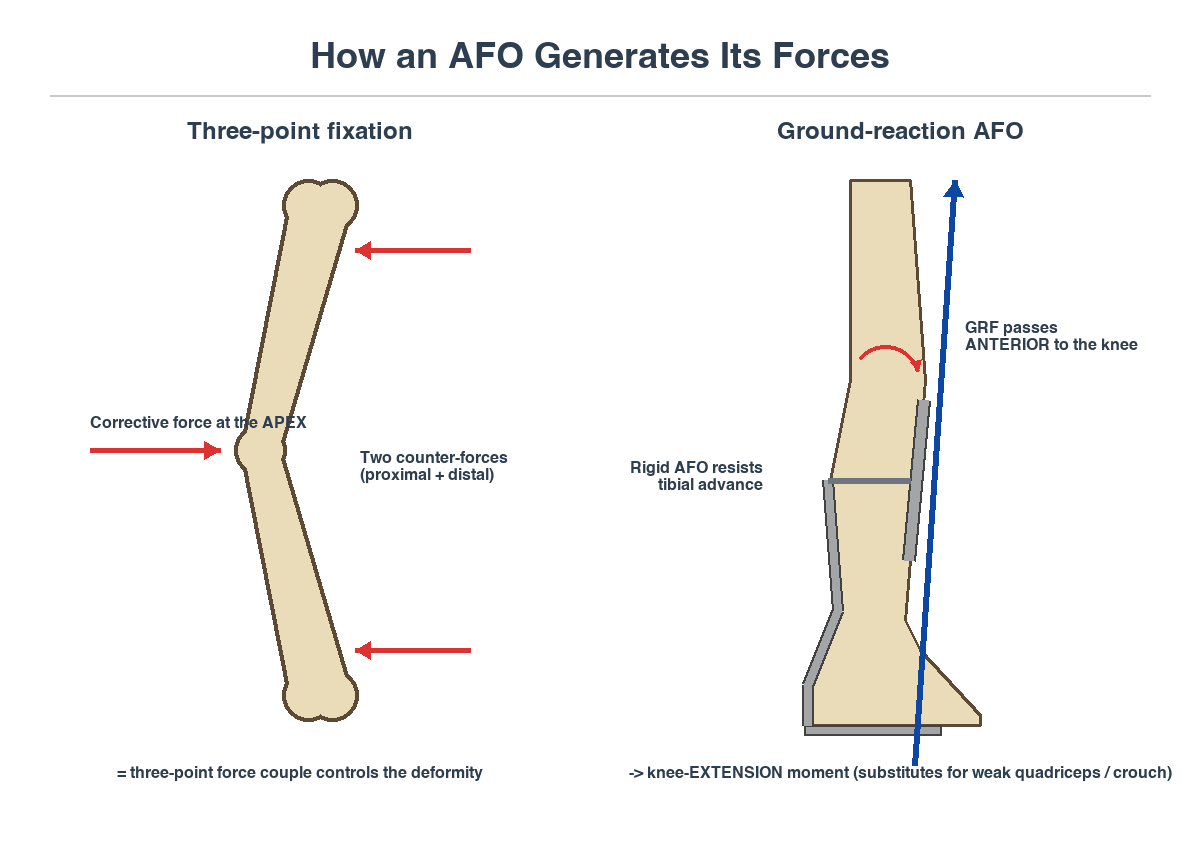
Three principles: three-point fixation (corrective force at the apex + two counter-forces) controls deformity; trim lines relative to the malleoli set rigidity (posterior/narrow = flexible PLS; anterior = rigid solid AFO); and the orthosis works by moving the ground-reaction-force vector relative to the joints (ground-reaction AFO keeps the GRF anterior to the knee = knee-extension moment for quadriceps weakness). Ankle setting tunes the knee moment.
Mnemonics & Memory Aids
BRACE
Hook:BRACE: Biomechanical deficit match, Rigid for fixed deformity, Assist dorsiflexion (PLS)/Arizona for arthritis, Crouch → ground-reaction / CROW for Charcot, Examine the skin.
Clinical Decision Scenarios
Practise clinical reasoning and management decisions out loud
“How would you choose an ankle-foot orthosis for different problems - foot drop, fixed deformity, quadriceps weakness, and a Charcot foot?”
Principle
- Match the orthosis to the biomechanical deficit (flexible vs fixed)
- Goals: support, offload, control deformity, improve gait, prevent ulceration
- Foot orthoses/insoles act on the foot; AFOs control the ankle/foot
AFO types
- Posterior leaf spring: flexible foot drop (dorsiflexion assist)
- Solid/rigid: fixed deformity, instability, spasticity; hinged: controlled dorsiflexion
- Ground-reaction (floor-reaction): quadriceps weakness/crouch (no fixed knee flexion)
Specialised devices
- Arizona/gauntlet AFO: hindfoot/ankle arthritis, PTTD (adult-acquired flatfoot)
- CROW boot / total-contact cast/insole: Charcot / neuropathic ulceration (offload)
- PTB-AFO: offload the tibia/ankle
Safety
- Wrong brace can worsen gait - match to deficit and flexibility
- Watch the skin in the insensate/diabetic/Charcot foot (pressure ulceration)
- Accommodate bony prominences; review fit regularly
Evidence & Key Studies
Dorsiflexion-assist (ankle exosuit/AFO-type) device alleviating drop-foot in gait
- An assistive ankle device providing dorsiflexion assistance increased ankle dorsiflexion during swing phase, alleviating drop-foot on the more-affected side.
- Unlike a rigid orthosis that restricted push-off plantarflexion, the dorsiflexion-assist device enabled more typical push-off plantarflexion motion - illustrating the trade-off between rigid control and preserved motion.
- The findings illustrate the biomechanical goal of dorsiflexion-assist orthoses (correcting swing-phase foot drop) while highlighting limits on acutely changing muscle activity/energy cost.
Footwear and insoles for balance and gait in athletes with ankle injuries (systematic review protocol)
- Specialised footwear and insoles are widely used to enhance stability and normalise gait in athletes with acute or chronic ankle injuries and instability.
- The review will systematically evaluate footwear/insole interventions on balance and gait parameters, reflecting the role of foot orthoses in ankle instability.
- It underscores that orthotic interventions target postural control and gait mechanics (the rationale for their use).
The biomechanical goal of dorsiflexion-assist orthoses/devices (increasing swing-phase dorsiflexion to alleviate foot drop, and the trade-off between rigid control and preserved push-off) comes from the cited Thurston study, and the rationale for footwear/insoles in improving balance and gait in ankle injury/instability from the cited Gasavi Nezhad review. The classification of AFOs (posterior leaf spring, solid/rigid, hinged, ground-reaction), the specialised devices (Arizona/gauntlet AFO, CROW boot, total-contact cast), and their matched indications (flexible foot drop, fixed deformity, quadriceps weakness/crouch, hindfoot/ ankle arthritis/PTTD, Charcot/ulcerated foot) are standard, well-established teaching. The total-contact-cast adherence rationale and contraindications, the skin-review thresholds, and the failure modes of bracing are standard orthotic teaching. (See also Orthotic Prescription Principles for nomenclature, KAFOs and spinal orthoses, Charcot Neuroarthropathy, Diabetic Foot Ulcers and Posterior Tibial Tendon Dysfunction.)