Narrow-Thorax & Limb-Shortening Dysplasias
- JEUNE syndrome (asphyxiating thoracic dysplasia, now classified within the SHORT-RIB THORACIC DYSPLASIAS, often ciliopathies) is characterised by a NARROW, bell-shaped THORAX with SHORT RIBS and shortened long bones (sometimes polydactyly); the cardinal danger is THORACIC INSUFFICIENCY - the small rib cage restricts lung growth/ventilation - which can be LIFE-THREATENING in infancy, and there is associated progressive RENAL (and hepatic) disease; the phenotype is highly VARIABLE, from mild to lethal, with earlier antenatal presentation and greater femoral shortening/bowing predicting a poorer prognosis.
- PUT THE VARIABILITY IN PROPORTIONS, AND NOTE HOW SMALL THE SERIES IS. In a study of just 9 INDIVIDUALS from 8 families across three English centres, severity was MILD in 4, MODERATE requiring respiratory support in 2, and SEVERE OR LETHAL in 3 - so roughly a THIRD were severe or lethal and fewer than half were mild. ALL NINE had a narrow thorax and 8 had shortened long bones, but POLYDACTYLY was present in only 4 OF 9 - a minority feature, not a defining one. Eight of the nine presented ANTENATALLY (14 to 36 weeks). The absence of genotype-phenotype correlation was observed WITHIN DYNC2H1, not across the whole SRTD spectrum.
- THORACIC EXPANSION HAS A MEASURED BENEFIT AND A HEAVY COMPLICATION BURDEN - GIVE BOTH. In 24 Jeune patients treated with VEPTR expansion thoracoplasty (mean age at implant 23 months, mean follow-up 8.4 years), SURVIVAL was 68 PERCENT against a reported 70 to 80 PERCENT MORTALITY without treatment, with chest width rising from 121 to 168 mm and respiratory rate falling from 35 to 24 breaths per minute. But FORCED VITAL CAPACITY FELL from 34 to 27 PERCENT predicted, cradle or sling MIGRATION occurred in 12 patients, deep infection in 4, superficial infection in 5 and wound dehiscence in 5, with an infection rate of 4.6 PERCENT PER PROCEDURE. Scoliosis was present in 41 percent before surgery and the REMAINDER DEVELOPED IT during treatment.
- C1 STENOSIS IS COMMON IN JEUNE. Cervical narrowing is not confined to metatropic dysplasia - the largest surgical series reports that both C1 stenosis and scoliosis are common in Jeune syndrome, so the cervical spine warrants assessment in these children rather than attention only to the thorax.
- ELLIS-VAN CREVELD syndrome (chondroectodermal dysplasia) is AUTOSOMAL-RECESSIVE (EVC/EVC2) and combines POSTAXIAL POLYDACTYLY (extra ulnar/fibular digits), short (acromesomelic) limbs, ECTODERMAL defects (dysplastic NAILS and TEETH, sparse hair), and CONGENITAL HEART DISEASE (classically a single atrium/atrial septal defect) - and it can overlap with the short-rib dysplasias (a narrow thorax); the cardiac lesion is an important cause of morbidity.
- METATROPIC DYSPLASIA is a 'CHANGING-PATTERN' dysplasia (Greek 'metatropos' = changing) - initially SHORT-LIMBED in infancy, evolving to SHORT-TRUNKED with growth - whose hallmarks are a COCCYGEAL 'TAIL-LIKE' appendage, PLATYSPONDYLY (flat vertebrae) with severe PROGRESSIVE KYPHOSCOLIOSIS, and 'dumbbell'-shaped long bones with large joints/contractures.
- The two major life/function-threatening THEMES are THORACIC INSUFFICIENCY (the small thorax restricting respiration - prominent in Jeune, and contributory in metatropic and EvC) and PROGRESSIVE SPINAL DEFORMITY (severe kyphoscoliosis, especially metatropic, and atlantoaxial/cervical instability risk in some), both of which can compromise the airway/respiration.
- DIAGNOSIS is by the clinical/radiographic phenotype (narrow thorax + short ribs for Jeune; postaxial polydactyly + ectodermal/cardiac features for EvC; coccygeal tail + platyspondyly + dumbbell bones for metatropic) with genetic confirmation, and assessment of the SYSTEMIC associations (renal/hepatic in Jeune; cardiac in EvC; spine/airway in metatropic).
- MANAGEMENT is MULTIDISCIPLINARY and complication-directed: for JEUNE, RESPIRATORY support and THORACIC EXPANSION surgery (e.g. expansion thoracoplasty/VEPTR-type devices) for thoracic insufficiency plus renal monitoring; for ELLIS-VAN CREVELD, CARDIAC assessment/repair, polydactyly surgery and dental/limb care; for METATROPIC, management of the severe PROGRESSIVE KYPHOSCOLIOSIS (and any cervical instability) and respiratory care - all within a skeletal-dysplasia team.
- “Jeune (asphyxiating thoracic / short-rib thoracic dysplasia) = NARROW thorax + short ribs/limbs producing THORACIC INSUFFICIENCY (life-threatening in infancy) + progressive RENAL disease. Variable severity.
- “Ellis-van Creveld (chondroectodermal) = AR; POSTAXIAL POLYDACTYLY + short limbs + ectodermal (nails/teeth) defects + CONGENITAL HEART DISEASE (single atrium/ASD).
- “Metatropic dysplasia = 'changing pattern' (short-limbed becoming short-trunked); COCCYGEAL TAIL + PLATYSPONDYLY + dumbbell bones + SEVERE PROGRESSIVE KYPHOSCOLIOSIS. Threats = thoracic insufficiency + spinal deformity; MDT (respiratory/thoracic expansion, cardiac, spine).
- “Quote the VEPTR numbers for Jeune: 68% survival against 70-80% mortality untreated, chest width 121 to 168 mm, respiratory rate 35 to 24 - but FVC FELL from 34% to 27% predicted, migration in 12 of 24, infection 4.6% per procedure, and essentially all developed scoliosis. C1 STENOSIS is also common in Jeune.
- “And the severity proportions: in 9 DYNC2H1 patients, mild 4 / moderate needing respiratory support 2 / severe or lethal 3, with polydactyly in only 4 of 9 - a minority feature. Earlier antenatal presentation and femoral shortening/bowing predict worse outcome; genotype does not.
Thoracic insufficiency (narrow thorax restricting lungs - especially Jeune, life-threatening in infancy) and progressive kyphoscoliosis (especially metatropic). Both endanger respiration.
Jeune: narrow thorax + short ribs + renal disease. Ellis-van Creveld: postaxial polydactyly + ectodermal (nails/teeth) + heart disease. Metatropic: coccygeal tail + platyspondyly + dumbbell bones.
The Three Entities
- Hallmarks
- Narrow bell-shaped thorax, short ribs, short limbs (+/- polydactyly)
- Major threat / association
- Thoracic insufficiency (life-threatening infancy); renal/hepatic disease
- Hallmarks
- Postaxial polydactyly, short (acromesomelic) limbs, nail/teeth defects
- Major threat / association
- Congenital heart disease (single atrium/ASD); narrow thorax overlap
- Hallmarks
- Coccygeal 'tail', platyspondyly, dumbbell long bones; changing pattern
- Major threat / association
- Severe progressive kyphoscoliosis; respiratory compromise; cervical instability risk
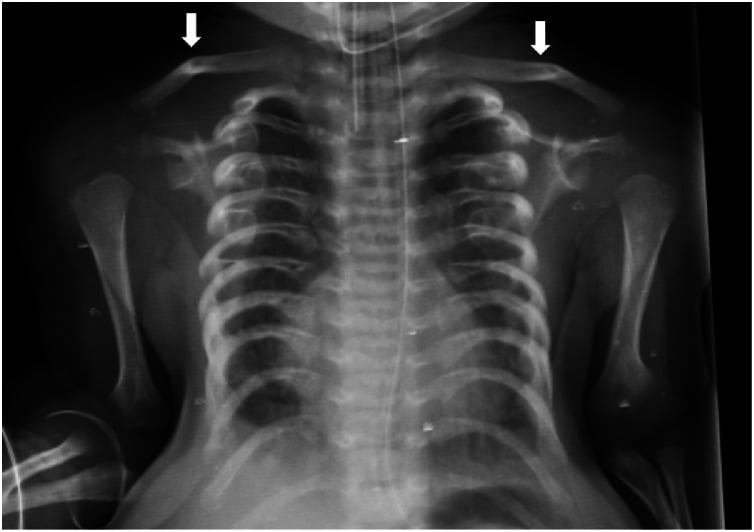
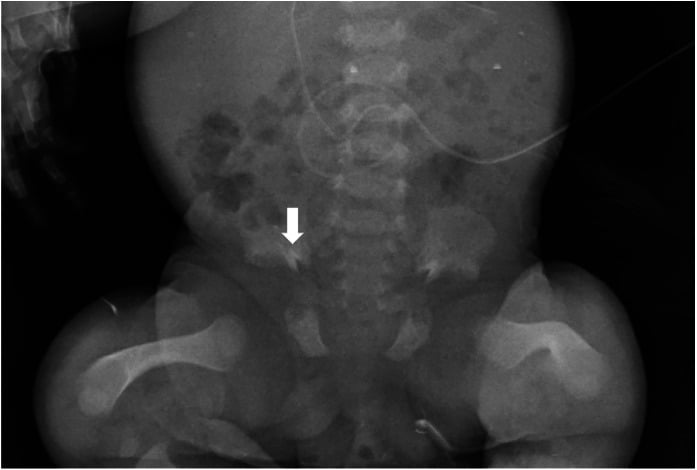
Jeune (short-rib thoracic dysplasia) gives a narrow thorax with thoracic insufficiency (life-threatening in infancy) and progressive renal disease, with highly variable severity. Ellis-van Creveld is autosomal recessive with postaxial polydactyly, short limbs, ectodermal (nail/teeth) defects and congenital heart disease. Metatropic dysplasia has a 'changing pattern' (short-limbed becoming short-trunked) with a coccygeal tail, platyspondyly, dumbbell long bones and severe progressive kyphoscoliosis. The shared dangers are thoracic insufficiency and progressive spinal deformity.
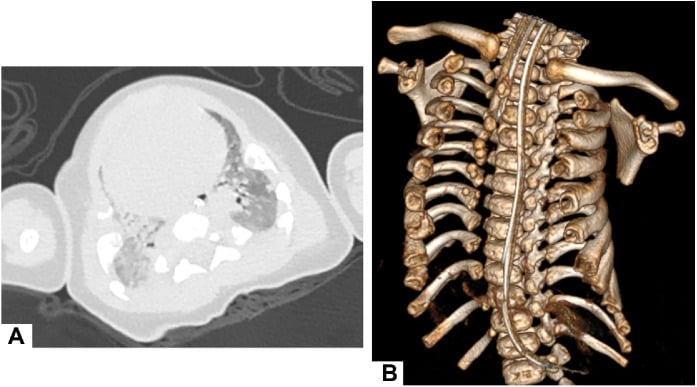
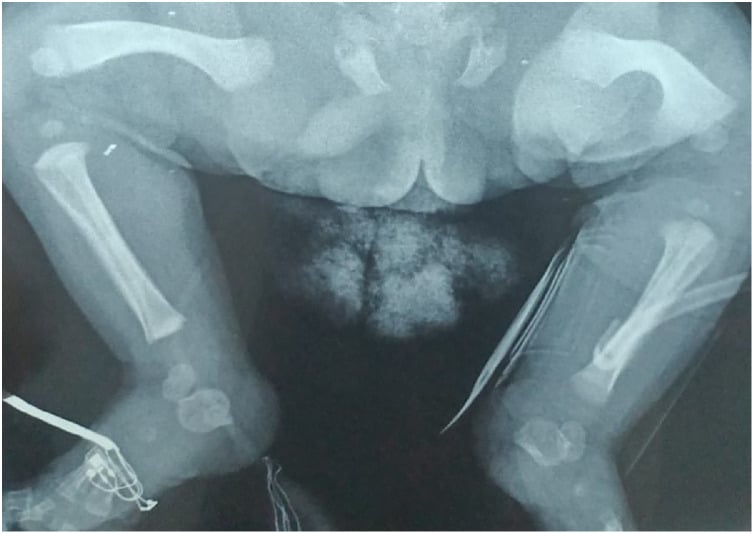
Management
- Jeune: respiratory support and thoracic-expansion surgery (expansion thoracoplasty / VEPTR-type devices) for thoracic insufficiency; renal (and hepatic) monitoring.
- Ellis-van Creveld: cardiac assessment and repair (single atrium/ASD), polydactyly surgery, dental and limb care.
- Metatropic: manage severe progressive kyphoscoliosis (bracing/growth-friendly or definitive spinal surgery), watch for cervical instability, and provide respiratory care.
- All: genetic diagnosis/counselling within a skeletal-dysplasia multidisciplinary team.
- Examine the cervical spine in Jeune too: C1 stenosis is reported as common, and essentially every child develops scoliosis during treatment - so neither is a metatropic-only concern.
The wider context sits on neighbouring pages. The framework for classifying a short child is skeletal dysplasias; the spinal deformity of metatropic dysplasia, and the scoliosis that emerges during thoracic expansion, are managed on the principles of early-onset scoliosis and congenital scoliosis, with cervical narrowing assessed as in cervical instability. The extra digits of Ellis-van Creveld are addressed under polydactyly and, in the foot, polydactyly of the foot.
Across this group the orthopaedic and life-limiting issues converge on the respiratory system. In Jeune asphyxiating thoracic dysplasia the narrow, short-ribbed thorax restricts lung growth and ventilation, producing thoracic insufficiency that can be fatal in infancy and that may require thoracic-expansion surgery; the associated progressive renal (and hepatic) disease must also be monitored. In metatropic dysplasia the threat is the severe, progressive kyphoscoliosis (with platyspondyly and a small thorax, and a risk of cervical/atlantoaxial instability) which similarly compromises respiration and the cord, demanding vigilant spinal surveillance and timely deformity management. In Ellis-van Creveld syndrome the dominant systemic risk is the congenital heart disease, classically a single atrium, which must be assessed and treated, alongside the polydactyly and ectodermal features. Recognising the distinguishing hallmarks - narrow thorax and renal disease (Jeune), postaxial polydactyly with cardiac and ectodermal defects (Ellis-van Creveld), and a coccygeal tail with dumbbell bones and severe kyphoscoliosis (metatropic) - directs the appropriate multidisciplinary, complication-focused care.
The Molecular Genetics
- Jeune (SRTD). Autosomal-recessive ciliopathies of retrograde intraflagellar transport / the dynein-2 motor - the commonest gene is DYNC2H1 (the dynein-2 heavy chain), with IFT80, WDR19, IFT140, TTC21B and others; all disrupt the primary cilium.
- Ellis-van Creveld. Autosomal-recessive, EVC or EVC2 (adjacent head-to-head genes on 4p16) encoding basal-cilium proteins that regulate Hedgehog signalling; classically the Old Order Amish (founder effect).
- Metatropic dysplasia. Autosomal-dominant (usually de novo), TRPV4 (a calcium-permeable cation channel) - allelic with a family of TRPV4 skeletal dysplasias (spondylometaphyseal dysplasia Kozlowski, brachyolmia) and, separately, TRPV4 neuropathies.
Q: Match the three dysplasias to their genes and inheritance.
A: Jeune / SRTD = AR ciliopathy of retrograde IFT / dynein-2 - DYNC2H1 (commonest) + IFT80/WDR19/IFT140 (disrupt the primary cilium). Ellis-van Creveld = AR, EVC / EVC2 (Hedgehog at the cilium base; Old Order Amish). Metatropic = AD (usually de novo), TRPV4 (a cation channel, allelic with SMD-Kozlowski/brachyolmia and TRPV4 neuropathies).
Why 'Ciliopathy', and the Short-Rib Spectrum
- Why a 'ciliopathy'. The primary cilium is an antenna-like organelle on growth-plate chondrocytes, built and maintained by intraflagellar transport (IFT) - anterograde (kinesin-2) assembles it, retrograde (dynein-2) recycles it - and it is the signalling hub for Hedgehog. A defective cilium cannot transduce Hedgehog properly, so chondrocyte proliferation and digit patterning fail - producing short ribs, short limbs and polydactyly. That is why these are 'skeletal ciliopathies'.
- The short-rib (polydactyly) spectrum. These form a phenotypic continuum: from the lethal neonatal short-rib polydactyly syndromes (historically Saldino-Noonan, Majewski, Verma-Naumoff) through the viable Jeune to Ellis-van Creveld - now unified genetically as the short-rib thoracic dysplasias (SRTD) with overlapping IFT/dynein genes, which is why genotype predicts phenotype poorly and the entities overlap.
Q: Why are these called skeletal ciliopathies, and what is the short-rib-polydactyly spectrum?
A: The primary cilium (on growth-plate chondrocytes), built by intraflagellar transport (kinesin-2 anterograde / dynein-2 retrograde), is the Hedgehog signalling hub; a defective cilium can't transduce Hedgehog → failed chondrocyte proliferation + digit patterning → short ribs/limbs/polydactyly. The short-rib (polydactyly) spectrum runs from the lethal neonatal syndromes (Saldino-Noonan/Majewski/Verma-Naumoff) through viable Jeune to Ellis-van Creveld - unified as the SRTDs with overlapping IFT genes (so genotype predicts phenotype poorly).
What Thoracic Expansion Actually Buys, and What It Costs
Recommending expansion thoracoplasty without its numbers understates both the benefit and the burden. In 24 children with Jeune syndrome treated by VEPTR dynamic posterolateral expansion thoracoplasty - mean age at first implant 23 months, mean follow-up 8.4 years - survival was 68 percent, set against a reported 70 to 80 percent mortality without treatment. Chest width increased from 121 to 168 mm, CT lung volumes rose, and respiratory rate fell from 35 to 24 breaths per minute. That is a real and substantial gain in a condition that otherwise kills most affected infants, and it is the strongest argument for offering the operation.
- Result
- 68 percent, versus 70 to 80 percent mortality untreated
- Interpretation
- The central justification for operating
- Result
- 121 to 168 mm (p less than 0.001)
- Interpretation
- The thorax does enlarge
- Result
- 35 to 24 breaths per minute (p less than 0.05)
- Interpretation
- Less work of breathing
- Result
- 34 percent predicted falling to 27 percent
- Interpretation
- Measured lung function still declined
- Result
- 41 percent before surgery; the remainder developed it during treatment
- Interpretation
- Expect it, and plan for further implants
- Result
- Migration in 12, deep infection 4, superficial 5, dehiscence 5; infection 4.6 percent per procedure
- Interpretation
- Frequent, and repeated procedures compound the risk
Q: What must you add to the consent discussion and the clinical examination in Jeune syndrome?
A: To the consent discussion: the thorax enlarges and survival improves, but forced vital capacity fell from 34 to 27 percent predicted across follow-up - so the operation buys survival and reduced ventilator dependence, not normal lung function - and complications are frequent, with migration in half the patients and an infection rate of 4.6 percent per procedure across many procedures. To the examination: the same series reports that C1 stenosis is common in Jeune, so the cervical spine needs assessing rather than attention going only to the chest, and essentially every child develops scoliosis whether or not they had it at the outset. This is a retrospective single-institution series of 24 patients using one device, so the figures describe that programme rather than a general standard.
Mnemonics & Memory Aids
THORAX
Hook:THORAX: Thoracic insufficiency (Jeune), Heart disease (EvC), Organs (renal-Jeune), Ribs/polydactyly, Appendage (metatropic tail), eXtreme kyphoscoliosis.
Clinical Decision Scenarios
Practise clinical reasoning and management decisions out loud
“A neonate has a very narrow, bell-shaped chest with short ribs and respiratory distress. What dysplasia is this, what threatens life, and what related syndromes do you consider?”
Jeune (asphyxiating thoracic / SRTD)
- Narrow bell-shaped thorax, short ribs, short limbs (+/- polydactyly)
- Thoracic insufficiency (life-threatening in infancy); in 9 cases: mild 4, moderate 2, severe/lethal 3
- Progressive renal (and hepatic) disease; C1 stenosis and scoliosis also common
Ellis-van Creveld (chondroectodermal)
- Autosomal recessive (EVC/EVC2)
- Postaxial polydactyly + short (acromesomelic) limbs + ectodermal (nails/teeth) defects
- Congenital heart disease (single atrium/ASD)
Metatropic dysplasia
- 'Changing pattern': short-limbed becoming short-trunked
- Coccygeal 'tail', platyspondyly, dumbbell long bones
- Severe progressive kyphoscoliosis; cervical instability risk
Management
- Jeune: respiratory support + thoracic-expansion surgery (68 percent survival vs 70-80 percent mortality untreated; FVC still fell, complications frequent); renal monitoring
- Ellis-van Creveld: cardiac repair; polydactyly/dental/limb care
- Metatropic: spinal deformity management + respiratory care; all MDT + genetics
Evidence & Key Studies
Phenotypic heterogeneity in short-rib thoracic dysplasia (Jeune/Ellis-van Creveld spectrum)
- Retrospective review of 9 individuals from 8 families across three tertiary genetic centres in England, with DYNC2H1-related short-rib thoracic dysplasia. Eight presented antenatally (gestation 14 to 36 weeks) and one postnatally at 6 weeks.
- All nine had a narrow thorax and eight had shortened long bones, but polydactyly was present in only four - a minority feature. Severity was mild in 4, moderate requiring respiratory support in 2, and severe or lethal in 3.
- Earlier antenatal presentation and more significant femoral shortening and bowing predicted a poorer postnatal prognosis, and there were no clear genotype-phenotype correlations - a finding made within DYNC2H1 rather than across the whole SRTD spectrum. Seven novel variants were reported. With nine patients, the severity proportions are indicative rather than precise.
Management of thoracic insufficiency syndrome in patients with Jeune syndrome using the 70 mm radius vertical expandable prosthetic titanium rib
- 24 Jeune patients treated by VEPTR dynamic posterolateral expansion thoracoplasty at one institution; 17 with a minimum 2-year follow-up were reviewed in detail. Mean age at first implant was 23 months (7 to 62) with an average 8.4 years of follow-up (2.3 to 15.6).
- Survival was 68 percent of the 22 followed, against a reported 70 to 80 percent mortality without treatment. Chest width rose from 121 to 168 mm and CT lung volumes increased (both p less than 0.001), and respiratory rate fell from 35 to 24 breaths per minute. However, forced vital capacity fell from 34 percent predicted at first test to 27 percent at last follow-up, and early demise after surgery was common in those with multisystem disease.
- Complications were frequent: cradle or sling migration in 12 patients, superficial infection in 5, deep infection in 4 and wound dehiscence in 5, with an infection rate of 4.6 percent per procedure. Scoliosis was present preoperatively in 7 of 17 (41 percent) and the remainder developed it during treatment, 8 needing additional implants. Both C1 stenosis and scoliosis are noted as common in Jeune syndrome. This is a retrospective single-institution series using one device.
The nature of Jeune syndrome as a short-rib thoracic dysplasia (narrow thorax, short ribs/long bones, +/- polydactyly), its overlap with the Ellis-van Creveld spectrum, its highly variable severity (mild to lethal, with respiratory support needed in moderate cases), and the antenatal prognostic indicators come from the cited Pattani study. The renal/hepatic associations of Jeune, the postaxial polydactyly/ectodermal/cardiac features of Ellis-van Creveld, the metatropic dysplasia hallmarks (coccygeal tail, platyspondyly, dumbbell bones, severe progressive kyphoscoliosis), and the complication-directed management (thoracic expansion, cardiac repair, spinal deformity care) are standard, well-established teaching. The severity proportions, the antenatal predictors, the polydactyly frequency and the absence of genotype-phenotype correlation come from the Pattani series of nine DYNC2H1 patients in England, which is too small to give precise proportions and does not speak to other SRTD genes. The survival, chest-width, lung-function, scoliosis and complication figures come from the O'Brien VEPTR series - retrospective, single-institution, one device - and the 70 to 80 percent untreated mortality it cites is a historical comparison rather than a concurrent control. No trial compares thoracic expansion with supportive care, no threshold defines when to implant, no outcome data exist for Ellis-van Creveld or metatropic dysplasia specifically, and no surveillance interval for the renal or cervical complications has been validated - so none is quoted here.