Low-Intensity Pulsed Ultrasound
- LOW-INTENSITY PULSED ULTRASOUND (LIPUS) is a NON-INVASIVE, low-risk device that delivers low-intensity pulsed acoustic energy to a fracture, typically applied for about 20 minutes DAILY by the patient at HOME, with the aim of promoting or accelerating bone healing; it has been used both in fresh fractures (to stimulate the stages of healing) and in delayed/non-unions.
- The proposed MECHANISM is MECHANOTRANSDUCTION - the micromechanical acoustic stimulus is sensed by bone-forming and other cells and stimulates the repair process at the MOLECULAR LEVEL across the stages of healing (modulating inflammation, chondrogenesis and endochondral ossification, gene/protein expression, angiogenesis and mineralisation).
- LIPUS is a LOW-RISK intervention: the only side effect reported is minor SKIN reactions in a small number of patients; it is non-invasive, used independently at HOME, and AVOIDS the disadvantages of surgery - re-hospitalisation, anaesthetic and operative complications, post-operative infection and thromboembolism - which is its main attraction.
- The EVIDENCE is the crux of the topic and must be framed honestly: while early and registry data and many case reports are encouraging, high-quality randomised trials and meta-analyses have shown INCONSISTENT or limited benefit for ACUTE/fresh fracture healing (leading some bodies to recommend against routine use for fresh fractures), whereas the rationale and interest are STRONGEST in DELAYED UNION and NON-UNION - where it offers a non-invasive option - with definitive non-inferiority trials versus surgery ongoing.
- For ESTABLISHED NON-UNION, SURGICAL revision remains the GOLD STANDARD treatment, but it carries the disadvantages of re-hospitalisation, anaesthesia and operative complications; LIPUS is positioned as a low-risk NON-INVASIVE alternative or adjunct that the patient can self-administer, and trials (e.g. non-inferiority studies of LIPUS versus surgery for non-union) aim to define whether it can substitute for surgery in selected cases.
- PRACTICALLY, LIPUS is reasonable to consider as a low-risk ADJUNCT in delayed/non-union and in high-risk fractures, set against an honest discussion of the inconsistent evidence and the fact that it is not a substitute for sound fracture management (stability, alignment, treating infection and addressing biological/host factors); non-union remains MULTIFACTORIAL and management must address the underlying cause, not rely on a device alone.
- “LIPUS = non-invasive, low-risk daily (~20 min) home-applied low-intensity pulsed ultrasound to promote bone healing. Proposed mechanism = MECHANOTRANSDUCTION stimulating repair at the molecular level.
- “Evidence (quote it): TRUST randomised 501 operatively-managed TIBIAL fractures against SHAM - no effect on function (SF-36 PCS difference 0.55, 95% CI -0.75 to 1.84, against a 3-5 point minimal important difference) or on time to radiographic healing (HR 1.07, CI 0.86-1.34); the BMJ Rapid Recommendation then advised STRONGLY AGAINST routine use in fresh fractures.
- “But say WHY non-union remains open: TRUST EXCLUDED fractures left with under 25% cortical contact or a gap over 1 cm - exactly the biologically compromised fracture a stimulus might help. Definitive non-inferiority-vs-surgery trials are ongoing and none has yet reported.
- “Surgical revision remains the GOLD STANDARD for established non-union; LIPUS is a low-risk non-invasive adjunct/alternative. Non-union is multifactorial - address the cause (stability, alignment, infection, host); don't rely on a device alone.
A non-invasive, low-risk (skin reactions only), home-applied daily device to promote bone healing - avoiding re-hospitalisation, anaesthesia and operative complications.
High-quality trials show inconsistent/limited benefit in fresh fractures; rationale is strongest in delayed/non-union. Surgery remains the gold standard for established non-union (trials ongoing).
What It Is & How It Is Thought to Work
LIPUS delivers low-intensity pulsed acoustic energy to a fracture, applied for about 20 minutes daily by the patient at home, to promote bone healing. The proposed mechanism is mechanotransduction: the micromechanical stimulus is sensed by bone cells and stimulates repair at the molecular level across the stages of healing (inflammation, chondrogenesis/endochondral ossification, gene/protein expression, angiogenesis and mineralisation). Its appeal is being low-risk (only minor skin reactions reported), non-invasive and self-administered, avoiding the re-hospitalisation, anaesthesia and operative complications of surgery.
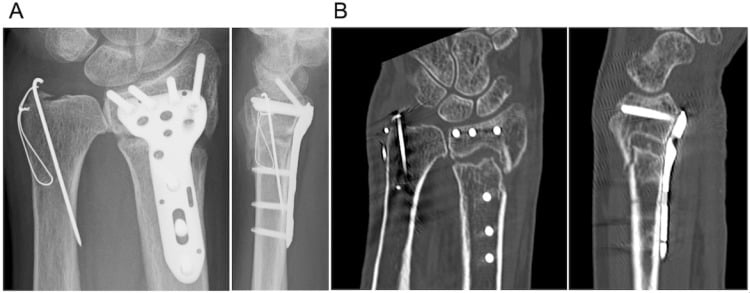
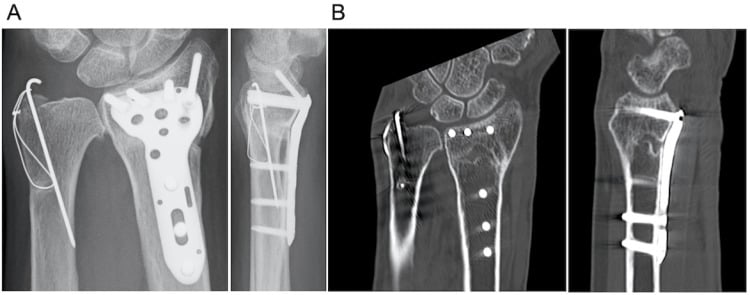
The Device Parameters and Regulatory History
- The parameters. The standard device delivers 1.5 MHz ultrasound at a low intensity of about 30 mW/cm² (spatial-average temporal-average), as pulsed bursts (200 microseconds on, at a 1 kHz pulse-repetition frequency), for 20 minutes once daily. The "low-intensity" is the point - it is far below therapeutic/high-intensity ultrasound and is a non-thermal, mechanical stimulus (not the tissue-heating of higher-intensity ultrasound).
- The regulatory history. The FDA approved LIPUS for accelerating healing of fresh fractures in 1994 and for established non-unions in 2000, on the basis of early positive randomised trials (e.g. accelerated tibial and distal-radius union) - which is why it entered practice before the later high-quality trials tempered the fresh-fracture claim.
Q: What are the physical parameters of LIPUS, and its FDA-approval history?
A: LIPUS delivers 1.5 MHz ultrasound at ~30 mW/cm² (spatial-average temporal-average), pulsed (200-microsecond bursts at a 1 kHz pulse-repetition frequency), for 20 minutes once daily. The "low-intensity" is key - it is a non-thermal, mechanical stimulus (unlike therapeutic/high-intensity ultrasound, which heats). The FDA approved it for fresh fractures in 1994 and for non-unions in 2000 (on early positive RCTs - before the later high-quality trials tempered the fresh-fracture claim).
Using LIPUS in Practice
How a course is actually run
- The device. A transducer is placed over the fracture site with coupling gel and delivers a pulsed ultrasound signal for about 20 minutes once daily, self-applied by the patient at home. It is painless, and the only reported adverse effect is minor skin irritation under the transducer.
- The course. Treatment continues daily until radiographic progression is confirmed; there is no validated stop-point - no trial defines when to abandon it - so the practical rule is to review the films on the usual non-union schedule and stop if there is no progression between successive reviews.
- Documentation. Record the indication (delayed union versus established non-union), the fracture's stability and alignment status, that infection has been excluded, and the host factors being addressed - because the device is only ever an adjunct to those, never a substitute.
- Compliance is the weak link. Even inside a trial with motivated, consented patients, only 73 percent of TRUST participants managed at least half of the recommended treatments - so in routine practice, assume adherence is imperfect and build it into the review conversation rather than discovering it at six months.
Mnemonics & Memory Aids
LIPUS
Hook:LIPUS: Low-intensity pulsed ultrasound, Ineffective in fresh # (TRUST), Promotes repair (mechanotransduction), Use in delayed/non-Union (TRUST excluded them), Surgery still gold standard.
TRUST
Hook:TRUST: Tibial, Randomised sham-controlled, Unaffected outcomes, Strict exclusions, Therefore silent on the compromised fracture.
ADJUNCT
Hook:ADJUNCT: Address the cause, Daily 20 minutes, Justified in non-union, Union endpoint, Not a substitute, Counsel honestly, Trials ongoing.
Clinical Decision Scenarios
Practise clinical reasoning and management decisions out loud
“A patient with a tibial non-union asks about low-intensity pulsed ultrasound. How do you counsel them?”
“Your hospital's procurement committee asks whether it should keep funding LIPUS devices for the fracture clinic. What is your evidence-based answer?”
What it is
- Low-intensity pulsed ultrasound - non-invasive device
- ~20 min daily, self-applied at home
- Used in fresh fractures and delayed/non-unions
Mechanism & risk
- Proposed mechanotransduction drives repair at the molecular level (across healing stages)
- Low-risk: minor skin reactions the only reported side effect
- Avoids re-hospitalisation/anaesthesia/operative complications
Evidence
- TRUST (n=501, sham-controlled): no effect on function (SF-36 diff 0.55, CI -0.75 to 1.84) or healing (HR 1.07)
- BMJ Rapid Recommendation: strong recommendation AGAINST routine use in fractures and osteotomies
- Rationale strongest in delayed union/non-union - because TRUST excluded fractures with poor contact or a gap
- Non-inferiority trials vs surgery ongoing (non-union 2-10%, up to 30% with risk factors)
Place in practice
- Surgical revision = gold standard for established non-union
- LIPUS = low-risk non-invasive adjunct/alternative
- Non-union is multifactorial - address stability/alignment/infection/host; not a substitute
Evidence & Place in Practice
- Fresh fractures: high-quality randomised trials/meta-analyses show inconsistent or limited benefit for acute fracture healing - it is not established as routinely beneficial for fresh fractures.
- Delayed union/non-union: the rationale and interest are strongest here, where LIPUS offers a non-invasive option; encouraging case reports and ongoing non-inferiority trials (LIPUS vs surgery) aim to define its role.
- Gold standard for non-union: surgical revision remains the standard, with its known disadvantages (re-hospitalisation, anaesthesia, complications) - LIPUS is a low-risk alternative/adjunct.
- Don't rely on a device alone: non-union is multifactorial - address stability, alignment, infection and host/biological factors; LIPUS supplements, not replaces, sound fracture management.
The topics this sits between are worth reading together. The biology it claims to accelerate is set out in fracture healing, and the problem it is offered for in non-union management, with the commonest site in tibial non-union. The other non-invasive stimulus with a comparable evidence problem is electrical stimulation. The interventions that do have an effect on union - correcting the mechanics and the biology - are covered under bone grafts and, for the single most modifiable host factor, smoking cessation.
The balanced position on LIPUS is that it is a genuinely low-risk, non-invasive, patient-administered device whose appeal is avoiding the morbidity of surgery, but whose evidence base is mixed. High-quality trials have not consistently shown benefit for fresh fracture healing, so it should not be promoted as routinely accelerating ordinary fracture union; the stronger rationale is in delayed union and non-union, where a non-invasive option is attractive and where non-inferiority trials against surgery are underway. Crucially, non-union is multifactorial, and the device must not be used as a substitute for sound fracture management: mechanical stability and alignment must be adequate, infection must be excluded and treated, and host and biological factors (smoking, diabetes, vascularity, metabolic bone disease) must be addressed. Surgical revision remains the gold standard for an established non-union, and LIPUS is best framed to the patient as a low-risk adjunct or, in selected cases, an alternative - with an honest account of the inconsistent evidence.
The Landmark Evidence and the Bench-to-Bedside Gap
- The landmark trial (TRUST), with its numbers. The TRUST trial (Busse et al, BMJ 2016) randomised 501 patients (250 LIPUS, 251 sham) with operatively managed tibial fractures across 43 North American trauma centres, blinded and sham-controlled, followed for one year. LIPUS was no better than sham on function - SF-36 physical component summary mean difference 0.55 (95% CI -0.75 to 1.84, p=0.41) against a minimal important difference of 3 to 5 points, so the confidence interval excludes any clinically important benefit - nor on time to radiographic healing (hazard ratio 1.07, 95% CI 0.86 to 1.34, p=0.55). Safety did not differ. Compliance was only moderate: 73 percent administered at least half the recommended treatments. A linked BMJ Rapid Recommendation (2017) then made a strong recommendation against routine LIPUS for fresh fractures.
- What TRUST deliberately excluded - and why that leaves non-union open. Of 3,105 patients screened, only 599 were eligible. The exclusions included pathological, segmental and bilateral fractures and, critically, any fracture with less than 25 percent cortical contact and more than a 1 cm gap after fixation. That is precisely the biologically compromised fracture in which a healing stimulus would be expected to matter most - so TRUST is a definitive answer for the ordinary, well-reduced, well-fixed tibia, and is silent on the population the non-union argument is actually about.
- The meta-analysis picture. Systematic reviews of LIPUS RCTs find no effect on functional recovery and only low-quality/inconsistent evidence for radiographic surrogates; the earlier small positive trials were at higher risk of bias.
- The bench-to-bedside disconnect. There is robust in-vitro and animal data (accelerated endochondral ossification, upregulated osteogenic genes) but neutral high-quality human trials - explained by surrogate (radiographic) versus patient-important (functional) outcomes, small-trial/publication bias, coupling/dosing/compliance issues, and a ceiling effect (ordinary fractures heal well anyway). Whether the biology helps in non-union (where there is more to gain) remains the open question the ongoing trials address.
Q: What is the landmark LIPUS trial, and why the bench-to-bedside disconnect?
A: The TRUST trial (Busse et al, BMJ 2016) randomised 501 patients with operatively managed tibial fractures across 43 centres against a sham device. LIPUS was no better on function (SF-36 PCS difference 0.55, 95% CI -0.75 to 1.84, against a minimal important difference of 3-5 points) or on time to radiographic healing (HR 1.07, 95% CI 0.86-1.34); a linked BMJ Rapid Recommendation (2017) then strongly recommended against routine LIPUS for fresh fractures. Meta-analyses show no functional benefit (earlier small positive trials were higher risk of bias). The disconnect (robust animal/in-vitro data but neutral human RCTs) reflects surrogate-vs-functional outcomes, small-trial bias, coupling/compliance (only 73 percent took at least half their treatments), and a ceiling effect. Crucially TRUST excluded fractures with under 25 percent cortical contact and a gap over 1 cm - the very fractures at risk - which is why the non-union question remains open.
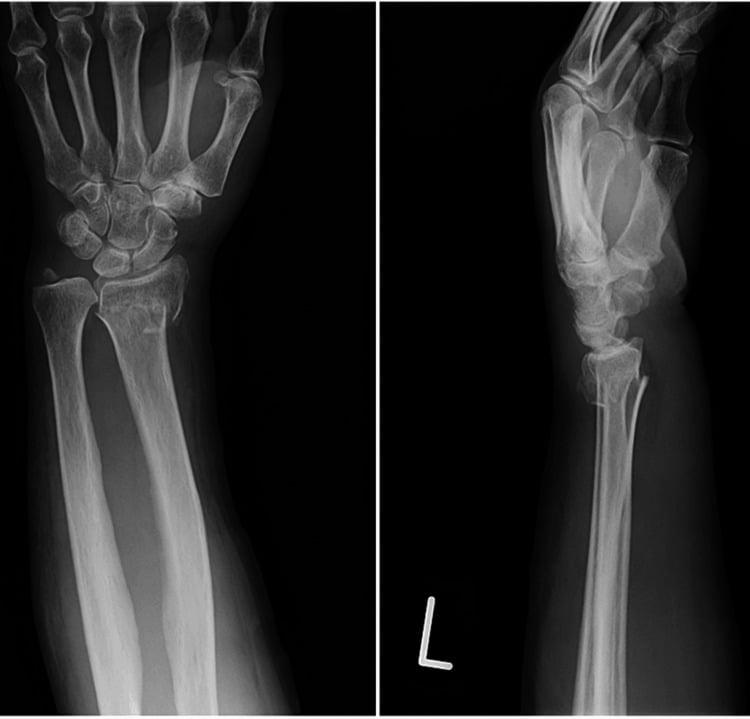
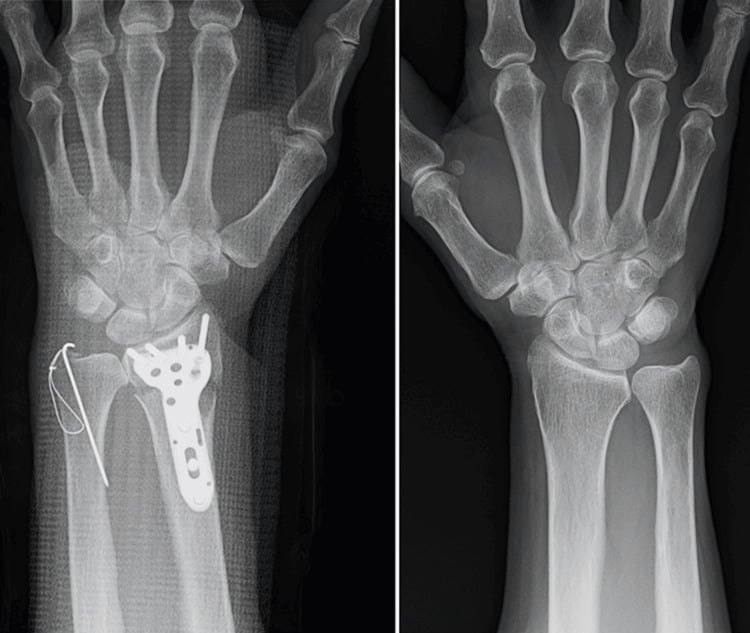
Evidence & Key Studies
Re-evaluation of low intensity pulsed ultrasound in treatment of tibial fractures (TRUST): randomized clinical trial
- Concealed, randomised, blinded, sham-controlled trial of 501 patients (250 LIPUS, 251 sham) with operatively managed tibial fractures amenable to intramedullary nailing, across 43 North American academic trauma centres, enrolled 2008 to 2012 and followed for one year.
- No effect on function: SF-36 physical component summary mean difference 0.55 (95% CI -0.75 to 1.84, p=0.41) against a minimal important difference of 3 to 5 points, with no difference in other functional measures. No effect on time to radiographic healing (hazard ratio 1.07, 95% CI 0.86 to 1.34, p=0.55). Safety outcomes did not differ.
- Compliance was moderate - 73 percent administered at least half the recommended treatments. Of 3,105 patients screened only 599 were eligible: exclusions included pathological, segmental and bilateral fractures and, importantly, any fracture left with under 25 percent cortical contact or a gap over 1 cm after fixation. The trial therefore answers the question for the well-reduced, well-fixed tibia and does not address the biologically compromised fracture.
LIPUS versus surgery for non-union (PiNGUin) - non-inferiority RCT protocol
- Non-unions (fractures not healed after at least 6 months) occur in 2-10% of all fractures and up to 30% of patients with certain risk factors, with high treatment costs, pain and loss of function; surgical revision is the current gold standard but carries re-hospitalisation, secondary disease and operative side effects.
- LIPUS is a low-risk procedure (skin reactions the only side effect in a very small number of patients) that patients can use independently at home, eliminating repeated hospital visits.
- The trial is designed to test whether daily LIPUS (20 minutes for 200 days) is non-inferior to surgical intervention for healing of upper- or lower-extremity non-unions - reflecting that LIPUS is a potential non-invasive alternative to surgery pending definitive evidence.
LIPUS for paediatric fracture non-union - a case report
- LIPUS is a conservative option used both in fresh fractures (to stimulate the stages of healing) and in non-unions, working by promoting repair at the molecular level.
- A child's distal-third humeral shaft atrophic non-union treated with LIPUS showed encouraging signs of union at 3 months and successful union at 6 months.
- While LIPUS is well studied in adult non-unions, evidence in children is limited; this case supports further trials of LIPUS for paediatric non-union (single case report - low-level evidence).
LIPUS for bone healing: systematic review of randomized controlled trials
- 26 randomised controlled trials (median sample size 30, range 8-501) of LIPUS versus sham or no device for any fracture or osteotomy, searched to November 2016 with GRADE assessment.
- The most trustworthy evidence came from four low-risk-of-bias trials in tibia or clavicle fractures: LIPUS did not reduce time to return to work, pain, or subsequent operations, and probably has no effect on radiographic healing.
- Concludes that in fresh fractures LIPUS does not improve patient-important outcomes; applicability to other fractures and osteotomies is described as open to debate.
LIPUS for bone healing: a clinical practice guideline (BMJ Rapid Recommendation)
- International guideline panel, working from the linked Schandelmaier review, issued a STRONG recommendation against the routine use of LIPUS for patients with fractures or osteotomies - in adults and children.
- Moderate-to-high certainty that LIPUS provides no meaningful benefit on return to work, full weight-bearing, pain, subsequent operations, or radiographic healing in the trustworthy trials.
- The panel flagged cost and resource inefficiency and suggested funders consider de-implementation as a quality-improvement initiative.
The epidemiology of non-union (2-10% of fractures, up to 30% with risk factors), the status of surgical revision as the current gold standard with its disadvantages, the low-risk home-use profile of LIPUS (skin reactions the only side effect), and the framing of LIPUS as a potential non-invasive alternative whose non-inferiority to surgery is being tested come from the cited Steinhausen (PiNGUin) trial protocol; the conservative use of LIPUS in fresh fractures and non-unions and an example of successful union in paediatric non-union from the cited Basa case report. The proposed mechanotransduction mechanism, the inconsistent high-quality-trial evidence for fresh fractures, and the principle that non-union is multifactorial (requiring attention to stability/alignment/infection/host factors) are standard, well-established teaching. The trial figures
- the sample size, the SF-36 and radiographic-healing effect estimates with their confidence intervals, the compliance rate and the eligibility criteria - come from TRUST, which studied operatively managed tibial fractures only and explicitly excluded those left with poor cortical contact or a residual gap. The PiNGUin citation is a published protocol, so it reports no results, and the paediatric citation is a single case report. No completed randomised trial compares LIPUS with surgery for established non-union, no trial establishes a treatment duration or a point at which to abandon it, and no cohort gives a union rate attributable to LIPUS in non-union - so none is quoted here. The pooled-trial verdict and the strong guideline recommendation against routine use come from the cited Schandelmaier review (26 trials) and Poolman BMJ Rapid Recommendation respectively.