Segmental Defects | Distraction Osteogenesis | Docking Site
- Transport rate: 1mm/day standard, same as lengthening
- Docking site: Where transported segment meets target - often requires bone graft
- Regenerate: New bone forming at osteotomy site during transport
- Bifocal: Two osteotomies halve the transport distance each segment travels
- Shortening-lengthening: Alternative for infected defects - acute shortening then gradual lengthening
- “Defects greater than 4cm generally require transport rather than bone graft alone
- “Docking site union is the Achilles heel - expect 25-50% need bone grafting
- “Infected nonunion: Debride, external fixation, transport through healthy bone
- “Consider prophylactic fibular osteotomy for tibial transport
Overview and Epidemiology
Transport is one answer to a segmental defect, and the page is only useful beside the alternatives. The biology it exploits is distraction osteogenesis - the same principle applied to a shortened rather than a defective bone in limb lengthening - and the hardware is Ilizarov external fixation. Its main rival for the same defect is the induced-membrane (Masquelet) technique, and the decision between them belongs with the defect's cause: nonunion, chronic osteomyelitis after debridement, or an open fracture that has lost bone - most often of the tibial shaft. When neither reconstruction is realistic, the question becomes salvage versus amputation, which is on mangled extremity.
What it is. Bone transport uses distraction osteogenesis to move a bone segment across a defect, generating new bone in its wake. Developed from Ilizarov's principles, it is the definitive treatment for segmental bone defects not amenable to conventional bone grafting.
When it is chosen. Segmental bone loss greater than 4cm is the threshold at which transport is generally preferred to bone grafting alone. The defects that reach that size come from a short list:
- Post-traumatic bone defects
- Post-tumour resection reconstruction
- Infected nonunion with bone loss
- Congenital pseudarthrosis
What it buys. Transport uses the patient's own regenerative capacity, so there is no donor-site morbidity for a large graft and no ceiling set by the volume of graft available - a defect larger than any graft can still be filled. Soft tissue regenerates alongside the bone, and the reconstruction can be combined with treatment of infection.
What it costs. Treatment runs for months, the frame brings pin-site complications, the technique is complex, and none of it works without a compliant patient.
Pathophysiology
Two junctions, two biologies. Transport asks bone to unite in two places, and they behave differently. The regenerate at the corticotomy follows distraction principles and usually heals well if the biology is preserved; the docking site is two bone ends meeting and follows bone-graft principles. Most of what goes wrong in this operation goes wrong at the second one.
The regenerate. New bone forms at the corticotomy site during transport, by the same principles as limb lengthening, and a rate of 1mm/day preserves that biology. Once transport is complete the regenerate consolidates.
The docking site. The two ends that meet are often avascular, their healing potential is variable, and fibrous tissue may interpose between them. Augmentation is needed often enough that it is planned for rather than discovered.
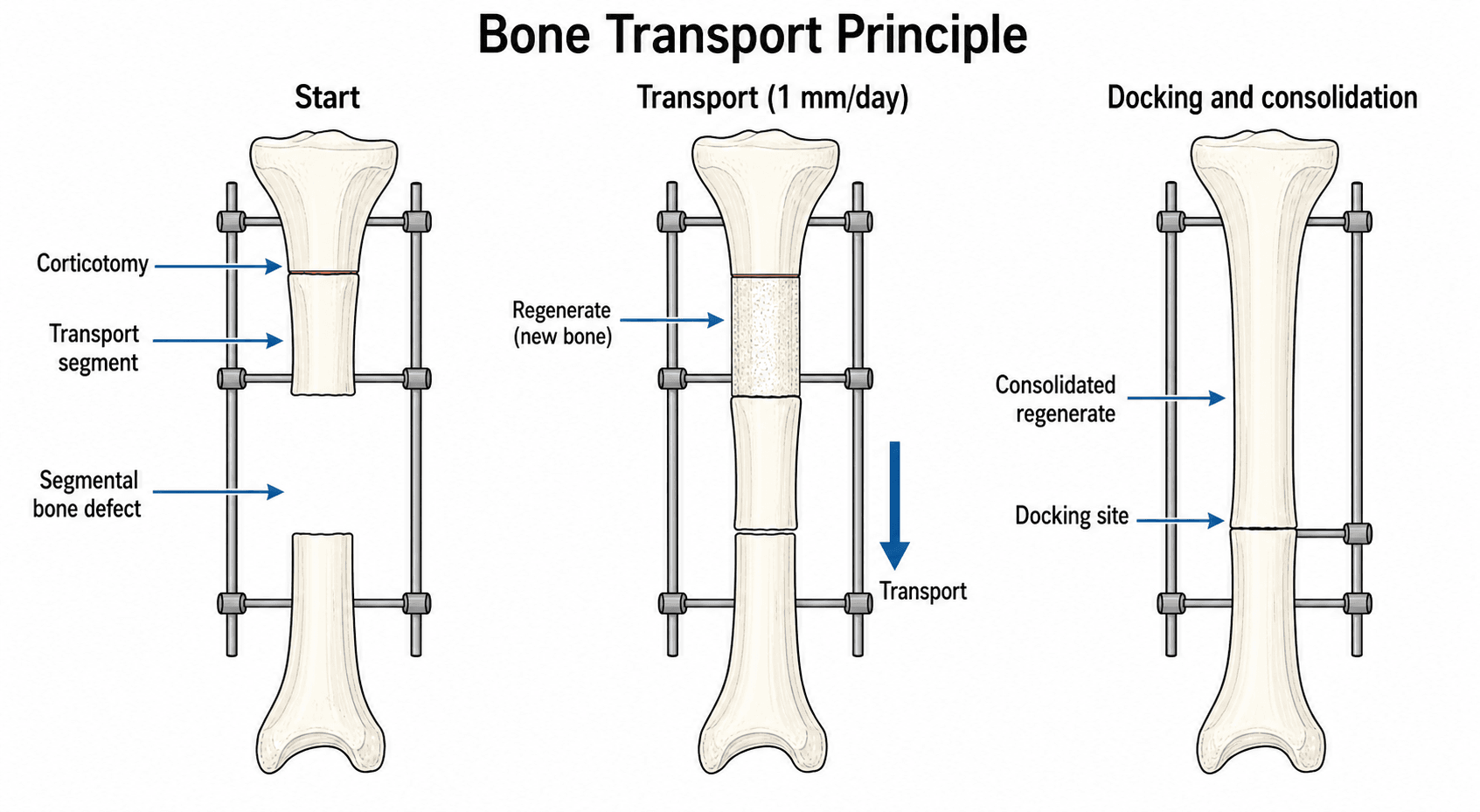
Frame time. Total time is transport time plus consolidation time. Transport time is the defect divided by 1mm per day; consolidation is indexed at roughly 1 month per cm transported, and the docking site adds time of its own. In practice the whole treatment may run 6 to 18 months.
Classification Systems
Bone transport itself is described by the number of osteotomies (focal level), but the defect and host are classified by widely used trauma and reconstruction systems that drive decision-making.
- What it classifies
- Number of corticotomies and transported segments
- Why it matters for transport
- Determines transport distance per segment and overall frame time
- What it classifies
- Open fracture soft-tissue injury (I to IIIC)
- Why it matters for transport
- IIIB/IIIC predict bone loss and the need for orthoplastic cover before transport
- What it classifies
- Osteomyelitis anatomy (1 to 4) and host (A/B/C)
- Why it matters for transport
- Defines extent of debridement and resultant defect; B/C hosts heal poorly
Cierny-Mader Classification of Osteomyelitis
When bone transport follows an infected nonunion, the Cierny-Mader classification named above determines how much bone must be resected and whether the host can heal a reconstruction at all. It combines an anatomic type with a physiological host class.
- Anatomy
- Endosteal / intramedullary infection (e.g. haematogenous, infected nail)
- Relevance to transport
- Debridement is intramedullary; usually no segmental defect
- Anatomy
- Cortical surface infection contiguous from a soft-tissue focus or ulcer
- Relevance to transport
- Needs soft-tissue cover; limited bone loss
- Anatomy
- Full-thickness cortical sequestrum, but bone stable after debridement
- Relevance to transport
- Cavity or partial defect; may need graft rather than transport
- Anatomy
- Through-and-through / segmental, unstable, needing segmental resection
- Relevance to transport
- The classic indication for bone transport - resection creates the segmental defect
- Status
- Normal immune and vascular status
- Implication
- Tolerates curative resection and reconstruction
- Status
- Compromised - local (Bl: scarring, radiation), systemic (Bs: diabetes, smoking, malnutrition), or both (Bls)
- Implication
- Optimise first; higher complication and nonunion risk
- Status
- Treatment morbidity would exceed that of the disease itself
- Implication
- Palliation / suppression rather than radical reconstruction
The clinical stage is the anatomic type plus the host (for example a 4B tibia). Stage 4 (diffuse/segmental) is the pattern whose radical debridement creates the segmental defect that bone transport reconstructs - but only a type A (or optimised B) host should be offered curative reconstruction, while a C host is managed by suppression or amputation rather than a year in a frame.
Clinical Presentation
History. How the bone was lost governs the plan: the mechanism, the infection history, previous surgery and the implants left behind, and any comorbidity that impairs healing. The infection history is the part that changes the operation.
Examination. Assess the quality of the soft-tissue envelope, limb alignment, neurovascular status, and any signs of active infection.
Characterising the defect. Before the frame is planned the defect is described by its size in centimetres, its location (metaphyseal or diaphyseal), the bone quality at the proposed osteotomy sites, and the condition of the soft tissues over it.
Investigations
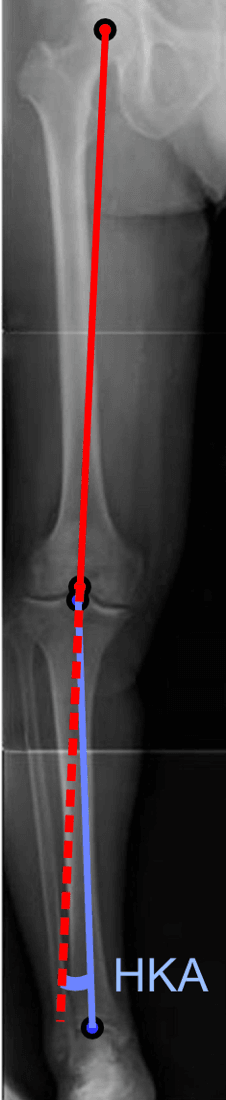
Radiographs. Full-length views of the affected bone, read for the size and location of the defect and for bone quality.
CT measures the defect accurately, plans the osteotomy site, and identifies sequestra in infection.
MRI evaluates the soft tissues, the extent of infection, and marrow involvement.
Infection workup. Where infection is suspected or established, take ESR and CRP at baseline and to monitor, a white cell count, at least 5 intraoperative culture samples, and histopathology.
Management
Before the frame. Where the defect follows infection, all infected and necrotic bone is debrided first, and the transport is planned through healthy bone only.
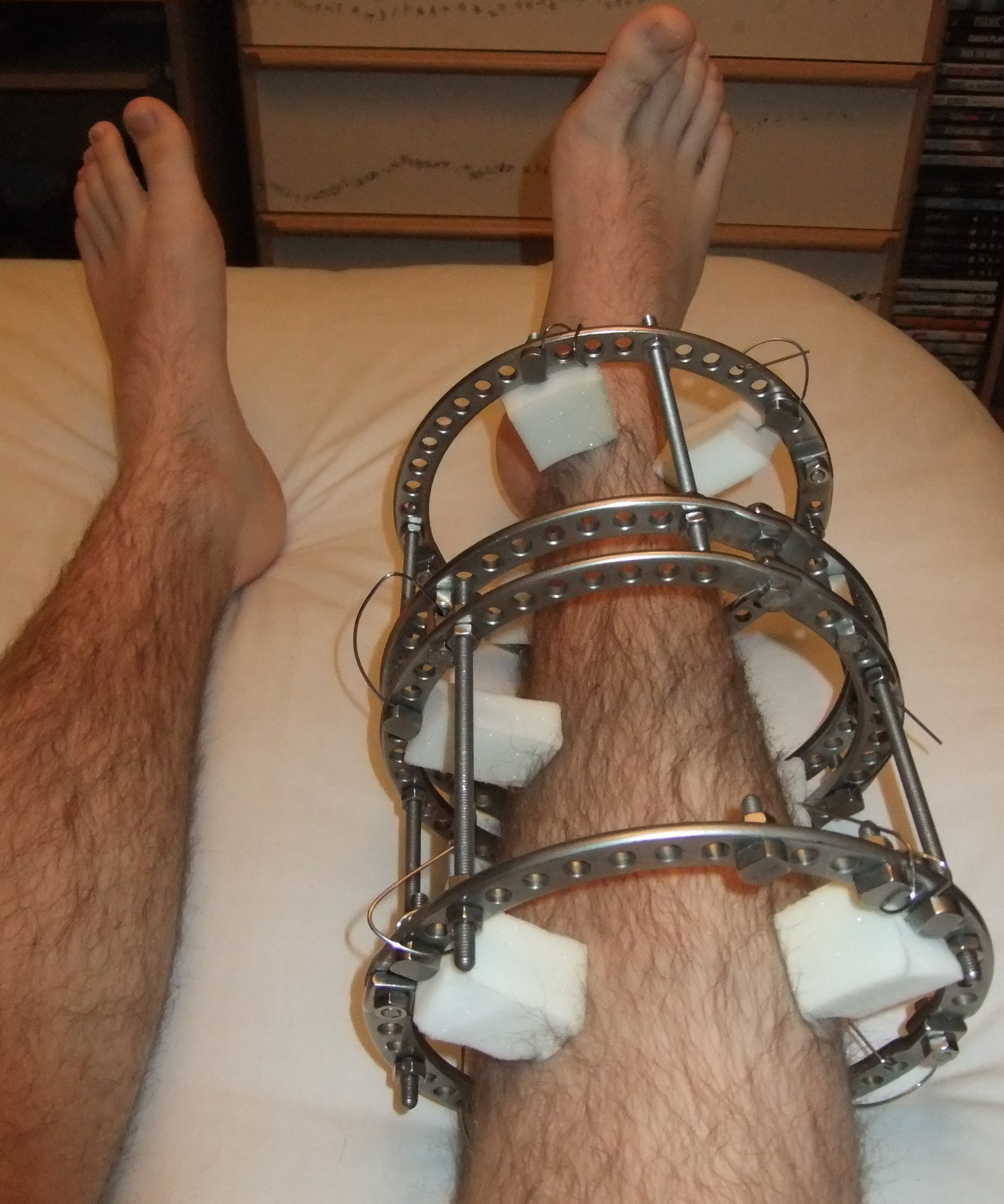
The frame. An Ilizarov or hexapod (TSF) frame with a minimum of two rings per segment, and the transport ring connected to the segment that is to be moved.
The corticotomy. Low energy, metaphyseal where possible, preserving periosteum and blood supply - the same technique as for lengthening.
The fibula. An intact fibula tethers the tibia and blocks both transport and compression, so a prophylactic fibular osteotomy is considered whenever the tibia is to be transported.
Latency. 5 to 7 days between corticotomy and the start of transport, allowing initial callus to form.
Transport. 1mm/day in four divided doses, with the rate adjusted to the quality of the regenerate.
Docking and consolidation. When the transported segment reaches the target the bone ends are freshened, compressed and grafted if needed. The frame then stays on until the regenerate is solid.
Surgical Management
The number of corticotomies is chosen from the size of the defect: more levels means less distance for each segment to travel, at the cost of another regenerate to look after.
One osteotomy, one moving segment. A single osteotomy proximal or distal to the defect, and the transport segment crosses the whole defect to dock at the far end. Suited to defects less than 6cm, where one segment is adequate and the simpler construct is preferred.
The trade-off. One regenerate to monitor and a simpler frame, against the longest transport distance, the most soft-tissue stretch, and the longest treatment time.
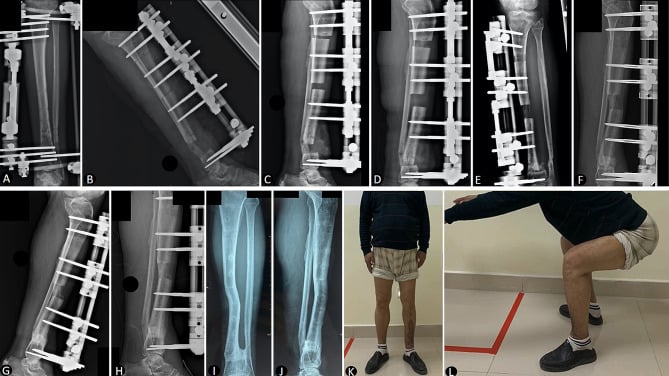
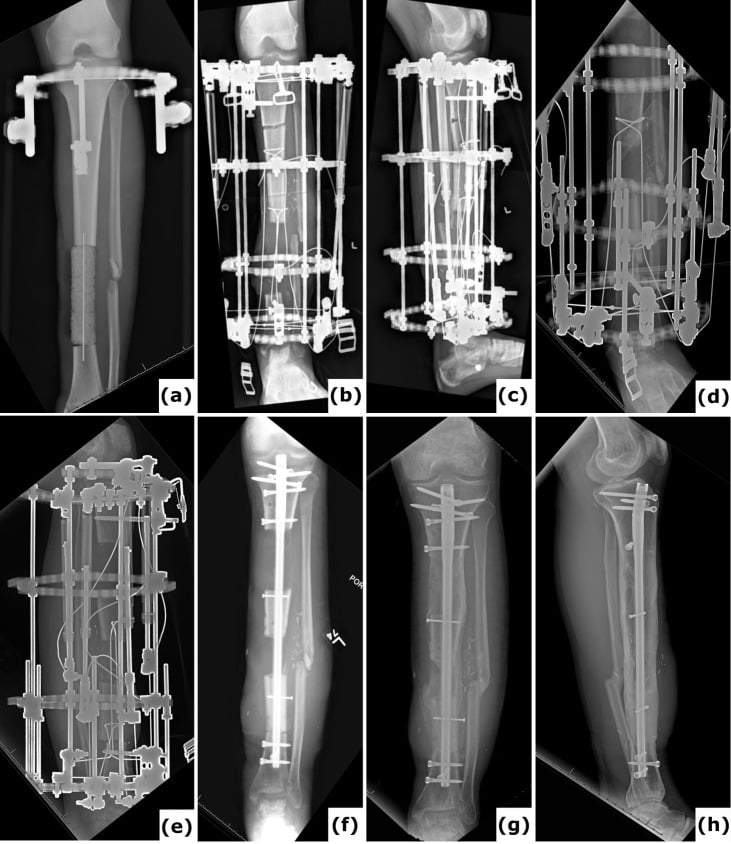
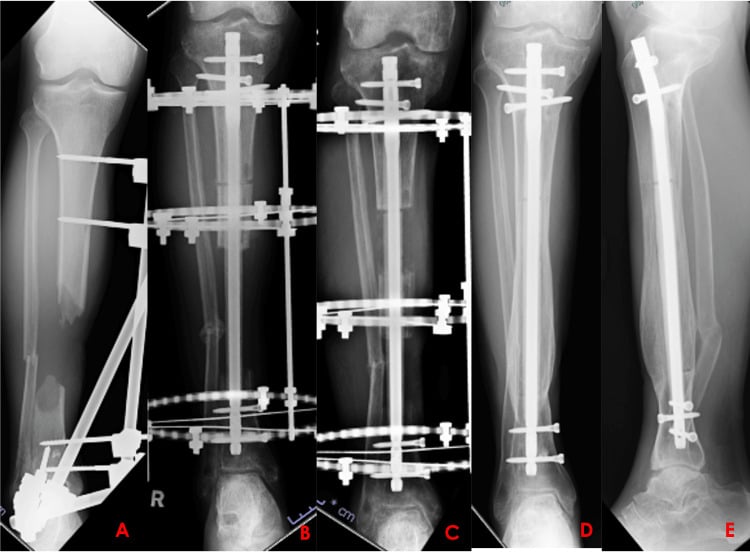
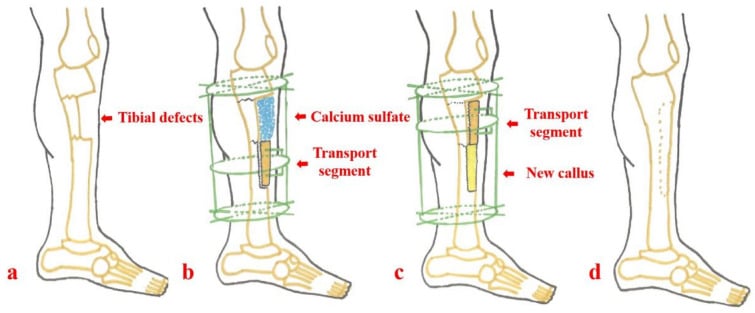
Complications
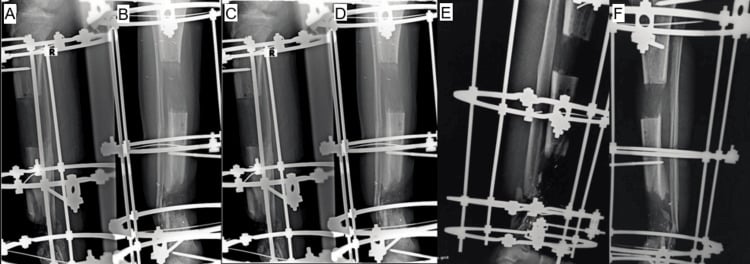
During transport. These are the problems the fortnightly films are read for.
- Poor regenerate: slow the rate; bone graft if it persists
- Premature consolidation: speed the rate up, or perform an accordion manoeuvre
- Axial deviation: adjust the frame during transport
- Soft-tissue tethering: may limit how far the segment will travel
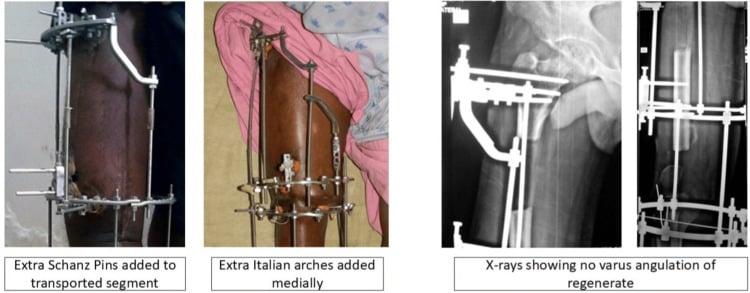
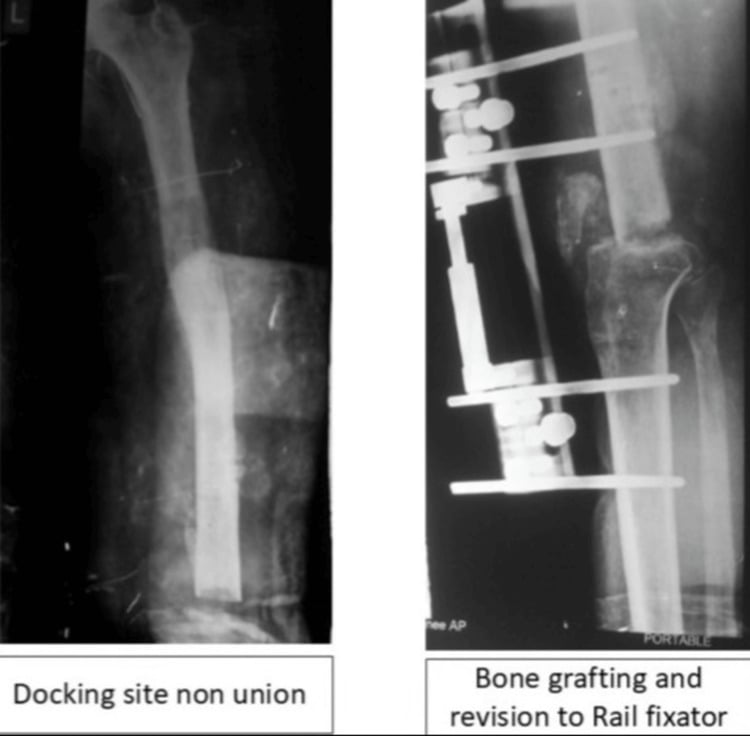
At the docking site. Nonunion is the predictable complication, and bone grafting is what resolves it. Malalignment is corrected before union, and persistent infection means further debridement.
Of the frame and of the limb. Pin-site infection is the standard external fixator problem, joint contracture is prevented by physiotherapy rather than treated late, and the limb may refracture once the frame is off.
Choosing the Reconstruction Method
The decision that carries the marks is which technique suits this defect, this host and these soft tissues. The four mainstream options are compared below.
- Best defect size
- Any size, including over 8cm; tolerates active infection
- Strengths
- Like-for-like bone, no graft-volume limit, treats infection, restores length
- Limitations / pitfalls
- Long frame time, pin-site problems, docking-site nonunion, high overall complication rate
- Best defect size
- Roughly 4 to 12cm
- Strengths
- Technically simpler, shorter fixation, two predictable stages
- Limitations / pitfalls
- Limited by autograft volume, two operations, less suited to very large or actively infected defects
- Best defect size
- Large defects with good recipient vessels
- Strengths
- Living vascularised bone, faster union, hypertrophies under load, lower complication rate in pooled data
- Limitations / pitfalls
- Microsurgical expertise, donor-site morbidity, slender graft needs protection, stress fracture risk
- Best defect size
- Smaller infected defects (acute shortening 3 to 4cm)
- Strengths
- Compression at nonunion, can close soft-tissue gap without flap, avoids transport through infected zone
- Limitations / pitfalls
- Limited safe acute shortening, neurovascular kinking, later relengthening required
An alternative to transport for infected defects: acutely shorten the limb to achieve bony contact and compression, then gradually re-lengthen through a distant osteotomy. This avoids transport through the infected zone and provides compression at the nonunion site.
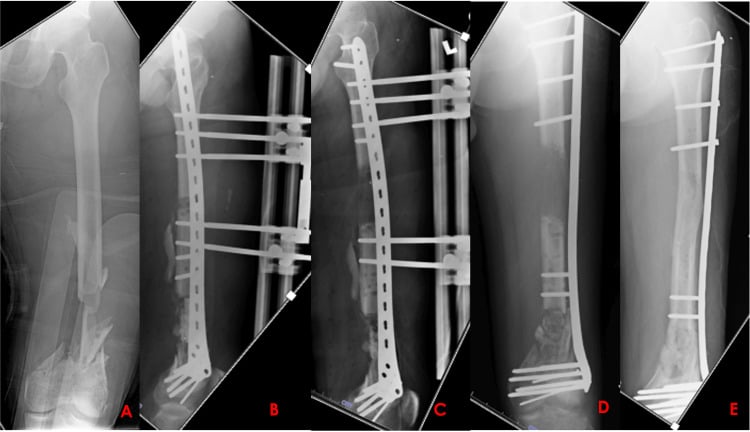
The Induced-Membrane (Masquelet) Technique
The induced-membrane technique is the principal alternative to transport for a segmental defect, and the examiner expects you to know its two stages and why the membrane matters.
- What is done
- Radical debridement, skeletal stabilisation (nail/plate/fixator), fill the defect with an antibiotic-loaded PMMA cement spacer, and achieve soft-tissue cover (flap if needed)
- Key point
- The spacer both delivers antibiotic AND induces a vascular membrane around itself
- What is done
- Carefully incise and PRESERVE the membrane, remove the spacer, fill the cavity with cancellous autograft (iliac crest or reamer-irrigator-aspirator), and close the membrane over the graft
- Key point
- Graft while the membrane is at its most bioactive; do not strip it
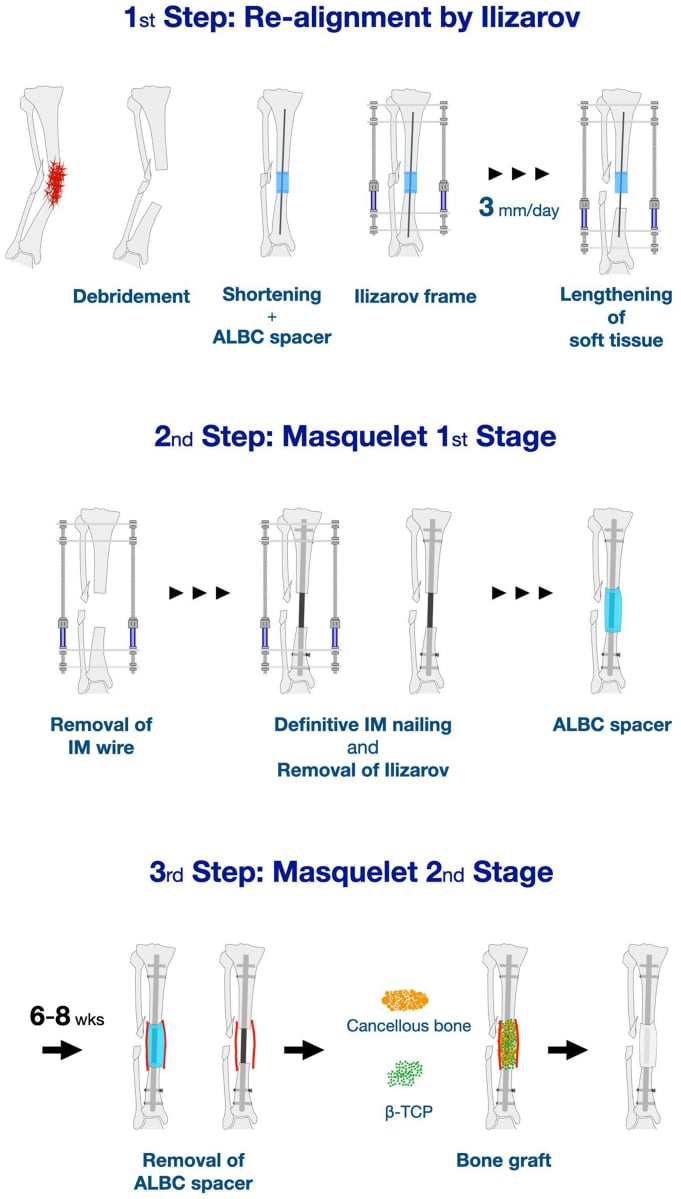
Why the induced membrane works. The foreign-body reaction to the cement creates a vascularised pseudosynovial membrane that secretes growth factors (VEGF, BMP-2, TGF-beta), prevents graft resorption, and provides a contained, well-vascularised bed.
When to graft. Bioactivity peaks at around one month, and grafting is usually performed at 4 to 8 weeks, commonly at 6 to 8. The window is not a cliff, though: reviews report that the membrane retains bioactivity even beyond 8 weeks.
The Masquelet technique is technically simpler than transport with a shorter time in fixation, but is limited by autograft volume (the reamer-irrigator-aspirator helps) and needs good soft-tissue cover; bone transport better tolerates very large defects and active infection. At stage 2, preserve the induced membrane - it is the biological reactor - and graft within the usual window while it is at its most bioactive.
Postoperative Care
The transport phase. The patient or carer performs the adjustments, 0.25mm four times daily, once the latency period is over. Pin sites are cleaned daily; pin-site infection is expected and treated early with oral antibiotics, escalating only if it becomes deep. Weight-bearing is encouraged within tolerance, because loading the regenerate improves its quality.
Monitoring. Radiographs review the regenerate approximately every 2 weeks, and the rate is set by what they show. Physiotherapy for the adjacent joints runs throughout and is aggressive, to prevent equinus in the tibia and knee or hip contractures.
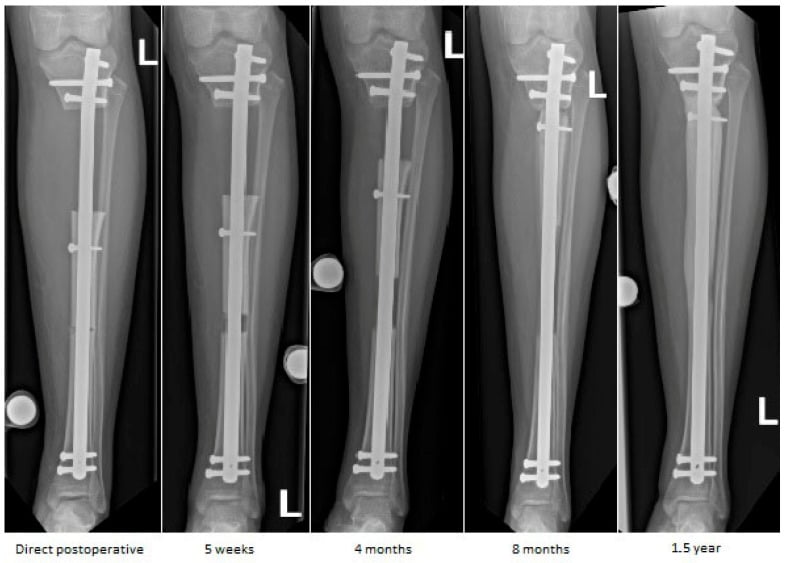
Consolidation and frame removal. The frame stays on through consolidation. Before it comes off, confirm union of both the regenerate and the docking site, with 3 of 4 cortices visible on orthogonal views. After removal the limb is protected in a cast or brace to reduce the risk of refracture, particularly where the defect exceeded 8cm.
Outcomes and Prognosis
Pooled data come from systematic reviews and case series rather than registries. Reported figures (verified in the Evidence Base) include:
- Union: achievable in the high 80s to mid 90s percent with appropriate docking-site management; nonunion rates are comparable between transport and free fibula.
- Infection eradication: transport markedly reduces deep infection in infected lesions (risk ratio 0.14 in meta-analysis).
- Docking-site grafting: required in 25 to 50% of cases - the principal predictable hurdle.
- Refracture: about 5% overall, rising roughly 3.7-fold for tibial defects over 8cm.
- Amputation: around 2.9%, including a voluntary amputation rate of about 1.6% reflecting treatment burden.
Functional outcomes (ASAMI) are good to excellent in most series, but treatment is long and demanding; patient selection and counselling are decisive prognostic factors.
Guidelines, Registries & Global Practice
Global Epidemiology
Segmental long-bone defects most often follow high-energy open tibial fractures (Gustilo IIIB/IIIC), infected nonunion/osteomyelitis, and tumour resection. Worldwide the tibia is the commonest site because of its subcutaneous position and tenuous blood supply. There is no dedicated international registry for bone transport; the evidence base is dominated by single-centre case series and a small number of systematic reviews, so reported figures vary widely with defect size, infection and host status.
Side-by-Side Guidance
- Position
- Distraction osteogenesis (transport) and induced-membrane (Masquelet) both endorsed; defect size, infection and soft tissues drive choice
- Emphasis
- Radical debridement and stable fixation before reconstruction; stage according to host
- Position
- Orthoplastic care in a specialist centre; definitive skeletal and soft-tissue reconstruction together
- Emphasis
- Single combined orthoplastic procedure; early flap cover before any reconstruction
- Position
- No single mandated technique; transport, induced membrane and vascularised fibula all accepted
- Emphasis
- Patient selection, infection control and shared decision-making
- Position
- Recognises transport, induced membrane and vascularised graft as complementary; matches method to defect length and biology
- Emphasis
- Multidisciplinary limb-reconstruction teams; salvage vs amputation discussion
The common thread across all bodies: control infection and achieve healthy soft-tissue cover first, then reconstruct bone with the method best matched to defect length, host biology and local expertise. None mandates a single technique.
Registry and Outcome Notes
No arthroplasty-style registry tracks bone transport. The best pooled outcome data come from systematic reviews (e.g. Papakostidis 2013, Paul 2024) rather than national registries, so quoted union, refracture and amputation rates derive from aggregated case series and carry meaningful heterogeneity.
High- vs Limited-Resource Practice Variation
- Typical practice
- Hexapod frames (TSF), motorised lengthening/transport nails, plate- or nail-assisted transport, free-flap orthoplastic cover, induced membrane with bone-graft substitutes/BMP
- Typical practice
- Ilizarov ring fixator remains the workhorse; documented use of locally fabricated/low-cost components; reliance on autograft; transport over a standard nail to cut frame time and clinic visits
The induced-membrane (Masquelet) technique is the principal global alternative to transport: a two-stage approach with a PMMA cement spacer to induce a vascular membrane, followed by autologous cancellous grafting (usually at 4 to 8 weeks). Transport better tolerates very large defects and active infection; induced membrane is technically simpler and avoids prolonged external fixation but is graft-volume limited. Vascularised free fibula is favoured for large defects with a good recipient vessel bed.
Controversies and Areas of Uncertainty
Transport, induced membrane or free fibula. No high-quality randomised data establishes superiority. Systematic review evidence shows equivalent bony and functional outcomes between transport and free fibula, with free fibula achieving faster union and fewer complications but requiring microsurgery (Paul 2024). The choice remains expertise- and biology-driven.
Prophylactic docking-site grafting. Whether to graft the docking site at the time of contact, or wait to see whether it unites spontaneously, is unresolved. Acute grafting, as in the nail-assisted series, may pre-empt the 25 to 50% nonunion rate but commits every patient to an extra procedure.
Rate and rhythm. 1mm/day in four increments is conventional, but slower rates may be needed for a poor regenerate and faster increments are tolerated in children. The ideal rhythm for transport, as opposed to lengthening, is extrapolated rather than proven.
Biologics. BMP, PRP and bone-graft substitutes are used adjunctively at problem docking sites and to augment the regenerate, but the evidence is largely off-label and low-level; routine use is not established.
Salvage versus amputation. For very large defects with severe soft-tissue and neurovascular injury, prolonged reconstruction may not outperform early amputation and prosthetic rehabilitation in function or cost. This is a shared decision, not a technical default.
MCQ Practice Points
A: 1mm/day delivered as 0.25mm four times daily, after a 5 to 7 day latency - identical to limb lengthening. Slowing the rate is the first response to poor regenerate.
A: The docking site (not the regenerate). Two often-sclerotic, avascular ends meet; expect to graft 25 to 50% of docking sites and plan for it.
A: An intact fibula tethers the tibia and blocks transport/compression; a fibular osteotomy allows the tibial segment to move and the docking site to compress.
A: It chiefly reduces the external fixation index/time (as low as 0.4 months/cm) and protects the regenerate during consolidation; it does not change regenerate biology.
A: Roughly 3 to 4cm. Beyond this, vascular and nerve kinking risk rises; debride to healthy bone first, then relengthen at a distant corticotomy.
A: Tibial defects over 8cm (about 3.7-fold higher). Protect the limb in a cast or brace after frame removal.
Exam Viva Scenarios
Practise clinical reasoning and management decisions out loud
“A 35-year-old man has a 6cm segmental tibial bone defect following debridement of infected nonunion. The soft tissues are healthy after flap coverage. How do you plan management?”
“A patient has completed tibial bone transport for a 5cm defect. The regenerate looks excellent, but at 4 months there is no union at the docking site. What is your management?”
“Describe the shortening-lengthening technique as an alternative to bone transport for infected tibial nonunion.”
Transport Parameters
- Rate: 1mm/day (same as lengthening)
- Latency: 5-7 days before transport
- Rhythm: 0.25mm QID
- Frame time: 1.5 months per cm typical
Method Selection
- Monofocal: Defects less than 6cm, simpler
- Bifocal: Defects greater than 6cm, faster
- Trifocal: Very large defects
- Over nail: Reduces external fixation time
Docking Site Management
- 25-50% require bone grafting
- Refresh sclerotic bone ends
- Autograft from iliac crest
- Compress and stabilize
Special Considerations - Tibia
- Fibular osteotomy allows transport
- Anteromedial surface accessible
- Soft tissue often compromised
- Consider induced membrane as alternative
Infected Nonunion Principles
- Debride all infected/necrotic bone first
- Transport through healthy bone only
- Alternative: Shortening-lengthening
- Monitor infection markers throughout
Complications
- Docking site nonunion: Most problematic
- Poor regenerate: Adjust rate
- Pin site infection: Standard management
- Joint contracture: Physiotherapy essential
Evidence Base
Society guidance and core textbook principles are flagged as Guideline-level and do not carry a PMID.
Distraction Osteogenesis for Long Bone Defects: Systematic Review and Meta-analysis
- Ilizarov method significantly reduced deep infection in infected lesions (risk ratio 0.14, 95% CI 0.10 to 0.20)
- Overall refracture rate 5%, neurovascular complications 2.2%, amputation 2.9%
- Tibial defects over 8cm carried 3.7-fold higher refracture risk (odds ratio 3.7, 95% CI 1.1 to 12.5)
- Voluntary amputation rate 1.6% underlines the demand on patients and need for careful selection
Bone Transport in the Management of Fractures of the Tibia
- Mean resection 5.2cm in infected nonunions; mean bone and soft-tissue loss 8cm in IIIB fractures
- Union achieved in all cases except one; infection eradicated in all
- 10 of 21 limbs required bone grafting (predominantly at the docking site)
- Mean treatment duration 12 months
Ilizarov Fixator Combined with Intramedullary Nail for Tibial Nonunions with Bone Loss
- External fixation index averaged 0.4 months per cm (vs roughly 1.5 with frame alone)
- Mean time to union 4.6 months; mean external fixation time 4 months
- Primary docking-site iliac-crest grafting at the time of acute compression
- No refracture or malalignment; Paley bone score excellent in all 5 patients
Bone Transport vs Free Vascularised Fibula Grafting: Systematic Review and Meta-analysis
- Bony union and functional outcomes did not differ between the two techniques
- Free fibula reached union about 9.3 months sooner and reduced external-fixator time by 5.3 months
- Total complications were 68% higher in the bone transport group
- Nonunion rates did not differ between groups
Acute Shortening and Deformation with the Ilizarov/Taylor Spatial Frame for Infected Nonunion
- Acute shortening brings healthy bone ends into contact and compression at the nonunion
- Temporary deformation can close moderate soft-tissue defects without free tissue transfer
- Length and alignment restored later by distraction at a healthy corticotomy
- Best suited where soft-tissue loss exceeds bone loss
Double-level Fixator-assisted Nailing to Reduce Time in Frame
- Mean time in fixator 8.6 weeks vs 30.2 weeks for frame-only controls (p less than 0.001)
- External fixation index 17.7 days/cm vs 73.4 days/cm for controls (p less than 0.001)
- Equivalent length gain (3.9 vs 4.2cm) with no infections
- ASAMI bone and functional scores excellent or good in all segments
Masquelet Induced-Membrane Technique for Large Bone Defects
- Stage 1 PMMA (or calcium sulfate/polypropylene) spacer induces a bioactive foreign-body membrane
- Stage 2 grafting usually at 4 to 8 weeks; membrane retains bioactivity even beyond 8 weeks
- Avoids prolonged external fixation but depends on adequate graft volume and soft-tissue cover
- 3D-printed scaffolds emerging but lack large clinical series
Principles of the Ilizarov Method and Distraction Osteogenesis
- Tension-stress effect drives neo-osteogenesis when living tissue is distracted gradually
- Standard rate 1mm/day in 4 increments balances regenerate quality against premature consolidation
- Low-energy metaphyseal corticotomy preserves osteogenic blood supply
- Consolidation indexed at roughly 1 month per cm transported (3 cortices before frame removal)