Bennett's vs Rolando | CMC Joint Involvement | Deforming Forces | Articular Reduction
- Bennett's: 2-part intra-articular fracture-subluxation with small volar-ulnar fragment held by the deep anterior oblique (beak) ligament
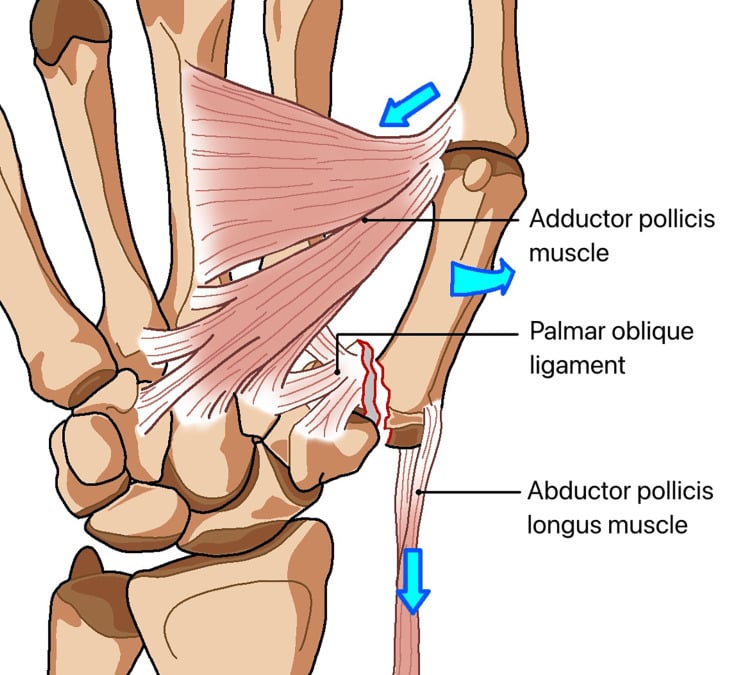
- Deforming forces: APL pulls shaft proximally and radially, adductor pollicis pulls the head into adduction, so the shaft subluxates dorsally and supinates
- Rolando: 3-or-more-part comminuted intra-articular (Y or T pattern) - worse prognosis than Bennett's
- Robert's view (hyperpronated thumb AP) is the key view to assess volar fragment size and step-off
- Threshold for surgery: greater than 1-2mm articular step-off or CMC subluxation that cannot be maintained
- “Know the Green/O'Brien classification: Type I (Bennett's), Type II (Rolando), Type IIIA (transverse extra-articular), Type IIIB (oblique extra-articular)
- “Bennett's reduction manoeuvre: Traction + Extension + Pronation + Abduction (TEPA) - reverse the deformity
- “Rolando 'bag of bones' comminution favours distraction external fixation (ligamentotaxis) over ORIF
- “Radiographic CMC OA does NOT always correlate with symptoms (Cannon 1986, Livesley 1990)
Thumb Base Fractures
Overview
A thumb base fracture is any fracture of the base of the first metacarpal. It may stay outside the joint or enter the first carpometacarpal (CMC) joint, and saying which comes first, because that drives everything else.
The named patterns. Two are intra-articular and one is not:
- Bennett's - a two-part intra-articular fracture-subluxation with a volar-ulnar fragment; unstable
- Rolando - a comminuted intra-articular fracture in a Y or T pattern, three or more fragments; worse prognosis
- Extra-articular (Winterstein) - transverse or oblique, the joint untouched; generally stable and treated in a cast
The eponyms. Edward Hallaran Bennett, in Dublin in 1882, first described the two-part pattern. Silvio Rolando, in Italy in 1910, described the comminuted variant.
Anatomy
The joint. The first CMC (trapeziometacarpal) joint is a biconcave saddle with two degrees of freedom. It allows flexion and extension, abduction and adduction, and circumduction with screw-home rotation, and it is critical for opposition and pinch.
The ligaments. The key stabilising structures:
- Deep anterior oblique ligament (dAOL, the beak ligament) - from the volar-ulnar beak of the metacarpal base to the trapezium; an intra-articular pivot for pronation that restrains subluxation
- Superficial anterior oblique ligament (sAOL)
- Dorsoradial ligament (DRL) - from the dorsal trapezium to the metacarpal base; increasingly recognised as a major restraint to dorsal subluxation
- Posterior oblique ligament
- Intermetacarpal ligament - first to second metacarpal base; limits radial deviation and acts as a tension band
The muscles. APL inserts on the dorsoradial base of the metacarpal and pulls it proximally and radially. Adductor pollicis, acting through the ulnar sesamoid, adducts and supinates the thumb. EPL and FPL act distally, at the MCP and IP joints.
The Bennett's deformity. The volar-ulnar fragment stays reduced, held to the trapezium by the beak ligament, and the shaft subluxates away from this anchor. APL pulls the shaft proximally and radially, and adductor pollicis pulls the head into adduction, pivoting the base dorsally and into supination. The net result is dorsoradial subluxation of the first CMC joint.
Classification
- Pattern
- Bennett's - 2-part intra-articular fracture-subluxation
- Stability
- Unstable
- Pattern
- Rolando - comminuted intra-articular (Y / T)
- Stability
- Unstable
- Pattern
- Extra-articular transverse
- Stability
- Usually stable
- Pattern
- Extra-articular oblique
- Stability
- Can be unstable
- Pattern
- Paediatric epiphyseal (Salter-Harris) base injury
- Stability
- Variable
Reading it. Types I and II are intra-articular and threaten the CMC joint surface. Type III is extra-articular and tolerates more angulation, because remodelling and CMC mobility compensate. Type IV, the paediatric physeal injury, has its own section below.
Describing one in a viva. Work through it in this order:
- Intra- or extra-articular
- If intra-articular, two-part (Bennett's) or comminuted (Rolando)
- Articular step-off and CMC subluxation, quantified
- Fragment size, which determines ORIF, CRPP or external fixation
- The deforming forces, to explain why it is unstable
Paediatric Thumb Metacarpal Base Fractures (Type IV)
Green and O'Brien list the paediatric physeal base injury as Type IV, but it behaves differently enough to deserve its own answer in a viva.
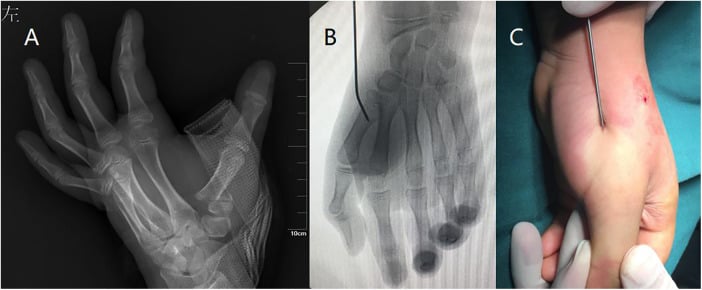
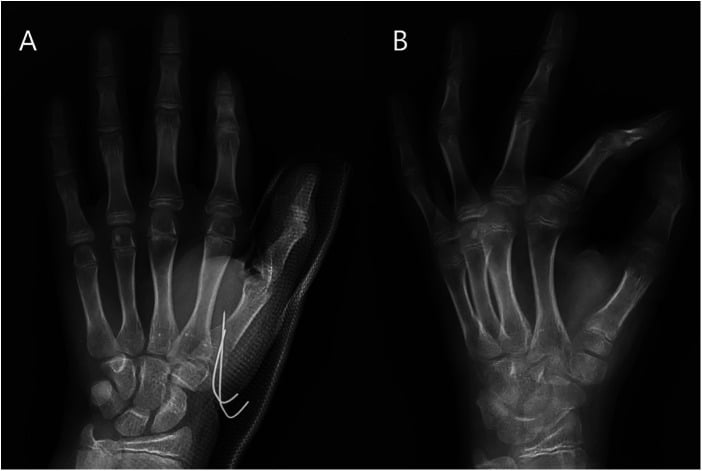
Why the thumb is different. The finger metacarpals have their physes distally; the thumb metacarpal has its physis at the proximal end, the base, exactly where these fractures occur. A thumb base fracture in a child is therefore usually a physeal injury. Describe it in Salter-Harris terms first, then say whether it is intra- or extra-articular, which drives management exactly as it does in adults.
Extra-articular patterns are the most common: a metaphyseal base fracture, or a Salter-Harris II with its metaphyseal Thurston-Holland fragment. They are usually managed by closed reduction and a thumb spica cast. Remodelling is greatest in these patterns, because the physis is adjacent to the deformity and the mobile CMC joint compensates, so considerably more angulation is accepted than in an adult.
Salter-Harris III and IV fractures cross the physis into the CMC joint, the true intra-articular "paediatric Bennett equivalent". Being both intra-articular and physeal, their displacement threatens the joint surface and the growth plate, and remodelling cannot be relied on to correct it. If displaced they need anatomic reduction and stabilisation, usually CRPP, with smooth wires that avoid repeated physeal crossing.
Growth arrest. A malreduced SH-III or SH-IV fracture can form a physeal bar and cause angular deformity or shortening. Warn the family, and follow the child with radiographs for a physeal bar or progressive deformity. The adult principle still holds, extra-articular fractures tolerating angulation and intra-articular fractures demanding congruity, with protection of the physis as the added goal.
Clinical Assessment
Mechanism. An axial load on a flexed thumb, from a punch or a fall onto the thumb, or a direct blow to the thumb base. The energy may be high (a motor vehicle accident) or low (sport, a fall).
History. Ask about hand dominance and occupation, the time since injury, previous thumb injuries, and smoking, which affects healing.
Examination. There is swelling and tenderness at the thumb base and thenar eminence. Assess the neurovascular status, including the radial sensory nerve, and check motion at the IP and MCP joints. The pattern shows in the findings:
- Key Findings
- CMC swelling, tenderness, instability
- Deformity
- Adducted, shortened thumb
- Key Findings
- More swelling, crepitus
- Deformity
- Similar but more severe
- Key Findings
- Shaft tenderness, apex dorsal
- Deformity
- Less CMC involvement
Stress testing. Once analgesia is adequate, assess CMC stability: axial load with radial stress reveals subluxation in an unstable pattern. Compare with the contralateral side.
Red flags. An open injury (a fight bite or laceration), compartment syndrome (rare, after a severe crush), and a combined injury of the scaphoid or distal radius, which should be looked for.
Investigations
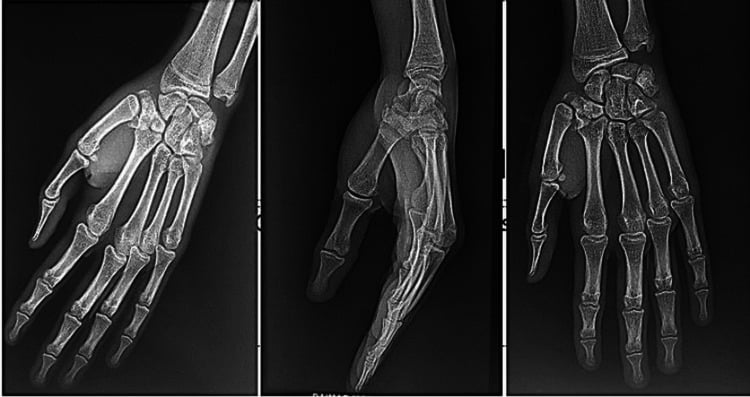
Radiographs. Plain films in every case, assessing articular involvement, displacement and comminution:
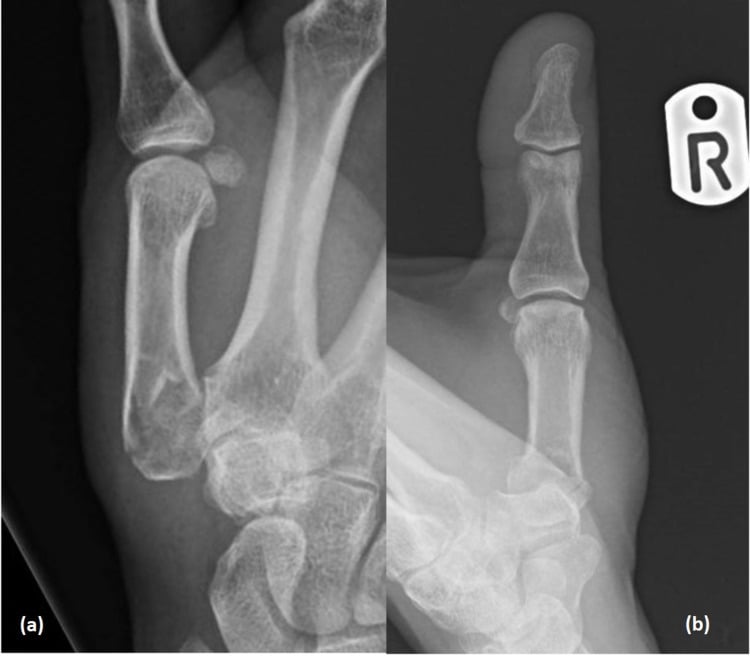
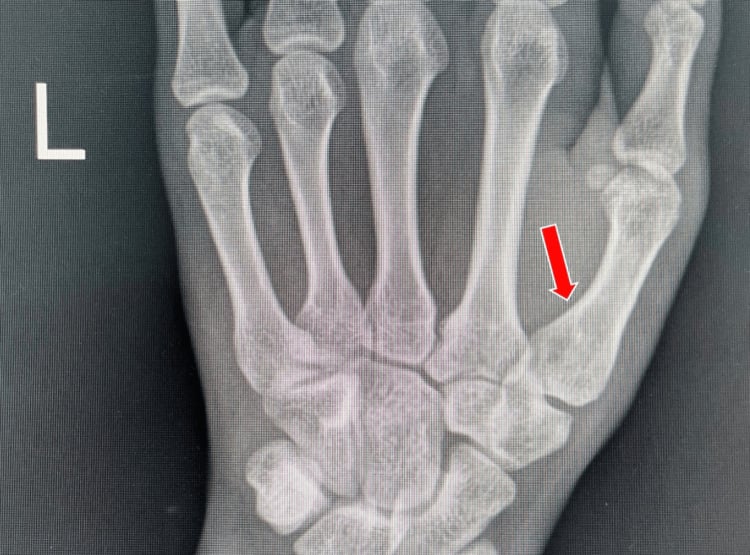
- AP of the thumb, taken as a Robert's view
- Lateral of the thumb
- PA and lateral of the hand
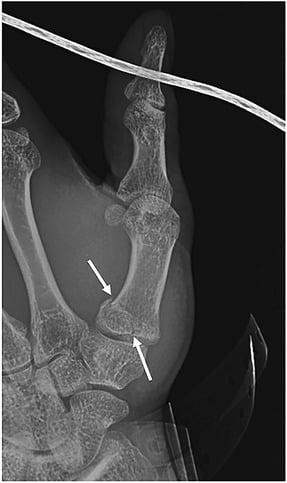
Robert's view is the key view for a suspected intra-articular fracture. The hand is maximally pronated (the forearm hyperpronated, the thumb facing down onto the plate), which gives a true AP of the first CMC joint. It is the best view for the size of the Bennett's volar-ulnar fragment, the articular step-off and radial subluxation.
Bett's view is the true lateral of the first CMC joint, the hand partially pronated and the beam angled. It shows dorsal subluxation, which the AP cannot display. The instability vector in a Bennett's is dorsoradial: the AP shows the radial half and the lateral the dorsal half, so you need both, and a subluxation can be under-called on the AP alone.
After reduction. Read the post-reduction lateral to confirm that the shaft has been brought back down onto the anchored volar fragment, dorsal translation eliminated, and not just aligned on the AP. Loss of reduction in a "healing" Bennett's, after casting or pinning, is most often a recurrence of dorsal shift seen on the true lateral while the AP still looks acceptable. Assess reduction and follow-up on both views, and always compare with the uninjured thumb.
What to measure. Three findings shape the decision:
- Articular step-off
- Volar fragment size - the larger it is, the easier to fix
- CMC subluxation, as percentage translation
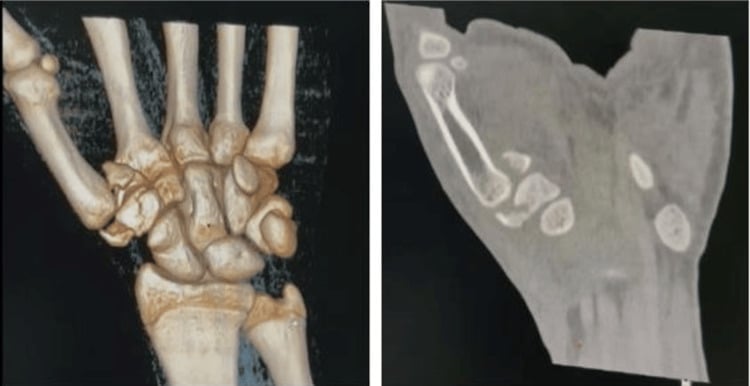
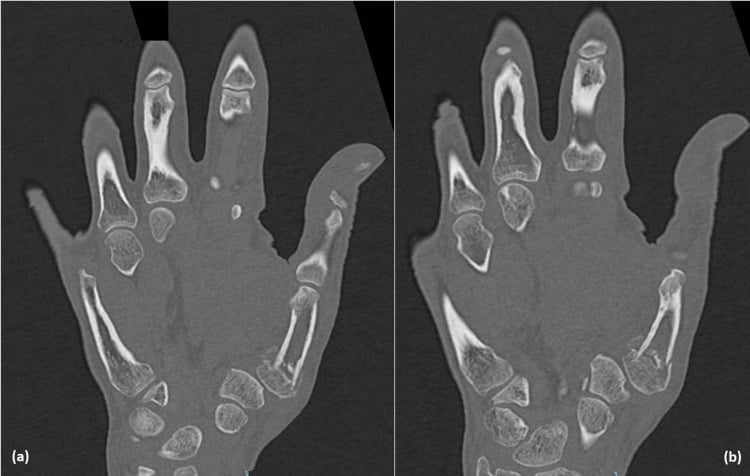
CT resolves fragment size and step-off when the plain films or either dedicated view are equivocal about the joint surface. It is indicated for:
- A Rolando fracture, to size the fragments for the ORIF-versus-external-fixation decision
- Unclear articular involvement on plain films
- Preoperative planning of comminuted patterns, where 3D reconstruction helps
Differential Diagnosis
A swollen, painful thumb base after trauma is not always a Bennett's fracture. These are the differentials to exclude actively.
- Distinguishing Feature
- 2-part intra-articular base #, dorsoradial subluxation
- Key Test / Clue
- Robert's view shows volar-ulnar fragment
- Distinguishing Feature
- Comminuted Y/T intra-articular base #
- Key Test / Clue
- CT shows 3+ fragments
- Distinguishing Feature
- Joint surface intact, apex-dorsal angulation
- Key Test / Clue
- Congruent CMC on Robert's view
- Distinguishing Feature
- Pure ligamentous dislocation, no bony fragment
- Key Test / Clue
- Reduces but re-subluxes; beak ligament tear
- Distinguishing Feature
- Pain at MCP not CMC; valgus laxity
- Key Test / Clue
- Stress MCP in extension and 30 deg flexion
- Distinguishing Feature
- Anatomical snuffbox tenderness
- Key Test / Clue
- Scaphoid views; MRI if occult
- Distinguishing Feature
- Older patient, insidious pain, grind test positive
- Key Test / Clue
- X-ray osteophytes; no acute trauma
Management
The aim. Restore articular congruity, to limit CMC arthritis. Surgery is indicated for:
- Articular step-off greater than 1-2mm
- CMC subluxation that cannot be maintained
- Any unstable pattern
The 1-2mm figure is softer than it sounds; its origins are set out under Controversies.
Extra-articular fractures are generally stable. A stable pattern is treated in a thumb spica cast for 4-6 weeks, accepting up to 20-30° of angulation because CMC mobility compensates, and malunion within that range leaves no functional deficit. An unstable or displaced fracture is pinned (CRPP).
Bennett's fractures are inherently unstable and almost always require reduction and fixation. Closed reduction and percutaneous pinning (CRPP) is standard. ORIF with a lag screw is for the large fragment, when closed reduction is inadequate or the fracture is irreducible.
Rolando fractures are treated by fragment size. Large fragments (greater than 3-5mm) are fixed open with plate and screws, with external fixation as the alternative if they cannot be reconstructed. The comminuted "bag of bones" goes into distraction external fixation (ligamentotaxis), and a severely comminuted fracture in a low-demand patient can be treated conservatively with early motion.
Closed reduction of a Bennett's. The manoeuvre reverses the deformity:
- Traction on the thumb
- Extension of the MCP joint
- Pronation of the thumb
- Abduction, with radial pressure on the base
- Direct pressure on the dorsal base to reduce the subluxation
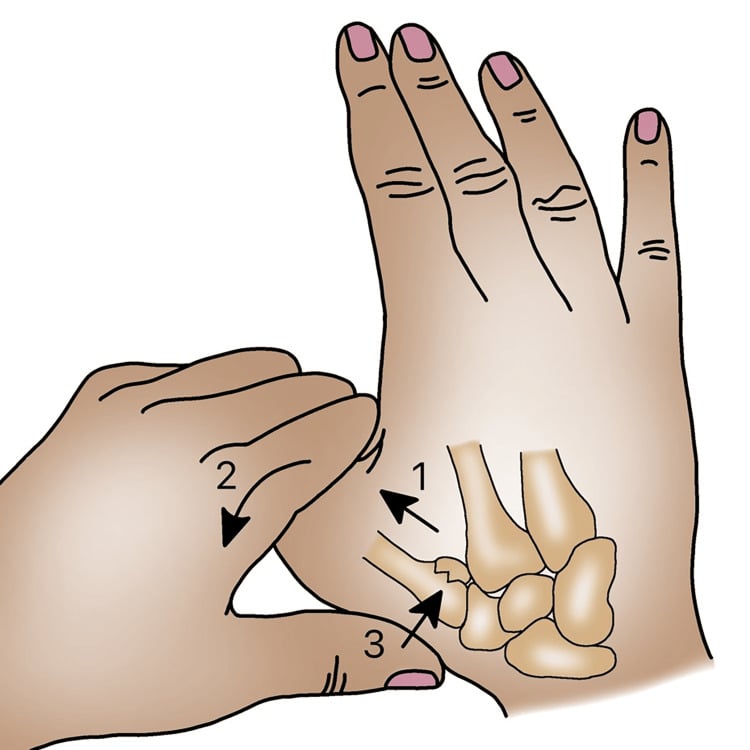
TEPABennett's Reduction Manoeuvre
Hook:TEPA reverses the deformity - Think 'TEPA the thumb back into place'
Surgical Technique
CRPP for Bennett's. Supine with the arm on a hand table, under regional or general anaesthesia, with an image intensifier (a mini C-arm preferred); a tourniquet is optional. Reduce the fracture as described under Management and confirm the reduction on fluoroscopy with AP, lateral and Robert's views.
The wires. Usually two 1.4-1.6mm K-wires, from the first metacarpal to the trapezium (trans-articular, the most common) or to the second metacarpal base, which preserves the CMC joint surface. The pin engages the shaft to bone, not the small volar fragment, so the pins bypass the fragment and CRPP suits any fragment size. Bend and cut the wire ends short, or bury them, and apply a thumb spica splint or cast.
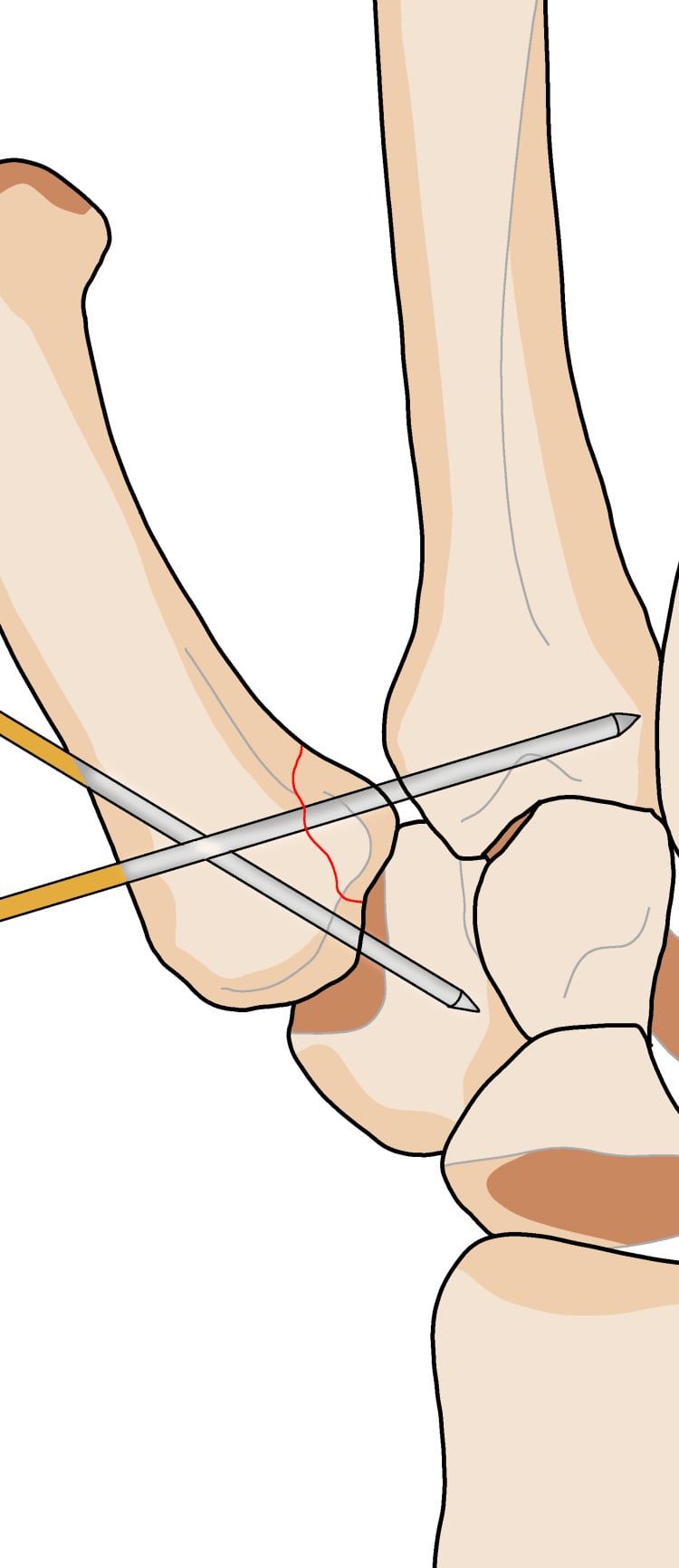
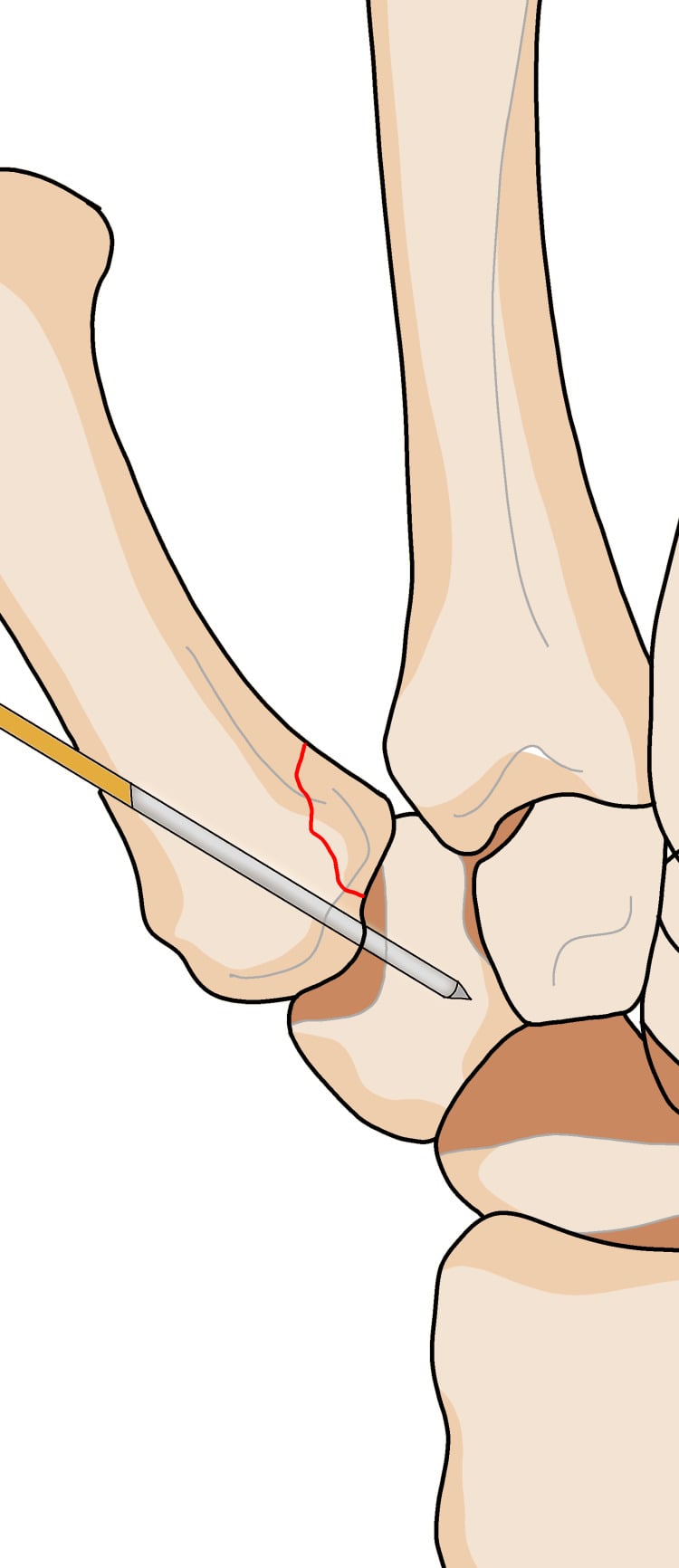
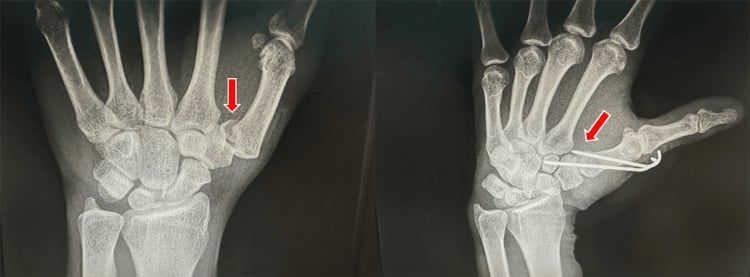
CRPP or ORIF. Three factors decide:
- CRPP
- Adequate closed reduction
- ORIF
- Irreducible or inadequate
- CRPP
- Any size (pins bypass fragment)
- ORIF
- Large enough for a screw
- CRPP
- Maintained with pins
- ORIF
- Needs absolute stability
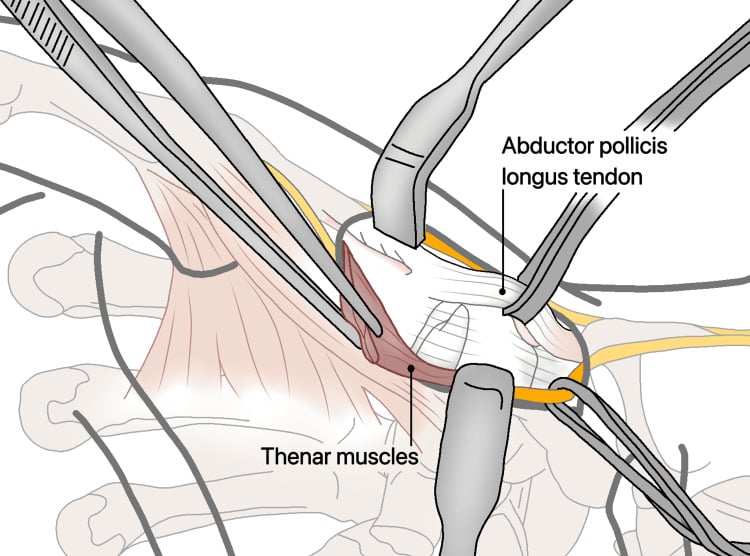
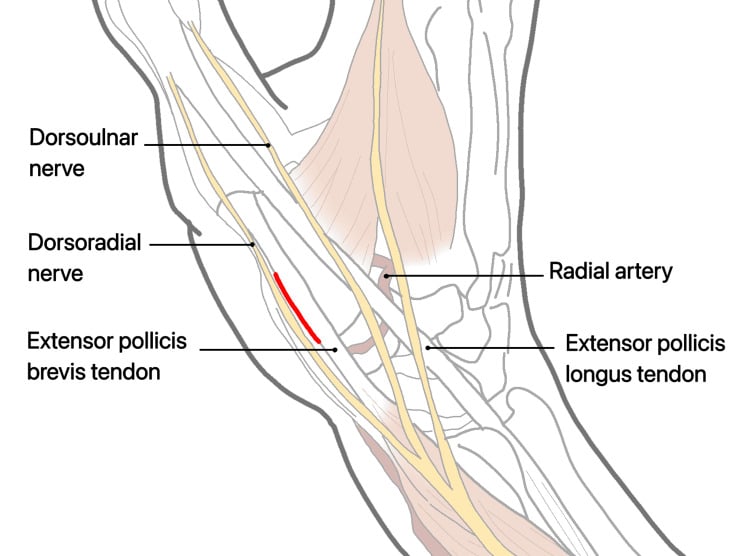
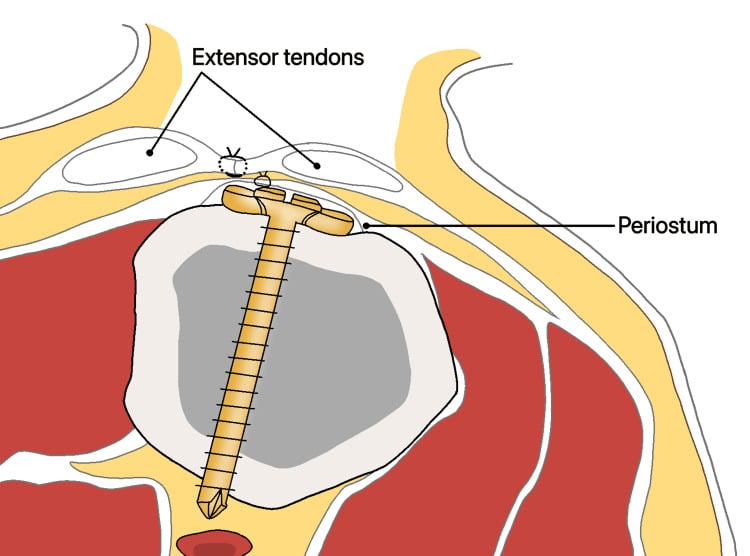
The Wagner approach (ORIF).
- L-shaped radiopalmar incision at the thumb base
- Protect the radial sensory nerve branches
- Identify FCR (ulnar) and the radial artery (radial)
- Expose the CMC joint through a capsulotomy
- Reduce under direct vision
- Fix with 2.0-2.4mm lag screws or a T-plate
External fixation for Rolando. A distraction frame runs from the radius (or the trapezium) to the first metacarpal shaft, and ligamentotaxis reduces and moulds the articular fragments. K-wires supplement it for the larger fragments. The frame is typically retained for around 4 weeks (Marsland, mean 28 days).
Complications
Early.
- Pin site infection, superficial or deep
- Radial sensory nerve injury (numbness, neuroma), from pin placement or the incision; careful technique protects the nerve
- Loss of reduction or fixation failure
- Wound complications
Post-traumatic CMC arthritis is the most significant late complication and the most important long-term one. It is related to articular incongruity, with step-off greater than 2mm the risk factor that anatomic reduction addresses, and to cartilage damage at the time of injury, which is why it may develop even after a perfect reduction. Salvage is by CMC fusion for the heavy worker or trapeziectomy with or without LRTI for the low-demand patient.
Rolando does worse. Comminution means more articular damage and a higher rate of post-traumatic arthritis even with good reduction. Counsel the patient accordingly before surgery.
Other late problems.
- Malunion with dorsal prominence and varus base angulation, from inadequate reduction; check it on intraoperative fluoroscopy
- Stiffness of the CMC and MCP joints, from prolonged immobilisation; early ROM after 4-6 weeks
- Chronic instability
- Complex regional pain syndrome (rare)
Postoperative Care
The protocol.
- 0-6 weeks - thumb spica cast or splint for fracture healing; elevate the hand to reduce swelling; active finger ROM to prevent stiffness; radiographs at 2 and 6 weeks
- 4-6 weeks - K-wire removal as an office procedure under local anaesthesia, after radiographic evidence of healing, then a removable splint
- 6-12 weeks - wean from the splint over 2-4 weeks; active and passive ROM with hand therapy to restore motion; avoid heavy loading initially
- 12+ weeks - progressive strengthening and return to function
Return to work. Sedentary work at 2-4 weeks, in the splint; light manual work at 8-12 weeks; heavy manual work at 12-16 weeks.
Return to sport. Protected sport at 8 weeks and full contact sport at 12-16 weeks. Boxing and combat sports wait a minimum of 4-6 months.
The functional goals are full thumb opposition, pinch strength around 80% of the contralateral side, and a pain-free grip.
Outcomes
- Good/Excellent Outcome
- Greater than 95%
- OA Rate
- Less than 5%
- Good/Excellent Outcome
- 85-90%
- OA Rate
- 10-20% (often asymptomatic)
- Good/Excellent Outcome
- 60-75%
- OA Rate
- 30-50%
Bennett's. With adequate reduction the good-to-excellent rate is the one in the table. Residual step-off correlates with radiographic arthritis (Kjaer-Petersen 1990), but radiographic arthritis does not always correlate with symptoms. In Cannon's 1986 series, mostly conservative and followed for a mean of 9.6 years, symptoms could not be reliably correlated with the accuracy of reduction, and imperfect reduction rarely led to symptomatic arthritis.
The long view. Livesley (1990) reviewed conservatively treated Bennett's fractures at 26 years and found persistent subluxation and marked degenerative change. Conservative management of displaced patterns gives poor long-term joints, and he recommended operative management of displaced injuries.
Rolando. Outcomes are worse than for Bennett's, for the reasons given under Complications. Comminuted patterns have the poorest prognosis, though modern ligamentotaxis series report grip and pinch around 90% of the contralateral side (Houshian 2013, Marsland 2012).
Prognostic factors.
- Articular congruity, the most important
- Fragment size and degree of comminution
- Patient age and functional demand
- Quality and maintenance of reduction
Guidelines, Registries & Global Practice
Global Epidemiology
- Thumb metacarpal base fractures account for roughly a quarter of all metacarpal fractures and around 1-2% of all fractures.
- Bennett's is the most common intra-articular thumb base fracture; Rolando is considerably less common.
- Typical demographic: young to middle-aged men, dominant hand, from axial loading of a flexed thumb (punch, fall, sport).
Side-by-Side Guideline / Reference Comparison
- Emphasis
- Pattern-based decision making
- Practical Recommendation
- Anatomic articular reduction; CRPP for Bennett's, ex-fix or ORIF for Rolando
- Emphasis
- Hand trauma pathways, timely hand-surgery review
- Practical Recommendation
- Reduce and stabilise unstable intra-articular base fractures; restore congruity
- Emphasis
- Restore articular surface and CMC stability
- Practical Recommendation
- Surgery for step-off greater than 1-2mm or maintained subluxation
- Emphasis
- Function over radiographic perfection
- Practical Recommendation
- Aim for congruity but counsel that radiographic OA may be asymptomatic
Registry note: Unlike arthroplasty, isolated thumb base fractures are not tracked by national joint registries (NJR, AJRR, AOANJRR, SHAR). Evidence therefore rests on case series and small comparative studies rather than registry data - reflected in the predominantly Level IV evidence base.
Related pages: this page is the umbrella for the whole Green & O'Brien spectrum, including the extra-articular Type III and the paediatric physeal Type IV that the eponymous pages do not cover. For the two named patterns in full depth go to Bennett's Fractures — the two-part intra-articular fracture-subluxation, its deforming forces and the CRPP technique — and Rolando's Fractures for the comminuted T- or Y-pattern, where anatomic reduction is often impossible and the fixation debate carded above belongs; Thumb CMC Arthritis is the endpoint every decision on this page is trying to prevent, and the page to read before quoting long-term outcome data, because it sets out how weakly radiographic arthritis tracks with symptoms; Trapezium Fractures are the other half of the joint and are missed on standard views for the same reason the Bett's view exists; Metacarpal Fractures for the shaft and neck injuries with which a base fracture is commonly confused on a poorly positioned film; Thumb UCL Injuries and Gamekeeper's Thumb are the main differential for a painful, unstable thumb after a fall — the discriminator being that tenderness sits at the MCP joint rather than the base; Scaphoid Fractures and Distal Radius Fractures for the injuries that accompany the same fall on an outstretched hand and are missed when attention fixes on the thumb; and Physeal Injuries: Salter-Harris for the growth-plate classification behind the paediatric Type IV pattern, and the reason smooth wires and a single reduction attempt are the rule in a child.
Controversies & Areas of Uncertainty
Does anatomic reduction prevent symptomatic arthritis? Kjaer-Petersen (1990) found residual displacement correlated with both symptoms and radiographic arthritis, yet Cannon (1986) found no reliable correlation between reduction accuracy and symptoms. The conflict is largely explained by the two cohorts rather than by the biology. Cannon's series was 22 of 25 treated conservatively with 16 having 1 mm or more of separation, so almost nobody was well reduced and there was little variance in the exposure to correlate against, whereas Kjaer-Petersen's included 26 open reductions and therefore a genuine spread of reduction quality.
Timing matters too. Livesley's 26-year data show this joint degenerates over decades, so a negative result at 9.6 years is a result at the wrong timepoint. What survives from Cannon is the separate and clinically useful observation that radiographic arthritis and pain are not the same thing, and cartilage injury at the moment of impact plausibly matters alongside the residual step-off.
CRPP or ORIF for Bennett's. There is no randomised evidence. Most surgeons reserve ORIF for large, irreducible fragments and use CRPP first-line; the quality of articular reduction matters more than the implant chosen.
Acceptable articular step-off. The widely quoted "1-2mm" threshold is derived from small retrospective series, not high-level evidence. Some authors accept up to 1mm only; others tolerate 2mm.
Trans-articular or extra-articular pinning. Pinning the first metacarpal to the trapezium crosses the joint; pinning to the second metacarpal base spares it. Both are used, with no clear superiority.
Rolando: external fixation or ORIF. Distraction external fixation (ligamentotaxis) gives reproducibly good function for comminuted patterns (Houshian 2013, Marsland 2012), challenging the older default of attempting plate ORIF on small fragments.
The beak ligament dogma. Anatomic work (Bettinger 1999; Ladd/Hagert group) shows the dorsoradial ligament is also a major restraint, so the classic teaching that the AOL is the sole stabiliser is an oversimplification.
MCQ Practice Points
Q: What is a Bennett fracture and what deforming forces cause subluxation?
A: A Bennett fracture is an intra-articular fracture-subluxation at the thumb CMC joint with a volar-ulnar fragment held reduced by the deep anterior oblique (beak) ligament while the metacarpal shaft displaces radially, proximally, and supinates. Deforming forces: abductor pollicis longus (APL) pulls the metacarpal base proximally and radially; adductor pollicis adducts the thumb; the thumb extensors hyperextend the MCP. The beak ligament keeps the volar fragment reduced while the shaft subluxates away from it.
Q: What is the difference between a Bennett fracture and a Rolando fracture?
A: Bennett fracture: two-part intra-articular fracture-subluxation with a single volar-ulnar fragment. Rolando fracture: comminuted intra-articular fracture with a T or Y pattern (minimum three fragments - volar, dorsal, and metacarpal shaft). The Rolando pattern is less common but has a worse prognosis due to comminution and articular damage. Treatment: Bennett's - closed reduction and K-wire fixation, or a single lag screw if the fragment is adequate; Rolando's - plate fixation for large fragments, or distraction external fixation with ligamentotaxis for severe comminution.
Q: What are the indications for surgical fixation of thumb metacarpal base fractures?
A: Surgical indications: 1) articular step-off greater than 1-2mm after closed reduction; 2) CMC subluxation that cannot be maintained; 3) any displaced Bennett fracture (inherently unstable); 4) Rolando fracture with reducible fragments; 5) unstable extra-articular fractures. The goals are anatomic articular reduction and a stable CMC joint. Options include closed reduction and percutaneous K-wires, ORIF with a lag screw (Bennett's with an adequate fragment), or plate / external fixation (Rolando or comminuted patterns).
Q: How do you differentiate an extra-articular thumb metacarpal base fracture from a Bennett fracture clinically and radiographically?
A: An extra-articular fracture (Winterstein): the fracture line does not involve the CMC joint surface, the joint remains congruent, and deformity is apex-dorsal angulation at the fracture site. A Bennett fracture: the fracture line enters the CMC joint, an intra-articular fragment is visible on the Robert's view (true AP of the thumb with the hand hyperpronated), and the CMC joint shows subluxation with widening. Extra-articular fractures tolerate more angulation (20-30 degrees) than intra-articular fractures because CMC mobility compensates.
Q: What is the significance of the anterior oblique ligament (AOL) in Bennett fractures?
A: The deep anterior oblique (beak) ligament runs from the volar-ulnar beak of the metacarpal base to the trapezium and is a key stabiliser of the thumb CMC joint. In a Bennett fracture the volar-ulnar fragment remains attached to the beak ligament, keeping it reduced to the trapezium while the metacarpal shaft subluxates - producing the classic fracture-subluxation. Surgical reduction must bring the shaft back to the volar fragment (and thus to the trapezium). Anatomic studies (Bettinger 1999) show the dorsoradial ligament is also a substantial restraint, so the beak ligament is not the only stabiliser.
Exam Viva Scenarios
Practise clinical reasoning and management decisions out loud
“A 25-year-old boxer presents with pain at the base of his right thumb. X-ray shows a 2-part intra-articular fracture with a small volar-ulnar fragment. The shaft is subluxed dorsally. How do you manage this?”
“A 35-year-old carpenter presents with a thumb base injury. X-rays show a comminuted intra-articular fracture of the first metacarpal base with a Y-shaped pattern - there are volar, dorsal, and shaft fragments visible. CT confirms three main fragments with the volar and dorsal pieces each approximately 5mm in size. He is concerned about returning to carpentry work which requires strong pinch grip. What are your treatment options and what would you recommend?”
“A 42-year-old presents with chronic thumb base pain 5 years after a Bennett's fracture that was treated with closed reduction and casting. He was told at the time surgery was not needed. X-rays show a well-healed fracture with 3mm articular step-off at the CMC joint and moderate osteoarthritis with joint space narrowing and osteophytes. He has pain with pinch and gripping affecting his work as a mechanic. What would you discuss regarding management?”
Classification
- Bennett's: 2-part intra-articular (oblique)
- Rolando: 3-part or comminuted intra-articular (Y/T)
- Extra-articular: transverse/oblique shaft (Winterstein)
Deforming Forces (Bennett's)
- Shaft: proximally/radially (APL), into adduction (adductor pollicis)
- Volar fragment: stays reduced (deep anterior oblique / beak ligament)
Treatment Thresholds
- Articular step-off over 1-2mm: surgery
- Bennett's: almost always CRPP or ORIF
- Rolando: distraction ex-fix if comminuted, ORIF if large fragments
Evidence Base
The evidence base for thumb base fractures is predominantly Level IV (case series and retrospective reviews); there are no randomised trials comparing CRPP with ORIF. The cards below summarise the landmark anatomical, long-term outcome, and reconstructive studies.
Original Description of Bennett's Fracture
- First description of a 'fracture of the metacarpal bone of the thumb'
- Described the oblique fracture line entering the CMC joint
- Recognised the characteristic subluxation of the shaft
- Distinguished it from extra-articular base fractures
Anatomy of the Trapeziometacarpal Stabilising Ligaments
- Cadaveric study identifying 16 ligaments stabilising the trapezium and TMC joint
- The deep anterior oblique (beak) ligament acts as a pivot for the metacarpal during palmar abduction and pronation
- The dorsoradial and deep anterior oblique ligaments play a substantial role in TMC stability
- Trapezio-2nd/3rd metacarpal ligaments act as tension bands resisting cantilever bending
Quality of Reduction and Outcome in Bennett's Fracture
- 41 Bennett's fractures treated by closed reduction, percutaneous K-wire, or open reduction
- Median 7.3-year follow-up of reviewed patients
- 15 of 18 with excellent reduction were symptom-free vs only 6 of 13 with residual displacement
- Radiographic arthritis in 3 of 14 anatomically reduced vs 7 of 10 with residual displacement
Long-term Outcome of Conservatively Treated Bennett's
- 25 Bennett's fractures reviewed at mean 9.6 years (5-16 years); 22 treated conservatively
- Only 2 patients had significant symptoms despite frequent loss of TMC motion
- Symptoms could NOT be reliably correlated with the accuracy of reduction
- Little evidence that imperfect reduction led to symptomatic arthritis long-term
26-year Follow-up of Conservatively Managed Bennett's
- 17 conservatively treated Bennett's fracture-dislocations reviewed at a mean of 26 years
- Only SEVEN of the 17 had symptoms - ten were asymptomatic despite the radiographic changes
- All had decreased range of movement and grip strength; 12 had a characteristic deformity
- Radiographs showed persistent CMC subluxation and marked degenerative change
- Authors recommend that this injury should NOT be managed conservatively
Distraction External Fixation for Rolando Fractures
- 16 comminuted Rolando fractures treated by capsuloligamentotaxis with a Pennig mini external fixator
- Supplementary K-wires used to maintain reduction; mean follow-up 20 months
- Excellent union in all cases; all but 2 patients pain-free at final review
- Mean grip 96% and pinch 93% of the unaffected thumb
Spanning External Fixation for the Rolando Fracture
- 8 Rolando fractures treated with a static two-pin trapeziometacarpal-spanning external fixator (ligamentotaxis)
- Mean time to frame removal 28 days
- Mean QuickDASH 7.95 at mean 2.7-year follow-up; all returned to previous activity
- Three superficial pin-site infections, no significant joint incongruity or malunion at 4 months