Gold Standard for OA | Intact Cuff Required | Over 90% 10-Year Survival
- Requires INTACT rotator cuff (contraindicated if torn)
- Walch B2 (biconcave) is the most common operative challenge
- Subscapularis management is critical for success
- Axillary nerve is at risk during inferior capsular release
- Glenoid loosening is the main mode of long-term failure
- “External Rotation lag = Cuff tear (Contraindication for aTSA)
- “Pseudoparalysis vs Stiffness differentiation is key
- “No RCT shows a functional advantage for any subscapularis takedown - choose the one you do well
- “Critical Shoulder Angle under 30 degrees associated with OA
Overview and Epidemiology
Anatomic total shoulder arthroplasty replaces the damaged humeral head with a metal sphere and the glenoid with a polyethylene dish, strictly replicating the native anatomy. It works only because a functioning rotator cuff compresses the head into the glenoid ("concavity compression") and generates rotation; the whole operation rests on the cuff.
Trends. Anatomic TSA volume is increasing globally, but reverse TSA volume has grown exponentially and now surpasses it in many registries, including Australia and the USA. Two things drive the shift: the expanded indications for a reverse (cuff tear arthropathy, fractures and revision), and the desire to avoid the late glenoid loosening associated with anatomic implants.
Who. Typically an active patient aged 60-75 with primary osteoarthritis.
The young patient. Under 50, glenoid components have high failure rates from polyethylene wear and loosening, a significant challenge because of concerns about implant longevity, specifically the "polyethylene problem". Ream and run (a hemiarthroplasty with concentric glenoid reaming) is an option for the high-demand patient willing to undergo extended rehabilitation. Reverse TSA is generally avoided in this group because of its finite lifespan and the difficulty of salvage.
Causes of glenohumeral arthritis.
- Primary osteoarthritis - genetic and age-related
- Post-traumatic arthritis after previous trauma
- Capsulorrhaphy arthropathy after instability surgery - over-tightening leads to posterior wear
- Avascular necrosis - steroids, alcohol, sickle cell disease
- Inflammatory arthritis - rheumatoid
- Haemochromatosis - "iron fist, iron shoulder"
How primary OA destroys the joint. The sequence of joint destruction is predictable:
- Cartilage loss - early, often starting centrally or posteriorly.
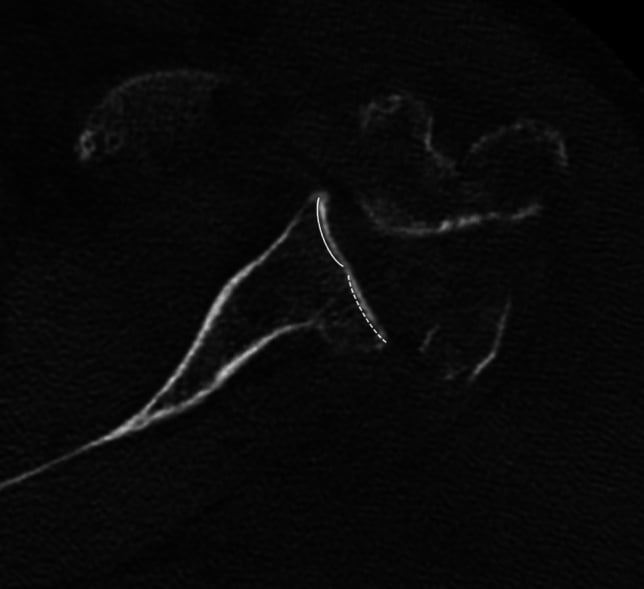
- Posterior wear - the hallmark of shoulder OA: posterior glenoid wear (retroversion) with posterior humeral subluxation. This eccentric loading creates the "rocking horse" phenomenon: the humeral head acts as a fulcrum and, if the wear is not corrected, levers the glenoid component out of the bone.
- Soft-tissue contracture - the subscapularis and anterior capsule become contracted and scarred, drastically limiting external rotation. The posterior capsule is stretched by chronic subluxation but is rarely the primary problem.
- Osteophytes - large osteophytes form on the inferior humeral head (the "goat's beard") and can encroach on the axillary nerve space.
Anatomy and Biomechanics
Glenoid orientation. The glenoid is typically retroverted 2-8° relative to the axis of the scapular body, while the scapula itself is anteverted 30° on the thorax. Superior inclination is typically 0-5°.
Critical shoulder angle (CSA). The angle between the glenoid inclination and the lateral edge of the acromion. A CSA under 30° is associated with osteoarthritis: the deltoid force vector compresses the joint and wears the cartilage. A CSA over 35° is associated with cuff tears: the deltoid vector shears superiorly and pulls the head into the supraspinatus. These are associations found in a case-control sample, not diagnostic thresholds; read the Evidence Base limitation before quoting a percentage from them.
Concavity compression. The shoulder is inherently unstable, a golf ball on a tee, and stability after an anatomic TSA is dynamic. The rotator cuff pulls the humeral head into the glenoid concavity and creates a stable fulcrum, and two force couples keep the head centred:
- Coronal plane - deltoid (upward force) against supraspinatus and infraspinatus (compressive, downward force)
- Axial plane - subscapularis (anterior) against infraspinatus and teres minor (posterior)
Why the cuff is non-negotiable. Any deficiency in the cuff leads to eccentric (edge) loading of the glenoid component, the rocking-horse phenomenon and early loosening. That is why an intact cuff is a precondition for an anatomic replacement.
The three biomechanical goals.
- Restore version. Correct retroversion to neutral or slight retroversion (within 10°). This centres the humeral head on the glenoid, prevents eccentric loading and distributes force evenly across the cement interface.
- Restore head height. Reproduce the relationship between the tuberosities and the articular surface, which typically sits 8mm above the greater tuberosity. Restoring the native centre of rotation is vital for cuff mechanics: a head placed too high over-tensions the cuff, one placed too low leaves it lax and the joint unstable.
- Restore offset. Lateralisation is critical for deltoid tensioning and for the length-tension relationship of the cuff; loss of global offset leads to weakness and impingement.
Classification Systems
Walch described glenoid morphology in primary osteoarthritis on CT, and the type is what pre-operative planning and implant selection turn on.
- Morphology
- Concentric wear
- Pathology
- A1: Minor erosion A2: Major erosion (Protrusio)
- Treatment Strategy
- Standard Glenoid
- Morphology
- Posterior wear
- Pathology
- B1: Posterior narrowing B2: Biconcave (Paleo/Neo)
- Treatment Strategy
- Correction Required (Augment/Ream)
- Morphology
- Retroversion over 25°
- Pathology
- Developmental dysplasia
- Treatment Strategy
- Complex (Bone Graft vs Reverse)
Clinical Assessment
History. The pain is deep, aching and toothache-like, worse at night. Function suffers in the activities of daily living, especially hygiene, reaching behind the back and toileting: women complain about their bras, men about their wallets. Stiffness is progressive, with loss of external rotation and abduction ("screwing in a lightbulb" is difficult), and crepitus is an audible or palpable grinding ("ratchet-like").
Examination. Look for supraspinatus and infraspinatus atrophy, which raises the question of a chronic cuff tear, and for an anterior scar. Feel for posterior joint-line tenderness and posterior subluxation of the humeral head. External rotation is blocked by capsular restriction, and the patient compensates with scapulothoracic movement (shrugging).
Testing the cuff is mandatory. An external rotation lag sign means a cuff tear, which contraindicates an anatomic TSA and points to a reverse. Test the subscapularis with the belly press and lift-off tests, because its failure after surgery results in anterior escape, and test sensation over the regimental badge area for the axillary nerve.
Differentiate Pseudoparalysis (Cuff failure = Cannot lift arm actively but Full PASSIVE ROM) from Stiffness (OA = Cannot lift arm actively AND Limited PASSIVE ROM).
Stiff shoulder = Anatomic TSA. Pseudoparalytic shoulder = Reverse TSA.
- Key Distinguishing Feature
- Posterior wear, stiff, full passive ROM lost
- Implant Implication
- Anatomic TSA
- Key Distinguishing Feature
- Superior migration, pseudoparalysis, acetabularisation
- Implant Implication
- Reverse TSA
- Key Distinguishing Feature
- Symmetric erosion, medial wall erosion, soft bone
- Implant Implication
- aTSA if cuff intact; often reverse
- Key Distinguishing Feature
- Preserved glenoid early, crescent sign, head collapse
- Implant Implication
- Hemiarthroplasty or aTSA
- Key Distinguishing Feature
- Pain at rest, raised inflammatory markers, C. acnes
- Implant Implication
- Address infection first
- Key Distinguishing Feature
- Global passive ROM loss, normal joint space
- Implant Implication
- Non-operative; not arthroplasty
Imaging and Investigations
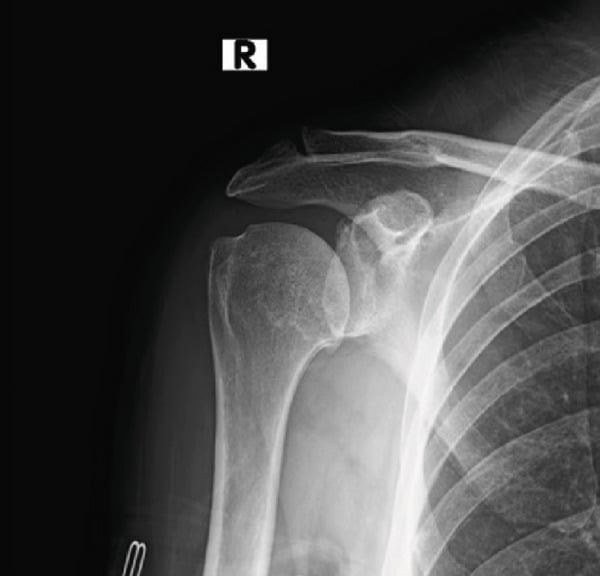
Radiographs. A trauma series of three views, of which the axillary lateral is the one that matters most:
- AP (Grashey) - joint-space loss, subchondral sclerosis, and osteophytes, including the goat's beard on the inferior humerus
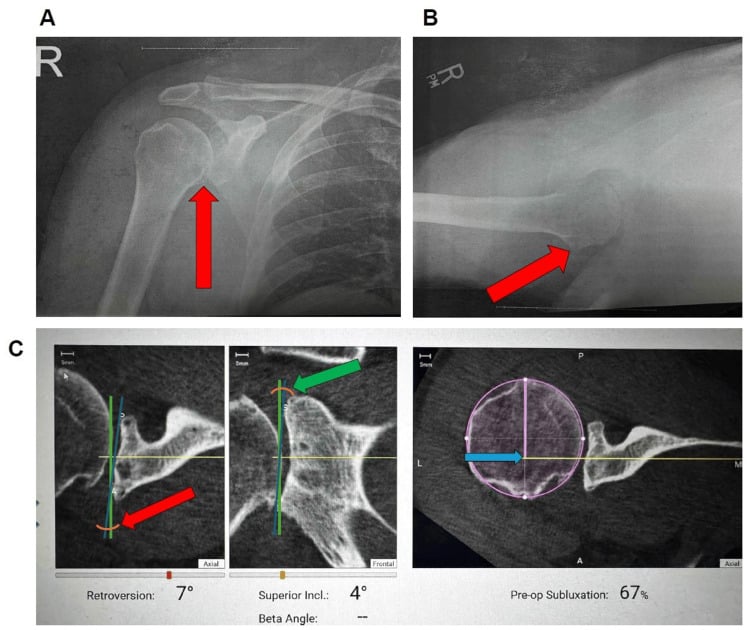
- Axillary lateral - the critical view: posterior subluxation (as a percentage), version, and biconcavity
- Outlet - acromial shape and signs of cuff disease, such as a high-riding head
CT is mandatory. It quantifies retroversion (the Friedman method), measured against the axis of the scapular body, and shows the depth of the glenoid vault, which decides whether the pegs will penetrate. It is also the basis of planning: patient-specific instrumentation (PSI) guides need it to execute the version correction accurately, and three-dimensional planning determines the correction, the component size, and whether bone-preserving eccentric reaming or augmentation is feasible.
MRI is selective. It is indicated when cuff strength is equivocal on examination or there is a history of a tear. It shows fatty infiltration, where Goutallier over 2 contraindicates an anatomic TSA, and tendon retraction (Patte).
Non-Operative Management
Medication. NSAIDs are first line for pain and inflammation. Use paracetamol and codeine sparingly and avoid opioids.
Injections. A corticosteroid injection gives short-term relief, but it increases the risk of infection if it is given under 3 months before arthroplasty. Hyaluronic acid has variable evidence and less risk.
Therapy. Stretching maintains range and prevents a secondary adhesive capsulitis, and strengthening the scapular stabilisers and cuff maintains centring of the head. Advise against heavy overhead loading and impact activities.
Treatment Options
- Indication
- Young (under 50), mechanical symptoms
- Pros
- Low risk, buys time
- Cons
- Unpredictable pain relief
- Indication
- Young labourer, insufficient glenoid bone
- Pros
- No glenoid loosening risk
- Cons
- Glenoid erosion pain
- Indication
- Classic OA, Intact cuff
- Pros
- Best ROM, Normal anatomy
- Cons
- Glenoid loosening risk
- Indication
- Cuff tear arthropathy, Elderly
- Pros
- Reliable with no cuff
- Cons
- Limited rotation, contour
- Anatomic TSA
- OA with Intact Rotator Cuff
- Reverse TSA
- Cuff Tear Arthropathy, Fracture
- Key Pearl
- Cuff status determines choice
- Anatomic TSA
- Restores normal anatomy
- Reverse TSA
- Medialises centre of rotation
- Key Pearl
- Anatomic needs cuff; Reverse needs deltoid
- Anatomic TSA
- Better ER/IR (if cuff healthy)
- Reverse TSA
- Limited IR, Good Elevation
- Key Pearl
- Anatomic feels more 'natural'
- Anatomic TSA
- Glenoid loosening (late)
- Reverse TSA
- Notching, Stress fracture (early)
- Key Pearl
- Loosening main fail mode in aTSA
Management Algorithm
Contraindications. Beyond a torn cuff, an anatomic replacement is not offered for:
- Paralysis - deltoid or cuff dysfunction, as after an axillary nerve injury
- Infection - active or recent sepsis
- Neuropathic (Charcot) joint - rapid destruction
Concentric wear (Walch A). A standard anatomic TSA with a standard all-polyethylene pegged glenoid component, reamed to expose subchondral bone. Excellent outcomes are expected.
Eccentric wear (B1/B2). The aim is to centre the head and so prevent early loosening:
- Mild (under 10°) - eccentric reaming, taking down the high (paleoglenoid) side
- Severe (over 10°) - an augmented (wedge) glenoid, or PSI
Avoid correcting more than 10 degrees of retroversion with eccentric reaming alone. This removes excessive anterior bone stock, compromising peg fixation. ("Robbing Peter to pay Paul"). For over 10-15 degrees of correction, use augmented glenoids (Wedge) or bone graft to preserve bone stock.
Excessive reaming also sacrifices subchondral bone and medialises the joint line.
Surgical Technique
The deltopectoral approach is the workhorse for TSA. It is extensile and internervous, and it preserves the deltoid origin, which is crucial for rehabilitation.
Structures at risk.
- Musculocutaneous nerve - medial to the conjoined tendon, entering coracobrachialis 5-8cm distal to the coracoid
- Axillary nerve - at the inferior border of subscapularis
- Cephalic vein - in the deltopectoral groove
Exposure Steps
Incise from the coracoid tip to the deltoid insertion (about 10-15cm) and find the cephalic vein in the deltopectoral groove. Retract it laterally with the deltoid, which preserves venous drainage from the arm because most of its branches come from the deltoid, and ligate the small feeding branches (the "Delta" vein).
Incise the clavipectoral fascia lateral to the conjoined tendon (coracobrachialis and short head of biceps) and retract the tendon medially. Do not retract heavily here, because of the musculocutaneous nerve; use a self-retainer (Kolbel).
Externally rotate the arm, identify the "Three Sisters" (anterior circumflex humeral vessels) at the inferior border, and ligate or cauterise them. Then take down the subscapularis by one of three techniques:
- Tenotomy 1cm medial to the insertion - easier to repair later
- Peel - sharply off the lesser tuberosity
- Lesser tuberosity osteotomy (LTO) - a bone-to-bone repair whose healing is assessed radiographically
Release the capsule inferiorly and anteriorly. Protect the axillary nerve by palpating it in the quadrangular space before releasing; the "tug test" ensures safety. Release the inferior capsule off the humeral neck, not yet the glenoid side, to mobilise the humerus.
Use of nerve monitoring is controversial. It does not prevent injury but may alert the surgeon. The "Tug Test" (palpating the nerve) remains the most reliable method of confirmation.
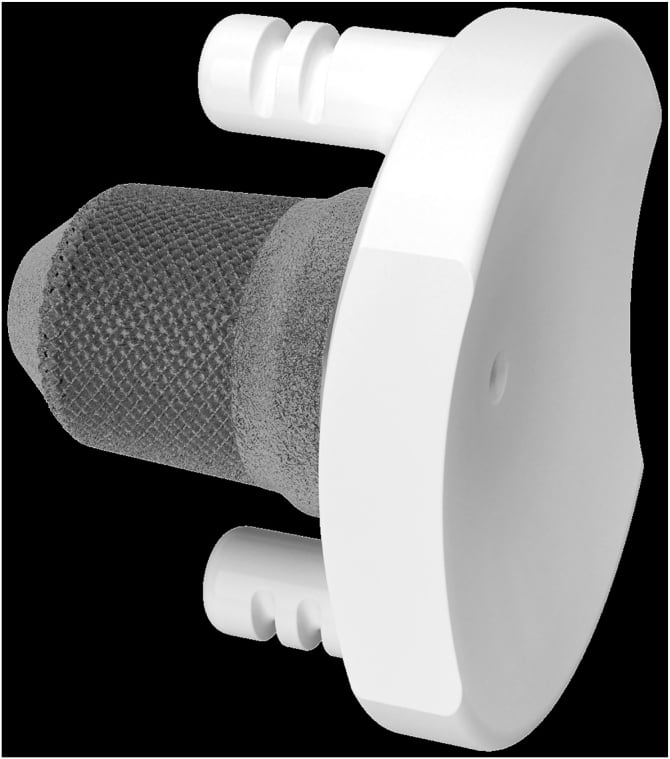
Navigation and PSI. In complex B2/B3 glenoids standard instrumentation is inaccurate, often under-correcting retroversion.
- Patient-specific instrumentation - pre-operative CT planning produces a 3D mould that sits on the glenoid face or coracoid and guides the central pin. Evidence suggests it corrects version more accurately than standard guides; the guides are typically printed in sterile nylon and allow pin placement within 2-3° of the plan, which is particularly useful in the B2 glenoid, where the native landmarks are eroded.
- Navigation and robotics - real-time feedback on version and inclination, useful for trainees and difficult morphology. Optical and accelerometer-based systems are available, though cost remains a barrier to widespread adoption in the public system. Navigation assists control of version, inclination and the starting point, but it does not replace circumferential exposure, stable seating and subscapularis repair.
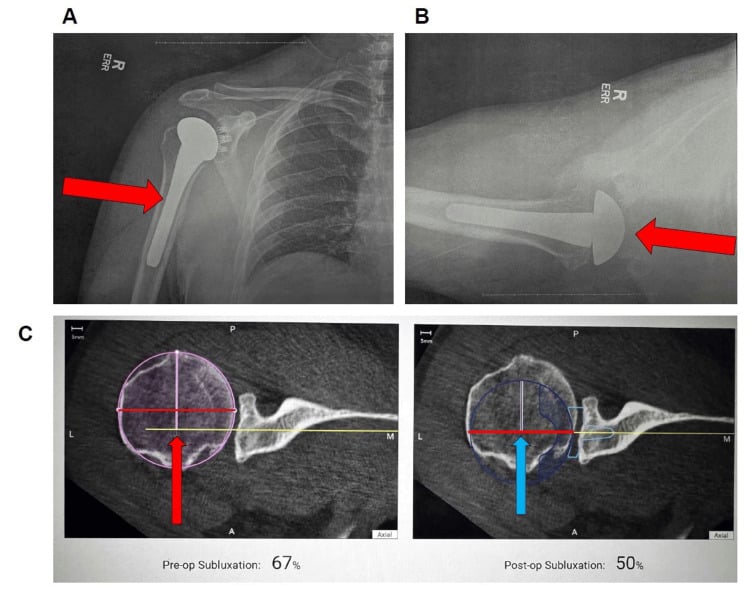
Overstuffing and Restoration of Native Humeral Geometry
"Anatomic" is the operative principle: the reconstruction must reproduce the native centre of rotation, head height, radius of curvature and global offset. Overstuffing is one of the most common technical errors, and a frequent cause of a stiff, painful or failed anatomic replacement.
What it is. An increase in effective soft-tissue tension and joint volume beyond the native anatomy, because the composite humeral construct is too big or sits too proud. The usual causes:
- A humeral head that is too thick or too large in diameter, over-tensioning the cuff and capsule
- Inferior goat's-beard osteophytes left in place before templating, so the anatomic neck is misjudged and an oversized head chosen
- A neck cut that is too low or conservative, or a head seated too proud, lateralising and elevating the centre of rotation
- Global (medial-to-lateral) offset over-restored, lengthening the deltoid and cuff moment arms excessively
What it costs.
- Loss of motion, particularly external rotation and elevation, because an over-tensioned subscapularis and posterior cuff cannot excurse
- Increased tension on the subscapularis repair, raising the risk of early repair failure and anterior escape
- Eccentric rim and edge loading of the glenoid, accelerating polyethylene wear and the rocking-horse mechanism that drives loosening
- Persistent pain and stiffness, and a shoulder that never feels "natural" despite a technically seated implant
Under-stuffing, a head that is too small or a neck cut too high, is the opposite error: it leaves the cuff lax and the joint unstable, with laxity and translation. The goal is a balanced, tension-neutral reconstruction.
Avoiding it.
- Remove the osteophytes first, then define the true anatomic neck and template head diameter and thickness to the native geometry
- Match the native head in coverage and radius of curvature, and resist the temptation to up-size for "stability"
- Restore, do not exceed, offset and head height, so that the centre of rotation is reproduced rather than lateralised
- Check passive external rotation on the table - the reconstructed shoulder should reach roughly neutral to more than 30° with the repaired subscapularis under acceptable tension; one that will not rotate past neutral suggests overstuffing
- Assess the shuck - a balanced head allows about 50% posterior translation that reduces spontaneously
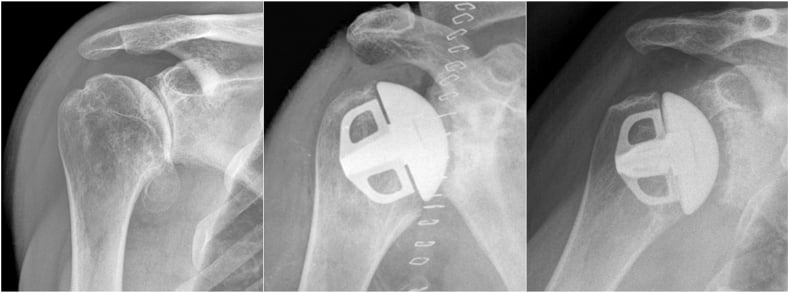
Complications
- Timing
- Early (under 3mo)
- Cause
- Poor repair/compliance
- Management
- Repair (under 3mo) or Pec Transfer/Reverse
- Timing
- Late (over 5-10y)
- Cause
- Eccentric load/Rocking Horse
- Management
- Revision to Reverse TSA
- Timing
- Acute/Late
- Cause
- C. acnes (slow growing)
- Management
- Debridement or 2-stage Revision
- Timing
- Early
- Cause
- Malversion/Soft tissue imbalance
- Management
- Revision usually required
- Timing
- Intra-op/Late
- Cause
- Reaming/Trauma
- Management
- Cerclage/Plate/Revision Stem
Instability and subscapularis failure. A head that escapes anteriorly should trigger assessment of subscapularis failure, component version, overstuffing and soft-tissue balance. Recurrent instability may require repair or conversion to a reverse arthroplasty, which restores constraint but carries the morbidity of revision glenoid and humeral work.
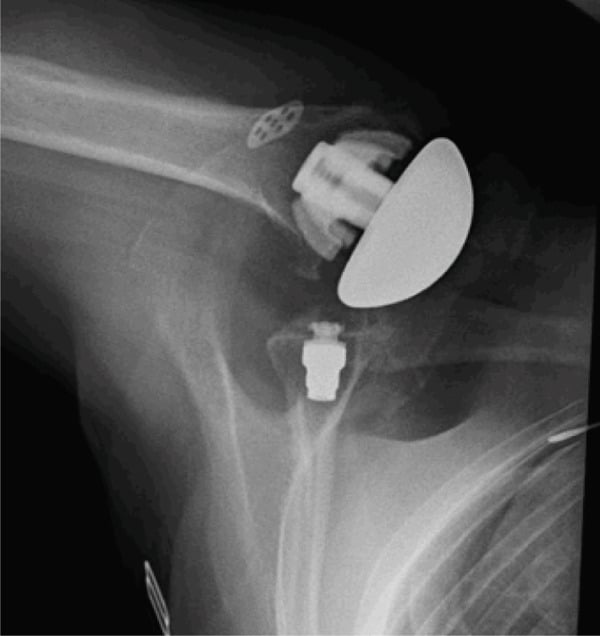
Cutibacterium acnes is a slow-growing anaerobe in shoulder skin flora. Causes indolent infections (pain, loosening) without systemic signs (normal WCC/CRP). Require anaerobic culture holding for 14 days. Prophylaxis includes Benzoyl Peroxide pre-op wash.
Diagnosing infection. Shoulder periprosthetic joint infection is notoriously difficult to diagnose because C. acnes is of such low virulence.
- Serum markers - CRP and ESR are often normal
- Aspiration - a high rate of dry taps and false negatives
- Intra-operative fluid and tissue cultures - the gold standard
- Sonication of the explant - increases sensitivity by disrupting the biofilm
Nerve injury. A feared complication.
- Axillary nerve - 1-2%; traction injury or direct laceration during the inferior release. Monitor deltoid function.
- Musculocutaneous nerve - retractor injury, presenting as biceps weakness. Do not place retractors deep to the conjoined tendon.
- Suprascapular nerve - injured during posterior release or retractor placement.
Secondary cuff failure. The head migrates superiorly and rocking-horse loosening of the glenoid follows. This is the main reason for avoiding an anatomic TSA when cuff status is questionable: once the cuff fails, the mechanics of the joint are destroyed and conversion to a reverse TSA is required.
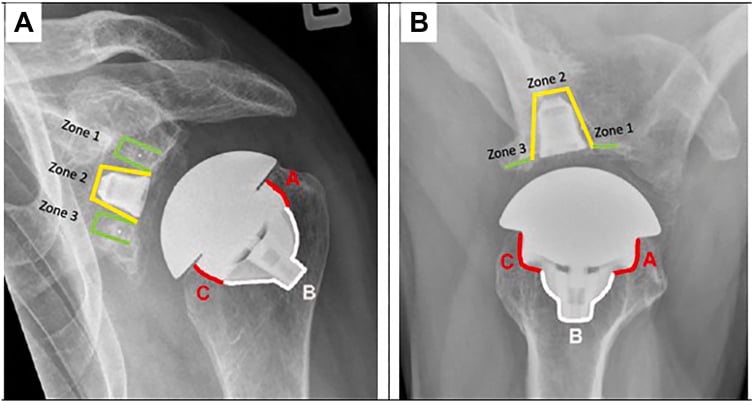
Grading Glenoid Radiolucency (Lazarus / Franklin)
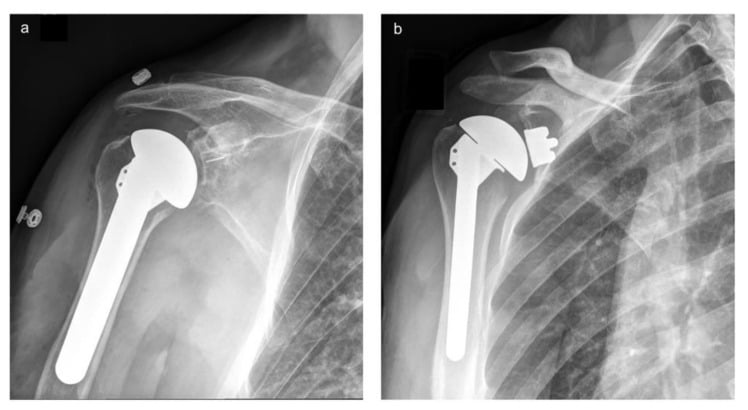
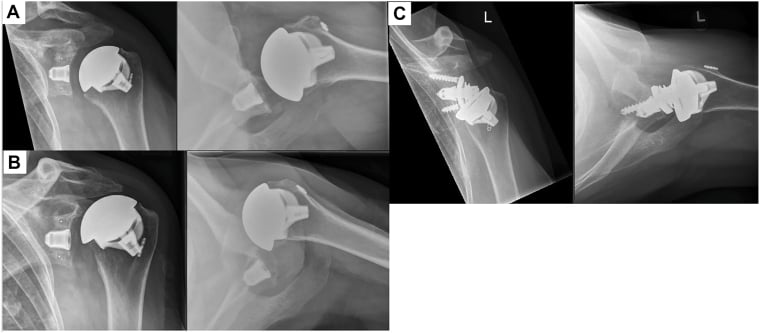
Aseptic glenoid loosening is the leading long-term failure mode of anatomic TSA, so expect to interpret and grade peri-glenoid radiolucent lines.
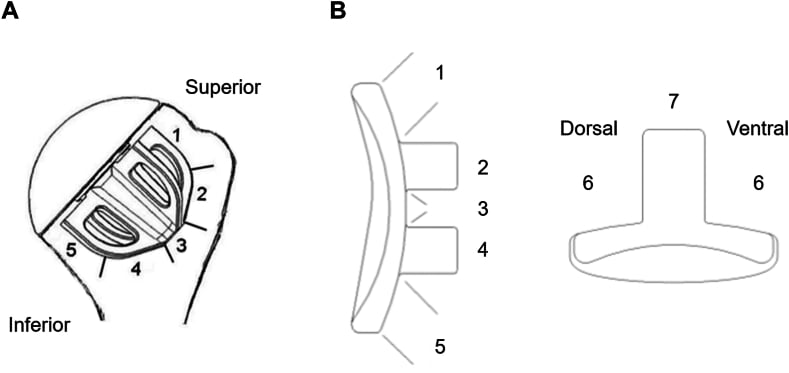
The scale. Franklin originally described a system for radiolucency around keeled glenoid components, and Lazarus and colleagues modified it for pegged components (J Bone Joint Surg Am, 2002). Both use an ordinal 0-to-5 scale in which higher grades mean a greater extent and completeness of lucency around the pegs or keel:
- Grade 0 - no radiolucency
- Grades 1-2 - incomplete lucency around one or more pegs (thin, partial)
- Grades 3-4 - complete lucency around one, then progressively all, of the pegs or keel
- Grade 5 - gross loosening: component tilt, shift, subsidence or migration
Radiolucent lines are extremely common and often benign. In the Lazarus series only 20 of 328 glenoids showed no radiolucency at all on the immediate postoperative film, so thin, incomplete lines are near-universal on the first postoperative film, and an isolated one is expected rather than alarming.
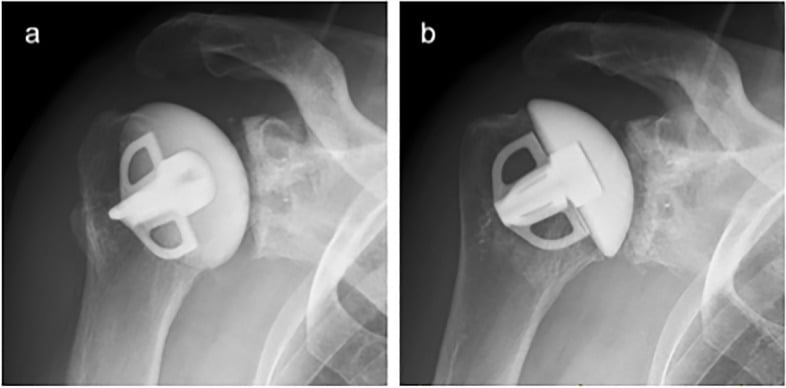
Progression matters more than a single film. Stable fixation is told from evolving loosening on serial radiographs (matched AP and axillary), looking for widening lucency, new complete peri-peg lucency, osteolysis, or a change in component position. Humeral rotation alters how much the head overlaps the glenoid component and can reveal or conceal a line, so a proper Grashey view plus a complementary rotation improves the grading and avoids false reassurance.
Correlate with symptoms. A low-grade, non-progressive lucency in a pain-free patient calls for surveillance, not surgery ("treat the patient, not the X-ray"). A rising grade, component shift (grade 5), or new start-up or rest pain triggers an infection work-up, including for Cutibacterium acnes, and CT assessment of bone stock before any revision is considered, typically to a reverse prosthesis.
Postoperative Care
Protect the Subscapularis! No active Internal Rotation and No Passive External Rotation beyond intra-op limit for 6 weeks. Rupture of the repair is catastrophic.
Rehabilitation Protocol
Protect the subscapularis repair while preventing adhesive capsulitis.
- Sling full time
- Passive elevation to 90° only, in the scapular plane
- External rotation restricted to neutral
Regain active control and range of motion.
- Wean the sling
- Active assisted, then active, range of motion
- Hydrotherapy
- Begin gentle internal rotation
Functional restoration and strength.
- Cuff strengthening (bands)
- Scapular stabilisation
- Return to golf and swimming at about 4-6 months
Outcomes and Prognosis
Pain and function. Anatomic TSA is the gold standard for pain relief in osteoarthritis, with 90-95% of patients achieving excellent relief. Range of motion is typically superior to a reverse, with better rotation, and patients often forget they have a replacement; satisfaction is high, with a Subjective Shoulder Value of about 90%.
Durability. Young age (under 55) is the strongest predictor of revision, and glenoid loosening remains the primary mode of failure.
Guidelines, Registries & Global Practice
Global Epidemiology Primary glenohumeral OA is the dominant indication for anatomic TSA worldwide, typically in patients aged 60-75. Across large national registries (AOANJRR, UK NJR, US AJRR), reverse TSA volume has grown sharply and now exceeds anatomic TSA for many indications, driven by expanded reverse indications and concern over late glenoid loosening. Anatomic TSA remains preferred in younger, higher-demand patients with an intact cuff to maximise rotation.
Society Guidance (Side by Side)
- Position on aTSA
- aTSA for GHOA with functioning cuff
- Emphasis
- Shared decision-making; limited evidence for one implant over another
- Position on aTSA
- aTSA reasonable for OA with intact cuff
- Emphasis
- Cuff integrity and glenoid morphology drive implant choice
- Position on aTSA
- Augmented glenoids / reverse for B2/B3
- Emphasis
- Version correction and bone preservation prioritised
- Position on aTSA
- Correct version, secure glenoid fixation
- Emphasis
- Avoid eccentric loading and the rocking-horse mechanism
Registry Evidence Registries consistently show cemented all-polyethylene glenoids out-survive metal-backed designs, and that younger age is the strongest predictor of revision (aseptic glenoid loosening). Augmented all-poly components are increasingly used for B2/B3 bone loss.
High- vs Limited-Resource Practice In high-resource settings, preoperative CT, 3D planning, patient-specific instrumentation (PSI), and navigation are used to improve glenoid version correction, especially in B2/B3 deformity. In limited-resource settings, plain radiographs with an axillary view guide planning, standard instrumentation and cemented all-poly glenoids predominate, and hemiarthroplasty or non-operative care may be selected where implant cost or revision capacity is constrained.
Controversies & Areas of Uncertainty
Anatomic or reverse for OA with an intact cuff. A reverse is increasingly offered to older patients with an intact cuff to avoid late glenoid loosening, at the cost of rotation and a finite lifespan. The question is being tested prospectively (RAPSODI-UK protocol, BMJ Open 2025) and is not yet settled.
B2/B3 glenoid management. Eccentric reaming, posterior augments, bone grafting and conversion to a reverse all have advocates. Augments preserve bone and correct version reliably in the short term, but central-peg osteolysis in the severe B3 glenoid remains a concern.
Subscapularis takedown. Bone-to-bone healing after an LTO is biologically favoured over tendon-to-bone healing, and the LTO shows the most reliable healing on the radiographs used to assess it. Yet the RCTs show no functional advantage over tenotomy or peel, and the healing rates of the two techniques were never measured the same way, so read the Evidence Base before repeating "LTO heals better". The best technique remains debated.
Stemless humeral fixation. Equivalent short- and mid-term outcomes are reported, but long-term survivorship and behaviour in poor metaphyseal bone are unproven.
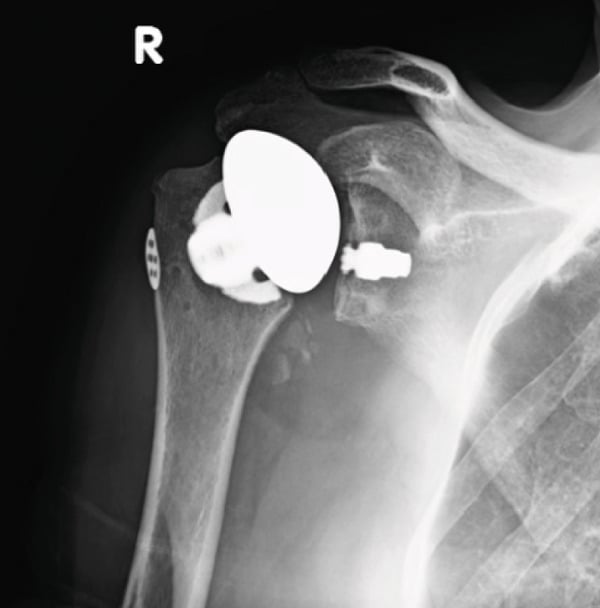
Ream-and-run and hemiarthroplasty in the young. They avoid the polyethylene weak link, but the rehabilitation is demanding and pain relief is less predictable than after an anatomic TSA. Patient selection is contentious.
PSI and navigation. Both improve the accuracy of version correction in studies, but whether they are cost-effective, or change long-term survivorship, is unestablished.
MCQ Practice Points
Q: What is the most common cause of late failure in Anatomic TSA? A: Aseptic loosening of the glenoid component, often due to the 'Rocking Horse' effect from eccentric loading or cuff failure.
Q: A Walch B2 glenoid is characterized by what morphology? A: Biconcavity (Paleoglenoid and Neoglenoid) and posterior subluxation.
Q: A Critical Shoulder Angle (CSA) under 30 degrees is associated with what pathology? A: Osteoarthritis. (Conversely, over 35 degrees is associated with Cuff Tears).
Q: Where is the Axillary nerve at risk during the deltopectoral approach? A: Inferior border of Subscapularis. It must be palpated ('Tug test') or visualized before tenotomy or inferior capsular release.
Q: Why is Deltoid paralysis an absolute contraindication for TSA? A: Powered by Deltoid. Both Anatomic and Reverse rely on the deltoid for elevation. A flail shoulder cannot be salvaged by arthroplasty.
Q: What is the most common organism causing periprosthetic infection in shoulder arthroplasty? A: Cutibacterium acnes (formerly Propionibacterium acnes). It is an indolent, slow-growing anaerobe.
Related pages: Total Shoulder Arthroplasty is the umbrella page covering anatomic and reverse designs together, and should be read first for the choice between them; Reverse Total Shoulder Arthroplasty is the alternative whenever the cuff is deficient, which is the single question that decides this operation, with Rotator Cuff Arthropathy for the pathology that makes an anatomic implant fail and Rotator Cuff Tears and Massive Rotator Cuff Tears for assessing cuff integrity beforehand; Shoulder Arthroplasty Anatomy holds the version, inclination and humeral geometry this page restores, and Subscapularis Anatomy with Subscapularis Tears covers the tendon whose takedown and repair dominates the technique section; Stemless Shoulder Arthroplasty takes the humeral fixation debate further than the meta-analysis carded here; Shoulder Arthroplasty Complications and Revision Shoulder Arthroplasty cover glenoid loosening and what follows it, with Periprosthetic Joint Infection for the Cutibacterium problem peculiar to the shoulder; Avascular Necrosis of the Shoulder is a distinct indication with an intact glenoid where hemiarthroplasty may still apply; and Polyethylene UHMWPE and XLPE for the bearing that is the weak link in the young patient.
Clinical Decision Scenarios
Practise clinical reasoning and management decisions out loud
“A 45-year-old weightlifter presents with severe primary OA (Walch B2). He wants a replacement. Discuss options.”
“6 months post TSA, patient complains of weakness and anterior pain. On exam, positive belly press. X-rays show anterior subluxation.”
“Routine 5 year follow up. Patient asymptomatic. X-ray shows 2mm lucency around the glenoid peg.”
Key Indications
- OA with Intact Cuff
- AVN
- Inflammatory Arthritis
- Post-traumatic Arthritis
Key Steps
- Deltopectoral Approach
- Subscapularis Management
- Version Correction
- Glenoid Cementing
Complications
- Subscap Failure/Rupture
- Glenoid Loosening (Long term)
- Periprosthetic Fracture
- Infection (C. acnes)
Classification
- Walch A (Centered)
- Walch B (Posterior Subluxation)
- Walch C (Dysplastic)
- Samilson-Prieto (Dislocation AR)
Evidence
- Walch 1999: glenoid morphology classification (B3 is a later addition)
- Low CSA associates with OA in case-control samples (Moor 2013) - not a diagnostic test
- No functional difference between LTO, peel and tenotomy (Lapner/Levine)
- Pegged glenoids have less lucency on the FIRST postoperative film (Lazarus)
Exam Pearls
- 'Intact Cuff' is the key
- 'B2 Glenoid' is the challenge
- Axillary nerve 'Tug Test'
- Young patient = Poly wear risk
Evidence Base
Walch Classification of Glenoid Morphology
- Three glenoid types defined on CT: A (centred, 59%), B (posterior subluxation/asymmetric wear, 32%), C (dysplastic retroversion over 25 degrees, 9%).
- Posterior humeral head subluxation drives the asymmetric posterior wear that characterises type B.
- Type C retroversion is dysplastic in origin and explains early-onset osteoarthritis.
Critical Shoulder Angle (CSA)
- Mean CSA was 33.1 degrees in controls, 38.0 degrees in rotator cuff tears, and 28.1 degrees in primary OA.
- Of shoulders with CSA over 35 degrees, 84% were in the cuff-tear group.
- Of shoulders with CSA under 30 degrees, 93% were in the osteoarthritis group.
Lesser Tuberosity Osteotomy vs Subscapularis Peel
- No significant difference in subscapularis dynamometer strength at 24 months (LTO 4.4 kg vs peel 5.5 kg, p=0.131).
- WOOS and ASES scores were equivalent between groups at all time points.
- Both techniques improved significantly from baseline.
Subscapularis Tenotomy vs LTO (Healing)
- LTO: 27/29 (93.1%) showed bone-to-bone healing on RADIOGRAPH at final follow-up.
- Tenotomy: 26/30 (86.7%) had no full-thickness subscapularis tear on ULTRASOUND at 3 months - a different test at a different time, so the two figures are not directly comparable.
- Clinical outcomes and ROM were equivalent; LTO added operative and repair time.
Stepped Augmented Glenoid for B2/B3
- Posteriorly stepped augmented glenoids corrected pathologic retroversion and posterior subluxation in B2/B3 glenoids.
- Penn Shoulder Score, ROM and version improved significantly at minimum 2 years (p under 0.0001).
- Persistent posterior subluxation correlated with worse teres minor fatty infiltration and residual component retroversion.
Pegged vs Keeled Glenoid Fixation
- Mean radiolucency score was lower for pegged (1.3) than keeled (1.8) components (p=0.0004).
- Pegged components more often achieved 'better cementing' than keeled components (p=0.0028).
- Complete seating was difficult to achieve and surgeon experience was an important variable.
Stemless vs Stemmed Anatomic TSA
- No significant difference in postoperative Constant scores (MD 1.26, p=0.59) or complication rates (OR 1.79, p=0.22).
- Stemless TSA had significantly shorter operative time (MD -15 minutes, p=0.0008).
- Stemless TSA had significantly less intraoperative blood loss (MD -97 mL, p=0.0002).
Joint Registry Evidence
- Reverse TSA volume now exceeds anatomic TSA in most large registries, even for some osteoarthritis indications.
- Aseptic glenoid loosening is the leading cause of anatomic TSA revision; younger age is the strongest predictor of revision.
- Cemented all-polyethylene glenoids continue to show better long-term survival than metal-backed designs.